OEM/ODM Sportswear Manufacturer | 3-Day Sampling | Low MOQ | 50K Monthly Capacity | ISO9001 & BSCI Certified
Best Equestrian Clothes and Riding Outfits Factory for Private Label Brands
As a Best Equestrian Clothes and Riding Outfits Factory for private label brands, Pair Fashion develops custom riding collections including breeches, competition shirts, riding jackets, base layers, and coordinated equestrian apparel. We provide low MOQ production, rapid sampling, technical development, and scalable manufacturing solutions for equestrian brands, retailers, riding clubs, and distributors worldwide.
50K+
Monthly Capacity
3 Days
Fast Sampling
6,000+
Custom Styles
10+
Years Experience
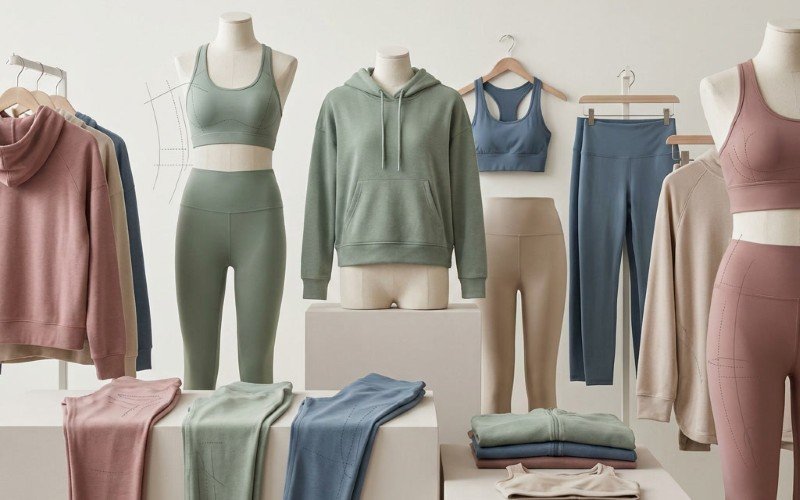
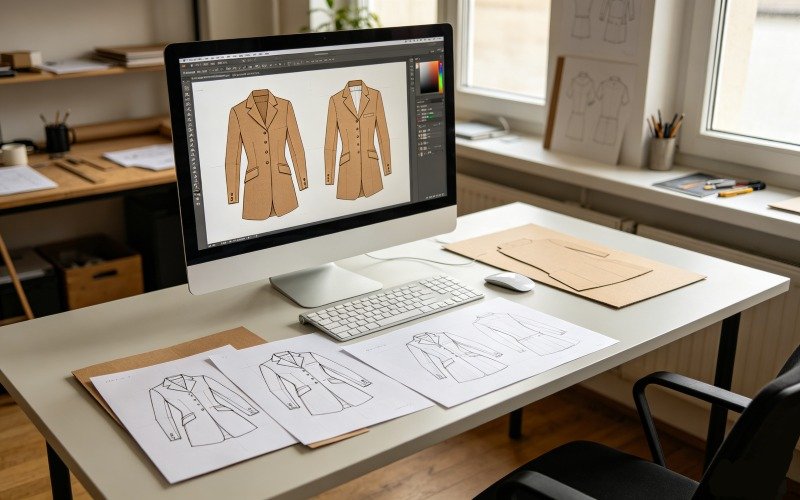
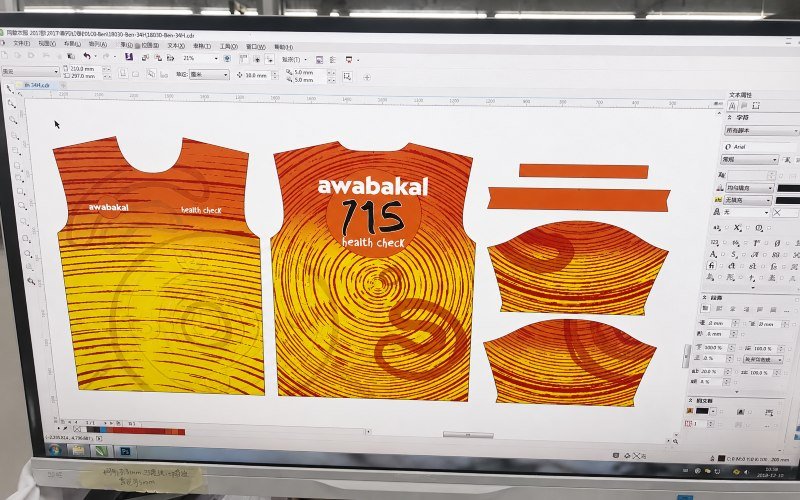
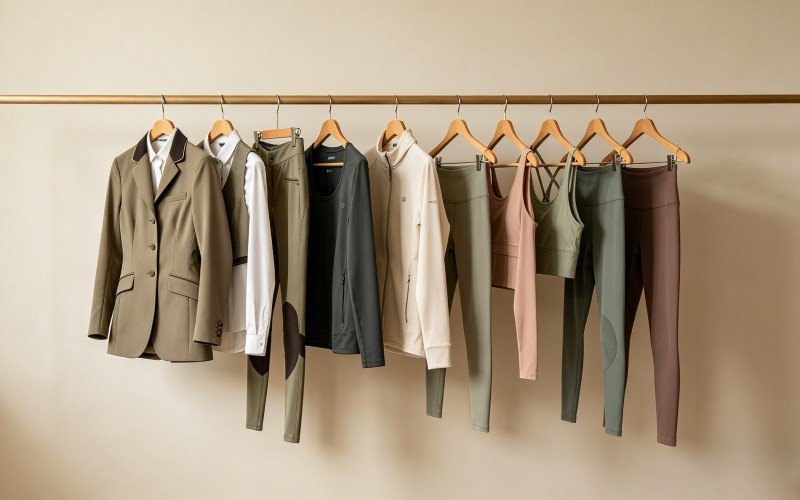
Develop Complete Riding Collections With an Equestrian Clothes and Riding Outfits Factory
Building a complete equestrian collection requires more than sourcing several individual garments. Consistent fits, fabrics, colors, and branding determine whether separate products feel like one coordinated range. Working with one manufacturing partner makes it easier to develop a complete riding apparel line without fragmented suppliers or inconsistent standards.
Pair Fashion provides complete equestrian collection development and manufacturing for private label brands, riding clubs, specialist retailers, and growing equestrian businesses, supported by our experience as an Equestrian Clothing Manufacturer. Our product range covers women’s, men’s, and kids’ riding apparel, allowing brands to build commercially focused collections around different riders, seasons, and use cases.
| Product Category | Available Products | Primary Applications |
|---|---|---|
| Riding Bottoms | Breeches, riding leggings, full-seat and knee-patch styles | Training, dressage, show jumping |
| Riding Tops | Riding shirts, competition tops, base layers, training tees | Daily riding, competition, stable use |
| Equestrian Outerwear | Riding jackets, windbreakers, thermal layers, lightweight vests | Seasonal riding, outdoor training, events |
| Coordinated Apparel | Matching outfits, club uniforms, kids’ riding wear | Private labels, riding schools, team programs |
Projects can begin with original designs, Tech Packs, reference photos, physical samples, or modifications to an existing style. Our development team can coordinate patterns, performance fabrics, silicone grips, pocket construction, branding, size ranges, and packaging so every garment follows the same product direction.
An experienced Equestrian Clothes and Riding Outfits Factory can help brands reduce fabric shade differences, inconsistent sizing, and delivery coordination problems by producing the entire collection under one roof. Brands can launch with a focused capsule collection, evaluate market response, and later add new colors, styles, or seasonal layers. This approach supports clearer brand positioning while keeping early inventory and product development risks under control.
Build Riding Outfits for Every Rider, Season, and Riding Discipline
Successful equestrian brands rarely grow by selling only one pair of breeches or a single competition shirt. Riders need different garments for different seasons, disciplines, and stages of training. Understanding these needs helps brands build stronger collections, increase average order value, and encourage repeat purchases.
Every riding discipline has its own product requirements, and international competition disciplines are governed by the rules established by the Fédération Equestre Internationale (FEI). Dressage riders often prefer refined details, elegant silhouettes, and comfortable fits. Show jumping riders usually need greater freedom of movement and enhanced durability. Everyday riders and stable users typically look for practical garments that are easy to care for and suitable for changing weather conditions.
| Riding Scenario | Recommended Products | Primary Requirements |
|---|---|---|
| Dressage | Competition shirts, full-seat breeches, show jackets | Elegant appearance and precise fit |
| Show Jumping | Riding tops, grip breeches, lightweight jackets | Flexibility and durability |
| Daily Training | Base layers, training tees, riding leggings | Comfort and easy care |
| Winter Riding | Thermal layers, windproof jackets, fleece breeches | Warmth and protection |
| Summer Riding | Quick-dry tops, lightweight breeches, breathable base layers | Ventilation and moisture management |
Building a collection also means considering how women’s, men’s, and kids’ products work together and how colors, fabrics, and branding remain consistent across different categories. A coordinated product strategy creates a more professional brand image and makes future collection expansion easier.
Many successful private label equestrian brands begin with a focused group of core products and gradually introduce seasonal layers, outerwear, and complementary pieces. This approach reduces inventory risk while allowing the collection to evolve according to customer feedback and market demand.
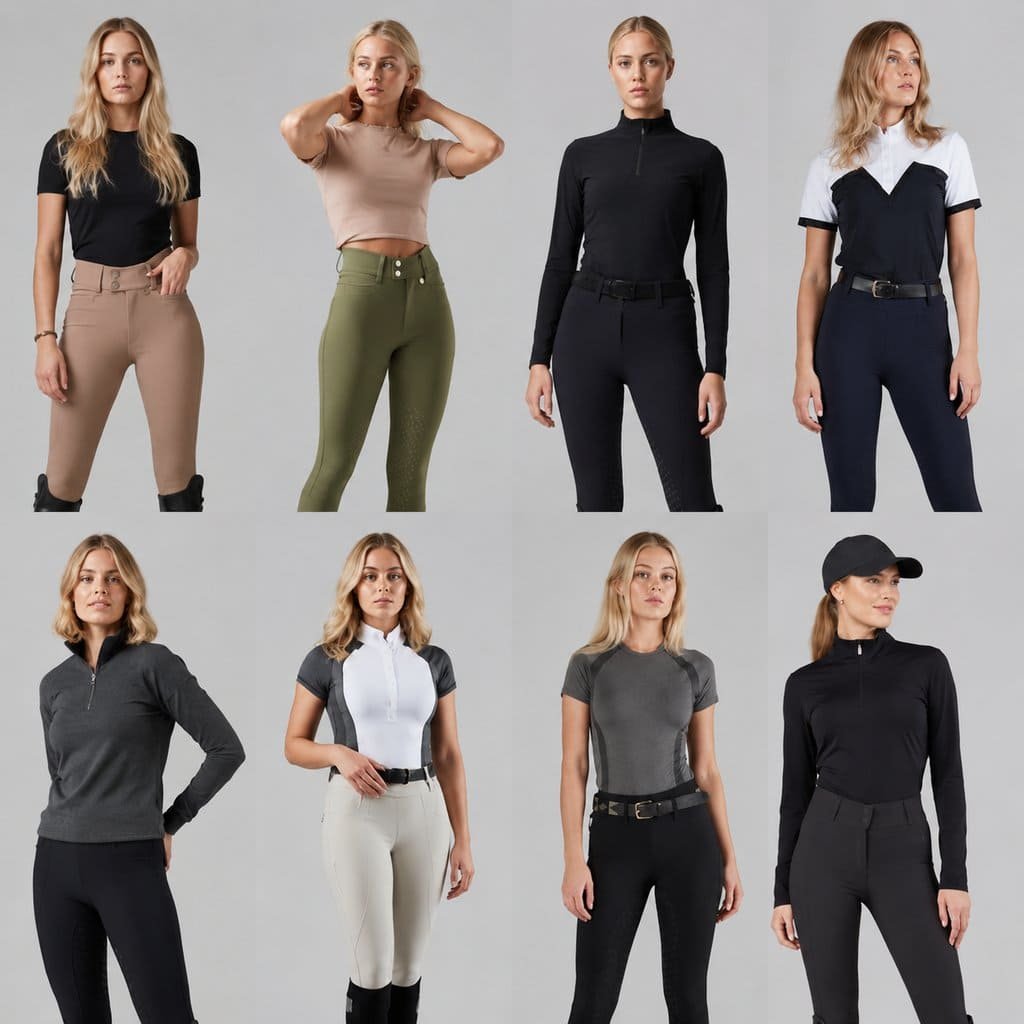
Develop Private Label Equestrian Products That Riders Love to Buy Again
Successful equestrian products are not only designed for good riding performance. They also give riders a great wearing experience that encourages repeat use and repeat purchases.
For private label brands, long-term product success often comes from comfort, durability, and thoughtful details rather than appearance alone.
Today’s riders expect apparel that feels comfortable during long hours of riding, stays in place during movement, and performs equally well in training, competition, and everyday stable life. They want breeches that remain supportive throughout the day and tops that offer breathability and moisture management in changing conditions.
Products with high repeat-purchase potential usually share several characteristics:
- Comfortable and stable fits.
- Stretch fabrics with excellent recovery.
- Long-lasting comfort during extended riding sessions.
- Durable grip applications and reinforced construction.
- Clean, premium styling that remains relevant season after season.
- Versatility across different products and riding situations.
| Product Element | What Riders Value | Benefit for Brands |
|---|---|---|
| Fit | Comfort and stability | Higher customer satisfaction |
| Fabric | Breathability, softness, stretch | Better repeat purchases |
| Grip System | Improved security in the saddle | Stronger product positioning |
| Durability | Longer product life | Fewer quality claims |
| Design | Modern and versatile appearance | Higher perceived value |
Many growing equestrian brands focus on perfecting a small number of core products instead of launching large collections too quickly. As rider confidence in the product increases, brands often build stronger customer loyalty and more predictable repeat business.
For private label brands, the most successful products are not the ones customers buy once. They are the products riders return to season after season and confidently recommend to others in the equestrian community.
Customize Every Detail of Your Riding Apparel Collection
For growing equestrian brands, private label manufacturing means much more than adding a logo to an existing product. The most successful brands create a recognizable identity through carefully considered details that make riders immediately associate the product with the brand behind it.
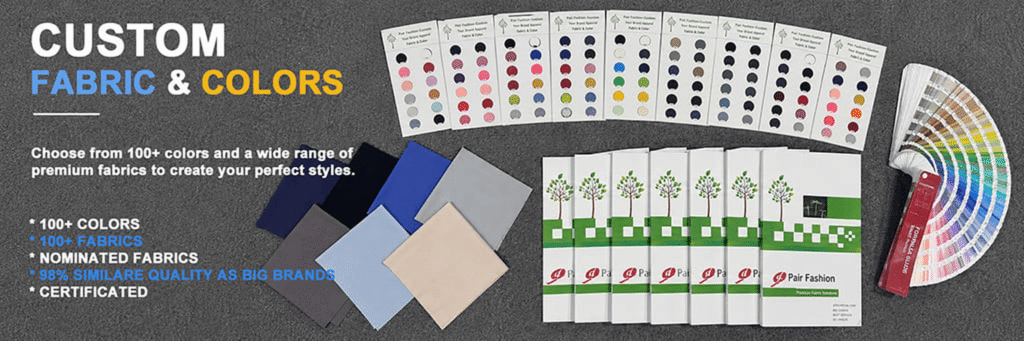
Today’s consumers pay close attention to the complete product experience. Color combinations, fabric hand feel, grip designs, packaging, and branding details all influence how riders perceive quality and determine the value they attach to a product.
Private label equestrian products can typically be customized in the following areas, and many brands also choose to develop complete collections through our OEM Equestrian Clothing services:
- Product patterns and garment construction.
- Fabric composition and performance features.
- Custom Pantone colors.
- Full-seat and knee-patch silicone grip designs.
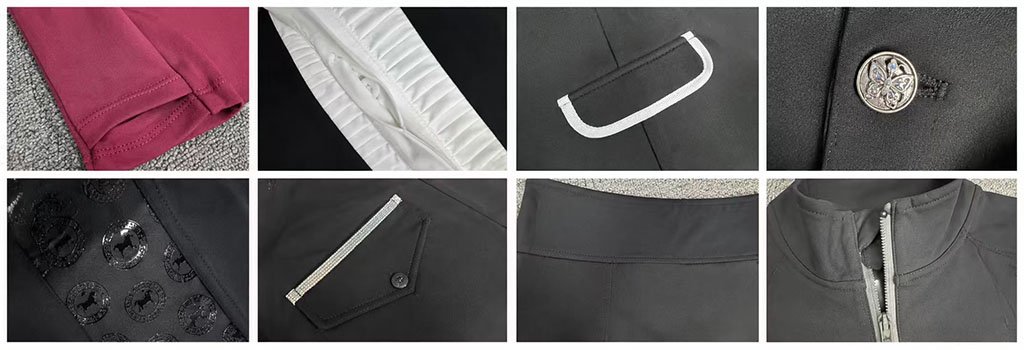
- Waistbands, pockets, and zipper details.
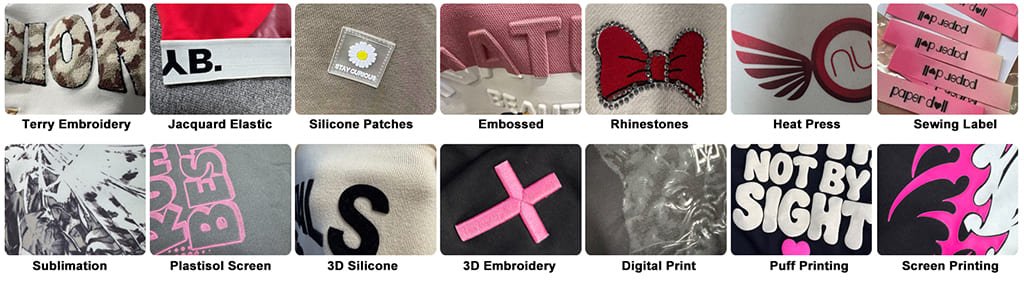
- Embroidered and heat-transfer logos.
- Main labels, care labels, and hangtags.
- Individual packaging and premium gift boxes.
| Customization Area | Available Options | Brand Benefit |
|---|---|---|
| Garment Construction | Patterns, pockets, stitching details | Stronger product differentiation |
| Fabrics | Composition, weight, functionality | Clear product positioning |
| Branding | Embroidery, prints, woven labels | Higher brand recognition |
| Colors | Custom Pantone development | Better collection consistency |
| Packaging | Polybags, gift boxes, hangtags | Premium brand presentation |
Many successful equestrian brands build a consistent visual language across their collections by maintaining coordinated colors, fabrics, and branding details from one product to another. This consistency creates a more professional appearance and helps riders develop a stronger connection with the brand.
When product details, functionality, and branding work together, private label riding apparel becomes more than a standard garment. It becomes a distinctive collection that represents the identity and long-term value of the brand itself.
Turn Your Ideas Into Production-Ready Riding Apparel Faster
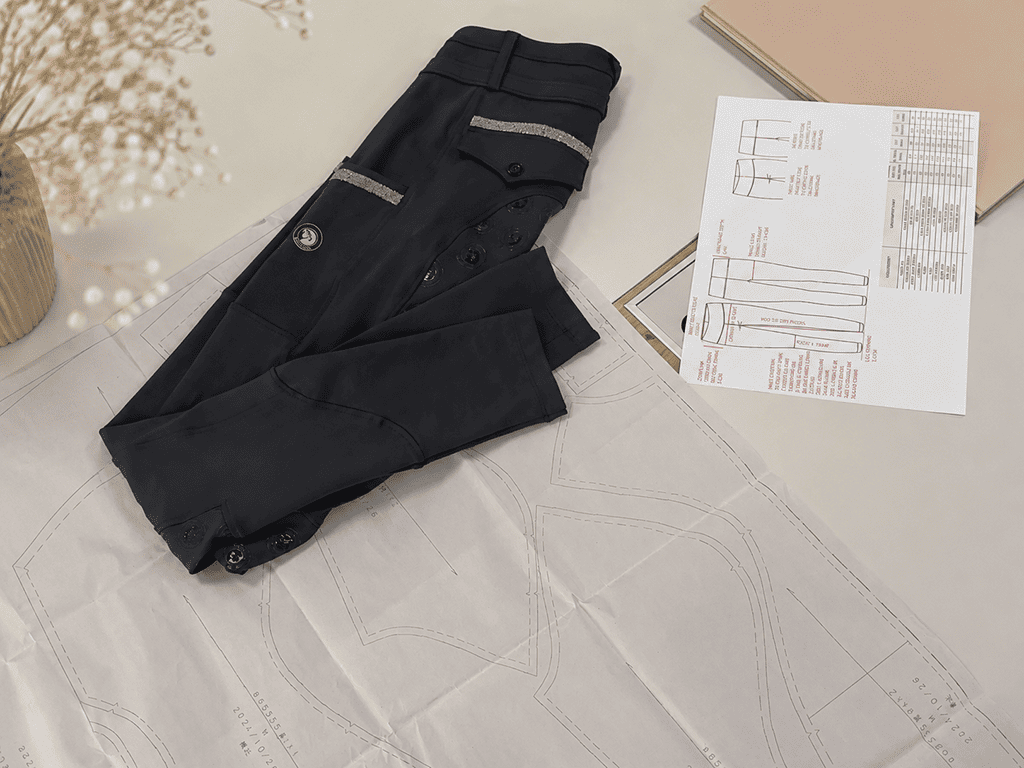
Many equestrian brands delay product development because they believe they need a complete Tech Pack before approaching a factory. In reality, most successful collections do not begin with detailed technical documents. They often start with an idea, a reference photo, or a garment that inspired the brand.
Every business is at a different stage of development. Some brands have experienced design teams and comprehensive specifications, while others simply see an opportunity in the market and want to launch their first collection. An experienced manufacturing partner should be able to support both situations and guide the project from concept to production.
Projects can usually begin with any of the following materials:
| What You Have | How Development Can Start |
|---|---|
| Inspiration or Pinterest photos | Product analysis and development suggestions |
| Hand sketches | Pattern development and fabric recommendations |
| Physical samples | Construction analysis and production optimization |
| Complete Tech Packs | Direct sampling and production planning |
| Existing products that need changes | Fabric, color, and functionality upgrades |
A typical product development process includes:
- Defining product requirements and target markets.
- Evaluating fabrics and construction feasibility.
- Developing patterns and size specifications.
- Producing and revising samples.
- Approving pre-production samples.
- Starting bulk production.
The earlier a brand communicates with its manufacturing partner, the easier it becomes to identify potential challenges such as budget limitations, fabric availability, or designs that may not be suitable for large-scale production. Addressing these issues early usually saves significant development time and reduces costly revisions later.
For emerging equestrian brands, success does not depend on having perfect technical documents from the beginning. It depends on finding a partner that can turn ideas into commercially successful products.
Choose Performance Fabrics That Improve Comfort and Reduce Product Returns
The right fabric can make the difference between a product that riders wear once and a product they purchase again and recommend to others. In equestrian apparel, fabric selection directly affects comfort, performance, durability, and long-term customer satisfaction.
Riders spend hours in the saddle and expect their clothing to perform in different temperatures, weather conditions, and levels of activity. Fabrics that lose their shape, retain moisture, or wear out quickly often lead to complaints, returns, and poor reviews. On the other hand, well-selected technical fabrics help brands create products that feel premium and perform consistently over time.
When developing an equestrian collection, brands should consider both rider expectations and business goals when selecting fabrics.
| Product Category | Recommended Fabric Features | Business Benefits |
|---|---|---|
| Riding Breeches | Four-way stretch, abrasion resistance, excellent recovery | Better fit retention and higher repeat purchases |
| Competition Shirts | Lightweight, breathable, moisture management | Greater comfort during long events |
| Base Layers | Soft touch, thermal regulation, quick dry | Extended seasonal usability |
| Riding Jackets | Wind resistance, water repellency, lightweight construction | Higher perceived value and broader applications |
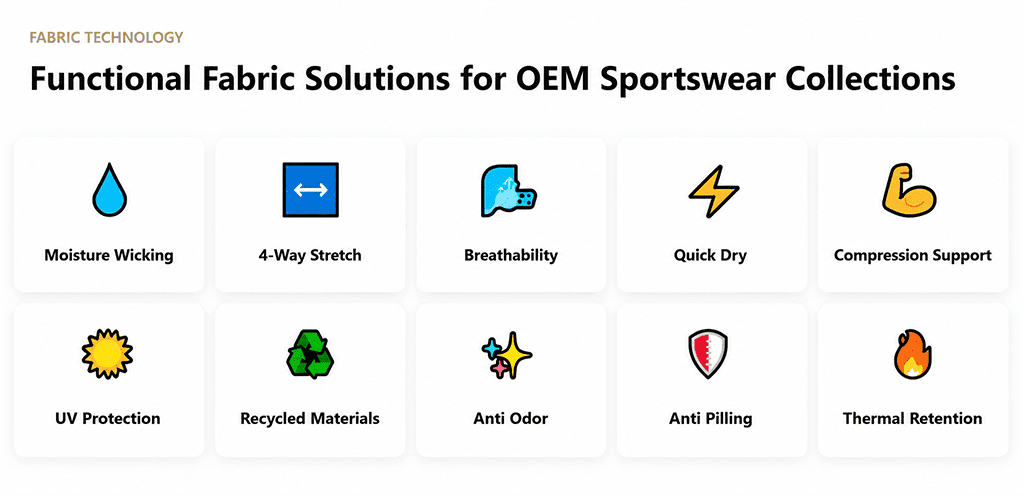
Modern equestrian brands are also placing greater emphasis on sustainability and performance certifications, particularly materials certified by the Global Recycled Standard (GRS). Recycled fabrics, UV protection, anti-bacterial finishes, and advanced moisture management technologies are becoming increasingly important in premium collections.
Choosing fabrics based solely on the lowest price often creates hidden costs later through product returns, customer dissatisfaction, and inconsistent product performance. Selecting fabrics that match the intended rider, climate, and riding discipline helps brands build stronger reputations and develop products with longer commercial life cycles.
Protect Your Brand With Reliable Manufacturing and Quality Control
For equestrian brands, product quality influences far more than a single sale. It determines whether customers purchase again, recommend the brand to other riders, and continue to trust future collections. One quality issue can lead to refunds, negative reviews, and lost customers, while consistent quality gradually builds brand credibility.
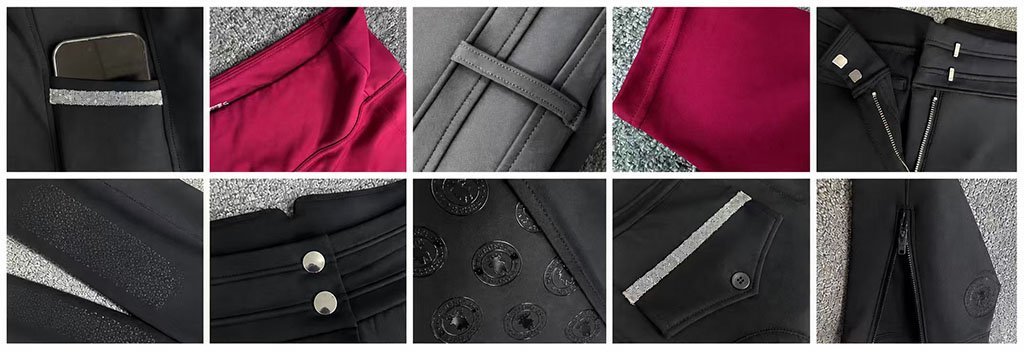
Equestrian apparel often requires a higher level of consistency than ordinary clothing. Riders quickly notice small differences such as changes in fit, variations in fabric hand feel, misplaced grip applications, or inconsistent stitching details. Although these issues may appear minor, they directly affect the wearing experience and shape how consumers perceive the brand.
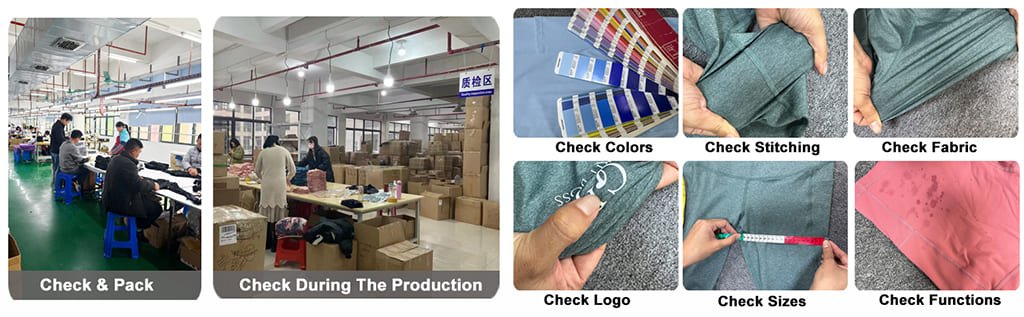
Reliable manufacturing is typically built on standardized processes and multiple layers of quality management, including:
- Fabric and trim inspections before production.
- Pre-production sample approval.
- In-line inspections during manufacturing.
- Size and construction verification.
- Final garment inspections.
- Packaging and carton checks.
| Quality Management Area | What Is Verified | Benefit for Brands |
|---|---|---|
| Incoming Material Inspection | Fabric and trim consistency | Reduced production risk |
| In-Line Inspection | Stitching and workmanship standards | Greater product consistency |
| Size Verification | Measurement tolerances | Fewer returns |
| Final Inspection | Appearance and functionality | Higher customer satisfaction |
| Packaging Inspection | Label and packaging accuracy | Stronger brand presentation |
The value of good quality management becomes even more important for repeat orders.Customers expect the product they purchase today to deliver the same fit, comfort, and performance when they purchase it again months later.
For growing private label brands, consistent quality is not simply a manufacturing requirement. It is one of the foundations of long-term customer relationships, repeat business, and a trusted brand reputation.
Validate Fit, Function, and Quality Before Bulk Production
For equestrian brands, the greatest product development risks usually appear after production begins rather than during the design stage. A sample that looks excellent on the table may reveal unexpected issues after long hours of riding, repeated washing, or production across multiple sizes.
For this reason, experienced brands invest time in validating products before bulk manufacturing starts. Proper testing helps ensure that garments perform well in real riding conditions and meet customer expectations before significant inventory commitments are made.
A complete validation process typically includes:
- Confirming garment fit and overall comfort.
- Evaluating freedom of movement while riding.
- Testing fabric stretch and recovery.
- Verifying silicone grip performance.
- Checking seam strength and durability.
- Measuring dimensional stability after washing.
- Confirming consistency across different sizes.
Validation Area | What Is Evaluated | Risk Reduced |
Fit Testing | Comfort and stability | Fewer returns and negative reviews |
Riding Evaluation | Mobility and grip performance | Better rider experience |
Fabric Testing | Stretch and recovery | Longer product life |
Size Verification | Consistency across sizes | Fewer sizing complaints |
Wash Testing | Shrinkage and distortion | Higher customer satisfaction |
Many successful equestrian brands move through several sample stages, including prototype samples, fit samples, and pre-production samples before approving bulk manufacturing. Although these steps require additional time, they often prevent much larger problems later, such as costly rework, excess inventory, or product recalls.
For private label brands, thorough validation before production is not an additional expense. It is an investment in protecting brand reputation and reducing long-term business risk.
Launch Small, Scale Fast, and Reorder With Confidence
Not every equestrian brand launches a large collection in its first season. Many successful brands start with a small number of core products, gather market feedback, optimize their products, and gradually expand their collections over time.
This approach helps reduce inventory risk and financial pressure, while allowing brands to better understand customer needs before making larger investments.
For emerging brands, small-batch production offers several advantages:
- Lower initial investment.
- Greater flexibility to improve products.
- Faster speed to market.
- Easier testing of different colors and styles.
- Better purchasing decisions based on actual sales data.
As brands grow, their manufacturing partners must also be capable of supporting expansion.
| Brand Stage | Recommended Purchasing Strategy | Primary Objective |
|---|---|---|
| Startup Brands | Small quantities of core products | Validate market demand |
| Growing Brands | Multiple styles in small batches | Expand product offerings |
| Established Brands | Seasonal collection development | Improve replenishment efficiency |
| Large Brands | Annual production planning | Optimize supply chain costs |
Repeat-order capability becomes equally important once products gain market acceptance. When a style turns into a bestseller, brands often need to replenish inventory quickly. Well-maintained patterns, fabric records, and production specifications make repeat orders faster and help ensure consistency from one production run to the next.
For private label equestrian brands, the ideal manufacturing partner is not simply a factory that can produce the first order. It is a long-term partner capable of supporting continuous growth, rapid expansion, and reliable replenishment as the brand becomes more successful.
1. Product Development
Regular monthly product development ensures consistent updates to your brand line.
2. Fabric Sourcing
Regular monthly product development ensures consistent updates to your brand line.
3. Sample Making
Regular monthly product development ensures consistent updates to your brand line.
4. Bulk Production
Regular monthly product development ensures consistent updates to your brand line.
5. Packaging & Delivery
Regular monthly product development ensures consistent updates to your brand line.
Complete OEM & ODM Sportswear Solutions
We provide complete custom sportswear manufacturing services from concept development and fabric sourcing to bulk production and worldwide delivery.
- OEM & ODM Product Development
- Functional Fabric Sourcing & Material Selection
- Pattern Making & Sample Development
- Private Label Branding & Custom Packaging
- Quality-Controlled Bulk Manufacturing
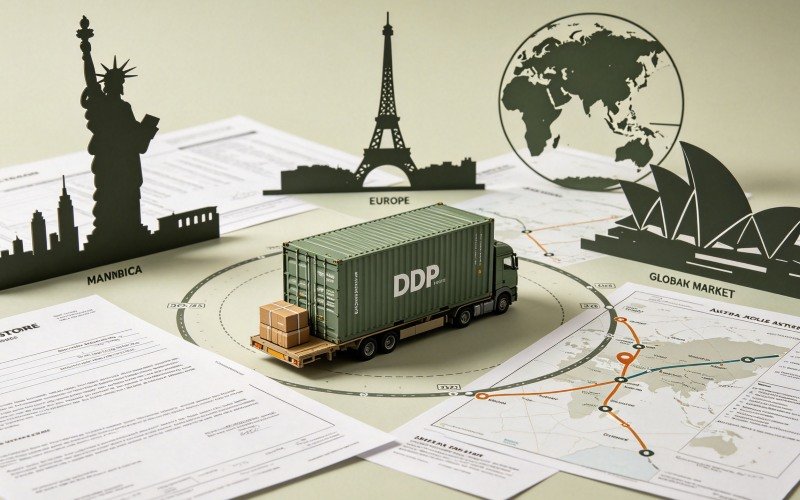
- Global DDP Shipping & Delivery Support
Support Your Growth With a Long-Term Manufacturing Partnership
As equestrian brands grow, their supply chain requirements naturally become more complex. A startup brand may begin with only a few core products, while an established business often needs continuous product development, multiple collections, and consistent quality across every repeat order.
Many brands eventually face supply chain challenges as they expand. Changing factories frequently can lead to lost development records, inconsistent product standards, and increasing communication costs. These issues often slow growth and create unnecessary risks.
A long-term manufacturing partnership can provide significant advantages:
- A deeper understanding of your brand positioning.
- Faster development of new products and collections.
- More consistent quality and delivery performance.
- Better repeat-order management.
- Improved production planning and supply chain coordination.
- Lower operational and sourcing risks.
| Growth Stage | How a Manufacturing Partner Can Help | Benefits for Brands |
|---|---|---|
| Launch Stage | Product development and sampling support | Faster market entry |
| Growth Stage | Multiple collections and quick replenishment | Support for business expansion |
| Mature Stage | Capacity planning and dedicated services | Greater supply chain efficiency |
Long-term partnership also helps keep valuable production know-how and product records. Patterns, fabrics, workmanship details, and historical production data can be saved for future use, making new developments and repeat orders faster and more efficient.
For private label equestrian brands, a manufacturing partner is not only a garment producer. The right partner can grow together with the brand, help reduce business risks, and support the brand in building a stronger and more sustainable competitive advantage over time.
Why Private Label Equestrian Brands Choose Pair Fashion
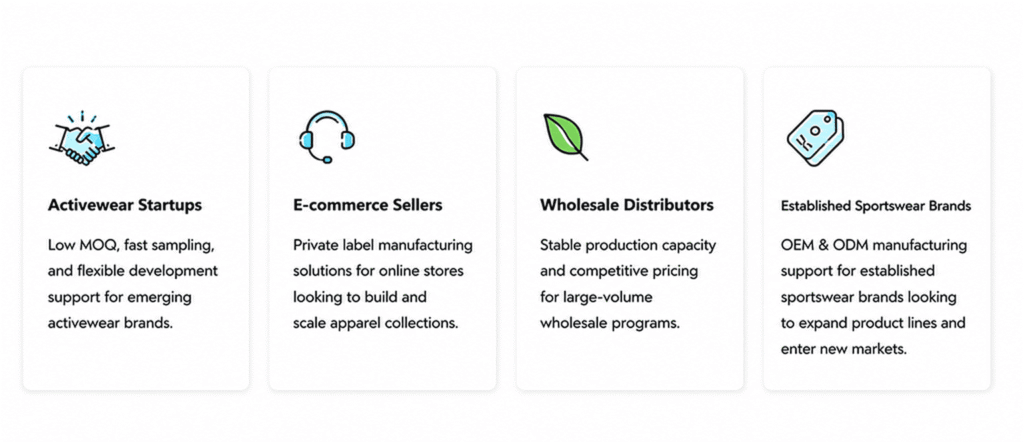
Choosing a manufacturing partner is not only about price and lead time. It is also about finding a supply chain team that can support your brand for long-term growth. For private label equestrian brands, the right partner should have strong product development experience, flexible production capability, and reliable delivery performance.
At Pair Fashion, we have spent years developing functional activewear and equestrian apparel. We understand riders’ expectations for comfort, performance, and consistency, and we also understand the challenges that growing brands face when developing products and managing inventory.
We help brands with:
- One-stop development from concept to production.
- Complete equestrian collection manufacturing.
- Flexible low-MOQ orders and repeat-order support.
- Professional performance fabric and trim sourcing.
- Comprehensive quality management systems.
- Global DDP logistics and long-term after-sales support.
| Our Capabilities | Benefits for Brands |
|---|---|
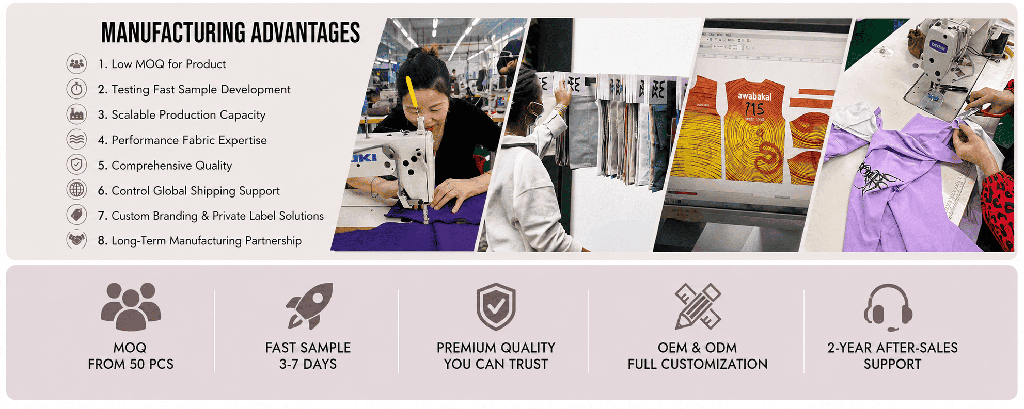
| MOQ from 50 pieces | Lower product development risk |
| Sampling in as fast as 3 days | Faster time to market |
| 6000+ existing styles | Shorter development cycles |
| Extensive equestrian product experience | Higher product success potential |
| Two-year after-sales support | Reduced post-sale risk |
| Worldwide DDP shipping | Simplified international sourcing |
Every brand faces different challenges at different stages of growth. Some businesses need support launching their first collection, others need to expand product categories quickly, and many require stable replenishment and long-term supply chain planning.
Our goal is not simply to manufacture garments. We aim to help brands build sustainable product systems and become a manufacturing partner they can rely on for years to come.
Trusted Manufacturing Standards For Global Sportswear Brands
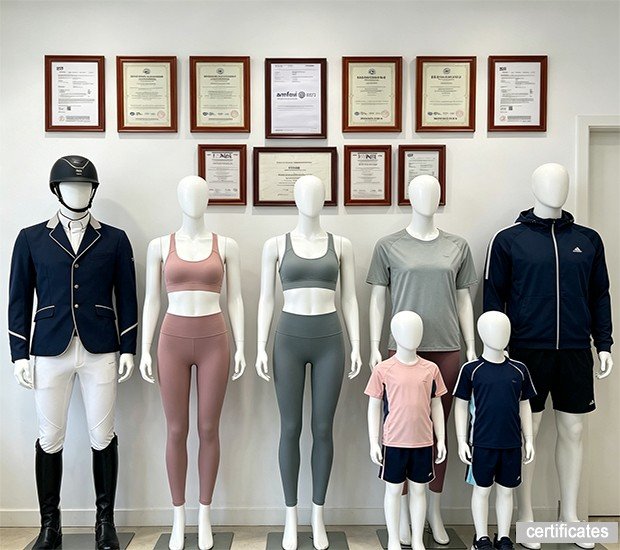
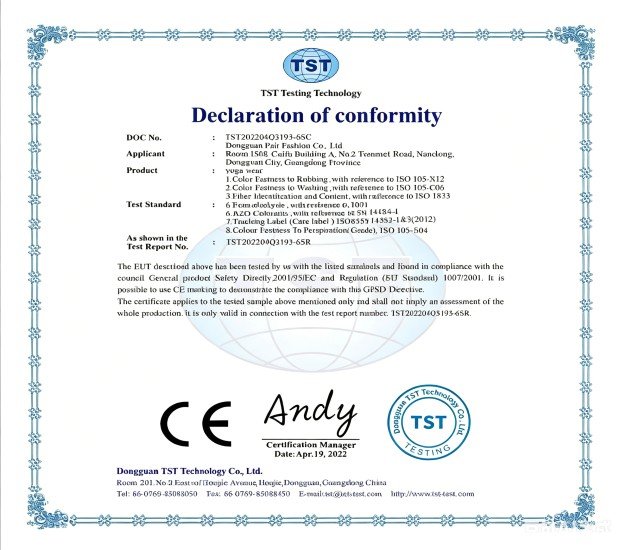
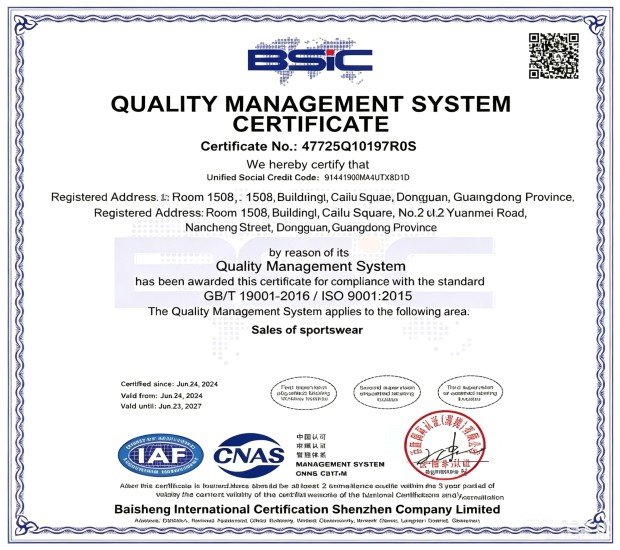
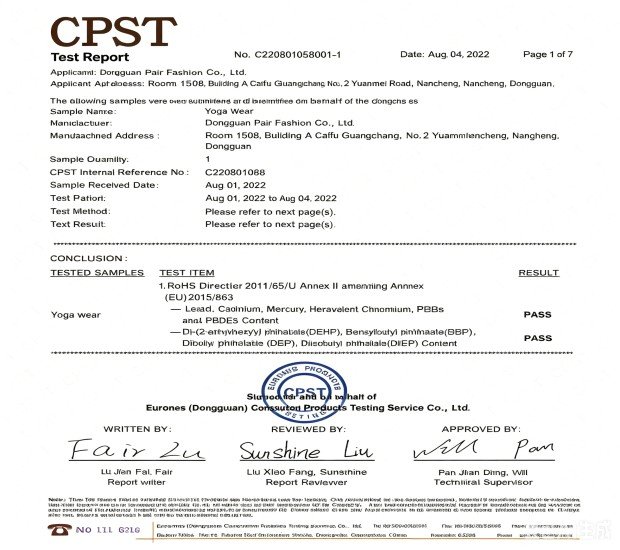
We operate under internationally recognized quality, sustainability, and ethical manufacturing standards. Our certifications help ensure consistent product quality, responsible sourcing, and reliable production for global sportswear brands.
- 20+ Countries Served
- 6000+ Styles Developed
- 50,000 PCS Monthly Capacity
- 3-Day Sample Development
Start Your Custom Equestrian Clothes Project Today
Every successful equestrian brand begins with an idea, and many startups first explore our broader OEM Activewear Manufacturing capabilities before launching their riding collections. Some collections start with a reference photo, others with a favorite garment, and many begin simply because someone sees an opportunity to create something better for riders.
No matter where your project stands today, this is the right time to start planning your next collection.
To receive more accurate development recommendations and pricing guidance, it is helpful to prepare the following information:
- Reference photos or physical samples.
- Tech Packs or design sketches.
- Estimated order quantities.
- Target markets and sales channels.
- Size ranges.
- Logo files.
- Preferred fabrics and colors.
- Packaging requirements.
- Expected launch dates.
If you do not have complete information yet, there is no need to worry. Many successful products begin with simple ideas and become more refined during the development process.
Our team can help you:
- Evaluate product feasibility.
- Recommend suitable fabrics and construction methods.
- Optimize fit and product details.
- Develop sampling and production plans.
- Build a product roadmap that supports long-term growth.
Whether you are launching your first collection, expanding an existing product line, or looking for a reliable long-term manufacturing partner, we would be pleased to help turn your ideas into commercially successful products and support the growth of your equestrian brand. You can also contact our team to discuss your project requirements in more detail.
Your next best-selling riding product may start with a conversation with us today.
Frequently Asked Questions About Custom Equestrian Clothes and Riding Outfits
1. What Is the Minimum Order Quantity for Custom Equestrian Clothes?
The minimum order quantity for standard custom equestrian clothing usually starts from 50 pieces per style, although the final MOQ depends on fabrics, color quantities, silicone grips, branding methods, and packaging requirements. A lower MOQ allows new brands to test fit, colors, and customer demand without holding excessive inventory. Several styles may sometimes share fabrics or trims to improve purchasing efficiency. Custom-dyed materials, exclusive grip patterns, and specialized accessories may require higher quantities, so the complete product plan should be reviewed before final pricing is confirmed.
2. Can We Develop Riding Apparel Without a Tech Pack?
Yes, custom riding apparel can be developed from reference photos, hand sketches, physical garments, or a clear product description, even when the brand does not yet have a complete Tech Pack. The development team can analyze construction, recommend fabrics, create patterns, and confirm grips, pockets, zippers, stitching, and branding details. To reduce unnecessary revisions, brands should provide their target market, size range, expected quantity, and product positioning. A Tech Pack is not essential at the beginning, but approved specifications should be documented before bulk production starts.
3. How Long Does Equestrian Apparel Sampling Take?
A basic equestrian apparel sample may be completed in as fast as three days after fabrics and construction details are confirmed, while a standard development cycle generally takes around seven days. More complex products may require additional time for new patterns, custom-dyed fabrics, exclusive silicone grips, embroidery, or repeated fitting adjustments. The first prototype normally verifies appearance, construction, and basic fit. Fit samples or pre-production samples may follow before final approval. Brands should therefore include revision and material-confirmation time when planning their product launch schedule.
4. Which Equestrian Clothes and Riding Outfits Can Be Customized?
Brands can customize riding breeches, riding leggings, competition shirts, training tops, base layers, riding jackets, windbreakers, and coordinated equestrian collections for women, men, and children. Collections may be developed for dressage, show jumping, everyday training, riding clubs, and seasonal riding conditions. Customization can cover patterns, fabrics, Pantone colors, grip areas, pocket construction, zippers, logos, labels, hangtags, and packaging. Developing several categories through one factory usually makes it easier to maintain consistent sizing, colors, workmanship, and brand presentation across the complete collection.
5. How Do You Keep Bulk Production Consistent With the Approved Sample?
Bulk-order consistency depends on pre-production sample approval, controlled material batches, detailed production specifications, and quality inspections covering incoming materials, manufacturing stages, and finished garments. Before production, brands should approve the fit, measurements, fabric, color, grip design, logo placement, and packaging in writing. During manufacturing, inspectors should verify stitching, measurement tolerances, grip positioning, and garment appearance. For repeat orders, retained patterns, approved samples, and historical production records help reduce variation between batches and maintain the same fit, hand feel, and workmanship over time.
6. What Fabrics Are Best for Equestrian Clothing?
The best equestrian fabrics depend on the garment type, riding intensity, climate, and target price rather than fabric composition or cost alone. Breeches generally require four-way stretch, abrasion resistance, strong recovery, and stable support. Competition shirts benefit from lightweight, breathable, and quick-drying materials, while winter base layers need warmth and moisture management. Riding jackets usually require wind resistance, water repellency, and unrestricted movement. Brands should also evaluate shrinkage, pilling, colorfastness, and recovery after washing according to internationally recognized textile testing methods such as those published by AATCC because these factors directly influence returns, customer reviews, and repeat purchases.
7. Can We Reorder Quickly After Testing a Small Initial Order?
Repeat orders can usually move faster when the original patterns, fabrics, trims, construction details, and approved samples have been properly recorded and retained after the first production run. Replenishment speed still depends on fabric availability, custom-dyeing schedules, peak-season capacity, and specialized trim lead times. Brands should share sales forecasts early when a product begins performing well. Keeping electronic patterns, physical samples, and production specifications helps reduce preparation time and maintain consistent color, sizing, fabric hand feel, and workmanship across different production batches.
8. How Should We Evaluate an Equestrian Clothing Factory for Long-Term Cooperation?
A suitable long-term equestrian clothing factory should provide more than attractive samples; it should combine technical pattern development, performance fabric sourcing, reliable quality control, flexible replenishment, and clear communication. Buyers should confirm that the supplier understands rider movement, grip systems, abrasion requirements, and different riding disciplines rather than evaluating price alone. MOQ, sampling speed, production capacity, quality standards, after-sales handling, and product-record retention should also be reviewed. A factory that supports small tests, seasonal collections, and stable repeat orders usually offers greater long-term value than a supplier focused only on low pricing.
Browse Sportswear Catalog Categories
Explore custom sportswear catalog categories including activewear, equestrian apparel, lounge wear and specialty OEM apparel collections for global brands.
- Yoga Pant
- Sports Bras
- Tank Tops
- Gym Shorts
- Men & Kids Sportswear
- Riding Tops
- Breeches
- Competition Wear
- Jackets
- Man & Kids Equestrian
- Joggers
- Sweatshirt & Hoodies
- Sweaters
- Coat & Jacket
- Men & Kids Loungewear
Other OEM Apparel
- Tennis Clothing
- Jumpsuit
- Dress & Skirts
- Plus Size Activewear
- Maternity Activewear
Email Us
lethe@pairfashion.com
24-hour response guaranteed
Start Your Inquiry →
+86 15814270413
Connect directly with our sales team
Start WhatsApp Chat →
Factory Location
Dongguan, Guangdong, China
Located in one of China's leading apparel manufacturing hubs
Explore Our Factory →
Working Hours
Mon - Sat
09:00 - 18:00 GMT+8
Replies Within 24 Hours
Request Support →