OEM/ODM Sportswear Manufacturer | 3-Day Sampling | Low MOQ | 50K Monthly Capacity | ISO9001 & BSCI Certified
Equestrian Clothing Manufacturer for Private Label and Custom Collections
Pair Fashion is a professional equestrian clothing manufacturer specializing in OEM and private label riding apparel for global equestrian brands, retailers, clubs, and startups. We help customers develop custom riding breeches, competition shirts, jackets, base layers, and complete riding collections with low MOQ, fast sampling, and flexible production support.
50K+
Monthly Capacity
3 Days
Fast Sampling
6,000+
Custom Styles
10+
Years Experience
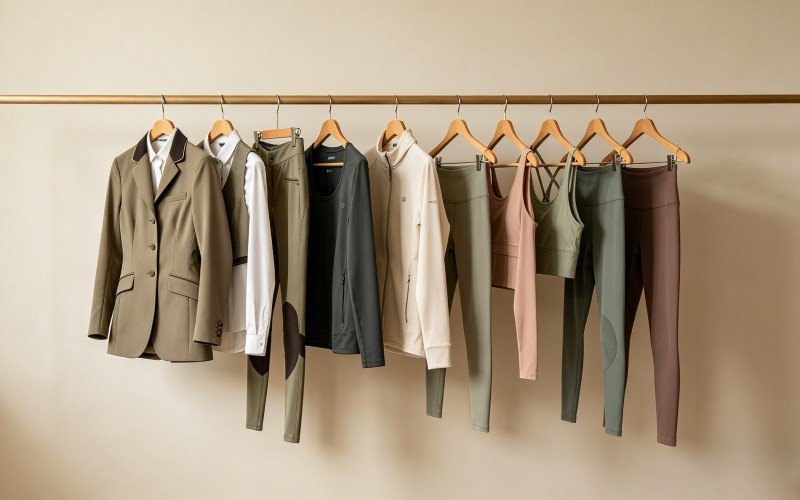
How to Choose the Right Equestrian Clothing Manufacturer
Choosing an equestrian clothing manufacturer is one of the most important decisions for any riding apparel brand. The right partner can help you launch products faster, maintain consistent quality and support long-term growth. The wrong supplier can lead to delays, sizing issues, quality complaints and costly product revisions. Understanding what to evaluate before placing an order can significantly reduce development risks.
Unlike general apparel production, equestrian clothing requires specialized knowledge of rider movement, competition requirements, technical fabrics and performance-focused construction. A manufacturer that understands riding apparel is often better equipped to develop products that meet the expectations of both professional riders and recreational equestrians.
When evaluating a potential manufacturing partner, consider the following factors:
Evaluation Area | What to Look For |
Product Expertise | Experience with riding breeches, show shirts, riding jackets and equestrian collections |
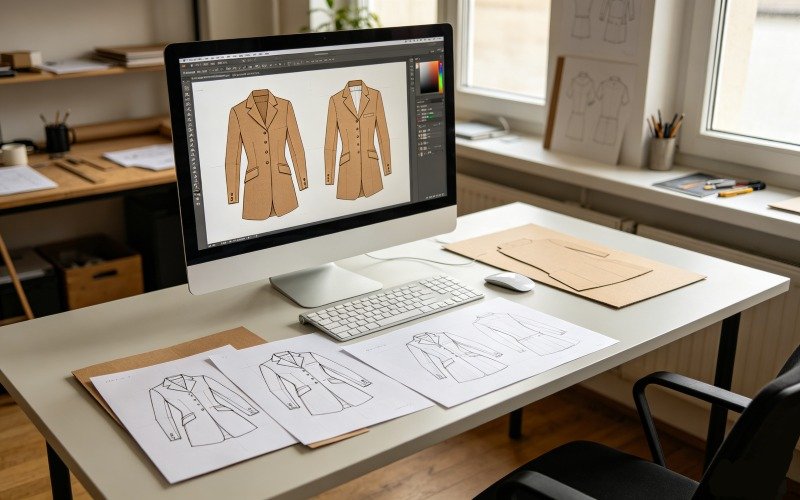
Development Capability | Ability to work from sketches, reference garments or tech packs |
Fabric Resources | Access to stretch, breathable, durable and performance-focused fabrics |
MOQ Flexibility | Low minimum order quantities for testing new collections |
Quality Control | Clear inspection standards and production consistency |
Sampling Speed | Fast sample development and revision capability |
Communication | Responsive project management and clear production updates |
Scalability | Ability to support both small launches and growing order volumes |
Many equestrian brands also benefit from manufacturers that offer private label services, custom trims, packaging development and fabric sourcing under one roof. This simplifies the supply chain and reduces the need to coordinate with multiple vendors.
Before making a final decision, request samples, review previous product experience and discuss your long-term goals. A strong manufacturing partner should not only produce garments but also help improve product quality, streamline development and support sustainable brand growth. For equestrian brands, selecting a supplier with dedicated riding apparel experience is often the difference between a successful collection and a costly learning process.
Looking for an Equestrian Clothing Manufacturer That Understands Your Brand?
Finding the right equestrian clothing manufacturer is not only about producing garments. For riding brands, every product needs to balance fit, movement, durability, fabric performance and brand identity. This section helps you understand what a specialized manufacturing partner should bring to your custom equestrian clothing project.
Equestrian clothing is a highly specific category. A pair of riding breeches, a competition shirt or a training jacket must look polished, but it also needs to perform during real riding, stable work, training and competition. Riders expect garments that stretch without restriction, stay comfortable for long hours, resist friction from the saddle and maintain a clean brand appearance after repeated washing.
Pair Fashion works with global brands, private label clients, equestrian clubs, DTC sellers and growing sportswear businesses that need reliable custom equestrian clothing production. Whether you are developing your first riding apparel collection or expanding an existing product line, we help turn concepts, reference samples, tech packs or brand ideas into production-ready garments.
Our manufacturing support can cover:
- Custom riding breeches for training, competition and daily riding
- Equestrian tops and base layers with stretch, breathability and clean fit
- Show shirts and competition apparel for professional riding occasions
- Riding jackets and windbreakers for outdoor and seasonal collections
- Private label equestrian clothing with custom labels, trims and packaging
- Small MOQ production for new product testing and market launch
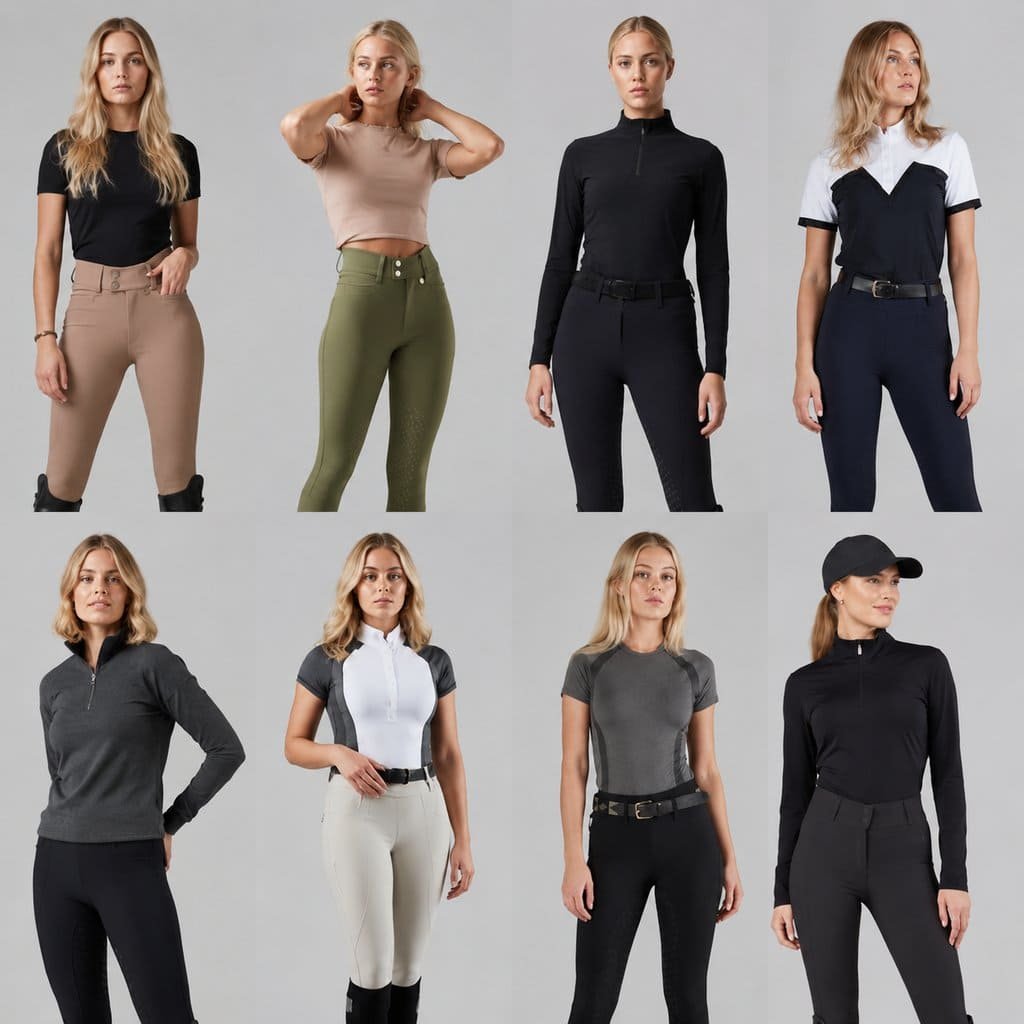
For brands, the right supplier should do more than follow a design file. It should help evaluate fabric options, improve fit, control production risks and keep the final product consistent with the approved sample. That is where a specialized equestrian apparel manufacturer creates real value: fewer development mistakes, smoother communication and a more reliable path from sample to bulk order.
Custom Equestrian Clothing Solutions for Different Business Models
Not every equestrian business has the same sourcing needs. A startup launching its first riding apparel collection faces different challenges than an established retailer, distributor or equestrian club. The most effective manufacturing solution depends on your business model, target customers, sales channels and growth stage. Understanding which production approach fits your goals can help reduce costs, shorten development cycles and improve inventory management.
As a custom equestrian clothing manufacturer, we support a wide range of clients across the riding industry. From first-time entrepreneurs to established equestrian brands, each project is developed around specific commercial objectives rather than a one-size-fits-all production model.
Business Type | Typical Needs | Recommended Solution |
Startup Equestrian Brand | Product validation, low inventory risk | Low MOQ production and small-batch testing |
Private Label Brand | Brand identity and differentiation | Custom fabrics, labels, trims and packaging |
DTC & E-commerce Brand | Fast product launches and frequent updates | Flexible production and rapid sampling |
Riding Club | Team uniforms and branded apparel | Customized club collections and repeat orders |
Distributor & Wholesaler | Stable supply and scalable production | Consistent quality and bulk manufacturing |
Retail Chain | Private label development and compliance | Full OEM production with quality documentation |
Many growing equestrian brands begin with a limited product range such as riding breeches, base layers or competition shirts. As customer demand increases, they gradually expand into jackets, outerwear, training apparel and seasonal collections. Working with a manufacturer that can support both small-scale development and larger production volumes makes this transition much smoother.
Whether you are creating a premium equestrian label, building a private label collection or supplying products to riding clubs and retailers, the manufacturing process should align with your business strategy. A supplier that understands different commercial models can help you develop products more efficiently, manage risk more effectively and scale your equestrian apparel business with greater confidence.
Activewear Startups
Low MOQ, fast sampling, and flexible development support for emerging activewear brands.
E-commerce Sellers
Private label manufacturing solutions for online stores looking to build and scale apparel collections.
Wholesale Distributors
Stable production capacity and competitive pricing for large-volume wholesale programs.
Established Sportswear Brands
OEM & ODM manufacturing support for established sportswear brands.
What Can Be Customized in Equestrian Clothing?
Successful equestrian brands are built on more than logos. Riders increasingly expect products that deliver a unique combination of performance, comfort, aesthetics and brand identity. Whether you are developing a premium riding collection or launching a private label product line, customization plays a critical role in helping your products stand out in a competitive market.
A professional equestrian clothing manufacturer should be able to customize far more than basic garment colors. Every element of a product can influence how customers perceive quality, functionality and brand value. The more control you have over these details, the easier it becomes to create a collection that reflects your market positioning.
The following areas can typically be customized in equestrian apparel production:
Customization Area | Available Options |
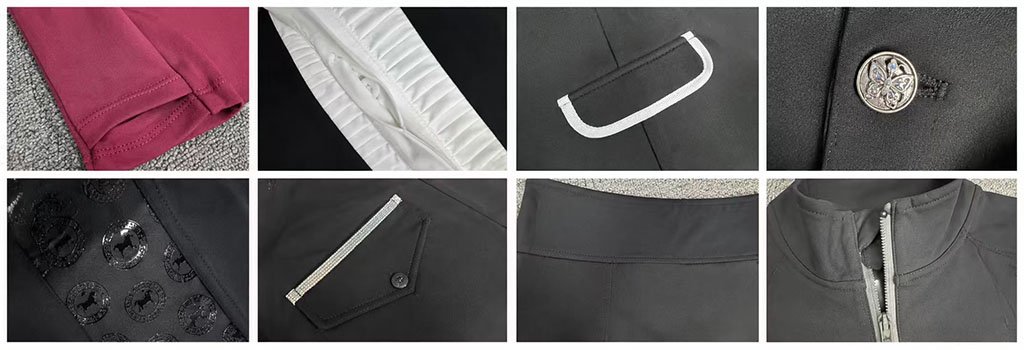
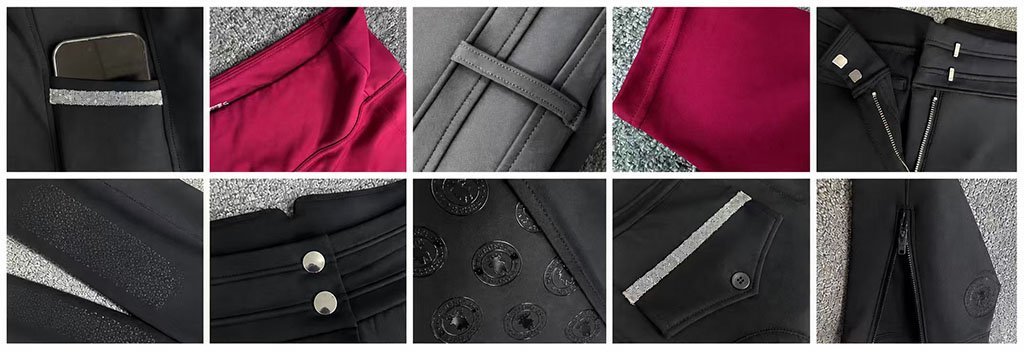
Product Design | Custom silhouettes, panel layouts, pocket construction and garment details |
Fabric Selection | Stretch fabrics, compression fabrics, recycled materials, UV-protection fabrics and performance textiles |
Fit Development | Competition fit, training fit, relaxed fit and market-specific sizing |
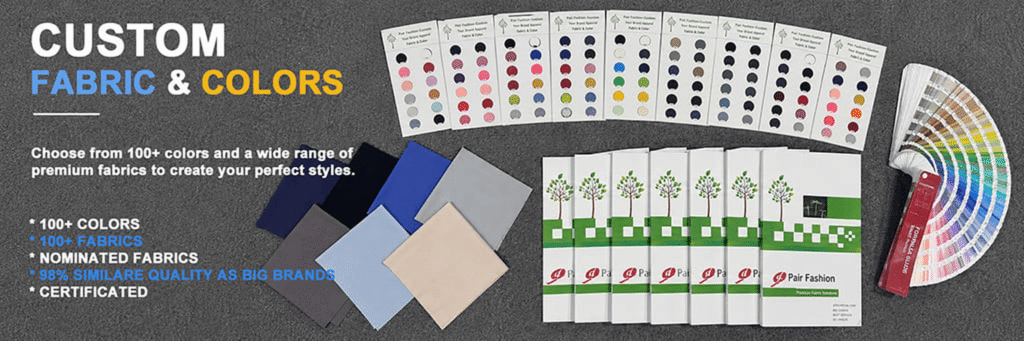
Colors | Pantone matching, custom dyeing and seasonal color development |
Branding | Logos, embroidery, silicone prints, heat transfers and woven labels |
Trims & Accessories | Zippers, elastic bands, grip systems, drawcords and hardware |
Packaging | Polybags, hangtags, gift boxes and retail-ready packaging |
Labels | Main labels, care labels, size labels and private branding elements |
For equestrian products specifically, customization often extends to functional features such as knee grip placement, full-seat silicone grip patterns, reinforced seams, breathable mesh zones and rider-focused ergonomic construction. These details can directly impact comfort and performance during training and competition.
The most successful equestrian collections are usually developed through a combination of technical functionality and brand storytelling. By customizing fabrics, fit, trims and presentation, brands can create products that not only perform well in the saddle but also strengthen customer recognition and loyalty. This is one of the most effective ways to build a distinct identity within the modern equestrian apparel market.
For a deeper understanding of riding pants development, you can also explore our Custom Riding Breeches Manufacturing Guide.

Equestrian Clothing Products We Manufacture
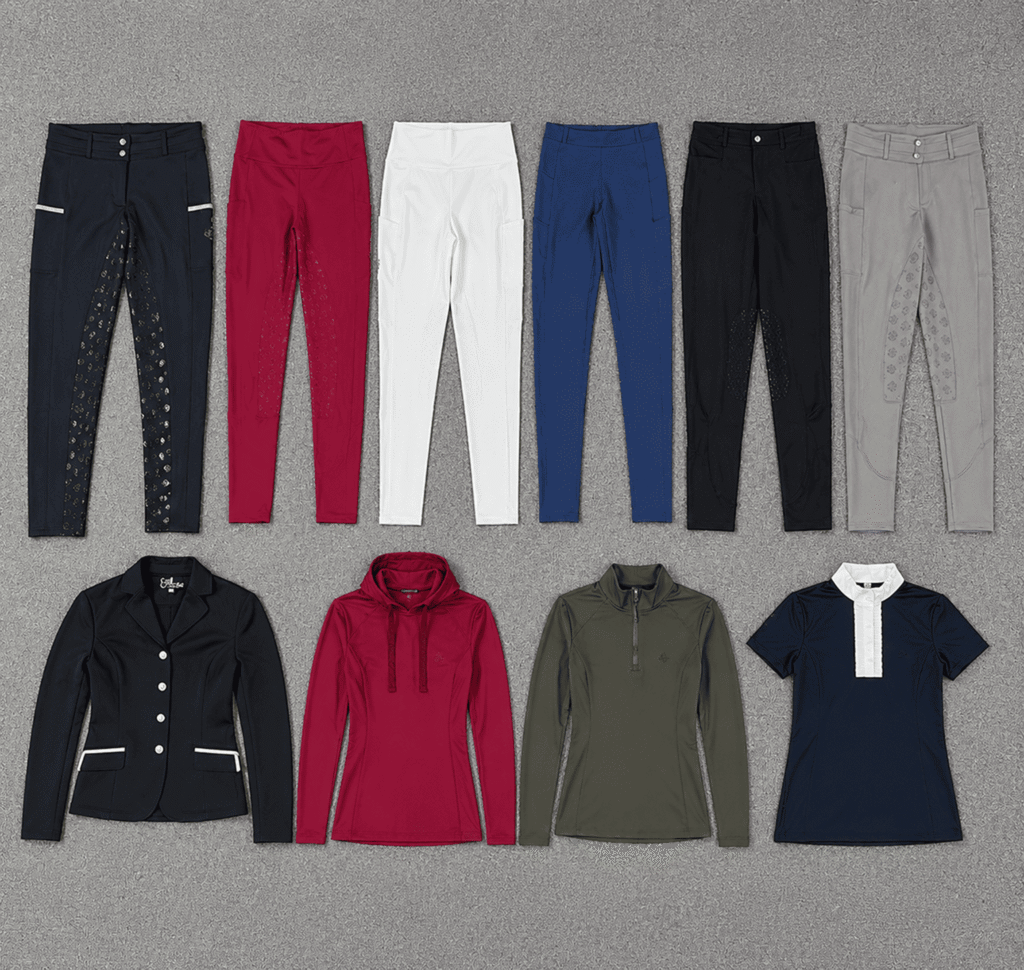
Most successful equestrian brands start with a focused hero product and gradually expand into a complete riding apparel collection based on market demand.Most riding brands develop multiple product categories to serve different rider needs, seasons and usage scenarios. From everyday training apparel to competition garments and lifestyle collections, each category requires specific fabrics, construction methods and performance features.
As a custom equestrian clothing manufacturer, we produce a wide range of riding apparel designed for both professional and recreational equestrians. Our product development capabilities support private label collections, seasonal product launches and long-term brand growth across multiple market segments.
Training Collection
Products designed for daily riding, stable work and regular training sessions.
- Riding Breeches
- Riding Leggings
- Base Layers
- Training Shirts
- Long Sleeve Riding Tops
- Riding Hoodies
- Lightweight Riding Jackets
- Training Vests
These products typically prioritize flexibility, moisture management, durability and rider comfort during extended wear.
Competition Collection
Garments developed for show rings and professional riding events.
- Show Shirts
- Competition Tops
- Competition Jackets
- Show Breeches
- Technical Riding Jackets
- Team Competition Apparel
Competition products often require a more refined appearance while maintaining performance features such as stretch, breathability and freedom of movement.
Lifestyle & Team Collection
Products designed to extend brand presence beyond riding activities.
- Equestrian Sweatshirts
- Riding Club Apparel
- Tracksuits
- Casual Equestrian Outerwear
- Windbreakers
- Team Uniforms
- Event Merchandise
These collections help brands connect with riders outside the arena while creating additional sales opportunities throughout the year.
Product Category | Typical Buyer |
Riding Breeches & Leggings | Equestrian Brands, Retailers |
Show Shirts & Competition Wear | Professional Riding Brands |
Riding Jackets & Outerwear | Seasonal Collections |
Club & Team Apparel | Riding Clubs and Organizations |
Lifestyle Equestrian Wear | DTC and Private Label Brands |
Many successful equestrian brands begin with a core category such as riding breeches or show shirts and gradually expand into outerwear, teamwear and lifestyle products. Developing multiple product categories through a single manufacturing partner can improve consistency, simplify sourcing and create a more cohesive brand experience for riders.
Functional Fabrics That Riders Actually Care About
In equestrian apparel, fabric selection directly affects comfort, performance and rider confidence. A garment may look great on a hanger, but if it restricts movement, traps heat or loses shape after repeated riding sessions, it will quickly disappoint customers. That is why leading equestrian brands pay close attention to fabric performance before focusing on colors, trims or branding details.
Different riding activities place unique demands on clothing. Riders need garments that stretch naturally with movement, remain comfortable during long training sessions and maintain their appearance after frequent washing and wear. Choosing the right fabric is often one of the most important decisions during product development.
The following performance characteristics are commonly prioritized in premium equestrian clothing:
Fabric Feature | Rider Benefit |
Four-Way Stretch | Greater flexibility and unrestricted movement in the saddle |
Moisture Wicking | Helps keep riders dry during training and competition |
Breathability | Improves comfort during long hours of riding |
Abrasion Resistance | Enhances durability in high-friction areas |
Shape Retention | Maintains garment fit after repeated wear and washing |
UV Protection | Provides additional comfort for outdoor riding |
Lightweight Construction | Reduces bulk while improving mobility |
Recycled Materials | Supports sustainability initiatives and eco-conscious branding |
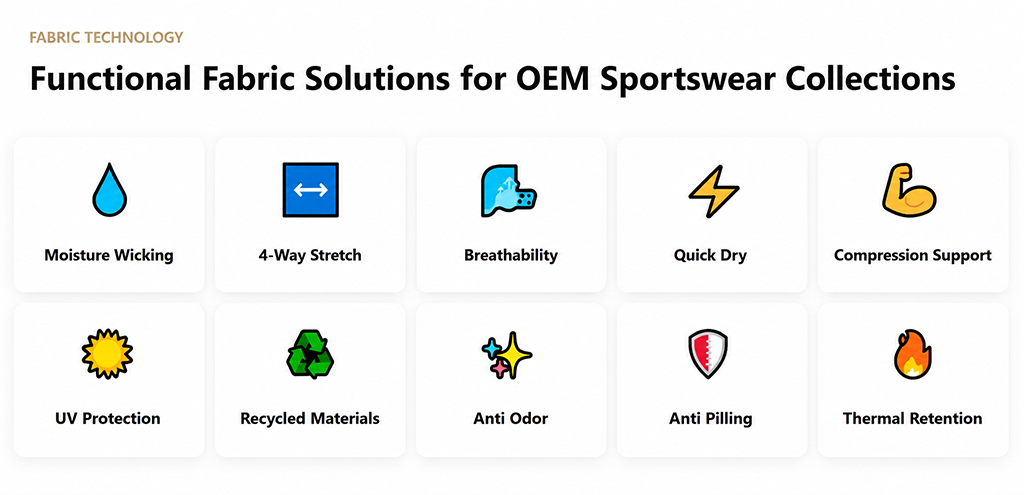
Many premium performance textiles are tested according to internationally recognized standards.
Different products often require different fabric priorities. Riding breeches typically focus on stretch, durability and shape retention, while show shirts emphasize breathability, lightweight comfort and a polished appearance. Outerwear and riding jackets may require additional wind resistance, water repellency or thermal performance depending on the intended season.
Common Fabric Applications in Equestrian Apparel
Product Type | Key Fabric Priorities |
Riding Breeches | Stretch, durability, recovery |
Riding Leggings | Soft hand feel, flexibility, moisture management |
Show Shirts | Breathability, lightweight comfort, wrinkle resistance |
Base Layers | Moisture wicking, temperature regulation |
Riding Jackets | Weather protection, mobility and durability |
The best equestrian apparel is rarely defined by a single fabric feature. Instead, it combines comfort, performance and long-term durability in a way that supports the rider throughout training, competition and everyday riding activities. Selecting the right fabric foundation helps brands create products that riders trust, recommend and purchase again.
Learn more about our performance sports fabric options for moisture management, stretch recovery and recycled materials.
Private Label Equestrian Clothing from Concept to Launch
Launching a successful equestrian apparel brand involves much more than placing a logo on an existing garment. Modern riders expect products that reflect a clear brand identity, deliver reliable performance and provide a consistent customer experience. For this reason, many growing brands choose private label manufacturing to build collections that are unique to their business rather than relying on generic products.
Private label equestrian clothing allows brands to control product positioning, pricing strategy, visual identity and customer perception. Whether you are launching your first collection or expanding an established product line, a structured development process helps transform ideas into market-ready products.
Typical Private Label Development Process
Stage | Objective |
Brand Concept | Define target riders, market positioning and product goals |
Product Planning | Select product categories and collection structure |
Design Development | Create technical specifications, sketches or reference concepts |
Sample Creation | Develop and evaluate prototypes |
Branding Integration | Add labels, logos, trims and packaging elements |
Production Approval | Confirm samples and manufacturing specifications |
Bulk Production | Begin commercial manufacturing |
Market Launch | Deliver products for retail, e-commerce or distribution |
Low MOQ Equestrian Clothing for New Brand Testing
One of the biggest challenges for emerging equestrian brands is balancing product development with inventory risk. Ordering too many units before validating market demand can tie up cash flow and create unnecessary stock pressure. Ordering too few units may increase costs and limit growth opportunities. A flexible manufacturing approach helps brands test products with greater confidence while reducing financial risk.
Many successful equestrian apparel companies did not begin with large production runs. Instead, they started with a focused collection, gathered customer feedback and gradually expanded based on proven demand. Small-batch manufacturing makes this process more practical and accessible.
Why Low MOQ Production Matters
Challenge | How Low MOQ Helps |
Uncertain Market Demand | Test products before committing to large inventory |
Limited Startup Budget | Reduce upfront investment |
New Product Launches | Validate new designs with real customers |
Seasonal Collections | Introduce limited releases with lower risk |
Market Expansion | Test new regions and customer segments |
For equestrian brands, low MOQ production can be especially valuable when introducing new riding breeches, show shirts, riding leggings or seasonal outerwear. Customer preferences often vary by market, riding discipline and price point. Smaller production runs allow brands to collect sales data and rider feedback before scaling up.
Typical Growth Path for Equestrian Brands
- Launch a small collection of core products.
- Test demand through online sales, clubs or retail partners.
- Collect feedback on fit, fabric and performance.
- Refine products based on customer insights.
- Increase production volume for proven bestsellers.
- Expand into additional product categories.
This approach helps brands avoid common mistakes such as overproduction, excessive inventory and premature product expansion.
Low MOQ manufacturing is not only beneficial for startups. Established brands also use small-batch production to test new collections, launch limited-edition products and evaluate market trends before making larger commitments. By combining flexible production with a structured growth strategy, equestrian businesses can develop stronger collections while maintaining greater control over inventory and cash flow.
Common Manufacturing Problems Equestrian Brands Face
Building a successful equestrian apparel brand requires more than good product ideas. Even strong designs can fail when manufacturing issues affect product quality, delivery schedules or customer satisfaction. Many riding brands experience similar challenges during sourcing and production, particularly when working with suppliers that lack equestrian-specific expertise.
Understanding these common manufacturing risks can help brands make better sourcing decisions and avoid costly setbacks.
Challenges Frequently Reported by Equestrian Brands
Common Problem | Business Impact |
Inconsistent Sizing | Higher return rates and customer complaints |
Sample-to-Bulk Differences | Loss of trust and unexpected product issues |
Fabric Quality Variations | Reduced product performance and durability |
Production Delays | Missed launch dates and lost sales opportunities |
High Minimum Orders | Increased inventory and financial pressure |
Poor Communication | Slow decision-making and project delays |
Limited Product Development Support | More revisions and longer launch timelines |
One of the most common complaints in equestrian apparel manufacturing is inconsistency between approved samples and bulk production. A riding breech that fits perfectly during sampling may perform differently when produced at scale if fabric sourcing, pattern grading or production controls are not properly managed.
Another challenge is selecting fabrics that perform well in real riding conditions. Riders expect garments to stretch comfortably, recover their shape, resist wear and remain breathable during training sessions. When fabrics fail to meet these expectations, customer satisfaction can quickly decline.
What Brands Should Look For
To reduce manufacturing risk, brands often prioritize suppliers that can provide:
- Clear sample approval procedures
- Consistent fabric sourcing standards
- Reliable quality control systems
- Transparent production updates
- Flexible order quantities
- Dedicated project communication
- Experience in equestrian apparel development
Successful sourcing is about balancing quality, consistency, lead time, communication, and total long-term business value—not simply selecting the lowest quotation. It is about building a supply chain that can consistently deliver products that match brand standards and customer expectations. By identifying potential manufacturing challenges early and working with experienced partners, equestrian brands can reduce risk, improve customer satisfaction and create a more stable foundation for long-term growth.
Quality Standards for Premium Equestrian Clothing
Premium equestrian apparel is judged by much more than appearance. Riders expect garments to perform consistently during training, competition and everyday use. A product that looks attractive but loses shape, restricts movement or wears out quickly can damage both customer satisfaction and brand reputation.
For equestrian brands, quality should be evaluated across multiple dimensions rather than relying solely on visual inspection. Understanding these standards helps buyers assess products more effectively and establish realistic expectations before production begins.
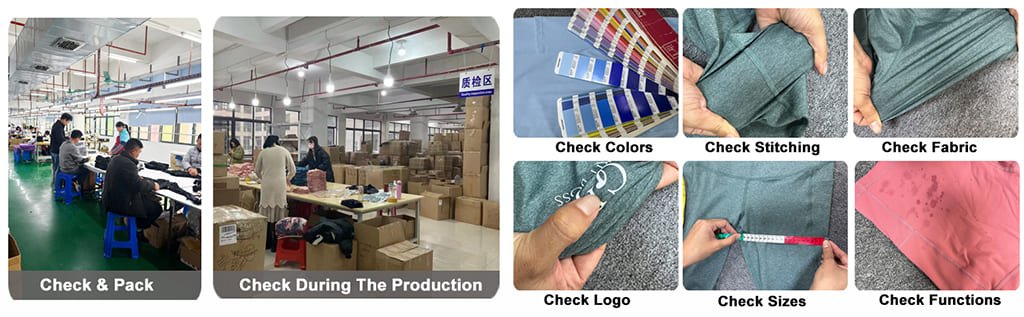
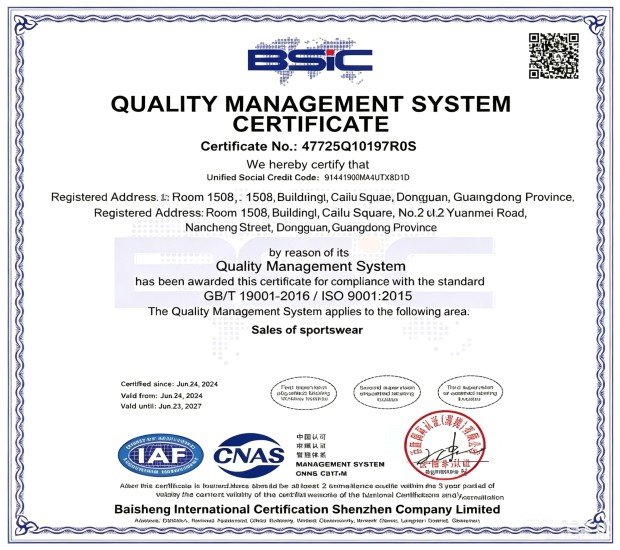
Our quality management follows internationally recognized quality management principles.
Key Quality Areas in Equestrian Apparel
Quality Factor | Why It Matters |
Fit Consistency | Ensures predictable sizing across all production runs |
Fabric Performance | Supports comfort, stretch, breathability and durability |
Shape Retention | Maintains garment structure after repeated wear and washing |
Stitching Quality | Improves durability in high-stress riding areas |
Color Consistency | Creates a uniform appearance across collections |
Trim Reliability | Prevents issues with zippers, elastics and accessories |
Print & Logo Durability | Maintains branding quality over time |
Overall Construction | Supports long-term rider satisfaction |
What Riders Commonly Expect
Premium riding apparel is expected to deliver:
- Comfortable movement both in and out of the saddle
- Reliable stretch and recovery
- Breathability during extended riding sessions
- Durable construction in high-friction zones
- Consistent fit across different sizes
- Professional appearance after repeated washing
- Stable performance throughout the product lifecycle
Product-Specific Quality Expectations
Product Type | Key Performance Requirement |
Riding Breeches | Stretch recovery, durability and secure grip performance |
Riding Leggings | Comfort, flexibility and shape retention |
Show Shirts | Breathability, lightweight comfort and polished appearance |
Base Layers | Moisture management and unrestricted movement |
Riding Jackets | Mobility, durability and weather protection |
Quality is often determined by the accumulation of small details. Accurate sizing, stable fabrics, clean construction and reliable finishing work together to create products that riders trust. Brands that maintain consistent quality standards are more likely to generate repeat purchases, positive reviews and long-term customer loyalty.
In the equestrian market, product quality is not simply a manufacturing benchmark. It is a reflection of the brand itself. Consistently meeting rider expectations helps transform individual purchases into lasting customer relationships and sustainable business growth.
What To Look For When Choosing An Equestrian Clothing Manufacturer
Choosing the right equestrian clothing manufacturer requires more than finding a factory that can produce garments. Professional riding apparel has unique requirements, including flexibility, durability, comfort, movement support, and performance-focused fabric selection. A qualified manufacturer should understand the demands of equestrian sports and provide solutions that match the expectations of riders, brands, clubs, and retailers.
For equestrian businesses, the right manufacturing partner plays an important role in product quality, brand reputation, and long-term growth. Before starting a cooperation, buyers should evaluate several key factors, including equestrian apparel experience, customization capability, fabric expertise, production flexibility, quality control, and supply chain support.
Dongguan Pair Fashion has specialized in functional sportswear OEM and ODM manufacturing since 2016, supporting global brands with custom equestrian apparel development, private label riding collections, and complete production solutions. With professional development capabilities, flexible production options, and international quality management standards, we help equestrian brands turn product concepts into reliable market-ready collections.
1. Experience In Professional Equestrian Apparel Manufacturing
A reliable equestrian clothing manufacturer should have a clear understanding of riding apparel requirements. Unlike ordinary sportswear, equestrian clothing needs to provide comfort during long riding sessions while maintaining durability, flexibility, and professional appearance.
Different riding products require specific construction methods and fabric solutions.
| Equestrian Product | Manufacturing Requirements |
|---|---|
| Riding Breeches | Stretch performance fabrics, durable construction, comfortable riding fit |
| Equestrian Tops | Breathable materials, moisture management, flexible movement |
| Riding Jackets | Lightweight protection and outdoor functionality |
| Competition Apparel | Professional styling and performance details |
| Riding Base Layers | Soft touch, stretch support, and quick-dry performance |
Pair Fashion develops different categories of equestrian apparel, including riding breeches, tops, jackets, competition styles, and customized riding collections. Our experienced development team supports brands with product structure optimization, pattern development, and manufacturing solutions based on different market requirements.
2. Customization Capability For Private Label Equestrian Brands
For growing equestrian brands, customized products are essential for building market differentiation. A professional private label equestrian clothing manufacturer should provide support from initial concepts to final production.
Pair Fashion provides customized manufacturing services including:
- Custom riding apparel designs
- Private label branding solutions
- Custom labels and packaging
- Fabric and color development
- Pattern adjustment and size grading
- Logo embroidery and printing
- Product detail optimization
Whether customers provide technical packs, reference samples, design sketches, or product ideas, our development team can assist with converting concepts into finished products.
With more than 6,000 developed styles and professional sample development capability, Pair Fashion helps brands reduce product development time and improve manufacturing efficiency.
3. Functional Fabric Knowledge For Riding Apparel
Fabric selection is one of the most important factors when choosing an equestrian apparel supplier. Riding garments need to maintain performance during repeated movement, outdoor activities, and long-term use.
Different products require different fabric characteristics:
| Product Type | Recommended Fabric Features |
|---|---|
| Riding Breeches | High stretch, compression, abrasion resistance |
| Competition Shirts | Lightweight, breathable, moisture-wicking |
| Riding Jackets | Wind protection, durability, functional comfort |
| Base Layers | Soft hand feel, elasticity, quick drying |
Pair Fashion provides access to functional fabrics including nylon, polyester, recycled materials, moisture-wicking fabrics, UV-resistant fabrics, and anti-bacterial options. Fabric selection can be customized according to product function, target market, and brand positioning.
4. Flexible MOQ And Production Support
Many emerging equestrian brands need a supplier that can support smaller launches before scaling production. Flexible manufacturing capability allows brands to test collections while reducing inventory risks.
Pair Fashion supports:
- Sample development starting from individual pieces
- Flexible MOQ from 50pcs for standard products
- Small-batch production for market testing
- Multi-style collection development
- Stable repeat production for growing brands
This flexible approach allows startups, boutique riding brands, and established retailers to develop customized equestrian apparel collections based on their business stage.
5. Quality Control And Manufacturing Reliability
Consistent quality is essential for equestrian apparel because customers expect riding products to maintain performance, appearance, and durability over time.
A professional manufacturer should have quality control throughout the entire production process.
Pair Fashion follows a structured quality management system including:
- Incoming material inspection
- Production process inspection
- Final product inspection
With professional QC personnel and ISO9001 quality management standards, we control fabric quality, workmanship, measurements, finishing details, and packaging before shipment to ensure stable production results.
6. Complete Support From Product Development To Delivery
A reliable equestrian clothing manufacturer should provide more than production capacity. Brands also need support throughout product development, manufacturing, and delivery.
Pair Fashion provides:
- Product development assistance
- Pattern making and sample creation
- Fabric sourcing
- Custom accessories
- Mass production
- Quality inspection
- International shipping support
With professional production teams, dedicated manufacturing lines, and complete supply chain coordination, Pair Fashion helps global equestrian brands develop and deliver customized riding apparel collections efficiently.
Choosing The Right Long-Term Equestrian Manufacturing Partner
Selecting an equestrian clothing manufacturer is an important decision for any riding apparel brand. Beyond pricing, buyers should evaluate manufacturing experience, customization ability, fabric knowledge, quality control systems, and long-term cooperation capability.
A reliable partner should not only produce garments but also provide professional support throughout the product development process.
With functional apparel manufacturing experience, equestrian product development capability, flexible MOQ solutions, and complete OEM/ODM services, Pair Fashion works with global riding brands, retailers, clubs, and startups to create customized equestrian clothing collections from concept to production.
Trusted Manufacturing Standards For Global Sportswear Brands
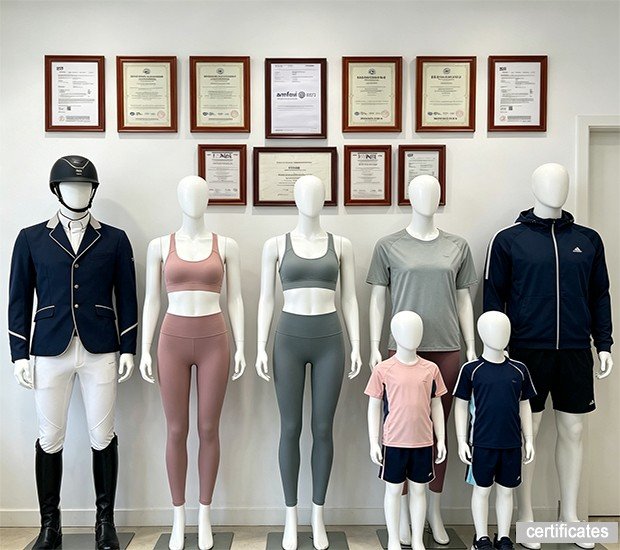
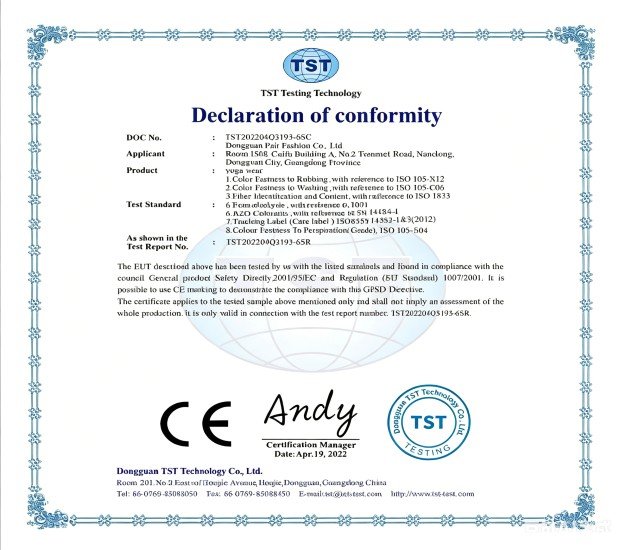
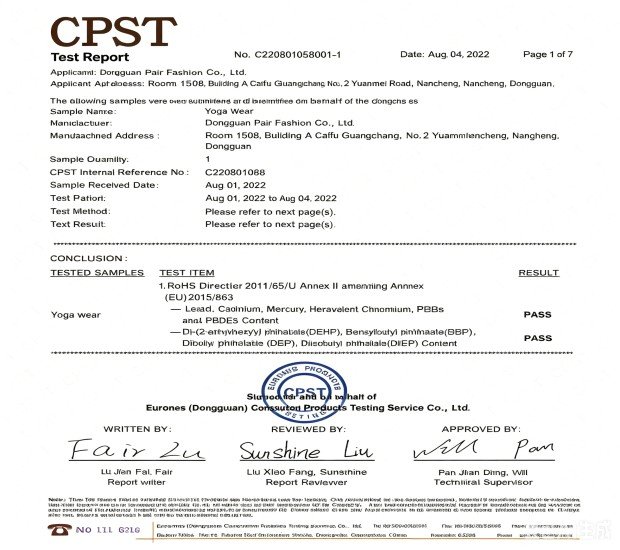
We operate under internationally recognized quality, sustainability, and ethical manufacturing standards. Our certifications help ensure consistent product quality, responsible sourcing, and reliable production for global sportswear brands.
- 20+ Countries Served
- 6000+ Styles Developed
- 50,000 PCS Monthly Capacity
- 3-Day Sample Development
Custom Equestrian Apparel Categories We Manufacture
A successful equestrian brand usually requires more than one product. From daily training wear to professional competition apparel, brands need a complete collection that combines performance, comfort, durability, and consistent design language.
As a professional custom equestrian apparel manufacturer, Pair Fashion supports global riding brands, retailers, clubs, and startups with customized equestrian clothing development. We manufacture different riding apparel categories with flexible customization options, including fabric selection, pattern adjustment, branding details, and private label solutions.
Whether you are developing a new equestrian collection or expanding an existing riding apparel line, our manufacturing team can help transform product ideas into functional and market-ready riding garments.
Riding Breeches & Equestrian Riding Pants
Riding breeches are one of the most important products in any equestrian apparel collection. They need to provide riders with flexibility, comfort, durability, and a secure fit during different riding activities.
Pair Fashion develops customized riding breeches with features such as:
- Four-way stretch performance fabrics
- Comfortable riding-focused patterns
- Durable construction for repeated use
- Different waistband and pocket options
- Customized colors, logos, and branding details
For brands looking to create private label riding collections, we support different styles and market positioning, from everyday training breeches to premium riding apparel lines.
Competition Shirts & Riding Tops
Competition shirts and riding tops require a balance between professional appearance and functional performance. Riders expect garments that look polished while allowing comfortable movement during training and competitions.
Our manufacturing capabilities include:
- Short sleeve and long sleeve riding shirts
- Competition-ready designs
- Breathable and moisture-wicking fabrics
- Custom collars, cuffs, and logo placement
- Brand-specific styling development
As an experienced riding apparel manufacturer, Pair Fashion helps brands create equestrian tops that meet both performance requirements and modern market trends.
Equestrian Jackets & Outdoor Riding Apparel
Equestrian riders often need versatile outerwear that provides comfort and protection in changing outdoor conditions. Custom riding jackets can help brands expand their product range beyond basic riding apparel.
We manufacture customized equestrian outerwear including:
- Lightweight riding jackets
- Training jackets
- Wind-resistant outer layers
- Functional riding coats
Different materials, constructions, and design details can be adjusted according to the target market, climate requirements, and brand positioning.
Riding Base Layers & Performance Training Wear
Modern equestrian brands are increasingly developing performance-focused collections that combine riding functionality with everyday active lifestyles.
Pair Fashion produces customized base layers and training apparel featuring:
- Soft and stretchable fabrics
- Moisture management properties
- Comfortable body-fit construction
- Breathable designs for active movement
These products are suitable for brands developing premium riding collections, training apparel lines, and lifestyle-oriented equestrian clothing.
Equestrian Sets & Complete Riding Collections
For brands that want a consistent product identity, developing coordinated equestrian sets can create a stronger market presence.
Pair Fashion supports complete collection development, including:
- Matching riding tops and bottoms
- Seasonal riding collections
- Customized color combinations
- Coordinated branding elements
Our OEM and ODM capabilities allow brands to develop complete equestrian apparel collections instead of individual products, improving consistency across different product categories.
Club, Team & Custom Event Apparel
Beyond commercial riding brands, Pair Fashion also supports equestrian clubs, teams, and organizations requiring customized apparel solutions.
We provide:
- Custom team uniforms
- Club-branded riding apparel
- Event and competition clothing
- Personalized logos and colors
With flexible production options and customization support, we help organizations create professional apparel that represents their identity.
Develop Your Complete Equestrian Clothing Collection With One Manufacturing Partner
Choosing the right equestrian clothing manufacturer allows brands to develop a complete product range with better consistency, easier communication, and more efficient supply chain management.
From riding breeches and competition shirts to jackets, base layers, and customized team apparel, Pair Fashion provides complete OEM and ODM manufacturing support for global equestrian brands.
With professional development capabilities, flexible customization options, and experience in functional apparel manufacturing, we help customers build high-quality equestrian collections from concept to production.
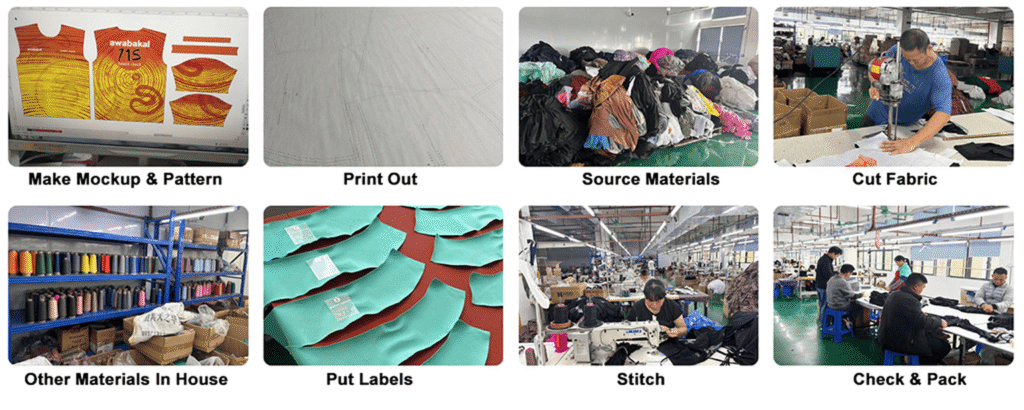
Our Equestrian Clothing Development Process
Premium equestrian apparel is judged by much more than appearance. Riders expect garments to perform consistently during training, competition and everyday use. A product that looks attractive but loses shape, restricts movement or wears out quickly can damage both customer satisfaction and brand reputation.
For equestrian brands, quality should be evaluated across multiple dimensions rather than relying solely on visual inspection. Understanding these standards helps buyers assess products more effectively and establish realistic expectations before production begins.
Our quality management follows internationally recognized quality management principles.
Key Quality Areas in Equestrian Apparel
Quality Factor | Why It Matters |
Fit Consistency | Ensures predictable sizing across all production runs |
Fabric Performance | Supports comfort, stretch, breathability and durability |
Shape Retention | Maintains garment structure after repeated wear and washing |
Stitching Quality | Improves durability in high-stress riding areas |
Color Consistency | Creates a uniform appearance across collections |
Trim Reliability | Prevents issues with zippers, elastics and accessories |
Print & Logo Durability | Maintains branding quality over time |
Overall Construction | Supports long-term rider satisfaction |
Information That Helps Speed Up Development
Brands can usually accelerate the development process by providing:
- Technical packs
- Size charts
- Reference garments
- Fabric preferences
- Branding requirements
- Logo files
- Packaging specifications
However, complete technical documentation is not always required. Many new equestrian brands begin with product ideas, inspiration images or competitor references and gradually refine the collection during development.
A structured process benefits both brands and manufacturers. It helps ensure that riding breeches fit correctly, show shirts meet performance expectations and branding elements are applied consistently across the entire collection.
By following a clear development roadmap, brands gain greater visibility into timelines, approval stages and production progress. This reduces uncertainty, improves communication and creates a smoother path from product concept to market launch.
Why Brands Switch to a Specialized Equestrian Clothing Manufacturer
As equestrian brands grow, many discover that producing riding apparel requires a different level of expertise than manufacturing general sportswear. While activewear and equestrian clothing share some similarities, riders have unique performance requirements that influence garment design, fabric selection, fit development and construction methods.
For early-stage brands, working with a general sportswear supplier may seem sufficient. However, as customer expectations increase, many companies begin searching for manufacturing partners with dedicated equestrian apparel experience. This transition often happens when brands encounter challenges related to rider comfort, product performance or market positioning.
Key Differences Between General Sportswear and Equestrian Apparel
Equestrian riders often spend extended periods in the saddle, making fit and comfort especially important. Garments must perform during movement while maintaining durability in areas exposed to friction and repeated use. Even small design details can influence the rider experience.
Benefits of Working with a Specialized Equestrian Manufacturer
- Better understanding of riding-specific product requirements
- More efficient development of breeches, show shirts and riding jackets
- Improved fabric recommendations for riding applications
- Greater awareness of rider fit expectations
- Faster product refinement during sampling
- Stronger alignment with equestrian market trends
Specialized manufacturers also tend to understand how different riding disciplines, customer groups and regional markets influence product development. What works for a competition rider may differ significantly from what a leisure rider or riding club expects.
As the equestrian apparel market becomes increasingly competitive, product quality and rider experience continue to play a major role in brand success. Working with a manufacturing partner that understands the technical and commercial realities of equestrian clothing can help brands develop stronger collections, reduce development challenges and build greater credibility within the riding community.
Area | General Sportswear | Equestrian Apparel |
Movement Requirements | Running, fitness, gym activities | Riding-specific movement and saddle interaction |
Fit Development | General athletic fit | Rider-focused ergonomic fit |
Fabric Priorities | Comfort and performance | Comfort, durability and riding functionality |
Product Features | Standard sportswear details | Grip systems, reinforced areas and riding-specific construction |
Customer Expectations | Athletic performance | Athletic performance plus riding practicality |
Equestrian riders often spend extended periods in the saddle, making fit and comfort especially important. Garments must perform during movement while maintaining durability in areas exposed to friction and repeated use. Even small design details can influence the rider experience.
Benefits of Working with a Specialized Equestrian Manufacturer
- Better understanding of riding-specific product requirements
- More efficient development of breeches, show shirts and riding jackets
- Improved fabric recommendations for riding applications
- Greater awareness of rider fit expectations
- Faster product refinement during sampling
- Stronger alignment with equestrian market trends
Specialized manufacturers also tend to understand how different riding disciplines, customer groups and regional markets influence product development. What works for a competition rider may differ significantly from what a leisure rider or riding club expects.
As the equestrian apparel market becomes increasingly competitive, product quality and rider experience continue to play a major role in brand success. Working with a manufacturing partner that understands the technical and commercial realities of equestrian clothing can help brands develop stronger collections, reduce development challenges and build greater credibility within the riding community.
Why Leading Equestrian Brands Choose a Specialized Manufacturing Partner
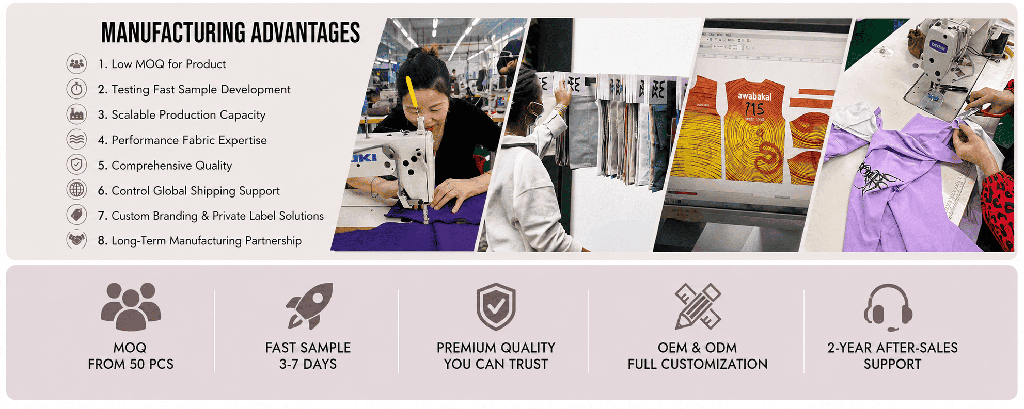
Choosing a manufacturing partner is not simply a sourcing decision. For most equestrian brands, it is a decision that directly affects product quality, customer satisfaction, launch timelines and long-term growth. The right manufacturing relationship should create measurable business value beyond garment production.
Successful riding apparel brands often view their manufacturer as an extension of their product development team. Instead of focusing only on production costs, they evaluate how a supplier can contribute to faster development, more reliable quality and better overall business performance.
Key Outcomes Brands Often Prioritize
For equestrian brands, speed is often a competitive advantage. The ability to develop new riding breeches, launch seasonal collections or replenish bestselling products quickly can help brands respond more effectively to customer demand and market trends.
Consistency is equally important. Riders who purchase a product and enjoy the fit, comfort and performance expect the same experience when they order again. Maintaining this consistency strengthens customer trust and increases repeat purchases.
Long-Term Value Beyond Production
A specialized equestrian manufacturing partner can also contribute to:
- Product refinement based on rider requirements
- More efficient sampling and development
- Improved fabric and trim selection
- Better inventory planning
- Reduced sourcing complexity
- Support for future collection expansion
As brands grow, these advantages often become more valuable than short-term cost savings. A dependable manufacturing relationship helps reduce operational challenges, improve customer experiences and create a stronger foundation for sustainable growth.
Ultimately, the goal is not simply to produce equestrian clothing. It is to help brands deliver products that riders trust, recommend and purchase repeatedly. The strongest manufacturing partnerships are built around that shared objective.
Business Objective | Expected Benefit |
Faster Product Launches | Shorter development cycles and quicker market entry |
Better Product Consistency | More predictable quality across production runs |
Lower Development Risk | Fewer errors during sampling and production |
Stronger Brand Identity | Greater control over product presentation and customization |
Improved Customer Satisfaction | Better fit, comfort and performance for riders |
Easier Supply Chain Management | Fewer vendors and simplified communication |
Scalable Growth | Ability to support increasing order volumes over time |
For equestrian brands, speed is often a competitive advantage. The ability to develop new riding breeches, launch seasonal collections or replenish bestselling products quickly can help brands respond more effectively to customer demand and market trends.
Consistency is equally important. Riders who purchase a product and enjoy the fit, comfort and performance expect the same experience when they order again. Maintaining this consistency strengthens customer trust and increases repeat purchases.
Long-Term Value Beyond Production
A specialized equestrian manufacturing partner can also contribute to:
- Product refinement based on rider requirements
- More efficient sampling and development
- Improved fabric and trim selection
- Better inventory planning
- Reduced sourcing complexity
- Support for future collection expansion
As brands grow, these advantages often become more valuable than short-term cost savings. A dependable manufacturing relationship helps reduce operational challenges, improve customer experiences and create a stronger foundation for sustainable growth.
Ultimately, the goal is not simply to produce equestrian clothing. It is to help brands deliver products that riders trust, recommend and purchase repeatedly. The strongest manufacturing partnerships are built around that shared objective.
1. Product Development
Regular monthly product development ensures consistent updates to your brand line.
2. Fabric Sourcing
Regular monthly product development ensures consistent updates to your brand line.
3. Sample Making
Regular monthly product development ensures consistent updates to your brand line.
4. Bulk Production
Regular monthly product development ensures consistent updates to your brand line.
5. Packaging & Delivery
Regular monthly product development ensures consistent updates to your brand line.
Complete OEM & ODM Sportswear Solutions
We provide complete custom sportswear manufacturing services from concept development and fabric sourcing to bulk production and worldwide delivery.
- OEM & ODM Product Development
- Functional Fabric Sourcing & Material Selection
- Pattern Making & Sample Development
- Private Label Branding & Custom Packaging
- Quality-Controlled Bulk Manufacturing
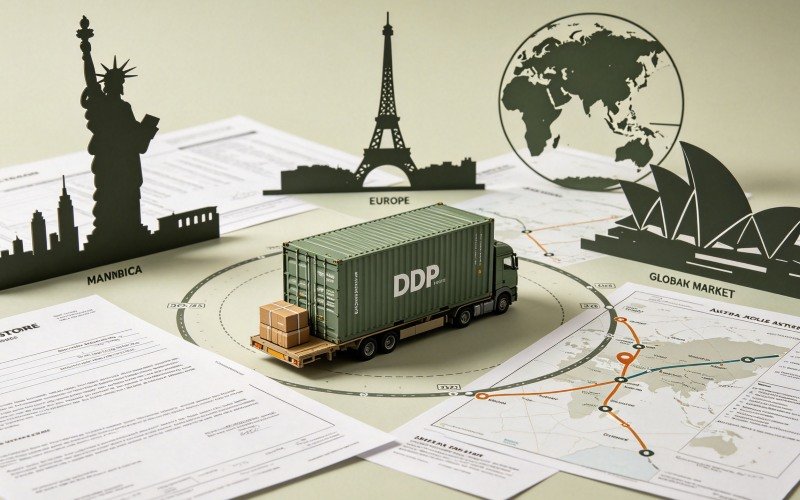
- Global DDP Shipping & Delivery Support
Frequently Asked Questions About Custom Equestrian Clothing
FAQ 1
What Is the Best MOQ for Launching a Private Label Equestrian Clothing Brand?
The ideal MOQ for a private label equestrian clothing brand is not necessarily the lowest possible quantity. The best MOQ allows you to validate market demand, control inventory risk, and gather real customer feedback before committing to larger production volumes.
Many emerging equestrian brands make the mistake of launching too many products at once. A more effective strategy is to start with a focused collection built around bestselling categories such as riding breeches, show shirts, or base layers. This approach helps brands test fit, pricing, and rider preferences without excessive inventory pressure.
Brands that begin with controlled production runs often gain more accurate sales data, improve cash flow management, and make better product expansion decisions. Low-risk testing usually creates a stronger foundation for long-term brand growth than large speculative inventory investments.
FAQ 2
Can You Develop Custom Equestrian Clothing From Photos, Sketches, or Reference Samples?
Yes. Most custom equestrian apparel projects begin with reference materials such as photos, sketches, competitor products, inspiration boards, or existing garments rather than fully completed Tech Packs. A structured development process can transform these concepts into production-ready products.
Experienced equestrian clothing manufacturers can analyze garment construction, riding functionality, fit requirements, fabric performance, and rider expectations before creating samples. This allows brands to move from concept to commercialization without needing extensive technical documentation from the beginning.
Whether the project involves riding breeches, show shirts, competition apparel, or equestrian outerwear, the development process is designed to refine ideas, reduce production risks, and create products that meet both rider expectations and market demands.
FAQ 3
What Equestrian Clothing Products Are Best for a New Brand to Launch First?
Most successful equestrian brands begin with a focused collection rather than launching every product category at once. Starting with proven rider essentials often reduces risk and creates a stronger foundation for future expansion.
Core products such as riding breeches, show shirts, base layers, and riding leggings typically generate the highest initial demand because they are used frequently by both recreational and competitive riders. These products also create opportunities for repeat purchases and coordinated collection development.
Once demand has been validated, brands can gradually expand into outerwear, competition jackets, teamwear, and lifestyle apparel. A phased product strategy often leads to better inventory management, more efficient marketing, and stronger long-term brand positioning.
FAQ 4
What Makes a Specialized Equestrian Clothing Manufacturer Different From a General Sportswear Factory?
A specialized equestrian clothing manufacturer understands rider movement, saddle interaction, competition requirements, grip technologies, and riding-specific garment construction. These factors differ significantly from general activewear development.
While sportswear focuses primarily on gym, running, or fitness activities, equestrian apparel must perform during extended riding sessions, maintain comfort in the saddle, and withstand friction in high-contact areas. Product details such as silicone grip systems, reinforced panels, ergonomic fit development, and competition-ready presentation are often critical.
Manufacturers with dedicated equestrian experience are usually better equipped to recommend suitable fabrics, refine rider-specific fit, and develop products that align with the expectations of modern equestrian consumers.
FAQ 5
How Long Does It Take to Develop Custom Equestrian Clothing?
Most custom equestrian clothing projects move through several stages before bulk production, including product evaluation, sampling, fit refinement, approval, manufacturing, and delivery. The total timeline depends on garment complexity, material sourcing, revision requirements, and order volume.
Products such as riding breeches, show shirts, and technical riding jackets often require additional fit validation because rider comfort and performance are directly affected by construction details. While faster development is always desirable, rushing the process can lead to sizing issues, product revisions, and avoidable production costs.
Brands that allow sufficient time for sample evaluation and fit refinement generally achieve better product consistency, stronger rider satisfaction, and smoother product launches. A structured timeline helps reduce uncertainty while improving communication throughout the development process.
FAQ 6
Can I Create a Full Private Label Equestrian Clothing Collection?
Yes. A full private label equestrian collection can be developed with customized products, branding elements, packaging, and presentation details that reflect your unique market position and customer experience goals.
Private label development goes far beyond adding a logo to an existing garment. It often includes custom labels, hang tags, packaging, trims, color programs, fit specifications, and product presentation standards. These elements work together to create a recognizable brand identity.
For equestrian businesses, strong branding can increase perceived value, strengthen customer loyalty, and create differentiation in a competitive market. Riders are often drawn to brands that deliver a consistent experience across multiple products rather than isolated individual items. A well-developed private label collection helps build long-term brand equity and customer trust.
FAQ 7
What Fabrics Are Best for Riding Breeches and Show Shirts?
The best fabrics for equestrian apparel combine stretch, durability, breathability, and long-term performance. Different product categories require different fabric priorities based on rider activity, comfort expectations, and environmental conditions.
For riding breeches, fabrics are typically selected for stretch recovery, abrasion resistance, and shape retention. Show shirts often prioritize lightweight comfort, moisture management, wrinkle resistance, and a polished appearance suitable for competition settings.
Successful equestrian brands usually evaluate fabrics not only for appearance but also for how they perform during real riding conditions. The right fabric choice improves rider comfort, enhances product durability, and helps create garments that customers trust and purchase repeatedly throughout multiple riding seasons.
FAQ 8
How Can Equestrian Brands Reduce Product Returns and Sizing Complaints?
The most effective way to reduce returns is to identify fit, sizing, and performance issues before production begins. For equestrian apparel, rider comfort and fit consistency often have a greater impact on customer satisfaction than minor price differences.
Many returns originate from inaccurate sizing, poor fit during riding, limited mobility, fabric performance issues, or inconsistencies between approved samples and bulk production. These challenges can often be addressed through structured product validation.
Brands that invest in fit samples, wear testing, size set evaluations, and pre-production approvals generally achieve lower return rates and stronger rider satisfaction. A proactive development process not only reduces after-sales costs but also helps build trust, improve reviews, and increase repeat purchases across future collections.
Start Your Custom Equestrian Clothing Project
Whether you are launching a new riding apparel brand, expanding an existing equestrian collection or developing products for a private label business, every successful project starts with a clear conversation. The earlier product requirements, brand goals and rider expectations are defined, the more efficiently the development process can move forward.
A custom equestrian clothing project does not need to begin with a complete technical package. Some brands arrive with detailed specifications, while others start with inspiration images, competitor products or a rough concept. Both approaches can lead to successful product development when supported by a structured manufacturing process.
Information That Helps Start a Project
Project Information | Why It Helps |
Product Category | Defines development priorities and construction requirements |
Reference Images | Helps communicate design direction |
Target Rider Group | Guides fit, functionality and product positioning |
Fabric Preferences | Supports material selection and performance planning |
Logo & Branding Files | Prepares products for private label development |
Estimated Quantity | Assists with production planning |
Launch Timeline | Helps coordinate development and manufacturing schedules |
Typical Starting Points
Many equestrian apparel projects begin with one of the following:
- A riding breeches concept
- A show shirt design
- A private label collection idea
- A competitor product for reference
- A new product category expansion
- A seasonal collection plan
- A club or teamwear project
No matter where the process begins, the objective remains the same: creating products that riders enjoy wearing and brands feel confident selling.
What Happens Next
Once project requirements are reviewed, the development process typically moves into product evaluation, material selection, sample development and production planning. Each stage helps transform ideas into commercially viable equestrian apparel that aligns with both rider expectations and brand objectives.
The strongest equestrian collections are rarely built overnight. They are developed through careful planning, continuous refinement and close collaboration between brands and manufacturing partners. A structured approach helps reduce risk, improve efficiency and create products that support long-term business growth.
Ready to build a premium equestrian apparel collection with a reliable manufacturing partner? Send us your sketches, reference samples, or product ideas today, and our development team will help transform them into market-ready products.
Share your product ideas, reference samples, technical specifications or brand requirements, and begin building a collection designed specifically for your riders and your market.
Browse Sportswear Catalog Categories
Explore custom sportswear catalog categories including activewear, equestrian apparel, lounge wear and specialty OEM apparel collections for global brands.
- Yoga Pant
- Sports Bras
- Tank Tops
- Gym Shorts
- Men & Kids Sportswear
- Riding Tops
- Breeches
- Competition Wear
- Jackets
- Man & Kids Equestrian
- Joggers
- Sweatshirt & Hoodies
- Sweaters
- Coat & Jacket
- Men & Kids Loungewear
Other OEM Apparel
- Tennis Clothing
- Jumpsuit
- Dress & Skirts
- Plus Size Activewear
- Maternity Activewear
Get In Touch
Contact our OEM/ODM specialists for product development, sampling, pricing, and production support.