OEM/ODM Sportswear Manufacturer | 3-Day Sampling | Low MOQ | 50K Monthly Capacity | ISO9001 & BSCI Certified
Custom Sports Jackets Manufacturer for Private Label Brands and Teams
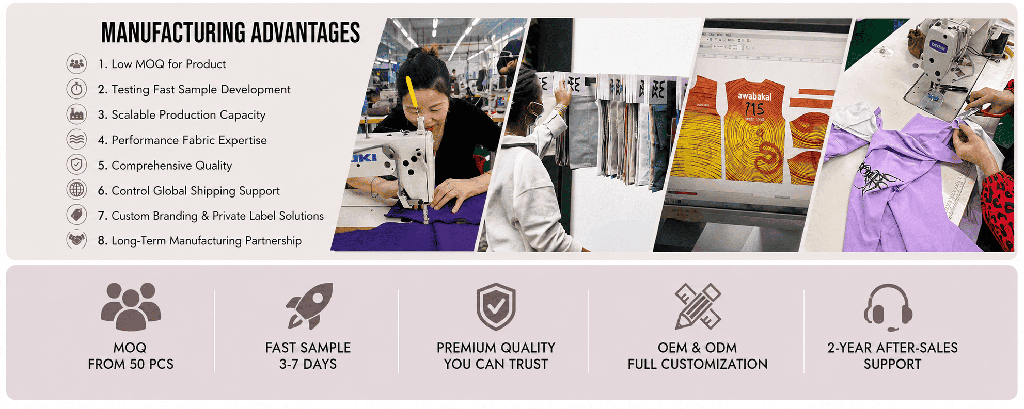
Pair Fashion is a trusted sports jackets manufacturer specializing in custom performance outerwear for activewear brands, sports teams, clubs, and retailers. From lightweight training jackets to insulated performance outerwear, we provide OEM and private label manufacturing with flexible MOQ, fast sampling, and reliable bulk production.
50K+
Monthly Capacity
3 Days
Fast Sampling
6,000+
Custom Styles
10+
Years Experience
Build Sports Jackets With a Sports Jackets Manufacturer That Understands Real Athletes
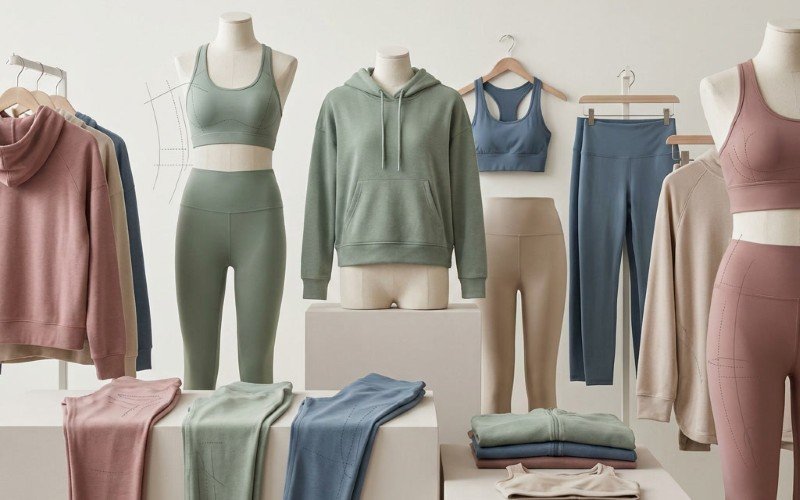
As an experienced sports jackets manufacturer, we help brands develop performance jackets that combine comfort, functionality, and everyday wearability for training, travel, and active lifestyles. It should feel comfortable during movement, protect against changing weather and look polished enough for everyday wear. This section helps brands understand how the right development process can turn a jacket idea into a practical, retail-ready product.
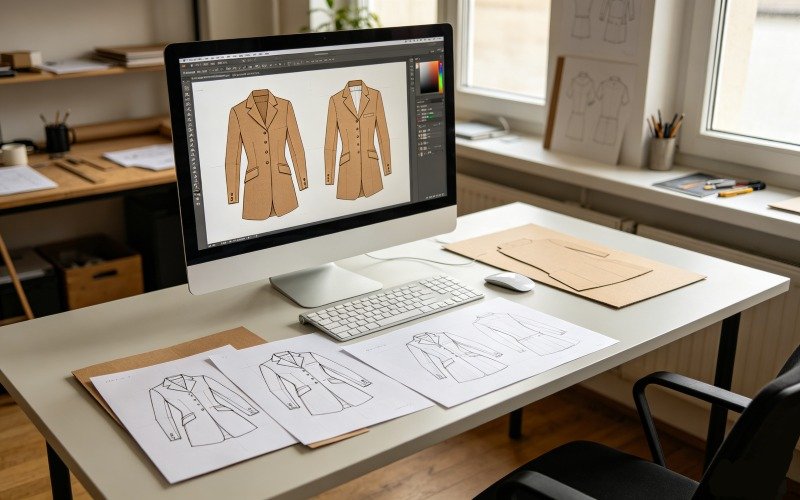
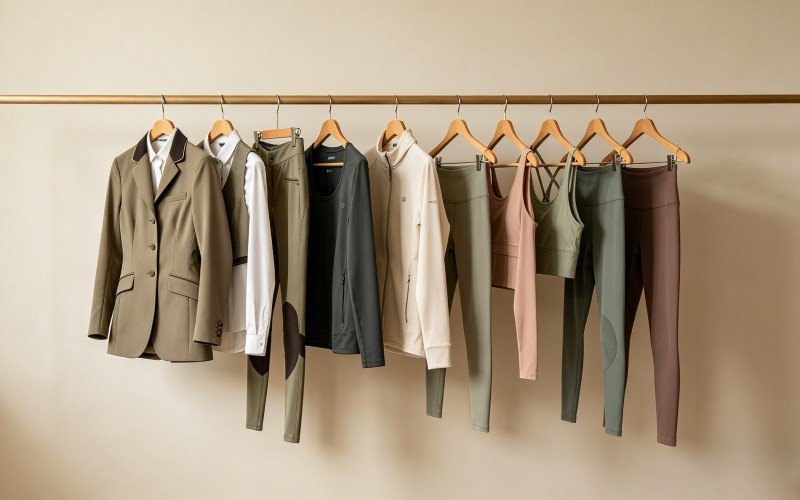
At Pairfashion Sportswear, we support activewear brands, sportswear labels, teamwear buyers, equestrian apparel brands, DTC sellers and private label retailers in developing custom sports jackets, training jackets, windbreakers, track jackets, lightweight outdoor jackets and equestrian jackets. Your project can start from a Tech Pack, reference sample, product photo, sketch or clear product concept.
Modern customers often expect one jacket to work across multiple situations. A sports jacket may be worn during warm-ups, outdoor training, stable work, light travel, weekend errands or casual athleisure styling. That means the product must balance performance and lifestyle value rather than focusing on one narrow use case.
Key development factors include:
- Wind protection
- Breathability
- Lightweight comfort
- Stretch and mobility
- Durable stitching
- Pocket functionality
- Logo placement
- Retail-ready presentation
Brand Goal | Jacket Development Focus |
Training collection | Lightweight fabrics, mobility and ventilation |
Outdoor sports line | Wind resistance, light rain protection and durability |
Equestrian apparel range | Riding comfort, practical pockets and longer coverage |
Teamwear program | Consistent sizing, logos and repeat production |
Private label launch | Custom trims, labels, packaging and low-risk testing |
A well-developed sports jacket becomes more than a seasonal item. It can support product launches, team orders, outdoor capsules, equestrian collections and long-term replenishment programs. With structured OEM/ODM development, flexible customization and performance fabric sourcing, Pairfashion Sportswear helps brands create sports jackets that customers can wear repeatedly across sport, travel and everyday life.
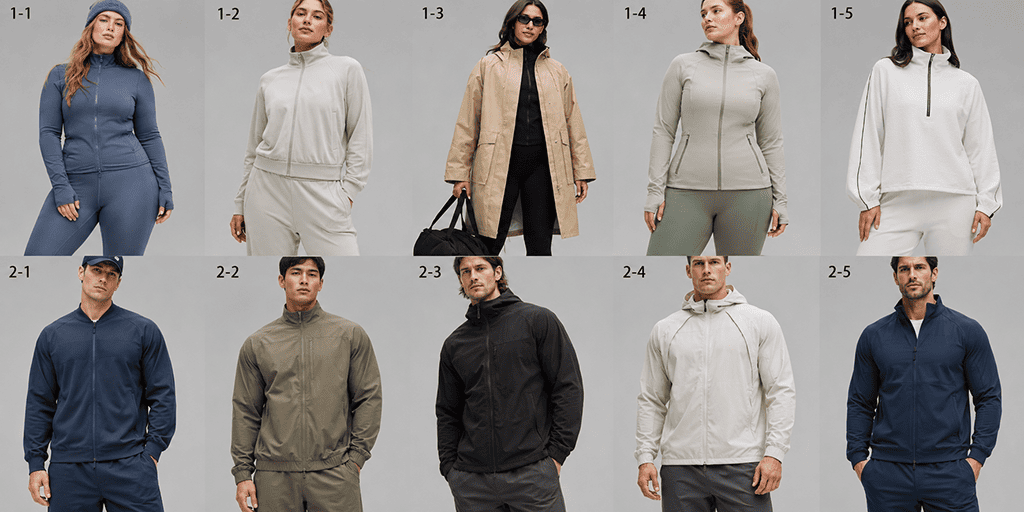
Develop Jacket Collections Around Real Sporting Scenarios
The most successful sports jacket collections are designed around how customers actually use them. Different activities place different demands on a garment, and a jacket that performs well for running may not be the best solution for equestrian riding, team training or outdoor fitness.
Rather than developing isolated products, many growing sportswear brands build jacket collections around specific user scenarios. This approach creates stronger product positioning, improves customer understanding and makes it easier to expand collections over time.
Popular Sports Jacket Categories
Jacket Type | Primary Use | Key Features |
Windbreaker Jacket | Running and outdoor training | Lightweight protection and packability |
Training Jacket | Gym and team sports | Comfort, mobility and versatility |
Track Jacket | Warm-up and lifestyle wear | Athletic styling and everyday appeal |
Softshell Jacket | Outdoor activity | Wind resistance and durability |
Running Jacket | High-movement sports | Lightweight and breathable construction |
Equestrian Jacket | Riding and stable work | Freedom of movement and practical functionality |
Questions Brands Should Consider
Before developing a jacket collection, it is useful to define:
- Who is the target customer?
- What sport or activity is the jacket designed for?
- Will it be worn year-round or seasonally?
- Is performance or lifestyle appeal the primary focus?
- Will products be sold individually or as coordinated collections?
Building a Strong Product Structure
Many brands begin with one core jacket style and gradually expand into complementary categories.
A common collection structure includes:
- A signature training jacket
- A lightweight windbreaker
- A seasonal outerwear style
- Activity-specific jacket options
- Limited-edition color releases
Sports jackets perform best when they are developed around real customer needs rather than temporary trends. By aligning jacket styles with actual sporting scenarios, brands can create collections that feel more relevant, more functional and more valuable to the people who wear them.
This scenario-based development approach is especially important for brands looking to position themselves as premium custom sports jacket manufacturers in global markets.
Collection Strategy | Benefit |
Single Hero Product | Faster market entry |
Multi-Scenario Collection | Broader customer appeal |
Seasonal Expansion | Additional sales opportunities |
Sport-Specific Range | Stronger brand positioning |
Sports jackets perform best when they are developed around real customer needs rather than temporary trends. By aligning jacket styles with actual sporting scenarios, brands can create collections that feel more relevant, more functional and more valuable to the people who wear them.
This scenario-based development approach is especially important for brands looking to position themselves as premium custom sports jacket manufacturers in global markets.
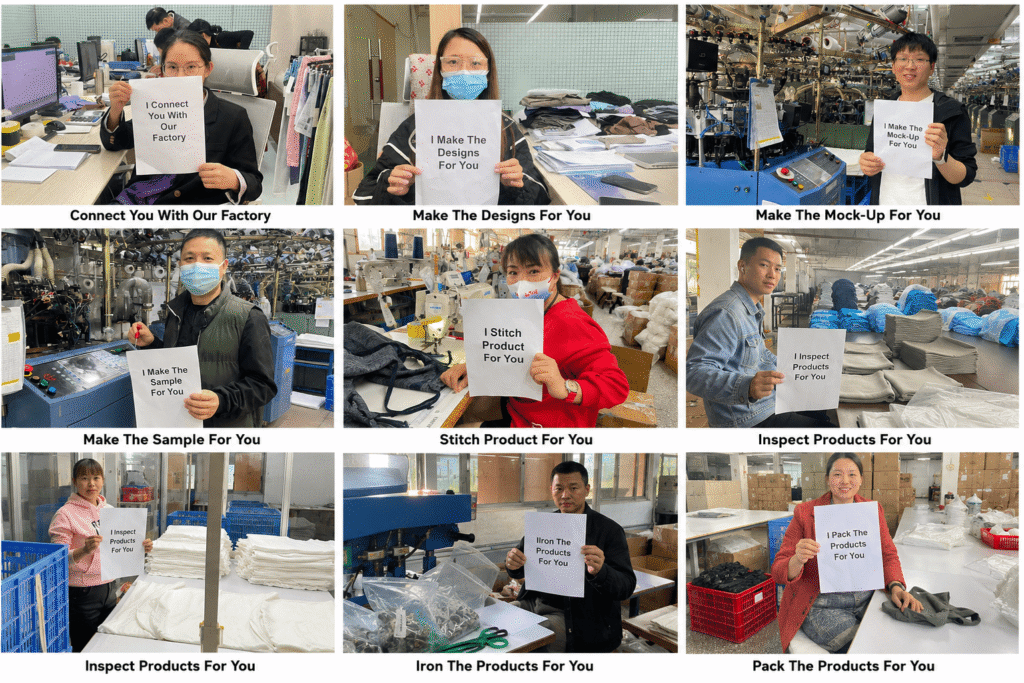
Choose the Right Jacket Styles for Your Brand Positioning
Not all sports jackets are designed for the same purpose. Different styles serve different customers, activities and retail strategies. Choosing the right jacket category is one of the most important decisions during product planning because it influences fabric selection, fit development, pricing and overall collection positioning.
The most successful brands rarely rely on a single jacket style. Instead, they build collections around the needs of their target audience, creating products that work across multiple environments and seasons while maintaining a consistent brand identity.
Common Sports Jacket Categories
Jacket Style | Primary Use | Key Advantages |
Windbreaker Jacket | Running, travel and outdoor activity | Lightweight protection and portability |
Track Jacket | Warm-up, teamwear and casual sportswear | Versatile and easy to style |
Training Jacket | Gym, fitness and active training | Mobility and comfort |
Running Jacket | High-movement outdoor sports | Lightweight and breathable construction |
Softshell Jacket | Outdoor activity and variable weather | Protection and durability |
Equestrian Jacket | Riding and stable environments | Freedom of movement and practical functionality |
Matching Jacket Styles to Brand Goals
Different brand strategies often require different product priorities.
Brand Positioning | Recommended Jacket Focus |
Performance Sportswear | Running and training jackets |
Athleisure Brand | Track jackets and lightweight outerwear |
Outdoor Lifestyle | Softshell and weather-resistant jackets |
Equestrian Apparel | Riding-specific performance jackets |
Teamwear Program | Track jackets and training jackets |
Building a Balanced Jacket Collection
Many brands achieve stronger sales performance by creating a layered product structure.
A common approach includes:
- A core training jacket
- A lightweight windbreaker
- A seasonal outerwear option
- A sport-specific specialty jacket
- Limited-edition color updates
Why Product Selection Matters
Well-Planned Collection | Poorly Planned Collection |
Clear customer focus | Confusing product positioning |
Stronger repeat purchases | Limited customer retention |
Easier collection expansion | Difficult long-term growth |
Better inventory planning | Higher inventory risk |
The right jacket style should support how customers train, travel and live. By aligning product categories with brand positioning and customer expectations, sportswear brands can create collections that feel more relevant, perform more effectively and generate stronger long-term demand.
You can also explore our custom sports shirts collection and sports hoodie manufacturing solutions to build a complete sportswear line.
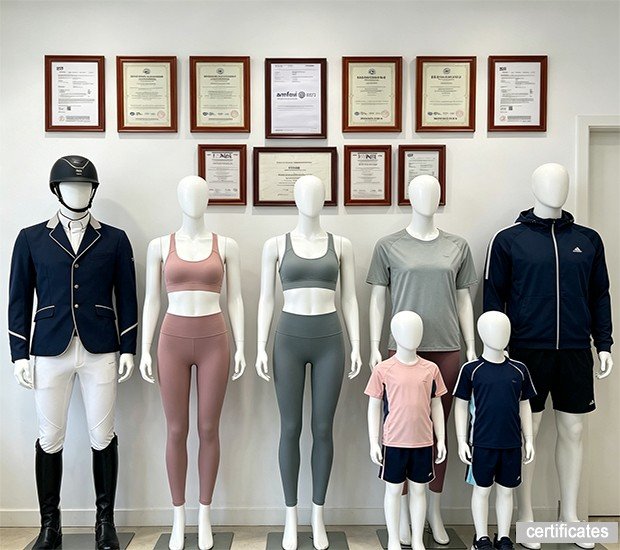
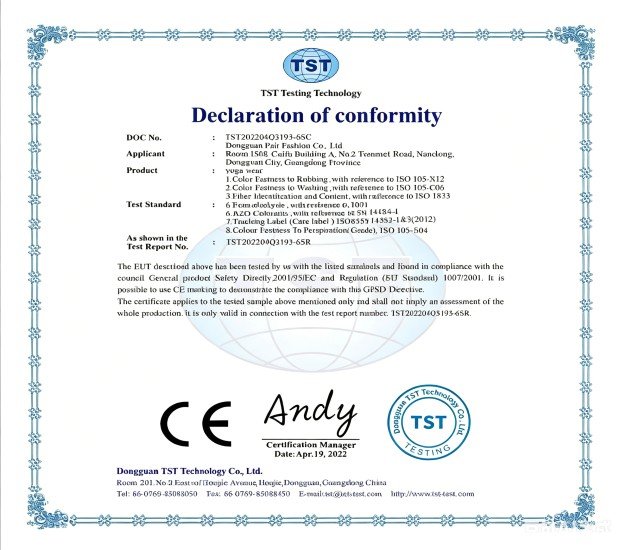
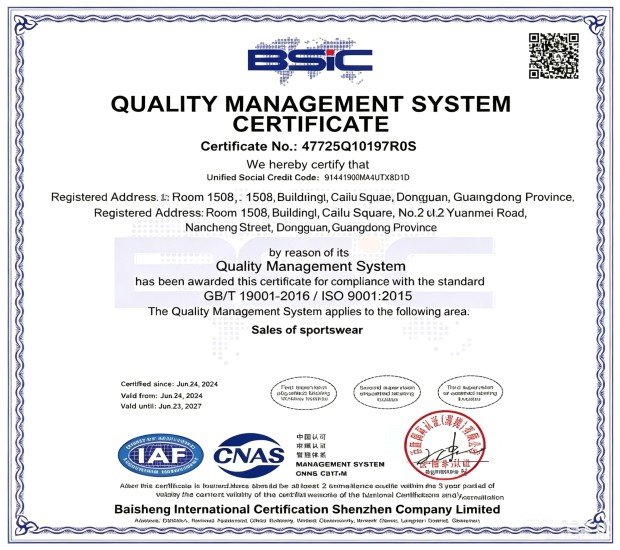
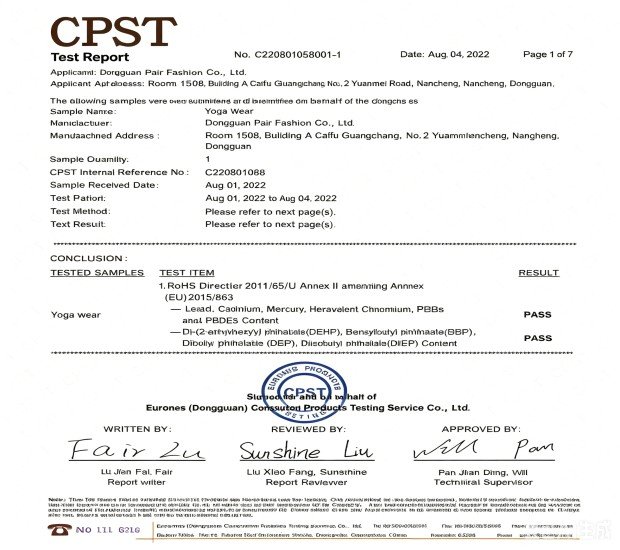
Trusted Manufacturing Standards For Global Sportswear Brands
We operate under internationally recognized quality, sustainability, and ethical manufacturing standards. Our certifications help ensure consistent product quality, responsible sourcing, and reliable production for global sportswear brands.
- 20+ Countries Served
- 6000+ Styles Developed
- 50,000 PCS Monthly Capacity
- 3-Day Sample Development
Custom Fit Development for Athletes, Riders and Active Lifestyles
A sports jacket should not be developed like a standard casual outerwear piece. Customers expect it to move with the body during training, running, riding, stretching and daily activity. Fit development directly affects comfort, mobility and how confidently customers use the product in real conditions.
For performance-focused jackets, the pattern must support movement rather than simply create a clean appearance on a hanger. Shoulder mobility, sleeve length, back width, hem shape, chest allowance and layering space all influence how the jacket feels during activity.
Key Fit Areas for Sports Jackets
Fit Area | Why It Matters |
Shoulder Mobility | Allows arm movement during training and outdoor activity |
Sleeve Length | Prevents pulling or restriction during motion |
Chest Allowance | Improves comfort and layering flexibility |
Back Width | Supports stretching, riding and forward movement |
Hem Shape | Affects coverage and overall silhouette |
Cuff Structure | Helps maintain comfort and wind protection |
Hood or Collar Fit | Improves usability in different weather conditions |
Fit Direction by Product Use
Jacket Type | Fit Development Focus |
Running Jacket | Lightweight fit with active arm movement |
Training Jacket | Flexible fit for gym and warm-up activities |
Equestrian Jacket | Longer coverage and comfort while riding |
Outdoor Jacket | Layering space and weather protection |
Teamwear Jacket | Consistent sizing across different body types |
What Can Be Customized
Brands can adjust:
- Slim, regular or relaxed fit
- Men’s and women’s sizing
- Sleeve length
- Body length
- Shoulder structure
- Hood shape
- Hem design
- Full size grading
- Plus-size development
- Sport-specific fit details
Why Fit Testing Matters
Without Fit Testing | With Fit Development |
Restricted movement | Better activity comfort |
Higher return risk | Improved customer satisfaction |
Inconsistent sizing | More reliable size ranges |
Poor layering experience | Better product usability |
A well-developed sports jacket should look good, move naturally and remain comfortable across different activities. By refining the pattern before bulk production, brands can reduce size-related complaints, improve product reviews and create jackets that customers trust for both sport and everyday wear.
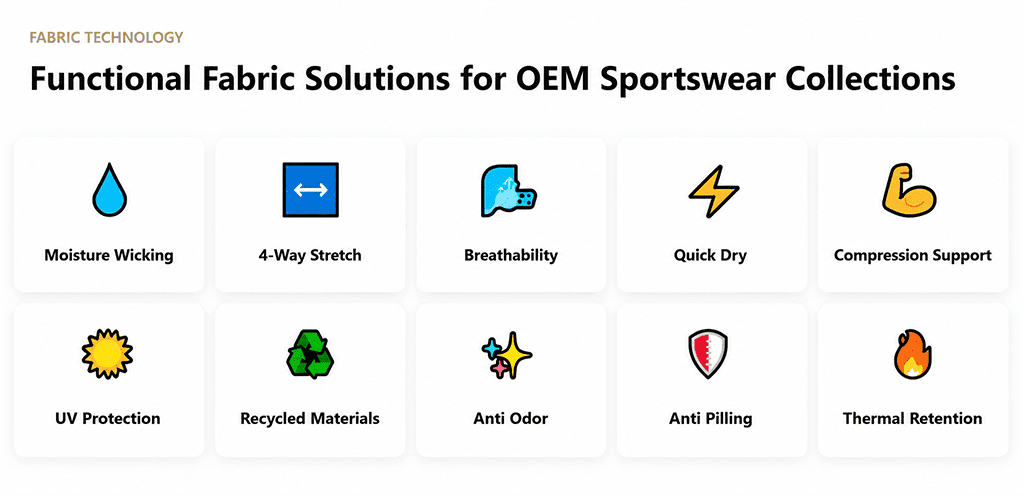
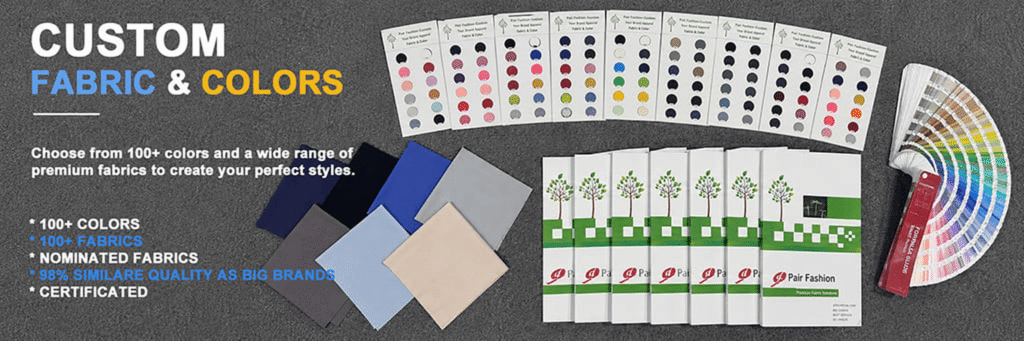
Performance Fabrics That Balance Protection, Comfort and Durability
The performance of a sports jacket is primarily determined by the fabric selection and how it supports real-world movement and protection.
While design influences appearance, fabric determines how the garment feels, moves and performs in real-world conditions. A well-selected material can improve comfort, support mobility and provide protection against wind, light rain and changing temperatures.
For sportswear brands, fabric selection is also directly connected to customer satisfaction. A jacket that looks good online but feels uncomfortable during use is unlikely to generate repeat purchases. Modern consumers expect sports jackets to deliver a balance of protection, breathability and long-term durability.
Common Fabric Options for Sports Jackets
Fabric Type | Key Benefits | Typical Applications |
Lightweight Woven Fabric | Wind protection and low weight | Running and training jackets |
Stretch Woven Fabric | Flexibility and freedom of movement | Active sportswear |
Softshell Fabric | Wind resistance and comfort | Outdoor and equestrian jackets |
Ripstop Fabric | Improved durability and abrasion resistance | Outdoor performance apparel |
Water-Resistant Fabric | Light weather protection | Commuting and outdoor use |
Brushed Performance Fabric | Added warmth and comfort | Cooler weather collections |
What Customers Expect From Modern Sports Jackets
Today’s consumers often expect a combination of performance features rather than a single function.
Common expectations include:
- Wind resistance
- Breathability
- Light rain protection
- Stretch and mobility
- Lightweight comfort
- Shape retention
- Durability
- Easy maintenance
Matching Fabric to Product Positioning
Product Direction | Recommended Fabric Focus |
Running Jackets | Lightweight and breathable materials |
Training Jackets | Stretch and mobility-focused fabrics |
Outdoor Jackets | Softshell and weather-resistant fabrics |
Equestrian Jackets | Durable stretch fabrics with comfort features |
Lifestyle Sportswear | Lightweight fabrics with a premium hand feel |
The best-performing sports jackets are built around the environments in which they are worn. By selecting fabrics that balance protection, comfort and durability, brands can create products that perform reliably during activity while remaining comfortable enough for everyday use. This combination often leads to better customer reviews, stronger brand reputation and higher repeat purchase rates.
Functional Features That Improve Performance in Real Conditions
Performance fabrics create the foundation of a sports jacket, but functional details determine how well that jacket performs in everyday use. Small design decisions often have a significant impact on comfort, convenience and overall customer satisfaction.
Modern consumers expect sports jackets to do more than provide basic protection. They want garments that adapt to changing weather, support movement and offer practical solutions during training, commuting, travel and outdoor activities.
Well-designed features can improve the perceived value of a jacket while also helping brands differentiate products in a competitive marketplace.
Functional Features Commonly Used in Sports Jackets
Feature | Benefit |
Waterproof Zippers | Helps reduce water penetration during light rain |
Adjustable Hood | Improves weather protection and fit |
Ventilation Panels | Enhances airflow during activity |
Reflective Elements | Improves visibility in low-light conditions |
Secure Zipper Pockets | Protects personal items during movement |
Elastic Cuffs | Helps block wind and maintain comfort |
Adjustable Hem | Improves fit and weather resistance |
Chin Guard Protection | Increases comfort around the neck area |
Waterproof and breathability performance in sports jackets is commonly evaluated under international textile testing standards such as ISO methods.
Matching Features to Product Use
Product Type | Recommended Functional Details |
Running Jacket | Reflective details, lightweight zippers and ventilation |
Training Jacket | Stretch panels and secure storage pockets |
Outdoor Jacket | Adjustable hood and weather protection features |
Equestrian Jacket | Riding mobility and practical pocket placement |
Teamwear Jacket | Durable trims and easy-care construction |
Why Functional Details Matter
Customers often compare products with similar fabrics and similar prices. Functional design details frequently become the deciding factor.
Benefits include:
- Better user experience
- Improved product differentiation
- Higher perceived value
- Stronger customer reviews
- Greater customer loyalty
- Increased retail pricing potential
From Basic Jacket to Premium Product
Standard Jacket | Function-Driven Jacket |
Basic protection | Enhanced usability |
Limited versatility | Multi-scenario performance |
Lower perceived value | Premium customer experience |
Easier price competition | Stronger value-based positioning |
The most successful sports jackets combine fabric performance with practical functionality. When every feature serves a clear purpose, the product becomes more useful, more comfortable and more relevant to the customer’s daily activities. This often results in better market acceptance, stronger repeat purchases and longer product life cycles.
Turn Your Jacket Idea Into a Production-Ready Product
Many sportswear brands start jacket development without a complete Tech Pack or finalized technical specifications, especially in early-stage product planning.
Many successful jacket collections start with a reference sample, product image, competitor garment or even a simple concept. What matters most is having a structured development process that transforms ideas into products ready for production.
Product development is the stage where design intent becomes a physical garment. It involves fabric selection, fit refinement, functional feature planning, branding integration and sample evaluation. A well-organized development process reduces uncertainty, minimizes costly revisions and creates a stronger foundation for successful production.
Common Starting Points for Jacket Development
Starting Point | Development Approach |
Tech Pack | Direct technical development |
Reference Sample | Construction analysis and customization |
Product Photos | Design interpretation and sample creation |
Sketches | Pattern development and prototyping |
Product Concept | Full OEM/ODM development support |
Typical Jacket Development Process
- Project Review
Define target customer, activity type and product positioning. - Fabric Selection
Evaluate performance requirements such as wind resistance, stretch and weather protection. - Pattern Development
Create patterns based on fit requirements and intended use. - Sample Production
Develop the first prototype for review. - Fit and Function Testing
Evaluate comfort, mobility and construction details. - Revision and Approval
Refine specifications before production begins.
Elements That Can Be Customized
- Fabric performance
- Jacket silhouette
- Fit structure
- Pocket design
- Hood construction
- Zipper selection
- Branding applications
- Labels and packaging
- Color options
- Size ranges
Why Development Matters
Limited Development | Structured Development |
Higher production risk | Better product consistency |
More revisions later | Faster production readiness |
Greater uncertainty | Clear technical standards |
Difficult scaling | Easier repeat production |
The most successful sports jackets are developed through careful testing and refinement before bulk manufacturing begins. By validating fit, functionality and construction early in the process, brands can launch products with greater confidence and create collections that are easier to scale as demand grows.
Private Label Branding That Adds Retail Value
Performance and functionality are essential, but branding is often what transforms a sports jacket from a product into a recognizable brand asset. Customers evaluate more than fabric and construction. They also notice labels, packaging, logo execution and the overall presentation of the product.
For sportswear brands, private label customization creates a stronger identity and helps products stand out in a highly competitive market. Two jackets with similar performance characteristics can generate very different customer perceptions depending on how they are presented.
Consistent branding across sports jackets, sports shirts, and hoodies helps strengthen private label identity and retail recognition.
Private Label Customization Options
Branding Element | Customization Opportunities |
Main Labels | Woven labels, satin labels and printed labels |
Care Labels | Brand-specific washing instructions |
Size Labels | Customized size systems and branding |
Hangtags | Premium product presentation |
Packaging Bags | Branded polybags or eco-friendly packaging |
Retail Boxes | Premium unboxing experience |
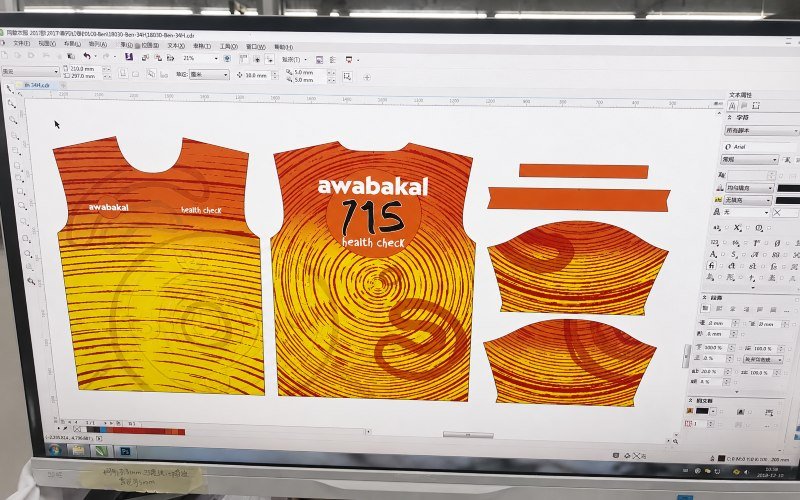
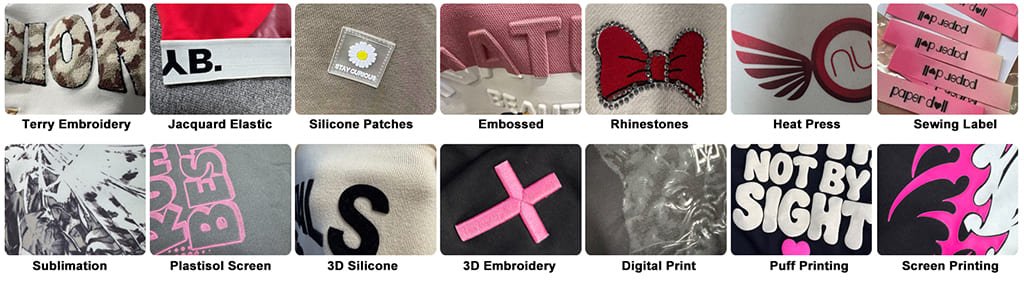
Logo Applications | Embroidery, silicone, heat transfer and printing |
Barcode Labels | Retail and inventory integration |
Building a Strong Brand Experience
Customers often remember details long after the initial purchase.
Important touchpoints include:
- Logo visibility
- Packaging quality
- Label presentation
- Brand consistency
- Product information clarity
- Retail readiness
Why Branding Influences Perceived Value
Basic Product Presentation | Strong Private Label Presentation |
Competes primarily on price | Competes on value and identity |
Limited customer recognition | Improved brand recall |
Lower perceived value | Higher perceived quality |
Difficult to differentiate | Stronger market positioning |
Beyond the Jacket Itself
A sports jacket is often one of the most visible products in a sportswear collection. Customers wear it in public, during travel, before training and in everyday settings. Because of this visibility, branding details play a significant role in shaping how consumers perceive the entire brand.
When private label elements are integrated into product development from the beginning, sports jackets become easier to market, easier to position at premium price points and more effective at building long-term customer loyalty.

Flexible MOQ for Product Testing, Teamwear and Seasonal Launches
Launching a new sports jacket collection often involves uncertainty. Brands may be testing a new market, introducing a seasonal design or evaluating customer response to a new product category. In these situations, flexibility is often more valuable than committing to large inventory investments from the beginning.
A flexible MOQ strategy allows brands to validate products, collect feedback and optimize future production decisions without taking unnecessary risks. Instead of relying on forecasts alone, brands can make decisions based on actual market performance.
Why Flexible MOQ Matters
A lower-risk production approach helps brands:
- Test new product concepts
- Validate sizing and fit
- Evaluate color preferences
- Reduce inventory exposure
- Protect cash flow
- Launch products faster
- Gather real customer feedback
Common Applications
Project Type | Production Objective |
Startup Launch | Market validation and product testing |
Seasonal Collection | Limited-edition product release |
Teamwear Program | Club and organization orders |
Event Merchandise | Time-sensitive production needs |
New Product Category | Demand evaluation before scaling |
A Practical Growth Path
Many successful sportswear brands follow a structured approach:
- Develop and approve samples
- Launch a small production run
- Collect sales and customer feedback
- Identify best-selling products
- Expand production strategically
- Build repeat-order programs
Flexible MOQ vs Traditional Production
Traditional Large Orders | Flexible MOQ Approach |
Higher inventory risk | Lower inventory exposure |
Slower market testing | Faster product validation |
Greater capital commitment | Improved financial flexibility |
More difficult adjustments | Easier product optimization |
Supporting Growth Beyond the First Order
A successful first order is only the beginning. As demand increases, brands need a production partner capable of supporting replenishment, new product launches and collection expansion.
By combining flexible MOQ options with scalable manufacturing support, sportswear brands can launch products more confidently, respond to market demand more efficiently and build stronger long-term growth strategies without unnecessary inventory pressure.
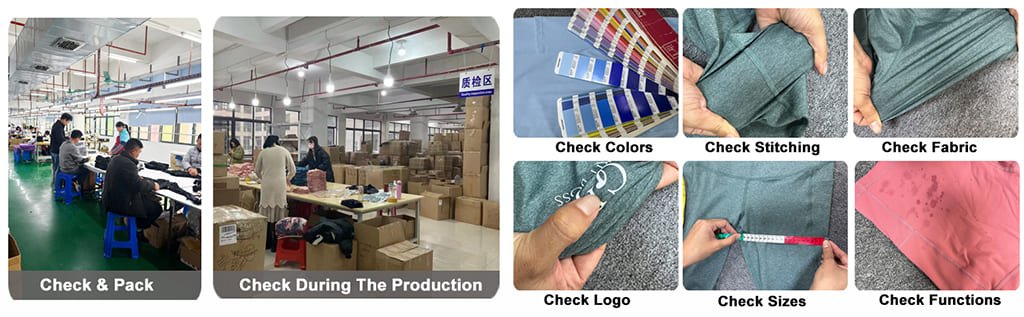
Ensure Consistent Sports Jacket Quality Through Fabric Testing, Construction Control and Production Inspection
For sportswear brands, quality is measured by consistency rather than individual production runs. Customers expect every sports jacket to deliver the same fit, appearance and performance whether they purchase the first production batch or a replenishment order months later.
Even small variations in fabric performance, measurements or construction quality can lead to customer complaints, increased returns and reduced brand trust. That is why quality control should be integrated throughout the entire manufacturing process rather than limited to final inspection.
Many apparel manufacturers apply standardized inspection methods such as AQL inspection standards to ensure consistent quality across bulk production.
Key Quality Areas for Sports Jackets
Quality Factor | Why It Matters |
Fabric Performance | Ensures expected comfort and protection |
Water Resistance | Maintains weather protection standards |
Wind Protection | Supports intended product performance |
Measurement Accuracy | Reduces fit-related returns |
Color Consistency | Creates uniform appearance across batches |
Construction Quality | Improves durability and longevity |
Logo Placement | Maintains professional brand presentation |
Packaging Quality | Supports retail-ready delivery |
Quality Control Throughout Production
Material Verification
Before production begins, fabrics, trims, zippers and accessories are reviewed to confirm specifications and performance requirements.
In-Process Inspection
During manufacturing, production teams evaluate:
- Sewing quality
- Measurement accuracy
- Construction details
- Logo application
- Fabric appearance
- Functional component installation
Final Inspection
Finished jackets are inspected for:
- Overall workmanship
- Size consistency
- Fabric condition
- Branding accuracy
- Packaging quality
- Product presentation
Common Performance Tests
Test Type | Purpose |
Water Resistance Testing | Evaluates light-weather protection |
Color Fastness Testing | Confirms color durability |
Seam Strength Testing | Verifies construction integrity |
Fabric Performance Testing | Evaluates functional behavior |
Measurement Verification | Confirms size consistency |
Why Consistency Drives Brand Growth
Inconsistent Production | Controlled Production |
Higher return rates | Better customer satisfaction |
More quality complaints | Stronger brand reputation |
Unpredictable replenishment | Reliable repeat orders |
Greater operational risk | Easier long-term scaling |
The strongest sportswear brands are built on reliability. Customers return because they trust the product will perform as expected every time they purchase it.
By controlling fabric performance, construction quality and production consistency before bulk manufacturing begins, brands can create sports jacket collections that support stronger reviews, greater customer loyalty and long-term business growth.
Manufacturing Capacity That Supports Long-Term Collection Growth
A successful sports jacket collection rarely remains the same over time. As brands grow, they often expand into new styles, additional colorways, broader size ranges and multiple seasonal releases. Growth creates opportunities, but it also increases pressure on the supply chain.
The ability to scale production efficiently becomes just as important as the product itself. A manufacturing partner should not only be capable of producing the first order but also support future expansion without compromising quality, consistency or delivery reliability.
What Growing Brands Typically Need
Growth Stage | Manufacturing Requirement |
Collection Launch | Product development and controlled production |
Market Validation | Repeat order support and inventory planning |
SKU Expansion | Additional styles and color management |
Sales Growth | Increased production flexibility |
Multi-Channel Distribution | Stable manufacturing and replenishment systems |
How Scalable Production Supports Brand Growth
Consistent Replenishment
Best-selling products often require ongoing production support. Reliable replenishment helps maintain inventory availability and reduces lost sales opportunities.
Faster Product Expansion
Established development and production systems make it easier to launch new jackets, seasonal collections and complementary product categories.
Better Forecast Planning
Structured production scheduling helps brands align manufacturing with sales cycles, promotions and seasonal demand.
Reduced Operational Risk
A stable manufacturing system minimizes disruptions during periods of rapid business growth.
Key Capabilities That Support Expansion
Capability | Brand Benefit |
Flexible Production Planning | Better response to changing demand |
Repeat Order Management | Faster restocking cycles |
Multi-Line Production Support | Greater manufacturing flexibility |
Product Development Continuity | Easier collection growth |
Consistent Quality Systems | Reliable customer experience |
Beyond the First Order
Many brands focus heavily on launching products but underestimate the importance of long-term manufacturing support. Growth often depends on the ability to maintain quality while increasing production volume and expanding product offerings.
A strong manufacturing partner provides more than production capacity. It provides consistency, predictability and the flexibility needed to support changing business requirements. With structured development processes, scalable manufacturing systems and repeat-order support, sportswear brands can build sports jacket collections that continue to grow alongside their business.
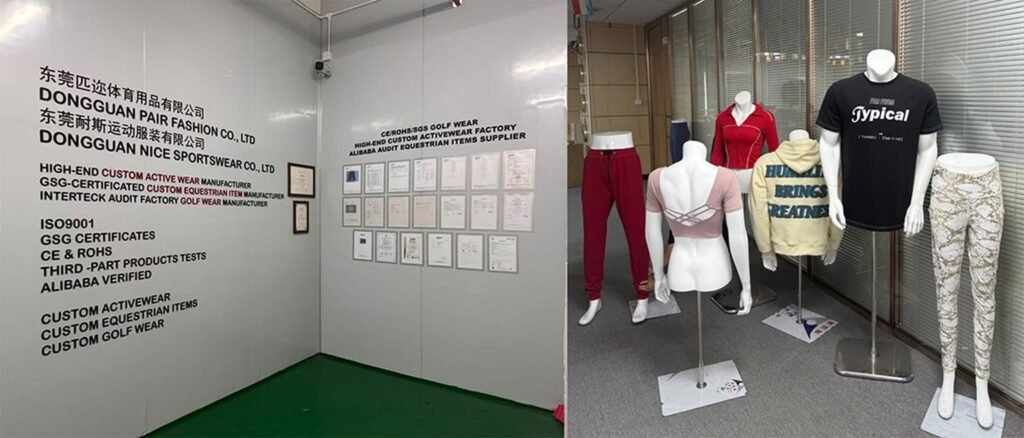
Why Brands Choose Pairfashion as Their Sports Jacket Manufacturing Partner
Choosing a manufacturing partner is about more than finding a factory that can produce garments. The right partner can influence product quality, launch timelines, customer satisfaction and the long-term growth potential of your brand.
For sportswear companies, every production decision affects the customer experience. A great design concept still depends on reliable development, consistent manufacturing and dependable delivery to succeed in the market.
Pairfashion Sportswear works with emerging brands, growing sportswear labels, equestrian apparel companies and established retailers looking for a manufacturing partner that can support both product development and long-term production needs. Our focus is not simply on making jackets. Our focus is helping brands create products that perform well, sell consistently and support sustainable growth.
What Brands Commonly Look For
Priority | Why It Matters |
Reliable Product Development | Reduces costly mistakes and launch delays |
Consistent Quality Control | Protects brand reputation |
Flexible MOQ Options | Supports testing and growth |
Responsive Communication | Improves project efficiency |
Scalable Production Support | Supports future expansion |
Private Label Expertise | Strengthens brand identity |
Long-Term Reliability | Reduces supply chain uncertainty |
Benefits of Working With a Specialized Manufacturing Partner
Faster Product Launches
Structured development processes help move products from concept to production more efficiently.
Lower Production Risk
Sample validation, fit refinement and material testing help identify issues before bulk production begins.
Greater Consistency
Standardized manufacturing procedures improve repeat-order reliability and customer satisfaction.
Easier Collection Expansion
Established development systems make it easier to launch new products and grow product categories over time.
Manufacturing Partner vs Production Vendor
Production Vendor | Manufacturing Partner |
Produces individual orders | Supports product development and growth |
Focuses on transactions | Focuses on long-term collaboration |
Limited technical support | Provides development guidance |
Reactive production approach | Structured planning and execution |
The strongest sportswear brands are built on reliable products and dependable supply chains. A manufacturing relationship should help reduce uncertainty, improve efficiency and create opportunities for long-term growth.
By combining product development expertise, private label support, quality-focused manufacturing and scalable production systems, Pairfashion Sportswear helps brands build sports jacket collections with confidence and consistency.
1. Product Development
Regular monthly product development ensures consistent updates to your brand line.
2. Fabric Sourcing
Regular monthly product development ensures consistent updates to your brand line.
3. Sample Making
Regular monthly product development ensures consistent updates to your brand line.
4. Bulk Production
Regular monthly product development ensures consistent updates to your brand line.
5. Packaging & Delivery
Regular monthly product development ensures consistent updates to your brand line.
Complete OEM & ODM Sportswear Solutions
We provide complete custom sportswear manufacturing services from concept development and fabric sourcing to bulk production and worldwide delivery.
- OEM & ODM Product Development
- Functional Fabric Sourcing & Material Selection
- Pattern Making & Sample Development
- Private Label Branding & Custom Packaging
- Quality-Controlled Bulk Manufacturing
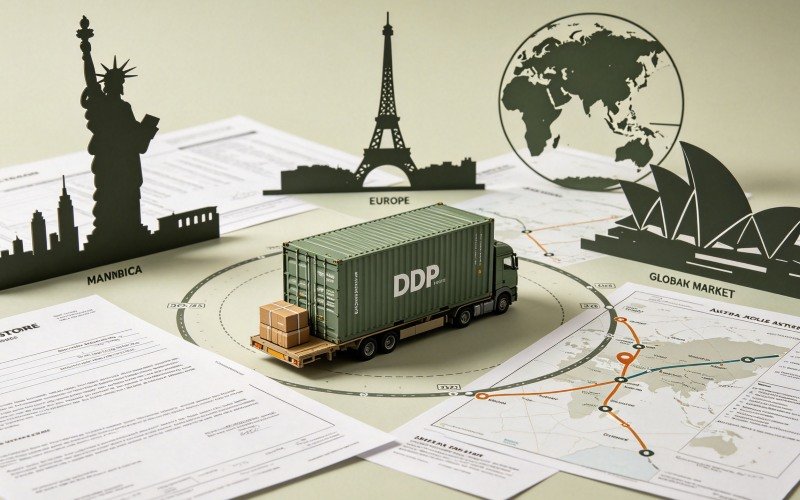
- Global DDP Shipping & Delivery Support
Frequently Asked Questions About Custom Yoga Pants
FAQ 1
How Do I Choose the Right Fabric for a Custom Sports Jacket?
The best sports jacket fabric is the one that matches your customers’ activity level, climate conditions and product positioning while maintaining a balance between protection, comfort, breathability and durability over long-term use.
Many brands focus on waterproof ratings or fabric weight alone, but customer satisfaction is usually determined by how a jacket performs after months of wear. Running jackets often prioritize lightweight comfort, while equestrian and outdoor jackets require durability, flexibility and weather protection.
Product Category | Recommended Fabric Direction |
Running Jackets | Lightweight woven fabrics |
Training Jackets | Stretch performance fabrics |
Outdoor Jackets | Softshell materials |
Equestrian Jackets | Durable stretch softshell fabrics |
Lifestyle Jackets | Water-resistant woven fabrics |
The most successful custom sports jackets combine performance features with everyday comfort, helping brands reduce returns, improve customer reviews and increase repeat purchases.
FAQ 2
What Is the Best MOQ for Launching a New Sports Jacket Collection?
For most startup sportswear brands, the ideal MOQ is not the smallest possible quantity but the quantity that allows meaningful market validation while minimizing inventory exposure and preserving financial flexibility.
Large first orders may reduce unit costs, but unsold inventory often creates far greater financial risk. Successful brands typically scale through controlled testing and repeat-order planning rather than committing to large quantities immediately.
Stage | Primary Objective |
Sample Development | Product validation |
Market Testing | Demand evaluation |
Repeat Orders | Sales confirmation |
Scaled Production | Margin optimization |
A flexible MOQ strategy allows brands to make decisions based on real customer behavior, leading to stronger launches and more sustainable growth.
FAQ 3
Can I Develop a Custom Sports Jacket Without a Tech Pack?
Yes. Many successful custom sports jacket projects begin with reference photos, competitor garments or simple product concepts rather than complete technical documentation.
A Tech Pack can accelerate development, but it is not required to begin a project. Experienced manufacturers can assist with pattern creation, fabric sourcing, fit development and sample production while building technical specifications throughout the process.
Common starting materials include:
- Product images
- Reference samples
- Brand guidelines
- Logo files
- Performance requirements
- Target retail pricing
The development process is designed to transform ideas into production-ready products, even when technical documentation is limited at the beginning.
FAQ 4
What Makes Customers Reorder Sports Jackets Instead of Buying Once?
Customers reorder sports jackets when the product continues to deliver comfort, fit consistency, durability and reliable performance after repeated wear, rather than simply looking attractive at the time of purchase.
The first sale is often driven by design and marketing. Repeat purchases are earned through product experience. Jackets that maintain comfort, shape and functionality over time are more likely to generate customer loyalty and positive word-of-mouth.
Factor | Influence on Repeat Purchases |
Comfort | ★★★★★ |
Fit Consistency | ★★★★★ |
Fabric Performance | ★★★★★ |
Durability | ★★★★★ |
Brand Experience | ★★★★ |
The strongest sportswear brands focus on creating products customers trust enough to purchase again, recommend to others and integrate into their daily routines.
FAQ 5
How Long Does Sports Jacket Development and Production Take?
The timeline for a custom sports jacket project depends on development complexity, material sourcing, sample approvals and production planning, but most delays occur during development rather than bulk manufacturing.
Many brands focus only on factory lead times while underestimating the importance of fit refinement, fabric testing and approval processes. Sports jackets often require additional validation because functional performance directly affects customer satisfaction.
Stage | Main Objective |
Product Development | Fabric and feature planning |
Sample Development | Prototype creation and testing |
Fit Revision | Pattern optimization |
Pre-Production Approval | Final specification confirmation |
Bulk Production | Manufacturing execution |
Shipping | Global delivery |
Brands that begin development early generally achieve smoother launches, better product quality and more predictable supply chain performance.
FAQ 6
How Do I Reduce Risk When Choosing a Sports Jacket Manufacturer?
The most effective way to reduce sourcing risk is to evaluate product development capability, quality management, communication efficiency and long-term reliability rather than focusing exclusively on price.
Many sportswear sourcing problems originate from inconsistent execution rather than manufacturing cost. Delays, quality issues and poor communication often create greater losses than a slightly higher unit price.
Evaluation Area | Importance |
Product Development Expertise | ★★★★★ |
Quality Management Systems | ★★★★★ |
Communication Efficiency | ★★★★★ |
Repeat Order Support | ★★★★ |
MOQ Flexibility | ★★★★ |
Pricing | ★★★ |
A strong manufacturing relationship should reduce uncertainty, improve operational stability and support long-term brand growth rather than simply deliver one successful order.
FAQ 7
What Features Increase the Retail Value of a Sports Jacket?
Retail value is created through the combination of performance fabrics, fit development, functional design and professional brand presentation rather than through logos or visual styling alone.
Consumers increasingly compare products based on comfort, functionality and overall user experience. Jackets that perform well in real-world conditions often justify higher retail prices and generate stronger customer loyalty.
Value Driver | Impact on Retail Positioning |
Performance Fabrics | ★★★★★ |
Fit Development | ★★★★★ |
Functional Features | ★★★★★ |
Premium Trims | ★★★★ |
Private Label Branding | ★★★★ |
Packaging Experience | ★★★★ |
The most successful sports jackets combine practical performance with a premium customer experience, making them easier to position in competitive markets.
FAQ 8
Can Sports Jackets Become Part of a Complete Sportswear Collection?
Yes. Many successful sportswear brands begin with a single jacket category and gradually expand into broader product ecosystems that increase customer lifetime value and strengthen brand identity.
Sports jackets are often a strong entry point because they combine visibility, functionality and brand exposure. Once customers trust the product, it becomes easier to introduce complementary categories and encourage repeat purchases.
Initial Product | Expansion Opportunity |
Sports Jackets | Training Jackets |
Windbreakers | Track Jackets |
Outerwear | Hoodies and Sweatshirts |
Performance Jackets | Joggers and Activewear |
Brands that develop coordinated product collections often achieve stronger customer retention, higher average order values and more sustainable long-term growth than brands focused on a single product category.
Start Your Custom Sports Jacket Project Today
Every successful sports jacket collection starts with a clear vision and the right development partner.
Whether you already have a complete Tech Pack, a reference sample, product photos or simply an idea for a new jacket collection, the next step does not need to be complicated. Many of the most successful sportswear products on the market began as simple concepts before evolving into fully developed collections through structured product development and reliable manufacturing support.
From lightweight running jackets and training jackets to performance windbreakers, equestrian jackets and private label outerwear programs, successful products are built through a combination of thoughtful design, technical development and consistent production execution.
Many brands expand from jackets into full OEM programs including sports shirts manufacturing and hoodie production lines.
We Can Help You With
Development Area | Support Available |
Custom Sports Jacket Development | Product planning and technical guidance |
Sample Creation | Prototype development and refinement |
Fabric Sourcing | Performance material selection |
Fit Optimization | Pattern development and grading |
Private Label Branding | Labels, logos, packaging and presentation |
Bulk Manufacturing | Flexible production support |
Repeat Orders | Long-term replenishment programs |
Collection Expansion | New styles and seasonal launches |
Simple Development Process
- Share Your Idea
Send a Tech Pack, sample, photo or concept. - Define Product Requirements
Confirm fit, fabrics, functionality and branding. - Develop and Review Samples
Evaluate appearance, comfort and performance. - Approve Final Specifications
Lock in construction details and production standards. - Move Into Production
Begin manufacturing based on approved samples. - Launch With Confidence
Receive products ready for retail, teamwear or distribution.
Why Start Early?
Benefit | Impact |
More Development Time | Better product refinement |
Earlier Sample Testing | Reduced production risk |
Improved Planning | More efficient inventory management |
Seasonal Preparation | Stronger launch performance |
The most successful sportswear brands do not wait until the last minute to develop new products. Early planning creates more flexibility, improves product quality and helps collections reach the market with greater confidence.
Whether you are launching your first sports jacket, expanding an existing collection or building a long-term private label program, the next step starts with a conversation.
- Yoga Pant
- Sports Bras
- Tank Tops
- Gym Shorts
- Men & Kids Sportswear
- Riding Tops
- Breeches
- Competition Wear
- Jackets
- Man & Kids Equestrian
- Joggers
- Sweatshirt & Hoodies
- Sweaters
- Coat & Jacket
- Men & Kids Loungewear
Other OEM Apparel
- Tennis Clothing
- Jumpsuit
- Dress & Skirts
- Plus Size Activewear
- Maternity Activewear
Get In Touch
Contact our OEM/ODM specialists for product development, sampling, pricing, and production support.