OEM/ODM Sportswear Manufacturer | 3-Day Sampling | Low MOQ | 50K Monthly Capacity | ISO9001 & BSCI Certified
Custom Activewear Manufacturer for Private Label Brands
Work with a reliable Custom Activewear Manufacturer to develop performance apparel from ideas, samples, or Tech Packs. From fabric selection and pattern development to sampling, bulk production, quality control, and private label customization, every stage is managed to help brands create activewear with consistent fit, dependable quality, and long-term commercial value.
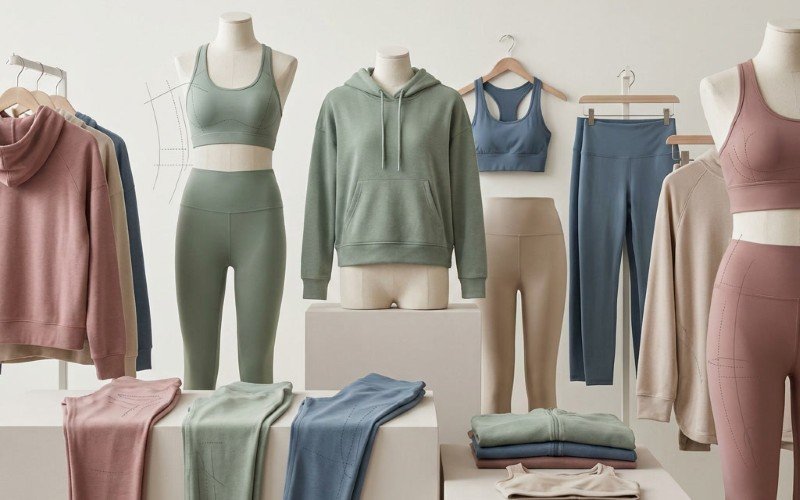
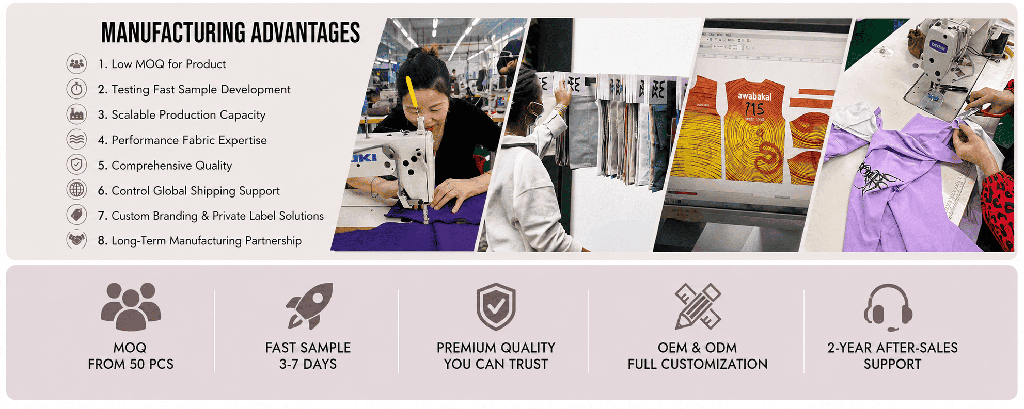
Flexible MOQ Solutions
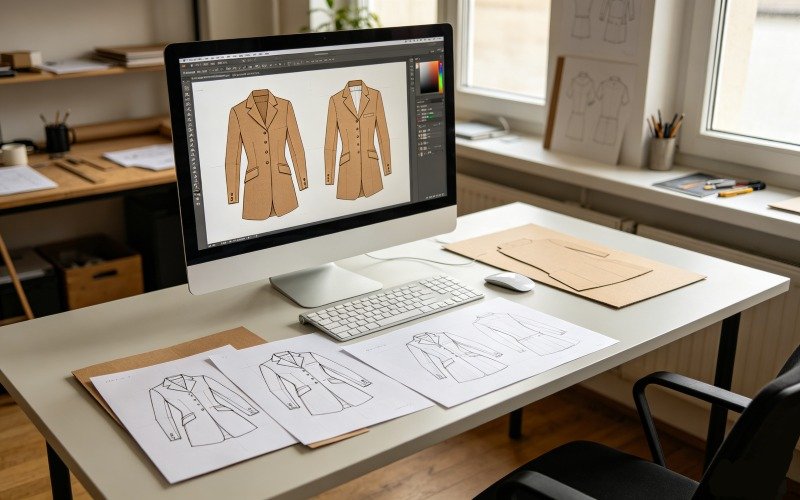
Product Development Support
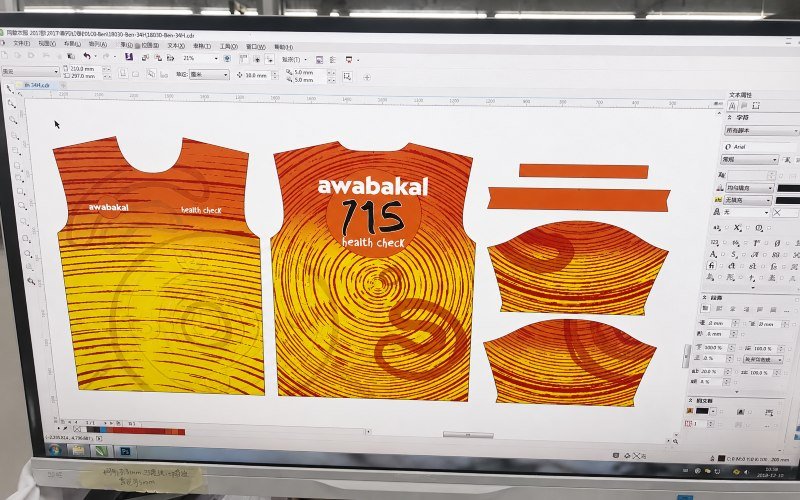
Stable Manufacturing System
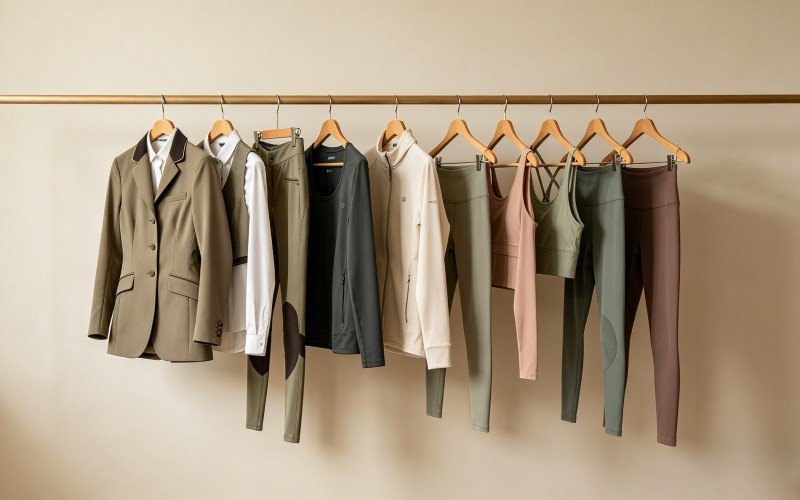
Dedicated Project Management
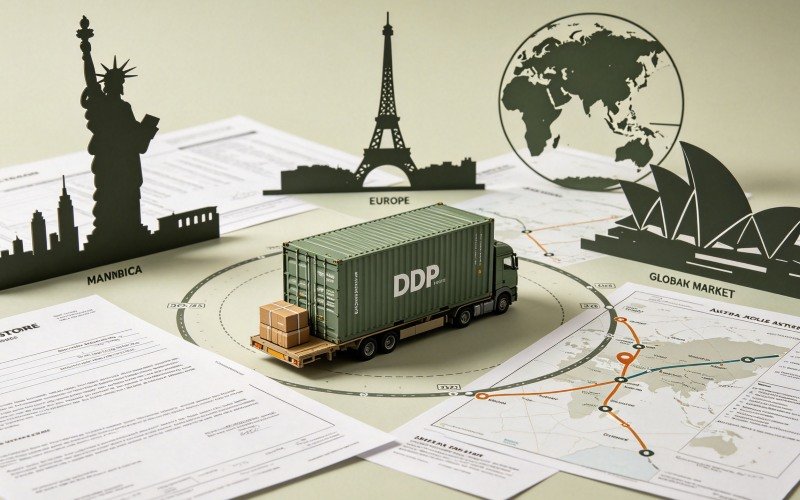
Global DDP Shipping Support
Develop Custom Activewear With a Custom Activewear Manufacturer From Ideas, Samples, or Tech Packs
A professional Custom Activewear Manufacturer can begin product development from different starting points, including original ideas, reference garments, design sketches, product images, or complete Tech Packs. The most suitable development method depends on how much technical information is already available and how clearly the product’s fit, function, materials, and construction have been defined. If you are still comparing manufacturing partners, our Activewear Manufacturer guide explains the complete development process and production capabilities for growing sportswear brands.
Every brand begins from a different starting point. Some projects are supported by detailed specifications, while others start with inspiration images, existing products, or a rough design direction. A flexible development process allows each project to move forward according to the information available, making product development more efficient without requiring every detail to be finalized at the beginning.
Before sampling starts, defining the product objective is more valuable than rushing into production. Factors such as the intended use, target customers, retail positioning, performance requirements, fabric expectations, branding details, and sales channels all influence later decisions on materials, construction, fit, and manufacturing methods. Establishing these priorities early creates a smoother development process and helps avoid costly adjustments later.
| Starting Point | Development Approach |
|---|---|
| Product idea or concept | Product planning and feasibility evaluation |
| Reference photos | Pattern development based on visual references |
| Existing sample garment | Garment analysis and production optimization |
| Tech Pack | Sample development according to technical specifications |
| Existing product for improvement | Pattern refinement, fabric optimization, and construction upgrades |
.
After the development direction is confirmed, the next step is to establish accurate patterns, select suitable performance fabrics, define construction details, and prepare branding elements before creating the first prototype. Resolving technical questions during development instead of during bulk production significantly improves efficiency, reduces unnecessary costs, and creates a reliable foundation for consistent manufacturing across future orders.
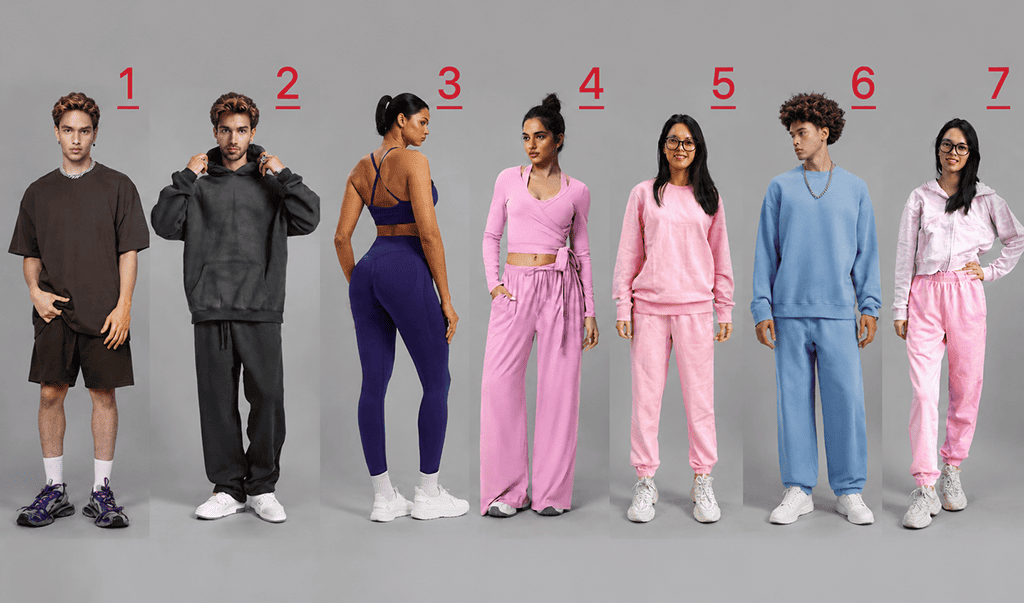
Select Performance Fabrics That Match the Way Your Products Will Be Used
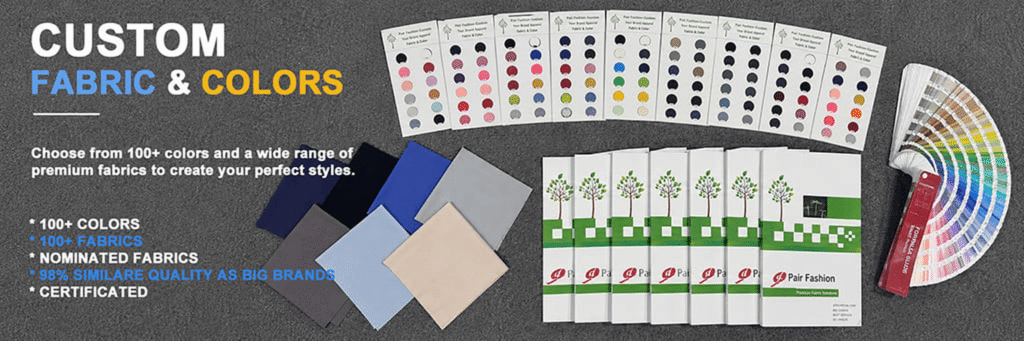
Fabric selection for performance apparel should prioritize garment wearability over fleeting material trends. Successful custom activewear lines strike a balanced combination of functionality, comfort, durability, aesthetics, and manufacturability, rather than simply adopting high-grade fabrics alone. Making informed material choices at the early development stage solidifies product quality, optimizes cost management, and sustains long-term customer satisfaction.
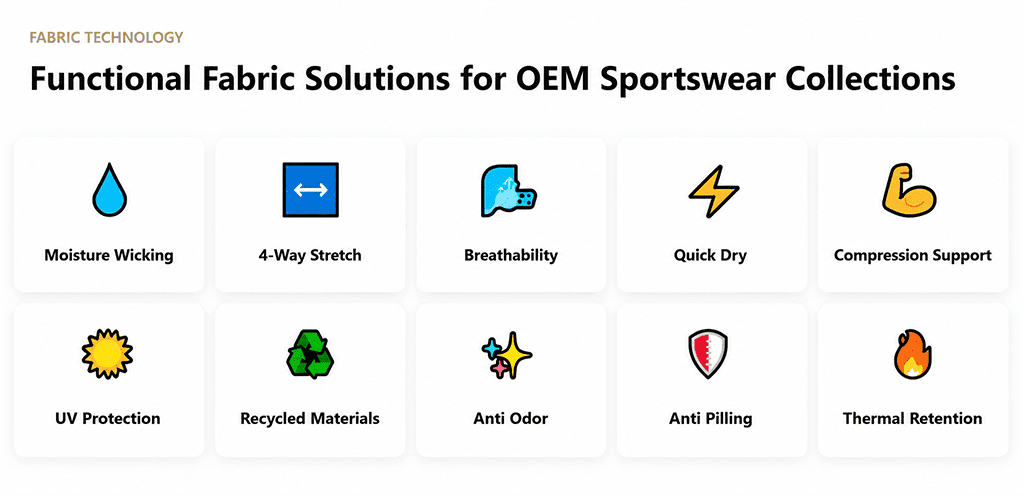
Different products require different fabric characteristics. Yoga apparel often benefits from soft hand feel, excellent stretch, and a smooth next-to-skin experience. High-intensity training garments usually require stronger compression, reliable recovery, and greater abrasion resistance. Running apparel typically emphasizes lightweight construction, breathability, and moisture management, while athleisure collections often combine athletic performance with comfort and everyday style. Selecting fabrics according to the intended application helps ensure that every product performs as expected in real use.
When evaluating fabrics, fiber composition is only one part of the decision. Fabric structure, weight, elasticity, recovery, colorfastness, pilling resistance, opacity, and long-term washing performance all influence how the finished garment looks, feels, and performs throughout its life cycle.
| Fabric Evaluation Factor | Why It Matters |
|---|---|
| Fiber composition | Influences comfort, stretch, durability, and overall hand feel |
| Fabric weight (GSM) | Affects coverage, support, and seasonal suitability |
| Stretch and recovery | Helps garments maintain their shape after repeated movement |
| Moisture management | Improves comfort by keeping the wearer dry during exercise |
| Abrasion and pilling resistance | Extends product life through repeated wear and washing |
| Colorfastness | Maintains a consistent appearance after multiple wash cycles |
.
When evaluating performance fabrics, many international brands also reference the OEKO-TEX® STANDARD 100 certification to verify that textile materials have been tested for harmful substances before entering the market. The best-performing activewear is created when fabric selection, garment construction, and product purpose work together as one complete system. Choosing materials that match the intended performance of the product not only improves the wearing experience but also contributes to more consistent manufacturing, fewer quality issues, and stronger long-term brand value. Different activewear categories require different material strategies. You can also explore our complete sportswear product categories to understand how fabric selection varies across leggings, sports bras, training tops, shorts, and other performance apparel.
Design Activewear That Performs Beyond Appearance
Consumers expect modern activewear to deliver far more than an attractive appearance. Products that perform well during training are more likely to earn positive reviews, encourage repeat purchases, and strengthen long-term brand loyalty. Successful product development balances comfort, support, freedom of movement, durability, and consistent performance instead of focusing only on colors, prints, or seasonal trends.
Different activities place different demands on activewear. Yoga apparel often prioritizes softness, stretch, and a barely-there feel. Training garments require reliable compression, shape retention, and freedom of movement during repeated exercises. Running apparel benefits from lightweight construction, moisture management, and breathability, while studio and everyday fitness collections often need to combine athletic performance with an appearance suitable for daily wear. Defining these performance expectations early helps guide every development decision that follows.
| Product Development Priority | Customer Benefit |
|---|---|
| Stretch and recovery | Maintains flexibility while helping garments retain their original shape |
| Support and compression | Improves stability, comfort, and confidence during movement |
| Moisture management | Keeps the wearer dry throughout different training conditions |
| Ergonomic fit | Allows natural movement while reducing restriction |
| Durability | Extends product life through repeated wear and washing |
| Seam construction | Minimizes friction while improving long-term garment strength |
.
Product performance stems from the synergy of materials, structural design, tailored fit, and consistent manufacturing, rather than from any individual attribute. Every design choice directly impacts how a garment moves, feels, and functions during real-world training. Products engineered with this user-centric approach better align with customer expectations, lower return rates, and build a solid reputation for reliable quality—fostering repeat purchases and laying a strong foundation for future product lines.
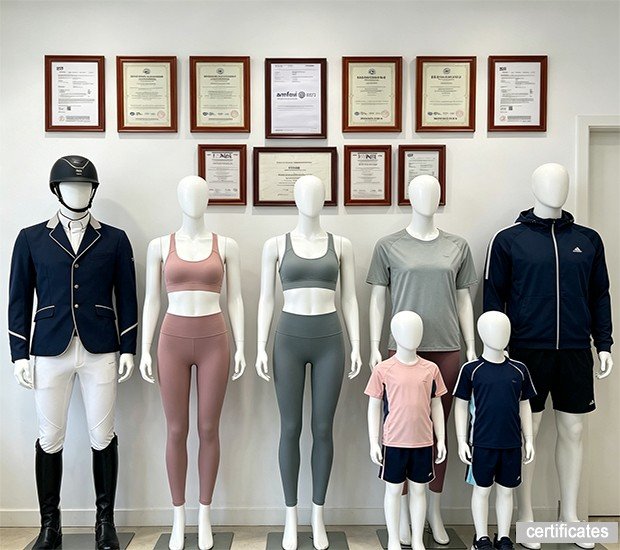
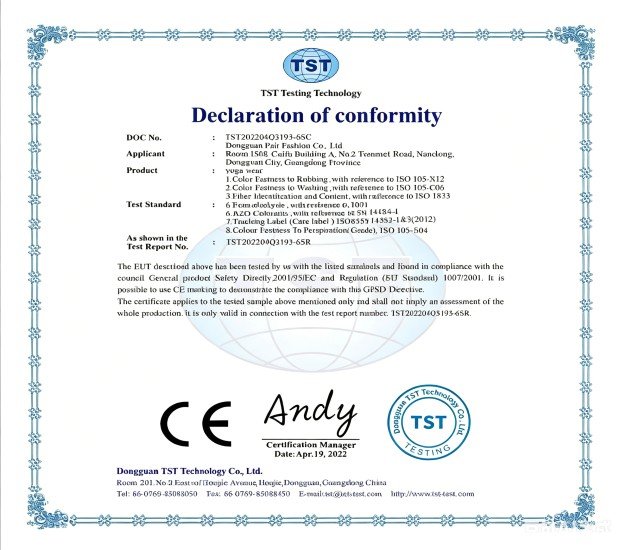
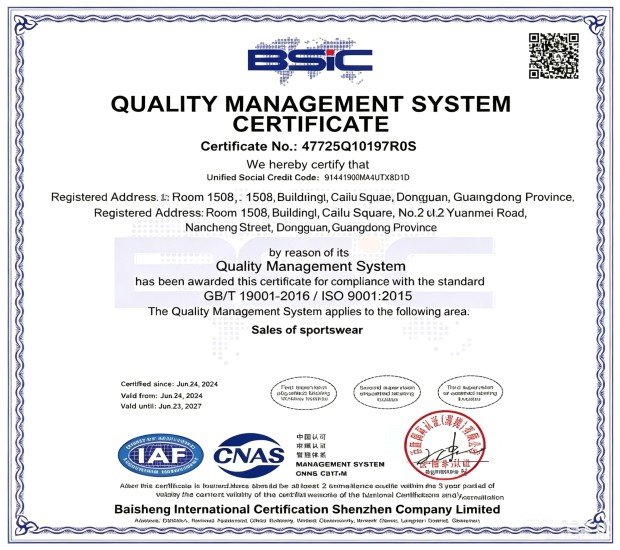
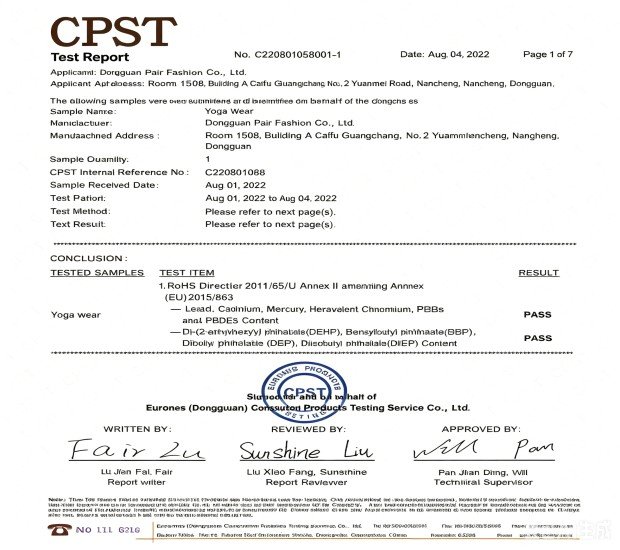
Trusted Manufacturing Standards For Global Sportswear Brands
We operate under internationally recognized quality, sustainability, and ethical manufacturing standards. Our certifications help ensure consistent product quality, responsible sourcing, and reliable production for global sportswear brands.
- 20+ Countries Served
- 6000+ Styles Developed
- 50,000 PCS Monthly Capacity
- 3-Day Sample Development
Customize Every Product Detail to Reflect Your Brand Identity
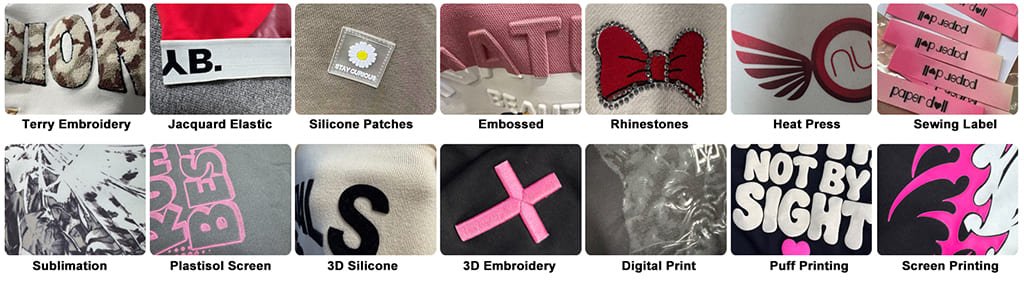
Successful private label activewear is built through product development, not by simply adding a logo to an existing design. Every detail—from fabric selection and garment construction to trims, labels, and packaging—contributes to how customers recognize and remember a brand. A well-developed product creates a stronger impression, increases perceived value, and helps distinguish a collection in an increasingly competitive market.
Customization can extend far beyond colors and branding. Many activewear brands refine garment silhouettes, improve functional details, introduce exclusive fabric combinations, adjust pocket placement, modify seam layouts, or develop signature design elements that become part of their brand identity. These decisions influence not only the appearance of the product but also its comfort, functionality, and overall customer experience.
As a collection grows, maintaining consistency across different products becomes equally important. Using coordinated branding elements, standardized trims, consistent garment measurements, and unified packaging helps customers recognize future collections while reinforcing confidence in product quality. Building this consistency from the beginning creates a stronger foundation for long-term brand development and simplifies future product expansion.
| Customization Area | Value for Your Brand |
|---|---|
| Logo applications | Strengthens brand recognition across every product |
| Performance fabrics | Supports different market positions and functional requirements |
| Pattern adjustments | Creates a distinctive fit and wearing experience |
| Panel design and construction | Adds visual identity while improving functionality |
| Labels and hangtags | Reinforces a professional and consistent brand image |
| Packaging solutions | Improves presentation and customer unboxing experience |
| Custom trims and accessories | Creates a unified appearance across the entire collection |
.
The strongest activewear brands are recognized by the consistency of their products rather than by individual design features. Developing every detail with a clear brand direction creates collections that are easier to expand, more recognizable to customers, and better positioned for long-term growth in competitive markets.

Develop Samples That Prevent Expensive Production Mistakes
Sampling is more than producing a garment for approval. It is a structured development process that verifies design, fit, construction, materials, and manufacturing feasibility before bulk production begins. Each stage of sampling answers different technical questions, allowing potential issues to be identified and corrected while changes are still fast and cost-effective. Resolving problems during development is significantly more efficient than making adjustments after production has started.
The first prototype is typically used to evaluate the overall product concept, construction, and initial workmanship. Once the design direction is confirmed, a Fit Sample focuses on refining garment balance, mobility, support, comfort, and overall wearing performance. For products offered in multiple sizes, a Size Set Sample verifies that grading maintains a consistent fit and appearance across the complete size range rather than simply scaling measurements.
Before production starts, a Pre-Production Sample (PP Sample) serves as the final manufacturing reference. It confirms the approved fabric, color, trims, logo placement, sewing details, measurements, labeling, and packaging requirements. Using an approved PP Sample as the production standard helps maintain consistency throughout bulk manufacturing and reduces the likelihood of unexpected quality variations.
| Sample Type | Primary Purpose |
|---|---|
| Prototype Sample | Evaluates the initial design, construction, and manufacturing feasibility |
| Fit Sample | Refines fit, comfort, mobility, and garment performance |
| Size Set Sample | Confirms grading consistency across all sizes |
| Pre-Production (PP) Sample | Establishes the final standard for bulk manufacturing |
| Sales Sample (Optional) | Supports photography, marketing, buyer presentations, and product launches |
.
A well-structured sampling process is an investment in production reliability rather than an additional development step. Thorough validation before bulk manufacturing helps reduce costly revisions, improves product consistency, shortens future development cycles, and creates a stronger foundation for repeat orders and long-term collection growth.
Turn Approved Samples Into Manufacturing Standards
Approving a sample is only one milestone in product development. Consistent bulk production depends on converting every approved detail into clear manufacturing standards that can be followed throughout the entire production process. Without documented specifications, even well-approved samples can lead to differences in measurements, construction, branding, or finishing between production batches.
Before bulk manufacturing begins, every critical product requirement should be standardized. Measurements, tolerance ranges, approved fabrics, color references, trims, logo placement, sewing methods, labeling, and packaging instructions all become part of the production documentation. These standards provide a single reference for production, quality inspection, and future repeat orders, ensuring that every team involved works toward the same result.
Standardized manufacturing also improves production efficiency. When expectations are clearly documented, fewer decisions need to be made during production, communication becomes more consistent, and potential errors can be identified earlier. This approach helps reduce unnecessary corrections while improving product consistency across different production lines and future manufacturing cycles.
| Manufacturing Standard | Why It Matters |
|---|---|
| Measurement specifications and tolerances | Maintain consistent sizing throughout production |
| Approved fabrics and trims | Ensure the correct materials are used for every order |
| Color standards | Reduce shade variation between production batches |
| Logo placement guidelines | Keep branding consistent across all garments |
| Sewing and construction specifications | Maintain structural quality and product durability |
| Packaging instructions | Deliver a consistent presentation for every shipment |
| Quality inspection criteria | Create objective standards for production control and final inspection |
.
Well-defined manufacturing standards create repeatable production rather than relying on individual experience. This structured approach improves consistency, simplifies repeat orders, supports future collection expansion, and gives brands greater confidence that every production run will meet the same quality expectations as the approved sample.
Manufacture Activewear With Consistent Quality at Every Stage of Production
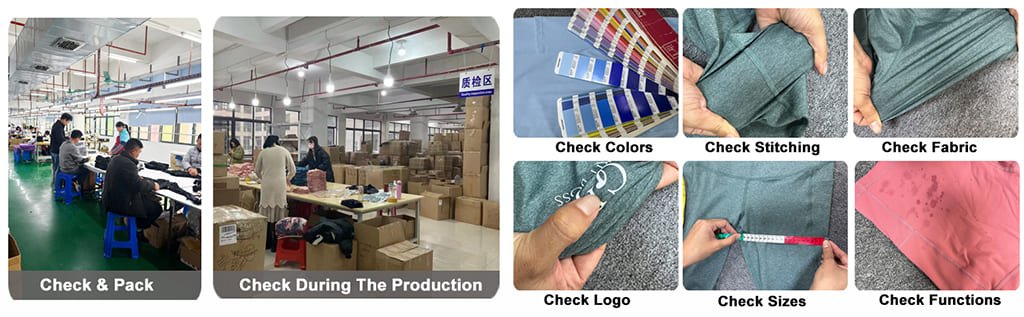
Consistent quality is achieved through process control, not final inspection alone. Every stage of manufacturing influences the finished garment, from raw material preparation to packaging. Building quality into each production step helps prevent problems before they affect the final product, creating more reliable results across every order and reducing the need for costly corrections after production.
Quality management begins before cutting starts. Fabrics, trims, and other approved materials should be verified against the production specifications to ensure they match the standards established during development. As manufacturing progresses, regular in-process inspections help confirm that sewing quality, measurements, construction details, logo placement, and workmanship remain consistent throughout production instead of being checked only after all garments have been completed.
Final inspection is the last verification step rather than the primary quality control method. Finished garments are evaluated for measurements, appearance, functionality, branding details, packaging, labeling, and overall presentation before shipment. Combining continuous process inspections with final product verification helps maintain consistency between the approved sample and the finished production run while reducing the risk of unexpected quality variations.
| Quality Control Stage | Inspection Focus |
|---|---|
| Raw material inspection | Confirms approved fabrics, trims, colors, and specifications before production |
| Cutting inspection | Verifies pattern accuracy, fabric direction, and cutting consistency |
| In-line production inspection | Monitors sewing quality, construction, and workmanship during manufacturing |
| Measurement verification | Confirms key dimensions remain within approved tolerances |
| Logo and appearance inspection | Checks branding details, print quality, and overall garment presentation |
| Final product inspection | Reviews finished garments, packaging, labeling, and shipment readiness |
| Shipment sampling | Confirms production consistency before goods leave the factory |
.
Many international buyers also use the AQL inspection standard as a practical reference when defining acceptable quality levels before shipment. Reliable quality is created through repeatable production standards supported by continuous inspection at every stage. This systematic approach helps deliver products that remain consistent from the first shipment to future repeat orders, giving brands greater confidence in every collection they bring to market.
Coordinate Development, Production, and Delivery Around Your Launch Schedule
Sticking to a product launch schedule involves more than just fast production turnaround. The overall project timeline is shaped by every step across product development, material sourcing, manufacturing, quality inspection, and shipping. Integrating and coordinating these workflows as a unified process minimizes delays, enhances planning precision, and ensures new product lines launch on schedule.
A typical custom activewear project progresses through several key phases. Product development establishes the design direction and technical requirements. Sampling verifies fit, construction, and performance before production. Once samples are approved, fabrics, trims, and branded components are prepared for manufacturing. Bulk production, quality inspection, packaging, and logistics then complete the process before products are delivered for launch.
Several factors influence the overall timeline. Product complexity, custom fabrics, specialized trims, sampling revisions, seasonal material demand, and shipping methods can all affect delivery schedules. Confirming technical details early and maintaining clear communication throughout development helps minimize unexpected interruptions and creates a more predictable production plan.
| Project Stage | Primary Objective |
|---|---|
| Product development | Finalize design direction, materials, and technical specifications |
| Sampling | Validate fit, construction, and product performance |
| Material preparation | Prepare approved fabrics, trims, and branded components |
| Bulk production | Manufacture products according to approved standards |
| Quality inspection | Verify consistency before shipment |
| Packaging and logistics | Prepare products for delivery and market launch |
.
Successful project management focuses on planning rather than reacting. Coordinating development, production, and delivery from the beginning creates a more reliable supply chain, supports seasonal launch schedules, simplifies repeat orders, and helps brands bring new collections to market with greater confidence and consistency.
Grow Your Product Line Without Changing Manufacturing Partners
Building a successful activewear brand is not defined by a single product launch. Sustainable growth comes from developing new collections efficiently while maintaining consistent quality, fit, and brand identity over time. Working with a manufacturing partner that already understands your products, technical standards, and development process creates a stronger foundation for long-term expansion than starting over with a new supplier for every collection.
As product development continues, valuable manufacturing knowledge accumulates with every project. Approved patterns, graded size specifications, fabric selections, color references, branding details, construction methods, and packaging standards become reusable assets rather than information that needs to be recreated for every new style. This continuity simplifies future development, shortens sampling cycles, and reduces the risk of inconsistencies between collections.
A stable manufacturing relationship also makes it easier to expand a product range. New colors, seasonal updates, complementary styles, and product extensions can be developed from existing technical standards instead of beginning each project from scratch. Maintaining this consistency helps customers experience the same fit, quality, and performance across different products, strengthening confidence in the brand with every purchase.
| Long-Term Manufacturing Advantage | Value for Brand Growth |
|---|---|
| Established product development records | Accelerates future product development |
| Consistent patterns and grading | Maintains the same fit across multiple collections |
| Fabric and color archives | Simplifies repeat orders and seasonal updates |
| Standardized construction methods | Improves manufacturing consistency over time |
| More efficient communication | Reduces development time and unnecessary revisions |
| Reliable supply chain continuity | Supports long-term product planning and business growth |
.
Long-term manufacturing partnerships create value through accumulated knowledge rather than repeated introductions. Every completed project strengthens the development process, making future collections easier to launch, repeat orders more efficient, and product quality more consistent. This allows brands to focus more on growing their business while building a product line that customers recognize and trust.
Custom Activewear Solutions for Every Stage of Brand Growth
No two activewear brands follow the same growth trajectory. New startups launching their debut collections, established retailers expanding diverse product lines, fitness studios releasing branded apparel, and wholesale distributors handling large seasonal orders all have distinct priorities and face unique challenges. Tailoring product development workflows to match a brand’s current business stage streamlines operations and fosters steady, long-term sustainable growth.
Early-stage brands often focus on validating products with manageable order quantities while refining their brand identity and collecting customer feedback. As the business grows, attention gradually shifts toward expanding product categories, maintaining consistent quality, improving replenishment efficiency, and building a recognizable collection that customers can trust across multiple seasons.
Different business models also require different development priorities. Direct-to-consumer brands often emphasize product differentiation and frequent product launches. Retail brands typically focus on maintaining consistency across a wide range of SKUs. Wholesale distributors value reliable production capacity and predictable delivery schedules, while gyms, fitness studios, and corporate wellness programs often prioritize cohesive branding and long-term supply continuity.
| Business Stage | Typical Development Priorities |
|---|---|
| Startup brands | Low-risk product launches, flexible quantities, and market validation |
| Direct-to-consumer brands | Product differentiation, faster collection updates, and repeat production |
| Retail brands | Consistent quality, broader product ranges, and standardized sizing |
| Wholesale distributors | Stable production capacity, cost efficiency, and dependable lead times |
| Fitness studios and private label programs | Unified branding, customized collections, and long-term product consistency |
.
The development process should evolve alongside the business rather than remain unchanged. Building standardized products, repeatable manufacturing processes, and consistent quality from the beginning makes it easier to introduce new collections, respond to changing market demand, and support long-term brand growth with greater confidence and efficiency.
Start Your Custom Activewear Project With Clear Requirements
A solid product development project prioritizes clear deliverables over excessive deliberation. While technical details may not always be fully finalized upfront, defining core project requirements from the outset sets a precise development direction, improves quoting accuracy, and accelerates the entire transition from initial concept to sample production.
The most useful information includes the product category, reference images or a Tech Pack, expected order quantity, preferred fabrics, target size range, branding requirements, packaging preferences, and planned launch schedule. If some specifications are still under development, defining your target market, price positioning, and performance expectations provides a solid foundation for making the remaining technical decisions during product development.
Preparing this information early allows product feasibility, material selection, manufacturing methods, production timelines, and cost considerations to be evaluated more efficiently. It also reduces unnecessary revisions during development, improves communication between all parties, and creates a smoother transition from sampling to bulk production.
| Project Information | Why It Matters |
|---|---|
| Product category | Defines the overall development direction |
| Reference images, samples, or Tech Pack | Establishes the technical foundation for product development |
| Preferred fabrics | Supports appropriate material recommendations |
| Size range | Guides pattern development and grading |
| Branding requirements | Determines logo applications, labels, and trims |
| Packaging preferences | Creates a consistent brand presentation |
| Estimated order quantity | Helps plan production and cost structure |
| Target launch schedule | Supports realistic development and delivery planning |
.
Well-prepared project information creates a more efficient development process from the very beginning. Clear objectives, complete technical references, and realistic planning help improve sampling efficiency, reduce production risks, and establish a stronger foundation for consistent manufacturing as future collections continue to grow. Once your product requirements are ready, you can contact our product specialists to discuss sampling, quotations, material recommendations, and production planning for your custom activewear project.
1. Product Development
Regular monthly product development ensures consistent updates to your brand line.
2. Fabric Sourcing
Regular monthly product development ensures consistent updates to your brand line.
3. Sample Making
Regular monthly product development ensures consistent updates to your brand line.
4. Bulk Production
Regular monthly product development ensures consistent updates to your brand line.
5. Packaging & Delivery
Regular monthly product development ensures consistent updates to your brand line.
Complete OEM & ODM Sportswear Solutions
We provide complete custom sportswear manufacturing services from concept development and fabric sourcing to bulk production and worldwide delivery.
- OEM & ODM Product Development
- Functional Fabric Sourcing & Material Selection
- Pattern Making & Sample Development
- Private Label Branding & Custom Packaging
- Quality-Controlled Bulk Manufacturing
- Global DDP Shipping & Delivery Support
Frequently Asked Questions About Custom Activewear Manufacturing
1. What Is the Minimum Order Quantity for Custom Activewear?
Our standard MOQ starts from 50 pieces per style, allowing startups and growing brands to test new activewear designs without committing to excessive inventory or placing a large production order before confirming real market demand.
The final MOQ may depend on the fabric, color, size breakdown, logo application, and level of customization. Orders using available fabrics and standard colors are usually easier to arrange in smaller quantities than projects requiring custom dyeing or specially developed materials. Before quotation, brands should confirm whether the quantity is calculated per style, per color, or across the complete order. A flexible MOQ is especially useful for testing sizing, customer preferences, and product performance before expanding into larger repeat orders.
2. How Long Does Custom Activewear Sampling Take?
Custom activewear samples normally take approximately 3–7 days after the design details, fabric direction, measurements, branding requirements, and sample payment have been confirmed, although complex products may require additional development time.
The exact schedule depends on whether the project begins with a complete Tech Pack, an existing garment, reference images, or only an initial concept. Custom fabric development, special printing, molded accessories, complex support structures, or repeated fitting adjustments may extend the timeline. Buyers should also allow time for sample shipping, wear testing, feedback, and revisions. A realistic sampling plan is more valuable than rushing the first prototype because problems corrected during development are less expensive than changes made after bulk production begins.
3. How Is the Price of Custom Activewear Calculated?
Custom activewear pricing is mainly determined by fabric cost, garment construction, order quantity, size range, branding methods, trims, packaging, testing requirements, and the amount of manual work required for each product.
Two garments that look similar can have very different production costs because fabric weight, compression, seam construction, pockets, lining, printing, and finishing methods may differ significantly. Larger orders may improve material utilization and production efficiency, but the lowest quotation is not always the lowest total cost. Buyers should request a quotation based on clear specifications rather than comparing prices from reference photos alone. Providing a Tech Pack, estimated quantity, preferred fabric, size range, logo method, and packaging details results in a more accurate and commercially useful quotation.
4. Can You Develop Activewear Without a Tech Pack?
Yes, custom activewear can be developed without a completed Tech Pack when the brand can provide reference garments, clear product images, sketches, measurement ideas, performance expectations, or a detailed explanation of the intended design.
A Tech Pack makes communication more efficient, but it is not the only valid starting point. Reference samples can be analyzed for construction and fit, while images and sketches can be translated into initial patterns and technical specifications. However, brands should expect more discussion and possibly additional sampling when the original information is limited. Important details such as fabric feel, compression level, pocket dimensions, seam placement, logo size, and target fit should be confirmed gradually. The completed development records can later become the technical foundation for repeat production.
5. What Is the Normal Lead Time for Bulk Activewear Production?
Bulk production normally takes approximately 15–25 working days after the Pre-Production Sample, order details, materials, colors, size breakdown, branded trims, and packaging requirements have received final approval.
Lead time may change according to order quantity, fabric availability, custom dyeing, printing processes, production capacity, seasonal demand, and inspection requirements. Shipping time is separate and depends on whether the goods move by courier, air freight, sea freight, or rail. Buyers planning a fixed launch date should work backward from the required delivery date and include time for sampling, revisions, material preparation, production, inspection, and transportation. Early approval of fabrics, colors, labels, and packaging helps reduce avoidable delays.
6. How Do You Keep Bulk Production Consistent With the Approved Sample?
Bulk consistency is maintained by converting the approved sample into documented production standards covering measurements, tolerances, fabrics, colors, trims, logo placement, sewing construction, workmanship, labeling, packaging, and inspection criteria.
Quality control should begin with incoming materials rather than waiting until final inspection. Fabric, trims, cutting, stitching, measurements, branding, and finishing need to be checked at relevant production stages. In-line inspections help identify problems before they affect the complete order, while final inspections verify appearance, quantity, packaging, and shipment readiness. Buyers should confirm which sample will serve as the final production reference and whether inspection tolerances are documented. Clear standards reduce subjective decisions and improve consistency across repeat orders.
7. What Fabrics Are Best for Custom Activewear?
The best activewear fabric depends on the product category, exercise intensity, target climate, required compression, desired hand feel, retail positioning, opacity expectations, durability needs, and intended selling price.
Yoga leggings may require soft four-way stretch and a smooth second-skin feel, while high-intensity training products often need stronger recovery, compression, and abrasion resistance. Running garments usually benefit from lightweight, breathable, moisture-wicking materials. Buyers should evaluate more than fiber composition by checking GSM, stretch recovery, pilling resistance, colorfastness, shrinkage, opacity, and washing stability. Recycled polyester or nylon can also be considered when sustainability is part of the brand strategy, subject to performance, certification, and cost requirements.
8. Can You Support Startups and Small Activewear Brands?
Yes, startups and smaller activewear brands can be supported through manageable MOQs, flexible development methods, fabric recommendations, sample refinement, private label customization, and production planning designed to reduce early inventory risk.
New brands do not need to launch a large collection immediately. A focused capsule collection with fewer styles, controlled colors, and a practical size range often provides better market feedback than a broad first order. Starting with approximately 50 pieces per style can help evaluate customer preferences, fit, pricing, and product performance before scaling. However, buyers should still prepare a clear target customer, brand positioning, product concept, estimated budget, and launch plan to make development decisions efficiently and avoid unnecessary sampling.
Browse Sportswear Catalog Categories
Explore custom sportswear catalog categories including activewear, equestrian apparel, lounge wear and specialty OEM apparel collections for global brands.
- Yoga Pant
- Sports Bras
- Tank Tops
- Gym Shorts
- Men & Kids Sportswear
- Riding Tops
- Breeches
- Competition Wear
- Jackets
- Man & Kids Equestrian
- Joggers
- Sweatshirt & Hoodies
- Sweaters
- Coat & Jacket
- Men & Kids Loungewear
Other OEM Apparel
- Tennis Clothing
- Jumpsuit
- Dress & Skirts
- Plus Size Activewear
- Maternity Activewear