OEM/ODM Sportswear Manufacturer | 3-Day Sampling | Low MOQ | 50K Monthly Capacity | ISO9001 & BSCI Certified

Plus Size Jumpsuits Wholesale Manufacturer Sourcing Guide for Global Buyers
Compare leading China Plus Size Jumpsuits Wholesale Manufacturer options and learn how professional buyers evaluate plus-size experience, grading capability, sample validation, cross-size quality control, production consistency and supplier suitability before choosing the right manufacturing partner for an extended-size jumpsuit collection.
Plus Size Jumpsuits Wholesale Manufacturer Sourcing Guide: What Buyers Should Check for Fit, Grading and Production Consistency
A plus size jumpsuit creates a sourcing challenge that separate tops, leggings and pants do not have: the upper and lower body are connected through one complete pattern system. A small error in torso length can pull the crotch upward. Incorrect rise can shift the waist position. Excessive grading through the shoulder can distort the neckline. Even when garment measurements appear correct, a fabric with weak recovery can change how the jumpsuit actually fits after movement.
That is why buyers should never select a Plus Size Jumpsuits Wholesale Manufacturer only because the supplier says it can make 2XL, 4XL or 6XL.
A reliable Plus Size Jumpsuits Wholesale Manufacturer should be able to explain how the extended size range is graded, show how representative sizes are fitted, document the measurements used during bulk production and demonstrate how the approved fit will be reproduced on future orders. Buyers should evaluate grading logic, one-piece body balance, size-set sampling, cross-size inspection and repeat-order controls before allowing price to become the deciding factor.
One attractive sample proves that one garment can be made correctly. It does not prove that every size in a 500-piece or 5,000-piece production run will follow the same fit logic. For size-inclusive brands, the difference between sample quality and production consistency can determine whether an extended-size launch becomes a scalable product line or an expensive cycle of returns, fit corrections and supplier changes.
Which Plus Size Jumpsuits Wholesale Manufacturer Options in China Should Buyers Compare?
Buyers should compare a Plus Size Jumpsuits Wholesale Manufacturer by relevant one-piece experience, plus-size pattern capability, grading evidence, sample validation, production scale and cross-size quality control—not simply by the largest size or lowest MOQ advertised. A factory that works well for a 100-piece DTC test order may not be the strongest choice for a 5,000-piece replenishment program, while a high-capacity factory may create unnecessary inventory risk for a new brand.
The ten manufacturers below represent different sourcing profiles. Some are stronger in performance activewear, some in women’s fashion, some in low-MOQ custom development and others in larger-scale production. The purpose of the comparison is not to declare one factory universally better than every other supplier. It is to help buyers identify which manufacturing model matches their product, size range, sales stage and technical requirements.
Quick Comparison of 10 China Plus Size and Jumpsuit Manufacturers
| Manufacturer | Location | Published MOQ | Sampling | Relevant Strength | Main Point Buyers Should Verify |
|---|---|---|---|---|---|
| Pair Fashion | Dongguan | 80 pcs for specialized plus-size programs | Around 7 days; selected projects faster | Plus-size activewear and jumpsuits | Extended-size grading and size-set plan for the exact style |
| NewWay Apparel | Zhejiang | 100 pcs with stock fabric | Project dependent | XL–6XL extended-size fashion | One-piece jumpsuit fit experience |
| INGOR Sportswear | Guangzhou | Around 300 pcs/design | 7–10 days | Performance one-piece jumpsuits | Suitability for lower-volume market testing |
| Mingxing Clothing | Dongguan | Around 100 pcs/style/color | Project dependent | Broad custom fashion and grading support | Direct plus-size jumpsuit references |
| Shanlinyang Apparel | Xiamen | 100 pcs/color/style | 7–12 days | Curve XL–5XL and private label | Upper-size fit validation beyond base size |
| Appareify | Guangzhou | Project dependent | 7–20 days general lead time | Scale and development resources | Jumpsuit-specific grading evidence |
| Hongyu Apparel | China | 100 pcs/style/color for cut-and-sew | 8–15 days | Startup-friendly cut-and-sew | Performance one-piece expertise |
| H&Fourwing | Ningbo | Usually 200 pcs/color/style | Around 7–10 days | Women’s fashion and jumpsuits | Activewear versus woven-fashion suitability |
| Tonton Sportswear | Shenzhen | From 10 pcs on many sportswear programs | 7–10 days | Small custom performance programs | Direct women’s plus-size jumpsuit capability |
| ZORWILD | Dongguan | From 50 pcs | Around 7 days | Flexible multi-category custom apparel | Specialist extended-size one-piece experience |
MOQ, sampling and production conditions can change according to fabric availability, dyeing requirements, construction complexity and customization. Buyers should treat published figures as shortlisting references rather than final commercial terms.
1. Pair Fashion – Best for Plus Size Activewear Jumpsuits and Extended-Size Development
City: Dongguan, Guangdong, China
Established: 2016
Specialized Plus Size MOQ: From 80 pieces
Sample Development: Normally around 7 days, with selected fast-development projects available sooner
Bulk Production: Commonly around 15–25 working days after approval
Core Products: Jumpsuits, yoga wear, sports bras, leggings, fitness apparel, equestrian apparel and plus-size activewear
Best For: DTC activewear brands, private-label sportswear companies, growing inclusive brands and buyers developing fitted stretch jumpsuits
Less Suitable For: Buyers whose only priority is the lowest possible unit price for basic loose fashion jumpsuits
Pair Fashion is particularly relevant when the target product is a fitted activewear jumpsuit rather than a loose fashion romper. Its manufacturing range includes both jumpsuits and plus-size activewear, while its broader production structure supports functional stretch garments and extended-size development. Pair Fashion states a monthly production capacity of approximately 50,000 pieces and has developed more than 6,000 styles.
For buyers, the strongest reason to shortlist Pair Fashion is the relationship between its product categories. A fitted plus-size activewear jumpsuit requires the manufacturer to understand four-way stretch, recovery, compression, torso length, rise, crotch balance and movement at the same time. These requirements are closely related to the technical capabilities expected from an experienced activewear manufacturer, rather than ordinary loose-fit fashion production.
However, buyers should still evaluate the actual style rather than assuming category experience automatically guarantees perfect grading. Before approval, request the proposed base size, representative fit sizes, graded measurement chart and the factory’s plan for checking 2XL–6XL during production.
Pair Fashion is better suited to buyers that value fit development, flexible production and long-term repeatability than to buyers comparing factories only by the cheapest FOB price.
2. NewWay Apparel – Best for Structured Extended-Size Fashion Programs
Location: Zhejiang, China
Published Size Range: XL–6XL
MOQ: 100 pieces when using stock fabric
Bulk Production: Approximately 30 days
Core Products: Plus-size dresses, knitwear, occasionwear and general fashion apparel
Best For: Fashion brands building structured extended-size collections
Less Suitable For: Buyers that need very low quantities with exclusive custom-dyed fabric
NewWay presents one of the clearer dedicated plus-size manufacturing programs among the suppliers in this comparison. Its extended-size page specifies XL–6XL, a 100-piece MOQ with stock fabric, and approximately 30 days for bulk production. It also emphasizes grade-consistent fit rather than simply scaling straight-size patterns upward.
This makes NewWay relevant for buyers who want a factory already thinking about the difference between standard sizing and extended sizing.
The remaining question is product specificity. Dresses and occasionwear do not place exactly the same demands on a pattern as a fitted jumpsuit. A buyer should therefore request evidence of previous one-piece styles and pay close attention to:
- shoulder-to-crotch length,
- front and back torso balance,
- rise,
- crotch extension,
- movement ease.
NewWay can be a credible shortlist candidate, but its general plus-size capability should still be tested against the exact jumpsuit construction being sourced.
3. INGOR Sportswear – Best for Higher-Volume Performance Jumpsuits
City: Guangzhou, Guangdong, China
MOQ: Around 300 pieces per design on published one-piece jumpsuit programs
Sample Time: 7–10 days
Core Products: One-piece yoga jumpsuits, gym jumpsuits, sports bras, leggings and performance activewear
Fabric Examples: Nylon/spandex four-way stretch constructions
Best For: Growing performance-activewear brands with validated demand
Less Suitable For: Early-stage brands testing only 80–100 units
INGOR deserves attention because it provides direct evidence of one-piece performance jumpsuit manufacturing, rather than relying only on general activewear claims. Several current jumpsuit products list custom sizing, 7–10-day samples and an MOQ of approximately 300 pieces per design.
Its technical relevance is clear for products that require:
- stretch,
- moisture management,
- movement,
- close fit,
- support,
- recovery.
The main trade-off is quantity. A 300-piece MOQ can work well for an established SKU or a brand with strong pre-launch demand, but it may be too aggressive for a company entering plus-size jumpsuits for the first time.
A buyer should also ask whether the factory’s “custom size” system includes separate plus-size grade validation, rather than assuming that a customizable measurement chart automatically equals a dedicated extended-size block.
4. Mingxing Clothing – Best for Broad Custom Fashion Development
City: Dongguan, Guangdong
MOQ: Around 100 pieces per style/color on many custom programs
Core Products: Dresses, pants, jackets, hoodies and custom fashion apparel
Relevant Strength: Pattern development and broad cut-and-sew capability
Best For: Fashion brands consolidating several product categories
Less Suitable For: Buyers requiring a factory focused primarily on technical compression activewear
Mingxing is a useful option when the buyer wants to develop more than jumpsuits with one manufacturing partner. Its strength is broad custom fashion production rather than a narrow product specialization.
For a Plus Size Jumpsuits Wholesale Manufacturer shortlist, that broad capability can be either an advantage or a weakness.
It is an advantage when a brand wants:
- jumpsuits,
- dresses,
- pants,
- outerwear,
developed through one supplier relationship.
It becomes a weakness if general apparel experience is treated as proof of technical jumpsuit fit expertise.
The buyer should therefore ask Mingxing for recent fitted one-piece examples, representative extended sizes and an explanation of who controls pattern grading. A factory that can show the actual grading process is more convincing than one that simply confirms, “Yes, we can make 6XL.”
5. Shanlinyang Apparel – Best for Emerging Curve and DTC Brands
City: Xiamen, Fujian
Established: 2018
Factory Area: Approximately 3,500 m²
MOQ: 100 pieces per color/style
Sample Time: 7–12 days
Published Size Range: Curve XL–5XL
Bulk Production: Approximately 20–35 days
Core Products: Activewear, dresses, tracksuits, two-piece sets, swimwear and plus-size curve apparel
Best For: Emerging DTC, Shopify and private-label women’s brands
Less Suitable For: Programs requiring a proven 6XL+ grading architecture
Shanlinyang is particularly interesting because it states that its plus-size line uses real curve-graded blocks rather than straight-size patterns simply scaled upward. It publishes an XL–5XL curve range, a 100-piece MOQ, 7–12-day sampling and a three-stage QC structure.
That is a stronger starting point than a factory whose website only adds “plus size” to a product filter.
For jumpsuit buyers, the next question is whether those curve blocks have been validated in one-piece garments. Torso and rise balance can expose problems that may not appear in separate dresses or two-piece sets.
Shanlinyang appears well matched to brands that want manageable quantities and a defined curve program, but buyers planning to extend beyond 5XL should ask whether the factory would continue the same block or develop a new fitting reference.
6. Appareify – Best for Scale and Broad Development Resources
Location: Guangzhou, Guangdong
Established: 2017
R&D Team: 20+ specialists
Published Production Capacity: Approximately 400,000 pieces per month
General Lead Time: 7–20 days
Core Services: Cut-and-sew, OEM, private label and broad apparel development
Best For: Buyers that need larger production resources and multi-category manufacturing
Less Suitable For: Buyers wanting to select a supplier based only on published jumpsuit-specific grading data
Appareify stands out mainly for scale. It states a manufacturing capacity of approximately 400,000 pieces per month, more than 20 R&D specialists and a 7–20-day general lead-time range.
Large capacity can be valuable for a brand expecting growth, but capacity alone is not enough for a plus-size one-piece program.
A buyer should still request:
- a previous extended-size jumpsuit or bodysuit,
- the graded measurement system,
- representative fit sizes,
- cross-size QC evidence.
The main sourcing lesson is simple: a large factory can solve capacity problems, but only relevant technical evidence can solve fit problems.
7. Hongyu Apparel – Best for Startup-Friendly Cut-and-Sew Development
Established: 2003
Cut-and-Sew MOQ: 100 pieces per style/color
Sample Time: 8–15 days
Bulk Lead Time: Approximately 24–30 days
Core Products: Women’s, men’s and children’s custom apparel
Daily Capacity: Up to approximately 10,000 pieces stated by the company
Best For: Startups and designers that need structured custom product development
Less Suitable For: Buyers whose first requirement is specialist technical activewear engineering
Hongyu has operated since 2003 and clearly separates its different sourcing models. For full cut-and-sew customization, it lists a 100-piece MOQ per style/color, 8–15-day sampling, and approximately 24–30 days for bulk production.
That makes Hongyu relatively easy for new buyers to understand.
Its strength is the overall development system: fabric sourcing, pattern making, sampling and bulk production are integrated into one workflow.
Its limitation for this particular sourcing task is specialization. A broad clothing factory can be excellent at helping a startup develop products while still being less experienced with a highly fitted plus-size performance jumpsuit.
Before moving forward, ask:
Can you show an extended-size one-piece style made in a fabric with similar stretch and recovery to ours?
That answer is more useful than a general portfolio.
8. H&Fourwing – Best for Fashion-Led Women’s Jumpsuits
City: Ningbo, Zhejiang
Established: 2014
Factory Size: Approximately 3,000 m²
MOQ: Usually around 200 pieces per color/style; 100 pieces may be possible with stock fabric and surcharge
Sample Time: Around 7 days when fabric is available
Bulk Lead Time: Approximately 15–30 days depending on quantity
Core Products: Dresses, tops, pants, skirts, jackets and jumpsuits
Audits: BSCI, SGS, BV and ITS audit information is stated
Best For: Fashion-led, woven and structured women’s jumpsuits
Less Suitable For: Very small activewear test programs
H&Fourwing focuses specifically on women’s fashion and lists jumpsuits among its production categories. It also has in-house pattern resources, while its pattern makers are stated to have at least 20 years of experience.
This makes it potentially stronger for a woven fashion jumpsuit than a manufacturer whose main expertise is sports jerseys or compression wear.
Its QC system is also relevant: the factory describes fabric testing, PP sample review, in-line control and final inspection.
The main limitation is entry quantity. Buyers launching a new plus-size SKU should consider whether a 200-piece color/style program matches their actual sell-through confidence.
9. Tonton Sportswear – Best for Small Custom Performance Programs
City: Shenzhen, Guangdong
Established: 2003
MOQ: From 10 pieces on many custom sportswear programs
Sample Time: Approximately 7–10 days
Bulk Production: Approximately 2.5–4 weeks
Core Products: Team sportswear, compression garments, cycling, wrestling and performance apparel
Certifications: WRAP, ISO9001, ISO14001 and OHSAS stated
Best For: Small sportswear programs and teams that need highly customized performance garments
Less Suitable For: Buyers seeking strong evidence of women’s plus-size fashion jumpsuit grading
Tonton is unusual in this list because of its low entry quantity. Its company information states it was established in 2003 and accepts low-volume custom sportswear, while the site lists 7–10-day sampling and relatively short bulk cycles.
The company also shows custom extended sizing on selected sportswear products, including sizes through 4XL and plus-size options in some categories.
But buyers should not confuse extended sports-uniform sizing with women’s fitted jumpsuit grading.
A 4XL jersey and a 4XL fitted jumpsuit solve very different pattern problems.
Tonton is therefore most relevant when the target one-piece is closer to performance sportswear than fashion.
10. ZORWILD – Best for Flexible Low-MOQ Custom Apparel
City: Humen, Dongguan
Manufacturing Roots: Since 1998
MOQ: From approximately 50 pieces on many categories
Core Services: OEM, ODM, sampling, fabric sourcing, production, QC and export logistics
Best For: Startups that need broad custom apparel capability and flexible quantities
Less Suitable For: Buyers that specifically want a narrowly specialized plus-size jumpsuit manufacturer
ZORWILD traces its manufacturing history to a garment workshop established in Humen in 1998 and later developed into a one-stop OEM manufacturing business covering development, sourcing, sampling, production and export logistics.
Its strength is flexibility.
For a startup sourcing multiple apparel categories, that flexibility may be more valuable than working with a factory that specializes in only one product type.
However, the same rule applies here as with every broad-category manufacturer:
Ask for evidence that matches your exact product.
Before adding ZORWILD to a final Plus Size Jumpsuits Wholesale Manufacturer shortlist, request:
- a recent plus-size one-piece sample,
- the corresponding size range,
- a graded measurement chart,
- evidence of cross-size inspection.
General apparel history is useful. Relevant fit evidence is better.
How Should Buyers Read This Top 10 List?
The table should be used to create a technical shortlist, not to select a supplier immediately.
A buyer should normally narrow ten factories to three or four based on five questions:
- Does the factory already work with my type of jumpsuit?
- Does it have credible extended-size pattern experience?
- Can its MOQ match my sales stage?
- Can it prove size-set and cross-size control?
- Can it repeat the same product after the first order succeeds?
A supplier may be excellent and still be wrong for your project.
A 300-piece activewear specialist may be the strongest option for an established fitness brand but a poor first choice for a startup testing 100 units. A women’s fashion factory may be ideal for a structured wide-leg jumpsuit but less suitable for a compression training jumpsuit.
The purpose of a Plus Size Jumpsuits Wholesale Manufacturer comparison is therefore not to find the factory with the longest service list. It is to identify the supplier whose technical experience, production model and commercial structure are closest to the product you actually intend to sell.
Why Should Buyers Consider a China Plus Size Jumpsuits Wholesale Manufacturer?
Buyers should consider a China Plus Size Jumpsuits Wholesale Manufacturer when they need pattern development, specialized fabrics, garment production and scalable replenishment to work within one connected sourcing system. China’s strongest advantage is not simply lower manufacturing cost. It is the concentration of pattern rooms, stretch-fabric mills, trim suppliers, specialist processors, sewing capacity and export infrastructure that can support a product from development through repeat production.
For plus size jumpsuits, that connected supply chain matters more than it does for many basic garments. A fitted one-piece style can require several rounds of pattern adjustment, alternative stretch fabrics, revised zipper or elastic specifications, different sewing techniques and repeated measurement checks. When these resources are located within established apparel manufacturing clusters, buyers can often resolve development problems without rebuilding the supply chain every time one component changes.
However, sourcing from China should not be treated as an automatic answer. The right decision depends on product complexity, order volume, internal technical capability, communication requirements, replenishment speed and total landed risk. A buyer with a highly technical 2XL–6XL activewear collection may benefit greatly from an experienced Chinese manufacturing partner, while a brand producing ten experimental pieces for a local launch may be better served by a nearby development studio.
Why Does China Have an Advantage in Pattern Development and Apparel Supply Chains?
China’s major apparel manufacturing regions have developed around specialized supplier networks rather than isolated sewing factories. In Guangdong, Zhejiang, Fujian and other production centers, a garment manufacturer can work with nearby suppliers for fabric knitting, dyeing, printing, embroidery, labels, zippers, elastic, silicone applications, packaging and testing.
For a standard T-shirt, buyers may not notice the full value of that network.
For a plus size jumpsuit, they often do.
Imagine that the first fit sample reveals three problems:
- the fabric has enough horizontal stretch but insufficient vertical stretch;
- the zipper feels too rigid around a curved back;
- the inner-thigh seam needs better stretch recovery.
A manufacturer operating inside a mature apparel cluster may be able to source a more suitable fabric construction, change the zipper specification and adjust the seam method without moving the project to three unrelated suppliers.
That reduces coordination risk, which can be more important than reducing the price of sewing by a few cents.
Another advantage is product iteration. A brand may launch one fitted jumpsuit first, then later add:
- a long-sleeve version,
- a flare-leg version,
- a short romper,
- a maternity adaptation,
- a different compression level,
- a seasonal fabric weight.
A capable Plus Size Jumpsuits Wholesale Manufacturer should be able to use the knowledge gained from the first product to make later development more controlled. The value of the manufacturing relationship therefore increases when the brand expects to build a product family rather than purchase one isolated style.
Which Types of Buyers Benefit Most from China Plus Size Jumpsuit Manufacturing?
China manufacturing is particularly suitable for buyers that need development flexibility combined with future production scale.
DTC and Shopify Brands
DTC brands often need to test a product before committing to large inventory.
Their challenge is not merely finding a low MOQ. They need a manufacturer that can help them move from:
first sample → corrected fit → test order → customer feedback → repeat order
without changing the entire production system.
For a plus size category, this continuity is particularly valuable because customer feedback frequently produces useful information about torso length, compression, rise or size progression.
A factory that preserves the technical history of the style can respond more efficiently than a new supplier starting again from the original Tech Pack.
Growing Activewear Brands
Growing activewear brands usually have a different problem.
They may already understand product development, but they need stronger:
- production capacity,
- batch consistency,
- functional fabric sourcing,
- quality documentation,
- repeat-order reliability.
At this stage, the question changes from:
Can you make my jumpsuit?
to:
Can you make this jumpsuit repeatedly without changing the fit customers already know?
This is where supplier organization becomes more important than a low first-order quotation.
Private Label Retailers
Private-label buyers often manage more SKUs, more colorways and more seasonal deadlines than a small startup.
They typically need:
- predictable development,
- clear specifications,
- consistent measurement tolerances,
- stable production records,
- reliable delivery planning.
A China Plus Size Jumpsuits Wholesale Manufacturer can be attractive when the factory is able to support this level of documentation and repeatability.
The buyer should still distinguish between a supplier that is genuinely organized and one that simply has a large factory building.
Factory size does not automatically equal supply-chain discipline.
Wholesalers and Regional Distributors
Wholesalers often care less about highly experimental product development and more about whether the supplier can:
- keep the same style available,
- replenish proven products,
- maintain consistent sizing,
- handle increasing volumes.
For this buyer type, repeat-order control may deserve more weight than the first-sample development speed.
China Manufacturer vs USA Manufacturer: Which Is Better for Plus Size Jumpsuits?
Neither China nor the United States is automatically the better manufacturing location. The better choice depends on whether the buyer values local physical access, smaller development loops and domestic logistics more than supplier-network depth, scalable production and integrated overseas sourcing.
The mistake is reducing the comparison to:
China = cheap
USA = expensive
That tells a professional buyer almost nothing.
A better comparison looks like this:
| Evaluation Area | China Manufacturer | USA Manufacturer |
|---|---|---|
| In-person fit sessions | Harder for overseas buyers | Usually easier for U.S. brands |
| Fabric and trim sourcing breadth | Often extensive in major clusters | Can be strong but more fragmented depending on supplier |
| Low-volume development | Depends heavily on factory | Local sample rooms can be attractive |
| Medium/large production scaling | Strong among established suppliers | Depends on domestic capacity |
| International freight | Required for most overseas buyers | Reduced for U.S. domestic production |
| Communication time zones | Requires management | Easier for U.S. teams |
| Specialized supply-chain integration | Strong in major China apparel clusters | Varies significantly |
| Replenishment speed to U.S. market | Longer transport component | Potentially faster |
| Unit manufacturing cost | Often competitive at scale | Usually higher |
| Technical fit quality | Manufacturer-dependent | Manufacturer-dependent |
The final row matters most.
Technical fit quality is not determined by country.
A poor Chinese factory can grade a plus size jumpsuit badly.
A poor U.S. factory can grade it badly too.
Location does not replace technical competence.
For brands with an experienced product-development team, China may provide more sourcing flexibility because the buyer already knows how to control specifications remotely.
For a new designer who needs to stand beside the pattern maker during every fitting, domestic development may initially be easier even if the unit manufacturing cost is higher.
Some brands also use a hybrid model:
local design and fit development + offshore bulk manufacturing.
This can work, but only if pattern files, grading rules, fabric specifications and construction instructions transfer accurately between the two production environments. Otherwise, the brand may approve one product locally and receive a subtly different product in bulk.
China Manufacturer vs Trading Company: Which Is Better?
A manufacturer and a trading company can both be useful sourcing partners, but they solve different problems.
A direct manufacturer usually gives the buyer closer access to:
- pattern development,
- sample revisions,
- sewing decisions,
- QC records,
- production scheduling.
A trading company may offer:
- wider supplier selection,
- several product categories,
- procurement coordination,
- easier consolidation across factories.
The question is therefore not:
Are trading companies bad?
They are not.
The real question is:
Who owns responsibility for the technical fit of my jumpsuit?
If a trading company works with a highly capable specialist factory and manages communication well, the model can work.
The risk appears when the buyer does not know:
- who is grading the pattern,
- which factory will sew the bulk order,
- whether production moves between factories,
- who approves pattern changes,
- who holds the final measurement records.
For a technically demanding 2XL–6XL product, unclear responsibility can become expensive.
Manufacturer vs Wholesale Marketplace: What Is the Difference?
A wholesale marketplace is useful when the buyer wants to purchase existing products.
A manufacturer is necessary when the buyer wants to control:
- body measurements,
- garment measurements,
- grading,
- fabric specification,
- construction,
- repeat production.
This distinction is especially important with plus size jumpsuits.
Suppose a retailer finds a ready-made 3XL–5XL jumpsuit on a marketplace. If the style sells well but customers repeatedly report that the torso is too short, the buyer may have very little control over the original pattern.
With a custom Plus Size Jumpsuits Wholesale Manufacturer, the brand can potentially revise:
- torso length,
- back rise,
- waist position,
- thigh ease,
- fabric recovery,
and turn customer feedback into a better second production run.
That is the commercial difference between buying inventory and owning a product specification.
When Is a China Manufacturer Not the Best Choice?
China can offer excellent manufacturing resources, but buyers should also know when another sourcing model makes more sense.
1. You Need Only a Handful of Pieces
If the goal is five experimental garments for a photoshoot or early investor presentation, a local sample studio may be more efficient than setting up an international production relationship.
2. You Need Immediate Local Replenishment
If the business model depends on restocking within a few days, overseas freight may become a structural disadvantage even when factory production itself is fast.
3. Your Team Requires Continuous Physical Fittings
Some fashion businesses make decisions by repeatedly putting garments on fit models while designers and pattern makers work together in person.
Remote development can still work, but it requires stronger documentation and communication discipline.
4. Your Product Needs a Highly Specialized Process Available Elsewhere
Manufacturing should follow capability.
A buyer should not select China merely because China has a large garment industry if another sourcing region has better expertise for the exact construction being developed.
5. The Landed Cost No Longer Makes Commercial Sense
The lowest FOB quotation is only one part of the cost.
Buyers should also consider:
- freight,
- duties,
- inspection,
- financing,
- warehousing,
- inventory exposure,
- rework,
- return risk.
A $1 saving at the factory is irrelevant if poor grading produces $5 of downstream cost.
What Should Buyers Actually Look for in a China Manufacturer?
The safest approach is to evaluate China as a manufacturing ecosystem, then evaluate each factory individually.
A professional shortlist should answer:
- Does this factory already understand my type of jumpsuit?
- Can it explain extended-size grading?
- Who controls the pattern?
- How will representative sizes be tested?
- How will bulk measurements be checked?
- What happens if the production fabric behaves differently?
- How will the same fit be reproduced on a reorder?
- Does the MOQ match my current sales stage?
This is where a Plus Size Jumpsuits Wholesale Manufacturer should separate itself from a generic apparel supplier.
The decision should not be:
“China has cheaper factories, so we should source there.”
It should be:
“This manufacturer gives us the right combination of technical fit capability, supply-chain access, production scale and repeat-order control for the way our brand actually sells.”
That distinction turns country sourcing into a business decision rather than a price comparison.
1. Product Development
Regular monthly product development ensures consistent updates to your brand line.
2. Fabric Sourcing
Regular monthly product development ensures consistent updates to your brand line.
3. Sample Making
Regular monthly product development ensures consistent updates to your brand line.
4. Bulk Production
Regular monthly product development ensures consistent updates to your brand line.
5. Packaging & Delivery
Regular monthly product development ensures consistent updates to your brand line.
Complete OEM & ODM Sportswear Solutions
We provide complete custom sportswear manufacturing services from concept development and fabric sourcing to bulk production and worldwide delivery.
- OEM & ODM Product Development
- Functional Fabric Sourcing & Material Selection
- Pattern Making & Sample Development
- Private Label Branding & Custom Packaging
- Quality-Controlled Bulk Manufacturing
- Global DDP Shipping & Delivery Support
How Can Buyers Tell Whether a Plus Size Jumpsuits Wholesale Manufacturer Really Understands Plus Size Grading?
A professional Plus Size Jumpsuits Wholesale Manufacturer should be able to explain how each critical measurement changes across the extended-size range instead of simply saying that an XL pattern is enlarged to make 2XL–6XL. Buyers should look for clear grade rules, controlled vertical and horizontal measurements, representative size validation, fabric-adjusted fit logic and documented evidence that the pattern remains balanced as it moves away from the base size.
Grading is often discussed as if it were a software task: enter a base pattern, select a size range and let CAD create the remaining sizes.
The software can certainly move pattern points.
What it cannot decide by itself is whether those movements correctly represent the target customer’s body proportions and the intended fit of the garment.
That decision still depends on the brand’s body chart, garment specification, fit model, product silhouette, fabric behavior and the knowledge of the pattern team.
For jumpsuits, the stakes are higher because an incorrect grade rule can affect several areas at once. An excessive hip increment can change crotch shape. An insufficient vertical increment can increase shoulder-to-crotch tension. An overly aggressive shoulder grade can make larger sizes look wider at the top without improving comfort where customers actually need it.
The goal is therefore not to ask whether the supplier “offers grading.”
The goal is to determine whether the supplier can justify its grading decisions.
The same principle applies across other size-inclusive activewear categories, and buyers comparing different extended-size products can also review this plus size leggings manufacturer comparison to understand how supplier specialization changes across product types.
What Is Plus Size Grading?
Grading is the process of creating additional garment sizes from an approved pattern while maintaining the intended fit, balance and silhouette.
Suppose a brand approves a 2XL jumpsuit.
The pattern then needs to become:
- 3XL
- 4XL
- 5XL
- 6XL
The simplest assumption is that every measurement should increase by a fixed amount.
But garment grading is not merely:
2XL + 4 cm = 3XL
3XL + 4 cm = 4XL
A Plus Size Jumpsuits Wholesale Manufacturer needs to consider how individual pattern points move.
For example, a size transition could involve changes in:
- bust circumference,
- waist circumference,
- hip circumference,
- shoulder width,
- armhole depth,
- front body length,
- back body length,
- rise,
- crotch extension,
- thigh,
- leg opening.
Those changes together create the next size.
If the individual rules are wrong, the size label may change while the intended body fit does not.
Linear Grading vs Proportional Plus Size Grading: What Is the Difference?
Linear grading applies relatively uniform increments through the size range, while proportional plus-size grading allows different parts of the pattern to change at different rates when body proportions or garment requirements demand it. Neither method should be judged by its name alone. Buyers should evaluate whether the grade rules produce a balanced garment on the target body at the lower, middle and upper ends of the range.
Linear increments are not automatically bad.
For some measurements and relatively narrow size ranges, a regular progression can work perfectly well.
The problem begins when a factory assumes:
every measurement + every size = same increment
without checking the result.
Imagine a simplified example:
| Measurement | 2XL | 3XL | 4XL | 5XL | 6XL |
|---|---|---|---|---|---|
| Bust | 112 | 118 | 124 | 130 | 136 |
| Waist | 96 | 102 | 108 | 114 | 120 |
| Hip | 120 | 126 | 132 | 138 | 144 |
| Shoulder | 42 | 44 | 46 | 48 | 50 |
The chart looks beautifully consistent.
But consistency in numbers does not prove consistency in fit.
If a 6XL target customer does not need an 8 cm increase in shoulder width compared with the 2XL customer, the upper garment may become unnecessarily broad.
Meanwhile, the same customer might actually need more change in:
- back rise,
- front body length,
- hip depth,
- thigh circumference.
Good grading is therefore about distribution, not simply total growth.
Which Points of Measurement Should Have Different Grade Rules?
For a fitted plus-size jumpsuit, buyers should review the pattern in functional groups.
Upper Body
Important measurements include:
- Shoulder width
- Across front
- Across back
- Bust
- Armhole
- Neck opening
- Sleeve bicep if applicable
- Front body length
- Back body length
Torso
Pay particular attention to:
- Shoulder-to-waist length
- Shoulder-to-crotch length
- Waist position
- Side body length
- Front torso balance
- Back torso balance
Lower Body
Important points include:
- Hip
- Front rise
- Back rise
- Crotch extension
- Thigh
- Knee
- Inseam
- Outseam
- Leg opening
A competent Plus Size Jumpsuits Wholesale Manufacturer should not necessarily use a completely different rule for every measurement.
That would create unnecessary complexity.
Instead, the factory should know which measurements are sensitive enough to deserve independent control.
For example, leg opening in a wide-leg jumpsuit may tolerate a simple progression.
Shoulder-to-crotch length deserves much more attention because a relatively small error can change comfort throughout the whole garment.
When Should a Manufacturer Create a Second Base Size?
One approved base size can sometimes support the complete intended range.
Sometimes it cannot.
The farther grading moves away from the body used to establish the original fit, the more the manufacturer depends on assumptions.
Consider a hypothetical collection:
XS–6XL
If the first fit is developed only on size M, the factory may be trying to reach 6XL through many successive grading steps.
The numerical pattern can remain neat while the body relationship gradually changes.
For wide size ranges, brands may choose to use:
- more than one base block,
- an additional fit model,
- an upper-size validation sample,
- a separate plus-size pattern architecture.
For example:
XS–XL: one fit reference
2XL–4XL: another fit reference
5XL–6XL: additional validation
This is only an example, not a universal size rule.
The correct breakpoint depends on:
- body data,
- brand sizing philosophy,
- product type,
- stretch percentage,
- compression level,
- silhouette.
The important buyer question is:
At what point in our size range would you recommend a second fit validation, and why?
An experienced pattern team should be able to discuss the trade-off.
What Is a Grade Nest and Why Should Buyers Ask About It?
A grade nest is a visual overlay showing multiple sizes of the same pattern piece.
Imagine laying:
- 2XL front bodice,
- 3XL front bodice,
- 4XL front bodice,
- 5XL front bodice,
- 6XL front bodice
on top of one another.
The pattern edges form a series of lines showing exactly how the pattern grows.
For buyers, a grade nest is useful because it turns an abstract statement such as:
“Our grading is professional.”
into something that can actually be discussed.
You do not need to be a pattern technician to ask useful questions.
Look at:
Shoulder Progression
Does shoulder width expand gradually, or does it become disproportionately wide in larger sizes?
Armhole
Does the shape remain smooth through the range?
Bust
Is additional room being distributed intelligently rather than only pushed into the side seam?
Waist Position
Does the horizontal waist reference remain visually balanced?
Crotch Curve
Does the crotch simply move outward, or is the shape changing as the size increases?
Vertical Length
Do the pattern pieces show appropriate growth in torso and rise—not only width?
A Plus Size Jumpsuits Wholesale Manufacturer may not release confidential production patterns belonging to other clients, which is reasonable.
But the factory should still be able to demonstrate its grading approach using:
- your own developing pattern,
- a non-confidential example,
- a CAD screen during a technical meeting,
- graded measurement documentation.
How Can Buyers Verify Grading Without Becoming Pattern Makers?
The buyer’s job is not to redesign the pattern.
It is to build an evidence chain.
A practical grading verification process can look like this:
Step 1 — Confirm the Body Chart
Know who the garment is intended to fit.
The body chart should include at least:
- bust,
- waist,
- hip,
- height assumptions where relevant.
For jumpsuits, additional vertical body references can be valuable.
Step 2 — Review the Garment Measurement Chart
Body measurements and finished garment measurements are different.
The finished garment specification should reflect:
- positive ease,
- zero ease,
- or negative ease,
depending on the style.
Step 3 — Identify the Base Size
Ask which size is being used to establish fit.
Step 4 — Ask for Grade Rules
You do not necessarily need every CAD coordinate.
Ask how key POMs change between sizes.
Step 5 — Review Representative Sizes
Check whether the result works:
- near the base,
- in the middle,
- at the upper end.
Step 6 — Compare Sample Measurements with the Graded Specification
The physical garment should confirm that the digital grading was actually followed.
This process is far more useful than simply asking:
“Do you have plus-size experience?”
How Should Fabric Stretch and Recovery Affect Grading?
Fabric can make two identical patterns fit differently, especially in activewear jumpsuits where stretch and recovery directly influence compression and movement. ASTM D2594 provides a recognized method for evaluating fabric stretch and fabric growth in knitted fabrics, giving buyers a more objective reference than simply describing a material as “very stretchy.”
Consider three stretch fabrics:
| Fabric | Stretch | Recovery | Likely Fit Behavior |
| Fabric A | High | High | Controlled close fit |
| Fabric B | High | Weak | Comfortable initially but may bag after wear |
| Fabric C | Moderate | Strong | More supportive but may require greater pattern allowance |
If the approved jumpsuit uses Fabric A but bulk production changes to Fabric C, using the same pattern does not guarantee the same fit.
The effect can become more obvious in extended sizes because larger garment panels experience different loads over:
- bust,
- abdomen,
- hip,
- seat,
- thigh.
A professional Plus Size Jumpsuits Wholesale Manufacturer should therefore connect grading decisions with the actual production material.
For stretch garments, buyers should ask:
- What is the horizontal stretch?
- What is the vertical stretch?
- How is recovery evaluated?
- Has shrinkage been tested?
- Is the fit sample using production-equivalent fabric?
- Would a fabric change require another fit review?
The answer should not simply be:
“This fabric is very stretchy.”
Stretch without controlled recovery can create a poor long-term fit.
Negative Ease Makes Grading More Sensitive
Many activewear jumpsuits are intentionally smaller than the customer’s body dimensions.
This is negative ease.
For example:
Target hip body measurement: 120 cm
Finished jumpsuit hip measurement: 105 cm
The garment relies on fabric stretch to accommodate the body.
Now imagine the grading system creates 6XL with the correct numerical hip measurement but the fabric batch has lower usable stretch.
The size chart has not changed.
The customer experience has.
This is why a performance jumpsuit cannot be evaluated by garment dimensions alone.
Pattern + grade + fabric behavior = actual fit.
What Evidence Can a Factory Provide to Prove Its Grading Capability?
Professional buyers should ask for practical evidence rather than marketing claims.
Useful evidence includes:
- Graded measurement chart
- CAD grade nest
- Representative size-set samples
- Sample measurement reports
- Fit comments
- Revision history
- Approved pattern version
- Name or role of the pattern technician
- Confirmation of whether grading is completed in-house
- Records showing how revised fit comments were transferred into the next pattern
The buyer does not need all of these for every order.
A small 80-piece launch may not justify the same technical documentation as a multi-thousand-piece retail program.
But the manufacturer should have a system that can scale with the commercial risk.
What Should a Graded Measurement Chart Look Like?
A useful specification is more than:
| Size | Bust | Waist | Hip |
For a jumpsuit, it may include:
| POM | 2XL | 3XL | 4XL | 5XL | 6XL | Tolerance |
| Bust | — | — | — | — | — | — |
| Waist | — | — | — | — | — | — |
| Hip | — | — | — | — | — | — |
| Shoulder | — | — | — | — | — | — |
| Front Body Length | — | — | — | — | — | — |
| Back Body Length | — | — | — | — | — | — |
| Shoulder-to-Crotch | — | — | — | — | — | — |
| Front Rise | — | — | — | — | — | — |
| Back Rise | — | — | — | — | — | — |
| Thigh | — | — | — | — | — | — |
| Inseam | — | — | — | — | — | — |
The purpose is not to create more paperwork.
The chart establishes what “correct” means before production begins.
Without it, the factory and buyer may discover after bulk production that they were working from different assumptions.
Which Grading Answers Should Make a Buyer Question the Supplier?
Several answers deserve closer investigation.
“We Add the Same Amount to Every Size”
Ask whether that means every POM or only selected measurements.
A uniform grade everywhere is unlikely to be appropriate for a complex fitted jumpsuit.
“We Can Make Any Size”
This is a sales statement, not a technical answer.
Ask how.
“The Computer Does the Grading”
CAD executes the instructions.
Someone still needs to determine the rules.
Ask who that person is.
“We Don’t Need to Test the Larger Sizes”
This may be acceptable for some simple, proven styles within a narrow range.
For a new fitted 2XL–6XL jumpsuit, it increases risk significantly.
“The Fabric Is Stretchy, So Fit Is Easy”
Stretch can hide a pattern problem during the first fitting and create a larger problem after repeated wear.
“We Will Fix It in Bulk Production”
Fit and grading issues should be resolved before bulk cutting.
Bulk production is not the appropriate stage for experimenting with basic pattern balance.
How Should Buyers Compare Two Manufacturers with Different Grading Approaches?
Suppose two factories quote the same style.
Factory A
- lower price,
- one base-size sample,
- automated grading to 6XL,
- no size-set validation.
Factory B
- slightly higher development cost,
- defined body chart,
- graded POM table,
- 4XL and 6XL verification,
- fit revision record.
Factory A might still produce an excellent order.
Factory B simply provides more evidence before the buyer takes the risk.
That difference matters most when:
- the size range is wide,
- the garment is highly fitted,
- the fabric is compressive,
- the order value is high,
- customer returns are expensive,
- the product will become a long-term bestseller.
The best Plus Size Jumpsuits Wholesale Manufacturer is not necessarily the supplier using the most complicated grading system. It is the manufacturer that can show a logical relationship between body data, pattern rules, fabric behavior and physical fit across the size range.
For buyers, that is the point of grading verification: not to manage the factory’s pattern room, but to know that an approved 2XL is not being turned into a 6XL through unchecked assumptions.

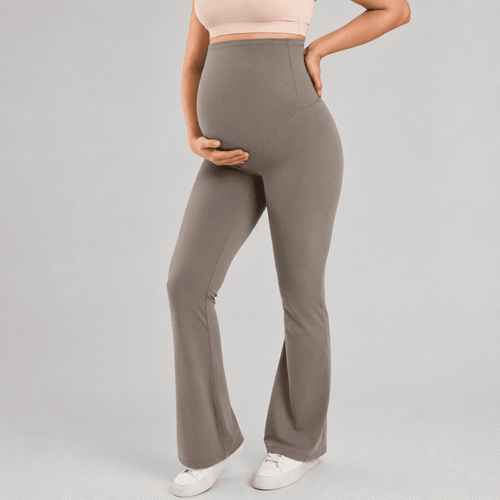
Custom Maternity Flare Yoga Pants OEM ODM Pregnancy Workout Leggings
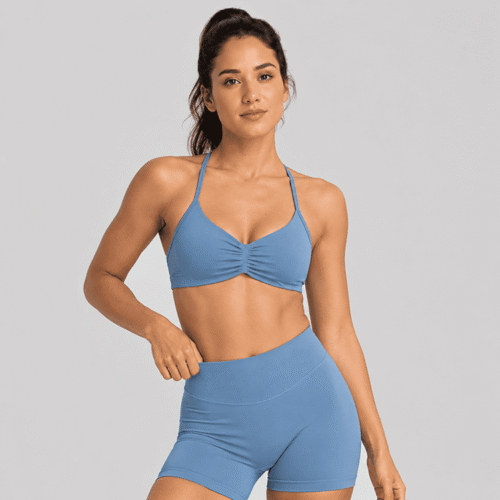
Custom Strappy Yoga Sports Bra OEM ODM Ruched Front Activewear Bra
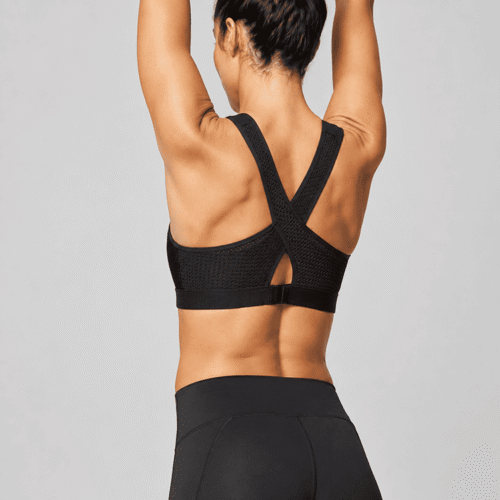
Custom High Support Cross Back Sports Bra OEM ODM Workout Bra
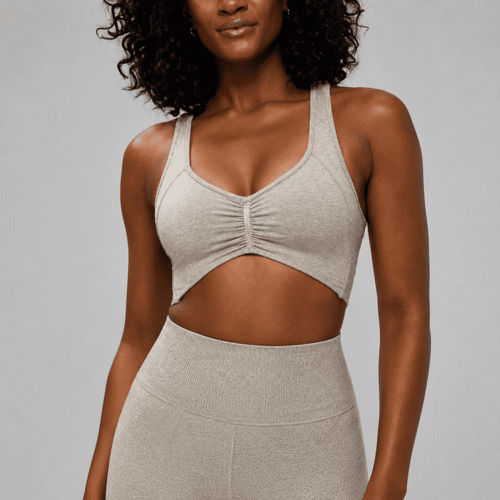
Custom Seamless Ruched Front Sports Bra OEM ODM Medium Support Activewear
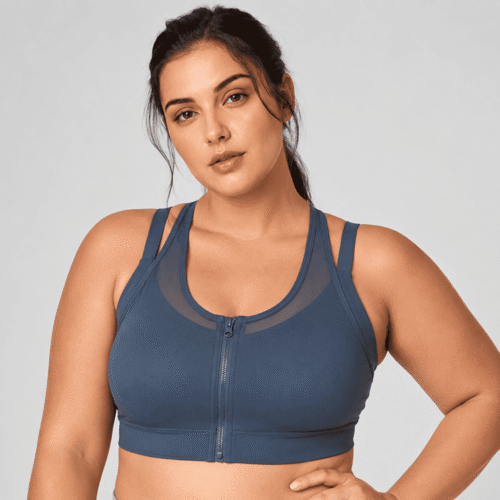
Custom Plus Size Front Zip Sports Bra OEM ODM High Support Activewear
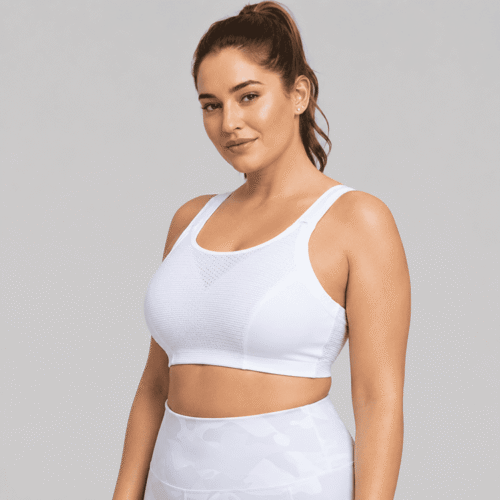
Custom Plus Size Sports Bra OEM ODM High Support Activewear Bra
Custom Racerback Sports Bra OEM ODM Medium Support Activewear Bra
Custom Girls Sports Bra OEM ODM Youth Activewear Training Bra
What Makes Plus Size Jumpsuit Fit Harder to Control Than Standard Plus Size Clothing?
A Plus Size Jumpsuits Wholesale Manufacturer has to control more than bust, waist and hip measurements because a jumpsuit connects the upper and lower body in one continuous garment. Torso length, shoulder position, waist placement, rise, crotch depth and hip volume influence each other. A jumpsuit can match its measurement chart and still pull, twist or restrict movement if these proportions are not graded as one complete fit system.
This is where plus size jumpsuits become fundamentally different from leggings, tops or even many dresses. With separates, the upper and lower garments can move independently. A jumpsuit cannot. If the torso is too short, tension may travel from the crotch to the shoulders. If the back rise is insufficient, the waist may be pulled downward at the back. If the bust requires more front length but the pattern only becomes wider, the entire garment can tilt forward on the body.
For buyers, this means fit should be evaluated as a relationship between measurements rather than a checklist of isolated numbers.
Why Can’t a Standard Jumpsuit Pattern Simply Be Enlarged from XL to 2XL–6XL?
A common mistake is to think of extended sizing as a larger version of the same body.
The pattern is widened at the bust, waist, hip and thigh, and the factory assumes the job is finished.
The garment is certainly bigger—but that does not mean it is correctly proportioned.
As a size range increases, a professional Plus Size Jumpsuits Wholesale Manufacturer may also need to evaluate changes in:
- shoulder width
- across-front width
- across-back width
- armhole depth
- bust position
- front torso length
- back torso length
- waist position
- front rise
- back rise
- crotch extension
- hip shape
- thigh circumference
- knee position
- inseam and outseam balance
These measurements do not necessarily need to increase at the same rate.
For example, aggressively increasing shoulder width at every size can make the upper body look disproportionately broad. Increasing only hip circumference without adjusting crotch extension can create enough room on a flat measurement chart while still causing pulling when the wearer sits.
The problem becomes more obvious the farther the pattern moves from its original base size.
A small grading assumption that is barely noticeable in XL can become a significant fit error by 5XL or 6XL.
That is why buyers should be cautious when a supplier describes its extended-size process simply as:
“We can enlarge your original pattern to any size.”
The important question is how the pattern changes between those sizes.
Why Is Shoulder-to-Crotch Length Critical in a Plus Size Jumpsuit?
Shoulder-to-crotch length is one of the most important measurements in a one-piece garment because it determines whether the upper and lower sections of the jumpsuit have enough vertical room to work together.
If the measurement is too short, the wearer may experience:
- pressure through the crotch,
- pulling at the shoulder,
- neckline distortion,
- a waistline that moves upward,
- difficulty sitting,
- discomfort when raising the arms,
- excessive tension through the back.
The garment may look acceptable while the wearer stands still but become uncomfortable as soon as she moves.
If shoulder-to-crotch length is too long, the opposite problems can appear:
- the torso looks collapsed,
- the intended waist position drops,
- excess fabric gathers around the crotch,
- the seat becomes loose,
- the silhouette loses its sculpted appearance.
This is particularly important in a fitted activewear jumpsuit because there may be relatively little ease available to hide a vertical balance problem.
A Plus Size Jumpsuits Wholesale Manufacturer should therefore discuss both horizontal grading and vertical grading.
Bust, waist and hip tell only part of the story.
How Should Front Torso Length and Back Torso Length Change Across Extended Sizes?
The front and back of a body do not necessarily change in the same way as size increases.
Greater bust projection may require additional front length. Abdominal distribution can affect front waist placement. Seat projection can require more room through the back rise and lower torso.
If a pattern simply increases circumference while keeping front-to-back vertical balance almost unchanged, the jumpsuit may rotate on the wearer.
Typical symptoms include:
- the front waist sitting higher than intended,
- the back neckline pulling,
- side seams moving toward the front or back,
- the crotch feeling different at the front and back,
- excess fabric appearing in one area while another area feels tight.
This is why fitting only on a mannequin or checking only flat garment measurements can be misleading.
A garment may be mathematically symmetrical on the table but behave asymmetrically on the human body.
Buyers do not need to tell the pattern maker exactly how many millimeters to add. They should, however, expect the Plus Size Jumpsuits Wholesale Manufacturer to recognize that front and back balance needs independent consideration.
How Do Bust, Waist, Hip, Rise and Crotch Depth Interact in a One-Piece Garment?
These measurements should not be treated as unrelated boxes on a specification sheet.
Consider what happens if a jumpsuit has enough bust room but the front torso is too short.
The garment may pull upward.
That can raise the waist.
The raised waist can reduce available rise.
Reduced rise increases crotch tension.
The buyer may initially describe the problem as:
“The crotch is too tight.”
But the original problem may have started higher in the torso.
The same chain reaction can work in reverse.
If the back rise is too short, the garment may pull downward at the back waist. The wearer then feels restriction when bending or sitting, even though the hip circumference appears correct.
This is why good jumpsuit fitting often involves diagnosing tension paths rather than simply adding width where the wearer feels tightness.
A knowledgeable Plus Size Jumpsuits Wholesale Manufacturer should investigate whether a fit problem is caused by:
- insufficient circumference,
- insufficient vertical length,
- incorrect front/back balance,
- wrong crotch shape,
- inappropriate fabric stretch,
- or a combination of several factors.
Adding two centimeters to the hip is not always the solution to a garment that feels tight around the seat.
Why Can a Jumpsuit Look Correct While Standing but Fail During Sitting, Bending or Squatting?
A standing fit photo captures only one position.
The body changes shape significantly during movement.
When someone sits:
- the hip expands,
- the back body length effectively increases,
- the knee bends,
- the front hip compresses,
- the crotch must accommodate a different angle.
When someone raises both arms:
- the shoulder position changes,
- the upper torso length requirement increases,
- the fabric may pull upward from the waist.
When someone performs a squat:
- hip and thigh demand increase,
- the back rise is stressed,
- the inner-thigh seams stretch,
- shoulder-to-crotch tension becomes more obvious.
This makes movement testing especially valuable for active and fitted jumpsuits.
A useful fit review can include:
- Standing naturally
- Raising both arms overhead
- Sitting on a standard chair
- Bending forward
- Performing a controlled squat
- Walking with a longer stride
- Rotating the upper body
- Returning to the original standing position
After the movement sequence, buyers should also observe whether the garment returns to its intended position.
If the jumpsuit looks correct before movement but the waist, knees or crotch remain displaced afterward, fabric recovery or pattern balance may need attention.
This matters commercially.
Consumers do not buy a jumpsuit to stand perfectly still in front of a mirror. They sit in cars, walk, work, train, travel and bend throughout the day.
A Plus Size Jumpsuits Wholesale Manufacturer should therefore evaluate wearing behavior, not only static appearance.
Activewear Jumpsuit vs Casual Jumpsuit vs Wide-Leg Jumpsuit: Which Fit Rules Should Change?
The phrase “plus size jumpsuit” covers products with very different fit requirements.
A factory that performs well with one type may not automatically be the best choice for another.
| Jumpsuit Type | Main Fit Priorities | Common Risk |
|---|---|---|
| Compression Activewear Jumpsuit | Negative ease, recovery, torso balance, stretch, seam durability | Excessive crotch or shoulder tension |
| Everyday Fitted Jumpsuit | Bust-waist-hip balance, comfort ease, closure function | Correct standing fit but poor sitting comfort |
| Wide-Leg Jumpsuit | Torso balance, rise, hip ease, drape | Over-correcting the lower body while ignoring torso fit |
| Long-Sleeve Jumpsuit | Shoulder, armhole, sleeve mobility, torso length | Arm movement pulling the entire garment upward |
| Zip-Front Jumpsuit | Front length, zipper behavior, bust tension | Zipper waves or separates under body tension |
| Sculpting Jumpsuit | Compression distribution, opacity, recovery | Smaller grading errors becoming visually obvious |
Compression Activewear Jumpsuits
A compression jumpsuit often uses negative ease, meaning the finished garment measurements may be smaller than the target body measurements.
That makes fabric performance part of the pattern system.
Too little compression and the garment loses the sculpted fit.
Too much compression and the wearer may struggle to put it on or experience excessive pressure at the shoulders, bust, thighs or crotch.
The Plus Size Jumpsuits Wholesale Manufacturer should understand the relationship between:
body measurement + garment measurement + stretch percentage + recovery + intended compression
rather than using the fabric only because it feels stretchy in the hand.
Casual Jumpsuits
Casual styles may use less stretch or no stretch at all.
Here, sufficient wearing ease becomes more important.
Closures, waist seams, darts, elastic sections and garment openings must work together so that the customer can comfortably enter, exit and move in the garment.
A jumpsuit can fit beautifully once worn and still be a poor product if the wearer can barely get into it.
Wide-Leg Jumpsuits
Wide-leg styles can appear easier because the lower body has more ease.
But the extra leg volume does not solve:
- torso length,
- bust balance,
- waist placement,
- rise,
- armhole fit.
The lower silhouette may be forgiving while the upper body still requires precise control.
Long-Sleeve Jumpsuits
Long sleeves introduce another tension path.
If the armhole or shoulder is too restrictive, raising the arms can pull the entire jumpsuit upward because the sleeve, bodice and lower body are all connected.
This is why sleeve mobility should be tested together with torso mobility.
Which Fit Points Should Buyers Prioritize During Sample Review?
Not every measurement has the same commercial impact.
For a fitted extended-size jumpsuit, buyers should prioritize the points that influence comfort, mobility and visible balance.
Critical Fit Points
1. Shoulder Position
The shoulder seam should sit where intended without being pulled strongly forward or backward.
2. Neckline Stability
The neckline should remain controlled during movement rather than being dragged downward or gaping.
3. Bust Balance
The garment should provide the intended coverage and compression without distorting the armhole or side seam.
4. Waist Placement
The designed waist should remain close to the intended body position.
5. Shoulder-to-Crotch Length
There should be enough vertical room for standing, sitting and bending.
6. Front and Back Rise
Both need to work with the wearer’s body distribution.
7. Hip and Seat
The garment should follow the intended silhouette without excessive pulling or uncontrolled folds.
8. Thigh and Inner Leg
The wearer should be able to walk and bend comfortably without excessive seam stress.
9. Leg Length and Knee Position
Especially important for flared or shaped-leg designs.
10. Recovery After Movement
The fabric and pattern should return close to their intended position after stretching.
What Should Buyers Ask the Factory After the First Fit Sample?
The quality of the supplier’s response can reveal almost as much as the sample itself.
Instead of saying:
“The crotch feels uncomfortable. Please make it bigger.”
Ask:
What is creating the crotch tension—rise, torso length, crotch extension, hip ease or fabric stretch?
Instead of:
“The waist is too high.”
Ask:
Is the waist position itself wrong, or is the garment being pulled upward because the torso is too short?
Instead of:
“The shoulder feels tight.”
Ask:
Is the restriction coming from shoulder width, armhole shape, bust distribution or total torso length?
A strong pattern team should be able to diagnose the cause rather than blindly adding centimeters to the location where the wearer feels discomfort.
That is one of the clearest differences between a sewing supplier and a technically capable Plus Size Jumpsuits Wholesale Manufacturer.
What Should a Buyer Learn from This Fit Review?
The objective is not to create a perfect mathematical pattern theory.
It is to establish whether the supplier understands one key principle:
Plus size jumpsuit fit is a connected system.
If a factory treats each measurement independently, problems can move from one part of the garment to another throughout sample revisions.
If the manufacturer understands how torso balance, rise, crotch, bust, hip and fabric behavior interact, revisions become more purposeful.
That matters because every unnecessary sample round costs more than sample fees.
It can also cost:
- launch time,
- photography schedules,
- influencer campaigns,
- inventory planning,
- retail delivery windows.
The strongest Plus Size Jumpsuits Wholesale Manufacturer is therefore not simply the supplier capable of producing a larger garment. It is the supplier capable of maintaining the intended shape, comfort and movement as the body proportions and garment size change.
Which Samples Actually Prove a Plus Size Jumpsuits Wholesale Manufacturer Can Handle Extended-Size Jumpsuits?
A reliable Plus Size Jumpsuits Wholesale Manufacturer should use different samples to answer different technical questions. A proto sample proves the design can be constructed, a fit sample checks body balance and movement, a size-set sample tests whether grading remains controlled across representative sizes, and a pre-production sample confirms the production-ready version. Buyers should never let one attractive base-size sample stand in for the entire extended-size range.
Sampling is often treated as a simple approval step:
The sample looks good. Let’s start bulk production.
That approach is too shallow for a fitted plus-size jumpsuit.
A sample is valuable only when the buyer knows what that sample is supposed to prove.
One sample may prove construction.
Another may prove fit.
Another may prove grading.
Another may prove that bulk fabric, trims and sewing specifications have finally been locked.
For a 2XL–6XL program, these are separate decisions.
A professional Plus Size Jumpsuits Wholesale Manufacturer should be able to explain which sample stage is being reviewed, what still remains open and what becomes fixed after approval.
Proto Sample vs Fit Sample vs Size-Set Sample vs PP Sample: What Does Each One Actually Prove?
These four samples should not be treated as interchangeable.
| Sample Type | Main Question | What Buyers Should Check | What It Does Not Prove |
|---|---|---|---|
| Proto Sample | Can the design be constructed? | Structure, silhouette, sewing feasibility, initial proportions | Final fit across all sizes |
| Fit Sample | Does the garment fit the target body? | Torso, bust, waist, hip, rise, crotch, movement | Full size-range grading |
| Size-Set Sample | Does grading work away from the base size? | Representative lower, middle and upper sizes | Final production material control unless bulk fabric is used |
| PP Sample | Is this the production-ready garment? | Final fabric, trims, construction, measurements, branding | Bulk consistency by itself |
The key is sequence.
A buyer should not expect the proto to solve everything.
Likewise, the PP sample should not still be carrying unresolved basic fit questions.
If major torso or grading changes are still being discussed at PP stage, development has not actually finished.
What Should Buyers Check on a Proto Sample?
The proto sample is mainly a construction and concept check.
For a plus-size jumpsuit, review:
- general silhouette,
- overall proportions,
- neckline shape,
- sleeve or strap structure,
- waist placement,
- leg shape,
- zipper or closure feasibility,
- seam layout,
- pocket construction,
- whether the design can realistically be manufactured.
At this stage, small fit imperfections may still be acceptable.
The purpose is to answer:
Can this design work as a garment before we spend more time refining the fit?
A good proto can reveal problems early.
For example:
- a back zipper may be too rigid for a fitted stretch jumpsuit;
- a pocket may distort the hip;
- a seam may interfere with a high-stretch zone;
- a decorative panel may restrict vertical movement.
Fixing these before detailed grading saves time later.
What Should Buyers Check on a Fit Sample?
The fit sample is where the garment should start behaving like a real product.
A Plus Size Jumpsuits Wholesale Manufacturer should evaluate more than whether the sample can physically close on the fit model.
The garment should be reviewed from:
- front,
- side,
- back,
- standing,
- sitting,
- moving.
Key checks include:
Upper Body
- shoulder position,
- neckline stability,
- bust coverage,
- armhole balance,
- sleeve mobility if applicable.
Torso
- front body length,
- back body length,
- waist position,
- shoulder-to-crotch length,
- side-seam balance.
Lower Body
- hip fit,
- front rise,
- back rise,
- crotch comfort,
- thigh room or compression,
- knee position,
- leg shape.
The fit sample should also reveal whether the garment is trying to solve one problem by creating another.
For example:
Adding extra width at the hip may reduce pulling but create excess fabric at the waist.
Adding torso length may improve the crotch but lower the waist too much.
That is why fit correction should be treated as balance adjustment, not simple measurement addition.
Why Is Approving Only One Plus Size Sample Risky?
Suppose a brand approves a 2XL sample.
The 2XL fits very well.
The factory grades:
2XL → 3XL → 4XL → 5XL → 6XL
and begins bulk production.
If every grade rule is perfect, this can work.
But if one vertical or proportional rule is slightly wrong, the error may increase as the size moves farther from 2XL.
Consider shoulder-to-crotch length.
If the required progression should be:
2XL → +1.2 cm
3XL → +1.2 cm
4XL → +1.4 cm
5XL → +1.4 cm
6XL
but the factory uses a fixed +0.8 cm progression, the lower sizes may still feel acceptable while 6XL becomes noticeably short through the body.
The base sample cannot reveal that.
This is why a professional Plus Size Jumpsuits Wholesale Manufacturer should discuss representative size validation whenever the range is wide or the product is highly fitted.
Which Sizes Should Buyers Select for a Size-Set Fit Check?
There is no universal rule that every size must be fully fitted on a live model before production.
That would be expensive and unnecessary for many programs.
A more practical approach is to identify risk points across the range.
For a 2XL–6XL collection, one possible validation plan is:
- 2XL — base or lower-end fit reference
- 4XL — middle-range check
- 6XL — upper-end verification
This helps answer:
- Does the intended silhouette remain stable?
- Are vertical lengths progressing correctly?
- Is the shoulder becoming too wide?
- Does the rise remain balanced?
- Is the upper size still wearable during movement?
Intermediate sizes can then be checked carefully against the graded measurement specification.
For a more complex product, a brand may choose to test additional sizes.
For a proven repeat style, fewer physical samples may be justified.
The correct sample plan should depend on fit risk, order size and product history, not on a rigid universal rule.
How Should a Real Plus Size Fit Model Be Selected?
A fit model should represent the brand’s target body measurements, not simply a clothing label.
This distinction matters because “3XL” is not a universal body shape.
One brand’s 3XL may have:
- 118 cm bust,
- 104 cm waist,
- 124 cm hip.
Another may use completely different measurements.
The fit model should be compared with the intended body chart.
Record at least:
- bust,
- waist,
- hip,
- height,
- shoulder,
- torso length,
- rise where relevant.
For a jumpsuit, vertical body measurements are especially important.
A model can match bust, waist and hip while having a significantly longer or shorter torso than the target customer.
That can create misleading sample feedback.
What Movement Tests Should Be Used for a Plus Size Jumpsuit Sample?
Static measurements should be supported by a basic movement test.
A useful sequence includes:
- Stand naturally.
- Raise both arms overhead.
- Sit on a standard chair.
- Bend forward.
- Perform a controlled squat.
- Walk with a longer stride.
- Rotate the upper body.
- Return to a neutral standing position.
During the test, observe:
- neckline movement,
- shoulder tension,
- bust displacement,
- waist shift,
- back-rise pull,
- crotch pressure,
- inner-thigh tension,
- knee distortion,
- fabric recovery.
A jumpsuit may pass every flat measurement and still fail this test.
That is especially true for stretch activewear, where the wearer expects freedom of movement.
How Should Buyers Evaluate Fabric Recovery During the Fit Sample?
Fit should be checked before and after movement.
Suppose the garment fits beautifully at the start.
After ten minutes of sitting, walking and squatting:
- the knees bag,
- the waist loosens,
- the seat becomes less controlled.
The original pattern may not be the main problem.
The fabric may stretch without recovering sufficiently.
A Plus Size Jumpsuits Wholesale Manufacturer should therefore distinguish between:
stretchability and recovery.
They are not the same.
High stretch tells you how far the fabric can move.
Recovery tells you how well it returns.
For fitted plus-size garments, poor recovery can cause visible fit changes during normal wear.
What Should Be Recorded in Fit Comments?
Fit comments should be specific enough that the pattern team can act on them.
Weak fit comment:
Crotch feels wrong.
Better:
Back crotch feels tight when sitting; standing fit is acceptable.
Even better:
Back crotch tension appears during sitting and squat. Please check back rise, shoulder-to-crotch length and back crotch extension before adding hip width.
The goal is not to tell the pattern maker how to do the job.
The goal is to describe the symptom, position and movement condition clearly.
Useful fit comments can include:
- measurement point,
- visual problem,
- comfort problem,
- movement that creates the problem,
- requested change if the buyer knows it,
- photos,
- marked-up sample images.
Why Should Buyers Keep a Sample Revision History?
A revision history prevents the development process from becoming a series of disconnected comments.
For example:
Sample V1
- torso too short,
- neckline stable,
- thigh too compressive.
Sample V2
- torso corrected,
- thigh improved,
- back waist now slightly loose.
Sample V3
- back waist corrected,
- fit approved.
This record matters later.
If the bulk garment suddenly resembles V1 instead of V3, the team can identify exactly what changed.
A strong revision history may include:
- sample version,
- date,
- pattern version,
- fabric reference,
- measurements,
- comments,
- approved changes.
This becomes especially useful when several people are involved across the brand and the factory.
When Is a Sample Actually Ready for Bulk Production?
A sample is not ready because everyone is tired of revising it.
It is ready when the key decision points are controlled.
Before bulk production, buyers should be comfortable with:
Fit
- intended silhouette,
- torso balance,
- movement,
- extended-size progression.
Measurements
- graded specification,
- critical POM,
- tolerances.
Materials
- production-equivalent fabric,
- approved trims,
- approved color.
Construction
- seams,
- stitch type,
- zipper,
- elastic,
- reinforcement.
Appearance
- logo,
- labels,
- finishing.
If one of these is still uncertain, document what remains open before production begins.
What Should the PP Sample Prove?
The PP sample should be the bridge between development and mass production.
Ideally, it should be produced using:
- final or production-equivalent fabric,
- approved trims,
- approved construction,
- approved measurements,
- approved branding.
The buyer should be able to say:
This is the garment the production line must reproduce.
That does not mean every bulk garment will be identical down to a fraction of a millimeter.
Garment manufacturing always has tolerances.
But the PP sample establishes the agreed standard for:
- appearance,
- fit,
- construction,
- material behavior.
What If the Factory Changes Fabric After Sample Approval?
Treat this as a technical change, not a purchasing detail.
Even if the new fabric has the same:
- fiber content,
- GSM,
- color,
it may have different:
- stretch,
- recovery,
- shrinkage,
- surface finish,
- compression.
A fitted jumpsuit pattern developed in one fabric can behave differently in another.
If the change is significant, buyers should consider:
- fabric comparison,
- measurement recheck,
- another fit review,
- updated PP sample.
This is particularly important when the approved fit depends on negative ease.
Can Buyers Skip the Size-Set Sample?
Sometimes, yes.
A size-set sample is not a ritual that every order must follow in exactly the same way.
It may be reasonable to reduce or skip physical size-set sampling when:
- the style is a proven repeat,
- the grading system has already been validated,
- the fabric is unchanged,
- the size range is narrow,
- order risk is low.
It becomes more valuable when:
- the style is new,
- the size range is wide,
- the jumpsuit is highly fitted,
- compression is high,
- the base pattern changed,
- customer return risk is expensive.
The decision should be risk-based.
What Does Strong Sample Evidence Look Like?
A buyer should be able to trace this chain:
Body Chart
→ Base Pattern
→ Fit Sample
→ Fit Comments
→ Revised Pattern
→ Graded Specification
→ Representative Size Check
→ PP Sample
When those steps are clear, the buyer has more than a good-looking garment.
They have evidence that the Plus Size Jumpsuits Wholesale Manufacturer has converted a design into a controlled production standard.
That is the real purpose of sampling.
Not to collect more samples.
Not to create unnecessary approval steps.
But to reduce uncertainty before hundreds or thousands of garments are cut.
For buyers that have already completed supplier evaluation and are ready to move into physical development, a custom plus size jumpsuit development program can begin once the target size chart, fit priorities and product reference are clearly defined.
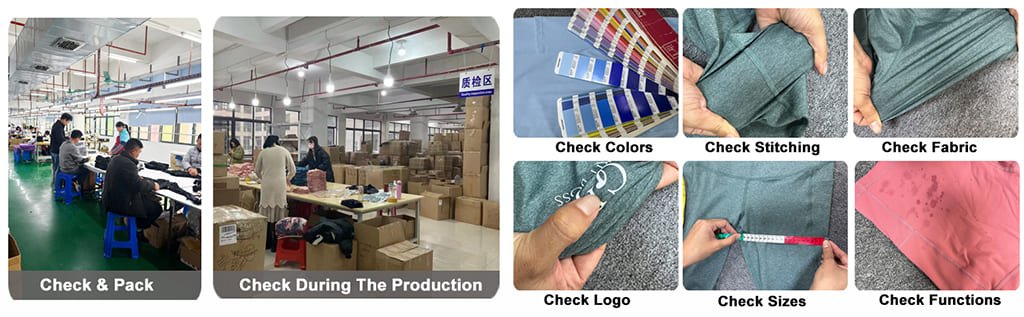
How Do Buyers Verify Production Consistency Across 2XL–6XL Bulk Orders from a Plus Size Jumpsuits Wholesale Manufacturer?
A reliable Plus Size Jumpsuits Wholesale Manufacturer should prove bulk consistency by controlling the approved pattern, graded measurement specification, fabric standard, construction method and QC records across the full extended-size range. Buyers should inspect more than one size during production, distinguish random sewing variation from systematic grading errors, and verify that bulk fabric behaves like the approved sample before final shipment.
One excellent PP sample is encouraging, but it only proves that one production-ready garment was made correctly.
It does not prove that:
- every cutting bundle uses the correct pattern version,
- every 2XL–6XL garment remains within tolerance,
- the 6XL has been checked as carefully as the 2XL,
- a second fabric lot has the same stretch and recovery,
- sewing tension remains stable through a long production run,
- the factory can reproduce the same fit after hundreds or thousands of pieces.
For a size-inclusive jumpsuit program, production consistency should therefore be treated as a technical control system rather than a final inspection event.
Why Does One Good Sample Not Prove That a Factory Can Produce 500 or 5,000 Consistent Pieces?
Sampling and mass production operate under very different conditions.
A sample may be produced by:
- a senior sample machinist,
- one pattern technician,
- a small amount of carefully selected fabric,
- slower sewing speed,
- repeated manual checking.
Bulk production may involve:
- multiple operators,
- multiple cutting bundles,
- several fabric rolls,
- higher sewing speed,
- more handling,
- different production days,
- sometimes more than one fabric lot.
That introduces variation.
The job of the Plus Size Jumpsuits Wholesale Manufacturer is not to eliminate every manufacturing variation. That is unrealistic.
The job is to keep variation inside an agreed and commercially acceptable range.
This is especially important in extended sizing because a small error may affect different sizes differently.
A 1 cm deviation at one measurement point might be barely noticeable in 2XL but more disruptive in a highly fitted upper size if the original grade balance is already close to its functional limit.
What Should Be Locked Before Bulk Cutting?
Before fabric is cut, the buyer and factory should have one controlled production reference.
At minimum, this should include:
- Approved pattern version
- Graded measurement specification
- Tolerance by critical POM
- Bill of materials
- Fabric reference
- Approved color
- Trim specification
- Zipper or elastic details
- Stitch and seam construction
- Logo size and position
- Label requirements
- Approved PP sample
This sounds basic, but version control is one of the easiest places for production errors to begin.
For example:
The buyer approves Pattern V4.
The sample room updates one pattern piece after a final fitting.
The cutting room accidentally receives V3.
The measurement chart reflects V4.
Now the factory has three “correct” references that do not actually match.
A professional Plus Size Jumpsuits Wholesale Manufacturer should therefore control pattern and specification versions before production starts.
“Use the latest file” is not a reliable production instruction.
Why Is Pattern Version Control Especially Important for Plus Size Jumpsuits?
Jumpsuit revisions often affect connected measurements.
Suppose the final fit round includes:
- +1 cm back torso length,
- +0.5 cm back rise,
- reduced shoulder width,
- revised crotch curve.
If only some of those changes reach the final graded pattern, the bulk garment may resemble the approved sample in one area but not another.
This can be difficult to diagnose later because the product may not look obviously defective.
It may simply feel:
- slightly shorter,
- tighter during sitting,
- wider through the shoulder,
- less balanced at the waist.
These are exactly the kinds of problems that create customer complaints without producing an obvious visual “factory defect.”
Random Production Variation vs Systematic Grading Error: What Is the Difference?
Buyers should distinguish two very different quality problems.
Random Production Variation
This happens when individual garments drift away from the specification.
Examples:
- one 3XL waist is 1.5 cm too wide,
- one inseam is short,
- one zipper is sewn slightly off position.
This is conventional production variation.
A good QC sampling system is designed to detect it.
Systematic Grading Error
This is more serious.
Imagine:
- nearly every 5XL torso is too short,
- every 6XL shoulder is too wide,
- every 4XL–6XL back rise is insufficient.
The garments may be consistently manufactured.
They are simply consistently wrong.
That is not mainly a sewing-quality problem.
It is a grading or specification problem.
A final inspector focusing only on workmanship may miss it completely.
This is why cross-size measurement verification matters.
How Should a Factory Check Measurements Across Different Plus Sizes During Production?
The inspection plan should represent the actual size range.
If an order includes:
2XL / 3XL / 4XL / 5XL / 6XL
the factory should not measure only the highest-volume size and assume the rest are correct.
A better system samples garments across multiple sizes.
For example:
| Production Stage | Example Sizes Checked | Main Purpose |
|---|---|---|
| First bulk pieces | 2XL, 4XL, 6XL | Confirm grading transferred correctly |
| Inline QC | Multiple sizes across bundles | Detect sewing and measurement drift |
| Mid-production | 3XL, 5XL plus key sizes | Verify continued control |
| Final inspection | Representative full range | Confirm shipment consistency |
The exact sampling quantity depends on:
- order volume,
- customer QC standard,
- product risk,
- factory process.
The principle is more important than one fixed number:
every meaningful part of the graded range should receive evidence-based verification.
Which Jumpsuit Fit Points Require Cross-Size Inspection?
Not every dimension deserves equal attention.
For a fitted plus-size jumpsuit, critical measurements usually include:
- Shoulder-to-crotch length
- Bust
- Waist
- Hip
- Shoulder width
- Armhole
- Front body length
- Back body length
- Front rise
- Back rise
- Crotch extension
- Thigh
- Inseam
- Leg opening
Why prioritize these?
Because they directly affect:
- movement,
- comfort,
- silhouette,
- body balance.
A pocket position can be visually incorrect without ruining wearability.
A short shoulder-to-crotch measurement can make the entire garment uncomfortable.
The inspection system should reflect that difference.
How Should Measurement Tolerances Be Defined?
A tolerance is the permitted difference between the target measurement and the actual finished garment.
For example:
Target bust: 120 cm
Tolerance: ±1 cm
Acceptable range:
119–121 cm
But using one identical tolerance for every POM is rarely ideal.
Different measurements create different levels of fit risk.
A small error in:
- strap length,
- neckline,
- crotch extension,
may affect the garment more than the same numerical error in a wide leg opening.
A professional Plus Size Jumpsuits Wholesale Manufacturer should therefore use tolerances that reflect:
- garment construction,
- fabric type,
- measurement length,
- functional importance.
Buyers should agree on these tolerances before production, not after the shipment fails inspection.
How Can Buyers Verify Fabric Stretch, Recovery and Shrinkage Between Production Lots?
Fabric consistency is one of the most underestimated causes of fit drift.
Two rolls may have the same stated composition:
75% Nylon / 25% Spandex
but behave differently because of differences in:
- yarn,
- knitting tension,
- heat setting,
- dyeing,
- finishing,
- fabric lot.
Buyers should therefore treat fabric behavior as part of the fit specification.
Useful checks include:
- GSM or fabric weight,
- horizontal stretch,
- vertical stretch,
- recovery,
- shrinkage,
- opacity,
- surface appearance,
- hand feel.
If the approved sample uses one fabric lot and bulk production uses another, the factory should compare the new lot against the approved standard before cutting.
Why Is Recovery More Important Than Stretch Alone?
A fabric can stretch very far and still perform badly.
Imagine two fabrics.
Both stretch 70%.
Fabric A returns close to its original dimensions.
Fabric B remains slightly elongated after repeated movement.
At the beginning of the day, both jumpsuits may look similar.
After sitting, walking and bending, Fabric B may start to show:
- loose knees,
- a relaxed seat,
- a less controlled waist,
- reduced compression.
For activewear, this can change the entire product experience.
A Plus Size Jumpsuits Wholesale Manufacturer should therefore avoid using “four-way stretch” as the only performance description.
Stretch direction tells the buyer how fabric moves.
Recovery tells the buyer whether the garment can maintain its shape.
How Can Shrinkage Create a Hidden Fit Problem?
Shrinkage becomes particularly important when a garment has a long vertical structure such as a jumpsuit. Buyers that require formal dimensional-change testing can reference ISO 5077 for dimensional change in washing and drying, because even a relatively small change in garment length can affect shoulder-to-crotch balance, waist placement and wearing comfort.
Imagine a jumpsuit with an approved shoulder-to-crotch length of 82 cm.
If the fabric or finished garment shrinks significantly after washing, that vertical loss can create:
- crotch tension,
- shoulder pulling,
- changed waist placement.
Even if width shrinkage remains acceptable, vertical shrinkage can damage one-piece fit.
For this reason, pre-production testing should consider both:
- width change,
- length change.
This is more important than simply saying the fabric is “pre-shrunk.”
What Should Inline QC Check Besides Measurements?
Measurements are essential, but production consistency also depends on construction.
For jumpsuits, inline QC may prioritize:
Crotch Seam
Check:
- seam security,
- stretch,
- stitch balance,
- reinforcement.
This area receives significant movement stress.
Inner-Thigh Seam
Especially important in activewear because of:
- friction,
- stretching,
- repeated movement.
Zipper
Check:
- position,
- smooth operation,
- waviness,
- seam tension.
A zipper can technically function but still distort the garment.
Waist Seam or Waistband
Check whether:
- seam lengths match,
- elastic tension is consistent,
- waist position remains stable.
Armhole and Shoulder
Look for:
- twisting,
- seam stretching,
- puckering,
- asymmetric sewing.
Logo and Decorative Elements
Check:
- placement,
- size,
- adhesion,
- stretch compatibility.
A technically strong Plus Size Jumpsuits Wholesale Manufacturer should understand that high-stretch garments need production controls that protect both appearance and movement.
What Production Records Should Buyers Request Before Final Inspection?
The level of documentation should match the order risk.
For a small first order, the buyer may need a relatively simple set of records.
For a larger retail program, more documentation may be appropriate.
Useful production evidence can include:
- fabric inspection results,
- shrinkage test records,
- first-bulk measurement reports,
- inline QC measurements,
- production photos,
- corrective-action records,
- final measurement reports,
- packaging confirmation,
- third-party inspection where required.
The purpose is not paperwork for paperwork’s sake.
The purpose is traceability.
If a problem appears, the buyer and factory should be able to answer:
When did this variation begin?
and:
Which sizes or production batches are affected?
Without records, those questions become guesswork.
How Can Buyers Prevent QC from Becoming a Final-Day Activity?
The worst time to discover a systematic size error is after 5,000 garments have been packed.
Quality control should begin earlier.
A better sequence is:
Fabric approval
→ Cutting confirmation
→ First bulk measurement
→ Inline measurement
→ Construction inspection
→ Corrective action
→ Final inspection
This allows the factory to correct a developing issue before it spreads through the entire order.
For example:
If the first 6XL garments show a short back rise, stopping production early may require correcting a limited number of pieces.
Finding the same issue after final packing can mean:
- reworking hundreds of units,
- delaying shipment,
- negotiating discounts,
- accepting defective inventory.
Early detection is cheaper than final sorting.
What Should Buyers Do If One Size Fails but the Other Sizes Pass?
Do not automatically reject the entire graded range.
First determine whether the problem is:
- production variation,
- a specification error,
- a grading error,
- fabric behavior.
For example:
If one 5XL garment is outside tolerance but other 5XL garments are correct, it may be random variation.
If nearly every 5XL garment has the same problem, the issue is likely systematic.
That requires checking:
- the 5XL pattern,
- measurement chart,
- cutting,
- sewing process.
This distinction helps buyers avoid both overreacting and underreacting.
How Does AQL Fit into Plus Size Jumpsuit Inspection?
AQL-based final inspection can help buyers evaluate shipment quality through sample-based inspection. ISO 2859-1:2026 defines AQL-indexed sampling schemes for lot-by-lot inspection, but AQL should not be treated as a substitute for technical size control across representative 2XL–6XL garments.
A garment can pass:
- stitching,
- appearance,
- packaging,
and still have the wrong graded fit.
For a plus-size jumpsuit program, buyers should combine conventional defect inspection with measurement checks across representative sizes.
The two systems answer different questions.
AQL asks:
How many defects are present in the shipment?
Cross-size measurement control asks:
Did the intended pattern and grading survive mass production?
Both matter.
What Does Strong Bulk-Production Evidence Look Like?
A strong production chain is traceable:
Approved Fit
→ Approved Graded Spec
→ Approved PP Sample
→ Locked Pattern
→ Approved Fabric
→ First Bulk Verification
→ Inline Cross-Size QC
→ Corrective Action
→ Final Inspection
Buyers who want to understand how these checkpoints connect in an actual manufacturing workflow can review Pair Fashion’s OEM sportswear manufacturing process, covering product development, sampling, bulk production, quality inspection and delivery.
This is the difference between relying on reassurance and relying on evidence.
The strongest Plus Size Jumpsuits Wholesale Manufacturer should not need to promise that “nothing can ever go wrong.”
Garment manufacturing always contains variables.
The more useful capability is being able to show:
- what is controlled,
- where it is checked,
- what happens when results fall outside the standard.
That is what turns one successful sample into repeatable bulk production.
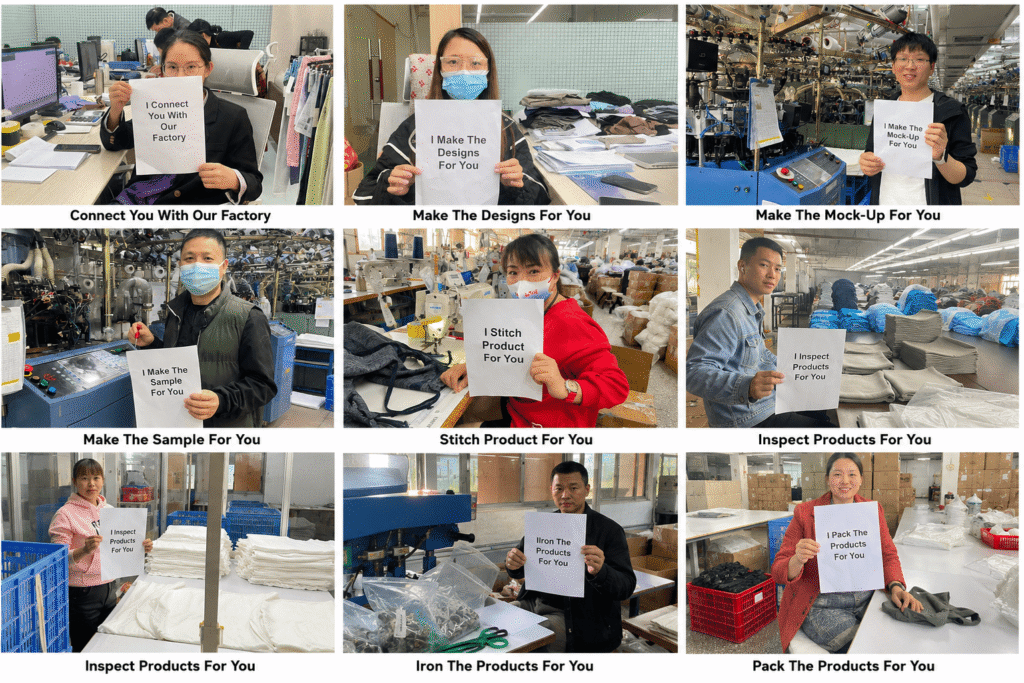
Can a Plus Size Jumpsuits Wholesale Manufacturer Reproduce the Same Fit on Repeat Orders?
A reliable Plus Size Jumpsuits Wholesale Manufacturer should be able to reproduce the approved fit months later by controlling more than the original size chart. The factory should preserve the approved pattern version, graded specifications, fabric standard, construction details, sample references and previous QC records. Repeat-order consistency depends on preventing small changes in patterns, materials, sewing methods and production settings from gradually changing the garment customers originally approved.
The first production run usually receives the most attention.
The sample is reviewed carefully.
The pattern is corrected.
The fabric is approved.
Measurements are checked.
Everyone remembers the details.
Six months later, the same style becomes a reorder.
That is when risk can quietly increase.
The product may still carry the same SKU and style number, but several things may have changed:
- the fabric mill,
- the dye lot,
- the zipper supplier,
- the sewing line,
- the pattern file,
- the shrinkage result,
- the operator handling a critical seam.
Any one of these changes may appear small.
Together, they can create fit drift.
Fit drift means the product slowly moves away from the approved version over multiple production runs, even though nobody intentionally redesigned it.
For plus size jumpsuits, this is particularly risky because a small change in vertical length, recovery or rise can affect the entire one-piece fit.
Why Is Repeat-Order Consistency Different from First-Order Quality?
First-order quality asks:
Did the factory make the product correctly this time?
Repeat-order consistency asks:
Can the factory make the same product correctly again after time, material changes and production-team changes?
These are not identical capabilities.
A factory may produce an excellent first order because:
- the sample room is heavily involved,
- the original pattern maker is closely monitoring production,
- the approved fabric lot is still available,
- the production team has just completed development.
On a reorder, the style may be treated as routine.
That can reduce attention at exactly the moment when the buyer assumes the product is already “safe.”
A professional Plus Size Jumpsuits Wholesale Manufacturer should therefore treat proven styles as controlled production references rather than as garments that can be recreated from memory.
Which Pattern and Measurement Records Should the Factory Preserve?
For repeat orders, the factory should maintain a technical record of the approved product.
A useful archive may include:
- Master pattern
- Complete graded pattern set
- Pattern version number
- Graded measurement chart
- Tolerance chart
- Approved fit comments
- Sample revision history
- Approved PP sample
- Previous bulk measurement report
- Previous final QC report
These records allow the factory to answer one critical question:
Which exact version produced the successful bulk order?
Without version control, “the pattern” can become ambiguous.
For example:
- Pattern V3 was used for the second fit.
- Pattern V4 corrected the back rise.
- Pattern V5 adjusted the waist.
- Pattern V6 was the final production version.
If the reorder accidentally returns to V4, the product may look almost identical while losing the fit customers approved.
That is why preserving the final graded production file matters.
Why Should a Factory Retain a Physical Reference Sample?
Digital records are essential, but a retained physical garment can provide another layer of control.
A sealed or approved reference sample allows the production team to compare:
- silhouette,
- hand feel,
- stretch,
- seam appearance,
- zipper behavior,
- waist position,
- leg shape,
- overall balance.
This is valuable because not every product characteristic is easy to communicate numerically.
Two garments may both measure within tolerance and still feel different because of:
- fabric recovery,
- stitch tension,
- finishing,
- seam elasticity.
A retained sample gives the Plus Size Jumpsuits Wholesale Manufacturer a physical target for comparison.
Pair Fashion, for example, maintains product and pattern records for repeat orders and retains reference samples as part of its long-term production-control system. This type of archiving can help reduce redevelopment and fit drift when a proven style returns to production.
How Can Fabric Lot Changes Affect the Same Jumpsuit Fit?
Fabric is one of the most common sources of hidden repeat-order variation.
Imagine the original order used:
75% Nylon / 25% Spandex, 230 GSM
The reorder uses fabric with the same composition and the same nominal weight.
On paper, it appears identical.
But the new fabric may differ in:
- yarn specification,
- knitting density,
- heat setting,
- dyeing,
- finishing,
- usable stretch,
- recovery,
- shrinkage.
The pattern has not changed.
The wearing experience can.
For a fitted plus size jumpsuit, the problem may appear as:
- stronger compression,
- weaker compression,
- shorter effective torso length,
- more knee bagging,
- looser seat recovery,
- greater crotch tension.
This is why “same composition” should never be treated as proof of “same performance.”
What Should Buyers Check When a Fabric Supplier Changes?
If the original mill or fabric article is unavailable, the replacement should be compared against the approved standard.
Useful checks include:
- Fiber composition
- GSM
- Width
- Horizontal stretch
- Vertical stretch
- Recovery
- Shrinkage
- Opacity
- Surface texture
- Hand feel
- Color behavior
For performance-oriented styles, buyers may also want to compare:
- compression,
- moisture performance,
- abrasion resistance,
where these functions matter commercially.
The goal is not to repeat full product development every time a fabric supplier changes.
The goal is to determine whether the new material is functionally equivalent enough to preserve fit.
When Should a Repeat Order Require a New PP Sample?
Not every repeat order needs a completely new sample cycle.
If nothing meaningful has changed, the original approved standards may be enough.
A new PP sample or fit verification becomes more valuable when:
- the fabric supplier changes,
- fabric construction changes,
- GSM changes,
- stretch or recovery changes,
- trims affecting fit change,
- the pattern is revised,
- the production gap is long,
- previous customer complaints were reported,
- the size range expands,
- the manufacturing location changes.
For example:
A brand originally produced:
2XL–5XL
and now adds:
6XL
That is not merely a reorder.
It introduces a new size at the edge of the graded range.
The Plus Size Jumpsuits Wholesale Manufacturer should treat that 6XL as a new technical risk point and validate it accordingly.
What Should Buyers Check on a Repeat-Order PP Sample?
The purpose is comparison.
Place the new PP sample against the previous approved reference and check:
Measurements
- shoulder-to-crotch,
- bust,
- waist,
- hip,
- rise,
- thigh,
- inseam.
Fabric Behavior
- stretch,
- recovery,
- compression,
- shrinkage.
Construction
- seam type,
- stitch density,
- zipper,
- elastic,
- reinforcement.
Appearance
- silhouette,
- waist placement,
- leg shape,
- neckline,
- surface finish.
The question is not:
Is this sample good?
The better question is:
Is this sample the same product customers already know?
That is a much higher standard.
How Can a Sewing-Line Change Affect Fit?
Pattern and fabric receive most of the attention, but sewing can also influence fit.
High-stretch jumpsuits are sensitive to:
- feed differential,
- thread tension,
- seam elasticity,
- operator handling,
- stitch density.
If a seam is sewn with too much tension, the garment can shorten or pucker.
If elastic application tension changes, the waist or opening may fit differently.
If one line stretches fabric during sewing and another controls it properly, two garments cut from the same pattern may not behave the same way.
A strong Plus Size Jumpsuits Wholesale Manufacturer should therefore control production settings for repeat styles instead of relying only on operator memory.
How Do Strong Manufacturers Prevent Fit Drift Across Multiple Production Runs?
Strong factories create a closed-loop reference system.
Instead of starting every reorder with:
“We made this before.”
they start with:
“This is the approved version, and these are the standards we must reproduce.”
A practical repeat-order control system can follow:
Approved Previous Bulk
→ Stored Pattern
→ Stored Measurement Spec
→ Fabric Comparison
→ PP Confirmation
→ First Bulk Check
→ Cross-Size Inspection
→ Final Comparison
Each new production run then becomes a controlled reproduction rather than a reconstruction.
What Is Fit Drift and How Can Buyers Detect It?
Fit drift is usually subtle.
Imagine three production runs:
Order 1
Waist sits at the correct position.
Torso feels balanced.
Back rise is comfortable.
Order 2
Torso is 0.7 cm shorter.
Customers may not complain immediately.
Order 3
Fabric recovery is slightly stronger and torso length remains 0.7 cm short.
Now the same style feels noticeably tighter.
Nothing changed enough to trigger a dramatic factory alarm.
But the customer experiences a different garment.
Buyers can detect fit drift by comparing:
- current PP sample vs retained reference,
- current measurements vs historical measurements,
- current fabric test vs approved fabric test,
- customer return reasons over time.
This is one reason repeat-order records can become commercially valuable, not merely operational paperwork.
How Should Customer Feedback Be Used on Repeat Orders?
Repeat production should preserve a successful fit, but that does not mean customer feedback should be ignored.
Suppose return data repeatedly shows:
“Fits well everywhere but torso feels short in 5XL and 6XL.”
The brand now has evidence that the original upper-size grading may need improvement.
The buyer and factory should decide whether to:
- maintain the original pattern for consistency,
- revise only future production,
- create an updated fit block,
- communicate the change to customers.
The worst option is making an undocumented change.
If the 6XL torso is increased by 1.5 cm, record:
- why,
- when,
- which order,
- which pattern version.
Then the new version becomes the controlled standard.
Should a Manufacturer Automatically Copy the Previous Order Without Review?
No.
“Same as last order” is useful only if the input conditions are truly the same.
Before a repeat order, a buyer should ask:
- Is the fabric article identical?
- Is the fabric mill identical?
- Is the pattern version identical?
- Are trims identical?
- Has any measurement changed?
- Has the size range changed?
- Has the factory changed the production line?
- Has customer feedback created any new fit concerns?
If all answers are stable, the repeat order can move quickly.
If not, the factory should identify what needs revalidation.
How Can Buyers Build a Repeat-Order Checklist?
A simple checklist can prevent most accidental drift.
Before Reorder Approval
- Confirm style number
- Confirm pattern version
- Confirm graded spec
- Confirm approved sample reference
- Confirm fabric article
- Confirm fabric mill
- Confirm trims
- Confirm size ratio
- Confirm previous QC result
If Anything Changes
- Compare new material
- Review affected measurements
- Produce PP sample if necessary
- Fit-check risk sizes
- Update documents
During Bulk
- First-bulk measurement
- Cross-size inline QC
- Fabric lot verification
- Final shipment comparison
This structure is especially valuable when a brand has several repeat styles and several people managing production.
Why Does Repeat-Order Control Matter More as a Brand Grows?
A startup may manage five styles.
A growing brand may manage:
- 30 styles,
- five colors each,
- several size ranges,
- multiple seasonal replenishments.
At that scale, memory stops being a reliable production-management tool.
The manufacturer needs records.
The brand needs records.
The style becomes a technical asset.
For a successful plus size jumpsuit, the real value is not only the first order.
It is the ability to:
- reorder quickly,
- expand colors,
- increase volume,
- enter new markets,
- preserve customer trust.
That is why a Plus Size Jumpsuits Wholesale Manufacturer should be evaluated not only by how it develops new products, but by how well it protects proven products from changing unexpectedly.
What Does Strong Repeat-Order Evidence Look Like?
A mature repeat-order system creates a traceable chain:
Approved Pattern
→ Graded Specification
→ Approved Fabric Standard
→ Retained Reference Sample
→ Previous QC Records
→ Reorder Material Verification
→ PP Confirmation When Required
→ Cross-Size Bulk QC
When this chain exists, the buyer is not relying on:
“We have made this before, so it should be fine.”
They are relying on controlled references.
That distinction becomes increasingly important as order volume grows.
A good Plus Size Jumpsuits Wholesale Manufacturer does more than reproduce a product code.
It reproduces the fit, proportion, fabric behavior and wearing experience that made the original product successful.
How Should Buyers Choose the Best Plus Size Jumpsuits Wholesale Manufacturer in China?
The best Plus Size Jumpsuits Wholesale Manufacturer is not necessarily the factory with the lowest quotation, the largest building or the longest product list. Buyers should choose based on evidence that the supplier can control one-piece fit, extended-size grading, representative samples, cross-size bulk measurements and repeat-order consistency at the quantity their business actually needs. A structured scorecard makes this decision more reliable than comparing price alone.
By the time a buyer reaches the final shortlist, most factories will say similar things:
We have experience.
We can customize.
We can make your size range.
We have QC.
We can offer a good price.
Those statements are useful starting points, but they do not separate one supplier from another.
The final decision should focus on what each manufacturer can prove.
For a fitted plus size jumpsuit, the strongest evidence usually falls into six areas:
- relevant product experience,
- pattern and grading capability,
- sample validation,
- cross-size production control,
- fabric consistency,
- repeat-order discipline.
Commercial terms matter too, but they should be compared after the supplier has passed the technical screen.
What Should a Buyer Score Before Choosing a Manufacturer?
A weighted supplier scorecard helps prevent one attractive factor from dominating the decision.
For example:
| Evaluation Area | Suggested Weight |
|---|---|
| Relevant Plus Size Jumpsuit Experience | 20% |
| Pattern and Grading Capability | 20% |
| Sample and Size-Set Validation | 15% |
| Cross-Size Bulk QC | 15% |
| Fabric and Material Control | 10% |
| Repeat-Order Control | 10% |
| MOQ and Production Capacity Fit | 5% |
| Communication and Documentation | 5% |
This weighting is not universal.
A startup may assign more importance to MOQ.
A retailer placing thousands of pieces may assign more weight to production records and capacity.
The point is to make the decision deliberate.
Without a scorecard, buyers often overvalue the most visible differences:
- unit price,
- sample appearance,
- response speed.
Those things matter.
They just do not tell the whole story.
Does the Manufacturer Have Real Plus Size Jumpsuit Experience or Only General Apparel Experience?
This is one of the first questions to clarify.
A factory may have years of experience producing:
- leggings,
- T-shirts,
- dresses,
- hoodies,
and still have limited experience with fitted one-piece garments.
Likewise, a factory may produce jumpsuits but only in standard sizes.
Relevant experience means the supplier has dealt with the specific combination of:
one-piece construction + extended sizing + similar fabric behavior
Ask for examples that are close to the intended product.
For an activewear jumpsuit, request:
- stretch one-piece garments,
- fitted extended sizes,
- similar seam structures,
- comparable compression levels.
For a woven fashion jumpsuit, look instead for:
- structured one-piece garments,
- closures,
- darts,
- waist shaping,
- drape control.
A professional Plus Size Jumpsuits Wholesale Manufacturer should be evaluated according to the product being sourced, not the total number of garments displayed in its showroom.
Who Handles Pattern Making and Grading?
Buyers should know who is responsible for the pattern.
Ask:
Who will create and grade our jumpsuit pattern?
Then ask:
Is that person part of your internal team or an external pattern technician?
Outsourcing is not automatically a weakness.
An excellent external specialist may be better than a weak in-house pattern maker.
The real issue is responsibility.
The buyer should understand:
- who receives fit comments,
- who changes the pattern,
- who controls grading,
- who approves the final version,
- who stores the files for repeat production.
If several people are involved, the process should still have one clear owner.
What Should Buyers Ask the Pattern Team Directly?
When possible, move beyond the sales representative for technical questions.
Ask the pattern team:
- Which size will be the base fit size?
- How will shoulder-to-crotch length be graded?
- Do front and back torso lengths use the same progression?
- How will rise change across 2XL–6XL?
- Which sizes would you recommend physically testing?
- How does the selected fabric affect negative ease?
- When would you recommend another base block?
The buyer is not trying to test whether the pattern maker can recite textbook terminology.
The goal is to see whether the answers are specific to the garment.
A weak answer sounds like:
“We usually add some centimeters.”
A stronger answer sounds like:
“The base size will be 2XL. We will review 4XL and 6XL separately because the fitted torso and back rise are the higher-risk areas in this style.”
That is a much more useful production conversation.
Can the Manufacturer Show Graded Specifications and Size-Set Evidence?
Documentation turns capability claims into evidence.
A buyer can ask for:
- graded POM chart,
- grade nest,
- sample measurement report,
- representative size-set samples,
- fit revision notes,
- approved pattern version.
A factory does not need to reveal another client’s confidential files.
It should still be able to show how its own process works.
If the Plus Size Jumpsuits Wholesale Manufacturer cannot demonstrate any method for tracking how 2XL becomes 3XL, 4XL, 5XL and 6XL, the buyer is being asked to trust the process without seeing the process.
That may be acceptable for a simple low-risk garment.
It is much harder to justify for a fitted one-piece order.
How Should Buyers Evaluate the Sample Room?
The sample room is often one of the most important areas in a factory visit.
Look beyond how many sewing machines are present.
Observe:
- whether pattern making is physically connected to sampling,
- whether samples are labeled by version,
- whether fit comments are recorded,
- whether corrected patterns can be traced,
- whether sample garments are retained.
Ask:
What happens when the buyer reports that the 5XL torso feels short?
The answer reveals how the factory converts a fit problem into a pattern correction.
A good sample room should not operate as:
Buyer comment → sewing operator guesses a change
It should operate more like:
Buyer comment → technical diagnosis → pattern revision → new sample → measurement confirmation
How Does the Factory Validate Measurements Across Multiple Sizes During Bulk Production?
This question helps distinguish general QC from size-control QC.
Ask:
Which sizes will be measured during the first bulk check?
Then:
Which sizes will be checked again during inline production?
The factory should not need to inspect every garment to demonstrate control.
But the measurement plan should represent the graded range.
For a 2XL–6XL order, the buyer may expect inspection across:
- lower end,
- middle,
- upper end.
If the supplier says:
“We normally check only 3XL because that is the most ordered size,”
ask how it detects a systematic 6XL grading error.
That question often reveals whether QC is designed around sewing defects or around actual fit consistency.
Can the Manufacturer Explain Its Measurement Tolerances?
Do not accept:
“Normal tolerance.”
Ask what that means.
A technical specification should define acceptable variation for important POMs.
For example:
| POM | Target | Example Tolerance |
| Bust | 120 cm | ±1 cm |
| Waist | 104 cm | ±1 cm |
| Shoulder-to-Crotch | 86 cm | ±1 cm |
| Inseam | 75 cm | ±1.5 cm |
These figures are only examples. Actual tolerances should be determined by product construction, material and buyer standards.
What matters is that both parties know what constitutes:
- acceptable,
- outside tolerance.
Without that agreement, final inspection becomes subjective.
What Should Buyers Verify During a Factory Audit or Video Review?
A professional factory review should focus on the parts of production that affect the product—not just the reception area.
For a Plus Size Jumpsuits Wholesale Manufacturer, useful areas include:
Pattern Room
Check:
- CAD systems,
- pattern files,
- grading process,
- pattern labeling.
Sample Room
Check:
- sample version control,
- technical communication,
- sample archive.
Fabric Inspection
Check:
- roll inspection,
- shade control,
- shrinkage procedures,
- material identification.
Cutting
Check:
- pattern version,
- size markers,
- bundle identification.
Sewing
Check:
- line organization,
- stretch-seam handling,
- in-line inspection.
QC
Check:
- measurement tables,
- inspection tools,
- defect records,
- cross-size sampling.
Finished Goods
Check:
- size separation,
- packing control,
- carton identification.
For remote buyers, a live video review can still be valuable.
Ask the supplier to show specific areas rather than sending only a pre-recorded factory tour.
What Questions Should Buyers Ask During a Live Factory Video?
Useful questions include:
- Show me where patterns are stored.
- Show me a current graded measurement sheet.
- Show me how finished garments are measured.
- Show me how size bundles are identified.
- Show me a sample revision record.
- Show me how fabric rolls are inspected.
- Show me where retained samples are stored.
This changes the factory review from a marketing presentation into a practical sourcing audit.
How Should Buyers Compare Two Similar Factory Quotes?
Imagine two suppliers.
Factory A
FOB price: $12.80
Includes:
- one fit sample,
- standard grading,
- basic final QC.
Factory B
FOB price: $13.60
Includes:
- documented grading,
- representative size validation,
- cross-size measurements,
- fabric testing,
- retained technical records.
The visible difference is:
$0.80 per piece
On a 1,000-piece order:
$800
That matters.
But the buyer should compare the $800 against the possible cost of:
- incorrect upper sizes,
- rework,
- returns,
- markdowns,
- delayed launch,
- supplier replacement.
This does not automatically make Factory B better.
It means the quotation must be evaluated against risk, not just price.
What Is Total Sourcing Cost?
A more useful formula is:
**Factory Price
- Sampling Cost
- Testing Cost
- Inspection Cost
- Freight
- Duty
- Inventory Risk
- Rework Risk
- Return Risk
- Delay Risk**
The lowest factory price can still create the highest total cost.
This is particularly true for plus-size products because a poor fit problem may not appear until customers wear the product.
A stitching defect can often be found before shipment.
A grading problem may survive inspection and show up in customer reviews.
Should Buyers Always Choose the Lowest MOQ?
No.
Low MOQ reduces inventory exposure, which is useful.
But a very low MOQ can come with trade-offs.
For example:
- stock fabric only,
- limited custom color,
- higher unit cost,
- fewer size-set samples,
- simplified packaging.
A brand should ask:
What exactly changes when I choose the lower MOQ option?
A 50-piece offer can be excellent if it still supports the required product quality.
It becomes less attractive if the low quantity prevents the factory from using the correct fabric or completing the necessary fit validation.
MOQ should match the commercial stage of the brand.
It should not override product integrity.
Which Plus Size Jumpsuits Wholesale Manufacturer Is Best for Startups?
A startup usually needs:
- manageable MOQ,
- patient development support,
- clear communication,
- reasonable sampling,
- enough technical support to avoid expensive mistakes.
The startup probably does not need maximum monthly capacity.
A factory producing 500,000 pieces per month is not automatically better for a brand ordering 100 units.
The question is whether the supplier gives the small order appropriate attention.
Startups should prioritize:
- Product relevance
- Pattern support
- Low-risk quantity
- Clear revisions
- Ability to scale later
The ideal first supplier is one the brand does not immediately outgrow when the product succeeds.
Which Manufacturer Is Best for Growing DTC Brands?
A growing DTC business already has customer data.
Its priorities move toward:
- repeat-order consistency,
- fast replenishment,
- stable fabrics,
- multiple colorways,
- more frequent product launches.
The buyer should ask:
- Can this supplier support quarterly launches?
- Can it preserve patterns?
- Can it replenish successful styles?
- Can it handle increased size ratios?
- Can it maintain color and fabric consistency?
At this stage, documentation becomes more valuable because one product may be reordered several times per year.
Which Manufacturer Is Best for Wholesalers?
Wholesalers often need:
- predictable delivery,
- repeatable sizing,
- capacity,
- stable commercial terms,
- efficient assortment management.
They may not need the most experimental development capability.
They do need a supplier that can reproduce products reliably.
For wholesalers, ask:
How many repeat styles are you currently managing?
and:
How do you control old patterns when they return to production?
These questions may matter more than asking how many new samples the factory can produce in one week.
Which Manufacturer Is Best for Established Private Label Buyers?
Established buyers usually have stronger internal systems.
They may provide:
- detailed Tech Packs,
- graded specs,
- testing standards,
- packaging manuals,
- inspection requirements.
Their supplier needs to follow those systems accurately.
Important capabilities include:
- document control,
- material traceability,
- production reporting,
- audit readiness,
- cross-size QC,
- capacity planning.
At this stage, the Plus Size Jumpsuits Wholesale Manufacturer becomes part of the buyer’s supply chain rather than simply a garment producer.
What Should a Final Supplier Scorecard Look Like?
Buyers can score each shortlisted factory from 1 to 5.
For example:
| Evaluation Area | Weight | Factory A | Factory B | Factory C |
| Relevant Product Experience | 20% | 5 | 3 | 4 |
| Pattern & Grading | 20% | 4 | 5 | 3 |
| Size-Set Validation | 15% | 4 | 2 | 4 |
| Cross-Size QC | 15% | 5 | 3 | 4 |
| Fabric Control | 10% | 4 | 5 | 3 |
| Repeat-Order System | 10% | 5 | 3 | 4 |
| MOQ / Capacity Fit | 5% | 3 | 5 | 4 |
| Communication | 5% | 4 | 4 | 5 |
The weighted result should not replace human judgment.
It prevents one emotional impression from controlling the entire sourcing decision.
A very responsive salesperson should not compensate for weak grading.
A beautiful factory should not compensate for poor documentation.
A cheap quotation should not compensate for missing size validation.
What Should Buyers Verify Before Paying a Deposit?
Before moving from supplier selection into production, confirm:
- Legal factory/company details
- Final quotation
- MOQ
- Payment terms
- Product specification
- Size range
- Graded measurement chart
- Sample approval status
- Fabric reference
- Testing requirements
- Production lead time
- QC standard
- Packaging
- Shipping responsibility
Most expensive disputes begin with something that one side thought had already been agreed.
Put important details in writing.
What Is the Best Final Question to Ask a Manufacturer?
After all technical discussions, ask:
What do you think is the biggest production risk in this jumpsuit?
This is a surprisingly useful question.
A weak supplier may answer:
“No risk. Everything is easy.”
An experienced supplier may say:
“The 5XL–6XL torso needs validation because the style is highly fitted.”
or:
“The selected fabric has high stretch but we need to confirm recovery before locking negative ease.”
That answer demonstrates something important:
the supplier is looking for problems before bulk production rather than waiting for the buyer to discover them afterward.
That is a valuable characteristic in any manufacturing relationship.
The best Plus Size Jumpsuits Wholesale Manufacturer is ultimately the supplier that can show a credible chain from:
body measurements
→ pattern
→ grading
→ representative samples
→ controlled production
→ repeatable fit
while operating at a quantity, cost structure and communication level that matches the buyer’s business.
Once a supplier has passed this screening process, buyers who are ready to move from evaluation into product development can review private label plus size jumpsuit production based on the actual size range, product reference and technical requirements.
Trusted Manufacturing Standards For Global Sportswear Brands
We operate under internationally recognized quality, sustainability, and ethical manufacturing standards. Our certifications help ensure consistent product quality, responsible sourcing, and reliable production for global sportswear brands.
- 20+ Countries Served
- 6000+ Styles Developed
- 50,000 PCS Monthly Capacity
- 3-Day Sample Development
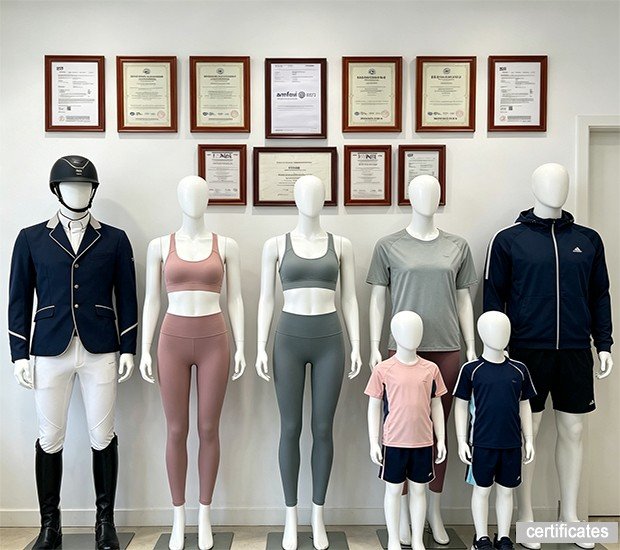
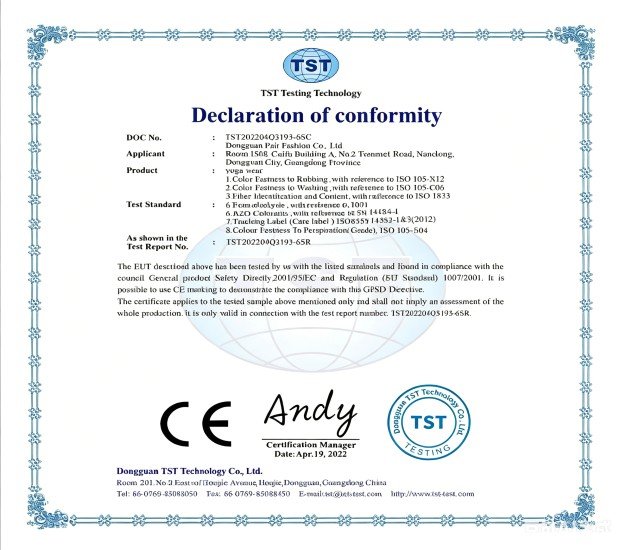
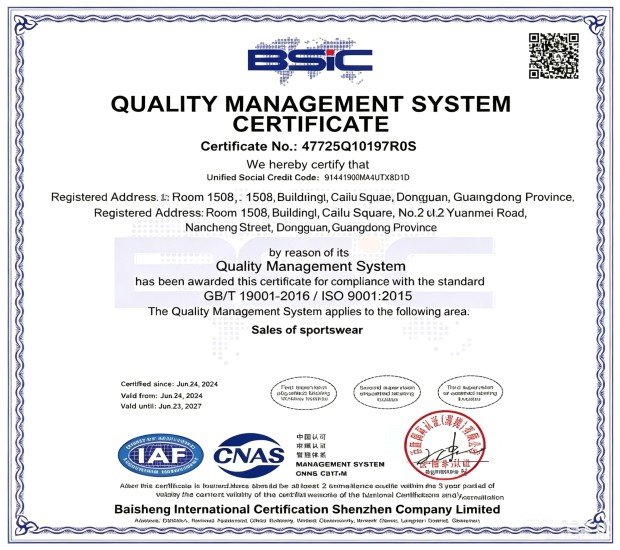
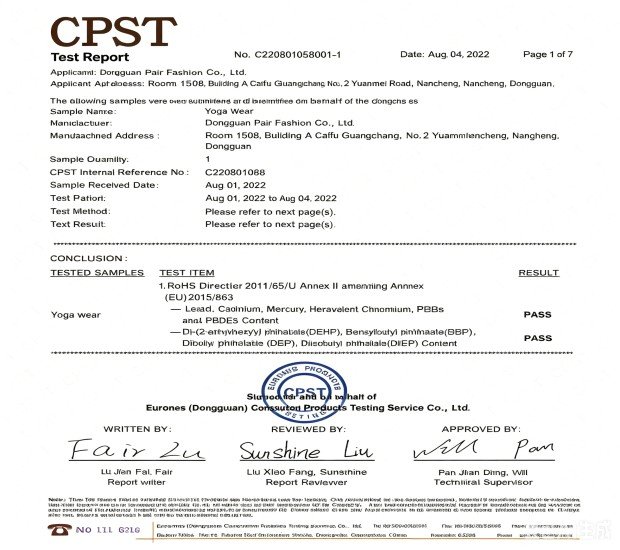
What Red Flags Show That a Plus Size Jumpsuits Wholesale Manufacturer May Not Be Ready for Your Order?
The clearest warning signs appear when a Plus Size Jumpsuits Wholesale Manufacturer cannot explain how extended sizes are created, tested and controlled. Buyers should be cautious when a supplier relies on simple XL enlargement, approves only one plus-size sample, cannot provide graded measurements, changes bulk fabric without revalidation or checks workmanship without measuring representative sizes. These gaps can turn a visually acceptable sample into inconsistent 2XL–6XL production.
Most sourcing failures do not begin with an obvious statement such as:
“We do not understand plus-size fit.”
The warning signs are usually more subtle.
The salesperson responds quickly.
The quotation looks competitive.
The sample photographs look professional.
The factory says it can make every size.
But once technical questions begin, the answers become vague.
For buyers, this is where supplier screening becomes valuable.
A factory does not need to use the most sophisticated terminology or own the most expensive CAD system. It does need to show that fit, grading and bulk consistency are controlled deliberately rather than left to operator experience or last-minute adjustment.
The following red flags deserve closer investigation before an order moves into bulk production.
Red Flag 1: “We Just Enlarge the XL Pattern to Make 2XL–6XL”
This is one of the most important answers to investigate.
Creating a larger garment from a smaller pattern is, technically, part of grading. The problem is not that the XL pattern becomes larger.
The problem is when the supplier assumes that uniform enlargement automatically creates correct plus-size proportions.
Ask:
How do the grade rules change through bust, waist, hip, shoulder, torso and rise?
A capable pattern technician should be able to explain whether different POMs use different increments.
For example, the pattern may require more growth through:
- hip,
- thigh,
- front torso length,
- back rise,
without requiring the shoulder to expand at the same rate.
If the answer is:
“We add 4 cm everywhere,”
the buyer should ask to see the graded specification and representative upper-size sample before proceeding.
A professional Plus Size Jumpsuits Wholesale Manufacturer should be able to explain the relationship between size growth and body proportion, not merely the mathematics of enlargement.
Red Flag 2: The Supplier Cannot Explain Torso Length, Rise or Crotch Grading
Bust, waist and hip are familiar measurements.
That makes them easy to discuss during a sales conversation.
Jumpsuits, however, require more.
Ask:
- How is shoulder-to-crotch length graded?
- How does front rise change?
- How does back rise change?
- Does crotch extension increase across sizes?
- How is waist position maintained?
If these questions repeatedly receive vague answers, the supplier may be applying a standard apparel grading system without fully considering the one-piece structure.
This does not necessarily mean the factory cannot sew a good jumpsuit.
It means the buyer has insufficient evidence that the extended-size jumpsuit fit has been engineered deliberately.
That risk increases with:
- tighter silhouettes,
- stronger compression,
- wider size ranges,
- lower-stretch fabrics.
Red Flag 3: Only One Extended Size Is Tested Before Bulk Production
Imagine a collection from 2XL to 6XL.
The supplier develops one excellent 2XL sample.
Then every larger size is generated digitally.
Technically, this can work.
Commercially, the question is whether the buyer has enough evidence to trust it.
The farther the pattern moves from the base size, the greater the importance of confirming that:
- shoulder progression remains controlled,
- torso length remains sufficient,
- rise remains balanced,
- hip and thigh proportions remain appropriate.
A supplier refusing any representative upper-size validation on a completely new fitted jumpsuit should be questioned.
This is particularly important when the brand has never produced the same size range before.
The buyer does not necessarily need five complete fit rounds across five sizes.
But relying on one body to prove an entire extended-size architecture creates avoidable risk.
Red Flag 4: There Is No Graded Measurement Specification
A sample can be approved visually.
Bulk production cannot be controlled visually alone.
For a 2XL–6XL order, the factory should know the target measurements for each size.
At minimum, critical POMs may include:
- bust,
- waist,
- hip,
- shoulder,
- body length,
- shoulder-to-crotch,
- front rise,
- back rise,
- thigh,
- inseam.
If the buyer asks for a graded measurement chart and receives:
“Our pattern maker has everything in the computer.”
ask for a production specification that QC can actually use.
The buyer does not necessarily need confidential CAD coordinates.
The factory does need measurable production standards.
Without a written graded specification, it becomes difficult to answer:
Is this 5XL correct?
The answer becomes subjective.
A capable Plus Size Jumpsuits Wholesale Manufacturer should be able to convert pattern information into measurements that production and QC teams can verify.
Red Flag 5: The Supplier Has No Written Measurement Tolerances
Target measurements without tolerances are incomplete.
Suppose the 4XL hip specification is:
132 cm
A finished garment measures:
133 cm
Is that acceptable?
What about:
134 cm?
Without agreed tolerance, the buyer and factory may make different assumptions.
The supplier may say:
“This variation is normal.”
The buyer may say:
“This is outside specification.”
Both sides could believe they are correct because “normal” was never defined.
Before production, important POMs should have an agreed tolerance appropriate to:
- garment construction,
- stretch,
- measurement length,
- fit sensitivity.
A manufacturer that cannot explain its normal measurement tolerances is asking the buyer to approve quality without an objective standard.
Red Flag 6: The Factory Cannot Show Any Sample Revision History
Garment development almost always involves change.
For example:
V1
Torso too short.
V2
Torso improved; back waist too loose.
V3
Back waist corrected.
The factory does not need a complicated project-management system.
But someone should know:
- which version is current,
- what changed,
- which version was approved.
If samples are repeatedly revised without clear records, an old correction can return later.
This is especially risky when development lasts several weeks or when multiple people handle the project.
Ask:
Which pattern version produced this sample?
A supplier should be able to answer.
Red Flag 7: “The Fabric Is Stretchy, So Plus Size Fit Is Easy”
Stretch can make a garment more forgiving.
It can also hide poor pattern decisions.
A highly stretchable fabric may allow a garment to fit over a body even when:
- torso length is insufficient,
- rise is too short,
- thigh compression is excessive.
The wearer may still feel uncomfortable.
More importantly, stretch without recovery can create a completely different problem after wear.
A strong Plus Size Jumpsuits Wholesale Manufacturer should understand:
stretch ≠ recovery
The buyer should ask:
- Is the fabric four-way stretch?
- What is its vertical stretch?
- How does it recover?
- What happens after repeated extension?
- Has shrinkage been checked?
If “stretchy” is the entire technical explanation, ask for more evidence.
Red Flag 8: The Production Fabric Changes After Sample Approval Without New Verification
Fabric changes happen.
The approved material may:
- become unavailable,
- miss the production schedule,
- have a new minimum quantity,
- need replacement.
The problem is not the change itself.
The problem is treating the replacement as automatically identical.
Even when two fabrics share:
- 75% Nylon,
- 25% Spandex,
- 230 GSM,
they can still differ in:
- stretch,
- recovery,
- compression,
- shrinkage,
- hand feel.
For a fitted jumpsuit, these differences can alter the wearing experience.
If the factory substitutes fabric after sample approval, ask what was compared before cutting.
Red Flag 9: QC Checks Sewing but Not Measurements Across Multiple Sizes
Ask the factory:
Which sizes will your QC team measure during bulk production?
If the answer is:
“We inspect the garments.”
ask again:
Which sizes will you measure?
Workmanship inspection and dimensional inspection are not the same.
QC may successfully find:
- loose threads,
- skipped stitches,
- damaged fabric,
- incorrect logos,
while missing that every 6XL has insufficient torso length.
A systematic grading error can exist inside an otherwise beautifully sewn order.
For a 2XL–6XL program, a Plus Size Jumpsuits Wholesale Manufacturer should have a method for verifying representative sizes throughout the range.
Red Flag 10: Every Quality Problem Is Supposed to Be Fixed at Final Inspection
Final inspection is important.
It should not be the first serious inspection.
If a systematic measurement issue is discovered after 3,000 garments have already been completed and packed, the available solutions become expensive.
The factory may need to:
- unpack cartons,
- remeasure garments,
- separate affected sizes,
- repair products,
- reproduce units,
- delay shipment.
A better system catches problems during:
first bulk → inline production → final inspection
Ask the factory:
What happens if the first 6XL production pieces are outside the approved shoulder-to-crotch measurement?
A strong answer should involve stopping, checking and correcting the cause before production continues.
Red Flag 11: The Supplier Cannot Explain Who Owns Grading Responsibility
During supplier discussions, the salesperson may say:
“Our team will handle it.”
Ask:
Who exactly?
The pattern may be created by:
- an in-house pattern maker,
- an external grading service,
- a subcontracted sample room.
Any of these models can work.
The risk is unclear responsibility.
Someone needs to own:
- pattern revisions,
- grading,
- fit comments,
- final file approval.
If nobody can identify the person or team responsible, problems can bounce between departments.
Sales says it is a pattern issue.
Pattern says it is a sewing issue.
Production says it followed the specification.
The buyer becomes the person trying to determine what happened.
Clear responsibility prevents this.
Red Flag 12: The Supplier Says 2XL–6XL Uses Exactly the Same Fit Logic as XS–XL Without Reviewing the Size Chart
This statement is not always wrong.
Some brands deliberately build a continuous size system.
The problem is making the conclusion before reviewing the target body data.
Ask:
Have you reviewed our body chart and size increments?
Then:
Do you think one base block can cover the complete range?
An experienced pattern maker may say yes.
That is fine—if the answer comes from analysis.
The red flag is automatic certainty.
A good Plus Size Jumpsuits Wholesale Manufacturer should be willing to question the initial size system when necessary.
Red Flag 13: The Factory Cannot Explain How Repeat Orders Reproduce the Approved Fit
This question is easy to test:
If we reorder this exact jumpsuit in 12 months, how will you reproduce the same fit?
Weak answer:
“We made it before. No problem.”
Stronger answer:
“We will use the approved production pattern, graded measurement chart, material specification and retained reference before confirming the reorder.”
The second answer shows that the supplier relies on controlled records rather than memory.
Repeat-order capability becomes increasingly important once a style succeeds.
A brand does not want to redevelop its bestseller every six months.
Red Flag 14: The Factory Is Willing to Start Bulk Production While Important Fit Questions Remain Open
Production urgency can create bad decisions.
The buyer may have:
- a launch deadline,
- booked photography,
- retailer delivery dates,
- marketing campaigns already scheduled.
The factory may say:
“We can adjust during bulk.”
That should be treated carefully.
Minor workmanship details may sometimes be finalized during early production.
Basic questions about:
- torso length,
- rise,
- grading,
- main fabric behavior,
should not remain unresolved when bulk fabric is being cut.
Once cutting starts, the buyer’s options become much more limited.
Red Flag 15: The Quote Is Much Lower but Nobody Can Explain Why
A low quotation is not itself a red flag.
Efficient factories can offer excellent prices.
The question is what creates the difference.
Suppose:
Factory A: $14.20
Factory B: $11.60
Ask Factory B:
- Is the fabric specification identical?
- Is GSM identical?
- Are trims identical?
- Is grading included?
- Are sample costs treated differently?
- Is packaging identical?
- Is QC scope identical?
The cheaper supplier may simply have:
- better material purchasing,
- more efficient production,
- lower overhead.
Or the comparison may not actually be like-for-like.
A professional buyer should understand the price gap before deciding.
Red Flag 16: Every Technical Question Receives a Sales Answer
This is perhaps the easiest warning sign to recognize.
Buyer:
How will you validate 6XL torso length?
Supplier:
“We have 15 years of experience.”
Buyer:
What tolerance will you use for back rise?
Supplier:
“Our QC is very strict.”
Buyer:
Who handles grading?
Supplier:
“We have professional workers.”
None of these answers is necessarily false.
They simply do not answer the questions.
A technically capable Plus Size Jumpsuits Wholesale Manufacturer does not need to provide an immediate perfect answer to every issue.
Sometimes the best response is:
“I need to confirm this with our pattern team.”
That can actually be more reassuring than an instant generic answer.
What Should Buyers Do When They Find a Red Flag?
A red flag should trigger verification, not automatic rejection.
Use a simple process:
Question
→ Evidence
→ Test
→ Decision
For example:
Concern: The supplier may use simple linear grading.
Evidence: Request the graded POM chart.
Test: Review representative 2XL, 4XL and 6XL measurements or samples.
Decision: Continue or remove the factory from the shortlist.
This prevents buyers from eliminating potentially good suppliers simply because their sales presentation is weak.
It also prevents attractive marketing from hiding weak technical systems.
Which Red Flags Are the Most Serious?
Not every warning sign carries the same level of risk.
| Red Flag | Typical Risk Level |
|---|---|
| No jumpsuit-specific experience | Medium–High |
| Cannot explain grading | High |
| No graded measurement specification | High |
| Only one size validated | Medium–High |
| Fabric changed without verification | High |
| No cross-size measurement QC | High |
| Weak sample revision control | Medium |
| No repeat-order records | Medium–High |
| Slightly higher MOQ | Low |
| Longer sampling time | Low–Medium |
| Higher quotation with stronger evidence | Not automatically a risk |
This is important because buyers sometimes focus on the wrong warning signs.
A sample taking three additional days is inconvenient.
A 6XL grading problem can damage an entire product launch.
These risks should not receive equal weight.
What Is the Core Red-Flag Test?
When evaluating a final Plus Size Jumpsuits Wholesale Manufacturer, buyers can reduce many of these warning signs to one question:
Can the supplier show how the approved fit moves from one sample into the full size range, then into bulk production, and finally into a repeat order?
A credible answer should form a connected chain:
Approved fit
→ controlled grading
→ representative size validation
→ production specification
→ cross-size QC
→ retained production records
When those links exist, buyers have evidence.
When several links are missing, the sourcing decision depends increasingly on trust and hope.
For a simple low-risk garment, that may occasionally work.
For a fitted 2XL–6XL jumpsuit intended to represent a size-inclusive brand, it is rarely the safest foundation for long-term production.