OEM/ODM Sportswear Manufacturer | 3-Day Sampling | Low MOQ | 50K Monthly Capacity | ISO9001 & BSCI Certified

Top 10 Customized Gym Shorts Manufacturer Options in China: Fabric & Design Comparison
Compare leading Customized Gym Shorts Manufacturer options in China based on fabric performance, design capabilities, production quality, and sourcing flexibility. Explore supplier strengths, minimum order requirements, pricing considerations, and practical evaluation criteria to identify the right manufacturing partner for your brand.
Who Are the Top 10 Customized Gym Shorts Manufacturers in China?
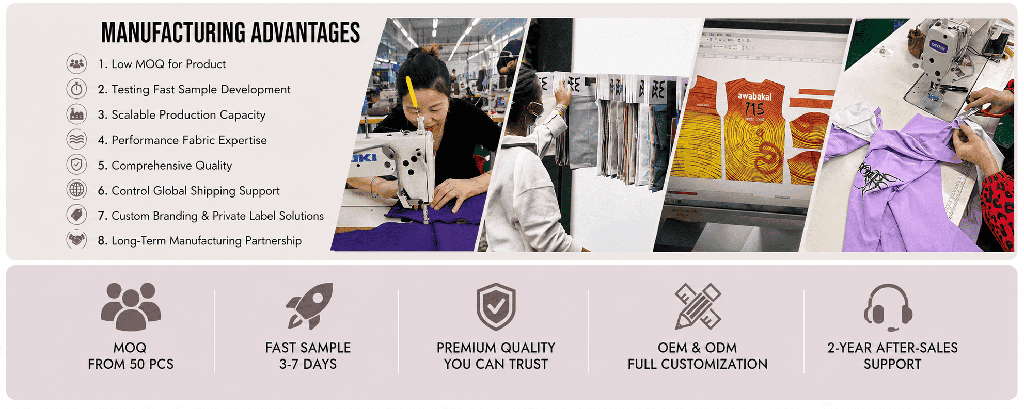
China offers a wide range of gym shorts manufacturing options, but suppliers differ considerably in fabric expertise, pattern development, order flexibility, and production capacity. The following 10 manufacturers are worth considering for different sourcing requirements, from small private label collections to technical performance apparel. Rather than treating every supplier as interchangeable, buyers should evaluate each company’s documented capabilities, minimum order conditions, sampling arrangements, and suitability for the intended product.
1. Pair Fashion — Functional Gym Shorts and Flexible Production
Location: Dongguan, Guangdong, China
Established: 2016
Standard MOQ: Starting from 100 pieces, subject to style and material requirements
Sampling: Typically around 7 days; selected developments may be faster
Bulk Lead Time: Commonly 20–25 working days after required approvals, depending on the order
Core Products: Training shorts, running shorts, compression shorts, 2-in-1 shorts, leggings, sports bras, and other functional activewear
Certifications: The company identifies ISO 9001 and BSCI among its credentials; current documentation and scope should be checked before qualification.
Pair Fashion is a Customized Gym Shorts Manufacturer serving international sportswear brands that require functional garments, flexible quantities, and development support. Established in Dongguan, the company combines pattern development, material sourcing, sampling, manufacturing, and quality inspection within its sportswear supply operations.
Its reported manufacturing resources include 11 pattern and sample development specialists, seven production lines across its apparel categories, and approximately 50,000 pieces of regular monthly capacity. These figures describe broader apparel operations rather than capacity reserved exclusively for gym shorts.
For buyers comparing a Customized Gym Shorts Manufacturer, Pair Fashion is particularly relevant when a collection involves several fit requirements, multiple fabric options, or relatively modest initial quantities. The company’s development experience may be valuable for brands introducing performance shorts alongside complementary activewear products.
Best suited for:
Emerging and growing activewear brands requiring development assistance.
Buyers sourcing functional shorts alongside other sportswear categories.
Brands seeking relatively low starting quantities and ongoing replenishment.
Procurement teams that value direct technical communication.
Potential limitations:
Very large programs may require advance capacity allocation.
Specialized fabrics, custom dyeing, and unusual trims can change minimum quantities.
Accelerated sampling or production timelines should not be assumed for every design.
Buyer assessment: A practical candidate for brands balancing product development, manageable order quantities, and repeat-order planning. Buyers should request samples that demonstrate fabric performance, grading consistency, and construction quality.
For further product-specific information, review Pair Fashion’s custom gym shorts manufacturing capabilities.
2. Ninghow Apparel — Small-Batch Shorts Manufacturing
Location: China; confirm the operating production facility for the proposed order
Established: Exact founding year not consistently established in the reviewed materials
MOQ: Published information varies between no stated minimum and 100 pieces per style
Sampling: Approximately 5–7 days, according to published service information
Bulk Lead Time: Published estimates range from approximately 7–21 days, depending on the service page and product
Core Products: Gym shorts, athletic shorts, running shorts, mesh shorts, casual shorts, and private label apparel
Certifications: Request current facility and product-specific documentation.
Ninghow Apparel markets flexible manufacturing services for brands, wholesalers, fitness organizations, and smaller apparel businesses. Its product range extends beyond performance gym shorts to several casual and athletic shorts categories.
A Customized Gym Shorts Manufacturer with access to multiple shorts constructions can be useful when buyers want to compare athletic, mesh, and lifestyle styles under one sourcing arrangement. Ninghow publishes options for polyester-spandex fabrics, nylon-spandex blends, waistbands, pockets, embroidery, heat transfers, and other branding applications.
However, its published minimum-order information is not entirely consistent. Some pages advertise no minimum quantity, while others specify 100 pieces per style. Buyers should therefore obtain a written quotation identifying the minimum quantity for the exact fabric, color, and construction requested.
When comparing Ninghow with another Customized Gym Shorts Manufacturer, it is important to distinguish stocked or existing styles from newly developed garments. A low minimum for an existing pattern does not necessarily apply to a completely original design.
Best suited for:
Startups testing a limited product range.
Fitness teams and brands seeking private label shorts.
Buyers comparing multiple shorts categories.
Small-batch programs using readily available fabrics.
Potential limitations:
MOQ and production estimates vary across published materials.
A broad shorts portfolio does not automatically establish specialization in complex technical constructions.
Buyers should confirm whether development, printing, and sewing occur at the same facility.
Buyer assessment: Worth shortlisting for flexible quantities and broad shorts options, provided the quotation clearly defines which customization services are included.
3. Hucai Sportswear — Performance Sportswear Manufacturing
Location: China; confirm the production facility address during supplier qualification
Established: Verify directly
Published MOQ: 100 pieces per style
Sampling: Confirm against the specific design
Bulk Lead Time: Request a written production schedule
Core Products: Fitness clothing, training shorts, sports tops, leggings, and private label activewear
Certifications: Verify current certificates and the facility to which they apply.
Hucai Sportswear focuses on customized fitness apparel and presents itself as a supplier for sportswear brands requiring OEM and ODM support. Its published information specifically includes gym shorts among products available at a 100-piece-per-style minimum.
For a Customized Gym Shorts Manufacturer, this is a useful starting point, but buyers should establish whether the minimum applies to one color, multiple colors, or a particular combination of sizes. Material availability and printing requirements may change the commercial terms.
Hucai’s positioning around fitness apparel makes it a relevant candidate for coordinated collections involving shorts, training tops, and leggings. Nevertheless, a buyer seeking highly specialized running shorts should request examples of comparable products rather than relying on general sportswear experience.
A capable Customized Gym Shorts Manufacturer should be able to explain construction decisions, identify suitable fabrics, and demonstrate repeatable measurements. Hucai should be assessed against these same criteria.
Best suited for:
Small and medium activewear brands.
Buyers seeking coordinated fitness apparel collections.
Private label programs with moderate starting quantities.
Potential limitations:
Exact production timelines require project-specific confirmation.
Technical specialization should be verified with comparable samples.
Factory location and current certifications should be independently checked.
Buyer assessment: A reasonable candidate for brands seeking a sportswear-focused supplier with a published 100-piece starting quantity.
4. Ingor Sportswear — Premium Activewear and Fabric Options
Location: China; confirm the manufacturing site used for the order
Established: The company reports approximately 17 years of manufacturing experience
Published MOQ: 300 pieces per style for a featured workout-shorts product
Sampling: Approximately 7–10 days for the referenced product
Bulk Lead Time: Confirm by order quantity and fabric availability
Core Products: Women’s gym shorts, biker shorts, leggings, sports bras, yoga wear, and fitness apparel
Certifications: Request valid certificates covering the relevant products and production sites.
Ingor Sportswear specializes in activewear manufacturing and promotes technical fabrics, private label development, and scalable production for international brands. Its published workout-shorts specifications include nylon-spandex blends, moisture-management features, four-way stretch, and flatlock stitching.
A Customized Gym Shorts Manufacturer with a strong background in stretch-knit activewear may be especially relevant for women’s training shorts, biker shorts, and close-fitting compression-inspired products. These categories demand attention to fabric recovery, coverage, seam placement, and size grading.
Ingor publishes a 300-piece minimum for one workout-shorts offering. That should not be interpreted as a universal minimum across its entire range, but it provides a useful reference for comparing order expectations.
Buyers considering Ingor as a Customized Gym Shorts Manufacturer should request information about fabric testing, stretch recovery, approved size specifications, and production inspection. These factors can be more important than a wide choice of available colors.
Best suited for:
Women’s fitness and yoga apparel brands.
Buyers prioritizing stretch fabrics and close-fitting garments.
Brands planning coordinated activewear collections.
Potential limitations:
Some projects may require higher starting quantities.
Expertise in fitted knitwear should not be assumed to cover every woven running-shorts construction.
Published sampling figures may not include revisions or custom fabric development.
Buyer assessment: Particularly relevant for buyers seeking technical stretch-knit shorts and broader women’s activewear collections.
5. AIKA Sportswear — Custom Training Apparel
Location: China; verify the current legal entity and production address
Established: Confirm directly
MOQ: Not reliably verified for the proposed gym shorts category
Sampling: Confirm directly
Bulk Lead Time: Confirm directly
Core Products: Custom sportswear and training apparel; specific gym shorts capabilities require verification
Certifications: Request current documentation.
AIKA Sportswear is included as a candidate for brands exploring customized training apparel. Before treating it as a qualified gym shorts supplier, buyers should establish the precise product range, production ownership, and experience with comparable shorts constructions.
Choosing a Customized Gym Shorts Manufacturer based only on a broad sportswear catalog can create problems when the actual project involves technical liners, stretch-woven fabrics, or detailed size specifications. Product photographs alone do not establish repeatable manufacturing capability.
A useful supplier review should include physical samples, recent production examples, material specifications, and a quotation based on identical requirements supplied to other candidates.
AIKA should be evaluated as a potential Customized Gym Shorts Manufacturer only after its production location, MOQ, sample arrangements, and relevant technical capabilities have been confirmed.
Best suited for:
Buyers willing to conduct an initial supplier qualification.
Brands comparing general custom training-apparel options.
Potential limitations:
Key commercial and technical details remain unverified.
No specific advantage should be assumed without supporting evidence.
A production sample is essential before final shortlisting.
Buyer assessment: A preliminary research candidate rather than a fully qualified recommendation.
6. Eation Wear — Activewear Production Capabilities
Location: China; verify the facility assigned to the order
Established: Confirm directly
MOQ: Described as flexible, without a single universal minimum
Sampling: Approximately 7–10 days, according to the company
Bulk Lead Time: The company advertises delivery in approximately 25 days, subject to order conditions
Core Products: Yoga apparel, leggings, sports bras, training shorts, fitness tops, and lifestyle activewear
Certifications: The company lists BSCI, GRS, ISO 9001, and OEKO-TEX-related credentials; scope and validity require verification.
Eation Wear presents itself as a scalable activewear supplier, reporting two manufacturing facilities and substantial monthly production capacity. Its catalog covers both women’s and men’s training apparel.
A Customized Gym Shorts Manufacturer operating within a larger activewear production system may offer advantages for brands ordering coordinated collections or planning repeat production. However, overall factory capacity does not indicate how many pieces of a specific shorts design can be produced within a particular delivery window.
Eation’s stated material and compliance capabilities are relevant to buyers with sustainability or retail documentation requirements. These claims should be checked carefully, especially where a certificate relates to a particular fabric, product, or facility rather than the entire company.
When assessing Eation as a Customized Gym Shorts Manufacturer, buyers should compare production planning, material traceability, inspection records, and the availability of dedicated development resources.
Best suited for:
Growing brands with multi-category activewear programs.
Buyers considering larger or recurring orders.
Procurement teams requiring documented material and compliance controls.
Potential limitations:
Published capacity figures cover multiple apparel categories.
Minimum quantities need confirmation by product and fabric.
Certificates should not be assumed to cover every garment.
Buyer assessment: Worth considering for growing activewear programs where production scale and documentation matter.
7. Yotex Apparel — Functional Sportswear Manufacturing
Location: Shanghai-based operations with manufacturing partners or facilities in other Chinese provinces
Established: The company reports private label programs operating since 2015
Published MOQ: Commonly 500 pieces per style for custom cut-and-sew OEM programs; other programs may differ
Sampling: Approximately 2–3 weeks for certain private label developments
Bulk Lead Time: Product-specific schedules vary; some published programs indicate 10–14 weeks overall
Core Products: Functional activewear, jackets, leggings, training apparel, and selected shorts programs
Certifications: BSCI, WRAP, and SMETA are referenced in company materials; verify applicable sites.
Yotex Apparel focuses on functional clothing and presents technical sourcing, material development, production coordination, and inspection as core services. Its published materials distinguish between custom OEM orders and lower-minimum ODM programs.
This distinction matters when evaluating a Customized Gym Shorts Manufacturer. A supplier may accept a small order using an existing design while requiring substantially higher quantities for a new pattern, specialized fabric, or fully customized construction.
Yotex’s functional apparel background makes it a potential candidate for buyers who value material sourcing and documented production controls. However, some of its strongest published product categories extend beyond gym shorts.
For buyers seeking a Customized Gym Shorts Manufacturer for original performance designs, Yotex should be assessed using a product-specific technical quotation rather than general private label minimums.
Best suited for:
Established brands with documented technical requirements.
Buyers comfortable with larger custom-production quantities.
Procurement teams prioritizing structured development and inspection.
Potential limitations:
Custom OEM minimums may be unsuitable for very small launches.
Certain shorter lead-time claims apply to specific programs rather than new development.
Gym shorts specialization should be established with comparable production samples.
Buyer assessment: More suitable for buyers with defined specifications and planned production volumes than for extremely small experimental orders.
8. Xinfu Activewear — Performance Apparel Development
Location: China; confirm the current manufacturing address
Established: 2009, according to the company
Published MOQ: Starting from 100 pieces
Sampling: Approximately 7–15 days
Bulk Lead Time: Approximately 30–50 days in published company information
Core Products: Gym shorts, biker shorts, sports bras, leggings, fitness clothing, and private label activewear
Certifications: The company references OEKO-TEX standards; request current product and facility documentation.
Xinfu Activewear markets customized fitness clothing with pattern development, material sourcing, branding, and sample services. Its published product range includes gym shorts and several stretch-knit activewear categories.
A Customized Gym Shorts Manufacturer with experience in leggings, biker shorts, and sports bras may be particularly useful for coordinated women’s fitness collections. Such experience can support consistent fabric selection and visual styling across product categories, although shorts fit must still be evaluated independently.
Xinfu publishes a 100-piece starting quantity and a 7–15-day sampling window. Its longer stated bulk production range may be worth considering for brands that prioritize planning stability over exceptionally short delivery promises.
Buyers evaluating Xinfu as a Customized Gym Shorts Manufacturer should confirm fabric sourcing arrangements, size grading methods, quality inspection procedures, and the precise lead time for the intended order.
Best suited for:
Women’s activewear and fitness brands.
Buyers sourcing coordinated training collections.
Brands able to accommodate longer production planning windows.
Potential limitations:
Bulk lead times may be longer than those advertised by some competitors.
Product-specific certification coverage requires verification.
Monthly production capacity claims vary across company pages and should be confirmed.
Buyer assessment: A candidate for fitness-focused collections where sample development and established activewear experience are priorities.
9. Honfitwear — Private Label Fitness Apparel
Location: Guangzhou, Guangdong, China; verify the actual production facility
Established: The company reports more than 12 years of activewear OEM experience
Published MOQ: Certain products advertise minimums as low as 10–20 pieces
Sampling: Approximately 5–7 days for selected programs
Bulk Lead Time: Approximately 15–20 working days for a published running-shorts program
Core Products: Gym clothing, running shorts, compression shorts, leggings, training tops, and streetwear
Certifications: The company references ISO, OEKO-TEX, and BSCI-related credentials; request valid supporting documents.
Honfitwear promotes low-quantity custom apparel and private label manufacturing. Its published running-shorts program includes technical details such as fabric selection, construction, branding, and sample development.
For a startup seeking a Customized Gym Shorts Manufacturer, unusually low advertised minimums may be attractive. However, buyers should confirm whether these quantities apply to full cut-and-sew development, existing patterns, available fabric colors, or simpler logo customization.
The company’s combination of sportswear and streetwear products may suit brands that operate across fitness and lifestyle categories. Technical performance requirements should still be evaluated separately from appearance and branding.
When comparing Honfitwear with another Customized Gym Shorts Manufacturer, buyers should examine the total cost at the intended quantity, including sample charges, fabric surcharges, logo setup, packaging, and shipping.
Best suited for:
Early-stage brands exploring small product launches.
Buyers interested in fitness and lifestyle apparel.
Small programs using accessible materials and existing constructions.
Potential limitations:
Very low minimums may involve restricted customization options.
The operating factory and subcontracting arrangements should be confirmed.
Published certificates require independent verification.
Buyer assessment: An interesting candidate for low-volume programs, provided the exact commercial terms are documented.
10. CHOOYOU FITNESS — Sports Shorts and Activewear Supply
Location: China; confirm the production facility and sourcing arrangement
Established: The company describes more than 20 years of OEM/ODM experience
MOQ: Flexible small-batch services advertised; exact shorts minimum requires confirmation
Sampling: Confirm by construction and material
Bulk Lead Time: Request a project-specific schedule
Core Products: Yoga clothing, fitness apparel, men’s and women’s sportswear, shorts, and fitness-related products
Certifications: Request documentation for the facility and products selected.
CHOOYOU FITNESS, associated with the CHOOYOUXVIFA platform, promotes design, sampling, manufacturing coordination, and access to a wider network of associated factories. This model may appeal to buyers who want to source several fitness-related categories through one commercial relationship.
A Customized Gym Shorts Manufacturer operating through a broad supplier network should be evaluated differently from a single-site specialist. Access to multiple facilities can expand product choices, but buyers need clarity about who controls production, where garments are made, and how quality responsibilities are assigned.
CHOOYOU’s wider fitness product portfolio may be relevant to brands developing apparel alongside accessories or other workout products. The key question is whether the specific shorts supplier has proven experience with the requested materials and construction.
Before selecting CHOOYOU as a Customized Gym Shorts Manufacturer, buyers should confirm the actual production site, sample approval responsibilities, inspection arrangements, and procedures for resolving defects.
Best suited for:
Buyers sourcing several fitness-related product categories.
Brands considering a coordinated sourcing arrangement.
Procurement teams prepared to verify the assigned manufacturing facility.
Potential limitations:
A large associated-factory network does not guarantee uniform capability.
Factory ownership and production allocation require clarification.
MOQ, lead time, and certification information must be established for the specific order.
Buyer assessment: A possible option for broader fitness-product sourcing, particularly when buyers can establish clear factory-level accountability.
The most useful shortlist is not necessarily the one containing the most recognizable company names. A supplier with a higher MOQ may offer better technical consistency for a complex garment, while a smaller producer may be more suitable for an initial market test. The next step is to compare these manufacturers using identical product specifications, verified evidence, and consistent commercial terms.

Custom Men’s Cargo Jogger Pants Performance Activewear OEM ODM
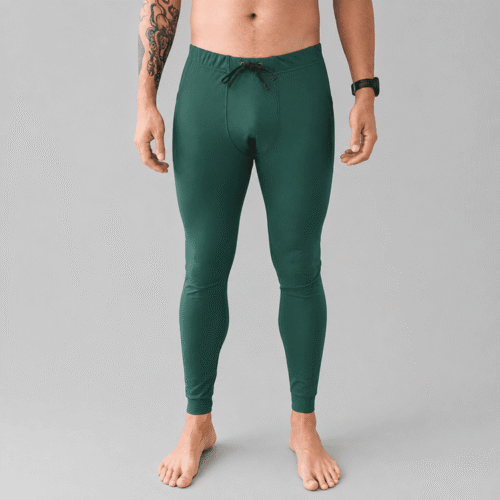
Custom Men’s Compression Yoga Pants OEM ODM Training Leggings
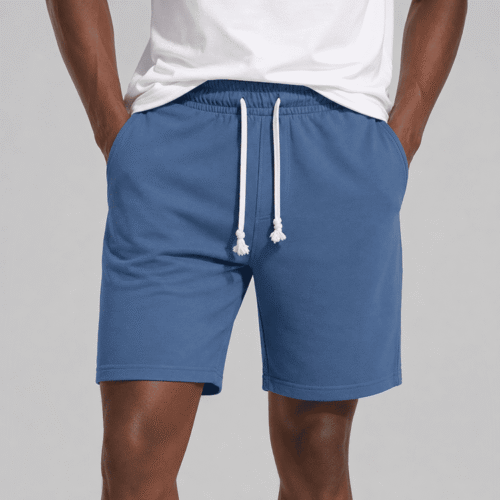
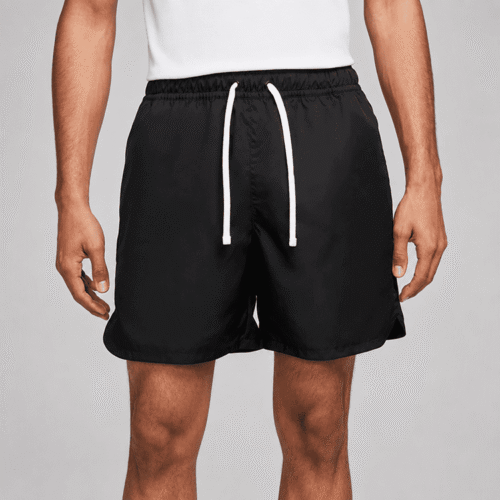
Custom Men’s Drawstring Lounge Shorts OEM ODM Casual Sweat Shorts
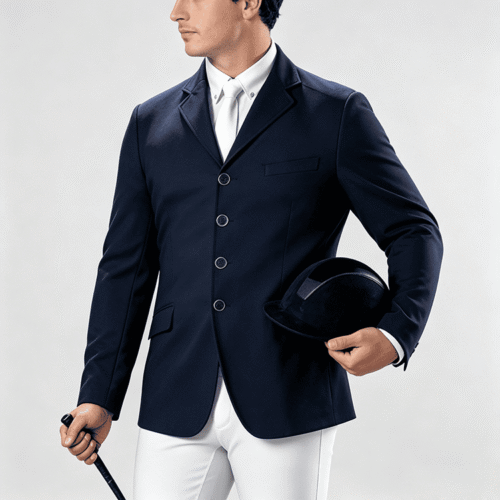
Custom Men’s Equestrian Show Jacket Competition Riding Coat OEM ODM
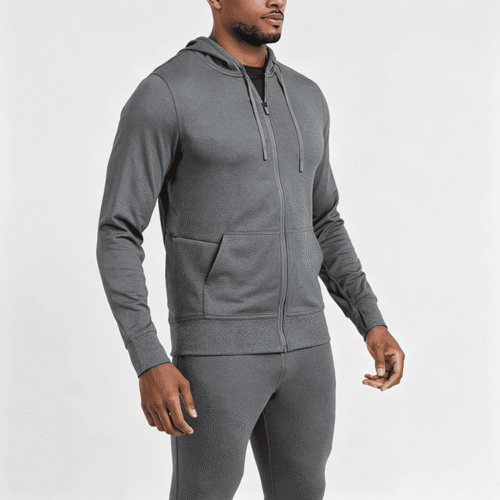
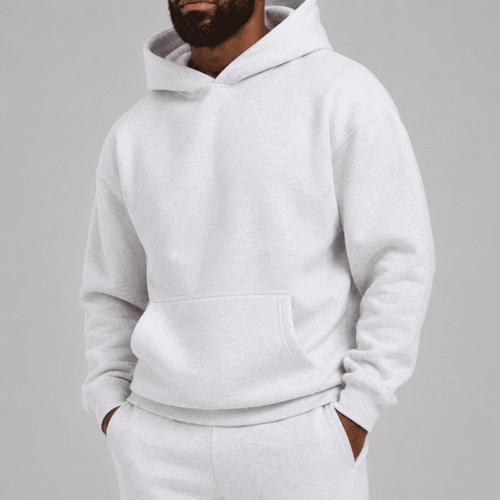
Custom Men’s Full Zip Hoodie Fleece Sweatshirt OEM ODM
Custom Men’s Gym Shorts OEM ODM Lightweight Workout Shorts
Custom Men’s Heavyweight Pullover Hoodie Fleece Sweatshirt OEM ODM
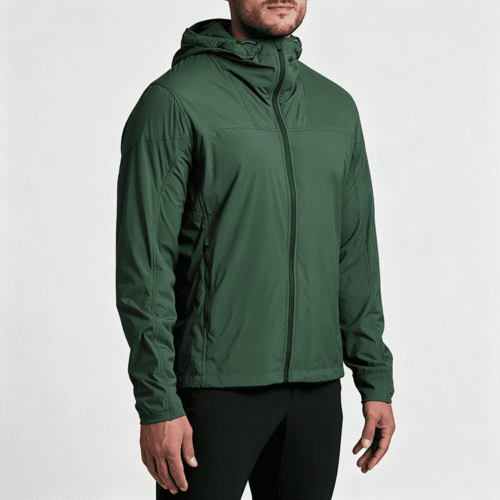
Custom Men’s Hooded Windbreaker Jacket Lightweight Training Outerwear OEM ODM
Which Chinese Gym Shorts Manufacturers Best Match Different Buyer Requirements?
The right Chinese gym shorts manufacturer depends on the buyer’s product specifications, order volume, fabric requirements, and quality expectations. Pair Fashion, Ninghow, and Honfitwear are relevant candidates for brands exploring smaller initial orders, while Ingor, Eation Wear, and Yotex deserve consideration for different technical or larger-volume programs. However, published minimums, production capabilities, and delivery promises should be verified against the same product brief before making a final decision.
A Customized Gym Shorts Manufacturer that works well for a startup launching 150 pairs of training shorts may not be the strongest choice for a retailer ordering thousands of lined running shorts across multiple sizes and colors. Similarly, a Customized Gym Shorts Manufacturer experienced in compression fabrics may need additional evaluation before being trusted with lightweight woven shorts.
The most reliable comparison starts with the product itself, followed by the manufacturer’s demonstrated capabilities—not its marketing claims.
How Do the Top 10 Suppliers Compare on Fabric, Design, MOQ and Lead Time?
Comparing suppliers only by advertised prices or minimum order quantities can be misleading. Different quotations may refer to different fabrics, construction methods, packaging specifications, or levels of customization.
Before requesting quotations, buyers should establish a common specification that includes fabric composition, fabric weight, garment measurements, seam construction, branding, packaging, order quantity, and delivery destination.
A Customized Gym Shorts Manufacturer should then be evaluated against these identical requirements so that the differences between suppliers become meaningful.
| Manufacturer | Relevant Product Focus | Published MOQ Reference | Lead Time Reference | Primary Buyer Consideration |
|---|---|---|---|---|
| Pair Fashion | Functional training shorts and multi-category activewear | From 100 pieces, subject to specifications | Commonly 20–25 working days for bulk production | Flexible development and smaller initial orders |
| Ninghow Apparel | Athletic, mesh, running and casual shorts | Published terms vary; some programs reference 100 pieces | Product-specific estimates vary | Small-batch options and broad shorts selection |
| Hucai Sportswear | Fitness apparel and private label sportswear | 100 pieces per style | Confirm by project | Coordinated fitness apparel collections |
| Ingor Sportswear | Stretch-knit activewear and fitted shorts | 300 pieces for a referenced workout-shorts product | Sampling reference: 7–10 days | Women’s training shorts and stretch-fabric products |
| AIKA Sportswear | General custom training apparel | Not verified | Not verified | Requires initial supplier qualification |
| Eation Wear | Multi-category activewear | Product-specific | Sampling reference: 7–10 days | Growing brands and recurring production |
| Yotex Apparel | Functional apparel and technical sourcing | Commonly 500 pieces per style for certain custom OEM programs | Product-specific; longer development programs possible | Structured OEM programs and defined specifications |
| Xinfu Activewear | Fitness apparel and fitted activewear | From 100 pieces | Published bulk range: approximately 30–50 days | Coordinated women’s activewear collections |
| Honfitwear | Small-batch private label fitness apparel | Selected programs advertise 10–20 pieces | Selected running-shorts program: 15–20 working days | Low-volume launches using suitable product options |
| CHOOYOU FITNESS | Fitness apparel and broader sourcing services | Confirm by product | Confirm by project | Multi-category sourcing with factory-level verification |
MOQ and lead-time figures are supplier-published references or company-provided information, not independently verified quotations. They may apply to different products and commercial conditions. Unverified information should not be treated as a confirmed manufacturing commitment.
A Customized Gym Shorts Manufacturer advertising a 100-piece minimum may require higher quantities when a buyer requests custom-dyed fabric, specialized elastic, or a particular color breakdown. Conversely, another supplier advertising a higher standard MOQ may offer smaller quantities when suitable materials and existing patterns are available.
Lead times require equally careful interpretation. A seven-day sampling estimate does not necessarily include fabric development, multiple fit revisions, or shipping. A 25-day bulk-production estimate may begin only after the sample, materials, artwork, and deposit have been approved.
When evaluating a Customized Gym Shorts Manufacturer, buyers should request a written timeline separating material sourcing, sample development, revisions, bulk manufacturing, inspection, and shipment preparation.
The key is to compare what each supplier can deliver under the same conditions, rather than comparing promotional figures taken from unrelated product pages.
Which Manufacturers Are Better Suited to Startups vs. Established Sportswear Brands?
A startup and an established sportswear company may be purchasing the same type of shorts, but their commercial priorities are rarely identical.
For a startup, a Customized Gym Shorts Manufacturer must often balance smaller order quantities with sufficient technical support to produce a commercially acceptable first collection. Limited cash flow makes inventory risk particularly important, while insufficient development experience can create costly sample revisions.
Pair Fashion, Ninghow, and Honfitwear are worth examining for smaller programs because their published or supplied information includes relatively accessible starting quantities. However, buyers must distinguish between full custom manufacturing and private labeling of an existing design.
These are different purchasing arrangements.
An existing shorts pattern with an added logo may require less development and allow a lower minimum. An original design with a new waistband, specialized liner, custom fabric, and several colorways can involve additional material minimums and engineering costs.
A startup should therefore ask whether its preferred Customized Gym Shorts Manufacturer can support the exact level of customization required at the proposed order quantity.
For established brands, the priorities usually shift toward repeatability, capacity planning, quality documentation, and supply continuity.
Eation Wear and Yotex may be relevant candidates for more structured production programs, while Ingor and Xinfu warrant consideration for collections involving fitted activewear and stretch-knit fabrics. Their suitability should be established through comparable production records, not assumed from company size.
A growing sportswear company evaluating a Customized Gym Shorts Manufacturer should investigate whether the supplier can maintain approved fabric specifications and garment measurements across repeat orders. Changes in fabric mills, elastic suppliers, or production lines can affect product consistency even when the original sample was acceptable.
Large buyers should also investigate production allocation. A manufacturer’s advertised monthly output may cover several apparel categories and multiple customers, leaving less capacity available for a specific shorts program.
For an established brand, the best Customized Gym Shorts Manufacturer is one that can demonstrate dependable repeat production, documented quality controls, and a realistic capacity commitment.
Which Suppliers Are Suitable for Running Shorts, 2-in-1 Shorts and Compression Styles?
Not all gym shorts require the same manufacturing skills. The construction of the garment determines which technical capabilities matter most.
A lightweight running short usually requires different materials and sewing methods from a close-fitting compression short. A 2-in-1 training short combines both requirements, creating additional challenges in fabric compatibility, fit, and assembly.
When comparing a Customized Gym Shorts Manufacturer, buyers should first identify the construction category that most closely matches their intended product.
| Gym Shorts Type | Main Technical Requirements | Supplier Capabilities to Verify |
|---|---|---|
| Lightweight running shorts | Woven fabric, mobility, ventilation, secure waistband | Lightweight fabric sourcing, clean curved hems, consistent seam construction |
| 2-in-1 training shorts | Outer shell and fitted liner, pocket placement, layered fit | Mixed-fabric construction, liner attachment, fit testing during movement |
| Compression shorts | Stretch recovery, body coverage, stable seams | Stretch-knit experience, grading, seam durability, recovery testing |
| Women’s fitted gym shorts | Opacity, waistband support, fit consistency | Knit-fabric evaluation, coverage testing, accurate size grading |
| General training shorts | Durability, comfort, pockets, practical fabric performance | Reliable construction, fabric consistency, repeat production |
Ingor and Xinfu are relevant candidates for stretch-knit and fitted activewear programs based on their published product portfolios. Pair Fashion and suppliers with broader functional sportswear offerings may also warrant evaluation for training shorts involving several fabric and construction options.
However, a Customized Gym Shorts Manufacturer should not be considered technically qualified simply because it displays similar-looking garments online.
For example, a 2-in-1 short requires the inner liner and outer shell to move together without excessive pulling, twisting, or restriction. A sample may look acceptable on a mannequin yet become uncomfortable during squats, running, or repeated lateral movements.
Likewise, compression shorts require more than high-stretch fabric. The manufacturer must control garment dimensions, seam placement, fabric recovery, and fit across the size range.
A technically capable Customized Gym Shorts Manufacturer should be able to provide a comparable production sample, explain its fabric selection, and demonstrate how the construction performs during intended use.
Buyers should request physical samples of the specific construction type they plan to purchase. General leggings or sports tops may demonstrate activewear experience, but they do not replace evidence of successful shorts production.
What Are the Key Strengths, Limitations and Unverified Claims of Each Supplier?
Supplier selection becomes more reliable when buyers examine limitations as carefully as strengths.
A manufacturer’s website may highlight low minimums, fast delivery, sustainable fabrics, or extensive production capacity. These claims can be useful starting points, but they are not substitutes for project-specific evidence.
Every Customized Gym Shorts Manufacturer should be evaluated through three separate questions:
What is publicly stated? Review product pages, technical descriptions, MOQ policies, and published service information.
What can be demonstrated? Request relevant samples, fabric reports, facility information, inspection records, and valid certifications.
What is contractually confirmed? Verify pricing, approved materials, delivery milestones, tolerances, inspection requirements, and responsibilities in writing.
For example, a Customized Gym Shorts Manufacturer advertising recycled polyester should be able to identify the material source and provide documentation appropriate to the environmental claim. A general sustainability statement does not establish the recycled content of a particular fabric lot.
Similarly, a supplier advertising rapid production should clarify whether its estimate includes custom fabric procurement and pre-production approvals. Production time and total order lead time are not interchangeable.
Buyers should also investigate the difference between a direct manufacturing facility and a company coordinating production through external partners. Neither business model is automatically unsuitable. What matters is transparency, accountability, technical control, and the ability to resolve problems.
A trading company with strong quality management may outperform a poorly managed direct factory. On the other hand, a direct manufacturer may offer better visibility into production decisions when the required machinery and technical expertise are available in-house.
A Customized Gym Shorts Manufacturer should therefore be assessed by the strength of its evidence and execution rather than by labels alone.
A useful initial shortlist normally includes suppliers with different but relevant strengths. For example, a buyer might compare one low-volume specialist, one technical activewear manufacturer, and one supplier experienced in larger recurring programs.
This approach gives the buyer meaningful alternatives without creating an unnecessarily expensive sampling exercise.
Before choosing a Customized Gym Shorts Manufacturer, procurement teams should document any unresolved questions about MOQ, fabric origin, manufacturing location, sample accuracy, production capacity, or compliance requirements.
A supplier that cannot provide clear answers to essential questions should not receive the same confidence rating as one that provides verifiable documentation.
The final decision should reflect product suitability, proven technical capability, total sourcing cost, and delivery reliability. A well-matched supplier is not simply the one offering the most attractive quotation; it is the one most likely to deliver the approved product consistently under commercially acceptable conditions.
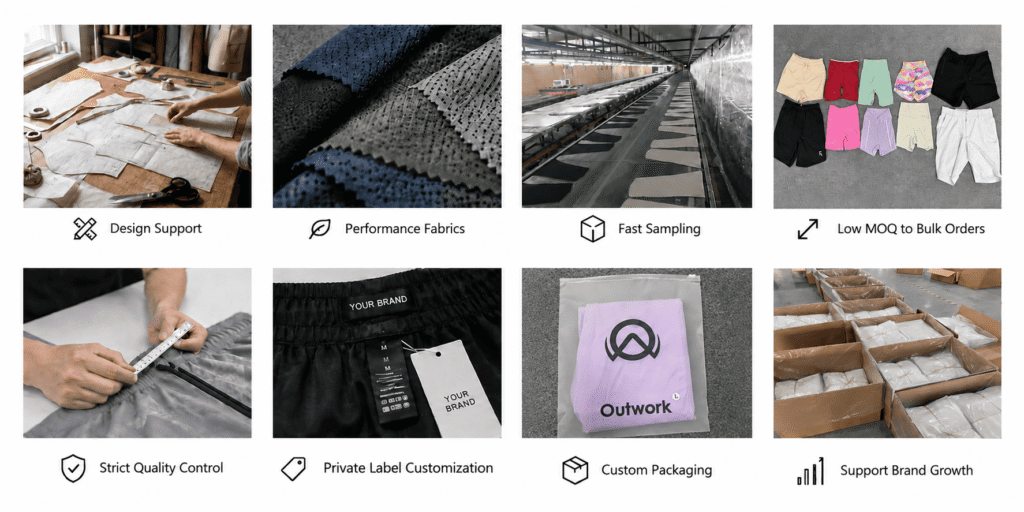
How Can Buyers Verify and Compare Gym Shorts Fabric Capabilities Across Manufacturers?
Buyers can compare gym shorts manufacturers’ fabric capabilities by examining material sourcing, technical specifications, independent test results, and consistency between approved samples and bulk production. A supplier offering dozens of fabrics is not necessarily more capable than one with a smaller, well-controlled material range. The strongest evidence includes traceable fabric specifications, relevant performance testing, documented supplier relationships, and the ability to reproduce approved materials across repeat orders.
When evaluating a Customized Gym Shorts Manufacturer, buyers should look beyond fabric swatches and descriptions such as “premium,” “breathable,” or “high-performance.” These terms provide little purchasing value unless the supplier can explain what they mean for a particular garment.
A reliable Customized Gym Shorts Manufacturer should identify each material’s composition, construction, weight, stretch characteristics, finishing treatments, and intended application. Buyers can also explore Pair Fashion’s performance fabric catalog to understand available material categories, while requesting product-specific evidence that approved fabric properties can be maintained during bulk production.
Which Manufacturers Can Source Woven, Knitted and Compression Fabrics?
Gym shorts are not a single fabric category. Running shorts, general training shorts, compression shorts, and fitted women’s gym shorts have different material requirements. A supplier experienced in one category may not be equally capable in another.
A Customized Gym Shorts Manufacturer producing lightweight running shorts typically needs access to woven polyester or nylon fabrics with suitable strength, mobility, and drying characteristics. Depending on the design, these fabrics may include elastane for mechanical stretch or use specialized finishes to improve comfort.
A Customized Gym Shorts Manufacturer specializing in fitted training shorts may work more frequently with nylon-elastane or polyester-elastane knitted fabrics, where stretch recovery, opacity, surface feel, and dimensional stability become particularly important.
For 2-in-1 shorts, the supplier must understand how the outer shell and inner liner behave together. The two materials may have different stretch properties, weights, and shrinkage characteristics, which can affect the finished garment after washing.
| Fabric Category | Common Applications | Key Properties to Compare | Main Sourcing Risk |
|---|---|---|---|
| Lightweight woven polyester | Running shorts, training shells | Weight, durability, drying behavior, mobility | Poor drape or insufficient movement allowance |
| Woven nylon blends | Premium running and training shorts | Abrasion resistance, softness, stretch | Unwanted stiffness or inconsistent finishing |
| Polyester-elastane knit | General training and compression-inspired shorts | Stretch, recovery, opacity, dimensional stability | Loss of recovery or inconsistent fit |
| Nylon-elastane knit | Fitted gym shorts and compression garments | Softness, stretch recovery, coverage | Transparency, pilling, or dimensional change |
| Polyester mesh | Liners, ventilation panels, pocket bags | Air permeability, hand feel, seam compatibility | Irritation, snagging, or poor durability |
| Recycled synthetic fabrics | Sustainability-focused collections | Verified recycled content and required performance | Unsupported environmental claims or supply inconsistency |
Material properties depend on yarns, fabric construction, finishing, and testing—not fiber composition alone.
Buyers should distinguish between manufacturers that maintain established material relationships and those that purchase fabrics only after receiving an order. Both approaches can work, but their implications for availability and repeatability differ.
A Customized Gym Shorts Manufacturer with dependable access to several fabric categories may be useful for brands developing mixed collections. However, access alone does not establish technical competence.
For example, a supplier may be able to purchase a four-way-stretch fabric but lack experience controlling distortion during cutting or maintaining consistent seam elasticity.
A Customized Gym Shorts Manufacturer should therefore demonstrate both material sourcing capability and successful production experience with comparable garments.
The most useful evidence is a finished sample made from the proposed material, accompanied by technical specifications and an explanation of any known production limitations.
What Fabric Test Results Should Buyers Compare Instead of Marketing Claims?
Fabric testing should be based on how the gym shorts will be used. Shorts designed for high-intensity training have different performance requirements from shorts used for casual gym activities.
When reviewing a Customized Gym Shorts Manufacturer, buyers should request test results relevant to the intended product rather than accepting a generic statement that the fabric has passed quality inspection.
For example, moisture management is often promoted as a selling point, but it can refer to several different properties. Liquid transport, absorption, wicking, and drying behavior are related but not identical.
The AATCC TM195 moisture-management test evaluates liquid moisture-management properties, while other methods may be needed to assess drying behavior or air permeability.
Similarly, the ISO 105-C06 laundering colorfastness standard provides methods for evaluating color resistance to specified washing conditions.
A competent Customized Gym Shorts Manufacturer should understand which test methods are relevant to the garment and should not claim that one test result proves every aspect of fabric performance.
| Performance Requirement | Relevant Evaluation | Why It Matters to Buyers |
|---|---|---|
| Moisture management | Liquid transport and wicking tests, such as AATCC TM195 where applicable | Helps evaluate how fabric handles liquid moisture |
| Colorfastness | Washing, rubbing, and perspiration colorfastness tests | Reduces the risk of fading and color transfer |
| Dimensional stability | Controlled laundering and measurement comparison | Helps prevent unexpected shrinkage or fit changes |
| Stretch and recovery | Appropriate extension and recovery tests | Important for fitted shorts and compression garments |
| Pilling resistance | Suitable pilling assessment methods | Helps evaluate surface appearance after wear |
| Abrasion resistance | Fabric-specific abrasion testing | Relevant for repeated movement and contact |
| Opacity and coverage | Stretch-condition visual or instrumental evaluation | Important for fitted shorts and lighter colors |
| Seam compatibility | Garment-level seam strength and stretch evaluation | Helps identify failure risks that fabric tests alone may miss |
For each product, buyers and manufacturers should confirm the testing method, sample conditioning requirements, number of washing cycles, and acceptable test limits in advance. Test results from different testing conditions cannot be directly compared.
Testing is especially important when comparing suppliers that provide similar-looking fabrics.
Two black polyester-elastane fabrics may feel almost identical in the hand, yet behave differently after repeated stretching or laundering. One may maintain its original dimensions, while the other develops bagging at the seat or waistband.
A Customized Gym Shorts Manufacturer should be able to explain these differences and provide test data when the product’s intended use justifies it.
Buyers should also check whether reports identify the actual fabric being proposed. A laboratory report for an unrelated material does not validate the fabric used in the current order.
For a meaningful comparison, request:
Material identification: Supplier reference, composition, construction, weight, and color.
Test traceability: Laboratory name, report date, sample identification, and method.
Acceptance criteria: Agreed limits for relevant performance properties.
Product relevance: Evidence that the tested material matches the proposed shorts fabric.
Corrective action: An explanation of what happens if the material fails a required test.
A Customized Gym Shorts Manufacturer that provides clear, product-specific evidence is generally easier to assess than one relying on broad performance claims.
Testing should support purchasing decisions, not become an unnecessary expense. A simple training short may require a different testing program from a technical running product or a compression garment intended for demanding movement.
How Do Buyers Evaluate Fabric Consistency Between Samples and Bulk Orders?
One of the most expensive sourcing mistakes is approving a sample that cannot be reproduced consistently in bulk production.
The sample may use a fabric selected from an existing stock roll, while the commercial order requires a new dye lot or a different material shipment. Even when the nominal composition remains unchanged, differences in weight, stretch, finishing, or color can affect the finished garment.
When comparing a Customized Gym Shorts Manufacturer, buyers should ask how the supplier controls material identity between development, pre-production, and bulk manufacturing.
A reliable approval process should establish a reference that both parties can measure against.
Essential fabric controls include:
Approved material reference: A clearly identified fabric quality and construction.
Color standard: An approved shade reference with defined evaluation conditions.
Fabric weight tolerance: An agreed range measured using a consistent method.
Stretch and recovery requirements: Defined where garment fit depends on elasticity.
Dimensional stability limits: Agreed shrinkage or growth criteria after specified laundering.
Bulk material verification: Checks before cutting, not only after garments are sewn.
Substitution approval: Written authorization before changing a material or supplier.
A Customized Gym Shorts Manufacturer should not replace an approved fabric simply because an alternative has the same nominal fiber composition.
For example, two fabrics may both contain 88% polyester and 12% elastane but have different knitting structures, finishing treatments, or stretch behavior. Those differences can change how a waistband sits or how the garment moves during exercise.
A second problem involves color consistency. A small shade variation may be acceptable for some products but unacceptable when shorts must match tops or other pieces in a coordinated collection.
A Customized Gym Shorts Manufacturer should establish whether color differences are evaluated visually, instrumentally, or through a combination of methods, using agreed lighting conditions and tolerances.
Buyers should also distinguish between a laboratory dip, a fabric strike-off, a pre-production sample, and bulk material. These represent different stages of approval and do not provide interchangeable evidence.
For larger or repeat programs, retaining approved material references and relevant inspection records can reduce disputes when later shipments differ from the original order.
The most reliable Customized Gym Shorts Manufacturer is not necessarily the one that promises perfect consistency. It is the one that can explain how variation is measured, controlled, reported, and corrected before it affects finished garments.
Are Recycled Material Claims Supported by Valid Scope and Traceability Documents?
Recycled polyester and recycled nylon are increasingly common in sportswear collections, but environmental claims require careful verification.
A supplier may advertise recycled materials because its fabric mill offers them, because one production facility holds a certification, or because the supplier has previously manufactured certified products. These situations are not equivalent.
A Customized Gym Shorts Manufacturer offering certified recycled materials should be able to explain which parts of the supply chain are covered and what documentation supports the specific order.
The Global Recycled Standard and Recycled Claim Standard are maintained by Textile Exchange. Their requirements include third-party verification of recycled materials and chain-of-custody controls.
A scope certificate establishes an organization’s certified activities and relevant scope. A transaction certificate provides evidence associated with specified certified material movements or products.
A Customized Gym Shorts Manufacturer may hold a valid scope certificate without every garment it sells automatically qualifying as certified recycled content.
Buyers should therefore examine both the supplier’s certification status and the documentation relevant to the proposed product.
| Document or Evidence | What It Helps Verify | What It Does Not Prove Alone |
|---|---|---|
| Valid scope certificate | Certified organization, activities, materials, and scope | That every order from the supplier is certified |
| Transaction certificate | Certified material or product transaction covered by the document | Unrelated orders or future material purchases |
| Fabric composition report | Reported fiber composition of the tested sample | Complete recycled-content chain of custody |
| Material purchase records | Supplier and material purchasing information | Independent certification without supporting documents |
| Product identification records | Connection between material references and finished goods | Compliance with all environmental marketing requirements |
A Customized Gym Shorts Manufacturer should also clarify whether the proposed garment meets the applicable standard’s recycled-content requirements and whether the intended product claim or label is permitted.
This distinction matters because a brand may face commercial or regulatory consequences if it markets a product as certified without adequate evidence.
Textile Exchange explains the role of scope certificates and transaction certificates in its chain-of-custody guidance.
The same principle applies to other environmental or chemical-safety claims: the evidence must relate to the relevant material, process, product, and stated claim.
When selecting a Customized Gym Shorts Manufacturer, buyers should favor transparent documentation over unsupported sustainability language.
A credible supplier should be willing to identify which claims it can substantiate, which documents are available, and which certifications do not apply to the proposed product.
Ultimately, fabric capability is demonstrated through material knowledge, repeatable performance, documented testing, and traceability—not the number of fabric options listed in a catalog.
The supplier that can substantiate these capabilities offers a stronger basis for long-term purchasing decisions than one relying primarily on attractive samples or broad marketing promises.
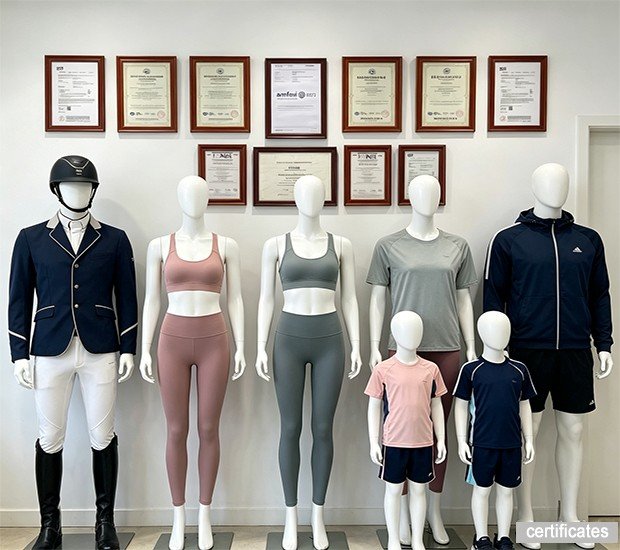
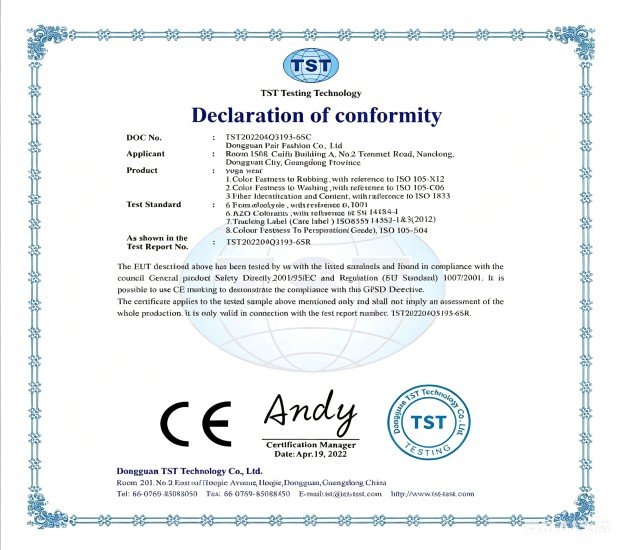
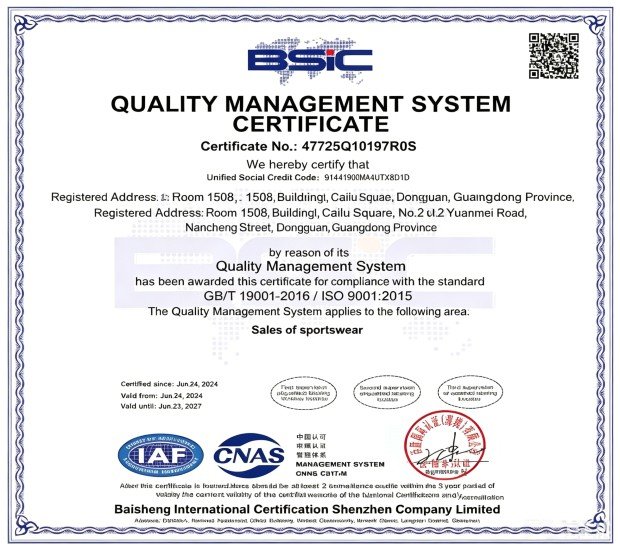
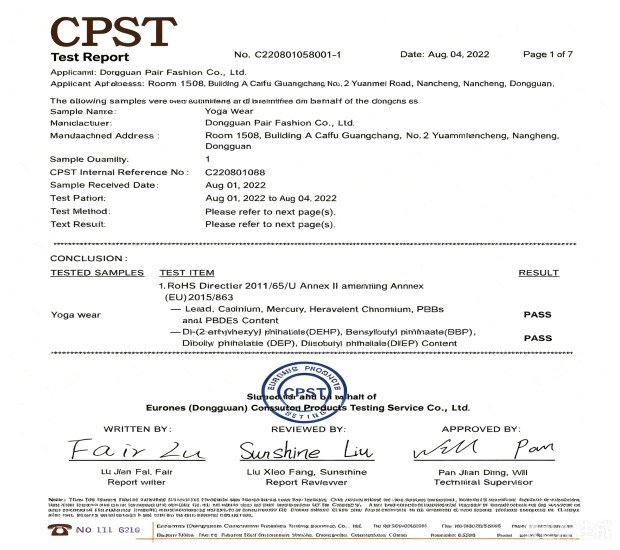
Trusted Manufacturing Standards For Global Sportswear Brands
We operate under internationally recognized quality, sustainability, and ethical manufacturing standards. Our certifications help ensure consistent product quality, responsible sourcing, and reliable production for global sportswear brands.
- 20+ Countries Served
- 6000+ Styles Developed
- 50,000 PCS Monthly Capacity
- 3-Day Sample Development
Why Choose China for Gym Shorts Manufacturing, and When Is Another Sourcing Market Better?
China remains a strong sourcing destination for custom gym shorts because of its extensive performance-fabric supply chain, specialized garment manufacturing clusters, and access to technical development resources. Vietnam is a competitive alternative for established, medium-to-large production programs, while Bangladesh can offer cost advantages for high-volume, relatively standardized garments. The best sourcing country depends on fabric requirements, design complexity, order quantities, destination-market duties, and total delivery costs—not simply the lowest quoted manufacturing price.
For an international sportswear brand, choosing a Customized Gym Shorts Manufacturer involves more than comparing labor costs across countries. A pair of training shorts may require stretch-woven fabric, mesh lining, specialized elastic, reflective branding, and precise stitching. Each component introduces sourcing decisions that can affect development time, consistency, and overall cost.
A Customized Gym Shorts Manufacturer located near suitable fabric mills and trims suppliers may be able to resolve material issues without relying on repeated international shipments. However, that advantage only matters when the supplier has access to the required materials and can manage its production partners effectively.
How Does China’s Sportswear Manufacturing History Support Specialized Supplier Networks?
China’s sportswear manufacturing strength developed through decades of textile investment, export production, and the growth of specialized industrial clusters. Its entry into the World Trade Organization in 2001 accelerated integration with international apparel supply chains, while increasing demand for performance clothing encouraged investment in synthetic fabrics, technical finishing, and specialized sewing equipment.
Today, manufacturing regions such as Guangdong, Zhejiang, Jiangsu, and Fujian contain interconnected businesses involved in fabric production, dyeing, trims, garment assembly, printing, and export services.
For a Customized Gym Shorts Manufacturer, access to this industrial network can be particularly valuable when producing garments that combine several technical materials. A running short, for example, may use lightweight woven polyester for the outer shell, stretch mesh for the liner, elastic for the waistband, and heat-transfer materials for branding.
A Customized Gym Shorts Manufacturer working within an established supply cluster may have more opportunities to compare material alternatives or resolve shortages before they interrupt production.
However, geographic proximity does not guarantee manufacturing competence. A supplier can operate in a major textile region and still lack experience with performance shorts. Buyers should investigate the manufacturer’s actual product portfolio, fabric sourcing relationships, and technical capabilities rather than relying on its location.
China’s manufacturing history also explains why many overseas brands continue sourcing technically demanding apparel there, even as they diversify production into other countries. The attraction is not simply the number of available suppliers, but the concentration of supporting industries that can contribute to complex apparel programs.
For buyers comparing a Customized Gym Shorts Manufacturer in China with one elsewhere, the relevant question is whether this supply-chain concentration provides measurable benefits for the specific product.
China vs. Vietnam vs. Bangladesh: Which Market Fits Different Procurement Priorities?
China, Vietnam, and Bangladesh all play important roles in global apparel manufacturing, but their strengths differ by product category, order scale, and sourcing arrangement.
China generally offers broad access to technical materials and specialized development resources. Vietnam has established capabilities in performance apparel and large-scale export manufacturing. Bangladesh is particularly competitive in labor-intensive, high-volume clothing production, with strong experience in several knitted and woven apparel categories.
A Customized Gym Shorts Manufacturer in Vietnam may be an excellent choice for a brand with stable specifications, predictable demand, and established material suppliers. A Customized Gym Shorts Manufacturer in Bangladesh may offer commercial advantages for relatively standardized shorts produced in substantial quantities.
The comparison becomes more complicated when a product requires specialized stretch fabrics, multiple construction techniques, or frequent material adjustments.
| Procurement Factor | China | Vietnam | Bangladesh |
|---|---|---|---|
| Performance fabric ecosystem | Broad domestic sourcing network | Strong technical apparel capabilities; some fabrics imported | Growing technical capabilities; imported synthetics may be needed |
| Complex shorts development | Wide range of potential specialists | Available through qualified technical manufacturers | Available through selected specialists |
| Small custom orders | Options available through flexible suppliers | Depends on factory and program | Depends on factory and program |
| Large repeat orders | Strong capabilities | Strong capabilities | Strong capabilities, especially standardized apparel |
| Material sourcing flexibility | Broad local supplier base | Domestic and imported options | Domestic and imported options |
| Labor-cost positioning | Often higher than Bangladesh | Varies by factory and product | Frequently competitive for labor-intensive production |
| Trade and tariff considerations | Destination-specific duties and trade measures | Destination-specific agreements and origin requirements | Destination-specific duties and preferential arrangements |
| Main procurement risk | Supplier variation, cost, trade exposure | Material dependencies and capacity allocation | Material dependencies and technical supplier selection |
These are general differences between sourcing countries and do not mean that every manufacturer has the same production capabilities. Some manufacturers may perform better than the general level in their country, while others may not meet the same standards.
A buyer selecting a Customized Gym Shorts Manufacturer should compare quotations using the same fabric specifications, order quantities, quality requirements, and shipping terms.
For example, a Vietnamese supplier may quote a competitive garment price but need to import a particular stretch-woven fabric. If that material is unavailable locally, additional procurement time and freight costs may affect the final delivery schedule.
Conversely, a Chinese supplier may have faster access to the fabric but face a less favorable landed-cost position in the destination market because of applicable duties or trade measures.
A Customized Gym Shorts Manufacturer should therefore be compared on total delivered cost, not sewing price alone.
The country comparison also needs to account for the buyer’s existing supply chain. An established brand already purchasing fabrics in Vietnam may find local production more efficient than switching to China. Another brand developing several new performance styles may benefit from China’s concentration of technical material suppliers.
No single country is automatically the best choice for every product.
What Are the Advantages and Trade-Offs of China’s Fabric and Trims Supply Chain?
The main advantage of China’s textile supply chain is the variety of materials and manufacturing services available within established production regions.
For gym shorts, buyers may need several combinations of fabric weight, stretch, surface texture, durability, and moisture-management performance. Some products also require specialized waistbands, mesh liners, pocket bags, reflective details, or branded elastic.
A Customized Gym Shorts Manufacturer with access to suitable domestic suppliers may be able to compare these options without depending entirely on overseas material procurement.
This can be particularly useful when evaluating alternative fabrics after a sample fails a stretch-recovery, shrinkage, or colorfastness requirement.
A Customized Gym Shorts Manufacturer should nevertheless demonstrate that proposed replacement materials meet the approved specifications. Similar appearance does not guarantee equivalent performance.
Consider a brand developing lightweight running shorts. The original fabric may provide adequate ventilation but insufficient resistance to abrasion. A substitute could improve durability while increasing weight or reducing comfort.
The supplier’s responsibility is not merely to identify another fabric with the same fiber composition. It must understand how the substitution affects the finished garment.
Important supply-chain advantages include:
Material variety: Access to woven, knitted, stretch, mesh, and specialized performance fabrics.
Component availability: Multiple options for elastic, drawcords, zippers, labels, and branding materials.
Development flexibility: Opportunities to compare alternative materials and construction methods.
Supplier coordination: Potentially shorter communication and transportation distances between supporting businesses.
Replenishment planning: Access to established materials may support repeat production when availability is confirmed.
These advantages come with limitations.
A Customized Gym Shorts Manufacturer may still depend on imported specialty fabrics, minimum dyeing quantities, or third-party processing. A fabric available in a supplier’s sample library may not be available for immediate bulk production.
Buyers should ask whether materials are stocked, made to order, or purchased through external agents. They should also confirm whether the proposed fabric can be reordered with consistent composition, weight, finish, and color.
When assessing a Customized Gym Shorts Manufacturer, material traceability and continuity can be more valuable than the number of fabric swatches displayed during an initial meeting.
Another consideration is compliance. Recycled-content claims, restricted-substance requirements, and performance test results should be supported by documentation relevant to the actual material and production lot.
A broad fabric catalog is useful, but reliable material control is what protects the finished product.
When Do Order Complexity, Development Requirements and Volume Favor Chinese Suppliers?
China may be especially attractive when a gym shorts project combines technical construction, several material components, and relatively modest initial quantities.
For example, a startup launching 200 pairs of 2-in-1 training shorts may need an outer woven fabric, a stretch liner, a supportive waistband, and secure pockets. The technical challenge is not the quantity alone; it is coordinating the different materials and ensuring that they perform together.
A Customized Gym Shorts Manufacturer with relevant experience and access to multiple material suppliers may be better suited to such a project than a high-volume producer specializing in simpler garments.
However, a larger order does not automatically favor China. A brand purchasing 20,000 pairs of established training shorts may find competitive production options in Vietnam or Bangladesh, particularly when specifications are stable and suitable manufacturing capacity is available.
A Customized Gym Shorts Manufacturer should be selected according to the relationship between product complexity, order size, and sourcing risk.
| Buyer Situation | Sourcing Approach Worth Considering | Main Decision Factor |
|---|---|---|
| New brand testing a technical shorts design | Compare flexible Chinese specialists with qualified alternatives | Development capability and inventory risk |
| Growing brand with several performance styles | Evaluate suppliers with strong technical sourcing networks | Fabric consistency and construction expertise |
| Established brand ordering large volumes of a stable design | Compare China, Vietnam, and Bangladesh | Total landed cost and capacity |
| Brand requiring frequent design changes | Prioritize suppliers with accessible technical resources | Development responsiveness |
| Brand seeking supply-chain diversification | Consider a China+1 sourcing strategy | Geographic risk and production continuity |
| Brand serving multiple import markets | Compare production countries by destination | Duties, logistics, origin rules, and compliance |
These scenarios illustrate sourcing priorities rather than fixed country recommendations.
The economics of smaller orders deserve particular attention. A low quoted unit price may appear attractive, but excessive inventory can tie up working capital and increase markdown risk.
For a new product, ordering fewer units at a higher manufacturing price may be commercially sensible if it reduces the financial exposure of an untested design.
A Customized Gym Shorts Manufacturer offering manageable quantities and reliable technical execution may therefore provide better overall value than a supplier whose quotation only becomes competitive at substantially higher volumes.
The opposite can be true once a design has proven demand. At that stage, larger production runs, optimized material purchasing, and alternative sourcing countries may improve margins.
For international brands, the strongest approach is to evaluate sourcing locations as part of a broader purchasing strategy rather than making a permanent commitment based on a single quotation.
A Customized Gym Shorts Manufacturer should be judged by its ability to meet the required specifications, demonstrate production reliability, and support commercially realistic delivery terms.
China’s greatest sourcing advantage is the breadth of its manufacturing ecosystem. Yet the final decision should always depend on the individual supplier’s evidence, the product’s technical requirements, and the buyer’s total commercial exposure.
The right sourcing country is the one that allows your brand to deliver the intended product consistently, at an acceptable total cost, without taking unnecessary inventory or supply-chain risks.

Which Design and Construction Capabilities Separate Specialized Gym Shorts Manufacturers from General Apparel Suppliers?
Specialized gym shorts manufacturers stand out through their ability to translate performance requirements into reliable patterns, accurate size grading, suitable construction methods, and consistent finished garments. General apparel experience may be sufficient for basic shorts, but technical products such as 2-in-1 running shorts, compression shorts, and multi-panel training shorts require more specific expertise. Buyers should compare manufacturers using documented development experience, comparable production samples, measurable fit standards, and evidence of repeatable construction quality.
A Customized Gym Shorts Manufacturer should understand how fabric stretch, garment dimensions, seam placement, and movement interact. A short that looks correct on a table may pull across the hips, restrict a squat, or allow its inner liner to ride up during running.
The difference between a competent Customized Gym Shorts Manufacturer and a general clothing supplier becomes clear when a design requires technical decisions rather than simple pattern copying.
Which Suppliers Have Evidence of In-House Pattern-Making and Size Grading?
Pattern-making is one of the most important capabilities to investigate when comparing gym shorts suppliers. A well-developed pattern determines how the garment fits, moves, and maintains its intended proportions across different sizes.
A Customized Gym Shorts Manufacturer with experienced pattern developers should be able to explain the relationship between rise, inseam, leg opening, hip circumference, crotch extension, and fabric elasticity. These measurements cannot be adjusted independently without potentially affecting the overall fit.
For example, increasing the leg opening may improve mobility but change the appearance of the shorts. Reducing the front rise may create a cleaner silhouette while causing discomfort during deep squats. A shorter inseam can also expose weaknesses in crotch construction or liner coverage.
Size grading introduces another challenge. Simply increasing every measurement by a fixed amount rarely produces satisfactory results across an entire size range.
A Customized Gym Shorts Manufacturer should understand how body proportions and intended fit change between sizes. A fitted compression short may require different grading rules from a relaxed woven training short, even when both target the same customer group.
Buyers should request evidence of the supplier’s pattern-making process rather than relying on statements about an experienced design team.
Useful evidence includes:
Pattern ownership and control: Who develops, approves, and maintains the production pattern?
Size specification sheets: Are finished garment measurements defined for every size?
Grading rules: How are increments determined across the intended size range?
Fit evaluation records: Are revisions documented against measurable problems?
Production pattern control: How does the supplier prevent unauthorized changes after approval?
Comparable product samples: Can the supplier demonstrate successful construction of similar shorts?
The strongest evidence is not a computer screen displaying a digital pattern. It is a garment that fits correctly and can be reproduced against documented measurements.
A Customized Gym Shorts Manufacturer should also be able to identify when a buyer’s reference sample contains a construction problem. Copying an existing garment without understanding its limitations can reproduce the same defects in bulk production.
This is particularly important for brands expanding into new customer segments. A fit developed for one body type may not perform equally well for another, even if the garment’s nominal size remains unchanged.
When evaluating a Customized Gym Shorts Manufacturer, buyers should request fit samples in representative sizes rather than approving only a medium-size prototype. The size range should reflect the intended market and the risks associated with the design.
The goal is not simply to confirm that the supplier can make a pattern. It is to establish whether the supplier can develop, grade, document, and reproduce a pattern that performs as intended.
How Can Buyers Compare OEM, ODM and Private Label Service Capabilities?
OEM, ODM, and private label manufacturing are often used interchangeably in supplier advertising, but they describe different levels of design responsibility and customization.
Understanding these distinctions helps buyers compare quotations and avoid paying for services that do not match their needs.
A Customized Gym Shorts Manufacturer offering OEM production typically works from buyer-provided designs, technical specifications, or approved reference samples. The supplier may provide manufacturing advice, but the buyer generally controls the intended product requirements.
A Customized Gym Shorts Manufacturer offering ODM services may contribute existing designs, patterns, development resources, or product concepts that buyers can adapt. The scope of modification varies considerably between suppliers.
Private label arrangements often involve applying a brand’s identity to an existing product. Depending on the supplier, customization may range from a logo and label change to selected adjustments in fabric, color, or garment details.
| Manufacturing Model | Typical Starting Point | Main Buyer Advantage | Important Limitation to Check |
|---|---|---|---|
| OEM | Buyer design, technical package, or approved reference | Greater control over product specifications | Requires clear development responsibility and approvals |
| ODM | Supplier-developed design or adaptable product platform | Potentially reduces development effort | Design ownership and exclusivity may be restricted |
| Private label | Existing product or established pattern | Can simplify a small initial launch | Originality and technical customization may be limited |
| Full custom development | New design requiring pattern, material, and construction work | Greater opportunity for product differentiation | Higher development complexity, cost, and lead-time risk |
Actual service definitions vary by supplier. Buyers should confirm the scope of work and commercial rights in writing.
A supplier advertising all three models is not necessarily more technically capable than one specializing in a narrower range.
A Customized Gym Shorts Manufacturer may offer a large ODM catalog but have limited experience developing original compression patterns. Another supplier may have a smaller product range but stronger technical resources for complex woven shorts.
The most useful comparison is based on what the buyer needs to create.
If a brand wants to launch standard training shorts with its own logo, a private label arrangement may be commercially appropriate. If the product requires a distinctive fit, specialized liner, or proprietary construction, a more technically demanding development arrangement may be necessary.
A Customized Gym Shorts Manufacturer should clearly identify which design elements can be modified, who owns the approved patterns, and whether similar designs may be supplied to other customers.
Buyers should also establish who is responsible for correcting development errors. A disagreement about whether a problem originates in the buyer’s specifications or the supplier’s interpretation can create delays and unexpected costs.
For an objective supplier comparison, request a quotation that separates sample development, pattern work, materials, production, branding, and any tooling or setup charges.
The best manufacturing model is the one that gives the brand the necessary product control without adding unnecessary complexity or expense.
What Production Experience Is Needed for Liners, Waistbands, Pockets and Multi-Panel Shorts?
Technical shorts often contain several components that must perform together. Each component may appear simple in isolation, but problems can emerge when different fabrics, tensions, and construction methods are combined.
A Customized Gym Shorts Manufacturer producing 2-in-1 shorts needs to manage the interaction between the outer shell and inner liner. If the liner is too tight, it can restrict movement. If it is too loose, it may twist or bunch during exercise.
The attachment method matters as well. A liner connected incorrectly at the waistband or side seams can pull the outer shell out of position, particularly during running or lunging.
Waistbands create another common source of defects.
A Customized Gym Shorts Manufacturer should be able to control elastic tension, waistband height, stretch recovery, and seam bulk. A waistband that feels comfortable during a fitting may become unstable after repeated movement or laundering.
Pocket construction also requires careful evaluation. A concealed phone pocket can improve functionality, but its location and attachment method affect how the garment behaves when loaded.
| Construction Feature | Technical Capability to Verify | Typical Failure to Watch For |
|---|---|---|
| Inner compression liner | Correct stretch, length, tension, and attachment | Riding up, twisting, pulling, or excessive compression |
| Elastic waistband | Controlled elastic length, recovery, and assembly | Rolling, twisting, slipping, or uneven gathering |
| Zippered pocket | Secure installation and suitable reinforcement | Distortion, broken stitching, discomfort, or poor access |
| Phone pocket | Stable positioning under movement and load | Excessive bouncing or garment imbalance |
| Multi-panel construction | Accurate cutting, alignment, and seam control | Twisted panels, uneven seams, or inconsistent fit |
| Curved running-short hem | Consistent cutting and edge finishing | Uneven curves, puckering, or exposed seam allowance |
| Flatlock or stretch seams | Appropriate machine settings and seam elasticity | Broken stitches, chafing, or restricted stretch |
For buyers evaluating a Customized Gym Shorts Manufacturer, the critical question is whether the supplier has successfully produced comparable constructions—not simply whether it owns a particular sewing machine. Pair Fashion’s custom running shorts product example provides a reference for discussing garment features, while buyers should still request physical samples and verified production evidence.
Equipment is important, but machinery alone does not establish expertise. Operator training, pattern accuracy, cutting control, and inspection methods all affect the finished product.
Multi-panel shorts illustrate this point clearly. When several fabric panels meet around the crotch or side seams, small cutting inaccuracies can accumulate. The result may be twisting, uneven leg openings, or uncomfortable tension during movement.
A Customized Gym Shorts Manufacturer should be able to demonstrate consistent panel alignment and suitable seam strength across the intended size range.
Buyers should also examine construction details from the inside of the garment. Attractive exterior photographs can hide exposed seam allowances, bulky intersections, poor stitch tension, or inconsistent finishing.
For technical products, physical inspection should include stretching the garment, checking pocket function, assessing waistband recovery, and examining the garment after laundering.
A capable Customized Gym Shorts Manufacturer should understand that performance is determined by the interaction of materials, patterns, and assembly—not by individual features considered separately.
Which Sample Defects Reveal Gaps in a Manufacturer’s Technical Capability?
Samples provide an early opportunity to identify weaknesses in a supplier’s technical understanding. However, buyers should distinguish between normal development adjustments and repeated problems that indicate inadequate manufacturing control.
A Customized Gym Shorts Manufacturer may need several revisions to achieve a new fit, particularly when the design involves unfamiliar fabrics or complex construction. The number of revisions alone is not the most useful measure.
What matters is whether the supplier identifies the cause of a problem, proposes an appropriate correction, and prevents the same defect from recurring.
For example, a waistband that rolls during movement may result from unsuitable elastic, incorrect pattern proportions, excessive seam bulk, or a combination of these factors.
A Customized Gym Shorts Manufacturer that simply tightens the waistband without investigating the underlying cause may introduce new comfort problems.
Sample defects worth investigating include:
Twisting legs: May indicate pattern imbalance, inaccurate cutting, or inconsistent assembly.
Liner riding up: May result from unsuitable dimensions, fabric recovery, or attachment methods.
Uneven waistband tension: May indicate inconsistent elastic handling or sewing control.
Puckered seams: May reflect fabric feeding problems, unsuitable machine settings, or construction incompatibility.
Restricted movement: May reveal insufficient ease, incorrect crotch geometry, or inappropriate fabric selection.
Inconsistent measurements: May indicate weak pattern control, cutting accuracy, or sample inspection.
Poor appearance after washing: May expose material shrinkage, seam distortion, or inadequate finishing.
Not every visible defect proves that a supplier lacks technical expertise. Some problems can be corrected efficiently once the product requirements are clarified.
The more revealing issue is how the manufacturer responds.
A Customized Gym Shorts Manufacturer should be able to document the problem, explain the likely cause, propose a corrective action, and show the result in a revised sample.
Buyers should also compare the supplier’s inspection records with their own observations. If obvious defects repeatedly appear in samples described as fully approved, the supplier’s internal review process may need closer examination.
For a fair comparison, give shortlisted suppliers the same technical brief and evaluate samples using consistent criteria. Record fit, measurements, construction, fabric behavior, workmanship, and the effectiveness of revisions.
A strong sample is encouraging, but a supplier’s ability to diagnose problems and reproduce corrections is a better indicator of long-term manufacturing reliability.
Technical specialization should ultimately be judged through evidence: accurate patterns, appropriate materials, controlled construction, meaningful sample revisions, and consistent production results.
The best supplier is not necessarily the one with the most design services or the largest product catalog. It is the one whose technical capabilities are demonstrably suited to the shorts your brand intends to sell.
1. Product Development
Regular monthly product development ensures consistent updates to your brand line.
2. Fabric Sourcing
Regular monthly product development ensures consistent updates to your brand line.
3. Sample Making
Regular monthly product development ensures consistent updates to your brand line.
4. Bulk Production
Regular monthly product development ensures consistent updates to your brand line.
5. Packaging & Delivery
Regular monthly product development ensures consistent updates to your brand line.
How Should Buyers Compare Gym Shorts Factory Prices, MOQ and Total Sourcing Costs?
Buyers should compare gym shorts manufacturers using identical product specifications, realistic order quantities, consistent shipping terms, and a complete breakdown of sourcing expenses. A lower factory price does not necessarily mean a lower landed cost. Fabric minimums, sample charges, packaging, freight, import duties, inspection costs, and defective products can significantly change the final economics. The most useful quotation is one that clearly identifies what is included, what is excluded, and which costs may change before delivery.
A Customized Gym Shorts Manufacturer quoting $6.20 per pair may appear more competitive than a supplier quoting $7.10. But if the lower quotation excludes packaging, specialized elastic, inspection, and local transportation, the apparent saving may disappear.
When comparing a Customized Gym Shorts Manufacturer, buyers should distinguish three figures: the quoted garment price, the total cost of obtaining the goods, and the commercial risk of holding or selling the finished inventory.
What Must Be Standardized Before Comparing Quotes from Different Manufacturers?
A quotation comparison is only meaningful when suppliers are pricing the same product.
For example, two manufacturers may offer polyester-spandex training shorts with identical photographs. One quotation may use a lightweight standard fabric, while the other includes a higher-weight material, reinforced pockets, and more demanding stitching requirements.
A Customized Gym Shorts Manufacturer may also interpret an incomplete product brief differently from a competing supplier. The result is a set of prices that look comparable but represent different garments.
Before requesting final quotations, buyers should prepare a common request for quotation (RFQ) containing the following information:
Garment specifications: Shorts type, intended wearer, reference images, technical drawings, and approved measurements.
Fabric requirements: Fiber composition, target weight, construction, performance properties, and acceptable tolerances.
Construction details: Waistband, lining, pockets, seam types, drawcords, and special reinforcements.
Branding: Logo method, dimensions, placement, labels, and packaging artwork.
Order breakdown: Total quantity, quantities by color, and size distribution.
Quality requirements: Inspection criteria, testing expectations, and approval references.
Commercial terms: Currency, quotation validity, payment schedule, named delivery location, and Incoterms rule.
A Customized Gym Shorts Manufacturer should be asked to identify any proposed deviations from these specifications rather than silently substituting less expensive materials.
For instance, replacing a nylon-elastane fabric with polyester-elastane may change the hand feel, abrasion behavior, and garment appearance. Such a change might be commercially acceptable, but it must be evaluated rather than hidden inside a lower price.
A practical comparison should separate mandatory requirements from optional alternatives. If a supplier recommends a different fabric or construction to reduce cost, request two prices: one meeting the original specification and one for the proposed alternative.
This approach allows buyers to understand whether the saving comes from improved purchasing efficiency or a genuine change in product quality.
A Customized Gym Shorts Manufacturer that provides a transparent, itemized quotation may be easier to manage than one offering a slightly lower price without explaining its assumptions.
| Quotation Item | Supplier A | Supplier B | What Buyers Should Verify |
|---|---|---|---|
| Base fabric | 150 GSM woven polyester blend | 150 GSM woven polyester blend | Same composition, construction, and approved quality |
| Waistband | Branded elastic | Standard elastic | Design, width, recovery, and branding requirements |
| Pocket construction | Zippered pocket | Open pocket | Functional differences and cost implications |
| Logo application | Included | Additional charge | Method, dimensions, placement, and durability |
| Packaging | Individual branded bag | Bulk packing | Retail presentation and packing cost |
| Inspection | Included internal inspection | Internal inspection; external inspection extra | Scope, acceptance criteria, and responsibility |
| Shipping term | FOB named port | EXW named premises | Additional logistics and clearance costs |
Illustrative quotation differences, not actual offers from the manufacturers listed in this guide.
How Do Fabric Minimums, Size Ratios and Color Breakdowns Affect MOQ?
Minimum order quantity is often presented as a single number, but the commercial reality can be more complicated.
A supplier advertising 100 pieces per style may allow those units to be divided among several sizes but require a separate minimum for each fabric color. Another supplier may accept a smaller quantity if the buyer uses an existing fabric and established pattern.
A Customized Gym Shorts Manufacturer should specify whether its minimum applies per order, style, color, fabric, or production batch.
Consider a brand ordering 300 pairs of training shorts in three colors. The total quantity may satisfy a manufacturer’s published MOQ, but a custom fabric mill could require substantially more material for each color.
If the manufacturer must purchase more fabric than the order consumes, the buyer may face a surcharge, excess material cost, or a higher minimum quantity.
A Customized Gym Shorts Manufacturer with access to stocked fabrics may offer more flexibility, although stocked materials can limit color selection and future replenishment.
Four MOQ questions matter most:
Is the minimum calculated per style or per color? A 100-piece minimum per color is very different from 100 pieces across three colors.
Can sizes be mixed freely? Some production programs require minimum quantities or reasonable ratios for individual sizes.
Are fabric and trim minimums separate? Custom dyeing, branded elastic, and specialized zippers may create additional purchasing requirements.
Can excess materials be retained for repeat orders? If so, buyers should confirm ownership, storage conditions, and future usability.
The impact of MOQ becomes especially important for startup brands.
Suppose a company expects to sell 180 pairs of a new training short during its first launch. Supplier A accepts 200 pairs at $8.00 each, while Supplier B requires 500 pairs at $6.80 each.
| Illustrative Order | Supplier A | Supplier B |
|---|---|---|
| Minimum order | 200 pairs | 500 pairs |
| Unit manufacturing price | $8.00 | $6.80 |
| Initial manufacturing expenditure | $1,600 | $3,400 |
| Units above the 180-pair sales forecast | 20 | 320 |
| Cash committed beyond forecast demand, at unit cost | $160 | $2,176 |
Hypothetical example excluding freight, duties, taxes, and other expenses. Forecast demand is not guaranteed sales.
Supplier B offers a 15% lower unit manufacturing price, yet requires more than twice the initial manufacturing expenditure.
For a brand testing an unproven product, the extra inventory may be a greater financial risk than the higher unit cost.
A Customized Gym Shorts Manufacturer with a higher quoted price but a manageable MOQ can therefore be the more economical choice for an initial launch.
The opposite may be true for an established brand with predictable sales and reliable replenishment forecasts. Larger orders can reduce setup costs per unit and support more efficient material purchasing.
When evaluating a Customized Gym Shorts Manufacturer, buyers should compare MOQ against realistic demand, cash flow, warehouse capacity, and the cost of unsold stock—not simply against competitors’ published minimums.
EXW vs. FOB vs. DDP: Which Quotation Basis Gives Buyers a Fair Comparison?
International shipping terms can change which party pays for transportation, clearance, duties, and delivery-related expenses. A quotation is incomplete unless the agreed delivery term and named location are clear.
The International Chamber of Commerce defines these responsibilities through Incoterms® 2020. The rules allocate delivery obligations, costs, and risk between buyers and sellers, but they do not determine every contractual issue, such as product ownership or payment terms.
A Customized Gym Shorts Manufacturer quoting EXW is not offering the same cost coverage as a supplier quoting FOB or DDP.
| Incoterms® 2020 Rule | Seller’s Main Delivery Obligation | Main Buyer Consideration |
|---|---|---|
| EXW — Ex Works | Make goods available at the named premises or place | Buyer generally handles collection, loading arrangements, export clearance, and onward transport |
| FCA — Free Carrier | Deliver goods to the nominated carrier at the agreed place, with export clearance where applicable | Often practical for containerized or multimodal shipments |
| FOB — Free On Board | Deliver goods on board the vessel at the named shipment port | Buyer arranges and pays for main ocean carriage and subsequent import arrangements |
| DAP — Delivered at Place | Bring goods to the named destination, ready for unloading | Buyer generally handles import clearance and applicable import duties and taxes |
| DDP — Delivered Duty Paid | Deliver to the named destination, import-cleared, with applicable import duties and taxes paid | Buyer should verify the seller can legally and practically fulfill import obligations |
FOB applies to sea and inland waterway transport. For containerized shipments handed to a carrier before loading onto a vessel, FCA may be more appropriate.
For example, an EXW quotation of $7.00 per pair may initially look more attractive than an FOB quotation of $7.40. But the EXW buyer may need to arrange factory collection, loading, export formalities, and transportation to the port.
The final comparison depends on the actual charges involved.
A Customized Gym Shorts Manufacturer should state the exact named place or port and the applicable Incoterms® version on the quotation. “FOB China” or “DDP USA” without a precise named location leaves room for misunderstanding.
DDP quotations require additional care. Buyers should confirm who will act as importer, how customs declarations will be handled, whether applicable duties and taxes are included, and what happens if customs authorities request further information.
A Customized Gym Shorts Manufacturer offering DDP should not be selected solely because the delivered price appears convenient. Import compliance and accurate customs documentation remain essential.
For shipments entering the United States, applicable duties depend on the product’s tariff classification, origin, and current trade measures. Textile and apparel origin rules can be complex, and additional fees may apply.
Buyers should verify the applicable classification and charges with a qualified customs broker or relevant customs authority before finalizing the landed-cost calculation.
For further reference, consult the ICC Incoterms® 2020 rules and U.S. Customs and Border Protection.
The fairest comparison is not necessarily to require every supplier to quote the same Incoterms rule. It is to convert each quotation into a consistent cost basis at the buyer’s chosen destination, using realistic and documented additional charges.
How Can Buyers Identify Hidden Costs and Unrealistically Low Quotations?
A low quotation can result from efficient manufacturing, but it can also reflect missing specifications, unrealistic assumptions, or costs that appear later in the order.
Buyers should investigate the reasons behind unusually large price differences before assuming that the cheapest supplier offers the best value.
A Customized Gym Shorts Manufacturer may quote a low initial price based on readily available fabric, a simplified pattern, basic packaging, or an existing logo application method. If the buyer later requests custom materials or additional construction details, the final price may increase.
Another source of unexpected cost is sampling. Some suppliers include a limited number of revisions, while others charge separately for each new sample, pattern adjustment, or material change.
A Customized Gym Shorts Manufacturer should clearly explain which development expenses are included in the quoted price and which require separate approval.
Common cost items that deserve attention include:
Sampling and development: Pattern charges, prototype revisions, fit samples, and size-set samples.
Materials: Custom dyeing, minimum fabric purchases, material wastage, and specialized trims.
Branding: Printing screens, embroidery setup, silicone transfers, woven labels, and branded elastic.
Packaging: Hangtags, retail bags, barcodes, carton specifications, and labeling requirements.
Quality control: Laboratory testing, third-party inspections, reinspection, and corrective actions.
Logistics: Inland transportation, export handling, international freight, insurance, and destination charges.
Import expenses: Duties, taxes, brokerage, and applicable customs fees.
Inventory risk: Overstock, delayed launches, defective goods, and unsold products.
A useful comparison converts these expenses into an estimated cost per sellable unit.
Estimated landed cost per sellable unit = Total manufacturing expenditure + development charges + logistics + import charges + other attributable sourcing costs, divided by the expected number of sellable units.
For example, consider two hypothetical quotations for 1,000 pairs of gym shorts.
| Cost Component | Supplier A | Supplier B |
|---|---|---|
| Manufacturing price per pair | $6.20 | $7.10 |
| Manufacturing total | $6,200 | $7,100 |
| Development and setup | $350 | $100 |
| Additional packaging | $250 | Included |
| Testing and inspection | $300 | $200 |
| Freight and destination charges | $950 | $850 |
| Illustrative import duties and fees | $1,200 | $1,250 |
| Estimated total landed expenditure | $9,250 | $9,500 |
| Estimated cost per pair before defects | $9.25 | $9.50 |
All figures are hypothetical, not current market quotations or actual duty assessments. The example assumes 1,000 delivered units and excludes financing, storage, returns, and other downstream selling costs.
Supplier A still appears cheaper after additional expenses, but its advantage has narrowed from $0.90 to $0.25 per pair.
If Supplier A then produces a higher proportion of unsellable garments, the effective cost difference can reverse.
Suppose 30 units from Supplier A are unsellable, while 10 units from Supplier B are unsellable, with no recovery or replacement.
| Quality-Adjusted Comparison | Supplier A | Supplier B |
|---|---|---|
| Total landed expenditure | $9,250 | $9,500 |
| Sellable units | 970 | 990 |
| Cost per sellable unit | $9.54 | $9.60 |
The apparent advantage is now approximately $0.06 per sellable pair.
This does not mean that higher-priced suppliers always deliver better quality. It demonstrates why buyers should account for quality risk rather than assuming every manufactured unit will be commercially acceptable.
A Customized Gym Shorts Manufacturer should be willing to clarify inspection responsibilities, acceptable tolerances, and remedies for confirmed manufacturing defects.
Buyers should also examine quotation validity. Material prices, freight rates, currency movements, and production availability may change between the initial offer and final order confirmation.
A Customized Gym Shorts Manufacturer offering an unusually low price should be asked to confirm the fabric specification, construction details, material availability, quantity assumptions, and any conditions that could trigger a price adjustment.
The most useful supplier comparison combines four measures: landed cost, inventory exposure, expected product quality, and delivery reliability.
A Customized Gym Shorts Manufacturer with transparent pricing and realistic commercial terms may provide better long-term value than one whose low initial quotation leaves important expenses unresolved.
For buyers comparing several Chinese manufacturers, a standardized quotation sheet and a consistent landed-cost model make purchasing decisions easier to defend internally. They also reveal which suppliers offer genuine cost advantages and which simply exclude more expenses from their advertised prices.
The lowest quotation is only a starting point. The better purchasing decision is the one that delivers the required product quality, in the right quantity, at a predictable total cost.
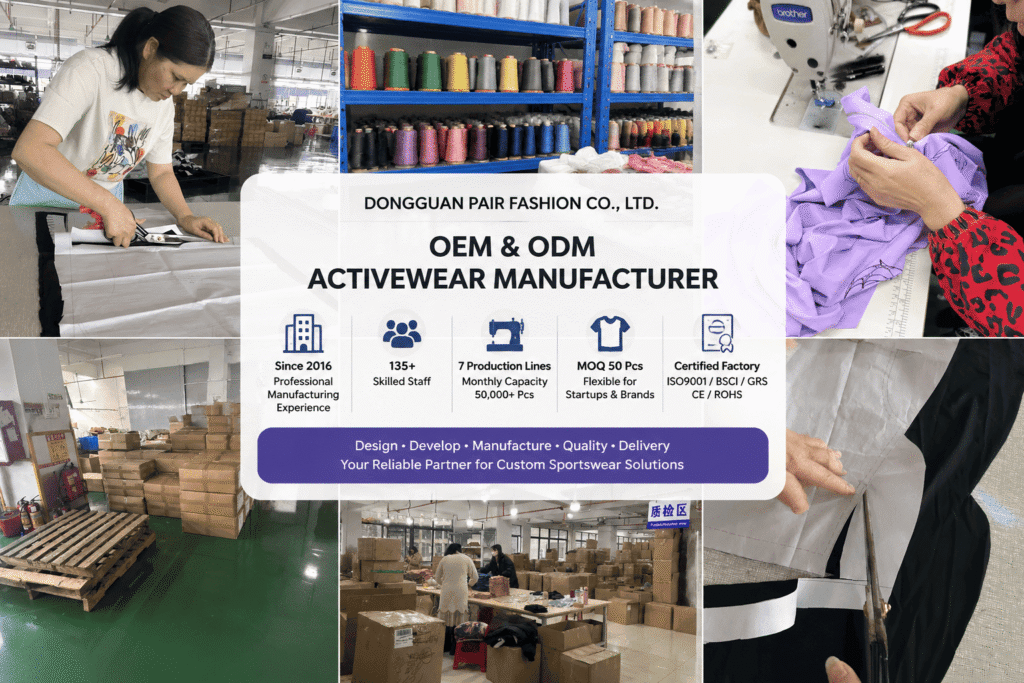
What Evidence Should Buyers Request Before Approving a Chinese Gym Shorts Manufacturer?
Before approving a Chinese gym shorts manufacturer, buyers should verify the company’s legal identity, actual production location, technical experience, quality records, certifications, and realistic capacity. A professional website or attractive sample is not sufficient evidence of manufacturing reliability. The strongest supplier assessments combine verifiable documents, relevant production samples, factory-level information, and written commercial commitments. These checks help brands distinguish credible manufacturing partners from suppliers whose capabilities have not been adequately demonstrated.
Selecting a Customized Gym Shorts Manufacturer is ultimately a decision about trust supported by evidence. A supplier may offer competitive pricing and impressive product photographs, but neither proves that the same quality can be delivered across 2,000 garments or several repeat orders.
Every Customized Gym Shorts Manufacturer should be evaluated against a consistent qualification standard. The level of investigation can vary according to order value, product complexity, and business risk, but essential questions about production responsibility, quality control, and delivery capability should never be ignored.
How Can Buyers Verify Whether a Supplier Owns or Subcontracts Production?
A manufacturer’s commercial identity and its actual production arrangements are not always the same. Some companies operate their own sewing facilities, while others coordinate manufacturing through partner factories. Others use a combination of internal production and subcontracted processes.
None of these arrangements is automatically unsuitable. The important distinction is whether the supplier can explain where production takes place, who controls the work, and who is accountable when something goes wrong.
A Customized Gym Shorts Manufacturer claiming direct production should be able to identify its operating company, manufacturing address, relevant equipment, production responsibilities, and quality management personnel.
For larger orders, buyers may also request a facility audit or a live video walkthrough showing the relevant cutting, sewing, finishing, and inspection areas.
However, photographs and video calls have limitations. They may show a real facility without proving that the supplier owns it or that the buyer’s order will be manufactured there.
A Customized Gym Shorts Manufacturer using subcontractors should disclose which processes are outsourced and explain how those partners are approved, supervised, and evaluated.
For example, a supplier might cut and sew garments internally while outsourcing printing, embroidery, specialized bonding, or fabric finishing. This can be a perfectly workable production arrangement when responsibilities are clearly defined.
Problems arise when buyers assume that every operation takes place in one facility, only to discover that important work is being transferred without their knowledge.
Documents and evidence worth requesting include:
Business registration: Legal company name, registration details, and registered business address.
Production facility information: Actual factory address and relationship to the contracting company.
Manufacturing scope: Which processes are performed internally and which are subcontracted.
Facility evidence: Recent photographs, live walkthroughs, or independent audit findings.
Production responsibility: Named personnel responsible for technical approvals, quality control, and delivery.
Subcontracting controls: Procedures for approving and monitoring external production partners.
Buyers should compare the company name on the quotation, invoice, contract, and certification documents. Differences may be legitimate, particularly within corporate groups, but they should be explained before payment.
A Customized Gym Shorts Manufacturer should also identify the entity receiving payment and explain its contractual relationship to the entity producing the goods.
This is especially important when working with suppliers offering multiple apparel categories. A company may be highly experienced in leggings or yoga clothing while assigning complex running shorts to a different production facility.
Factory ownership alone does not guarantee quality. A well-managed production network may outperform an inadequately controlled single-site operation.
The real purchasing question is whether production is transparent, responsibilities are documented, and the supplier has effective control over the facilities making your garments.
Which Sample Tests and Inspection Records Demonstrate Manufacturing Consistency?
A good sample shows that a supplier can produce an acceptable garment at least once. It does not prove that the same result can be reproduced consistently during commercial production.
For this reason, buyers should investigate how the supplier controls quality between sample approval and finished-goods inspection.
A Customized Gym Shorts Manufacturer should be able to explain its inspection checkpoints and provide examples of the records used to identify defects, track corrective actions, and confirm product conformity.
The most useful records relate to the buyer’s actual product category. Inspection documents for simple cotton T-shirts may demonstrate that a company performs quality checks, but they do not establish technical competence in compression shorts or multi-layer running garments.
A Customized Gym Shorts Manufacturer producing technical shorts should have appropriate controls for fabric behavior, garment measurements, seam quality, waistband construction, and functional details.
| Evidence Requested | What It Helps Buyers Verify | Important Limitation |
|---|---|---|
| Approved sample and measurement sheet | Reference fit, construction, and dimensions | One approved sample does not prove bulk consistency |
| Fabric test report | Relevant material properties under specified test conditions | Must match the actual proposed fabric |
| Incoming material inspection | Fabric and trim checks before production | Does not establish finished-garment quality |
| In-process inspection records | Defects detected during cutting and sewing | Records must reflect actual production practices |
| Final inspection report | Sampled finished-goods conformity against agreed criteria | Sampling does not inspect every garment |
| Corrective-action records | How defects are investigated and resolved | Documentation alone does not prove effectiveness |
| Previous production examples | Experience with comparable garment constructions | Past results do not guarantee future performance |
Inspection should focus on risks associated with the garment.
For running shorts, relevant checks may include curved-hem symmetry, pocket reinforcement, waistband tension, seam durability, and liner attachment.
For compression shorts, fit measurements, stretch-seam performance, fabric recovery, and opacity may deserve greater attention.
A Customized Gym Shorts Manufacturer should also be able to explain the difference between routine internal inspection and independent third-party inspection.
Third-party inspection can provide additional confidence, particularly for first orders or suppliers with limited performance history. However, an inspection report is only as useful as its agreed scope, sampling method, acceptance criteria, and reporting accuracy.
Buyers may use an acceptance sampling approach, such as one based on ISO 2859-1, where appropriate. The selected inspection level and acceptance criteria should be agreed before production.
A Customized Gym Shorts Manufacturer should not describe a shipment as completely defect-free merely because it passed a sample-based inspection.
A more credible approach is to report the inspected quantity, defect classifications, observed results, and applicable acceptance decision.
A practical sample-to-production verification process includes:
Approve a physical reference sample and complete measurement specifications.
Confirm the bulk fabric and trim references before cutting.
Review an appropriate pre-production sample when necessary.
Examine in-process inspection findings during manufacturing.
Conduct final inspection against agreed requirements.
Record corrective actions and disposition of nonconforming goods.
For buyers comparing a Customized Gym Shorts Manufacturer, consistency of records matters more than the number of quality-control terms listed on a website.
If a supplier cannot explain how it detects and corrects recurring defects, the buyer has limited evidence that sample quality will translate into reliable bulk production.
How Should Buyers Verify Certifications, Audit Reports and Factory Capacity?
Certifications can support supplier qualification, but they must be interpreted correctly.
A management system certificate, social compliance assessment, material certification, and product test report serve different purposes. None should be treated as a universal guarantee of garment quality.
A Customized Gym Shorts Manufacturer advertising ISO 9001 certification should provide the certificate number, legal entity, issuing certification body, validity information, and certified scope.
ISO develops international standards but does not itself issue ISO 9001 certificates. Certification is performed by independent certification bodies.
Buyers can investigate accredited management system certificates through resources such as IAF CertSearch and, where necessary, the issuing certification body.
A Customized Gym Shorts Manufacturer should also explain whether a certificate covers the actual manufacturing facility or only another company location or activity.
This distinction is important for businesses operating several facilities or coordinating production through outside partners.
| Claim or Document | What Buyers Should Check | What It Does Not Automatically Establish |
|---|---|---|
| ISO 9001 certificate | Issuer, validity, legal entity, location, and certified scope | That every shipment meets the buyer’s specifications |
| BSCI-related social audit | Relevant facility, audit date, findings, and authorized report access | Product quality or unrestricted approval of every subcontractor |
| GRS or RCS documentation | Certified scope and transaction evidence where applicable | That every fabric or garment contains certified recycled material |
| OEKO-TEX documentation | Exact certification type, validity, article or material scope | Compliance of unrelated materials or all products |
| Laboratory test report | Tested sample, method, date, results, and laboratory identity | Performance of untested production lots |
| Factory capacity statement | Available lines, staffing, order commitments, and relevant output history | Guaranteed capacity for a particular shorts order |
Social compliance audits require particular care. A factory may have undergone an assessment without receiving a universally applicable pass-or-fail certification. Buyers should review the actual audit framework, findings, corrective-action status, and customer access requirements.
Likewise, material-related certifications should be connected to the fabric or product being purchased. When a supplier provides an OEKO-TEX certificate or label number, buyers can use the official OEKO-TEX Label Check to verify its status and then confirm whether the certification scope covers the proposed material or product.
A Customized Gym Shorts Manufacturer should be able to explain what each credential demonstrates and where its scope ends.
Capacity claims require a different type of verification.
A factory advertising 50,000 garments per month may produce leggings, tops, shorts, jackets, and other products across several lines. That figure does not reveal how much capacity is available for a particular running-shorts order.
Buyers should request evidence relevant to the intended construction, including:
Available sewing lines suitable for the garment.
Typical output for comparable products.
Current production commitments.
Material availability and procurement timing.
Staffing and equipment constraints.
Planned maintenance or holiday interruptions.
Contingency arrangements for production delays.
A Customized Gym Shorts Manufacturer should be able to provide a realistic schedule that accounts for material preparation, production, inspection, and shipment readiness.
For an important order, buyers may compare the proposed schedule against recent production records or request an independent assessment of available capacity.
A large factory is not necessarily a better choice than a smaller specialist. The key is whether the supplier has sufficient relevant capacity and credible planning controls for the proposed order.
What Are the Warning Signs of Unreliable Lead Times, Quality Claims or Communication?
Supplier problems often become visible before the first bulk order, particularly when buyers ask detailed questions.
Warning signs do not always prove misconduct. Some may result from inexperienced sales personnel, incomplete specifications, or ordinary communication difficulties. Nevertheless, repeated inconsistencies should trigger additional verification.
A Customized Gym Shorts Manufacturer promising unusually short delivery without checking fabric availability, production capacity, or sample approval requirements deserves closer examination.
A realistic lead time should identify its starting point. “Twenty days” may mean twenty days after deposit, after material arrival, after sample approval, or after all production conditions have been satisfied.
These are materially different commitments.
A Customized Gym Shorts Manufacturer should be willing to document the production milestones that determine the final delivery date.
Common warning signs include:
Unclear manufacturing identity: The supplier avoids identifying the production facility or contracting entity.
Unverifiable certificates: Documents are expired, incomplete, inconsistent, or unrelated to the proposed facility.
Unexplained price differences: Quotations omit important materials, construction details, or charges.
Unrealistic delivery promises: Timelines are confirmed before checking materials and production availability.
Inconsistent sample quality: The same defects recur without a credible explanation.
Resistance to inspection: Reasonable quality checks or factory verification requests are repeatedly rejected without explanation.
Uncontrolled substitutions: Materials or components are changed without buyer approval.
Poor change documentation: Important decisions are handled verbally and later disputed.
Unclear defect remedies: The supplier will not define responsibility for confirmed manufacturing problems.
Buyers should distinguish between a supplier that cannot immediately answer every question and one that refuses to provide evidence.
A smaller company may not maintain sophisticated reporting systems, yet still demonstrate reliable quality through clear records, honest communication, and consistent production results.
Conversely, a large organization may produce polished presentations while struggling to provide product-specific evidence.
When evaluating a Customized Gym Shorts Manufacturer, buyers should pay attention to the quality of responses during sampling and quotation discussions.
Does the supplier identify missing specifications? Does it explain trade-offs between fabric performance, construction, and cost? Does it document changes and clarify responsibilities?
These behaviors provide insight into how the relationship may function when production problems arise.
A Customized Gym Shorts Manufacturer should also communicate limitations openly. A realistic explanation that a special fabric requires additional sourcing time is more useful than an unsupported promise of immediate production.
For higher-value programs, a controlled pilot order can help verify performance before the buyer commits to a larger quantity.
The pilot should use approved materials and commercially relevant specifications, with measurable acceptance criteria for quality, delivery, and communication.
A Customized Gym Shorts Manufacturer that performs well during a controlled trial offers stronger evidence of suitability than one selected entirely through promotional claims.
Supplier approval should be based on demonstrated capability, transparent production arrangements, verifiable documentation, and dependable execution—not attractive samples or certificates viewed in isolation.
When these elements are assessed together, buyers can build a shortlist of manufacturers that are more likely to deliver consistent products and support a sustainable purchasing relationship.
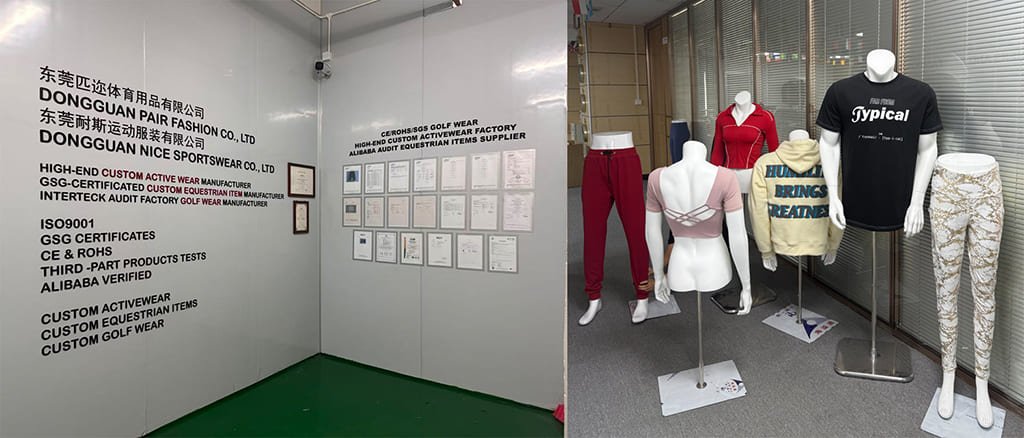
How to Shortlist and Select the Best Gym Shorts Manufacturer in China: A B2B Buying Guide
The best way to select a gym shorts manufacturer in China is to compare three to five qualified suppliers using the same product specifications, a weighted evaluation scorecard, and controlled sample testing. Buyers should prioritize proven technical capability, consistent quality, transparent costs, and realistic delivery commitments over advertised prices or factory size. A small pilot order can then help confirm whether the strongest candidate can reproduce approved samples under actual production conditions.
Choosing a Customized Gym Shorts Manufacturer should be a structured purchasing decision, not a competition between sales presentations. A supplier with attractive samples may lack sufficient capacity, while another with a higher quotation may offer better material control and fewer production risks.
The most suitable Customized Gym Shorts Manufacturer is the one whose documented capabilities match the brand’s product requirements, commercial priorities, and acceptable level of risk.
What Should Be Included in a 100-Point Manufacturer Comparison Scorecard?
A weighted scorecard allows buyers to compare suppliers against consistent criteria. It also reduces the influence of subjective impressions, such as an impressive showroom, polished website, or unusually confident salesperson.
A Customized Gym Shorts Manufacturer should be evaluated using evidence relevant to the actual product. For technical running shorts, fabric performance and construction experience may deserve greater weight than order flexibility. For a startup testing its first collection, MOQ and inventory exposure may carry more importance.
The following scorecard provides a practical starting point.
| Evaluation Category | Maximum Points | Evidence to Review |
|---|---|---|
| Technical design and construction | 20 | Comparable samples, pattern accuracy, grading, seam construction |
| Fabric sourcing and performance | 15 | Material specifications, test reports, sourcing continuity |
| Quality management and consistency | 20 | Inspection records, defect controls, corrective actions |
| MOQ and commercial flexibility | 10 | Written minimums, color breakdowns, setup charges |
| Total landed cost | 15 | Comparable quotations, freight, duties, additional charges |
| Production capacity and delivery | 10 | Relevant output records, available capacity, production schedule |
| Communication and transparency | 5 | Written confirmations, responsiveness, production disclosure |
| Compliance and documentation | 5 | Relevant certificates, audit findings, traceability |
| Total | 100 |
Each category can be scored from zero to its maximum allocation. For example, a supplier demonstrating excellent technical capability might receive 18 out of 20 points, while another with incomplete pattern-development evidence might receive only 11.
A Customized Gym Shorts Manufacturer should not receive full marks merely because it claims to offer a particular service. Scores should reflect the quality and relevance of the supporting evidence.
An illustrative interpretation might be:
85–100 points: Strong candidate for final commercial review.
70–84 points: Promising candidate with specific issues to resolve.
55–69 points: Consider only if important weaknesses can be corrected.
Below 55 points: Generally unsuitable without substantial improvement.
These ranges are suggested internal decision thresholds, not industry certifications or universally accepted supplier ratings.
A critical failure should override the numerical score. For example, unresolved legal identity concerns, unacceptable product safety risks, or repeated unauthorized material substitutions should not be offset by a low price.
When selecting a Customized Gym Shorts Manufacturer, buyers should retain the evidence behind each score. This makes the decision easier to review when product requirements change or when a supplier’s performance deteriorates.
Which Five Questions Should Buyers Ask Every Shortlisted Supplier?
The most useful supplier questions are specific enough to produce comparable answers.
Instead of asking whether a manufacturer can produce high-quality shorts, buyers should ask how the supplier has handled similar products, what evidence is available, and which conditions could affect the quotation or delivery schedule.
Every Customized Gym Shorts Manufacturer on the shortlist should answer the following five questions.
1. Can you show production examples that match our intended shorts construction?
Ask for examples involving comparable fabrics, liners, waistbands, pockets, or seam types. A general sportswear catalog is not sufficient evidence of experience with a complex product.
2. What are the exact MOQ and price conditions for our design?
Confirm whether the minimum applies per style, color, fabric, or total order. Ask which materials or customization details could change the quantity requirement.
3. How do you control consistency between approved samples and bulk production?
Request information about material approvals, measurement tolerances, in-process inspection, and corrective-action procedures.
4. Which production processes are performed at your facility, and which are subcontracted?
Identify the actual manufacturing location and clarify who is responsible for quality, communication, and delivery.
5. What is the realistic timeline from final approval to shipment readiness?
Ask for a schedule covering material procurement, production, inspection, and potential delays.
A Customized Gym Shorts Manufacturer that answers these questions clearly and provides supporting documents is easier to evaluate than one relying on general assurances.
Buyers should record responses in a common comparison sheet. This makes it easier to identify differences in technical understanding, commercial assumptions, and operational transparency.
For brands with original performance designs, additional questions about pattern ownership, fabric traceability, and design confidentiality may be necessary.
A Customized Gym Shorts Manufacturer should also be willing to identify requirements that remain unclear. Suppliers that ask thoughtful technical questions before quoting may demonstrate a better understanding of the project than those promising immediate production without reviewing the specifications.
How Can a Controlled Sample Comparison Identify the Strongest Supplier?
Sampling is most valuable when every candidate receives the same technical brief and is evaluated against identical criteria.
A common mistake is to compare one supplier’s premium sample with another supplier’s basic product. Such comparisons reveal little about relative manufacturing capability because the garments were developed under different conditions.
A Customized Gym Shorts Manufacturer should receive a consistent reference package covering fabric requirements, garment measurements, construction details, branding, and intended use.
Buyers should then evaluate the samples using a structured inspection process.
| Sample Evaluation | Suggested Weight | What to Examine |
|---|---|---|
| Fit and movement | 25% | Comfort during squats, running, stretching, and lateral movement |
| Fabric performance | 20% | Hand feel, stretch, recovery, opacity, and relevant test results |
| Construction quality | 25% | Seam strength, waistband, pockets, liner attachment, finishing |
| Measurement accuracy | 15% | Compliance with approved specifications and tolerances |
| Development response | 15% | Accuracy of revisions, technical explanations, communication |
| Total | 100% |
The weights are illustrative and should be adjusted to the product’s intended use.
A Customized Gym Shorts Manufacturer producing compression shorts may need to demonstrate stronger stretch recovery and coverage performance, while a running-shorts supplier may be assessed more heavily on fabric weight, mobility, and liner stability.
Samples should be examined both before and after appropriate use and laundering assessments. A garment that looks excellent when new may develop waistband distortion, seam puckering, or unexpected dimensional changes.
Buyers should also document whether a defect is isolated or repeated.
One imperfect prototype does not necessarily disqualify a supplier. However, repeated problems without a credible explanation suggest weaknesses in development control.
The strongest Customized Gym Shorts Manufacturer is not always the one delivering the best first sample. A supplier that identifies problems accurately and implements effective corrections may be a more dependable long-term partner.
Where the commercial risk justifies it, buyers can request a pre-production sample made using the intended bulk materials and construction methods.
This helps establish whether the approved development sample can be translated into a repeatable manufacturing standard.
When Should Buyers Eliminate a Supplier or Proceed With a Pilot Order?
Not every shortlisted supplier should receive a trial order. Some weaknesses can be resolved through clarification or additional testing, while others indicate unacceptable commercial or manufacturing risk.
A Customized Gym Shorts Manufacturer should be removed from consideration when critical problems remain unresolved after reasonable requests for evidence.
Potential elimination conditions include:
Unverifiable company identity or undisclosed production arrangements.
Repeated unauthorized changes to approved materials or specifications.
Inability to meet essential product safety or compliance requirements.
Persistent sample defects without effective corrective action.
Unclear pricing that prevents meaningful cost comparison.
Production commitments that cannot be supported by a credible schedule.
Refusal to establish reasonable inspection and defect-resolution terms.
A pilot order becomes appropriate when the supplier has demonstrated technical suitability, provided acceptable commercial terms, and resolved major qualification concerns.
For a Customized Gym Shorts Manufacturer, the pilot should resemble actual production conditions as closely as practical. Using a simplified garment or an unrelated fabric may provide misleading results.
The pilot agreement should define approved materials, quantity, size breakdown, inspection criteria, delivery milestones, and remedies for confirmed defects.
Buyers should then compare actual results with the supplier’s commitments.
A successful pilot provides stronger evidence than a polished sales presentation, but it does not guarantee every future order. Performance should continue to be reviewed as quantities, materials, and production schedules change.
Who Should Be Selected for Small-Batch Launches, Technical Products and Repeat Orders?
Different purchasing situations justify different supplier priorities.
A startup introducing its first gym shorts collection may need manageable quantities and practical development support. A technical performance brand may prioritize specialized construction and material testing. An established retailer may place greater emphasis on repeatability, capacity, and delivered cost.
The right Customized Gym Shorts Manufacturer depends on which of these requirements carries the greatest commercial risk.
| Buyer Profile | Highest Priorities | Suitable Supplier Characteristics |
|---|---|---|
| Startup testing a new collection | MOQ, inventory exposure, sample quality | Flexible order conditions, relevant development experience |
| Performance-focused sportswear brand | Fabric behavior, fit, construction | Demonstrated technical samples and product-specific testing |
| Growing direct-to-consumer brand | Quality consistency, replenishment | Repeatable production, documented specifications, responsive planning |
| Established retail or wholesale buyer | Capacity, compliance, landed cost | Reliable production history, inspection systems, commercial transparency |
| Multi-category activewear brand | Coordinated sourcing, material consistency | Experience across relevant garments and fabrics |
A Customized Gym Shorts Manufacturer like Pair Fashion can be a good option for brands that need smaller orders of functional sportswear, especially when they need product development support and flexible starting quantities. Buyers should compare Pair Fashion’s actual samples, prices, and order terms with those of other qualified suppliers before making a decision.
For more complex stretch-knit collections, manufacturers with demonstrated experience in fitted activewear may deserve additional consideration. For high-volume repeat orders, production capacity and documented consistency become more influential.
These are sourcing considerations rather than definitive rankings. No supplier should be selected solely because it appears in a particular buyer category.
A brand evaluating a Customized Gym Shorts Manufacturer should also consider its likely requirements over the next 12–24 months. A supplier that handles the first order well but cannot support realistic growth may create avoidable transition costs.
The final selection should combine the weighted scorecard, physical sample results, commercial comparison, and supplier qualification findings.
The best supplier is the one that can demonstrate the right technical capability, meet the required commercial conditions, and deliver consistent products with manageable risk.
Once a shortlist has been reduced to a small number of qualified candidates, brands can compare product-specific proposals in greater detail. Buyers assessing Pair Fashion can review its custom gym shorts development and manufacturing options alongside the evidence and quotations provided by other shortlisted manufacturers.
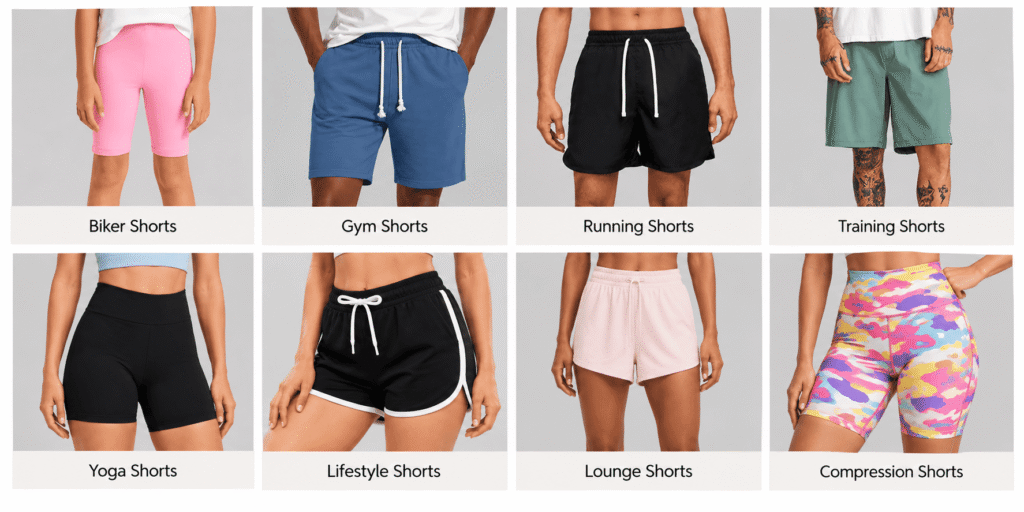
Frequently Asked Questions About Choosing Gym Shorts Manufacturers in China
1. How Do I Choose the Best Customized Gym Shorts Manufacturer in China?
The best manufacturer is one that can demonstrate relevant product experience, consistent quality, transparent pricing, and reliable delivery rather than simply offering the lowest quotation or the largest product catalog. Compare suppliers using the same technical specifications and evaluate their fabric capabilities, construction quality, minimum order quantities, and production records.
Request comparable samples, verify the actual manufacturing location, and review inspection procedures before committing to bulk production. A controlled trial order can help determine whether the supplier can reproduce approved samples consistently and meet your brand’s commercial requirements.
2. What Is the Typical Minimum Order Quantity for Custom Gym Shorts in China?
Minimum order quantities vary by manufacturer, garment construction, fabric availability, and customization requirements, so buyers should confirm whether the minimum applies per style, color, or total order. Some suppliers accommodate smaller initial orders using available fabrics and established patterns, while custom materials may require larger quantities.
Ask whether sizes can be mixed, whether special trims have separate minimums, and whether additional charges apply to small batches. Compare the total inventory investment rather than MOQ alone, especially when launching a new product with uncertain demand.
3. How Can I Compare Gym Shorts Manufacturing Prices Between Different Suppliers?
Compare manufacturers by requesting quotations based on identical fabrics, garment specifications, quantities, packaging requirements, and delivery terms, then calculate the estimated total landed cost rather than relying on unit prices alone. Differences in material quality, construction, branding, and inspection arrangements can make apparently similar quotations misleading.
Check whether sampling, custom trims, laboratory testing, freight, import duties, and other charges are included. Also consider potential quality losses and unsold inventory. A slightly higher manufacturing price may provide better overall value when the supplier offers more reliable quality and manageable purchasing conditions.
4. Which Fabric Capabilities Should I Look for in a Gym Shorts Manufacturer?
Look for a manufacturer with demonstrated experience sourcing and producing the specific fabric types required by your shorts, including lightweight woven materials, stretch knits, compression fabrics, and suitable lining materials. Fabric availability alone does not prove technical competence.
Request material specifications covering composition, weight, stretch, recovery, and relevant performance properties. For fitted shorts, prioritize opacity and dimensional stability; for running shorts, consider mobility, durability, and moisture management. Confirm that approved fabrics can be reproduced consistently during bulk production and future replenishment orders.
5. How Can I Verify a Chinese Gym Shorts Manufacturer’s Certifications and Quality Standards?
Verify certifications by checking the issuing organization, certificate validity, registered company, covered facility, and applicable scope, then compare the documents with the actual products and manufacturing arrangements being proposed. A certificate should never be treated as universal proof of product quality.
ISO 9001 relates to quality management systems, while recycled-material standards and chemical-safety certifications address different requirements. Request relevant fabric test reports, inspection records, and production references. Where appropriate, use independent factory audits or third-party inspections to obtain additional evidence before approving a significant order.
6. What Should I Check When Comparing Gym Shorts Samples From Different Manufacturers?
Compare samples using the same specifications and assess fit, movement, fabric performance, measurements, seam quality, waistband stability, and functional details such as pockets or inner liners. A visually attractive sample may still perform poorly during exercise or after laundering.
Test garments under conditions relevant to their intended use, including stretching, squatting, running, and appropriate washing assessments. Record defects and evaluate how effectively each supplier corrects them. The strongest candidate is not necessarily the one with the best first sample, but the one demonstrating reliable technical understanding and repeatable results.
7. How Long Does Gym Shorts Manufacturing Take in China?
Production lead times depend on material availability, order volume, garment complexity, customization requirements, factory scheduling, and the stage at which the delivery period begins. Buyers should request a written timeline rather than relying on a general promise of fast production.
Separate sample development, material procurement, bulk manufacturing, inspection, and shipment preparation into clear milestones. Confirm whether the quoted timeline starts after deposit payment, final sample approval, or material readiness. A reliable supplier should explain potential delays and provide realistic updates when production conditions change.
8. Is It Better to Work With a Direct Gym Shorts Manufacturer or a Trading Company?
Neither option is automatically better; the right choice depends on production transparency, technical capability, quality control, communication, and accountability for the finished garments. Direct manufacturers may provide greater visibility into production, while experienced trading companies can coordinate specialized suppliers effectively.
Verify where the garments will actually be made, which processes are subcontracted, and who is responsible for inspections, delays, and defects. Request relevant samples and production evidence regardless of the business model. Prioritize suppliers that provide clear contractual responsibilities and can demonstrate consistent results.