OEM/ODM Sportswear Manufacturer | 3-Day Sampling | Low MOQ | 50K Monthly Capacity | ISO9001 & BSCI Certified

Top 10 Jogger Pants Supplier Options for MOQ, Sampling, Pricing and Supply Reliability
Compare each Jogger Pants Supplier by MOQ, sampling, pricing, product experience, quality control and supply reliability. Learn how buyers verify manufacturing evidence, normalize commercial terms, evaluate samples and choose suitable Chinese suppliers for different order sizes and brand stages.
Top 10 Jogger Pants Supplier Options: How Buyers Compare MOQ, Sampling, Pricing and Supply Reliability
Choosing a Jogger Pants Supplier becomes more complicated once buyers move beyond product photos and start comparing real purchasing conditions. One manufacturer may publish a low MOQ but calculate it per color. Another may quote a lower unit price based on a different fabric specification. A third may produce an attractive sample but provide little evidence that the same result can be repeated consistently in bulk production.
These differences matter because supplier selection is not only a product decision. It is also an inventory, cash-flow and supply-risk decision. A 100-piece MOQ can be commercially manageable when it applies to one complete order, but much more demanding when it applies separately to every color. In the same way, a low quotation loses its advantage if important costs or requirements are excluded.
The right Jogger Pants Supplier is the manufacturer whose relevant product experience, MOQ structure, sampling capability, commercial terms, quality controls and production resources match the actual order. Buyers should shortlist suppliers using verifiable information, give serious candidates substantially comparable requirements, confirm published claims against project-specific conditions and evaluate samples and production evidence before increasing order volume.
This approach makes it easier to separate an attractive supplier profile from a manufacturing partner that can realistically support the product, order size and purchasing requirements.
Top 10 Jogger Pants Supplier Options in China: Which Manufacturers Should Buyers Shortlist?
A useful shortlist should compare each Jogger Pants Supplier by relevant product experience, MOQ structure, sampling conditions, production capability and verifiable commercial information. Published figures are useful for initial screening, but buyers should confirm the conditions against the actual style, fabric, colors, sizes, customization and order quantity before using them for a final purchasing decision.
China has many apparel manufacturers capable of producing sweatpants or joggers, but they do not operate under the same commercial model. Some focus on functional sportswear, some on fashion and streetwear, while others specialize in teamwear or broader private label programs.
The differences become especially important when comparing MOQ. A low minimum based on an existing product or sublimation model should not be compared directly with the MOQ for a completely new cut-and-sew product.
Quick Supplier Comparison
| Supplier | Location | Founded / Experience | Public MOQ Reference | Sample Reference | Main Product Direction | What Buyers Should Confirm |
|---|---|---|---|---|---|---|
| Pair Fashion | Dongguan, Guangdong | 2016 | Depends on style, fabric, color and order structure | Standard about 7 days; suitable projects can be faster | Sportswear, joggers, activewear | Exact MOQ, material conditions, current capacity and required compliance |
| Mingxing Clothing | Dongguan, Guangdong | 10+ years stated | 100 pcs/style/color | About 10–15 working days | Joggers, sweatpants, casual apparel | Material minimums, production schedule and current commercial terms |
| HUCAI Sportswear | Dongguan, Guangdong | 10+ years stated | Current published references should be reconfirmed | Project dependent | Activewear, fitness, yoga, joggers | Current MOQ by style/color/fabric and required certifications |
| AIKA Sportswear | Dongguan, Guangdong | Public company history dates to 2008 | Around 100 pcs/design/color on current custom pages | About 7–10 working days | Gym wear, training and activewear | Current entity, MOQ and project-specific compliance |
| Hongyu Apparel | China | 2003 stated | Different minimums for ready-made and cut-and-sew programs | About 8–15 days for cut-and-sew | General custom apparel and streetwear | Which production model applies to the quotation |
| TopShow Garment | Dongguan, Guangdong | 2015 | Confirm for project | About 7 working days | Tracksuits and lifestyle apparel | Jogger-specific experience, MOQ and commercial terms |
| Arabella Clothing | Xiamen, Fujian | 2014 | Confirm for project | Confirm for project | Activewear and athleisure | Current MOQ, sample conditions and required compliance |
| Vimost Sports | Chengdu, Sichuan | 2012 | Very low minimums published for its sublimation model | Confirm for project | Teamwear and sublimated sportswear | Whether the MOQ applies to the required jogger construction |
| Yotex Apparel | Shanghai / China production resources | 2015 | OEM and ODM minimums differ substantially | About 7–10 days for simpler styles | Functional activewear and sportswear | Whether the project is quoted under OEM or ODM conditions |
| Lezhou Garment | Dongguan, Guangdong | 2004 stated | Public pages show different MOQ structures | About 1–2 weeks | Fashion, casualwear and pants | Current MOQ for the exact product and decoration |
The table should be used to make a supplier shortlist, not to simply think one supplier is stronger than all others. A buyer sourcing performance joggers for a gym brand has different requirements from a streetwear brand ordering heavyweight fleece joggers or a sports club ordering personalized team pants.
1. Pair Fashion — Sportswear, Joggers and OEM/ODM Programs
Location: Dongguan, Guangdong
Founded: 2016
MOQ: Confirm according to style, fabric, color, customization and order structure
Sampling: Standard approximately 7 days; suitable projects can be faster
Stable Monthly Capacity: Approximately 50,000 pieces
Core Products: Joggers, activewear, yoga wear, equestrian apparel, hoodies, sweatshirts, maternity activewear and plus-size sportswear
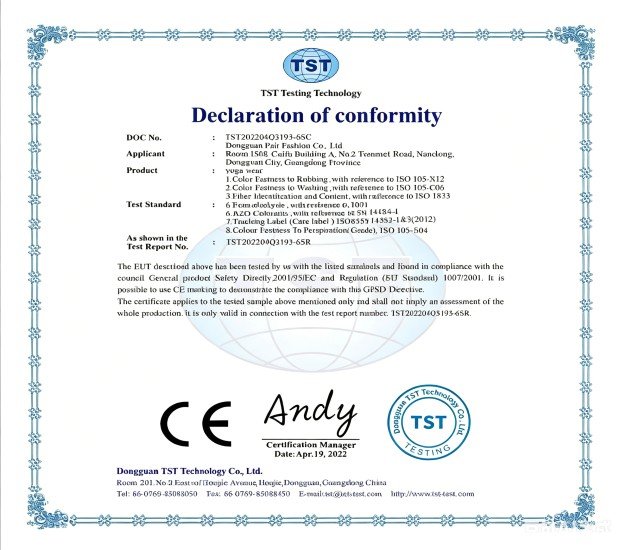
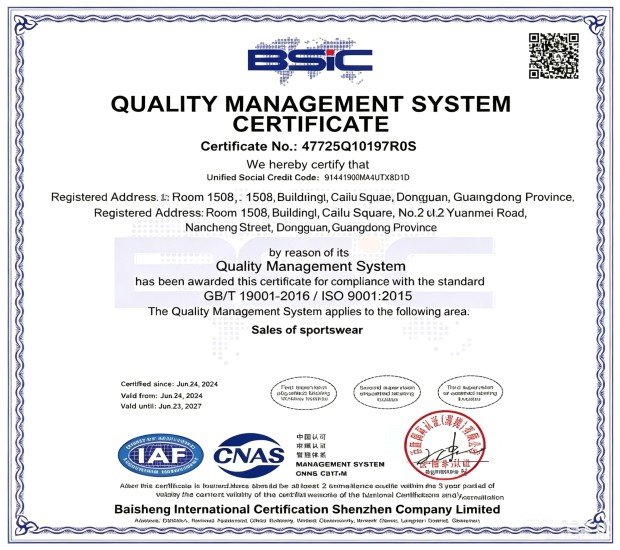
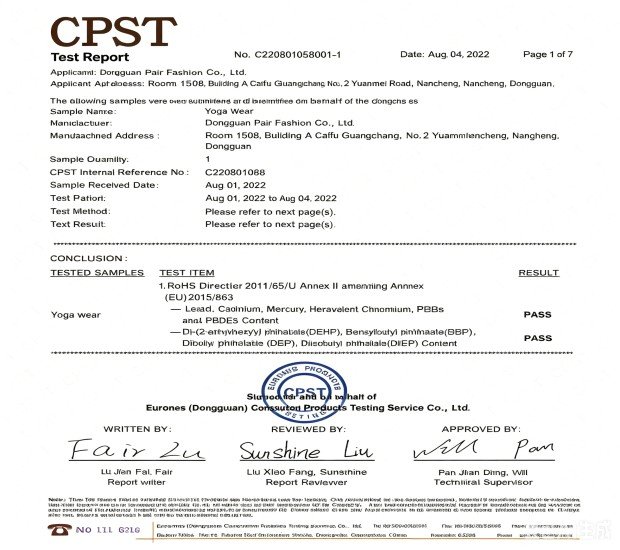
Company Certifications: ISO9001, BSCI, GRS, CE and ROHS
Suitable For: Sportswear brands, growing DTC businesses, private label programs, sourcing companies and buyers planning repeat orders
Less Suitable For: Buyers seeking only the lowest-cost stock blank without meaningful product or manufacturing requirements
Pair Fashion operates from Dongguan with 135 employees, including an 11-person pattern and sample development team and 13 QC personnel. The company operates seven standardized production lines and reports stable monthly capacity of approximately 50,000 pieces, with higher peak capacity when required.
Joggers are part of the company’s men’s and women’s loungewear range rather than an isolated product category. Its broader production scope includes activewear, hoodies, sweatshirts and specialized sportswear categories.
For supplier screening, the useful distinction is the combination of development resources, dedicated QC personnel and scalable production capacity. These factors may matter to brands that expect an initial order to develop into recurring production rather than remain a one-time purchase.
Key strengths
Dedicated sample and pattern resources
13-person QC team
Seven standardized production lines
Relevant sportswear and jogger production background
OEM, ODM and repeat-order cooperation models
Production capacity suitable for brands that expect to scale
Points to confirm before ordering
MOQ for the exact fabric and color structure
Certification or testing required for the destination market
Current production schedule
Material availability for the proposed order
Written sample and bulk commercial conditions
Company materials contain different MOQ references for different product and service situations. Buyers should therefore request a written MOQ based on the actual specification rather than assume that one minimum applies to every order.
Buyers who have moved beyond supplier screening and already have product specifications can review Pair Fashion’s custom jogger pants manufacturing capabilities for project-specific development and production information.
2. Mingxing Clothing — Custom Joggers and OEM/ODM Apparel
Location: Dongguan, Guangdong
Experience: More than 10 years stated publicly
Published MOQ: 100 pcs per style/color
Sample Reference: Approximately 10–15 working days
Bulk Reference: Approximately 25–30 working days after approval
Core Products: Joggers, sweatpants, casual pants and custom apparel
Suitable For: Private label brands and buyers with defined OEM/ODM requirements
Less Suitable For: Very small cut-and-sew programs requiring multiple colors at minimal inventory exposure
Mingxing publishes relatively clear information about its commercial structure. Its current information references an MOQ of approximately 100 pieces per style and color, which is an important distinction for buyers planning several colorways.
A single style with four colors could therefore create a very different inventory commitment from a supplier offering 100 pieces across the entire style.
The company also publishes jogger-related material and customization capabilities, making it relevant for buyers looking at both casual and fashion-oriented products.
Key strengths
Jogger-specific product experience
Clearer-than-average public MOQ structure
OEM/ODM orientation
Published sample and bulk references
Located in Dongguan’s apparel supply network
Points to confirm
Whether fabric minimums create additional quantity requirements
Whether colors can share material minimums
Current sampling schedule
Production capacity during peak season
Project-specific inspection requirements
The important comparison is therefore not simply “100 pieces.” Buyers need to calculate what the minimum means across the complete style-color-size structure.
3. HUCAI Sportswear — Fitness and Activewear-Oriented Programs
Location: Dongguan, Guangdong
Experience: More than 10 years stated publicly
MOQ: Current published conditions should be reconfirmed for the actual project
Sample: Available according to project conditions
Core Products: Activewear, yoga wear, fitness apparel, tracksuits and joggers
Suitable For: Fitness, yoga and performance-oriented brands
Less Suitable For: Buyers primarily sourcing heavyweight washed streetwear without first confirming relevant production experience
HUCAI’s product direction is closely connected to activewear and fitness apparel. That can make the company more relevant for performance-oriented joggers than a general fashion manufacturer, even when another supplier publishes a lower minimum.
Public MOQ information has varied across different company pages and periods. Buyers should therefore use the current quotation—not an isolated website figure—as the commercial reference.
Key strengths
Activewear specialization
Relevant performance-apparel background
Dongguan production location
OEM/ODM orientation
Suitable for joggers sold within broader fitness collections
Points to confirm
Current MOQ per style and color
Fabric availability and fabric-mill minimums
Sample fee and revision conditions
Current lead time
Certification requirements for the target market
Product relevance can outweigh a small difference in MOQ. For buyers sourcing performance joggers as part of a wider fitness collection, reviewing the capabilities of an activewear manufacturer can also help determine whether the supplier has relevant experience with performance materials, movement-focused garments and scalable sportswear programs.
4. AIKA Sportswear — Performance and Training Apparel
Location: Dongguan, Guangdong
History: Public company information references operations beginning around 2008, while other pages reference 2010
Published MOQ: Around 100 pcs per design/color on current custom pages
Sampling: Approximately 7–10 working days
Core Products: Sportswear, gym wear, training apparel, tracksuits and jogging wear
Suitable For: Fitness and performance-oriented brands
Less Suitable For: Buyers focused primarily on specialized heavyweight streetwear finishing
AIKA is another sportswear-oriented manufacturer worth comparing when joggers are intended for training, fitness or athleisure collections.
Its public pages provide MOQ, sample and production references, but some company-history and capacity information differs between pages. Buyers should confirm the current operating information rather than select whichever published figure appears most favorable.
Key strengths
Sportswear-focused production
Performance apparel experience
Published sample references
OEM/custom manufacturing services
Relevant for coordinated gym and training collections
Points to confirm
Current legal and production entity
Actual MOQ for the proposed material
Current capacity
Required compliance documentation
Lead-time definition and starting point
More published information does not always create more certainty. When public figures differ, written project confirmation should take priority.
5. Hongyu Apparel — Different Entry Points for Startup and Custom Apparel Orders
Founded: 2003 stated publicly
MOQ: Depends strongly on cooperation model
Cut-and-Sew Reference: Approximately 100 pcs/style/color
Sample Reference: Approximately 8–15 days for cut-and-sew
Core Products: Custom apparel, streetwear, hoodies, sweatpants and fashion products
Suitable For: Startup brands and buyers comparing ready-made customization with full cut-and-sew
Less Suitable For: Buyers who assume the lowest published MOQ automatically applies to fully custom products
Hongyu separates its services into different production models, including ready-made customization and deeper cut-and-sew manufacturing.
That distinction is more important than the headline MOQ.
A buyer comparing a low MOQ for logo customization with another Jogger Pants Supplier quoting a newly developed cut-and-sew product is not comparing equivalent manufacturing conditions.
Key strengths
Multiple cooperation models
Startup-oriented service structure
Long operating history stated publicly
Broad apparel range
Lower entry barriers for some ready-made programs
Points to confirm
Whether the quotation is ready-made, ODM or full cut-and-sew
Fabric ownership and material minimums
Jogger-specific production experience
Sample revision policy
Bulk lead time
The correct comparison starts only after the buyer identifies what is actually being manufactured.
6. TopShow Garment — Tracksuit and Lifestyle Apparel Production
Location: Humen, Dongguan
Founded: 2015
MOQ: Confirm for the actual project
Sample Reference: Approximately 7 working days
Bulk Reference: Approximately 15–30 working days
Core Products: Tracksuits, hoodies, jackets, T-shirts and fashion apparel
Suitable For: Lifestyle and tracksuit brands
Less Suitable For: Highly technical performance-jogger programs without relevant production evidence
TopShow’s tracksuit and casual-apparel background gives it product-category relevance for buyers sourcing joggers as part of coordinated lifestyle collections.
However, related product experience should not be treated as automatic proof of capability. Buyers should request recent products that use comparable fabrics, construction and finishing.
Key strengths
Dongguan/Humen manufacturing location
Tracksuit and casualwear experience
Published sampling reference
OEM/ODM capability
Points to confirm
Jogger-specific production evidence
MOQ
Material requirements
Current bulk schedule
Required certifications
A supplier does not need thousands of jogger styles in its catalog to be relevant, but buyers should verify that its production experience is transferable to the actual order.
7. Arabella Clothing — Activewear and Athleisure Manufacturing
Location: Xiamen, Fujian
Founded: 2014
MOQ: Confirm according to project
Factory Scale: Public information describes two facilities totaling approximately 15,000 m² and more than 300 employees
Core Products: Activewear, gym wear and athleisure
Suitable For: Growing and established activewear brands
Less Suitable For: Buyers choosing a supplier mainly on the basis of the lowest possible MOQ
Arabella operates on a larger published manufacturing scale than several companies in this comparison. Its activewear orientation can be relevant when joggers form part of a wider gym or athleisure collection.
Factory size, however, should not be treated as a quality score.
A larger facility can provide capacity, but buyers still need to determine whether the production model fits the expected order volume, material requirements and commercial structure.
Key strengths
Activewear specialization
Larger published production infrastructure
Relevant for multi-product collections
Established manufacturing departments
Points to confirm
Current MOQ
Jogger-specific experience
Sample conditions
Production allocation for the proposed order
Required testing and compliance
Capacity fit is more useful than factory size alone.
8. Vimost Sports — Teamwear and Sublimation-Based Manufacturing
Location: Chengdu, Sichuan
Founded: 2012
Published MOQ: Very low/no MOQ for its sublimation-focused model
Core Products: Teamwear, jerseys, hoodies and sports pants
Suitable For: Teams, clubs, schools and sublimated sportswear buyers
Less Suitable For: Buyers assuming sublimation economics apply to heavyweight cotton cut-and-sew joggers
Vimost uses a production model that differs substantially from traditional cotton jogger manufacturing.
Its low stated minimum can be attractive to teams requiring personalized graphics, names or numbers. It should not, however, be used as a direct MOQ benchmark for custom-dyed fleece, French Terry or heavily washed cotton products.
Key strengths
Teamwear specialization
Very low minimum under its relevant production model
Strong personalization use case
Sports-focused background
Points to confirm
Fabric and construction covered by the low MOQ
Private label requirements
Sample conditions
Production schedule
Suitability for non-sublimated joggers
MOQ figures become meaningful only after the type of manufacturing process is understood.
9. Yotex Apparel — Functional Sportswear With Different OEM and ODM Conditions
Location: Shanghai-based business with manufacturing resources in China
Founded: 2015
OEM MOQ: Public information currently references substantially higher cut-and-sew minimums than its ODM programs
Sampling: Approximately 7–10 days for simpler products, with longer development for complex styles
Core Products: Functional activewear, sportswear and outdoor apparel
Suitable For: More established functional-apparel buyers and larger OEM programs
Less Suitable For: Small full-custom OEM orders requiring very low quantities
Yotex demonstrates why buyers should keep OEM and ODM commercial conditions separate.
An ODM program using an existing product base can operate under different minimums from a fully custom OEM project. Putting both numbers into the same supplier comparison without explaining the difference can make a low MOQ appear more flexible than it actually is.
Key strengths
Functional apparel orientation
Structured OEM and ODM models
Documented sampling stages
Relevant sportswear production experience
Points to confirm
Which manufacturing model applies
Current MOQ
Fabric minimums
Sample stages required
Current bulk-production window
A higher MOQ is not automatically a disadvantage if it matches the buyer’s expected sales volume and the supplier offers the required production capability.
10. Lezhou Garment — Fashion, Casualwear and Custom Pants Programs
Location: Dongguan, Guangdong
Founded: 2004 stated publicly
MOQ: Public references vary by service and product; confirm directly
Sampling: Approximately 1–2 weeks depending on design
Core Products: Fashion apparel, casualwear, joggers, cargo pants and other custom pants
Suitable For: Fashion and lifestyle brands
Less Suitable For: Buyers who require one universal published MOQ before providing product information
Lezhou’s broader pants and casualwear capability makes it relevant to fashion-oriented jogger sourcing.
Different public pages currently show different MOQ structures, so buyers should avoid treating one website figure as a permanent purchasing condition.
Key strengths
Long operating history stated publicly
Pants and casualwear capability
Dongguan location
Multiple decoration options
Custom manufacturing services
Points to confirm
Current MOQ for the exact product
Whether minimums apply per design or color
Material requirements
Sample revision conditions
Production timing
When supplier information differs between pages, the safest purchasing reference is a written quotation based on the current RFQ.
What Should Buyers Take From the Top 10 Comparison?
No single Jogger Pants Supplier fits every sourcing program.
A startup testing one style may prioritize inventory exposure and manageable commercial terms. A performance brand may care more about relevant fabric experience. A streetwear buyer may need specialized heavyweight materials and finishing. A wholesaler placing repeat orders may prioritize capacity, documentation and continuity.
Before moving from a longlist to a shortlist, buyers should be able to answer three questions:
Does the supplier have relevant experience for this type of product?
Can its MOQ and commercial structure support the actual order?
Is there enough verifiable evidence to justify paying for sampling or further supplier verification?
A manufacturer does not need to appear strongest in every category. It does need to satisfy the requirements that are commercially non-negotiable.
The next stage is therefore not to collect as many quotations as possible. It is to define a common comparison framework so that MOQ, samples, pricing and supplier claims can be evaluated under substantially comparable conditions.

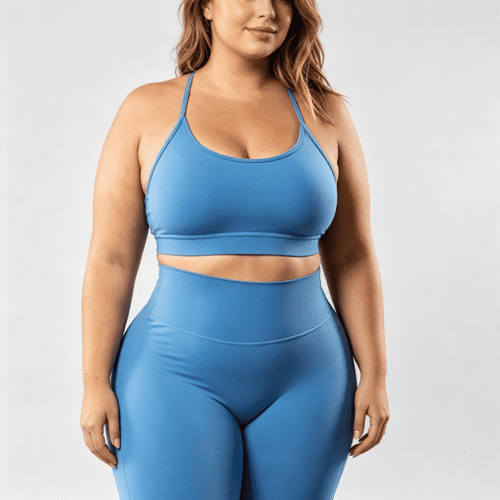
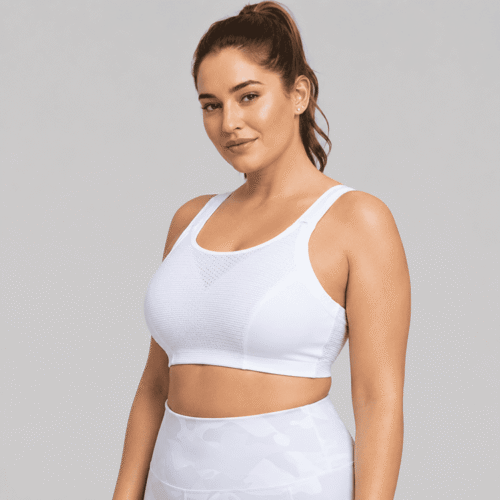
Custom Plus Size Sports Bra OEM ODM Curve Activewear Bra
Custom Plus Size Sports Bra OEM ODM High Support Activewear Bra
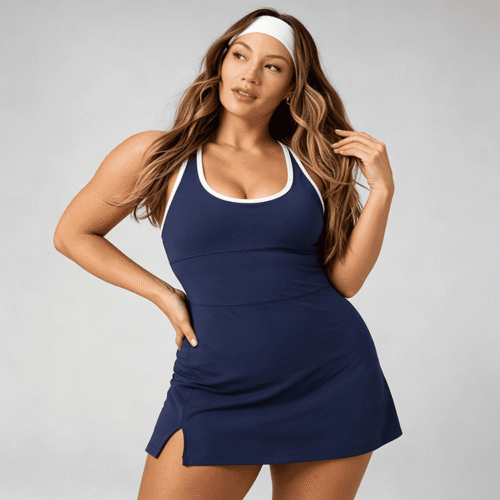
Custom Plus Size Tennis Dress OEM ODM Built-In Bra Activewear
Custom Plus Size Tennis Dress OEM ODM Cross Back Activewear Dress
Custom Racerback Sports Bra OEM ODM Medium Support Activewear Bra
Custom Sculpting Tennis Dress OEM ODM Performance Tennis Apparel
Custom Seamless High Waist Yoga Leggings OEM ODM Sculpting Workout Pants
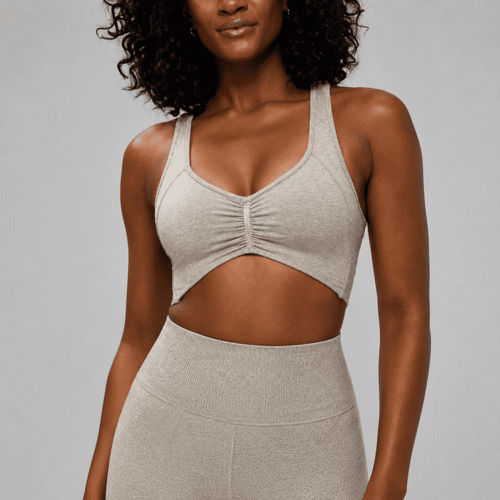
Custom Seamless Ruched Front Sports Bra OEM ODM Medium Support Activewear
What Should Buyers Compare Before Choosing a Jogger Pants Supplier?
Before choosing a Jogger Pants Supplier, buyers should compare product relevance, non-negotiable requirements, manufacturing responsibility, commercial conditions and verifiable evidence. MOQ and price should not be evaluated in isolation. A supplier that looks attractive on a website may become unsuitable once the actual fabric, quantity, colors, delivery requirements or quality expectations are confirmed. The first objective is to remove mismatched suppliers before spending money on samples.
Supplier comparison becomes much easier when buyers stop asking, “Which factory looks best?” and start asking, “Which supplier can meet the requirements that matter for this particular order?”
That distinction is important because two manufacturers can both be capable businesses while only one is commercially suitable for the project.
A 500-piece-per-color manufacturer may be a practical option for an established wholesaler and completely unsuitable for a startup testing three colors. A small manufacturer may offer attractive flexibility but lack the capacity required for a large seasonal program. Neither situation automatically indicates better or worse manufacturing quality.
The comparison should begin with the order itself.
What Type of Supplier Does Your Jogger Order Actually Require?
A Jogger Pants Supplier should be evaluated against the product being purchased, not against a generic definition of a “good clothing factory.”
Joggers can sit in very different markets:
Performance joggers may require stretch, recovery, moisture management and movement-related performance.
French Terry joggers may depend more heavily on fabric weight, shrinkage and hand feel.
Fleece joggers can introduce requirements around brushing, warmth and surface consistency.
Heavyweight streetwear joggers may depend on fabric structure, silhouette and finishing.
Team joggers may prioritize repeat colors, logos, personalization and replenishment.
Lifestyle joggers may place more emphasis on comfort, drape and coordinated collection design.
These categories can look similar in a product photograph while creating very different sourcing requirements.
For supplier screening, buyers do not need to develop the entire product specification at this stage. They do need enough information to determine whether a manufacturer’s previous experience is relevant.
Ask for evidence of products with comparable material type, garment category, construction complexity and end use.
A supplier showing twenty lightweight polyester training pants is not automatically proven for a 450 GSM heavyweight cotton jogger. In the same way, a fashion pants manufacturer should not automatically be assumed to understand the requirements of a high-stretch performance product.
Relevant experience reduces uncertainty. It does not eliminate the need for sampling, but it helps determine which suppliers are worth sampling with.
Which Requirements Are Non-Negotiable Before You Compare Suppliers?
Not every purchasing requirement deserves the same weight.
Before requesting quotations, separate the specification into two groups:
| Non-Negotiable Requirements | Preferred Requirements |
|---|---|
| Required material or certification | Slightly faster sampling |
| Maximum commercially acceptable MOQ | Additional packaging options |
| Required size range | More color choices |
| Critical delivery deadline | Broader product catalog |
| Mandatory testing/compliance | Larger showroom |
| Essential construction requirement | More decorative processes |
| Target-market requirement | Longer company history |
A non-negotiable requirement is something that can make the supplier unsuitable even when other conditions are attractive.
Suppose a brand requires a specific certified material for its market positioning. Supplier A may offer excellent communication, attractive pricing and a fast sample, but if it cannot provide the required material documentation, those strengths do not solve the purchasing problem.
The same principle applies to MOQ.
If the buyer can responsibly commit to 200 pieces but the actual manufacturing minimum is 500 pieces per color, the supplier may have strong production capabilities and still be commercially unsuitable for that particular launch.
This is why supplier selection should not be reduced too early to one numerical score.
A manufacturer can perform well across nine evaluation categories and still fail the one condition that determines whether the order is commercially possible.
Hard requirements should therefore be checked before weighted preferences.
This simple change can save buyers from paying for samples from manufacturers that were never realistic candidates.
Manufacturer vs Trading Company: Who Actually Controls the Order?
The label manufacturer does not automatically guarantee better execution, and the label trading company does not automatically indicate a poor supplier.
The more useful question is:
Who controls the activities that create the greatest risk for your order?
Buyers should establish:
Who develops or coordinates the sample?
Who purchases the main fabric?
Who confirms trims and decoration?
Who controls the sewing facility?
Who performs in-line and final inspections?
Who approves subcontracted processes?
Who receives and documents revisions?
Who is responsible if production does not match the agreed requirements?
A trading company with strong technical staff, transparent production partners and effective QC can sometimes manage an order better than a poorly organized direct factory.
Conversely, a direct factory relationship can be valuable when the buyer needs greater visibility into production scheduling, technical communication or corrective action.
The risk appears when responsibility is unclear.
For example, the salesperson may discuss a fabric requirement with the buyer, another company may source the fabric, a subcontractor may perform embroidery, and a separate facility may sew the garment. If no party clearly controls the complete specification, problems can move between suppliers without clear ownership.
The objective is therefore not simply to eliminate intermediaries. It is to understand the chain of responsibility.
What Evidence Should a Supplier Provide Before Reaching Your Shortlist?
Supplier verification does not need to begin with an expensive on-site audit.
The first stage can focus on whether the manufacturer can provide consistent evidence supporting its claims.
Useful evidence can include:
Business identity and registered company information
Factory or production location
Recent products relevant to the requested category
Production photos or video connected to the claimed capability
Sample and quotation terms
Quality-control procedures or inspection records
Current capacity information
Audit or certification documents when relevant
Written MOQ and lead-time conditions
Clear responsibility for subcontracted processes
Evidence should be connected to the requirement being evaluated.
A certificate does not prove that a factory can manufacture a technically difficult jogger. A large sewing floor does not prove that the manufacturer can source the required fabric. An attractive showroom does not prove production consistency.
Likewise, a photograph of a finished product provides limited evidence if the buyer cannot establish whether the supplier actually produced it.
Think in terms of an evidence hierarchy.
For product capability:
Relevant physical sample or recent production evidence is generally more useful than a generic catalog image.
For quality control:
Actual inspection records or clearly documented procedures provide more information than a sentence saying “strict quality control.”
For capacity:
Current production information connected to the intended order period is more useful than the theoretical maximum number of machines.
For commercial conditions:
A written quotation based on the actual RFQ is more reliable than a general number published on a website.
The stronger the connection between the evidence and the actual order, the more useful that evidence becomes.
Why Should Buyers Separate Published Claims From Confirmed Project Conditions?
A supplier website is useful for building a shortlist. It should not be treated as the final commercial agreement.
Statements such as:
“MOQ from 50 pcs”
“Sample in 7 days”
“Fast production”
“Custom fabric available”
“Competitive factory price”
can all be valid while still requiring additional context.
Consider an advertised MOQ of 100 pieces.
The buyer still needs to know:
Is that 100 pieces total?
Is it 100 pieces per style?
Is it 100 pieces per color?
Can sizes be freely mixed?
Does the MOQ apply only to available fabric?
Does custom dyeing create a fabric minimum?
Do custom ribs, zippers or trims have separate minimums?
Does a special printing or washing process change the quantity?
The same problem exists with lead time.
“20-day production” has limited meaning until the buyer knows when the 20 days begin.
Does the clock start after the purchase order, deposit, fabric arrival, PP sample approval or final artwork approval?
Pricing has the same issue. A published or preliminary price may change after fabric weight, size range, packaging, labeling, decoration and quantity are finalized.
For this reason, supplier information should move through two stages:
Published Claim → Project-Specific Confirmation
The first helps buyers decide who deserves further investigation.
The second helps buyers decide who can actually receive the order.
Should Buyers Compare Factory Size, Company History and Certifications?
Yes, but these factors need context.
A manufacturer operating for 15 years may have more organizational experience than a recently established company, but company age does not automatically prove current quality, communication or product specialization.
A large factory can provide more capacity, but it may also have order thresholds or production structures that are poorly suited to a small brand.
Certifications can be important for compliance, customer requirements or material claims, but buyers should establish exactly what each document covers.
For example:
Does the certificate apply to the company or production facility?
Does a material certification apply to the specific fabric being ordered?
Is the certificate currently valid?
Does the buyer’s market require additional testing?
Is the document relevant to this particular product?
These are different questions.
Factory size, history and certifications should be treated as supporting evidence, not substitutes for product and order fit.
How Many Suppliers Should Reach the Sample Stage?
Sending the same project to ten factories may feel like thorough sourcing, but it can create more noise than useful information.
A more controlled process is usually:
Longlist → Document Review → Commercial Screening → Shortlist → Comparable Samples
For example, a buyer might initially identify ten manufacturers, remove those that cannot meet non-negotiable requirements, compare commercial conditions among the remaining candidates and then sample with a much smaller group.
The exact number depends on the order, but the principle is important.
Sampling costs money and management time. Every additional supplier creates another set of fabrics, measurements, revisions, courier charges and communication records.
The objective is not to collect the largest number of samples.
It is to obtain enough comparable evidence to make a purchasing decision.
Before paying sample fees, a buyer should therefore be able to explain why each remaining Jogger Pants Supplier is still a realistic candidate.
A Practical Pre-Sampling Supplier Screen
A simple screening table can prevent weak candidates from moving too far into the sourcing process.
| Screening Question | Pass | Needs Confirmation | Fail |
|---|---|---|---|
| Relevant product experience? | ✓ | ||
| Required material capability? | ✓ | ||
| MOQ commercially workable? | ✓ | ||
| Required size range possible? | ✓ | ||
| Delivery window realistic? | ✓ | ||
| Required compliance available? | ✓ | ||
| Quality-control evidence available? | ✓ | ||
| Commercial terms understandable? | ✓ | ||
| Production responsibility clear? | ✓ |
A Fail in a preferred area may be acceptable.
A Fail in a genuinely non-negotiable requirement may be enough to stop the evaluation.
That distinction keeps buyers from being distracted by attractive quotations, polished presentations or a long list of secondary capabilities that do not solve the requirements of the actual order.
The strongest shortlist is not the one containing the most factories. It is the one in which every remaining supplier has a credible reason to continue to the next stage.

How Should Buyers Compare MOQ, Price and Commercial Terms?
Buyers should compare MOQ and price only after confirming what each number includes. A 100-piece MOQ may apply per order, style, color or fabric, while two similar quotations may use different materials, quantities, packaging or Incoterms. Give each Jogger Pants Supplier substantially the same RFQ, normalize the commercial conditions, and compare landed cost and inventory exposure rather than choosing the lowest unit price alone.
MOQ and price are among the first numbers buyers request, but they are also among the easiest numbers to compare incorrectly.
A quotation of $9.80 does not automatically beat $11.20.
An MOQ of 100 pieces does not automatically provide more flexibility than an MOQ of 200 pieces.
Before either number becomes useful, buyers need to understand what commercial conditions created it.
What Does MOQ Actually Mean: Per Order, Style, Color or Fabric?
MOQ is not one universal number.
Suppose four suppliers all answer:
MOQ: 100 pcs
Those answers can mean very different things.
| MOQ Structure | Example | Commercial Result |
|---|---|---|
| Per Order | 100 pcs total | 100 pcs |
| Per Style | 100 pcs/style × 3 styles | 300 pcs |
| Per Color | 100 pcs/color × 3 colors | 300 pcs |
| Per Style/Color | 100 pcs/style/color × 3 styles × 3 colors | 900 pcs |
| Fabric Minimum | Mill requires enough fabric for 500 garments | Potentially 500 pcs or excess fabric |
The phrase “MOQ 100 pcs” is therefore incomplete unless the supplier defines the unit to which the minimum applies.
Size distribution matters as well.
A brand may want 100 pieces across XS–2XL, but the manufacturer may restrict the way sizes are mixed. Another supplier may allow free size distribution while requiring a higher total quantity.
Neither structure is automatically better.
The buyer needs to compare the MOQ against expected demand.
For example, an equal distribution across five sizes would provide 20 pieces per size. Real demand may be concentrated in M, L and XL. If the manufacturer requires equal quantities by size, the brand could create unnecessary inventory at the edges of the range.
Ask each supplier to confirm:
MOQ per order
MOQ per style
MOQ per color
Whether sizes can be mixed
Whether custom colors create separate minimums
Whether fabric mills impose material minimums
Whether custom trims have separate minimums
Whether printing, embroidery or washing changes the minimum
Whether reorder MOQ differs from the first order
These questions turn an advertised MOQ into a usable purchasing condition.
Why Can Two Jogger Pants Suppliers Quote Different Prices for a Similar Product?
A product photo does not contain enough information to establish manufacturing cost.
Two black joggers can look almost identical on a screen while having materially different cost structures.
The difference can come from:
Fabric composition
80% cotton / 20% polyester is not automatically priced like 100% cotton or a technical synthetic blend.
Fabric weight
A lightweight fabric and a 450 GSM heavyweight fabric have different material consumption and cost.
Fabric finishing
Brushing, washing, moisture-management treatment or other finishing can change both price and minimums.
Garment consumption
Relaxed and oversized silhouettes can use more fabric than slimmer patterns.
Size range
Extended sizes may increase average material consumption depending on the order distribution.
Construction
Pocket structure, paneling, seams, waistband construction and cuffs affect labor time.
Trims
Standard drawcords and generic zippers do not cost the same as custom hardware or specially developed components.
Decoration
A small one-color print is commercially different from large embroidery, multiple placements or complex artwork.
Packaging
Standard polybags and fully customized retail packaging create different costs.
Quantity
Setup and development costs are distributed differently across 100 and 5,000 pieces.
A quotation is therefore the result of a specification.
If the specifications differ, the prices are not directly comparable.
This is why asking several manufacturers to “quote this photo” often produces a wide price range without explaining which supplier is genuinely more competitive.
Each supplier may simply be quoting a different interpretation of the product.
How Do Buyers Build a Comparable RFQ?
A useful RFQ gives shortlisted suppliers substantially the same core purchasing information.
It does not need to contain every detail that will eventually appear in the final production specification. It does need enough information to prevent each manufacturer from making completely different assumptions.
A practical jogger RFQ can include:
| RFQ Area | Information to Provide |
|---|---|
| Product | Jogger type and intended market |
| Reference | Tech Pack, sample, drawing or clear reference images |
| Fabric | Composition, target GSM, structure and required performance |
| Fit | Intended silhouette and size range |
| Colors | Number of colors and any custom-color requirement |
| Sizes | Size range and estimated size distribution |
| Quantity | Total quantity and quantity by color where possible |
| Branding | Logo type, size, placement and number of applications |
| Trims | Required drawcords, zippers, labels or hardware |
| Packaging | Standard or custom packaging requirements |
| Testing | Required tests or compliance conditions |
| Delivery | Target date and destination |
| Incoterm | EXW, FOB, DDP or another requested basis |
The objective is comparability. Buyers comparing EXW, FOB, DDP or other delivery terms should also review the ICC Incoterms® 2020 rules so that supplier quotations are compared using clearly understood responsibilities, delivery points and commercial terms.
If Supplier A receives a detailed Tech Pack, Supplier B receives three product photographs and Supplier C receives only a message saying “I need 300 premium joggers,” their quotations tell the buyer very little about comparative manufacturing cost.
Supplier C may assume a standard fabric. Supplier A may calculate the specified heavyweight material. Supplier B may guess somewhere in between.
The prices can differ dramatically even when none of the suppliers is intentionally overcharging.
Give suppliers enough common information to reduce assumptions before comparing the numbers.
How Do Buyers Normalize Supplier Quotations?
Even after sending the same RFQ, quotations may still arrive in different formats.
One supplier may quote EXW.
Another may quote FOB.
Another may include labels and packaging.
A fourth may exclude them.
One may calculate 300 pieces.
Another may tell the buyer that the requested fabric requires 500 pieces.
Comparing the final unit-price column directly would be misleading.
The solution is Commercial Normalization.
Commercial Normalization means converting supplier quotations into a substantially comparable purchasing basis before deciding which offer is commercially stronger.
For example:
| Commercial Condition | Supplier A | Supplier B | Supplier C |
|---|---|---|---|
| Quantity | 500 pcs | 300 pcs | 300 pcs |
| Fabric | Stock French Terry | Custom-Dyed French Terry | Stock French Terry |
| Fabric Weight | 320 GSM | 320 GSM | 280 GSM |
| Logo | Included | Included | Extra |
| Main Labels | Included | Included | Extra |
| Packaging | Standard | Custom | Standard |
| Incoterm | EXW | FOB | EXW |
| Unit Price | $9.60 | $11.40 | $8.90 |
At first glance, Supplier C appears cheapest.
But Supplier C is quoting a lighter fabric and excluding some branding costs.
Supplier A offers a lower price than Supplier B, but requires 200 additional garments.
Supplier B has the highest unit price, but its quotation covers custom-dyed material and different commercial terms.
There is no meaningful “cheapest supplier” until these differences are adjusted or clearly understood.
A normalized comparison might ask every supplier to reprice:
300 pcs / 320 GSM / same composition / same colors / same logo / same labels / same packaging / same Incoterm
If one manufacturer cannot meet those conditions, that itself becomes useful purchasing information.
Should Buyers Always Force Suppliers Into Exactly the Same Specification?
Not necessarily.
Normalization is intended to reveal trade-offs, not hide them.
Suppose Supplier A can meet the target fabric only at 500 pieces because of the fabric mill minimum. Supplier B can produce 200 pieces using an available material that is close but not identical.
Forcing Supplier A to quote 200 pieces may be technically or commercially unrealistic.
The buyer should instead compare the alternatives transparently:
Option A: Exact material + higher MOQ
Option B: Similar available material + lower MOQ
Now the decision is meaningful.
The buyer can determine whether exact material performance is worth the additional inventory commitment.
Commercial normalization does not require pretending that every supplier is identical. It requires making the differences visible enough to understand what the buyer receives in exchange for the price.
Unit Price vs Landed Cost: Which Price Matters?
The factory unit price answers only one part of the cost question.
A more complete comparison may include:
**Garment Cost
Sample/Development Cost
Labels and Packaging
Testing
Inspection
Freight
Duties and Import Charges
Local Delivery
Expected Rework or Quality Risk**
This produces a more useful view of landed commercial cost.
Consider a simplified example:
| Cost Area | Supplier A | Supplier B |
|---|---|---|
| Garment | $10.20 | $11.00 |
| Packaging | $0.30 | Included |
| Testing Allocation | $0.15 | $0.15 |
| Freight Allocation | $1.60 | $1.10 |
| Estimated Landed Cost | $12.25 | $12.25 |
The ex-factory prices differ by $0.80.
The simplified landed cost is the same.
This does not mean the two suppliers are equally attractive. MOQ, quality, delivery and inventory exposure still need to be considered.
It does show why a purchasing decision based only on the first quoted price can be misleading.
How Does MOQ Affect the Real Cost of a First Order?
For new products, inventory exposure can matter more than a small unit-price difference.
Suppose a buyer is comparing two options:
| Supplier A | Supplier B | |
|---|---|---|
| Unit Price | $10 | $12 |
| MOQ per Color | 500 pcs | 150 pcs |
| Colors | 3 | 3 |
| Minimum Quantity | 1,500 pcs | 450 pcs |
| Initial Garment Spend | $15,000 | $5,400 |
Supplier A is $2 cheaper per garment.
But the buyer must purchase 1,050 additional pieces.
If the product is already proven and demand is predictable, this may be commercially reasonable.
If it is a first launch with uncertain sales, the lower unit price creates a much larger inventory commitment.
The buyer should therefore ask:
How much money am I risking to access this unit price?
This question is especially important for startups, new categories and unfamiliar markets.
A higher unit price can sometimes be a rational cost of reducing initial inventory risk.
Once demand becomes predictable, the commercial logic can change. Larger quantities may then justify suppliers with higher minimums and stronger volume economics.
Which Commercial Terms Should Buyers Confirm Before Paying for Samples?
Sampling should not begin while basic commercial conditions remain completely unclear.
Before spending significant development time, confirm the terms that could later make the supplier unsuitable.
These can include:
MOQ definition
Estimated bulk price basis
Sample fee
Number and cost of revisions
Courier cost
Payment terms
Incoterm
Quotation validity
Bulk lead-time definition
Custom-material minimums
Custom-trim minimums
Testing responsibilities
Packaging assumptions
Who owns or stores custom tooling where relevant
The purpose is not to negotiate every final contract term before the first sample.
It is to identify major commercial incompatibilities early.
A buyer should avoid spending six weeks developing a product only to discover that the manufacturer requires five times the commercially acceptable quantity.
How Should Buyers Treat the Lowest Quotation?
A low quotation deserves investigation, not automatic rejection or automatic selection.
It can be lower for legitimate reasons:
More efficient production
Better material purchasing
Available fabric
Simpler overhead structure
Higher current capacity availability
Different margin strategy
It can also be lower because something is missing:
Lower fabric weight
Different composition
Simpler construction
Excluded labels
Excluded packaging
Different Incoterm
Lower inspection requirements
Unclear testing
Different quantity assumptions
The correct response is to identify the reason for the difference.
If the lower-priced Jogger Pants Supplier can meet substantially the same requirements with convincing evidence, the price advantage may be real.
If the price is lower because the specification is different, the quotations need to be normalized before making a decision.
Commercial Normalization Checklist
Before ranking supplier quotations, buyers should be able to answer:
Are all suppliers quoting the same product specification?
Are fabric composition and GSM comparable?
Are quantities the same?
Is MOQ defined in the same way?
Are the same colors and sizes included?
Are branding requirements the same?
Are labels included?
Is packaging included?
Are testing requirements included?
Are quotations based on the same Incoterm?
Are sample and development costs understood?
Is the production lead-time definition comparable?
Have material and trim minimums been identified?
Has initial inventory exposure been calculated?
Only after these conditions are visible does a unit-price comparison become commercially useful.
A supplier quotation should answer more than “How much does one jogger cost?”
It should help the buyer understand:
What am I buying, under which conditions, at what total commitment and with which commercial risks?
That is the point at which MOQ and price become useful supplier-selection tools rather than isolated numbers.
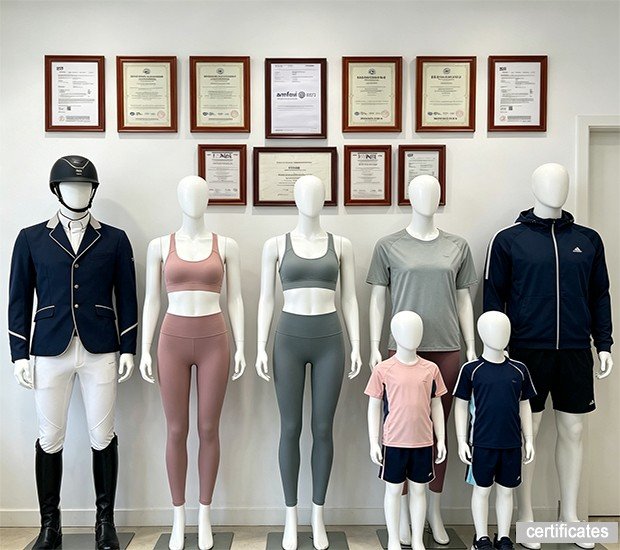
Trusted Manufacturing Standards For Global Sportswear Brands
We operate under internationally recognized quality, sustainability, and ethical manufacturing standards. Our certifications help ensure consistent product quality, responsible sourcing, and reliable production for global sportswear brands.
- 20+ Countries Served
- 6000+ Styles Developed
- 50,000 PCS Monthly Capacity
- 3-Day Sample Development
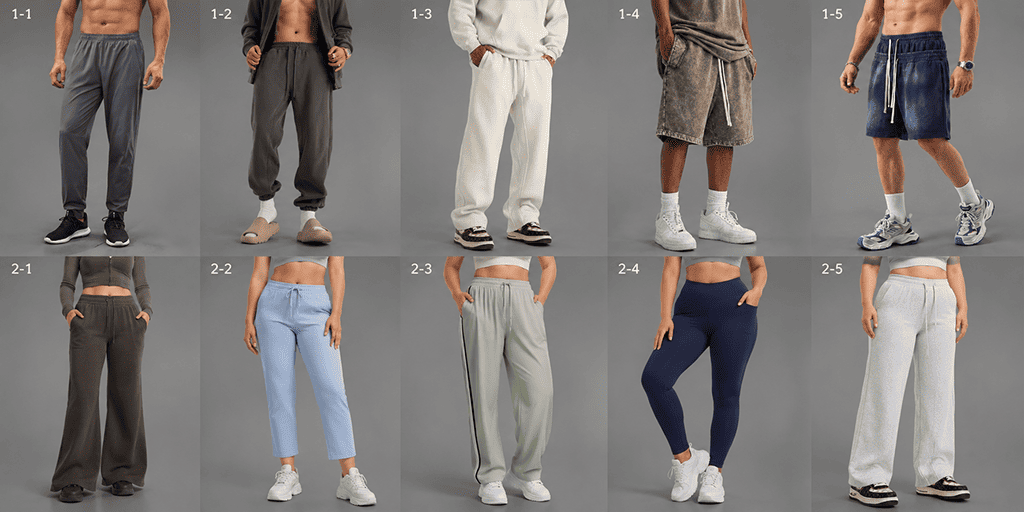
Why Do Buyers Choose Jogger Pants Manufacturers in China?
Buyers consider China because one jogger sourcing program may require fabric, elastic, rib, drawcords, zippers, printing, embroidery, labels, packaging and export logistics to work together. The advantage is not simply a lower factory price. China becomes more relevant when a buyer needs several parts of the apparel supply chain to support the same order efficiently. The final decision should still depend on quantity, product complexity, lead time, landed cost and supply risk.
China remains one of the major sourcing locations for sportswear, casualwear and private label apparel because garment production rarely depends on sewing alone.
A relatively simple jogger can involve a surprisingly long supply chain. The main fabric may come from one mill, rib from another supplier, elastic from another, while drawcords, eyelets, zippers, labels, printing, embroidery, washing and packaging can involve additional specialized companies.
When those resources are available within an established apparel manufacturing network, a Jogger Pants Supplier can potentially coordinate more of the order without forcing the buyer to manage every upstream process separately.
That does not make every Chinese manufacturer suitable.
The practical advantage appears only when the available supply-chain resources match the actual requirements of the order.
Why Does China Remain Relevant for Jogger Pants Manufacturing?
The strongest sourcing advantage is often supply-chain depth rather than one individual factory capability.
Consider a custom jogger containing:
Main Fabric → Rib → Elastic → Drawcord → Zipper → Embroidery → Woven Label → Care Label → Packaging
If the product also requires garment washing, printing or special finishing, more suppliers enter the chain.
A manufacturer that can access these resources efficiently may be able to solve sourcing problems faster than a factory operating in a location where several components must be imported or purchased through distant suppliers.
This becomes particularly important when a buyer needs more than a basic product.
For example, two joggers may look almost identical in an online photograph. One uses a readily available French Terry fabric, standard elastic and simple embroidery. The other uses custom-dyed heavyweight fabric, a specific rib structure, branded metal drawcord ends, custom embroidery and specialized washing.
They are not the same sourcing project.
The second product places greater pressure on material coordination, process availability, minimum quantities and production planning.
China’s apparel clusters can be useful in these situations because manufacturers can operate within networks of fabric mills, trim suppliers, printing facilities, embroidery workshops, washing facilities, packaging companies and logistics providers.
The purchasing value comes from how effectively those resources are coordinated—not simply from the country printed on the shipping documents.
China Manufacturer vs Local Manufacturer: Which Sourcing Model Fits the Order?
Neither model is automatically better.
A buyer should compare the complete sourcing structure rather than assume that overseas manufacturing is always cheaper or local manufacturing is always faster.
| Purchasing Factor | China Manufacturing | Local Manufacturing |
|---|---|---|
| Fabric and Trim Selection | Can offer access to broad apparel supply networks | May be narrower or depend on imported materials |
| Small Urgent Orders | International freight can reduce the time advantage | Can be practical when materials are already available locally |
| Large or Repeat Orders | Can become more commercially efficient at suitable volumes | Depends heavily on local labor and production economics |
| Custom Components | Broad supplier network can support multiple processes | Availability varies significantly by market |
| Communication | Requires disciplined remote communication | Face-to-face access may be easier |
| Freight | International freight and import costs must be included | Domestic freight can be simpler |
| Replenishment | Requires inventory and shipping planning | Can be faster for locally available products |
| Landed Cost | Must include freight, duties and related costs | Higher unit manufacturing cost may be offset by other savings |
| Production Visibility | Requires documentation, inspection or visits | Physical access may be easier |
A local manufacturer is not automatically faster if the required fabric has to be imported.
Likewise, a Chinese supplier is not automatically cheaper if the order is extremely small, highly customized and shipped by expensive air freight.
The comparison should therefore be based on total sourcing conditions, not country labels.
For example, suppose Supplier A in China quotes $12.50 per piece while a local manufacturer quotes $16.00.
The $3.50 difference does not automatically make Supplier A cheaper.
The buyer may still need to account for:
International freight
Import duties
Customs-related costs
Testing
Longer inventory transit
Higher minimum quantities
Currency exposure
Inspection
Potential rework or replacement risk
The correct comparison is closer to landed commercial cost than ex-factory unit price.
At the same time, the local quotation should also be examined carefully. If the local supplier imports the fabric, trims or finished components, the apparently local supply chain may still contain international lead times and cost exposure.
When Is a Chinese Manufacturer Not Automatically the Better Sourcing Option?
China can offer a deep apparel supply chain, but that does not mean every order should be placed there.
Several situations deserve a more careful comparison.
Very Small and Urgent Orders
Suppose a brand needs 40 pieces for an event taking place in three weeks.
Even if a Chinese manufacturer can technically produce the order, sampling, production and international freight may leave too little time. A local supplier using available products or materials may be commercially safer.
Orders With High Air-Freight Exposure
A low garment price can lose much of its advantage when bulky fleece joggers must be shipped urgently by air.
Heavyweight garments occupy weight and volume. If the product is inexpensive relative to its shipping cost, freight can materially change the landed economics.
Products Already Available Locally
If the buyer requires a simple, standardized product and an acceptable local source already holds inventory, custom overseas production may add complexity without creating enough additional value.
Mandatory Local-Sourcing Requirements
Some organizations, contracts, institutions or brand strategies may require domestic or regional production.
In that case, a Chinese manufacturer’s technical capability or pricing may be irrelevant because the sourcing requirement itself eliminates the option.
Extremely Short Replenishment Cycles
A business that regularly needs inventory replenished within a few days may benefit from local stockholding or nearby manufacturing.
Overseas production can still support such a business, but it normally requires better forecasting, inventory planning or a replenishment model that accounts for international transit.
The question should not be:
“Is China a good place to manufacture joggers?”
A more useful question is:
“Does China’s manufacturing and supply-chain structure create a meaningful advantage for this particular order?”
Does “Made in China” Tell Buyers Anything About Product Quality?
Country of origin alone does not determine garment quality.
China has large manufacturers, small manufacturers, specialists, general apparel producers, trading companies and suppliers operating under very different quality systems.
The quality of a jogger depends more directly on factors such as:
Specification + Material + Workmanship + Process Control + Inspection + Corrective Action
Consider fabric.
Two manufacturers can both describe a material as “cotton French Terry,” while supplying fabrics with different composition, GSM, shrinkage, surface appearance, hand feel and recovery.
The country is the same.
The product result can still be very different.
The same applies to workmanship. A factory can have modern equipment but weak measurement control. Another can operate on a smaller scale while maintaining disciplined specifications and inspection records.
Buyers should therefore replace country-level assumptions with order-level evidence.
Useful questions include:
Is the required specification clearly documented?
Can the supplier provide relevant material information?
Is the sample consistent with the agreed requirements?
Are measurement tolerances defined?
Are production inspections performed?
How are defects recorded and corrected?
Which specifications are checked before shipment?
For Pair Fashion, company documentation describes incoming inspection, in-line inspection and final inspection, together with AQL-based quality control and an ISO9001 quality-management system.
Those controls are more relevant to a buyer’s quality evaluation than the simple fact that the company is located in China.
Does a Lower Factory Price Mean a Lower Total Cost?
Not necessarily.
A quotation is only one part of the purchasing economics.
Consider two hypothetical suppliers:
| Commercial Factor | Supplier A | Supplier B |
|---|---|---|
| Unit Price | $10.80 | $12.20 |
| MOQ | 500/color | 150/color |
| Number of Colors | 3 | 3 |
| Minimum Garment Commitment | 1,500 pcs | 450 pcs |
| Total Garment Purchase | $16,200 | $5,490 |
Supplier A has a lower unit price, while Supplier B requires much less initial inventory. For an established product that can sell thousands of pieces, Supplier A’s structure may be more commercially attractive. For a new brand testing an uncertain market, Supplier B may provide a more manageable inventory commitment, even though its unit price is $1.40 higher. This is why buyers should consider both unit economics and inventory economics when making purchasing decisions.
Unsold stock has a cost.
Cash tied up in slow-moving sizes has a cost.
Extra colors have a cost.
Markdowns have a cost.
Warehouse space has a cost.
The cheapest garment is not always the lowest-risk purchasing decision.
Why Does Supplier Fit Matter More Than Country or Factory Size?
A manufacturer’s value depends on whether its capabilities match the order.
Imagine three sourcing projects:
Project A:
150 pieces of a first-launch lifestyle jogger across three sizes.
Project B:
2,000 performance joggers for an established fitness brand with repeat-order potential.
Project C:
8,000 team joggers requiring stable colors, scheduled delivery and several logo variations.
All three buyers are purchasing joggers.
They should not necessarily choose the same manufacturer.
Project A may need commercial flexibility and manageable inventory exposure.
Project B may place greater importance on material performance, repeatability and replenishment.
Project C may prioritize capacity planning, color consistency, documentation and delivery control.
A factory with very large capacity could be unnecessary for Project A. A small flexible supplier that works well for Project A might become a production risk for Project C.
This is why factory size should be interpreted in relation to expected order volume.
The same logic applies to company history. Twenty years in business can demonstrate continuity, but it does not automatically prove expertise in the exact product category.
Certifications work in a similar way. They can provide important evidence for specific compliance or sourcing requirements, but certificates unrelated to the actual order should not be treated as decorative points on a supplier scorecard.
The most useful question remains:
Does the supplier’s capability solve the risks of this particular purchasing program?
How Should Buyers Decide Whether China Belongs on the Shortlist?
China deserves serious consideration when the order benefits from a broad material and process network, custom apparel manufacturing resources, commercially suitable production quantities and established export infrastructure.
It becomes less compelling when international sourcing adds more cost, time or inventory risk than the manufacturing advantages can offset.
Before deciding, buyers should compare:
Product complexity
Required material and trims
Order quantity
MOQ by style and color
Sample requirements
Production lead time
International transit
Landed cost
Compliance requirements
Inventory exposure
Replenishment needs
Supplier evidence
A Jogger Pants Supplier should therefore be selected because its production model and commercial structure fit the order—not simply because it operates in a country known for apparel manufacturing.
Once China is confirmed as a practical sourcing option, the next comparison becomes more precise: what does each supplier’s MOQ really mean, why do quotations differ, and how can buyers normalize price and commercial terms before choosing which suppliers deserve samples?
How Should Buyers Compare Samples From Different Jogger Pants Suppliers?
Buyers should compare samples only when shortlisted suppliers receive substantially the same core requirements and the samples are intended to answer the same purchasing questions. Evaluate fit, measurements, fabric, construction, appearance and revision accuracy under one framework. A strong sample can demonstrate development capability, but it does not automatically prove that the Jogger Pants Supplier can reproduce the approved result consistently across bulk production.
A sample is one of the most valuable pieces of evidence in supplier selection because it turns promises into something the buyer can physically inspect.
But samples are easy to misuse.
If one manufacturer receives a detailed Tech Pack, another receives a physical reference garment and a third receives only several photographs, the resulting samples do not provide a fair comparison of manufacturing capability.
The same problem occurs when buyers compare different sample stages. A first prototype made to explore shape should not be judged in exactly the same way as a pre-production sample intended to represent the final bulk specification.
Before scoring samples, buyers need to establish what question each sample is supposed to answer.
What Type of Sample Are You Actually Receiving?
Not every sample serves the same purpose, and terminology can vary between manufacturers.
A practical distinction is:
| Sample Type | Main Purchasing Question |
|---|---|
| Prototype / Development Sample | Can the initial product concept be translated into a workable garment? |
| Fit Sample | Are fit, measurements and proportions moving toward the required standard? |
| Size Set | Does the approved fit grade correctly across the required size range? |
| Sales / Photo Sample | Is the product sufficiently representative for presentation, selling or photography? |
| PP Sample | Are the key specifications sufficiently locked before bulk production begins? |
The names themselves are less important than the purpose.
One manufacturer may call its first garment a prototype sample, another may use development sample, and another may move directly to a fit sample. Buyers should ask what has actually been confirmed at that stage rather than assuming that identical document names are used throughout the industry.
This prevents a common sourcing mistake: rejecting a supplier because an early development sample is not “production perfect” when the sample was never intended to be the final production reference.
The opposite mistake is more serious.
A visually attractive sample should not be treated as approved for production if fabric, measurements, trims, color or construction details are still unresolved.
Why Should Shortlisted Suppliers Receive Substantially the Same Requirements?
A supplier comparison becomes meaningful only when the inputs are reasonably comparable.
Suppose three manufacturers receive the same jogger inquiry.
Supplier A receives:
Complete Tech Pack
Measurement chart
Target fabric specification
Pantone color
Artwork
Label details
Supplier B receives:
Front and back photographs
Approximate fabric description
Supplier C receives:
A message saying, “Make this style in premium quality.”
If Supplier A produces the most accurate sample, that does not necessarily prove that Supplier A has superior manufacturing capability. It may simply have received much better information.
For a fair test, shortlisted manufacturers should receive substantially the same:
Product reference
Measurement requirements
Target fabric specification
Sample size
Construction requirements
Color information
Branding information
Evaluation criteria
The objective is not absolute laboratory-style standardization. Small differences will still exist because suppliers may source materials differently or suggest alternative solutions.
The objective is to prevent input quality from becoming confused with supplier capability.
When the same requirement produces different results, the buyer learns something useful.
What Should Buyers Record When Comparing Jogger Samples?
“Looks good” is not a strong sample evaluation method.
A structured sample review should separate different types of performance.
| Evaluation Area | What to Check |
|---|---|
| Fit | Overall silhouette, balance and intended wearing profile |
| Measurements | Waist, rise, hip, thigh, inseam, leg opening and other critical points |
| Fabric | Composition, GSM, stretch, recovery, hand feel and appearance against requirement |
| Construction | Seam execution, pocket construction, waistband, cuffs and reinforcement |
| Appearance | Color, surface, symmetry and overall finish |
| Branding | Placement, dimensions and execution against approved artwork |
| Trims | Drawcords, elastic, zippers, labels and other specified components |
| Revision Accuracy | Whether previous comments were understood and corrected correctly |
| Documentation | Whether changes and approvals are recorded clearly |
Not every criterion needs equal weight.
For a performance jogger, material recovery and movement may deserve more attention.
For a heavyweight lifestyle product, silhouette, fabric structure and shrinkage may carry greater importance.
For a teamwear order, color repeatability and logo execution may become more commercially important.
The evaluation framework should follow the risk of the actual product rather than use one generic scorecard for every jogger.
Should Buyers Measure a Sample or Only Judge the Fit?
Both.
Fit tells the buyer how the garment behaves on a body.
Measurements tell the buyer whether the garment was made according to the intended specification.
These are related, but they are not identical.
For joggers, useful measurement points can include:
Waist
Front Rise
Back Rise
Hip
Thigh
Knee
Inseam
Leg Opening
Cuff Height
Pocket Position
Suppose two samples both look acceptable on one model.
Sample A may closely follow the requested measurement chart.
Sample B may achieve a similar appearance because the supplier independently changed several measurements.
That difference matters.
If the buyer later approves additional sizes, Sample B’s undocumented changes can create problems during grading or production.
A sample should therefore be evaluated against both physical wearing performance and documented specifications.
What Should Buyers Test Beyond Static Fit?
A jogger is not worn only while standing still.
Static fitting can hide problems that become obvious during normal movement.
Depending on the intended product, sample evaluation can include:
Sitting — Does the waistband remain comfortable? Does the back rise provide enough coverage?
Walking — Does the silhouette move naturally? Do pockets or seams distort?
Squatting — Is there enough room through the hip, thigh and rise?
Knee bending — Does the fabric or construction create excessive restriction?
Waistband recovery — Does the waistband return after repeated stretching?
Cuff recovery — Does the leg opening retain its intended shape?
Pocket use — Does a phone or other expected item pull the garment out of shape?
Wash testing — Do measurements, color, surface appearance and hand feel remain acceptable after washing?
These checks should match the intended use.
A casual lounge jogger does not need to be tested like a high-intensity training garment. A performance product should not be evaluated only for visual appearance.
The purpose is to reproduce real wearing conditions that could expose a commercially important problem.
Sample Quality vs Revision Accuracy: Which Tells Buyers More?
The first sample matters, but the revision process can reveal even more about a supplier.
Imagine two manufacturers.
Supplier A produces an attractive first sample, but when the buyer requests five changes, only two are completed correctly.
Supplier B produces a less accurate first sample, but identifies the unclear specifications, documents every comment and corrects all major issues in the second round.
Which supplier has provided stronger evidence?
There is no automatic answer, but Supplier B has demonstrated something commercially important: revision control.
Product development is rarely a one-message process. Buyers may need to adjust measurements, fabric, trims, artwork or construction before approval.
The supplier therefore needs to do more than make a good garment.
It needs to understand:
What changed → Why it changed → Which version is current → What must remain unchanged
A practical revision record can include:
| Revision Item | Sample 1 | Buyer Comment | Sample 2 Result | Status |
|---|---|---|---|---|
| Waist | Too loose | Reduce 2 cm | Corrected | Approved |
| Pocket Position | Too low | Raise 1.5 cm | Corrected | Approved |
| Drawcord | Wrong finish | Change to specified finish | Not corrected | Open |
| Inseam | Correct | No change | Maintained | Approved |
This reduces the risk that one correction accidentally removes a previously approved feature.
Revision accuracy is evidence of process discipline, not only sewing skill.
How Long Should a Sample Take, and What Can a Delay Tell You?
Sample speed should be interpreted in context.
A simple jogger using available fabric and standard trims can usually move faster than a product requiring custom-dyed material, specialized hardware, embroidery, washing or several new components.
A delay is therefore not automatically a negative signal.
The more useful question is:
Can the supplier explain what is causing the delay and what needs to happen next?
A reasonable delay may result from:
Waiting for the specified fabric
Custom color development
Custom trim production
Embroidery setup
Washing or finishing
Pattern revision
Buyer-requested changes
A more concerning delay may involve:
Repeated unexplained date changes
No clear sample status
Materials being changed without approval
Different explanations from different staff
Missing revision records
Problems being disclosed only after the promised date
A supplier that says, “The custom rib needs four additional days because the approved color is not available in stock,” gives the buyer information that can be managed.
A supplier that repeatedly says, “Sample tomorrow,” without explaining why the date continues to move creates a different type of risk.
Predictability can be more valuable than an unrealistically short promise.
Should Buyers Compare Sample Speed by Number of Days Alone?
No.
“7-day sample” can describe different starting points.
One supplier may count from receipt of the Tech Pack.
Another may count from payment of the sample fee.
Another may begin after all materials are available.
A fourth may exclude custom fabric development from the quoted sample period.
Buyers should confirm:
What event starts the sample lead time?
Are materials already available?
Does the quoted time include custom colors?
Does it include printing or embroidery?
Does it include revision time?
Does it include shipping?
Is the number calendar days or working days?
Without these definitions, comparing “7 days” with “10 days” may create false precision.
The same principle will later apply to bulk lead time.
When Is a Sample Ready to Become a Production Reference?
A sample becomes commercially valuable when the buyer can clearly identify what has been approved.
Before treating a garment as the production reference, critical areas should be sufficiently locked, including where relevant:
Fit
Measurements and tolerances
Fabric
Color
Construction
Waistband and cuff structure
Pockets
Trims
Logo artwork and placement
Labels
Packaging requirements
Approval should not exist only in a chat message saying:
“Looks good. Proceed.”
A stronger approval process connects the physical sample with the current specification and revision records.
The objective is to create a clear reference that both buyer and manufacturer understand.
This becomes particularly important when several sample rounds have occurred. Without version control, the buyer may approve the fit from Sample 3 while expecting the pocket construction from Sample 2 and the drawcord from Sample 1.
Those expectations need to be consolidated before production.
Why Does a Good Sample Not Prove Bulk Production Reliability?
One sample and 2,000 garments are different manufacturing challenges.
A skilled sample maker can spend considerable time perfecting one garment. Bulk production introduces different variables:
More fabric
More fabric lots
More operators
Repeated cutting
Repeated sewing operations
Production-line efficiency
Measurement consistency
Color consistency
Inspection sampling
Packaging accuracy
A good sample therefore provides evidence that the supplier can develop or reproduce one acceptable garment under sample conditions.
It does not automatically prove that hundreds or thousands of garments will remain within the same requirements.
This distinction is important when comparing a Jogger Pants Supplier.
The sample answers:
“Can you make this correctly?”
Production verification needs to answer:
“Can you repeat it correctly at the required scale?”
That is why buyers should avoid awarding a large order solely because one sample looks excellent.
The next stage should examine production capability, QC controls, capacity fit and evidence that approved specifications can be maintained when the order moves from the sample room to the production floor.
A Practical Comparable Sample Scorecard
A structured scorecard can help buyers keep observations separate.
| Area | Evaluation Question | Evidence |
|---|---|---|
| Specification Match | Does the sample follow the supplied requirements? | Sample + Tech Pack |
| Fit | Does it achieve the intended silhouette and comfort? | Wear test |
| Measurements | Are critical points within expected tolerance? | Measurement record |
| Fabric | Does material match the required structure and performance? | Sample + fabric specification |
| Construction | Are seams, pockets, waistband and cuffs executed correctly? | Physical inspection |
| Movement | Does the garment perform in intended use? | Wear test |
| Wash Result | Are shrinkage and appearance acceptable? | Before/after comparison |
| Revision Accuracy | Were comments understood and corrected? | Revision record |
| Documentation | Are changes and approvals traceable? | Sample records |
| Communication | Were problems identified and explained clearly? | Development communication |
The scorecard should support judgment rather than replace it.
If a supplier scores well overall but fails a non-negotiable material requirement, a high total score should not hide that problem.
Likewise, a minor packaging issue should not automatically carry the same importance as incorrect fit, unacceptable shrinkage or failure to meet a mandatory material specification.
The strongest sample comparison combines structured evidence with commercial priorities.
1. Product Development
Regular monthly product development ensures consistent updates to your brand line.
2. Fabric Sourcing
Regular monthly product development ensures consistent updates to your brand line.
3. Sample Making
Regular monthly product development ensures consistent updates to your brand line.
4. Bulk Production
Regular monthly product development ensures consistent updates to your brand line.
5. Packaging & Delivery
Regular monthly product development ensures consistent updates to your brand line.
How Can Buyers Verify Factory Capability, QC and Supply Reliability?
Buyers should verify a Jogger Pants Supplier through evidence connected to the actual order: relevant production experience, current capacity, quality-control records, inspection procedures, communication discipline and specification control. Factory size, years in business and certifications provide useful context, but none of them independently proves supply reliability. The strongest evidence shows that the manufacturer can control the required product repeatedly under realistic bulk-production conditions.
Supplier verification should become more rigorous as the purchasing commitment increases.
A buyer does not necessarily need an expensive third-party audit before requesting the first sample. But placing a substantial bulk order based only on a website, product photographs and a good sample creates unnecessary risk.
Verification should therefore work in layers.
Business Evidence → Product Evidence → Production Evidence → QC Evidence → Commercial Evidence → First-Order Performance
Each layer answers a different question.
What Factory Evidence Should Buyers Request?
The objective is not to collect as many documents as possible. It is to confirm whether the supplier’s claimed resources are relevant to the order.
Useful evidence can include:
Registered business information
Production address
Recent production photographs or video
Relevant jogger or similar product examples
Current production-line information
Approximate monthly capacity
QC structure
Inspection records or procedures
Audit reports where relevant
Current certifications where required
Information about subcontracted processes
Written commercial terms
The evidence should be internally consistent.
If a supplier claims very large monthly capacity but cannot explain its number of production lines, current workload or how capacity is allocated, the headline number deserves further verification.
Likewise, factory photographs should answer more than:
“Does this factory exist?”
Buyers may also want to understand:
“Is this where my product will be made, and does the facility control the processes that matter for my order?”
Some garment processes are commonly outsourced. Printing, embroidery, washing or specialized finishing may take place outside the main sewing facility.
That is not automatically a problem.
The important questions are:
Who selects the subcontractor? Who approves the output? Who performs incoming checks after the process? Who takes responsibility if the result does not meet the approved requirement?
Supply-chain transparency is more useful than pretending every process must happen under one roof.
How Do Buyers Verify QC Beyond “Strict Quality Control”?
Almost every clothing manufacturer can say it has “strict QC.”
The phrase has little purchasing value until the buyer understands what is inspected, when it is inspected and what happens when a problem is found. Buyers using AQL-based final inspection can also review the ASQ guidance on acceptance sampling to better understand how sampling plans use defined sample sizes and acceptance or non-acceptance criteria when evaluating production lots.
A practical garment quality system can contain several control points:
| QC Stage | Main Purpose | Typical Questions |
|---|---|---|
| Incoming Inspection | Check materials before production | Is fabric correct? Are color, width and visible defects acceptable? |
| In-Line Inspection | Identify problems while production is running | Are measurements and workmanship staying within requirements? |
| Final Inspection | Evaluate finished goods before shipment | Do finished quantities meet agreed quality requirements? |
| Corrective Action | Control identified problems | Who corrects the issue and how is the result rechecked? |
For Pair Fashion, company documentation states a 13-person QC team and identifies incoming inspection, in-line inspection and final inspection as part of its quality-control structure. The same materials reference AQL and ISO9001 within the company’s QC system.
For supplier comparison, the useful questions go deeper:
Which measurements are inspected?
What tolerances are used?
How are workmanship defects classified?
How frequently are garments checked during production?
How are failed inspections handled?
Is reinspection performed after correction?
Are inspection results recorded?
Can the buyer specify additional critical checkpoints?
A manufacturer does not need to use exactly the same terminology as another supplier.
One may say IPQC, another may say in-line inspection, and another may use an internal production-quality term.
What matters is whether the control exists, whether responsibility is clear and whether the supplier can provide evidence.
Does Factory Size Prove Better Supply Reliability?
No.
Factory size is useful information, but it is not a quality grade.
A large factory may provide:
Greater production capacity
More production lines
More specialized departments
Better ability to absorb larger orders
It may also have:
Higher minimum quantities
Less flexibility for very small orders
More complex internal communication
Production priorities that favor larger customers
A smaller manufacturer may offer:
More flexible commercial conditions
Faster decision-making
More direct communication
Better fit for smaller programs
But it may also have:
Less spare capacity
Greater dependence on a small number of key staff
More reliance on subcontractors
Limited ability to absorb sudden volume increases
Neither profile is automatically better.
The useful measure is Capacity Fit.
Suppose a manufacturer can produce 100,000 pieces per month.
That number sounds impressive.
If the buyer needs only 150 pieces, the factory’s commercial structure may not fit the order.
If the buyer expects 30,000 pieces during a seasonal launch, the same capacity becomes much more relevant.
Conversely, a small manufacturer may work extremely well for a 300-piece program but struggle when the brand suddenly needs 20,000 pieces within the same delivery window.
Ask:
Can this supplier support the order I have now—and the next realistic order if the product succeeds?
That question is more useful than asking which factory is largest.
What Does the History of a Manufacturer Actually Tell Buyers?
Years in business provide context, not a complete reliability assessment.
A manufacturer operating for 20 years has survived multiple market cycles and may have accumulated substantial production experience.
But the founding year does not automatically tell the buyer:
How long the company has produced joggers
Whether the current management team is experienced
Whether current equipment is suitable
Whether QC remains effective
Whether the company has enough current capacity
Whether communication is reliable
Whether recent customers receive consistent production
A company can also change substantially over time.
It may move facilities, add product categories, change ownership, increase capacity or shift from general apparel toward specialized sportswear.
Buyers should therefore connect company history with current evidence.
For example:
Established in 2005 is useful background.
Established in 2005 + recent comparable products + current production evidence + clear QC controls provides a much stronger basis for evaluation.
Company age should never compensate for missing evidence on a commercially critical requirement.
How Should Buyers Verify Certifications?
Certifications are useful when they relate to the buyer’s actual requirement.
They should not be collected as decorative supplier credentials.
Before relying on a certification, confirm:
Who is named on the certificate?
Which facility does it cover?
What is the scope?
Is it currently valid?
Does it apply to the relevant product, material or management system?
Can the certificate be independently verified where appropriate?
The distinction between factory certification and material certification is particularly important.
A supplier may work with certified recycled materials without every garment automatically carrying the same claim.
Likewise, a factory management-system certificate does not prove that a specific fabric meets a particular performance requirement.
For Pair Fashion, the company materials list ISO9001, BSCI, GRS, CE and ROHS among its certifications and compliance resources.
For an actual order, buyers should still confirm which documentation is relevant and applicable to the required product.
Certification relevance is more important than certificate quantity.
How Can Buyers Test Communication Before Paying a Bulk Deposit?
Communication quality can be tested before production begins.
The most useful suppliers do more than answer quickly.
They identify missing information.
Imagine the buyer sends an RFQ without specifying fabric weight.
Supplier A immediately provides a low quotation without asking about GSM.
Supplier B asks:
“What GSM do you require? The price and garment feel will change significantly between 280 GSM and 420 GSM.”
Supplier B has not necessarily proven better manufacturing quality.
But it has demonstrated awareness of a variable that materially affects the order.
Useful communication signals include:
Identifying missing specifications
Explaining when a request affects MOQ
Warning when the target delivery date is unrealistic
Confirming revisions in writing
Separating confirmed information from assumptions
Explaining delays rather than hiding them
Identifying conflicts between the Tech Pack and physical sample
Keeping the current product version clear
Response speed still matters, but fast incorrect answers are not strong communication.
Accuracy and traceability matter more.
A supplier that takes several hours to verify a technical question with the production team may provide more value than one that answers immediately with an unsupported “no problem.”
How Can Buyers Verify Production Capacity Without Relying on One Headline Number?
Monthly capacity figures should be interpreted carefully.
A factory may state:
“Capacity: 50,000 pcs/month.”
The buyer still needs to understand:
Is this average output or theoretical maximum?
Does it cover all product categories?
How much capacity is currently booked?
How much capacity can be allocated to this order?
Does the proposed product require a slower production process?
Are external processes included in the lead time?
Is the order scheduled during peak season?
The more complex the garment, the less useful a generic piece-per-month number becomes.
A basic product with few operations can move through a production line faster than a jogger containing multiple panels, pockets, custom decoration and specialized finishing.
For Pair Fashion, company materials state seven standardized production lines, including four functional sportswear lines, stable capacity of approximately 50,000 pieces per month and peak capacity of approximately 65,000 pieces.
Those figures are useful capacity references.
For a real order, the buyer should still confirm the production slot and lead time for the specific project.
Available capacity matters more than theoretical capacity.
What Supply Reliability Evidence Matters for Repeat Orders?
A successful first order does not guarantee that the second order will be identical.
Repeatability depends on whether critical information is preserved and controlled.
Useful areas to investigate include:
Specification Records
Can the supplier retrieve the approved measurements, construction and product requirements?
Sample Records
Is the approved reference garment or equivalent documentation retained?
Material Records
Can the supplier identify the approved fabric and trims?
Version Control
If the buyer changes one detail in a reorder, can the supplier distinguish the new version from the previous one?
Change Communication
If a material becomes unavailable, will the supplier request approval before substituting it?
Production Records
Can relevant order information be connected to the correct style and version?
Pair Fashion’s company documentation states that paper and electronic patterns are permanently archived and sealed samples are retained for at least three years, providing a reference that can support later revisions or repeat orders.
From a buyer’s perspective, the important principle is broader:
Repeatability depends on records, not memory.
If the second order relies on someone remembering which elastic, fabric lot, measurement revision or logo placement was used months earlier, consistency becomes more vulnerable.
What Happens When an Approved Material Becomes Unavailable?
This is one of the most practical tests of supplier control.
Fabric mills discontinue materials.
Dye lots change.
Trim suppliers change specifications.
A particular zipper may become unavailable.
These events do not automatically indicate poor supplier management.
The real question is how the change is controlled.
A disciplined process should prevent an unapproved substitution from quietly entering production.
A practical sequence is:
Change Identified → Buyer Informed → Alternative Proposed → Difference Evaluated → Approval Recorded → Production Updated
For example, if the approved 320 GSM French Terry becomes unavailable, the supplier should not simply replace it with another “similar” 320 GSM fabric.
The alternative may have different:
Composition
Stretch
Shrinkage
Surface appearance
Hand feel
Color response
Recovery
The weight alone does not prove equivalence.
A reliable Jogger Pants Supplier should make material changes visible before they become finished garments.
When Should Buyers Use a Third-Party Inspection or Factory Audit?
Not every order requires the same level of external verification.
The decision can depend on:
Order value
Product complexity
Supplier history
Buyer experience with the manufacturer
Destination-market requirements
Quality risk
Internal sourcing resources
Customer or retailer requirements
A first order with a new supplier may justify more independent verification than the tenth successful repeat order.
Likewise, a large order carrying substantial financial exposure may justify third-party inspection even when the supplier has an internal QC team.
An audit and an inspection also answer different questions.
Factory Audit:
Evaluates the supplier, facility, systems or compliance conditions.
Product Inspection:
Evaluates the actual goods or production from a particular order.
A factory can pass an audit and still produce a defective batch.
A shipment can pass product inspection without proving that every broader factory-management requirement is strong.
Buyers should use the tool that matches the risk they are trying to control.
How Can Buyers Test Supply Reliability Before Scaling?
The strongest evidence often comes from a controlled commercial order.
Documents, videos, samples and audits reduce uncertainty.
Actual production reveals how the supplier performs when several requirements must work together under real time and cost pressure.
For a new supplier relationship, buyers can evaluate:
Was the agreed schedule followed?
Were problems disclosed early?
Did production remain aligned with approved specifications?
Were inspection issues corrected?
Did packaging and quantities match the order?
Were shipment documents accurate?
Did communication remain stable after the deposit was paid?
Were approved changes controlled correctly?
A successful controlled first order creates more useful evidence than dozens of marketing claims.
If problems occur, buyers should also evaluate how the supplier responds.
A production issue that is identified early, communicated clearly and corrected effectively can reveal stronger process control than a supplier that hides problems until final inspection.
Reliability does not mean that nothing can ever go wrong.
It means that risks are identified, controlled, documented and corrected before they become unacceptable commercial outcomes.
Factory Verification Checklist
Before increasing order volume, buyers should be able to answer:
| Verification Area | Key Question | Useful Evidence |
|---|---|---|
| Business Identity | Who is receiving the order? | Registration / company information |
| Production Location | Where will the garments be produced? | Address / production evidence |
| Product Experience | Has the supplier handled relevant products? | Recent samples / production evidence |
| Capacity Fit | Can current resources support the order? | Line and scheduling information |
| Material Control | Can required materials be identified and controlled? | Specifications / sourcing records |
| Incoming QC | Are materials checked before production? | Procedure / inspection evidence |
| In-Line QC | Are problems detected during production? | Inspection records |
| Final QC | Are finished goods checked before shipment? | Final inspection evidence |
| Corrective Action | What happens when defects are found? | Corrective records / reinspection |
| Certification | Is required documentation relevant and valid? | Current certificate |
| Version Control | Can approved requirements be retrieved? | Specifications / sample records |
| Communication | Are risks and revisions documented? | Written project records |
| Repeatability | Can the product be reproduced later? | Archived product information |
No single row should automatically determine the decision unless it represents a non-negotiable requirement.
The objective is to build enough connected evidence to understand the supplier’s actual risk profile.
A polished website can help a manufacturer enter the longlist.
A strong sample can help it reach the final shortlist.
But production evidence, QC control, documentation and first-order performance are what begin to show whether the supplier can support a longer commercial relationship.
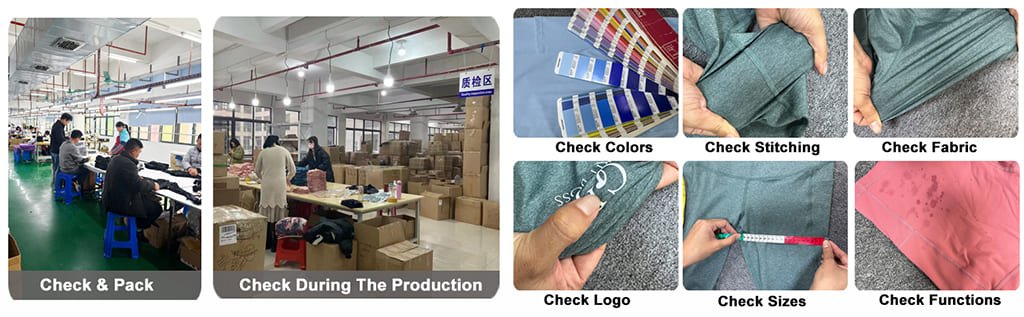
Which Jogger Pants Supplier Fits Your Order Size, Brand Stage and Risk?
The right Jogger Pants Supplier depends on the buyer’s order size, product maturity, inventory risk, sales predictability and future purchasing requirements. Startups may place more weight on manageable MOQ and development communication, while growing brands may need stronger repeatability and replenishment support. Established brands and wholesalers may give more weight to capacity, QC evidence and supply continuity. Supplier fit should therefore be evaluated against the actual stage and risk of the purchasing program.
A manufacturer can be suitable for one buyer and unsuitable for another without being a better or worse supplier overall.
This is especially important when comparing Top 10 supplier options.
A low MOQ can be valuable for a new brand testing demand, but less important for a wholesaler already selling thousands of units.
Large production capacity can be important for an established program, but it may provide little commercial value to a startup ordering 150 pieces.
The purchasing question should therefore move from:
“Which supplier has the strongest overall profile?”
to:
“Which supplier structure fits the order we actually need to place?”
What Should a Startup Brand Prioritize?
A startup usually has less sales data and therefore carries more uncertainty.
The first jogger collection may still need to answer basic commercial questions:
Which style will sell?
Which colors will perform?
Which sizes will move fastest?
What price will customers accept?
Will customers reorder?
Does the category deserve further investment?
This makes inventory exposure particularly important.
Suppose a new brand expects to test three colors.
Supplier A requires 500 pieces per color.
Supplier B requires 150 pieces per color.
Even if Supplier A offers a lower unit price, the first commitment becomes:
Supplier A: 1,500 pieces
Supplier B: 450 pieces
The lower unit price does not remove the additional inventory risk.
For a startup, useful priorities can include:
Commercially manageable MOQ
The first order should be large enough for meaningful market testing without creating unnecessary inventory pressure.
Clear communication
A new buyer may not know every question to ask. A supplier that identifies missing information can reduce avoidable mistakes.
Transparent sample conditions
Sample fees, revision expectations and courier costs should be understandable before development expands.
Relevant product evidence
A startup has limited room for expensive learning through supplier mistakes.
Size-mixing flexibility
The ability to allocate quantities according to expected demand can matter as much as the total MOQ.
Realistic scaling path
The supplier should not only fit the first small order. Buyers should understand whether the same relationship can support the next reasonable volume if the product succeeds.
Pair Fashion’s company materials specifically identify startup brands in the 0→1 stage as customers requiring support with product positioning, first styles, size systems, samples and small test orders.
For supplier comparison, this illustrates an important point: the commercial needs of a first launch are different from those of an established replenishment program.
Should a Startup Always Choose the Lowest-MOQ Supplier?
No.
Low MOQ is one purchasing advantage, not a complete supplier evaluation.
Consider two options.
Supplier A
MOQ: 80 pieces
Limited relevant product evidence
Unclear QC information
Very attractive price
Weak revision documentation
Supplier B
MOQ: 150 pieces
Relevant jogger production evidence
Clear sample process
Documented QC controls
Higher price
The 80-piece MOQ may still be useful.
But it should not automatically override the other differences.
The buyer needs to ask whether the additional flexibility compensates for the uncertainty in areas that matter to the product.
A very low MOQ can also depend on conditions such as:
Stock fabric
Existing colors
Standard trims
Limited customization
Ready-developed products
Restricted size or color combinations
Buyers should therefore ask why the MOQ is low.
If the answer fits the intended product, the structure can be attractive.
If achieving the low MOQ requires changing a non-negotiable requirement, the headline number becomes less useful.
What Should a Growing DTC Brand Prioritize?
A growing DTC brand usually faces a different problem.
The product has begun to sell.
Now the challenge is not only launching it—it is repeating and expanding it without losing control.
The buyer may be adding:
More colors
More sizes
New jogger variations
Coordinated hoodies or sweatshirts
Seasonal releases
Larger replenishment orders
Multiple sales channels
Brands expanding joggers into coordinated loungewear or athleisure collections can also evaluate a custom sports hoodie manufacturer when planning matching hoodies, sweatshirts and related lifestyle products.
At this stage, a Jogger Pants Supplier should increasingly be evaluated for repeatability.
Useful questions include:
Can the approved product be reproduced several months later?
Are patterns and specifications retained?
Can the supplier identify the previously approved fabric?
Are changes between versions documented?
Can the supplier support increasing order quantities?
Does communication remain clear when several styles are active?
Can production schedules support planned launches?
Are QC controls strong enough for larger quantities?
Pair Fashion’s company materials describe growth-stage customers as moving into multi-style development, fit and process optimization, quarterly launches, increasing order quantities and category expansion.
This stage changes the supplier-selection logic.
The lowest first-order MOQ becomes less important.
Consistency and controlled scaling become more important.
What Should Established Brands, Wholesalers and Distributors Prioritize?
Established buyers normally have more sales history and larger purchasing commitments.
Their risks can therefore shift from “Will this product sell?” toward “Can this supply chain support what we already know we need?”
Useful priorities can include:
Capacity Fit
Can the supplier reserve enough production capacity for planned orders?
Production Consistency
Can multiple production runs remain aligned with approved specifications?
QC Evidence
Are incoming, in-line and final controls sufficient for the buyer’s requirements?
Delivery Discipline
Can the supplier support seasonal launch dates and planned replenishment?
Material Continuity
Can critical fabrics and trims be maintained or changes controlled?
Documentation
Are specifications, versions, approvals and inspection results traceable?
Reorder Capability
Can previous products be reproduced without restarting the development process?
Supply-Chain Transparency
Does the buyer understand which important processes are internal and which are subcontracted?
Pair Fashion’s company materials describe mature-brand requirements as including seasonal development, broader product categories, higher QC expectations, annual replenishment and more dedicated supply-chain or production resources.
For wholesalers and distributors, another factor can become especially important: assortment economics.
A wholesaler may not be buying one jogger.
It may be buying:
Three jogger styles
Four colors per style
Six sizes
Matching sweatshirts
Multiple seasonal deliveries
The buyer should therefore calculate MOQ and inventory commitment at the program level, not only the individual SKU level.
A reasonable MOQ on one style can become a very large purchasing commitment when multiplied across a full assortment.
Low-MOQ Supplier vs High-Capacity Manufacturer: Which Fits the Order?
These are not opposite quality categories.
They solve different purchasing problems.
| Buyer Situation | Lower-MOQ Flexibility May Matter More | Higher-Capacity Structure May Matter More |
|---|---|---|
| First market test | ✓ | |
| Uncertain color demand | ✓ | |
| New product category | ✓ | |
| Small capsule collection | ✓ | |
| Proven bestseller | ✓ | |
| Large seasonal launch | ✓ | |
| Wholesale replenishment | ✓ | |
| Multiple large POs | ✓ | |
| Rapid volume growth | ✓ | |
| Long-term supply program | ✓ |
There is also a middle ground.
Some manufacturers combine moderate MOQ flexibility with enough production capacity to support growing brands.
For buyers expecting growth, this can reduce the need to change suppliers immediately after the first successful launch.
But the buyer should verify both sides of the claim.
Low MOQ does not prove flexibility at larger scale.
Large capacity does not prove flexibility at smaller scale.
Ask for evidence connected to the order size you expect now and the realistic order size you may need later.
How Should Buyers Think About Order Size and Supplier Economics?
Manufacturers have their own operating economics.
A supplier designed for high-volume production may be inefficient when producing very small runs.
A smaller manufacturer may be commercially comfortable with 100–300 pieces but unable to achieve the same unit economics or scheduling stability at 20,000 pieces.
This means a supplier can become less suitable as the buyer grows.
Consider a simple progression:
Stage 1 — Market Test
200 pieces
Stage 2 — Proven Product
800 pieces
Stage 3 — Growth Reorder
3,000 pieces
Stage 4 — Multi-Market Program
15,000 pieces
The manufacturer that fits Stage 1 does not automatically fit Stage 4.
Likewise, the manufacturer designed for Stage 4 may not be commercially practical at Stage 1.
Buyers should ask shortlisted suppliers about volume bands, not only one quotation.
For example:
What happens to MOQ at different materials or colors?
How does pricing change at 300 / 1,000 / 3,000 pieces?
Does lead time change materially?
At what volume does the order require different production planning?
Can the supplier support repeat orders at increasing quantities?
This gives the buyer a clearer picture of whether the supplier relationship has room to grow.
When Should Buyers Keep More Than One Approved Supplier?
Supplier diversification can reduce dependency, but maintaining several suppliers also creates cost and complexity.
Multiple approved suppliers may be useful when:
Annual volume becomes substantial
One supplier cannot support all required categories
Seasonal capacity risk is high
Different factories specialize in different products
Geographic diversification is commercially important
One product is strategically critical to the business
Replenishment continuity is essential
However, adding suppliers creates additional work:
More samples
More approvals
More QC systems
More communication
More production records
More material matching
More contracts and payments
More logistics coordination
A small brand ordering 300 pieces may gain little from maintaining three approved manufacturers.
An established brand buying tens of thousands of garments may view second-source approval very differently.
Supplier diversification should therefore be treated as a risk-management decision, not an automatic purchasing rule.
Should Buyers Split One Order Between Two Suppliers?
Sometimes, but the trade-offs should be understood.
Splitting an order can help buyers:
Test two manufacturers
Reduce dependence on one facility
Compare bulk consistency
Protect against capacity constraints
It can also create:
Fabric shade differences
Measurement differences
Different hand feel
Different sewing appearance
Different packaging execution
Higher material minimums
Higher unit cost
For a product where exact consistency matters, dividing one style between manufacturers can create more quality-control work than expected.
A buyer may instead test a second supplier with:
A separate color
A separate style
A smaller controlled order
A future replenishment
A development sample followed by later production
The objective is to obtain backup supply without unnecessarily increasing inconsistency risk.
Why Can the Highest-Scoring Supplier Still Be the Wrong Choice?
Supplier scorecards are useful because they create structure.
They become dangerous when the total score hides a failed critical requirement.
Consider:
| Evaluation Area | Weight | Supplier A |
|---|---|---|
| Product Experience | 20 | 19 |
| Communication | 15 | 14 |
| Sample Quality | 20 | 19 |
| Price | 10 | 9 |
| QC | 15 | 14 |
| Capacity | 10 | 10 |
| Material Requirement | 10 | 2 |
| Total | 100 | 87 |
An 87/100 score looks quite strong. But if the project requires a specific material and Supplier A cannot provide it, this total score can become commercially misleading. Good communication and sewing quality cannot make up for the supplier’s inability to meet a mandatory material requirement.
The same principle applies to:
Mandatory certification
Maximum acceptable MOQ
Required size range
Critical delivery deadline
Required product capability
Destination-market compliance
A supplier scorecard should therefore contain two layers:
Layer 1 — Pass/Fail Non-Negotiable Requirements
Layer 2 — Weighted Comparison of Remaining Suppliers
Only suppliers passing Layer 1 should receive meaningful overall comparison scores.
This prevents a large number of small strengths from mathematically hiding one commercially unacceptable weakness.
How Should Buyers Weight Supplier Criteria by Brand Stage?
The same scorecard should not automatically be used for every buyer.
A startup might use a structure such as:
| Priority Area | Relative Importance |
|---|---|
| MOQ / Inventory Exposure | High |
| Relevant Product Experience | High |
| Sampling / Revision Accuracy | High |
| Communication | High |
| Capacity | Moderate |
| Lowest Unit Price | Moderate |
A growing DTC brand may shift toward:
| Priority Area | Relative Importance |
|---|---|
| Repeatability | High |
| QC | High |
| Reorder Support | High |
| Product Experience | High |
| Capacity | Moderate–High |
| MOQ | Moderate |
An established wholesaler may place greater weight on:
| Priority Area | Relative Importance |
|---|---|
| Capacity Fit | High |
| Supply Reliability | High |
| QC | High |
| Delivery Control | High |
| Reorder Consistency | High |
| Lowest Possible MOQ | Low |
These are not universal percentages.
They illustrate why a supplier comparison should reflect the buyer’s commercial situation.
A brand’s priorities can also change over time.
The Jogger Pants Supplier selected for the first 200-piece test may not remain the most commercially suitable option when annual demand reaches 50,000 pieces.
That does not necessarily mean the first supplier failed.
The purchasing requirement changed.
What Should Buyers Do When No Supplier Meets Every Requirement?
Perfect supplier matches are uncommon.
The buyer may need to decide which compromises are acceptable.
For example:
Supplier A
Excellent product experience, higher MOQ.
Supplier B
Lower MOQ, weaker relevant experience.
Supplier C
Strong capacity, longer sample time.
Supplier D
Competitive pricing, fewer material options.
The decision should return to three categories:
Must Have
Cannot be compromised.
Preferred
Important but negotiable.
Commercial Trade-Off
Can be accepted if another advantage justifies it.
Suppose the exact fabric is mandatory but a 25-day lead time is preferred rather than essential.
A supplier offering the correct material with a 30-day lead time may remain viable.
A supplier offering 20-day production but unable to provide the required material may not.
The purpose is not to eliminate every weakness.
It is to understand which weaknesses create unacceptable risk and which are commercially manageable.
Supplier Fit Matrix by Buyer Stage
| Buyer Type | Main Risk | What to Prioritize | What Not to Overweight |
|---|---|---|---|
| Startup | Unsold inventory | MOQ, relevant experience, sample accuracy, communication | Lowest unit price alone |
| Growing DTC Brand | Inconsistent scaling | Repeatability, QC, records, replenishment | Very low first-order MOQ |
| Established Brand | Supply disruption | Capacity, QC, delivery, material continuity | Small price differences |
| Wholesaler | Assortment inventory | Program-level MOQ, price structure, delivery | MOQ of one SKU alone |
| Distributor | Replenishment failure | Supply continuity, capacity, consistency | Attractive first-sample speed |
| Team / Project Buyer | Deadline failure | Delivery certainty, relevant product capability | Long-term scale if not required |
The matrix should be adjusted to the actual order.
A startup launching a proven licensed product may have more predictable demand than a mature brand entering a completely new category.
A wholesaler testing a new market may temporarily behave more like a startup.
Brand size alone does not determine sourcing risk.
Product maturity and demand certainty matter as well.
A Practical Supplier-Fit Check Before Final Selection
Before moving to final supplier selection, buyers should be able to answer five questions:
1. Can the supplier meet every non-negotiable requirement?
If not, the overall score may be irrelevant.
2. Does the MOQ match the buyer’s realistic demand?
Do not increase inventory only to access a more attractive unit price unless the sales case supports it.
3. Does the supplier have enough capability for the product without being commercially mismatched to the order size?
Both under-capacity and over-structured supply models can create problems.
4. Can the relationship support the next realistic stage of growth?
The buyer does not need a supplier capable of unlimited scale, but it is useful to understand what happens if the product succeeds.
5. Are the remaining weaknesses acceptable?
Every supplier has trade-offs.
The decision should be based on whether those trade-offs fit the commercial risk of the order.
The most suitable Jogger Pants Supplier is therefore not defined by the largest factory, lowest MOQ, lowest price or highest total score.
Supplier selection becomes more reliable when the buyer first protects non-negotiable requirements and then compares the remaining trade-offs against order size, brand stage, demand certainty and supply risk.

How Do You Choose a Chinese Jogger Pants Supplier? An 8-Step Buyer Guide
Choosing a Chinese Jogger Pants Supplier should follow a controlled sourcing process rather than a comparison of price, MOQ or factory size alone. Buyers should define non-negotiable requirements, build a relevant supplier longlist, send comparable RFQs, normalize commercial terms, compare samples under similar conditions, verify production and QC evidence, and use a controlled first order before increasing purchasing volume.
By the final selection stage, buyers should have enough information to separate attractive supplier claims from commercially useful evidence.
The objective is not to find a manufacturer that appears strongest in every category.
It is to identify suppliers that can meet the requirements that cannot be compromised, understand the trade-offs between the remaining candidates and control the financial exposure of the first production order.
A structured eight-step process can make that decision more consistent.
Step 1: Define Product and Commercial Requirements
Supplier selection should begin before contacting manufacturers.
Buyers first need enough information to explain what they are trying to purchase and under which commercial conditions.
The initial requirement can include:
Product category
Intended market
Reference style or Tech Pack
Required material
Target GSM where relevant
Size range
Number of colors
Estimated quantity
Branding requirements
Packaging requirements
Required certifications or testing
Target delivery window
Destination market
Preferred Incoterm
At this stage, separate requirements into:
Must Have
Requirements that cannot be compromised.
Preferred
Requirements that improve the offer but can be negotiated.
Open to Supplier Proposal
Areas where the buyer is willing to consider commercially practical alternatives.
For example:
| Requirement | Classification |
|---|---|
| Required certified material | Must Have |
| Maximum 200 pcs/color | Must Have |
| Sizes S–3XL | Must Have |
| 25-day bulk production | Preferred |
| Custom packaging | Preferred |
| Drawcord construction | Open to Proposal |
This classification becomes important later.
Without it, buyers can become attracted to a supplier’s secondary strengths while overlooking a requirement that determines whether the order is commercially possible.
Step 2: Build a Relevant Supplier Longlist
The first supplier list should be broad enough to create alternatives but focused enough to remain relevant.
Do not add a manufacturer simply because it produces clothing.
Look for evidence connected to:
Joggers or similar bottoms
Intended material category
Sportswear, lifestyle, streetwear or teamwear direction
Required order size
Relevant manufacturing processes
Destination-market experience where important
Required compliance or certification
At this stage, public information can be useful.
Website product pages, company profiles, certifications, factory information and published MOQ references can help buyers decide which manufacturers deserve further investigation.
But public claims should remain screening information.
A published MOQ of 100 pieces should not yet be treated as the confirmed MOQ for the buyer’s exact jogger.
Likewise, a published sample time should not automatically be applied to custom fabric, special washing or non-standard trims.
A longlist answers:
“Which suppliers appear relevant enough to contact?”
It does not answer:
“Which supplier should receive the order?”
Step 3: Remove Suppliers That Fail Non-Negotiable Requirements
Before detailed price comparison, eliminate obvious commercial mismatches.
A simple pass/fail screen can include:
| Non-Negotiable Area | Requirement | Supplier Result |
|---|---|---|
| Material | Required material available | Pass / Fail |
| MOQ | Within maximum commitment | Pass / Fail |
| Size Range | Required sizes supported | Pass / Fail |
| Compliance | Required documentation available | Pass / Fail |
| Delivery | Critical deadline possible | Pass / Fail |
| Product Capability | Relevant construction possible | Pass / Fail |
This stage should be relatively objective. For example, if a project requires a specific material certification and one supplier cannot provide it, an attractive quotation should not be a reason to keep this supplier in the final comparison when the certification is mandatory. The same situation applies if a buyer can commercially accept only 200 pieces per color, but the manufacturer’s minimum requirement is 1,000 pieces per color.
The manufacturer may still be capable.
It is simply mismatched to that order.
Removing these mismatches early saves sample fees, courier costs and development time.
Step 4: Send the Same Core RFQ to Shortlisted Suppliers
Once unsuitable suppliers are removed, the remaining manufacturers should receive substantially comparable information.
A core RFQ should define enough of the product to reduce unnecessary assumptions.
For example:
Product: Men’s tapered jogger
Fabric: Cotton/polyester French Terry
Target GSM: 320 GSM
Sizes: S–2XL
Colors: 3
Quantity: 600 pieces total
Branding: One embroidery placement
Labels: Main + care + size label
Packaging: Individual standard polybag
Destination: United States
Quotation Basis: Requested Incoterm
Target Delivery: Defined order window
If Supplier A receives this information while Supplier B receives only a product photograph, their prices should not be treated as directly comparable.
A Jogger Pants Supplier can quote only against the information available.
Better inputs reduce the number of hidden assumptions inside the quotation.
Buyers should also ask suppliers to identify assumptions rather than quietly filling missing information.
A supplier that says:
“Our quotation assumes 320 GSM stock-color French Terry. Custom dyeing will change MOQ and price.”
provides more commercially useful information than a supplier that simply sends one unexplained unit price.
Step 5: Normalize MOQ, Price and Commercial Terms
Supplier quotations should be converted into a substantially comparable commercial basis.
This is the Commercial Normalization stage.
Compare:
Quantity
MOQ definition
Fabric composition
Fabric GSM
Stock vs custom color
Size range
Logo requirements
Labels
Trims
Packaging
Testing
Sample fees
Payment terms
Incoterm
Lead-time definition
Consider:
Supplier A
$9.80 / 500 pcs / stock fabric / EXW
Supplier B
$11.40 / 200 pcs / custom color / FOB
Supplier A is not automatically cheaper in a meaningful commercial sense.
The quotations represent different purchasing conditions.
The buyer can either ask both suppliers to quote a more comparable specification or document the differences clearly enough to evaluate the trade-off.
Commercial Normalization should also include inventory exposure.
A lower price that requires 1,500 garments may create more financial risk than a higher price requiring 450 garments.
Compare:
Unit Cost + Minimum Purchasing Commitment + Landed Cost + Inventory Risk
rather than unit price alone.
Step 6: Compare Samples Under the Same Framework
After commercial screening, the strongest remaining candidates can move into sampling.
Give them substantially the same core requirements and evaluate the resulting samples using a common framework.
A sample comparison can include:
Specification match
Fit
Measurements
Fabric
Construction
Appearance
Movement
Wash result where relevant
Branding
Trims
Revision accuracy
Documentation
Communication
Record comments rather than relying on memory.
For example:
| Evaluation Area | Supplier A | Supplier B | Supplier C |
|---|---|---|---|
| Fit | Good | Needs revision | Good |
| Measurements | Within target | Waist incorrect | Within target |
| Fabric | Correct | Similar alternative | Correct |
| Construction | Good | Good | Minor issue |
| Revision Accuracy | Strong | Moderate | Strong |
| Documentation | Strong | Limited | Good |
Do not judge only the first sample.
A manufacturer’s ability to understand and correctly execute revisions can provide important evidence about process discipline.
Most importantly:
A good sample proves development capability. It does not automatically prove repeatable bulk production.
That question requires another level of verification.
Step 7: Verify Factory, QC and Supply Evidence
Before placing a commercially meaningful order, buyers should verify the evidence behind the supplier. Brands that want to understand how these capabilities work within a broader OEM and ODM apparel program can also review Pair Fashion’s custom sportswear manufacturer capabilities, including product development, sampling, quality control and scalable manufacturing support.
The level of verification can increase with order value and risk.
Useful areas include:
Business Identity
Who is legally receiving the order and payment?
Production Location
Where will the product actually be manufactured?
Relevant Product Experience
Can the supplier show recent evidence connected to comparable garments?
Capacity Fit
Can current production resources support the required order and delivery window?
Material Control
How are approved materials identified and controlled?
QC Structure
Are incoming, in-line and final inspections actually performed?
Corrective Action
What happens when a problem is identified?
Version Control
Can the supplier retrieve the current approved specification?
Communication Records
Are changes, risks and approvals documented?
Reorder Control
Can the approved product be reproduced later?
Factory visits, video verification, third-party audits and independent product inspections can be added when the purchasing risk justifies them.
Do not confuse factory appearance with production reliability.
A modern facility is useful evidence of physical resources.
It does not replace product-specific QC records, capacity confirmation or specification control.
Step 8: Use a Controlled First Order Before Scaling
The first bulk order with a new supplier should provide commercial evidence.
Buyers do not always need to begin with the largest quantity the manufacturer can produce.
Where the product economics allow it, a controlled first order can test:
Specification repeatability
Production communication
Schedule control
In-line problem handling
Final quality
Quantity accuracy
Packaging
Shipment coordination
Documentation
Corrective action
The purpose is not necessarily to make the first order extremely small.
It is to keep the financial exposure appropriate to the amount of evidence available.
A new supplier relationship contains more uncertainty than a supplier that has successfully completed several repeat orders.
Order size can increase as evidence improves.
A practical progression may look like:
Sample Approval → Controlled First Order → Performance Review → Reorder → Volume Increase
If the first production order exposes a problem, buyers should evaluate both the defect and the supplier’s response.
A manufacturer that identifies a problem early, communicates clearly, isolates affected goods and completes effective corrective action provides different evidence from a supplier that hides the issue until shipment.
The first order tests more than sewing quality.
It tests whether the supplier’s commercial and production systems work together under real conditions.
Jogger Pants Supplier Comparison Scorecard
After non-negotiable requirements have been passed, a scorecard can help buyers compare the remaining suppliers consistently.
| Evaluation Area | What Buyers Should Compare | Useful Evidence |
|---|---|---|
| Product Relevance | Experience with comparable joggers or bottoms | Samples / production evidence |
| Material Capability | Required fabric available and controllable | Specification / swatch / documentation |
| MOQ | What exactly does the minimum apply to? | Written confirmation |
| Sampling | Sample result and revision accuracy | Comparable samples |
| Pricing | Are quotations based on similar conditions? | Normalized quotation |
| QC | What controls actually operate? | QC procedures / inspection evidence |
| Capacity | Can current resources support the order? | Production / scheduling evidence |
| Lead Time | How is the production period defined? | Written schedule |
| Reorder Capability | Can approved specifications be reproduced? | Records / archived specifications |
| Communication | Are risks, assumptions and revisions clear? | Development records |
A scorecard should create structure, not make the purchasing decision automatically.
Do not reduce supplier selection to one total score too early.
A manufacturer can perform strongly across many categories while failing one requirement that is commercially non-negotiable.
For example, excellent communication, sewing and pricing cannot compensate for an inability to provide a mandatory material.
Likewise, the lowest sample price cannot compensate for a size range that does not meet the target market.
Use:
Non-Negotiable Requirements → Pass / Fail
before:
Qualified Suppliers → Weighted Comparison
This keeps the total score from hiding a critical sourcing problem.
What Should Buyers Confirm Before Placing the Purchase Order?
Before the final PO and deposit, important commercial and product conditions should be clear enough that both sides understand what is being purchased. Buyers selling apparel in the United States should also review the FTC apparel and textile labeling requirements when confirming fiber content, country-of-origin information, responsible company identification and care-label requirements.
A final confirmation can include:
Final style and version
Approved sample reference
Locked specifications
Fabric specification
Approved color
Size range and quantity distribution
Measurement chart and tolerances
Branding
Labels
Trims
Packaging
Total quantity
Unit price
Total order value
Payment terms
Incoterm
Production lead-time definition
Inspection requirements
Shipment requirements
Approved changes
Responsibilities for unresolved conditions
Do not allow important requirements to remain distributed across months of disconnected messages.
The final order should connect the approved product with the current commercial agreement.
This reduces the chance that the buyer and supplier enter production with different assumptions.
Final Buyer Checklist: Choosing a Jogger Pants Supplier
Before choosing a supplier, ask:
Product Fit
Does the manufacturer have relevant product experience?
Can it meet the required material and construction?
Can it support the required size range?
Commercial Fit
Is MOQ defined clearly?
Can sizes and colors be distributed commercially?
Is the quotation based on the correct specification?
Have quotations been commercially normalized?
Has landed cost been considered?
Sample Evidence
Were suppliers given comparable requirements?
Does the sample meet the required specification?
Were revisions executed accurately?
Are approvals documented?
Production Evidence
Is the production location clear?
Does current capacity fit the order?
Are subcontracted processes understood?
Quality Evidence
Are incoming, in-line and final controls identifiable?
Are inspection requirements documented?
Is corrective action clear?
Supply Reliability
Are specifications and approved versions retained?
Can materials and trims be traced to the approved product?
Can repeat orders be reproduced?
Are changes communicated before substitution?
Commercial Risk
Does the order size match realistic demand?
Is inventory exposure acceptable?
Are non-negotiable requirements protected?
Is the first-order commitment appropriate for the available evidence?
A sourcing decision becomes stronger when the buyer can answer these questions with evidence rather than assumptions.
The final Jogger Pants Supplier does not need to be the manufacturer with the lowest MOQ, lowest price, largest facility or longest company history.
The supplier needs to meet the requirements that cannot be compromised, provide acceptable evidence for the risks that matter, and offer commercial conditions that fit the buyer’s current order and realistic next stage.
For buyers who have completed the supplier-comparison stage and are ready to evaluate direct custom manufacturing, sampling and scalable production requirements, the next step is to discuss the actual jogger program with a qualified manufacturing partner.