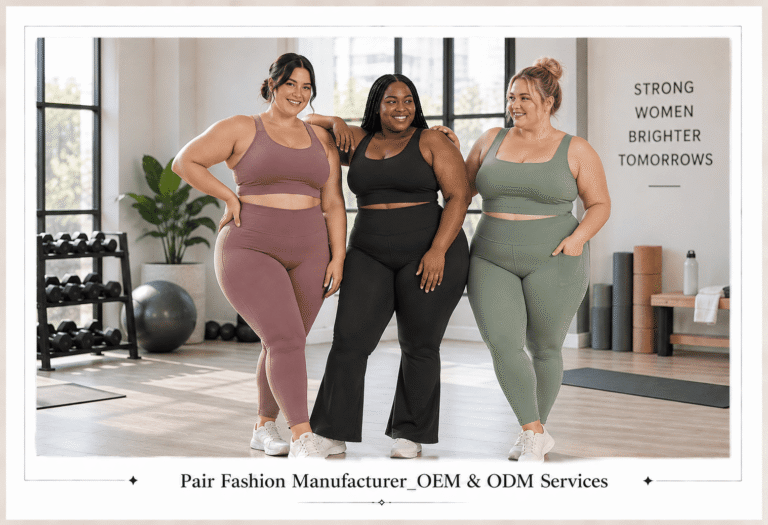
OEM/ODM Sportswear Manufacturer | 3-Day Sampling | Low MOQ | 50K Monthly Capacity | ISO9001 & BSCI Certified
Top 10 Organic Cotton Plus Size Clothing Manufacturer Choices: Supplier Evaluation Guide
Compare Organic Cotton Plus Size Clothing Manufacturer choices by production evidence, business model, scale and supplier reliability. Learn how apparel buyers investigate manufacturers, identify sourcing risks and build a qualified supplier shortlist.
Top 10 Organic Cotton Plus Size Clothing Manufacturer Choices: How Buyers Evaluate Production Capability and Supplier Reliability
Finding manufacturers is no longer the difficult part of apparel sourcing. A buyer can search for an Organic Cotton Plus Size Clothing Manufacturer and find factories, sourcing companies and private label suppliers within minutes. The difficult part is deciding which companies deserve serious investigation.
A professional shortlist should not begin with the lowest quotation or the largest factory. One supplier may have strong cotton sourcing but limited evidence of extended-size production. Another may understand plus size garments but require order quantities that do not fit a new brand. A third may publish impressive certifications and production capacity without showing whether those resources apply to the product being purchased.
The most useful way to compare Organic Cotton Plus Size Clothing Manufacturer choices is to evaluate relevant production evidence, business structure, organic cotton capability, extended-size experience, commercial fit and supplier reliability together. Published information can create an initial shortlist, but final supplier selection should depend on order-specific evidence, comparable RFQs, business verification and the manufacturer’s ability to control production consistently. Buyers should therefore use a Top 10 list as the beginning of supplier investigation—not as a substitute for it.
This distinction matters because production capability and supplier reliability are related but different. Capability answers whether a manufacturer has the resources and experience to execute the product. Reliability asks whether those resources can be converted into consistent commercial delivery when materials, quantities, deadlines or production conditions change.
The following manufacturers represent different sourcing models, production scales and geographic markets. Their differences help buyers identify which companies deserve the next step: an RFQ, evidence request, sample evaluation or factory due diligence.
1. Which Top 10 Organic Cotton Plus Size Clothing Manufacturer Choices Should Buyers Evaluate?
A useful shortlist should include manufacturers whose business models match different purchasing conditions rather than ten companies that appear similar on a search-results page. Buyers should compare location, operating history, production scale, published organic cotton capability, extended-size experience and intended customer type. The objective is to identify credible candidates and determine what still needs verification before money is committed.
Quick Manufacturer Comparison
| Manufacturer | Location | History | Manufacturing Profile | More Relevant For | Key Point to Verify |
|---|---|---|---|---|---|
| Pair Fashion | Dongguan, China | Founded 2016 | OEM/ODM and private label; specialty sizing and functional apparel | Startup and growing brands requiring development support | Order-specific organic cotton evidence and commercial conditions |
| Thygesen Textile Vietnam | Vietnam | Group history from 1931 | Structured textile and garment manufacturing | Established programs requiring formal compliance infrastructure | Extended-size experience relevant to the actual category |
| Billoomi Fashion | India | Founded 2005 | Small-batch custom apparel manufacturing | Startups and independent labels | Adult plus-size grading experience |
| Ninghow | China | Founded 1988 | Multi-category OEM/private label manufacturing | Brands sourcing several apparel categories | Project-specific organic cotton and extended-size evidence |
| ASBX | Barcelos, Portugal | European manufacturing operation | Jersey and streetwear production | European premium and streetwear brands | Technical plus-size capability beyond oversized styling |
| Akcakaya Textile | Izmir, Turkey | Founded 1995 | Knitted garment manufacturing | Organic cotton knitwear programs | Extended-size development experience |
| Organic Apparel USA | Turkey-based production | Established organic apparel supplier | Custom cotton and organic apparel | Brands prioritizing cotton-focused manufacturing | Commercial suitability across a wide size range |
| Crystal International | Hong Kong / multinational production | Founded 1970 | Large global apparel manufacturing group | Major brands and larger sourcing programs | Whether the specific business unit fits the order |
| Esquel Group | Hong Kong / China | Founded 1978 | Vertically integrated textile and apparel manufacturing | Established cotton-focused programs | MOQ and relevant extended-size capability |
| NewWay Apparel | China | Established apparel supplier | Custom apparel and published extended-size programs | Brands requiring structured plus-size sourcing | Order-specific organic cotton documentation |
The table does not mean there is one manufacturer that is the best choice for every buyer. A factory suitable for an established 10,000-piece program may not be commercially practical for a 200-piece market test. On the other hand, a flexible manufacturer may be easier for a startup to work with, but it may not have enough production scale to meet the requirements of a multinational retailer.
1. Pair Fashion — Flexible OEM/ODM for Specialty Sizing Programs
Location: Dongguan, Guangdong, China
Founded: 2016
Business Model: OEM, ODM and Private Label
Production Structure: 135 employees and 7 production lines
Development Resources: 11 pattern and sample-development staff
QC Resources: 13 QC staff
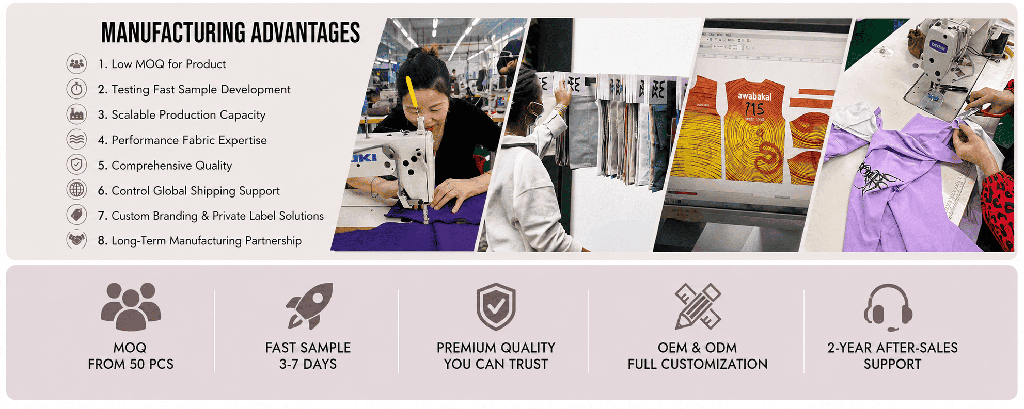
Stable Monthly Capacity: Approximately 50,000 pieces
Published Sampling: Fastest approximately 3 days; standard around 7 days
Standard Bulk Production: Approximately 20–25 working days
Core Categories: Functional activewear, plus size apparel, maternity, equestrian, yoga, fitness and selected casual sportswear
Company-Listed Certifications: ISO9001, BSCI, GRS, CE and ROHS
Pair Fashion combines relatively flexible commercial production with dedicated development and QC resources. Its company information identifies organic cotton sports fabric among its material resources and plus-size pattern development among its specialist services. The company also works with brands at different purchasing stages, from first collections to recurring production programs.
For buyers evaluating an Organic Cotton Plus Size Clothing Manufacturer, the relevant evidence is the connection between development resources and production control. Pair Fashion’s documented structure includes dedicated pattern/sample staff, QC personnel and production lines rather than positioning the business only as a garment sourcing intermediary.
More suitable for:
- Startup and growing brands requiring OEM/ODM support
- Brands that need custom rather than commodity products
- Buyers combining specialty sizing with private label requirements
- Programs expected to progress from first orders into repeat production
Potentially less suitable for:
- Buyers seeking only commodity blanks at the lowest possible unit price
- Very large standardized programs that do not require development support
- Projects whose commercial requirements fall below practical material or production minimums
Core strength: Development, production and QC can be coordinated within one manufacturing structure.
Verify before ordering: The exact organic cotton specification, documentation requirement, MOQ, color structure and production conditions should be confirmed against the actual purchase program rather than inferred from general company capabilities.
Brands that need product-development and manufacturing information can review Pair Fashion’s Organic Cotton Plus Size Clothing Manufacturer service for custom fit development, organic cotton material sourcing and private label production before requesting a project-specific quotation.
2. Thygesen Textile Vietnam — Structured Manufacturing for Larger Programs
Location: Vietnam
History: Thygesen’s wider textile history dates to 1931
Business Profile: Textile and garment manufacturing
Published MOQ: Approximately 3,000 pieces per design and 1,000 pieces per color
Published Standard Lead Time: Approximately 10–12 weeks including fabric production
Core Categories: Activewear, underwear, kidswear, medical garments and knitted apparel
Published Certification Portfolio: Includes GOTS, OCS, GRS, OEKO-TEX, ISO 9001, SA8000, WRAP and Better Work
Thygesen demonstrates why buyers should separate manufacturer capability from commercial fit. Its published certification infrastructure and textile experience may be attractive to established purchasing teams, but its order structure is substantially different from manufacturers serving small first runs.
For a buyer planning several thousand pieces, this scale may be practical. For a new brand testing three colors across an extended-size range, the same MOQ could create unnecessary inventory exposure.
More suitable for: established brands and structured sourcing programs capable of supporting larger order commitments.
Potentially less suitable for: startups testing small quantities or buyers needing highly fragmented first orders.
Core strength: substantial textile history and formal certification/compliance infrastructure.
Verify before ordering: Buyers should confirm comparable extended-size product experience. Strong organic cotton credentials do not automatically demonstrate specialist plus-size capability.
3. Billoomi Fashion — Small-Batch Custom Manufacturing
Location: India
Founded: 2005
Business Profile: Custom cut-and-sew apparel manufacturing
Published MOQ: Selected solid-color styles can start around 25 pieces per style; printed or embroidered programs generally require higher quantities
Published Sampling: Approximately 2–3 weeks
Published Production: Commonly around 6–8 weeks
Core Categories: Kidswear, infant apparel and selected womenswear
Material Positioning: Organic and other sustainable fabric options
Billoomi represents the opposite commercial model from a high-volume supplier. Smaller published minimums can make it easier for emerging brands to test products without committing heavily to inventory.
That flexibility, however, should not be confused with automatic category expertise. A buyer developing adult extended sizes should ask for evidence from comparable adult products rather than assuming that general custom-pattern capability proves specialist plus-size experience.
More suitable for: startups, independent designers and smaller brands prioritizing manageable first orders.
Potentially less suitable for: high-volume programs requiring large dedicated production capacity.
Core strength: accessible small-batch development structure.
Verify before ordering: Adult extended-size pattern and grading evidence should be confirmed separately from organic cotton sourcing capability.
4. Ninghow — Broad Chinese OEM and Private Label Production
Location: China
Founded: 1988
Business Profile: Multi-category OEM and private label apparel manufacturing
Published MOQ: Often around 100 pieces per style/color on selected programs
Published Sampling: Approximately 5–7 days on standard projects
Bulk Lead Time: Varies by product and order conditions
Core Products: T-shirts, hoodies, polos, jackets, shorts, trousers and sportswear
Material Capability: Organic cotton options are available for selected projects
Ninghow provides a broad Chinese manufacturing model rather than a narrow plus-size-only specialization. That can be useful for brands sourcing multiple product categories from one supply base.
Broad capability also creates an important due-diligence question: which part of the supplier’s general capability is relevant to this particular order?
More suitable for: brands requiring multi-category OEM/private label production in China.
Potentially less suitable for: buyers whose priority is a factory publicly dedicated to organic cotton extended-size apparel.
Core strength: broad product scope and established manufacturing history.
Verify before ordering: Confirm the organic cotton source, documentation, grading experience and actual facility responsible for the order.
5. ASBX — European Jersey and Streetwear Production
Location: Barcelos, Portugal
Business Profile: Custom jersey and streetwear manufacturing
Published MOQ: Commonly around 100 pieces per style/color; smaller quantities may involve additional cost
Published Production Lead Time: Commonly around 6–9 weeks or longer depending on the project
Core Products: T-shirts, hoodies, joggers, crewnecks and jersey products
Material Positioning: Organic cotton options, including GOTS-related material programs
ASBX gives European brands an alternative to Asian sourcing. Portugal’s textile ecosystem, geographic proximity to European markets and strong jersey manufacturing base can matter to brands whose purchasing decision is not driven by FOB price alone.
However, buyers should distinguish oversized styling from extended-size engineering. A supplier experienced in loose streetwear silhouettes is not automatically a specialist in developing a structured plus-size range.
More suitable for: European brands, premium jersey labels and streetwear programs.
Potentially less suitable for: highly price-sensitive projects or programs requiring extensive specialist extended-size evidence.
Core strength: European production combined with jersey specialization.
Verify before ordering: Request evidence that the required extended sizes have been technically developed and produced, rather than assuming that oversized products demonstrate the same capability.
6. Akcakaya Textile — Turkish Organic Cotton Knitwear Manufacturing
Location: Izmir, Turkey
Founded: 1995
Business Profile: Knitted apparel manufacturing
MOQ: Project-specific
Lead Time: Project-specific
Core Products: T-shirts, sweatshirts, hoodies, polos, tops, tracksuits, pants, joggers and sleepwear
Materials: Cotton, organic cotton and selected alternative fibres
Akcakaya’s established knitwear background makes it relevant where cotton-based knitted garments form the core of a collection. Turkey can also offer logistical and geographic advantages for European buyers.
The key evaluation question is whether the manufacturer’s organic cotton and knitwear experience extends to the exact size architecture being purchased.
More suitable for: brands sourcing organic cotton knit products, particularly for European markets.
Potentially less suitable for: buyers requiring very low published MOQ or extensive evidence of specialist extended-size development.
Core strength: established Turkish knitwear production and organic cotton material capability.
Verify before ordering: Confirm MOQ, certification requirements and comparable extended-size production evidence against the actual RFQ.
7. Organic Apparel USA — Cotton-Focused Production With Manufacturing in Turkey
Manufacturing Location: Turkey
Business Profile: Custom cotton and organic apparel
Published Preferred MOQ: Approximately 400 pieces per color/model
Published Production Lead Time: Approximately 4–6 weeks after final sample approval
Customization: Fabric, measurements, color, labels, embroidery, accessories and packaging
Despite the company name, its published manufacturing model is based in Turkey. That is a useful reminder that buyers should verify where the purchase order will actually be produced, rather than drawing conclusions from a company name, sales office or website domain.
More suitable for: brands prioritizing cotton-focused production and able to support medium-sized order quantities.
Potentially less suitable for: brands spreading a small first order across many colors and extended sizes.
Core strength: focused cotton and organic-apparel positioning.
Verify before ordering: Confirm how the MOQ works across the complete size range and whether relevant extended-size products have been commercially produced.
8. Crystal International — Large-Scale Global Apparel Manufacturing
Headquarters: Hong Kong
Founded: 1970
Business Profile: Multinational apparel manufacturing group
MOQ: Project-specific
Lead Time: Project-specific
Core Segments: Lifestyle wear, sportswear and outdoor apparel, denim, intimate apparel and sweaters
Manufacturing Model: Multi-country production network
Crystal International demonstrates the upper end of manufacturing scale. For large brands, multinational production resources and sophisticated systems may provide advantages that smaller suppliers cannot reproduce.
For smaller buyers, scale can create the opposite problem. A manufacturer may be extremely capable while its commercial structure, minimums or account priorities make a small project unsuitable.
More suitable for: established brands, large retailers and substantial recurring programs.
Potentially less suitable for: startups requiring low MOQ and intensive development support.
Core strength: manufacturing scale and broad global apparel experience.
Verify before ordering: Determine which facility or business unit would handle the project and whether its commercial conditions match the actual order.
9. Esquel Group — Vertically Integrated Cotton and Apparel Manufacturing
Headquarters: Hong Kong
Founded: 1978
Business Profile: Vertically integrated textile and apparel manufacturing
MOQ: Project-specific
Lead Time: Project-specific
Core Expertise: Cotton, yarn, fabric, garments, trims and accessories
Vertical integration can give a manufacturer greater visibility across textile and garment production. For cotton-focused programs, that can be valuable when material consistency, textile development and large-scale supply management matter.
But vertical integration answers only part of the sourcing question. It does not automatically establish commercial suitability for a small order or technical expertise in every extended-size product category.
More suitable for: established cotton-focused brands and larger sourcing programs.
Potentially less suitable for: small experimental launches requiring highly flexible commercial quantities.
Core strength: deep textile and cotton manufacturing infrastructure.
Verify before ordering: Confirm the specific organic cotton program, order requirements, MOQ and relevant plus-size experience rather than relying on group-level capability.
10. NewWay Apparel — Published Extended-Size Programs in China
Location: Zhejiang, China
Business Profile: Custom apparel manufacturing
Size Positioning: Published extended-size programs include larger size ranges
MOQ: Varies between stock-supported and custom-fabric programs
Lead Time: Project-dependent
Core Products: Custom apparel across multiple categories
Material Positioning: Sustainable and custom fabric sourcing options
NewWay provides a useful example of a supplier that publishes more detail around extended sizing than many general apparel factories. This can make the company easier to investigate during an initial desktop review.
Published size capability, however, is still only the beginning. Buyers should determine whether the manufacturer’s relevant examples use the same product type, fabric behavior and commercial size range as the proposed order.
More suitable for: brands that want a Chinese supplier with publicly stated extended-size manufacturing capability.
Potentially less suitable for: projects where published general material options are not sufficient and order-specific organic cotton documentation is mandatory.
Core strength: visible extended-size positioning and structured custom-apparel services.
Verify before ordering: Confirm the selected organic cotton fabric, required documentation, exact MOQ and evidence from comparable extended-size products.
What Should Buyers Learn From These 10 Manufacturers?
The ten manufacturers illustrate a basic sourcing reality: a stronger company on paper is not automatically a better supplier for a particular purchase order.
A large multinational manufacturer may offer sophisticated infrastructure but require a commercial program far beyond a startup’s needs. A small-batch supplier may provide attractive MOQ conditions but have less evidence from comparable extended-size products. A cotton specialist may understand textile production deeply while another supplier has stronger garment-development resources.
Before moving any Organic Cotton Plus Size Clothing Manufacturer into a serious shortlist, buyers should separate three questions:
- Capability: Does the supplier have relevant resources and experience?
- Commercial fit: Can its MOQ, order structure and operating model support this purchase?
- Reliability: Is there evidence that the supplier can repeatedly deliver what has been agreed?
Published information can answer part of the first question. It rarely answers all three.
The next stage is therefore not to rank the ten manufacturers from first to tenth. It is to determine which manufacturers deserve deeper investigation for the actual order.

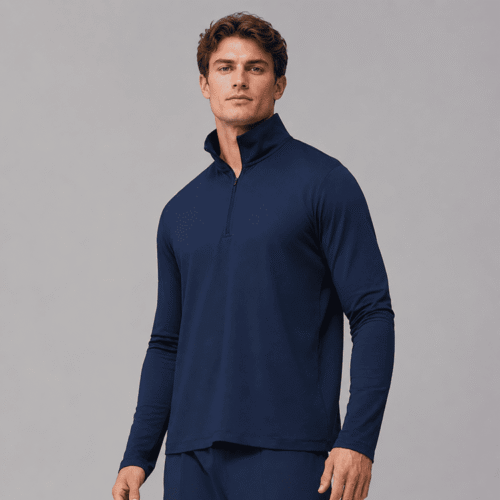
Custom Men’s Quarter Zip Sweatshirt Mock Neck Pullover OEM ODM
Custom Men’s Riding Breeches Knee Grip Equestrian Pants OEM ODM
Custom Men’s Sleeveless Zip Up Hoodie Gym Training Vest OEM ODM
Custom Men’s Track Jacket Full Zip Athletic Sweatshirt OEM ODM
Custom Men’s Wide Leg Sweatpants OEM ODM Relaxed Fit Lounge Pants
Custom Men’s Workout Training Top Quarter Zip Long Sleeve Shirt OEM ODM
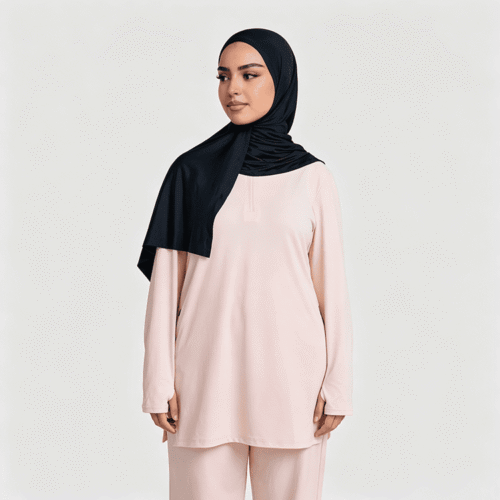
Custom Modest Activewear Set OEM ODM Muslim Sportswear Outfit
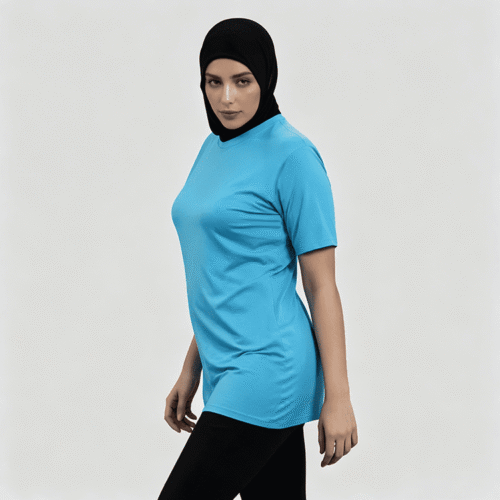
Custom Modest Activewear T-Shirt OEM ODM Muslim Sportswear Top
Why Do Buyers Consider Chinese Manufacturers for Organic Cotton Plus Size Clothing?
Buyers consider China because one sourcing project may need fabric sourcing, extended-size development, custom manufacturing, labels, packaging and repeat production to work together. China has a strong and complete apparel supply chain, but this does not mean every supplier in China is suitable. The real advantage is when the manufacturer’s product experience, commercial conditions, material resources and production capability can match the actual needs of the order.
For an Organic Cotton Plus Size Clothing Manufacturer, country of origin is only one part of the sourcing decision. Buyers are not purchasing “China” as a product. They are purchasing a defined combination of fabric, sizing, workmanship, customization, quantity, delivery conditions and manufacturing control.
This distinction matters because two Chinese suppliers can operate very differently. One may focus on low-volume private label programs, another on large export orders, and another may have strong general garment capacity but limited evidence from extended-size products. The depth of China’s supply chain creates more choices; it does not make those choices equal.
Why Can China Be Practical When One Order Requires Several Capabilities?
Organic cotton plus size clothing brings together requirements that are often evaluated separately.
A buyer may need:
- organic cotton fabric sourcing and documentation
- relevant extended-size production experience
- custom colors or fabric specifications
- labels, hangtags and packaging
- printing or embroidery
- commercially workable MOQ
- export packing and international logistics
- repeat-production support
China’s manufacturing ecosystem can be useful because many of these activities can be coordinated within established apparel-production clusters.
For the buyer, the practical value is not simply that more suppliers exist. It is that fabric mills, dyeing operations, trim suppliers, printing and embroidery providers, packaging suppliers and garment factories can often operate within connected regional supply networks.
For brands using integrated apparel manufacturing services, this can reduce the number of unrelated suppliers that need to be managed across development, materials, customization and production.
It can also create a risk.
A manufacturer may outsource some production processes, but it may present the supply chain as if all processes are completed inside its own factory. Buyers should therefore confirm which processes are done in-house, which processes are subcontracted, and who will take responsibility if a problem happens during an outsourced process.
Supply-chain depth is valuable only when responsibility is clear.
China vs USA, Europe, Turkey, India and Vietnam: What Actually Changes?
There is no sourcing country that is automatically better for every organic cotton plus size project.
The more useful comparison is to ask what changes when production moves from one sourcing market to another.
| Sourcing Market | Potential Buyer Advantage | Issue to Evaluate |
|---|---|---|
| China | Broad supplier base, material sourcing, trims, customization and scalable apparel infrastructure | Supplier variation is significant; capability must be verified factory by factory |
| USA | Market proximity for US brands, easier communication and potentially shorter domestic transport | Manufacturing cost and available production capacity may differ substantially by category |
| Portugal / Europe | Proximity to European brands, established premium jersey/textile clusters and European manufacturing positioning | Unit cost and available capacity may not suit every price point |
| Turkey | Strong cotton and knitwear ecosystem with good access to European markets | MOQ, specialization and certification scope remain supplier-specific |
| India | Deep cotton supply base and options ranging from artisan production to larger factories | Quality systems, production scale and lead times vary significantly between suppliers |
| Vietnam | Strong export garment industry and established manufacturing infrastructure | Some programs may require higher commercial volumes or rely on imported materials |
These are sourcing characteristics, not guarantees.
A local manufacturer is not automatically faster if the required fabric must be imported. A Chinese manufacturer is not automatically cheaper if the order is extremely small, highly customized and shipped by expensive air freight. A European factory is not automatically more sustainable simply because production occurs in Europe.
Buyers should therefore compare total sourcing conditions, not country labels.
Which Type of Brand Can Benefit From a Chinese Manufacturer?
China can be particularly practical when a brand needs several manufacturing functions to come together under one sourcing program.
A startup may value access to a manufacturer that can work from incomplete early-stage product information and coordinate several suppliers around one finished garment.
A growing brand may have a different requirement. It may already have approved products and now need additional colors, broader sizing, more predictable replenishment and stronger production control.
An established buyer may care less about development support and more about capacity, compliance, repeatability, delivery performance and supply-chain risk.
This means the same Organic Cotton Plus Size Clothing Manufacturer may not be equally suitable at every stage of a brand’s growth.
A useful supplier should fit the current commercial stage of the order, not an imagined future order that may never happen.
When Does China Make More Sense for a Startup?
China can make sense for a startup when the first order requires custom development and supply-chain coordination, but the buyer should be careful about interpreting “low MOQ.”
A factory may advertise a manageable total MOQ while fabric suppliers impose separate minimums for custom dyeing. A brand may be able to order 100 garments but still face a fabric commitment that makes three custom colors impractical.
Extended sizing can make the calculation more complicated because the total quantity is distributed across more SKUs.
For example, a 200-piece order may sound reasonable until it becomes:
2 styles × 2 colors × 5 sizes = 20 SKUs
That averages only ten garments per SKU before the buyer adjusts the size ratio.
The useful question is therefore not:
“Which factory has the lowest MOQ?”
It is:
“Which supplier can support an order structure that makes commercial sense for the way I intend to test the market?”
For brands that need deeper information about product development rather than supplier comparison, Pair Fashion’s custom organic cotton plus size clothing manufacturing service covers the development-to-production process separately.
When Does China Make More Sense for a Growing Brand?
A growing brand usually has better information than a startup.
It may know which silhouettes sell, which colors move slowly, which sizes require more inventory and how frequently successful products need to be reordered.
At this stage, manufacturing value begins to shift from “Can you make it?” toward “Can you keep supplying it?”
A growing brand may therefore evaluate a Chinese manufacturer around:
- available production capacity during peak periods
- material continuity
- repeat-order records
- change control
- production communication
- quality issue response
- shipping coordination
- the ability to add related styles without rebuilding the supply chain
This is where supplier reliability becomes more important than an attractive first quotation.
A manufacturer that performs well on one sample but struggles to control materials or delivery across repeated orders can become expensive very quickly.
Why Can Established Buyers Use Different Selection Criteria?
Established brands and retailers often approach sourcing from the opposite direction.
Their main risk may not be whether a manufacturer can produce 300 pieces. It may be whether the supplier can handle larger forecasts, compliance requirements, repeat orders, seasonal deadlines and production visibility without creating disruptions.
A large manufacturer can become more attractive at this stage because the buyer can actually use its capacity and systems.
However, large scale should still not be confused with category expertise.
If a project involves a technically demanding extended-size product, a buyer should establish whether the factory has relevant production history instead of assuming that a large workforce can solve every fit or construction problem.
Capacity answers “how much can you make?”
Relevant experience answers “have you successfully made something sufficiently similar?”
The buyer needs both questions answered when both risks matter.
Why Should Buyers Compare Total Sourcing Conditions Instead of Factory Price?
A unit quotation is only one part of the commercial decision.
Suppose Supplier A quotes $8.40 per piece, while Supplier B quotes $9.10.
Supplier A appears cheaper.
But imagine that Supplier A requires 500 pieces per color, while Supplier B accepts a smaller initial commitment with mixed sizes. Supplier A also requires the buyer to pay separately for testing and custom packaging, while Supplier B’s quotation includes some of those requirements.
The lower unit price may create a much larger cash and inventory commitment.
This does not mean Supplier B is automatically the better choice. It means the original $8.40 vs $9.10 comparison was incomplete.
For an Organic Cotton Plus Size Clothing Manufacturer, buyers should understand at least:
MOQ basis + fabric specification + size range + customization + packaging + testing + payment terms + freight responsibility + lead time
before treating two quotations as comparable.
The best commercial condition depends on what the buyer is trying to accomplish.
What Risks Should Buyers Include When Evaluating a China-Based Supplier?
China offers manufacturing depth, but buyers should not turn that advantage into an assumption of reliability.
The most important risks are usually practical rather than dramatic.
Supplier identity risk: The company communicating with the buyer may not be the facility producing the garments.
Material risk: A supplier may offer “organic cotton” without providing evidence that clearly relates to the material being purchased.
Subcontracting risk: Printing, embroidery, washing or other processes may be outsourced without sufficient control.
Commercial risk: MOQ may change when the buyer confirms custom fabric, custom color or a wider SKU structure.
Capacity risk: Published monthly capacity does not prove that production space will be available during the buyer’s required delivery window.
Communication risk: Fast sales responses before payment do not prove that production problems will be communicated clearly after the order begins.
Continuity risk: The first order may use one fabric or subcontractor while later orders use another.
None of these risks is unique to China. They can occur in any sourcing market.
The reason to identify them is not to discourage overseas manufacturing. It is to replace assumptions with specific verification questions.
A buyer comparing an Organic Cotton Plus Size Clothing Manufacturer in China with suppliers in other countries should therefore avoid asking only, “Which country is better?”
A more useful question is:
“Which sourcing structure gives this order the strongest combination of relevant capability, commercial fit, verifiable evidence and manageable risk?”
That question leads naturally to the next stage of supplier selection: determining what production evidence a manufacturer should be able to provide before it enters the final shortlist.
What Evidence Shows That a Manufacturer Has Relevant Production Capability?
Relevant production capability should be demonstrated through evidence connected to products similar to the buyer’s actual order. A manufacturer may have a large factory, organic cotton access and years of apparel experience without having produced comparable extended-size garments. Buyers should examine previous product categories, sizing experience, material documentation, development resources, production processes and capacity before deciding whether a supplier deserves deeper evaluation.
The key word is relevant.
A factory making millions of basic cotton T-shirts may have impressive cutting and sewing capacity, but that does not automatically prove experience with a structured plus size collection. Likewise, a supplier that has produced extended sizes in conventional polyester does not automatically prove that it understands the sourcing and documentation requirements of an organic cotton program.
When evaluating an Organic Cotton Plus Size Clothing Manufacturer, buyers should therefore move from general claims toward increasingly specific evidence.
A useful sequence is:
Claim → Document → Comparable Product → Production Evidence → Order-Specific Confirmation
The closer the evidence gets to the actual product being purchased, the more useful it becomes.
What Has the Manufacturer Actually Produced in a Comparable Product Category?
Start with the manufacturer’s production history, but do not stop at a photo gallery.
A supplier may display T-shirts, sweatshirts, leggings, dresses and activewear on the same website. That shows breadth, but it does not tell you how often each category is produced, at what scale or for which size ranges.
Ask for evidence that is commercially and technically comparable to your project.
For example, if you are sourcing an organic cotton plus size sweatshirt collection, evidence from a basic standard-size cotton T-shirt answers only part of the question. More useful examples would involve:
- a similar garment type
- a comparable fabric construction and weight
- an extended commercial size range
- similar sewing or finishing requirements
- comparable branding or customization
- previous bulk production rather than only a development sample
Buyer confidentiality may prevent a factory from showing brand names or complete order documents. That is reasonable. A manufacturer can still provide anonymized examples, production photos, measurement formats, fabric records or other evidence without exposing another customer’s confidential information.
The objective is not to collect attractive pictures.
It is to understand whether the factory has solved similar manufacturing problems before.
Does a Published Size Range Prove Plus Size Manufacturing Experience?
No. A published size range is useful information, but it is not sufficient evidence by itself.
A supplier can add “XS–6XL” to a product page more easily than it can demonstrate successful commercial production across that range.
For an Organic Cotton Plus Size Clothing Manufacturer, buyers should ask what sits behind the published sizes.
Useful questions include:
- Which extended sizes have actually entered bulk production?
- Are the larger sizes based on established grade rules?
- Has the supplier produced the same product category in those sizes?
- Are measurement records available from previous extended-size programs?
- Has the factory handled size sets or multi-size production checks?
- How are larger sizes controlled during cutting, sewing and measurement inspection?
The point is not to demand one universal grading method.
Different brands use different fit blocks, customer profiles and measurement standards. A US plus size range may not follow the same proportions as a European or Australian range, and even two brands selling in the same country may define the same size label differently.
The more useful evidence is whether the manufacturer understands that a size label is not a technical specification.
A buyer should therefore be cautious when a supplier answers detailed sizing questions only with:
“No problem, we can make any size.”
Flexibility is useful. Evidence is better.
Does Organic Cotton Capability Apply to the Actual Material Program?
“Organic cotton available” is another statement that needs context.
There are several different possibilities behind the claim.
A manufacturer may regularly purchase certified organic cotton fabrics from established mills. Another may be able to source organic cotton only when a customer requests it. A third may use the phrase broadly while providing limited traceability for the material offered.
These situations should not be treated as equivalent.
When organic cotton is commercially important to the collection, buyers should ask the manufacturer to connect the claim to the actual fabric under quotation.
Depending on the brand’s requirements, useful information may include:
- fabric supplier identity
- fibre composition
- fabric construction
- fabric weight
- relevant material certification or transaction documentation
- certificate holder and scope
- validity information
- whether the quoted material is stock-supported or made to order
- whether changing the fabric changes MOQ or lead time
The purpose is not to collect certification logos.
It is to determine whether the evidence follows the supply chain closely enough to support the claim being made about the product.
A manufacturer having one environmental certification does not automatically mean that every organic cotton fabric it offers carries the same certification.
Likewise, GRS and organic cotton certification are not interchangeable concepts. Buyers should understand what a document actually covers before treating it as evidence for a different material claim.
Factory Certification vs Fabric Certification vs Order Evidence
These three categories are frequently mixed together during supplier evaluation.
They answer different questions.
| Evidence Type | What It Can Help Demonstrate | What It Does Not Automatically Prove |
|---|---|---|
| Factory / Management Certification | A management system, audit scope or facility-related standard | That a particular fabric is certified organic |
| Social Compliance Audit | Working-condition or social-compliance information within the audit scope | Product quality or organic cotton content |
| Material Certification | Certain fibre, content, processing or chain-of-custody requirements within its defined scope | That every product made by the factory uses that material |
| Test Report | Results for the tested sample and specified test methods | Performance of every future production lot |
| Approved Sample | Agreed appearance, fit, construction or other product details | That bulk production will automatically reproduce it |
| Purchase-Order Evidence | Specifications and requirements agreed for a particular order | Long-term supplier reliability across future orders |
A sophisticated-looking certificate folder can create confidence very quickly.
But a buyer should ask a simple question:
“What exactly does this document prove about my order?”
If the answer is unclear, the document may still be useful, but it should not be given more meaning than it actually carries.
This is particularly important when evaluating sustainability claims because a factory, fabric mill, yarn supplier and garment exporter may be different legal entities.
Factory Size vs Relevant Product Experience: Which Matters More?
Neither should automatically dominate the decision.
Factory size answers questions about resources and potential capacity. Relevant product experience answers questions about familiarity with the manufacturing problem.
Consider two hypothetical suppliers.
Supplier A
- 800 workers
- very high monthly capacity
- extensive basic cotton apparel production
- little evidence from extended-size custom programs
Supplier B
- 120 workers
- lower monthly capacity
- regular extended-size production
- dedicated pattern and sample resources
- sufficient capacity for the buyer’s 1,500-piece order
Supplier A is clearly larger.
That does not make Supplier B better. It also does not make Supplier A better.
The buyer first needs to decide which risk is more important.
If the order requires 100,000 pieces under a demanding seasonal schedule, Supplier B’s category experience may not compensate for insufficient capacity.
If the order is 1,500 pieces but requires difficult extended-size fitting and several development stages, unused factory capacity at Supplier A may provide little value.
The correct comparison is therefore:
Does the manufacturer have enough scale for the order and enough relevant experience for the product?
Both thresholds matter.
What Do Development Resources Tell Buyers?
Pattern rooms, sample teams and technical staff can provide useful evidence, particularly for custom products.
However, headcount alone should not be treated as proof of performance.
A factory may employ many sample workers while relying on the buyer to provide production-ready patterns. Another may have a smaller team but strong technical capability in converting specifications into manufacturable garments.
Buyers should investigate what the development resources actually do.
Questions may include:
- Does the manufacturer develop patterns internally?
- Who reviews measurement specifications?
- Who controls grading?
- Are patterns archived after approval?
- Are sample comments recorded between revisions?
- Can the technical team communicate directly when a fit issue becomes difficult?
- Does the factory retain approved product references for later production?
These questions reveal the system behind the sample, particularly when buyers are evaluating the technical resources behind custom plus size activewear development, rather than simply how quickly one garment can be made.
For brands that still need hands-on product development rather than supplier evaluation, Pair Fashion’s organic cotton plus size apparel development service explains the custom development process separately.
How Should Buyers Evaluate Production Capacity?
A monthly production number is useful only when buyers understand what is behind it.
Suppose a manufacturer publishes a capacity of 100,000 pieces per month.
That number immediately creates more questions:
100,000 pieces of what?
A factory can produce basic T-shirts faster than complex jackets. A production line running one repeated style can achieve different output from a line switching between many small custom orders.
Buyers should also ask whether the published number refers to:
- maximum theoretical capacity
- normal stable output
- all factories in the group
- one facility
- in-house sewing only
- production that includes subcontractors
Most importantly:
How much capacity is actually available during the buyer’s production window?
A factory capable of making 100,000 pieces per month may already have 95% of its lines allocated during peak season.
For a buyer, available capacity is more relevant than headline capacity.
This is especially important when an Organic Cotton Plus Size Clothing Manufacturer is being evaluated for seasonal launches or replenishment programs with fixed delivery dates.
Who Controls Processes That Are Not Completed In-House?
Very few apparel manufacturers need to own every machine involved in every order.
Specialist printing, embroidery, dyeing, washing, fabric finishing and packaging may be handled by external partners. Outsourcing itself is not proof of weak manufacturing.
The important issue is control.
Buyers should ask:
- Which processes are subcontracted?
- Are subcontractors approved before use?
- Who checks incoming work from those suppliers?
- Can subcontractors be changed without buyer approval?
- Who is responsible when outsourced workmanship fails?
- Are outsourced lead times included in the production schedule?
- Does the manufacturer’s QC process cover externally completed operations?
Imagine that a factory sews the garments correctly, but an external printer applies the wrong logo color to 600 pieces.
From the buyer’s perspective, it does not matter that the sewing factory technically completed its own process correctly.
The purchase order still has a problem.
A reliable supplier should therefore manage subcontracted processes as part of the overall manufacturing responsibility rather than treating them as somebody else’s problem.
How Can Buyers Separate Documented Capability From Sales Claims?
A simple evidence hierarchy can make supplier evaluation more disciplined.
| Level | Example | Buyer Interpretation |
|---|---|---|
| 1. Marketing Claim | “We specialize in plus size organic cotton clothing.” | Useful for discovery, but unverified |
| 2. General Company Evidence | Factory photos, equipment list, company history, certification list | Shows broader operating capability |
| 3. Relevant Category Evidence | Comparable garments, extended-size records, relevant material programs | Stronger indication of product capability |
| 4. Project-Specific Evidence | Quoted fabric, sample, specifications, confirmed MOQ and production plan | Directly relevant to the proposed order |
| 5. Production Evidence | PP approval, inspection records, production updates and final QC | Shows whether agreed requirements are being executed |
| 6. Repeat-Order Evidence | Consistent later production under controlled specifications | Stronger evidence of long-term reliability |
This framework prevents buyers from giving the same weight to every piece of information.
A polished website belongs near the beginning of the process.
A successful repeat order belongs much later.
Both can influence confidence, but they do not prove the same thing.
Before an Organic Cotton Plus Size Clothing Manufacturer moves from an initial shortlist into serious commercial consideration, the buyer should be able to connect its most important claims to evidence relevant to the proposed order.
The goal is not to create an investigation so complicated that no supplier can pass it.
The goal is to spend verification effort where a failure would cost the most.
For a simple low-volume product, the required evidence may be relatively light. For a large order involving custom organic cotton, an extended-size range, strict delivery dates and retailer compliance requirements, the verification threshold should be higher.
Supplier evaluation should be proportional to order risk.
That principle creates a better shortlist than choosing manufacturers because they have the largest factory, the longest certification list or the most attractive sample room.
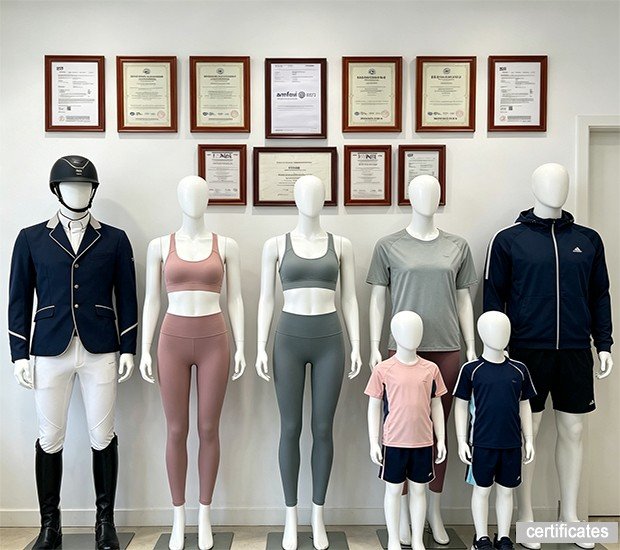
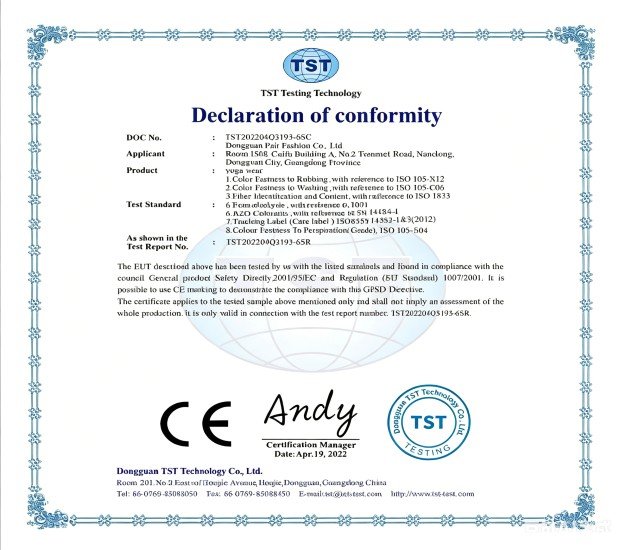
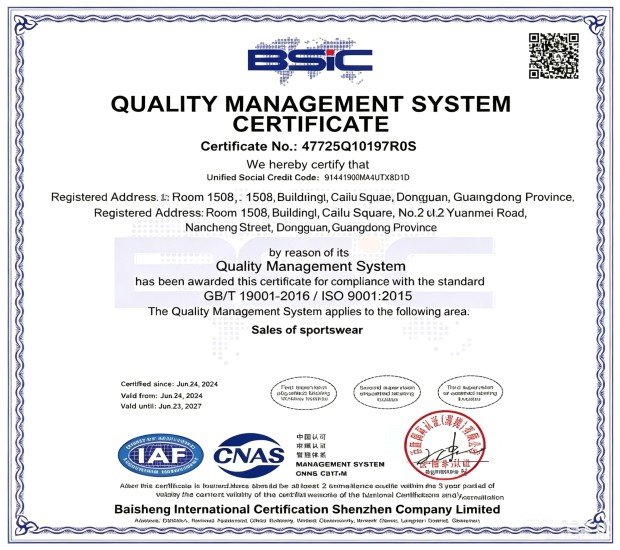
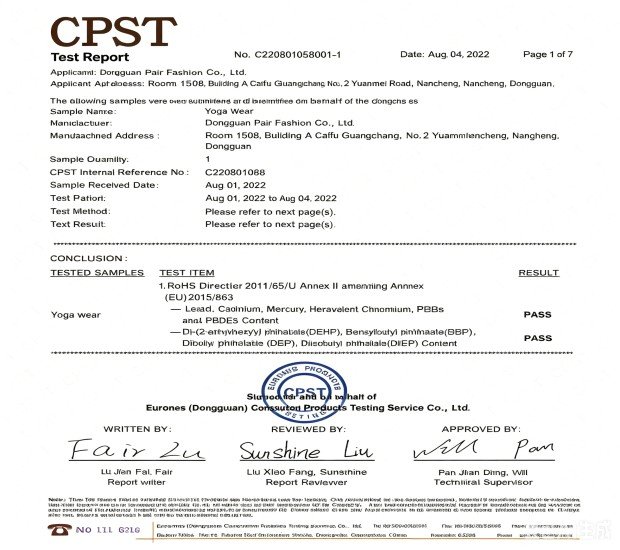
Trusted Manufacturing Standards For Global Sportswear Brands
We operate under internationally recognized quality, sustainability, and ethical manufacturing standards. Our certifications help ensure consistent product quality, responsible sourcing, and reliable production for global sportswear brands.
- 20+ Countries Served
- 6000+ Styles Developed
- 50,000 PCS Monthly Capacity
- 3-Day Sample Development
How Do Buyers Evaluate Supplier Reliability Beyond Price, MOQ and a Good Sample?
Supplier reliability is the ability to deliver agreed requirements consistently when real production conditions change. Price, MOQ and a successful sample are useful screening information, but they do not show how a manufacturer manages deadlines, material changes, production pressure, quality problems or repeat orders. Buyers should evaluate communication, business history, production planning, compliance evidence, corrective action and after-sales responsibility before treating a supplier as reliable.
An Organic Cotton Plus Size Clothing Manufacturer can make an excellent first impression. The quotation arrives quickly, the salesperson answers every message, the MOQ looks manageable and the first sample is attractive.
None of these things is meaningless.
They simply answer different questions from the one that matters during bulk production:
What happens when something does not go according to plan?
A fabric may arrive late. A dye lot may differ from the approved reference. A subcontracted process may fail inspection. A production line may become overloaded. A measurement problem may appear during in-line inspection.
Reliable suppliers are not manufacturers that never encounter problems. Apparel production has too many variables for that standard to be realistic.
Reliable suppliers are manufacturers that identify problems early, communicate them clearly, control corrective action and protect the agreed product standard as far as commercially possible.
Why Does a Low Price Tell Buyers Very Little About Supplier Reliability?
A quotation shows what a supplier is prepared to charge under a defined set of assumptions.
It does not show how well the supplier will execute the order.
Consider three quotations for the same garment:
| Supplier | Quoted Unit Price | What the Buyer Still Needs to Understand |
|---|---|---|
| Supplier A | $8.20 | Does the price use the requested fabric and specifications? |
| Supplier B | $8.75 | What inspection, packaging and customization are included? |
| Supplier C | $9.10 | Does the higher price reflect different material or production conditions? |
The lowest number may be genuinely competitive.
It may also come from a different fabric weight, simpler construction, different packaging, a higher hidden material minimum or assumptions that were never made clear in the RFQ.
This is why price comparison becomes meaningful only after commercial normalization.
Buyers should compare quotations against substantially the same:
- product specification
- fabric composition and construction
- fabric weight where relevant
- color requirements
- size range
- branding method
- trims
- packaging
- quantity structure
- testing requirements
- delivery term
A low price is not a supplier weakness.
An unclear low price is a reason to ask more questions.
What Does Communication Quality Reveal Before an Order Is Placed?
Communication before production can reveal how a supplier handles information.
The fastest reply is not necessarily the best reply.
A salesperson answering “yes, no problem” within five minutes may be less useful than a supplier that takes several hours to check with its technical or production team and returns with specific questions.
Good pre-order communication often includes clarification.
For example:
Buyer: “Can you make 300 pieces in organic cotton, sizes XL–6XL, three colors?”
A useful supplier may ask:
- Is 300 pieces the total quantity or quantity per color?
- Is the organic cotton certification requirement mandatory?
- Is the fabric stock-supported or custom developed?
- Do you already have measurement specifications?
- How will the 300 pieces be divided between sizes?
- Is there a fixed launch date?
- What branding and packaging are required?
These questions may make the sales conversation slightly slower.
They can also prevent much more expensive misunderstandings later.
When evaluating an Organic Cotton Plus Size Clothing Manufacturer, buyers should therefore look for clarity, relevant questions and written confirmation, not only response speed.
How Should Buyers Review Business History and Export Experience?
Operating history can provide useful context, but it should not become a shortcut for supplier selection.
A manufacturer operating for 20 years may have survived multiple market cycles, developed stable supply relationships and accumulated significant production experience.
A younger manufacturer may have newer equipment, a more responsive structure or stronger specialization in a newer product category.
The number of years alone does not decide the question.
Buyers should investigate:
Legal history: How long has the current legal entity operated?
Manufacturing history: How long has the actual facility produced garments?
Category history: How long has the company worked with products similar to the proposed order?
Export history: Which markets does it regularly serve?
Customer profile: Does it mainly serve wholesalers, established brands, startups or large retailers?
Order profile: Is the factory accustomed to the quantity and complexity being requested?
This matters because a factory can have a long history while the department handling your product category is relatively new.
Likewise, “20 years of export experience” does not automatically mean 20 years of experience manufacturing organic cotton plus size apparel.
Business history provides context.
Relevant history provides stronger evidence.
What Can Customer References Tell Buyers?
References can help, but buyers should interpret them carefully.
A manufacturer is naturally more likely to provide customers with whom it has a good relationship. References therefore provide a selected view of supplier performance.
They can still be useful.
Where confidentiality allows, buyers may ask existing or previous customers about:
- whether delivery dates were generally realistic
- how production problems were communicated
- whether bulk quality matched approved requirements
- how claims or defects were handled
- whether later orders remained consistent
- whether the supplier changed materials without approval
- whether communication changed after payment
The most useful question is rarely:
“Is this a good factory?”
A better question is:
“What happens when an order has a problem?”
That answer often tells you more about supplier reliability than general praise.
What Can Factory Audits, Certifications and Third-Party Reports Prove?
Audits and certifications can reduce uncertainty, but each document has a defined scope.
An audit may provide evidence about a facility, management system, social-compliance condition or process at a particular time.
It does not prove that every future order will be delivered correctly.
Likewise, an ISO 9001 certificate can provide information about a quality-management framework within its scope, while a social-compliance audit addresses different issues. Organic textile certifications address another set of requirements.
Buyers should therefore ask:
- Which legal entity appears on the document?
- Which facility does it cover?
- What is the certification or audit scope?
- Is it currently valid?
- Which organization issued it?
- Can the certificate be independently verified?
- Does it relate to the factory, material, process or finished product?
- Is that scope relevant to the proposed purchase order?
An impressive folder containing ten certificates is not automatically stronger evidence than three documents that clearly apply to the actual sourcing program.
Document relevance matters more than document quantity.
How Should Buyers Evaluate On-Time Delivery?
A supplier saying “our lead time is 25 days” does not tell the buyer enough.
First, buyers need to know when the clock starts.
Is lead time counted from:
- purchase-order confirmation?
- deposit payment?
- fabric arrival?
- final artwork approval?
- PP sample approval?
- all materials being ready?
These dates can be weeks apart.
A useful delivery discussion separates the major stages instead of reducing the entire order to one number.
For example:
| Stage | Buyer Should Confirm |
|---|---|
| Material Preparation | Is the fabric available or made to order? |
| Pre-Production Approval | What must be approved before bulk starts? |
| Production Booking | When is line capacity reserved? |
| Bulk Production | What is the planned production window? |
| Final Inspection | How much time is reserved for inspection and correction? |
| Packing / Dispatch | When will finished goods actually be ready to leave? |
This becomes particularly important during peak seasons.
A manufacturer may normally complete an order within 25 working days, but it may need more time when its production capacity is heavily booked.
A reliable supplier should tell the buyer about this situation before the purchase order is confirmed, instead of first promising the buyer’s expected delivery date and explaining the capacity problem later.
What Happens When Materials or Production Conditions Change?
This is one of the clearest ways to check whether a supplier is reliable.
For example, the approved organic cotton fabric may become unavailable when the buyer is ready to place a reorder.
There are several possible responses.
A weak supplier may substitute a visually similar fabric and continue production without clear approval.
Another supplier may tell the buyer that the original fabric is unavailable but provide only one replacement and pressure the buyer to accept it quickly.
A more controlled process would identify the change, explain why it occurred, provide replacement information and obtain approval before the changed material enters production.
The same principle applies to:
- fabric mills
- dye lots
- trims
- labels
- printing methods
- subcontractors
- packaging
- production locations
For an Organic Cotton Plus Size Clothing Manufacturer, uncontrolled material substitution can affect more than appearance. It may change hand feel, shrinkage, recovery, garment measurements, certification status, cost or delivery.
Change itself is not always avoidable.
Uncontrolled change is the larger risk.
How Can Buyers Evaluate Production Planning Before the Order Starts?
Buyers do not need access to every internal production document, but they should understand whether the manufacturer has a realistic path from approval to shipment.
Useful questions include:
- When will fabric be ordered?
- When will trims be confirmed?
- When is production capacity reserved?
- What must happen before cutting begins?
- When will the first production pieces be checked?
- At what stages are measurements inspected?
- Who can stop production if a serious issue appears?
- When is final inspection scheduled?
- Is correction time included before shipment?
A supplier that cannot answer every date before receiving an order is not automatically unreliable.
Some dates depend on final quantities and material confirmation.
The more important signal is whether the supplier understands the dependencies between stages instead of treating lead time as one unexplained number.
What Should Happen When Quality Problems Appear?
The first question should not be whether a factory has ever had a quality problem.
A more realistic question is how it responds when one occurs.
A useful corrective-action process should answer:
What happened?
Define the defect clearly.
Where did it happen?
Identify the affected process, material or production stage.
How much is affected?
Separate isolated defects from systematic problems.
Why did it happen?
Investigate the cause rather than only repairing visible defects.
What will happen to the affected goods?
Rework, replacement, sorting, acceptance or another agreed solution.
How will recurrence be reduced?
Change the process, instruction, inspection point or control method where appropriate.
This distinction matters because simply replacing ten defective garments may solve the immediate shipment problem without solving the manufacturing problem that created them.
Corrective action should close the loop.
What Type of After-Sales Response Should Buyers Discuss Before the Purchase Order?
After-sales terms are easiest to discuss before there is a claim.
Once defective goods have arrived in another country, both parties have money, deadlines and customer relationships at risk. Negotiation becomes harder.
Before ordering, buyers should clarify:
- how quality claims should be reported
- what evidence is required
- how quickly the supplier should respond
- how defective quantity will be determined
- whether rework is possible
- how replacements are handled
- whether compensation or credit may apply where appropriate
- how responsibility is determined when damage may involve transport or third parties
The objective is not to demand that the manufacturer accept unlimited responsibility.
It is to establish a reasonable process before emotions and commercial pressure become involved.
A reliable Organic Cotton Plus Size Clothing Manufacturer should be willing to discuss how legitimate problems are investigated instead of treating after-sales responsibility as a subject that begins only after shipment.
What Does Supplier Reliability Look Like in Practice?
Reliability becomes easier to evaluate when buyers stop treating it as an abstract reputation score.
A practical supplier-reliability review can focus on six areas:
| Reliability Area | Useful Evidence |
|---|---|
| Communication | Clear answers, written confirmations, early escalation of problems |
| Production Planning | Realistic timelines, capacity awareness, stage-by-stage scheduling |
| Material Control | Approved specifications and controlled substitution |
| Quality Response | Inspection records, root-cause investigation and corrective action |
| Commercial Transparency | Clear MOQ, quotation assumptions, payment and delivery conditions |
| After-Sales Responsibility | Defined claim process and reasonable problem resolution |
No single row proves that a supplier is reliable.
Together, they create a much stronger picture than price, MOQ or one attractive sample.
The deeper principle is simple:
Supplier reliability becomes visible when something changes.
When fabric is late, does the supplier tell you?
When measurements begin moving outside tolerance, does the factory identify the issue during production or wait for final inspection?
When a subcontractor makes a mistake, does the manufacturer take control or pass responsibility elsewhere?
When a reorder cannot reproduce the original material exactly, does the supplier ask for approval before changing it?
These situations reveal how the business actually operates.
A buyer evaluating an Organic Cotton Plus Size Clothing Manufacturer should therefore look beyond whether the supplier can make one acceptable garment. The stronger question is whether the supplier has a system for keeping an agreed product commercially repeatable when normal manufacturing variables begin to appear.
That is the difference between finding a factory and building a dependable supply relationship.
Why Can Supplier Reliability Change Between the First Order and Reorders?
A successful first order does not guarantee that later production will remain identical. Fabrics can be discontinued, dye lots can change, trims may come from different suppliers, subcontractors can be replaced and factory capacity can shift between seasons. Buyers should therefore evaluate whether a manufacturer controls specifications, records approved materials and construction, communicates changes and investigates quality problems across repeated orders.
The first successful order is an important milestone, but it proves performance under one set of production conditions.
The second order may look identical on the purchase order while being manufactured under slightly different conditions.
The original fabric lot may no longer exist. A zipper supplier may change. The original sewing line may be busy. The dye house may adjust a process. A new operator may interpret a construction detail differently. Production may move from a quiet month into peak season.
For an Organic Cotton Plus Size Clothing Manufacturer, long-term reliability therefore depends on more than remembering what was produced last time.
The manufacturer needs a practical way to identify what must remain locked, what has changed and what requires buyer approval before the reorder proceeds.
Why Is One Successful Sample or Order Not Enough to Prove Long-Term Reliability?
A successful sample proves that an acceptable product can be made.
A successful first bulk order provides stronger evidence because the manufacturer has demonstrated that the product can move from an approved reference into commercial production.
Neither proves unlimited repeatability.
Suppose the first order contains 500 garments made from one approved organic cotton fabric lot.
The factory produces them correctly, inspection passes and customers respond well.
Six months later, the buyer orders another 1,500 pieces.
The style number is the same.
But several production inputs may have changed:
- the original fabric lot is finished
- the mill has produced a new dye lot
- sewing operators have changed
- the order quantity is larger
- the size ratio is different
- production is scheduled during a busier season
- one trim is no longer available
From a sales perspective, this is a reorder.
From a manufacturing perspective, it is a new production event that needs to reproduce an existing approved standard.
That difference explains why repeatability should be controlled rather than assumed.
How Can Material Substitution Create Problems in Later Production?
Material substitution is one of the most common areas where an apparently simple reorder can change.
Imagine that the original fabric was:
95% organic cotton / 5% elastane, 240 GSM
The original fabric is unavailable when the reorder begins.
A supplier finds another fabric with the same fibre composition and similar weight.
On paper, the replacement appears equivalent.
In practice, it may have different:
- stretch
- recovery
- shrinkage
- hand feel
- surface appearance
- width
- color absorption
- dimensional stability
Those differences can affect the finished garment.
For extended-size clothing, a change in fabric behavior may become more noticeable because the garment works across larger body measurements and different stress areas.
The correct response is not to assume that every replacement fabric is unacceptable.
It is to recognize that same composition does not always mean same performance.
If a material change can affect an approved product, the buyer should know about it before bulk production.
What Happens When the Original Fabric, Dye Lot, Trim or Subcontractor Changes?
Not every supply-chain change deserves the same level of approval.
Changing a shipping carton supplier may have little effect if the new carton meets the agreed specification.
Changing the main garment fabric can affect the entire product.
Buyers and manufacturers can therefore classify changes by risk.
| Change | Potential Impact | Typical Control |
|---|---|---|
| New dye lot | Shade variation | Compare against approved color standard |
| New fabric lot | Hand feel, weight, shrinkage or performance | Confirm material against locked requirements |
| Different fabric supplier | Construction, performance and documentation | Re-evaluate before bulk use |
| Changed trim | Appearance, durability or function | Buyer approval where material |
| New print/embroidery supplier | Logo appearance and workmanship | Confirm strike-off or production reference |
| New sewing facility | Construction and workmanship consistency | Reconfirm production control |
| Packaging supplier change | Packing appearance or protection | Check against packaging specification |
The objective is not to ask the buyer to approve every operational decision.
That would make production inefficient.
The objective is to identify material changes that can alter what the customer receives.
A reliable supplier should know the difference.
How Should Approved Specifications Be Controlled Across Reorders?
Repeatability becomes easier when the product is converted from memory into records.
The manufacturer should be able to identify the approved production reference and connect it to the correct style.
Depending on the product and company system, useful records may include:
- approved measurements
- graded size specifications
- pattern version
- approved sample reference
- fabric specification
- color standard
- trim information
- construction details
- branding artwork and placement
- packaging requirements
- inspection criteria
- revision history
The exact document names are less important than the control principle.
A supplier may call one document a Tech Pack, another a specification sheet and another an order file.
What matters is whether the team can answer:
“Which version is approved for this reorder?”
Version control becomes more important when a product has already been revised several times.
For examp
The approved standard must be identifiable.
What Production Records Should a Reliable Manufacturer Retain?
Useful records help a manufacturer reproduce a product without depending entirely on one salesperson’s memory.
For repeat programs, buyers may want to understand whether the supplier retains relevant information such as:
Pattern records — Which approved pattern version belongs to the style?
Measurement records — What dimensions and tolerances were approved?
Material records — Which fabric, color and trim specifications were used?
Artwork records — Which logo size, position and technique were approved?
Sample references — Is an approved physical or digital reference retained?
Inspection records — What problems appeared during previous production?
Corrective-action records — Were recurring issues identified and addressed?
These records become more valuable as the relationship grows.
Imagine that the salesperson who managed the first three orders leaves the company.
If the product exists mainly in that person’s email history and memory, the buyer faces unnecessary continuity risk.
If the specifications, patterns, approvals and production records are systematically retained, another team member has a stronger foundation for continuing the program.
This is one reason organizational memory matters more than individual memory in a long-term supply relationship.
How Should Buyers Evaluate Reorder Consistency?
Do not define reorder consistency as:
“The new order looks approximately like the old one.”
The relevant question is whether the characteristics that matter commercially remain within the approved requirements.
Depending on the garment, buyers may compare:
- measurements
- fit
- fabric composition
- fabric weight
- color
- shrinkage
- stretch and recovery
- stitching
- branding
- trims
- packaging
Not every characteristic needs laboratory testing on every reorder.
The level of verification should depend on risk.
If the original material source and specifications remain unchanged and previous production has been stable, a normal incoming and production inspection process may be sufficient.
If the fabric supplier changes, the buyer may reasonably require stronger reconfirmation.
If a quality issue occurred in the previous order, the next reorder should verify that the corrective action has actually been implemented.
This makes reorder control risk-based rather than repetitive.
How Can Buyers Evaluate Corrective Action When a Quality Problem Occurs?
A supplier’s response to a quality problem can provide more information than a perfect first order.
Consider two factories that discover the same measurement issue during production.
Factory A corrects the affected garments but does not investigate why the measurement moved outside tolerance.
Factory B corrects the affected goods, identifies the operation creating the problem, updates the production instruction and adds an inspection point to prevent recurrence.
Both factories may save the current shipment.
Only one has clearly reduced the probability of repeating the same problem.
A useful corrective-action process should therefore move through:
Containment → Cause → Correction → Prevention → Verification
Containment: Stop the problem from spreading.
Cause: Identify why it happened.
Correction: Resolve the affected production.
Prevention: Adjust the process or control point.
Verification: Confirm that the action actually worked.
This does not require complicated paperwork for every loose thread.
Corrective action should be proportional to the seriousness and recurrence risk of the problem.
But when a systematic issue appears, simply repairing visible defects is not enough.
Why Does Organic Cotton Traceability Matter Again on Reorders?
A buyer should not assume that documentation from the first order automatically covers later production.
The material supply chain can change.
The original fabric mill may be replaced. A different fabric lot may be purchased. Certification validity may change. The supplier may source a comparable material from another channel because the original fabric is unavailable.
If the brand makes specific organic cotton claims, buyers should confirm that the documentation required for those claims remains relevant to the new order.
This does not mean restarting the entire supplier qualification process for every reorder.
It means checking whether the material conditions supporting the original claim have changed.
For an Organic Cotton Plus Size Clothing Manufacturer, this is especially important when sustainability claims form part of the brand’s product positioning.
A visually identical garment does not automatically carry identical supply-chain evidence.
When Should a Brand Requalify an Existing Supplier?
A supplier does not need a complete factory audit before every purchase order.
However, certain changes justify a deeper review.
Requalification may be appropriate when:
- production moves to another facility
- ownership or legal entity changes
- important certifications expire or change
- key materials move to new suppliers
- order volume increases significantly
- the product becomes substantially more complex
- repeated quality problems appear
- delivery performance deteriorates
- unexplained substitutions occur
- the supplier’s financial or operational situation changes materially
- a long period has passed since the last meaningful review
The level of requalification should match the change.
A new packaging supplier may require a simple confirmation.
Moving garment production to a completely different factory may justify a much deeper review.
This prevents supplier approval from becoming permanent simply because the company performed well several years ago.
When Should Buyers Consider a Second Supplier?
Supplier reliability does not always mean relying on one manufacturer forever.
For some brands, a single qualified manufacturer provides the simplest and most efficient structure. Volumes may be too small to divide, and concentrating production can improve communication and purchasing efficiency.
As the business grows, concentration risk may become more important.
A brand may consider qualifying a second supplier when:
- one style becomes commercially critical
- annual volume grows substantially
- one factory cannot support peak demand
- geopolitical or logistics exposure becomes important
- the brand enters a new product category
- production continuity is essential
- one supplier controls too much of the brand’s inventory flow
Dual sourcing also creates costs.
Two manufacturers may use slightly different fabrics, machinery, operators or production methods. The buyer must control specifications carefully if products from both factories are expected to appear identical.
Therefore, a second supplier should not be added simply because “two is safer than one.”
The benefit of supply diversification should be greater than the additional consistency and management risk it creates.
What Does Long-Term Supplier Reliability Actually Mean?
Long-term reliability is not the absence of change.
Change is unavoidable.
Materials are discontinued. People leave. factories become busy. subcontractors change. Costs move. New regulations appear. Brands revise their products.
The more useful measure is whether the supplier can manage those changes without losing control of the agreed product.
A long-term Organic Cotton Plus Size Clothing Manufacturer relationship becomes stronger when the supplier can demonstrate:
- locked specifications
- retained production records
- controlled material changes
- clear buyer approvals
- repeatable inspection standards
- corrective action when problems occur
- transparent communication when original conditions cannot be maintained
The first order asks:
“Can this manufacturer make the product?”
The reorder asks a harder question:
“Can this manufacturer reproduce the approved product when the production environment is no longer exactly the same?”
That second question is one of the clearest tests of supplier reliability.
A strong sourcing program therefore treats repeatability as something that must be managed, documented and periodically reverified, rather than something guaranteed by a successful first shipment.

What Should Buyers Verify During Supplier Due Diligence?
Supplier due diligence should confirm who the buyer is contracting with, who will actually manufacture the order, whether business and payment information is consistent, and whether the supplier’s claimed resources can support the proposed production. Buyers should verify legal identity, manufacturing location, relevant documents, capacity, subcontracting and commercial terms before paying a significant deposit. The depth of verification should increase with the financial and operational risk of the order.
A professional supplier review does not need to become a forensic investigation, but international buyers should conduct reasonable due diligence on potential business partners before making a significant commercial commitment.
For a small trial order, basic business verification, document checks, video inspection and a controlled payment structure may provide a reasonable level of protection. A much larger order may justify an independent factory audit, deeper supply-chain review and more formal quality controls.
The principle is straightforward:
Verification effort should be proportional to purchasing risk.
When evaluating an Organic Cotton Plus Size Clothing Manufacturer, due diligence should answer one basic question before the relationship moves forward:
Is the company being evaluated actually capable of taking responsibility for the order the buyer intends to place?
That sounds obvious, but international apparel sourcing often involves factories, trading companies, sourcing offices, subcontractors and material suppliers operating together. The buyer needs to understand where responsibility begins and ends.
Is the Company a Manufacturer, Trading Company, Wholesaler or Sourcing Agent?
These business types are not automatically good or bad.
They simply perform different functions.
A manufacturer normally operates or controls garment-production resources.
A trading company may purchase from one or more factories and manage the commercial relationship with the buyer.
A sourcing agent may help identify factories, coordinate development, negotiate orders and manage production on the buyer’s behalf.
A wholesaler generally sells existing or pre-developed products rather than building every product from the buyer’s original specifications.
Problems begin when the buyer thinks it is dealing directly with one type of business while the actual structure is different.
For example, a trading company may provide excellent service because it has access to several specialist factories and strong production-management staff. In that case, the model can create value.
But if a company presents itself as a factory, collects a deposit and then sends the order to an unknown facility without explaining the arrangement, the buyer loses visibility over where the product is actually being made.
The better question is not:
“Are you a factory?”
It is:
“What role does your company perform in my purchase order, and which facility will complete each critical manufacturing process?”
Who Will Actually Manufacture the Purchase Order?
A factory tour or video call is useful only if the facility shown is relevant to the proposed order.
Buyers should establish:
- the name of the production facility
- its location
- whether it belongs to the supplier or is a partner facility
- which processes happen there
- which processes are subcontracted
- whether the proposed order is expected to be produced there
- who controls QC across external processes
Suppose a buyer reviews an impressive factory with 300 sewing workers.
The garments are later produced in a smaller partner facility because the main factory is fully booked.
The original factory review has not become completely useless—it still provided information about the supplier—but it no longer represents the full production reality of the order.
This is why factory verification should follow the purchase order, not only the sales presentation.
For an Organic Cotton Plus Size Clothing Manufacturer, this can be especially important when the supplier coordinates organic fabric sourcing, external dyeing, printing, embroidery or other processes outside the sewing facility.
Does the Business Name Match the Factory, Certification and Payment Information?
One of the simplest due-diligence checks is also one of the most useful: compare names.
Buyers may encounter several names during sourcing:
- website brand name
- registered legal company name
- factory name
- exporter name
- certificate holder
- bank-account beneficiary
- payment-platform account
- invoice issuer
Different names do not automatically indicate a problem.
A manufacturer may use a commercial brand that differs from its registered company name. A group may operate several factories under separate legal entities. An export company may legitimately handle overseas transactions for a manufacturing facility.
But those relationships should be explainable.
If the quotation comes from Company A, the contract identifies Company B and payment is suddenly requested to Company C, the buyer should understand why before sending money.
Changes to payment information deserve particular attention.
A last-minute message saying:
“Our previous account cannot receive payment. Please use this new account.”
should be independently reconfirmed through a previously established communication channel.
Payment verification is not only a manufacturing issue. It is basic transaction control.
Which Documents Should Buyers Request Before Paying a Deposit?
The appropriate document package depends on the size and risk of the order.
Buyers do not need to collect every document a supplier owns.
They need documents that answer relevant questions.
A practical pre-deposit review may include:
| Document / Evidence | What the Buyer Is Checking |
|---|---|
| Business registration | Legal company identity and operating status |
| Factory information | Manufacturing address and relationship to the supplier |
| Relevant certifications | Scope, holder, validity and relevance |
| Bank information | Consistency with the contracting or explained receiving entity |
| Formal quotation / PI | Product, quantity, price, payment and commercial conditions |
| Product specifications | What the manufacturer is actually agreeing to make |
| Material information | What organic cotton material is being quoted |
| Sample / approval records | Which product reference governs production |
| Production timeline | Whether the required shipment window is realistic |
| Inspection agreement | How quality will be evaluated before shipment |
The exact document names may be different between manufacturers.
This is not the most important point.
What really matters is whether the key information can be clearly connected to the correct supplier, correct facility and correct order.
A beautiful certificate belonging to an unrelated mill does not prove that the garment factory itself holds that certification.
Likewise, a valid factory audit from three years ago may still provide historical information, but it should not automatically be treated as a current picture of operating conditions.
How Should Buyers Check Certification Claims?
Do not stop at a PDF or logo.
Where organic textile certification is important to the purchasing decision, buyers should check the certificate holder, scope and validity and, where applicable, compare the supplier information with the GOTS Certified Suppliers Database.
Certificate holder — Which legal entity is named?
Scope — What products, materials, processes or facilities are covered?
Validity — Is the document current?
Issuer — Which certification body or organization issued it?
Traceability — Can the certificate be checked through the certification body or an appropriate official database, such as IAF CertSearch for relevant accredited management-system certifications?
Order relevance — Does the certification actually apply to the material or process being purchased?
This last question is especially important for organic cotton.
A manufacturer may legitimately have several certifications while the organic cotton used in a particular order comes through a different supply-chain route.
Buyers should therefore avoid reasoning such as:
“The factory has sustainability certificates, so the garment is certified organic.”
That conclusion requires additional evidence.
The purchasing claim should never be stronger than the documentation supporting it.
How Can Buyers Check Factory Capacity Without Relying on a Website Number?
Published capacity is useful for initial screening, but buyers should test whether the number makes operational sense.
Suppose a factory claims monthly output of 200,000 pieces.
Ask:
- How many production lines are operating?
- What products make up that output?
- How many workers are involved?
- Does the figure include partner factories?
- What is normal output rather than peak theoretical capacity?
- How much capacity is available in the required month?
- Which line would be assigned to the proposed product?
- Are there major customers already occupying capacity during that period?
The buyer does not need to calculate factory efficiency to three decimal places.
The purpose is to see whether the answers form a coherent picture.
A supplier saying it can make 500,000 complex garments per month from one small sewing line deserves further questioning.
On the other hand, a manufacturer should not be rejected simply because its capacity is lower than a competitor’s.
If the buyer needs 2,000 pieces, unused capacity for another 500,000 pieces has little value.
Required capacity matters more than maximum capacity.
When Is a Physical Factory Audit Worth the Cost?
Not every order requires a buyer to fly across the world or commission an independent audit.
The decision should depend on exposure.
A physical audit becomes more valuable when:
- the purchase value is high
- the supplier will receive substantial deposits
- the program will continue for several seasons
- retailer compliance requirements apply
- product complexity is high
- manufacturing location is unclear
- subcontracting is significant
- previous verification has produced inconsistencies
- the buyer cannot tolerate a major delivery failure
For a small market test, the cost of a full audit may be disproportionate.
In that situation, a live factory video review, document verification, third-party inspection and conservative first order can provide a different risk-control structure.
For a $200,000 program, the economics change.
Spending money to verify the supplier before committing significant inventory can be much easier to justify.
The question is therefore not:
“Should every buyer audit every factory?”
It is:
“How expensive would it be if my assumptions about this supplier were wrong?”
What Should Buyers Look for During a Live Video Factory Review?
A useful factory video call should not be limited to a conference room and a prepared presentation.
Ask the supplier to walk through relevant operating areas.
Depending on the project, buyers may want to see:
- sample or technical department
- pattern-development area
- fabric storage
- incoming-material inspection
- cutting
- sewing lines
- printing or embroidery if in-house
- in-line inspection
- final inspection
- finished-goods area
- packing
- warehouse
- current products with confidential information protected
The objective is not to catch the supplier making a mistake.
It is to understand whether the operating environment broadly matches what has been presented during sales discussions.
A useful video review is interactive.
Ask questions while moving through the facility:
“Which line would make my product?”
“Where are incoming fabrics checked?”
“Can you show how measurements are recorded?”
“Which processes would be outsourced for this order?”
“Where are approved samples or production references kept?”
Specific questions produce more useful information than simply asking the salesperson to “show the factory.”
Can a Sample Prove That the Factory Is Reliable?
No.
A good sample is important evidence, but it proves a limited point.
It shows that a product meeting an acceptable standard can be produced at least once under sample conditions.
Bulk production introduces different variables:
- more fabric
- more operators
- more sewing machines
- more size combinations
- more color lots
- more trims
- longer production periods
- greater inspection volume
- tighter commercial deadlines
This is why a perfect sample should increase confidence without ending due diligence.
The opposite is also true.
A first sample requiring revisions does not automatically mean the manufacturer is unreliable.
Development often involves adjustment.
The more useful question is whether the supplier understands the feedback, records the change correctly and reproduces the approved requirement later.
Sample quality and supplier reliability overlap.
They are not the same thing.
Which Supplier Red Flags Should Stop or Delay an Order?
One unusual detail does not always justify rejecting a manufacturer.
Several unexplained inconsistencies together are more serious.
Buyers should investigate further when they encounter:
- company names that cannot be clearly connected
- payment instructions that change unexpectedly
- certificates whose holder or scope does not match the claim
- refusal to identify the actual production facility
- major contradictions in employee, capacity or factory information
- extremely low quotations that cannot be explained
- constant “yes” answers without technical clarification
- pressure to pay before basic commercial terms are confirmed
- unwillingness to provide reasonable business documentation
- frequent changes to MOQ, price or lead time without a clear reason
- claims that every process is completed in-house despite limited visible equipment
- unwillingness to discuss how quality claims are handled
The purpose of a red-flag list is not to create suspicion around every supplier.
Manufacturing is complicated. Information can change. Salespeople can make mistakes. Translation can create misunderstandings.
What matters is how the supplier responds when a contradiction is identified.
A credible manufacturer should usually be able to explain the inconsistency, provide supporting information or correct the earlier statement.
Evasion is more concerning than an ordinary mistake.
How Much Due Diligence Is Enough?
There is no universal checklist that makes an order risk-free.
A buyer ordering 100 relatively simple garments does not need the same investigation as a retailer placing a multi-country program worth hundreds of thousands of dollars.
A practical approach is to increase verification as exposure increases.
| Order Risk | Practical Verification Approach |
|---|---|
| Low-Risk Trial | Business verification, comparable quotation, sample, basic document checks, video review |
| Growing Commercial Order | Deeper document review, relevant production evidence, pre-production controls, inspection |
| Large / Strategic Program | Factory audit, compliance review, capacity verification, supply-chain review, formal QC and corrective-action requirements |
An Organic Cotton Plus Size Clothing Manufacturer should not be selected because it passed the largest possible checklist.
It should be selected because the evidence is sufficient for the risks that matter to the actual purchase order.
That principle also prevents due diligence from becoming a box-ticking exercise.
A buyer may collect many documents but still miss the most important question.
For example, if a collection requires certified organic cotton, material traceability may be more important than how many sewing machines the factory has.
If the launch date cannot move, production booking and available capacity may deserve more attention than a small difference in unit price.
If the brand is entering extended sizing for the first time, relevant category evidence may deserve more attention than total factory headcount.
Good due diligence follows the risk of the order.
Once a supplier has passed this stage, the next question changes again. Buyers must determine whether the manufacturer can maintain the same approved conditions not only on the first order, but across future reorders.
1. Product Development
Regular monthly product development ensures consistent updates to your brand line.
2. Fabric Sourcing
Regular monthly product development ensures consistent updates to your brand line.
3. Sample Making
Regular monthly product development ensures consistent updates to your brand line.
4. Bulk Production
Regular monthly product development ensures consistent updates to your brand line.
5. Packaging & Delivery
Regular monthly product development ensures consistent updates to your brand line.
How Do You Reduce 10 Manufacturers to a Final Supplier Shortlist?
Reduce a long manufacturer list by eliminating suppliers that fail non-negotiable requirements first, then compare the remaining companies using the same RFQ, evidence requirements and commercial assumptions. The final two or three suppliers should be evaluated against the risks of the actual order rather than a generic score. Price, MOQ and samples matter, but relevant production evidence, supplier reliability, commercial fit and due diligence should influence the final shortlist together.
A list of ten manufacturers is useful for market discovery.
It is too large for serious development with every supplier.
Sending samples, discussing materials, reviewing documents, comparing quotations and auditing factories all require time and money. Buyers therefore need a structured way to reduce the field without eliminating a potentially suitable supplier for the wrong reason.
For an Organic Cotton Plus Size Clothing Manufacturer, the process should become more demanding as the shortlist becomes smaller.
At the beginning, published information may be sufficient to remove obviously unsuitable companies.
Near the end, decisions should depend increasingly on order-specific evidence.
A practical funnel can look like this:
10 Manufacturers → 5 Qualified Candidates → 2–3 Final Suppliers → Purchase-Order Decision
The numbers do not need to be exact.
The principle is what matters: cheap information should be used early; expensive verification should be concentrated on serious candidates.
Step 1: Define the Non-Negotiable Requirements of the Actual Order
Do this before contacting ten factories.
Otherwise, buyers can easily become attracted to capabilities that do not solve the requirements of the project.
A basic sourcing brief may define:
- product category
- target market
- required size range
- organic cotton requirement
- certification or documentation requirement
- approximate order quantity
- number of styles
- number of colors
- customization level
- target delivery window
- target commercial range
- inspection or compliance requirements
The purpose is not to create a perfect Tech Pack before supplier discovery.
It is to identify the conditions that could make a manufacturer unsuitable regardless of how impressive the company appears.
Suppose a buyer needs 300 pieces across an extended-size range and the supplier requires 1,000 pieces per color.
That manufacturer may have excellent quality and strong organic cotton capability.
It may simply be commercially incompatible with this order.
Likewise, if verified organic cotton documentation is mandatory, a supplier that cannot support the required evidence should not remain on the shortlist merely because its price is attractive.
A strong supplier can still be the wrong supplier for a particular project.
Step 2: Remove Suppliers Without Relevant Production Evidence
The first reduction should be relatively objective.
Ask each manufacturer for enough evidence to determine whether its claimed capability is relevant to the order.
For example:
General claim:
“We make plus size clothing.”
Better evidence:
Examples of comparable extended-size garments that entered production.
General claim:
“We use organic cotton.”
Better evidence:
Material information and relevant documentation connected to actual sourcing programs.
General claim:
“We have strong production capacity.”
Better evidence:
Production resources, normal output and available capacity relevant to the proposed delivery period.
At this stage, buyers do not need to prove that one manufacturer is better than every other manufacturer.
They need to answer a simpler question:
“Is there enough relevant evidence to justify spending more time on this supplier?”
If the answer is no, remove the supplier or place it on hold.
Step 3: Separate Published Claims From Verifiable Information
A manufacturer website is useful for discovery.
It is not the same as supplier qualification.
Create two columns during the review:
| Published Claim | What Should Be Verified |
|---|---|
| “Organic cotton available” | Which fabric, supplier and documentation apply to the project? |
| “Sizes up to 6XL” | Which comparable products have actually been produced in those sizes? |
| “Low MOQ” | Is the minimum per style, color, fabric or total order? |
| “Fast production” | When does lead time begin and is capacity available? |
| “Factory direct” | Which legal entity and facility will manufacture the order? |
| “Strict QC” | Which inspection stages and records apply to bulk production? |
This simple separation helps buyers avoid directly treating marketing language as real purchasing evi
It also helps buyers ask better questions.
Instead of challenging the manufacturer by saying, “Prove that your website is true,” the buyer can ask:
“Your website says you support extended sizing. Can you show relevant production examples for a product similar to ours?”
The conversation becomes specific rather than confrontational.
Step 4: Send Comparable RFQs to the Remaining Manufacturers
Supplier comparison becomes unreliable when every factory receives different information.
One supplier may receive a detailed specification sheet.
Another receives reference photos.
A third receives only a message saying:
“Please quote 500 organic cotton plus size T-shirts.”
The resulting quotations cannot be compared meaningfully.
The final candidates should receive substantially the same core product requirements.
A comparable RFQ should normally communicate:
- garment type
- key construction
- target fabric requirement
- approximate fabric weight if known
- size range
- quantities
- colors
- branding
- packaging
- testing or certification requirements
- target delivery period
- requested trade term
Suppliers may still propose different solutions.
That is useful.
But the starting information should be consistent enough that buyers can understand why the quotations differ.
Step 5: Review Commercial Fit Without Choosing on Unit Price Alone
After commercial normalization, compare what each quotation actually requires from the buyer.
Suppose three suppliers quote:
| Supplier | Unit Price | MOQ Structure | Commercial Effect |
|---|---|---|---|
| A | $8.10 | 500 pcs per color | Lowest unit price, highest inventory commitment |
| B | $8.85 | 300 pcs per style | Higher price, more manageable test quantity |
| C | $9.20 | 200 pcs with limited custom colors | Highest unit price, lowest initial exposure |
There is no automatic winner.
Supplier A may make sense for a proven product with predictable demand.
Supplier C may make more sense for a market test where unsold inventory is the larger risk.
Supplier B may sit between the two.
The correct decision depends on the order.
Buyers should therefore consider:
unit price + MOQ + material minimum + SKU structure + payment terms + testing + packaging + logistics + inventory exposure
rather than treating unit price as the complete cost.
For an Organic Cotton Plus Size Clothing Manufacturer, this becomes particularly important because extended sizing can distribute one order across many SKUs.
Step 6: Use Sample Results as One Evidence Source, Not the Final Decision
By the final shortlist, sample performance becomes important.
But a sample should answer specific questions rather than act as a beauty contest.
Buyers can evaluate:
- whether instructions were understood
- whether measurements follow the agreed specification
- whether workmanship is acceptable
- whether requested materials were used
- whether revisions were recorded correctly
- whether the supplier communicates technical problems clearly
- whether the next sample reproduces approved changes
A visually attractive sample does not automatically prove strong production management.
A manufacturer may have an excellent sample room and weaker bulk controls.
Likewise, a first sample that needs reasonable revisions does not automatically prove poor manufacturing.
The more useful signal is how accurately the supplier converts feedback into a controlled next version.
This is why sample evaluation should remain part of supplier qualification without becoming the entire qualification process.
Brands requiring deeper information about custom product development can review Pair Fashion’s custom plus size organic cotton clothing manufacturing service separately from this supplier-selection process.
Step 7: Complete Business, Factory and Supply-Chain Due Diligence
Once the shortlist reaches two or three serious suppliers, verification should become deeper.
At this stage, buyers may confirm:
- legal company identity
- manufacturing location
- bank beneficiary
- relevant certifications
- actual factory relationship
- key subcontracted processes
- production capacity
- material source
- quality-control structure
- commercial terms
- delivery planning
- after-sales process
The depth should match the risk.
A buyer does not necessarily need to commission an expensive audit for every small trial order.
But the final supplier for a large recurring program should not remain a company that the buyer knows only through a website, WhatsApp conversation and attractive sample.
The closer the supplier gets to receiving significant money and responsibility, the stronger the evidence should become.
Step 8: Compare the Final 2–3 Suppliers Against the Risks of the Actual Order
At this stage, most obviously unsuitable suppliers should already be gone.
The remaining manufacturers should have passed basic business verification, demonstrated relevant product capability, provided comparable quotations and completed enough sample work to show how they respond to the project.
Now the question changes.
Do not ask:
“Which factory has the highest total score?”
Ask:
“Which risks matter most in this particular order, and how does each supplier address them?”
Consider three different purchasing situations.
Scenario A: New Brand Testing Extended Sizing
The major risks may be:
- excessive MOQ
- too many SKUs
- inventory exposure
- unclear extended-size experience
- expensive development changes
Commercial flexibility and relevant category evidence may therefore deserve greater attention.
Scenario B: Established Brand Launching a Certified Organic Cotton Program
The major risks may be:
- material traceability
- certification scope
- supply-chain documentation
- material continuity
- claim accuracy
The buyer may accept a higher MOQ if material control is more important.
Scenario C: Proven Product Requiring Frequent Reorders
The major risks may be:
- production capacity
- fabric continuity
- specification control
- delivery consistency
- corrective action
A slightly cheaper sample may matter much less than repeatability.
The same supplier can therefore look different under different order conditions.
Use a Risk-Based Supplier Scorecard
A scorecard can organize information, but it should not replace purchasing judgment.
One practical structure is:
| Evaluation Area | Questions to Ask |
|---|---|
| Relevant Production Evidence | Has the supplier made sufficiently comparable products? |
| Organic Cotton Evidence | Can the material claim be connected to the actual sourcing program? |
| Extended-Size Experience | Is there evidence beyond a published size chart? |
| Commercial Fit | Do MOQ, price structure and SKU conditions fit the order? |
| Sample Performance | Can the supplier interpret and reproduce approved requirements? |
| Production Capacity | Is sufficient capacity available when the order needs it? |
| Quality Control | Are inspection responsibilities and standards clear? |
| Supplier Reliability | How are changes, delays and problems communicated? |
| Due Diligence | Are business, factory and payment details verified? |
| Reorder Capability | Can approved specifications be retained and reproduced? |
The weighting should be adjusted according to the actual project.
If organic cotton traceability is a mandatory requirement, it should have more importance than a minor packaging preference.
If the order has a fixed retailer launch date, available production capacity and delivery control should have more weight.
If the brand is testing a new product category, MOQ and relevant manufacturing evidence may become more important in the supplier evaluation.
A scorecard is useful only when its weighting reflects the consequences of failure.
What Should Buyers Confirm Before Issuing a Purchase Order?
The final supplier decision should end with confirmation, not assumption.
Before issuing the PO or paying the production deposit, buyers should know:
Product
What exactly is being manufactured?
Specification
Which approved measurements, construction details and tolerances apply?
Material
Which fabric and material requirements are locked?
Quantity
How many pieces are being produced by style, color and size?
Price
What does the quoted price include and exclude?
MOQ
Which minimums apply to garment quantity, color and material?
Approval
Which sample or specification becomes the production reference?
Production Location
Which facility will manufacture the garments?
Subcontracting
Which important processes occur outside that facility?
Quality
How and when will production be inspected?
Lead Time
When does production timing begin and what is the planned completion date?
Payment
Who receives the payment and under what agreed terms?
Shipping
Which trade term and logistics responsibilities apply?
Claims
How will defects or shortages be reported and resolved?
This final confirmation protects both parties, and buyers with a defined product, size range, material requirement and expected order quantity can then contact Pair Fashion for an order-specific production discussion.
The buyer knows what has been purchased.
The manufacturer has a clearer definition of what it has agreed to deliver.
What Should the Final Supplier Decision Actually Achieve?
The purpose of supplier selection is not to discover a manufacturer that looks strongest in every possible category.
That manufacturer may not exist.
The purpose is to reduce uncertainty until the buyer understands:
what the supplier can do, what it cannot do, what still needs monitoring and whether the remaining risk is commercially acceptable for the order.
A small specialist manufacturer may be suitable for one program.
A large vertically integrated manufacturer may fit another.
A higher-priced supplier may reduce inventory exposure through a more workable MOQ. A lower-priced supplier may make better commercial sense when demand is already proven and order volume is high.
The final Organic Cotton Plus Size Clothing Manufacturer shortlist should therefore reflect the buyer’s real product, quantity, market stage, documentation requirements and supply risk—not a generic idea of what a “good factory” should look like.
The strongest final decision is usually supported by several forms of evidence rather than one impressive factor:
Relevant Capability + Commercial Fit + Verified Information + Sample Evidence + Production Control + Supplier Reliability
That combination does not eliminate manufacturing risk.
It makes the remaining risk easier to understand and manage.
And that is the real purpose of a professional supplier shortlist.