OEM/ODM Sportswear Manufacturer | 3-Day Sampling | Low MOQ | 50K Monthly Capacity | ISO9001 & BSCI Certified

Top 10 Plus Size Wholesale Leggings Manufacturer Options in China | Technical Buyer Guide
Compare 10 Chinese Plus Size Wholesale Leggings Manufacturer options by fabric evidence, XL–5XL grading, quality control, MOQ and sourcing risk. Use a practical supplier verification framework to shortlist manufacturers and make better bulk purchasing decisions.
Top 10 Plus Size Wholesale Leggings Manufacturer Options: Evaluating Fabric Performance, Size Grading and Bulk Order Consistency
A supplier may show you an attractive pair of leggings, quote a competitive price and promise sizes up to 5XL. But can that supplier prove the same leggings will fit properly, maintain fabric coverage and meet the approved measurements when hundreds or thousands of pieces are produced?
That is where supplier selection becomes more complicated.
For brands selling inclusive activewear, a poor manufacturing decision can affect far more than the first shipment. Waistbands that roll down, inconsistent hip measurements, excessive fabric transparency and unpredictable reorders can lead to returns, customer complaints and lost repeat sales.
The challenge is not finding companies that advertise plus size leggings. It is identifying manufacturers whose technical evidence, production systems and commercial terms match the requirements of your actual purchasing program.
The best Plus Size Wholesale Leggings Manufacturer is the supplier that can demonstrate reliable extended-size grading, suitable fabric performance, consistent sample-to-bulk production and commercially manageable order conditions. Buyers should compare manufacturers using the same technical specifications, review actual production evidence, confirm MOQ and lead-time commitments, and assess how each supplier handles inspection failures and future reorders. The right choice depends on the product, target market, order volume and risk tolerance rather than factory size or the lowest advertised unit price.
China offers a broad activewear manufacturing ecosystem, but suppliers differ in their development resources, production models, technical specialization and minimum order requirements.
This guide examines ten manufacturing options and explains how to distinguish published supplier claims from evidence that supports a real purchasing decision.
Which Are the Top 10 Plus Size Wholesale Leggings Manufacturer Options in China, and How Do Their Capabilities Compare?
The most useful Chinese leggings manufacturers to compare are those with identifiable business operations, relevant activewear products and a sourcing model that fits the buyer’s requirements. Dongguan Pair Fashion, Arabella Clothing, Aika Sportswear, Ingor Sportswear, Hucai Sportswear and SGL Sportswear are among the companies worth investigating. Berunwear offers a broader sourcing-network model. Other candidates require additional qualification. None should be selected solely because it appears in a Top 10 list; buyers should verify actual XL–5XL experience, material specifications, inspection records and commercial conditions.
Top 10 China-Based Manufacturing and Sourcing Options at a Glance
The comparison below separates identifiable suppliers from candidates whose current manufacturing arrangements need further verification. It does not assign quality rankings without independent testing or factory assessment.
| Company | Published Location | Main Business Focus | Main Qualification Question |
|---|---|---|---|
| Dongguan Pair Fashion | Dongguan, Guangdong | Inclusive activewear and OEM/ODM | Can the approved size set be repeated in bulk? |
| Arabella Clothing | Xiamen, Fujian | Activewear manufacturing | What MOQ applies to each custom color? |
| Aika Sportswear | Dongguan, Guangdong | Private label fitness apparel | What XL–5XL grading evidence is available? |
| Ingor Sportswear | Guangzhou, Guangdong | Performance activewear | Do fabric documents match the production lot? |
| Berunwear | Wuhan, Hubei | Sportswear sourcing and customization | Which facility will manufacture the order? |
| Hucai Sportswear | Dongguan, Guangdong | Yoga and fitness apparel | Can the factory support the required size set? |
| SGL Sportswear | Dongguan, Guangdong | Custom sportswear | What leggings-specific QC records are available? |
| Yotex Apparel | China; facility verification required | Custom apparel programs | Who controls production and inspection? |
| Biying Sportswear | Business details require verification | Reported fitness apparel sourcing | Can the legal entity and facility be established? |
| ZYPFIT | Sialkot, Pakistan | Fitness apparel manufacturing | Useful international benchmark, not a Chinese manufacturer |
ZYPFIT is included as an international comparison reference rather than misidentified as a Chinese factory. Buyers requiring ten exclusively China-based suppliers should replace it with another verified Chinese manufacturer before finalizing their shortlist.
1. Dongguan Pair Fashion — Inclusive Activewear and Extended-Size Manufacturing
Location: Dongguan, Guangdong, China
Founded: 2016
Business model: OEM/ODM and private label manufacturing
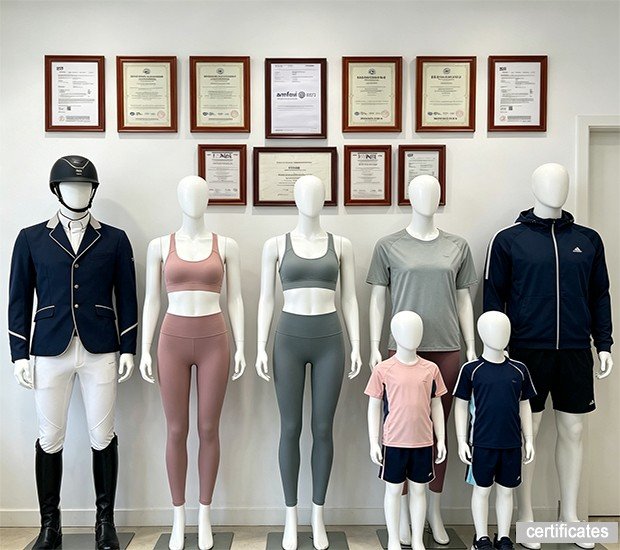
Dongguan Pair Fashion manufactures functional sportswear, including leggings, sports bras, maternity activewear, equestrian apparel and plus size clothing.
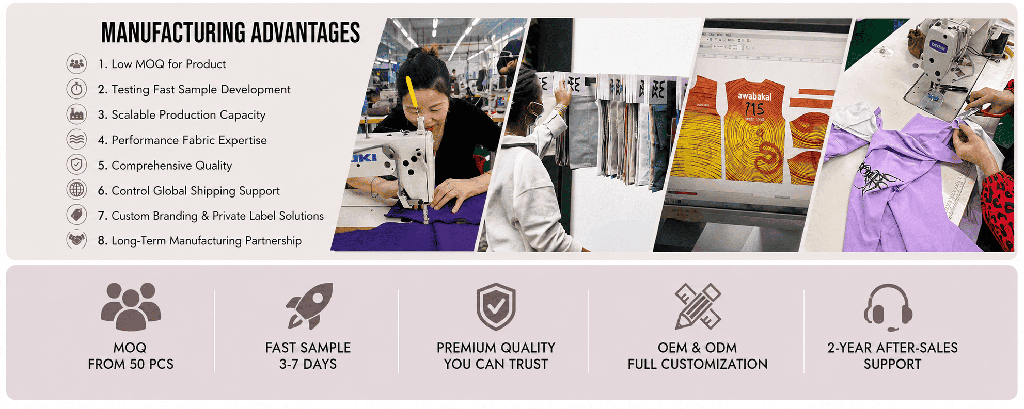
Its company information describes seven production lines, an 11-person pattern and sampling team, 13 quality control employees and a monthly production capacity of approximately 50,000 garments.
Key purchasing information
Typical MOQ: From 100 pieces, subject to fabric, style and customization.
Sampling: Approximately 3–7 days for suitable projects.
Bulk production: Normally 20–25 working days after required approvals.
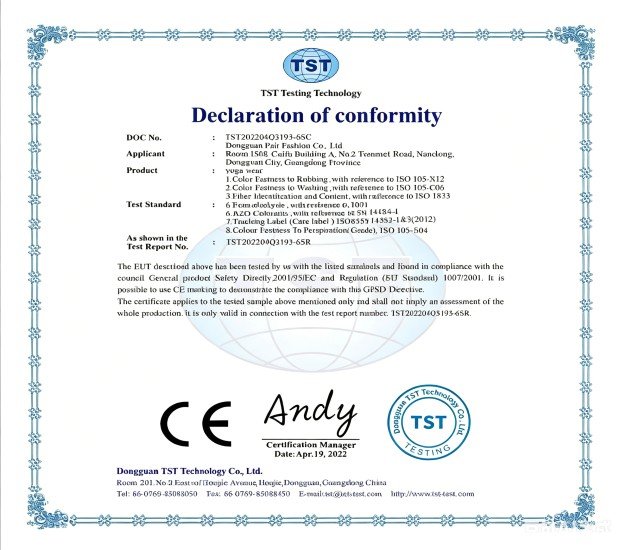
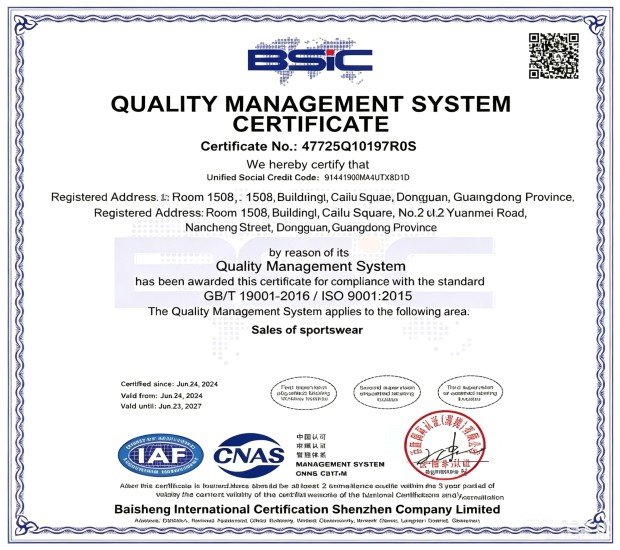
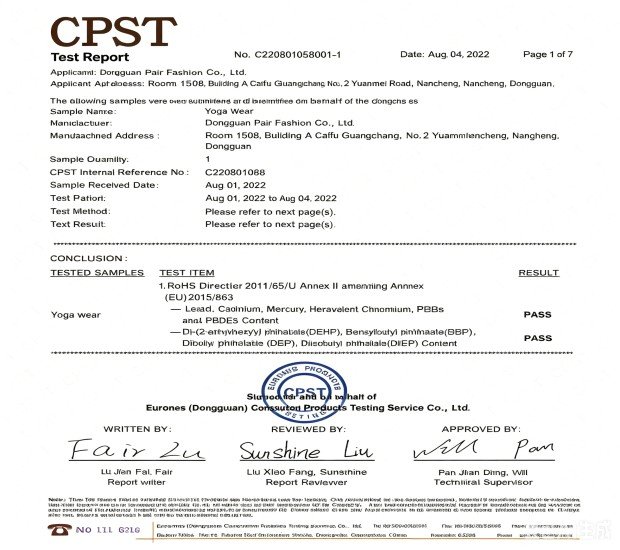
Reported credentials: ISO 9001, BSCI and GRS-related qualifications; buyers should confirm current validity and applicable scope.
Best suited for: Startup and growing activewear brands requiring inclusive sizing, product development and manageable initial orders.
Less suitable for: Buyers seeking only the lowest commodity price or requiring capacity beyond confirmed production allocation.
Main strengths: Relevant inclusive-activewear experience, internal development resources and support for smaller production programs.
Main limitations: Production capacity is smaller than that of some large industrial manufacturers, and project-specific fabric availability may affect MOQ and scheduling.
Buyer assessment: Request an XL–5XL size set, approved measurement tolerances, fabric specifications and inspection evidence before awarding a substantial order.
Brands that have completed supplier comparison and are ready to discuss actual development requirements can review Pair Fashion’s custom plus size leggings manufacturing capabilities.
2. Arabella Clothing — Structured Activewear Manufacturing
Location: Xiamen, Fujian, China
Business model: OEM/ODM activewear manufacturing
Arabella Clothing supplies leggings, sports bras, yoga apparel and other performance garments for international brands.
Its published commercial information indicates a more structured order model than some small-batch suppliers.
Key purchasing information
Founded: Confirm the relevant operating entity and establishment date.
Published MOQ: Approximately 300–600 pieces per color for certain cut-and-sew programs.
Sampling: Approximately 7–10 working days.
Bulk production: Published guidance indicates approximately 45–60 days after PP sample approval.
Reported credentials: BSCI, GRS, SEDEX and WRAP-related documentation; current scope requires verification.
Best suited for: Established activewear brands and retail programs with planned order quantities.
Less suitable for: Very small orders distributed across numerous custom colors.
Main strengths: Broad activewear product coverage, organized development processes and publicly available manufacturing information.
Main limitations: Color-level minimums and longer production planning requirements may be unsuitable for early-stage market testing.
Buyer assessment: Ask whether mixed sizes count toward the MOQ and whether custom fabric colors trigger separate material minimums.
3. Aika Sportswear — Private Label Fitness Apparel
Location: Dongguan, Guangdong, China
Business model: Custom fitness apparel manufacturing
Aika Sportswear offers gym clothing, leggings, sports bras and other private label sportswear categories.
The company may be relevant to brands sourcing coordinated fitness collections rather than leggings alone.
Key purchasing information
Founded: Confirm through current company registration.
MOQ: Request project-specific terms.
Sampling: Confirm against the proposed Tech Pack.
Bulk lead time: Requires written quotation.
Certifications: Verify current facility documentation.
Best suited for: Fitness brands seeking multiple coordinated sportswear categories.
Less suitable for: Buyers requiring independently verified extended-size production capability before supplier qualification.
Main strengths: Broad fitness-apparel product coverage and custom manufacturing services.
Main limitations: Public product catalogs alone do not establish technical competence in XL–5XL grading.
Buyer assessment: Request examples of graded measurement charts and actual full-size samples rather than relying on standard-size leggings photographs.
4. Ingor Sportswear — Performance Activewear and Material Programs
Location: Guangzhou, Guangdong, China
Founded: 2009
Business model: OEM/ODM activewear manufacturing
Ingor Sportswear produces performance apparel, including leggings, sports bras, yoga clothing and training garments. Its published materials also emphasize recycled-fabric sourcing.
Key purchasing information
Published MOQ: Generally from approximately 300 pieces, depending on the program.
Sampling: Project-specific; some published programs indicate approximately 5–10 days.
Bulk production: Around 30 days is advertised for qualifying orders; confirm the actual schedule.
Reported credentials: BSCI, GRS and other standards-related documentation, subject to verification.
Best suited for: Established fitness brands and buyers with performance-material requirements.
Less suitable for: Very small trial orders that cannot meet fabric or production minimums.
Main strengths: Activewear specialization, fabric sourcing resources and an established OEM/ODM offering.
Main limitations: Special materials and custom colors may introduce additional minimums and longer procurement schedules.
Buyer assessment: Request fabric test reports linked to the proposed material and confirm whether the same fabric specification will be used for bulk production.
5. Berunwear — Coordinated Sportswear Sourcing
Published business location: Wuhan, Hubei, China
Business model: Sportswear customization and supplier-network coordination
Berunwear provides sportswear sourcing and customization services across athletic clothing categories.
Unlike a supplier operating only through one directly controlled facility, a sourcing-network model may involve multiple manufacturing partners.
Key purchasing information
Founded: Confirm the current legal entity and operating history.
MOQ: Depends on the actual manufacturing program.
Sampling and bulk lead time: Must be confirmed for the selected facility.
Certifications: Request documents for the production site handling the order.
Best suited for: Buyers requiring coordinated sportswear sourcing across multiple categories.
Less suitable for: Buyers who require production exclusively within one directly owned facility.
Main strengths: Potential access to multiple manufacturing resources and product categories.
Main limitations: Buyers may need additional checks to establish which factory controls cutting, sewing, inspection and corrective actions.
Buyer assessment: Identify the actual production facility, contractual manufacturer and subcontracting arrangements before approving the purchase order.
6. Hucai Sportswear — Yoga and Fitness Apparel Production
Location: Dongguan, Guangdong, China
Founded: 1998, according to company-published information
Business model: OEM/ODM sportswear manufacturing
Hucai Sportswear offers yoga pants, leggings, sports bras and related fitness apparel.
Its public materials describe garment development and manufacturing services relevant to international activewear buyers.
Key purchasing information
Published MOQ: Some company materials reference approximately 200 pieces per style; verify applicability.
Sampling: Approximately 10–15 days in certain published programs.
Bulk production: Approximately 25–30 days for suitable orders.
Reported credentials: BSCI-related documentation; request current evidence.
Best suited for: Established fitness brands and wholesale programs with planned production volumes.
Less suitable for: Buyers requiring extremely small quantities across numerous custom styles.
Main strengths: Long operating history and a broad activewear product portfolio.
Main limitations: Different product programs may have different MOQ and production requirements.
Buyer assessment: Confirm that the facility being quoted has produced leggings across the buyer’s actual extended-size range.
7. SGL Sportswear — Custom Technical Sportswear
Location: Dongguan, Guangdong, China
Business model: Custom sportswear manufacturing
SGL Sportswear lists yoga clothing, leggings, equestrian apparel and other functional sportswear among its product categories.
The company publishes information about its production resources and manufacturing services, although individual capacity claims require verification.
Key purchasing information
Founded: Verify current business registration.
MOQ: Confirm per style and color.
Sampling: Request a written schedule.
Bulk lead time: Confirm after reviewing specifications.
Certifications: Request current facility documentation.
Best suited for: Brands combining fitness apparel with other technical sportswear categories.
Less suitable for: Buyers unwilling to complete product-specific size and quality qualification.
Main strengths: Broad technical sportswear coverage and custom production positioning.
Main limitations: General sportswear experience does not automatically establish consistent plus size leggings performance.
Buyer assessment: Request relevant inspection reports for leggings, especially waistband construction, crotch seams and measurement consistency.
8. Yotex Apparel — Custom Apparel Sourcing Candidate
Location: China; current production location requires verification.
Yotex Apparel appears in apparel sourcing references associated with custom garment programs.
Before including it in a purchasing shortlist, buyers should establish the current legal business identity and manufacturing arrangements.
Key purchasing information
Founded: Not reliably established for this comparison.
MOQ: Request directly.
Sampling and bulk lead time: Require written confirmation.
Core products: Confirm current activewear and leggings offerings.
Certifications: Request applicable documents.
Potential buyer fit: Brands conducting preliminary supplier research.
Less suitable for: Immediate production awards without completed verification.
Main strength: Potential relevance to custom apparel sourcing.
Main limitation: Insufficient verified technical and commercial information for a confident extended-size leggings recommendation.
Buyer assessment: Confirm the business registration, factory location and direct production role before paying for samples or committing to bulk production.
9. Biying Sportswear — Preliminary Fitness Apparel Candidate
Location: Current legal and production location not independently established.
Biying Sportswear has been referenced in fitness apparel supplier lists, but publicly available references should not replace direct business verification.
Key purchasing information
Founded: Not established.
MOQ: Not established.
Sampling and bulk lead time: Require confirmation.
Core products: Reported fitness and yoga apparel; current product scope requires verification.
Certifications: Not established.
Potential buyer fit: Early supplier research.
Less suitable for: Purchase approval before factory identity and technical capability are confirmed.
Main strength: Reported relevance to fitness apparel sourcing.
Main limitation: Limited independently verifiable information.
Buyer assessment: Request the registered company name, production address, relevant product examples and commercial quotation before including the supplier in a final shortlist.
10. ZYPFIT — International Manufacturing Benchmark
Location: Sialkot, Pakistan
Business model: Fitness apparel manufacturing
ZYPFIT is not a Chinese manufacturer. However, it can provide a useful international comparison when buyers evaluate whether to source exclusively from China or consider other production markets.
Key purchasing information
Founded: Verify through current company records.
MOQ: Request a product-specific quotation.
Sampling and bulk lead time: Confirm directly.
Core products: Fitness apparel and gym clothing.
Certifications: Request current facility documents.
Best suited for: Buyers considering international alternatives to Chinese sourcing.
Less suitable for: Procurement programs restricted to China-based manufacturing.
Main strength: An alternative geographic sourcing option.
Main limitation: It does not satisfy a China-only supplier requirement and must be evaluated under its own freight, duty and delivery conditions.
Buyer assessment: Compare quotations using equivalent specifications and landed-cost assumptions rather than assuming one country is automatically cheaper or faster.
Which Manufacturers Have the Strongest Evidence of Extended-Size Leggings Capability?
A supplier’s product catalog is a useful starting point, but technical evidence is more important than the number of leggings photographs displayed online.
Before final selection, buyers should request:
Size grading records: Approved measurements across the required XL–5XL range.
Physical samples: Representative sizes showing fit and construction consistency.
Fabric evidence: Material specifications, test results and approved fabric references.
Production records: Measurement checks, inspection reports and corrective actions.
Commercial confirmation: MOQ, delivery schedule and repeat-order conditions in writing.
A manufacturer with an attractive catalog but weak documentation may still be suitable for initial development. It should not automatically qualify for a large purchase order.
How Should Buyers Compare Manufacturers with Different Business Models?
A direct manufacturer, sourcing company and international production alternative should not be evaluated as though they operate under identical conditions.
For a fair comparison, buyers should identify who owns the production process, who approves material substitutions, who performs inspections and who is responsible when finished garments fail to meet specifications.
For example, a sourcing company may offer access to several factories, which can improve flexibility. However, the buyer needs a clear answer about the facility producing the actual order.
A direct manufacturer may provide closer communication with production teams, but this advantage matters only when its technical capability and available capacity match the project.
The strongest shortlist is therefore not necessarily the ten largest or most recognizable names. It is the group of suppliers whose business models, evidence and commercial conditions can be compared under the same purchasing requirements.

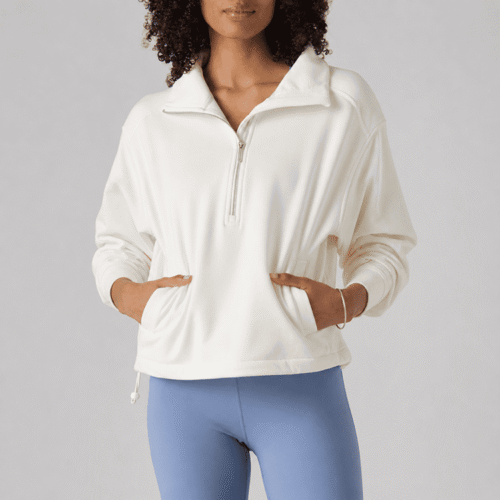
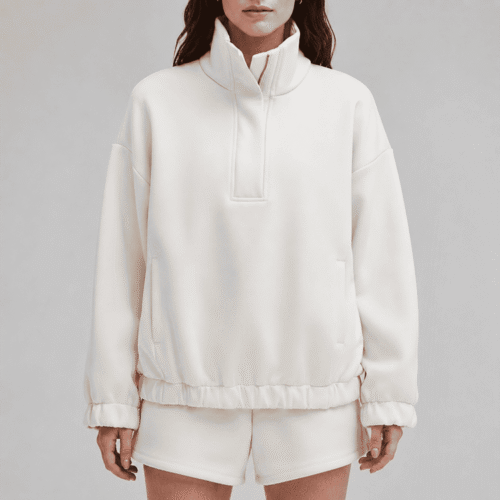
Custom Women’s Half Zip Oversized Sweatshirt Athleisure Pullover OEM ODM
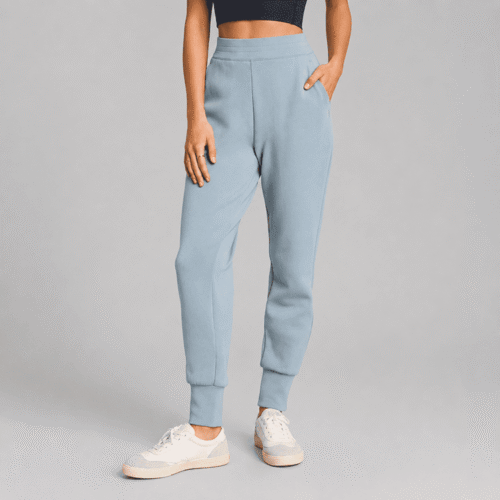
Custom Women’s High-Waist Jogger Pants OEM ODM Athleisure Sweatpants
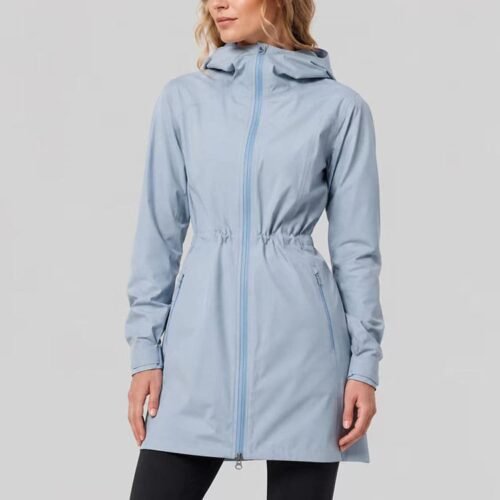
Custom Women’s Hooded Longline Windbreaker Jacket Waterproof Outerwear OEM ODM
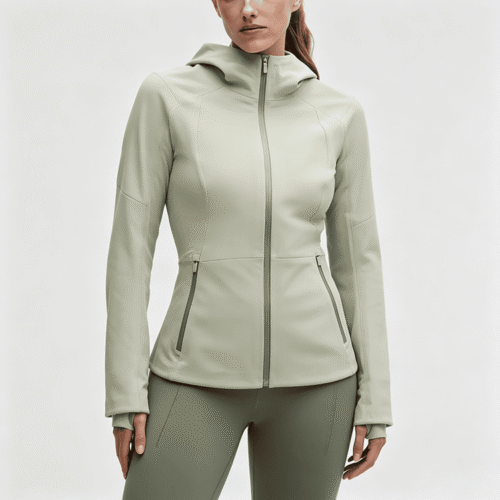
Custom Women’s Hooded Performance Jacket Full Zip Athleisure Outerwear OEM ODM
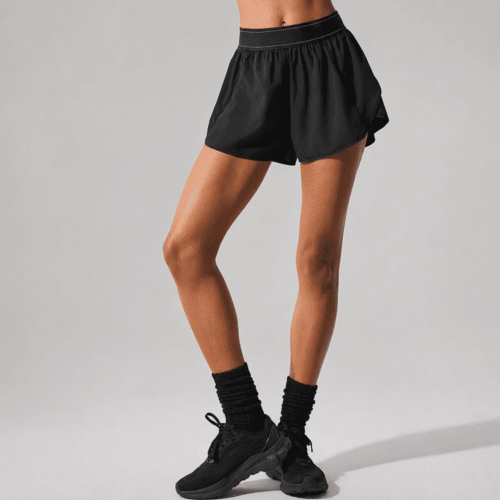
Custom Women’s Lightweight Running Shorts OEM ODM Workout Shorts
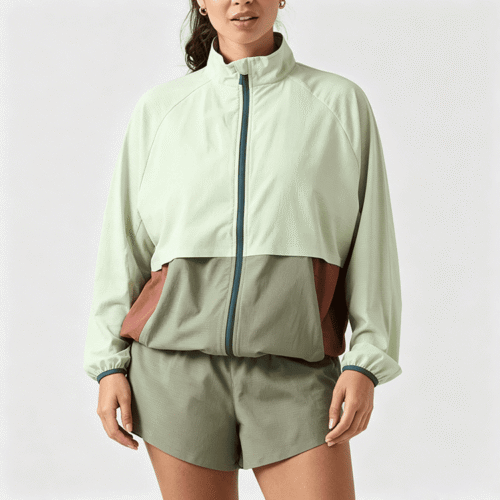
Custom Women’s Lightweight Windbreaker Jacket Full Zip Training Outerwear OEM ODM
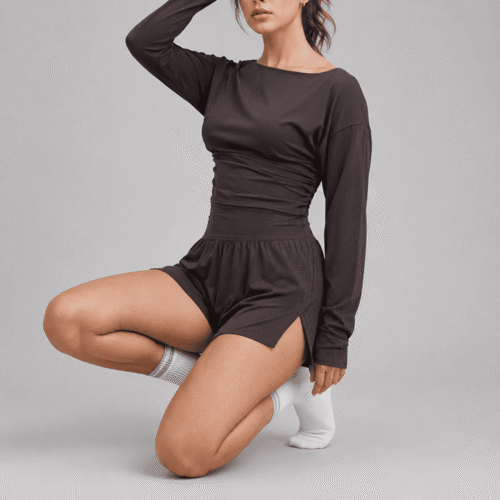
Custom Women’s Long Sleeve Lounge Romper OEM ODM Loungewear
Custom Women’s Oversized Half Zip Sweatshirt Fleece Pullover OEM ODM
Why Source Plus Size Leggings from China, and When Should Buyers Consider Other Manufacturing Markets?
China remains a practical sourcing destination for plus size leggings because its apparel supply chain connects performance fabrics, elastic trims, pattern development, garment production and export services. However, Chinese manufacturing is not automatically cheaper, faster or better than alternatives. Buyers should compare China with Vietnam and local production based on product complexity, fabric availability, order quantity, landed cost and supply-chain risk. The best sourcing market is the one that can meet the required technical specifications under commercially sustainable conditions.
For brands evaluating a Plus Size Wholesale Leggings Manufacturer, country selection should come after the product requirements are clear. A supplier’s location can influence fabric access, delivery schedules and import costs, but it cannot replace evidence of good size grading or consistent garment quality.
A Chinese manufacturer may be highly competitive for a customized leggings collection requiring several fabric options, extended sizing and coordinated branding. A local supplier may be more suitable for a short replenishment cycle. A manufacturer in Vietnam may offer attractive production conditions for a stable, higher-volume program.
The important question is not which country has the best reputation. It is which supply chain can support the actual order without creating unnecessary technical or commercial risk.
How Has China’s Activewear Supply Chain Developed, and Why Does This History Matter to Buyers?
China’s activewear manufacturing industry developed alongside its broader textile, garment and export supply chains. Over time, manufacturing clusters in Guangdong, Fujian, Zhejiang and other regions established networks of fabric suppliers, garment producers, printing businesses, accessories suppliers and logistics providers.
This industrial concentration matters because a technical garment rarely depends on sewing alone.
Consider a high-waisted plus size legging with a supportive waistband, four-way stretch fabric, flatlock seams and custom packaging. Producing it consistently may require several specialized suppliers working together.
A manufacturer with access to nearby material and development resources may be able to resolve technical questions more efficiently than a supplier that must import every fabric, elastic or accessory.
However, supply-chain depth should not be confused with guaranteed quality.
China has large manufacturers, small workshops, specialized activewear producers, trading companies and sourcing businesses. Their capabilities can differ substantially even when they operate in the same city.
Buyers should therefore evaluate the specific manufacturer rather than treating China’s industrial reputation as proof that every supplier can produce reliable extended-size garments.
China vs Vietnam vs Local Manufacturing: Which Sourcing Model Fits Different Order Requirements?
The most suitable manufacturing location depends on the purchasing program.
A new activewear brand testing two leggings styles may prioritize low inventory exposure and sampling flexibility. An established retailer ordering thousands of units may place greater weight on production allocation, predictable replenishment and total landed cost.
The following comparison provides a starting framework rather than a universal country ranking.
| Evaluation Factor | China | Vietnam | Local Manufacturing |
|---|---|---|---|
| Performance fabric sourcing | Broad supplier ecosystem; verify fabric origin | May use domestic or imported materials | Depends on local textile availability |
| Custom product development | Wide range of specialized suppliers | Varies by manufacturer | Can support close collaboration |
| Small-order suitability | Available from some manufacturers | Depends on factory and program | May suit smaller runs, often at higher unit cost |
| Large-volume production | Established manufacturing options | Established export production options | Depends on available capacity |
| Communication and sampling | Remote coordination usually required | Remote coordination usually required | Potentially easier in-person collaboration |
| Freight and import exposure | Depends on destination and trade rules | Depends on destination and trade rules | May reduce cross-border shipping requirements |
| Best purchasing fit | Programs benefiting from material access and development resources | Stable programs with suitable factory and material arrangements | Rapid coordination or short domestic replenishment |
These are sourcing considerations, not fixed performance ratings. A capable manufacturer in Vietnam may outperform an unsuitable Chinese supplier. A local manufacturer may deliver faster only if it has the required fabric and production capacity available.
For example, suppose a US brand needs a custom recycled nylon-spandex fabric. A nearby garment manufacturer may still need to import that material, extending its actual production schedule.
At the same time, a Chinese supplier offering a competitive garment price may become less attractive after freight, import duties, inspection costs and inventory commitments are included.
Buyers should compare quotations based on the same fabric specification, size range, order quantity and delivery destination.
What Advantages Can China’s Fabric, Trims and Production Ecosystem Provide?
One advantage of sourcing in China is the range of specialized resources available within established garment manufacturing regions.
For plus size leggings, the most relevant resources include:
Performance fabrics: Nylon-spandex, polyester-spandex and other stretch materials with different weights, surfaces and recovery characteristics.
Elastic and waistband materials: Components that affect support, rolling resistance and long-term fit.
Pattern development: Resources for size grading, fit corrections and garment construction.
Specialized sewing: Equipment and production experience for stretch seams, waistbands and activewear assembly.
Branding and packaging: Labels, printing, embroidery, hangtags and retail packaging.
Inspection and testing: Access to material testing, garment inspection and export documentation services.
The commercial advantage appears when these resources work together.
A fabric may feel excellent during the first fitting but become too transparent at higher extension levels. A waistband elastic may perform well in a sample but create excessive pressure when applied to larger sizes.
A manufacturer with strong supplier coordination can investigate these problems and evaluate alternatives before production approval.
Still, buyers should ask a practical question: Which resources are directly controlled by the manufacturer, and which depend on outside suppliers?
A company may advertise fabric development or testing services without owning a textile mill or laboratory. Outsourcing those functions is not necessarily a weakness, provided responsibilities, test methods and approval procedures are clear.
Manufacturer vs Trading Company vs Sourcing Agent: Who Controls Production and Quality?
These three sourcing models can all serve legitimate business needs, but they should not be evaluated as identical operations.
| Sourcing Model | Main Role | Potential Advantage | Main Question to Verify |
|---|---|---|---|
| Direct manufacturer | Produces garments through its manufacturing operation | Closer coordination with production teams | Does it directly control the relevant processes? |
| Trading company | Purchases and supplies goods through manufacturing partners | Access to multiple product categories | Which factory makes the garments? |
| Sourcing agent | Coordinates supplier identification and purchasing | Independent supplier coordination may be available | Who is contractually responsible for quality and delivery? |
A trading company is not automatically a poor choice. It may provide useful coordination when a buyer needs several garment categories or manufacturing locations.
Likewise, a direct manufacturer is not automatically superior. A factory can own its sewing lines and still lack the technical knowledge required for extended-size leggings.
The critical issue is accountability.
Before placing an order, buyers should establish who approves fabric substitutions, controls measurement standards, performs final inspections and handles defective products.
If production is subcontracted, the buyer should understand which operations are subcontracted and whether prior approval is required.
For brands comparing several manufacturers, these questions are often more useful than asking only whether a supplier is a factory or trading company.
When Do Tariffs, Shipping, Material Minimums and Lead Times Reduce China’s Cost Advantage?
An attractive unit price can hide a much larger purchasing commitment.
Consider two hypothetical suppliers quoting the same leggings specification.
| Commercial Condition | Supplier A — China | Supplier B — Local |
|---|---|---|
| Unit manufacturing price | $8.20 | $11.00 |
| Minimum order quantity | 1,000 pcs | 300 pcs |
| Initial garment purchase | $8,200 | $3,300 |
| International freight and import costs | Additional | Depends on local sourcing |
| Inventory commitment | Higher | Lower |
Supplier A has the lower unit manufacturing price, but Supplier B requires considerably less initial inventory investment.
For a brand with proven demand, Supplier A’s pricing may be attractive. For a new product with uncertain sales, Supplier B may offer a more manageable commercial structure.
The figures above are illustrative, not current market quotations. Actual landed costs depend on the shipment, destination, customs classification, applicable duties and agreed delivery terms.
Buyers should also examine material minimums.
A garment manufacturer may accept a relatively small production order while the selected fabric mill requires a much larger quantity for custom dyeing. The resulting excess fabric may create additional costs or force the brand to increase its order.
Before comparing manufacturing markets, request written confirmation of:
Garment MOQ by style and color.
Fabric minimums and custom-dye requirements.
Sample approval and production schedules.
Freight assumptions and Incoterms.
Import duties and applicable trade measures.
Inspection, rework and replacement responsibilities.
Reorder conditions and material availability.
A lower unit price becomes valuable only when the complete purchasing arrangement fits the brand’s sales expectations and cash-flow requirements.
How Can Buyers Verify Supplier Identity, Production Location and Subcontracting Arrangements?
Supplier verification should begin with the legal and operational identity of the business.
A polished website, product catalog or factory video can be helpful, but none should be treated as conclusive proof of manufacturing ownership or production capability.
Buyers can begin by requesting:
Registered company information: Legal name, registration details and business address.
Production facility information: Factory address and the processes performed at that location.
Product-specific evidence: Samples, measurement charts and manufacturing records relevant to leggings.
Compliance documentation: Current certificates showing the issuing organization, legal entity and applicable scope.
Production arrangements: Written disclosure of material suppliers and relevant subcontracted operations.
Commercial documentation: Quotations, payment terms, delivery commitments and responsibilities for nonconforming goods.
For higher-value programs, a factory audit or independent inspection may provide additional assurance.
However, verification should remain proportional to the order.
A small trial purchase may not justify the same audit budget as a multi-season retail program. The buyer can still require a properly identified supplier, approved samples, written specifications and clear acceptance conditions.
The purpose of supplier verification is not to collect the largest possible number of documents. It is to establish whether the manufacturer can perform the work, control the relevant risks and accept responsibility for the agreed result.
When Is China the Right Sourcing Decision?
China can be a strong choice when the project benefits from coordinated fabric sourcing, technical development, customization and repeat production.
It becomes less attractive when the buyer’s order is too small for the required materials, the delivery window cannot accommodate international shipping or the total landed cost is commercially unsuitable.
A practical decision should answer four questions:
Can the manufacturer demonstrate the required technical capability?
Can the supply chain provide the approved materials consistently?
Can the order quantity and delivery terms support the brand’s business model?
Can the supplier maintain quality when the product moves from sampling to bulk production and future reorders?
If the answers are supported by evidence, the manufacturing location becomes an advantage rather than an assumption.
The next step is to examine one of the most important sources of risk in extended-size leggings: whether the fabric performs as promised when it is stretched, worn, washed and reproduced in bulk.

How Can Buyers Compare Fabric Performance Claims Across Different Plus Size Leggings Manufacturers?
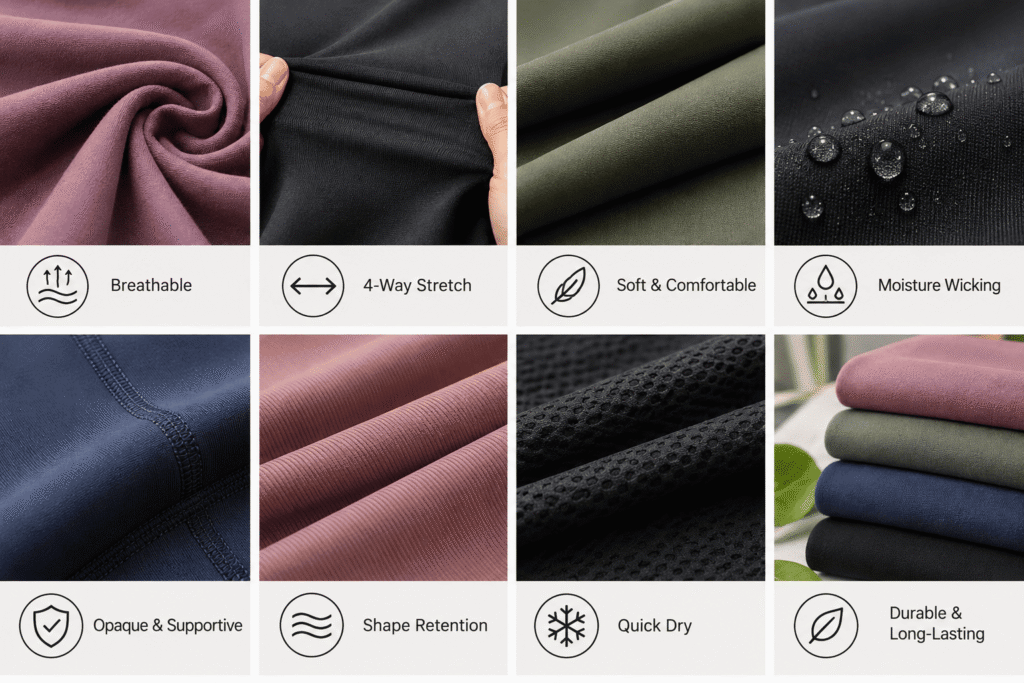
Buyers should compare leggings fabrics using identical specifications, standardized testing conditions and evidence linked to the actual production material. A supplier’s claims about four-way stretch, squat-proof coverage, moisture management or compression are not enough without measurable results. The most reliable evaluation combines fabric composition, GSM, stretch recovery, opacity, dimensional stability, colorfastness and seam performance. For extended sizes, testing should also consider how the material behaves under greater body coverage and repeated movement.
A Plus Size Wholesale Leggings Manufacturer may offer several fabrics that look nearly identical in photographs but behave very differently during wear. One may provide excellent initial stretch but lose recovery after repeated use. Another may feel supportive in a medium sample but become too restrictive in larger sizes.
For procurement teams, the challenge is not choosing the fabric with the most impressive description. It is determining whether the proposed material meets the product’s actual performance requirements and whether the manufacturer can reproduce those properties consistently.
The following evaluation methods help buyers separate attractive marketing claims from meaningful technical evidence.
What Fabric Specifications Must Be Identical for a Fair Supplier Comparison?
A fair comparison begins with a common fabric specification.
If Supplier A provides 220 GSM nylon-spandex, Supplier B provides 280 GSM polyester-spandex and Supplier C provides an unspecified recycled blend, the resulting samples cannot establish which manufacturer has the strongest fabric capability.
They represent different materials.
Before requesting samples, buyers should define the essential requirements:
| Specification | What Buyers Should Confirm | Why It Matters |
|---|---|---|
| Fiber composition | Nylon, polyester, elastane percentages | Influences hand feel, stretch behavior and care requirements |
| Fabric weight | GSM and acceptable tolerance | Affects coverage, weight and construction |
| Fabric structure | Knit construction and surface finish | Influences appearance, stretch and durability |
| Stretch direction | Lengthwise and crosswise stretch | Affects movement and fit |
| Elastic recovery | Recovery after defined extension and relaxation | Helps assess long-term shape retention |
| Opacity | Coverage under specified extension conditions | Helps identify transparency risks |
| Colorfastness | Relevant washing, rubbing and perspiration tests | Helps assess color durability |
| Dimensional stability | Change after specified laundering | Helps predict fit changes |
| Material identification | Approved swatch, reference code and supplier | Supports production traceability |
The specification should describe the intended performance, not simply copy a fabric supplier’s marketing language.
For example, “soft premium fabric” is not a sufficiently controlled requirement. Two materials can both feel soft while having different stretch, recovery, opacity and washing behavior.
A stronger RFQ identifies the target composition, weight range, appearance, recovery expectations and intended use.
Some parameters may remain flexible during initial sourcing. Others should be mandatory.
If a brand’s leggings must remain opaque during deep squats, opacity under realistic extension is a mandatory performance requirement. A slightly different hand feel may be negotiable.
The objective is to make suppliers compete against the same product standard rather than different interpretations of the word premium.
Nylon-Spandex vs Polyester-Spandex: How Should Buyers Evaluate Comparable Fabric Samples?
Nylon-spandex and polyester-spandex are common choices for performance leggings, but neither is automatically superior.
Both can support four-way stretch, body movement and fitted garment construction. Their performance depends on the complete fabric structure, elastane content, yarn characteristics, finishing and manufacturing quality.
| Evaluation Area | Nylon-Spandex | Polyester-Spandex |
|---|---|---|
| Typical hand feel | Often smooth and soft | Varies from smooth to more structured |
| Moisture behavior | Depends on construction and finishing | Depends on construction and finishing |
| Abrasion resistance | Can be strong with suitable construction | Can be strong with suitable construction |
| Color and appearance | Depends on dyeing and finishing | Depends on dyeing and finishing |
| Stretch and recovery | Strongly influenced by elastane and fabric engineering | Strongly influenced by elastane and fabric engineering |
| Cost | Often higher for comparable constructions | Often more economical, depending on specification |
| Best use | Products prioritizing a particular soft feel and performance balance | Products requiring a different cost, feel or performance balance |
These are general tendencies, not guarantees for individual fabrics.
Consider two materials with the same nominal GSM and elastane percentage.
One may have a dense construction that provides better opacity under extension. The other may feel lighter and softer but reveal more skin when stretched over the hips.
A buyer who chooses based only on composition may miss the more important difference.
For extended-size leggings, suppliers should be asked to provide comparable swatches and sample garments made to the same pattern specifications.
The final decision should consider:
Fabric behavior during movement.
Opacity at the intended fit extension.
Recovery after repeated stretching.
Surface appearance after washing.
Comfort across the required size range.
Cost and material availability for reorders.
Choose the fabric that performs correctly in the finished garment, not the one with the most attractive fiber description.
Which Test Methods Can Verify Stretch Recovery, Opacity, Pilling, Shrinkage and Colorfastness?
Different performance claims require different test methods.
A fabric supplier may provide a laboratory report showing acceptable colorfastness, but that report does not prove squat-proof coverage or reliable elastic recovery.
Buyers should match each claim to an appropriate evaluation method.
| Performance Requirement | Relevant Test or Evaluation | What Buyers Should Examine |
|---|---|---|
| Stretch and recovery | ASTM D2594 or another suitable agreed method | Extension, growth and recovery under defined conditions |
| Pilling resistance | ISO 12945 series or an applicable equivalent | Surface changes after specified abrasion cycles |
| Dimensional stability | ISO 5077 with an agreed laundering procedure | Length and width changes after washing |
| Colorfastness to washing | ISO 105-C06 or an applicable equivalent | Color change and staining |
| Colorfastness to rubbing | ISO 105-X12 or an applicable equivalent | Dry and wet rubbing performance |
| Colorfastness to perspiration | ISO 105-E04 or an applicable equivalent | Color change and staining |
| Bursting strength | ISO 13938 series where suitable | Fabric resistance to multidirectional pressure |
| Opacity under extension | Agreed optical or visual evaluation protocol | Coverage at specified extension and lighting conditions |
The selected method must be appropriate for the actual fabric and intended performance requirement. Different test standards are not automatically interchangeable.
For example, ASTM D2594 is relevant to certain stretch properties of knitted fabrics, but buyers should confirm that its scope and conditions suit the material being evaluated.
Likewise, there is no single universally accepted laboratory definition of “squat-proof leggings” that automatically covers every product and wearing condition.
A practical opacity evaluation should specify the garment size, fabric color, extension level, lighting and assessment method.
Without these conditions, two suppliers may both claim their leggings are squat-proof while testing them in completely different ways.
How Do Buyers Check Whether Test Reports Match the Actual Fabric and Production Lot?
A laboratory report is only useful when buyers can connect it to the material being purchased.
Suppose a supplier provides a passing colorfastness report for a black nylon-spandex fabric.
The order, however, uses a newly dyed burgundy version from a different fabric lot.
The earlier report may provide background information, but it does not automatically establish the performance of the new material.
Buyers should check five details:
Material identification: Does the report identify the same fabric reference, composition and construction?
Color and finishing: Does the tested sample represent the ordered material?
Test date and laboratory: Is the report relevant and traceable?
Test conditions: Do the methods and acceptance criteria match the purchase requirements?
Production linkage: Can the manufacturer connect the tested material to the approved bulk fabric?
For higher-risk orders, the buyer may require testing of production-lot material rather than relying only on development-stage swatches.
This is especially relevant when the supplier changes yarn sources, dyeing facilities, finishing treatments or fabric construction.
A passing test report does not eliminate risk if it cannot be linked to the material actually used in production.
Are Squat-Proof, Moisture-Wicking and Compression Claims Supported by Relevant Evidence?
Functional claims can be commercially attractive because they communicate benefits customers understand.
However, they can also create problems when buyers and manufacturers interpret them differently.
Squat-proof coverage
A fabric may appear opaque when held flat but become transparent when stretched over the body.
Buyers should assess coverage under representative extension and movement conditions, including squatting and bending. Dark colors should not automatically be assumed to perform like lighter colors.
Moisture-wicking performance
Moisture management depends on fiber properties, fabric construction and finishing. A fabric may absorb moisture, transport it across the surface or dry quickly, but these are not identical characteristics.
Buyers should define which behavior matters and request suitable test evidence.
Compression
Compression should not be judged only by how tight a sample feels.
Garment pressure depends on fabric tension, pattern dimensions, body measurements and construction. The same fabric may feel supportive in one size and excessively restrictive in another.
Brands making specific compression claims should define the intended performance and use suitable measurement or wear-assessment methods.
For ordinary fitness leggings, consistent comfort and support may be more commercially important than a vaguely advertised “high-compression” label.
How Should Buyers Compare GRS Claims, Material Traceability and Third-Party Testing?
Sustainability-related documentation requires particular attention because several different forms of evidence are often grouped together under the word certification.
A supplier may have a certified management system, access to recycled fabric or a certificate covering certain processing activities. These do not automatically mean every finished garment qualifies for a particular recycled-content claim.
For products promoted using the Global Recycled Standard (GRS), buyers should examine the relevant certification scope, recycled-content requirements and transaction documentation needed to support the intended product claims.
A useful review includes:
Whether the relevant organization holds a valid scope certificate.
Whether the material and processing activities fall within the certified scope.
Whether transaction documentation is available where required.
Whether the proposed product claim meets the scheme’s rules.
Whether the finished product and purchase records can be traced to the approved material.
The same principle applies to third-party testing.
A certificate or test report should support a specific claim. It should not be used as a general substitute for product verification.
For brands selling into regulated markets, additional requirements may apply to labeling, chemical restrictions and product claims. Buyers should verify the applicable obligations for their destination market.
What Should Be Included in a Fabric Performance Evidence Matrix?
A fabric performance matrix helps buyers compare suppliers without relying on memory, sales presentations or inconsistent sample descriptions.
For example, suppose three shortlisted manufacturers submit fabrics for the same high-waisted leggings program.
| Evaluation Criterion | Supplier A | Supplier B | Supplier C |
|---|---|---|---|
| Target composition matched | Yes | Yes | No |
| GSM within approved range | Yes | Yes | Yes |
| Stretch recovery evidence | Available | Available | Missing |
| Opacity evaluation | Passed | Requires revision | Not completed |
| Washing dimensional stability | Passed | Passed | Pending |
| Fabric lot identification | Clear | Clear | Unclear |
| Suitable for next sampling stage | Yes | Conditional | No |
Illustrative evaluation only; the results do not represent actual manufacturers.
Supplier A appears ready to proceed to garment sampling. Supplier B may remain a candidate if the opacity issue can be corrected. Supplier C should not move forward until the material specification and missing evidence are resolved.
Notice that the matrix does not simply award points for every document submitted.
Some requirements are mandatory. If a fabric fails the brand’s minimum opacity requirement, strong performance in another category should not automatically compensate for that failure.
The same approach applies to certification and traceability requirements that are genuinely necessary for the product.
For brands that have completed supplier qualification and are ready to translate approved fabric specifications into a broader product program, plus size activewear manufacturing for private label brands can be considered alongside leggings-specific supplier comparisons.
What Makes Fabric Evidence Commercially Useful?
The best fabric is not necessarily the heaviest, softest or most expensive material.
A heavier fabric may provide better coverage but feel less comfortable in hot-weather training. A softer material may improve first impressions while offering insufficient recovery. A recycled option may support a brand’s material strategy but require additional traceability documentation or larger purchase quantities.
The right decision depends on the product’s intended use and the brand’s non-negotiable requirements.
Before approving a supplier’s fabric, buyers should be able to answer:
Does the material meet the agreed technical specification?
Are important performance claims supported by relevant testing?
Does the fabric perform acceptably in representative extended-size garments?
Can the supplier identify and reproduce the approved material?
Are material minimums and reorder conditions commercially acceptable?
If these questions cannot be answered, the buyer is still evaluating a promising sample rather than a controlled production material.
Fabric approval should create a repeatable reference for bulk production, not simply record that one swatch looked and felt good.
Once the material has been qualified, the next challenge is equally important: confirming that the manufacturer’s size grading delivers consistent fit from XL through 5XL.
What Factory Evidence Proves Sample-to-Bulk Consistency and Reliable Repeat Production?
Buyers should evaluate sample-to-bulk consistency through approved production samples, controlled material specifications, documented inspections and evidence from previous production orders. A well-made sample does not prove that hundreds or thousands of leggings will meet the same requirements. Reliable manufacturers should demonstrate how they control fabric lots, size measurements, sewing quality, workmanship defects and production changes. Buyers should also examine corrective-action records and reorder procedures to determine whether the manufacturer can maintain consistent quality beyond the first shipment.
For a brand selecting a Plus Size Wholesale Leggings Manufacturer, production consistency is often more important than the appearance of the first sample.
A manufacturer may produce an excellent 2XL sample using carefully selected fabric and experienced sample-room workers. However, bulk production introduces additional variables: different fabric rolls, multiple sewing operators, cutting variations, production pressure and larger quantities of finished garments.
These variables can affect waistband tension, inseam length, seam appearance, fabric opacity and overall fit.
The real question is whether the manufacturer has a repeatable process for controlling those differences.
Why Does an Approved Sample Not Guarantee Consistent Bulk Production?
A development sample and a bulk production garment may be produced under different conditions.
Sample rooms generally focus on developing and correcting individual garments. Bulk production requires the same approved specifications to be followed across cutting, sewing, finishing and packing operations.
Even when the original sample is correct, inconsistencies can appear if production teams use different materials or interpret the specifications differently.
Consider a hypothetical order of 1,500 high-waisted leggings across XL–5XL.
The approved sample has a stable waistband, consistent stretch and suitable coverage. During bulk production, the manufacturer receives two fabric lots with slightly different stretch recovery.
If both lots are used without proper verification, finished garments may have different wearing characteristics despite having similar flat measurements.
The problem may not become obvious until customers begin wearing the products.
An approved sample establishes the intended result. Production controls determine whether that result can be repeated.
Buyers should therefore evaluate the manufacturer’s ability to transfer approved product information into routine production.
What Is the Difference Between a Fit Sample, PP Sample and Bulk Production Reference?
Not every sample serves the same purpose.
Manufacturers may use different document names, but the underlying approval stages should remain clear.
| Sample Type | Primary Purpose | Main Buyer Decision |
|---|---|---|
| Development sample | Evaluate initial design, materials and construction | Identify required changes |
| Fit sample | Assess measurements, proportions and wearing performance | Approve or revise fit |
| Size-set sample | Check grading and fit across the size range | Confirm extended-size consistency |
| Pre-production (PP) sample | Confirm the final production specifications | Authorize bulk production |
| Bulk production reference | Provide a controlled standard during manufacturing | Compare actual production against approval |
The PP sample approval should be treated as a formal production milestone.
Before approval, buyers should confirm that the sample reflects the intended fabric, color, construction, labeling, packaging and measurement specifications.
The manufacturer should also identify the approved sample and its associated technical documents.
For example, if a brand changes the waistband height after approving the fit sample, the final PP sample must reflect that change.
Otherwise, the production team may follow an outdated reference.
A reliable approval system should connect the physical sample with the correct Tech Pack version, measurement chart, material references and written approvals.
Which Documents Should Be Locked Before Bulk Production Begins?
Production consistency depends on locked specifications.
If important product details remain open to interpretation, the factory may make decisions that differ from the buyer’s expectations.
A complete production approval package should include:
Approved Tech Pack: Product drawings, construction details and technical requirements.
Final measurement chart: All approved sizes, measurement points and tolerances.
Fabric specification: Composition, GSM, stretch characteristics, color and approved material reference.
Trims and accessories: Elastic, labels, threads and other approved components.
Construction requirements: Stitch types, seam placement, waistband assembly and finishing details.
Approved PP sample: The physical reference for production.
Packaging instructions: Folding, labeling, size identification and carton requirements.
Inspection criteria: Defect definitions, sampling procedures and acceptance conditions.
Change-control process: Written approval requirements for substitutions or revisions.
These documents should refer to the same product version.
For example, a manufacturer may have an approved fabric swatch but later substitute a similar-looking material because the original fabric is temporarily unavailable.
Even if the substitute has the same fiber composition and GSM, its stretch recovery or opacity may differ.
A supplier should not treat this as an insignificant purchasing decision.
Material substitutions that affect approved performance requirements should receive buyer approval before use.
The same principle applies to changes in waistband elastic, thread, construction methods and size specifications.
How Should Incoming, In-Line and Final Inspections Work Together?
Quality control should not depend entirely on checking finished garments before shipment.
By that stage, some defects may be expensive or impossible to correct.
A more effective approach examines quality at several production stages.
| Inspection Stage | Main Focus | Typical Risks Identified |
|---|---|---|
| Incoming inspection | Fabrics, elastic, trims and accessories | Incorrect material, shade variation, defects |
| Cutting inspection | Fabric alignment, pattern placement and cut dimensions | Incorrect size components, cutting variation |
| In-line inspection | Sewing and assembly during production | Seam defects, waistband errors, workmanship variation |
| Final inspection | Finished garments, measurements and packing | Visible defects, size errors, labeling problems |
| Pre-shipment inspection | Shipment readiness and agreed acceptance criteria | Nonconforming goods before dispatch |
These stages should work as one control system.
For example, if incoming inspection identifies unacceptable fabric shade variation, the issue should be resolved before cutting.
If in-line inspection detects inconsistent waistband attachment, the production team should investigate the cause before the same problem affects the entire order.
Final inspection remains important, but it should verify the effectiveness of earlier controls rather than serve as the first meaningful quality check.
Buyers should ask whether the manufacturer records inspection findings and whether those records can be connected to the relevant production order.
A verbal statement that every garment is checked does not provide the same evidence as a documented inspection procedure.
Which Defects Matter Most in Bulk Plus Size Leggings Production?
Not all garment defects have the same commercial impact.
A loose thread that can be removed during finishing is different from a waistband that repeatedly rolls down during wear.
For extended-size leggings, buyers should pay particular attention to defects affecting fit, coverage, durability and size identification.
| Defect Category | Example | Potential Commercial Impact |
|---|---|---|
| Critical safety or regulatory defect | A defect creating an applicable safety or compliance failure | May prevent product acceptance or sale |
| Major functional defect | Open crotch seam, severe transparency or unusable waistband | Can make the garment unsuitable for intended use |
| Major measurement defect | Finished size outside an agreed critical tolerance | Can cause incorrect fit and customer returns |
| Material inconsistency | Unapproved fabric with different recovery | Can affect comfort and repeatability |
| Cosmetic defect | Visible stains, uneven stitching or shade variation | Can reduce perceived quality |
| Minor finishing defect | Removable loose thread | May be correctable before shipment |
| Packaging defect | Incorrect size label or carton assortment | Can cause fulfillment errors and returns |
The classification of a defect should be agreed upon before inspection.
For example, transparency may be considered a major functional defect if opacity is a mandatory product requirement. A minor shade difference may be acceptable or unacceptable depending on the approved color standard and the brand’s retail requirements.
Buyers should not rely on generic defect labels without defining how they apply to the actual product.
How Should Buyers Interpret AQL Inspection Results?
The ISO 2859-1:2026 acceptance sampling standard provides AQL-indexed sampling procedures that buyers can reference when establishing inspection plans and acceptance criteria for bulk garment orders.
It does not mean that a specified percentage of defective garments is automatically acceptable in every shipment.
Under an agreed sampling plan, inspectors select a sample from the production lot and classify defects according to established criteria.
The inspection decision depends on the sample size, inspection level, defect classification and corresponding acceptance and rejection numbers.
Buyers should confirm:
The inspection standard and sampling plan being used.
The lot size and inspection level.
The definitions of critical, major and minor defects.
The agreed acceptance limits.
The actions required when an inspection fails.
For example, a shipment may pass a general appearance inspection while still containing a systematic sizing problem that the sampling plan did not adequately detect.
That is why AQL inspection should not replace approved measurements, fit validation and process controls.
AQL helps structure inspection decisions; it does not guarantee that every garment meets every technical requirement.
For products with important functional risks, buyers may require additional checks beyond the general sampling plan.
What Production Records Demonstrate Consistency Across Fabric Lots and Size Runs?
A manufacturer may provide a passing final inspection report, but buyers should also understand how the factory controlled variation during production.
Useful records include:
Fabric lot identification and incoming inspection results.
Cutting records showing quantities by size.
In-line measurement checks.
Sewing defect reports and corrective actions.
Final inspection results.
Finished-goods size breakdowns.
Records of approved material or construction changes.
These records become particularly important when the order includes multiple sizes and colors.
Consider a 2,000-piece order distributed across XL, 2XL, 3XL, 4XL and 5XL.
If the factory checks only a small number of XL garments, it may overlook measurement problems concentrated in the largest sizes.
The inspection plan should reflect the risks of the actual size distribution.
For example, buyers may require measurement checks from each size rather than assuming one size represents the entire production run.
The exact inspection frequency should depend on order quantity, product complexity, production history and agreed quality requirements.
How Can Buyers Verify Corrective Actions Instead of Accepting General Quality Promises?
Every manufacturer can experience production problems.
The more meaningful distinction is how the supplier identifies, contains and prevents recurring defects.
Suppose an in-line inspection finds that several 4XL leggings have inconsistent waistband widths.
A weak response would be to correct the visible garments and continue production without investigating the cause.
A stronger response would include:
Problem identification: Record the affected style, size, production line and quantity.
Containment: Separate potentially affected garments and prevent additional nonconforming production.
Root-cause investigation: Determine whether the issue came from cutting, elastic tension, sewing operation or incorrect specifications.
Corrective action: Adjust the relevant process and rework or replace affected garments.
Verification: Check new production output to confirm the correction works.
Prevention: Update work instructions or controls where necessary.
Buyers should request examples of this process when evaluating a supplier for substantial orders.
The objective is not to find a manufacturer that claims never to have defects.
It is to find one that can demonstrate effective corrective and preventive action.
What Evidence Supports Reliable Reorders and Repeat Production?
A successful first order is valuable, but repeat production introduces additional challenges.
The manufacturer may use a new fabric lot, different operators or updated production equipment. Material suppliers may change their specifications, and previously approved colors may need to be reproduced.
Reliable reorders require more than retaining the original product photograph.
Buyers should confirm whether the manufacturer maintains:
Approved patterns and grading files.
Final Tech Packs and measurement specifications.
Approved material references.
Color standards and labeling details.
Production and inspection history.
Previous corrective-action records.
Records of authorized specification changes.
Before a reorder begins, the manufacturer should confirm that the approved materials and construction requirements remain available.
If a material is discontinued or changed, the buyer should receive notice before production.
A useful repeat-order review compares the new order with the previously approved specifications and identifies any differences.
For example, a supplier may offer a replacement fabric with the same nominal composition and weight. The buyer should still confirm whether stretch recovery, opacity and hand feel remain acceptable.
Repeatability means maintaining approved product performance over time, not simply producing garments that look similar.
How Should Buyers Score Sample-to-Bulk Production Evidence?
A practical evidence review can help buyers distinguish manufacturers with established production controls from those relying mainly on sales claims.
| Evaluation Area | Strong Evidence | Weak Evidence |
|---|---|---|
| PP sample approval | Identified sample and matching approved documents | Informal approval through photographs |
| Material control | Traceable fabric specifications and lot records | Generic fabric descriptions |
| Size control | Measurement records across relevant sizes | Checks limited to one sample size |
| In-line inspection | Documented checks and corrective actions | Verbal assurance of quality |
| Final inspection | Defined sampling and defect criteria | No documented acceptance method |
| Change management | Written approval of material or construction changes | Unannounced substitutions |
| Reorder management | Retained specifications and previous order records | Reliance on old product photographs |
A manufacturer does not necessarily need the most complicated documentation system.
Smaller suppliers may use straightforward inspection forms and production records effectively.
The important question is whether the evidence is accurate, traceable and consistently used.
A supplier with a large factory and impressive equipment may still perform poorly if production teams work from outdated specifications.
A smaller manufacturer with disciplined material approval, measurement control and corrective-action procedures may provide a more suitable purchasing arrangement for certain brands.
When Is a Manufacturer Ready for a Bulk Production Trial?
A bulk production trial becomes appropriate when the supplier has completed the essential development and qualification steps.
Before proceeding, buyers should confirm:
The approved size range and fit requirements are documented.
The fabric and trims match the approved specifications.
The PP sample has received formal approval.
The factory has a clear production and inspection plan.
Material substitutions require authorization.
Defect classifications and acceptance criteria are agreed upon.
Responsibilities for inspection failures and corrective actions are documented.
The initial production order should then be evaluated against those requirements.
If the trial reveals serious inconsistency, buyers should investigate the cause before increasing order volume.
If the manufacturer demonstrates acceptable quality, reliable communication and effective problem resolution, the trial provides stronger evidence for future purchasing decisions.
A reliable manufacturing partner is not defined by one successful sample. It is defined by the ability to reproduce approved products, control variation and respond effectively when problems occur.
The next stage is to compare supplier quotations, minimum order quantities and total sourcing costs under equivalent commercial conditions.
Trusted Manufacturing Standards For Global Sportswear Brands
We operate under internationally recognized quality, sustainability, and ethical manufacturing standards. Our certifications help ensure consistent product quality, responsible sourcing, and reliable production for global sportswear brands.
- 20+ Countries Served
- 6000+ Styles Developed
- 50,000 PCS Monthly Capacity
- 3-Day Sample Development
How Do Buyers Audit XL–5XL Size Grading and Fit Validation Before Selecting a Manufacturer?
Buyers should verify XL–5XL size grading through complete measurement charts, graded patterns, representative size-set samples and real-wear testing. A manufacturer should demonstrate that waist, hip, rise, thigh and inseam measurements change appropriately across the size range while maintaining consistent coverage, comfort and garment balance. The strongest evidence comes from comparing approved specifications with physical samples, documenting fit problems and confirming corrections before bulk production. A published size chart alone does not prove reliable extended-size manufacturing capability.
For a brand evaluating a Plus Size Wholesale Leggings Manufacturer, extended-size experience should be treated as a technical qualification rather than a marketing claim.
A supplier may produce excellent leggings in sizes S–XL but struggle when the collection extends to 3XL, 4XL or 5XL. The issue is not necessarily sewing quality. It may be that the original pattern, grading rules or fabric extension assumptions no longer work for the intended body measurements.
A larger garment is not automatically a better-fitting garment.
Consider two suppliers presenting identical-looking 4XL leggings. One has developed the pattern using extended-size fit models, checked waistband pressure and adjusted the front-to-back rise balance. The other has increased the measurements from a smaller base pattern without testing the finished garment on a representative wearer.
Both suppliers can produce a 4XL label. Only the actual fitting and technical evidence can establish whether the garment meets the brand’s requirements.
What Evidence Proves a Manufacturer Has Genuine Extended-Size Grading Experience?
The first step is to distinguish size availability from size development capability.
A manufacturer may advertise sizes up to 5XL because it can increase pattern dimensions. That does not necessarily mean it has tested the fit, movement and appearance of those sizes.
Buyers should request evidence from a comparable product program.
| Evidence | What It Demonstrates | What It Does Not Prove by Itself |
|---|---|---|
| Complete XL–5XL measurement chart | The supplier has defined size specifications | The garments fit real customers |
| Graded pattern files | The supplier has developed patterns across sizes | The grading rules are suitable |
| Physical size-set samples | Garments can be produced in the requested sizes | Every size has passed fitting |
| Fit evaluation records | Specific fit problems have been assessed | Corrections were successfully implemented |
| Approved measurement tolerances | Acceptance limits have been established | Production consistently meets those limits |
| Bulk inspection records | Measurements have been checked during production | Every future order will be identical |
The most useful evidence connects these documents.
For example, a fit report identifying excessive waistband pressure in 4XL should correspond to a pattern revision, a new sample and a documented approval.
Without that connection, the supplier may have identified a problem without demonstrating that it was corrected.
Buyers do not necessarily need access to every confidential pattern file from a manufacturer’s previous customers. An anonymized grading example, relevant sample garments and a clear explanation of the supplier’s fit validation process may provide a reasonable starting point.
The objective is to confirm that extended-size development is an established technical process rather than an unsupported sales promise.
Which Waist, Hip, Rise, Thigh and Inseam Measurements Require Cross-Size Verification?
Leggings fit depends on the relationship between garment dimensions, body measurements and fabric extension.
A measurement chart should therefore be reviewed as a complete system.
Key measurements include:
Waist: The relaxed and stretched waistband dimensions, measured using an agreed method.
Hip: The garment width at a defined distance below the waistband.
Front rise: The distance affecting front coverage and waistband position.
Back rise: The dimension influencing seat coverage and balance.
Thigh: The width at a specified point below the crotch.
Inseam: The length from crotch seam to leg opening.
Leg opening: The circumference or flat width at the hem.
Waistband height: The finished height and construction of the waistband.
These measurements should not be evaluated independently.
A larger hip measurement may require corresponding adjustments to the rise, crotch curve and thigh area. Increasing the waistband circumference without reviewing the garment’s balance may create slipping or rolling.
For example, a brand might approve a 2XL sample because it fits well at the waist and hips. The manufacturer then increases every horizontal measurement by a fixed amount for 3XL, 4XL and 5XL.
This may produce a consistent-looking size chart, but the resulting garments could still have insufficient back-rise coverage or excessive tension around the upper thigh.
The grading increments should reflect the intended body-size specification and the garment’s stretch characteristics.
There is no universal increment that works for every plus size leggings collection.
How Can Buyers Detect Unbalanced Grading, Waistband Rolling and Inconsistent Compression?
Some fit problems become obvious only when the wearer moves.
A garment may look balanced in a standing product photograph but behave differently during sitting, squatting or walking.
Common warning signs include:
| Fit Problem | Possible Contributing Factors | What Buyers Should Investigate |
|---|---|---|
| Waistband rolls down | Waistband construction, body-shape mismatch, insufficient stability | Waistband dimensions, elastic properties and movement fit |
| Leggings slide down | Inadequate waist retention, pattern balance or fabric recovery | Waist-to-hip relationship and recovery |
| Excessive thigh pressure | Inappropriate grading or insufficient extension | Thigh measurements and fabric tension |
| Back waistband pulls down | Insufficient back-rise coverage or poor seat balance | Back rise and crotch construction |
| Fabric becomes transparent | Excessive fabric extension or unsuitable construction | Opacity under representative wear conditions |
| Crotch discomfort | Pattern shape, seam placement or excessive tension | Crotch curve, gusset and seam construction |
| Uneven compression | Inconsistent negative ease or material behavior | Garment measurements and pressure distribution |
These symptoms do not always have a single cause.
For example, waistband rolling may result from the pattern, the elastic, the waistband height or the wearer’s body shape. Replacing the elastic without investigating the fit could create a new problem.
Buyers should ask manufacturers to explain the likely cause of a defect and show how the proposed correction will be evaluated.
A useful fit report describes the issue, identifies the affected sizes, records the revision and confirms the result.
“Fit improved” is not a sufficiently detailed approval record.
Base-Size Sample vs Full Size Set: Which Provides Stronger Evidence?
A base-size sample is useful for evaluating initial construction, fabric behavior and overall design direction.
However, it cannot demonstrate that the entire XL–5XL range fits correctly.
A full size set provides stronger evidence because it allows buyers to examine grading consistency across the intended range.
The two approaches serve different purposes.
| Sample Type | Main Purpose | Limitation |
|---|---|---|
| Base-size fit sample | Establish initial pattern, proportions and construction | Does not validate other sizes |
| Revised fit sample | Confirm corrections to the base pattern | May not reveal cross-size issues |
| Full size set | Check measurements and fit across all sizes | Requires additional time and sample investment |
| PP sample | Establish the approved production reference | Does not replace earlier fit validation |
For a new extended-size collection, buyers should not approve the entire range based only on a medium or XL sample.
At minimum, representative sizes should be assessed across the range, with particular attention to the smallest and largest sizes and any points where grading rules change.
For a high-risk or newly developed XL–5XL program, testing every offered size provides a stronger basis for approval.
The correct sampling plan depends on the product’s complexity, the brand’s fit requirements and the available development budget.
The cost of additional fit samples should be compared with the potential cost of returns, unsellable inventory and customer dissatisfaction.
How Should Fit Panels and Movement Tests Be Standardized Across Suppliers?
A fair manufacturer comparison requires comparable fitting conditions.
If Supplier A’s leggings are tested on an experienced fit model, Supplier B’s samples are evaluated only on a mannequin and Supplier C submits product photographs, the results are not directly comparable.
Buyers should establish a consistent fitting protocol.
Recommended evaluation conditions
Use the same target body-measurement specification for each size.
Record the wearer’s relevant measurements and the garment size tested.
Apply consistent fitting and assessment procedures.
Evaluate standing appearance, sitting comfort, walking and squatting.
Check waistband stability, seat coverage, thigh tension and fabric opacity.
Record fit issues using consistent terminology and photographs where appropriate.
Reassess corrected samples under the same conditions.
A fit panel should represent the intended customer population rather than assuming all wearers in a particular size have the same proportions.
Two people may both fall within a 3XL size chart but have different waist-to-hip ratios, torso proportions or preferred compression levels.
A manufacturer should be able to discuss these differences and explain how the proposed pattern accommodates the brand’s target fit.
Movement tests should also reflect the product’s intended use.
Leggings designed for low-impact yoga may be evaluated differently from high-support training tights. A product intended for everyday athleisure should prioritize comfort and coverage under normal daily movement.
Testing becomes more meaningful when the acceptance criteria match the actual product rather than a generic idea of what leggings should do.
What Measurement Tolerances and Fit Failures Should Trigger Revisions or Rejection?
Measurement tolerances define how much a finished garment may differ from the approved specification.
They should be agreed upon before bulk production, not negotiated after a shipment fails inspection.
However, measurement tolerance is not the same as fit acceptance.
A garment may fall within the permitted flat-measurement range and still perform poorly during wear.
For example, a waistband may measure within tolerance but roll down during squatting because its construction or elastic recovery is unsuitable.
Buyers should establish two related acceptance systems.
1. Dimensional acceptance
This covers measurable characteristics such as waist width, hip width, rise, inseam and leg opening.
Each measurement should have:
A defined measurement point.
A consistent garment positioning method.
An agreed tolerance.
A documented inspection procedure.
2. Functional fit acceptance
This covers performance issues that cannot be adequately assessed using a flat measurement alone.
Examples include:
Repeated waistband rolling during intended movement.
Unacceptable transparency at normal wearing extension.
Excessive restriction around the thighs or crotch.
Inadequate coverage when bending or sitting.
Persistent slipping during normal activity.
Acceptance criteria should be agreed upon using approved samples and documented fit requirements.
A manufacturer should not be rejected because a sample differs from an unstated preference. Equally, a buyer should not approve a garment that fails a mandatory performance requirement simply because its measurements fall within tolerance.
How Can Buyers Use an XL–5XL Grading Audit Checklist?
A grading audit checklist helps buyers compare manufacturers systematically.
The following example can be adapted to a specific leggings program.
| Audit Item | Required Evidence | Decision |
|---|---|---|
| Complete size specification | XL–5XL measurement chart | Pass / Revise / Fail |
| Grading logic | Pattern grading explanation or records | Pass / Revise / Fail |
| Waistband performance | Fit and movement evaluation | Pass / Revise / Fail |
| Hip and thigh balance | Cross-size fitting records | Pass / Revise / Fail |
| Rise and seat coverage | Standing and movement assessments | Pass / Revise / Fail |
| Fabric opacity | Evaluation at intended wearing extension | Pass / Revise / Fail |
| Measurement tolerance | Agreed inspection specification | Pass / Revise / Fail |
| Corrective actions | Revision history and approved resamples | Pass / Revise / Fail |
| Production reference | Approved size set and PP sample records | Pass / Revise / Fail |
The checklist should distinguish correctable issues from mandatory failures.
A minor adjustment to leg length may be acceptable during development. A repeated failure in waistband stability or seat coverage across several sizes may indicate a more fundamental grading problem.
For example, suppose two manufacturers produce the same XL–5XL leggings design.
Supplier A delivers an attractive base-size sample but cannot provide consistent 4XL and 5XL measurements.
Supplier B requires an additional fitting round but documents the grading changes, corrects the larger sizes and submits an approved size set.
Supplier A may appear faster at first. Supplier B may provide stronger evidence of production readiness.
The better purchasing decision depends on the final approved results, not the speed of the first sample.
What Should Buyers Confirm Before Approving Extended-Size Production?
Before approving a supplier for bulk manufacturing, buyers should confirm that the size specifications, graded patterns, fit samples and acceptance criteria all refer to the same approved product version.
A practical final review should establish:
Every offered size has an approved measurement specification.
Required fitting and movement evaluations have been completed.
Critical fit problems have been corrected and documented.
Fabric specifications match those used in approved samples.
Measurement tolerances and inspection methods are agreed upon.
The approved size set is clearly identified for production reference.
Changes after approval require documented authorization.
A strong development process does not guarantee that every bulk garment will be perfect. It establishes a controlled reference against which production can be evaluated.
For brands that have completed manufacturer qualification and want to extend approved sizing standards across a wider product range, custom activewear manufacturing and sample development can provide a practical next step beyond leggings supplier comparison.
The real value of grading verification is confidence that a manufacturer can reproduce the intended fit across the entire size range, not simply attach larger size labels to an existing design.
The next stage is to examine whether the manufacturer’s production controls can maintain those approved measurements, materials and construction details when sampling moves into bulk orders.
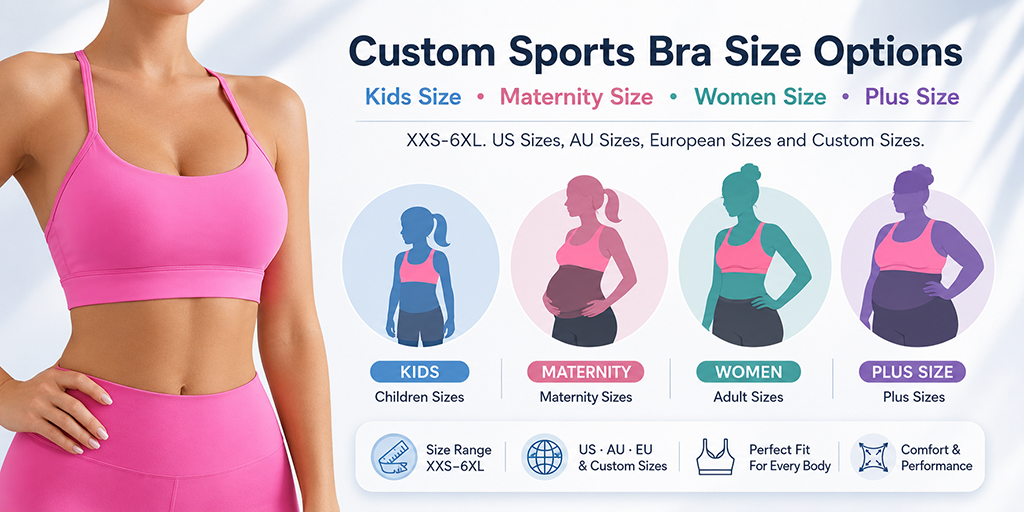
How Should Buyers Compare Manufacturer Prices, MOQ and Total Sourcing Costs?
Buyers should compare leggings manufacturers using standardized quotations that include identical fabric specifications, size ranges, customization requirements, order quantities and delivery terms. The lowest unit price does not necessarily produce the lowest total sourcing cost. MOQ, fabric minimums, sampling charges, freight, import duties, inspection expenses and inventory exposure can substantially change the commercial result. A fair comparison should distinguish garment manufacturing cost from total landed cost and evaluate whether each supplier’s order structure matches the brand’s expected sales volume.
When evaluating a Plus Size Wholesale Leggings Manufacturer, buyers should avoid comparing quotations that were prepared under different assumptions.
One supplier may quote a basic polyester-spandex legging with standard packaging. Another may include a higher-cost nylon-spandex fabric, custom waistband construction, extended-size grading and branded labels.
The two prices may appear directly comparable in a spreadsheet, but they represent different products.
The correct approach is to establish a common purchasing specification, identify the commercial differences and calculate the financial consequences before selecting a manufacturing partner.
What Information Should Every Manufacturer Receive Before Preparing a Quotation?
A reliable quotation begins with a clear Request for Quotation (RFQ).
Without consistent specifications, manufacturers may make different assumptions about materials, construction and order quantities.
For example, a buyer may request pricing for 500 pairs of high-waisted leggings in sizes XL–5XL.
Supplier A may assume a standard black fabric, while Supplier B includes a custom-dyed performance material. Supplier C may calculate the price using 500 pieces per color rather than 500 pieces across the entire order.
These differences can make the lowest quotation commercially misleading.
A standardized RFQ should include the following information.
| RFQ Requirement | Information to Provide | Why It Matters |
|---|---|---|
| Product design | Technical drawings and construction details | Prevents differences in garment complexity |
| Fabric | Composition, GSM, stretch and performance requirements | Establishes comparable material costs |
| Size range | XL–5XL with measurement specifications | Clarifies grading and production requirements |
| Order quantity | Total pieces and quantities per color and size | Determines production and material minimums |
| Customization | Logos, labels, printing and packaging | Identifies additional costs |
| Quality requirements | Approved samples, tolerances and inspection criteria | Defines expected production standards |
| Delivery terms | Required Incoterm and destination | Supports consistent logistics calculations |
| Production schedule | Required approval and shipment dates | Identifies scheduling risks |
| Payment terms | Deposit, balance and payment conditions | Affects working capital and purchasing risk |
The manufacturer should also identify any assumptions used in preparing its quotation.
For instance, if the quoted price depends on using an available stock fabric, the supplier should disclose whether custom colors would change the MOQ or unit cost.
A quotation is commercially useful only when buyers understand exactly what the quoted price includes.
How Do Style MOQ, Color MOQ and Fabric MOQ Affect Initial Orders?
MOQ is often presented as one number, but garment production can involve several different minimum quantities.
Buyers should distinguish among three important requirements.
Style MOQ refers to the minimum number of garments required for a particular design.
Color MOQ refers to the minimum quantity required for each color.
Fabric MOQ refers to the minimum material quantity imposed by the fabric supplier, which may be different from the garment manufacturer’s minimum.
These conditions can interact.
Consider a hypothetical manufacturer offering a style MOQ of 200 pieces.
A buyer might assume that 200 pieces can be divided into four colors with 50 pieces each.
However, the manufacturer may require at least 100 pieces per color. The proposed four-color collection would therefore require 400 pieces rather than 200.
If one of those colors also requires custom dyeing, the fabric mill may impose an additional material minimum.
| MOQ Structure | Example Requirement | Commercial Implication |
|---|---|---|
| Style MOQ | 200 pieces per design | Sets minimum production commitment |
| Color MOQ | 100 pieces per color | Limits the number of colors in small orders |
| Fabric MOQ | 300 meters per custom color | May require additional fabric investment |
| Size assortment | Mixed sizes permitted within each color | Supports flexible XL–5XL distribution |
| Packaging MOQ | 500 custom printed packages | May create unused packaging inventory |
The quantities are illustrative and do not represent a specific manufacturer’s published terms.
A supplier advertising a low garment MOQ may still require a substantial total commitment when fabric and packaging minimums are included.
Buyers should therefore request written confirmation of the effective minimum order quantity for the complete product specification.
Why Does Size Distribution Matter More for Extended-Size Leggings?
Plus size collections introduce another commercial variable: size distribution.
A brand ordering 500 pieces across XL–5XL may not expect equal sales in every size.
For example, projected demand might be concentrated in 2XL and 3XL, with lower volumes in XL and 5XL.
A hypothetical order distribution could look like this:
| Size | Planned Quantity | Share of Order |
|---|---|---|
| XL | 75 | 15% |
| 2XL | 150 | 30% |
| 3XL | 150 | 30% |
| 4XL | 85 | 17% |
| 5XL | 40 | 8% |
| Total | 500 | 100% |
The manufacturer should also identify any assumptions used in preparing its quotation.
For instance, if the quoted price depends on using an available stock fabric, the supplier should disclose whether custom colors would change the MOQ or unit cost.
A quotation is commercially useful only when buyers understand exactly what the quoted price includes.
How Do Style MOQ, Color MOQ and Fabric MOQ Affect Initial Orders?
MOQ is often presented as one number, but garment production can involve several different minimum quantities.
Buyers should distinguish among three important requirements.
Style MOQ refers to the minimum number of garments required for a particular design.
Color MOQ refers to the minimum quantity required for each color.
Fabric MOQ refers to the minimum material quantity imposed by the fabric supplier, which may be different from the garment manufacturer’s minimum.
These conditions can interact.
Consider a hypothetical manufacturer offering a style MOQ of 200 pieces.
A buyer might assume that 200 pieces can be divided into four colors with 50 pieces each.
However, the manufacturer may require at least 100 pieces per color. The proposed four-color collection would therefore require 400 pieces rather than 200.
If one of those colors also requires custom dyeing, the fabric mill may impose an additional material minimum.
| MOQ Structure | Example Requirement | Commercial Implication |
|---|---|---|
| Style MOQ | 200 pieces per design | Sets minimum production commitment |
| Color MOQ | 100 pieces per color | Limits the number of colors in small orders |
| Fabric MOQ | 300 meters per custom color | May require additional fabric investment |
| Size assortment | Mixed sizes permitted within each color | Supports flexible XL–5XL distribution |
| Packaging MOQ | 500 custom printed packages | May create unused packaging inventory |
The quantities are illustrative and do not represent a specific manufacturer’s published terms.
A supplier advertising a low garment MOQ may still require a substantial total commitment when fabric and packaging minimums are included.
Buyers should therefore request written confirmation of the effective minimum order quantity for the complete product specification.
Why Does Size Distribution Matter More for Extended-Size Leggings?
Plus size collections introduce another commercial variable: size distribution.
A brand ordering 500 pieces across XL–5XL may not expect equal sales in every size.
For example, projected demand might be concentrated in 2XL and 3XL, with lower volumes in XL and 5XL.
A hypothetical order distribution could look like this:
| Size | Planned Quantity | Share of Order |
|---|---|---|
| XL | 75 | 15% |
| 2XL | 150 | 30% |
| 3XL | 150 | 30% |
| 4XL | 85 | 17% |
| 5XL | 40 | 8% |
| Total | 500 | 100% |
A manufacturer that permits flexible size mixing may support this distribution without requiring unnecessary inventory.
Another supplier may impose minimum quantities for individual sizes or charge additional fees for unusually small size runs.
These restrictions should be identified before comparing prices.
The buyer should also confirm whether larger sizes carry different unit prices.
Extended-size garments can require more fabric, and some manufacturers may apply size-related pricing adjustments.
However, such adjustments should be explained through the actual material consumption, cutting requirements and production conditions rather than accepted without clarification.
A low unit price is less valuable when the required size assortment creates inventory that the brand is unlikely to sell.
How Should Buyers Normalize Quotations from Different Manufacturers?
Quotation normalization means adjusting supplier comparisons so that prices reflect substantially equivalent purchasing conditions.
Suppose three manufacturers submit the following hypothetical quotations.
| Commercial Condition | Supplier A | Supplier B | Supplier C |
|---|---|---|---|
| Quoted unit price | $7.80 | $8.60 | $9.20 |
| Minimum garment order | 1,000 pcs | 500 pcs | 200 pcs |
| Custom labels included | No | Yes | Yes |
| Approved fabric specification | Yes | Yes | Yes |
| Inspection included | No | In-line QC | In-line and final QC |
| Quoted delivery term | EXW | FOB | FOB |
| Size mixing | Restricted | Flexible | Flexible |
Supplier A has the lowest unit price, but its quotation excludes some services and requires a larger initial order.
Supplier B has a higher unit price but includes labeling and certain quality control activities.
Supplier C has the highest unit price but permits the smallest initial production commitment.
These quotations should not be ranked solely by the first price row.
Buyers should request comparable delivery terms, identify excluded costs and determine the total investment required under each supplier’s minimum order conditions.
For example, Supplier A’s initial garment commitment is $7,800, while Supplier C’s is $1,840.
The difference is not a direct measure of profitability because the quantities are different. It does, however, show how MOQ affects the amount of cash committed before the product has been sold.
For an established brand with reliable demand, the larger order may be reasonable.
For a new product launch, the smaller commitment may reduce inventory exposure even when the unit cost is higher.
EXW vs FOB vs DDP: How Do Delivery Terms Change the Real Price?
International trade quotations often use different delivery terms, and buyers should consult the ICC Incoterms 2020 rules to understand how responsibilities, costs and risks are allocated between buyers and sellers.
These terms allocate specified responsibilities, costs and risks between buyers and sellers. They do not automatically determine product quality, payment terms or every customs obligation.
Three terms commonly encountered in apparel sourcing are:
| Incoterm | General Commercial Meaning | Buyer Consideration |
|---|---|---|
| EXW — Ex Works | Seller makes goods available at the named place | Buyer takes on extensive collection and export-related responsibilities |
| FOB — Free On Board | Seller delivers goods on board the vessel at the named port | Buyer generally arranges and pays for main carriage and destination costs |
| DDP — Delivered Duty Paid | Seller delivers to the named destination with specified import responsibilities | Confirm the seller can legally and practically meet import obligations |
FOB is intended for sea or inland waterway transport. For containerized shipments handed to a carrier before loading, FCA may be more appropriate.
Buyers should use the correct Incoterms version, named location and transport arrangement when preparing comparisons.
For example, an EXW quotation of $8.00 per garment cannot be compared directly with a DDP quotation of $10.50 without identifying which logistics, customs and delivery costs are included.
A supplier may appear cheaper simply because more expenses have been transferred to the buyer.
For reliable comparisons, purchasing teams should calculate the cost of bringing the goods to the same destination under equivalent assumptions.
How Can Buyers Calculate Total Landed Cost?
Total landed cost is the estimated cost of acquiring and delivering goods to the agreed destination.
Depending on the purchasing arrangement, it may include:
Manufacturing cost.
Sampling and development charges allocated to the order.
Packaging and labeling.
Origin handling and freight.
Cargo insurance.
Import duties and applicable tariffs.
Customs brokerage and destination handling.
Inspection expenses.
Inland transportation to the receiving location.
The following simplified example compares two hypothetical orders delivered to the same destination.
| Cost Component | Supplier A | Supplier B |
|---|---|---|
| Quantity | 1,000 pcs | 500 pcs |
| Garment cost | $7,800 | $4,300 |
| Development and setup | $250 | $180 |
| Freight and handling | $1,000 | $650 |
| Duties and customs costs | $1,200 | $650 |
| Inspection | $300 | $250 |
| Total estimated landed cost | $10,550 | $6,030 |
| Estimated landed cost per piece | $10.55 | $12.06 |
Illustrative figures only. Actual import costs depend on origin, destination, tariff classification, trade measures and shipment conditions.
Supplier A offers a lower landed cost per piece, but the buyer must purchase twice as many garments.
Supplier B costs more per piece while requiring a smaller initial cash commitment.
Neither option is automatically superior.
The better decision depends on expected sales, inventory turnover, storage costs, available working capital and the consequences of unsold stock.
How Do Inventory Costs Change the Meaning of a Low Unit Price?
Purchasing decisions should distinguish unit economics from inventory economics.
A lower manufacturing price improves unit economics only when the goods can be sold at an acceptable margin.
A large MOQ may create additional risks:
Unsold sizes and colors.
Higher storage expenses.
Cash tied up in slow-moving stock.
Discounting or liquidation.
Reduced flexibility to improve the product after customer feedback.
Greater exposure to changing consumer demand.
Suppose a brand is preparing to launch its first plus size leggings collection.
The brand is still not sure which waistband design, color or size distribution its customers will prefer.
If the brand orders 2,000 pieces just to get a lower unit price, it may not be as commercially suitable as ordering 300–500 pieces at a higher unit price.
Starting with a smaller order allows the brand to understand the actual market demand before investing in a larger quantity of inventory.
By contrast, an established brand with reliable sales data may benefit from a larger production run because demand uncertainty is lower.
The correct MOQ depends on the brand’s stage of development, not simply the manufacturer’s ability to offer a volume discount.
When Should Buyers Reject the Lowest Quotation?
A low quotation should not automatically be rejected, but it should be investigated when the price difference cannot be explained.
Potential warning signs include:
Unclear fabric specifications
The supplier may have quoted a cheaper material that does not meet the required stretch recovery or opacity standards.
Incomplete customization costs
Labels, packaging, special seams or additional sample revisions may be excluded.
Unrealistic production schedules
The promised lead time may not account for material procurement, approvals or available production capacity.
Unclear quality responsibilities
The quotation may exclude independent inspection, rework obligations or procedures for rejected goods.
Unexpected MOQ restrictions
A low unit price may depend on a quantity substantially higher than the buyer can commercially justify.
Unapproved subcontracting
The supplier may intend to transfer production to another facility without clear oversight or buyer authorization.
Buyers should ask the manufacturer to explain the price structure and confirm the proposed specifications in writing.
A lower price supported by an efficient production process and equivalent quality evidence can be commercially attractive.
A lower price achieved by removing essential requirements is not a comparable offer.
How Should Buyers Balance Price, MOQ and Supply Reliability?
The final commercial comparison should consider more than unit cost.
A useful purchasing framework evaluates five areas:
| Evaluation Area | Key Question |
|---|---|
| Product compliance | Does the quotation cover the approved technical requirements? |
| Initial investment | Can the brand support the MOQ and associated costs? |
| Landed cost | What is the comparable cost at the receiving destination? |
| Delivery reliability | Can the manufacturer meet a realistic production schedule? |
| Reorder flexibility | Can the supplier support future quantities and material consistency? |
A manufacturer with the lowest price may be suitable for a stable, high-volume program.
A supplier with a higher unit price and flexible size mixing may be more appropriate for a new extended-size collection.
A manufacturer offering attractive terms but insufficient production evidence should not advance simply because its quotation appears commercially favorable.
The purchasing decision should connect technical suitability, total cost and inventory risk.
Once suppliers have been compared under consistent commercial conditions, buyers can combine the findings with fabric, grading and production evidence in a structured supplier scorecard.
That scorecard should identify not only which manufacturer performs well overall, but also which candidates fail requirements that the brand cannot compromise.
1. Product Development
Regular monthly product development ensures consistent updates to your brand line.
2. Fabric Sourcing
Regular monthly product development ensures consistent updates to your brand line.
3. Sample Making
Regular monthly product development ensures consistent updates to your brand line.
4. Bulk Production
Regular monthly product development ensures consistent updates to your brand line.
5. Packaging & Delivery
Regular monthly product development ensures consistent updates to your brand line.
How to Choose the Best Plus Size Wholesale Leggings Manufacturer Using a Verified Supplier Scorecard?
Buyers should select leggings manufacturers using a weighted scorecard supported by verified technical, operational and commercial evidence. The evaluation should cover fabric performance, XL–5XL grading, sample accuracy, production consistency, MOQ, landed cost and communication. However, a high total score cannot compensate for failure to meet a mandatory requirement. The strongest selection process combines preliminary qualification, standardized supplier comparisons, sample testing, factory verification and a controlled trial order before awarding substantial production volume.
Choosing a Plus Size Wholesale Leggings Manufacturer requires more than identifying the company with the most attractive quotation or the highest published production capacity.
Two suppliers may receive similar overall ratings while presenting very different purchasing risks.
One may offer competitive pricing but have limited evidence of extended-size grading. Another may charge more while demonstrating reliable material traceability, accurate size-set samples and documented corrective actions.
A structured scorecard helps buyers compare these differences without reducing the entire purchasing decision to one number.
What Should Buyers Verify Before Adding a Manufacturer to the Final Shortlist?
The first stage is supplier qualification.
Before spending time on detailed scoring, buyers should establish whether each manufacturer can meet the basic requirements of the purchasing program.
A preliminary review should cover five areas.
1. Business identity
Confirm the supplier’s registered business name, operating location and contractual role.
If the company uses outside manufacturing partners, identify which facility will produce the garments and who is responsible for quality.
2. Relevant product experience
Request examples of leggings or comparable stretch garments, preferably covering the intended extended-size range.
General apparel manufacturing experience is not sufficient evidence of XL–5XL technical capability.
3. Material suitability
Confirm whether the supplier can source fabric meeting the required composition, weight, opacity, stretch recovery and other mandatory specifications.
4. Commercial compatibility
Check whether MOQ, color minimums, production schedules and payment conditions fit the purchasing program.
5. Production accountability
Determine whether the supplier can provide approved samples, inspection records and clear procedures for managing production defects.
A manufacturer that cannot satisfy a mandatory requirement should not advance simply because it performs well in less important categories.
For example, if the collection requires verified recycled material traceability and the supplier cannot provide the necessary documentation, an attractive price should not compensate for that gap.
How Should Buyers Separate Published Claims from Verified Supplier Evidence?
A manufacturer may publish information about certifications, production capacity, sample lead times and quality control systems.
Such information can help buyers identify potential suppliers, but it should not automatically receive the same weight as independently verified evidence.
A practical supplier assessment distinguishes three evidence levels.
| Evidence Status | Definition | Example |
|---|---|---|
| Verified | Supported by relevant documents, testing, inspection or direct confirmation | A current certificate whose scope has been checked |
| Supplier-reported | Stated by the manufacturer but not independently confirmed | Advertised monthly production capacity |
| Unconfirmed | Information is missing, unclear or inconsistent | No evidence supporting XL–5XL production experience |
The distinction matters because supplier marketing materials often describe general capabilities rather than the conditions of a particular order.
A manufacturer may advertise a seven-day sampling service, but a complex custom leggings project may require several fitting rounds.
Another supplier may publish a low MOQ that applies only to standard fabrics and available colors.
Published information should guide initial research. Project-specific evidence should guide the final purchasing decision.
Buyers should maintain an evidence register showing the source, date, relevance and verification status of important supplier claims.
This makes the evaluation easier to update when quotations, certifications or production conditions change.
Which Criteria Should Receive the Highest Weight in a Supplier Scorecard?
Not every evaluation category carries equal risk.
For a technically demanding extended-size leggings collection, fabric performance and size grading may deserve more weight than minor differences in unit price.
For an established product with approved specifications and stable sales, production consistency and replenishment reliability may become more important.
The following example provides a starting point for a new XL–5XL leggings program.
| Evaluation Category | Suggested Weight | Main Evidence |
|---|---|---|
| Fabric performance and traceability | 20% | Specifications, test reports and approved material references |
| Extended-size grading and fit | 25% | Size-set samples, fit records and measurement charts |
| Sample-to-bulk quality control | 20% | PP sample controls, inspections and corrective actions |
| Commercial terms and landed cost | 15% | Normalized RFQ, MOQ and total cost |
| Delivery and reorder capability | 10% | Production planning and repeat-order records |
| Communication and problem resolution | 10% | Response quality and documented issue handling |
| Total | 100% |
These weights are illustrative. Buyers should adjust them according to their product and business requirements.
For example, a brand developing highly supportive training leggings may increase the weighting for fabric and fit.
A distributor replenishing a proven product may give greater weight to delivery reliability and production consistency.
The important principle is to establish the weighting before reviewing final supplier scores.
Changing the weights afterward to favor a preferred manufacturer can undermine the objectivity of the comparison.
How Can Buyers Calculate a Weighted Supplier Score?
A weighted scorecard combines category ratings with predetermined importance levels.
One practical method uses a five-point scale:
1 — Poor: Significant weaknesses or inadequate evidence.
2 — Below requirements: Important gaps remain.
3 — Acceptable: Meets basic requirements with manageable limitations.
4 — Strong: Good evidence and reliable performance.
5 — Excellent: Comprehensive evidence and strong demonstrated capability.
Each category receives a rating, which is multiplied by its weighting.
The following example compares three hypothetical manufacturers.
| Evaluation Category | Weight | Supplier A | Supplier B | Supplier C |
|---|---|---|---|---|
| Fabric performance | 20% | 4 | 5 | 3 |
| Extended-size grading | 25% | 3 | 5 | 4 |
| Quality control | 20% | 4 | 4 | 3 |
| Commercial terms | 15% | 5 | 3 | 4 |
| Delivery and reorders | 10% | 4 | 4 | 3 |
| Communication | 10% | 4 | 5 | 4 |
| Weighted score / 100 | 100% | 78 | 88 | 69 |
Illustrative scoring only; these ratings do not represent actual manufacturers.
Supplier B achieves the highest overall score because it performs strongly in fabric qualification, extended-size grading and communication.
Supplier A offers stronger commercial terms but has weaker grading evidence.
Supplier C remains a potential candidate but requires improvements in material qualification and quality control.
The scorecard creates a useful comparison, but it should not be treated as an automatic supplier-selection decision.
Why Can a High Overall Score Still Be Commercially Misleading?
A weighted score can conceal a serious weakness when a manufacturer performs well in other categories.
Suppose a supplier achieves 90 out of 100 points.
Its quotation is competitive, communication is excellent and delivery planning appears reliable.
However, the manufacturer cannot provide the required fabric certification for a product that must meet a specific verified material standard.
The overall score looks strong, but the supplier has failed a mandatory requirement.
The same problem can occur with extended-size fit.
A manufacturer may receive excellent ratings for pricing and production capacity while repeatedly failing the approved 5XL fit requirements.
A high numerical score cannot compensate for failure to meet a non-negotiable technical or commercial condition.
Buyers should therefore separate mandatory qualification requirements from weighted preferences.
A supplier must pass the mandatory requirements before its overall score becomes relevant.
Which Supplier Requirements Should Be Treated as Non-Negotiable?
Mandatory requirements depend on the purchasing program.
They should be defined before quotations and samples are evaluated.
| Mandatory Requirement | Example Failure | Recommended Decision |
|---|---|---|
| Required fabric specification | Supplier cannot source the approved material | Do not approve until resolved |
| Extended-size capability | Required 4XL–5XL samples repeatedly fail fit | Require correction before qualification |
| Material traceability | Mandatory documentation is unavailable | Exclude from qualifying orders |
| Legal supplier identity | Contracting entity cannot be established | Suspend purchasing approval |
| Maximum inventory commitment | MOQ exceeds the brand’s approved budget | Renegotiate or remove from shortlist |
| Production acceptance conditions | Supplier refuses essential inspection terms | Do not award bulk production |
| Required delivery deadline | Realistic schedule cannot meet a critical launch | Consider another supplier |
A supplier may be excellent in general and still be unsuitable for a particular project.
For example, a large manufacturer requiring 1,000 pieces per color may be a strong option for an established retailer.
The same manufacturer may be commercially unsuitable for a startup testing 200 pieces across several colors.
This does not mean the manufacturer has poor production capability.
It means its operating model does not match the buyer’s current purchasing requirements.
How Should Buyers Compare Finalists Under the Same Sampling Conditions?
After preliminary qualification, buyers should reduce the list to a manageable number of finalists.
Two or three suppliers are often sufficient for a focused technical comparison, although the appropriate number depends on the project.
Each finalist should receive substantially the same:
Tech Pack and product drawings.
Fabric requirements and approved references.
XL–5XL measurement specifications.
Branding and packaging instructions.
Target order quantities.
Sample evaluation criteria.
Commercial quotation assumptions.
If Supplier A receives a detailed Tech Pack while Supplier B receives only photographs, the resulting samples cannot provide a fair comparison of manufacturing capability.
The evaluation should examine not only the finished garments but also how suppliers manage the development process.
For example, a manufacturer that identifies an unrealistic measurement requirement and explains the technical trade-off may demonstrate stronger development capability than one that agrees to every instruction without review.
However, suggestions should be supported by clear reasoning and should not result in unauthorized changes.
The buyer should record sample defects, required corrections, revision dates and final approval results.
A fair comparison requires equivalent product requirements and transparent evaluation criteria.
When Should Buyers Conduct a Factory Audit or Independent Inspection?
A factory audit can help verify operational conditions that are difficult to assess through quotations and product photographs.
Depending on the order’s risk level, an audit may examine:
Legal identity and operating location.
Production equipment and relevant processes.
Material storage and identification.
Cutting and sewing controls.
Quality inspection procedures.
Staff responsibilities and training.
Production records and traceability.
Subcontracting arrangements.
Applicable compliance documentation.
However, not every purchasing program requires an expensive on-site audit.
For a small trial order, document verification, approved samples and an independent pre-shipment inspection may provide a proportionate level of assurance.
For a substantial multi-season program, a more detailed factory assessment may be commercially justified.
Buyers should also distinguish a social compliance audit from a product quality audit.
A facility may demonstrate compliance with certain workplace requirements without proving that its leggings meet the buyer’s technical specifications.
Likewise, a technically capable manufacturer may still need separate evaluation against the buyer’s legal, ethical or sustainability requirements.
Different forms of verification answer different questions.
How Can a Trial Order Validate the Supplier Scorecard?
A trial order provides an opportunity to compare a manufacturer’s promised capability with actual production performance.
The trial should use the approved specifications and clearly defined acceptance conditions.
Buyers can evaluate:
Sample accuracy: Did the manufacturer reproduce the approved PP sample?
Measurement consistency: Did finished garments remain within the agreed tolerances across the size range?
Material consistency: Did the bulk fabric match the approved reference?
Quality performance: Were inspection findings acceptable?
Delivery reliability: Did the supplier meet the agreed schedule or communicate justified changes promptly?
Problem resolution: Were defects investigated and corrected effectively?
Documentation: Were inspection and production records available when required?
A supplier may achieve a high preliminary score but perform poorly during the trial.
Another manufacturer with a slightly lower initial score may demonstrate better consistency and communication under real production conditions.
The trial results should therefore update the supplier assessment.
A scorecard is most useful when it reflects actual purchasing evidence rather than remaining unchanged after the first evaluation.
Should Buyers Select One Manufacturer or Maintain a Backup Supplier?
A primary supplier can provide continuity in product development, material approvals and repeat production.
However, depending entirely on one manufacturer may create additional supply-chain risk.
A backup supplier can be valuable when:
The product has stable demand.
Delivery interruptions would create substantial losses.
The approved fabric can be sourced through more than one facility.
Production volumes justify secondary qualification.
The brand has sufficient resources to maintain two approved supply options.
A backup supplier should not be selected solely because it offers a low quotation.
It should undergo appropriate material, grading and production qualification.
Otherwise, the brand may discover that its backup cannot reproduce the approved product when urgently needed.
Maintaining two manufacturers may also introduce additional costs and complexity, particularly when minimum order quantities are small.
For an early-stage brand, one properly qualified supplier with clear reorder procedures may be more practical than dividing limited orders between several factories.
For an established retailer, dual sourcing may support greater continuity.
The decision should reflect the product’s commercial importance and the cost of a potential supply interruption.
What Does a Strong Final Supplier Decision Look Like?
A well-supported supplier decision should be explainable without relying on promotional claims.
The purchasing team should be able to show:
Which manufacturers passed the mandatory qualification requirements.
Which evidence supported the technical and commercial ratings.
How the finalists were compared under equivalent conditions.
What weaknesses or unresolved risks remain.
Why the selected supplier is suitable for the actual purchasing program.
What conditions must be satisfied before bulk production approval.
The manufacturer with the highest preliminary score may be the preferred candidate, but the final decision should also consider sample performance, verified production capability and contractual conditions.
For example, a supplier offering excellent fabric and grading evidence may justify a higher unit price when the alternative creates unacceptable fit or return risks.
Conversely, a technically capable manufacturer may not be the right choice if its MOQ exceeds the brand’s available budget.
The purpose of a supplier scorecard is not to create an impressive ranking. It is to make the purchasing decision more consistent, transparent and defensible.
Once a manufacturer has been selected, the final procurement stage should confirm that all technical approvals, commercial terms and quality responsibilities are documented before the bulk purchase order is released.
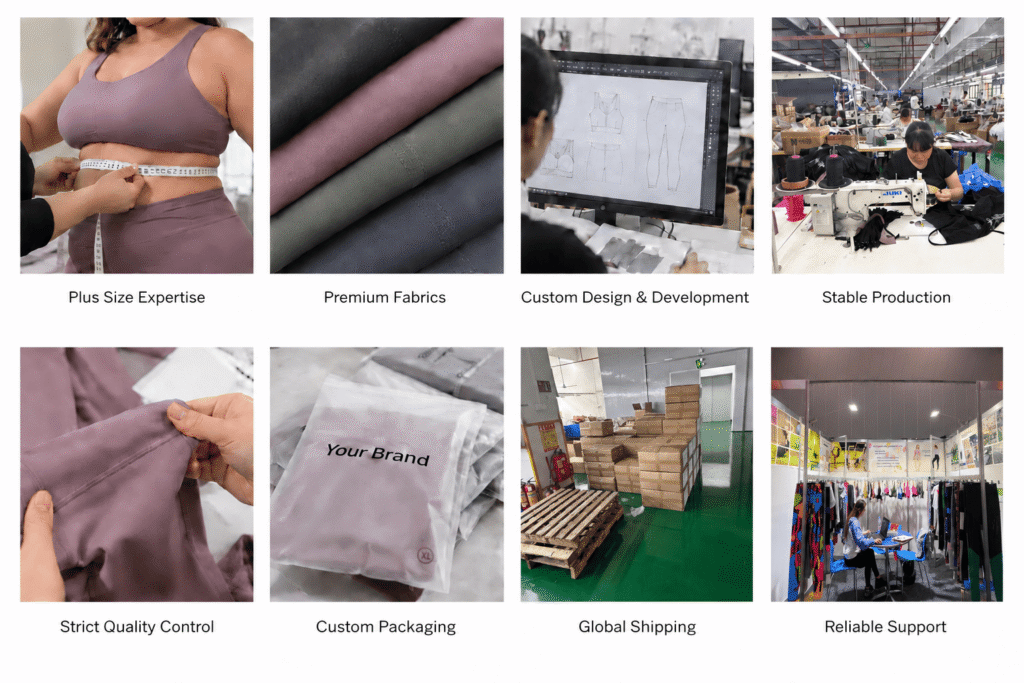
What Should Buyers Confirm Before Awarding a Bulk Order?
Before placing a bulk leggings order, buyers should first confirm the manufacturer’s legal business identity, approved fabric, XL–5XL size specifications, PP sample, production schedule, inspection standards and all commercial terms. The purchase order should clearly state the approved product version, rules for changing materials, payment terms, delivery responsibilities and how to handle products that do not meet the agreed requirements. Buyers should approve the supplier for bulk production only after all mandatory technical requirements have been met and the remaining commercial risks are clearly understood.
Selecting a Plus Size Wholesale Leggings Manufacturer is not the end of the sourcing process. The final purchasing decision must translate supplier evaluation results into clear, enforceable production requirements.
A manufacturer may have passed fabric testing, completed successful fitting and offered acceptable commercial terms. However, if the purchase order does not identify the approved specifications, both parties may interpret the production requirements differently.
For extended-size leggings, this can create expensive problems.
A different fabric lot may change stretch recovery. An outdated measurement chart may affect 4XL and 5XL fit. An unapproved waistband adjustment may alter compression or coverage.
The final procurement stage should eliminate these uncertainties before production begins.
What Should Be Included in a Final Bulk Order Approval Checklist?
A practical purchasing checklist should cover technical, operational and commercial requirements.
| Approval Area | Required Confirmation | Supporting Evidence |
|---|---|---|
| Supplier identity | Correct legal entity and production location | Registration and contractual documents |
| Product specifications | Final design and construction approved | Locked Tech Pack |
| Fabric | Composition, GSM, color and performance approved | Fabric reference and relevant test reports |
| Extended sizing | XL–5XL grading and measurements approved | Final size chart and fit records |
| PP sample | Production reference formally accepted | Identified approved PP sample |
| Order quantity | Style, color and size quantities confirmed | Final purchase order |
| Quality requirements | Inspection methods and defect criteria agreed | Quality agreement |
| Material changes | Substitution approval procedure established | Written change-control terms |
| Production schedule | Approval, production and shipment milestones agreed | Confirmed production plan |
| Commercial terms | Price, payment, Incoterms and destination confirmed | Signed quotation or contract |
| Nonconforming goods | Inspection failure and corrective-action procedures agreed | Written responsibility terms |
| Reorder requirements | Approved specifications and material references retained | Product and production records |
Buyers should not treat every item as a routine administrative formality.
For example, the size distribution may be commercially important even when the total quantity is correct.
An order for 1,000 leggings could be delivered with the correct overall quantity but the wrong distribution of XL, 2XL, 3XL, 4XL and 5XL.
The supplier should therefore confirm the quantity of every size and color combination before cutting begins.
How Should Buyers Lock Specifications and Control Production Changes?
An approved product should have one clearly identified specification version.
This includes the Tech Pack, measurement chart, fabric reference, trims, construction details and packaging requirements.
When the manufacturer requests a change, the buyer should evaluate its effect before approval.
A useful change-control procedure should identify:
The original approved requirement.
The proposed change and its reason.
The affected sizes, colors or production quantities.
The expected effect on quality, cost and delivery.
Whether new samples or testing are required.
The buyer’s written approval or rejection.
For example, a manufacturer may propose replacing the approved waistband elastic because the original material is unavailable.
The replacement may look similar but have different extension and recovery characteristics.
Approving it without evaluation could affect waistband stability across the extended-size range.
No material or construction change should be considered automatically acceptable simply because the finished garment looks similar.
Changes affecting mandatory product requirements should be evaluated against the approved performance criteria.
What Should Buyers Confirm About Production Dates, Payment and Delivery Responsibilities?
A production schedule should distinguish between sample approval, material procurement, cutting, sewing, inspection and shipment.
A supplier’s advertised lead time may not include all these activities.
For example, a 25-working-day production estimate may begin only after the buyer approves the PP sample and the required materials are available.
Buyers should confirm the actual starting point of the production schedule.
Payment terms also require clear documentation.
The purchasing agreement should identify the deposit, balance payment conditions, currency, payment method and any agreed relationship between payment and inspection.
Delivery responsibilities should be defined using the appropriate Incoterm and named location.
The buyer should also understand which party arranges freight, customs clearance and insurance where applicable.
For international orders, commercial documentation should be consistent with the agreed transaction and destination requirements.
A low quotation should not justify accepting unclear delivery or payment obligations.
What Should Happen If the Bulk Order Fails Inspection?
Inspection failure procedures should be agreed upon before production.
Otherwise, buyers and manufacturers may disagree about whether defective garments should be repaired, replaced, discounted or rejected.
A practical agreement should define:
Which inspection standards and acceptance criteria apply.
Who may conduct the inspection.
How failed products will be identified and segregated.
Whether rework is permitted.
Who is responsible for additional inspection expenses.
How replacement or corrective production will be handled.
What happens when the agreed delivery date is affected.
When a shipment can be released after corrective action.
The appropriate remedy depends on the defect and the purchase agreement.
A removable finishing defect may be corrected without remanufacturing the garment.
A systematic grading error affecting an entire size range may require a more extensive investigation.
Buyers should also distinguish between a failed inspection and a disputed specification.
If the requirement was never clearly documented, resolving the disagreement may be more difficult.
Clear acceptance criteria protect both the buyer and the manufacturer by establishing what successful production actually means.
When Should Buyers Approve a Trial Order, Increase Volume or Change Suppliers?
Supplier development should follow the evidence obtained during actual production.
A successful trial order can support a larger purchasing commitment, but the decision should consider more than whether the shipment arrived.
Buyers should review measurement consistency, material performance, inspection results, communication, delivery reliability and corrective-action effectiveness.
| Trial Order Result | Recommended Purchasing Response |
|---|---|
| Technical and commercial requirements satisfied | Consider controlled volume increases |
| Minor correctable defects | Require documented correction and verification |
| Repeated measurement failures | Suspend volume increases until resolved |
| Unapproved material substitutions | Investigate supplier controls before reordering |
| Significant delivery problems | Review capacity planning and recovery measures |
| Serious unresolved compliance concerns | Do not proceed until requirements are satisfied |
| Repeated failure to correct major defects | Consider replacing the supplier |
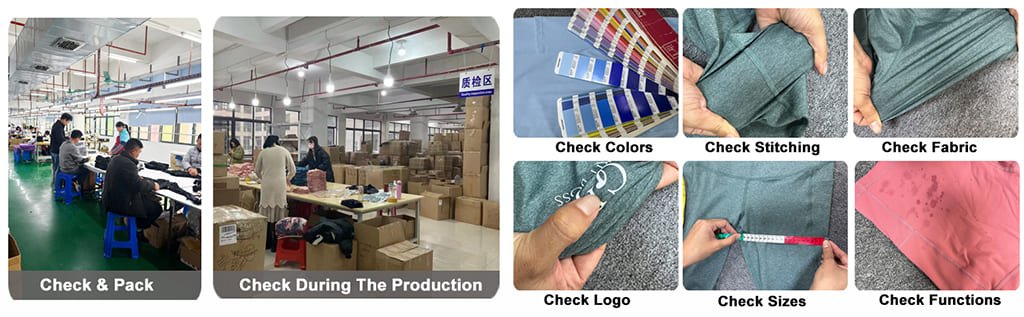
Frequently Asked Questions About Plus Size Leggings Manufacturer Selection
1. What Should Buyers Look for in a Plus Size Leggings Manufacturer?
Buyers should prioritize verified extended-size grading capability, suitable fabric performance, reliable production controls and commercially manageable order conditions. A manufacturer’s product catalog or advertised capacity should not replace technical evidence. Request XL–5XL size charts, representative samples, fabric specifications, inspection procedures and written quotations. Compare shortlisted suppliers using the same requirements. The strongest manufacturer is the one that can demonstrate the ability to produce the intended garment consistently while meeting the brand’s quality, delivery and inventory requirements.
2. How Can Buyers Verify That a Manufacturer Can Produce XL–5XL Leggings?
Buyers should ask manufacturers to provide graded measurement charts, actual size-set samples and fitting test records for the required XL–5XL sizes. Just because a supplier says it can make leggings up to 5XL does not mean it has the necessary technical capability. Buyers should check whether the waistband is stable, whether the hip and thigh areas fit properly, whether the rise measurements are correct, and whether the fabric has good coverage and is comfortable during movement. They should also ask how the manufacturer solves fitting problems and whether the approved grading specifications are kept for bulk production. The final supplier decision should be based on actual sample testing results, not only size labels or product photos.
3. Which Fabric Tests Are Most Important for Plus Size Leggings?
The most important tests depend on the product’s intended use, but stretch recovery, opacity, dimensional stability, colorfastness and surface durability are common priorities. Buyers should establish suitable test methods and acceptance criteria before evaluating samples. Fabric composition and GSM alone cannot demonstrate wearing performance. Test reports should identify the relevant material and be connected to the proposed production fabric. For extended-size garments, opacity and recovery should also be evaluated under representative extension and movement conditions.
4. Can Startup Brands Order Custom Plus Size Leggings with a Low MOQ?
Some manufacturers support smaller custom orders, but the effective MOQ depends on fabric availability, color selection, construction and branding requirements. A supplier may accept a low style quantity while imposing higher minimums for custom-dyed fabric or printed packaging. Startup brands should ask whether sizes can be mixed within the style MOQ and whether available stock materials can reduce initial commitments. The objective is to establish a commercially manageable first order without removing essential fit or quality requirements.
5. How Long Does Custom Plus Size Leggings Sampling and Bulk Production Take?
Sampling and bulk production schedules vary according to product complexity, fabric availability, fitting revisions and order quantity. Buyers should distinguish initial sample preparation from the complete development process, which may require several fit corrections. Bulk production timing should be confirmed after final specifications, PP sample approval and material availability. A manufacturer’s advertised lead time should not be treated as a guaranteed shipment date. Request a written schedule identifying approvals, production milestones, inspection and the expected shipping date.
6. Should Buyers Choose the Manufacturer Offering the Lowest Price?
The lowest unit price is not necessarily the best purchasing option because MOQ, fabric quality, inspection costs, freight and inventory exposure affect the total commercial result. Buyers should normalize quotations using identical specifications, quantities and delivery terms. A higher-priced supplier may offer better size flexibility or stronger production evidence. A lower-priced manufacturer may be suitable when its technical capability is verified and the required volume matches demand. Compare total landed cost and purchasing risk rather than price alone.
7. How Can Buyers Prevent Quality Differences Between Samples and Bulk Orders?
Buyers should approve a clearly identified PP sample, lock the final specifications and require documented material and production controls. The manufacturer should verify incoming fabrics, inspect production during sewing and check finished garments against agreed acceptance criteria. Measurement checks should cover the relevant size range rather than only one base size. Material substitutions and construction changes should require authorization. For higher-risk orders, independent inspection can provide additional evidence before shipment.
8. What Should Buyers Confirm Before Reordering Plus Size Leggings?
Before reordering, buyers should confirm that approved patterns, fabric references, measurements, trims and quality requirements remain unchanged. Ask whether the original material is still available and whether any production process has changed. Review previous inspection findings, customer complaints and corrective actions. Confirm the new quantity, size distribution, price and production schedule in writing. Repeat orders should use the approved specifications as the production reference, with any necessary changes evaluated before manufacturing begins.
Final Recommendation: Select the Manufacturer That Can Prove Repeatable Performance
The best sourcing decision is not determined by a manufacturer’s advertised ranking, factory size or lowest quotation.
For plus size leggings, buyers should prioritize fabric suitability, accurate XL–5XL grading, approved sample performance, production consistency and manageable commercial terms.
A supplier may be suitable for a small market test but not for a large replenishment program. Another may offer excellent production capacity but require an MOQ that exceeds the brand’s current demand.
These differences should be evaluated against the actual purchasing requirements.
A reliable supplier-selection process begins with standardized specifications, continues through evidence-based comparison and ends with documented production approval.
Before placing a bulk order, buyers should be able to explain why the selected manufacturer meets the product’s mandatory requirements, what risks remain and how those risks will be controlled.
The right manufacturing partner is the one that can consistently deliver the approved product under conditions that support the brand’s quality expectations, inventory strategy and long-term growth.