OEM/ODM Sportswear Manufacturer | 3-Day Sampling | Low MOQ | 50K Monthly Capacity | ISO9001 & BSCI Certified

Top 10 Sustainable Sports Bra Manufacturer in China | Buyer Comparison Guide
Compare 10 Chinese sustainable sports bra manufacturer by recycled material traceability, certification evidence, factory credibility, MOQ, pricing and sourcing risks. Find the right supplier for your activewear brand.
Top 10 Sustainable Sports Bra Manufacturer Options: Evaluating Recycled Material Traceability, Environmental Claims and Sourcing Risks
A sports bra made with recycled polyester may look almost the same as a sports bra made with virgin polyester. It is very difficult to see the difference from the appearance. However, this difference can have a big impact on the brand’s sourcing claims, documentation requirements and the responsibilities of the supplier.
That creates an uncomfortable question for purchasing teams: How do you know whether a manufacturer’s sustainability claims are supported by the actual materials used in your order?
A supplier might advertise GRS-related fabrics without providing documents connected to a particular shipment. Another might offer excellent samples but require a minimum order quantity that is too high for a new brand. A third might have competitive prices but limited evidence of material consistency between production batches.
Choosing a Sustainable Sports Bra Manufacturer therefore requires more than comparing product photographs, certification logos and unit prices.
The purchasing decision should consider material traceability, factory identity, sample reliability, commercial flexibility and the risk of making environmental claims that cannot be substantiated.
The best Sustainable Sports Bra Manufacturer is one whose documented material sourcing, sports bra production experience, order conditions and quality controls match the buyer’s actual requirements. Buyers should compare manufacturers using the same product specifications, verify relevant recycled-content documentation, examine samples under consistent conditions and confirm the commercial implications of MOQ, lead time and material availability. A supplier should not receive a higher ranking simply because it advertises more certifications or offers a lower initial quotation. The strongest purchasing decision is supported by evidence, not marketing language.
For brands selling in international markets, this distinction is particularly important. A misleading recycled-content claim can create problems that extend beyond manufacturing quality, including packaging changes, customer complaints and additional compliance costs.
The following Chinese manufacturing options provide different starting points for supplier evaluation. Their suitability depends on the product, purchasing volume and evidence required for the intended market.
Top 10 Sustainable Sports Bra Manufacturer Options in China: Which Suppliers Should B2B Buyers Shortlist?
Buyers should shortlist manufacturers with relevant sports bra production experience, realistic order conditions and the ability to provide evidence supporting their recycled material claims. China offers manufacturers serving small private label businesses, growing activewear brands and larger purchasing programs, but these suppliers do not necessarily have equivalent sustainability documentation or production capabilities. A reliable comparison should distinguish confirmed company information from marketing claims and identify which requirements still need written verification.
How Were These Sustainable Sports Bra Manufacturers Selected and Evaluated?
A Sustainable Sports Bra Manufacturer should be evaluated against the requirements of the actual purchasing program, not simply against a general reputation for making activewear.
Five factors deserve particular attention:
Relevant manufacturing experience: Evidence of sports bra production, not just general apparel manufacturing.
Material traceability: Documentation identifying the recycled material, its source and the relevant supply-chain participants.
Commercial suitability: MOQ, sample costs, quotation conditions, material minimums and realistic lead times.
Production reliability: Sample approval records, inspection procedures and controls over material substitutions.
Buyer compatibility: Whether the supplier’s business model suits a small market test, a growing collection or an established purchasing program.
Certification documents should also be evaluated carefully. A manufacturer’s access to fabric from a GRS-certified mill does not, by itself, establish that every finished garment or shipment qualifies for a certified product claim.
The ten companies below are sourcing candidates rather than a scientifically established ranking of environmental performance. Their public information provides different levels of detail, so missing evidence should be requested before a final purchasing decision.
1. Dongguan Pair Fashion Co., Ltd. — Flexible Activewear Sourcing for Growing Brands
Location: Dongguan, Guangdong, China
Established: 2016
Dongguan Pair Fashion Co., Ltd. manufactures activewear for international brands, including sports bras, yoga clothing, leggings, equestrian apparel and specialized performance garments.
Pair Fashion is a relevant Sustainable Sports Bra Manufacturer option for buyers comparing manageable initial order quantities with access to custom sports bra development and recycled performance fabrics.
| Evaluation item | Company information |
|---|---|
| Business model | OEM, ODM and private label |
| Regular MOQ | From 100 pieces, depending on specifications |
| Sample lead time | Normally around 7 days; selected projects may be faster |
| Bulk lead time | Typically 20–25 working days after required approvals |
| Core products | Sports bras, leggings, yoga apparel and performance activewear |
| Recycled material options | Recycled polyester and recycled nylon blends |
| Quality and compliance references | ISO 9001, BSCI and GRS-related material documentation; current applicability should be verified |
| Production resources | Company-reported 135 employees, seven production lines and 13 QC personnel |
Core strengths
A regular starting MOQ of 100 pieces may help brands control inventory during early product testing.
Dedicated pattern and sampling personnel provide a basis for evaluating sports bra development capability.
Experience across several activewear categories may suit brands purchasing coordinated product ranges.
Established quality-control procedures provide useful starting points for supplier audits.
Limitations and purchasing considerations
A 100-piece MOQ should not be interpreted as a guaranteed minimum for every recycled fabric, color or custom construction. Special material requirements may create additional minimums.
The company’s published monthly production capacity covers multiple apparel categories. Buyers planning a large sports bra order should confirm the production capacity specifically available for their project.
Certification references should also be checked against current documents, material scope and the proposed order.
Best suited to: Startups, growing DTC brands and established buyers seeking a balance between development support and manageable order quantities.
Less suited to: Buyers requiring immediate shipment of branded retail stock or specialty materials outside the company’s confirmed sourcing capabilities.
Buyer verification priority: Request fabric composition, applicable recycled-content evidence, MOQ by color, sample acceptance criteria and confirmed production availability.
Brands that have completed their supplier comparison and are ready to discuss an actual collection can review Pair Fashion’s custom sustainable sports bra manufacturing services.
2. INGOR Sportswear — Recycled Fabric Sports Bra Product Options
Location: Guangzhou, Guangdong, China
INGOR Sportswear specializes in activewear, including sports bras, yoga garments and performance apparel.
It is a useful Sustainable Sports Bra Manufacturer candidate because its public product catalog includes specific recycled fabric sports bras rather than only general statements about sustainable fashion.
Selected listings describe recycled nylon and spandex compositions, including 76% recycled nylon and 24% spandex. Other listings describe different compositions, so buyers should verify the exact material for the selected product.
| Evaluation item | Public information |
|---|---|
| Core products | Sports bras, yoga apparel and activewear |
| Published MOQ | Commonly 300 pieces per design on selected listings |
| Sample lead time | Several listings state 7–10 days |
| Recycled material options | Recycled nylon and recycled polyester products |
| Certification references | GRS- and OEKO-TEX-related product claims |
| Bulk lead time | Confirm against the specific order |
| Best suited to | Brands able to meet several-hundred-piece product minimums |
Core strengths
Specific recycled sports bra listings provide a practical starting point for material inquiries.
Published product compositions allow buyers to prepare more precise RFQs.
Activewear specialization is relevant when evaluating stretch garment construction.
Public MOQ information helps buyers assess whether the supplier fits their purchasing volume.
Limitations and purchasing considerations
Different product pages may specify different fabric compositions and sampling conditions. One recycled sports bra listing also contains inconsistent MOQ and sampling references.
For a buyer, this makes written quotation normalization essential. The final RFQ should identify the exact product, composition, size range, colors, MOQ and delivery assumptions.
Best suited to: Activewear brands with defined sports bra requirements and sufficient purchasing volume.
Less suited to: Brands needing very small trial orders or relying on unverified certification claims for finished-product marketing.
Buyer verification priority: Confirm the selected fabric specification, order minimum, certification scope, transaction evidence and agreed sample schedule.
3. Eationwear — Activewear Manufacturing and Production Capability Comparison
Eationwear is an activewear manufacturing business associated with custom sportswear and sports bra production.
As a Sustainable Sports Bra Manufacturer candidate, Eationwear deserves evaluation for its manufacturing arrangements, sports bra experience and ability to source recycled materials under documented specifications.
Company details requiring project-specific confirmation
City and operating history: Confirm the registered production entity and actual manufacturing address.
MOQ: Obtain the minimum per style, color and material.
Sample and bulk lead time: Request a written schedule.
Core products: Custom sports bras and other activewear.
Certifications: Verify current documents and whether they apply to the intended product.
Recycled materials: Confirm available compositions and traceability records.
Core strengths
Eationwear’s sports bra manufacturing focus makes it a relevant candidate for technical product comparison. Buyers can examine its sample construction, communication and quotation structure alongside other activewear specialists.
Potential limitations
Public manufacturer descriptions are not sufficient to establish that recycled materials can be traced through every required production stage. The actual manufacturing location and environmental evidence should be confirmed before the supplier receives a high sustainability score.
Best suited to: Brands comparing custom sports bra manufacturing options.
Less suited to: Buyers requiring complete certification evidence before an initial supplier inquiry.
Buyer verification priority: Registered manufacturing entity, recycled fabric source, MOQ, sample evidence and relevant certifications.
4. ZIYANG — Seamless and Cut-and-Sew Activewear Comparison
ZIYANG is included as a potential sportswear sourcing candidate, but the exact manufacturing entity, current website and relevant recycled sports bra capabilities require further confirmation.
A Sustainable Sports Bra Manufacturer operating in both seamless and cut-and-sew production can offer useful flexibility, but those capabilities must be demonstrated through actual samples and production records.
Company information
City: Not independently verified.
Established: Not independently verified.
MOQ: Project-specific confirmation required.
Sample lead time: Not verified.
Core products: Activewear and sports bra capabilities require confirmation against the manufacturing entity.
Certifications: Not verified for the proposed order.
Potential strengths
If both construction methods are available, buyers may be able to compare different manufacturing approaches without assuming that one construction is automatically more sustainable.
Potential limitations
Unverified company identity and production information prevent a reliable assessment of factory capability, pricing and environmental performance.
Best suited to: Buyers willing to complete preliminary company verification before technical comparison.
Less suited to: Purchasing teams that require a fully documented manufacturer shortlist immediately.
Buyer verification priority: Business registration, official website, factory location, product references and recycled-content documentation.
5. Uga Wear — Low-MOQ Sports Bra Manufacturing
Location: Dongguan, Guangdong, China
Established: 2014, according to company information
Uga Wear manufactures sports bras and other activewear products for private label and wholesale buyers.
Uga is a useful Sustainable Sports Bra Manufacturer comparison option for brands evaluating smaller initial orders, although its sustainable material claims require separate verification.
The company’s public information states that its general MOQ is approximately 100 pieces per design and color, but certain sports bra styles may require 200 pieces.
| Evaluation item | Public information |
|---|---|
| Core products | Sports bras, yoga wear and workout apparel |
| Published MOQ | Commonly 100 pieces; selected sports bras may require 200 |
| Sample lead time | Approximately 5–7 working days |
| Bulk lead time | Approximately 20–25 working days |
| Established | 2014, company-reported |
| Factory location | Dongguan |
| Certifications | Relevant current documents should be requested |
| Recycled materials | Specific product and supplier evidence required |
Core strengths
Published MOQ information helps smaller buyers estimate initial commitments.
Sports bra specialization supports more relevant supplier comparisons.
Public sample and production timelines provide initial planning references.
The company’s product range may suit brands purchasing several activewear categories.
Potential limitations
A low general MOQ does not establish the minimum for a specific recycled fabric. Buyers should also avoid assuming that the manufacturer’s general sustainability positioning proves the recycled content of individual garments.
Best suited to: Startups and boutique activewear brands seeking manageable order quantities.
Less suited to: Buyers requiring verified recycled-content documentation before product selection.
Buyer verification priority: Sports bra-specific MOQ, recycled material availability and traceability evidence.
6. Hingto — Custom Sports Bra Manufacturing for Emerging Brands
Location: Guangzhou, Guangdong, China
Established: 2009, according to company information
Hingto manufactures sportswear and athleisure products, including sports bras, leggings and other performance apparel.
Hingto is a Sustainable Sports Bra Manufacturer candidate worth considering when buyers want to compare development flexibility, factory experience and order quantities.
Its published information indicates that MOQ depends on design and fabric, with approximately 200 pieces given as an average for custom apparel.
Manufacturer information
Core products: Sports bras, leggings, activewear and related apparel.
MOQ: Approximately 200 pieces on average for custom apparel; product-specific confirmation required.
Sample lead time: Confirm according to project specifications.
Bulk lead time: Written confirmation required.
Certifications: The company references ethical and sustainable practices; relevant evidence must be checked.
Recycled material availability: Confirm for the intended sports bra.
Core strengths
Hingto’s activewear specialization and experience serving emerging brands make it a practical comparison candidate. Its published MOQ approach also acknowledges that order minimums depend on fabric and design requirements.
Potential limitations
General statements about ethical production should not replace certification checks or order-level recycled material documentation.
Best suited to: Emerging and growing activewear brands comparing custom manufacturing partners.
Less suited to: Buyers expecting a fixed MOQ or certified recycled-content claim without confirming the specific product.
Buyer verification priority: Factory documentation, applicable certifications, recycled fabric sourcing and sample acceptance criteria.
7. ZCHYOGA — Yoga Apparel and Sports Bra Sourcing
ZCHYOGA promotes yoga apparel manufacturing, including sports bras, leggings and other workout clothing.
As a Sustainable Sports Bra Manufacturer candidate, it may be relevant for buyers sourcing sports bras within a wider yoga collection.
Company information
City and establishment date: Require confirmation from company records.
Core products: Yoga sports bras, leggings and workout apparel.
MOQ: Confirm for the selected design and fabric.
Sample lead time: Confirm in writing.
Certifications: Request current supporting documentation.
Recycled materials: Verify composition and supply-chain evidence.
Core strengths
Its focus on yoga clothing may be relevant to brands comparing comfort-oriented sports bra products and related apparel categories.
Potential limitations
A supplier’s ability to manufacture yoga bras does not automatically establish capability for high-support sports bras or traceable recycled-content production.
Best suited to: Yoga and wellness apparel brands seeking coordinated sourcing options.
Less suited to: Buyers requiring independently demonstrated high-impact sports bra expertise or verified recycled-content credentials before engagement.
Buyer verification priority: Relevant product samples, fabric specifications and certification documents.
8. YOUMEGA — Sports Bra Manufacturing with Different Order Models
Location: Xiamen, Fujian, China; additional production operations described in Yiwu
YOUMEGA publishes sports bra manufacturing information covering stock-based branding and more extensively customized production.
It is a useful Sustainable Sports Bra Manufacturer candidate because the company distinguishes between lower-minimum stock-based programs and higher-minimum full custom orders.
Its website describes a starting MOQ of 100 sets for stock-plus-logo programs and 300–500 pieces per style and color for full custom manufacturing.
Manufacturer information
Core products: Sports bras and activewear.
Production types: Seamless and cut-and-sew.
Stock-based MOQ: From 100 sets, company-reported.
Full custom MOQ: Approximately 300–500 pieces per style and color.
First sample: Around seven days, company-reported.
Certification references: OEKO-TEX, BSCI and materials from GRS-certified mills.
Manufacturing locations: Xiamen and Yiwu operations described by the company.
Core strengths
The distinction between stock-based and full custom minimums is useful for procurement planning. It helps buyers avoid comparing quotations for fundamentally different production models.
Potential limitations
Materials sourced from certified mills do not automatically establish certification of finished garments. Buyers must also verify which production site will handle their order and whether the relevant documentation covers that facility.
Best suited to: Brands comparing stock-based market tests with larger custom development programs.
Less suited to: Buyers who require a 100-piece MOQ for fully original custom products.
Buyer verification priority: Exact production model, factory location, material source and certification applicability.
9. Hucai Sportswear — Custom Sports Bra and Activewear Production
Hucai Sportswear publishes sports bra products and OEM/ODM apparel manufacturing information.
Hucai may be considered a Sustainable Sports Bra Manufacturer candidate when buyers are comparing custom sports bra suppliers and need to establish whether the manufacturer can meet recycled material requirements.
Company information
City and establishment date: Require confirmation against the relevant legal entity.
Core products: Sports bras and other sportswear.
MOQ: Product-specific confirmation required.
Sample and bulk lead time: Confirm in writing.
Fabric options: Custom fabrics advertised.
Certifications: Relevant recycled-content documents not established from the cited product information.
Core strengths
The company publishes identifiable sports bra products and describes custom fabric and garment options. This provides a starting point for evaluating samples and product specialization.
Potential limitations
Custom fabric capability is not the same as verified recycled material sourcing. Buyers should not assign a strong sustainability score until the supplier demonstrates appropriate documentation.
Best suited to: Buyers comparing custom sports bra manufacturing options.
Less suited to: Procurement programs that require verified recycled-content evidence before supplier engagement.
Buyer verification priority: Company identity, fabric traceability, MOQ and sports bra sample performance.
10. OUYI Activewear — Sports Bra Manufacturing with Published Commercial Specifications
Location: Guangzhou, Guangdong, China
Established: 2008, according to company information
OUYI Activewear publishes sports bra manufacturing information covering different support levels and private label production.
OUYI is a Sustainable Sports Bra Manufacturer candidate for buyers comparing published MOQ, estimated prices and recycled polyester sourcing options.
The company advertises a starting MOQ of 200 pieces per color and style, with sampling generally taking 7–10 business days.
Manufacturer information
Core products: Sports bras, activewear and related performance garments.
MOQ: From 200 pieces per color and style.
Sample lead time: Approximately 7–10 business days.
Published price indication: US$5–15 per unit, depending on specifications.
Recycled material options: RPET and other performance fabrics.
Certification references: ISO 9001 and OEKO-TEX claims.
Quality references: AQL 2.5 is advertised.
Core strengths
Published commercial starting points make OUYI easier to include in an initial quotation comparison. Its sports bra specialization is also relevant to buyers evaluating technical garment requirements.
Potential limitations
Published price ranges should not be treated as comparable quotations without matching material, construction, quantity and commercial terms.
Certification claims and AQL references should be supported by current documents and agreed inspection procedures.
Best suited to: Brands that can meet the published MOQ and want to compare supplier quotations using defined specifications.
Less suited to: Buyers requiring a firm price or environmental certification conclusion before submitting detailed product requirements.
Buyer verification priority: Current price quotation, recycled fabric documentation, certification scope and inspection agreement.
Sustainable Sports Bra Manufacturer Comparison Table: Evidence, MOQ, Sampling and Buyer Suitability
The following table provides a practical first comparison. Figures are published supplier indications, not independently verified quotations.
| Manufacturer | Location | Published MOQ or status | Sample information | Main purchasing consideration |
|---|---|---|---|---|
| Pair Fashion | Dongguan | From 100 pcs | Normally around 7 days | Manageable starting orders; verify material-specific conditions |
| INGOR Sportswear | Guangzhou | Commonly 300 pcs/design | 7–10 days on selected listings | Recycled product references; reconcile listing details |
| Eationwear | China; facility confirmation required | Confirm | Confirm | Verify production entity and material evidence |
| ZIYANG | Not verified | Confirm | Confirm | Complete basic manufacturer identity checks |
| Uga Wear | Dongguan | 100–200 pcs depending on style | 5–7 working days | Check sports bra-specific MOQ |
| Hingto | Guangzhou | Around 200 pcs average | Confirm | Verify fabric-specific minimums |
| ZCHYOGA | China; facility confirmation required | Confirm | Confirm | Evaluate sports bra samples and documentation |
| YOUMEGA | Xiamen / Yiwu | 100 sets stock; 300–500 custom | Around 7 days | Distinguish stock programs from full custom |
| Hucai Sportswear | China; facility confirmation required | Confirm | Confirm | Verify recycled material sourcing |
| OUYI Activewear | Guangzhou | From 200 pcs/color/style | 7–10 business days | Normalize price and certification evidence |
The lowest MOQ does not automatically identify the best Sustainable Sports Bra Manufacturer. A supplier offering 100 pieces with limited fabric choices may be less suitable than one requiring 300 pieces but providing the exact material, documentation and production conditions needed for the collection.
Which Manufacturers Are Best Suited to Startups, Growing Brands and Established Buyers?
A Sustainable Sports Bra Manufacturer should fit the buyer’s current commercial situation, not only its long-term growth ambitions.
For a startup, the main concern may be avoiding excessive inventory. A lower initial order commitment can reduce exposure while the brand tests customer demand. However, the buyer must still verify that the selected recycled material and labeling claims are appropriate.
For a growing DTC brand, the decision may depend more heavily on repeatable specifications, consistent fabric supply and reliable replenishment. A slightly higher MOQ can be commercially acceptable when the product already has stable demand.
For an established activewear company, production capacity, documented quality controls, supply-chain traceability and continuity between orders may deserve greater weight than a small difference in unit price.
The best Sustainable Sports Bra Manufacturer for a startup may not be the best supplier for a brand ordering thousands of units every season. Buyers should establish their mandatory requirements first, then compare manufacturers against the same commercial assumptions.
Before making a final shortlist, request the following information from each Sustainable Sports Bra Manufacturer:
Registered company name and actual production location.
Recycled fabric composition and relevant supporting documents.
MOQ by style, color and material.
Comparable sample quotation and sample evaluation conditions.
Confirmed bulk production schedule.
Current certification and inspection evidence.
Procedure for handling fabric substitutions and specification changes.
A credible Sustainable Sports Bra Manufacturer should be willing to explain which requirements it can meet, which depend on material availability and which require additional verification.
For buyers preparing a project-specific inquiry, Pair Fashion’s recycled fabric sports bra OEM/ODM production information provides a separate starting point for discussing actual manufacturing requirements.

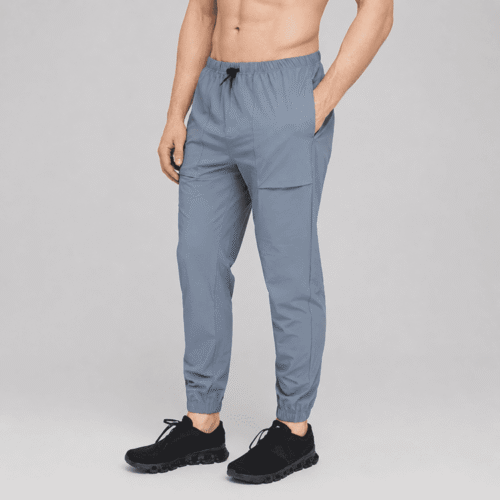
Custom Men’s Cargo Jogger Pants Performance Activewear OEM ODM
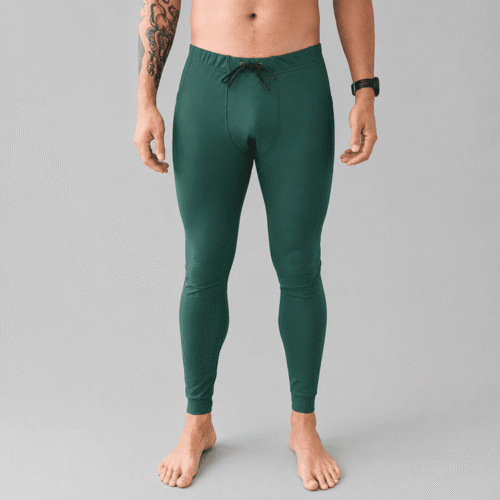
Custom Men’s Compression Yoga Pants OEM ODM Training Leggings
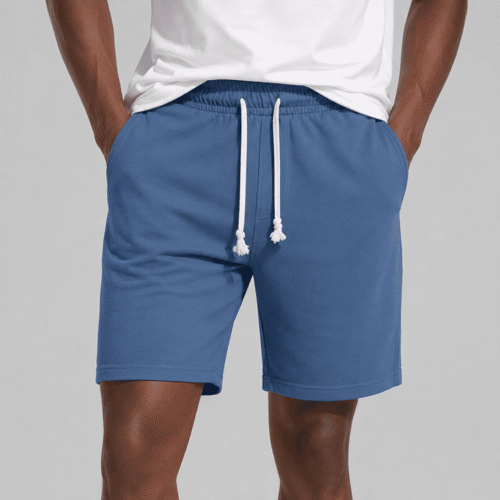
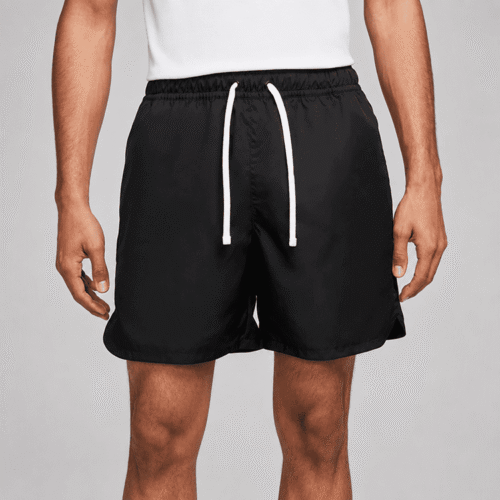
Custom Men’s Drawstring Lounge Shorts OEM ODM Casual Sweat Shorts
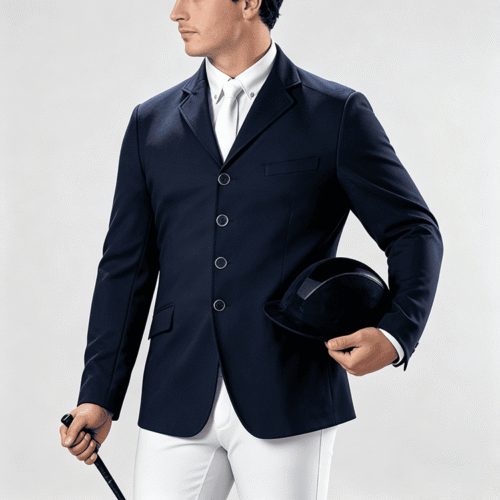
Custom Men’s Equestrian Show Jacket Competition Riding Coat OEM ODM
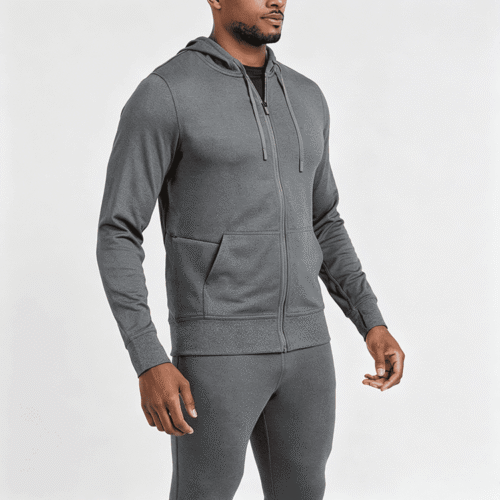
Custom Men’s Full Zip Hoodie Fleece Sweatshirt OEM ODM
Custom Men’s Gym Shorts OEM ODM Lightweight Workout Shorts
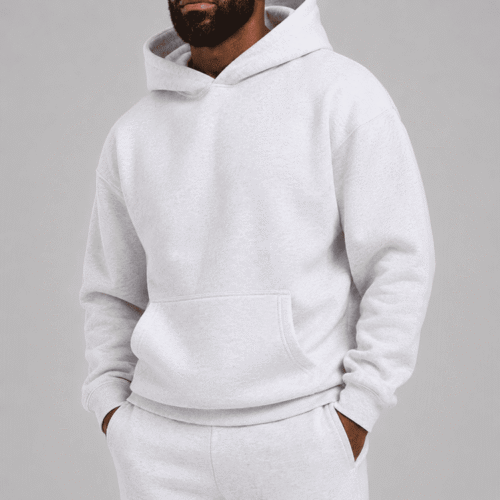
Custom Men’s Heavyweight Pullover Hoodie Fleece Sweatshirt OEM ODM
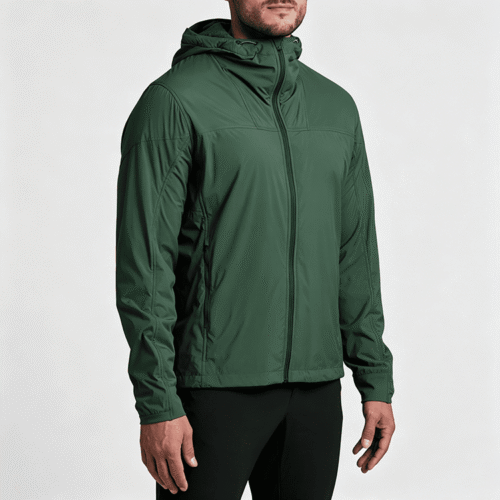
Custom Men’s Hooded Windbreaker Jacket Lightweight Training Outerwear OEM ODM
Why Choose Sustainable Sports Bra Manufacturers in China vs Vietnam, Turkey and Other Sourcing Markets?
China is often a practical sourcing choice because its textile supply chain combines recycled fabric suppliers, elastic and trim manufacturers, testing resources, and specialized activewear production. However, the best manufacturing country depends on material origin, order volume, import duties, delivery requirements and the evidence needed to support environmental claims. Buyers should compare total sourcing conditions rather than assume that a Chinese Sustainable Sports Bra Manufacturer is automatically cheaper, faster or more sustainable than suppliers in Vietnam, Turkey or other markets.
Choosing a manufacturing country is one of the first decisions that can influence a sports bra collection’s cost, production reliability and environmental credibility.
China has a well-developed textile and apparel supply chain, particularly in manufacturing regions such as Guangdong, Fujian and Zhejiang. These industrial clusters provide access to synthetic performance fabrics, stretch materials, elastic components, labels, packaging and specialized garment production.
For international buyers, the value of this network is not simply the number of available suppliers. It is the possibility of coordinating several parts of a sourcing program within an established manufacturing ecosystem.
A Sustainable Sports Bra Manufacturer in China may have access to recycled polyester or nylon suppliers, fabric testing services and specialist trim manufacturers. Nevertheless, these resources are not necessarily located in the same facility, and proximity does not prove material traceability.
Vietnam, Turkey and other sourcing markets offer different advantages. Some may provide better access to particular export markets, different labor-cost structures, shorter delivery routes or more suitable trade arrangements.
The right decision begins with the requirements of the actual order.
Why Do International Activewear Buyers Consider China for Sustainable Sports Bra Sourcing?
China attracts international activewear buyers because its textile supply chain offers a broad range of manufacturing and material sourcing options.
Sports bras are relatively small garments, but their construction can involve several specialized components:
Main performance fabric
Lining or support fabric
Underband elastic
Shoulder straps and adjusters
Removable or fixed padding
Sewing threads
Labels and packaging
Recycled-content documentation
A Sustainable Sports Bra Manufacturer must coordinate these components while maintaining the approved product specifications.
This becomes more complicated when the buyer requests recycled materials. The main fabric may contain recycled nylon, while the elastic, lining, padding and other components have different material compositions.
A supplier’s statement that a sports bra is made with recycled fabric does not establish that every component is recycled.
Material availability and material traceability are separate questions.
A manufacturer may have access to numerous recycled fabrics but limited documentation for a particular material batch. Another supplier may offer fewer material choices but maintain stronger transaction records.
Buyers should therefore evaluate a Sustainable Sports Bra Manufacturer according to both material sourcing capability and the ability to document the selected materials.
China’s Manufacturing Clusters and Their Commercial Relevance
| Manufacturing region | Relevant supply-chain characteristics | What buyers should verify |
|---|---|---|
| Guangdong | Activewear manufacturing, garment development and access to trims and fabrics | Actual production site and material sourcing arrangements |
| Fujian | Sportswear production and synthetic textile supply-chain resources | Sports bra specialization and recycled material documentation |
| Zhejiang | Textile manufacturing, fabric sourcing and garment supply-chain resources | Material composition, supplier identity and production location |
| Jiangsu | Textile development, yarn and fabric manufacturing resources | Whether the proposed fabric is commercially available and traceable |
These regional characteristics are useful for supplier discovery, but they should not be treated as proof that every manufacturer in a particular province has the same capabilities.
A Guangdong-based Sustainable Sports Bra Manufacturer may purchase recycled fabric from another province or import specialized material from overseas.
The buyer needs to know where the actual material comes from, not simply where the finished garment is sewn.
China vs Vietnam vs Turkey: Which Country Offers Better Supply Chain Coordination?
There is no universally best country for sustainable sports bra production.
China, Vietnam and Turkey operate within different manufacturing and trade environments. Their suitability depends on the buyer’s product requirements, order quantities, supply-chain arrangements and destination market.
A brand importing sports bras into the United States may reach a different conclusion from a European brand prioritizing shorter transportation routes.
The following comparison highlights the main purchasing considerations.
| Sourcing factor | China | Vietnam | Turkey |
|---|---|---|---|
| Performance fabric sourcing | Broad domestic textile supply-chain options | Established apparel sector; some specialized materials may be imported | Established textile and apparel industry |
| Activewear manufacturing | Wide range of specialist and general manufacturers | Significant export-oriented apparel production | Apparel and textile manufacturing capabilities |
| Recycled material documentation | Depends on the specific certified supply chain | Depends on the specific certified supply chain | Depends on the specific certified supply chain |
| Small-order flexibility | Available from selected manufacturers | Depends on manufacturer and production model | Depends on manufacturer and production model |
| European market proximity | Longer transportation distance | Longer transportation distance | Potentially shorter transport routes |
| US import duties | Product- and origin-specific; additional trade measures may apply | Product- and origin-specific | Product- and origin-specific |
| Best commercial fit | Buyers needing broad sourcing options and coordinated development | Buyers with suitable established production programs | Buyers prioritizing certain European supply-chain arrangements |
This comparison should be treated as a sourcing framework rather than a fixed ranking. Country-level advantages do not guarantee that an individual supplier will perform well.
China vs Vietnam: Is One Country Always Cheaper?
Not necessarily.
A Vietnamese manufacturer may quote a lower garment-making cost but rely on imported performance fabrics or trims. A Chinese supplier may have a higher sewing cost but offer more favorable access to the required materials.
The final cost depends on the complete purchasing arrangement.
For example, consider two suppliers quoting the same sports bra specification:
Supplier A offers a lower garment price but requires a larger material commitment.
Supplier B charges more per garment but can accommodate a smaller initial order.
Supplier A imports the specified recycled fabric.
Supplier B can source the material through an established domestic supplier.
Both suppliers must provide equivalent evidence for the buyer’s recycled-content claims.
The lowest initial quotation may not represent the lowest total purchasing cost.
A buyer comparing a Chinese Sustainable Sports Bra Manufacturer with a Vietnamese supplier should normalize material specifications, quantity, delivery terms and documentation requirements before comparing prices.
China vs Turkey: Which Is Better for European Brands?
Turkey can be attractive to European buyers because of its geographic proximity and established textile industry.
For some purchasing programs, shorter transportation routes may support more frequent replenishment and reduce the time required to move goods.
However, geographic proximity does not automatically mean lower total cost or stronger sustainability performance.
A Turkish supplier may offer a commercially attractive solution for a European brand with frequent smaller replenishment orders. A Chinese Sustainable Sports Bra Manufacturer may be more suitable when the buyer needs a broader selection of specialized performance fabrics or particular manufacturing capabilities.
Import duties, applicable trade arrangements, freight costs and material sourcing should be checked for the actual product and destination.
The best country is the one that provides the strongest overall purchasing conditions for the specific order, not the one with the most attractive general reputation.
How Does China’s Recycled Textile Supply Chain Affect Supplier Selection?
Recycled material sourcing introduces an additional layer of complexity because buyers must evaluate both the physical material and the evidence supporting its claimed origin.
A Sustainable Sports Bra Manufacturer may purchase fabric through a textile mill, fabric converter, trading company or nominated material supplier.
Each arrangement can affect price, minimum order quantities, material availability and document traceability.
For example, two suppliers may offer sports bras containing recycled polyester, but their sourcing arrangements could be very different.
Supplier A
Purchases recycled fabric through an established textile supplier.
Can identify the fabric producer and material composition.
Provides relevant certification information.
Can explain which documents are available for the proposed order.
Supplier B
Advertises recycled polyester in its product catalog.
Cannot identify the actual fabric producer.
Provides an unrelated certification image.
Cannot confirm whether the same material will be used for repeat orders.
Both suppliers may produce acceptable-looking sports bras.
Only one has demonstrated a stronger basis for verifying its material claims.
This is why a Sustainable Sports Bra Manufacturer should not be evaluated solely by the recycled-content percentage printed in a fabric description.
What Does a Traceable Recycled Material Supply Chain Look Like?
A practical traceability review should identify the relevant parties and documents connecting the material source to the finished product.
| Supply-chain stage | Key purchasing question | Typical evidence to request |
|---|---|---|
| Recycled material source | What is the claimed recycled input? | Material origin and composition information |
| Yarn or fiber supplier | Who supplied the recycled yarn or fiber? | Supplier details and applicable certification evidence |
| Fabric mill | Who manufactured the performance fabric? | Fabric specifications and relevant supplier documents |
| Garment manufacturer | Who cut, sewed and finished the sports bras? | Production records and material identification |
| Shipment | Can the documents be connected to the actual order? | Relevant transaction and shipment documentation |
The precise documents depend on the certification scheme and the claim being made. Buyers should not assume that one certificate covers every stage of the supply chain.
For example, the Global Recycled Standard and Recycled Claim Standard are associated with chain-of-custody requirements. A scope certificate identifies certified operations and activities, while transaction documentation can be relevant to the movement of certified products through the supply chain.
A Sustainable Sports Bra Manufacturer should explain which documents apply to its role and which must come from upstream suppliers.
Buyers can review the applicable requirements through Textile Exchange, which develops standards and resources related to responsible textile materials.
Why Is Material Continuity Important for Repeat Orders?
A recycled fabric that is available today may not remain available under identical conditions six months later.
The original fabric mill might change production schedules, discontinue a color or adjust material availability.
If the manufacturer substitutes another fabric without approval, the replacement may affect:
Recycled-content documentation
Fabric weight
Stretch and recovery
Color appearance
Hand feel
Garment fit
Cost and delivery schedule
These risks exist with conventional fabrics as well, but they become more complicated when the buyer has made specific recycled-content claims.
A reliable Sustainable Sports Bra Manufacturer should maintain clear material specifications and obtain buyer approval before changing a critical component.
When Does China Offer Better Commercial Value Beyond the Lowest Factory Price?
China may offer stronger commercial value when a purchasing program benefits from coordinated material sourcing, garment manufacturing and supplier communication.
However, value should be measured through the entire sourcing arrangement rather than the initial unit price.
A Sustainable Sports Bra Manufacturer offering a slightly higher quotation may still be commercially attractive if it reduces inventory exposure, supports reliable material sourcing or avoids expensive production changes.
Consider the following hypothetical purchasing comparison.
| Cost factor | Supplier A | Supplier B |
|---|---|---|
| Unit price | $7.20 | $8.10 |
| MOQ | 1,000 pcs | 300 pcs |
| Initial garment commitment | $7,200 | $2,430 |
| Material documentation | Requires additional verification | Required documents available for review |
| Commercial consideration | Lower unit price, larger initial commitment | Higher unit price, smaller initial commitment |
Illustrative figures only; not supplier quotations.
Supplier A offers a unit price that is $0.90 lower.
But a startup purchasing its first recycled sports bra collection may find Supplier B’s smaller initial commitment more manageable.
For an established brand selling several thousand units per season, Supplier A’s structure could be attractive if its material documentation and production reliability meet the requirements.
The decision depends on demand certainty, available capital and the consequences of unsold inventory.
What Should Be Included in Total Sourcing Cost?
Buyers should compare:
Garment unit price
Recycled fabric and color minimums
Sample and testing costs
Certification-related documentation requirements
Packaging and labeling costs
Freight and insurance
Applicable import duties and taxes
Inspection costs
Potential inventory carrying costs
Costs associated with delays, replacements or rejected goods
A Sustainable Sports Bra Manufacturer should be assessed using the same commercial assumptions as competing suppliers.
If one quotation includes fabric testing and another excludes it, the two prices are not directly comparable.
The same applies when one supplier quotes FOB terms and another quotes an ex-factory price.
Unit price is only one part of sourcing economics. Inventory exposure, documentation quality and the risk of production disruption can be equally important.
What Sourcing Risks Should Buyers Consider Before Choosing a Chinese Manufacturer?
China’s supply-chain depth offers significant sourcing options, but buyers should not confuse a developed manufacturing ecosystem with guaranteed supplier reliability.
Every manufacturer must be evaluated individually.
The main risks include inaccurate environmental claims, unclear production arrangements, inconsistent material supply, unrealistic delivery commitments and insufficient documentation.
A Sustainable Sports Bra Manufacturer may have excellent sewing capability but limited control over upstream recycled fabric suppliers.
Another may maintain strong material documentation but lack the production resources required for a large seasonal order.
Neither situation should be ignored.
Risk 1: Assuming Certification Logos Prove the Entire Order Is Certified
A certification logo may refer to a company, facility, material supplier or specific product scope.
Buyers need to understand what the document actually covers.
If a manufacturer cannot connect the relevant evidence to the proposed order, the buyer should avoid making unsupported finished-product claims.
Risk 2: Comparing Prices Without Identical Specifications
A sports bra containing recycled polyester with basic construction cannot be compared fairly with a more complex design using different fabric weight, support components and testing requirements.
The RFQ should identify the same product requirements for every supplier.
Risk 3: Ignoring Material Minimums
A manufacturer may accept 200 garments per style while the nominated recycled fabric requires a much larger purchase commitment.
This can create unexpected material inventory or force the buyer to change its planned colors.
Risk 4: Relying on Unconfirmed Lead Times
Production schedules depend on fabric availability, sample approval, material testing and order quantity.
A short advertised lead time is not a firm delivery commitment.
Risk 5: Overlooking Production Location and Subcontracting
The company issuing the quotation may not be the facility producing the garments.
Buyers should identify the actual manufacturing location and confirm whether subcontracting is permitted under their purchasing requirements.
Risk 6: Assuming Environmental Performance from Country of Origin
A Chinese Sustainable Sports Bra Manufacturer is not automatically more or less sustainable than a supplier in Vietnam, Turkey or another country.
Environmental performance depends on the specific materials, processes, energy sources, transport arrangements and evidence available for the product.
Country of origin alone is not a reliable sustainability score.
Practical Risk-Control Checklist
| Risk | Warning sign | Recommended buyer action |
|---|---|---|
| Unverified recycled content | Generic environmental claims without relevant records | Request material and certification evidence |
| Incorrect factory identity | Unclear production address | Verify the legal entity and manufacturing site |
| Material substitution | No documented approval procedure | Require written approval for critical changes |
| Hidden MOQ | Garment MOQ differs from fabric minimum | Confirm both before placing the order |
| Inconsistent quotations | Different specifications or Incoterms | Issue a standardized RFQ |
| Delivery uncertainty | Lead time not linked to material readiness | Obtain a documented production schedule |
| Unsupported marketing claims | Supplier promises unrestricted use of certification logos | Check applicable claim and labeling requirements |
Before choosing a Sustainable Sports Bra Manufacturer, buyers should determine which risks can be managed through additional documentation and which represent unacceptable purchasing conditions.
A missing document may be obtainable. An inability to identify the actual production facility or substantiate a mandatory recycled-content claim may be a more serious concern.
The strongest sourcing decision is not necessarily the one with the fewest questions at the beginning. It is the one in which important questions receive clear, consistent and verifiable answers before the buyer commits to production.
A dependable Sustainable Sports Bra Manufacturer should make its sourcing arrangements understandable, its commercial conditions comparable and its material claims supportable. These qualities matter whether the supplier operates in China, Vietnam, Turkey or another manufacturing market.
What Are the Biggest Sustainability and Compliance Risks When Comparing Sports Bra Manufacturers?
The biggest sustainability and compliance risks in sports bra sourcing include unsupported recycled-content claims, misleading certification references, unapproved material substitutions, incomplete supply-chain records and environmental marketing that exceeds the available evidence. Buyers should assess these risks before approving a supplier or making product claims. A reliable Sustainable Sports Bra Manufacturer should provide clear material specifications, relevant documentation and a process for managing changes that could affect the accuracy of the brand’s environmental statements.
A sports bra can pass a visual inspection, fit the customer correctly and still create a serious sourcing problem.
Imagine a brand launching 3,000 sports bras advertised as containing recycled nylon. The samples look good, the packaging has been printed and the launch campaign is ready. Shortly before shipment, the manufacturer explains that the original fabric was unavailable and a replacement was used.
The replacement may look almost identical. But its recycled content, certification status and material performance could be different.
Now the brand must decide whether to accept the shipment, change its marketing claims, delay the launch or request replacement production.
The cost of an environmental sourcing mistake is not limited to the fabric price. It can affect inventory, packaging, customer trust, regulatory compliance and future orders.
This is why choosing a Sustainable Sports Bra Manufacturer requires buyers to evaluate the consequences of supplier decisions, not just the appearance of the finished garment.
What Are the Most Common Greenwashing Risks in Recycled Sports Bra Sourcing?
Greenwashing occurs when environmental claims create a misleading impression about a product, material or business. The claim does not always have to be completely false. It may be technically accurate but presented without important limitations.
For example, a sports bra may contain recycled polyester in its main fabric while its lining, elastic bands, padding and straps contain virgin materials.
Describing the entire garment as “100% recycled” would misrepresent the product.
A Sustainable Sports Bra Manufacturer should distinguish between the recycled content of an individual component and that of the complete garment.
Six Common Greenwashing Warning Signs
| Supplier claim | Potential problem | What buyers should request |
|---|---|---|
| “100% sustainable sports bra” | Sustainability is undefined and implies broad benefits | Specific environmental attributes and supporting evidence |
| “Made from recycled materials” | The recycled component and percentage are unclear | Component-level composition and recycled-content records |
| “GRS certified fabric” | Finished garment certification may not follow | Applicable certificates and transaction documentation |
| “Eco-friendly production” | No measurable environmental criteria are identified | Relevant operational evidence and defined claims |
| “Carbon-neutral sports bra” | Emissions accounting or offset claims may be unsupported or legally restricted | Applicable lifecycle evidence and market-specific legal review |
| “Fully recyclable sports bra” | Mixed materials and local recycling limitations may make the claim misleading | Technical recyclability evidence and information about available collection and recycling systems |
A buyer should be particularly cautious when a supplier combines several broad environmental statements without explaining the underlying evidence.
For example, the words recycled, biodegradable, non-toxic and carbon neutral describe different characteristics. One does not prove another.
A Sustainable Sports Bra Manufacturer may use recycled polyester while still relying on conventional elastane, synthetic padding and other materials. Recycled content alone does not establish biodegradability or recyclability.
How Can Buyers Separate Marketing Language From Verifiable Facts?
A useful method is to turn each environmental claim into a question that can be answered with evidence.
Instead of accepting “eco-friendly fabric,” ask:
Which component contains the claimed material?
What is the percentage by weight?
Is the recycled input pre-consumer or post-consumer?
Who supplied the material?
Which documents support the claim?
Does the claim apply to the fabric or the finished garment?
Can the brand legally use the proposed wording in its destination market?
A credible Sustainable Sports Bra Manufacturer should be able to answer these questions or identify which information must be confirmed with an upstream supplier.
The objective is not to eliminate every environmental claim. It is to make claims accurate, specific and supportable.
How Should Buyers Evaluate Recycled Content Claims for the US and EU Markets?
Environmental marketing requirements differ between markets, and certification does not replace compliance with applicable consumer protection rules.
A brand selling recycled sports bras in the United States should evaluate the Federal Trade Commission’s Green Guides and applicable advertising laws.
The FTC advises against broad, unqualified environmental benefit claims and emphasizes clear qualifications for products containing only some recycled material.
For example, saying that a garment is “made with recycled materials” may require clarification about the actual amount and component involved.
A Sustainable Sports Bra Manufacturer can supply material information, but the brand must still evaluate how its final marketing statement will be understood by consumers.
United States: What Should Buyers Check?
The FTC’s environmental marketing guidance provides a practical basis for reviewing claims.
Buyers should examine:
Specificity: Does the claim identify the actual environmental attribute?
Accuracy: Does the stated recycled percentage match the relevant product or component?
Evidence: Is the claim supported by appropriate documentation?
Presentation: Could the wording, images or symbols imply broader benefits than the evidence supports?
Qualifications: Are important limitations clear and prominent?
For example, a claim about recycled content in the main fabric should not create the impression that every part of the sports bra is recycled.
The FTC’s Environmental Claims: Summary of the Green Guides explains the treatment of general environmental claims, recycled content and certification seals.
European Union: What Changed in 2026?
The European Union strengthened its consumer protection framework through Directive (EU) 2024/825, known as the Empowering Consumers for the Green Transition Directive.
The new rules began applying on September 27, 2026, following the deadline for Member States to transpose the directive into national law.
The directive addresses misleading environmental claims and sustainability labels, including restrictions on generic environmental claims that lack the required recognized excellent environmental performance, and sustainability labels that do not meet the applicable certification-scheme or public-authority requirements.
It also addresses claims about an entire product or business when the stated environmental characteristic concerns only a specific aspect.
For sports bra brands, this makes the distinction between fabric-level evidence and finished-product claims especially important.
A Sustainable Sports Bra Manufacturer supplying European brands should be able to provide sufficiently detailed material information for the buyer to assess the proposed claims under applicable national and EU rules.
Buyers can review the European Commission’s sustainable consumption guidance and the official Directive (EU) 2024/825.
US vs EU Environmental Claims: Practical Comparison
| Purchasing issue | United States | European Union |
|---|---|---|
| Broad “eco-friendly” claims | FTC guidance cautions against unqualified general environmental benefit claims | New rules restrict specified generic environmental claims |
| Recycled-content statements | Claims should be truthful, substantiated and appropriately qualified | Claims must comply with applicable consumer protection rules and avoid misleading product-wide implications |
| Certification logos | Must not mislead about the certification’s meaning | Sustainability labels are subject to requirements concerning certification schemes or public authorities |
| Product-wide claims | Must not imply unsupported benefits | Particular restrictions address claims about entire products based on only one aspect |
| Supplier documentation | Needed to substantiate marketing statements | Needed to support claims and assess applicable compliance requirements |
These requirements concern marketing claims, not simply the location where the garments are manufactured.
A Sustainable Sports Bra Manufacturer in China may supply brands selling into both markets, but the same wording or label should not be assumed suitable everywhere without review.
Are Recycled Polyester and Recycled Nylon Claims Enough to Prove Lower Environmental Impact?
No. Recycled material content identifies one characteristic of a product; it does not automatically prove that the finished sports bra has a lower overall environmental impact.
A recycled polyester fabric may reduce demand for virgin fossil-based feedstock, but its actual environmental performance depends on the recycling process, energy sources, dyeing, finishing, transportation, durability and other lifecycle factors.
The same principle applies to recycled nylon.
A Sustainable Sports Bra Manufacturer should not be judged only by whether it offers recycled polyester or recycled nylon. Buyers should also consider the limitations of the evidence behind broader environmental comparisons.
Recycled Content vs Lifecycle Environmental Performance
These two concepts are related but different.
Recycled content answers:
How much of the relevant material comes from recycled sources?
Lifecycle environmental performance asks:
What environmental impacts arise across the product’s relevant lifecycle stages, and how do they compare with a defined alternative?
A product may contain a high percentage of recycled material while still requiring energy-intensive processing or generating substantial impacts during use and disposal.
Conversely, a product with lower recycled content may offer other benefits, such as improved durability, depending on the evidence.
Neither outcome should be assumed without appropriate analysis.
Why Durability Matters
Consider two hypothetical sports bras.
Product A
Contains 85% recycled polyester in the main fabric.
Loses significant elasticity after repeated use.
Requires replacement relatively quickly.
Product B
Contains 70% recycled polyester in the main fabric.
Maintains support and recovery for a longer period under comparable use.
Product A has the higher recycled percentage in the stated component.
That does not automatically mean it has the lower environmental impact per use.
The comparison would require reliable durability and lifecycle evidence, including a defined functional basis.
A Sustainable Sports Bra Manufacturer should therefore avoid promising that a higher recycled-content percentage always creates a better environmental result.
What Should Buyers Compare Beyond Recycled Content?
| Evaluation area | Relevant question |
|---|---|
| Material composition | What percentage of each component is recycled? |
| Recycling process | What is known about the material’s production route? |
| Fabric durability | Does the material maintain strength, appearance and elasticity? |
| Garment lifespan | Can the product withstand its intended use and care conditions? |
| Dyeing and finishing | What processing information and environmental evidence are available? |
| Transport | Where are the materials sourced and garments produced? |
| End-of-life options | Can the finished mixed-material garment realistically enter an available recycling system? |
The purpose is not to demand a full lifecycle assessment for every small order. That may be commercially unrealistic.
Instead, buyers should avoid making environmental comparisons that extend beyond the evidence available.
A specific, verified recycled-content claim is more defensible than an unsupported promise that the entire sports bra is environmentally superior.
What Happens When a Supplier Cannot Connect Material Documents to the Actual Order?
A missing connection between certification documents and the actual purchase can undermine the buyer’s ability to substantiate recycled-content claims.
The manufacturer may provide a genuine certificate, but it might belong to a different supplier, product category, facility or transaction.
A Sustainable Sports Bra Manufacturer should explain how the relevant records connect to the material purchased and used in the buyer’s order.
Example: A Certificate That Does Not Match the Shipment
Suppose a buyer orders 2,000 sports bras made with certified recycled polyester.
The manufacturer provides a valid certificate from a textile mill.
However, the buyer later discovers that the sports bra fabric was purchased through another supplier and that the certificate cannot be linked to the material used.
The certificate may be authentic, but its relevance to the order remains unproven.
This creates several possible consequences:
The buyer may be unable to support its intended certified-content claim.
Product labels or online descriptions may need revision.
Shipment approval may be delayed.
Additional verification may be required.
The buyer may need to reconsider the supplier’s suitability.
These consequences depend on the applicable certification arrangements and purchasing contract.
The key question is whether the missing evidence can be obtained legitimately and connected to the actual transaction.
Documentation Risk Classification
| Evidence situation | Risk level | Recommended action |
|---|---|---|
| Documents match the relevant entity, scope and order | Lower, subject to authentication | Continue verification and approval |
| Genuine certificate exists but transaction evidence is pending | Conditional | Confirm the required documents and issuance stage |
| Certificate covers an unrelated product or facility | High | Suspend the claimed certification approval |
| Supplier cannot identify the material source | High | Do not accept unsupported traceability claims |
| Supplier provides demonstrably falsified evidence | Critical | Reject the supplier and preserve records |
A Sustainable Sports Bra Manufacturer should not receive a negative evaluation only because a document is issued at a later stage of the normal transaction process.
However, the supplier should clearly explain when and how the required documents will be provided before the buyer agrees to make any claims that depend on these documents.
How Can Buyers Identify Material Substitution and Unapproved Supply Chain Changes?
Material substitution is one of the most commercially significant risks in sustainable sports bra production.
A manufacturer may change fabrics because of stock shortages, color availability, cost pressure or production scheduling.
Some substitutions may be technically acceptable after evaluation and approval.
Others can invalidate the product specification or environmental claim.
A Sustainable Sports Bra Manufacturer should not substitute critical materials without the buyer’s written authorization.
What Changes Should Require Approval?
For recycled sports bras, buyers should define controlled specifications such as:
Main fabric supplier and approved material reference
Recycled-content percentage and composition
Fabric weight and construction
Stretch and recovery requirements
Color and finishing specifications
Lining and elastic materials
Relevant certification requirements
Material lot identification
Approved alternative suppliers, where applicable
A change to any critical specification should trigger a documented review.
The objective is not to prevent all manufacturing adjustments. It is to distinguish routine production decisions from changes that could affect the approved product.
Example: A Fabric Substitution That Appears Harmless
A brand approves a sports bra made with 78% recycled nylon and 22% elastane.
During bulk production, the original fabric becomes unavailable.
The manufacturer proposes a replacement with the same stated composition and a similar appearance.
At first glance, the substitution seems reasonable.
However, the buyer still needs to confirm:
Whether the replacement has the same relevant recycled-content evidence.
Whether the certification scope and transaction arrangements remain valid.
Whether stretch, recovery, weight and color meet the approved specification.
Whether the replacement changes any product claim or label.
Whether the revised material affects cost or delivery.
Even when the composition is identical, the supply-chain documentation may be different.
A Sustainable Sports Bra Manufacturer should treat the approved material specification and the required evidence as connected purchasing requirements.
Material Change-Control Matrix
| Proposed change | Technical review | Traceability review | Buyer approval |
|---|---|---|---|
| New color using the same approved fabric | Check color and finishing | Confirm applicable material records | According to agreed specification controls |
| New fabric mill | Required | Required | Required |
| Recycled-content percentage change | Required | Required | Required |
| Replacement elastic or lining | Required where performance may change | Required where claims or certification are affected | Required for controlled components |
| New production facility | Production capability review | Certification and supply-chain review | Required under the agreed sourcing conditions |
| Packaging material change | Packaging review | Required if environmental claims are affected | According to approved packaging specifications |
This type of matrix helps purchasing teams decide which changes require additional verification before production continues.
Which Environmental and Compliance Risks Should Disqualify a Supplier?
Not every supplier weakness should result in immediate rejection.
A small manufacturer may have limited administrative resources but still provide reliable production and material evidence.
A large manufacturer may maintain an impressive certification portfolio but fail to meet one critical requirement of the actual order.
A Sustainable Sports Bra Manufacturer should therefore be evaluated using mandatory conditions first and comparative preferences second.
Mandatory Requirements vs Negotiable Preferences
Mandatory requirements are conditions that the buyer cannot reasonably waive without changing the product, claim or purchasing risk.
Examples include:
Valid evidence supporting a mandatory certified recycled-content requirement.
A verified manufacturing entity and acceptable production location.
Compliance with the buyer’s applicable legal and product requirements.
No unauthorized material substitutions.
Agreement to provide essential production and transaction records.
Ability to meet the required product specifications.
Negotiable preferences may include:
Slightly shorter sampling time.
Lower quotation within an acceptable price range.
Additional packaging options.
More flexible payment arrangements.
A wider selection of standard colors.
A supplier offering excellent prices and communication should not remain in the final shortlist if it cannot satisfy a non-negotiable certification requirement.
Supplier Disqualification Framework
| Finding | Decision | Reason |
|---|---|---|
| Minor document inconsistency with a credible explanation | Clarify | May be resolved through additional evidence |
| Certification evidence not yet available at the legitimate issuance stage | Conditional approval only where appropriate | Final claim approval depends on completion |
| Unverified but potentially legitimate material supplier | Hold | Traceability must be established |
| Repeated refusal to identify actual production arrangements | Reject if factory identity is mandatory | Prevents meaningful verification |
| Confirmed falsification of certificates | Reject | Fundamental integrity failure |
| Unauthorized substitution affecting mandatory recycled content | Reject or require corrective action before approval | Product no longer matches agreed requirements |
| Inability to meet mandatory product or market compliance requirements | Reject | Commercial terms cannot compensate for non-compliance |
The distinction between clarify, hold and reject helps buyers avoid two opposite mistakes: accepting unsupported claims or eliminating potentially suitable suppliers over documentation that can reasonably be corrected.
Why a High Supplier Score Cannot Override a Mandatory Failure
Consider a hypothetical supplier evaluation:
| Evaluation category | Supplier A | Supplier B |
|---|---|---|
| Price competitiveness | 9/10 | 7/10 |
| Communication | 9/10 | 8/10 |
| Sample quality | 9/10 | 8/10 |
| Production reliability | 8/10 | 8/10 |
| Recycled-content evidence | Mandatory requirement not met | Mandatory requirement met |
Supplier A performs well in several categories.
But if the brand’s product depends on a specific certified recycled-content claim, Supplier A’s attractive price and sample quality cannot compensate for the missing mandatory evidence.
Supplier B may be the more appropriate choice even with a higher quotation.
A numerical score should never make an unacceptable sourcing risk appear commercially acceptable.
This is especially important when the brand’s retail packaging, marketing and customer expectations depend on a specific environmental claim.
Final Risk Assessment: What Should Buyers Confirm Before Supplier Approval?
A reliable supplier decision should produce a clear answer to five questions.
1. Is the environmental claim accurate?
The buyer should know exactly which product component contains recycled material and what percentage is supported.
2. Is the supporting evidence relevant?
Documents should connect to the appropriate entities, materials, activities and transactions.
3. Can the manufacturer maintain the approved specifications?
The supplier should have a defined process for managing material changes and preventing unauthorized substitutions.
4. Are the commercial consequences understood?
MOQ, material availability, lead time and documentation requirements should be reflected in the actual purchasing agreement.
5. Can the brand defend its final product claims?
The proposed wording, labels and environmental statements should be reviewed against the available evidence and applicable market requirements.
A Sustainable Sports Bra Manufacturer that meets these conditions offers a stronger basis for a long-term purchasing relationship than one relying mainly on attractive sustainability marketing.
For international buyers, responsible sourcing does not mean choosing the supplier with the most ambitious environmental promises. It means selecting a manufacturer whose claims can be checked, whose changes can be controlled and whose production decisions do not create unnecessary compliance risks.
The right Sustainable Sports Bra Manufacturer should help buyers make purchasing decisions based on documented facts, clear responsibilities and manageable risks—not assumptions about what the word “sustainable” means.
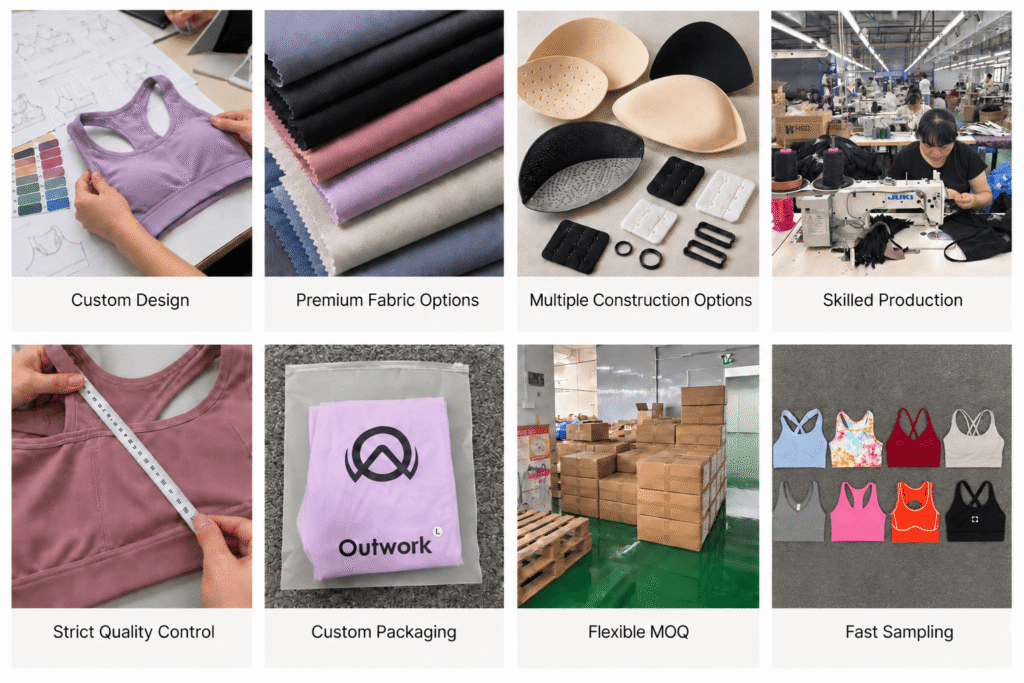
How Can Buyers Verify Recycled Material Traceability, GRS Certification and Environmental Claims?
Buyers should verify recycled material claims by checking the supplier’s certification scope, relevant transaction records, material composition and the connection between those documents and the actual sports bra order. GRS and RCS help verify recycled content through a certified chain of custody, while other standards address different concerns. A credible Sustainable Sports Bra Manufacturer should be able to identify the relevant material suppliers, explain what its certificates cover and distinguish certified product claims from general environmental marketing statements.
A certificate logo is easy to place on a website. Connecting that certificate to a specific production order is much harder.
Imagine two suppliers offering an identical-looking sports bra containing recycled nylon. Both advertise sustainable materials, and both provide attractive samples. Supplier A can identify the fabric mill, explain the recycled-content calculation and provide applicable certification records. Supplier B sends a certificate belonging to an unrelated fabric supplier and says that all recycled materials are essentially the same.
The garments may look equally good. Their sourcing evidence is not equally strong.
For international buyers, the difference matters because a Sustainable Sports Bra Manufacturer is not only supplying garments. Its records may become part of the evidence supporting a brand’s product descriptions, packaging statements and environmental communications.
A purchasing team should therefore distinguish three separate questions:
Material identity: What is the fabric actually made from?
Chain of custody: Can the claimed recycled material be traced through the relevant certified supply-chain stages?
Claim eligibility: Does the available evidence support the specific statement the brand intends to make?
A positive answer to one question does not automatically answer the others.
What Is the Difference Between GRS, RCS, OEKO-TEX and Environmental Management Certifications?
These standards are often displayed together on manufacturer websites, but they do not verify the same things.
A Sustainable Sports Bra Manufacturer might reference several standards because different customers have different requirements. Buyers should understand the purpose of each standard before treating it as evidence of recycled content.
| Standard or system | Main purpose | What it does not automatically prove |
|---|---|---|
| Global Recycled Standard (GRS) | Recycled material content, chain of custody and additional social, environmental and chemical processing requirements | That every garment made by the certified company is certified |
| Recycled Claim Standard (RCS) | Verification and tracking of recycled material through the supply chain | Broader environmental or social performance of the manufacturing process |
| OEKO-TEX STANDARD 100 | Testing textiles and components for specified harmful substances | Recycled material origin or recycled-content percentage |
| ISO 14001 | Environmental management system requirements | Certification of a particular sports bra’s recycled content |
| ISO 9001 | Quality management system requirements | Recycled material traceability or environmental product performance |
| BSCI / amfori BSCI | Social compliance assessment and improvement framework | Product-level recycled content certification |
The most important distinction is between a product’s material claim and a company’s management or compliance system.
A sports bra can pass relevant harmful-substance testing without containing recycled material. A factory can maintain an environmental management system without producing certified recycled garments.
Likewise, a recycled-content certificate does not automatically establish that the finished sports bra has superior support, durability or overall environmental performance.
GRS vs RCS: Which Standard Is More Relevant?
Both the Global Recycled Standard and the Recycled Claim Standard are administered within the Textile Exchange standards system.
RCS focuses on verifying recycled material content and maintaining chain of custody. GRS adds requirements relating to social practices, environmental management and chemical restrictions in processing.
Under the current framework, RCS can apply to products containing at least 5% recycled material. GRS can be used for business-to-business certification of products containing at least 20% recycled content, while consumer-facing GRS product labeling generally requires at least 50% recycled content, together with the applicable certification and claims requirements.
A higher recycled-content percentage does not eliminate the need for a valid certified supply chain.
For example, a supplier may advertise a fabric containing 78% recycled nylon and 22% elastane. That composition may be commercially attractive, but the buyer still needs to establish whether the recycled nylon is supported by the required records and whether the finished product qualifies for the intended claim.
A Sustainable Sports Bra Manufacturer should be able to explain the difference between a fabric composition statement, a certified material transaction and an approved finished-product label.
Official references: Textile Exchange — RCS and GRS and OEKO-TEX STANDARD 100.
Is a Certified Factory the Same as a Certified Finished Sports Bra?
No. A certified manufacturing facility does not mean that every garment produced there is automatically certified.
Certification normally applies to defined standards, operations, product categories and supply-chain conditions. A manufacturer may produce both certified and non-certified garments, sometimes using similar equipment and production lines.
The purchasing question is whether the specific sports bra order meets the relevant requirements.
Consider a manufacturer that holds a valid GRS scope certificate.
The certificate may demonstrate that certain activities and product categories are included in the company’s certified operations. It does not, by itself, establish that the fabric purchased for a particular buyer is certified or that the finished order has the necessary transaction documentation.
A buyer evaluating a Sustainable Sports Bra Manufacturer should check whether the proposed product, processing activities and material transactions fall within the applicable certification system.
A Practical Certification Example
Suppose a brand orders 1,000 sports bras using fabric described as 75% recycled polyester and 25% elastane.
The manufacturer provides:
A valid scope certificate for its manufacturing facility.
A fabric specification showing the claimed composition.
An invoice from the fabric supplier.
A product photograph showing a GRS logo.
These documents may support parts of the supplier’s explanation, but they do not necessarily establish a complete certified transaction chain.
The buyer should determine whether relevant transaction certificates and other required records exist for the certified material movement, and whether the finished product qualifies for the proposed claim.
The same principle applies when a manufacturer buys material from a certified mill but does not maintain the certification arrangements needed for the finished garment.
Certified input does not automatically equal certified output.
This is one of the most important distinctions when comparing a Sustainable Sports Bra Manufacturer with a supplier offering ordinary recycled fabric products.
Scope Certificate vs Transaction Certificate: Which Evidence Should Buyers Request?
A Scope Certificate (SC) and a Transaction Certificate (TC) serve different purposes.
The scope certificate identifies an organization’s certified operations and relevant certification scope. A transaction certificate provides evidence associated with a specific movement of certified goods through the supply chain.
Both can be important, but neither should be interpreted without considering the other relevant records.
| Document | Main question answered | What buyers should examine |
|---|---|---|
| Scope Certificate | Is this organization certified for the relevant activities and products? | Legal name, site, certification body, standard, scope and validity |
| Transaction Certificate | Is the specified certified material transaction documented? | Seller, buyer, product, quantity, material details and transaction identifiers |
| Fabric Specification | What material was ordered and approved? | Composition, recycled-content claim, GSM, construction and supplier reference |
| Purchase Order | What did the buyer actually purchase? | Style, quantity, material requirements and approved specifications |
| Delivery and Production Records | What material and quantity entered the production process? | Lot numbers, received quantities and material allocation |
| Finished Product Records | What was manufactured and shipped? | Style identification, quantities, shipment references and relevant certification records |
A Sustainable Sports Bra Manufacturer should be able to explain how these records relate to one another.
How Should Buyers Authenticate Certificates?
Textile Exchange provides official certificate authentication resources.
Scope certificates can be checked through its certified-company directory. Transaction certificates issued after October 1, 2022, can be checked through its transaction authentication service. Older transaction certificates may require confirmation through the issuing certification body.
Buyers should compare the document details with the actual supplier and order rather than simply checking whether a certificate number exists.
Useful questions include:
Does the legal company name match the supplier involved in the transaction?
Is the relevant manufacturing or processing location included?
Does the certificate cover the required standard and activity?
Is the document valid for the relevant period?
Does the product description correspond to the proposed material or garment?
Can the supplier explain any difference between the certificate holder and the invoicing company?
A certificate may be genuine but unrelated to the proposed purchase.
For that reason, authenticity and applicability must be checked separately.
A Sustainable Sports Bra Manufacturer that provides a valid certificate belonging to an unrelated organization has not necessarily demonstrated that its own order meets the required certification conditions.
Buyers can use the official Textile Exchange Certificate Authentication service rather than relying only on screenshots or logos.
How Can Buyers Check Recycled Material Traceability Across Multiple Supply Chain Tiers?
A sports bra may pass through several businesses before reaching the brand.
Reclaimed material may be collected, processed into recycled fiber, converted into yarn, knitted into fabric, dyed or finished, cut and sewn into garments, and finally shipped to the customer.
Some activities may occur within the same company. Others may involve independent suppliers in different locations.
The buyer does not need to assume that every business in the chain is located in China simply because the final garment is manufactured there.
A Sustainable Sports Bra Manufacturer should identify the relevant supply-chain participants and clarify which records are available for the proposed order.
Recycled Material Traceability Checklist
| Supply-chain stage | Information to confirm | Typical purchasing risk |
|---|---|---|
| Reclaimed material collection | Claimed input type and applicable origin records | Unsupported pre-consumer or post-consumer claims |
| Recycling and fiber production | Material processor and relevant certification evidence | Unclear recycled material origin |
| Yarn manufacturing | Supplier identity and certified material movement | Loss of transaction continuity |
| Fabric production | Fabric mill, composition and relevant transaction evidence | Certified yarn substituted with undocumented input |
| Dyeing and finishing | Processing facility and applicable certification coverage | Unverified processing stage |
| Garment manufacturing | Actual production site and material allocation | Material substitution or mixed stock |
| Final shipment | Finished quantity and applicable certified transaction records | Inability to connect the shipment to the claimed material |
A simple supplier declaration may be useful for preliminary screening, but it is not equivalent to a complete third-party-certified chain of custody.
The required evidence depends on the applicable standard, certification scope and transaction structure.
How Should Buyers Evaluate Mixed-Material Sports Bras?
Sports bras often contain multiple materials, including recycled polyester or nylon, elastane, lining fabrics, elastic bands and padding.
A buyer should not assume that a fabric containing 80% recycled polyester makes the entire finished sports bra 80% recycled by weight.
The main fabric may represent only part of the finished garment.
For example, consider a hypothetical sports bra weighing 200 grams:
| Component | Weight | Recycled content |
|---|---|---|
| Main fabric | 120 g | 80% |
| Lining | 40 g | 0% |
| Elastic and straps | 25 g | 0% |
| Padding and other components | 15 g | 0% |
| Total | 200 g | 48% by total garment weight |
In this simplified example, the recycled material weighs 96 grams, or 48% of the complete garment.
That is very different from claiming that the entire sports bra contains 80% recycled material.
The calculation is illustrative, not a certification determination. Actual certified-content calculations and labeling eligibility must follow the applicable standard and claims rules.
A Sustainable Sports Bra Manufacturer should provide a clear basis for any percentage used in a product specification or environmental claim.
This is especially important when the brand sells products with removable padding, alternative linings or different trim packages.
Which Environmental Claims Require Additional Evidence Before They Can Be Used?
Terms such as eco-friendly, sustainable, responsibly made and made from recycled materials do not all communicate the same thing.
Some describe a specific measurable characteristic. Others imply broad environmental benefits that may be difficult to substantiate.
A Sustainable Sports Bra Manufacturer may use these terms in marketing, but buyers should determine exactly what each statement means before repeating it on a retail product page.
Compare the following examples.
| Environmental statement | Main concern | More useful evidence |
|---|---|---|
| “Eco-friendly sports bra” | Broad, undefined environmental benefit | Clearly identified and substantiated environmental attributes |
| “Made with recycled polyester” | Recycled content and material scope are unclear | Verified composition and relevant sourcing records |
| “80% recycled polyester” | May refer only to one fabric rather than the garment | Clear component identification and correct content calculation |
| “GRS certified” | Certification scope and product eligibility may be unclear | Applicable certification and transaction records |
| “Sustainable manufacturing” | May imply broad operational performance | Specific, verifiable environmental practices and results |
| “100% recycled” | May overlook elastane, elastic, padding or lining | Complete component-level material verification |
The most defensible claims are generally specific, accurate and supported by evidence.
For example, identifying the recycled content of a particular fabric component can be more informative than making a broad statement that the entire product is environmentally friendly.
However, even a narrowly worded claim should be checked against the relevant documentation and applicable market requirements.
A Sustainable Sports Bra Manufacturer should not promise that buyers can use certification logos or environmental statements without confirming the relevant authorization and claims rules.
What About the US and EU Markets?
Brands selling into the United States should consider the Federal Trade Commission’s environmental marketing guidance, commonly known as the Green Guides, together with applicable laws and current regulatory developments.
Brands selling into the European Union should review the relevant consumer protection and environmental claims requirements, including changes affecting sustainability-related marketing.
The exact obligations depend on the claim, product, market and implementation date.
A manufacturer’s certification may support a particular material statement, but it does not automatically establish that every proposed advertisement is legally acceptable.
The final responsibility for product claims cannot be resolved simply by obtaining a supplier’s marketing brochure.
How Can Buyers Identify Missing, Expired or Inconsistent Certification Documents?
Document verification should be a structured purchasing process, not a quick check of the logos displayed on a supplier’s website.
The most common problems are not always obvious forgeries. They can also involve genuine documents that do not apply to the specific order.
A Sustainable Sports Bra Manufacturer may provide a valid certificate from an upstream fabric supplier while failing to demonstrate the relevant certified transactions for the proposed finished garments.
Another supplier may provide an expired document or a certificate covering a different facility.
These situations require clarification before the buyer relies on the claimed certification.
Common Warning Signs
Company-name mismatch: The certificate holder differs from the actual manufacturing entity without a clear explanation.
Facility mismatch: The document covers a location that is not involved in the proposed production.
Expired certification: The certificate was valid previously but does not cover the relevant period.
Incorrect product scope: The certificate covers different materials, products or activities.
Missing transaction evidence: The supplier cannot connect the claimed certified material to the relevant purchase.
Unclear material percentage: The advertised recycled content does not specify whether it applies to fabric or the complete garment.
Unapproved logo use: The supplier assumes that possession of a certificate permits unrestricted product labeling.
Inconsistent quantities: Purchase, material receipt and shipment records do not reconcile.
A missing document does not always mean fraud. Some records may only become available after the relevant transaction or shipment stage.
The important distinction is whether the supplier can explain which evidence exists now, which evidence will be issued later and what conditions must be met before the buyer can make a product claim.
A reliable Sustainable Sports Bra Manufacturer should be able to provide a realistic documentation plan rather than promising immediate access to records that cannot yet exist.
Supplier Documentation Review: Pass, Clarify or Reject
| Review outcome | Typical situation | Recommended decision |
|---|---|---|
| Pass | Relevant certification verified; order-specific evidence available or properly scheduled | Continue commercial and technical evaluation |
| Clarify | Genuine documents exist but a name, location, scope or transaction detail needs explanation | Request written clarification before approval |
| Reject or suspend | Mandatory claim cannot be substantiated, certificate is demonstrably invalid, or material origin cannot be established | Do not approve the claimed certified sourcing arrangement |
The decision should reflect the buyer’s mandatory requirements.
For a brand whose product launch depends on a specific certified recycled-content claim, incomplete certification arrangements may be a serious commercial obstacle.
For a buyer still exploring recycled material options, the same documentation gap may be something to resolve before placing a purchase order.
A Sustainable Sports Bra Manufacturer should be assessed according to the consequences of the missing evidence, not merely the number of documents supplied.
A Practical Example: Two Suppliers, Similar Products, Different Evidence
Suppose two suppliers offer sports bras made with recycled nylon.
Supplier A provides a competitive quotation, a fabric swatch and a certificate image. When asked for details, the sales representative cannot identify the relevant certificate holder or explain whether transaction documentation will be available.
Supplier B quotes a slightly higher price but identifies the fabric supplier, confirms the proposed material composition, explains the certification scope and sets out which transaction records will be provided at the relevant stages.
Supplier B has not automatically proven that every environmental claim is acceptable. The buyer must still verify the documents and assess the actual order.
However, Supplier B has demonstrated a more transparent sourcing process.
That transparency reduces uncertainty and makes further verification more practical.
The best Sustainable Sports Bra Manufacturer is not necessarily the supplier with the largest collection of certificates. It is the supplier whose documents, materials and manufacturing arrangements can be connected to the actual purchasing requirements.
When certification evidence is essential, procurement teams should resolve these questions before committing to production, approving environmental product labels or publishing recycled-content claims.
A dependable Sustainable Sports Bra Manufacturer makes the distinction between certified operations, certified material transactions and permitted finished-product claims clear enough for the buyer to verify independently.
Trusted Manufacturing Standards For Global Sportswear Brands
We operate under internationally recognized quality, sustainability, and ethical manufacturing standards. Our certifications help ensure consistent product quality, responsible sourcing, and reliable production for global sportswear brands.
- 20+ Countries Served
- 6000+ Styles Developed
- 50,000 PCS Monthly Capacity
- 3-Day Sample Development
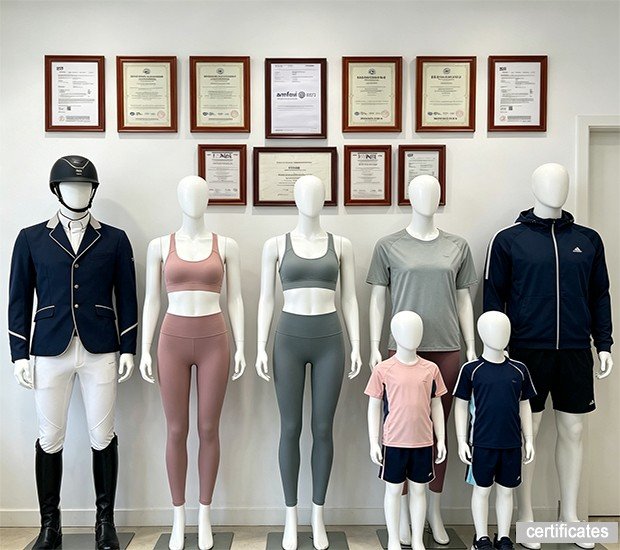
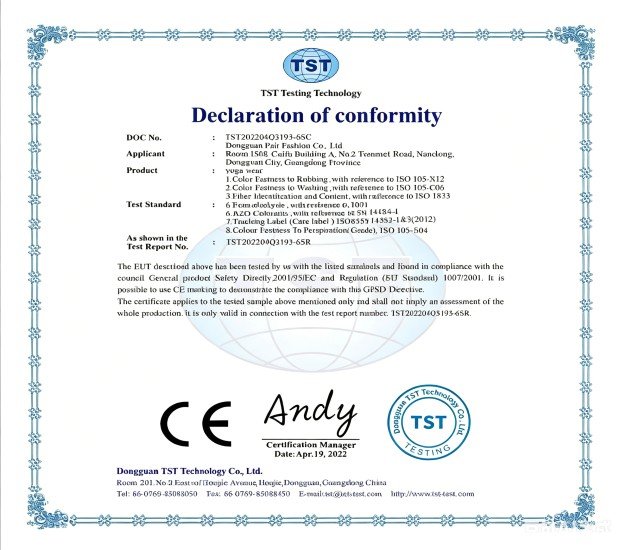
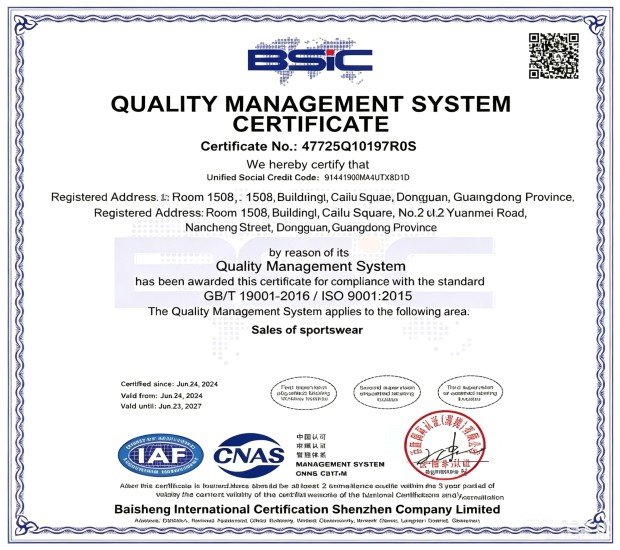
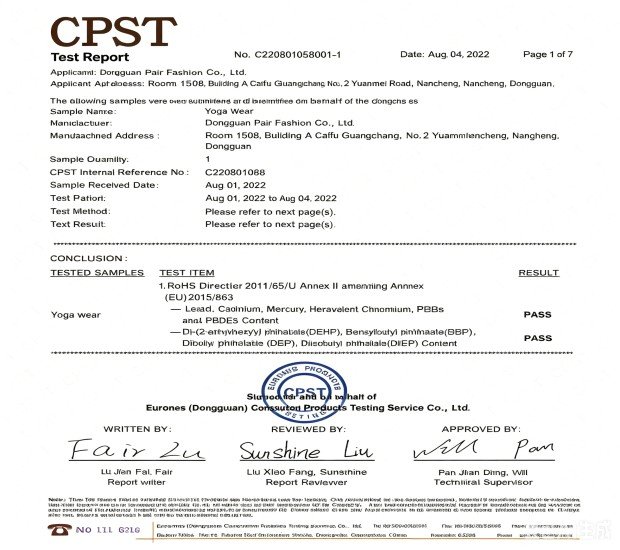
How Should Buyers Compare Sustainable Sports Bra Manufacturer Prices, MOQ and Sample Evidence?
Buyers should compare sustainable sports bra suppliers using identical product specifications, recycled material requirements, order quantities, certification expectations and delivery terms. A lower unit price does not always mean a lower purchasing cost, particularly when fabric minimums, testing expenses and inventory commitments differ. The right Sustainable Sports Bra Manufacturer should provide a transparent quotation, realistic MOQ conditions, comparable sample evidence and a production schedule that matches the buyer’s commercial requirements.
Two manufacturers may quote $7.50 and $8.40 for what appears to be the same recycled sports bra.
At first glance, the cheaper quotation looks attractive. But suppose the first supplier requires 1,000 pieces per color, excludes material testing and cannot confirm the recycled fabric source. The second accepts 300 pieces per color and provides clearer documentation.
The $0.90 difference is no longer the only important number.
For a startup testing demand, the higher unit price may create a smaller initial financial commitment. For an established brand ordering 10,000 pieces, the lower unit price may be more valuable if the supplier meets all mandatory requirements.
A fair supplier comparison starts by separating unit economics from inventory economics.
When evaluating a Sustainable Sports Bra Manufacturer, buyers should consider the complete cost of obtaining an approved, compliant and commercially suitable product—not simply the number shown beside the unit price.
How Much Does Supplier Pricing Differ When Recycled Content and Certification Requirements Change?
Recycled sports bra prices can change significantly depending on fabric composition, material sourcing, order volume, construction and certification requirements.
There is no reliable universal price premium for recycled polyester or recycled nylon.
One recycled fabric may cost more than a comparable conventional fabric because of its sourcing arrangements, processing costs or minimum order requirements. Another may be competitively priced because it is widely available from established suppliers.
A Sustainable Sports Bra Manufacturer should therefore quote against a defined fabric specification rather than an undefined request for an “eco-friendly sports bra.”
Which Factors Affect Recycled Sports Bra Pricing?
| Cost factor | Potential effect on quotation | What buyers should confirm |
|---|---|---|
| Recycled fiber type | Recycled nylon and polyester may have different sourcing costs | Exact composition and approved supplier |
| Recycled-content percentage | Different material specifications can affect price and availability | Percentage and relevant supporting evidence |
| Fabric weight and construction | Higher material consumption or specialized construction can increase cost | GSM, fabric structure and consumption |
| Dyeing and color requirements | Custom colors may introduce additional minimums | Available colors, dyeing MOQ and surcharges |
| Sports bra construction | Padding, lining, elastic and additional panels affect labor and material cost | Approved bill of materials |
| Certification requirements | Documentation and certified supply-chain arrangements may affect commercial terms | Applicable standard and required evidence |
| Order quantity | Larger quantities may reduce unit costs | Price breaks by quantity |
| Packaging | Custom packaging and labels can increase cost | Unit packaging and minimums |
A supplier offering a recycled polyester sports bra at $6.50 may not be directly comparable with another offering recycled nylon at $8.20.
Even if the designs look similar, the material specifications may be different.
The first question should be whether both suppliers are quoting the same product.
Hypothetical Pricing Example
Consider three quotations for a sports bra with the same approved design.
| Quotation factor | Supplier A | Supplier B | Supplier C |
|---|---|---|---|
| Unit price | $6.80 | $7.60 | $8.10 |
| MOQ | 1,000 pcs | 500 pcs | 300 pcs |
| Initial garment value | $6,800 | $3,800 | $2,430 |
| Fabric composition | Recycled polyester blend | Recycled polyester blend | Recycled polyester blend |
| Recycled-content evidence | Additional verification required | Documents available for review | Documents available for review |
| Testing cost | Quoted separately | Quoted separately | Included in stated assumptions |
| Commercial terms | FOB | FOB | FOB |
All figures are illustrative and do not represent quotations from actual manufacturers.
Supplier A has the lowest unit price.
Supplier C requires the smallest initial garment commitment.
Supplier B sits between them.
However, the table does not identify a winner until the buyer confirms the material specification, certification requirements, testing scope and commercial assumptions.
A Sustainable Sports Bra Manufacturer offering the lowest price may still be the right choice for a high-volume program, but only after the quotation is made genuinely comparable.
Low MOQ vs Low Unit Price: Which Creates Less Inventory Risk?
Low MOQ usually reduces the initial inventory commitment, while a low unit price can improve margins when demand is sufficiently predictable. Neither is automatically the better purchasing strategy.
The correct decision depends on expected sales, available capital, product variety and the cost of unsold stock.
A startup may prefer a smaller order because it has limited evidence of customer demand.
An established brand may accept a larger minimum because it already understands its size distribution, colors and replenishment requirements.
A Sustainable Sports Bra Manufacturer should be evaluated according to the buyer’s actual purchasing stage.
Why MOQ Needs More Than One Number
Manufacturers may define MOQ differently.
Common structures include:
Per style: Minimum quantity for one design.
Per color: Minimum quantity for each colorway.
Per fabric: Minimum purchase required by the fabric supplier.
Per order: Total minimum across the purchase.
Per size: Less common as a separate minimum, but size distribution restrictions may apply.
Suppose a supplier advertises an MOQ of 100 pieces.
That sounds manageable.
But if the MOQ is 100 pieces per color and the brand wants four colors, the initial order becomes 400 pieces.
If the selected recycled fabric requires a larger dyeing minimum, the practical commitment may increase further.
The buyer should ask whether sizes can be mixed freely and whether the quoted MOQ includes all required fabric and trim purchases.
Inventory Commitment Comparison
Assume a brand wants to launch three sports bra colors.
| Purchasing condition | Supplier A | Supplier B |
|---|---|---|
| MOQ per color | 500 pcs | 100 pcs |
| Number of colors | 3 | 3 |
| Total order quantity | 1,500 pcs | 300 pcs |
| Unit price | $7.00 | $8.20 |
| Initial garment value | $10,500 | $2,460 |
Illustrative example, excluding freight, duties and other costs.
Supplier A saves $1.20 per garment.
However, the buyer must commit $8,040 more in initial garment value.
For a brand with uncertain demand, this difference can be more important than the unit-price saving.
For a brand already selling thousands of pieces per season, Supplier A’s structure may be commercially attractive.
The best Sustainable Sports Bra Manufacturer is the supplier whose MOQ structure supports the brand’s inventory strategy without compromising mandatory product and documentation requirements.
How Can Buyers Normalize Factory Quotations Under the Same Product Specifications?
Quotation normalization means ensuring that manufacturers are pricing substantially the same product under comparable purchasing conditions.
Without normalization, a supplier comparison can be misleading.
For example, Supplier A may quote a basic sports bra with standard polyester lining, while Supplier B quotes recycled nylon fabric with additional support panels and customized packaging.
The quotations may look similar on a spreadsheet, but they represent different manufacturing projects.
A Sustainable Sports Bra Manufacturer should receive the same core RFQ information as competing suppliers.
What Should a Standardized RFQ Include?
| RFQ item | Required information |
|---|---|
| Product identification | Style name, reference images and technical specification |
| Fabric | Composition, recycled-content requirements, GSM and performance expectations |
| Construction | Lining, padding, straps, elastic and seam details |
| Size range | Sizes, measurement chart and proposed size distribution |
| Colors | Number of colors and color specifications |
| Branding | Label and packaging requirements |
| Order quantity | Quantity per style, color and size |
| Certification | Applicable standards and required evidence |
| Testing | Required fabric or garment tests |
| Delivery terms | Incoterm, destination and expected shipment window |
| Payment terms | Deposit and balance requirements |
| Sample requirements | Sample quantity, evaluation criteria and approval conditions |
Buyers should ask suppliers to identify assumptions and exclusions rather than allowing each manufacturer to fill missing details differently.
Example: Why Quotation Assumptions Matter
Suppose two suppliers quote the same recycled sports bra.
Supplier A offers $7.30 per piece.
Supplier B offers $7.80.
The buyer later discovers that Supplier A’s price excludes removable padding, while Supplier B includes it.
Supplier A also quotes ex-factory terms, while Supplier B quotes FOB.
The apparent $0.50 price difference does not establish which supplier offers better value.
Before comparing the quotations, the buyer must account for the missing components and different delivery responsibilities.
A Sustainable Sports Bra Manufacturer that clearly identifies quotation assumptions makes commercial evaluation easier and reduces the risk of unexpected charges.
What Sample Evidence Should Buyers Compare Before Approving a Manufacturer?
A good-looking sample is not enough to establish manufacturing reliability.
Sports bras are performance garments. Their fit and comfort depend on fabric behavior, construction, elasticity and support.
A sample can look attractive on a mannequin or in a product photograph while performing poorly during movement.
A Sustainable Sports Bra Manufacturer should be assessed through samples made to the same technical requirements as those provided to competing suppliers.
Sample Evaluation Checklist
| Evaluation area | What buyers should examine | Potential risk |
|---|---|---|
| Fabric identity | Composition and approved material reference | Incorrect or substituted fabric |
| Recycled-content evidence | Applicable supporting records | Unsupported environmental claim |
| Measurements | Agreement with the approved size specification | Fit inconsistency |
| Underband | Tension, recovery and comfort | Rolling, pressure or insufficient support |
| Straps | Position, adjustment and stability | Slipping or discomfort |
| Lining and padding | Placement, coverage and stability | Movement or visible distortion |
| Stitching | Seam consistency and construction | Premature failure |
| Stretch recovery | Behavior after repeated extension | Loss of shape |
| Washing | Dimensional stability and appearance | Shrinkage, distortion or color change |
| Wear testing | Comfort during intended activity | Product unsuitable for the target use |
Not every sports bra needs the same support level.
A low-impact yoga bra and a high-support running bra should not be evaluated against identical performance expectations.
The buyer should define the intended activity and acceptance criteria before requesting samples.
Why Should Buyers Test Samples Under Comparable Conditions?
Suppose Supplier A receives a complete tech pack and approved fabric reference.
Supplier B receives only three photographs.
Supplier C receives a brief description.
The resulting samples cannot provide a fair comparison of manufacturing capability.
A supplier working with incomplete information may make reasonable assumptions that differ from the buyer’s expectations.
For a meaningful evaluation, each Sustainable Sports Bra Manufacturer should receive substantially the same requirements.
The samples should then be reviewed using a consistent checklist.
Sample Scoring Example
| Criterion | Weight | Supplier A | Supplier B |
|---|---|---|---|
| Measurement accuracy | 25% | 8/10 | 9/10 |
| Fabric conformity | 20% | 7/10 | 9/10 |
| Construction quality | 20% | 9/10 | 8/10 |
| Wear-test performance | 20% | 7/10 | 9/10 |
| Documentation accuracy | 15% | 6/10 | 9/10 |
| Weighted score | 100% | 7.50/10 | 8.80/10 |
Illustrative scores only.
Supplier B performs better overall.
However, a numerical score should not override mandatory requirements.
If either supplier fails a required recycled-content verification condition, the buyer should resolve that issue before approving the supplier, regardless of its sample score.
Sample quality and sourcing compliance should be evaluated together, but they should not be treated as interchangeable.
How Long Should Buyers Allow for Supplier Verification and Comparative Sample Evaluation?
Supplier verification and sample evaluation should be planned as separate activities, even when some work can occur at the same time.
The total timeline depends on product complexity, material availability, document access and the number of sample revisions.
A Sustainable Sports Bra Manufacturer may advertise a short sampling lead time, but that figure does not necessarily include supplier verification, fabric sourcing, testing, shipping or buyer approval.
Illustrative Evaluation Schedule
| Stage | Planning allowance | Main activity |
|---|---|---|
| Initial supplier screening | 2–5 working days | Review company identity and basic capability |
| RFQ clarification | 2–5 working days | Confirm specifications and quotation assumptions |
| Material evidence review | 3–10 working days | Check available documentation and certification relevance |
| First sample production | 5–15 working days | Produce sample using agreed specifications |
| Sample shipping and review | 3–10 working days | Delivery, measurements and wear evaluation |
| Revision and confirmation | Project-dependent | Resolve identified sample issues |
These are only estimated timeframes for planning, not guaranteed lead times from suppliers. Some activities may be carried out at the same time, while testing, special fabric requirements or sample revisions may make the whole process take longer.
A buyer should distinguish between:
Sample production time: How long the manufacturer takes to make the sample.
Sample delivery time: How long the sample takes to reach the buyer.
Evaluation time: How long the buyer needs to inspect and test it.
Revision time: How long it takes to correct identified issues.
Approval time: When the buyer formally accepts the final specification.
These are different milestones.
For example, a sample completed in seven days may still require another two weeks for international shipping, wear testing and approval.
A Sustainable Sports Bra Manufacturer should provide a schedule that identifies the relevant starting conditions and dependencies.
When Should Buyers Allow More Time?
Additional time may be necessary when:
The recycled fabric is not available from stock.
Custom colors require separate dyeing.
The product requires specialized support construction.
The brand needs third-party testing.
Certification records require verification through multiple supply-chain participants.
The first sample needs substantial revisions.
Several suppliers are being evaluated simultaneously.
Rushing these stages can create expensive problems during bulk production.
A shorter evaluation process is only valuable when it still produces enough evidence for a sound purchasing decision.
What Hidden Costs Can Make the Lowest Quotation More Expensive?
A low quotation can become expensive when important costs are excluded or when supplier weaknesses create additional purchasing risks.
Some costs are predictable and should appear in the quotation.
Others arise only when something goes wrong.
A Sustainable Sports Bra Manufacturer should be compared using both direct costs and reasonable risk exposure.
Common Hidden Costs
| Cost category | Example | Why it matters |
|---|---|---|
| Fabric minimums | Excess fabric required for custom colors | Creates unused material inventory |
| Sampling revisions | Multiple paid sample rounds | Increases development expenditure |
| Testing | Fabric composition or performance testing | May be excluded from the unit price |
| Certification-related costs | Additional documentation or certified sourcing requirements | Can affect the final purchasing cost |
| Packaging | Custom labels, inserts and bags | May have separate minimums |
| Inspection | Independent pre-shipment inspection | Adds cost but can reduce quality risk |
| Freight | Air freight required after delays | Can erase unit-price savings |
| Import duties | Different origin or tariff treatment | Changes landed cost |
| Defective goods | Rework, replacement or returns | Creates direct and indirect losses |
| Inventory holding | Unsold stock from high MOQ | Ties up working capital |
Example: A Low Quotation With Additional Costs
Consider a hypothetical order of 1,000 sports bras.
| Cost item | Supplier A | Supplier B |
|---|---|---|
| Garment value | $7,000 | $7,600 |
| Testing and verification | $350 | $150 |
| Packaging | $250 | Included |
| Inspection | $300 | $300 |
| Additional freight caused by delay | $600 | $0 |
| Total before normal freight, duties and taxes | $8,500 | $8,050 |
Illustrative figures only. The delay cost is a scenario assumption, not a prediction.
Supplier A begins with a $600 lower garment quotation.
After the additional costs in this scenario, Supplier A becomes $450 more expensive.
This does not mean higher-priced suppliers are always better. It demonstrates why buyers should identify exclusions and evaluate the consequences of supplier performance.
A Sustainable Sports Bra Manufacturer offering a transparent quotation and reliable production conditions may provide better commercial value than a competitor with a lower initial price but unclear responsibilities.
How Should Buyers Make the Final Commercial Comparison?
A strong purchasing decision should answer five questions.
1. Are all suppliers quoting the same product?
Fabric, construction, recycled-content requirements, colors, sizes and packaging should be consistent.
2. Are the MOQ conditions commercially manageable?
The buyer should understand minimums by style, color, fabric and total order.
3. Are sample results comparable?
Suppliers should receive the same core specifications and be evaluated against the same acceptance criteria.
4. Are the material and certification requirements satisfied?
A lower quotation cannot compensate for a mandatory recycled-content requirement that the supplier cannot support.
5. What is the realistic total purchasing cost?
The comparison should include relevant testing, documentation, packaging, inspection, logistics and inventory exposure.
The best Sustainable Sports Bra Manufacturer is not necessarily the supplier with the lowest unit price or fastest advertised sample time.
It is the manufacturer that can meet the buyer’s mandatory requirements while offering a commercially suitable combination of price, MOQ, sample performance, documentation and production reliability.
A dependable Sustainable Sports Bra Manufacturer makes its quotation easy to understand, its samples possible to evaluate and its purchasing conditions clear before the buyer commits to bulk production.
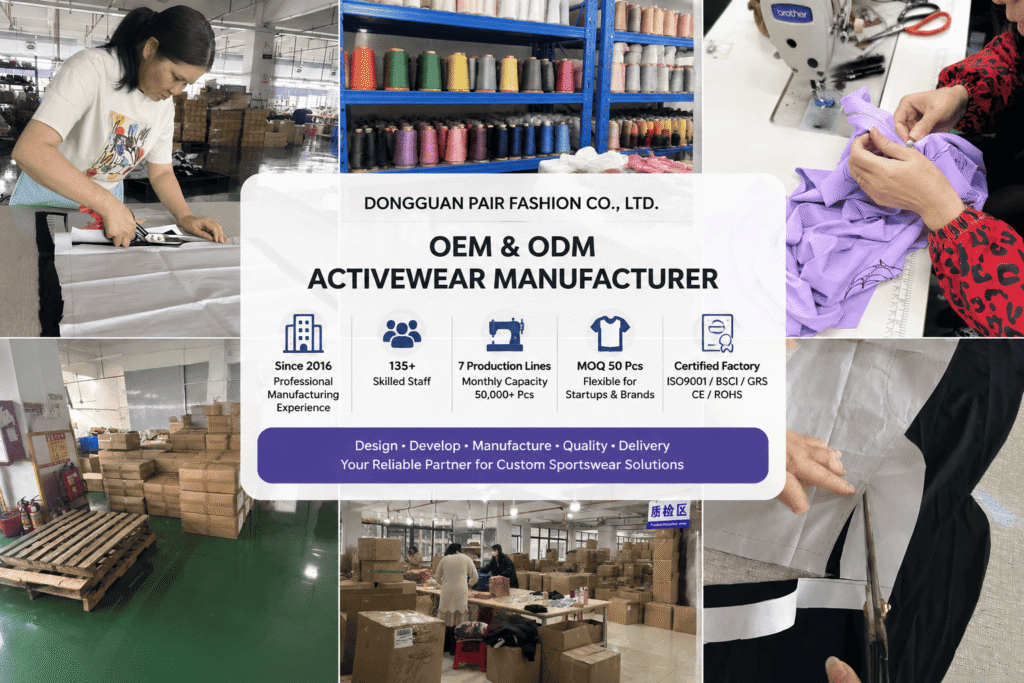
How Can Buyers Verify a Sustainable Sports Bra Manufacturer's Factory, Business History and Production Reliability?
Buyers should verify a manufacturer’s legal identity, actual production location, operating history, relevant factory capabilities and ability to maintain consistent production standards. A company website, factory photograph or business license alone does not establish manufacturing reliability. A dependable Sustainable Sports Bra Manufacturer should be able to connect its registered business, production facilities, material sourcing arrangements and quality records to the buyer’s actual order requirements.
A manufacturer may have an impressive website, professional product photography and competitive quotations.
However, these details do not necessarily reveal where the garments are produced, who controls the production process or whether the supplier can deliver the same product consistently across multiple orders.
Some suppliers own manufacturing facilities. Others coordinate production through partner factories. Certain companies combine in-house manufacturing with subcontracted processes.
None of these business models is automatically unsuitable.
The important question is whether the supplier’s actual production arrangements match the buyer’s requirements and whether those arrangements can be verified.
When comparing a Sustainable Sports Bra Manufacturer, purchasing teams should separate company identity, production capability, material traceability and commercial reliability into distinct evaluation areas.
How Can Buyers Distinguish a Real Manufacturer From a Trading Company or Sourcing Agent?
A manufacturer directly operates production facilities, while a trading company or sourcing agent generally coordinates sourcing through other businesses. Some companies combine both functions. Buyers should verify the actual operating model rather than relying only on the description shown on a website.
A trading company is not automatically less reliable than a manufacturer. It may provide useful supplier coordination, communication and sourcing services.
However, a buyer requiring direct factory control, certified processing activities or specific production oversight needs to know which organization is responsible for each activity.
A Sustainable Sports Bra Manufacturer should be able to identify the actual facility producing the garments and explain whether any operations are outsourced.
Manufacturer vs Trading Company vs Sourcing Agent
| Business model | Typical responsibilities | Main purchasing advantage | Main verification concern |
|---|---|---|---|
| Direct manufacturer | Operates garment production facilities | Direct visibility into production arrangements | Confirm actual facility and relevant capacity |
| Trading company | Purchases and sells products manufactured by suppliers | May offer broad product sourcing options | Identify the real production facility |
| Sourcing agent | Coordinates suppliers, quotations and purchasing activities | May simplify multi-supplier sourcing | Clarify responsibility and production control |
| Hybrid manufacturer | Operates some production and outsources selected activities | Potential flexibility across product categories | Confirm which processes are performed internally |
The distinction becomes particularly important when recycled-content certification depends on specific processing facilities and chain-of-custody arrangements.
A company may legitimately coordinate a certified supply chain without performing every operation itself. Nevertheless, buyers must establish which entities and activities are covered by the relevant documentation.
What Questions Reveal the Actual Production Model?
Buyers should ask:
What is the registered legal name of the contracting company?
Where will the sports bras be cut, sewn and finished?
Which production activities are completed internally?
Are any activities subcontracted?
Which company purchases and controls the recycled fabric?
Which entity will issue the commercial invoice?
Which organization holds the relevant certifications?
Who is responsible for production defects and corrective action?
A credible Sustainable Sports Bra Manufacturer should provide consistent answers across its sales, production and documentation teams.
Differences do not automatically indicate misconduct, but unexplained contradictions require investigation.
How Should Buyers Verify Business Registration, Factory Location and Operating History?
A business license is an important starting point for supplier verification, but it should not be treated as proof of production capability.
The license identifies a registered business. It does not necessarily establish that the company owns the factory shown in its promotional materials or that its current manufacturing resources match its advertised capacity.
A Sustainable Sports Bra Manufacturer should provide enough information for buyers to connect the contracting entity with the actual production site.
Step 1: Confirm the Legal Business Identity
For suppliers registered in mainland China, buyers can request the company’s Chinese legal name and Unified Social Credit Code.
The information can be checked through China’s National Enterprise Credit Information Publicity System, subject to the availability and accessibility of the relevant records.
Official resource: National Enterprise Credit Information Publicity System.
Relevant information may include:
Registered legal name
Unified Social Credit Code
Registration status
Registered address
Establishment date
Legal representative
Registered business scope
Relevant public administrative information
A registered business scope that includes apparel manufacturing can be useful background information, but it does not prove that the company currently operates a particular production facility.
Step 2: Verify the Actual Manufacturing Address
The registered office and manufacturing location may be different.
For example, a supplier may maintain a sales office in Guangzhou while production takes place in Dongguan or another manufacturing city.
This arrangement is not necessarily a problem.
The buyer should confirm the actual factory address and determine whether it matches the location identified in relevant audit and certification records.
A Sustainable Sports Bra Manufacturer that operates several production sites should identify which facility will handle the proposed order.
Step 3: Evaluate the Company’s Operating History
A long business history can be relevant, but age alone is not a reliable measure of manufacturing quality.
A company established in 2008 may have considerable experience in general apparel but limited experience with recycled sports bras.
A newer manufacturer may have a specialized team with strong technical capabilities.
Buyers should therefore distinguish between:
Legal company establishment date
Factory operating history
Experience manufacturing sports bras
Experience handling recycled materials
Experience serving international B2B customers
A supplier’s statement that it has “20 years of experience” may refer to the founder’s industry background rather than the age of the current legal entity.
The distinction should be clarified before using operating history as a major evaluation factor.
What Factory Audit Evidence Matters Most for Sports Bra Production?
Factory audits can help buyers understand whether the supplier’s actual operations match its claims.
However, an audit report should be evaluated according to its scope, date, findings and relevance to the intended product.
A Sustainable Sports Bra Manufacturer may have passed a social compliance assessment while still needing separate verification of technical garment capability or recycled material traceability.
These are different areas of supplier performance.
Four Areas Buyers Should Examine
| Audit area | Main questions | Relevant evidence |
|---|---|---|
| Business and facility verification | Is the production site genuine and operational? | Factory address, site records and operating information |
| Production capability | Can the facility manufacture the required sports bras? | Equipment, production layout and relevant product records |
| Quality management | Are specifications, inspections and corrective actions controlled? | Inspection records, procedures and nonconformity reports |
| Social and environmental compliance | Does the facility meet the buyer’s applicable requirements? | Relevant audit reports, certifications and corrective-action evidence |
A buyer should not assume that one audit covers all four areas.
For example, amfori BSCI assessments focus on social performance rather than certifying the recycled content of a sports bra.
Similarly, ISO 9001 relates to quality management systems, not direct certification of a particular garment’s material composition.
What Should Buyers Look for in a Factory Audit Report?
A useful report should identify:
The audited legal entity and site
The audit date
The scope of the assessment
The relevant production activities
Identified findings or nonconformities
Corrective actions and their status
Any important limitations of the assessment
A report showing no major findings in one area does not guarantee that the factory will perform perfectly on a new product.
A Sustainable Sports Bra Manufacturer should be assessed against the risks of the actual sourcing program.
For example, a brand producing high-support sports bras may need stronger evidence of technical construction capability than a brand purchasing simple low-impact styles.
If certified recycled-content production is mandatory, the relevant chain-of-custody arrangements require separate attention.
How Can Buyers Verify Production Capacity Without Relying on Published Factory Numbers?
Manufacturers frequently publish figures such as monthly output, production lines and employee counts.
These figures can provide useful context, but they do not automatically establish available capacity for a particular order.
A factory producing 50,000 garments per month across several categories may not be able to allocate that entire capacity to sports bras.
A Sustainable Sports Bra Manufacturer should provide realistic capacity information based on product complexity, current production commitments and material availability.
Published Capacity vs Available Capacity
Buyers should distinguish three concepts:
Published capacity: The output figure used in company information or marketing.
Practical capacity: The quantity the facility can produce under realistic operating conditions.
Available capacity: The quantity that can actually be allocated to the buyer’s order during the required production period.
These figures may be very different.
Hypothetical Capacity Example
Suppose a manufacturer reports monthly output of 60,000 garments.
However, the factory produces several product categories and already has confirmed customer orders.
| Capacity factor | Illustrative quantity |
|---|---|
| Published monthly garment output | 60,000 pcs |
| Existing scheduled production | 45,000 pcs |
| Uncommitted nominal capacity | 15,000 pcs |
| Estimated sports bra capacity after product-specific adjustments | 10,000 pcs |
Illustrative figures only; not the reported capacity of any named supplier.
The available sports bra capacity may be lower than the simple difference between published output and existing commitments.
Sports bras can require different sewing operations, equipment arrangements and inspection time compared with other garments.
A supplier’s actual capacity should therefore be evaluated against the proposed product and delivery schedule.
Questions That Help Validate Capacity
Buyers can ask:
How many relevant production lines are available?
Which lines currently manufacture sports bras?
What is the normal output for a comparable style?
What confirmed orders overlap with the proposed production period?
Are critical fabrics and trims already available?
What production activities depend on external suppliers?
How are delays and bottlenecks handled?
What happens if the buyer increases the order quantity?
A Sustainable Sports Bra Manufacturer should be able to explain capacity limitations rather than promising every requested quantity and delivery date.
A realistic production commitment is more valuable than an impressive figure that cannot be supported.
How Can Buyers Verify Quality Control Records and Production Consistency?
Quality control should be evaluated through evidence of actual production decisions, not only statements such as “100% quality guaranteed.”
No manufacturing process eliminates every possible defect.
A useful quality system identifies problems, records them and supports corrective action.
A Sustainable Sports Bra Manufacturer should maintain appropriate controls over materials, measurements, construction and finished garments.
Which Records Are Most Relevant?
| Production stage | Evidence to request | Main purpose |
|---|---|---|
| Material receiving | Fabric inspection and identification records | Confirm approved materials are received |
| Production preparation | Approved specifications and production instructions | Establish the manufacturing reference |
| In-line production | Inspection findings and corrective-action records | Identify problems during manufacturing |
| Final inspection | Inspection report and acceptance results | Assess finished-garment conformity |
| Material traceability | Fabric lot and allocation records | Connect materials to production |
| Reorders | Previous specifications and change records | Support repeatability |
These records should be relevant to the product and order being evaluated.
A factory may have well-organized quality documents for ordinary T-shirts but limited experience controlling the fit and support requirements of sports bras.
That distinction matters.
What Makes Sports Bra Quality Control Different?
Sports bras require attention to garment behavior under stretch and movement.
Important areas can include:
Underband dimensions and tension
Strap positioning and stability
Cup and lining construction
Seam strength
Fabric recovery
Measurement consistency
Washing performance
Color and material consistency
The appropriate acceptance criteria depend on the product’s intended use.
A low-impact yoga bra and a high-support training bra should not be evaluated as though they are identical products.
A Sustainable Sports Bra Manufacturer should demonstrate experience with the relevant garment type rather than relying solely on general sewing capability.
How Can Buyers Verify Consistency Between First Orders and Reorders?
A successful first order does not guarantee that later production will be identical.
Materials may change, employees may be reassigned, suppliers may discontinue fabrics and production schedules may become more demanding.
For brands building repeat business, these changes can affect customer experience and inventory consistency.
A Sustainable Sports Bra Manufacturer should maintain clear records of approved specifications and important changes between orders.
What Should Remain Consistent?
| Requirement | First-order reference | Reorder verification |
|---|---|---|
| Fabric | Approved material composition and supplier | Confirm material identity and availability |
| Recycled-content claim | Applicable supporting evidence | Confirm documentation for the new transaction |
| Measurements | Approved size specification | Compare against current production |
| Construction | Approved garment details | Check for unauthorized changes |
| Colors | Approved color references | Review color consistency |
| Packaging | Approved labels and packaging | Confirm current claim accuracy |
| Quality acceptance | Agreed inspection criteria | Apply consistent acceptance requirements |
The objective is not to prevent every possible change.
It is to ensure that changes are identified, evaluated and approved before they affect the buyer’s product.
Example: A Reorder With a Different Fabric Supplier
Suppose a brand successfully sells its first collection of recycled nylon sports bras.
Six months later, it places a repeat order.
The manufacturer explains that the original fabric mill cannot supply the required color within the planned schedule.
An alternative mill offers a similar material.
The buyer should not assume the new fabric is equivalent simply because the composition appears identical.
The replacement should be reviewed for material documentation, performance, appearance and any effect on product claims.
A Sustainable Sports Bra Manufacturer that identifies the change early gives the buyer an opportunity to make an informed decision.
A supplier that changes the material without disclosure creates unnecessary quality and compliance risk.
When Does Outsourcing Become a Serious Supplier Verification Risk?
Outsourcing is common in apparel supply chains.
A garment manufacturer may purchase fabric from external mills, use specialist dyeing facilities or arrange particular production activities through approved partners.
These arrangements are not automatically unacceptable.
The risk arises when the buyer does not know who is performing critical activities or when outsourcing conflicts with contractual, certification or compliance requirements.
A Sustainable Sports Bra Manufacturer should disclose relevant subcontracting arrangements and identify which parties are responsible for the controlled production stages.
Acceptable vs High-Risk Outsourcing Arrangements
| Situation | Risk assessment | Buyer action |
|---|---|---|
| Approved external fabric supplier with relevant documentation | Potentially manageable | Verify material and supplier evidence |
| Disclosed subcontractor covered by applicable controls | Depends on requirements | Review approval and oversight arrangements |
| Undisclosed transfer to another sewing facility | High | Investigate and suspend approval where necessary |
| Processing outside required certification scope | High | Verify whether certified claims remain valid |
| Supplier refuses to identify the actual production site | Potentially critical | Do not proceed where site identity is mandatory |
A manufacturer may have excellent communication and attractive prices while relying on undisclosed production arrangements.
For buyers with strict sourcing requirements, this can be a disqualifying issue.
How Should Buyers Address Subcontracting in Purchasing Agreements?
The agreement should identify which production activities require disclosure or prior approval.
It may also establish requirements for:
Production site identification
Approved subcontractors
Material traceability
Relevant audit and certification coverage
Quality responsibility
Change notification
Access to necessary production records
The precise terms depend on the buyer’s purchasing policy and applicable law.
A Sustainable Sports Bra Manufacturer should not be expected to disclose commercially sensitive information without reasonable safeguards, but essential sourcing requirements must still be verifiable.
When Should Buyers Arrange an Independent Third-Party Factory Audit?
An independent audit can be useful when the potential financial exposure or sourcing risk justifies the cost.
It may be especially relevant for large orders, long-term supply agreements, mandatory compliance programs or situations where the supplier’s information cannot be verified remotely.
However, an audit should not be treated as a universal guarantee of future performance.
A Sustainable Sports Bra Manufacturer may pass an audit and later experience material shortages, production errors or staffing changes.
The audit provides evidence at a particular point in time and within a defined scope.
When Is an Independent Audit Worth Considering?
| Purchasing situation | Potential value of an independent audit |
|---|---|
| Small initial market test | Targeted document checks may be sufficient, depending on risk |
| Large first order | Factory and production capability verification may be valuable |
| Mandatory social compliance requirements | Relevant independent assessment may be necessary |
| Certified recycled-content program | Certification and chain-of-custody verification are important |
| Unclear factory ownership or location | Independent site verification may reduce uncertainty |
| Long-term sourcing relationship | Periodic verification can support ongoing oversight |
Buyers should select an audit scope that matches the actual risk.
A general factory visit may confirm that production equipment exists but may not establish that recycled material transactions are properly documented.
Similarly, certification verification does not automatically establish garment quality.
What Should Happen After an Audit?
An audit is most useful when its findings influence the purchasing decision.
Buyers should:
Review the findings and their significance.
Identify mandatory failures.
Request corrective actions where appropriate.
Confirm whether corrective actions were completed.
Decide whether the supplier should be approved, conditionally approved or rejected.
A Sustainable Sports Bra Manufacturer that responds clearly to reasonable audit findings may provide stronger evidence of management reliability than one that simply advertises a perfect factory.
What Is the Best Way to Make a Final Factory Reliability Decision?
Factory verification should combine legal identity, production evidence, quality records, traceability and commercial capability.
No single document can establish all of these requirements.
A business license does not prove production capacity.
A certification logo does not prove that the specific sports bra order is certified.
A factory video does not prove that the facility will manufacture the buyer’s garments.
A sample does not prove that bulk production will remain consistent.
A Sustainable Sports Bra Manufacturer should therefore be evaluated using several connected forms of evidence.
Factory Reliability Verification Scorecard
| Evaluation category | Suggested weight | Main evidence |
|---|---|---|
| Business identity and factory location | 15% | Registration and site verification |
| Relevant sports bra manufacturing experience | 20% | Product records and sample evidence |
| Production capacity and scheduling | 15% | Product-specific capacity information |
| Quality management and inspection records | 20% | Inspection and corrective-action evidence |
| Recycled material traceability | 20% | Relevant material and certification records |
| Communication and transparency | 10% | Clear, consistent responses |
| Total | 100% |
Illustrative weighting only. Buyers should adjust the categories according to their project.
Mandatory requirements should be checked before calculating the weighted score.
For example, a supplier that cannot identify its actual manufacturing facility should not receive final approval when site verification is a non-negotiable purchasing condition.
The same applies when a required certified recycled-content claim cannot be supported.
Final Buyer Checklist
Before approving a supplier, confirm that:
The contracting company has been identified.
The actual manufacturing site is known.
Relevant production capabilities have been demonstrated.
Capacity assumptions are realistic.
Quality records are available for review.
Recycled material sourcing can be explained.
Important subcontracting arrangements are disclosed.
Reorder specifications and changes can be controlled.
Mandatory compliance requirements have been satisfied.
The best Sustainable Sports Bra Manufacturer is not necessarily the oldest company, the largest factory or the supplier with the most impressive production photographs. It is the manufacturer whose actual operations, material records and production commitments can be verified against the buyer’s requirements.
A reliable Sustainable Sports Bra Manufacturer makes its business identity clear, provides realistic production information and demonstrates that approved materials and garment specifications can be maintained across both initial orders and future reorders.
1. Product Development
Regular monthly product development ensures consistent updates to your brand line.
2. Fabric Sourcing
Regular monthly product development ensures consistent updates to your brand line.
3. Sample Making
Regular monthly product development ensures consistent updates to your brand line.
4. Bulk Production
Regular monthly product development ensures consistent updates to your brand line.
5. Packaging & Delivery
Regular monthly product development ensures consistent updates to your brand line.
How to Choose the Best Sustainable Sports Bra Manufacturer in China: A B2B Supplier Selection Guide
Buyers should choose the best Sustainable Sports Bra Manufacturer by checking the mandatory requirements, comparing quotations, evaluating sample quality, verifying recycled material documents and checking production reliability. Buyers should first remove suppliers that cannot meet the basic product or compliance requirements. After that, they can use a weighted scorecard to compare the remaining manufacturers based on the brand’s order quantity, business priorities and sourcing risks. Even if a supplier gets a high total score, it should not be selected if it cannot meet an important requirement that the buyer must have.
Choosing a supplier becomes more difficult when several manufacturers appear commercially suitable.
One may offer the lowest price. Another may provide stronger recycled material documentation. A third may demonstrate better sports bra construction but require a larger minimum order.
Each advantage matters, but not equally for every purchasing program.
A startup testing its first collection may prioritize inventory flexibility. An established sportswear brand may place greater weight on production consistency, traceability and replenishment.
The objective is not to identify one universally superior manufacturer.
It is to select a Sustainable Sports Bra Manufacturer whose capabilities and commercial conditions match the actual purchasing requirements.
Step 1: How Should Buyers Prepare a Standardized RFQ for Sustainable Sports Bra Manufacturers?
A standardized RFQ allows buyers to compare manufacturers under substantially the same product, material and commercial conditions. Without a consistent request, price differences may reflect different assumptions rather than genuine manufacturing advantages.
The RFQ should describe the product clearly enough for each supplier to prepare a meaningful quotation.
For recycled sports bras, this includes more than reference photographs and an estimated order quantity.
A Sustainable Sports Bra Manufacturer should receive clear information about the intended garment, material requirements, size range, recycled-content expectations and required supporting evidence.
Recommended RFQ Structure
| RFQ section | Information buyers should provide | Why it matters |
|---|---|---|
| Product identification | Style reference, technical drawings or approved images | Prevents quotation against the wrong product |
| Intended use | Yoga, training, running or other activity | Clarifies support and performance requirements |
| Main fabric | Composition, GSM, construction and recycled-content requirements | Establishes material expectations |
| Components | Lining, padding, elastic, straps and trims | Defines the complete garment |
| Size range | Measurement chart and size distribution | Supports comparable material and production calculations |
| Colors | Number of colorways and color specifications | Clarifies dyeing and material minimums |
| Order quantity | Quantity per style, color and size | Establishes the purchasing commitment |
| Branding | Labels, packaging and applicable claims | Identifies additional components and requirements |
| Documentation | Certification scope, traceability and testing requirements | Defines evidence needed before approval |
| Commercial terms | Incoterm, destination, payment terms and delivery window | Makes quotations comparable |
A buyer should also ask suppliers to identify exclusions and assumptions.
For example, if recycled fabric availability is uncertain, the quotation should state whether the price depends on a particular mill, minimum material purchase or production schedule.
Example of an Incomplete RFQ
A buyer sends the following request:
“Please quote 500 recycled sports bras with our logo.”
The supplier does not know the fabric composition, support level, size distribution, number of colors or certification requirements.
Different manufacturers may quote very different products.
One may use standard polyester fabric containing a small recycled percentage. Another may quote a higher recycled-content material with more expensive components.
The quotations cannot support a fair decision.
A Sustainable Sports Bra Manufacturer should be compared only after the buyer has clarified the essential specifications.
Step 2: Which Requirements Should Be Mandatory Before Supplier Scoring?
Mandatory requirements are conditions that a supplier must satisfy before entering the final comparison. They should be separated from preferences that can be negotiated or traded against price.
For example, a brand may require verified recycled-content documentation because its packaging and product descriptions depend on a specific claim.
A supplier offering an attractive price but unable to support that requirement should not remain eligible simply because it performs well in other areas.
The same principle applies to mandatory product specifications, legal compliance and production arrangements.
Mandatory Supplier Qualification Checklist
| Requirement | Verification question | Possible decision |
|---|---|---|
| Business identity | Can the contracting company be verified? | Pass / Clarify / Reject |
| Production location | Is the actual manufacturing facility known? | Pass / Clarify / Reject |
| Product capability | Can the supplier manufacture the required sports bra construction? | Pass / Clarify / Reject |
| Material availability | Can the specified recycled fabric be sourced? | Pass / Clarify / Reject |
| Recycled-content evidence | Can the mandatory claim be supported? | Pass / Clarify / Reject |
| MOQ compatibility | Can the buyer meet the required order minimum? | Pass / Clarify / Reject |
| Delivery feasibility | Can the supplier meet the required schedule? | Pass / Clarify / Reject |
| Compliance | Can applicable mandatory requirements be satisfied? | Pass / Clarify / Reject |
Not every unanswered question requires immediate rejection.
Some documents may need clarification, and certain transaction records may only become available at the appropriate stage of production or shipment.
The important issue is whether the supplier can establish a credible and acceptable path to meeting the requirement.
A Sustainable Sports Bra Manufacturer that cannot meet a genuinely non-negotiable condition should be excluded from the final commercial comparison.
Example: Why Mandatory Requirements Matter
Suppose a brand requires a specific recycled nylon fabric supported by applicable certification records.
Supplier A offers the lowest price and excellent communication but cannot source the required material.
Supplier B offers a slightly higher price and can provide the required material and supporting evidence.
Supplier A may still be a capable sports bra manufacturer.
However, it is not suitable for this particular purchasing program.
The best supplier is not the one with the most strengths overall. It is the one that meets the essential requirements and offers the strongest balance of the remaining factors.
Step 3: How Should Buyers Build a Weighted Sustainable Sports Bra Manufacturer Scorecard?
After mandatory screening, buyers can compare qualified suppliers using a weighted scorecard.
The weights should reflect the risks and priorities of the actual order.
A startup with uncertain demand may place greater weight on MOQ and initial purchasing commitment.
An established brand with a mature collection may prioritize production reliability and material consistency.
A Sustainable Sports Bra Manufacturer should therefore be evaluated using criteria that reflect the buyer’s business model rather than a universal scoring formula.
Example: Weighted Supplier Evaluation
| Evaluation category | Suggested weight | Main evidence |
|---|---|---|
| Recycled material traceability | 25% | Relevant material and certification records |
| Sample quality and product conformity | 20% | Measurements, construction and wear-test results |
| Production reliability | 20% | Capacity evidence and quality records |
| Commercial competitiveness | 15% | Normalized price and total sourcing conditions |
| MOQ and order flexibility | 10% | Confirmed minimums and size/color arrangements |
| Communication and documentation | 10% | Response quality and consistency |
| Total | 100% |
These weights are illustrative.
They should be adjusted before reviewing final quotations to avoid favoring a supplier after the results are known.
How to Calculate the Weighted Score
Each category can be scored from 1 to 10.
The weighted score is calculated by multiplying the category score by its assigned weight.
For example:
Weighted Score = Σ (Category Score × Category Weight)
If a supplier receives:
Material traceability: 9/10
Sample quality: 8/10
Production reliability: 8/10
Commercial competitiveness: 7/10
MOQ flexibility: 9/10
Communication: 8/10
The result is:
(9 × 25%) + (8 × 20%) + (8 × 20%) + (7 × 15%) + (9 × 10%) + (8 × 10%) = 8.20/10
This method helps make the comparison more consistent.
However, the numerical result should only be used after mandatory requirements have been satisfied.
A Sustainable Sports Bra Manufacturer with a high weighted score may still be unsuitable if it fails a critical certification, product or commercial requirement.
Step 4: How Should Startups and Established Brands Adjust Supplier Evaluation Weights?
Different purchasing stages create different risks.
A startup may be concerned about unsold inventory and cash flow.
A growing brand may need reliable replenishment and greater consistency.
An established business may have larger order volumes, strict compliance requirements and more complex production schedules.
A Sustainable Sports Bra Manufacturer should be evaluated according to these differences.
Suggested Weighting by Brand Stage
| Evaluation factor | Startup | Growing brand | Established brand |
|---|---|---|---|
| Recycled material traceability | 20% | 25% | 25% |
| Sample quality | 20% | 20% | 20% |
| Production reliability | 15% | 20% | 25% |
| Commercial competitiveness | 15% | 15% | 15% |
| MOQ flexibility | 20% | 10% | 5% |
| Communication and documentation | 10% | 10% | 10% |
| Total | 100% | 100% | 100% |
These percentages are examples rather than fixed industry standards.
Mandatory requirements should remain mandatory regardless of the weighting.
For example, a startup cannot justify unsupported recycled-content claims simply because low MOQ receives a higher score.
Similarly, an established brand should not accept unreliable production arrangements merely because the supplier offers a competitive price.
When Is Low MOQ More Important?
Low MOQ becomes particularly important when:
The brand is testing a new category.
Customer demand is uncertain.
Several colors or sizes must be evaluated.
Working capital is limited.
Product specifications may change after the first launch.
A Sustainable Sports Bra Manufacturer offering smaller initial orders may be commercially attractive in these situations.
However, the buyer should confirm whether the minimum applies per style, color, fabric or total order.
When Does Production Reliability Become More Important?
Production reliability becomes increasingly important when:
The brand has stable repeat sales.
Retailers require predictable delivery.
Several seasonal launches must be coordinated.
Product specifications must remain consistent.
Large quantities depend on uninterrupted material supply.
For these programs, a supplier’s ability to maintain approved specifications and manage production commitments may outweigh a small unit-price difference.
Step 5: How Can Buyers Compare Supplier A, B and C Under the Same Conditions?
A practical comparison should begin with suppliers that have passed mandatory screening.
Suppose an activewear brand wants to purchase 1,000 recycled sports bras across two colors.
The buyer requires documented recycled material sourcing, approved samples and delivery within an agreed production window.
Three manufacturers provide quotations.
Hypothetical Supplier Comparison
| Evaluation factor | Supplier A | Supplier B | Supplier C |
|---|---|---|---|
| Unit price | $7.10 | $7.80 | $7.40 |
| MOQ | 1,000 pcs | 500 pcs | 800 pcs |
| Recycled material evidence | Available for review | Available for review | Available for review |
| Sample quality | Good | Excellent | Good |
| Production reliability | Good | Very good | Excellent |
| Communication | Excellent | Very good | Good |
| Initial purchasing commitment | $7,100 | $3,900 at MOQ | $5,920 at MOQ |
Illustrative figures only. The table does not represent actual supplier quotations.
All three suppliers appear commercially viable.
Supplier A offers the lowest unit price.
Supplier B offers the lowest minimum purchasing commitment and strongest sample performance.
Supplier C demonstrates strong production reliability.
The best choice depends on the buyer’s priorities.
Example Weighted Scores
| Category | Weight | Supplier A | Supplier B | Supplier C |
|---|---|---|---|---|
| Material traceability | 25% | 8 | 9 | 8 |
| Sample quality | 20% | 8 | 9 | 8 |
| Production reliability | 20% | 8 | 8 | 9 |
| Commercial competitiveness | 15% | 9 | 7 | 8 |
| MOQ flexibility | 10% | 6 | 9 | 7 |
| Communication | 10% | 9 | 8 | 7 |
| Weighted score / 10 | 100% | 8.05 | 8.20 | 8.00 |
Scores are hypothetical and intended to demonstrate the evaluation method.
Supplier B receives the highest weighted score.
However, the difference is relatively small.
The buyer should not interpret a 0.15-point advantage as proof that Supplier B is universally superior.
Instead, the score should identify which trade-offs require closer consideration.
For example, Supplier B may be more suitable for a startup that values smaller purchasing commitments.
Supplier C may be attractive to a brand prioritizing production reliability.
Supplier A may offer better economics for a stable high-volume order.
A Sustainable Sports Bra Manufacturer should be selected through the combination of mandatory qualification, weighted evidence and the buyer’s actual commercial situation.
Step 6: When Should a High-Scoring Supplier Still Be Rejected?
A supplier can receive a strong overall score while failing one critical requirement.
This is why weighted scoring should never replace mandatory screening.
Consider a manufacturer that performs well in communication, price, sample quality and production capacity.
However, the supplier cannot provide acceptable evidence supporting the recycled-content claim required for the buyer’s retail packaging.
The supplier may achieve a high numerical score.
But the missing evidence creates a problem that other strengths cannot solve.
A Sustainable Sports Bra Manufacturer should not be approved when it cannot satisfy a requirement that is genuinely essential to the purchasing program.
Example: High Score, Mandatory Failure
| Evaluation item | Supplier A |
|---|---|
| Weighted score | 8.7/10 |
| Sample quality | Strong |
| Unit price | Competitive |
| Production capacity | Suitable |
| Required recycled-content evidence | Not available |
| Mandatory qualification result | Fail |
Supplier A’s score appears attractive.
However, if certified recycled-content evidence is a mandatory condition, the supplier should not proceed to final approval.
This does not necessarily mean the company is dishonest or incapable.
It means the supplier does not meet the requirements of this particular order.
Other Reasons to Reject a Supplier
A supplier may need to be excluded when:
The actual manufacturing location cannot be verified.
The required material cannot be sourced.
Essential certification claims cannot be supported.
Product specifications cannot be met.
The MOQ exceeds the buyer’s firm commercial limit.
The delivery schedule is incompatible with the launch.
The supplier refuses mandatory inspection or verification conditions.
Critical material changes are made without authorization.
Documents are demonstrably falsified.
Some problems may be resolved through clarification.
Others require rejection or suspension of the purchasing decision.
The buyer should define these distinctions before final supplier selection.
Step 7: What Should Buyers Confirm Before Awarding the First Purchase Order?
A supplier comparison should end with a documented purchasing decision.
The objective is to ensure that the commercial agreement reflects the product, material and compliance requirements used during supplier evaluation.
A Sustainable Sports Bra Manufacturer should receive clear written confirmation of the approved specifications and the conditions governing the order.
Final Purchase Order Approval Checklist
| Approval area | What buyers should confirm |
|---|---|
| Legal entity | Correct contracting company and payment details |
| Manufacturing location | Approved production facility |
| Product specification | Approved style, measurements and construction |
| Fabric | Approved composition, recycled-content requirements and material reference |
| Certification | Applicable evidence and document responsibilities |
| Quantity | Confirmed quantities by style, color and size |
| Price | Agreed unit price, currency and inclusions |
| Trade terms | Agreed Incoterm and shipment responsibilities |
| Payment | Deposit, balance and applicable conditions |
| Sample approval | Approved reference and outstanding corrections |
| Inspection | Acceptance criteria and inspection arrangements |
| Production schedule | Confirmed milestones and delivery commitments |
| Change control | Written approval requirements for critical changes |
The buyer should also confirm which records will be available before production, during manufacturing and after shipment.
For example, certain transaction certificates may be issued at a later stage of the certified transaction process.
The supplier should explain the documentation schedule rather than promising that every record is immediately available.
Why Should Buyers Keep a Supplier Decision Record?
A decision record helps explain why a manufacturer was selected.
It can include:
Mandatory qualification results.
Comparable quotation assumptions.
Sample evaluation findings.
Certification and material evidence reviewed.
Weighted scorecard results.
Commercial risks and agreed mitigation measures.
Final approval responsibility.
This record becomes useful when the brand places repeat orders or reviews supplier performance later.
It also helps prevent purchasing decisions from depending entirely on one employee’s memory or personal preference.
A Sustainable Sports Bra Manufacturer that performs well in the first order should still be reviewed against actual delivery, quality and documentation results before larger commitments are made.
Final Supplier Selection: What Defines the Best Manufacturing Partner?
There is no single supplier that is automatically the best choice for every sustainable sports bra brand.
The right decision depends on the product, the order quantity, the intended environmental claims and the risks the buyer is prepared to manage.
For a startup, manageable MOQ and initial inventory exposure may be important.
For a growing brand, consistent product specifications and reliable replenishment may carry more weight.
For an established buyer, production capacity, documented compliance and long-term supply continuity may be decisive.
The best Sustainable Sports Bra Manufacturer should meet all mandatory requirements and offer a commercially appropriate balance of quality, traceability, price, MOQ and production reliability.
A structured supplier evaluation makes these trade-offs visible.
It also prevents buyers from selecting manufacturers solely because they advertise the lowest price, the fastest sampling time or the largest collection of certification logos.
A dependable Sustainable Sports Bra Manufacturer is one whose capabilities can be verified, whose quotations can be compared fairly and whose production commitments match the actual requirements of the purchasing program.
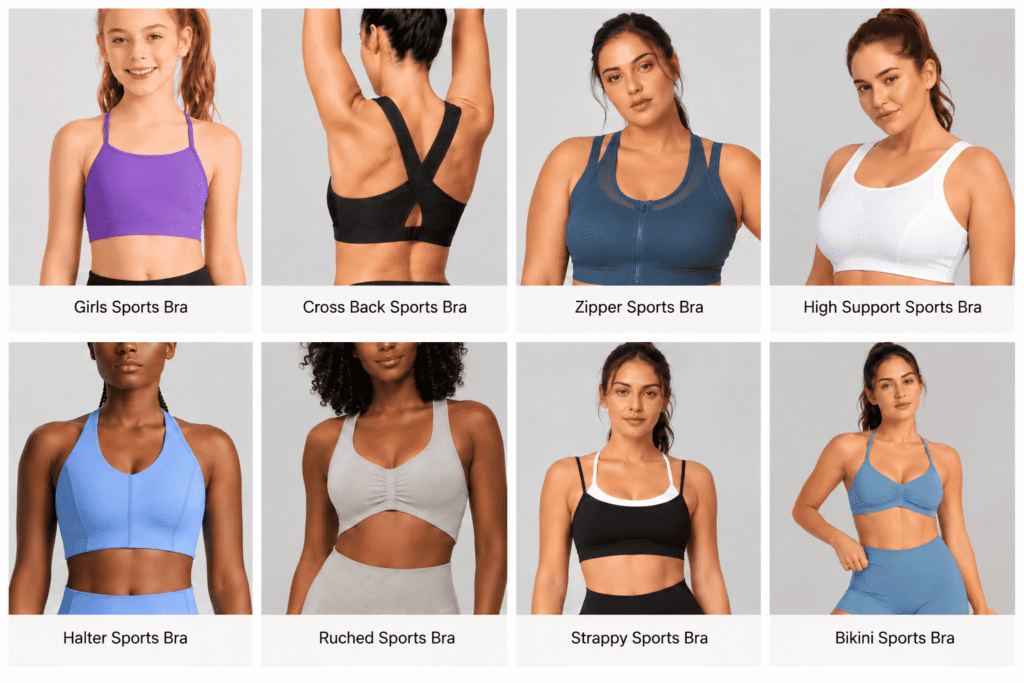
Sustainable Sports Bra Manufacturer FAQ: What Should Buyers Verify Before Shortlisting a Supplier?
Buyers evaluating a Sustainable Sports Bra Manufacturer should verify the supplier’s legal identity, recycled material documentation, certification scope, MOQ conditions, sample performance and production reliability before making a purchasing commitment. The following frequently asked questions address common sourcing decisions for international activewear brands, including how to distinguish credible environmental claims from unsupported marketing statements and how to reduce commercial risks when placing initial and repeat orders.
1. How Can I Verify Whether a Sustainable Sports Bra Manufacturer Is Reliable?
A reliable Sustainable Sports Bra Manufacturer should have a verifiable business identity, identifiable production facilities, relevant sports bra manufacturing experience and consistent documentation. Buyers should examine business registration, actual production location, sample quality, material sourcing records and quality-control evidence before approving a supplier.
A professional website or attractive product photographs are not sufficient proof of manufacturing reliability. Request information about the actual production site, relevant equipment, previous product experience and inspection procedures. If recycled-content certification is mandatory, verify the applicable certificate scope and transaction arrangements separately. The strongest supplier is one whose claims can be independently checked against the requirements of the actual order.
2. Does a GRS Certificate Mean Every Sports Bra Is Made With Certified Recycled Materials?
No. A GRS-certified company does not automatically produce certified garments in every order. Buyers must determine whether the relevant production activities, materials and transactions meet the applicable certification requirements.
A Sustainable Sports Bra Manufacturer may hold a valid Scope Certificate while producing both certified and non-certified garments. Buyers should examine the certificate holder, covered facilities, relevant activities and required transaction documentation. A certified fabric supplier does not automatically establish certification of the finished sports bra. Before using a GRS-related product claim or label, confirm that the specific garment and supply-chain records satisfy the applicable standard and claims rules.
3. What Is the Minimum Order Quantity for Custom Recycled Sports Bras?
MOQ depends on the fabric, color, construction, customization requirements and the manufacturer’s commercial arrangements. Buyers should confirm whether the minimum applies per style, per color, per fabric or to the total order.
A Sustainable Sports Bra Manufacturer may accept a relatively small garment order while the selected recycled fabric requires a larger material purchase. Custom dyeing, branded trims and specialized components can introduce additional minimums. Ask whether sizes can be mixed within the style MOQ and whether unused fabric must be purchased. Startups should compare the initial inventory commitment, not only the unit price, when deciding which supplier is commercially suitable.
4. How Long Does Sampling Take for Sustainable Sports Bras?
Sampling time depends on fabric availability, product complexity, development requirements and the number of revisions. A short advertised sampling period does not necessarily include material sourcing, document verification, international shipping or buyer approval.
When evaluating a Sustainable Sports Bra Manufacturer, request a schedule that separates fabric confirmation, first-sample production, delivery, wear testing and revisions. Buyers should also establish whether the sample uses the same approved material intended for bulk production. A visually acceptable sample made from substitute fabric may not demonstrate the performance or traceability of the final product. Approve the relevant specifications and outstanding corrections before authorizing production.
5. What Documents Should Buyers Check Before Paying a Sustainable Sports Bra Manufacturer?
Before making a deposit, buyers should verify the contracting company, quotation, purchase specifications, payment details and agreed documentation responsibilities. The purchasing agreement should identify the product, quantity, material requirements, price, delivery terms and approval conditions.
A Sustainable Sports Bra Manufacturer should explain which certification and traceability records are available before payment and which may only be issued after the relevant certified transactions. Buyers should not assume that every Transaction Certificate exists before production begins. Confirm the beneficiary’s identity, use independently verified payment details and document the consequences of failing mandatory material or compliance requirements. Payment terms should reflect the actual commercial risks.
6. Can I Use “Eco-Friendly,” “Sustainable” or “GRS Certified” on My Sports Bra Packaging?
Environmental claims should be specific, accurate and supported by evidence applicable to the finished product and destination market. A fabric containing recycled polyester does not automatically justify describing the entire sports bra as environmentally friendly or fully recycled.
A Sustainable Sports Bra Manufacturer can provide material and certification information, but the brand should independently review the proposed wording and labeling permissions. Confirm whether a recycled-content percentage applies to the main fabric or the complete garment. Certification logos must follow the relevant standard’s claims requirements. Buyers selling in the United States or European Union should also consider applicable environmental marketing and consumer protection rules before publishing product claims.
7. How Can Startups Compare Sustainable Sports Bra Manufacturers With Low MOQ?
Startups should compare total initial purchasing commitments, material requirements, sample evidence and documentation quality rather than choosing solely by the lowest MOQ or unit price. Smaller orders may reduce inventory exposure, but they can involve higher unit costs.
A Sustainable Sports Bra Manufacturer offering 100 pieces per color may be more suitable for market testing than one requiring 500 pieces per color, depending on the brand’s budget and expected demand. However, the smaller order must still satisfy mandatory product and recycled-material requirements. Ask suppliers to quote identical specifications, confirm mixed-size arrangements and disclose fabric minimums, testing expenses and packaging costs before comparing their offers.
8. How Can Buyers Maintain Recycled Material Quality and Certification Consistency on Reorders?
Repeat orders should be checked against the approved product specification, material source, recycled-content requirements and applicable certification records. A successful first order does not guarantee that future production will use identical materials or maintain the same documentation.
A Sustainable Sports Bra Manufacturer should identify important changes in fabric suppliers, material composition, production facilities and garment construction before implementing them. Buyers should compare the new order with the previously approved sample, measurements, fabric reference and inspection criteria. Certification and transaction evidence should be reviewed for the new order where required. Written change approval helps reduce the risk of inconsistent products, unsupported environmental claims and unexpected delivery problems.
Final Purchasing Consideration
Selecting a Sustainable Sports Bra Manufacturer requires more than comparing product photographs, published certificates and quotations. International buyers should evaluate whether the supplier can meet the actual product specifications, substantiate relevant recycled-content claims and maintain reliable production arrangements.
The right Sustainable Sports Bra Manufacturer is the one that satisfies mandatory requirements while offering a suitable balance of quality, traceability, MOQ, price and delivery reliability. A structured comparison gives buyers a stronger basis for making informed sourcing decisions and developing consistent long-term supplier relationships.