OEM/ODM Sportswear Manufacturer | 3-Day Sampling | Low MOQ | 50K Monthly Capacity | ISO9001 & BSCI Certified

Top 10 Top Horse Riding Wear Brands: Best Brands & China Manufacturers Compared
Compare top horse riding wear brands and China manufacturers by product expertise, riding performance, custom capability, MOQ, samples, quality control and supply reliability to find the right partner for your equestrian apparel brand.
Top 10 Top Horse Riding Wear Brands: Comparing Product Expertise, Riding Performance and Supply Reliability
The best-known equestrian label is not automatically the best product benchmark, and the manufacturer offering the lowest quotation is not automatically the safest production partner. For brands, retailers and sourcing teams researching top horse riding wear brands, the more useful question is what makes successful riding apparel work—and whether those product standards can be translated into reliable custom production.
Modern equestrian collections can include breeches, riding tights, competition jackets, training tops, base layers and weather-focused outerwear. Each category creates different requirements for fit, fabric recovery, seam construction, grip position, pocket placement and movement in the saddle. Buyers comparing top horse riding wear brands therefore need to look beyond brand popularity, visual design or retail price.
A premium pair of breeches may look simple on a product page, but its commercial success can depend on details that are less obvious: whether the waistband remains stable while riding, whether the knees can bend without excessive tension, whether the silicone grip provides useful contact without restricting movement, and whether the lower leg fits comfortably inside a tall riding boot.
The top horse riding wear brands worth studying combine clear product specialization, rider-focused performance and a recognizable market position. For B2B buyers, however, brand research should be followed by manufacturer evaluation. A suitable production partner should demonstrate relevant equestrian experience, custom development capability, reliable sampling, realistic MOQ conditions, quality control and the ability to reproduce approved fit, materials, construction and branding consistently in bulk production and repeat orders.
This distinction is important because a successful riding brand and a capable manufacturer answer different questions.
Established top horse riding wear brands can show buyers what riders already value. Their collections can reveal how different markets approach competition clothing, technical breeches, riding tights, seasonal outerwear and everyday training apparel. They can also provide useful references for product architecture, price positioning, fabric direction and functional details.
A manufacturer must prove something different.
Can the factory translate a concept, reference garment or Tech Pack into a workable pattern? Can it identify whether a requested fabric is suitable for the intended riding use? Can grip artwork remain correctly positioned after size grading? Can approved measurements and construction details be controlled when production moves from one sample to hundreds of pieces?
Most importantly, can the manufacturer make the approved product again?
A good first sample is valuable, but it proves only that the product can be made once. For a growing equestrian brand, long-term supply reliability depends on whether the manufacturer can control approved specifications, material references, color standards, workmanship and quality records across bulk orders and future replenishment.
That is why this guide looks at top horse riding wear brands from both a product and sourcing perspective. It compares established market benchmarks, examines China manufacturing options and then goes deeper into custom development, sampling, MOQ, pricing, riding-performance testing, factory verification, quality control and bulk repeatability.
The objective is not simply to identify which brand is most famous. It is to help buyers understand which product ideas are worth benchmarking, which manufacturing capabilities actually matter and which supplier model fits the commercial stage of their own equestrian brand.
What Should Buyers Compare When Researching Top Horse Riding Wear Brands?
Buyers comparing top horse riding wear brands should evaluate more than style and reputation. The strongest benchmark depends on what product you want to develop, who will wear it, how it will be used and what price level your market can support.
Key areas to compare include:
- Product Specialization: Breeches, riding tights, competition jackets, show shirts, base layers or technical outerwear
- Riding Use: Competition, training, dressage, jumping, everyday riding or multi-purpose collections
- Fit Development: Waistband stability, hip mobility, knee articulation and lower-leg fit
- Grip System: Full-seat vs knee grip, silicone pattern, coverage and grip intensity
- Fabric Performance: Stretch, recovery, breathability, moisture management, abrasion resistance and seasonal suitability
- Construction: Seam placement, reinforcement, pocket structure, zipper selection and finishing
- Market Position: Entry, mid-market, premium or technical-performance positioning
- Custom Capability: OEM, ODM, private label, fabric, color, trims, branding and packaging
- Sampling: Prototype, fit sample, size set and pre-production approval
- Commercial Conditions: MOQ, sample cost, bulk price, material minimums and lead time
- Quality Control: Incoming materials, in-line inspection, final inspection and production records
- Supply Reliability: Ability to reproduce the approved product during bulk production and repeat orders
These criteria become especially important when brand research moves into actual product development.
For example, a buyer may admire the clean appearance of a premium competition breech, but copying its visual direction is not a product-development strategy. The buyer still needs to decide the intended riding discipline, target customer, fit profile, fabric weight, stretch and recovery requirements, grip coverage, pocket construction, branding method and target retail price.
Working with an experienced equestrian clothing manufacturer can help turn those decisions into a development path covering pattern creation, material selection, sampling, fit correction and production preparation.
The goal should not be to reproduce another brand’s identity. A stronger approach is to understand why successful riding products work, identify which principles are relevant to your customer and then build a product specification that belongs to your own brand.
Brand Benchmark vs Manufacturing Partner: Why the Difference Matters
| Comparison Area | Established Riding Brand | Manufacturing Partner |
|---|---|---|
| Main Value | Shows what is already working in the market | Turns product requirements into manufacturable garments |
| Product Evidence | Retail collections and rider-facing products | Samples, production records and manufacturing capability |
| Fit Focus | Finished consumer fit | Pattern development, grading and repeatability |
| Fabric Focus | Performance and customer experience | Sourcing, testing, MOQ, consistency and bulk availability |
| Grip Focus | Rider feel and product positioning | Artwork, application, adhesion and production consistency |
| Price Focus | Retail value | Sample cost, unit cost and total production commitment |
| Quality Focus | Consumer experience | Incoming, in-line and final production control |
| Long-Term Question | Will riders continue buying it? | Can the approved standard be reproduced consistently? |
This distinction prevents a common sourcing mistake: selecting a supplier because its showroom looks similar to successful top horse riding wear brands without verifying how the products are actually developed and controlled.
A factory may display attractive breeches but have limited experience with custom pattern development. Another supplier may advertise a very low MOQ but restrict that MOQ to available fabrics and existing colors. A third may produce an excellent sample but rely on inconsistent material sourcing when bulk production begins.
For B2B buyers, these differences matter more than a polished catalog.
The right sourcing decision starts by using top horse riding wear brands as market references, then translating those observations into measurable requirements that manufacturers can quote, sample and reproduce. Once the product inputs are aligned, buyers can make a more meaningful comparison of price, MOQ, technical capability and supply reliability.
What Are the Top 10 Top Horse Riding Wear Brands and Manufacturers Worth Comparing?
The top horse riding wear brands worth comparing are not all the same type of business. Some are well-established consumer brands with strong product collections for competition, training or equestrian lifestyle, while others are manufacturers mainly providing production services for private label buyers. For sourcing teams, it is important to understand this difference. Established brands can be useful references for studying product direction and market expectations, while manufacturers should be compared based on their custom development, sampling, MOQ, quality control and ability to repeat the approved standard in bulk production.
For example, Ariat has developed its business around performance innovation for English riding, Western riding, outdoor and work categories, with its company history starting from 1993. LeMieux has grown from its equestrian background into a wider product range covering both riders and horses. The LeMieux brand was launched in 2006 and started international exports in 2009.
For buyers studying top horse riding wear brands, however, retail success should be treated as a benchmark rather than manufacturing evidence. A recognizable brand can help define the product standard you want to reach, but your sourcing decision still depends on whether a manufacturer can turn that direction into an approved sample and reproduce it reliably in bulk.
Quick Comparison of Top Horse Riding Wear Brands and Manufacturing Benchmarks
| Brand / Manufacturer | Market Type | Main Strength | Product Direction | Custom Manufacturing | Best Used By Buyers For |
|---|---|---|---|---|---|
| Ariat | Established Brand | Broad performance positioning | English, Western, riding apparel, footwear | Not positioned as an open private-label manufacturer | Performance and large-collection benchmarking |
| Pikeur | Established Brand | Competition-oriented positioning | Breeches, jackets, tops, competition apparel | Not positioned as an open private-label manufacturer | European competition-wear benchmarking |
| Cavalleria Toscana | Premium Brand | Technical-premium positioning | Competition and training apparel | Not primarily positioned as an open OEM supplier | Premium design and technical-product benchmarking |
| LeMieux | Established Brand | Coordinated equestrian ecosystem | Rider clothing, competition wear, horsewear | Not positioned as an open private-label manufacturer | Collection architecture and coordinated merchandising |
| Kerrits | Riding Apparel Brand | Rider-focused performance apparel | Tights, breeches, tops, outerwear | Not primarily an open OEM supplier | Technical riding-bottom benchmarking |
| Horse Pilot | Technical Brand | Performance-led product development | Technical riding apparel and outerwear | Not primarily an open OEM supplier | Functional-material benchmarking |
| Pair Fashion | China Manufacturer | Custom development and flexible production | Breeches, tights, tops, jackets, competition apparel | OEM / ODM / Private Label | Custom equestrian collection development |
| Run Equestrian | China Manufacturer | Equestrian manufacturing | Breeches, jodhpurs, show jackets and riding apparel | OEM / ODM / Private Label | Equestrian-focused sourcing comparison |
| Anqi Equestrian Apparel | China Manufacturer | Private-label development | Equestrian apparel | OEM / ODM | China supplier comparison |
| VeloSpan | China Supplier | Riding apparel specialization | Breeches, competition jackets, base layers | Custom manufacturing services | Product-specialized sourcing comparison |
The table deliberately separates brands from manufacturers. Buyers should not interpret a famous retail brand’s absence of public MOQ or sample information as a weakness: these companies generally are not advertising themselves as open contract manufacturers. Equally, a factory should not be ranked as a better “brand” simply because it accepts private-label orders.
The useful comparison is what each business can teach or provide to the buyer.
1. Ariat — Best for Broad Performance Equestrian Benchmarking
Ariat is one of the strongest benchmarks for buyers who want to understand how equestrian performance can expand into a much broader commercial product system. The company states that its values have shaped the business since 1993, and its original proposition brought athletic footwear technology into riding boots. Today, Ariat operates across equestrian, outdoor and work categories.
Company profile
- Headquarters: San Leandro, California, United States
- History: Operating since 1993
- Core Direction: English and Western equestrian products, footwear, apparel, denim and outdoor/work products
- MOQ: Not publicly offered as an open private-label manufacturing program
- Custom Sample Lead Time: Not publicly offered for external private-label buyers
- Best For: Brands studying broad performance positioning and collection architecture
- Less Suitable For: Buyers looking for an OEM factory to manufacture their own label
Ariat is particularly useful because it shows why buyers should not view riding apparel as an isolated garment category. Its product philosophy combines performance requirements with a larger understanding of riders’ lives. Ariat says it was the first company to integrate athletic footwear technology into equestrian boots and today describes itself as a major Western and English footwear and apparel business.
For product developers comparing top horse riding wear brands, the lesson is not to imitate an Ariat garment. The more useful lesson is to think about the system around the garment: Who is the rider? What discipline do they participate in? What happens before, during and after riding? Which products naturally belong in the same collection?
Core Advantage: Strong performance heritage combined with broad commercial category development.
Limitation for B2B Sourcing: Ariat is a consumer-facing brand rather than an openly marketed OEM/ODM factory for buyers seeking low-MOQ custom production.
2. Pikeur — Best for European Competition-Wear Benchmarking
Pikeur is a useful reference for buyers developing a collection around European equestrian aesthetics, competition clothing and technically focused riding apparel. Its value in a B2B comparison comes primarily from product benchmarking rather than open contract manufacturing.
When studying top horse riding wear brands, buyers should look at how competition-focused brands balance three requirements that can easily conflict:
formal appearance, rider movement and technical performance.
A competition jacket cannot be evaluated in the same way as a normal fashion blazer. Shoulder mobility, bent-elbow comfort, back-hem behavior and fabric recovery become more important once the rider takes the reins and sits in the saddle.
The same principle applies to breeches. A clean retail appearance is only the visible result. Product developers still need to understand waistband construction, hip and knee mobility, grip positioning and lower-leg compatibility with riding boots.
Buyer Profile
- Market Direction: European equestrian and competition apparel
- Core Products: Breeches, riding tops, jackets and competition-oriented apparel
- MOQ: No public open-OEM MOQ should be assumed
- Custom Sample Lead Time: Not publicly presented as a general private-label service
- Best For: Competition-product and European styling benchmarks
- Less Suitable For: Buyers requiring an openly available China OEM/ODM program
Core Advantage: Strong reference point for the relationship between technical riding requirements and polished competition styling.
Limitation for B2B Sourcing: Public retail product information should not be confused with external manufacturing availability.
3. Cavalleria Toscana — Best for Premium Technical Equestrian Positioning
Cavalleria Toscana is particularly useful for buyers studying how premium aesthetics and technical equestrian function can occupy the same product. Rather than competing only through decoration, premium riding apparel often depends on controlled silhouettes, material selection, restrained branding and details that remain functional during movement.
Cavalleria Toscana is headquartered legally in Monsummano Terme, Pistoia, Italy, according to its current corporate information.
For brands researching top horse riding wear brands, this is an important benchmark because “premium” should not simply mean adding more expensive fabric, more logos or more complicated trims.
A premium product needs a coherent reason for its price.
For riding apparel, that may come from:
- Cleaner pattern engineering
- Technical stretch and recovery
- Better moisture and temperature management
- Refined seam and trim execution
- Low-bulk construction
- Competition-appropriate styling
- Consistent color and branding systems
Company Profile
- Country: Italy
- Registered Location: Monsummano Terme, Pistoia
- Market Position: Premium technical equestrian
- Core Direction: Training and competition apparel
- MOQ: No public open private-label MOQ should be assumed
- External OEM Sample Lead Time: Not publicly promoted as a standard sourcing service
- Best For: Premium positioning and technical-aesthetic benchmarking
- Less Suitable For: Buyers specifically searching for a flexible private-label production factory
Core Advantage: Strong benchmark for combining technical performance with premium visual restraint.
Limitation for B2B Sourcing: A buyer can study the product philosophy, but should not assume access to the brand’s production resources or specifications.
4. LeMieux — Best for Coordinated Rider and Equestrian Collections
LeMieux is a valuable benchmark for brands that want to build a coordinated equestrian ecosystem rather than sell one isolated pair of breeches. Its current range spans rider clothing, horsewear, saddle pads, saddlery, tack, riding boots and related categories, while coordinated color stories remain an important part of its merchandising approach.
The company’s own history dates the LeMieux brand launch to 2006, following earlier equestrian business activity, with first trade exports recorded in 2009. Its history also records becoming an official supplier to seven national Olympic teams at Paris 2024.
This makes LeMieux particularly interesting when comparing top horse riding wear brands from a collection-development perspective.
A small brand may initially think:
We need one pair of riding tights.
A more mature merchandising question is:
If the tights sell, what product should the customer buy next?
That could be a base layer, competition shirt, jacket or coordinated accessory. The commercial value therefore comes not only from individual garment quality but also from the relationship between products.
Company Profile
- Location: Hampshire, United Kingdom
- LeMieux Brand Launch: 2006
- Core Products: Rider clothing, competition apparel, horsewear, saddle pads, tack and accessories
- MOQ: No public open private-label MOQ
- External Sample Lead Time: Not publicly promoted as an OEM sampling service
- Best For: Collection architecture, coordinated colors and rider/horse product ecosystems
- Less Suitable For: Buyers searching specifically for an external private-label apparel manufacturer
Core Advantage: Demonstrates how coordinated categories can increase the depth of an equestrian brand.
Limitation for B2B Sourcing: Its retail assortment is an excellent market benchmark, but it should not be treated as an openly available OEM manufacturing platform.
5. Kerrits — Best for Riding Tights and Everyday Performance Benchmarking
Kerrits is especially relevant to buyers studying the intersection between technical riding bottoms and everyday rider comfort. This makes it a useful benchmark when developing riding tights, breeches and training-focused products where mobility and practical wearability matter more than formal competition styling.
For sourcing teams, the interesting question is not simply which riding tight looks best.
Instead, examine the product as a group of interacting decisions:
- Does the waistband remain stable when the rider sits?
- Does the fabric recover after repeated knee and hip flexion?
- Is grip placed where the rider actually contacts the saddle?
- Can a phone pocket be reached without creating uncomfortable bulk?
- Does the lower leg remain comfortable inside tall boots?
- Can the fabric manage repeated training, washing and abrasion?
Market Position: Rider-focused performance apparel
Core Direction: Riding tights, breeches, tops and functional riding layers
MOQ: No open private-label MOQ should be assumed
Best For: Technical riding-bottom and training-wear benchmarking
Less Suitable For: Buyers specifically needing contract OEM/ODM production
Core Advantage: A useful product benchmark for practical rider-focused performance.
Limitation for B2B Sourcing: Buyers still need a separate manufacturing partner to translate benchmark ideas into their own proprietary fit, fabric and branding system.
6. Horse Pilot — Best for Technical Riding Apparel Benchmarking
Horse Pilot is useful for buyers whose product brief starts with riding conditions and technical performance rather than decoration. This direction is particularly relevant for technical outerwear, training apparel and products designed for changing weather or demanding movement.
For private-label buyers comparing top horse riding wear brands, the larger lesson is that fabric should be selected around a use case.
A lightweight training jacket for mild weather may prioritize stretch, breathability and low weight. A jacket designed for windy riding conditions may require more protection while still allowing shoulder and elbow movement. A colder-season product may need insulation or layering without creating excessive bulk in the saddle.
That decision should happen before a manufacturer simply sends a catalog of “water-resistant” or “breathable” fabrics.
Market Position: Technical-performance equestrian
Core Direction: Performance riding apparel and outerwear
MOQ: No public open-OEM MOQ should be assumed
Best For: Functional fabric and technical outerwear benchmarking
Less Suitable For: Buyers requiring a publicly offered flexible private-label production program
Core Advantage: Strong reference for designing around actual riding conditions.
Limitation for B2B Sourcing: Technical retail positioning does not itself provide buyers with a custom manufacturing route.
7. Pair Fashion — Best for Custom Equestrian Apparel Development in China
Pair Fashion is different from the first six companies because its role in this comparison is manufacturing rather than consumer-brand benchmarking. Based in Dongguan, Guangdong, Pair Fashion develops and produces custom equestrian apparel for overseas brands through OEM, ODM and private label programs.
The company was established in 2016 and operates seven production lines, including three dedicated equestrian apparel lines. Its internal structure includes an 11-person pattern and sample-development team and a 13-person QC team.
Its equestrian capability covers riding tops, breeches, jackets and competition apparel for women and men, with children’s equestrian apparel also included in its production scope.
Manufacturer Profile
- City: Dongguan, Guangdong, China
- Established: 2016
- Business Type: Custom functional sportswear and equestrian apparel manufacturer
- Core Equestrian Products: Breeches, riding tights, riding tops, jackets and competition apparel
- Development: OEM, ODM and Private Label
- Sampling: Proto sample, fit sample, salesman sample, pre-production sample, photo sample and size-set sample
- Standard MOQ: From 100 pieces for regular programs; project conditions can vary by material and customization
- Sampling Time: As fast as 3 days for suitable projects; regular sampling can take around 7 days
- Bulk Lead Time: As fast as 15 working days for suitable orders; standard production is generally 20–25 working days
- Capacity: Approximately 50,000 pieces per month under normal production conditions
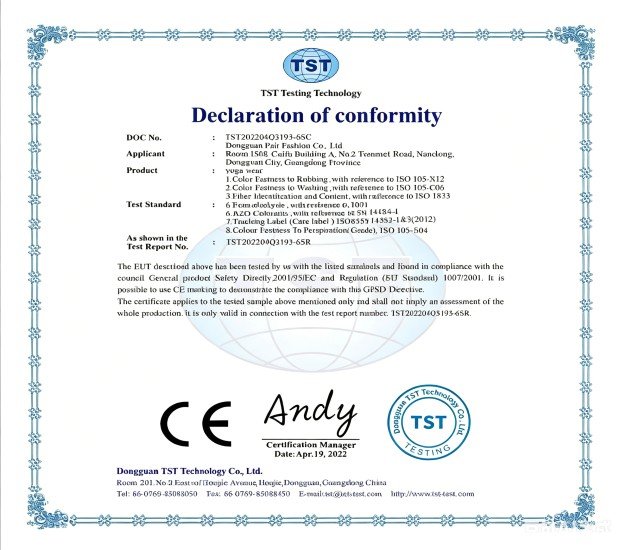
- Certifications Listed in Company Documentation: ISO9001, BSCI, GRS, CE and ROHS
- Best For: Startup, growing and established brands requiring custom equestrian product development
- Less Suitable For: Buyers seeking only a few finished retail pieces or extremely price-driven orders with no development requirement
Pair Fashion’s manufacturing value is strongest when a buyer needs more than logo placement. Development can begin from a concept, reference image, physical sample or Tech Pack, then move through pattern development, fabric selection, sampling, fit correction, branding and production preparation.
The company documentation also describes a production-control sequence covering material inspection, cutting, printing or embroidery, sewing, finishing, quality inspection and packing, with incoming, in-line and final QC stages.
For buyers who have already researched the top horse riding wear brands and are ready to develop their own products, this is where the comparison changes from inspiration to execution. An experienced custom equestrian apparel manufacturer should be able to discuss not only appearance, but also fit, fabric, grip, construction, sample approval and repeatability.
Core Advantage: Integrated custom development with dedicated equestrian production capability, sampling resources and multi-stage QC.
Potential Limitation: A 100-piece starting quantity can be flexible for B2B custom production, but it is still unsuitable for buyers wanting only 10–20 fully customized pieces. Highly customized fabrics, colors or processes can also require higher material or production minimums.
8. Run Equestrian — Best for Equestrian-Focused OEM/ODM Comparison
Run Equestrian is worth including as a China manufacturing comparison because its public positioning is specifically connected with equestrian apparel rather than general fashion production. Its product scope includes riding breeches, jodhpurs, show jackets and related riding apparel, alongside OEM/ODM and private-label services.
For buyers, specialization matters because a supplier that understands ordinary leggings does not automatically understand riding tights.
The manufacturing questions are different:
Where does the saddle create friction? How should the knee move? How much grip is appropriate? What happens to the lower leg inside a boot?
Core Products: Breeches, jodhpurs, show jackets and equestrian apparel
Service Model: OEM / ODM / Private Label
Best For: Buyers comparing specialist equestrian suppliers
MOQ / Lead Time / Certifications: These should be confirmed against the specific project and current manufacturer documentation before ordering
Less Suitable For: Buyers who require commercial conditions that have not been confirmed in writing
Core Advantage: Equestrian-focused manufacturing positioning.
Potential Limitation: Buyers should verify current factory evidence, project-specific MOQ, testing requirements and production conditions instead of relying only on marketing claims.
9. Anqi Equestrian Apparel — Best for Private Label Supplier Comparison
Anqi is another China-based equestrian apparel supplier worth comparing when building a manufacturing shortlist. Its public positioning emphasizes OEM/ODM development for riding apparel, making it more commercially relevant to private-label buyers than a consumer brand that does not accept outside manufacturing projects.
For procurement teams, however, being listed as a manufacturer is only the beginning of due diligence.
Before comparing price, request evidence for the specific product category being sourced. If the project is a full-seat breech, inspect full-seat products. If it is a technical competition jacket, ask for relevant jacket construction evidence rather than accepting general activewear samples.
Core Direction: Custom equestrian apparel
Service Model: OEM / ODM
Best For: Buyers building a China supplier shortlist
MOQ / Sample Time / Certifications: Confirm current conditions directly before supplier selection
Less Suitable For: Projects where required capability has not been demonstrated through relevant samples or production evidence
Core Advantage: Product positioning aligned with equestrian private-label development.
Potential Limitation: Public claims should be verified against current production evidence, quotations, sample performance and written commercial terms.
10. VeloSpan — Best for Product-Specialized China Sourcing Comparison
VeloSpan completes the shortlist as another supplier direction for buyers comparing China-based equestrian apparel production. Its public product positioning includes riding breeches, competition jackets and riding base layers, giving buyers another reference when comparing product specialization.
The important point is not to collect as many supplier names as possible.
A useful shortlist normally becomes smaller as evidence improves.
If five manufacturers claim they can make riding breeches but only three can show relevant recent products, only those three should move forward. If only two can explain the requested fabric, grip application and fit-development process clearly, the shortlist becomes two.
Core Direction: Performance riding apparel
Products to Compare: Breeches, competition jackets and riding base layers
Best For: Buyers comparing specialized equestrian manufacturing options
MOQ / Lead Time / Certifications: Verify current project-specific information before commercial comparison
Less Suitable For: Buyers who need unverified claims treated as confirmed manufacturing capability
Core Advantage: Equestrian product specialization provides a more relevant starting point than a generic apparel supplier.
Potential Limitation: Final suitability cannot be determined from website positioning alone; sampling, factory evidence, QC documentation and commercial terms still need verification.
Which of These Top Horse Riding Wear Brands Should You Actually Benchmark?
There is no single winner among the top horse riding wear brands because buyers are solving different product problems.
If you are developing a broad performance collection, Ariat can provide useful market-level reference points. For European competition styling, Pikeur is more relevant. For premium technical positioning, study Cavalleria Toscana. For coordinated rider-and-horse collections, LeMieux provides a different commercial lesson. Riding-tight developers may learn more from Kerrits, while technical outerwear projects can benefit from studying Horse Pilot.
China manufacturers belong in a different part of the decision.
They should be compared according to whether they can develop, sample, manufacture and reproduce the product your brand actually intends to sell.
That is the critical difference between studying top horse riding wear brands and selecting a supplier. The first helps define the destination. The second determines whether your product can reach it.

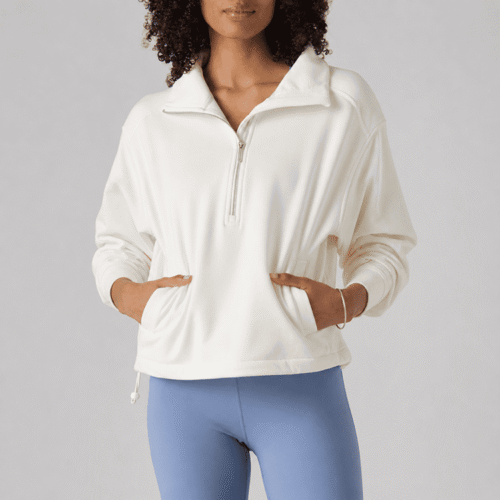
Custom Women’s Half Zip Oversized Sweatshirt Athleisure Pullover OEM ODM
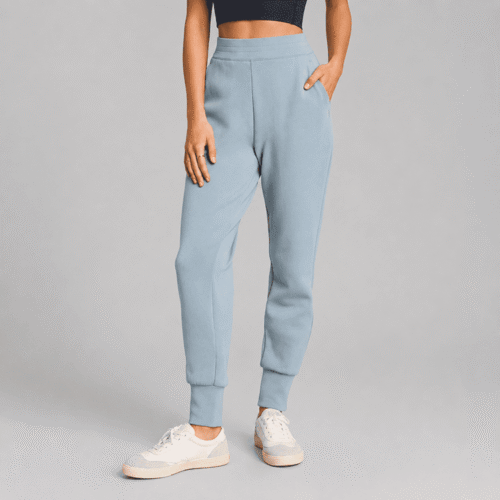
Custom Women’s High-Waist Jogger Pants OEM ODM Athleisure Sweatpants
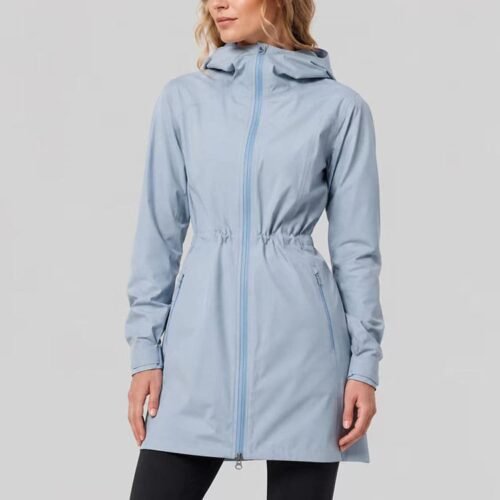
Custom Women’s Hooded Longline Windbreaker Jacket Waterproof Outerwear OEM ODM
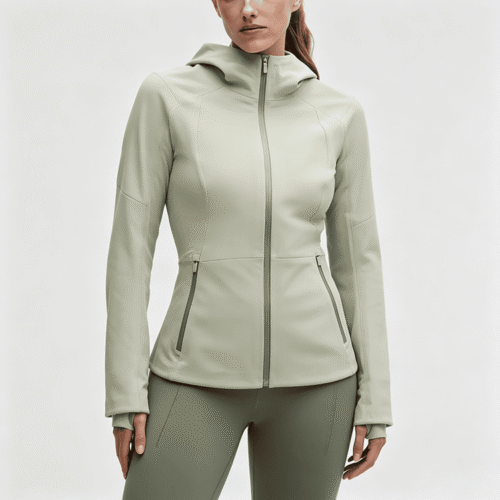
Custom Women’s Hooded Performance Jacket Full Zip Athleisure Outerwear OEM ODM
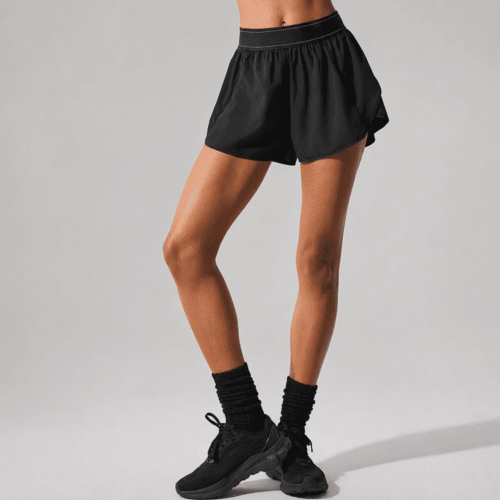
Custom Women’s Lightweight Running Shorts OEM ODM Workout Shorts
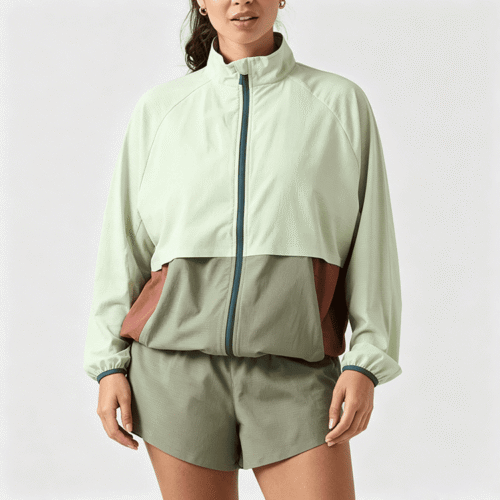
Custom Women’s Lightweight Windbreaker Jacket Full Zip Training Outerwear OEM ODM
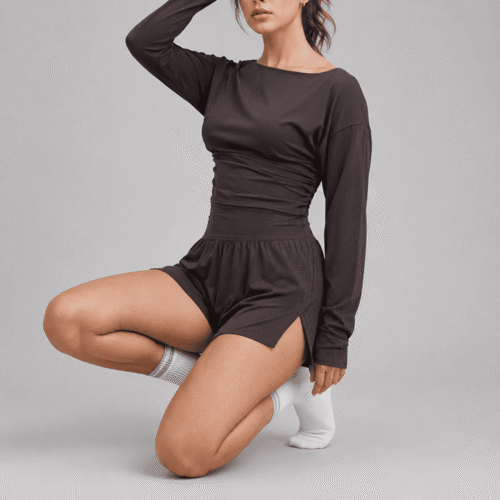
Custom Women’s Long Sleeve Lounge Romper OEM ODM Loungewear
Custom Women’s Oversized Half Zip Sweatshirt Fleece Pullover OEM ODM
Who Are the China Horse Riding Wear Manufacturers Worth Comparing?
China horse riding wear manufacturers are worth comparing when they can show relevant equestrian product experience, custom development capability, realistic MOQ conditions, sampling support and evidence of production control. Buyers researching top horse riding wear brands should not shortlist a supplier simply because its website contains breeches or riding jackets. The stronger candidates are those that can explain how the product moves from specification and sample approval into controlled bulk production.
China is a large apparel manufacturing market, but that does not mean every sportswear manufacturer is automatically suitable for equestrian products.
A supplier may be excellent at yoga leggings but have limited understanding of full-seat grip placement, riding posture, tall-boot compatibility or competition-jacket movement. Another supplier may specialize in fashion jackets but lack experience working with high-stretch technical fabrics.
For this reason, the China shortlist should be built around product relevance first and factory size second.
China Horse Riding Wear Manufacturers: Quick B2B Comparison
| Manufacturer | Location | Main Direction | OEM / ODM | MOQ | Sampling | Best Buyer Fit |
|---|---|---|---|---|---|---|
| Pair Fashion | Dongguan, Guangdong | Breeches, tights, tops, jackets, competition apparel | Yes | Regular programs from 100 pcs | From 3 days for suitable projects | Custom equestrian brands requiring development + production |
| Run Equestrian | China | Equestrian apparel | Publicly promotes OEM/ODM | Confirm by project | Confirm by project | Buyers wanting an equestrian-focused supplier |
| Anqi Equestrian Apparel | Dongguan, China | Custom equestrian apparel | Publicly promotes OEM/ODM | Confirm current terms | Confirm current terms | Private-label riding-wear sourcing |
| VeloSpan | China | Breeches, riding layers, competition apparel | Custom sourcing direction | Confirm by project | Confirm by project | Buyers comparing specialist product capability |
Important: Commercial conditions can change. Except where specific information is confirmed in current company documentation, buyers should request the latest written quotation, MOQ breakdown, sample schedule, certification evidence and production terms directly from each supplier before making a commercial decision.
1. Pair Fashion — Best for Custom Equestrian Collection Development
Pair Fashion is based in Dongguan, Guangdong, and has manufactured functional sportswear since 2016. Its company documentation lists 135 employees and seven production lines, including three lines dedicated to equestrian apparel, which makes its manufacturing structure relevant to buyers moving from top horse riding wear brands research into custom product development.
The equestrian product scope includes:
- Breeches
- Riding tights
- Riding tops
- Equestrian jackets
- Competition apparel
- Women’s, men’s and children’s equestrian clothing
The company supports OEM, ODM and private label programs. Buyers can begin with a Tech Pack, reference garment, reference image or product concept, depending on how mature the project is.
Pair Fashion Manufacturing Profile
| Item | Current Capability |
|---|---|
| Location | Dongguan, Guangdong, China |
| Established | 2016 |
| Employees | 135 |
| Production Lines | 7 total, including 3 equestrian-focused lines |
| Pattern & Sample Team | 11 people |
| QC Team | 13 people |
| Monthly Capacity | Approx. 50,000 pcs under normal conditions |
| Regular MOQ | From 100 pcs for standard programs |
| Sampling | As fast as 3 days for suitable projects; regular sampling around 7 days |
| Bulk Production | As fast as 15 working days; standard lead time around 20–25 working days |
| Development Models | OEM / ODM / Private Label |
| Documented Certifications | ISO9001 / BSCI / GRS / CE / ROHS |
These figures come from Pair Fashion’s current company documentation.
The more important capability, however, is not the headline production capacity.
For custom riding wear, development happens before capacity becomes valuable.
A brand may arrive with a complete Tech Pack and approved material specification. Another may have only a physical reference sample. A startup may have a sketch and several reference images but still need help defining fabric, fit and construction.
Pair Fashion supports these different development stages through pattern development and several sample types, including Proto Sample, Fit Sample, Salesman Sample, Pre-production Sample, Photo Sample and Size Set Sample.
This makes the manufacturer particularly relevant for:
- Startup equestrian brands developing their first commercial styles
- DTC brands testing a new riding category
- Growing brands adding breeches, tights or jackets
- Private-label retailers requiring branded products
- Established buyers providing complete Tech Packs
- Brands replacing a supplier because of quality or delivery problems
- Buyers planning repeat orders after product validation
It is less suitable for customers who need only a handful of fully customized garments. Pair Fashion’s documentation lists regular MOQ from 100 pieces, so a buyer wanting 10 or 20 customized breeches would normally be outside the intended production model.
Another important distinction concerns MOQ itself.
100 pieces should not be interpreted as a universal MOQ for every possible specification.
A stock fabric in an available color may have a different commercial condition from a custom-dyed fabric. Exclusive trims, custom silicone artwork or material supplier minimums can also change the actual commitment required for an order.
For buyers who want to move beyond studying top horse riding wear brands and develop proprietary products, Pair Fashion’s custom horse riding wear manufacturing capability is therefore most relevant when the project requires both development and repeatable production, rather than simple ready-made purchasing.
Core Strength: Product development, equestrian-focused production lines, multiple sampling stages and structured QC.
Potential Limitation: Fully customized very-small-quantity orders below the normal production threshold may not be commercially suitable, and special materials can create higher minimums.
2. Run Equestrian — Best for Comparing an Equestrian-Focused Manufacturing Model
Run Equestrian is useful for a sourcing shortlist because its public business positioning focuses specifically on equestrian apparel and promotes OEM/ODM and private-label manufacturing rather than presenting itself only as a general clothing supplier.
Its publicly presented product direction includes breeches, jodhpurs, show jackets and riding apparel.
That specialization gives buyers a better starting point than searching hundreds of generic sportswear factories, but it should still be treated as a starting point.
A buyer should request evidence for the exact category being developed.
For example, if your project is a full-seat silicone breech, ask to review relevant full-seat products, grip application and stretch compatibility. If your project is a competition jacket, ask for jacket examples and examine shoulder construction, lining or internal finishing, sleeve movement and back-hem behavior.
Buyer Assessment
- Location: China
- Core Products: Breeches, jodhpurs, show jackets and equestrian apparel
- OEM / ODM: Publicly promoted
- Private Label: Publicly promoted
- MOQ: Verify against the current product specification
- Sample Lead Time: Verify directly for the intended style
- Certifications: Request current certificates relevant to the order
- Best For: Buyers comparing equestrian-focused manufacturers
- Less Suitable For: Buyers unwilling to verify commercial and technical claims before placing an order
Core Strength: Clear equestrian manufacturing focus.
Potential Limitation: Website positioning alone does not establish the exact MOQ, current production availability or suitability for a particular technical specification.
3. Anqi Equestrian Apparel — Best for Private Label Manufacturer Comparison
Anqi Equestrian Apparel provides another comparison point for buyers sourcing riding wear from China. Its public OEM/ODM positioning makes it relevant to businesses looking beyond established top horse riding wear brands toward their own private-label products.
The company is associated publicly with Dongguan, one of China’s established apparel-manufacturing areas.
For a buyer, however, location should carry relatively little weight in the final decision.
Two suppliers operating in the same city can have very different strengths.
One may have stronger breeches experience. Another may be better at show jackets. One may have an experienced internal pattern team, while another relies more heavily on outsourced development. One may accept lower quantities only for existing materials, while another may support custom development but require a larger commitment.
The useful questions are therefore operational:
- Who develops the pattern?
- Who makes the sample?
- Which processes are completed internally?
- Which processes are outsourced?
- Who approves materials before production?
- How are measurements controlled?
- How is silicone grip checked?
- How is bulk quality inspected?
- What records are retained for repeat orders?
Buyer Assessment
- Location: Dongguan, China
- Product Direction: Equestrian apparel
- OEM / ODM: Publicly promoted
- Private Label: Relevant sourcing direction
- MOQ: Confirm against the current quotation and specification
- Lead Time: Confirm for the specific sample and bulk order
- Certifications: Request current valid documentation where required
- Best For: Buyers building a multi-supplier China shortlist
- Less Suitable For: Buyers making decisions solely from online claims without sample or production verification
Core Strength: Clear relevance to private-label equestrian development.
Potential Limitation: Final capability needs to be established through current evidence and product-specific sampling rather than company description alone.
4. VeloSpan — Best for Product-Specialization Comparison
VeloSpan provides a further China sourcing reference because its public product direction includes categories such as breeches, competition jackets and riding base layers.
This matters because product specialization is one of the first filters buyers should apply after researching top horse riding wear brands.
Imagine two factories:
Factory A employs 500 people and manufactures general leggings, T-shirts and casual jackets.
Factory B is smaller but can show recent breeches with knee grip, full-seat applications, technical waistbands and riding-specific fit development.
Factory A has more capacity.
Factory B may still be the lower-risk supplier for a 300-piece custom breeches project.
A larger facility can offer more capacity, but factory size does not automatically prove product specialization or suitability for a particular order.
Buyer Assessment
- Location: China
- Product Direction: Performance equestrian apparel
- Relevant Products: Breeches, competition jackets and riding base layers
- MOQ: Confirm against the intended style
- Sampling: Request project-specific timing
- Certifications: Verify according to market and product requirements
- Best For: Buyers comparing specialist product capability
- Less Suitable For: Buyers treating website product categories as sufficient proof of bulk-production capability
Core Strength: Relevant equestrian product direction.
Potential Limitation: Buyers still need to validate sampling, commercial conditions, QC and repeatability before supplier approval.
How Should Buyers Compare China Manufacturers Fairly?
The most common mistake is requesting quotations before suppliers are quoting the same product.
Suppose three manufacturers receive a photograph of a pair of riding breeches.
They return:
| Supplier | Unit Price | MOQ |
|---|---|---|
| Supplier A | $18.20 | 100 pcs |
| Supplier B | $15.80 | 300 pcs |
| Supplier C | $20.10 | 100 pcs |
At first glance, Supplier B looks cheapest.
But the quotation may not be comparable.
Supplier A may quote an available nylon fabric with standard silicone grip. Supplier B may quote a lower-cost polyester blend with no custom packaging. Supplier C may include custom-dyed nylon, exclusive grip artwork, branded labels and individual packaging.
The headline price tells you almost nothing until the inputs are aligned.
Before comparing quotations, lock or clearly define:
- Product specification
- Fabric composition and approximate weight
- Required stretch and performance
- Stock color vs custom color
- Knee grip vs full-seat grip
- Standard vs custom silicone artwork
- Pocket construction
- Logo method
- Labels and hangtags
- Packaging
- Size breakdown
- Quantity per color
- Testing requirements
- Delivery terms
Only then does price comparison become useful.
This is especially important for buyers inspired by top horse riding wear brands, because a reference image rarely communicates the full specification behind the finished product.
Do You Need the Biggest Horse Riding Wear Factory?
No. The best factory size depends on your order, product complexity and growth stage.
A very large manufacturer can provide valuable capacity, process structure and scalability. But large production capacity can become less useful if your order is too small to receive development attention or if the factory’s strongest categories do not match your product.
A smaller specialist manufacturer can sometimes provide stronger technical involvement for a focused equestrian project.
The opposite can also be true.
A small workshop may make an excellent development sample but lack the production system, QC resources or capacity needed for a large repeat program.
Buyers should therefore compare:
Product Specialization + Development Resources + Relevant Capacity + QC + Commercial Fit
rather than:
Employee Count = Better Factory
For a 200-piece startup order, the “best” factory may be the one that can manage development efficiently at that quantity.
For a mature brand ordering 20,000 pieces across several seasonal programs, capacity planning, material management and repeatability become much more important.
What Evidence Should a China Manufacturer Provide?
Before placing meaningful production, buyers should build an evidence chain rather than relying on one impressive sample.
Product Evidence
Ask for recent examples from the same or closely related category.
A manufacturer producing yoga leggings should not automatically receive full credit for equestrian tights.
Development Evidence
Check whether the supplier can explain:
pattern → fit sample → correction → size grading → PP sample → bulk reference
If the team cannot clearly explain how approved information becomes production information, repeatability may be difficult.
Material Evidence
For functional fabrics, buyers can request composition, weight, relevant test information and available color or dyeing conditions.
Production Evidence
Depending on order value and risk, this may include factory video, production-line information, third-party audit, physical visit or inspection.
QC Evidence
Do not accept “we have QC” as a complete answer.
Ask:
What is checked, when is it checked, who records it and what happens when a problem is found?
Repeat-Order Evidence
This is often overlooked.
Ask how the supplier stores:
- Approved measurements
- Pattern files
- Fabric references
- Color standards
- Grip artwork
- Logo specifications
- Trim information
- Packaging specifications
- Final quality records
A manufacturer may make a beautiful sample today.
Your brand needs to know whether it can make the same product again next season.
Which China Manufacturer Is Best for Your Brand Stage?
The answer changes as the business grows.
| Brand Stage | Main Priority | Suitable Manufacturer Profile |
|---|---|---|
| Startup | Lower inventory risk + development support | Flexible MOQ, strong sampling, clear communication |
| Early DTC Growth | Faster new-product testing | Flexible production + repeat-order capability |
| Growing Brand | More styles + consistent quality | Structured development, QC and material management |
| Established Brand | Scale + repeatability | Capacity planning, documented standards and stable supply |
| Retail / Private Label Program | Compliance + consistency | Clear specifications, QC records and packaging control |
| Technical Equestrian Brand | Product performance | Strong pattern, fabric and riding-specific development |
A startup should not select a supplier simply because that factory serves large brands.
A mature buyer should not select a supplier only because it accepts 100 pieces.
Commercial fit works in both directions.
After comparing top horse riding wear brands for market direction and China manufacturers for production capability, buyers should reduce the shortlist according to the requirements that create the greatest risk for their particular product.
For breeches, that risk may be fit and grip consistency.
For a technical jacket, it may be fabric performance and construction.
For a growing DTC brand, it may be MOQ and replenishment.
For an established retailer, it may be bulk repeatability and delivery reliability.
The strongest sourcing decision is therefore not:
Which factory looks best?
It is:
Which manufacturer’s strengths match the requirements that matter most for this order, and which weaknesses can the business realistically accept?
That question creates a much stronger bridge between researching top horse riding wear brands and building a dependable equestrian apparel supply chain.
Which Top Horse Riding Wear Brands Are Best for Different Products and Riding Markets?
The best top horse riding wear brands depend on what you are trying to benchmark. A brand that is strong in competition jackets may not be the most useful reference for technical riding tights, while a brand known for everyday training apparel may offer more relevant ideas for comfort, pockets and fabric recovery. B2B buyers should therefore compare brands by product category, riding discipline, target customer, performance requirements and price position, rather than treating overall brand popularity as the main selection criterion.
For product developers, this changes the question from “Which brand is best?” to “Which brand is most relevant to the product we are developing?”
That difference sounds small, but it can prevent expensive development mistakes.
A startup creating its first riding-tight collection does not need to benchmark every premium competition brand. It needs to understand what successful riding-bottom products do well. Likewise, a buyer developing a show jacket should pay more attention to shoulder movement, sleeve position, back-hem behavior and competition appearance than to features that make an everyday riding tight successful.
Which Brands Are Best for Breeches and Riding Tights?
For breeches and riding tights, the most useful top horse riding wear brands are those that demonstrate a clear understanding of the relationship between fit, saddle contact, leg movement and practical rider needs.
The distinction between breeches and riding tights also matters commercially.
Traditional breeches usually provide a more structured appearance and can fit naturally into competition, training and classic equestrian collections. Riding tights tend to emphasize stretch, comfort and everyday training, although modern technical products increasingly blur the boundary between the two.
For buyers developing either category, five areas deserve particular attention.
1. Waistband Stability
A waistband should not be evaluated only while the wearer is standing in front of a mirror.
During riding, the hip angle changes and the rider repeatedly moves between different upper-body positions. A waistband that feels comfortable when standing may roll, slide or create pressure once the rider sits in the saddle.
For this reason, buyers should evaluate:
- Waistband height
- Internal structure
- Elastic recovery
- Front-to-back rise balance
- Stability in a seated riding position
- Pressure around the abdomen
- Gap at the back waist
A higher waistband is not automatically better. If the pattern balance or fabric recovery is wrong, increasing waistband height may simply create a larger unstable area.
2. Knee and Hip Movement
Riding creates repeated flexion through the hips and knees. The garment needs enough stretch to accommodate that movement without creating excessive fabric tension.
This is where general activewear experience and equestrian product development begin to separate.
A fabric can have impressive laboratory stretch data and still perform poorly if pattern shape, grain direction, seam position and garment measurements do not work with the rider’s body.
For riding bottoms exposed to repeated movement and contact, buyers may also evaluate abrasion performance using recognized methods such as ASTM D4966, which covers abrasion-resistance testing of textile fabrics using the Martindale abrasion tester. Test results should still be considered together with the actual fabric construction and intended riding conditions.
When benchmarking riding bottoms, buyers should therefore look at the whole system rather than asking only:
“What percentage of elastane does this fabric contain?”
When benchmarking riding bottoms, buyers should therefore look at the whole system rather than asking only:
“What percentage of elastane does this fabric contain?”
The better question is:
“How does this fabric behave in this pattern during the movement this product is designed for?”
3. Full-Seat vs Knee Grip
Grip is one of the most visible differences between technical riding bottoms, but more silicone does not automatically create a better product.
Full-seat grip provides a larger contact area across the seat and inner leg. Knee grip concentrates the application around the knee or inner-knee region. Which system works better depends on the intended riding use, rider preference, fabric and desired amount of saddle contact.
Product development should consider:
- Grip coverage
- Silicone pattern
- Dot or artwork density
- Grip thickness
- Stretch compatibility
- Placement after size grading
- Adhesion after washing
- Rider preference
A visually impressive silicone pattern that feels overly restrictive in the saddle is not a successful technical feature.
4. Pocket Position
Phone pockets have become commercially useful in many riding tights, but simply adding a large side pocket is not enough.
The development team should check where the phone sits when the rider’s hip and knee are flexed. A pocket that works perfectly in normal leggings may create pressure or interference in a riding position.
Pocket depth, opening direction, reinforcement and saddle-contact location should be evaluated together.
5. Lower-Leg and Boot Compatibility
The lower leg receives less attention in online product photographs, but it can strongly influence rider comfort.
Buyers should check whether the fabric and seams create unnecessary bulk inside tall riding boots, whether the hem remains stable, and whether calf measurements work across the intended size range.
This is particularly important when moving from a single fit sample into graded sizes.
Breeches vs Riding Tights: What Should Buyers Compare?
| Development Area | Breeches | Riding Tights | Buyer Question |
|---|---|---|---|
| Structure | Usually more structured | Usually softer and more flexible | How formal should the product feel? |
| Main Use | Competition, training, everyday riding | Training and everyday riding | Where will customers actually wear it? |
| Waistband | Structured stability often matters | Stretch comfort often receives more emphasis | Does it remain stable in the saddle? |
| Fabric | Balance of structure and stretch | High stretch and recovery often prioritized | Does the fabric recover after repeated movement? |
| Grip | Knee or full-seat options | Knee or full-seat options | How much saddle contact does the rider need? |
| Pockets | Can be subtle or integrated | Phone pockets are common | Does the pocket interfere with riding? |
| Lower Leg | Boot compatibility is critical | Low-bulk construction is important | Does it remain comfortable inside tall boots? |
| Market Position | Can extend from entry to premium competition | Strong training and lifestyle potential | Which customer problem are you solving? |
For brands entering this category, Kerrits can be a useful reference for understanding rider-focused technical bottoms, while Pikeur and Cavalleria Toscana can provide different references for brands that want to study more structured or premium equestrian product positioning.
The point is not to combine every feature from the top horse riding wear brands into one product. That usually creates an expensive garment without a clear customer.
Choose the features that solve the needs of your rider.
Which Brands Are Strongest in Competition Jackets and Show Apparel?
Competition apparel requires a different development mindset because technical movement must exist inside a visually controlled garment.
A competition jacket can look beautifully fitted when the rider is standing and still fail when the arms move forward to hold the reins. If the shoulder is too restrictive, the sleeve rotates badly or the back length is incorrect, the garment may pull across the upper body during riding.
For this category, brands such as Pikeur and Cavalleria Toscana are more useful benchmarks than a brand primarily known for casual training tights.
Buyers should examine four movement zones carefully:
Shoulder Movement
The jacket should accommodate the rider’s arm position without excessive pulling across the upper back. Stretch fabric can help, but stretch should not be used to hide a poorly balanced pattern.
Bent Elbow
Sleeve length and construction should be evaluated with the elbow bent in a realistic riding position. A sleeve that appears perfect when the arm hangs naturally can become too short once the rider takes the reins.
Back Hem
The back length needs to work with the saddle and seated posture. Excessive fabric can bunch or interfere, while insufficient coverage can make the garment look poorly balanced.
Front Closure
Buttons, zippers or other closures need to maintain a clean competition appearance without creating unnecessary tension when seated.
For buyers studying top horse riding wear brands, this is an important reminder that visual benchmarking should always be connected to movement.
A photograph tells you how the garment looks.
A riding test tells you whether the pattern works.
Which Brands Are Better Benchmarks for Training and Everyday Riding Wear?
Training apparel generally gives product developers more freedom than formal competition clothing, but it also creates higher expectations for comfort, practicality and repeated use.
Riders may spend hours around the stable before or after getting into the saddle. Products can therefore need to perform across grooming, walking, training, driving, barn work and everyday wear.
For performance fabrics, buyers should distinguish between general marketing descriptions and measurable textile properties. Testing frameworks such as the AATCC textile test methods provide established methods for evaluating areas including liquid moisture management, wicking, drying, water resistance and other performance characteristics.
This makes features such as the following commercially important:
:
- Breathability
- Moisture management
- Four-way stretch
- Soft hand feel
- Secure phone storage
- Easy layering
- Abrasion resistance
- Wash durability
- Seasonal versatility
Brands such as Kerrits can provide useful reference points for everyday rider-focused apparel, while Horse Pilot is particularly relevant when the development brief becomes more technical or weather-oriented.
However, there is a commercial trap here.
Adding every available function does not necessarily create a better product.
A recreational summer riding top may not need the same fabric specification as a technical cold-weather layer. A training tight aimed at an accessible retail price may not need the most expensive fabric available.
The best product brief defines which performance characteristics customers will actually notice and pay for.
English Riding vs Western Riding: Which Product Requirements Are Different?
English and Western riding should not automatically be treated as one apparel market. Both require rider mobility and comfort, but their traditions, silhouettes, competition requirements and product expectations can differ substantially.
For buyers comparing top horse riding wear brands, this distinction should be made before selecting reference products or requesting samples.
| Product Area | English Riding | Western Riding |
|---|---|---|
| Common Bottom Direction | Breeches, jodhpurs, riding tights | Riding jeans and Western-oriented pants are more common |
| Competition Look | Often streamlined and formal | Discipline and event can strongly affect styling |
| Saddle Interaction | Close-contact fit receives strong attention | Saddle type and riding style create different apparel considerations |
| Boot Relationship | Tall boots or paddock boots commonly affect lower-leg design | Western boots influence hem and leg styling differently |
| Grip | Knee/full-seat grip can be important | Silicone grip is generally less central to traditional Western bottoms |
| Jacket Direction | Show/competition jackets in relevant disciplines | Western show apparel follows a different visual language |
| Benchmark Strategy | Technical breeches and competition apparel | Western-specific brands and discipline requirements |
A manufacturer saying “we make horse riding clothing” is therefore not enough.
Buyers should ask:
What type of riding clothing?
If a supplier mainly manufactures English-style breeches, that does not automatically prove expertise in Western show apparel. Similarly, experience with general leggings does not prove the supplier understands full-seat silicone placement or tall-boot compatibility.
Product specialization should be verified at the garment level, not assumed from a broad category label.
Premium vs Mid-Price Riding Wear: What Are Buyers Actually Paying For?
A higher retail price can reflect better materials, stronger product development, brand positioning, distribution costs, marketing, sponsorships or simply greater pricing power. Buyers should therefore avoid reverse-engineering a manufacturing budget directly from the retail price of a premium brand.
For custom product development, a more useful approach is to break the garment into cost-driving decisions.
Consider a pair of riding breeches.
The cost can change because of:
- Fabric composition and weight
- Fabric MOQ
- Stock color vs custom dyeing
- Full-seat vs knee silicone
- Custom grip artwork
- Number and complexity of pockets
- Zippers and trims
- Seam construction
- Logo technique
- Labels
- Packaging
- Testing requirements
- Order quantity
This explains why two visually similar products can have very different manufacturing prices.
It also explains why a buyer should not simply send a photograph of a premium product and ask five factories:
“How much?”
The factories may be quoting five different interpretations of the same photograph.
One may assume stock fabric. Another may quote custom-dyed nylon. One may include custom silicone artwork. Another may assume a standard grip pattern. One may include branded packaging while another quotes only the garment.
The numbers look comparable.
They are not.
Before price comparison becomes meaningful, buyers should align the fabric specification, construction, grip, branding, packaging, quantity and commercial terms.
Which Type of Horse Riding Wear Brand Is the Best Benchmark for Your Collection?
The best benchmark is the one that matches your customer, product category, riding use and price position closely enough to teach you something useful.
A startup targeting accessible everyday riding tights may learn little from copying the most expensive competition jacket in the market. Likewise, a premium dressage-oriented brand should not build its product specification entirely around low-cost recreational leggings.
A simple benchmark framework can help:
| Your Product Goal | Useful Benchmark Direction | Main Areas to Study |
|---|---|---|
| Everyday Riding Tights | Rider-focused performance brands | Comfort, stretch, pockets, recovery |
| Technical Breeches | Specialist equestrian brands | Fit, grip, abrasion, waistband |
| Competition Breeches | Competition-oriented brands | Clean appearance, fit, grip, boot compatibility |
| Show Jacket | Premium/competition brands | Shoulder mobility, sleeve, back hem, fabric |
| Training Top | Performance riding brands | Moisture management, stretch, comfort |
| Technical Jacket | Technical equestrian brands | Weather protection, mobility, layering |
| Coordinated Collection | Multi-category equestrian brands | Colors, product architecture, cross-selling |
Once the benchmark direction is clear, the next step is not to ask a manufacturer to duplicate another company’s product.
Instead, convert the observations into your own development inputs:
target rider → riding use → fit direction → fabric performance → functional details → branding → target cost → sample standard.
This is where market research becomes a product-development process.
Brands that have finished comparing top horse riding wear brands and are ready to build their own collection can work with a private label equestrian clothing manufacturer to translate these inputs into patterns, materials, samples and production specifications.
The stronger approach is not “make this famous brand for me.”
It is:
“This is our customer, this is how they ride, this is the problem our product needs to solve, and this is the standard we want the sample to achieve.”
That creates a better starting point for both the buyer and the manufacturer.
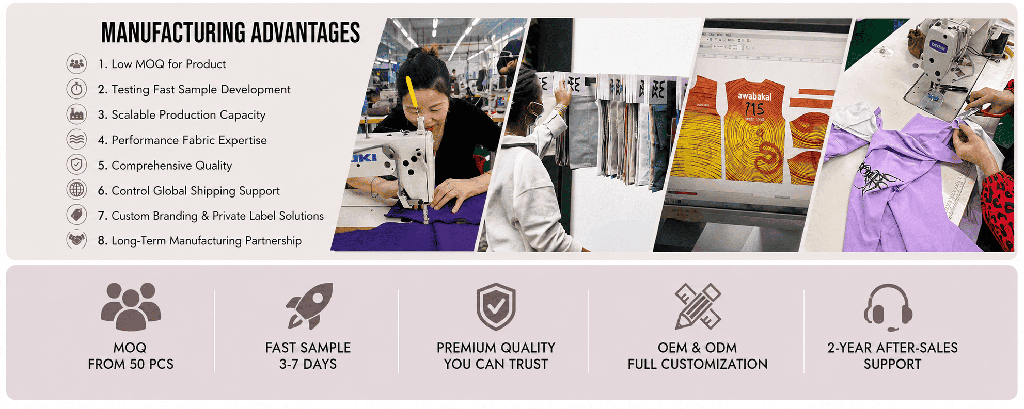
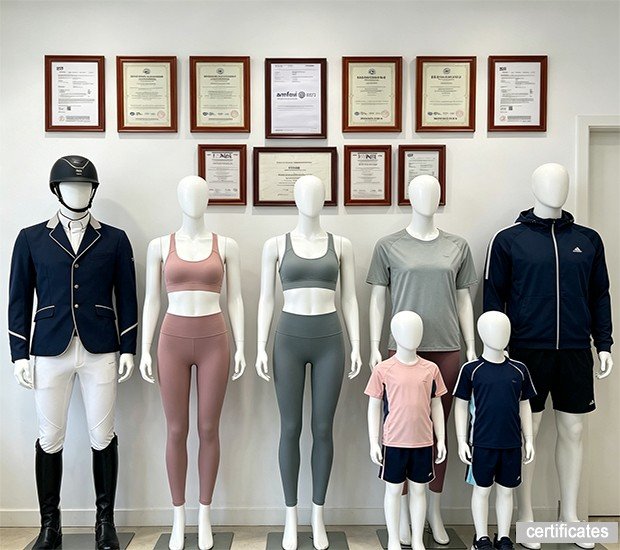
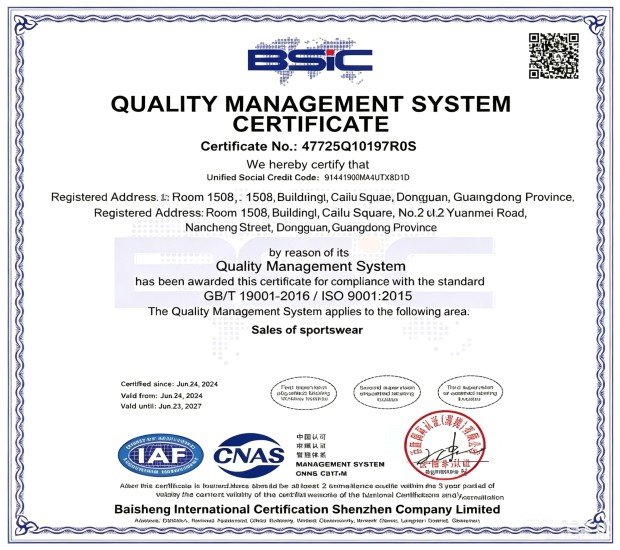
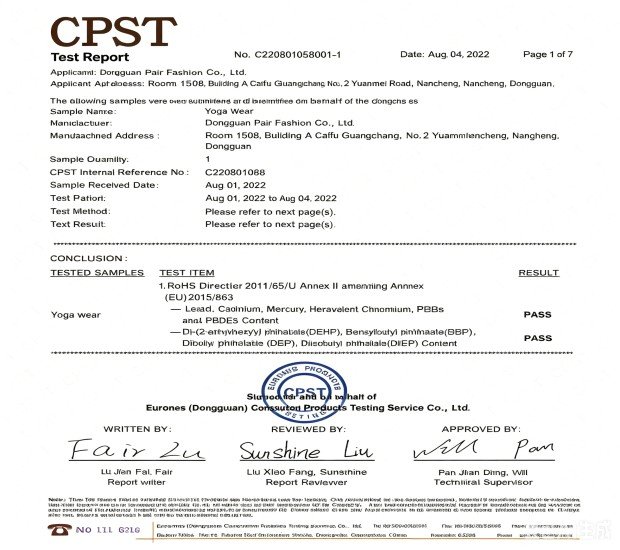
Trusted Manufacturing Standards For Global Sportswear Brands
We operate under internationally recognized quality, sustainability, and ethical manufacturing standards. Our certifications help ensure consistent product quality, responsible sourcing, and reliable production for global sportswear brands.
- 20+ Countries Served
- 6000+ Styles Developed
- 50,000 PCS Monthly Capacity
- 3-Day Sample Development
Why Do Equestrian Brands Choose China Manufacturers for Custom Riding Wear?
Equestrian brands often choose China manufacturers because China combines technical textile sourcing, custom development, OEM/ODM production, branding options and scalable manufacturing within a mature apparel supply chain. For buyers researching top horse riding wear brands, China can be particularly useful when the goal is to turn market references into proprietary breeches, riding tights, tops or jackets. The advantage is not simply lower price; it is the ability to coordinate fabric, pattern, sample, trims, branding and bulk production under one development program.
However, China is not automatically the best manufacturing location for every equestrian brand.
A buyer ordering thousands of technical breeches has different priorities from a designer producing 30 locally made competition jackets. A startup testing its first collection has different commercial risks from an established retailer planning repeat orders across several seasons.
The more useful question is therefore:
Does the manufacturing model fit the product, order quantity, target price, development complexity and growth stage of the brand?
China vs Europe: Which Manufacturing Model Fits Different Equestrian Brands?
There is no universal winner in a China vs Europe manufacturer comparison. Both regions contain excellent and weak suppliers, and country of origin alone tells buyers very little about the capability of an individual manufacturer.
A more practical comparison looks like this:
| Sourcing Factor | China Manufacturing | European Manufacturing | What Buyers Should Check |
|---|---|---|---|
| Technical Fabric Access | Broad textile and trim ecosystem | Strong specialist options in some regions | Is the exact required material commercially available? |
| OEM / ODM Development | Widely available across apparel clusters | Depends heavily on supplier type | Does the supplier support your development stage? |
| Custom Components | Strong access to labels, trims, packaging, printing and silicone | Available, but supplier ecosystem varies | How many external suppliers must be coordinated? |
| MOQ | Can be flexible, but depends on materials and customization | Highly supplier-dependent | What conditions apply to the advertised MOQ? |
| Labor Cost | Often commercially competitive for scalable apparel | Generally higher in many Western European markets | Compare finished product cost, not wages alone |
| Lead Time | Efficient when development and materials are controlled | Local proximity may shorten transport for European buyers | Separate production time from freight time |
| Communication | Strong export suppliers commonly support English B2B communication | Geographic and time-zone advantages for European buyers | Who will manage the project daily? |
| Scale | Strong potential for small-to-large growth programs | Depends greatly on supplier | Can the same supplier support future volume? |
| Local-Origin Positioning | Not suitable for Made-in-Europe positioning | Can support local-origin brand strategy | Does origin itself create customer value? |
| Supply-Chain Depth | Major advantage in established apparel clusters | Specialist networks can be strong | Where do fabrics, trims and processes come from? |
The table should not be read as “China is better at everything.”
For some brands, European manufacturing can be commercially logical even at a higher unit cost. A European luxury label may value regional origin, close development access and local storytelling enough to justify the additional cost.
For other businesses, especially private-label, DTC and growing equestrian brands, China can offer a useful combination of development flexibility and supply-chain depth.
The correct choice depends on which advantages actually matter to the customer buying the finished garment.
Why Is China’s Apparel Supply Chain Useful for Equestrian Product Development?
Horse riding apparel may look like a relatively narrow product category, but developing one garment can involve several specialized inputs.
Consider a custom full-seat breech.
The project may require:
stretch fabric + pocket zipper + waistband elastic + silicone grip + heat-transfer logo + care label + size label + hangtag + packaging
If these components are sourced through completely separate supply chains, every development change can create another communication and scheduling problem.
China’s established apparel-manufacturing clusters can reduce some of that fragmentation.
For Pair Fashion, the company’s current documentation describes an integrated supply network covering fabric suppliers, printing, embroidery, washing, packaging and international logistics, while the manufacturer itself manages the garment-development and production process.
Its documented material options include high-stretch nylon, functional polyester, recycled materials, UV-protective fabrics, water-resistant materials, thermal fleece and high-compression fabrics, among other performance directions.
When recycled materials are part of the product brief, buyers should verify the relevant material claims and supply-chain documentation rather than relying only on a recycled-fabric description. The Global Recycled Standard (GRS) provides a recognized framework for tracking recycled materials through the supply chain and includes requirements related to traceability, processing, social and environmental practices and chemical restrictions.
This type of ecosystem can be valuable after buyers have studied top horse riding wear brands and identified the product characteristics they want to develop.
This type of ecosystem can be valuable after buyers have studied top horse riding wear brands and identified the product characteristics they want to develop.
For example, instead of saying:
“I want premium fabric.”
the buyer can define:
- Intended season
- Riding environment
- Garment category
- Required stretch
- Desired recovery
- Hand feel
- Approximate weight
- Moisture-management requirement
- Abrasion requirement
- Sustainability requirement
- Target cost
The manufacturer can then source against an actual product brief rather than an adjective.
That usually produces a more useful fabric discussion.
Why Does China Work Well for OEM, ODM and Private Label Equestrian Apparel?
The terms OEM, ODM and Private Label are often used interchangeably online, but they represent different development starting points.
Understanding the difference can save buyers time and sampling cost.
OEM: Best When the Buyer Already Knows What to Make
In an OEM project, the brand usually provides more complete technical inputs.
These can include:
- Tech Pack
- Measurement chart
- Construction details
- Fabric specification
- Color references
- Logo files
- Label requirements
- Packaging instructions
The manufacturer’s job is primarily to translate those approved requirements into a controlled product.
OEM can work particularly well for mature buyers that already have internal designers, technical developers or established product standards.
The risk is assuming that a complete-looking Tech Pack is automatically production-ready.
Technical conflicts can still exist between the requested fabric, construction, measurements and manufacturing method. A capable supplier should identify these issues before bulk production rather than silently following a specification that is likely to fail.
ODM: Best When the Buyer Wants a Faster Development Starting Point
An ODM program can start from an existing pattern or mature product direction and then modify areas such as:
- Fabric
- Color
- Fit
- Grip
- Logo
- Trim
- Packaging
This can reduce development time for brands that do not need to create every product from zero.
Pair Fashion’s company documentation describes a library of more than 6,000 developed styles, which can be used as a starting resource for relevant ODM programs.
ODM can be useful for a startup, but buyers should still create meaningful differentiation.
Changing only the logo on a generic product may launch a label quickly, but it does little to create a defensible product identity.
Private Label: More Than Adding a Logo
Private label development is sometimes reduced to:
Choose product → add logo → sell.
For a serious equestrian collection, it can go much further.
A private-label program can include custom labels, hangtags, colors, fabrics, grip artwork, packaging and selected construction details while using a proven manufacturing base.
Pair Fashion’s documented customization scope includes garment style, sizing, Pantone colors, fabric specifications, functional processes, printing, embroidery, branding and packaging.
The best model depends on the brand’s maturity.
| Brand Situation | More Suitable Starting Model | Why |
|---|---|---|
| First equestrian launch with limited technical experience | ODM / Private Label | Reduces development complexity |
| Brand with clear design direction but incomplete technical files | Custom ODM / Development Support | Allows more product differentiation |
| Established brand with complete Tech Pack | OEM | Buyer controls specifications |
| Retailer adding an own-brand riding collection | Private Label | Efficient branding and assortment development |
| Technical equestrian brand developing proprietary fit | Full Custom OEM | Greater control over pattern and performance |
Buyers comparing top horse riding wear brands should decide which of these development models matches their own business before contacting manufacturers. Otherwise, they may request a full custom development service when they only need a modified existing product—or choose a simple private-label program when their market positioning actually requires proprietary fit.
How Can China Manufacturing Reduce New-Product Development Risk?
China manufacturing does not remove product-development risk.
It can, however, make risk easier to manage when the supplier offers flexible sampling, commercially realistic MOQ and a controlled approval process.
Imagine a new equestrian brand launching four products:
- Riding tights
- Breeches
- Training top
- Lightweight jacket
The temptation may be to order a large quantity of every style to achieve a lower unit price.
That creates a dangerous equation:
lower unit cost + unproven demand = higher inventory exposure
For a new brand, the commercial objective should often be different:
validate the product before maximizing production efficiency.
A smaller first order may carry a higher unit price, but it can provide useful information about:
- Which style sells fastest
- Which sizes sell through first
- Which colors customers prefer
- Whether the retail price works
- What fit feedback appears repeatedly
- Which product deserves replenishment
Pair Fashion’s current company documentation lists regular programs from 100 pieces, with its startup support structured around small initial production followed by larger replenishment when the product proves itself.
But buyers should understand the condition behind low MOQ.
Low MOQ does not mean every material and process can also be purchased in equally low quantities.
A garment factory may accept 100 pieces while a fabric mill requires a larger custom-dye quantity. A custom zipper, exclusive silicone design or special trim may have its own minimum.
The correct question is not:
“What is your MOQ?”
It is:
“What is the MOQ for this style, this fabric, this color, this grip, this branding specification and this size breakdown?”
That question produces commercially useful information.
Is a China Manufacturer Always Cheaper?
No. Buyers should be cautious whenever “China manufacturing” is treated as a synonym for “lowest price.”
The cheapest possible factory is rarely the objective for a technical equestrian brand.
A low quotation can come from:
- Lower fabric quality
- Different fabric composition
- Lower fabric weight
- Standard instead of custom color
- Simpler grip application
- Cheaper zippers or trims
- Reduced inspection
- Basic packaging
- Different payment terms
- Excluded testing
- Excluded freight
This means a $16 breech and a $22 breech may not be the same product.
Buyers should align specifications before comparing price.
The same principle applies when benchmarking top horse riding wear brands. A premium retail price should not be used as proof that the garment itself is extremely expensive to manufacture, just as a low factory quote should not be used as proof of manufacturing efficiency.
Retail price and manufacturing cost are connected, but they are not interchangeable.
Brand marketing, wholesale margins, retailer margins, duties, freight, returns, sponsorships and operating costs can all sit between the production price and the final consumer price.
For B2B sourcing, the useful metric is total commercial commitment, not just FOB unit price.
How Does Supply-Chain Integration Affect Lead Time?
Buyers often ask:
How long does custom horse riding wear take to produce?
There is no reliable universal answer because lead time starts before sewing.
A realistic production schedule can include:
Specification → Material Sourcing → Pattern → Sample → Fit Correction → Material Approval → PP Sample → Bulk Material → Cutting → Grip/Printing → Sewing → Inspection → Packing
A factory advertising “15-day production” may be referring only to the bulk manufacturing stage after everything has already been approved.
That is very different from promising to take an unfinished concept and deliver finished custom goods in 15 days.
Pair Fashion’s current company documentation lists sampling as fast as 3 days for suitable projects, with regular sampling around 7 days, and bulk production as fast as 15 working days, with a standard production period of approximately 20–25 working days.
These numbers should still be interpreted according to the project.
Custom-dyed materials, repeated fit revisions, special trims, testing or complex branding can extend the total calendar.
A more professional buyer question is:
“Which parts of my project are on the critical path, and which approvals could delay bulk production?”
That helps both sides manage the schedule before a problem appears.
When Is a China Manufacturer Not the Best Choice?
China manufacturing can offer substantial advantages, but there are situations where another sourcing model may fit better.
1. You Need Extremely Small Quantities
If the project requires only 10–20 fully customized garments, a local studio or small workshop may be commercially more appropriate than a production manufacturer designed for B2B orders.
2. “Made in Europe” or Local Origin Is Central to the Brand
If manufacturing origin is a core part of the consumer proposition, choosing China simply to reduce cost can weaken the brand story.
In this case, the higher local manufacturing cost may be commercially justified.
3. You Need Immediate Local Replenishment
International production and freight create physical distance.
If the business model requires replenishment within a few days, local or nearshore manufacturing may provide a structural advantage.
4. The Product Requires a Highly Specialized Local Craft
Some luxury, traditional or highly artisanal garments may depend on a specific regional manufacturing skill that is more important than general apparel supply-chain efficiency.
5. Your Team Cannot Manage Overseas Development
Time zones, international freight, technical communication and approval discipline require internal organization.
A strong China supplier can reduce this burden, but it cannot replace buyer-side decision making.
If measurements, colors and materials remain constantly undecided, the project will still become inefficient.
What Is the Real Advantage of Choosing the Right China Manufacturer?
The real advantage is not simply access to cheaper sewing.
It is the possibility of building a manufacturing system that can support the brand as it grows.
A startup may initially need:
one product + one sample + one small production order.
A growing brand may later need:
multiple styles + seasonal colors + repeat orders + faster replenishment.
A mature business may eventually require:
locked specifications + dedicated material planning + consistent QC + multiple production waves + long-term capacity.
Pair Fashion’s company documentation describes different support models for startup, growing and mature brands, including initial product development, multi-style expansion, repeat ordering and longer-term production planning.
For buyers researching top horse riding wear brands, this is the point where brand inspiration needs to become supply-chain strategy.
The manufacturer should not be selected because it can make one attractive sample.
It should be selected because it can support the next realistic stage of the product and the business.
That may mean accepting a slightly higher sample cost for better development. It may mean choosing a 100-piece first order instead of forcing the lowest possible unit price at 500 pieces. For an established brand, it may mean choosing stronger repeatability and production records over the supplier offering the smallest MOQ.
The best sourcing model is therefore not automatically China vs Europe, OEM vs ODM or low MOQ vs high MOQ.
It is the model that gives the buyer the right balance of:
Product Capability + Commercial Fit + Development Flexibility + Quality Control + Repeatability + Scale
When these factors are aligned, research into top horse riding wear brands becomes much more than a list of names. It becomes a practical guide for building an equestrian collection that can move from the first approved sample into stable, commercially sustainable production.

How Do You Choose the Best Horse Riding Wear Manufacturer in China?
The best China horse riding wear manufacturer is not necessarily the largest factory, the supplier with the lowest MOQ or the company offering the cheapest quotation. After studying top horse riding wear brands, buyers should screen manufacturers according to relevant equestrian experience, product-development capability, sample execution, factory evidence, material control, QC systems and commercial fit. The strongest supplier is the one that can prove it understands your specific product and can reproduce the approved standard consistently in bulk.
Supplier selection becomes easier when buyers stop asking broad questions such as:
“Are you a good equestrian clothing factory?”
and start asking questions that require evidence.
Can the supplier show recent full-seat breeches? Who develops the pattern? How is silicone grip positioned after size grading? What happens if bulk fabric fails inspection? Which measurements are checked during sewing? What information is retained for repeat orders?
The quality of the answers usually tells you much more than the factory introduction.
Manufacturer vs Trading Company: Does the Difference Really Matter?
A direct manufacturer can offer closer access to product development and production, while a trading company can sometimes provide broader sourcing and supplier coordination. Neither model is automatically better. The important question is who actually controls the pattern, sample, materials, production, inspection and corrective action for your order.
Buyers researching top horse riding wear brands often assume that working directly with a factory always means lower price and better control.
That is too simple.
A capable trading company may have access to several specialized factories and can be useful when a collection includes very different product categories. A weak manufacturer, meanwhile, may outsource important processes without clearly managing them.
The real sourcing risk appears when the buyer does not know who is responsible for what.
Ask the supplier directly:
- Where will my garments be cut and sewn?
- Is pattern development completed internally?
- Is sampling completed internally?
- Which processes are subcontracted?
- Where is silicone grip applied?
- Who purchases the bulk fabric?
- Who approves incoming materials?
- Who conducts in-line inspection?
- Who conducts final inspection?
- Who is responsible if bulk production differs from the approved sample?
- Can I verify the production location before ordering?
If a supplier outsources printing, embroidery, washing or specialized processes, that alone is not a problem. Apparel manufacturing frequently depends on specialist supporting suppliers.
The important issue is control.
If silicone application is outsourced, for example, the garment manufacturer should still control the approved artwork, placement, application standard and final inspection.
The buyer should not need to manage five subcontractors personally.
What Equestrian Products Has the Manufacturer Actually Made?
A supplier saying “we manufacture sportswear” is not enough evidence for a technical riding-wear project.
The same applies to:
“We can make anything.”
In practice, every manufacturer has stronger and weaker categories.
A factory producing millions of ordinary leggings may understand stretch fabrics extremely well but still lack experience with riding-specific grip, lower-leg construction and saddle-contact areas. A jacket manufacturer may understand structured outerwear but have limited experience balancing competition styling with riding movement.
When buyers move from researching top horse riding wear brands into supplier selection, they should request product evidence that is as close as possible to the intended order.
Match Evidence to the Product You Are Buying
| Your Product | Evidence Worth Requesting |
|---|---|
| Full-Seat Breeches | Full-seat silicone products, waistband construction, pocket details, lower-leg finish |
| Knee-Grip Breeches | Knee-grip placement, size grading, adhesion and stretch behavior |
| Riding Tights | High-stretch products, recovery, phone pockets, grip and low-bulk seams |
| Competition Jacket | Shoulder construction, bent-elbow fit, back hem, closure and technical fabric |
| Training Top | Stretch seams, moisture-management fabrics, collar/zipper construction |
| Technical Riding Jacket | Softshell or functional outerwear, weather protection, movement zones |
| Complete Collection | Evidence across several coordinated product categories |
A useful rule is:
The closer the evidence is to your actual product, the more weight it should receive.
If you are sourcing riding tights, recent riding-tight production should carry more weight than a beautiful polo shirt made for a famous customer.
Similarly, a manufacturer should not receive full credit for displaying a reference product if it cannot explain how that product was developed and controlled.
Ask practical questions:
What fabric was used?
Was the pattern custom-developed?
Was the grip custom or standard?
What was difficult during sampling?
How was the problem corrected?
Specific answers are harder to imitate than generic sales claims.
How Can Buyers Verify Factory and Production Capability?
Factory verification should be proportional to the value and risk of the order.
For a market test order of only 100 pieces, it is not always necessary to use the same verification process as a multi-season program with tens of thousands of garments. But when the order value becomes higher, the product becomes more technically complicated, and the buyer depends more on the manufacturer, stronger verification evidence should be required.
Level 1: Basic Business Verification
Before sampling, confirm basic information such as:
- Legal company name
- Business location
- Main product categories
- Export experience
- Primary contact
- Payment beneficiary
- Production model
A mismatch does not automatically prove a problem, but unexplained inconsistencies should be resolved before payment.
Level 2: Product and Development Verification
Request relevant product images, physical samples where appropriate and an explanation of the development process.
This stage answers:
Can they make this type of product?
Level 3: Production Verification
For more important programs, verify the manufacturing environment through an appropriate combination of:
- Factory photographs
- Live video
- Production video
- Third-party audit
- Buyer visit
- Independent inspection
The purpose is not to collect attractive factory pictures.
The purpose is to understand:
Where will my order actually be made, and does the production setup match the claimed capability?
Level 4: Order-Specific Verification
This is often more valuable than a general factory tour.
Once production begins, buyers can verify:
- Bulk fabric
- Approved colors
- Cutting
- Silicone or printing
- Sewing
- Measurements
- Workmanship
- Packing
- Quantity
- Final goods
A factory can be legitimate and still make a bad order.
Factory verification and order inspection solve different problems.
Does Factory Size Prove Manufacturing Capability?
No. Factory size proves available scale only when the capacity is relevant, accessible and properly managed. It does not automatically prove product specialization, sample quality or suitability for your order.
Imagine two suppliers.
Supplier A operates a very large factory but mainly produces basic sportswear.
Supplier B is smaller but has dedicated experience with breeches, silicone grip and equestrian fit.
For a 300-piece technical breeches project, Supplier B may represent the lower technical risk.
Now change the project to 50,000 pieces across multiple seasonal deliveries.
Supplier A’s larger production resources may become more important—provided it can first prove the necessary product capability.
This is why buyers comparing top horse riding wear brands should not replace one superficial ranking system with another.
“Famous brand” is not the same as “best benchmark for every product.”
“Big factory” is not the same as “best manufacturer for every order.”
The correct question is:
Does this supplier have enough relevant capacity for my order without making my project commercially unimportant to the factory?
That balance matters.
Which Certifications and Test Reports Actually Matter?
Certifications can provide useful evidence, but a certificate should answer a specific sourcing question rather than function as a decorative logo on a supplier page.
Pair Fashion’s current company documentation lists ISO9001, BSCI, GRS, CE and ROHS among its certifications and compliance documentation.
Buyers should still determine which documents are relevant to their particular product, customer and destination market.
For example:
Quality-System Evidence
Quality-management documentation can help buyers understand whether the manufacturer has structured processes, but it does not guarantee that every individual garment will be perfect.
The buyer still needs product-specific QC.
Social-Compliance Evidence
Some retailers and larger brands require social-compliance audits or approved factory standards as part of vendor onboarding.
This can become a commercial requirement rather than simply a marketing advantage.
Recycled-Material Evidence
If the collection makes recycled-content claims, buyers should verify whether the material and supply chain can support the intended claim.
A manufacturer having access to recycled fabric does not automatically mean every finished product can carry every sustainability claim.
Fabric and Garment Testing
Depending on the product and market, buyers may need to consider tests relating to:
- Colorfastness
- Dimensional stability
- Pilling
- Abrasion
- Fabric composition
- Stretch and recovery
- Seam strength
- UV performance
- Water resistance
- Restricted substances
- Grip durability
Not every riding garment needs every test.
Testing should follow the actual risk and claim.
If a product is marketed around water resistance, that performance matters. If a breech is sold primarily around stretch and recovery, those characteristics deserve greater attention.
The purpose is not to create the longest testing list.
It is to verify the claims that influence product performance, compliance or customer expectations.
How Should Buyers Compare MOQ Between Manufacturers?
MOQ is one of the most misunderstood numbers in custom clothing sourcing.
A supplier may advertise:
MOQ: 50 pieces
Another:
MOQ: 100 pieces
A third:
MOQ: 300 pieces
It is tempting to conclude that the 50-piece supplier is the most flexible.
But those numbers may describe completely different commercial conditions.
Supplier A may allow 50 pieces only when the buyer selects an available fabric and stock color.
Supplier B may require 100 pieces per style but allow two colors within that quantity.
Supplier C may require 300 pieces because the quotation includes custom-dyed fabric, exclusive silicone artwork and branded trims.
The headline MOQ alone does not reveal these differences.
Ask for the MOQ Structure
Instead of asking only:
“What is your MOQ?”
ask:
- MOQ per style?
- MOQ per color?
- MOQ per fabric?
- Can sizes be mixed?
- Can colors be mixed?
- Does stock fabric reduce the MOQ?
- Does custom dyeing increase it?
- Does custom silicone have a minimum?
- Do custom zippers or trims have separate minimums?
- Does branded packaging affect quantity?
- What changes at the next price break?
This produces a commercial structure rather than one marketing number.
For buyers inspired by top horse riding wear brands, this matters because premium reference products often contain details that become expensive at very small quantities.
Custom development is possible at low volume.
That does not mean every custom component becomes economically efficient at low volume.
What Should Buyers Check Before Paying for a Sample?
A sample is not simply a smaller order.
It is a development stage.
Before paying, both sides should understand what the sample is supposed to prove.
At minimum, confirm:
- Which product is being sampled
- Which fabric will be used
- Whether the fabric is exact or substitute
- Sample color
- Size
- Measurement reference
- Grip type and placement
- Logo method
- Trims
- Sample price
- Courier cost
- Expected timing
- Number of revision rounds, if defined
- Which details may differ from bulk production
Sample fees can include pattern creation, material sourcing, individual cutting, logo setup and courier charges. These costs can appear disproportionately high because one sample cannot benefit from the efficiency of bulk production.
Buyers should also ask what the quotation does not include.
For example, the first sample may use an available fabric in a similar weight because the final custom color has not yet been dyed.
That can be acceptable if everyone understands the limitation.
It becomes a problem when the buyer believes the sample represents the exact final material.
What Should a Good First Sample Prove?
The first sample does not need to prove everything simultaneously.
Depending on the project, its primary purpose may be:
Fit
Does the silhouette and measurement balance work?
Construction
Can the proposed garment structure be manufactured correctly?
Material Direction
Does the selected fabric behave appropriately?
Function
Do the pocket, grip, zipper or other features work as intended?
Appearance
Does the product match the desired brand direction?
Trying to finalize every detail before the first physical sample can sometimes slow development unnecessarily.
A controlled sampling process should move unresolved questions toward approval.
What Factory Red Flags Should Buyers Never Ignore?
No single red flag automatically proves that a supplier is unreliable. But several unresolved warning signs together should increase caution.
1. The Supplier Says Yes to Everything Immediately
Technical manufacturing requires trade-offs.
If a supplier confirms every fabric, MOQ, price, deadline and construction request without reviewing the specification, the buyer should ask how those promises were validated.
2. The Quotation Is Much Lower but Nobody Can Explain Why
A low price can be legitimate.
Maybe the factory has a more efficient construction method or better material sourcing.
But if the difference cannot be explained, compare the specification again.
3. Product Evidence Does Not Match the Category
A supplier claiming strong equestrian expertise should be able to discuss equestrian products specifically.
General activewear alone is weaker evidence.
4. Sample and Bulk Specifications Are Not Recorded
If the supplier relies on memory, chat messages and photographs instead of controlled production references, repeatability becomes more difficult.
5. MOQ Changes Without a Commercial Explanation
MOQ can change legitimately because of material, color or process.
The problem is not the change.
The problem is when nobody can explain what caused it.
6. The Factory Avoids Reasonable Verification
Not every manufacturer can share every customer’s confidential production information. That is normal.
But a serious supplier should still be able to provide reasonable evidence of its own business and manufacturing capability.
7. The Supplier Pushes Bulk Production Before Sample Approval
Speed is useful.
Skipping necessary approval is not.
A few days saved before production can become weeks of corrective work after a bulk problem.
8. Certifications Are Used as a Substitute for Product Capability
A well-certified factory can still be inexperienced in your specific garment.
Compliance and technical capability should be evaluated separately.
How Should You Reduce a Manufacturer Shortlist?
A practical sourcing process usually becomes more selective over time.
Start with perhaps five to eight plausible suppliers.
Then reduce them using objective filters:
First Reduction — Basic Fit
Remove suppliers that clearly fail important commercial requirements.
Examples:
- MOQ cannot fit the project
- Required product category is outside their experience
- Required compliance cannot be supported
- Capacity is clearly insufficient
- Communication is consistently unclear
This first reduction should be relatively objective.
If a project requires a specialist technical process and one factory cannot demonstrate relevant capability, there is little value in keeping it simply because the quotation is attractive.
Likewise, if a brand can commercially commit to only 200 pieces and a supplier requires 1,000 pieces per color, the factory may be excellent but unsuitable.
Second Reduction — Evidence
Compare:
- Relevant products
- Factory evidence
- Technical answers
- Material options
- Sample process
- QC process
- Commercial transparency
Reduce the shortlist to perhaps two or three suppliers.
Third Reduction — Sample
Now compare actual execution.
Did the supplier understand the brief?
Did the pattern improve after feedback?
Were problems communicated clearly?
Did the fabric behave as expected?
Were measurements controlled?
Was the sample delivered within the agreed development window?
This is where marketing claims begin to become physical evidence.
What Does the Best China Horse Riding Wear Manufacturer Look Like?
The best manufacturer is not the supplier with the highest score in every category.
A startup may place more weight on:
Development Support + MOQ + Sample Execution
A technical equestrian brand may prioritize:
Pattern Capability + Fabric Knowledge + Riding Performance
A mature retailer may place greater weight on:
Bulk Repeatability + Capacity + Delivery Reliability + Compliance
This is why buyers should build a weighted evaluation rather than allowing one attractive factor to dominate the entire decision.
| Evaluation Area | Questions to Ask |
|---|---|
| Product Specialization | Have they made products close to ours? |
| Development Capability | Can they turn our inputs into a workable sample? |
| Sample Execution | Can they identify and correct development problems? |
| Material Capability | Can they source and control the required fabric? |
| Factory Evidence | Can the claimed manufacturing setup be verified? |
| MOQ Fit | Does the commercial structure match our order? |
| Quality Control | How are materials, sewing and finished goods checked? |
| Compliance | Can required documents and tests be supported? |
| Capacity | Can they support the order and realistic future growth? |
| Repeatability | Can they reproduce approved specifications later? |
Buyers who have finished studying top horse riding wear brands should therefore avoid searching for a manufacturer that appears perfect in every category.
That supplier may not exist.
The better objective is to identify the manufacturer whose strengths match the requirements that matter most, whose weaknesses are acceptable for the order, and whose commercial model can support the next realistic stage of the brand.
This approach turns supplier selection from a price comparison into a structured risk decision—and creates a stronger foundation for the sampling and production process that follows.

How Does the Custom Horse Riding Wear Sample and Production Process Work?
A reliable custom horse riding wear process normally moves through development input, pattern creation, first sample, fit correction, material and functional approval, PP sample confirmation, bulk production and quality inspection. Buyers researching top horse riding wear brands should remember that a good sample is not the final objective. Sampling establishes the approved product standard; the manufacturing system must then reproduce that standard consistently across every size, color and bulk-production unit.
The exact route depends on how much product information the buyer already has.
An established equestrian brand may provide a complete Tech Pack with measurements, construction, fabric references and artwork. A startup may have a sketch, reference photographs and a clear idea of its target rider but no finished specification. Another buyer may send a physical breech and request changes to the waistband, fabric, pockets and grip.
All three projects can reach production.
They simply start from different points.
What Should You Send a Horse Riding Wear Manufacturer First?
A manufacturer does not always need a perfect Tech Pack before the first discussion.
According to Pair Fashion’s current development documentation, a project can begin from a concept, reference image, physical sample or Tech Pack, then progress through pattern development, material selection, sampling and production preparation.
However, the less technical information the buyer provides, the more decisions must be made during development.
Option 1: Tech Pack
A mature Tech Pack may include:
- Technical drawings
- Measurement chart
- Size range
- Fabric specification
- Construction details
- Stitch requirements
- Grip artwork
- Logo artwork
- Pantone references
- Labels
- Trims
- Packaging
This usually gives the manufacturer the clearest starting point.
But a Tech Pack should not be treated as infallible.
Measurements can conflict with fabric behavior. A pocket construction may create excessive bulk. A requested seam may interfere with stretch. Grip artwork may not scale correctly across sizes.
A capable manufacturer should identify these conflicts instead of following the document blindly.
Option 2: Physical Reference Sample
A physical sample can communicate information that is difficult to explain through photographs.
The manufacturer can examine:
- Fabric feel and approximate weight
- Construction
- Seam position
- Waistband structure
- Pocket depth
- Rise
- Leg shape
- Grip location
- Trim quality
The reference garment should still be accompanied by a clear change list.
For example:
Keep: general silhouette and waistband concept
Change: pocket position and lower-leg fit
Improve: fabric recovery
Remove: back zipper
Add: custom knee grip and brand logo
Without a change list, the factory may not know which elements are references and which are requirements.
Option 3: Reference Images or Existing Products
Images are useful for communicating visual direction, but they contain less technical information than a physical sample.
A photograph cannot reliably tell the manufacturer the exact fabric composition, garment measurements, seam allowance, internal construction or grip specification.
If buyers use products from top horse riding wear brands as references, the images should therefore be treated as direction, not a complete production specification.
Option 4: Product Concept
A startup may begin with something as simple as:
Women’s high-waist riding tights for everyday training, full-seat grip, two phone pockets, suitable for warm climates, mid-market retail positioning.
That is enough to begin a useful technical discussion.
The next step is turning the commercial idea into measurable product decisions.
How Does a Manufacturer Develop the First Pattern?
Pattern development translates the design into the shape and dimensions that will become the garment.
For horse riding wear, this stage deserves more attention than many buyers initially expect.
A pair of breeches is not simply a general legging with silicone added.
The pattern needs to consider:
waist → hip → rise → thigh → knee → calf → ankle
while also accounting for the rider’s seated posture and repeated movement.
Pair Fashion’s current company documentation lists an 11-person pattern and sample-development team, supporting its development workflow before products move into bulk manufacturing.
For a riding bottom, the pattern maker may need to coordinate:
- Waistband height
- Front and back rise
- Hip shaping
- Thigh fit
- Knee position
- Inseam
- Side seam
- Pocket placement
- Calf fit
- Ankle opening
- Grip boundaries
The selected fabric changes the equation.
A pattern developed for a firm, high-compression fabric may not behave the same way when made in a softer, highly elastic fabric.
This is why copying measurements from one successful product and applying them to a completely different material can fail.
Fit is the result of pattern + measurements + fabric behavior, not measurements alone.
What Is the Purpose of the First Sample?
The first sample should answer the most important unresolved development questions.
It does not always need to be a perfect sales-ready garment.
Pair Fashion’s documentation lists several sample types, including Proto Sample, Fit Sample, Salesman Sample, Pre-production Sample, Photo Sample and Size Set Sample.
These samples serve different purposes.
| Sample Type | Main Purpose | What Buyers Should Focus On |
|---|---|---|
| Proto Sample | Test the first product direction | Structure, feasibility, major design issues |
| Fit Sample | Verify measurements and movement | Waist, hip, rise, knee, length, mobility |
| Salesman Sample | Present a more developed product | Appearance, materials, selling details |
| Photo Sample | Support photography or marketing preparation | Visual finish and correct branding |
| Size Set Sample | Check grading across sizes | Proportion and fit consistency |
| PP Sample | Lock the pre-production reference | Final approved construction and details |
Not every project needs every sample type.
A relatively simple ODM product may move through fewer stages than a completely new technical breech developed from zero.
The sampling plan should follow product risk, not a fixed number of rounds.
How Should Horse Riding Wear Fit Be Tested?
For riding garments, fit should ideally be assessed in relevant movement rather than only while standing.
A pair of breeches can look excellent in a static fitting and still create problems when the rider bends the knee, sits in the saddle or wears tall boots.
Buyers comparing samples after researching top horse riding wear brands should therefore build movement into the approval process.
Waist and Rise
Check the garment while standing and seated.
Look for:
- Waistband rolling
- Back-waist gaping
- Excessive abdominal pressure
- Front-rise pulling
- Back-rise restriction
- Fabric gathering
A small measurement change at the waist does not always solve the problem.
The issue may come from rise balance, waistband structure or fabric recovery.
Hip and Seat
The garment should provide enough movement without creating excessive loose fabric.
For full-seat breeches, the relationship between the pattern and grip area becomes particularly important.
The silicone application should move with the garment rather than making the seat feel artificially rigid.
Knee Movement
Test repeated knee flexion.
Look for:
- Excessive tension
- Horizontal pulling
- Grip distortion
- Seam discomfort
- Fabric bunching
The knee position should also be evaluated across sizes because a grip area that looks correct on the base size can move out of position after poor grading.
Lower Leg
Test the product with the intended footwear.
For products designed to be worn with tall riding boots, evaluate:
- Calf fit
- Ankle opening
- Seam bulk
- Hem stability
- Pressure inside the boot
This is a small area with a large impact on rider comfort.
Full-Seat Grip vs Knee Grip: When Should It Be Approved?
Grip should be treated as a functional component rather than a decorative print.
The practical decision is not simply whether to choose full-seat or knee grip.
Buyers should also approve:
- Grip boundary
- Pattern
- Dot or artwork density
- Silicone thickness
- Color
- Stretch behavior
- Placement
- Size grading
- Adhesion
- Rider feel
Full-seat grip covers a larger saddle-contact area, while knee grip concentrates grip around the knee or inner-knee region.
Neither option is automatically superior.
The correct choice depends on the intended discipline, rider preference and desired contact.
A development team should also consider how the silicone interacts with the base fabric.
If the application is too dense or the material does not stretch appropriately with the garment, an otherwise comfortable fabric can feel restricted after grip is applied.
That is why the base fabric and grip should not be evaluated as completely separate components.
When Should Fabric, Color, Logo and Trims Be Locked?
Important product inputs should be finalized before bulk material purchasing and cutting.
The approval sequence does not need to happen in exactly the same order for every project, but bulk production should not begin while critical details remain ambiguous.
Fabric Approval
The buyer should confirm:
- Composition
- Weight or acceptable range
- Stretch direction
- Recovery
- Hand feel
- Color
- Functional requirements
- Relevant testing
- Bulk availability
A fabric swatch can be useful, but garment-level evaluation is often more informative because construction and fit change how the material feels.
Color Approval
Color should be controlled against an agreed reference.
For custom-dyed fabric, buyers may need to approve lab dips or other color submissions before bulk dyeing.
Color should also be considered across different components.
A black body fabric, black zipper, black silicone and black heat-transfer logo may not appear visually identical because the materials reflect light differently.
Logo Approval
Confirm:
- Artwork
- Size
- Position
- Color
- Technique
- Orientation
A logo that looks correct on a flat digital drawing can appear too large once placed on a small size.
Trim Approval
Zippers, elastic, drawcords, buttons, labels and other trims should be defined clearly enough that substitutions do not appear unexpectedly in production.
The objective is simple:
Remove interpretation before bulk production.
Why Is PP Sample Approval Important Before Bulk Production?
The PP sample is important because it creates a physical reference between development and production. It should represent the approved direction for fit, fabric, construction, grip, trims, branding and workmanship closely enough that the production team has a clear standard to follow.
This is one of the most important transitions in custom manufacturing.
During early sampling, change is expected.
After PP approval, uncontrolled change becomes risk.
A buyer should therefore avoid approving a PP sample casually simply because a launch deadline is approaching.
Before approval, review the areas that matter most to the product:
Fit
Are the approved measurements and proportions correct?
Material
Is the fabric the approved quality or clearly documented production equivalent?
Construction
Are seams, pockets, waistband and other structures correct?
Function
Does grip, zipper, pocket or other technical detail work?
Branding
Are logos, labels and trims correct?
Appearance
Does the garment represent the product the brand intends to sell?
If an approved exception remains, document it.
For example:
PP sample uses available zipper pull; bulk production will use approved custom pull No. ZP-04.
That is much safer than relying on someone to remember the difference later.
Does a Good Sample Guarantee Good Bulk Production?
No.
This is one of the most important lessons for buyers moving from top horse riding wear brands research into real manufacturing.
A sample is usually made with concentrated attention. Bulk production introduces new variables:
- Larger material quantities
- Multiple cutters
- Multiple sewing operators
- Production-line handling
- Size grading
- Color variation
- Silicone application at scale
- Finishing
- Packing
- Time pressure
A factory can make one excellent garment and still struggle to make 1,000 pieces consistently.
That is why:
Sample Quality ≠ Bulk Repeatability
Sampling answers:
Can this product be made?
Bulk control answers:
Can this approved product be reproduced consistently?
The distinction should influence supplier selection.
A manufacturer that makes a visually impressive sample but cannot explain its production-control process represents a different risk from a supplier that can show how approved information is transferred into cutting, sewing, inspection and packing.
How Does an Approved Sample Move Into Bulk Production?
Once the relevant sample, specifications and commercial terms are approved, the manufacturer can prepare the order for production.
A controlled workflow can follow this sequence:
Approved Sample → Locked Specs → Bulk Materials → Incoming Inspection → Cutting → Functional Processes → Sewing → In-Line Inspection → Finishing → Final Inspection → Packing
Pair Fashion’s documented production flow covers fabric inspection, cutting, printing or embroidery, sewing, finishing, quality inspection and packing, supported by incoming, in-process and final QC stages.
1. Bulk Material Preparation
Fabric and trims are ordered or allocated according to the approved specification.
Incoming materials should be checked before they become finished garments.
Finding a fabric problem before cutting is significantly less expensive than finding it after 1,000 garments have been sewn.
2. Cutting
Approved patterns and size grading guide cutting.
At this stage, incorrect pattern files, material handling or size allocation can affect the entire order.
3. Grip, Printing or Embroidery
Processes may occur at different points depending on garment construction.
Placement should follow approved artwork and specifications rather than visual estimation.
4. Sewing
Operators assemble the garments according to the production requirements.
Technical products need particular attention around stretch seams, pocket construction, waistbands and other stress areas.
5. In-Line Inspection
Do not wait until the order is finished to discover systematic problems.
In-line inspection allows issues to be identified while corrective action is still possible.
6. Finishing and Final Inspection
Finished garments can be checked for workmanship, measurements, appearance, branding, quantity and packing requirements.
7. Packing
Labels, hangtags, folding, polybags, carton quantities and shipping marks should follow the agreed packing specification.
For private-label buyers, packaging is part of the product.
A correctly manufactured breech packed with the wrong size label is still a commercial problem.
How Long Does Custom Horse Riding Wear Development Take?
There is no single lead time that applies to every custom project.
Pair Fashion’s current documentation lists sampling as fast as 3 days for suitable projects, with regular sample timing around 7 days. Bulk production can be as fast as 15 working days for suitable orders, while its standard production period is generally around 20–25 working days.
However, buyers should distinguish:
Sample-Making Time
from:
Total Development Calendar
A sample may physically require only several days to make after all inputs are ready.
But the complete project may also include:
- Fabric sourcing
- Buyer feedback
- Pattern correction
- Second sample
- Lab-dip approval
- Grip artwork
- Logo setup
- PP approval
- Bulk-material preparation
A realistic calendar might look like this:
| Stage | Main Variable |
|---|---|
| Development Brief | How complete is the buyer’s information? |
| Material Sourcing | Stock vs custom material |
| First Sample | Product complexity |
| Fit Review | Speed and clarity of buyer feedback |
| Revision | Number and significance of changes |
| PP Approval | Whether final details are ready |
| Bulk Production | Quantity, complexity and capacity |
| Freight | Shipping method and destination |
The fastest project is usually not the one where every stage is rushed.
It is the one where decisions are made clearly and approvals do not repeatedly reopen previously locked specifications.
What Should Buyers Keep After the First Production Order?
Do not treat the first successful shipment as the end of product development.
It should become the foundation for replenishment.
Buyers and manufacturers should retain relevant approved information such as:
- Final measurement chart
- Approved pattern reference
- Fabric specification
- Color reference
- Grip artwork
- Logo artwork
- Label specification
- Trim references
- Packaging requirements
- Approved sample information
- Production comments
- Final quality records
This information becomes especially valuable six or twelve months later.
A buyer should not need to rebuild a successful product from chat history every time a repeat order is placed.
After comparing top horse riding wear brands, developing a proprietary product and completing the first bulk order, the next challenge is repeatability.
Can the second production match the first?
Can a new fabric lot maintain the required hand feel and color?
Can the grip remain in the same position?
Can measurements remain within the approved tolerance?
Can the manufacturer identify what was approved without relying on memory?
These questions separate one successful order from a sustainable supply program.
For buyers researching top horse riding wear brands, the custom manufacturing process should therefore be viewed as a closed loop:
Benchmark → Specification → Sample → Test → Correct → Approve → Produce → Inspect → Record → Repeat
The first sample begins the process.
Repeatable approved production completes it.

What Determines the MOQ, Sample Price and Bulk Price of Custom Horse Riding Wear?
The MOQ, sample price and bulk price of custom horse riding wear are determined by more than garment quantity. Fabric minimums, custom colors, silicone grip, trims, branding, pattern development, packaging and production complexity can all change the commercial structure. Buyers researching top horse riding wear brands should therefore compare manufacturers only after the main product inputs are aligned. A lower unit price is not necessarily a lower total cost if it requires more inventory, excludes customization or uses a different specification.
This is especially important in equestrian apparel because two products that look almost identical online can have very different manufacturing requirements.
A pair of riding breeches made with an available stock fabric, standard knee grip and basic packaging is commercially different from a product using custom-dyed high-stretch nylon, exclusive full-seat silicone artwork, branded zippers and custom packaging.
If those two products are compared only by unit price, the buyer is comparing different products.
What Is a Realistic MOQ for Custom Horse Riding Wear?
There is no universal MOQ for custom equestrian apparel.
A manufacturer’s MOQ is normally influenced by both garment-production efficiency and the minimum quantities required by material and process suppliers.
This distinction matters.
A garment manufacturer may be willing to sew 100 pieces, while the fabric mill may require significantly more material for a custom dye. A custom zipper supplier may impose its own minimum. Silicone artwork, labels, elastic and packaging can create additional commercial conditions.
Pair Fashion’s current company documentation lists regular programs from 100 pieces, while also emphasizing flexible small-batch support for brands at the early stage of product development.
That number should be understood as a starting production condition rather than a promise that every possible custom specification can be manufactured economically at exactly 100 pieces.
What Can Change the MOQ?
- Stock fabric vs custom fabric
- Available color vs custom dye
- One color vs multiple colors
- Standard grip vs custom silicone artwork
- Standard trim vs custom trim
- Existing pattern vs new pattern
- Standard packaging vs custom packaging
- Number of sizes
- Quantity per size
- Material supplier minimums
- Production-process minimums
This is why buyers comparing top horse riding wear brands and trying to develop a similar product direction should not ask manufacturers only:
“What is your MOQ?”
A better request is:
“Please quote the MOQ for this style, fabric, color breakdown, grip specification, branding and packaging.”
That gives the buyer a commercial condition attached to an actual product.
MOQ per Style vs MOQ per Color: What Is the Difference?
This distinction can completely change inventory risk.
Consider three quotations:
| Supplier | Style MOQ | Color Condition | Total Commitment |
|---|---|---|---|
| Supplier A | 100 pcs | 100 pcs in one available color | 100 pcs |
| Supplier B | 200 pcs | 100 pcs × 2 colors | 200 pcs |
| Supplier C | 300 pcs | 300 pcs per custom-dyed color | 300 pcs minimum per color |
All three factories can truthfully advertise an MOQ.
But the commercial exposure is very different.
Now imagine the brand wants three colors.
Supplier A may allow three separate 100-piece orders if all colors are available.
Supplier B may require a specific style/color structure.
Supplier C could potentially require 900 pieces if each custom-dyed color carries its own 300-piece minimum.
The useful number is therefore not the headline MOQ.
It is the total inventory commitment required to launch the planned assortment.
For startups, this can matter more than saving one or two dollars on unit price.
Does a Lower MOQ Always Reduce Risk?
Not necessarily.
Low MOQ reduces inventory exposure, but it can increase unit cost and sometimes restrict customization.
Suppose a brand wants to test a new riding tight.
It has two options:
Option A
100 pieces × $23 = $2,300 product value
Option B
500 pieces × $18 = $9,000 product value
Option B saves $5 per garment.
That looks attractive.
But the brand must spend another $6,700 before knowing whether the product will sell.
If the first 100 pieces reveal that customers dislike the waistband or the smallest sizes sell much faster than expected, the lower unit price may become irrelevant.
The unsold inventory is the larger cost.
For a validated repeat product, the opposite may be true.
If the brand already sells 1,000 pieces every season, repeatedly ordering tiny quantities at a high unit cost can reduce margin unnecessarily.
Therefore:
Early-stage product → prioritize validation and inventory control.
Validated product → prioritize production efficiency and replenishment economics.
The best MOQ changes with the product’s stage in the market.
How Much Does a Custom Horse Riding Wear Sample Cost?
There is no responsible universal sample price for custom riding wear because the cost depends on what must be developed.
A sample fee can include:
- Pattern creation
- Material sourcing
- Individual fabric cutting
- Sewing
- Silicone grip setup
- Printing or embroidery setup
- Custom logo preparation
- Trims
- Labels
- Finishing
- Courier charges
A sample can therefore appear expensive compared with the expected bulk unit price.
That does not necessarily mean the supplier is overcharging.
Bulk production spreads setup and labor efficiency across many garments. A single sample cannot benefit from the same production efficiency.
For example, creating a new pattern may require similar development work whether the buyer eventually orders one sample or 1,000 garments.
The difference is that the development cost is concentrated in the sample stage.
Buyers Should Ask What the Sample Fee Includes
Instead of asking only:
“Why is the sample so expensive?”
ask:
- Does the fee include pattern development?
- Is the fabric exact or substitute?
- Is custom grip included?
- Is logo setup included?
- Are labels included?
- Is courier freight included?
- Does the price include one sample or multiple pieces?
- Is the sample fee refundable or creditable after bulk ordering?
- What would trigger an additional sample charge?
The answer makes the cost easier to evaluate.
Why Can Two Manufacturers Quote Very Different Prices for the Same Breeches?
Usually because they are not actually quoting the same breeches.
Consider this inquiry:
Women’s high-waist full-seat riding breeches, two phone pockets, logo, 200 pieces.
It sounds specific.
It is not.
Supplier A may quote:
- Polyester/spandex
- Available black
- Standard silicone
- Basic zipper
- Standard polybag
Supplier B may quote:
- High-stretch nylon/spandex
- Custom Pantone color
- Custom full-seat grip
- Branded zipper pull
- Heat-transfer logo
- Custom labels
- Branded packaging
Supplier B’s quotation may be significantly higher.
That does not prove Supplier B is expensive.
Supplier A may simply be quoting a different specification.
Align the Inputs Before Comparing Price
A useful RFQ should define as much as possible:
| Cost Input | What Buyers Should Specify |
|---|---|
| Fabric | Composition, weight direction, stretch, function |
| Color | Available color or custom Pantone |
| Grip | Knee/full seat, standard/custom artwork |
| Pockets | Quantity, position, zipper/opening |
| Construction | Main seam and waistband requirements |
| Logo | Method, size, position, colors |
| Labels | Main label, size label, care label |
| Packaging | Standard or custom |
| Quantity | Total and per color |
| Sizes | Size range and breakdown |
| Testing | Required tests, if any |
| Delivery | Incoterm or quotation basis |
Once these inputs are aligned, price differences become more meaningful.
This is a useful discipline for buyers coming from top horse riding wear brands research, because a retail product photograph does not reveal enough information for accurate manufacturing comparison.
What Does the Bulk Price of Riding Wear Actually Include?
A bulk garment quotation can include different cost boundaries depending on the supplier and Incoterm.
Buyers should understand exactly where the manufacturer’s responsibility ends.
A garment price may include:
fabric + trims + cutting + functional processes + sewing + logo + labels + finishing + inspection + basic packaging
But it may exclude:
- Sample development
- Custom molds or setup
- Special testing
- Third-party inspection
- Custom packaging development
- Freight
- Insurance
- Import duty
- VAT or local taxes
- Warehousing
- Last-mile delivery
Therefore, a quotation of $19 FOB and another of $21 delivered under a different term cannot be compared simply by looking at 19 vs 21.
The quotation basis matters.
What Costs Are Commonly Missed When Buyers Compare Factories?
Unit price attracts attention because it is easy to compare.
Some of the largest commercial costs are less visible.
1. Development Cost
Patterns, samples and revisions happen before revenue.
A complex product requiring four rounds of correction can consume more time and money than a slightly higher first quotation from a manufacturer that understands the product quickly.
2. Material Minimums
The garment MOQ and fabric MOQ may be different.
Unused custom material can become inventory even if it has not yet become finished garments.
3. Testing Cost
If a retailer or market requires particular testing, include it before comparing suppliers.
4. Inspection Cost
Third-party inspections add cost but may be justified for larger or higher-risk orders.
5. Freight
International freight changes according to volume, weight, transport method and market conditions.
6. Duties and Taxes
Landed cost depends on the destination market and applicable classification or trade conditions.
7. Defect Cost
A garment that cannot be sold at full price is not simply a QC statistic.
It is lost revenue, rework, replacement cost or customer-service expense.
8. Delay Cost
A shipment arriving after a seasonal sales window can be commercially more damaging than a small difference in manufacturing price.
9. Inventory Cost
Cash tied up in slow-moving stock cannot be used for marketing, new products or replenishing the products that are actually selling.
This is why professional sourcing decisions consider total sourcing cost and commercial exposure, not only unit price.
How Should Buyers Calculate Total Sourcing Commitment?
A simplified framework is:
Product Cost + Development + Material Exposure + Customization + Testing + Inspection + Freight + Import Cost + Inventory Risk
The purpose is not to predict every future dollar perfectly.
It is to prevent a low headline quotation from hiding a much larger commitment.
Consider three hypothetical suppliers for the same custom breeches project:
| Cost Factor | Supplier A | Supplier B | Supplier C |
|---|---|---|---|
| MOQ | 100 pcs | 300 pcs | 100 pcs |
| Unit Price | $21 | $17 | $23 |
| Product Commitment | $2,100 | $5,100 | $2,300 |
| Sample | $180 | $120 | $220 |
| Custom Grip | Included | Extra | Included |
| Branded Packaging | Included | Extra | Included |
| Custom Color | Stock only at MOQ | Higher material MOQ | Included subject to material condition |
| Development Support | Medium | Basic | High |
Supplier B has the lowest unit price.
That does not automatically make it the best commercial choice.
For a startup testing its first product, Supplier A or C may create less inventory exposure.
For an established brand with proven demand, Supplier B may become attractive if the product specifications and quality are equivalent.
The correct decision depends on the business stage.
Why Is the Cheapest Factory Often Not the Lowest-Risk Factory?
Price should absolutely matter.
Ignoring price is not sophisticated sourcing.
The mistake is allowing price to control the decision before technical and commercial conditions are aligned.
A very low quotation may create savings.
It can also create risk if the supplier is weaker in:
- Pattern development
- Material consistency
- Grip application
- Measurement control
- Communication
- QC
- Delivery
- Repeatability
The opposite mistake is also common.
A higher quotation does not automatically prove better quality.
A supplier should be able to explain what creates the price.
Buyers should ask:
What am I paying more for?
If the answer is a clearly stronger fabric, custom component, more complicated construction, smaller production quantity or additional quality requirement, the difference can be evaluated.
If the supplier cannot explain it, a premium quotation deserves the same scrutiny as a suspiciously cheap one.
How Should Price Be Used When Comparing Top Horse Riding Wear Brands?
Retail prices from top horse riding wear brands can help buyers understand market positioning, but they should not be used to calculate factory cost backwards.
A retail price contains much more than garment manufacturing.
Depending on the business model, it can need to support:
- Product development
- Freight
- Duty
- Warehousing
- Wholesale margin
- Retail margin
- Marketing
- Sponsorship
- Photography
- Returns
- Customer service
- Staff
- Operating expenses
- Profit
A $200 pair of breeches therefore does not prove that its manufacturing cost is extremely high.
Likewise, a lower-priced product does not prove that it uses poor manufacturing.
For a new private-label brand, a better process starts from both ends.
Start From the Customer
What retail price will the target rider realistically accept?
Start From the Product
What fabric, construction and performance does the product actually need?
Then work toward a manufacturing target that allows both sides to meet.
If the target cost cannot support the required product specification, something must change:
retail price, margin, specification, order quantity or sourcing model.
Pretending all five can remain unchanged usually moves the problem into quality.
When Should Buyers Negotiate Price?
Price negotiation becomes more productive after the manufacturer understands the product.
Negotiating aggressively at the first inquiry—before fabric, quantity and construction are defined—often produces a lower number rather than a better commercial solution.
Once the specification is clear, buyers can ask:
- Does the price improve at 300, 500 or 1,000 pieces?
- Can available fabric reduce the MOQ or cost?
- Can two colors share material?
- Is there a simpler construction with similar performance?
- Can packaging be optimized?
- Which feature creates the largest cost increase?
- Can material be reserved for repeat orders?
- Does repeat production reduce development cost?
This turns negotiation into cost engineering.
For example, removing a technically unnecessary zipper may save more money than repeatedly asking the factory for another 3% discount.
A good manufacturer should be able to explain where cost can be reduced without quietly reducing the approved standard.
What Is the Best MOQ and Price Strategy for Different Brand Stages?
The answer changes as demand becomes more predictable.
| Brand Stage | MOQ Priority | Price Priority | Main Risk |
|---|---|---|---|
| New Startup | Keep commitment controlled | Accept reasonable higher unit cost | Unsold inventory |
| First Validated Product | Increase carefully | Improve margin | Scaling before fit/product issues are solved |
| Growing DTC Brand | Balance variety and replenishment | Negotiate volume breaks | Too many SKUs |
| Established Brand | Plan material and production efficiently | Optimize total cost | Supply disruption |
| Large Retail Program | Capacity and delivery become critical | Structured commercial negotiation | Bulk inconsistency and late delivery |
For a startup, low risk can be more valuable than low unit price.
For a mature buyer, continuously paying startup-level unit costs may be commercially inefficient.
This is why MOQ should evolve with demand.
The best supplier is not necessarily the one offering the lowest MOQ forever. It is the supplier whose commercial model can continue making sense as the order grows.
How Do You Know When a Higher Price Is Worth Paying?
A higher quotation can be justified when it reduces a risk that matters to the order.
For example:
Higher price may be worth considering when it buys:
- Better-performing fabric
- More accurate pattern development
- Specialized riding-wear construction
- Reliable custom grip
- Better material consistency
- Stronger QC
- Lower commercially useful MOQ
- Better repeat-order control
- More reliable delivery
But every premium should have a reason.
A manufacturer saying “our quality is better” is not enough.
Ask for evidence.
Compare the sample.
Compare the material.
Compare the construction.
Compare the production controls.
Buyers researching top horse riding wear brands should use the same discipline when developing their own collection. Premium positioning is strongest when the customer can experience the difference in fit, function, durability or design, not simply when the factory invoice is higher.
What Is the Most Useful Way to Compare MOQ and Price?
The strongest commercial comparison happens after the suppliers are quoting the same inputs.
First align:
Product → Material → Construction → Customization → Quantity → Packaging → Delivery Terms
Then compare:
MOQ → Sample Cost → Unit Price → Material Commitment → Lead Time → Quality Evidence → Total Inventory Exposure
Finally, ask one more question:
What happens if this product sells well?
The first order should not be evaluated in isolation.
If the style succeeds, buyers may need:
- Repeat fabric
- Matching colors
- Same grip
- Same measurements
- Same trims
- Faster replenishment
- Larger volume
- New seasonal colors
A very low first-order price becomes less valuable if the supplier cannot reproduce the approved product.
That is why buyers moving from top horse riding wear brands research into real sourcing should connect commercial comparison with production repeatability.
The objective is not to find the cheapest possible first order.
It is to establish a cost structure that makes sense for the product today and at its next realistic stage of growth.
For new products, that may mean paying slightly more per garment to reduce inventory exposure.
For proven products, it may mean increasing volume to improve production efficiency.
For mature collections, it may mean planning materials and capacity earlier to protect margin and delivery.
The right price is therefore not simply the smallest number on a quotation.
It is the price attached to the right specification, at the right quantity, with an acceptable level of product and commercial risk.

How Do You Test Riding Performance Before Approving Bulk Production?
Horse riding wear should be tested during real riding movements, not only when the rider is standing for fitting. Buyers researching top horse riding wear brands should check how breeches, tights, tops and jackets perform when the rider sits, bends the knees, moves the hips, reaches forward and wears riding boots. Before the product is approved as the reference for bulk production, it is important to test waistband stability, knee and hip movement, saddle contact, grip performance, fabric recovery, pocket position and boot compatibility.
This is where a product that looks excellent in a showroom can reveal weaknesses.
A pair of breeches may create a clean silhouette while standing but pull excessively across the knees in the saddle. A high waistband may feel supportive during a normal fitting but roll when the rider bends forward. A large phone pocket may be convenient when walking but place the phone in an uncomfortable contact area during riding.
For B2B product development, these are not minor fitting details.
They are part of the product specification.
Why Should Riding Wear Be Tested in the Saddle, Not Only While Standing?
A standing fitting is useful for checking general proportions, garment balance, length and appearance, but it cannot reproduce the body position used during riding.
When the rider sits in the saddle:
- Hip angle changes
- Knees remain flexed
- The waistband changes position
- Fabric stretches across the seat and thighs
- The inner leg contacts the saddle
- The lower leg interacts with riding boots
- Arms move forward when holding the reins
- Jackets and tops shift across the shoulders and back
A garment therefore needs to work in more than one body position.
For riding bottoms, the difference can be particularly obvious around the back rise, knee and waistband.
Suppose the front view of a fit sample looks perfect. The waist sits correctly, the legs appear clean and the pocket placement looks balanced.
The rider then mounts.
The waistband begins to pull downward at the back. Horizontal tension lines appear across the thigh. The knee grip moves above the intended contact area. The phone presses against the rider because the pocket sits too far toward the back.
None of these problems was obvious in the standing photograph.
This is why buyers studying top horse riding wear brands should not use product photography as the only benchmark for fit.
Static appearance tells you how the garment looks. Riding movement tells you how the garment works.
What Should a Real Riding Sample Test Include?
A useful riding test does not need to become an expensive laboratory exercise.
It needs to reproduce the movements and contact conditions that matter to the intended product.
For breeches and riding tights, buyers can create a simple evaluation sequence:
Step 1: Standing Fit
Check:
- Waist position
- Front and back rise
- Hip fit
- Thigh fit
- Knee position
- Calf fit
- Garment length
- Pocket appearance
- General silhouette
Step 2: Knee Flexion
Ask the wearer to bend the knees deeply.
Check:
- Fabric tension
- Knee mobility
- Seam pressure
- Grip distortion
- Waistband movement
Step 3: Seated Position
Before an actual riding test, a seated or riding-position simulation can reveal major issues.
Check:
- Back-waist coverage
- Abdominal pressure
- Hip mobility
- Seat tension
- Pocket position
Step 4: Saddle Test
Where practical, test the sample during actual riding.
Observe:
- Saddle-contact areas
- Grip sensation
- Waistband stability
- Knee movement
- Fabric migration
- Seam comfort
- Pocket behavior
Step 5: Boot Test
Wear the footwear the product is designed around.
For tall boots, check:
- Calf pressure
- Seam bulk
- Hem position
- Wrinkling
- Comfort after movement
Step 6: Post-Ride Evaluation
Do not evaluate the garment only during movement.
After riding, check whether the fabric has recovered, whether the waistband has changed shape and whether grip or seams show unusual stress.
This creates a much more useful product-development record than:
“Sample looks good.”
Full-Seat Grip vs Knee Grip: Which Is Better?
Neither full-seat grip nor knee grip is universally better. Full-seat grip provides a larger contact area across the seat and inner leg, while knee grip concentrates the application around the knee region. The right choice depends on riding discipline, rider preference, fabric behavior and the desired level of saddle contact.
This is one area where buyers can easily over-design the product.
Grip is visible.
That makes it tempting to create a large, dense silicone pattern because it appears more technical.
But technical appearance and technical performance are not the same thing.
Full-Seat Grip
Full-seat applications generally extend through a larger saddle-contact area.
During development, check:
- Does the rider feel overly fixed?
- Does the silicone reduce fabric flexibility?
- Does the application distort when the hips flex?
- Does the grip remain comfortable during longer riding?
- Are the edges positioned correctly?
Knee Grip
Knee-grip systems concentrate the functional application in a smaller area.
Check:
- Does the grip align with the rider’s actual contact zone?
- Does placement remain correct when the knee bends?
- Does the artwork remain positioned correctly across graded sizes?
- Is the transition between gripped and non-gripped fabric comfortable?
The amount of grip matters as much as the location.
A dense silicone pattern can feel different from a lighter dot pattern even when both cover the same area.
For buyers comparing top horse riding wear brands, the useful question is therefore not:
“Which brand uses more silicone?”
It is:
“How much grip does our target rider need, where should it sit and how should it work with our chosen fabric?”
How Should Waistband Stability Be Tested?
Waistbands influence both fit perception and rider confidence, which is why they deserve their own testing rather than being treated as a simple measurement.
A waistband can fail in several ways:
Rolling
The upper edge folds during movement.
Sliding
The waistband gradually moves downward.
Back Gaping
The waistband separates from the body at the back.
Excessive Compression
The garment stays in place but creates uncomfortable pressure.
Front Digging
The waistband feels acceptable when standing but presses into the abdomen in a seated position.
When a problem appears, simply making the waist smaller is not always the correct solution.
The cause may be:
- Waistband height
- Elastic structure
- Front rise
- Back rise
- Hip-to-waist ratio
- Fabric recovery
- Pattern angle
- Seam construction
For example, a waistband that slides at the back may result from insufficient back-rise balance rather than excessive waist circumference.
This is why fit corrections should identify cause rather than symptom.
How Should Knee and Hip Movement Be Evaluated?
Riding requires sustained hip and knee flexion, so the garment should be assessed under repeated movement rather than one stretch test.
Ask the wearer to:
- Squat
- Raise the knee
- Bend deeply
- Sit
- Simulate riding posture
- Mount and ride where practical
Then look for:
- Horizontal tension lines
- Excessive pulling
- Seam rotation
- Knee restriction
- Fabric bunching
- Grip distortion
- Waistband displacement
A highly elastic fabric can compensate for some pattern limitations, which creates a hidden risk.
The sample may feel “acceptable” because the fabric stretches enough to tolerate the problem.
But after several hours of wear, repeated washing or switching to a slightly different bulk fabric lot, the weakness may become more obvious.
The stronger development approach is to make pattern and fabric work together, rather than expecting stretch to solve every fitting issue.
How Do You Test Fabric Stretch and Recovery?
Stretch and recovery are related but different.
A fabric can stretch easily and still recover poorly.
If the material extends during riding but does not return sufficiently toward its original dimensions, the garment can develop:
- Bagging at the knees
- Loose seat areas
- Waistband instability
- Distorted pockets
- General loss of shape
For buyers researching top horse riding wear brands, this is particularly important when developing riding tights and close-fitting breeches.
A simple development evaluation can include repeated stretching and wear testing before and after washing.
For higher-risk or performance-driven products, appropriate laboratory testing can provide more objective data.
But numbers should still be connected to the actual garment.
A fabric specification that looks excellent on paper can behave differently after:
cutting + sewing + silicone application + washing + real wear
Silicone is particularly relevant because the application can change local stretch behavior.
Therefore, where grip is a major product feature, test the finished gripped panel, not only the untreated base fabric.
What Fabric Performance Matters for Different Riding Conditions?
The best fabric is not the fabric with the longest list of performance claims.
It is the material whose characteristics match the intended product and environment.
Warm-Weather Riding
Buyers may prioritize:
- Breathability
- Moisture management
- Lightweight construction
- Stretch
- Quick drying
Everyday Training
Important characteristics may include:
- Stretch and recovery
- Abrasion resistance
- Wash durability
- Comfort
- Easy care
Competition Breeches
The balance may shift toward:
- Clean appearance
- Shape retention
- Controlled stretch
- Appropriate opacity
- Smooth hand feel
- Grip compatibility
Cold-Weather Riding
Buyers may consider:
- Thermal properties
- Brushed interior
- Wind protection
- Stretch
- Layering comfort
Technical Outerwear
Requirements can include:
- Wind resistance
- Water resistance
- Breathability
- Low bulk
- Rider mobility
Pair Fashion’s current material documentation includes high-stretch nylon, functional polyester, recycled fabrics, UV-protective materials, water-resistant fabrics, thermal fleece and high-compression options among its available development directions.
The product brief should determine which direction is appropriate.
Adding every possible function can increase cost without creating meaningful customer value.
How Should Saddle Contact Be Evaluated?
Saddle contact affects several parts of a riding garment simultaneously.
For bottoms, check the relationship between:
seat + inner thigh + grip + seams + pockets
A poorly positioned seam may become noticeable only after prolonged saddle contact.
A pocket that looks harmless while standing may create unnecessary bulk.
Grip can feel appropriate during a short fitting but excessive during a longer ride.
For this reason, the tester should provide more specific feedback than:
“Comfortable.”
A better feedback form might ask the rider to score:
| Test Area | Score 1–5 | Notes |
|---|---|---|
| Waist Stability | ||
| Hip Mobility | ||
| Knee Mobility | ||
| Seat Comfort | ||
| Grip Level | ||
| Inner-Leg Comfort | ||
| Pocket Comfort | ||
| Boot Compatibility | ||
| Fabric Recovery | ||
| Overall Riding Comfort |
This does not turn subjective rider feedback into perfect scientific data.
It makes the feedback more consistent and actionable.
If three riders independently report excessive grip or pressure in the same location, the development team has a clearer issue to investigate.
Where Should Phone Pockets Sit on Riding Tights?
Phone pockets are commercially useful, but their placement should be designed around riding rather than copied directly from ordinary gym leggings.
The development team should consider:
- Pocket depth
- Opening direction
- Pocket width
- Phone security
- Position relative to the hip
- Position relative to the saddle
- Fabric stretch
- Reinforcement
- Appearance when empty
A very deep pocket can secure the phone but position it too low.
A shallow pocket may improve accessibility but reduce security.
A pocket placed too far toward the back may interfere with saddle contact, while one placed too far forward can become uncomfortable when the hip flexes.
The ideal position depends on the garment pattern and intended use.
This is a good example of why buyers should use top horse riding wear brands as references rather than templates.
Study how successful products solve the problem.
Then test the solution on your pattern, your fabric and your target rider.
How Do You Test Tall-Boot Compatibility?
Tall-boot compatibility is easy to overlook because most product development attention naturally goes toward the waist, hips and seat.
But a few millimeters of unnecessary seam bulk can become noticeable inside a close-fitting boot.
During sample testing, riders should wear the actual type of boot the product is intended to accompany.
Check:
- Calf circumference
- Ankle fit
- Hem thickness
- Seam location
- Zipper interaction, if relevant
- Fabric bunching
- Pressure points
- Comfort after riding
The sample should also be tested across more than one size where possible.
Grading can change the relationship between knee position, calf width and garment length.
A base-size sample fitting beautifully does not prove that every graded size will behave equally well.
This is one reason Size Set Samples can become valuable before larger production programs. Pair Fashion’s documented sampling options include size-set development alongside fit and PP samples.
How Should Riding Tops and Jackets Be Movement-Tested?
Riding-performance testing should not stop at breeches.
For tops and jackets, the upper body creates a different set of movement requirements.
Shoulder Movement
Ask the rider to move the arms into a realistic rein-holding position.
Look for:
- Pulling across the upper back
- Restricted shoulder movement
- Armhole pressure
- Fabric distortion
Bent Elbow
Sleeve length should be checked with the elbow bent.
A sleeve that looks correct when the arms hang naturally can become too short in riding posture.
Back Hem
The back should provide appropriate coverage without excessive bunching against the saddle.
Front Hem
Check whether the front becomes uncomfortable or creates excess material when seated.
Collar
A competition or training collar should remain comfortable as the rider changes head and upper-body position.
Layering
For outerwear, test over the type of base layer the customer is expected to wear.
A jacket fitted only over a thin T-shirt may become restrictive when customers add a winter layer.
These are especially important considerations when top horse riding wear brands are being used as visual references for technical jackets.
The clean finished photograph is the end result.
The pattern work required to maintain that appearance during movement is the less visible part.
Why Can a Good-Looking Sample Still Be a Bad Riding Product?
Because appearance is only one dimension of product quality.
A sample can photograph beautifully and still have:
- Unstable waistband
- Restricted knee movement
- Poor fabric recovery
- Excessive silicone grip
- Uncomfortable seams
- Incorrect pocket position
- Boot interference
- Weak wash durability
The opposite can also happen.
A technically functional product can perform well but lack the visual refinement required by the target market.
The strongest product needs both.
For B2B buyers, a useful approval framework is:
Appearance + Fit + Movement + Function + Durability + Commercial Suitability
A premium product needs all six to support a premium position.
A lower-priced training product may use a simpler specification, but it should still perform reliably for the use it promises.
Do Buyers Need Wear Testing Before Every Bulk Order?
Not every repeat order requires a complete product-development program from zero.
Wear testing is most valuable when:
- Developing a new fit
- Introducing a new fabric
- Changing grip
- Changing construction
- Adding a new product category
- Making significant size changes
- Moving production to a new manufacturer
- Correcting recurring customer complaints
Once the product is mature and specifications are locked, the emphasis shifts from development testing toward production consistency.
However, significant changes should not be treated casually.
If the original fabric becomes unavailable and the manufacturer proposes an alternative, the new fabric may match composition and weight while behaving differently in stretch, recovery or hand feel.
That substitution deserves evaluation before becoming the new bulk standard.
What Should Be Approved Before Bulk Production?
Before a technical riding product moves into bulk, buyers should be able to answer the following questions clearly.
Fit
- Does the product fit correctly standing and riding?
- Are key measurements approved?
- Is size grading acceptable?
Fabric
- Is composition approved?
- Is weight or acceptable range defined?
- Are stretch and recovery suitable?
- Is color approved?
Function
- Is grip coverage approved?
- Is grip level acceptable?
- Do pockets work?
- Are zippers and closures functional?
Riding Movement
- Is the waistband stable?
- Can the hips and knees move comfortably?
- Are saddle-contact areas comfortable?
- Does the lower leg work with intended boots?
Branding
- Are logo size, method and position correct?
- Are labels and trims approved?
Production Reference
- Are changes documented?
- Is the PP sample approved?
- Are unresolved exceptions clearly recorded?
If the answer to an important question is still:
“We will see during production,”
the product may not be ready for production.
How Do You Turn Riding-Test Feedback Into Useful Sample Corrections?
Buyer feedback should identify the problem and location as clearly as possible.
Compare:
“The pants feel wrong.”
with:
“The back waistband drops approximately 2 cm when seated, while the front waist remains stable.”
The second comment gives the pattern team something useful to investigate.
Similarly:
“Grip is bad.”
is less useful than:
“Full-seat grip feels too restrictive through the upper inner thigh during rising trot; please review grip density and coverage in this area.”
Useful feedback can include:
- Photograph
- Video
- Measurement
- Marked-up image
- Written comment
- Rider test notes
The buyer does not always need to prescribe the technical correction.
In fact, telling the pattern maker exactly how to change the pattern without understanding the cause can create another problem.
The buyer’s role is to describe what is happening and what outcome is required.
The technical team can then propose the correction.
What Is the Final Riding-Performance Approval Standard?
The final standard should reflect the product promise.
A training tight does not need to behave exactly like a competition breech.
A lightweight summer top should not be evaluated according to the same thermal criteria as a winter jacket.
The test needs to match the use.
A practical approval scorecard can look like this:
| Performance Area | Approval Question |
|---|---|
| Fit | Does the garment remain balanced standing and riding? |
| Waistband | Does it remain stable without excessive pressure? |
| Mobility | Can hips, knees, shoulders or elbows move as required? |
| Grip | Is the grip level and position appropriate? |
| Saddle Contact | Are contact areas comfortable? |
| Fabric | Does it provide the required stretch, recovery and seasonal function? |
| Pockets | Are they secure without interfering with riding? |
| Boot Compatibility | Is the lower leg comfortable in intended footwear? |
| Appearance | Does the garment support the target market position? |
| Repeatability | Are the approved requirements measurable enough to reproduce? |
The final line is particularly important.
A rider saying “this sample feels excellent” is valuable feedback.
But manufacturing needs to understand what must be repeated to make the next 500 pieces feel the same.
That requires approved measurements, material references, grip specifications, patterns, construction and quality standards.
For buyers moving from top horse riding wear brands research into custom product development, this is the point where product benchmarking becomes measurable product performance.
The objective is not to create a garment that looks similar to a successful equestrian product.
It is to understand why the product works in riding conditions, define which performance characteristics matter to your own customer and make those characteristics repeatable in production.
A sample proves the idea.
A riding test proves the product.
Bulk repeatability proves the manufacturer.
How Do You Compare Supply Reliability After the Sample Is Approved?
Supply reliability should be evaluated by asking whether a manufacturer can reproduce the approved sample consistently across bulk production and future repeat orders. For buyers researching top horse riding wear brands, sample quality is only the first proof point. The stronger supplier controls approved specifications, bulk materials, color, measurements, grip application, in-line inspection, final quality records and corrective actions so that the product customers receive remains close to the standard the brand originally approved.
This distinction becomes increasingly important as a brand grows.
Making one excellent sample is a development achievement.
Making 500, 5,000 or repeated seasonal orders to the same approved standard is a manufacturing-system challenge.
A reliable supplier therefore needs more than skilled sample makers. It needs a clear method for transferring approved information from the development team into material purchasing, cutting, production, quality inspection and repeat-order records.
Why Does an Approved Sample Not Guarantee Reliable Bulk Production?
An approved sample proves that the manufacturer can make the product correctly at least once; it does not automatically prove that the same fit, materials, workmanship, grip and branding can be reproduced consistently across hundreds or thousands of garments. Bulk production introduces material-lot variation, multiple operators, size grading, production-line handling and schedule pressure that are not fully represented by one sample.
This is one of the most important distinctions for buyers moving from top horse riding wear brands research into actual sourcing.
Sample development typically receives concentrated attention.
A sample maker may cut and sew one garment carefully, adjust small details manually and communicate directly with the pattern team.
Bulk manufacturing changes the environment.
Now the same product may involve:
- Large fabric quantities
- Multiple fabric rolls
- Size grading
- Bulk cutting
- Multiple sewing operators
- Repeated silicone applications
- Hundreds of labels
- Different garment sizes
- Production targets
- Packing requirements
- Shipping deadlines
A weakness that is almost invisible on one sample can become a systematic problem across a large order.
For example, a grip placement error of several millimeters may look insignificant on one garment. If the underlying positioning method is uncontrolled, the variation may become much larger across several sizes and production batches.
This is why the question after sample approval should change from:
“Can you make this?”
to:
“How will you make this consistently?”
What Should Be Locked After PP Sample Approval?
Once the PP sample approval is completed, the manufacturer should have a controlled reference for the important product requirements.
Depending on the style, the locked information may include:
Pattern and Measurements
- Approved base pattern
- Size grading
- Measurement chart
- Measurement tolerances
- Garment length
- Rise
- Waist
- Hip
- Thigh
- Knee
- Calf
- Sleeve or body measurements where applicable
Fabric
- Composition
- Weight or approved range
- Construction
- Stretch direction
- Recovery expectations
- Hand feel
- Color
- Functional requirements
Grip
- Full-seat or knee grip
- Artwork
- Coverage
- Position
- Density
- Silicone color
- Application requirements
Construction
- Seam types
- Stitching
- Waistband construction
- Pocket construction
- Zippers
- Closures
- Reinforcement points
Branding
- Logo artwork
- Logo dimensions
- Position
- Application method
- Main label
- Size label
- Care label
- Hangtag
Packaging
- Folding
- Polybag
- Barcode
- Size identification
- Carton quantity
- Shipping marks
The objective is not paperwork for its own sake.
It is to reduce interpretation.
If the bulk-production team needs to guess which pocket position, grip pattern or zipper was approved, the development process has not fully closed.
How Should Bulk Fabric Be Controlled?
Bulk fabric is one of the largest sources of variation because the material used for production may come from a different lot from the fabric used in an earlier development sample.
Even when the composition is nominally identical, buyers can experience differences in:
- Color
- Weight
- Hand feel
- Stretch
- Recovery
- Surface appearance
- Width
- Shrinkage
- Performance
For riding tights and breeches, relatively small changes in stretch and recovery can influence fit.
A softer bulk fabric may make the waistband feel less stable.
A firmer lot may create greater pressure around the knee and hip.
A color variation may be particularly visible when garments from different production batches are sold together.
This is why incoming material control matters before cutting.
Pair Fashion’s documented production workflow includes fabric inspection before cutting, followed by production and multiple quality-control stages.
Where the product or order risk justifies it, buyers can define acceptable material requirements before bulk production rather than relying only on the supplier’s fabric name.
The useful principle is:
Do not discover a bulk-fabric problem after the fabric has already become finished garments.
How Do You Control Color Consistency Across Bulk Orders?
Color control becomes more difficult when a product combines different materials.
Consider a black riding breech containing:
main fabric + mesh pocket + silicone grip + zipper + elastic + heat-transfer logo
All components may be described as “black.”
They may still look different.
Different materials absorb or reflect light differently, and production processes can create shade variation.
For custom colors, the buyer and manufacturer should agree on the color reference before bulk production.
Depending on the material and process, this can involve:
- Pantone reference
- Lab dip
- Approved swatch
- Approved sample
- Bulk lot comparison
The goal should be commercially acceptable consistency rather than an unrealistic assumption that completely different materials will appear mathematically identical under every light source.
Repeat orders add another challenge.
A new fabric lot produced six months later may not be perfectly identical to the previous production.
The manufacturer should therefore know which reference the new lot is being compared against.
For brands inspired by top horse riding wear brands, this becomes particularly important when building coordinated collections where breeches, tops and jackets are expected to sit together visually.
Why Is In-Line Inspection More Useful Than Waiting for Final Inspection?
In-line inspection identifies systematic production problems while corrective action is still possible. Final inspection remains necessary, but waiting until every garment is finished can allow the same measurement, sewing, grip or workmanship problem to spread across the entire order.
Imagine a 1,000-piece breeches order.
After the first production quantity is completed, inspection finds that the phone pocket is consistently positioned too far toward the back.
If the problem is detected early, the team can investigate the cause and correct the remaining production.
If nobody checks until all 1,000 pieces are finished, the options become much more expensive.
This is the value of in-line inspection.
Typical areas can include:
- Measurements
- Stitching
- Seam appearance
- Pocket position
- Waistband construction
- Grip placement
- Logo position
- Workmanship
Not every garment needs every measurement checked at every production stage.
The QC plan should focus resources where variation creates meaningful product risk.
Pair Fashion’s company documentation lists a 13-person QC team and describes incoming, in-process and final quality-control stages within its production workflow.
For buyers, however, “we have 13 QC staff” should still be the beginning of the discussion rather than the end.
The more useful questions are:
What are they checking?
When are they checking it?
How are problems recorded and corrected?
Which Measurements Should Be Controlled During Bulk Production?
Measurement control should focus on the dimensions that influence fit, movement and commercial usability.
For riding breeches or tights, these may include:
| Measurement Area | Why It Matters |
|---|---|
| Waist | Stability and comfort |
| Hip | Mobility and overall fit |
| Front Rise | Seated comfort and front balance |
| Back Rise | Coverage and riding posture |
| Thigh | Mobility and compression |
| Knee Position | Movement and grip alignment |
| Calf | Boot compatibility |
| Inseam | Leg length and knee positioning |
| Outseam | Overall garment proportion |
| Ankle Opening | Lower-leg comfort |
For riding jackets, priorities can shift toward:
- Chest
- Waist
- Shoulder
- Sleeve length
- Bicep
- Back length
- Front length
The buyer and manufacturer should also agree on measurement tolerances.
A specification without tolerances can create unrealistic expectations because textile products naturally contain some manufacturing variation.
The important question is whether the variation remains within an approved range that protects fit and appearance.
How Should Silicone Grip Be Controlled in Bulk?
Silicone grip creates a particular repeatability challenge because it combines artwork, position, application and material interaction.
Bulk QC should consider:
Position
Does the grip remain within the approved area?
For knee grip, does the position remain appropriate across graded sizes?
Artwork
Is the approved pattern being used?
Density
Is the silicone application visually and functionally consistent?
Adhesion
Does the application bond appropriately to the selected fabric?
Stretch
Does the gripped area move with the garment without creating unacceptable restriction?
Appearance
Are there obvious defects, incomplete areas or contamination?
For full-seat applications, the larger coverage makes consistency particularly important.
A problem repeated across the entire grip area can affect both appearance and rider experience.
This is another reason buyers studying top horse riding wear brands should not treat silicone as a decorative afterthought.
It is part of the functional specification.
What Happens When QC Finds a Problem?
Finding a defect is only one part of quality management.
The more revealing question is:
What happens next?
A useful corrective process should identify:
Problem → Scope → Cause → Containment → Correction → Recheck
Suppose in-line inspection finds that a waistband measurement is consistently outside the approved tolerance.
Simply telling operators to “be more careful” may not solve the root cause.
The team needs to determine why.
Possible causes could include:
- Incorrect pattern
- Cutting issue
- Wrong elastic length
- Sewing method
- Excessive seam tension
- Measurement technique
- Fabric behavior
The correction should match the cause.
This matters because cosmetic correction without root-cause analysis can allow the same problem to return later.
For repeat orders, the lesson should also become part of the production knowledge retained for that style.
A supplier that solves the same problem from zero every season is not demonstrating strong repeatability.
What Should Final Inspection Check Before Shipment?
Final inspection verifies whether finished goods are commercially ready for shipment.
Depending on the buyer’s requirements, inspection can cover:
Quantity
Are ordered quantities and size/color breakdowns correct?
Measurements
Do sampled garments remain within agreed tolerances?
Workmanship
Check relevant areas for:
- Open seams
- Skipped stitches
- Loose threads
- Fabric damage
- Stains
- Incorrect construction
- Poor finishing
Function
Check relevant:
- Zippers
- Pockets
- Closures
- Grip
- Drawcords
- Other functional components
Branding
Verify:
- Logo
- Main label
- Size label
- Care label
- Hangtag
Appearance
Confirm color, garment presentation and overall visual standard.
Packing
Check:
- Correct size in correct bag
- Barcode where required
- Folding
- Polybag
- Carton assortment
- Shipping marks
This last stage is easy to underestimate.
A correctly manufactured size M riding tight placed in a size S bag can create customer complaints just as surely as a sewing defect.
Quality control needs to follow the product until it is commercially ready to ship.
Should Buyers Use a Third-Party Inspection Company?
Third-party inspection can be useful when order value, buyer risk, retailer requirements or geographic distance justify additional independent verification.
It is not automatically necessary for every small order.
A startup ordering 100 pieces may use a different QC strategy from a retailer placing 20,000 pieces.
Independent inspection becomes more attractive when:
- Order value is high
- The supplier is new
- The product is technically complex
- Previous orders had quality problems
- The buyer cannot visit
- Retail customers require independent inspection
- The shipment is commercially difficult to replace
The existence of factory QC and third-party inspection should not be viewed as mutually exclusive.
Factory QC is part of manufacturing control.
Third-party inspection provides an additional independent checkpoint.
They solve related but different problems.
What Quality Records Matter for Repeat Orders?
Repeatability becomes easier when the manufacturer retains the information that defined the successful previous production.
Useful records can include:
- Approved Sample / PP Sample
- Final pattern
- Graded pattern
- Measurement chart
- Fabric reference
- Color standard
- Grip artwork
- Logo artwork
- Trim references
- Label files
- Packaging specification
- QC comments
- Corrective actions
- Final quality records
This creates a production history.
Imagine a brand reordering a successful breech after eight months.
Without controlled records, the discussion may sound like:
“Please make it the same as last time.”
That instruction is not precise enough.
Which fabric lot? Which approved measurement revision? Which silicone artwork? Which corrected pocket position? Which waistband elastic?
A reliable repeat order should be based on records rather than memory.
How Do You Test Repeatability Before Giving a Manufacturer More Volume?
Do not assume that one successful small order automatically proves unlimited scalability.
Increase commercial dependence progressively.
For example:
Sample → 100 pcs → 300 pcs → 1,000 pcs → larger seasonal program
The exact quantities will differ by brand, but the principle is useful.
At each stage, evaluate:
- Quality consistency
- Measurement consistency
- Material consistency
- Delivery performance
- Communication
- Corrective action
- Packing accuracy
This creates evidence over time.
A supplier that performs consistently as volume increases earns more confidence than one that simply claims a very high monthly capacity.
For buyers comparing top horse riding wear brands, the same principle applies to supply-chain benchmarking.
A successful brand is not supported only by attractive product design.
It also needs the ability to replenish successful products without forcing customers to rediscover the fit every season.
What Changes When a Product Becomes a Repeat Bestseller?
Once a style proves demand, the sourcing priority begins to change.
During initial development, the brand may focus heavily on:
Sample + Fit + MOQ + Inventory Risk
After the product becomes a bestseller, priorities can shift toward:
Repeatability + Material Planning + Capacity + Replenishment + Cost Efficiency
For example, a startup may initially order 100 pieces of a riding tight using available fabric.
After strong sales, the brand may want:
- 500-piece replenishment
- Two additional colors
- Reserved fabric
- Faster production
- Better volume pricing
- Matching seasonal tops
This is where the manufacturer needs to move from being a sample and first-order supplier into a supply partner.
The original approved product should remain the reference.
Growth should not mean accepting uncontrolled changes.
How Should Buyers Compare Delivery Reliability?
Delivery reliability should be measured against the agreed production schedule and approval conditions, not a vague claim such as “fast delivery.”
The buyer should understand what starts the production clock.
Usually, bulk lead time becomes meaningful only after relevant conditions are completed, such as:
- Deposit or agreed payment milestone
- PP approval
- Bulk fabric approval
- Final artwork
- Size breakdown
- Packaging information
If the buyer changes the color after bulk fabric has already been ordered, the original schedule may no longer be realistic.
Likewise, a manufacturer should not hide internal production delays behind unclear communication.
Both sides need a clear critical path.
For Pair Fashion, current company documentation lists bulk production as fast as 15 working days for suitable orders, with standard production around 20–25 working days.
Actual timing should still be confirmed against the product, quantity, material availability and customization before each order.
A reliable supplier does not simply promise the shortest possible lead time.
It gives a lead time it can realistically manage.
How Do You Compare Supply Reliability Between Two Similar Manufacturers?
Suppose two factories make equally good samples.
Factory A offers a slightly lower price.
Factory B provides clearer bulk controls and stronger repeat-order records.
Which one is better?
The answer depends on the order.
A useful supply-reliability scorecard can include:
| Supply Factor | Suggested Evaluation |
|---|---|
| Approved-Spec Control | Are final requirements clearly recorded? |
| Bulk Fabric Control | Are incoming materials checked? |
| Color Consistency | Is there an agreed reference? |
| Measurement Control | Are critical measurements checked during production? |
| Grip Consistency | Is placement/application controlled? |
| In-Line Inspection | Are problems found before the entire order is finished? |
| Corrective Action | Can the supplier identify and solve root causes? |
| Final Inspection | Are finished goods checked before shipment? |
| Quality Records | Are results retained for future production? |
| Repeat-Order Control | Can approved standards be reproduced? |
| Delivery Reliability | Are realistic production commitments met? |
| Scalability | Can quality remain controlled as volume increases? |
Buyers can assign weights according to their actual risk.
A new brand placing 100 pieces may place less weight on maximum capacity.
A mature retailer planning thousands of pieces should give bulk repeatability and delivery reliability substantially more attention.
The scorecard is not designed to create mathematical certainty.
It prevents one attractive factor—especially price—from controlling the entire sourcing decision.
What Is the Difference Between a Good Factory and a Reliable Long-Term Supplier?
A good factory can make the garment.
A reliable long-term supplier can make it again.
That distinction becomes more valuable with every repeat order.
The strongest supply relationship creates a closed loop:
Approved Sample → Locked Specs → Bulk Material Control → Production → In-Line Inspection → Final Inspection → Quality Records → Corrective Action → Repeat Order
Each order should create information that makes the next production more controlled.
This is particularly important for brands that have used top horse riding wear brands to identify a market opportunity and are now trying to build their own recognizable product.
Customers do not care that the first production sample was excellent.
They care that the breeches they purchase today fit like the pair they bought six months ago.
They care that the same size does not suddenly become tighter.
They care that the new black fabric does not feel noticeably different.
They care that the grip remains where it should be.
For the brand, this makes repeatability part of the customer experience.
The strongest manufacturer is therefore not simply the supplier that can create the best first sample. It is the supplier that can convert approved sample, locked specifications, material references and quality requirements into repeatable bulk production.
For buyers comparing top horse riding wear brands, that is one of the most important lessons to carry from brand research into sourcing.
Product development wins the first approval.
Supply reliability protects every order that comes after it.
1. Product Development
Regular monthly product development ensures consistent updates to your brand line.
2. Fabric Sourcing
Regular monthly product development ensures consistent updates to your brand line.
3. Sample Making
Regular monthly product development ensures consistent updates to your brand line.
4. Bulk Production
Regular monthly product development ensures consistent updates to your brand line.
5. Packaging & Delivery
Regular monthly product development ensures consistent updates to your brand line.
Which Horse Riding Wear Manufacturer Is Best for Your Brand?
The best horse riding wear manufacturer is the supplier whose product specialization, technical capability, commercial conditions and supply model match the requirements of your specific order. Buyers researching top horse riding wear brands should avoid choosing a supplier because it wins one category such as price, MOQ or factory size. A weighted supplier scorecard provides a stronger decision framework because different brands face different risks depending on product complexity, order quantity, market position and growth stage.
A startup developing its first riding tights may care most about sample development, manageable MOQ and communication.
A technical equestrian brand developing premium full-seat breeches may place more weight on pattern capability, fabric performance, grip development and riding fit.
An established retailer placing repeat seasonal orders may prioritize bulk repeatability, delivery reliability, compliance and capacity.
The purpose of supplier evaluation is therefore not to find a manufacturer with no weaknesses.
It is to identify which strengths matter most and which weaknesses your particular order can tolerate.
What Should You Compare Before Choosing a Horse Riding Wear Manufacturer?
Before making a final supplier decision, buyers should compare manufacturers across the same core categories.
A useful framework includes:
- Product Specialization
- Development Capability
- Riding-Performance Knowledge
- Sample Execution
- Material Capability
- Factory and Production Evidence
- MOQ and Commercial Fit
- Price Structure
- Quality Control and Repeatability
- Capacity and Delivery Reliability
These factors should not automatically receive equal weight.
If your product is a relatively simple training top, highly specialized grip-development capability may carry little importance.
If you are developing premium full-seat breeches, it becomes much more relevant.
Similarly, a manufacturer with very large monthly production capacity may be a good choice for a large retailer, but for a startup that only needs 150 pieces, this large capacity may not bring much real advantage.
For buyers who have already compared top horse riding wear brands, this is the stage to move from brand research to choosing a supplier based on the actual requirements of their own order.
How Should You Score Product Specialization?
Product specialization should measure how closely the manufacturer’s proven experience matches the garment you actually intend to buy. Broad sportswear experience is useful, but relevant breeches, riding tights, competition jackets or technical equestrian products should receive greater weight for equestrian projects.
A simple scoring system can use 1–5 points.
| Score | Product Specialization |
|---|---|
| 1 | Little evidence of related products |
| 2 | General activewear experience with limited equestrian evidence |
| 3 | Some relevant equestrian products |
| 4 | Strong experience in the required category |
| 5 | Extensive, recent and technically relevant product evidence |
Do not score based only on the number of photographs on a website.
Ask whether the supplier can explain the product.
For full-seat breeches, for example:
- What grip systems have you produced?
- How do you control grip placement?
- How do you grade grip across sizes?
- Which fabrics work well with silicone?
- How do you evaluate lower-leg fit?
- How do you control waistband stability?
A supplier that answers these questions clearly provides stronger evidence than one displaying 50 unexplained product photographs.
This is particularly useful when top horse riding wear brands have already helped you identify which product characteristics matter to the market.
How Much Weight Should Development Capability Receive?
Development capability deserves greater weight when the buyer does not already have a completely production-ready product.
A manufacturer should be able to move development through an appropriate sequence such as:
Brief → Pattern → Sample → Feedback → Correction → Approval
The exact process may vary according to the project.
For a complete OEM Tech Pack, the supplier may need less design input but more technical execution.
For an ODM project, the supplier may begin from an established development direction and modify it.
For a startup with reference images, more decisions may need to be resolved during sampling.
Pair Fashion’s current company documentation lists an 11-person pattern and sample team and several development sample types, including Proto, Fit, Salesman, Pre-production, Photo and Size Set samples.
The useful buyer question is not:
“Do you provide samples?”
Almost every custom manufacturer will say yes.
Ask:
“What happens when the first sample does not fit correctly?”
A development-oriented supplier should be able to receive fit feedback, identify likely causes, modify the relevant pattern or construction and produce a controlled next version.
That ability can be more valuable than making the first sample unusually quickly.
How Do You Score Riding-Performance Capability?
For technical riding products, performance capability should be assessed separately from general manufacturing capability.
A factory may sew accurately and still lack strong understanding of the product’s riding use.
For breeches and riding tights, evaluate whether the supplier understands:
- Waistband stability
- Hip movement
- Knee flexion
- Saddle contact
- Full-seat vs knee grip
- Silicone density
- Pocket position
- Fabric recovery
- Lower-leg fit
- Tall-boot compatibility
For jackets and tops, the focus changes toward:
- Shoulder movement
- Bent-elbow sleeve length
- Back-hem behavior
- Stretch
- Layering
- Weather requirements
- Rider posture
A technical brand may assign this category 15–20% of its total supplier score.
A simpler private-label collection may assign less.
The weighting should follow the product.
Should MOQ Have a High Weight in the Final Decision?
MOQ deserves significant weight only when inventory commitment is one of the buyer’s main commercial risks.
For a startup, it often is.
For an established brand ordering thousands of units, MOQ may become almost irrelevant compared with capacity, quality consistency and delivery.
Consider two buyers.
Buyer A: New DTC Brand
Expected first order:
150 riding tights
Its priorities may be:
- Manageable inventory
- Strong development support
- Flexible colors
- Reasonable sample cost
A manufacturer requiring 1,000 pieces per color is commercially unsuitable even if its quality is excellent.
Buyer B: Established Retailer
Expected seasonal order:
15,000 pieces
An advertised 100-piece MOQ provides almost no meaningful advantage.
This buyer needs to know:
- Can the factory reserve capacity?
- Can it manage several colors and sizes?
- Can bulk materials remain consistent?
- Can production be split across delivery windows?
- Can approved specifications be repeated?
The same supplier characteristic therefore has different value to different buyers.
How Much Weight Should Price Receive?
Price should usually carry enough weight to protect the business model, but not enough to override technical failure.
A supplier cannot become suitable simply because it is cheap.
Likewise, the most expensive quotation should not receive extra quality points automatically.
For a typical custom equestrian project, buyers might assign 10–20% to price and commercial structure, depending on their business model.
But price should be scored only after the quotation inputs are reasonably aligned.
For example:
Supplier A — $18.50
Supplier B — $21.20
If Supplier A uses a basic polyester fabric while Supplier B quotes high-stretch nylon with custom grip and branded packaging, the price difference cannot be scored fairly.
The first task is to normalize the specification.
Then evaluate whether the price is competitive for what is actually being supplied.
How Should Sample Quality Be Scored?
Sample evaluation should cover more than appearance.
A useful sample score can include:
| Sample Area | Evaluation |
|---|---|
| Specification Accuracy | Did the supplier follow the brief? |
| Fit | Does the pattern work on the intended body? |
| Riding Movement | Does the garment perform in relevant movement? |
| Construction | Are seams and structures appropriate? |
| Material | Does the fabric match the intended direction? |
| Function | Do grip, pockets and closures work? |
| Branding | Are logo and label details correctly executed? |
| Workmanship | Is sewing and finishing commercially acceptable? |
| Correction Ability | Did the supplier improve issues after feedback? |
The last factor deserves attention.
Supplier A may produce a stronger first sample but respond poorly to corrections.
Supplier B may have several issues in the first sample but identify them accurately and produce a substantially improved second version.
Which supplier is stronger?
For a highly customized project, Supplier B may actually demonstrate better development capability.
Sample scoring should therefore consider both the garment and the process that created it.
How Should Factory Evidence Be Weighted?
Factory evidence should answer whether the supplier can support the claimed production model.
Depending on project risk, buyers can verify:
- Business information
- Factory location
- Production lines
- Machinery
- Product categories
- Pattern/sample resources
- QC structure
- Relevant certifications
- Current production
- Third-party audits
Pair Fashion’s current company documentation lists seven production lines, including three equestrian-focused lines, approximately 135 employees, a 13-person QC team and monthly production capacity of around 50,000 pieces under normal conditions.
These figures are useful when evaluating production resources, but factory evidence should not be confused with product evidence.
A large factory can still be unsuitable for your product.
A smaller manufacturer can still be unsuitable for your required volume.
The two questions should remain separate:
Can they make our product properly?
and:
Can they make our required quantity reliably?
How Do You Score Quality Control and Repeatability?
For a repeat-order business, this can become one of the highest-weighted categories.
Evaluate whether the manufacturer controls:
- Approved sample
- Locked specifications
- Bulk fabric
- Measurements
- Color
- Grip
- Workmanship
- In-line inspection
- Final inspection
- Corrective action
- Production records
A manufacturer saying “our defect rate is very low” provides less useful evidence than one explaining how defects are prevented, detected, corrected and recorded.
For repeat orders, ask:
“How will you reproduce this product six months from now?”
The answer should involve controlled references rather than memory.
If a supplier retains the final pattern, measurements, fabric reference, grip artwork, branding requirements and quality comments, the next order has a stronger starting point.
For buyers studying top horse riding wear brands, repeatability matters because brand value is damaged when customers cannot trust the same product twice.
How Should Capacity and Delivery Reliability Be Scored?
Capacity should be evaluated against the buyer’s realistic demand rather than the largest number a supplier can advertise.
A factory claiming 100,000 pieces per month may sound impressive.
But buyers should ask:
- How much capacity is relevant to our product category?
- What is the normal production load?
- How far ahead should capacity be reserved?
- What happens during peak season?
- Can repeat orders receive planned production windows?
- Which processes create bottlenecks?
- Is special fabric on the critical path?
Delivery reliability should also be evaluated historically where evidence is available.
The question is not simply:
“What is your fastest lead time?”
It is:
“What lead time can you commit to reliably for this specification and quantity?”
Fast but unreliable is not fast.
How Does a Weighted Supplier Scorecard Work?
A weighted scorecard gives more importance to the factors that create the greatest risk for your particular project.
Suppose a growing equestrian brand is sourcing a custom full-seat breech.
Its weighting might look like this:
| Evaluation Category | Weight |
|---|---|
| Product Specialization | 15% |
| Development Capability | 15% |
| Riding Performance | 15% |
| Sample Execution | 10% |
| Material Capability | 10% |
| Factory Evidence | 5% |
| MOQ / Commercial Fit | 10% |
| Price Structure | 5% |
| QC / Repeatability | 10% |
| Capacity / Delivery | 5% |
| Total | 100% |
Now imagine three suppliers are scored from 1 to 5.
| Category | Weight | Supplier A | Supplier B | Supplier C |
|---|---|---|---|---|
| Product Specialization | 15% | 5 | 3 | 4 |
| Development Capability | 15% | 4 | 5 | 3 |
| Riding Performance | 15% | 5 | 3 | 4 |
| Sample Execution | 10% | 4 | 5 | 4 |
| Material Capability | 10% | 4 | 5 | 4 |
| Factory Evidence | 5% | 3 | 5 | 4 |
| MOQ / Commercial Fit | 10% | 4 | 2 | 5 |
| Price Structure | 5% | 3 | 5 | 4 |
| QC / Repeatability | 10% | 4 | 4 | 3 |
| Capacity / Delivery | 5% | 3 | 5 | 4 |
Supplier B may have the strongest factory evidence and lowest price.
But its MOQ could be poorly matched to the project and its direct equestrian experience weaker.
Supplier A may score better for this particular full-seat breech because product specialization and riding performance carry greater weight.
Now change the buyer.
A large retailer sourcing a proven basic riding tight may increase:
Capacity / Delivery + Price + QC / Repeatability
and reduce:
Development Capability + Riding Performance Development
Supplier B could become the winner.
The factory did not change.
The order changed.
That is the point of weighting.
Which Supplier Weaknesses Are Acceptable?
Every supplier has weaknesses.
The important question is whether the weakness creates meaningful risk for your project.
Consider these examples.
Weakness: Higher MOQ
Potentially acceptable when:
- Demand is already proven
- Unit economics improve significantly
- Replenishment is predictable
High risk when:
- Product is untested
- Cash flow is limited
- Demand by color is uncertain
Weakness: Higher Price
Potentially acceptable when it provides:
- Better material
- Stronger development
- More suitable MOQ
- Better quality control
- Lower defect risk
High risk when:
- The supplier cannot explain the premium
- Product quality is equivalent to cheaper alternatives
Weakness: Smaller Factory
Potentially acceptable when:
- Order quantity is modest
- Product specialization is strong
- Capacity is sufficient
High risk when:
- Future volume is large
- Delivery windows are tight
- Capacity is already heavily utilized
Weakness: Less Product-Development Support
Potentially acceptable when:
- Buyer provides complete Tech Packs
- Product is mature
- Specifications are locked
High risk when:
- Product is new
- Fit needs development
- Buyer lacks technical resources
This is why absolute rankings can mislead.
A weakness only matters in relation to the order.
Which Manufacturer Is Best for a Startup Equestrian Brand?
A startup should generally prioritize development support, manageable inventory commitment, sample execution and communication over maximum factory scale.
A possible startup weighting is:
| Category | Weight |
|---|---|
| Development Capability | 20% |
| Sample Execution | 15% |
| Product Specialization | 15% |
| MOQ / Commercial Fit | 20% |
| Riding Performance | 10% |
| Material Capability | 5% |
| Price | 5% |
| QC / Repeatability | 5% |
| Capacity / Delivery | 5% |
The startup still needs quality.
But ordering from a factory designed around very large programs can create commercial mismatch even if the factory itself is excellent.
A supplier capable of supporting a controlled first order and then increasing production after validation may create a better development path.
Which Manufacturer Is Best for a Growing Equestrian Brand?
Growing brands usually need balance.
They have moved beyond the first test but may not yet have completely predictable demand.
Priorities begin shifting toward:
- Repeatability
- Faster replenishment
- More styles
- More colors
- Material consistency
- Better volume pricing
- Capacity planning
The supplier should still provide development support because the brand will probably continue to develop and launch new products.
At the same time, as the order quantity grows, a stable bulk production system becomes more and more important.
At this stage, the manufacturer that was suitable for the first 100 pieces may still be suitable for future larger orders, or it may no longer match the brand’s growing production needs.
The buyer should ask:
Can this supplier support our next realistic order, not only our current one?
Which Manufacturer Is Best for an Established Equestrian Brand?
Established brands should place more weight on repeatability, delivery reliability, capacity, compliance and long-term commercial control.
Development remains important for new products, but operational failure becomes increasingly expensive.
A late 10,000-piece order creates a very different business problem from a late 100-piece startup order.
Established buyers may therefore evaluate:
- Capacity reservation
- Production planning
- Material planning
- Repeat-order records
- Compliance
- Testing
- In-line QC
- Final inspection
- Corrective-action systems
- Delivery history
The “best” manufacturer may not offer the lowest MOQ because low MOQ is no longer the main problem.
Should You Choose One Manufacturer or Multiple Suppliers?
A single-manufacturer strategy can simplify communication, material coordination and repeat ordering.
A multi-supplier strategy can reduce dependency and provide access to different specializations.
Neither model is automatically superior.
One Primary Manufacturer Can Work Well When:
- Product categories are closely related
- Supplier specialization is strong
- Volume is manageable
- Communication efficiency matters
- Materials can be coordinated across styles
Multiple Manufacturers Can Be Useful When:
- Product categories require very different capabilities
- Volume is large
- Supply continuity is critical
- Geographic diversification is strategically important
- One supplier cannot meet all compliance or technical requirements
However, adding suppliers creates management cost.
More factories mean more:
- Samples
- Color references
- Material standards
- QC systems
- Communication
- Shipping coordination
Diversification should solve a real risk rather than simply increase the number of quotations.
What Is the Final Supplier Decision Framework?
After comparing manufacturers, reduce the shortlist to two or three realistic candidates.
Then verify the claims that matter most.
A final decision can follow this sequence:
1. Define the Product
What exactly are you buying?
2. Define the Commercial Limits
What quantity, target cost and delivery window can the business support?
3. Identify the Highest Risks
Fit? Grip? MOQ? Compliance? Capacity? Delivery?
4. Weight the Scorecard
Give more importance to those risks.
5. Verify Evidence
Do not score unsupported claims highly.
6. Compare Samples
Evaluate both the garment and the supplier’s development response.
7. Align Quotations
Make sure suppliers are pricing reasonably comparable inputs.
8. Evaluate Bulk Control
Ask how the approved sample becomes repeatable production.
9. Review the Weaknesses
Decide whether each supplier’s limitations are acceptable.
10. Select for the Next Realistic Stage
Do not choose only for today’s sample or an imaginary future of millions of pieces.
Choose for the order you can realistically place and the growth you can reasonably expect next.
Which Horse Riding Wear Manufacturer Should You Choose?
The best manufacturer is not necessarily the supplier with the highest score in every category. Buyers should use a weighted supplier scorecard that reflects product complexity, order size, brand stage and sourcing risk. Product specialization, relevant manufacturing evidence, technical capability, commercial fit and supply stability should normally carry more weight than a single attractive factor such as low price or low MOQ.
For buyers researching top horse riding wear brands, this creates an important distinction between brand benchmarking and supplier selection.
The brands that inspire your collection do not necessarily tell you which manufacturer should produce it.
Your manufacturing decision should come from the requirements behind the product.
If the project is a technical full-seat breech, prioritize the supplier that can demonstrate the right pattern, fabric, grip and riding-performance capability.
If the project is a first market test, give greater importance to MOQ, sampling and inventory exposure.
If the product is already successful, increase the importance of repeatability, material planning, production capacity and delivery reliability.
The weighted scorecard does not create mathematical certainty.
It prevents one attractive factor from controlling the entire decision.
A supplier can be technically excellent but commercially unsuitable. Another can offer attractive MOQ and pricing but weak bulk evidence. A third may have impressive capacity but limited experience in the product you actually need.
The objective is not to eliminate every weakness.
It is to choose the manufacturer whose strengths match the requirements that matter most, whose weaknesses are acceptable for the order, and whose commercial model can support the next realistic stage of the brand.
That is a much stronger sourcing decision than simply choosing the cheapest quotation, the largest factory or the manufacturer with the most impressive customer list.
For buyers who started this process by comparing top horse riding wear brands, the final question should therefore become:
Which supplier can turn the product standard our customers expect into a commercially realistic, repeatable manufacturing program?
When that question can be answered with evidence—from sample development through approved specifications, bulk production, QC and repeat orders—the shortlist has moved beyond marketing claims and toward a dependable sourcing decision.
- Yoga Pant
- Sports Bras
- Tank Tops
- Gym Shorts
- Men & Kids Sportswear
- Riding Tops
- Breeches
- Competition Wear
- Jackets
- Man & Kids Equestrian
- Joggers
- Sweatshirt & Hoodies
- Sweaters
- Coat & Jacket
- Men & Kids Loungewear
Other OEM Apparel
- Tennis Clothing
- Jumpsuit
- Dress & Skirts
- Plus Size Activewear
- Maternity Activewear