OEM/ODM Sportswear Manufacturer | 3-Day Sampling | Low MOQ | 50K Monthly Capacity | ISO9001 & BSCI Certified

Top 10 Wholesale Sports Shorts Manufacturer Options | China Supplier Comparison Guide
Compare 10 Wholesale Sports Shorts Manufacturer options in China by sourcing costs, MOQ, fit development, sample quality and order flexibility. Learn how to verify suppliers, compare quotations and choose the right manufacturer for your brand.
Top 10 Wholesale Sports Shorts Manufacturer Options: Evaluating Sourcing Costs, Fit Development and Order Flexibility
A sportswear brand can choose the cheapest manufacturer and still end up paying more for its first collection.
For example, two suppliers provide quotations for the same training shorts. Supplier A offers $5.20 per piece, but the MOQ is 500 pieces per color. Supplier B offers $6.40 per piece, with an MOQ of 150 pieces per color. If a brand wants to test three colors, the difference is not only $1.20 per piece. The brand needs to spend $7,800 with Supplier A, but only $2,880 with Supplier B for the first order. These costs do not include freight, import duties, sampling fees, or other additional expenses.
Both suppliers may be suitable, but for very different businesses.
This is why selecting a Wholesale Sports Shorts Manufacturer requires more than comparing advertised prices, minimum order quantities, or attractive product photos.
A startup may need a manageable first order and reliable sample development. A growing activewear brand may prioritize fit consistency and flexible reorders. An established wholesaler may care more about production capacity, standardized quality control, and predictable delivery.
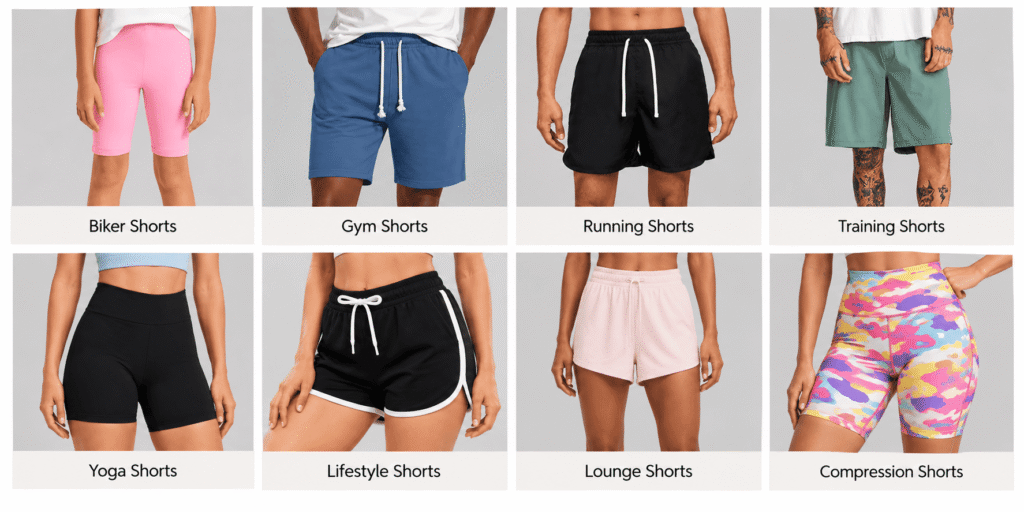
China offers a wide range of sportswear manufacturing options, but not every supplier is equally suitable for running shorts, gym shorts, compression shorts, or technical 2-in-1 designs.
The right purchasing decision begins with a practical question: Which manufacturer can meet your product requirements without creating unnecessary cost, inventory, or production risks?
How Should Buyers Compare Wholesale Sports Shorts Manufacturers?
The best Wholesale Sports Shorts Manufacturer should be selected based on product specialization, comparable sourcing costs, fit development capability, minimum order conditions, quality evidence, and delivery reliability. Buyers should first identify manufacturers experienced in their required sports shorts category, then provide the same specifications and RFQ to shortlisted suppliers. Compare total order investment rather than unit price alone, evaluate samples against consistent fit and construction standards, and verify production capabilities before paying a deposit. The most suitable manufacturer is the one whose technical experience, commercial terms, and reorder capacity match the brand’s actual purchasing requirements.
What Makes a Manufacturer Worth Shortlisting?
A supplier comparison becomes more useful when every manufacturer is evaluated under the same conditions. Otherwise, a low quotation may reflect a simpler fabric, fewer construction details, a different quantity, or services excluded from the price.
Before choosing a Wholesale Sports Shorts Manufacturer, buyers should compare six essential factors:
Product specialization: Relevant experience with running, gym, training, compression, or 2-in-1 shorts.
Comparable sourcing costs: Unit prices, sample charges, material minimums, testing, packaging, freight, and other purchasing expenses.
Fit development: Ability to meet approved measurements, assess movement comfort, and maintain consistent sizing.
MOQ and order flexibility: Minimum quantities per style, color, and fabric, including size-mixing and reorder conditions.
Quality verification: Business credentials, material documentation, inspection records, and evidence that bulk production matches approved samples.
Delivery reliability: Realistic production schedules, material availability, capacity planning, and repeat-order consistency.
These factors should not always carry equal weight.
For example, a new brand launching its first gym shorts collection may accept a slightly higher unit price in exchange for lower inventory exposure. An established brand selling thousands of pieces may benefit more from stable production capacity and stronger volume pricing.
The important distinction is between the cheapest supplier and the most commercially suitable supplier.
A professional Wholesale Sports Shorts Manufacturer comparison should make these trade-offs visible rather than hide them behind a single ranking.
This guide examines ten Chinese manufacturing options, explains how sourcing costs and order terms should be compared, and provides practical methods for evaluating samples, verifying suppliers, and making a final purchasing decision.
Which Are the Top 10 Wholesale Sports Shorts Manufacturer Options in China?
The best Wholesale Sports Shorts Manufacturer in China depends on the type of shorts, order quantity, development requirements, and purchasing budget. Some suppliers specialize in technical activewear, while others focus on team uniforms, established patterns, or smaller private label orders. Buyers should compare manufacturers using the same product specifications rather than relying on advertised MOQ or production capacity alone. The following ten companies provide a practical starting point for evaluating sourcing costs, sample capabilities, order flexibility, and potential production risks.
Top 10 Chinese Sports Shorts Manufacturers — Quick Comparison Table
| Manufacturer | Location | Published MOQ or Starting Point | Main Sourcing Consideration |
|---|---|---|---|
| Pair Fashion | Dongguan, Guangdong | Generally 100 pcs for standard styles | Custom activewear development and flexible orders |
| HUCAI Sportswear | China; production site to confirm | Confirm by project | Men’s fitness apparel and OEM/ODM |
| Yueyi Active | Guangzhou, Guangdong | 300 pcs/style/color for custom shorts | Established patterns and wholesale production |
| Ninghow Apparel | Shenzhen, Guangdong | Low/no MOQ advertised; terms vary | Flexible sourcing across shorts categories |
| INGORSPORTS | Guangzhou, Guangdong | 300 pcs/design on selected products | Performance activewear collections |
| SANSANSUN | China; site to confirm | Confirm by style and customization | OEM/ODM and private label activewear |
| Athletik Clothing | Zhangjiagang, Jiangsu | 500 pcs/style previously advertised; reconfirm | Technical knitwear and performance garments |
| Gofitapparel | Guangdong, China | 50–100 pcs for qualifying SKUs | Small-batch and full-custom order options |
| Healong Sportswear | Guangzhou, Guangdong | 10 pcs on selected teamwear shorts | Sublimation and sports team apparel |
| Aktik Sportswear | Dongguan, Guangdong | Confirm by project | Gymwear and coordinated activewear |
Published minimums are not equivalent quotations. A minimum for an existing garment with a printed logo may not apply to a newly developed pattern, custom-dyed fabric, or technical two-layer running short.
1. Pair Fashion — Custom Activewear Development and Flexible Brand Orders
Company: Dongguan Pair Fashion Co., Ltd.
Location: Dongguan, Guangdong, China
Established: 2016
MOQ: Generally 100 pieces for standard styles; lower quantities may be considered for qualifying specialty projects
Sample lead time: Commonly around 7 days; selected straightforward projects may be faster
Bulk lead time: Typically 20–25 working days after necessary approvals, subject to order conditions
Core products: Gym shorts, running shorts, training shorts, leggings, sports bras, joggers, tennis wear, and equestrian apparel
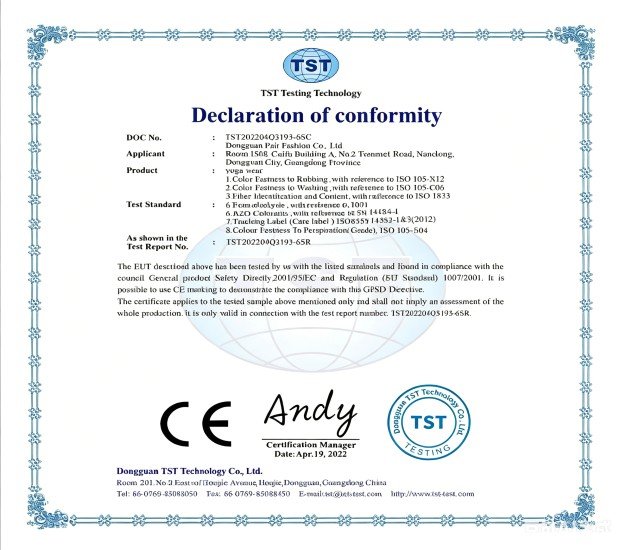
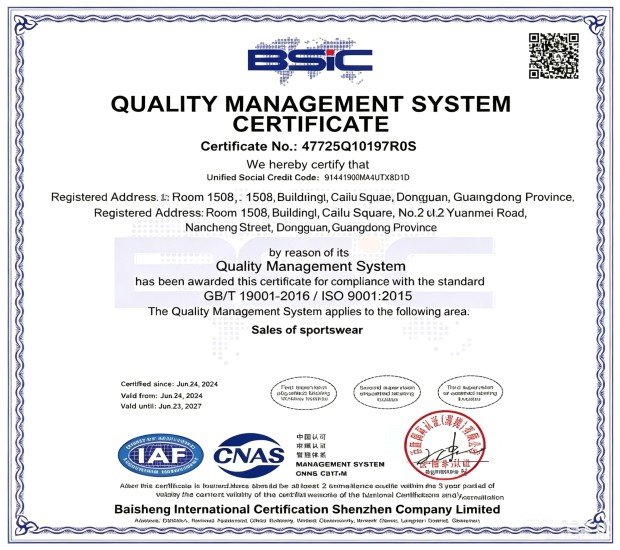
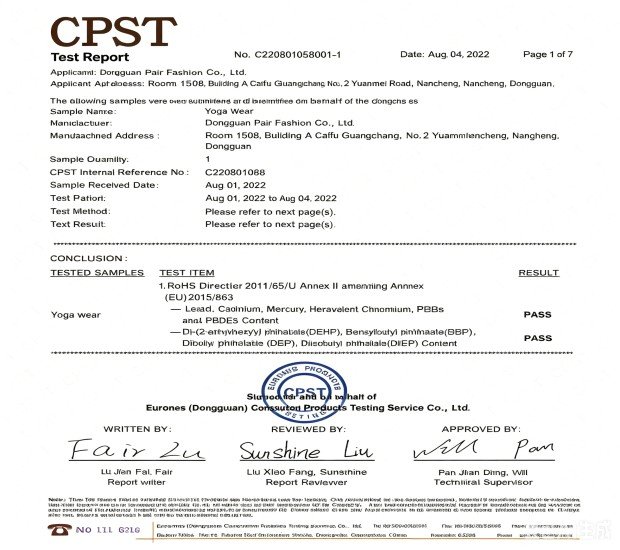
Reported company credentials: ISO 9001, BSCI, GRS, CE, and RoHS-related documentation; specific validity and applicability should be confirmed
Suitable buyers: Emerging activewear brands, growing private label businesses, and buyers developing coordinated sportswear collections
Less suitable buyers: Businesses expecting unlimited single-piece customization or guaranteed production schedules before specifications are approved
Pair Fashion is a Dongguan-based activewear manufacturer providing OEM, ODM, and private label production for international brands. Established in 2016, the company reports seven production lines, an 11-person pattern and sampling team, and 13 quality-control staff.
For a buyer comparing Wholesale Sports Shorts Manufacturer options, Pair Fashion is particularly relevant when the project requires both product development and manageable initial purchasing quantities.
A new brand may have reference photographs, a sample garment, or a preliminary design without a complete technical specification. In such cases, the important purchasing question is whether the supplier can establish a measurable product standard before the buyer commits to bulk production.
Pair Fashion’s reported pattern-making and sampling resources make it a candidate for this type of project. However, its overall garment capacity should not be interpreted as guaranteed availability for a particular shorts order.
Main strengths: Product development support, multiple activewear categories, flexible order planning, and established quality-control resources.
Potential limitations: MOQ and delivery conditions depend on fabric sourcing, style complexity, colors, and production scheduling.
Buyers interested in reviewing the company’s actual manufacturing services can explore its custom sports shorts OEM/ODM production capabilities.
2. HUCAI Sportswear — Men’s Athletic Apparel and OEM/ODM Programs
Company: HUCAI Sportswear
Location: China; exact manufacturing site requires confirmation
Established: Legal establishment year should be confirmed
MOQ: Request a shorts-specific quotation
Sample lead time: Confirm by product requirements
Bulk lead time: Confirm after material and quantity review
Core products: Men’s fitness apparel, gym clothing, and OEM/ODM sportswear
Certifications: Request current documentation for the relevant production facility
Suitable buyers: Brands comparing suppliers for men’s training apparel
Less suitable buyers: Buyers requiring a fully verified shorts-specific commercial quotation before contacting suppliers
HUCAI is a potential sourcing option for brands developing men’s athletic apparel and coordinated fitness collections.
A manufacturer with experience across training tops, gym shorts, and related garments may be useful when the brand wants consistent visual styling across several products.
However, buyers should distinguish between general sportswear manufacturing experience and proven ability to produce their specific shorts construction.
For example, loose training shorts, compression shorts, and two-layer running shorts have different requirements for pattern balance, fabric stretch, seam construction, and movement comfort.
Before selecting HUCAI as a Wholesale Sports Shorts Manufacturer, request comparable product samples, the actual manufacturing address, and a written explanation of MOQ, fabric sourcing, and production responsibilities.
Main strengths: Relevant men’s activewear positioning and OEM/ODM sourcing potential.
Potential limitations: Shorts-specific MOQ, lead time, and production evidence require direct confirmation.
3. Yueyi Active — Gym, Running and Training Shorts
Company: Guangzhou Yueyi Sportswear Co., Ltd.
Location: Guangzhou, Guangdong, China
Established: 1997, according to the company
MOQ: Published custom shorts minimum of 300 pieces per style/color
Trial orders: Selected existing styles with logo customization may start from 100 pieces
Sample lead time: Approximately 7–14 days
Bulk lead time: Approximately 25–35 days for stated standard quantities
Core products: Gym shorts, running shorts, training shorts, cargo-style shorts, and general sportswear
Reported audits: SMETA; certified material options are also advertised
Suitable buyers: Brands with defined product requirements, medium-volume orders, and repeat purchasing plans
Less suitable buyers: Businesses needing very small quantities of fully customized styles across multiple colors
Yueyi Active publishes relatively detailed information about sports shorts production, including existing base styles, pocket options, liners, minimum quantities, and lead times.
This gives buyers an opportunity to compare two different purchasing models.
The first involves selecting an existing shorts pattern and adding branding or limited modifications. The second involves developing a new construction with different measurements, materials, or functional details.
These two arrangements should not be treated as commercially identical.
For example, a brand requesting an existing training short with a heat-transfer logo may face fewer development costs than a brand requesting an exclusive two-layer running short with a custom liner and pocket system.
Yueyi may therefore be a useful Wholesale Sports Shorts Manufacturer candidate for buyers with stable specifications and repeat-order plans.
Main strengths: Clear published shorts categories, defined MOQ conditions, and stated sampling and production schedules.
Potential limitations: Higher custom minimums may increase the initial inventory commitment for small brands.
4. Ninghow Apparel — Flexible Custom Shorts and Multi-Category Sourcing
Company: Ninghow Apparel
Location: Shenzhen, Guangdong, China
Established: The company states 1998 on certain product pages; legal registration details should be verified
MOQ: Low or no MOQ is advertised for selected shorts; minimums depend on product conditions
Sample lead time: Approximately 5–7 days on several shorts pages
Bulk lead time: Approximately 15–20 days on its athletic and gym shorts pages, subject to project conditions
Core products: Athletic shorts, gym shorts, running shorts, mesh shorts, basketball shorts, and general apparel
Reported credentials: ISO- and SGS-related claims; current scope should be checked
Suitable buyers: Emerging brands, teams, and buyers sourcing multiple apparel categories
Less suitable buyers: Businesses requiring one universal MOQ or lead-time commitment for every fully customized product
Ninghow advertises a broad range of shorts and flexible order quantities.
Its product pages describe athletic shorts, gym shorts, mesh shorts, and other categories, with customization options covering fabrics, waistbands, lengths, logos, and packaging.
For a startup, flexible minimums may reduce the cost of testing an unfamiliar product. However, the buyer still needs to understand whether the minimum applies to existing stock, a standard pattern, or a fully customized garment.
Ninghow’s public information uses different MOQ descriptions across product categories. That makes written clarification especially important.
A Wholesale Sports Shorts Manufacturer offering a small starting order can be commercially attractive, but only when the quotation also confirms fabric availability, size distribution, sample approval, and total purchasing cost.
Main strengths: Broad shorts selection, flexible advertised quantities, and published sampling information.
Potential limitations: Different product pages describe different commercial conditions, so buyers should confirm the applicable terms in writing.
5. INGORSPORTS — Performance Activewear and Coordinated Collections
Company: Guangzhou INGOR Sportswear Co., Ltd.
Location: Guangzhou, Guangdong, China
Established: 2009
MOQ: Selected product listings state 300 pieces per design, with specified color and size mixing
Sample lead time: Approximately 7–10 days on selected product listings
Bulk lead time: Confirm for the proposed shorts style and order quantity
Core products: Activewear, gym clothing, yoga wear, sports shorts, sports bras, and leggings
Certifications: Request current factory and material documentation
Suitable buyers: Fitness brands developing coordinated collections and recurring product programs
Less suitable buyers: Buyers requiring substantially smaller fully customized quantities without an agreed exception
INGORSPORTS focuses on activewear and fitness clothing, making it relevant to buyers purchasing sports shorts alongside leggings, sports bras, and training tops.
This can matter when a brand needs consistent material appearance and color direction across an entire collection.
However, a coordinated collection does not automatically require every garment to use the same fabric. Running shorts may need a lightweight woven material, while fitted training shorts may require greater stretch and recovery.
Buyers comparing INGORSPORTS with another Wholesale Sports Shorts Manufacturer should evaluate relevant sample construction rather than general activewear experience alone.
The supplier’s published color-mixing conditions also deserve attention. A stated minimum of 300 pieces may be more manageable if the brand can distribute quantities across suitable colors and sizes.
Main strengths: Activewear specialization, coordinated product sourcing, and published order-mixing examples.
Potential limitations: Product-specific minimums and production conditions require confirmation.
6. SANSANSUN — Private Label and OEM/ODM Activewear
Company: SANSANSUN Sports
Location: China; confirm the production address and contracting entity
Established: Confirm with the supplier
MOQ: Project-specific confirmation required
Sample lead time: Confirm for the selected construction
Bulk lead time: Confirm after sample and material approval
Core products: Yoga clothing, gym apparel, activewear, and private label sportswear
Certifications: Request current documentation applicable to the order
Suitable buyers: Brands comparing existing-pattern customization with new OEM development
Less suitable buyers: Buyers expecting the same MOQ for ready-stock products and newly developed garments
SANSANSUN is relevant to brands considering different levels of product customization.
For some buyers, the objective is to launch a marketable sports shorts collection quickly using an established base pattern. For others, the product requires exclusive measurements, new fabrics, and proprietary construction details.
These projects have different cost structures.
When evaluating SANSANSUN as a Wholesale Sports Shorts Manufacturer, buyers should first identify whether they need private labeling, ODM development, or full OEM manufacturing.
The next step is to request a quotation that separates sample development, fabric minimums, logo applications, packaging, and bulk garment costs.
Main strengths: Activewear positioning and multiple customization models.
Potential limitations: Publicly comparable shorts-specific MOQ and lead-time information requires further confirmation.
7. Athletik Clothing — Technical Knitwear and Performance Apparel
Company: Athletik Clothing
Location: Zhangjiagang, Jiangsu, China
Established: Confirm with the supplier
MOQ: A 500-piece-per-style starting point has been advertised; reconfirm for sports shorts
Sample lead time: Confirm by fabric and construction requirements
Bulk lead time: Project-specific quotation required
Core products: Technical knitwear and performance sports apparel
Certifications: Request relevant current audit and material documentation
Suitable buyers: Brands developing fitted performance garments and technical sportswear
Less suitable buyers: Very small trial orders or buyers seeking simple woven shorts without confirming the supplier’s relevant capability
Athletik Clothing is worth considering when fabric behavior and technical garment construction are central to the project.
For fitted training shorts, seam placement, stretch recovery, fabric stability, and movement comfort can be more important than decorative details.
A technically capable supplier may offer value in these areas, but buyers should still verify experience with the exact product category.
Technical knitwear expertise does not automatically establish competence in every type of woven running short.
Before adding Athletik to a Wholesale Sports Shorts Manufacturer shortlist, request samples using similar materials, construction methods, and measurement requirements.
Main strengths: Technical performance apparel positioning and potential suitability for more demanding knit constructions.
Potential limitations: Higher reported minimums and product-specific suitability require verification.
8. Gofitapparel — Small-Batch and Full-Custom Activewear
Company: Gofitapparel
Location: Guangdong, China
Established: Confirm the legal establishment year
MOQ: Published starting range of 50–100 pieces for qualifying SKUs
Full-custom MOQ: Published baseline of 100 pieces per SKU across selected categories
Sample lead time: Confirm for the actual shorts specification
Bulk lead time: Confirm after fabric and order review
Core products: Custom activewear, sports tops, bottoms, sports bras, and related categories
Certifications: Request current applicable documentation
Suitable buyers: Small brands seeking clearly defined quantity options
Less suitable buyers: Projects that cannot meet upstream fabric or trim minimums despite a low garment MOQ
Gofitapparel distinguishes between lower-quantity qualifying products and full-custom manufacturing.
This is a useful commercial distinction.
A manufacturer may accept a smaller order when suitable materials are available, while requiring a higher minimum for custom-dyed fabrics or special components.
Buyers should therefore ask whether the advertised minimum applies to each SKU, each color, or the entire order.
When comparing Gofitapparel with another Wholesale Sports Shorts Manufacturer, the total inventory commitment matters more than the lowest starting MOQ shown on a website.
Main strengths: Published quantity structure and attention to small-batch sourcing conditions.
Potential limitations: Lower starting quantities are conditional, and upstream material requirements may affect the final order.
9. Healong Sportswear — Teamwear and Sublimated Athletic Shorts
Company: Guangzhou Healong Sportswear Co., Ltd.
Location: Guangzhou, Guangdong, China
Established: Confirm the legal establishment year
MOQ: Selected basketball and mesh shorts listings advertise 10 pieces
Sample lead time: Confirm for the specific product
Bulk lead time: Selected teamwear pages advertise approximately 2–3 weeks
Core products: Basketball shorts, mesh shorts, sublimated teamwear, sports uniforms, and customized athletic apparel
Certifications: Request applicable current documentation
Suitable buyers: Sports clubs, teams, academies, events, and buyers needing printed athletic apparel
Less suitable buyers: Brands assuming a teamwear minimum automatically applies to exclusive technical shorts development
Healong differs from suppliers whose main focus is fashion-oriented activewear.
Its product listings emphasize sports uniforms, sublimation printing, and team customization. These capabilities can be useful for clubs ordering coordinated shorts with team colors, player details, or event graphics.
A published 10-piece minimum is attractive, but buyers should examine exactly what that quantity includes.
It may be suitable for an established pattern with customized printing, while a completely new running short construction could involve different commercial conditions.
A teamwear-focused Wholesale Sports Shorts Manufacturer may be the right choice for club apparel without necessarily being the best choice for a proprietary compression shorts collection.
Main strengths: Small published minimums on selected products and teamwear printing specialization.
Potential limitations: Technical private label development and related MOQ conditions require separate verification.
10. Aktik Sportswear — Gymwear and Custom Activewear
Company: Aktik Sportswear
Location: Dongguan, Guangdong, China
Established: Confirm with the supplier
MOQ: Request a sports shorts-specific quotation
Sample lead time: Confirm according to style requirements
Bulk lead time: Confirm according to quantity and material availability
Core products: Gymwear, training apparel, sports shorts, and coordinated activewear
Certifications: Request current applicable documents
Suitable buyers: Brands comparing suppliers for gym clothing and coordinated fitness products
Less suitable buyers: Businesses requiring fully verified commercial terms before initial supplier contact
Aktik Sportswear is another potential option for brands comparing gymwear and activewear suppliers in Guangdong.
For buyers developing coordinated training apparel, product range may be useful, but it should not replace a technical assessment of sports shorts manufacturing.
Ask whether the supplier has produced shorts with comparable fabric, waistband, pocket construction, and size requirements.
It is also important to confirm whether sampling and bulk production take place at the same facility.
Before selecting Aktik as a Wholesale Sports Shorts Manufacturer, obtain a comparable sample, written commercial terms, and evidence of production responsibility.
Main strengths: Relevant gymwear positioning and potential compatibility with coordinated activewear orders.
Potential limitations: MOQ, lead time, production arrangements, and certification details need direct verification.
Which Manufacturer Is Best for Different Types of Buyers?
There is no single supplier that is automatically the best choice for every sportswear business.
A Wholesale Sports Shorts Manufacturer should be evaluated against the buyer’s product complexity, available budget, target quantity, and expected sales volume.
| Buyer Type | Manufacturers to Consider | Most Important Questions |
|---|---|---|
| Startup testing a first collection | Pair Fashion, Ninghow, Gofitapparel | What is the real MOQ per color? How much inventory must be purchased? |
| Growing fitness brand | Pair Fashion, INGORSPORTS, Yueyi Active | Can the supplier maintain fit and material consistency across reorders? |
| Technical performance apparel brand | Athletik Clothing, INGORSPORTS, Pair Fashion | Can the supplier demonstrate relevant fabric and construction experience? |
| Sports team or academy | Healong Sportswear, Yueyi Active | Are existing patterns, sublimation, and small team orders available? |
| Established wholesale buyer | Yueyi Active, INGORSPORTS, Pair Fashion | Are capacity, quality controls, and production schedules supported by evidence? |
These suggestions identify manufacturers worth investigating, not guaranteed winners.
A supplier with a higher MOQ may be commercially suitable for an established brand with predictable demand. Another supplier with a smaller minimum may be better for testing a new product, even if its unit price is higher.
The most effective approach is to narrow the list to three or four manufacturers with relevant product experience.
Each shortlisted Wholesale Sports Shorts Manufacturer should then receive substantially the same RFQ, including fabric requirements, size chart, construction details, order quantity, color breakdown, packaging, and delivery expectations.
Only after comparing quotations and samples under consistent conditions can buyers make a meaningful decision.
A useful supplier shortlist is not the longest list of companies. It is the shortest list of manufacturers capable of meeting the actual order requirements.

Custom Modest Activewear Tunic OEM ODM Muslim Sportswear Top

Custom Modest Sports Dress OEM ODM Muslim Activewear Dress
Custom Modest Sports Tunic OEM ODM Muslim Activewear Top
Custom Muslim Sportswear Set Modest Activewear Tunic & Leggings OEM ODM
Custom Muslim Sportswear Set OEM ODM Full Coverage Activewear
Custom Nursing Sweatshirt OEM ODM Maternity & Postpartum Activewear
Custom OEM Activewear Jumpsuit Manufacturer
Custom Pleated Tennis Dress OEM ODM Women’s Performance Tennis Wear

Why Do Global Buyers Choose Chinese Sports Shorts Manufacturers?
Global buyers often choose Chinese sports shorts manufacturers because China combines fabric sourcing, garment production, trims, sampling resources, and export services within an established apparel supply chain. This can help brands coordinate different parts of a sourcing project, especially when developing performance garments or managing several product styles. However, China is not automatically the cheapest or fastest option. The right manufacturing location depends on order volume, product complexity, landed costs, delivery requirements, and the supplier’s actual capabilities.
What Advantages Does China’s Sportswear Supply Chain Offer?
A sports shorts order involves more than cutting and sewing fabric. The buyer may need performance materials, elastic waistbands, drawcords, pocket zippers, labels, packaging, testing, and international shipping.
China’s apparel supply chain offers access to many of these resources through established manufacturing and sourcing networks.
For example, a brand developing lightweight running shorts may need a woven outer fabric, a separate liner material, suitable waistband elastic, and moisture-resistant pocket components. If one component is unavailable, the production schedule can change even when the sewing facility has sufficient capacity.
A Wholesale Sports Shorts Manufacturer with access to reliable material and trim suppliers may be able to coordinate these requirements more efficiently.
However, a large sourcing network does not guarantee that every manufacturer can obtain every fabric at a reasonable price. Specialized materials may still require higher minimum quantities, additional testing, or longer purchasing periods.
Buyers should evaluate the supplier’s actual sourcing arrangements rather than assuming that its location automatically provides access to all required materials.
China vs USA vs Vietnam — How Do Sourcing Conditions Differ?
China, the United States, and Vietnam can all be suitable manufacturing locations, but their commercial advantages are different.
The right comparison should consider more than the garment’s quoted price.
| Evaluation Factor | China | USA | Vietnam |
|---|---|---|---|
| Fabric and trim sourcing | Broad domestic sourcing network | Depends on domestic availability and imports | Established sourcing networks; some materials may require imports |
| Technical product development | Wide range of specialists with different capabilities | Potentially convenient for US-based design collaboration | Available through suitable manufacturers, depending on specialization |
| Small custom orders | Available from selected suppliers | Available from selected manufacturers | Depends on manufacturer and production structure |
| Large-volume production | Extensive manufacturing options | Available, often with different labor cost structures | Established export-oriented garment production |
| Communication and sample review | International coordination required | Potentially easier for US-based buyers | International coordination required |
| Shipping to the USA | International freight and import procedures | Domestic freight for US production | International freight and import procedures |
| Import duties | Depend on product classification, origin, and current trade rules | Domestic US-made goods do not require importation into the USA | Depend on product classification, origin, and current trade rules |
These are general sourcing considerations, not guaranteed advantages for every supplier.
For a US-based brand, domestic manufacturing may simplify factory visits, sample reviews, and transportation. However, a domestic sewing operation may still need imported fabrics or trims, which can affect its total cost and schedule.
Vietnam can be competitive for suitable apparel programs, particularly when the buyer has stable specifications and sufficient order volume. However, material sourcing arrangements and minimum quantities should be checked for the actual project.
China may be attractive when a buyer needs access to several manufacturing processes and material options within one sourcing program.
When comparing a Chinese Wholesale Sports Shorts Manufacturer with suppliers in other countries, the buyer should use the same product specifications, quantities, quality requirements, and delivery destination.
Otherwise, the comparison may reflect different products rather than different manufacturing locations.
How Do Fabric Availability and Supply Chain Coordination Affect Purchasing?
A supplier may offer a competitive garment price but require a higher fabric minimum than the buyer’s planned order.
Consider a brand planning to purchase 300 pairs of running shorts.
The sewing manufacturer may accept 300 pieces, but the selected fabric supplier may require enough material for 600 pieces. If the brand cannot use the remaining material for future orders, its effective purchasing commitment becomes larger than expected.
This is one reason the advertised garment MOQ should never be evaluated separately from the material minimum.
A reliable Wholesale Sports Shorts Manufacturer should explain whether the required fabric is available from stock, must be purchased in a minimum quantity, or needs custom dyeing or finishing.
Buyers should ask:
Is the selected fabric available in the required color?
Does the fabric supplier have a separate minimum order quantity?
Can leftover material be reserved for future production?
Will changing the fabric affect the approved fit or performance?
Are the trims available throughout the planned reorder period?
What happens if a material is discontinued?
These questions help buyers understand whether the quoted production conditions are realistic.
They also reduce the risk of discovering additional purchasing requirements after sample approval.
When Is China a Suitable Choice for Small or Large Wholesale Orders?
China can be suitable for both smaller development programs and large wholesale orders, but the best supplier for each situation may be different.
A startup testing its first sports shorts collection may prioritize manageable inventory, sampling support, and the ability to adjust specifications before production.
A growing brand may need consistent sizing, reliable material sourcing, and predictable replenishment.
An established wholesaler may place greater importance on production capacity, inspection systems, volume pricing, and delivery planning.
For example, a supplier requiring 500 pieces per color may be commercially suitable for a brand with established demand. The same minimum could create unnecessary inventory risk for a startup testing three new colors.
A smaller-order Wholesale Sports Shorts Manufacturer may offer better commercial flexibility, even when its unit price is higher.
However, low MOQ should not be the only selection factor. A buyer also needs to confirm whether the manufacturer can maintain the same fabric, fit, construction, and quality when future orders increase.
The ideal supplier is not simply one that accepts the first order. It is one whose production structure can support the brand’s realistic purchasing plans.
What Sourcing Risks Should Overseas Buyers Consider?
Overseas manufacturing introduces risks that should be evaluated before a purchase order is approved.
Some risks are related to production, while others arise from communication, logistics, or commercial arrangements.
Important sourcing risks include:
Unclear specifications: Different interpretations of measurements, construction details, or approved samples.
Material substitutions: Changes to fabric, elastic, zippers, or other components without proper approval.
Unverified production capacity: A supplier accepting an order without confirming available production resources.
Incomplete quality evidence: Limited inspection records or unclear responsibility for defective products.
Unexpected purchasing costs: Additional testing, packaging, freight, duties, or material minimums.
Delivery uncertainty: Delays caused by material availability, sample revisions, production scheduling, or transportation.
Reorder inconsistency: Changes in fit, fabric, color, or construction between production batches.
These risks are not unique to China. Similar problems can occur in other sourcing markets when supplier verification and purchasing controls are weak.
Before choosing a Wholesale Sports Shorts Manufacturer, buyers should confirm the approved specifications, material requirements, production schedule, inspection arrangements, payment terms, and procedures for handling quality problems.
The objective is not to eliminate every possible risk. It is to identify the risks that matter most to the order and agree on practical controls before production begins.
How Should Buyers Decide Whether China Is the Right Sourcing Market?
The most useful sourcing comparison begins with the requirements of the actual product.
A buyer should first confirm the garment specifications, target order quantity, acceptable delivery window, and total purchasing budget.
Manufacturers in different countries can then be compared under substantially the same conditions.
For a simple product requiring fast domestic replenishment, a local manufacturer may be commercially attractive.
For a more complex sports shorts collection involving several materials, trims, sizes, and production stages, China’s established apparel supply chain may provide useful sourcing options.
A Wholesale Sports Shorts Manufacturer should ultimately be selected because its capabilities and commercial conditions match the project—not simply because it operates in a particular country.
The strongest sourcing decision considers total landed cost, verified product capability, inventory commitment, quality evidence, and delivery reliability together.
How Should Buyers Compare Sports Shorts Manufacturing Prices and Total Sourcing Costs?
Buyers should compare sports shorts manufacturing costs by using identical product specifications, order quantities, quality requirements, and delivery terms. A lower unit price does not always mean a lower total purchasing cost. Fabric minimums, sampling fees, testing, packaging, freight, import duties, and excess inventory can significantly change the final investment. Before choosing a Wholesale Sports Shorts Manufacturer, brands should request itemized quotations, calculate the total landed cost, and evaluate how each supplier’s MOQ affects the amount of inventory they must purchase.
What Determines the Price of Wholesale Sports Shorts?
Sports shorts pricing depends on several factors working together.
A basic training short made with a standard fabric may be relatively straightforward to manufacture. A technical running short with a separate liner, specialized pockets, reflective details, and performance materials may involve more components, development work, and production time.
Even two garments that look similar in photographs can have different manufacturing costs.
The main cost drivers include:
Fabric: Material composition, weight, construction, finishing, sourcing minimums, and purchase volume.
Garment construction: Number of panels, seam types, pocket designs, liners, waistbands, and additional components.
Order quantity: Total pieces, quantity per color, size distribution, and production efficiency.
Customization: Logo applications, labels, packaging, special trims, and exclusive product details.
Development: Pattern preparation, sampling, revisions, testing, and pre-production approval.
Quality requirements: Inspection scope, material testing, and additional buyer-specific verification.
Commercial conditions: Currency, payment arrangements, shipping terms, and delivery destination.
A professional Wholesale Sports Shorts Manufacturer should be able to explain which product requirements have the greatest impact on its quotation.
For example, adding a zipper pocket may increase material, trim, and sewing costs. However, the actual increase depends on the zipper specification, pocket construction, order quantity, and available production resources.
Buyers should avoid assuming that every design modification has a fixed price.
The better approach is to ask suppliers to quote the same product specification and identify any proposed alternatives separately.
What Is Included and Excluded in a Manufacturer’s Quotation?
A garment quotation is only useful when the buyer understands what it includes.
One manufacturer may quote a finished garment with standard labels and individual packaging. Another may quote only the garment, excluding special branding, testing, and export-related charges.
Both quotations may be commercially reasonable, but they are not directly comparable.
Before selecting a Wholesale Sports Shorts Manufacturer, buyers should request a written breakdown of the following items.
| Cost Item | Questions Buyers Should Ask |
|---|---|
| Garment unit price | Does the price include all approved fabrics, trims, and construction details? |
| Sampling | Are sample development and revisions charged separately? |
| Fabric sourcing | Are there minimum fabric purchases or custom-dyeing charges? |
| Branding | Are logos, woven labels, care labels, and hangtags included? |
| Packaging | Does the quotation include individual bags, cartons, and required packaging details? |
| Testing | Which tests are included, and which require additional payment? |
| Inspection | Are buyer-requested third-party inspections charged separately? |
| Export charges | Which origin-side handling, documentation, and transport charges are included? |
| International freight | Is shipping to the destination included? |
| Import costs | Who is responsible for duties, taxes, customs clearance, and related charges? |
Buyers should also confirm the quotation’s validity period.
Fabric prices, freight rates, exchange rates, and production conditions can change. A quotation issued several months earlier may no longer reflect the supplier’s actual costs.
A complete quotation should make the purchasing commitment clear before the buyer pays a deposit.
EXW vs FOB vs DDP — How Do Buyers Calculate Comparable Landed Costs?
Incoterms define important delivery responsibilities between buyers and sellers.
They do not automatically determine product quality, payment security, or every cost involved in an international transaction.
For sports shorts purchasing, EXW, FOB, and DDP are commonly discussed, but they represent different delivery arrangements.
| Incoterm | General Responsibility | Main Buyer Consideration |
|---|---|---|
| EXW — Ex Works | Seller makes goods available at the named location; buyer takes on extensive collection and export arrangements | Origin-side transport, export procedures, freight, insurance, and import costs |
| FOB — Free On Board | Seller delivers goods on board the vessel at the named port; buyer generally handles the main carriage and import side | Ocean freight, insurance arrangements, destination charges, duties, and taxes |
| DDP — Delivered Duty Paid | Seller delivers to the named destination with import clearance and applicable duties/taxes handled under the agreed term | Exact destination, unloading arrangements, tax treatment, and supplier’s ability to fulfill import obligations |
FOB is intended for sea and inland waterway transport. For containerized shipments handed over to a carrier before loading, FCA may be more appropriate.
Buyers should confirm the correct Incoterms 2020 rules published by the International Chamber of Commerce and the named place or port in their contracts before comparing international shipping responsibilities.
A buyer comparing EXW, FOB, and DDP quotations should not simply place the quoted garment prices side by side.
Instead, each offer should be converted into a comparable cost at the same destination, with the same assumptions about included services.
For example, a buyer importing sports shorts into the United States may need to account for:
Garment purchase price
Origin transport and handling
Export documentation and clearance, where applicable
International freight
Cargo insurance
Destination handling and customs brokerage
Applicable import duties and tariffs
Domestic delivery to the warehouse
Actual import charges depend on the product classification, country of origin, applicable trade measures, and current regulations. Buyers should confirm these details with a qualified customs professional.
How Do Buyers Calculate the Total Landed Cost per Piece?
The total landed cost shows how much the buyer spends to bring the goods to the intended destination.
A practical calculation is:
Total Landed Cost = Product Cost + Freight + Insurance + Applicable Duties and Taxes + Customs and Handling Charges + Other Included Delivery Expenses
Landed Cost per Piece = Total Landed Cost ÷ Number of Units Purchased
Consider a hypothetical order of 1,000 pairs of sports shorts.
| Cost Component | Example Amount |
|---|---|
| Garment purchase cost | $5,800 |
| International freight | $850 |
| Cargo insurance | $70 |
| Applicable duties and import charges | $1,050 |
| Customs brokerage and handling | $280 |
| Domestic delivery | $350 |
| Total landed cost | $8,400 |
| Landed cost per piece | $8.40 |
These amounts are illustrative and are not supplier quotations or current freight, duty, or tax rates.
The quoted garment price is $5.80 per piece, but the landed cost in this example is $8.40.
That is a difference of $2.60 per garment before considering selling expenses, warehousing, returns, or unsold inventory.
A Wholesale Sports Shorts Manufacturer offering a lower garment price may still produce a higher landed cost if freight arrangements, order quantities, or additional charges are less favorable.
For commercial planning, buyers should also distinguish landed cost from the broader cost of launching and selling a collection.
Sampling, product photography, marketing, warehousing, and returns may affect profitability even when they are not part of the formal landed-cost calculation.
How Do Sampling, Testing and Packaging Affect the Total Budget?
Sampling and development expenses are easy to underestimate when a brand is focused on the garment unit price.
A project may require an initial prototype, a fit revision, material testing, and a pre-production sample before the bulk order is approved.
These activities are not necessarily unnecessary expenses. They can help identify problems before a larger quantity is manufactured.
However, buyers should understand which costs are included and whether any sample charges are credited against the production order.
Packaging can also change the purchasing budget.
A standard individual bag may have a different cost from custom printed packaging, branded hangtags, special folding instructions, or retailer-specific carton requirements.
The same principle applies to testing.
A basic garment inspection is not equivalent to laboratory verification of colorfastness, dimensional stability, material composition, or other performance requirements.
When comparing a Wholesale Sports Shorts Manufacturer, buyers should specify the required tests and packaging conditions before requesting final quotations.
Otherwise, one supplier may appear cheaper simply because its quotation excludes services included by another manufacturer.
Why Is the Lowest Unit Price Not Always the Lowest-Cost Order?
The lowest unit price can require the highest initial inventory investment.
Consider two suppliers quoting for a brand’s first training shorts collection.
The brand wants to test three colors before deciding which styles to reorder.
| Purchasing Condition | Supplier A | Supplier B |
|---|---|---|
| Unit price | $5.20 | $6.40 |
| MOQ per color | 500 pcs | 150 pcs |
| Number of colors | 3 | 3 |
| Total initial quantity | 1,500 pcs | 450 pcs |
| Initial garment investment | $7,800 | $2,880 |
Supplier A is $1.20 cheaper per garment.
However, Supplier A requires the brand to order 1,050 more pieces and spend an additional $4,920 on garment inventory.
For an established brand with stable market demand, Supplier A may be a good choice because its unit price is lower.
For a startup brand testing a new market, Supplier B may be more suitable because it requires a lower initial purchasing investment.
Neither option is automatically better.
The right decision depends on expected sales, available cash, inventory turnover, reorder conditions, and the commercial consequences of unsold products.
This is why buyers should separate unit economics from inventory economics.
A supplier with a lower unit price may improve margins on products that sell successfully. A supplier with a lower MOQ may reduce the financial exposure of products that do not sell as expected.
A strong Wholesale Sports Shorts Manufacturer comparison should examine both outcomes.
How Can Buyers Compare Suppliers Using One Standard RFQ?
A Request for Quotation (RFQ) helps buyers compare manufacturers under consistent conditions.
Without a standardized RFQ, suppliers may quote different fabrics, construction methods, order quantities, and packaging arrangements.
The resulting prices can be misleading.
A useful sports shorts RFQ should include:
Product type: Running shorts, gym shorts, compression shorts, or another clearly defined category.
Technical requirements: Measurements, construction details, fabric specifications, and relevant performance requirements.
Order breakdown: Total quantity, colors, sizes, and quantity per variation.
Customization: Logos, labels, trims, packaging, and other required details.
Sample requirements: Prototype, fit sample, PP sample, revision expectations, and approval criteria.
Quality requirements: Inspection expectations, testing needs, and acceptable tolerances.
Commercial terms: Requested Incoterm, named delivery location, currency, payment terms, and quotation validity.
Schedule: Required sample dates, production completion target, and delivery expectations.
The same RFQ should be sent to every shortlisted Wholesale Sports Shorts Manufacturer.
Suppliers may propose alternative fabrics, construction methods, or order arrangements, but these should be quoted separately from the requested specification.
This allows buyers to identify genuine cost advantages rather than comparing different products.
What Should Buyers Do Before Accepting the Final Quotation?
Before confirming a supplier, buyers should review the complete commercial offer alongside the approved product requirements.
The final comparison should answer several questions.
Are all manufacturers quoting the same garment specification?
Does the quotation identify the MOQ per style, color, and fabric?
Are sampling, testing, branding, and packaging costs clear?
Are the delivery terms and named locations consistent?
Has the buyer calculated landed cost using comparable assumptions?
Are payment terms, quotation validity, and production conditions documented?
Does the proposed order quantity match realistic sales expectations?
A Wholesale Sports Shorts Manufacturer should not be selected on the basis of a low unit price alone.
The best purchasing decision balances product cost, total inventory investment, sample performance, supplier reliability, and the brand’s expected demand.
When these factors are compared together, buyers can make sourcing decisions that support profitability without creating unnecessary financial or production risks.
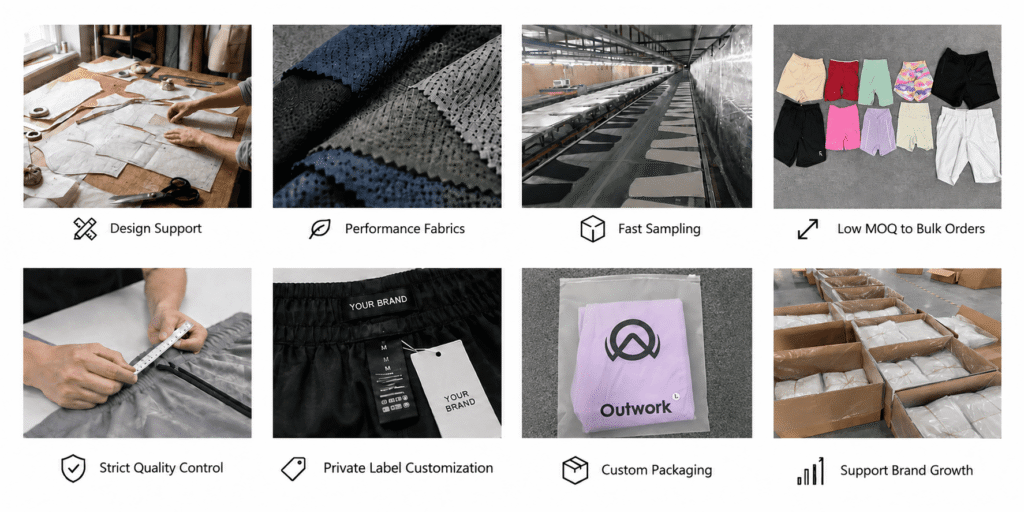
Which Type of Sports Shorts Manufacturer Is Best for Your Order?
The best type of sports shorts manufacturer depends on the garment’s intended use, fabric construction, technical requirements, and order volume. Running shorts, gym shorts, compression shorts, and 2-in-1 shorts require different manufacturing skills. Buyers should prioritize suppliers with proven experience in their specific product category rather than choosing a general sportswear manufacturer based only on price or production capacity. A suitable supplier should demonstrate relevant samples, consistent measurements, appropriate sewing techniques, and the ability to reproduce approved specifications in bulk production.
Running Shorts vs Gym Shorts vs 2-in-1 Shorts — Which Supplier Skills Matter?
Not all sports shorts are equally difficult to manufacture.
A basic pair of gym shorts may look simple, but its waistband, pocket construction, fabric weight, and leg opening can significantly affect customer satisfaction.
Running shorts introduce different requirements. Lightweight fabrics, movement allowance, liner comfort, and secure storage may become more important than the garment’s appearance when standing still.
A 2-in-1 short combines an outer layer with an inner compression or fitted liner. The two layers must work together during movement without excessive pulling, twisting, or bunching.
When comparing a Wholesale Sports Shorts Manufacturer, buyers should therefore ask whether the supplier has produced garments with similar construction—not merely whether it sells sports shorts.
| Sports Shorts Type | Important Manufacturing Skills | Common Problems to Check |
|---|---|---|
| Running shorts | Lightweight fabric handling, movement allowance, liner attachment | Riding up, restricted stride, liner discomfort |
| Gym shorts | Waistband construction, pocket stability, fabric durability | Waistband rolling, pocket distortion, inconsistent fit |
| Compression shorts | Stretch fabric control, seam placement, fit consistency | Excessive pressure, seam discomfort, poor recovery |
| 2-in-1 shorts | Outer and inner layer coordination, liner construction | Twisting, bunching, uneven movement between layers |
| Basketball shorts | Loose-fit grading, length consistency, durable construction | Incorrect proportions, inconsistent leg openings |
| Training shorts | Balanced mobility, secure waistband, suitable pocket design | Restricted squatting, slipping waistband, uncomfortable seams |
A manufacturer experienced in compression shorts may be excellent at stretch fabric construction but less familiar with lightweight woven running shorts.
Similarly, a supplier specializing in loose basketball shorts may not have the technical experience required for fitted training garments.
The strongest supplier is the one whose manufacturing experience matches the actual product.
What Manufacturing Experience Is Required for Different Fabric Types?
Fabric choice affects more than the appearance of sports shorts.
Woven fabrics and knitted fabrics behave differently during cutting, sewing, fitting, and repeated movement.
For example, a lightweight woven fabric may require careful control of seam allowance, edge finishing, and garment balance. A high-stretch knitted fabric requires attention to recovery, seam elasticity, and measurement consistency.
The same pattern cannot always be transferred directly from one fabric to another without affecting fit.
A professional Wholesale Sports Shorts Manufacturer should understand how fabric behavior influences the finished garment.
Buyers can evaluate this capability by asking practical questions:
Has the manufacturer produced shorts using similar fabric structures?
Can it provide samples with comparable stretch and weight?
Does the supplier understand how fabric recovery affects fit?
Can the manufacturer explain the sewing methods used for the proposed construction?
Has it tested how the garment performs after washing and repeated movement?
A supplier does not need to provide a complicated technical presentation.
Clear explanations, relevant garment samples, and consistent measurement records are often more useful than broad claims about advanced manufacturing technology.
OEM vs ODM vs Private Label — How Should Buyers Compare Suppliers?
OEM, ODM, and private label manufacturing are often discussed together, but they do not always involve the same level of product development.
Understanding the difference helps buyers compare quotations fairly.
| Manufacturing Model | Typical Starting Point | Main Buyer Advantage | Main Purchasing Consideration |
|---|---|---|---|
| OEM | Buyer-provided specifications or reference sample | Greater control over product requirements | Development accuracy and sample approval |
| ODM | Manufacturer-supported product development | Access to supplier development resources | Design ownership, specifications, and development responsibilities |
| Private Label | Existing or established product style | Potentially faster market testing | Product differentiation and available customization |
A startup may prefer an established shorts pattern with its own branding because the initial objective is to test market demand. Buyers considering custom sports shorts manufacturing options can also review available development and private label arrangements before requesting quotations.
An established performance brand may need a fully developed product with proprietary measurements and construction details.
Neither approach is automatically better.
When selecting a Wholesale Sports Shorts Manufacturer, buyers should confirm exactly what is included in the proposed manufacturing arrangement.
For example, two suppliers may both advertise OEM services, but one may expect a complete Tech Pack while another offers additional development support.
This difference can affect sampling costs, revision time, and the amount of technical work required from the buyer.
The manufacturing model should therefore be defined in the quotation rather than assumed from the supplier’s marketing language.
How Can Buyers Verify Experience With Similar Sports Shorts Projects?
A product catalog can show what a manufacturer is willing to sell. It does not always prove what the manufacturer has successfully produced.
Buyers should request evidence that relates directly to the proposed garment.
For example, if the project involves 2-in-1 running shorts, a sample of basic basketball shorts provides limited evidence of the supplier’s ability to manage inner and outer layers.
A useful supplier review should include:
Comparable product samples: Garments with similar fabric, fit, and construction.
Measurement records: Evidence that the supplier can work to defined tolerances.
Construction details: Clear examples of waistband, pocket, liner, and seam execution.
Material information: Relevant fabric specifications and available test results.
Production evidence: Appropriate inspection records or examples of completed production work.
Development communication: Clear explanations of technical questions and proposed solutions.
A reliable Wholesale Sports Shorts Manufacturer should be able to explain how it handles the construction challenges of the requested product.
Buyers should also distinguish between a supplier’s own production work and samples obtained from another manufacturer.
If production is subcontracted, the buyer should understand which facility will handle the actual order and who is responsible for quality control.
This does not automatically make subcontracting unacceptable. It makes production responsibility an important part of supplier verification.
Which Supplier Capabilities Should Be Mandatory Rather Than Optional?
Supplier selection becomes more reliable when buyers separate essential requirements from desirable advantages.
Some capabilities are non-negotiable because the product cannot succeed without them.
Others may improve convenience or reduce cost but are not essential to the garment’s function.
Consider a brand developing compression training shorts.
The supplier’s ability to work with the required stretch fabric, maintain consistent measurements, and produce comfortable seams may be mandatory.
Offering attractive packaging options or a slightly lower sample price may be useful, but neither can compensate for poor fit or unsuitable construction.
| Requirement Type | Examples | Selection Rule |
|---|---|---|
| Mandatory | Required fabric performance, essential construction, acceptable fit, legal compliance | Supplier must meet the requirement |
| Commercial | MOQ, total cost, payment terms, delivery schedule | Compare against the buyer’s budget and purchasing limits |
| Preferred | Additional branding options, broader product range, convenient communication arrangements | Use to distinguish otherwise suitable suppliers |
A manufacturer should not remain on the shortlist simply because it offers an attractive price if it cannot meet a critical product requirement.
Likewise, a supplier with strong technical capabilities may still be unsuitable when its minimum order creates an unacceptable inventory commitment.
Before choosing a Wholesale Sports Shorts Manufacturer, buyers should identify the requirements that cannot be compromised.
This makes the final comparison more objective and prevents a high overall supplier score from hiding a serious technical or commercial problem.
How Can Buyers Build a Practical Supplier Shortlist?
The first shortlist should contain manufacturers with relevant product experience and realistic commercial conditions.
For most projects, comparing three or four qualified suppliers is more useful than requesting quotations from twenty companies with different capabilities.
A practical shortlist should answer four questions:
Can the supplier produce the required sports shorts construction?
Can it work with the required fabric and sizing specifications?
Can the buyer meet the actual minimum order and total purchasing commitment?
Can the supplier provide sufficient evidence of quality and production reliability?
A Wholesale Sports Shorts Manufacturer that passes these initial checks can move to the next stage of evaluation.
The buyer can then compare quotations, sampling performance, and production conditions using the same requirements.
The purpose of shortlisting is not to identify the manufacturer with the longest product catalog. It is to identify suppliers capable of producing the right garment under commercially acceptable conditions.
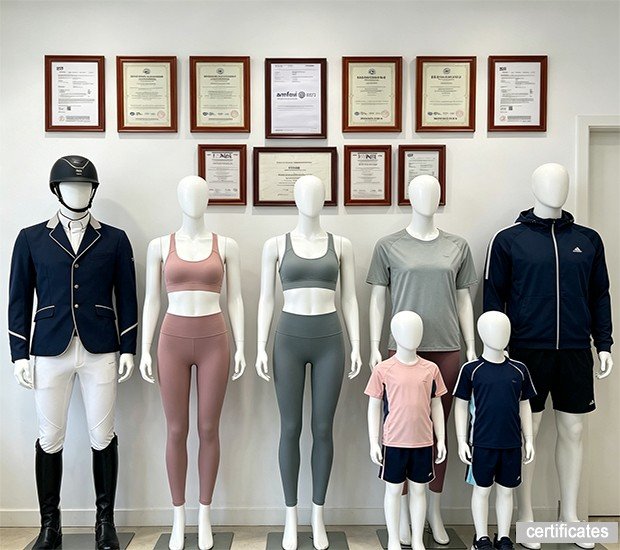
Trusted Manufacturing Standards For Global Sportswear Brands
We operate under internationally recognized quality, sustainability, and ethical manufacturing standards. Our certifications help ensure consistent product quality, responsible sourcing, and reliable production for global sportswear brands.
- 20+ Countries Served
- 6000+ Styles Developed
- 50,000 PCS Monthly Capacity
- 3-Day Sample Development
How Can Buyers Compare Fit Development and Sample Quality Between Manufacturers?
Buyers should compare sports shorts samples using the same measurement chart, fabric requirements, construction specifications, and movement tests. A sample that looks attractive in photographs may still have waistband problems, inconsistent sizing, uncomfortable seams, or poor performance during exercise. Before selecting a Wholesale Sports Shorts Manufacturer, brands should examine measurable fit accuracy, fabric behavior, sewing quality, and the supplier’s ability to correct problems. The strongest sample is not necessarily the most visually impressive—it is the one that meets the agreed specifications and performs consistently in realistic use.
What Sample Evidence Should Each Shortlisted Manufacturer Provide?
A supplier’s sample should demonstrate more than its ability to sew a garment that resembles the reference photograph.
The buyer needs evidence that the manufacturer understands the product requirements and can reproduce them consistently.
For a meaningful comparison, each shortlisted Wholesale Sports Shorts Manufacturer should receive substantially the same technical information.
This normally includes a measurement chart, target fabric specifications, construction details, reference photographs, and required branding information.
Buyers should then request the following evidence:
Physical sample: A garment made with the agreed or clearly identified substitute materials.
Measurement record: Actual garment measurements compared with the requested specifications.
Fabric information: Composition, weight, stretch characteristics, and relevant available test results.
Construction details: Clear information about waistband, pockets, liners, seams, and finishing.
Revision record: A written explanation of problems identified and changes made.
Production feasibility: Confirmation that the proposed construction can be reproduced under the intended bulk-order conditions.
Not every initial sample needs to use final production materials. Early prototypes may use substitutes when the purpose is to evaluate basic fit or construction.
However, the supplier should clearly identify those substitutions.
A sample made with a different fabric cannot fully demonstrate how the final material will stretch, recover, drape, or behave during movement.
The buyer should know exactly what each sample proves—and what it does not prove.
How Do Buyers Compare Waist, Hip, Rise, Inseam and Leg Opening Accuracy?
Sports shorts measurements affect comfort, movement, appearance, and size consistency.
A garment can match the requested waist measurement but still fit poorly because the rise, hip allowance, or leg opening is unsuitable.
For this reason, buyers should compare several measurements together rather than judging each dimension independently.
| Measurement | What Buyers Should Check | Possible Fit Problem |
|---|---|---|
| Waist | Relaxed and stretched waistband dimensions, where applicable | Slipping, excessive pressure, inconsistent sizing |
| Hip | Garment width and intended ease | Pulling, restricted movement, excessive looseness |
| Front and back rise | Balance between front and back construction | Pulling when sitting, uneven waistband position |
| Inseam | Length consistency and intended coverage | Incorrect proportions, unwanted riding up |
| Leg opening | Opening width and movement allowance | Restriction, excessive flare, uncomfortable contact |
| Outseam | Overall length and style proportion | Inconsistent appearance between sizes |
| Liner dimensions | Fit and coverage of inner layer, if included | Bunching, pressure, or movement between layers |
A reliable Wholesale Sports Shorts Manufacturer should be able to provide measurements taken according to an agreed method.
For example, the buyer and supplier should define whether waist width is measured flat, whether elastic is relaxed or stretched, and where the rise measurement begins and ends.
Without a consistent measurement method, two people may record different results for the same garment.
Buyers should also define acceptable tolerances before evaluating the samples.
The appropriate tolerance depends on the measurement point, fabric behavior, product construction, and intended use. A universal tolerance applied to every sports shorts style may be unsuitable.
The objective is not to demand perfect measurements without any variation. It is to establish realistic, agreed limits that protect fit consistency.
Which Movement Tests Reveal Sports Shorts Fit Problems?
A standing fit photograph is useful, but it cannot reveal every problem.
Sports shorts are designed for movement. The sample should therefore be evaluated during activities relevant to the intended product.
For example, a running short should allow a comfortable stride without excessive pulling or liner movement. Training shorts should remain secure during squats, lunges, and bending.
A practical movement evaluation can include the following tests.
| Movement Test | What to Observe | Relevant Shorts Types |
|---|---|---|
| Walking | Waistband stability, general comfort, fabric movement | All sports shorts |
| Deep squat | Hip allowance, waistband position, seam tension | Gym and training shorts |
| Forward lunge | Leg opening freedom, rise balance, liner movement | Running and training shorts |
| Jogging | Riding up, waistband movement, pocket stability | Running shorts |
| Sitting | Front and back rise comfort, waistband pressure | Most shorts categories |
| Side stepping | Fabric restriction, leg opening movement | Training and court shorts |
| Repeated stretching | Seam recovery and fabric behavior | Compression and stretch shorts |
A buyer evaluating a Wholesale Sports Shorts Manufacturer should use the same movement tests for comparable samples.
However, the tests should match the intended product.
A loose basketball short does not need to behave like a compression short, and a fitted training short should not be judged using the same silhouette expectations as a lightweight running short.
The purpose is to identify whether the garment performs as intended.
Example: Why a Sample Can Look Correct but Fail During Exercise
Imagine a brand developing a pair of 2-in-1 running shorts.
The outer layer looks balanced, the waistband appears smooth, and the garment measurements are close to the requested specifications.
During jogging, however, the inner liner gradually moves upward while the outer layer remains in place.
The problem may involve liner dimensions, fabric recovery, attachment points, or the interaction between the two layers.
Simply increasing the outer shorts length may not solve it.
The manufacturer needs to identify the actual cause, propose a controlled revision, and demonstrate that the updated sample performs better.
This is where supplier experience becomes visible.
A capable manufacturer should not only produce an attractive first sample. It should also be able to explain and correct technical problems.
Prototype vs Fit Sample vs PP Sample — What Should Buyers Verify?
Different sample stages answer different questions.
Manufacturers may use different names for their samples, so buyers should focus on the purpose and approval criteria rather than the terminology alone.
| Sample Stage | Main Purpose | Buyer Verification |
|---|---|---|
| Prototype or development sample | Evaluate initial construction and design feasibility | Overall shape, construction approach, major technical issues |
| Fit sample | Evaluate measurements and wearability | Size accuracy, movement comfort, proportion, necessary revisions |
| Revised sample | Confirm that identified problems have been corrected | Changes against the previous version and outstanding issues |
| PP sample (pre-production sample) | Establish the approved production reference | Final materials, measurements, construction, branding, and packaging requirements where applicable |
| Production sample or inspection sample | Check actual bulk output against approved requirements | Consistency with the approved reference and agreed tolerances |
A Wholesale Sports Shorts Manufacturer may use different names for these stages, and some projects may combine steps.
What matters is that the buyer understands which sample has been approved and which specifications are locked for production.
For example, approving a fit sample made with substitute fabric should not automatically authorize bulk production using an untested final fabric.
Similarly, approving a garment’s appearance does not necessarily mean the buyer has approved its labels, packaging, or final material specifications.
Before bulk production, the buyer and supplier should confirm the approved sample reference and the corresponding specification documents. Brands evaluating sports shorts OEM/ODM development and production should also clarify how approved samples are transferred into bulk manufacturing requirements.
Any later changes should be recorded and approved through an agreed process.
How Long Should Buyers Allow for Sampling and Revisions?
Sampling time depends on the complexity of the garment, material availability, development requirements, and number of revisions.
A straightforward sports short based on an existing pattern may require less development work than a new technical style with a compression liner, custom fabric, and specialized pocket construction.
Buyers should distinguish between the time required to produce one sample and the total time needed to approve a production-ready product.
The following example illustrates how development activities may be planned.
| Activity | Illustrative Planning Allowance |
|---|---|
| Technical review and specification clarification | 1–3 working days |
| Initial sample preparation | 5–10 working days |
| Buyer review and movement testing | 2–5 working days |
| Sample revision, if required | 5–10 working days |
| Final material and PP sample confirmation | Depends on material availability and approval requirements |
These are illustrative planning allowances, not guaranteed supplier lead times. Activities may overlap, while special fabrics, testing, additional revisions, or shipping can extend the schedule.
A buyer comparing several manufacturers should also consider sample shipping time and the availability of fit models or testers.
Choosing a Wholesale Sports Shorts Manufacturer solely because it promises the fastest first sample can be misleading.
A fast sample is useful only when it provides reliable information and moves the project toward a production-ready specification.
Repeated revisions caused by unclear requirements may create more delay than a slightly longer but well-managed initial development stage.
When Is a Sample Suitable for Final Supplier Comparison?
A sample is suitable for final comparison when the buyer has enough consistent evidence to judge the manufacturer’s product capability.
This does not necessarily mean every supplier must complete full bulk-production preparation before the buyer selects a preferred partner.
However, the samples should be comparable in the areas that matter most to the project.
For example, if one supplier uses the required performance fabric and another uses a substitute with different stretch behavior, the buyer should not treat the fit results as directly equivalent.
Likewise, a supplier that has completed two revisions should not automatically receive a higher score than a supplier whose first sample met the requirements.
The important factors are the final sample’s performance, the manufacturer’s technical understanding, and the reliability of its development process.
A practical evaluation scorecard can help buyers compare the results.
Sample Evaluation Scorecard for Sports Shorts Manufacturers
| Evaluation Criteria | Suggested Weight |
|---|---|
| Measurement accuracy and fit | 25% |
| Movement comfort and functional performance | 25% |
| Fabric suitability and material consistency | 20% |
| Sewing quality and construction details | 15% |
| Revision accuracy and technical communication | 10% |
| Sample documentation and traceability | 5% |
| Total | 100% |
These weights are an illustrative framework. Buyers should adjust them according to the actual product requirements.
For compression shorts, fabric recovery and seam comfort may deserve more weight.
For loose basketball shorts, proportions, fabric durability, and construction consistency may be more important.
Mandatory requirements should be checked before applying a weighted score.
A manufacturer should not pass the evaluation simply because it scores well in communication or documentation while failing a critical fit or material requirement.
Before selecting a Wholesale Sports Shorts Manufacturer, buyers should first eliminate samples that fail essential product conditions.
The remaining suppliers can then be compared using a weighted scorecard that reflects the brand’s actual priorities.
What Should Buyers Confirm Before Approving a Manufacturer?
Before approving the preferred supplier, buyers should confirm that the sample evaluation has produced a clear and usable production reference.
The final review should cover:
Approved garment measurements and tolerances
Confirmed fabric and trim specifications
Fit and movement-test results
Corrected construction problems
Approved branding and relevant packaging details
Documented sample version and approval date
Agreed procedure for future specification changes
A reliable Wholesale Sports Shorts Manufacturer should be able to connect the approved sample with the specifications used for bulk production.
This connection is essential because a good sample has limited commercial value if the production team cannot reproduce it consistently.
The strongest supplier is not simply the one that makes the best-looking sample. It is the manufacturer that can demonstrate accurate development, solve technical problems, and maintain the approved product standard when production begins.

How Do MOQ and Order Flexibility Affect Wholesale Sports Shorts Purchasing Risks?
MOQ and order flexibility directly affect how much money a brand must commit before knowing whether its sports shorts will sell. Buyers should check whether minimum quantities apply per style, color, fabric, or total order, and whether sizes can be mixed. A Wholesale Sports Shorts Manufacturer offering a low unit price may still require excessive inventory, while a higher-priced supplier with flexible minimums may reduce first-order risk. The best arrangement balances unit cost, inventory exposure, production efficiency, and future replenishment requirements.
What Does a Manufacturer’s Published MOQ Actually Mean?
MOQ stands for Minimum Order Quantity, but the number shown on a manufacturer’s website rarely tells the complete purchasing story.
A supplier advertising a 100-piece MOQ may mean 100 pieces of one existing style in one available fabric. Another supplier may accept 100 pieces across several sizes but require a separate minimum for every color.
Both manufacturers can accurately advertise a 100-piece starting quantity, yet their commercial conditions may be very different.
Before comparing a Wholesale Sports Shorts Manufacturer, buyers should clarify what the minimum actually covers.
The most important questions include:
Does the MOQ apply to each style, color, fabric, or total purchase order?
Can different sizes be combined within the minimum?
Does the advertised quantity apply to existing patterns or fully custom development?
Are special fabrics, colors, or trims subject to separate minimums?
Can the manufacturer accept a smaller trial order at a different unit price?
Does the minimum change for repeat orders?
A published MOQ should be treated as a starting point for discussion, not a guaranteed purchasing condition.
The final minimum should be confirmed against the actual garment specifications and order breakdown.
MOQ Per Style vs Per Color vs Per Fabric — What Is the Difference?
Different MOQ structures can create very different inventory commitments.
Consider a brand developing two training shorts styles in three colors, with five sizes per color.
The brand may initially believe that a supplier’s 100-piece MOQ means it can purchase 100 pieces across the entire collection.
However, the actual requirement depends on how the manufacturer defines the minimum.
| MOQ Structure | Example Requirement | Minimum Garment Quantity |
|---|---|---|
| Per total order | 100 pieces across all approved styles and colors | 100 pcs |
| Per style | 100 pieces for each of 2 styles | 200 pcs |
| Per style/color | 100 pieces for each of 2 styles × 3 colors | 600 pcs |
| Per size | 100 pieces for each of 2 styles × 3 colors × 5 sizes | 3,000 pcs |
These are hypothetical purchasing structures used to illustrate how minimum quantities work. They are not standard industry requirements.
The difference between 100 pieces and 3,000 pieces is substantial.
At an illustrative garment price of $6 per piece, the initial product investment would range from $600 to $18,000 before other purchasing costs.
This is why a Wholesale Sports Shorts Manufacturer should provide an MOQ breakdown that matches the buyer’s actual collection plan.
Fabric minimums require separate attention.
A garment manufacturer may accept 200 pieces, while a custom-dyed fabric supplier requires a larger material purchase. In that situation, the garment MOQ alone does not represent the complete purchasing commitment.
Buyers should ask whether the fabric is available from stock, whether colors can share the same material purchase, and how unused material will be handled.
Can Sizes and Colors Be Mixed Without Increasing Minimum Quantities?
Size mixing can make an order more practical, particularly for brands selling several sizes.
However, mixing sizes and mixing colors are not necessarily treated the same way.
A manufacturer may allow multiple sizes within one color because the garments use the same fabric and trims. Adding another color may require separate fabric sourcing, cutting arrangements, or production preparation.
For example, a brand ordering 200 pieces of black training shorts might request the following size distribution:
| Size | Quantity |
|---|---|
| XS | 10 |
| S | 30 |
| M | 60 |
| L | 55 |
| XL | 30 |
| XXL | 15 |
| Total | 200 |
This distribution may be more commercially useful than ordering equal quantities of every size.
However, the right size ratio depends on the brand’s target customers and actual sales data.
A supplier should not determine the size distribution solely for manufacturing convenience if the resulting inventory does not match market demand.
When evaluating a Wholesale Sports Shorts Manufacturer, buyers should confirm whether mixed sizes are permitted and whether any minimum applies to individual sizes.
The same question should be asked about colors.
A manufacturer that accepts 200 pieces in one color may not automatically accept 50 pieces in each of four colors.
How Do Small Test Orders Compare With Larger Production Orders?
Small test orders and larger wholesale orders serve different commercial purposes.
A test order helps a brand evaluate customer demand, product feedback, sizing preferences, and sales performance before committing more capital.
A larger order may offer better unit economics when the brand already has reliable demand.
Consider two hypothetical purchasing options.
| Purchasing Factor | Small Test Order | Larger Production Order |
|---|---|---|
| Quantity | 200 pcs | 1,000 pcs |
| Unit price | $7.20 | $5.80 |
| Initial garment investment | $1,440 | $5,800 |
| Potential advantage | Lower inventory commitment | Lower unit cost |
| Main risk | Higher cost per garment | Greater unsold inventory exposure |
The larger order saves $1.40 per garment.
However, it requires an additional $4,360 in initial garment expenditure.
For a product with established demand, this may be a reasonable investment.
For an untested collection, the additional inventory could reduce the cash available for marketing, product development, or future replenishment.
A flexible Wholesale Sports Shorts Manufacturer may therefore be valuable even when its initial quotation is not the lowest.
The important question is whether the purchasing arrangement fits the brand’s current stage.
How Do Buyers Calculate Inventory Commitment Across Multiple SKUs?
A collection can become expensive quickly when styles, colors, and sizes multiply.
SKU stands for Stock Keeping Unit. In apparel, each distinct style, color, and size combination is commonly managed as a separate SKU.
Consider a brand planning to launch:
3 sports shorts styles
4 colors per style
5 sizes per color
The collection contains:
3 styles × 4 colors × 5 sizes = 60 SKUs
If the manufacturer requires 150 pieces per style/color, the order quantity becomes:
3 styles × 4 colors × 150 pieces = 1,800 garments
At an illustrative unit price of $6.50:
1,800 × $6.50 = $11,700 in initial garment investment
This amount excludes sampling, freight, duties, warehousing, and other expenses.
A brand may not need to launch all 60 SKUs immediately.
It could begin with fewer styles or colors, evaluate sales performance, and expand the collection through later orders.
A Wholesale Sports Shorts Manufacturer that supports practical order planning can help buyers understand the commercial implications of different quantity structures.
However, buyers should not assume that every supplier can accommodate smaller orders without affecting unit prices or material availability.
The most useful comparison is based on the complete order structure rather than the advertised minimum alone.
What Is the Difference Between Low MOQ and Genuine Order Flexibility?
Low MOQ and order flexibility are related, but they are not identical.
A manufacturer may accept a low initial quantity while imposing strict conditions on colors, sizes, fabrics, or reorders.
Another supplier may require a higher first order but offer greater flexibility when the brand needs to replenish successful products.
Buyers should evaluate flexibility across the full purchasing relationship.
| Flexibility Factor | Questions to Ask |
|---|---|
| First-order quantity | Can the supplier accept a smaller commercial trial? |
| Size mixing | Can sizes be distributed according to expected demand? |
| Color mixing | Can multiple colors share the same minimum? |
| Fabric availability | Can stock materials reduce purchasing commitments? |
| Reorder quantity | Does the minimum change after the first production run? |
| Reorder timing | Can the supplier provide a realistic replenishment schedule? |
| Specification control | Can approved materials and measurements be maintained? |
| Material reservation | Can leftover materials be held under agreed conditions? |
A good Wholesale Sports Shorts Manufacturer should explain these conditions clearly before the buyer confirms the order.
The objective is not necessarily to obtain the lowest possible MOQ.
It is to establish a purchasing arrangement that supports reasonable inventory levels without compromising the product’s required quality.
How Can Brands Reduce Inventory Risk Without Sacrificing Product Quality?
Reducing inventory risk does not always require changing manufacturers.
Sometimes the most effective solution is to simplify the initial collection.
For example, a brand planning four colors of a new running short may choose to launch only two colors until customer demand becomes clearer.
It may also reduce the number of initial styles while keeping the full size range needed by its target market.
Other practical approaches include:
Prioritizing the styles with the strongest expected demand.
Using available fabrics when they meet the required performance standards.
Limiting unnecessary color variations during the first order.
Confirming whether sizes can be mixed within each style.
Planning potential reorders before the first production run.
Comparing smaller-order premiums against the cost of excess inventory.
However, reducing inventory should not mean removing essential product features or compromising mandatory quality requirements.
A technical running short that requires a suitable liner should not be simplified into an unsuitable garment merely to reach a lower price.
When selecting a Wholesale Sports Shorts Manufacturer, buyers should distinguish between optional commercial choices and essential product requirements.
The best inventory strategy reduces unnecessary purchasing commitments while protecting the product characteristics customers actually need.
Which Order Terms Should Be Confirmed Before Paying a Deposit?
Before paying a deposit, buyers should make sure the purchase agreement reflects the actual order conditions.
A verbal statement such as “MOQ 100 pieces” is not enough if the final order contains several colors, different materials, or custom packaging.
The written agreement should identify:
Product specifications: Approved style, fabric, construction, measurements, and branding requirements.
Quantity breakdown: Pieces per style, color, and size.
MOQ conditions: Applicable minimums and any agreed exceptions.
Unit price: Price for the confirmed quantity and specification.
Additional charges: Sampling, testing, special materials, packaging, and other agreed expenses.
Payment terms: Deposit, balance payment, and applicable conditions.
Production schedule: The agreed basis for calculating the production timeline.
Quality requirements: Approved sample reference, inspection criteria, and procedures for handling defects.
Reorder conditions: Any agreed material reservations, repeat-order minimums, or price validity periods.
Delivery terms: Applicable Incoterm, named location, and shipping responsibilities.
A reliable Wholesale Sports Shorts Manufacturer should be willing to clarify these conditions before production begins.
This protects both the buyer and the supplier by reducing misunderstandings about quantity, cost, and delivery expectations.
How Should Buyers Balance MOQ, Price and Future Reorders?
The best purchasing arrangement depends on the brand’s demand certainty.
A startup with limited sales history may benefit from a smaller initial order, even when the unit price is higher.
A growing brand with predictable demand may achieve better results through larger orders and more stable replenishment planning.
An established wholesaler may prioritize capacity, price consistency, and long-term material availability.
These buyers should not evaluate suppliers using identical commercial priorities.
Before selecting a Wholesale Sports Shorts Manufacturer, brands should compare three figures:
Initial garment investment: The amount required to purchase the minimum order.
Estimated landed cost per piece: The cost of bringing the products to the intended destination.
Inventory exposure: The quantity and value of stock that may remain unsold if demand is lower than expected.
A lower unit price can improve margins, but a smaller initial commitment can protect cash flow.
Neither advantage should be evaluated in isolation.
The most suitable manufacturer is the one whose MOQ, pricing structure, and reorder conditions match the brand’s realistic sales expectations and financial capacity.
1. Product Development
Regular monthly product development ensures consistent updates to your brand line.
2. Fabric Sourcing
Regular monthly product development ensures consistent updates to your brand line.
3. Sample Making
Regular monthly product development ensures consistent updates to your brand line.
4. Bulk Production
Regular monthly product development ensures consistent updates to your brand line.
5. Packaging & Delivery
Regular monthly product development ensures consistent updates to your brand line.
How Do You Verify a Chinese Sports Shorts Manufacturer Before Shortlisting?
Buyers should check a Chinese sports shorts manufacturer by confirming its legal business information, actual production arrangements, experience in making similar products, quality control records, and material documents. A professional website or attractive product catalog cannot fully prove the manufacturer’s production capability. Before adding a Wholesale Sports Shorts Manufacturer to the shortlist, overseas buyers should confirm who will actually produce the garments, how the supplier controls product quality, and whether it can meet the mandatory requirements of the project. Buyers should focus on real evidence related to their orders, instead of only looking at how many certificates the supplier has or what the supplier claims on its website.
How Can Buyers Verify a Manufacturer’s Legal Identity and Production Location?
Supplier verification should begin with the legal entity responsible for the commercial transaction.
A company may use an English trading name that differs from its registered Chinese business name. It may also operate a sales office at one address while manufacturing garments at another location.
These arrangements are not automatically problematic, but buyers should understand them before making a payment.
Useful verification information includes:
Registered Chinese company name
Business registration or unified social credit code
Registered business address
Actual manufacturing address
Company name shown on the quotation and contract
Beneficiary information for commercial payments
Relationship between the contracting company and production facility
For mainland Chinese companies, buyers can use China’s National Enterprise Credit Information Publicity System to check available registration information:
National Enterprise Credit Information Publicity System
The information may require searching in Chinese, and access or available details can vary.
Business registration helps confirm that a legal entity exists. It does not, by itself, prove that the company owns production equipment, employs garment workers, or has experience manufacturing the requested product.
A Wholesale Sports Shorts Manufacturer should be able to explain where the garments will be produced and which company will be responsible for the order.
If the contracting company uses an affiliated facility or approved subcontractor, buyers should clarify the production arrangement and quality responsibilities.
The objective is not to reject every supplier that uses more than one facility.
It is to avoid uncertainty about who is manufacturing the garments and who is accountable when problems occur.
What Should Buyers Check During a Factory Audit or Virtual Inspection?
A factory audit can help buyers evaluate whether a supplier’s operational capabilities match its commercial claims.
However, not every purchasing project requires an expensive on-site audit at the beginning.
For a smaller initial order, buyers may begin with business verification, relevant sample reviews, a structured video inspection, and production documentation.
For larger or higher-risk programs, an independent facility assessment may provide additional confidence. Buyers reviewing social compliance evidence can also consult amfori BSCI audit guidance to better understand how BSCI audits are requested and managed.
A useful inspection should examine the activities relevant to sports shorts production.
| Verification Area | Evidence to Request | Main Risk Being Evaluated |
|---|---|---|
| Cutting | Cutting equipment, material identification, cutting records | Incorrect panels, material mixing |
| Sewing | Relevant machinery, workmanship examples, production arrangements | Unsuitable construction or inconsistent sewing |
| Sampling | Pattern development resources, sample records | Limited technical development capability |
| Quality control | Inspection procedures, measurement records, defect handling | Inconsistent quality standards |
| Material storage | Fabric identification, storage arrangements, traceability | Wrong material or color used |
| Production management | Order tracking and production scheduling records | Unclear capacity or delivery planning |
| Packing | Packing procedures, labeling and carton checks | Incorrect shipment preparation |
A virtual inspection can provide useful preliminary information, but it may not establish everything an independent on-site audit could verify.
Buyers should also avoid assuming that a large facility is automatically more suitable.
A smaller manufacturer with relevant sports shorts experience and effective production controls may be a better match for a specialized order than a larger supplier focused on unrelated garment categories.
When evaluating a Wholesale Sports Shorts Manufacturer, production relevance matters more than impressive facility photographs.
Which Certifications and Audit Reports Should Buyers Verify?
Certifications and audit reports can support supplier verification, but their meaning depends on their scope.
For example, a quality-management certificate, a social compliance audit, and a recycled-material certification address different subjects.
They should not be treated as interchangeable evidence.
| Document or Standard | What Buyers Should Understand | Important Limitation |
|---|---|---|
| ISO 9001 | Quality-management system certification | Does not automatically certify every finished garment |
| BSCI / amfori social audit | Assessment information related to social compliance | Not a product quality or material certification |
| GRS | Recycled content and related processing requirements within the applicable certification framework | Facility certification alone does not prove every shipment’s recycled content |
| OEKO-TEX STANDARD 100 | Testing and certification of covered textile articles for specified harmful substances | Coverage depends on the actual certificate and certified articles |
| Third-party test report | Results for identified materials or products under specified test methods | Results may not apply to different fabrics, colors, or production batches |
Buyers should check the certificate holder, issuing organization, scope, validity, covered facility, and relationship to the actual product. For textile safety claims, the official OEKO-TEX Label Check can help verify whether a supplied OEKO-TEX label number is valid.
For example, a supplier may hold a valid management-system certificate while the buyer’s requested fabric still requires separate material verification.
Similarly, a recycled-material claim may require transaction-specific documentation at the appropriate supply-chain stage.
A Wholesale Sports Shorts Manufacturer should be able to explain which documents apply to its operations and which documents apply to the particular order.
Buyers should not penalize a supplier simply because a transaction-specific document is issued at a later legitimate stage.
However, the supplier should explain the expected documentation process before the buyer makes commercial commitments based on that claim.
How Can Buyers Verify Fabric Composition and Performance Claims?
Sports shorts suppliers frequently describe fabrics using terms such as breathable, moisture-wicking, quick-drying, four-way stretch, or recycled.
These descriptions may be useful, but they are not substitutes for measurable product specifications.
For example, two polyester-spandex fabrics may have the same nominal fiber composition but different weight, stretch, recovery, surface feel, and durability.
A buyer should therefore request evidence relevant to the intended garment.
Depending on the product, verification may include:
Fiber composition and material identification
Fabric weight and construction
Stretch and recovery performance
Dimensional change after washing
Colorfastness to washing, rubbing, or perspiration
Pilling or abrasion resistance
Relevant moisture-management test results
Applicable restricted-substance or material compliance documentation
Not every sports shorts project requires every test.
The correct testing plan depends on product use, buyer requirements, applicable regulations, and the consequences of material failure.
For instance, a compression short may require particular attention to stretch recovery and seam performance.
A lightweight running short may place greater importance on material weight, movement comfort, and dimensional stability.
When assessing a Wholesale Sports Shorts Manufacturer, buyers should ask whether the supplied test evidence covers the actual material being purchased.
A report for a different fabric or an earlier product should not automatically be accepted as proof that the current order meets the same requirements.
How Can Buyers Check Quality Control From Incoming Materials to Final Inspection?
Quality control should not depend only on checking finished garments before shipment.
Problems can begin when the wrong fabric arrives, continue during cutting or sewing, and remain unnoticed until the buyer receives the goods.
A structured inspection process normally considers several production stages.
Incoming material inspection
The manufacturer checks whether received fabrics and trims match the approved requirements.
Depending on the order, this may include material identification, color checks, visible defects, fabric width, and relevant supporting documents.
In-line inspection
Production teams or quality personnel check workmanship and measurements while garments are being manufactured.
For sports shorts, this may include waistband attachment, seam construction, pocket placement, liner assembly, and recurring measurement problems.
Final inspection
Finished garments are checked against agreed requirements before shipment.
This may include appearance, workmanship, measurements, labeling, packing, and the agreed sampling or inspection plan.
A reliable Wholesale Sports Shorts Manufacturer should be able to explain how problems are recorded, corrected, and prevented from recurring.
Buyers should ask for examples of inspection records that are relevant to the product category.
The existence of a QC team is useful information, but team size alone does not prove inspection effectiveness.
More important questions are whether inspections are documented, whether defects lead to corrective action, and whether the manufacturer can demonstrate consistent results.
How Do Buyers Confirm That Bulk Production Matches the Approved Sample?
An approved sample establishes a reference for production, but it does not guarantee that every bulk garment will automatically match.
Differences can arise from material substitutions, pattern changes, cutting variation, sewing methods, or inconsistent inspection.
Before production begins, the buyer and supplier should confirm:
The approved sample version.
Final measurement specifications and tolerances.
Approved fabric and trim details.
Construction and workmanship requirements.
Branding and packaging specifications.
Inspection methods and acceptance criteria.
Procedures for approving any later changes.
These requirements should be connected to the purchase order and production documentation.
For example, if a buyer approves a particular waistband elastic, the supplier should not replace it with another material solely because the alternative is available at a lower cost.
Any proposed substitution should be evaluated against the approved product requirements.
When comparing a Wholesale Sports Shorts Manufacturer, buyers should ask how the approved PP sample and locked specifications are communicated to the production and inspection teams.
The ability to make one good sample is not the same as the ability to reproduce it across a commercial order.
Repeatability is one of the most important indicators of manufacturing reliability.
What Warning Signs Should Buyers Look for Before Making a Deposit?
Not every supplier problem is visible in a product photograph or quotation.
Some warning signs appear during communication, documentation, or sample development.
Buyers should investigate the following situations carefully.
| Warning Sign | Why It Matters | Recommended Buyer Action |
|---|---|---|
| Business identity cannot be confirmed | Unclear legal responsibility | Verify registration and contracting details |
| Production location is unclear | Difficult to assess actual manufacturing arrangements | Request facility details and production explanation |
| Supplier refuses to identify critical material specifications | Increased risk of unsuitable or substituted materials | Require agreed specifications before approval |
| Certificate information does not match the claimed scope | Documentation may not support the relevant claim | Verify with the issuing or responsible organization |
| Sample measurements repeatedly miss agreed requirements | Possible development or process-control weakness | Require corrective action and retesting |
| Quotation changes without explanation | Unclear commercial conditions | Request a revised itemized quotation |
| Supplier promises unrealistic delivery without confirming materials | Increased schedule risk | Request a production and material availability plan |
| Payment instructions unexpectedly change | Potential payment fraud or authorization issue | Independently verify changes through an established contact channel |
A warning sign does not always mean that a supplier is dishonest.
Some problems arise from poor communication, incomplete documentation, or differences in business processes.
However, critical issues should be resolved before the buyer commits money.
A Wholesale Sports Shorts Manufacturer that cannot meet a mandatory legal, technical, or commercial requirement should not remain on the shortlist merely because its quotation is attractive.
How Should Buyers Decide Whether a Manufacturer Passes Verification?
Supplier verification should produce a clear purchasing decision rather than a collection of documents with no evaluation method.
A practical approach is to separate findings into three categories.
| Verification Result | Meaning | Next Step |
|---|---|---|
| Pass | Mandatory requirements are supported by adequate evidence | Continue to commercial and sample comparison |
| Clarification required | Information is incomplete but the issue may be resolved | Request specific evidence before proceeding |
| Fail | A mandatory requirement cannot be met or verified adequately | Remove from the shortlist |
For example, a manufacturer may have strong sample quality and competitive pricing but fail to demonstrate access to a material that is essential to the product.
A high overall supplier score should not compensate for that failure.
Likewise, a manufacturer with excellent communication should not pass verification if its production responsibility remains unclear.
Before choosing a Wholesale Sports Shorts Manufacturer, buyers should first establish whether the supplier meets the project’s mandatory requirements.
The remaining manufacturers can then be compared on cost, MOQ, sampling performance, delivery reliability, and commercial flexibility.
The purpose of supplier verification is not to find the company with the most certificates. It is to identify manufacturers whose legal identity, production capability, material evidence, and quality controls are sufficient for the risks of the actual order.
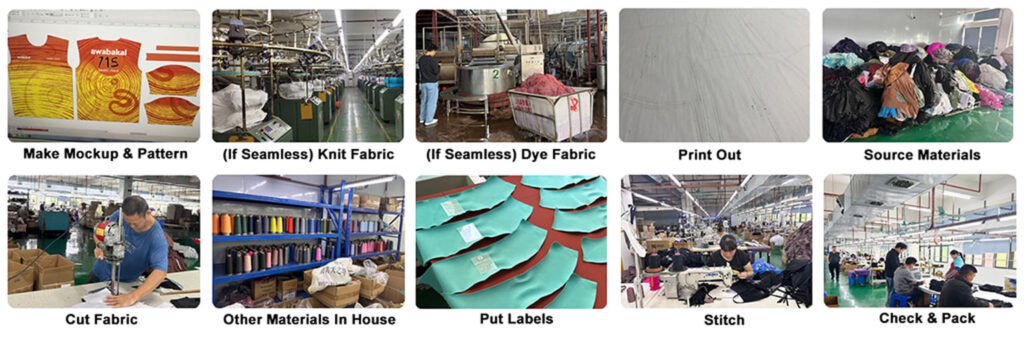
How Should Buyers Evaluate Lead Time, Reorder Reliability and Supply Chain Risk?
Buyers should evaluate manufacturing lead time by separating sample development, material procurement, production, inspection, and international delivery. A supplier’s advertised production time may not include fabric purchasing, sample revisions, testing, or shipping. Before choosing a Wholesale Sports Shorts Manufacturer, brands should confirm when the production clock starts, whether materials are available, and how the supplier manages capacity and unexpected delays. Reorder reliability is equally important because a fast first order does not guarantee consistent fabrics, sizing, or delivery performance in future production.
What Is the Difference Between Sample Lead Time and Bulk Production Lead Time?
Sample lead time and bulk production lead time measure different activities.
A manufacturer may be able to prepare a basic sports shorts sample quickly while requiring additional time to develop a new pattern, source a special fabric, or complete several fit revisions.
Similarly, a quoted bulk production period may begin only after the buyer approves the pre-production sample, confirms the order, and completes the agreed payment arrangements.
Buyers should clarify these starting conditions before comparing suppliers.
A typical sourcing project may include the following stages.
| Project Stage | Main Activities | Important Buyer Questions |
|---|---|---|
| Technical review | Review specifications, measurements, fabrics, and construction | Are all requirements clear? |
| Sample development | Pattern work, material preparation, sewing, and fitting | Is the first sample or approved final sample being quoted? |
| Sample revisions | Correct fit, construction, or material problems | How are additional revisions scheduled? |
| Material procurement | Purchase approved fabrics and trims | Are materials in stock or made to order? |
| Bulk production | Cutting, sewing, finishing, and packing | When does the production period officially begin? |
| Inspection | Check finished goods against agreed requirements | Is inspection time included in the schedule? |
| International delivery | Export handling, transportation, customs, and destination delivery | Which delivery milestone is guaranteed or estimated? |
When comparing a Wholesale Sports Shorts Manufacturer, buyers should ask for a milestone-based schedule rather than one general delivery promise.
For example, “25 working days” may refer to garment production after material arrival and final approval. It may not mean the buyer will receive the goods 25 working days after sending the initial inquiry.
This distinction can significantly affect a brand’s product launch plan.
How Do Fabric Availability and Trims Affect Production Scheduling?
Material availability is one of the most important variables in apparel production planning.
A manufacturer may have available sewing capacity but still be unable to start production because the approved fabric has not arrived.
For sports shorts, the required materials may include outer fabric, lining, elastic waistbands, drawcords, pocket zippers, labels, and packaging components.
Each material can have a different purchasing schedule.
Consider a hypothetical running shorts project.
The outer fabric is available from stock, but the approved liner fabric requires a separate production order.
Even if the outer fabric arrives immediately, cutting and sewing may need to wait until the liner material is confirmed.
A reliable Wholesale Sports Shorts Manufacturer should identify these dependencies before promising a completion date.
Buyers should ask:
Are all approved fabrics and trims available?
Which materials require special purchasing or custom production?
Have material quantities and color requirements been confirmed?
Is the material delivery date supported by the relevant supplier?
What alternatives are available if an approved component becomes unavailable?
Will a material substitution require new testing or sample approval?
Material availability should be verified against the final specifications, not an earlier sample version.
A fabric that was available during initial development may no longer be available when the buyer places the bulk order.
How Should Buyers Evaluate Production Capacity During Peak Seasons?
Production capacity can change throughout the year.
A manufacturer may have available production resources during a quieter period but face scheduling constraints when several customers place orders before major retail seasons.
Buyers should therefore distinguish between a supplier’s general production capacity and the capacity available for their specific order.
A large annual production figure does not prove that the manufacturer can deliver a particular order by a requested date.
Before confirming a Wholesale Sports Shorts Manufacturer, buyers should ask how the supplier plans to allocate production resources.
Important questions include:
Is the requested production window available?
When will cutting and sewing begin?
Are the required workers and equipment available for the product construction?
Will any production processes be subcontracted?
Are other confirmed orders affecting the proposed schedule?
How will the supplier report production progress?
What happens if material delivery or sample approval is delayed?
A supplier should not be expected to disclose confidential information about other customers.
However, it should be able to provide a realistic schedule and explain the assumptions behind its delivery commitment.
Buyers planning seasonal launches should also allow time for inspection, international transportation, customs procedures, and possible corrections.
A production completion date is not the same as a warehouse arrival date.
Why Is Reorder Reliability Important for Growing Sportswear Brands?
A successful first order can create a new challenge: maintaining product consistency when demand increases.
Customers who reorder the same sports shorts generally expect comparable fit, fabric feel, construction, and appearance.
However, materials may change, production personnel may rotate, and suppliers may use different material batches.
These changes can affect the finished garment if the specifications and quality controls are not maintained.
For example, a brand may reorder its best-selling training shorts six months after the first production run.
The manufacturer may still have the approved pattern, but the original waistband elastic or fabric color may no longer be available.
Using a replacement material without evaluation could change the garment’s fit or appearance.
A dependable Wholesale Sports Shorts Manufacturer should maintain usable production references and communicate material changes before they affect the order.
Buyers should confirm whether the supplier can retain or retrieve:
Approved patterns and measurement charts
PP sample approval records
Fabric and trim specifications
Color references
Construction instructions
Previous inspection results
Packaging and labeling requirements
These records support repeatability, but documentation alone is not enough.
The supplier must also apply the approved information correctly during subsequent production.
How Can Buyers Compare Reorder Conditions Between Manufacturers?
A manufacturer offering attractive terms for the first order may have less favorable conditions for future replenishment.
For example, the first order may use an available fabric, while later orders require a new minimum material purchase.
Similarly, a supplier may accept a small development order but require higher quantities for repeat production.
Buyers should ask about reorder conditions before choosing the initial supplier.
| Reorder Factor | Questions Buyers Should Ask | Potential Commercial Risk |
|---|---|---|
| Repeat MOQ | Can successful styles be reordered in smaller quantities? | Excess inventory |
| Material continuity | Will the same fabric and trims remain available? | Product inconsistency |
| Color consistency | How are approved colors maintained across batches? | Visible differences between orders |
| Pattern control | Are approved patterns and specifications retained? | Fit changes |
| Reorder pricing | Which costs may change and when? | Reduced profit margin |
| Reorder lead time | Does the timeline include material purchasing? | Stockouts |
| Production priority | How are repeat orders scheduled? | Unpredictable replenishment |
A growing brand should not think that repeat orders will always be faster or cheaper than the first order.
Repeat orders may save some product development steps, but fabric availability, production capacity, and order quantity can still affect the production time and price.
When comparing a Wholesale Sports Shorts Manufacturer, buyers should evaluate the realistic cost and reliability of the second and third orders—not only the first shipment.
What International Shipping Risks Should Buyers Consider?
International shipping introduces additional variables beyond garment manufacturing.
Transit times may change because of carrier schedules, port congestion, customs inspections, weather, transportation disruptions, or destination delivery arrangements.
Buyers should separate manufacturing performance from logistics performance when evaluating delays.
For example, a supplier may complete production on the agreed date, but the shipment may arrive late because of an unexpected transportation disruption.
Alternatively, a manufacturer may blame shipping for a delay that actually began with late material procurement or production.
A clear schedule helps buyers identify where the problem occurred.
Before placing an order, buyers should confirm:
The agreed Incoterm and named place or port
The expected shipment method
Who arranges international transportation
Who is responsible for export and import procedures
Whether cargo insurance is arranged and by whom
What shipment documents will be provided
The procedure for communicating delays
The responsibilities for resolving shipment-related problems
The buyer should also verify applicable import requirements and product classification in the destination market.
A Wholesale Sports Shorts Manufacturer can provide manufacturing and export information, but buyers should not assume that every supplier can accurately determine all destination-country import duties or legal obligations.
Where necessary, buyers should consult their freight forwarder or customs professional.
How Can Buyers Build a Realistic Production and Delivery Timeline?
A useful sourcing timeline should identify key milestones and the dependencies between them.
The following example illustrates a planning framework for a new sports shorts project.
| Milestone | Illustrative Planning Allowance |
|---|---|
| Technical clarification | 2–4 working days |
| Initial sample development | 5–10 working days |
| Buyer review and sample revisions | 5–15 working days |
| PP sample and final specification approval | Depends on project requirements |
| Material procurement | Depends on stock availability and sourcing conditions |
| Bulk production | 15–30 working days for a suitable order, subject to supplier confirmation |
| Final inspection and shipment preparation | 2–5 working days |
| International transportation | Depends on origin, destination, shipping mode, and current conditions |
These figures are illustrative planning allowances, not guaranteed manufacturer lead times. Some activities may overlap, while special materials, additional testing, revisions, peak-season capacity, or logistics disruptions may extend the schedule.
Buyers should not automatically add every stage as though all activities must happen sequentially.
Some material preparation may begin while other details are being finalized, provided the buyer and supplier have agreed on the commercial and technical risks.
However, purchasing irreversible materials before final approval can create additional exposure if specifications change.
A professional Wholesale Sports Shorts Manufacturer should identify which activities can overlap safely and which require formal approval before proceeding.
What Should Buyers Do When a Production Delay Occurs?
Production delays should be managed through clear information and agreed corrective actions.
The first step is to identify the cause.
A material shortage requires a different response from a sewing quality problem or a transportation disruption.
Buyers should ask the supplier to explain:
Which milestone has been affected?
What caused the delay?
Which styles, colors, or quantities are affected?
What corrective actions are available?
Will the proposed solution change approved specifications?
What is the revised completion or shipment date?
Who is responsible for any additional costs under the agreement?
For example, replacing an unavailable fabric may appear to solve a scheduling problem, but the alternative material could affect fit, performance, or compliance.
The buyer should not approve the substitution without understanding those consequences.
A reliable Wholesale Sports Shorts Manufacturer should communicate material or production problems early enough for the buyer to make informed decisions.
Repeated unexplained delays, inconsistent progress reports, or unauthorized material changes should receive greater attention than a single delay supported by clear evidence and a reasonable corrective plan.
How Should Buyers Score Delivery and Reorder Reliability?
Delivery reliability should be evaluated using evidence rather than promotional claims.
A supplier that advertises fast production may still be unsuitable if its schedule excludes material purchasing or if its repeat orders show inconsistent quality.
A practical comparison can consider the following factors.
| Evaluation Criteria | Suggested Weight |
|---|---|
| Realistic and documented production schedule | 25% |
| Material sourcing and availability planning | 20% |
| Production progress communication | 15% |
| Reorder specification consistency | 20% |
| Reorder MOQ and commercial flexibility | 10% |
| Delay management and corrective action | 10% |
| Total | 100% |
These weights are illustrative and should be adjusted to the buyer’s priorities.
A seasonal retailer may place greater emphasis on delivery certainty.
A growing direct-to-consumer brand may prioritize replenishment speed and product consistency.
A technical sportswear brand may assign more importance to material continuity and repeatable fit.
Mandatory delivery requirements should be checked before calculating a weighted score.
For example, if a collection must arrive before a fixed retail launch and the supplier cannot meet the required schedule, strong performance in other areas should not automatically keep that supplier on the final shortlist.
Before choosing a Wholesale Sports Shorts Manufacturer, buyers should confirm that the proposed timeline, material plan, and reorder arrangements are compatible with the brand’s actual business requirements.
The best supplier is not necessarily the manufacturer promising the shortest production time. It is the manufacturer that provides a realistic schedule, maintains approved product specifications, communicates problems clearly, and supports reliable repeat orders as the brand grows.
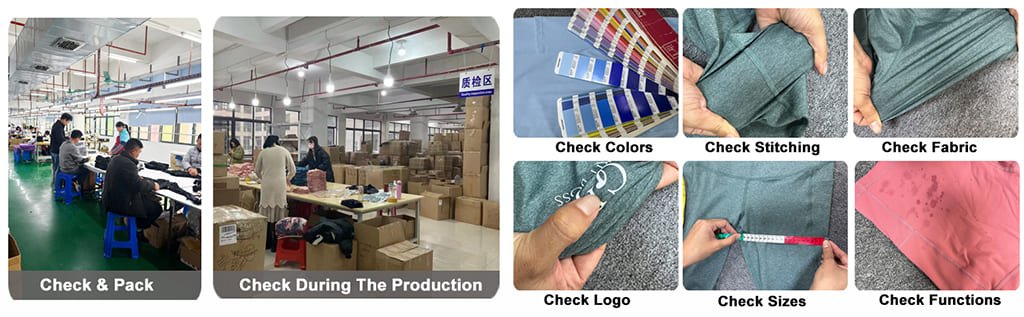
How Do You Choose the Best Wholesale Sports Shorts Manufacturer Using a Supplier Scorecard?
The best Wholesale Sports Shorts Manufacturer should be selected through a structured comparison of mandatory requirements, product capability, sample performance, total sourcing costs, MOQ flexibility, quality evidence, and delivery reliability. Buyers should first eliminate suppliers that cannot meet essential technical, legal, or commercial conditions. The remaining manufacturers can then be evaluated using a weighted scorecard that reflects the brand’s priorities. A high overall score should never compensate for a critical requirement that the supplier cannot satisfy.
What Requirements Should Buyers Check Before Scoring Manufacturers?
A supplier scorecard is useful only when the manufacturers being compared are genuinely suitable for the project.
Before assigning numerical scores, buyers should establish a list of mandatory requirements.
These are conditions that must be satisfied for the order to proceed.
For example, a brand developing 2-in-1 running shorts may require a specific liner construction, an approved performance fabric, and a defined range of sizes.
A supplier that cannot produce the required liner should not remain in the final comparison simply because it offers a low price.
Similarly, a manufacturer requiring 1,000 pieces per color may be commercially unsuitable for a brand that can commit to only 150 pieces per color.
The first evaluation stage should therefore focus on eligibility.
| Mandatory Requirement | Evidence to Review | Pass Condition |
|---|---|---|
| Relevant product capability | Comparable samples and construction evidence | Supplier can produce the required shorts type |
| Essential material requirements | Fabric specifications and relevant documentation | Required material conditions can be met |
| Fit and sizing | Measurement records and sample evaluation | Critical fit requirements are satisfied |
| Commercial feasibility | Written MOQ and quantity breakdown | Order commitment is acceptable |
| Legal and compliance requirements | Relevant registration, documents, and applicable compliance evidence | Mandatory requirements are adequately supported |
| Delivery feasibility | Material and production schedule | Required delivery window is achievable |
| Production responsibility | Facility and contracting information | Manufacturing and quality responsibilities are clear |
A Wholesale Sports Shorts Manufacturer should meet these basic requirements before buyers give it a weighted score.
If some information is not complete, buyers can ask the supplier to provide more details instead of rejecting it immediately.
However, unresolved mandatory requirements should not be treated as confirmed capabilities.
How Can Buyers Build a Weighted Manufacturer Scorecard?
After eliminating unsuitable suppliers, buyers can compare the remaining candidates using weighted evaluation criteria.
The purpose of weighting is to reflect the commercial importance of each factor.
For example, a startup may place greater emphasis on MOQ and inventory risk, while an established wholesale brand may prioritize production consistency and total landed cost.
A general scorecard can use the following structure.
| Evaluation Category | Suggested Weight | Main Evidence |
|---|---|---|
| Product specialization and technical capability | 20% | Relevant samples, construction experience |
| Sample quality and fit consistency | 20% | Measurements, movement tests, revisions |
| Total sourcing cost | 15% | Normalized quotations and landed-cost estimates |
| MOQ and order flexibility | 15% | Minimums, mixed sizes, reorder conditions |
| Quality control and verification | 15% | Inspection records, material evidence |
| Lead time and reorder reliability | 10% | Production plan and continuity arrangements |
| Communication and documentation | 5% | Accuracy, clarity, and response quality |
| Total | 100% |
Each category can be scored from 1 to 5.
A score of 1 indicates weak evidence or poor suitability. A score of 5 indicates strong evidence and a close match to the project’s requirements.
The weighted score can be calculated using:
Weighted Score = Σ (Category Score ÷ 5 × Category Weight)
The result is expressed as a percentage.
Buyers should use evidence-based scoring rather than relying on general impressions.
For example, a supplier should not receive a high quality-control score merely because it advertises an experienced QC team.
The score should reflect relevant inspection records, sample consistency, corrective-action procedures, and the ability to maintain approved specifications.
A professional Wholesale Sports Shorts Manufacturer should be evaluated on demonstrated capabilities rather than promotional claims alone.
How Does a Supplier Scorecard Work in Practice?
Consider a hypothetical sportswear brand comparing three manufacturers for a training shorts collection.
All three suppliers have passed the mandatory requirements.
The buyer uses the general scorecard above.
| Evaluation Category | Weight | Supplier A | Supplier B | Supplier C |
|---|---|---|---|---|
| Product capability | 20% | 5 | 4 | 4 |
| Sample quality | 20% | 5 | 4 | 3 |
| Total sourcing cost | 15% | 3 | 4 | 5 |
| MOQ flexibility | 15% | 2 | 5 | 4 |
| Quality verification | 15% | 5 | 4 | 3 |
| Lead time and reorders | 10% | 4 | 4 | 3 |
| Communication | 5% | 4 | 5 | 4 |
| Weighted Score | 100% | 82/100 | 85/100 | 74/100 |
All supplier scores are hypothetical and are provided only to demonstrate the evaluation method.
Supplier B achieves the highest overall score.
However, this does not automatically mean Supplier B is the correct choice for every buyer.
Supplier A has stronger sample quality and technical capability, which may be valuable for a technically demanding collection.
Supplier C performs well on cost but has weaker sample and quality scores.
The decision should therefore consider the brand’s priorities and the evidence behind each rating.
A Wholesale Sports Shorts Manufacturer with the highest numerical score is not always the best commercial partner if the weighting does not reflect the actual order.
Why Should Mandatory Requirements Override the Total Score?
A numerical score can create a false sense of precision.
Imagine a supplier achieving 92 out of 100 points.
The company offers competitive pricing, excellent communication, and flexible order quantities.
However, the project requires a particular certified material, and the supplier cannot provide the necessary evidence.
If that material requirement is genuinely mandatory, the supplier should not pass the evaluation.
The same principle applies to critical fit requirements, essential construction capabilities, legal obligations, and commercially unacceptable minimum quantities.
A scorecard should support purchasing judgment, not replace it.
Buyers should therefore use a two-stage selection process:
Stage 1: Mandatory requirement screening
Confirm that the supplier meets all essential conditions.
Stage 2: Weighted comparison
Compare the eligible suppliers using criteria that reflect the brand’s commercial priorities.
This approach prevents a strong overall score from hiding a problem that could make the order unsuitable.
Which Manufacturer Is Best for Startups, Growing Brands and Established Wholesalers?
Different brands face different purchasing risks.
A startup may need to protect cash flow while testing whether customers will purchase a new sports shorts collection.
A growing brand may need consistent sizing and predictable replenishment.
An established wholesaler may prioritize production capacity, stable quality, and competitive total costs.
The supplier selection criteria should reflect these differences.
| Buyer Profile | Main Priorities | Common Purchasing Risk |
|---|---|---|
| Startup activewear brand | Manageable MOQ, development support, limited inventory commitment | Excess unsold stock |
| Growing fitness brand | Fit consistency, material continuity, reorder flexibility | Product inconsistency and stockouts |
| Established wholesaler | Capacity, landed cost, quality systems, predictable scheduling | Large-scale defects or delivery disruption |
| Technical running apparel brand | Relevant construction experience, material performance, movement comfort | Functional product failure |
| Teamwear distributor | Order coordination, size distribution, repeatability | Incorrect sizes, colors, or delivery timing |
For a startup, a Wholesale Sports Shorts Manufacturer offering a slightly higher unit price but a more manageable minimum may be the stronger option.
For a brand with reliable demand, a supplier with a higher MOQ and lower unit cost may offer better commercial results.
For technical running shorts, specialized product capability may deserve more weight than a small price difference.
The best supplier is the one whose strengths match the buyer’s most important purchasing risks.
What Questions Should Buyers Ask Before Signing a Manufacturing Agreement?
Before making a final decision, buyers should confirm the details that will govern the actual production order.
A good supplier evaluation should end with clear written answers.
Product and Sample Approval
Which sample version is approved for production?
Are the final measurements, tolerances, and materials documented?
How will specification changes be approved?
Who is responsible for correcting deviations from approved requirements?
Commercial Conditions
What is the confirmed MOQ per style, color, and fabric?
Can sizes be mixed within the agreed quantity?
Which costs are included in the quotation?
What are the payment terms and quotation validity period?
Which Incoterm and named delivery location apply?
Production and Quality
Which facility will manufacture the order?
When will bulk production begin?
What inspection procedures will be used?
How will production problems be reported?
What happens if the finished goods fail agreed acceptance requirements?
Delivery and Reorders
What is the agreed production completion date?
Who is responsible for freight and customs arrangements?
Can the same materials and specifications be used for reorders?
What are the expected reorder minimums and scheduling conditions?
A reliable Wholesale Sports Shorts Manufacturer should be able to provide clear answers or identify which conditions still require confirmation.
Buyers should not assume that verbal promises automatically become binding commercial terms.
Important requirements should be included in the relevant purchase order, specification documents, or manufacturing agreement.
What Is the Final Checklist for Choosing a Wholesale Sports Shorts Manufacturer?
Before confirming the order, buyers can use the following checklist to review the purchasing decision.
| Final Verification Item | Required Status |
|---|---|
| Legal entity and production responsibility verified | Confirmed |
| Relevant sports shorts manufacturing experience | Confirmed |
| Mandatory material and product requirements | Passed |
| Sample fit and construction | Approved |
| Measurements and tolerances | Documented |
| MOQ and size/color distribution | Agreed |
| Quotation and total purchasing costs | Reviewed |
| Quality inspection requirements | Agreed |
| Production and delivery schedule | Confirmed |
| Reorder and material continuity conditions | Discussed |
| Payment and delivery terms | Documented |
| Procedure for specification changes and defects | Agreed |
The checklist should be completed using evidence from the actual supplier and project.
A missing item does not always require immediate rejection, but essential conditions should be resolved before the buyer makes an irreversible purchasing commitment.
Final Recommendation: How Should Buyers Make the Best Supplier Decision?
Choosing a sports shorts manufacturer is a balance between product capability, commercial feasibility, and production reliability.
A low quotation can be attractive, but it has limited value when the supplier cannot meet the required construction or quality standards.
A technically capable manufacturer may also be unsuitable when its minimum quantities exceed the buyer’s realistic inventory budget.
The most effective selection process begins with mandatory requirements, continues through comparable quotations and sample evaluation, and ends with documented production and commercial conditions.
The best Wholesale Sports Shorts Manufacturer is not necessarily the cheapest, largest, or fastest supplier. It is the manufacturer that can meet the brand’s essential product requirements, provide reliable manufacturing evidence, offer commercially suitable order conditions, and maintain approved quality through production and future reorders.
By evaluating suppliers through this structured process, buyers can make more informed sourcing decisions, control unnecessary inventory exposure, and build manufacturing relationships that support sustainable brand growth. Brands ready to explore a specific manufacturing partner can review Pair Fashion’s wholesale sports shorts production services and request a project-specific quotation.