OEM/ODM Sportswear Manufacturer | 3-Day Sampling | Low MOQ | 50K Monthly Capacity | ISO9001 & BSCI Certified

Top 10 Best Equestrian Clothes and Riding Outfits Factory Companies in China | Supplier Comparison & Sourcing Guide
Discover the top 10 best equestrian clothes and riding outfits factory companies in China. Compare manufacturers by MOQ, product expertise, certifications, lead times, and sourcing advantages to find the right partner for your equestrian apparel brand.
Top 10 Best Equestrian Clothes and Riding Outfits Factory Companies in China for Global Brands
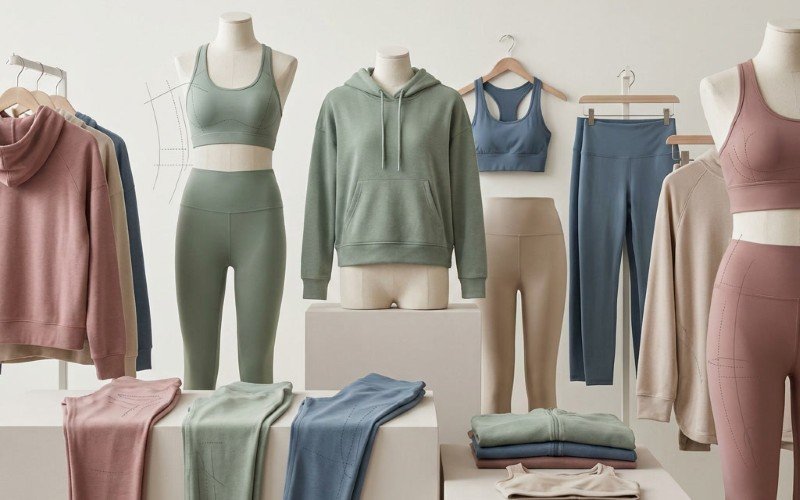
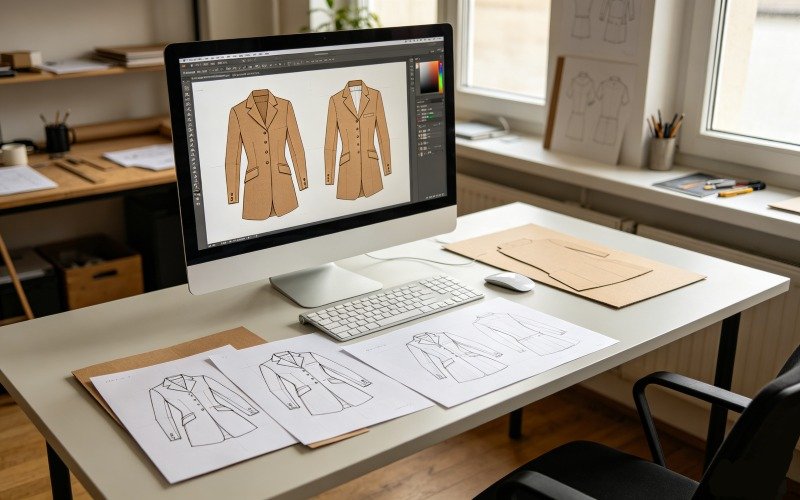
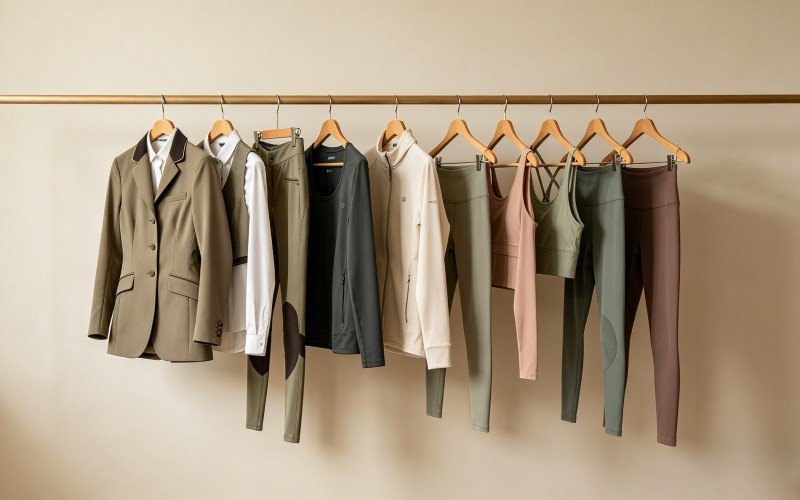
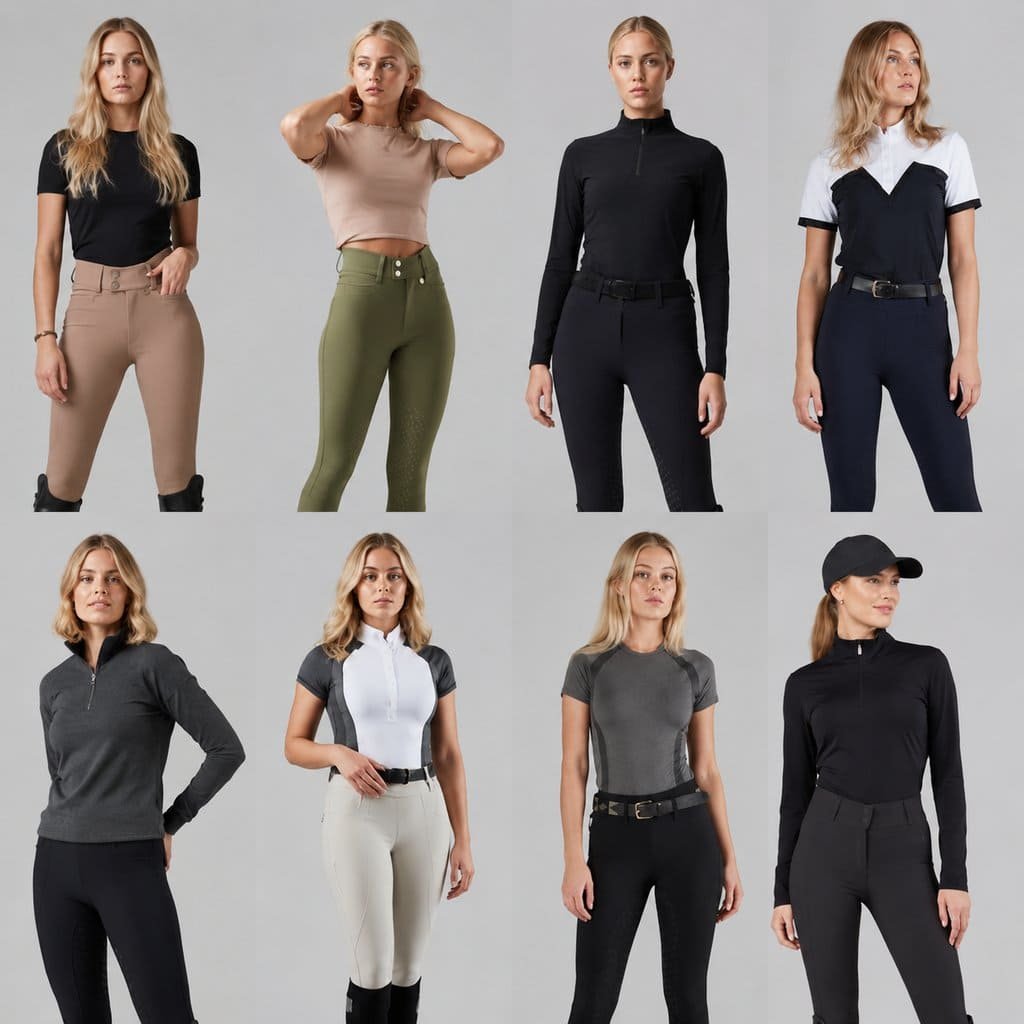
The equestrian industry is experiencing a new stage of growth, supported by increasing participation and evolving international competition standards established by the International Federation for Equestrian Sports (FEI). Beyond traditional horse riding communities, equestrian apparel has become increasingly popular among premium sportswear consumers, lifestyle brands, and direct-to-consumer businesses. Riding leggings, competition shirts, and technical base layers are now expected to deliver the same level of comfort and performance as high-end activewear.
At the same time, launching an equestrian apparel brand has never been easier. New brands can sell globally through Shopify, Amazon, and social media without owning factories or large inventories. However, one challenge remains surprisingly difficult: finding a reliable professional equestrian clothing manufacturer that understands the technical requirements of riding apparel and can consistently support product development, quality control, and future growth.
Quick Answer
The best equestrian clothes and riding outfits factory companies in China combine specialized riding apparel expertise, strong product development capabilities, flexible minimum order quantities, and reliable quality systems. Leading manufacturers can support private label programs, develop products from simple concepts or reference samples, and produce complete equestrian collections ranging from riding breeches and competition shirts to technical outerwear. The ideal factory depends on your business model, product complexity, order volume, and long-term growth strategy.
China has become one of the world’s most important sourcing destinations for equestrian apparel because it offers a combination of mature textile supply chains, technical manufacturing expertise, and flexible production capabilities that few other countries can match. This guide compares the leading manufacturers, explains why global brands choose China, and provides practical sourcing advice to help buyers make better long-term decisions.
Quick Comparison Table of China's Top Equestrian Clothes Manufacturers
Finding the right factory becomes much easier when buyers compare manufacturers using the same criteria. Factors such as MOQ, product specialization, certifications, and sample lead times often have a greater impact on long-term cooperation than price alone.
| Company | Location | MOQ | Sample Lead Time | Certifications | Best For |
|---|---|---|---|---|---|
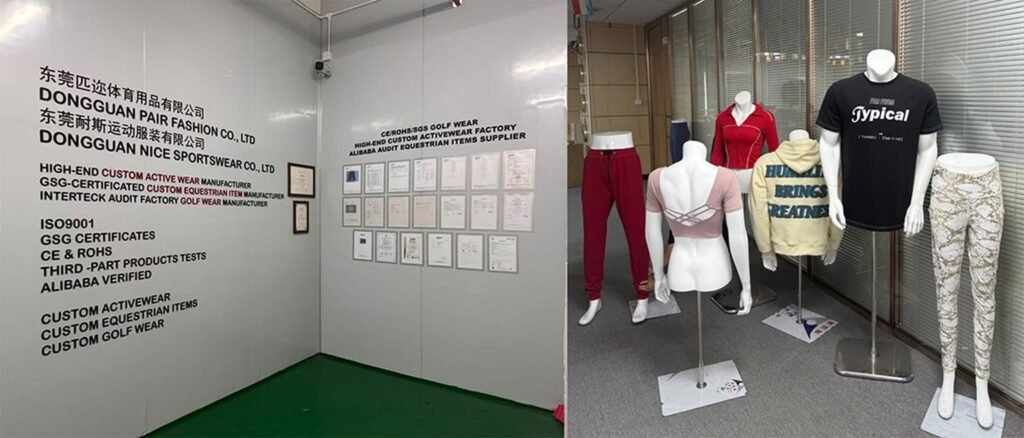
| Pair Fashion | Dongguan | 50 pcs | 3-7 Days | ISO9001, BSCI, GRS, CE, ROHS | Private Label & Startup Brands |
| Hucai Sportswear | Dongguan | 100 pcs | 7-10 Days | BSCI | Wholesale Buyers |
| Eation Wear | Dongguan | 100 pcs | 7 Days | ISO9001 | Technical Activewear Brands |
| Leeline Sports | Guangzhou | 200 pcs | 10 Days | BSCI | Distributors |
| Xiamen Wonders | Xiamen | 200 pcs | 10 Days | BSCI | Outdoor Riding Apparel |
| Aika Sportswear | Dongguan | 100 pcs | 7 Days | BSCI | Growing Brands |
| Baoding Sanying | Hebei | 300 pcs | 10 Days | BSCI | Budget Importers |
| Ningbo Apparel Suppliers | Ningbo | 300 pcs | 10 Days | ISO9001 | Large Retailers |
| Suzhou Garment Manufacturers | Suzhou | 200 pcs | 10 Days | BSCI | Mid-Sized Brands |
| Qingdao Sportswear Suppliers | Qingdao | 300 pcs | 12 Days | BSCI | Regional Distributors |
China remains the strongest option for brands that need:
- Custom product development
- Technical riding apparel
- Low MOQ production
- Fast replenishment
- Long-term scalability
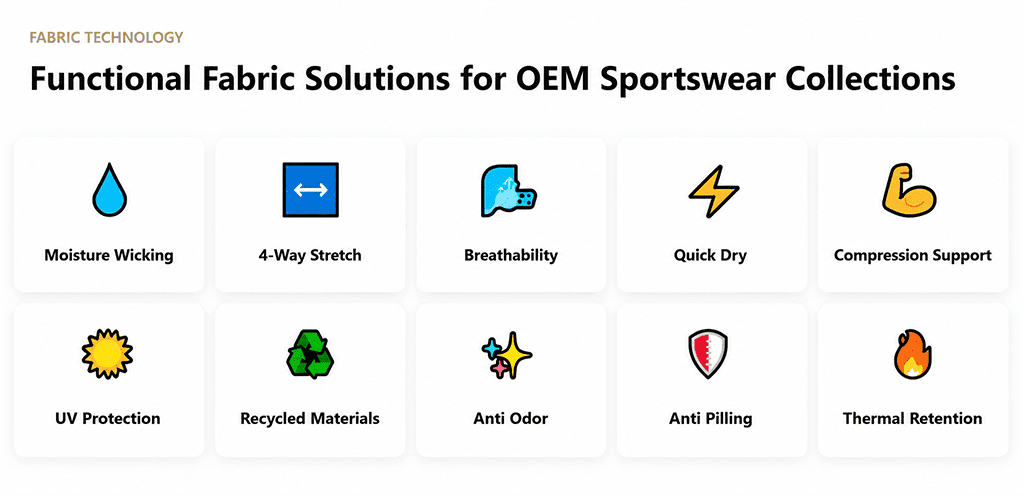
Pakistan remains attractive for very price-sensitive buyers, while Turkey is often preferred by European brands seeking geographic proximity.
However, few countries currently match China’s ability to support product development, technical riding apparel, and flexible production within the same supply chain.
Which Chinese Factory Is Best for Different Types of Buyers?
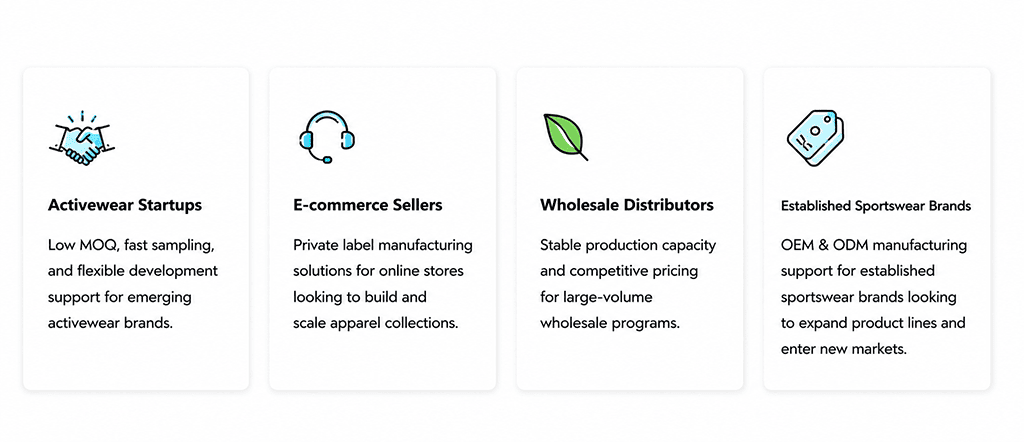
Not every equestrian apparel factory is suitable for every buyer. A startup launching its first riding collection has different needs compared with an established retailer or a large distributor handling thousands of pieces every season. The best factory is usually the one that matches your business model, growth stage, and product requirements.
Selecting a supplier based only on price often leads to problems later. Product development capabilities, MOQ flexibility, communication efficiency, and technical expertise are usually more important than finding the lowest quotation.
Best for Startup Equestrian Brands
Startup brands often face several challenges:
- Limited budgets
- Small initial orders
- Lack of technical documents
- Need for product development support
- Frequent design changes
The ideal factory for startups should offer:
- Low MOQ
- Fast sampling
- Product development assistance
- Flexible customization
- Strong communication
Recommended Suppliers:
- Pair Fashion
- Aika Sportswear
- Eation Wear
These factories are generally more willing to develop products from sketches, reference photos, or existing garments and often provide custom equestrian apparel manufacturing services rather than requiring complete Tech Packs.
Best for Premium Riding Apparel Brands
Premium brands usually focus on:
- Fabric performance
- Advanced pattern engineering
- Silicone technologies
- Luxury packaging
- Product consistency
The ideal supplier should have:
- Experience with technical equestrian garments
- High-end fabric resources
- Strong quality management systems
- Long-term product development capabilities
Recommended Suppliers:
- Pair Fashion
- Eation Wear
- Xiamen Wonders
These manufacturers have stronger experience with performance fabrics and technical apparel construction.
Best for Wholesale Buyers
Wholesale buyers often prioritize:
- Stable production capacity
- Competitive pricing
- Repeat orders
- Delivery reliability
Recommended Suppliers:
- Hucai Sportswear
- Ningbo Apparel Suppliers
- Qingdao Sportswear Suppliers
Best for Low MOQ Orders
Low MOQ production has become increasingly important because many brands prefer testing products before committing to large inventories.
Factories supporting lower minimum orders help brands:
- Reduce inventory risks
- Launch new collections faster
- Test new markets
- Improve cash flow management
Recommended Suppliers:
- Pair Fashion
- Aika Sportswear
- Eation Wear
Best for Long-Term Strategic Partnerships
Long-term manufacturing relationships become increasingly valuable as brands grow.
The best strategic partners usually provide:
- Stable quality
- Dedicated product development
- Material sourcing support
- Seasonal collection planning
- Priority production scheduling
Recommended Suppliers:
- Pair Fashion
- Hucai Sportswear
- Xiamen Wonders
A factory that understands your products, customer preferences, and future goals can become a valuable extension of your business rather than simply a supplier.
How Much Does It Cost to Source Equestrian Clothes and Riding Outfits from China?
Manufacturing costs are different because of product complexity, fabric selection, order quantities, and customization requirements. Understanding these factors before placing an order helps brands prepare a more accurate budget and avoid unexpected expenses.
The final cost of a riding garment is rarely determined by sewing alone. Performance fabrics, silicone applications, trims, and packaging often contribute significantly to the total price.
Typical Sample Costs
| Product | Sample Cost |
|---|---|
| Riding Breeches | USD 50-120 |
| Competition Shirt | USD 40-80 |
| Riding Jacket | USD 70-150 |
| Base Layer | USD 40-70 |
Many factories deduct sample costs from future bulk orders once production reaches an agreed quantity.
Typical MOQ Expectations
| Product | Typical MOQ |
|---|---|
| Riding Tops | 50-100 pcs |
| Riding Breeches | 100-300 pcs |
| Riding Jackets | 100-300 pcs |
| Complete Collections | 200-500 pcs |
Low MOQ suppliers often charge slightly higher unit prices because production efficiency decreases with smaller quantities.
Typical FOB Price Ranges
| Product | Typical Price Range |
|---|---|
| Riding Breeches | USD 18-35 |
| Competition Shirts | USD 12-28 |
| Riding Leggings | USD 14-30 |
| Riding Jackets | USD 30-70 |
| Base Layers | USD 10-22 |
These ranges vary depending on:
- Fabric composition
- Silicone technology
- Printing methods
- Embroidery
- Packaging
- Order quantity
Additional Costs Buyers Often Forget
Many first-time buyers focus only on garment pricing and overlook additional expenses:
- Sample shipping
- Fabric testing
- Packaging development
- Import duties
- International freight
- Product photography samples
- Label and barcode requirements
These expenses can easily add 10% to 20% to a project’s total cost.
How Can Brands Reduce Manufacturing Costs?
Experienced buyers often reduce costs through:
Simplifying product details
Small changes in pockets, trims, or packaging can significantly lower production costs.
Increasing order quantities
Larger orders improve material efficiency and reduce unit prices.
Consolidating collections
Producing multiple styles with similar fabrics often lowers material costs.
Working with experienced factories
A reliable private label equestrian clothing manufacturer can often recommend alternative fabrics or construction methods that reduce costs without sacrificing product quality.
What Are the Biggest Risks When Sourcing Riding Apparel in China?
Every sourcing decision carries risks. Understanding these risks before production begins can save significant time and money later.
Choosing Suppliers Only by Price
The lowest quotation is often not the lowest total cost.
Poor quality products frequently lead to:
- Returns
- Customer complaints
- Delayed launches
- Brand reputation damage
Ignoring Technical Riding Experience
Riding apparel differs significantly from ordinary activewear.
Factories without equestrian experience may struggle with:
- Silicone applications
- Pattern construction
- Rider comfort
- Performance fabrics
Poor Sample Evaluation
Never approve samples based only on appearance.
Test:
- Stretch recovery
- Silicone durability
- Colorfastness
- Seams
- Fit during movement
Ordering Too Much Inventory Too Early
Many new brands fail because they order excessive inventory before validating market demand.
Starting with smaller production runs usually reduces business risk.
Underestimating Lead Time Risks
Delays can occur because of:
- Fabric shortages
- Holiday seasons
- Shipping disruptions
- Development changes
Always build additional time into production schedules.
Failing to Protect Intellectual Property
Use:
- Confidentiality agreements
- Clear ownership clauses
- Trademark registrations
- Written development agreements
Strong documentation significantly reduces future disputes.
How Can Buyers Evaluate and Compare Equestrian Clothes Factory Companies?
Choosing an equestrian apparel factory is not only about comparing prices. The best suppliers usually have technical experience, efficient communication, and long-term reliability.
Many sourcing problems happen because buyers evaluate factories with incomplete information.
A professional evaluation system can greatly reduce the risks of choosing the wrong supplier.
Factory vs Trading Company
| Factor | Factory | Trading Company |
|---|---|---|
| Pricing | Better | Higher |
| Communication | Direct | Indirect |
| Product Development | Stronger | Depends |
| Production Control | Higher | Lower |
| Flexibility | Better | Depends |
Trading companies can still be useful for buyers seeking multiple product categories, but direct factories usually provide better control over quality and development.
How to Verify Certifications
Ask suppliers to provide:
- ISO9001
- BSCI
- GRS
- OEKO-TEX
- Third-party testing reports
Always verify certificates directly with the issuing organization whenever possible. Buyers sourcing recycled products can also verify standards through Textile Exchange.
How to Evaluate Product Development Capabilities
Ask these questions:
- Can you develop products from reference photos?
- Do you have pattern makers?
- Can you recommend fabrics?
- Can you improve existing products?
- Do you have equestrian experience?
Factories with strong development teams often create better long-term value than factories competing solely on price.
How to Evaluate Production Capacity
Key questions include:
- How many production lines do you operate?
- What is your monthly capacity?
- How many equestrian products do you currently manufacture?
- How do you manage peak seasons?
How to Evaluate Communication Efficiency
Poor communication remains one of the biggest reasons for failed sourcing projects.
Evaluate:
- Response speed
- Technical understanding
- Problem-solving ability
- English communication
- Documentation quality
10-Point Factory Evaluation Scorecard
| Evaluation Item | Score |
|---|---|
| Equestrian Expertise | 10 |
| Product Development | 10 |
| Quality Control | 10 |
| MOQ Flexibility | 10 |
| Production Capacity | 10 |
| Communication | 10 |
| Certifications | 10 |
| Delivery Reliability | 10 |
| Pricing Transparency | 10 |
| After-Sales Support | 10 |
Total Score: 100 Points
Factories scoring above 85 points are usually strong candidates for long-term partnerships.
What Questions Should Buyers Ask Before Choosing an Equestrian Clothing Manufacturer?
Choosing the right factory starts with asking the right questions. Many sourcing problems can be avoided long before production begins simply by having detailed discussions during the supplier evaluation stage.
Professional buyers rarely ask only about price. They focus on production capabilities, technical expertise, communication procedures, and long-term reliability.
The following questions can help brands identify strong manufacturing partners and avoid costly mistakes.
What Certifications Do You Have?
Certifications cannot automatically guarantee product quality, but they can show whether a factory has established management systems and compliance procedures.
Ask suppliers whether they have:
- ISO9001
- BSCI
- GRS
- OEKO-TEX
- REACH compliance
- Third-party testing reports
Brands selling into Europe and North America often require documentation to satisfy retailers, marketplaces, and regulatory requirements.
Can You Develop Products From Photos or Existing Samples?
Many startups do not have complete Tech Packs.
Ask:
- Can you work from reference photos?
- Can you reverse-engineer existing garments?
- Can you recommend fabrics and trims?
- Can you improve product functionality?
Factories with strong development capabilities can significantly shorten product development timelines.
What Is Your MOQ?
Minimum order quantity affects:
- Inventory risk
- Cash flow
- Product testing
- Collection expansion
Ask:
- What is the MOQ per color?
- What is the MOQ per size?
- Can multiple styles share fabrics?
- Do you support mixed orders?
Low MOQ flexibility is particularly valuable for emerging brands.
How Do You Control Quality?
Quality control should be discussed before sampling begins.
Questions include:
- Do you perform incoming inspections?
- Do you conduct in-line inspections?
- Do you have final inspections?
- What AQL standards do you use?
- Can third-party inspections be arranged?
Reliable factories usually have documented quality procedures and can clearly explain their inspection systems.
How Do You Handle Repeat Orders?
Many sourcing problems occur during repeat production rather than first orders.
Ask:
- Do you keep pattern records?
- Do you archive approved samples?
- How do you manage fabric consistency?
- Can you reserve materials for future orders?
A strong factory should have systems that maintain product consistency over time.
What Happens If Products Have Defects?
Every buyer should clearly understand the factory’s after-sales procedures.
Questions include:
- Do you provide replacement products?
- Can defective goods be repaired?
- What warranty policies do you offer?
- How quickly do you respond to claims?
Understanding these policies before production begins reduces future disputes and builds stronger partnerships.
What Does the Future of Equestrian Apparel Manufacturing in China Look Like?
The equestrian apparel industry is changing quickly. Consumer expectations are changing, sustainability requirements are increasing, and brands are launching products faster than ever before.
Chinese manufacturers are adapting rapidly and are likely to play an even larger role in the global riding apparel market during the coming decade.
Sustainable Materials Will Become More Important
More brands are demanding:
- Recycled nylon
- Recycled polyester
- Bio-based fibers
- Lower-impact dyeing technologies
- Traceable supply chains
More brands are demanding recycled nylon, recycled polyester, and traceable supply chains that comply with internationally recognized standards such as the Global Recycled Standard (GRS).
Sustainability is increasingly becoming a purchasing requirement rather than simply a marketing advantage.
Factories that invest in environmentally responsible materials and certifications will likely become preferred partners for premium brands.
Small-Batch Manufacturing Will Continue to Grow
The traditional model of producing large inventories is becoming less attractive.
More brands now prefer:
- Smaller production runs
- Faster replenishment
- Frequent new launches
- Lower inventory risk
Factories capable of supporting low MOQ production are likely to gain a competitive advantage.
Product Development Speed Will Become Critical
Brands increasingly expect:
- Faster sampling
- Digital communication
- Quick modifications
- More responsive development teams
Factories that can move from concept to sample in a matter of days rather than weeks are becoming increasingly valuable.
Premium Riding Apparel Will Continue to Expand
Modern riders expect products that combine:
- Technical performance
- Fashion aesthetics
- Sustainability
- Comfort
- Versatility
As riding apparel becomes more similar to premium activewear, manufacturers with technical expertise will continue to benefit.
China Will Remain a Major Global Manufacturing Center
Although other countries are expanding their apparel industries, China still offers one of the world’s strongest combinations of:
- Manufacturing expertise
- Textile resources
- Development capabilities
- Supply chain integration
- Export infrastructure
For many global brands, China remains one of the most practical and reliable destinations for building long-term equestrian apparel supply chains.
Conclusion
Finding the right equestrian clothing manufacturer is rarely about identifying a single “best” factory. Different suppliers serve different types of buyers, product categories, and business models.
Some brands need low MOQ flexibility. Others require technical riding apparel expertise, large production capacity, or long-term supply chain support.
The most successful sourcing relationships are built on more than price alone. They depend on communication, product development capabilities, quality consistency, and a shared understanding of long-term goals.
China continues to offer one of the world’s most complete ecosystems for equestrian apparel manufacturing. Buyers can source technical fabrics, trims, packaging, and complete riding collections from experienced suppliers within a highly integrated supply chain.
Brands that are ready to develop custom collections and build long-term partnerships may also benefit from exploring a custom riding apparel factory in China that specializes in private label manufacturing and technical equestrian product development.
Frequently Asked Questions About Equestrian Clothes and Riding Outfits Factory Companies in China
1. Who Makes the Best Equestrian Clothes and Riding Outfits in China?
The best equestrian clothes and riding outfits factory in China depends on your business goals, product requirements, and order quantities. Some factories are good at low-MOQ private label development, while some factories focus on large wholesale production or technical riding apparel. Buyers should compare product experience, development capability, certifications, communication efficiency, and long-term supply chain support before making a decision. For startup brands and premium equestrian brands, factories with strong product development experience usually bring more long-term value than suppliers that only focus on large production volume.
2. How Do I Find a Reliable Equestrian Clothing Manufacturer in China?
A reliable equestrian clothing manufacturer should have experience producing riding apparel rather than only general sportswear. Buyers should request company profiles, product portfolios, certifications, customer references, and physical samples before placing an order. Evaluating communication speed, sample quality, and technical knowledge during the early stages often provides a clear indication of how the factory will perform during mass production.
3. What Is the Typical MOQ for Custom Equestrian Apparel?
The minimum order quantity for custom equestrian apparel usually ranges from 50 to 300 pieces per style, depending on the product type and customization requirements. Riding breeches and technical jackets generally require higher MOQs because of their more complex construction and material sourcing. Many factories now offer lower minimums to support startup brands and small-batch product testing.
4. How Long Does It Take to Manufacture Riding Apparel in China?
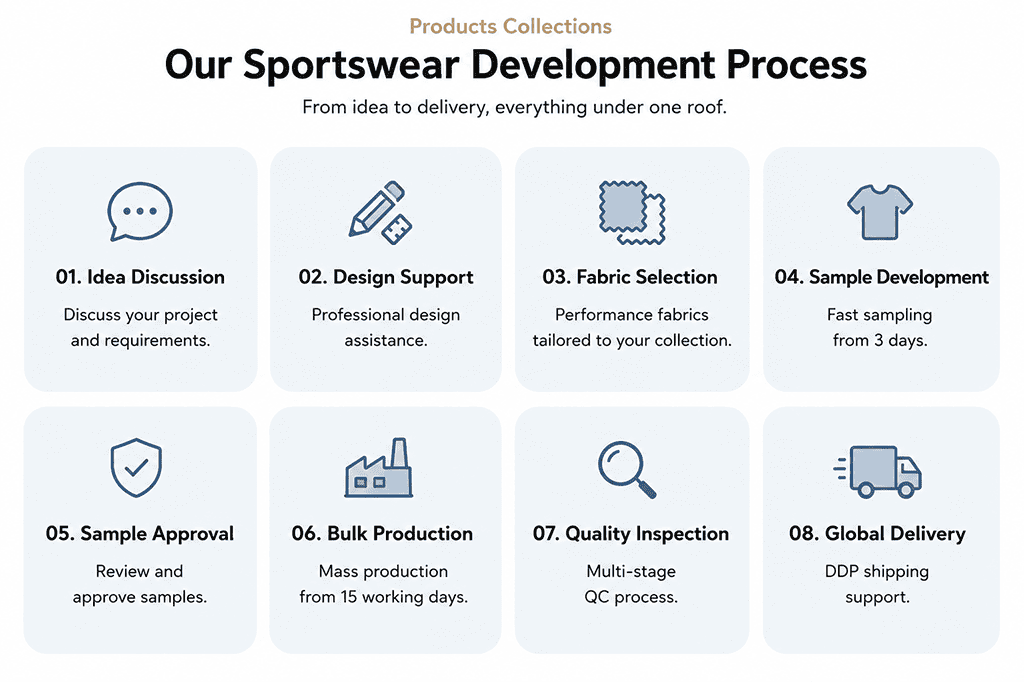
Sample development typically takes between 3 and 14 days, while bulk production generally requires 15 to 45 working days depending on order quantity, product complexity, and fabric availability. Additional time may be needed for custom fabrics, international testing, and shipping. Most experienced buyers recommend allowing extra time during peak production seasons.
5. Can Chinese Factories Develop Products From Photos or Existing Samples?
Yes. Many experienced Chinese factories can develop equestrian apparel from reference photos, sketches, existing garments, or simple design concepts. Their development teams can assist with pattern making, fabric recommendations, logo placement, and technical improvements. However, providing a detailed Tech Pack usually shortens development time and reduces the risk of misunderstandings.
6. How Much Does It Cost to Start a Private Label Equestrian Brand?
The cost of launching a private label equestrian brand varies depending on the number of products, materials, and order quantities. Most new brands begin with a small capsule collection that includes samples, production, packaging, and shipping expenses. Starting with a limited product range and lower production volumes allows brands to test market demand before expanding their collections.
7. Is China Better Than Vietnam or Pakistan for Manufacturing Riding Apparel?
China remains one of the strongest sourcing destinations for riding apparel because it combines technical expertise, mature supply chains, flexible MOQ options, and extensive product development capabilities. Vietnam and Pakistan offer advantages in certain categories and pricing structures, but few countries currently match China’s ability to support technical equestrian garments and small-batch customization programs.
8. Should I Choose a Factory or a Trading Company for Equestrian Clothing?
Factories generally provide more direct communication, better control over product development, and lower costs because buyers work directly with the production team. Trading companies can be useful when sourcing multiple product categories from different factories. For brands developing technical riding apparel or custom collections, working directly with an experienced factory often results in faster development and more consistent quality.