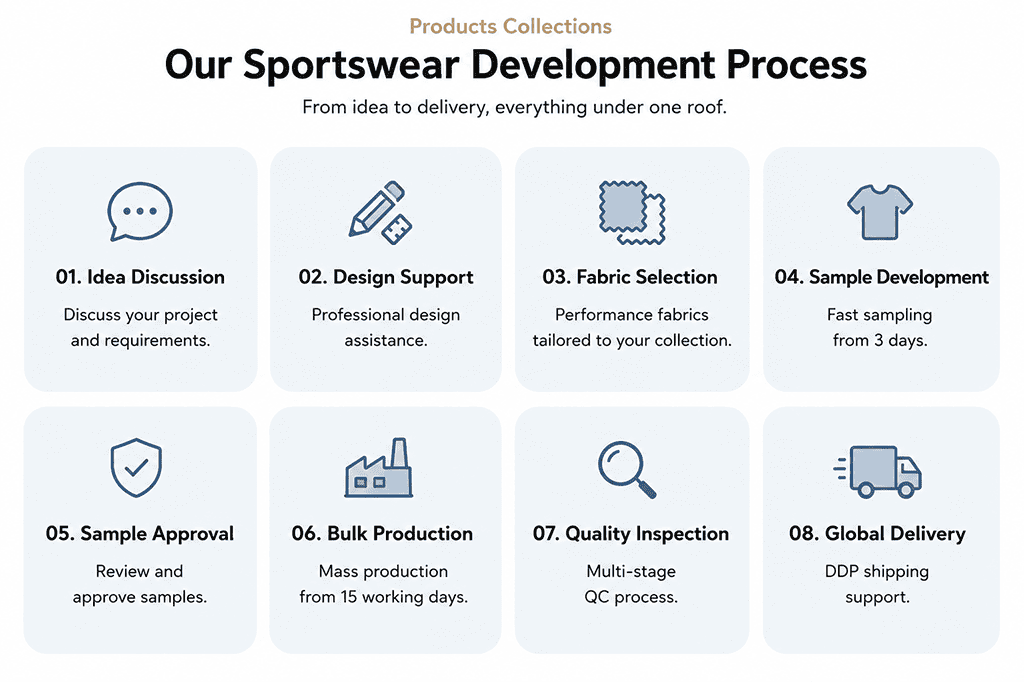
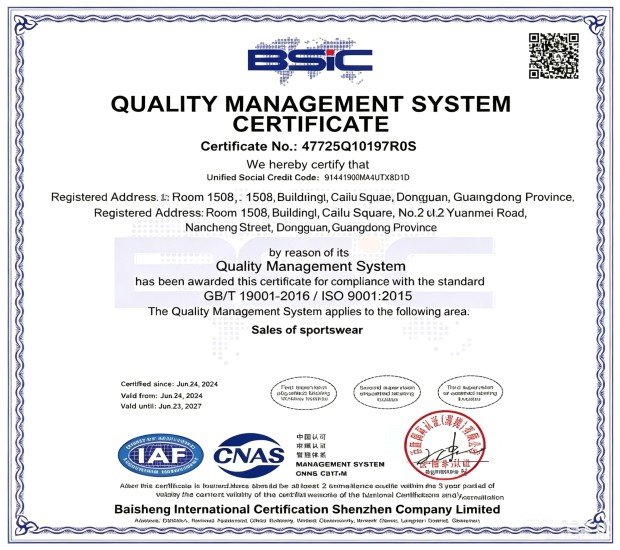
OEM/ODM Sportswear Manufacturer | 3-Day Sampling | Low MOQ | 50K Monthly Capacity | ISO9001 & BSCI Certified

Top 10 Equestrian Clothing Wholesalers Factory Companies in China: Supplier Comparison & Buying Guide for Global Brands
Compare the top equestrian clothing wholesalers factory companies in China. Discover leading suppliers, certifications, MOQ, production capabilities, and expert sourcing advice for private label brands, distributors, and global riding businesses.
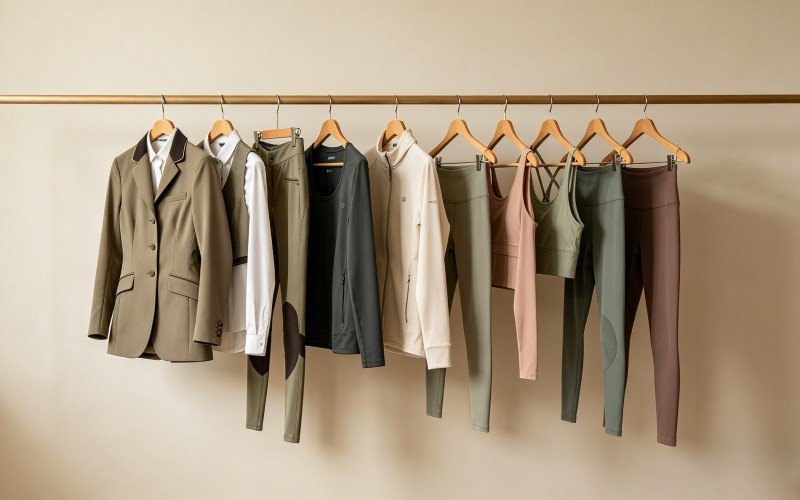
Top 10 Equestrian Clothing Wholesalers Factory Companies in China for Global Brands
The global equestrian apparel market is evolving rapidly. Riding wear is no longer limited to professional horse riders and elite competitions. Today, equestrian clothing has become a fast-growing category that combines technical performance, fashion, and lifestyle. Riding clubs, independent brands, equestrian influencers, and specialty retailers are launching their own collections and looking for a reliable Equestrian Clothing Wholesalers Factory that can support product development and long-term growth.
At the same time, sourcing equestrian clothing has become increasingly complex. Buyers are not simply searching for factories that can manufacture leggings or sports tops. Modern riding apparel requires specialized knowledge of compression fabrics, silicone grip technologies, rider ergonomics, and performance testing. A supplier that performs well in general sportswear may not necessarily understand the unique demands of equestrian products.
China has become one of the world’s leading sources for equestrian clothing manufacturing because it combines a mature textile supply chain, advanced garment production capabilities, and flexible manufacturing models. The best Chinese suppliers offer a wide range of services, from low-MOQ development for emerging brands to large-scale wholesale production for global retailers. Choosing the right partner depends on product expertise, communication, production stability, and long-term reliability rather than simply selecting the lowest price.
This guide compares the leading equestrian clothing wholesalers factory companies in China and explains how buyers can evaluate suppliers, reduce sourcing risks, and build a stronger supply chain for future growth.
Who Are the Top 10 Equestrian Clothing Wholesalers Factory Companies in China?
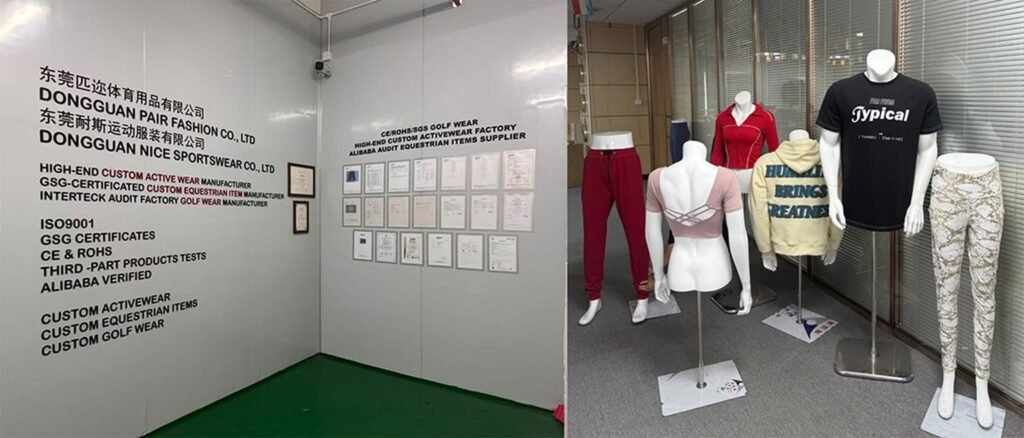
China has hundreds of sportswear manufacturers, but only a relatively small number have meaningful experience in equestrian apparel. The best suppliers combine technical riding garment expertise, functional fabric knowledge, and flexible manufacturing capabilities. Some factories specialize in premium competition wear, while others focus on wholesale production or private label development.
The following manufacturers represent some of the most recognized equestrian clothing suppliers in China based on industry reputation, export experience, product capabilities, and suitability for different types of buyers.
Top 10 China Equestrian Clothing Manufacturers Comparison Table
| Company | City | Main Products | MOQ | Certifications | Best For |
|---|---|---|---|---|---|
| Dongguan Pair Fashion Co., Ltd | Dongguan | Full equestrian collections | 50 pcs | ISO9001, BSCI, GRS | Private Label Brands |
| Zest Equestrian | Dongguan | Riding apparel | 100 pcs | BSCI | Premium Brands |
| Easson Apparel | Guangzhou | Sportswear & riding apparel | 100 pcs | BSCI | Startups |
| Ningbo MH Industry | Ningbo | Riding products & accessories | 300 pcs | ISO9001 | Large Distributors |
| Aoba Sportswear | Xiamen | Activewear & riding apparel | 200 pcs | BSCI | DTC Brands |
| Fuzhou David Apparel | Fuzhou | Outdoor & riding clothing | 200 pcs | ISO9001 | Outdoor Retailers |
| Guangzhou Ingor Sportswear | Guangzhou | Activewear & riding wear | 80 pcs | BSCI | Emerging Brands |
| Dongguan Hucai Garment | Dongguan | Custom sportswear | 100 pcs | BSCI | Small Businesses |
| Jinjiang Sports Apparel | Jinjiang | Training apparel | 300 pcs | ISO9001 | Wholesalers |
| Hangzhou Garment Group | Hangzhou | Riding apparel | 300 pcs | BSCI | Retail Programs |
1. Dongguan Pair Fashion Co., Ltd
Location: Dongguan, Guangdong, China
Founded: 2016
Core Products
- Riding Breeches
- Riding Tops
- Competition Shirts
- Riding Jackets
- Equestrian Leggings
- Club Uniforms
- Plus Size Equestrian Apparel
MOQ
50 pieces for most styles.
Lead Time
- Samples: 3–7 days
- Bulk production: 15–25 working days
Certifications
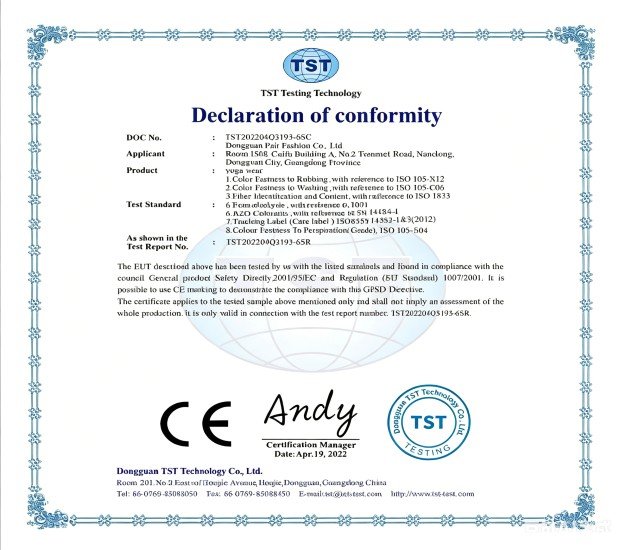
- ISO9001
- BSCI
- GRS
- CE
- ROHS
Best For
- Startup brands
- Private label brands
- DTC e-commerce businesses
- Riding clubs
- Crowdfunding projects
Strengths
- Low MOQ
- Fast sampling
- Dedicated equestrian production lines
- Strong product development capabilities
- Experience with technical riding apparel
- Flexible customization options
Pair Fashion supports private label and custom riding brands with flexible MOQ production, technical fabric sourcing, product development, sampling, branding, and scalable bulk manufacturing.
Potential Limitations
- Less suitable for extremely price-sensitive, high-volume commodity programs.
2. Zest Equestrian
Location: Dongguan, Guangdong, China
Founded: 2012
Core Products
- Riding Breeches
- Competition Shirts
- Riding Jackets
MOQ
Around 100 pieces depending on the style.
Lead Time
Approximately 25–35 days.
Best For
- Premium riding brands
- Professional equestrian businesses
Strengths
- Deep focus on equestrian products
- Strong understanding of rider requirements
- Good experience with technical garments
Potential Limitations
- Less flexible for small trial orders.
- Pricing is generally higher than general sportswear factories.
3. Easson Apparel
Location: Guangzhou, China
Founded: 2015
Core Products
- Activewear
- Riding Apparel
- Yoga Wear
MOQ
100 pieces.
Lead Time
20–30 days.
Best For
- Startup brands
- Brands expanding from activewear into equestrian products
Strengths
- Competitive pricing
- Strong sportswear manufacturing experience
Potential Limitations
- Limited specialization in technical riding products.
4. Ningbo MH Industry
Location: Ningbo, China
Founded: 1999
Core Products
- Riding apparel
- Riding accessories
- Textile products
MOQ
Usually above 300 pieces.
Lead Time
30–45 days.
Best For
- Large distributors
- Regional wholesalers
Strengths
- Large export network
- Stable production capabilities
Potential Limitations
- Less suitable for startups and small brands.
5. Aoba Sportswear
Location: Xiamen, China
Core Products
- Activewear
- Riding Apparel
- Training Clothing
MOQ
200 pieces.
Lead Time
25–35 days.
Best For
- DTC brands
- Mid-sized sportswear companies
Strengths
- Good activewear experience
- Reliable production systems
Potential Limitations
- Less experience with highly technical equestrian garments.
6. Fuzhou David Apparel
Location: Fuzhou, China
Core Products
- Outdoor Apparel
- Riding Jackets
- Performance Wear
MOQ
200 pieces.
Lead Time
25–35 days.
Best For
- Outdoor retailers
- Brands requiring outerwear products
Strengths
- Strong outerwear capabilities
Potential Limitations
- Limited product range within equestrian apparel.
7. Guangzhou Ingor Sportswear
Location: Guangzhou, China
Core Products
- Activewear
- Riding Wear
- Yoga Apparel
MOQ
80 pieces.
Lead Time
20–30 days.
Best For
- Emerging brands
- Small private label projects
Strengths
- Flexible development process
- Fast product launches
Potential Limitations
- Primarily focused on fitness apparel.
8. Dongguan Hucai Garment
Location: Dongguan, China
Core Products
- Custom Sportswear
- Riding Apparel
MOQ
100 pieces.
Lead Time
20–30 days.
Best For
- Small businesses
- Local distributors
Strengths
- Flexible order quantities
Potential Limitations
- Smaller product portfolio.
9. Jinjiang Sports Apparel
Location: Jinjiang, China
Core Products
- Sportswear
- Training Apparel
MOQ
300 pieces.
Lead Time
30–40 days.
Best For
- Large wholesale programs
Strengths
- Large production capacity
Potential Limitations
- Limited customization flexibility.
10. Hangzhou Garment Group
Location: Hangzhou, China
Core Products
- Riding Apparel
- Teamwear
MOQ
300 pieces.
Lead Time
30–40 days.
Best For
- Retail programs
- Large sourcing projects
Strengths
- Strong compliance systems
- Stable manufacturing capabilities
Potential Limitations
- Less suitable for low-volume development projects.
Which Types of Buyers Does Each Supplier Best Serve?
| Buyer Type | Recommended Supplier Characteristics |
|---|---|
| Startup Brands | Low MOQ and development support |
| DTC Brands | Fast sampling and flexible production |
| Wholesale Distributors | Large capacity and stable pricing |
| Riding Clubs | Custom uniforms and repeat order support |
| Premium Brands | Technical equestrian expertise |
| Retail Chains | Strong compliance and large-scale production |
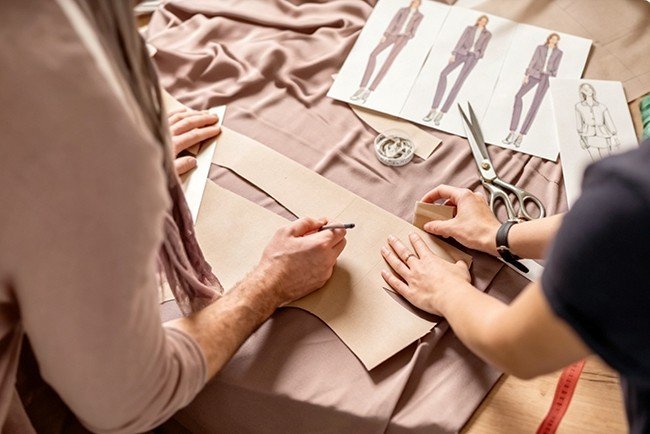
Why Brands Choose Pair Fashion
Many brands struggle with slow sampling, unstable quality, delayed delivery and unreliable suppliers.
- Slow sampling cycles
- Production inconsistency
- Poor communication
- Logistics complexity
- No after-sales support
- Can’t design products.
Why Has China Become One of the World's Leading Sources for Equestrian Clothing?
China has become one of the most important sourcing destinations for equestrian clothing because it offers a combination that is difficult to replicate elsewhere: a mature textile ecosystem, experienced garment manufacturers, scalable production capacity, and increasing expertise in technical riding apparel. While countries in Europe and North America remain influential in riding culture and product design, a significant portion of the world’s equestrian apparel is now manufactured in Asia, with China playing a central role.
For many brands, the decision to source from China is no longer based solely on price. Working with an experienced equestrian clothing manufacturer can also provide access to technical product development, functional fabric sourcing, stable quality management, and scalable production support.
The Evolution of China’s Equestrian Manufacturing Industry
China’s equestrian apparel industry developed later than its yoga and fitness sectors. In the early years, most factories focused on basic riding garments and simple wholesale products. However, the rapid growth of global equestrian sports and lifestyle riding communities created demand for more sophisticated products.
Today, many Chinese manufacturers are capable of producing:
- Technical riding breeches with silicone grip systems
- Competition shirts with advanced moisture management
- Compression riding tights
- Lightweight riding jackets
- Sustainable riding apparel made from recycled materials
- Club uniforms and customized teamwear
As more international equestrian brands work with Chinese suppliers, factories have accumulated valuable knowledge about rider preferences, technical construction methods, and performance requirements.
Why Global Brands Continue to Source From China
Several structural advantages continue to make China attractive for equestrian clothing sourcing.
Complete Supply Chain Integration
Few countries can match China’s vertically integrated apparel ecosystem. Within a relatively small geographic area, buyers can access:
- Fabric mills
- Silicone printing suppliers
- Embroidery factories
- Packaging suppliers
- Trim manufacturers
- International logistics providers
This concentration significantly reduces development time and communication complexity.
Flexible Production Models
Many Chinese factories now support:
- Low-MOQ development
- Multi-style small orders
- Fast replenishment programs
- Seasonal collection launches
- Large-scale wholesale production
This flexibility is particularly valuable for modern brands that need to react quickly to market changes.
Faster Product Development
Launching a new equestrian collection often requires several rounds of sampling and adjustments. Factories with integrated development capabilities can significantly shorten this process.
For many brands, speed to market has become almost as important as production cost.
China vs Europe vs Nearshore Manufacturing
| Factor | China | Europe | Nearshore Manufacturing |
|---|---|---|---|
| Product Development | Excellent | Good | Moderate |
| Fabric Resources | Excellent | Good | Limited |
| Production Capacity | Excellent | Moderate | Moderate |
| Cost Competitiveness | Strong | Weak | Moderate |
| MOQ Flexibility | Strong | Moderate | Moderate |
| Supply Chain Integration | Excellent | Moderate | Limited |
European manufacturing still offers advantages for luxury brands that prioritize local production and heritage positioning. However, many premium brands continue to source from China because of its superior supply chain efficiency and technical manufacturing capabilities.
Advantages of China’s Functional Textile Ecosystem
Modern equestrian apparel depends heavily on fabric performance.
Riders expect garments to provide:
- Four-way stretch
- Moisture management
- Abrasion resistance
- Shape retention
- UV protection
- Compression support
- Long-term durability
China’s textile industry has invested heavily in performance fabrics over the last decade. Many fabric mills now produce materials that meet the technical requirements of premium sportswear and equestrian products.
In addition, manufacturers increasingly offer:
- Recycled polyester
- Recycled nylon
- GRS-certified materials
- Cooling fabrics
- Water-repellent treatments
- Anti-bacterial finishes
These capabilities allow brands to develop products that meet both performance and sustainability goals.
Future Trends in China’s Riding Apparel Supply Chain
The next phase of China’s equestrian manufacturing industry will likely focus on three areas:
Sustainability
More brands are requesting:
- Recycled fabrics
- Traceable supply chains
- Lower environmental impact
- Sustainable packaging solutions
Smaller and Faster Production
Many emerging brands no longer place large seasonal orders. Instead, they prefer:
- Smaller inventory commitments
- Faster replenishment
- More frequent product launches
Technical Innovation
Factories are investing more resources into:
- New fabric technologies
- Improved silicone applications
- Better pattern engineering
- Functional garment construction
As these trends continue, China is expected to remain one of the most important global sourcing destinations for equestrian clothing.
What Types of Equestrian Clothing Products Are Commonly Produced in China?
Chinese manufacturers produce a remarkably wide range of equestrian apparel. While riding breeches remain the most recognized product category, many factories now offer complete riding collections that cover training, competition, leisure riding, and club activities.
The best suppliers have expanded beyond basic production and developed expertise in multiple equestrian categories.
Riding Breeches and Riding Tights
Riding breeches are among the most technically demanding products in equestrian apparel.
Unlike ordinary leggings, riding breeches must balance:
- Compression
- Stretch
- Durability
- Seat stability
- Rider comfort
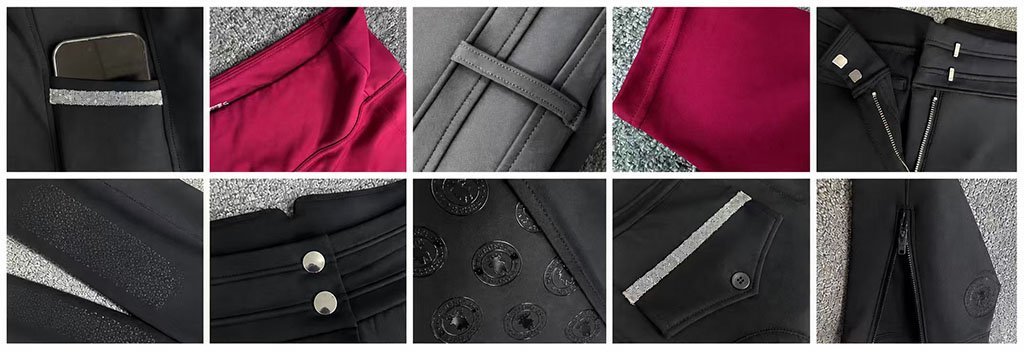
Key construction features often include:
- Silicone knee grips
- Full-seat silicone systems
- Reinforced seams
- High-recovery fabrics
- Phone pockets
- Compression waistbands
Because riders spend extended periods in the saddle, even small construction flaws can significantly affect comfort and performance.
Competition Shirts and Base Layers
Competition shirts have evolved considerably in recent years.
Modern products often combine:
- Lightweight fabrics
- Moisture management
- Mesh ventilation panels
- UV protection
- Elegant competition aesthetics
Training base layers are also becoming increasingly popular because riders frequently wear them for:
- Daily riding
- Stable work
- Fitness activities
- Casual lifestyle use
This crossover appeal has created additional growth opportunities for equestrian brands.
Riding Jackets and Outerwear
Outerwear requirements vary significantly depending on climate and riding discipline.
Chinese factories commonly manufacture:
- Softshell jackets
- Lightweight windbreakers
- Waterproof riding jackets
- Thermal mid-layers
- Competition jackets
Technical outerwear often requires more complex pattern engineering and specialized fabrics than standard riding tops.
Club Uniforms and Teamwear
Equestrian clubs and riding academies increasingly invest in branded apparel.
Typical products include:
- Team polo shirts
- Club jackets
- Training tops
- Riding tights
- Competition uniforms
These products often require:
- Embroidery
- Personalized names
- Sponsor logos
- Special packaging
Many factories have developed dedicated programs to support repeat club orders.
Children’s Riding Apparel
The youth riding market has expanded steadily over the last decade.
Children’s equestrian products require additional attention to:
- Fit and comfort
- Fabric safety
- Durability
- Ease of movement
- Size grading
As more young riders enter the sport, children’s collections have become an increasingly attractive category for brands and retailers.
Sustainable and Recycled Riding Apparel
Sustainability is becoming an important purchasing factor in the equestrian industry.
More brands are launching:
- Recycled riding tights
- Sustainable base layers
- Eco-friendly packaging
- Limited environmental impact collections
Brands making recycled-material claims should verify whether their suppliers and materials meet the Global Recycled Standard, which covers third-party certification of recycled content, chain of custody, and additional processing requirements.
Consumers increasingly expect riding brands to consider both product performance and environmental responsibility.
Which Type of Chinese Equestrian Supplier Matches Different Buying Scenarios?
Not every factory is suitable for every buyer. A startup launching its first riding collection has completely different needs from an established distributor managing thousands of units per season.
Choosing the wrong supplier often leads to unnecessary costs, delays, and communication problems.
The best sourcing decisions begin with understanding your own business model.
Suppliers for Startup Brands
Startups usually need:
- Low MOQ
- Product development support
- Fast sampling
- Flexible communication
Factories with highly rigid production systems are often unsuitable for first-time buyers because they require large orders and extensive technical documentation.
Suppliers for DTC E-commerce Businesses
DTC brands often prioritize:
- Fast replenishment
- Frequent product launches
- Small inventory commitments
- Strong product differentiation
Suppliers that can handle multiple small orders and seasonal updates are generally better suited to this business model.
Suppliers for Wholesale Distributors
Wholesale distributors typically focus on:
- Stable quality
- Competitive pricing
- Large production capacity
- Repeat order consistency
Production scalability often becomes more important than customization flexibility.
Suppliers for Riding Clubs and Academies
Clubs usually need:
- Custom logos
- Team uniforms
- Seasonal reorders
- Small production quantities
Factories that offer flexible order management and long-term product archiving often provide significant advantages.
Suppliers for Premium Brands
Premium brands frequently prioritize:
- Technical expertise
- Fabric quality
- Product development capability
- Quality consistency
- Strong communication
For these brands, the lowest price is rarely the most important factor.
Suppliers for Large Retail Programs
Large retail projects generally require:
- Compliance systems
- Production capacity
- Stable supply chains
- Documentation capabilities
- Long-term planning
Factories with mature management systems often perform better in these environments.
How Do Professional Buyers Evaluate Equestrian Clothing Suppliers in China?
Finding a supplier is easy. Finding the right supplier is considerably more difficult.
Many sourcing problems do not happen because a factory lacks production capability. They happen because buyers evaluate suppliers using incomplete information. A factory may have excellent pricing but poor communication. Another supplier may have impressive certifications but limited experience with technical riding apparel.
Professional buyers rarely choose suppliers based on one factor alone. Instead, they evaluate manufacturers through a structured framework that considers product expertise, operational stability, and long-term partnership potential.
Factory vs Trading Company
The first question many buyers ask is whether they should work directly with a factory or through a trading company.
Neither option is automatically better. The answer depends on the project requirements.
| Factor | Factory | Trading Company |
|---|---|---|
| Price | Lower | Higher |
| Communication | Direct | Indirect |
| Product Development | Strong | Varies |
| Factory Control | High | Limited |
| Supplier Options | One Factory | Multiple Factories |
| Flexibility | Moderate | Often High |
Factories are usually better for:
- Private label development
- Long-term partnerships
- Technical products
- Repeat orders
Trading companies can be useful when:
- Products come from multiple categories
- Buyers need consolidated sourcing
- Order quantities are too small for direct factories.
However, buyers should always verify whether a trading company truly understands equestrian apparel or simply acts as an intermediary.
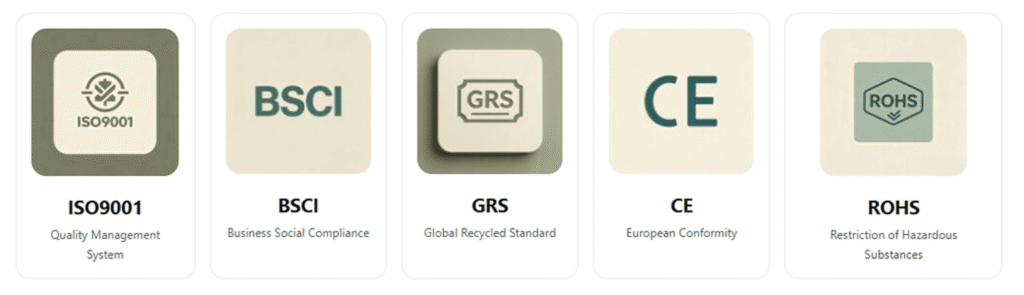
Which Certifications Actually Matter?
Certifications do not automatically guarantee product quality, but they do indicate whether a supplier has implemented management systems and compliance procedures.
The most commonly requested certifications include:
ISO9001
ISO 9001 is an internationally recognized quality management standard that helps organizations establish consistent processes, improve performance, and meet customer and regulatory expectations.
BSCI
amfori BSCI provides a structured system for identifying, assessing, and reducing social compliance risks across global supply chains, making it especially relevant to brands and retailers with responsible sourcing requirements.
GRS
Important for brands developing sustainable and recycled collections.
OEKO-TEX®
Useful when buyers need assurance regarding chemical safety and textile compliance.
REACH Compliance
Frequently required for European markets.
A factory without certifications is not necessarily a poor supplier. However, for larger retail programs and premium brands, certifications often become an important risk management tool.
How to Evaluate Product Expertise
One of the biggest sourcing mistakes is assuming that all sportswear factories can manufacture equestrian products.
Equestrian apparel has unique requirements:
- Silicone grip technology
- Rider-specific pattern construction
- Abrasion resistance
- Compression performance
- Reinforced seam engineering
- Competition garment standards
A supplier with extensive yoga wear experience may still struggle to manufacture technical riding breeches.Buyers evaluating a technical riding apparel manufacturer should look for real experience with rider-specific patterns, silicone grip placement, reinforced seams, abrasion-resistant fabrics, and fit testing during movement.
Useful questions include:
- How many equestrian projects have you completed?
- Can you share riding apparel samples?
- Do you understand silicone grip applications?
- Can you explain how riding breeches differ from ordinary leggings?
The quality of the answers often reveals more than the supplier’s brochure.
How to Verify Production Capacity
Production capacity should be evaluated carefully.
A factory that accepts more orders than it can manage may experience:
- Delivery delays
- Quality inconsistency
- Communication problems
- Production bottlenecks
Buyers should ask:
- How many production lines do you operate?
- What is your monthly capacity?
- How many workers are dedicated to sportswear?
- How do you handle peak seasons?
Factories that answer these questions clearly generally have stronger operational systems.
How to Assess Communication Efficiency
Communication problems are responsible for a surprising number of manufacturing failures.
Common issues include:
- Slow responses
- Incomplete information
- Misunderstood requirements
- Lack of proactive updates
Good suppliers typically:
- Respond quickly.
- Confirm details in writing.
- Raise potential risks early.
- Provide regular production updates.
Communication quality often predicts future cooperation quality.
Supplier Scorecard Template
Professional buyers frequently use scoring systems.
Example Supplier Evaluation Matrix
| Evaluation Item | Weight |
|---|---|
| Product Expertise | 25% |
| Quality Systems | 20% |
| Communication | 15% |
| Production Capacity | 15% |
| Price Competitiveness | 10% |
| Development Capability | 10% |
| Sustainability & Compliance | 5% |
The highest-scoring supplier is not always the cheapest supplier. It is usually the one that offers the best balance between quality, reliability, and long-term support.
What Factors Influence the Cost of Sourcing Equestrian Clothing From China?
The final cost of equestrian apparel is influenced by far more than labor costs.
Many buyers focus only on the quoted unit price and later discover unexpected expenses related to materials, development, logistics, and quality problems.
Understanding the true cost structure allows brands to make better decisions and avoid unpleasant surprises.
Fabric Cost Drivers
Fabric is often the largest cost component in equestrian apparel.
Factors affecting fabric costs include:
- Fiber composition
- Compression level
- Fabric weight
- Functional treatments
- Sustainability requirements
- Minimum dye quantities
Premium riding breeches often use fabrics that are considerably more expensive than ordinary activewear materials because they require higher durability and better recovery.
MOQ and Pricing Relationship
MOQ has a significant influence on pricing.
Small production runs usually involve:
- Higher material costs
- Higher labor costs
- More production inefficiencies
Larger quantities often benefit from:
- Better fabric pricing
- Lower production costs
- Improved shipping efficiency
However, extremely large inventories also increase business risk.
The lowest unit cost is not always the most profitable purchasing strategy.
Shipping and Import Costs
Shipping expenses can fluctuate considerably.
Major cost drivers include:
- Transportation method
- Destination market
- Fuel prices
- Customs duties
- Packaging volume
Many new brands underestimate logistics costs during their first production runs.
International shipping should always be included when evaluating total sourcing costs.
Hidden Costs Buyers Often Ignore
Many sourcing budgets fail because buyers overlook indirect expenses.
Examples include:
- Sample revisions
- Additional testing
- Delayed product launches
- Quality failures
- Product returns
- Inventory carrying costs
Sometimes the supplier with the lowest price becomes the most expensive option in the long term.
Why Cheap Suppliers Can Become Expensive
A lower quotation may result from:
- Inferior materials
- Limited quality control
- Inexperienced labor
- Unstable supply chains
These problems can lead to:
- Product returns
- Customer complaints
- Lost sales
- Brand damage
The true cost of manufacturing should always be evaluated over the entire product life cycle.
How Buyers Reduce Total Sourcing Costs
Experienced buyers often focus on reducing total cost instead of reducing unit price.
Effective strategies include:
- Developing fewer but stronger products
- Improving demand forecasting
- Standardizing fabrics
- Consolidating suppliers
- Building long-term relationships
Long-term partnerships frequently generate greater savings than aggressive price negotiations.
What Are the Biggest Mistakes Buyers Make When Choosing Equestrian Manufacturers?
Most sourcing failures are preventable.
The same mistakes appear repeatedly across the industry, regardless of company size.
Understanding these risks can significantly improve supplier selection.
Choosing Suppliers Only by Price
Low prices often attract attention, but price alone rarely predicts long-term success.
Extremely low quotations may indicate:
- Lower-quality materials
- Reduced quality control
- Limited technical expertise
- Unstable production systems
Price should be considered alongside quality and reliability.
Ignoring Industry Experience
Technical riding apparel requires specialized knowledge.
Factories without equestrian experience may struggle with:
- Fit issues
- Silicone application
- Product durability
- Rider comfort requirements
Experience matters.
Skipping Sample Evaluation
Many buyers rush into production after reviewing photos or digital mockups.
Samples should be carefully evaluated for:
- Fit
- Construction
- Fabric performance
- Wash durability
- Silicone quality
Small issues often become major problems during mass production.
Underestimating Lead-Time Risks
Late deliveries can cause:
- Missed selling seasons
- Retail penalties
- Lost revenue
Buyers should always include contingency time in their production schedules.
Not Checking Supply Chain Stability
Production problems are often caused by:
- Fabric shortages
- Supplier turnover
- Poor planning
Factories with stable supply chains generally perform more consistently.
Failing to Plan Repeat Orders
Successful products frequently require replenishment.
Buyers should ask:
- Will fabrics remain available?
- Can the factory reserve materials?
- Are product specifications archived?
Repeat-order planning is often overlooked during initial sourcing decisions.
How Do Professional Buyers Evaluate Equestrian Clothing Suppliers in China?
Choosing an equestrian clothing supplier involves much more than comparing prices or reviewing product catalogs. Professional buyers evaluate suppliers from multiple perspectives, including product expertise, production stability, communication efficiency, and long-term reliability.
The best supplier is rarely the one with the lowest quotation. Instead, it is usually the manufacturer that consistently delivers quality products, communicates clearly, and can support future business growth.
Factory vs Trading Company
One of the first decisions buyers face is whether to work directly with a factory or through a trading company.
| Factor | Factory | Trading Company |
|---|---|---|
| Pricing | Usually Lower | Usually Higher |
| Communication | Direct | Indirect |
| Product Development | Strong | Varies |
| Production Control | High | Limited |
| Supplier Options | One Factory | Multiple Factories |
| Flexibility | Moderate | Often High |
Factories are generally better for long-term partnerships and technical products, while trading companies may be useful for buyers sourcing multiple product categories or very small quantities.
Which Certifications Actually Matter?
Certifications do not automatically guarantee product quality, but they do indicate whether a supplier has implemented recognized management systems.
The most commonly requested certifications include:
- ISO9001 – Quality management systems.
- BSCI – Social compliance and working conditions.
- GRS – Recycled and sustainable materials.
- OEKO-TEX® – Textile chemical safety.
- REACH Compliance – Important for European markets.
For premium brands and large retail programs, certifications often become an important risk-management tool.
How to Evaluate Product Expertise
Not every sportswear factory understands technical riding apparel.
Equestrian clothing often requires specialized knowledge of:
- Silicone grip technologies
- Rider-specific pattern engineering
- Abrasion resistance
- Compression performance
- Reinforced seam construction
- Competition garment requirements
A factory that performs well in yoga apparel may still struggle to manufacture technical riding breeches.
How to Verify Production Capacity
Production capacity should always be evaluated carefully.
Key questions include:
- How many production lines does the factory operate?
- What is its monthly capacity?
- How does it handle peak seasons?
- How does it manage urgent orders?
Factories that answer these questions clearly usually have stronger operational systems and more reliable delivery performance.
How to Assess Communication Efficiency
Communication quality often predicts cooperation quality.
Strong suppliers usually:
- Respond quickly.
- Confirm requirements in writing.
- Raise potential risks early.
- Provide regular production updates.
- Offer dedicated project management support.
Many sourcing failures are caused not by manufacturing problems, but by communication problems.
Supplier Evaluation Matrix
Professional buyers often use a scoring system to compare suppliers more objectively.
| Evaluation Category | Weight |
|---|---|
| Product Expertise | 25% |
| Quality Systems | 20% |
| Communication | 15% |
| Production Capacity | 15% |
| Development Capability | 10% |
| Pricing Competitiveness | 10% |
| Sustainability & Compliance | 5% |
This type of evaluation frequently shows that the cheapest supplier is not necessarily the best long-term partner.
Questions Buyers Should Ask Before Making a Final Decision
Before selecting a supplier, buyers should confirm several key points:
- Does the factory have real equestrian apparel experience?
- Can it support your expected order quantities?
- Are its quality systems reliable?
- Does it communicate clearly and respond quickly?
- Can it support your long-term growth plans?
The answers to these questions often reveal more about a supplier than quotations, websites, or product catalogs.
Long-Term Partnerships Create More Value
Many successful equestrian brands work with a small number of strategic suppliers rather than constantly changing factories.
Long-term partnerships often lead to:
- Faster product development
- Better product consistency
- Lower operational costs
- Improved communication
- Faster repeat orders
- Stronger understanding of brand requirements
As collections grow and product lines become more complex, the value of a reliable manufacturing partner becomes increasingly important.
How Do Professional Buyers Evaluate Equestrian Clothing Suppliers in China?
Supplier Evaluation Matrix
Professional buyers often compare suppliers using several core criteria, including product expertise, communication quality, production stability, and long-term reliability. The highest-scoring supplier is not always the cheapest one. In many cases, the best partner is the manufacturer that can consistently support quality products, reliable deliveries, and future business growth.
| Evaluation Category | Weight |
|---|---|
| Product Expertise | 25% |
| Quality Systems | 20% |
| Communication | 15% |
| Production Capacity | 15% |
| Development Capability | 10% |
| Pricing Competitiveness | 10% |
| Sustainability & Compliance | 5% |
What Are the Biggest Mistakes Buyers Make When Choosing Equestrian Manufacturers?
Many successful equestrian brands grow with a limited number of strategic manufacturing partners.
Final Recommendations for Global Buyers
There is no single “best” equestrian clothing manufacturer in China.
The right supplier depends entirely on:
- Business model
- Product category
- Order quantities
- Quality expectations
- Growth objectives
Startup and growing brands that require low MOQ, sampling support, and coordinated product development may benefit from working with an equestrian clothing wholesalers factory that can manage the transition from an initial capsule collection to repeat production.
Premium brands usually focus on technical expertise and quality consistency.
Wholesale distributors frequently prioritize production capacity and pricing stability.
The most successful sourcing decisions rarely come from choosing the cheapest supplier. They come from building relationships with manufacturers that consistently deliver products, solve problems, and support long-term growth.
China’s equestrian apparel industry continues to evolve rapidly. With its integrated supply chain, growing technical expertise, and flexible manufacturing capabilities, it remains one of the most important sourcing destinations for riding brands around the world.
Conclusion
The global equestrian market is becoming increasingly competitive, and choosing the right manufacturing partner has never been more important. The best suppliers offer much more than production capacity. They provide technical expertise, stable operations, efficient communication, and long-term partnership value.
For brands willing to invest time in supplier evaluation and strategic sourcing decisions, China continues to offer exceptional opportunities for developing and scaling successful equestrian clothing businesses.
What Factors Influence the Cost of Sourcing Equestrian Clothing From China?
The final cost of equestrian clothing depends on much more than the unit price shown on a quotation sheet. Experienced buyers understand that sourcing costs are influenced by fabrics, trims, product complexity, order quantities, logistics, and long-term inventory planning.
A factory offering the lowest price does not always provide the lowest total cost of ownership. In many cases, quality problems, delayed deliveries, or repeated sample revisions can become far more expensive than a slightly higher initial quotation.
Understanding the real cost structure of equestrian apparel helps brands make more profitable and sustainable sourcing decisions.
Fabric Cost Is Usually the Largest Expense
For most equestrian garments, fabric accounts for 40% to 60% of the total product cost.
The following factors significantly influence fabric pricing:
- Fiber composition
- Fabric weight
- Compression performance
- Stretch recovery
- Moisture management
- Sustainability requirements
- Dyeing processes
- Minimum order quantities from mills
Premium riding breeches often use technical fabrics that cost substantially more than ordinary activewear materials because riders expect greater durability, shape retention, and comfort during long periods in the saddle.
Product Complexity Directly Affects Manufacturing Costs
Not all riding garments require the same level of workmanship.
A simple riding base layer may involve:
- Four fabric panels
- Standard stitching
- One logo application
A technical pair of riding breeches may include:
- Twelve to eighteen pattern pieces
- Multiple pocket constructions
- Silicone grip applications
- Reinforced seams
- Compression waistbands
- Decorative trims
More construction details generally mean:
- Higher labor costs
- Longer production times
- Greater quality control requirements
MOQ and Pricing Relationship
Order quantity has a major influence on pricing.
| Production Volume | Cost Per Unit |
|---|---|
| 50 pieces | Highest |
| 100 pieces | High |
| 300 pieces | Moderate |
| 500+ pieces | Lower |
| 1,000+ pieces | Most Competitive |
However, lower unit costs do not always create better business outcomes.
Large inventories can increase:
- Cash flow pressure
- Storage costs
- Slow-moving inventory risks
- End-of-season markdowns
Many successful emerging brands intentionally accept slightly higher unit costs in exchange for lower inventory risks.
Trims and Branding Can Significantly Affect Costs
Many buyers underestimate the cost of trims and custom branding.
Examples include:
- Silicone logos
- Custom zipper pulls
- Embroidered badges
- Woven labels
- Printed care labels
- Branded packaging
- Hangtags
- Customized poly bags
These elements often play an important role in brand positioning but can add meaningful costs to the final product.
Shipping and Import Costs Should Never Be Ignored
Transportation expenses can vary dramatically depending on:
- Destination country
- Shipping method
- Fuel costs
- Product volume
- Customs duties
For many brands, shipping costs increased significantly during recent years and have become an important factor in supplier evaluation.
A lower FOB price may not always translate into a lower landed cost.
Hidden Costs Buyers Often Overlook
The most expensive costs are often the ones that never appear on the quotation sheet.
Examples include:
- Delayed launches
- Repeated sample revisions
- Product returns
- Customer complaints
- Excess inventory
- Quality claims
- Emergency air shipments
These indirect costs can easily exceed the savings generated by choosing a cheaper supplier.
Why Cheap Suppliers Can Become Expensive
A very low quotation may indicate:
- Lower-quality fabrics
- Inexperienced workers
- Weak quality systems
- Poor planning
- Unstable supply chains
The result may include:
- Delivery delays
- Product failures
- Customer dissatisfaction
- Lost sales opportunities
For this reason, professional buyers often focus on total sourcing cost rather than simply comparing unit prices.
How Successful Brands Reduce Total Sourcing Costs
Experienced buyers often reduce costs by improving operational efficiency rather than aggressively negotiating prices.
Common strategies include:
- Consolidating suppliers
- Standardizing fabrics across collections
- Improving forecasting accuracy
- Launching smaller collections more frequently
- Building long-term supplier partnerships
- Simplifying product complexity where possible
Over time, stable supplier relationships often generate larger savings than constantly changing factories.
Frequently Asked Questions About Sourcing Equestrian Clothing in China
FAQ 1. Why Do So Many Global Equestrian Brands Manufacture Their Clothing in China?
China has become one of the world’s leading sources for equestrian apparel because it offers a combination of technical manufacturing expertise, mature textile supply chains, flexible production models, and competitive costs that are difficult to find elsewhere.
Many riding brands choose China not simply because products can be manufactured at lower prices, but because Chinese suppliers can support everything from small-batch product development to large-scale wholesale production. Buyers can source fabrics, trims, packaging, and logistics services through one integrated ecosystem, reducing development time and improving supply chain efficiency. For both startup and established brands, China’s manufacturing capabilities often provide greater flexibility and faster speed to market.
FAQ 2. How Do I Choose the Best Equestrian Clothing Manufacturer in China?
The best manufacturer is not always the cheapest supplier. Buyers should evaluate factories based on product expertise, communication quality, production stability, certifications, and long-term partnership potential.
A good supplier should understand the technical requirements of riding apparel, including silicone grip applications, compression fabrics, and rider ergonomics. Buyers should also compare MOQ, lead times, quality systems, and development capabilities. The right factory depends on your business model, product requirements, and growth plans rather than simply comparing quotations.
FAQ 3. What Is the Typical MOQ for Equestrian Clothing Factories in China?
Most equestrian clothing manufacturers require between 100 and 300 pieces per style, although some specialized suppliers support low-MOQ production starting from around 50 pieces.
Lower MOQs are particularly helpful for startups, crowdfunding projects, and brands testing new collections. However, smaller quantities usually result in higher unit costs because fabric purchasing and production efficiency decrease. Buyers should balance MOQ requirements with inventory risks and cash flow considerations rather than focusing solely on the lowest possible quantity.
FAQ 4. How Long Does It Take to Develop and Produce Equestrian Clothing in China?
Most equestrian apparel projects require two to eight weeks for product development and another three to six weeks for bulk production, depending on product complexity and factory scheduling.
Simple products such as riding base layers can often be developed quickly, while technical riding breeches or competition jackets usually require additional sample revisions and testing. Brands should always allow extra time for material sourcing, approvals, and potential delays, especially when launching seasonal collections.
FAQ 5. Are Chinese Factories Capable of Producing Premium Equestrian Apparel?
Yes. Many Chinese manufacturers now produce premium riding apparel using advanced fabrics, technical construction methods, and sustainable materials that meet international quality standards.
The quality of a product depends more on material selection, specifications, and manufacturing expertise than on the country of production. Many factories have years of experience working with premium equestrian brands and can manufacture products that compete successfully in European and North American markets.
FAQ 6. What Are the Biggest Risks When Sourcing Equestrian Clothing From China?
The biggest sourcing risks include choosing suppliers solely based on price, working with factories that lack equestrian experience, and failing to evaluate samples properly before production begins.
Other common problems include unrealistic lead-time expectations, poor communication, and insufficient quality control procedures. Most sourcing failures can be significantly reduced through careful supplier evaluation, clear documentation, and realistic production planning.
FAQ 7. Is It Better to Work Directly With a Factory or Through a Trading Company?
Direct factories usually offer better pricing, stronger product development support, and greater production control, while trading companies may provide convenience when sourcing multiple product categories.
Neither approach is automatically better. Buyers should choose the option that best fits their project complexity, internal resources, and sourcing objectives. For long-term private label programs, working directly with experienced factories often creates stronger partnerships and better product consistency.
FAQ 8. Can Chinese Manufacturers Support Sustainable Equestrian Clothing Collections?
Yes. Increasing numbers of Chinese factories now offer recycled fabrics, GRS-certified materials, environmentally responsible packaging, and more transparent supply chain solutions.
As sustainability becomes increasingly important to consumers and retailers, many suppliers continue investing in recycled polyester, recycled nylon, and eco-friendly production processes. Brands looking to launch sustainable riding collections should discuss certifications, material traceability, and environmental requirements during the supplier evaluation process.