OEM/ODM Sportswear Manufacturer | 3-Day Sampling | Low MOQ | 50K Monthly Capacity | ISO9001 & BSCI Certified

Private Label Yoga Clothing Manufacturer: Top 10 China Suppliers & Selection Guide
Compare 10 private label yoga clothing manufacturers in China by buyer fit, samples, quality systems, sourcing cost and factory reliability. Learn how global brands verify suppliers and choose the right production partner before ordering.
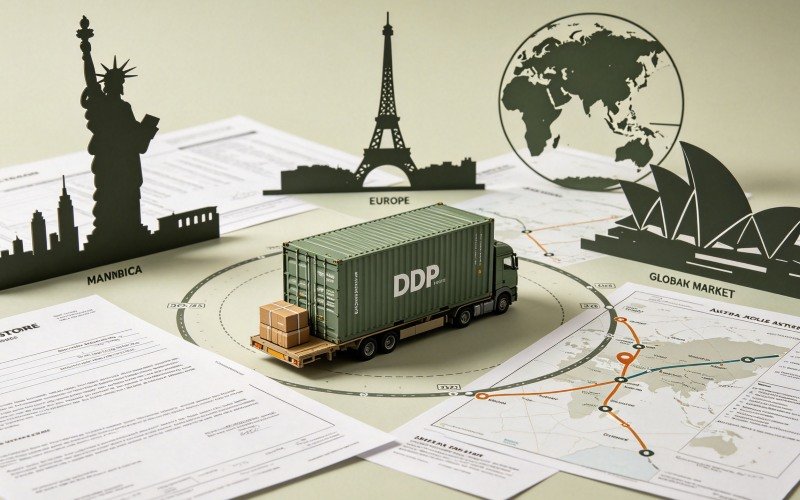
Which Are the Best Private Label Yoga Clothing Manufacturers in China for Global Brands?
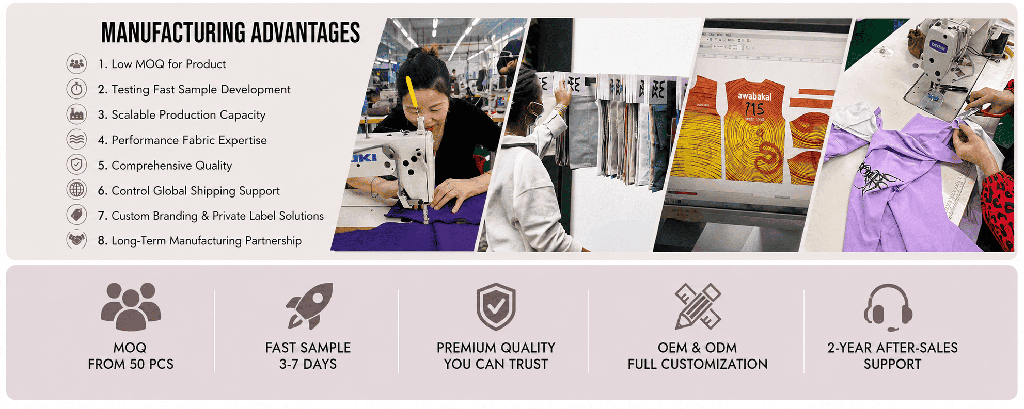
Global brands should consider a Private Label Yoga Clothing Manufacturer in China when their sourcing strategy requires access to established performance-apparel production, a dense textile and accessory supply chain, multiple customization resources and the ability to move from product development into repeat production. China is especially competitive when yoga clothing requires frequent style updates, stretch fabrics, specialized construction, custom trims or coordinated product categories. However, China is not automatically the best sourcing country for every brand; order volume, target cost, compliance requirements, logistics and supply-chain risk should determine the final decision.
Why Is China a Major Sourcing Base for Yoga and Performance Activewear?
Yoga clothing may look simple from the outside, but manufacturing a fitted performance garment consistently involves more than cutting fabric and sewing seams.
A typical yoga legging or sports bra may involve several specialized supply-chain participants:
- Stretch knitted fabric mills
- Dyeing and finishing facilities
- Elastic and support-component suppliers
- Heat-transfer and silicone logo suppliers
- Printing and embroidery facilities
- Labels, hangtags and packaging suppliers
- Pattern and sample technicians
- Specialized stretch-garment sewing teams
- Testing and inspection services
- Freight forwarders and export logistics providers
China’s advantage is the concentration of these resources within mature apparel manufacturing regions.
This matters because product development rarely moves in a perfectly straight line.
Imagine that a brand approves the silhouette of a new pair of leggings, but the pale blue version becomes too transparent during a squat test. Simply increasing fabric thickness may solve opacity while creating a new problem: the garment becomes hotter, stiffer and less comfortable.
A more experienced development team may instead need to compare:
knitting density → yarn structure → fabric composition → stretch ratio → color → garment negative ease → pattern construction
The more relevant suppliers a manufacturer can access, the more options it has for solving the problem without completely changing the original product concept.
This is one reason established manufacturing clusters remain valuable. The advantage is not just production capacity. It is the ability to solve problems across the surrounding supply chain.
What Makes China’s Yoga Clothing Supply Chain Different From General Apparel Manufacturing?
A factory that makes cotton T-shirts well is not automatically qualified to manufacture premium yoga leggings.
Performance activewear creates different technical demands.
The fabric stretches while the garment is being sewn. Seams must move with the body. Waistbands need enough stability to stay in place without becoming uncomfortable. Pale colors may behave differently from dark colors under stretch. Compression can change when fabric weight, elasticity or pattern dimensions change.
For buyers, this means a yoga clothing supply chain should be evaluated around several interconnected areas:
| Area | General Apparel Question | Yoga / Activewear Question |
|---|---|---|
| Fabric | Does it look and feel good? | How does it stretch, recover and perform under movement? |
| Pattern | Does the garment match the measurements? | How does negative ease affect fit and compression? |
| Seams | Is the sewing clean? | Can the seam stretch repeatedly without discomfort or failure? |
| Color | Does it match the approved shade? | Does opacity change when the fabric is stretched? |
| Waistband | Is the construction correct? | Does it stay stable during squats, bending and training? |
| Sports Bra | Does it fit the mannequin? | Does support remain stable during actual movement? |
| Bulk Production | Does the order look like the sample? | Does fit and performance remain consistent across sizes and lots? |
A startup should not select a 300-piece-per-color factory simply because that factory looks more impressive.
Likewise, a mature brand selling tens of thousands of units should not stay permanently with a small supplier solely because the original MOQ was convenient.
Manufacturer fit should change as sourcing risk changes.
Quick Comparison of Private Label Yoga Clothing Manufacturers in China
| Manufacturer | Buyer Fit | Published / Typical MOQ Position | Sample Position | Main Advantage | Main Trade-Off |
|---|---|---|---|---|---|
| Pair Fashion | Startup → Growing Brand | From ~50 pcs for standard programs | From ~3 days for suitable projects | Flexible development | Very large programs need capacity planning |
| Eationwear | Growing → Established | Trial ~100; standard ~300/design/color | ~7 days | Production systems and scale | Less suited to micro-orders |
| HUCAI | Growing → Premium Brand | ~200 pcs | ~12 days | Technical construction | Higher entry than low-MOQ suppliers |
| Ohsurewear | Startup → Growing | ~100/style or design reference | Fast-development positioning | Broad private label scope | Verify product-line expertise |
| INGOR | Established / Sustainable | ~300/design | Project dependent | Sustainability + systems | Higher inventory commitment |
| Arabella | Growing → Established | Medium-volume positioning | Project dependent | Testing infrastructure | Less startup-oriented |
| JIA Sportswear | Startup → Growing | ~100/color custom | ~10–15 days | Stock + custom model | Stock styles offer less differentiation |
| Uga | Startup → Growing | Moderate MOQ positioning | Project dependent | Activewear focus | Verify scaling capability |
| Berunwear | SME / Multi-Category | Product dependent | Product dependent | Broad sourcing support | Verify manufacturing structure |
| BENTA | Small → Growing | Flexible by program | Project dependent | Broader apparel capability | Verify yoga specialization |
The comparison table should be used as a shortlisting tool, not as a final supplier decision. MOQ and sample speed are easy to compare because they are numbers, but they rarely tell the whole story.
A 50-piece MOQ is not automatically better than a 200-piece MOQ. A five-day sample is not automatically better than a twelve-day sample. And a factory with 1,000 workers is not automatically safer than one with 100.
The more important question is whether the manufacturer can repeatedly produce the same approved product with the quantity, quality level and commercial terms that your brand actually needs.
This is the key point that changes a manufacturer list from a simple ranking into a real sourcing decision.
Why Should Global Brands Consider a Private Label Yoga Clothing Manufacturer in China?
Global brands should consider a Private Label Yoga Clothing Manufacturer in China when their sourcing strategy requires access to established performance-apparel production, a dense textile and accessory supply chain, multiple customization resources and the ability to move from product development into repeat production. China is especially competitive when yoga clothing requires frequent style updates, stretch fabrics, specialized construction, custom trims or coordinated product categories. However, China is not automatically the best sourcing country for every brand; order volume, target cost, compliance requirements, logistics and supply-chain risk should determine the final decision.
Why Is China a Major Sourcing Base for Yoga and Performance Activewear?
Yoga clothing may look simple from the outside, but manufacturing a fitted performance garment consistently involves more than cutting fabric and sewing seams.
A typical yoga legging or sports bra may involve several specialized supply-chain participants:
- Stretch knitted fabric mills
- Dyeing and finishing facilities
- Elastic and support-component suppliers
- Heat-transfer and silicone logo suppliers
- Printing and embroidery facilities
- Labels, hangtags and packaging suppliers
- Pattern and sample technicians
- Specialized stretch-garment sewing teams
- Testing and inspection services
- Freight forwarders and export logistics providers
China’s advantage is the concentration of these resources within mature apparel manufacturing regions.
This matters because product development rarely moves in a perfectly straight line.
Imagine that a brand approves the silhouette of a new pair of leggings, but the pale blue version becomes too transparent during a squat test. Simply increasing fabric thickness may solve opacity while creating a new problem: the garment becomes hotter, stiffer and less comfortable.
A more experienced development team may instead need to compare:
knitting density → yarn structure → fabric composition → stretch ratio → color → garment negative ease → pattern construction
The more relevant suppliers a manufacturer can access, the more options it has for solving the problem without completely changing the original product concept.
This is one reason established manufacturing clusters remain valuable. The advantage is not just production capacity. It is the ability to solve problems across the surrounding supply chain.
What Makes China’s Yoga Clothing Supply Chain Different From General Apparel Manufacturing?
A factory that makes cotton T-shirts well is not automatically qualified to manufacture premium yoga leggings.
Performance activewear creates different technical demands.
The fabric stretches while the garment is being sewn. Seams must move with the body. Waistbands need enough stability to stay in place without becoming uncomfortable. Pale colors may behave differently from dark colors under stretch. Compression can change when fabric weight, elasticity or pattern dimensions change.
For buyers, this means a yoga clothing supply chain should be evaluated around several interconnected areas:
| Area | General Apparel Question | Yoga / Activewear Question |
|---|---|---|
| Fabric | Does it look and feel good? | How does it stretch, recover and perform under movement? |
| Pattern | Does the garment match the measurements? | How does negative ease affect fit and compression? |
| Seams | Is the sewing clean? | Can the seam stretch repeatedly without discomfort or failure? |
| Color | Does it match the approved shade? | Does opacity change when the fabric is stretched? |
| Waistband | Is the construction correct? | Does it stay stable during squats, bending and training? |
| Sports Bra | Does it fit the mannequin? | Does support remain stable during actual movement? |
| Bulk Production | Does the order look like the sample? | Does fit and performance remain consistent across sizes and lots? |
This is why brands should search for manufacturers with relevant performance-apparel experience, rather than simply searching for a general clothing factory offering the lowest price.
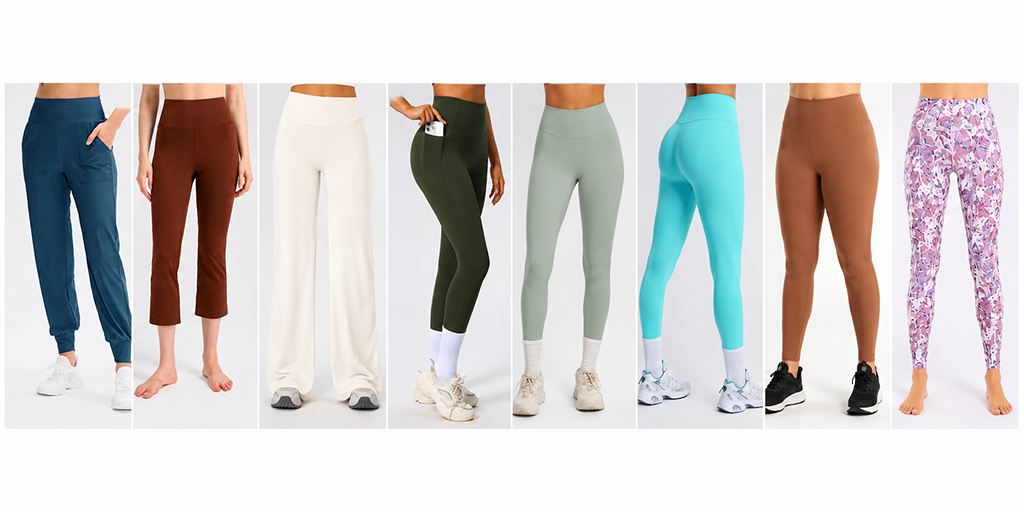
China has manufacturing clusters where activewear suppliers, stretch-fabric resources and supporting processes operate relatively close to one another. Dongguan-based yoga manufacturers, for example, commonly present integrated access to fabric sourcing, sampling, printing, embroidery, labeling, packaging and bulk production.
The buyer still needs to verify the individual factory. Being located inside a strong manufacturing cluster does not guarantee strong manufacturing.
Guangdong vs Fujian: Which Region Is Better for Different Types of Activewear Projects?
Guangdong and Fujian are both important sourcing regions, but the right choice depends more on the individual manufacturer than on the province itself. Guangdong—particularly Dongguan and Guangzhou—offers dense apparel-development, fabric, trim, branding and garment-production resources. Fujian, including Xiamen and surrounding areas, also has a well-established sportswear manufacturing base and can be attractive for performance-apparel programs. Current activewear manufacturers operate across both clusters.
For a buyer, Guangdong can be particularly interesting when a project involves frequent development changes or several product categories.
A yoga collection might require:
- Leggings
- Sports bras
- Shorts
- Tank tops
- Jackets
- Custom labels
- Printed packaging
- Several branding techniques
When supporting suppliers are geographically concentrated, changing a logo process, finding an alternative fabric or producing a revised sample can be easier to coordinate.
Fujian should not be viewed as a weaker alternative. It has a deep sportswear manufacturing ecosystem of its own, and some suppliers may be better suited to larger athletic-apparel programs or particular production technologies.
The wrong sourcing question is:
“Is Guangdong better than Fujian?”
The better questions are:
- Which factory has produced products closest to mine?
- Which supplier has access to the materials I need?
- Which factory can demonstrate repeat-order consistency?
- Where are the critical processes actually performed?
- Which supplier’s production structure matches my expected volume?
A strong factory in Xiamen is a better choice than a weak factory in Dongguan, and a strong Dongguan manufacturer is better than selecting Fujian simply because the region has a sportswear reputation.
Industrial location should help build the shortlist; it should never replace factory due diligence.
China vs Vietnam vs Local Manufacturing: Which Sourcing Model Fits Your Brand?
There is no sourcing country that wins every comparison.
The right manufacturing location depends on what the brand is trying to optimize.
| Sourcing Consideration | China | Vietnam | Local / Nearshore Manufacturing |
| Performance Fabric Options | Broad supplier ecosystem | Strong for established programs | Varies significantly by country |
| Custom Development | Strong in established apparel clusters | Often attractive for structured programs | Can offer close collaboration |
| Low-to-Medium Volume Flexibility | Available from selected manufacturers | Factory dependent | Often available, but cost may be higher |
| Large-Volume Production | Strong | Strong | Often more limited or expensive |
| Accessories / Branding Network | Extensive | Developing / supplier dependent | Varies by market |
| Communication Distance | Requires overseas management | Requires overseas management | Usually easier |
| Freight Distance | Higher for Western markets | Higher for Western markets | Often lower |
| Unit Manufacturing Cost | Competitive, product dependent | Competitive, especially at scale | Often higher |
| Supply-Chain Diversification | Strong primary or secondary sourcing base | Common diversification option | Useful for regional resilience |
China tends to become especially attractive when the product requires many interconnected sourcing decisions.
For example, a brand may begin with one fabric but need a second fabric to reach its target cost. It may need two different logo techniques across a collection. It may want leggings and sports bras produced together, followed by jackets in the next season.
A dense supply chain can make those changes easier.
Vietnam may be highly competitive for brands with more stable specifications and sufficient volume, particularly when they already operate a diversified Asian sourcing network.
Local or nearshore manufacturing can shorten communication and transportation distances. It can also support marketing strategies built around local production. The trade-off may be higher labor cost, fewer performance-fabric choices or reduced access to specialized processes, depending on the country. For brands developing yoga pants with recycled or sustainability-focused material requirements, the sourcing process should also evaluate fabric traceability, performance consistency and the manufacturer’s ability to manage custom production.
The correct comparison is therefore not:
China vs Vietnam: Which country is cheaper?
It is:
Which sourcing location gives my brand the best combination of product capability, total cost, speed, risk and flexibility?
When Does Sourcing From China Make Sense for a Startup Yoga Brand?
Sourcing from China can make sense for a startup when the brand has enough product clarity to manage custom development but still needs flexibility around initial inventory and future growth.
The biggest risk for a startup is often not paying slightly too much per garment.
It is buying too much of the wrong garment.
Consider two launch strategies.
Brand A
- 8 styles
- 4 colors per style
- 200 pieces per color
- 6,400 total units
Brand B
- 3 core styles
- 2 colors per style
- 100 pieces per color
- 600 total units
Brand A may achieve a better factory price per unit, but it is also making a much larger inventory bet before receiving meaningful customer data.
Brand B has fewer products to market, but it can learn:
- Which silhouette sells
- Which color converts
- Which size sells fastest
- Which product receives returns
- Which fit comments appear repeatedly
- Which SKU deserves replenishment
For an early-stage yoga brand, inventory flexibility can be more valuable than the lowest possible unit price.
A focused first collection can also simplify manufacturing.
Using one performance fabric across leggings and shorts, for example, may make color management and material planning easier than developing an unrelated fabric for every SKU.
The goal of the first order should not always be maximum margin.
Sometimes its more valuable purpose is to answer:
“Do customers actually want this product, and can this manufacturer reproduce it reliably?”
Why Can China’s Supply Chain Be Valuable for Growing DTC Brands?
The sourcing problem changes once a product begins selling.
A startup worries about over-ordering.
A growing DTC brand often worries about the opposite:
running out of the right product.
Suppose a brand launches five leggings and one becomes responsible for 55% of sales.
The manufacturer relationship now needs to support:
- Replenishment
- Consistent fabric
- Stable color
- Repeat measurements
- Size consistency
- Packaging continuity
- Faster production planning
- New seasonal colors
- Related products using the successful fit
At this stage, the value of a manufacturing cluster becomes more visible.
The brand is no longer sourcing a single order. It is managing a product lifecycle.
That distinction matters.
A supplier may be excellent at producing a first order but weak at maintaining historical specifications. Another manufacturer may have slightly higher prices but keep better records, manage repeat fabrics more carefully and plan capacity more reliably.
For a growing brand, the second supplier can create more value.
When Should a Growing Brand Diversify or Change Its Existing Manufacturer?
A brand should not change manufacturers simply because another factory offers a lower quotation.
Changing suppliers introduces its own risks:
- Pattern interpretation changes
- Fabric differences
- Color variation
- Measurement drift
- New sample rounds
- New communication routines
- New QC standards
- New payment relationships
A manufacturer change makes more sense when there is a persistent structural problem, rather than one isolated mistake.
Warning signs include:
- Repeated late deliveries
- Increasing bulk/sample differences
- Unexplained fabric substitutions
- Recurring measurement failures
- Poor corrective action after defects
- Capacity constraints during important launches
- Communication becoming unreliable as order volume grows
- MOQ no longer matching the brand’s assortment strategy
- Lack of documentation for repeat orders
- Inability to support the technical direction of future products
There is also a middle option: dual sourcing.
A brand may retain its existing supplier for proven core products while approving a second manufacturer for new categories, capacity backup or geographic diversification.
This reduces dependence on one factory without immediately rebuilding the entire supply chain.
However, dual sourcing should be managed carefully. Producing the “same” legging at two factories can create different fit, hand feel and color unless the brand has strong specifications and material controls.
The decision should therefore be based on risk reduction, not supplier count.
Why Is “Made in China” Not Enough to Choose a Manufacturer?
China’s manufacturing ecosystem is an advantage only when the individual supplier can use that ecosystem effectively.
Two factories located ten kilometers apart can have completely different:
- Pattern-making capability
- Sewing quality
- Production management
- Fabric knowledge
- QC discipline
- Communication
- Financial stability
- Customer profile
This is why sourcing by country is only the beginning.
A buyer may reasonably decide:
“China belongs on our sourcing shortlist.”
But the next decision must be:
“Which Chinese manufacturer can prove that it fits our product and business model?”
That second question is much more important.
The concentration of activewear manufacturers in Guangdong and Fujian is also reflected in current sourcing discussions and manufacturer locations, but buyers still emphasize verifying actual factories rather than relying only on marketplace profiles or regional reputation.
For global yoga brands, China’s strongest proposition is therefore not simply cheap manufacturing.
It is the combination of:
specialized supply chain + product-development options + manufacturing capacity + supporting processes + scalability
When those advantages match the brand’s requirements—and when the individual manufacturer has been properly verified—China can be a highly practical sourcing base for private label yoga clothing.
1. Product Development
Regular monthly product development ensures consistent updates to your brand line.
2. Fabric Sourcing
Regular monthly product development ensures consistent updates to your brand line.
3. Sample Making
Regular monthly product development ensures consistent updates to your brand line.
4. Bulk Production
Regular monthly product development ensures consistent updates to your brand line.
5. Packaging & Delivery
Regular monthly product development ensures consistent updates to your brand line.
Complete OEM & ODM Sportswear Solutions
We provide complete custom sportswear manufacturing services from concept development and fabric sourcing to bulk production and worldwide delivery.
- OEM & ODM Product Development
- Functional Fabric Sourcing & Material Selection
- Pattern Making & Sample Development
- Private Label Branding & Custom Packaging
- Quality-Controlled Bulk Manufacturing
- Global DDP Shipping & Delivery Support
How Do You Verify a China Private Label Yoga Clothing Manufacturer Before Shortlisting It?
Before shortlisting a Private Label Yoga Clothing Manufacturer in China, verify the company behind the quotation, the factory that will actually produce the order, its experience with stretch activewear, relevant compliance documents, production capacity and quality-control records. A professional supplier should be able to support its claims with documents, live factory evidence, comparable products and clear technical answers. Verification should happen before significant sampling investment or a bulk-production deposit—not after problems appear.
Is the Supplier a Real Manufacturer or Mainly a Sales and Sourcing Company?
One of the first questions international buyers ask is:
“Are you a real factory?”
It is a reasonable question, but it is not enough.
Modern apparel production usually does not happen completely in one factory. Even a real garment factory may buy knitted fabric from a fabric mill, send the fabric to another facility for dyeing, and work with specialized suppliers for printing, embroidery, silicone logos or bonded processes.
The more useful questions are:
Where are patterns and samples made?
Where does cutting happen?
Where is bulk sewing completed?
Which processes are subcontracted?
Where does final inspection take place?
Who purchases and approves bulk fabric?
Who is responsible if a subcontracted process fails?
A supplier should be able to explain this production chain without hesitation.
For example:
Fabric sourcing → incoming material inspection → cutting → branding process → sewing → in-line inspection → finishing → final inspection → packing
A trading or sourcing company is not automatically a poor choice. Some can provide excellent supplier coordination across specialized factories.
The risk is hidden production.
If the company presenting itself as the manufacturer cannot tell you where your order will actually be produced, the buyer has limited visibility over capacity, quality and accountability.
Which Factory Documents and Business Information Should Buyers Verify?
Before moving from initial discussion to serious development, request the manufacturer’s legal and operational information.
Useful verification documents may include:
Registered company name
Business license
Factory address
Export entity information where relevant
Certification documents
Audit reports where applicable
Factory photographs or video
Production-floor information
Relevant testing reports
Check whether the company name appearing on documents is consistent with the supplier you are communicating with.
If several different company names appear across the quotation, invoice, bank account and certificates, ask for an explanation.
There may be a legitimate reason. A manufacturer may use a separate export company, for example.
What matters is transparency.
Buyers should understand who they are contracting with, who receives payment and who carries responsibility for production.
How Can You Check Whether Claimed Production Capacity Is Realistic?
Factory capacity numbers are easy to advertise and surprisingly difficult to interpret.
A supplier may say:
“Our monthly capacity is 100,000 pieces.”
That number means little without context.
Ask:
100,000 pieces of what?
How many sewing lines are operating?
How many workers are on each line?
What percentage of capacity is already committed?
Is this average capacity or theoretical maximum capacity?
How does output change for complicated garments?
What happens during peak season?
How much capacity can actually be allocated to my account?
A basic sports top and a highly constructed sports bra do not consume the same production time.
Likewise, 5,000 simple shorts may be easier to schedule than 2,000 technical leggings involving multiple panels, pockets and specialty seams.
Capacity should therefore be considered in standard-minute value, line allocation and available production time, not only pieces per month.
For larger orders, ask the supplier to explain how your order would move through production.
A credible answer might include:
Line 2 and Line 3 → planned cutting date → sewing window → in-line QC → finishing → final inspection → shipment
That is more useful than a very large capacity number on a website.
Which Certifications Matter—and Which Ones Actually Apply to Your Order?
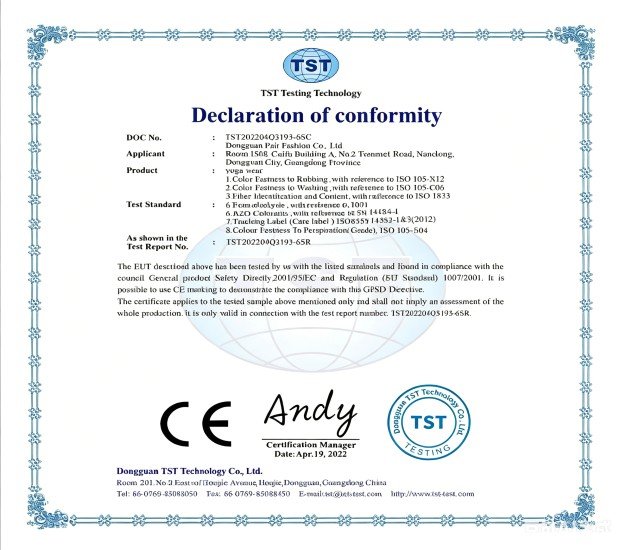
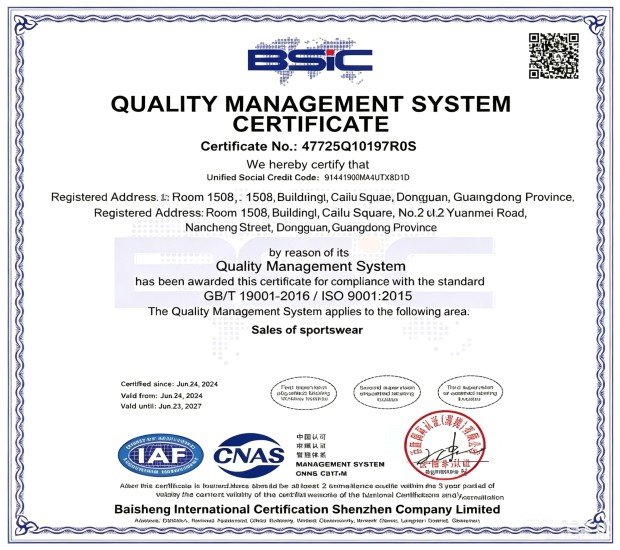
Certifications can help buyers evaluate quality systems, social compliance, recycled materials or product safety, but only when the certificate is valid, relevant and connected to the facility or material being used.
Common examples in apparel sourcing include:
ISO 9001 is relevant to quality-management systems and provides a recognized framework for managing consistent organizational processes and quality requirements. However, it does not mean every garment coming from the factory is automatically defect-free.
amfori BSCI
Used by many international buyers to evaluate social-performance conditions in supply chains. Buyers should review the applicable audit information rather than treating a BSCI logo as a general product-quality certificate.
GRS — Global Recycled Standard is relevant when recycled content, traceability and chain-of-custody claims matter. A brand selling recycled activewear should verify whether the material and supply chain used for its actual order support the intended claim rather than relying only on a supplier’s general certification statement.
OEKO-TEX STANDARD 100 is relevant when buyers need textile products and components to be tested for harmful substances under the applicable certification scope, making certificate validity and product coverage important points to verify before sourcing.
The important questions are:
Who owns the certificate?
What facility does it cover?
What is its scope?
Is it still valid?
Does it apply to the material used for my order?
Can the certificate number be verified?
Do not evaluate factories by simply counting certificate logos.
Three relevant and verifiable documents are more valuable than ten badges that have little connection to your order.
How Can You Verify Experience in Stretch and Performance Apparel?
A factory may have twenty years of garment experience and still have limited experience with technical yoga clothing.
General apparel experience and performance-activewear experience are not identical.
To test technical knowledge, move beyond questions such as:
“Can you make yoga leggings?”
Instead ask questions that require the supplier to explain how it thinks.
For leggings:
How will fabric stretch affect the finished measurements?
What can cause waistband rolling?
How would you evaluate recovery after repeated stretching?
How do you manage opacity in pale colors?
What construction would you recommend for high-stretch seams?
What happens if bulk fabric elasticity differs from the sample fabric?
For sports bras:
How do you evaluate underband stability?
How does fabric recovery affect support?
How should strap length change during size grading?
Which areas are most sensitive to measurement variation?
How do you prevent elastic distortion during sewing?
For brands sourcing sports bras as part of a broader yoga or activewear collection, supplier evaluation should also cover support construction, fabric recovery, size consistency and the manufacturer’s ability to reproduce approved specifications across wholesale production.
A technically experienced manufacturer may not give the answer you expected.
That can actually be a positive sign.
A supplier willing to say:
“This construction may not work with your selected fabric because the recovery is too weak”
can be more valuable than one that says:
“Yes, no problem”
to every request.
What Should You Look for During a Virtual or On-Site Factory Audit?
An on-site factory visit remains one of the strongest forms of verification, but a well-managed live video audit can also reveal useful information before travel.
Ask to see the factory in a logical production sequence.
1. Sample Room
Look for pattern-making equipment, sample garments, technicians and active development work.
Ask how sample revisions are recorded.
2. Fabric Inspection and Storage
Look at how rolls are identified and stored.
Ask how bulk fabric is checked before cutting.
3. Cutting Department
Observe cutting tables, markers, bundle identification and material handling.
Ask how different sizes, colors and production lots are separated.
4. Sewing Lines
Look at what products are actually being made.
If the supplier claims to specialize in yoga clothing but every visible line is producing woven shirts, ask why.
5. In-Line QC
Ask where defects are identified during production rather than waiting until garments are finished.
6. Finishing and Final Inspection
Look at measurement checking, visual inspection and defect segregation.
7. Packing Area
Check whether styles, colors and sizes are clearly separated and identified.
A useful technique during a virtual audit is to ask the representative to move between departments live.
This reduces dependence on polished promotional footage.
How Do You Evaluate a Supplier’s Technical Knowledge Through Its Answers?
Communication quality is often misunderstood.
Fast English replies are convenient, but good communication is not simply replying within five minutes.
For technical apparel sourcing, strong communication means the supplier can:
Identify missing information
Explain trade-offs
Challenge unrealistic specifications
Confirm assumptions
Record revisions
Separate confirmed facts from estimates
Escalate technical questions to the right person
Consider two responses to the same buyer request.
Supplier A:
“Yes, we can make it. Quality is very good.”
Supplier B:
“We can develop this style, but the fabric in your reference appears to have stronger recovery than the 190 GSM option in your specification. If compression is important, we recommend testing both materials before confirming the pattern.”
Supplier B has provided more useful information even though the answer is less immediately reassuring.
A professional manufacturer does not simply agree.
It helps the buyer identify where the product can fail.
How Do You Verify Whether the Factory’s Sample Represents Its Real Production Capability?
A beautiful sample does not always prove bulk capability.
Factories often use experienced sample technicians to make development garments. Bulk orders are produced by sewing-line operators working under production targets.
Ask:
Is the sample made inside the same facility as bulk production?
Will the same pattern file be used?
Will bulk use exactly the same fabric specification?
Which construction instructions will be transferred to the sewing line?
Is a pre-production sample required?
How are approved measurements communicated to production?
How are special sewing points documented?
If the sample requires techniques that the bulk line rarely performs, this deserves attention.
A manufacturer should be able to explain how it converts:
Approved Sample → Production Specification → Line Instruction → QC Standard
Without that bridge, sample quality can remain isolated from bulk quality.
What Are the Biggest Red Flags Before Paying a Sample Fee or Deposit?
Not every problem should disqualify a supplier.
A late email or imperfect sample can happen in a legitimate manufacturing relationship.
The more serious warning signs are patterns of opacity, inconsistency or unrealistic promises.
Watch for suppliers that:
Refuse to provide a verifiable company identity
Avoid live factory verification
Cannot clearly identify the production location
Provide certificates under unrelated companies without explanation
Change payment information unexpectedly
Quote before understanding the product specification
Promise every customization without discussing technical limitations
Offer unusually low prices without explaining the cost structure
Cannot define sample or bulk approval procedures
Refuse to discuss measurement tolerances
Cannot explain how defects are handled
Push aggressively for a large deposit before specifications are finalized
Give conflicting MOQ, price or lead-time information
Cannot explain which processes are outsourced
One of the most important red flags is certainty without evidence.
Manufacturing always involves variables.
Fabric availability changes. Custom colors take time. Complicated patterns require testing. Production schedules become full.
A supplier that promises:
“Any quantity, any fabric, any design, fastest delivery, lowest price, no quality problem”
is not necessarily demonstrating capability.
It may simply be avoiding difficult questions.
What Evidence Should Be Collected Before a Manufacturer Enters the Final Shortlist?
A professional buyer should create a simple supplier due-diligence file before approving a manufacturer.
| Verification Area | Evidence to Collect | Why It Matters |
|---|---|---|
| Company Identity | Business registration and contracting entity | Confirms who you are doing business with |
| Production Location | Address, live video or audit | Confirms where production takes place |
| Relevant Experience | Comparable product samples or production examples | Shows category-specific capability |
| Factory Capacity | Lines, workers, current loading, available capacity | Tests whether delivery promises are realistic |
| Quality System | QC flow, inspection records, tolerance standards | Shows how defects are controlled |
| Certifications | Current applicable documents | Supports compliance verification |
| Technical Capability | Answers to product-specific questions | Reveals actual activewear knowledge |
| Commercial Terms | MOQ, payment, lead time, Incoterm | Defines business fit |
| Sample Process | Revision records and approval method | Shows development discipline |
| Defect Handling | Written corrective-action process | Clarifies what happens when production fails |
A useful supplier-verification process should answer five questions before serious money is committed:
1. Who am I paying?
2. Where will my product actually be made?
3. Has this production team made comparable products before?
4. What evidence shows that the factory can reproduce the agreed standard?
5. What happens commercially if it does not?
If those answers are clear, the manufacturer is ready for deeper evaluation through sampling and quotation comparison.
If they remain vague, moving quickly to bulk production simply transfers unresolved uncertainty into a much more expensive stage.
The purpose of factory verification is not to find a supplier with zero risk. No manufacturer can offer that. The purpose is to identify risks before they become inventory, delivery or customer problems.
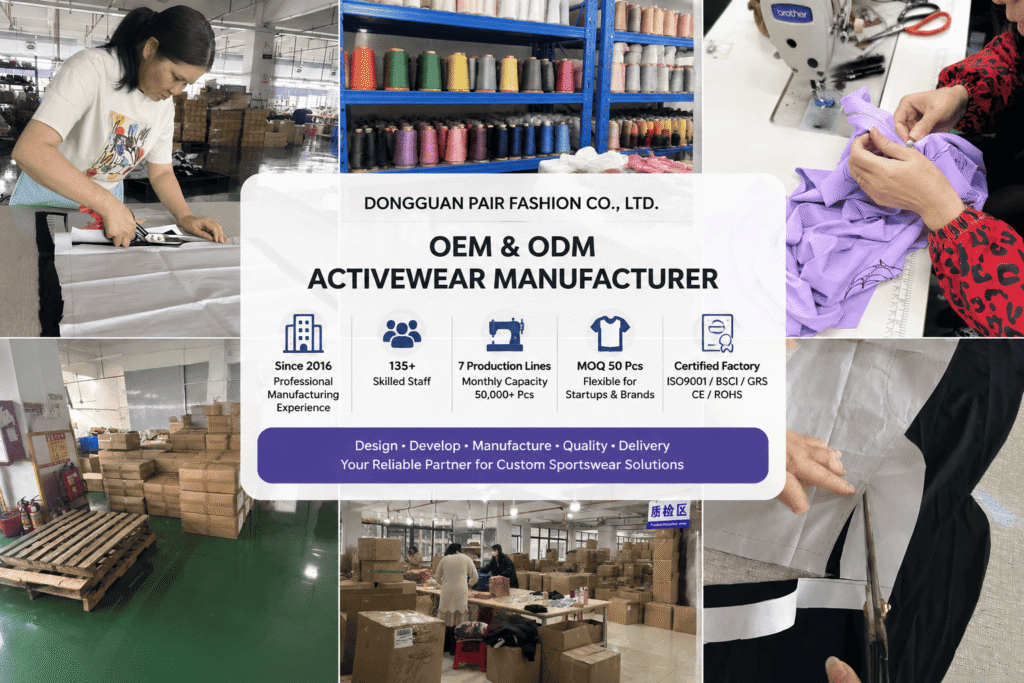
Which Type of Yoga Clothing Manufacturer Fits Your Brand and Sourcing Stage?
The right yoga clothing manufacturer depends on where your brand is today, not where you hope it will be three years from now. Startups often need low inventory exposure, development support and flexible communication. Growing DTC brands usually need repeatability and faster replenishment. Established retailers care more about compliance, capacity planning and documented quality systems. Brands expanding beyond yoga-specific products into broader activewear collections should also evaluate whether the supplier can coordinate multiple categories, materials and repeat production under one sourcing program. The best supplier is therefore the one whose business model, production structure and order economics match your current sourcing stage.
Factory vs Trading Company vs Integrated Supplier: Which Should You Choose?
A direct factory is often attractive because it gives buyers closer access to production, technical teams and costing. But “factory direct” should not be treated as an automatic quality guarantee.
A trading company may coordinate several specialized factories, which can be useful when a collection includes different product categories or complex sourcing requirements. An integrated supplier may own core production while outsourcing selected processes such as printing, embroidery, dyeing, bonding or packaging.
The key question is not simply:
“Are you a factory?”
It is:
“Which critical parts of my product do you directly control?”
For yoga apparel, this matters because product quality may depend on several different operations.
A supplier may sew leggings internally but outsource:
Fabric knitting
Dyeing
Heat-transfer logos
Silicone branding
Laser cutting
Bonding
Packaging
Outsourcing is normal in apparel manufacturing. The risk appears when the supplier cannot clearly explain who controls each step, how specifications are communicated and who is responsible when something goes wrong.
A strong supplier should be able to map the production route clearly.
For example:
Fabric mill → dyeing → incoming inspection → cutting → logo process → sewing → in-line QC → finishing → final inspection → packing
That transparency is more valuable than simply hearing “we are factory direct.”
Low-MOQ Manufacturer vs Large-Volume Factory: Which Model Fits Your Order Strategy?
Low MOQ is often attractive to startups because it reduces initial inventory exposure.
But low MOQ is not automatically better.
A smaller production run may involve:
Higher fabric cost
Higher setup cost per unit
Less favorable packaging economics
More expensive custom dyeing
Lower production efficiency
A large-volume factory can often produce at a lower unit cost, but it may require:
Higher MOQ
More standardized order structure
Earlier material planning
Larger deposits
More predictable forecasts
The right choice depends on the cost of being wrong.
Imagine two brands.
Brand A is launching its first yoga collection with no historical sales data.
Brand B already sells 2,000 units of a core legging every quarter.
For Brand A, buying 100–150 pieces at a slightly higher unit price may be the safer commercial decision.
For Brand B, continuing to buy tiny runs can become inefficient.
This is why MOQ should be evaluated together with:
Sell-through rate
Cash flow
Storage cost
Reorder speed
Product lifecycle
Number of colors
Number of SKUs
MOQ is not only a factory condition. It is an inventory-risk decision.
Product Development-Led Manufacturer vs Production-Led Factory: What Is the Difference?
Some manufacturers are designed mainly to execute complete specifications.
Others are stronger at helping buyers develop the product before production begins.
A production-led factory is usually most efficient when the buyer already has:
Complete Tech Pack
Final measurements
Approved fabric
Confirmed color
Defined stitching
Label files
Packaging specification
The buyer gives instructions. The factory executes them.
A development-led manufacturer is more useful when the buyer still needs technical decisions before production.
That may include:
Pattern adjustment
Fabric alternatives
Compression changes
Fit correction
Seam construction recommendations
Cost engineering
Sample revision
Size grading support
The distinction matters because many brands overpay for the wrong capability.
A mature brand with an experienced technical team may not need extensive design support.
A first-time founder with only reference images may need much more guidance.
The wrong supplier can create friction in both directions.
A highly technical brand may become frustrated with a factory that keeps asking basic questions.
A new founder may become overwhelmed by a factory that expects complete production files from day one.
Who Needs Strong Technical Development Rather Than the Lowest Price?
Brands developing fitted performance apparel should place more weight on technical capability when the product depends on:
Compression
High stretch
Support
Complex panels
Shaping
Bonded construction
Laser cutting
Seam reduction
Specialty fabrics
Precise size grading
A basic oversized cotton top may tolerate minor pattern variation.
A compression legging usually will not.
If the rise is wrong by even a small amount, the waistband may roll.
If the fabric stretch ratio changes, the garment may feel too loose or too tight.
If the size grading is poorly controlled, one size may fit well while another becomes uncomfortable.
This is why premium yoga brands often need a manufacturer that understands the relationship between:
fabric behavior + pattern dimensions + construction + movement
The cheapest quote may come from a factory that sees only the garment.
The stronger supplier sees the product system.
Which Supplier Type Fits Startups, DTC Brands, Retailers, Wholesalers and Mature Brands?
Different buyer types should prioritize different manufacturer characteristics.
| Buyer Type | Main Sourcing Priority | Supplier Profile That Usually Fits Best |
|---|---|---|
| First-Time Startup | Lower risk, guidance, flexible MOQ | Development-led flexible manufacturer |
| Growing DTC Brand | Repeat orders, stable fit, faster replenishment | Flexible factory with scalable production |
| Premium Yoga Brand | Technical fit, fabric performance, construction | Performance-activewear specialist |
| Wholesaler | Cost, broad style range, delivery | Efficient production-led manufacturer |
| Retail Chain | Compliance, consistency, documentation | Structured medium/large factory |
| Designer Brand | Product originality, sampling, detail control | Strong development-led manufacturer |
| Marketplace Seller | Speed, cost control, proven styles | Stock + customization hybrid supplier |
| Mature Global Brand | Capacity, compliance, risk control | Large structured manufacturer with documented systems |
These categories are not permanent.
A brand may begin with one supplier profile and move toward another as it grows.
For example:
A startup may first need flexible low-volume development.
After three successful seasons, the same brand may care more about:
Reserved production capacity
Faster replenishment
Fabric continuity
Quality documentation
Better volume pricing
That does not necessarily mean changing manufacturers.
It means the supplier relationship must evolve.
When Should a Brand Prioritize Development Support Over Production Capacity?
Development support matters more when the product is still uncertain.
Typical signs include:
The fit has not been finalized
Several fabrics are being considered
The buyer needs cost alternatives
The brand lacks internal technical staff
The first collection is still being defined
Product references exist, but no full Tech Pack is available
Size grading still needs work
In this situation, choosing a giant factory simply because it has high capacity may not solve the real problem.
The brand does not yet need 100,000 pieces.
It needs one excellent sample.
Once the product is stable, capacity becomes more important.
This leads to a simple sourcing principle:
Early stage: optimize for learning.
Growth stage: optimize for repeatability.
Mature stage: optimize for scale and control.
When Should a Brand Prioritize Production Capacity Over Development Flexibility?
Capacity becomes more important when sales are already proven.
Common signals include:
Frequent stockouts
Seasonal launches with fixed deadlines
Large wholesale commitments
Retail purchase orders
Multiple simultaneous SKUs
International distribution
High monthly replenishment volume
At this stage, the manufacturer must do more than make a good product.
It must plan:
Material purchasing
Production slots
Labor allocation
QC staffing
Packaging
Shipping schedules
A supplier that was excellent at 300 pieces may struggle at 8,000 pieces.
That is why buyers should ask:
“What happens operationally if my order becomes five times larger?”
The answer should include real production planning, not just:
“No problem, we can do it.”
Manufacturer Fit Matrix: Match Brand Stage, Order Volume and Product Complexity to the Right Supplier
A practical way to choose supplier type is to assess three variables:
Brand stage
Order volume
Product complexity
| Brand Stage | Order Volume | Product Complexity | Best-Fit Manufacturer Type |
|---|---|---|---|
| Startup | Low | Low | Flexible low-MOQ factory |
| Startup | Low | High | Development-led technical manufacturer |
| Growing | Medium | Low | Efficient production-led factory |
| Growing | Medium | High | Technical activewear specialist with scalable capacity |
| Established | High | Low | Large-volume structured manufacturer |
| Established | High | High | Large technical manufacturer with strong QC and compliance |
| Marketplace Seller | Low/Medium | Low | Stock + private label supplier |
| Designer Brand | Low/Medium | High | Development-led custom manufacturer |
This matrix helps buyers avoid a common mistake:
selecting a supplier based on reputation rather than suitability.
A famous factory can still be the wrong choice for your order.
A smaller manufacturer can sometimes be commercially smarter if it gives your brand better access to:
Technical support
Flexible quantities
Faster decision-making
More attention during development
The opposite is also true.
A small flexible supplier may become a bottleneck once sales accelerate.
How Should You Know When Your Brand Has Outgrown Its Current Manufacturer?
A brand may have outgrown its supplier when the relationship begins creating structural limits rather than occasional problems.
Warning signs include:
Reorders are consistently delayed
Capacity becomes unavailable during peak season
Product quality drops when order volume increases
The factory cannot reserve production time
Communication slows as orders become more complex
Material continuity becomes difficult
New product development is repeatedly delayed by existing production
The supplier cannot support required compliance
Large retailers require documentation the factory cannot provide
Changing manufacturers should still be approached carefully.
The first step is not always to leave.
Sometimes the solution is to negotiate:
Dedicated production capacity
Material forecasting
Repeat-order planning
Annual agreements
Priority development
Better QC documentation
If those solutions are not possible, supplier diversification may become more practical.
Why the Best Manufacturer Today May Not Be the Best Manufacturer Tomorrow
Supplier selection is not a one-time decision.
The relationship should be reviewed as the business changes.
A brand can ask once or twice a year:
Has our average order size changed?
Are we launching more SKUs?
Do we need faster replenishment?
Are retailer compliance requirements increasing?
Has our target product quality moved upward?
Are we experiencing repeated stockouts?
Are we paying for capabilities we no longer need?
Are we missing capabilities we now require?
The goal is not to constantly switch factories.
Frequent supplier changes can destroy product consistency.
The goal is to make sure the manufacturer continues to fit the brand’s actual needs.
A good sourcing relationship is not decided by how long it continues. It is decided by whether both sides can keep growing together without bringing unnecessary risks to each other.
How Should Buyers Compare Samples From Different Yoga Clothing Manufacturers?
Buyers should compare yoga clothing samples under the same specification, wear-test conditions and scoring system rather than judging which sample looks best when it arrives. A useful sample evaluation measures fit accuracy, fabric performance, stretch recovery, opacity, construction, movement comfort, branding execution and revision accuracy. Most importantly, buyers should evaluate how each manufacturer responds to problems, because the ability to correct a sample consistently often reveals more about future production reliability than a visually impressive first sample.
Why Should Every Shortlisted Manufacturer Receive the Same Product Brief?
A supplier comparison is only meaningful when every manufacturer is trying to make the same product.
If Factory A receives a complete Tech Pack while Factory B receives three reference photos and Factory C is allowed to choose its own fabric, comparing their prices and samples will produce misleading conclusions.
Before sampling, prepare one standardized development package.
Depending on the product, it should include:
- Technical sketches
- Front and back views
- Measurement chart
- Measurement points
- Size specification
- Target fabric composition
- Target fabric weight
- Stretch and recovery expectations
- Color reference
- Seam construction
- Logo dimensions and position
- Label requirements
- Packaging requirements
- Target quantity
- Destination market
- Expected retail positioning
If some details are still undecided, identify them clearly.
For example:
Fabric composition: Manufacturer may recommend alternatives, but target hand feel is soft, matte and medium compression.
This is much better than leaving the fabric completely undefined.
Ask every supplier to identify deviations from the original specification before making the sample.
If a factory changes the fabric from 75% nylon / 25% spandex to 80% polyester / 20% spandex, that change should be visible in the comparison.
Otherwise, you may believe you are comparing manufacturing capability when you are actually comparing completely different product specifications.
How Do You Compare Fit Accuracy Rather Than Simply Judging Appearance?
A yoga garment should never be evaluated only on a hanger, mannequin or model standing still.
Yoga and activewear are movement products.
The garment has to maintain its fit while the body bends, stretches, squats, walks and sits.
For leggings, evaluate the sample during:
- Standing
- Walking
- Deep squats
- Lunges
- Forward folds
- Seated positions
- Repeated bending
- Light training movements
Watch for:
- Waistband rolling
- Back-waist gaping
- Excessive front-rise tension
- Crotch pulling
- Side-seam twisting
- Knee bagging
- Uneven compression
- Leg opening movement
- Fabric transparency under stretch
Fit should also be evaluated against the approved measurement chart.
A garment can feel comfortable and still be outside tolerance.
Likewise, a garment can technically match the measurement chart but perform poorly because the relationship between fabric stretch and pattern dimensions is wrong.
That distinction is important.
For fitted activewear:
measurement accuracy does not automatically equal fit accuracy.
Both need to be checked.
How Should Sports Bra Samples Be Evaluated?
Sports bras require a different testing approach because support depends on the interaction between fabric, elastic, pattern, straps and body movement.
Check:
- Underband stability
- Strap length
- Strap pressure
- Side coverage
- Front coverage
- Armhole comfort
- Neckline stability
- Cup positioning
- Elastic recovery
- Movement during exercise
The underband deserves particular attention.
If it is too loose, the bra may move upward during activity.
If it is too tight, the garment can become uncomfortable even when the rest of the fit is correct.
Size grading also matters.
A sports bra that performs well in size S does not automatically perform equally well in XL.
Ask how the manufacturer adjusts:
- Underband circumference
- Strap dimensions
- Cup coverage
- Armhole shape
- Elastic tension
A factory that simply enlarges every dimension proportionally may not achieve consistent support across the size range.
How Can You Evaluate Stretch Recovery, Opacity and Compression Between Samples?
Fabric should be evaluated as a performance component, not simply by touch.
Softness can create an excellent first impression, but softness alone tells you very little about what happens after several hours of wear.
Stretch Recovery
Stretch the garment repeatedly and allow it to recover.
Observe areas such as:
- Knees
- Seat
- Waistband
- Underband
- Elbows for long-sleeve products
Look for permanent deformation.
A legging that develops loose knees after repeated movement may look excellent during a five-minute fitting but disappoint customers after normal use.
Opacity
Opacity should be tested under realistic stretch.
For leggings, perform a squat test under strong, even lighting.
Do not test only black.
Pale colors such as:
- White
- Beige
- Light grey
- Pastel pink
- Pale blue
- Mint
may reveal problems that are invisible in darker colors.
If the collection includes several shades, approve performance by color rather than assuming one fabric approval automatically covers every dye.
Compression
Compression should feel intentional and balanced.
Too little compression can make a performance garment feel unsupportive.
Too much compression can create:
- Difficult dressing
- Waist discomfort
- Restricted movement
- Unwanted seam pressure
Compare samples using the same wearer and test conditions whenever possible.
The question is not:
“Which sample is tightest?”
It is:
“Which sample delivers the intended support without reducing comfort and mobility?”
How Should Waistband Stability and Movement Performance Be Tested?
The waistband is one of the most common complaint areas in yoga leggings.
A waistband can look perfect in product photography and still roll, slide or fold during movement.
Test the waistband through repeated:
Squat → stand → bend → sit → walk → repeat
Observe whether it:
- Rolls downward
- Folds at the top edge
- Slides during movement
- Creates excessive abdominal pressure
- Gapes at the back
- Twists around the body
When problems appear, avoid assuming that the waistband itself is always responsible.
The actual cause may involve:
- Waistband height
- Waist circumference
- Fabric recovery
- Body-rise dimensions
- Pattern shape
- Seam placement
- Elastic structure
- Interaction between the waistband and main body fabric
This is another reason sample evaluation should test the manufacturer’s problem-solving ability, not just the finished garment.
A strong supplier should investigate why the waistband fails rather than immediately suggesting:
“We can make it tighter.”
Tighter is not always better.
How Do You Compare Stitching, Seam Durability and Construction Consistency?
Clean stitching matters, but visual appearance is only the first step.
Stretch seams need to survive repeated extension without breaking, popping or becoming uncomfortable.
Inspect:
- Stitch consistency
- Seam alignment
- Skipped stitches
- Loose threads
- Seam puckering
- Uneven tension
- Reinforcement points
- Bartacks where required
- Inside finishing
- Thread ends
- Logo alignment near seams
Then gently stretch high-stress areas.
For leggings, pay particular attention to:
- Crotch seams
- Inseams
- Waistband joins
- Pocket openings
For sports bras:
- Strap attachment
- Underband seams
- Side seams
- Binding
- Elastic joins
A seam can look beautiful while lying flat and still fail under tension.
If two factories use different construction methods, ask each supplier to explain why.
The purpose is not necessarily to force every manufacturer to use identical machinery.
Different constructions can produce good results.
The buyer needs to understand whether the method is appropriate for the intended product.
What Happens to the Garment After Washing, Stretching and Repeated Wear?
One of the biggest sample-evaluation mistakes is approving a garment after only one fitting.
Customers will not wear the product once.
A basic development test should include repeated wear and washing before final approval.
After washing, check:
- Overall shrinkage
- Length change
- Waist measurement
- Fabric hand feel
- Color change
- Pilling
- Seam distortion
- Logo condition
- Elastic recovery
- Shape retention
Measure the garment before and after testing.
Do not rely only on visual judgment.
For example:
| Measurement | Before Wash | After Wash | Change |
|---|---|---|---|
| Waist | 62.0 cm | 61.2 cm | -0.8 cm |
| Hip | 76.0 cm | 75.5 cm | -0.5 cm |
| Inseam | 64.0 cm | 62.8 cm | -1.2 cm |
Whether that change is acceptable depends on the specification.
The important point is that it is measured and recorded.
Also inspect the branding.
Heat-transfer logos, prints and silicone applications may look perfect before washing but develop:
- Cracking
- Peeling
- Edge lifting
- Distortion
- Color change
A sample should represent the customer experience after use, not just the appearance of a new garment coming out of a sample room.
How Should Buyers Record Sample Defects and Revision Accuracy?
Avoid sending revision feedback as a collection of informal messages such as:
“Waist is a little tight.”
“Can you make the leg better?”
“Logo looks slightly wrong.”
These comments are difficult to execute and almost impossible to audit later.
Use a structured sample comment sheet.
For each issue, record:
Location → Current Condition → Required Change → Measurement / Reference → Photo → Priority
For example:
| Area | Issue | Required Revision |
| Waist | 1.5 cm too tight | Increase half-waist by 0.75 cm flat |
| Front Rise | Excess tension | Increase front rise according to marked sample |
| Logo | 8 mm too low | Move logo upward 8 mm |
| Leg Opening | Too loose | Reduce circumference by 1 cm |
| Fabric | Insufficient recovery | Submit alternative fabric option |
Photographs with arrows and measurements reduce misunderstanding.
Each revised sample should also have a clear version number:
Sample V1 → Sample V2 → PP Sample
Do not allow multiple untracked versions to circulate between the buyer and factory.
When a manufacturer receives comments, evaluate:
- Did it understand every point?
- Did it ask questions where necessary?
- Did it record the changes?
- Did it correct the requested area?
- Did the correction create a new problem elsewhere?
This last question is particularly important.
Changing one pattern area can influence another.
A supplier that blindly follows individual comments without understanding the garment as a whole may solve one problem while creating two more.
First Sample vs Revised Sample: Which Result Reveals More About the Manufacturer?
The revised sample often tells buyers more about a manufacturer than the first sample.
A first sample tests interpretation.
A revised sample tests learning ability.
Suppose Factory A produces an excellent first sample but performs poorly when asked to change the waistband.
Factory B produces an average first sample, receives eight comments and corrects all eight accurately in the second version.
Which factory is stronger?
Factory A may still be excellent.
But Factory B has demonstrated something extremely valuable:
it can convert feedback into controlled product improvement.
That capability matters because commercial products rarely remain unchanged forever.
Brands introduce:
- New colors
- New fabrics
- New pockets
- New inseams
- New size ranges
- New branding
- Customer-driven fit adjustments
The supplier needs to manage change without losing control of the original product.
A useful metric is revision accuracy:
Number of correctly completed revisions ÷ total requested revisions × 100
If ten revisions were requested and nine were executed correctly:
Revision Accuracy = 90%
This does not need to become a rigid mathematical purchasing rule, but it gives buyers a more objective way to compare supplier responsiveness.
Should Buyers Pay More Attention to Sample Speed or Sample Accuracy?
Fast sampling is useful, particularly when a launch deadline is approaching.
But speed without accuracy creates false efficiency.
Consider:
Factory A
- Sample: 4 days
- Requires 4 revisions
- Final approval: 24 days
Factory B
- Sample: 8 days
- Requires 1 revision
- Final approval: 15 days
Factory A has the faster headline sample time.
Factory B gets the product approved sooner.
This is why buyers should track:
Time to first sample
and
Time to approved sample
as separate metrics.
The second number often matters more.
Sample Comparison Scorecard: How Should Multiple Factories Be Ranked Fairly?
Once samples have been worn, measured, washed and revised, convert the results into a standardized score.
A practical scorecard could look like this:
| Evaluation Area | Suggested Weight |
| Fit & Measurement Accuracy | 20% |
| Fabric Performance | 15% |
| Construction & Seam Quality | 15% |
| Revision Accuracy | 15% |
| Movement Performance | 10% |
| Communication & Technical Understanding | 10% |
| Branding Execution | 5% |
| Sample Timing | 5% |
| Documentation & Version Control | 5% |
| Total | 100% |
Then score each factory from 1 to 5.
For example:
| Manufacturer | Fit | Fabric | Construction | Revision | Movement | Communication | Final Weighted Score |
| Factory A | 5 | 3 | 4 | 3 | 4 | 4 | 3.95 |
| Factory B | 4 | 5 | 5 | 5 | 5 | 4 | 4.65 |
| Factory C | 3 | 4 | 3 | 4 | 3 | 5 |
The score does not make the decision automatically.
It makes the trade-offs visible.
Factory A may have the best fit but weaker fabric.
Factory B may cost more but perform consistently across almost every technical category.
Factory C may communicate exceptionally well but still require construction improvement.
That gives the buyer something much more useful than:
“I think Factory B’s sample feels better.”
What Should Be Approved Before Moving From Sample to Bulk Production?
Sample approval should create a production reference, not simply an email saying:
“Sample approved.”
Before bulk production, the buyer should confirm the final version of:
- Pattern
- Measurement chart
- Measurement tolerances
- Fabric specification
- Color standard
- Stitching construction
- Logo artwork
- Logo dimensions
- Logo placement
- Labels
- Trims
- Packaging
- Size assortment
- Approved physical sample or sealed reference
If something changes after approval, document the change.
For example:
Approved Sample: V2
Bulk Change: Replace 2 cm waistband elastic with 2.5 cm elastic
Reason: Improved stability
Approved By: Buyer
Date: XX/XX/XXXX
This creates traceability.
When a bulk problem appears, the buyer and manufacturer can determine whether production followed the approved standard.
Without documentation, disputes often become:
“We thought you approved this.”
versus:
“That is not what we approved.”
What Does a Good Sample Process Actually Tell You About a Manufacturer?
A sample is more than a prototype.
It is a small-scale test of the future supplier relationship.
During sampling, buyers can observe:
- How carefully the factory reads specifications
- Whether it identifies technical risks
- How accurately it executes measurements
- How it selects materials
- How it records changes
- How it communicates problems
- Whether it meets realistic deadlines
- How accurately it completes revisions
These behaviors often predict what will happen during bulk production.
That is why the best sample is not necessarily the garment that looks most impressive when the courier box is opened.
The more valuable sample is the one supported by a manufacturer that can explain:
what was made, why it was made that way, what changed during development and how the approved result will be reproduced in bulk.
For global brands, that is the point where sampling stops being a product-development expense and becomes one of the most useful forms of supplier due diligence.
How Much Does Private Label Yoga Clothing Manufacturing Cost in China?
The price of private label yoga clothing in China depends on fabric, garment construction, order quantity, color requirements, branding, testing, packaging and production complexity rather than one standard factory price. Buyers should compare the total landed and development cost instead of choosing the lowest unit quotation. Two manufacturers can quote very different prices for what appears to be the same legging because the underlying fabric, workmanship, testing standards and commercial assumptions may be different.
What Determines the Factory Price of Private Label Yoga Clothing?
For most yoga clothing programs, the factory price is built from several cost layers:
Fabric + Trims + Labor + Branding + Packaging + Testing / QC + Factory Overhead + Commercial Margin
Fabric is often one of the largest variables.
A basic polyester-spandex fabric and a premium nylon-spandex performance fabric can create very different garment costs even when the pattern is identical.
Construction also matters.
Compare two black leggings:
Legging A
- Basic waistband
- Minimal panels
- Standard stretch seams
- No pockets
- Standard logo
Legging B
- Contoured waistband
- Multiple shaping panels
- Two side pockets
- Flatlock construction
- Reflective branding
- Additional reinforcement
They may look like similar products on a sourcing website, but their production time and material consumption are different.
This is why professional buyers should not ask only:
“What is your price for yoga leggings?”
A better request is:
“What is the price for this exact specification at 100, 300, 500 and 1,000 pieces?”
That produces information that can actually support a sourcing decision.
How Does Fabric Affect Yoga Clothing Price?
Fabric should be compared by specification, not just composition.
Two suppliers may both quote:
75% Nylon / 25% Spandex
but the materials can differ significantly in:
- GSM
- Yarn quality
- Knitting density
- Stretch
- Recovery
- Surface finish
- Compression
- Pilling resistance
- Colorfastness
- Moisture management
- Recycled content
A cheaper fabric can reduce the quotation while changing the entire product.
For example, lowering GSM may reduce material cost but also affect:
- Opacity
- Compression
- Hand feel
- Durability
- Shape retention
Similarly, switching from nylon-spandex to polyester-spandex may reduce cost for some programs, but the hand feel and positioning of the product may change.
When comparing factories, request the fabric specification alongside the quotation.
A useful comparison might include:
| Fabric Item | Factory A | Factory B |
|---|---|---|
| Composition | 75% Nylon / 25% Spandex | 75% Nylon / 25% Spandex |
| Weight | 220 GSM | 190 GSM |
| Finish | Matte | Standard |
| Stretch | 4-Way | 4-Way |
| Intended Performance | Medium Compression | Light Compression |
| Color | Custom Dyed | Available Stock Color |
Without this information, the lower quotation may simply represent a different product.
How Does MOQ Affect Unit Price and Total Inventory Risk?
Higher quantities usually improve unit economics because fixed costs are distributed across more garments.
These costs may include:
- Pattern development
- Cutting setup
- Printing setup
- Label setup
- Packaging setup
- Production-line changeover
- Fabric purchasing
But lower unit cost does not automatically mean lower business cost.
Consider a simplified example:
| Order Option | Quantity | Unit Cost | Inventory Investment |
| Option A | 100 pcs | $14.00 | $1,400 |
| Option B | 300 pcs | $11.50 | $3,450 |
| Option C | 1,000 pcs | $9.80 | $9,800 |
Option C has the best unit price.
But if only 400 pieces sell, the remaining inventory can eliminate the savings.
For a startup, paying an additional $2–$4 per garment can sometimes be commercially sensible if it prevents thousands of dollars from being trapped in unproven inventory.
For a mature brand with reliable sales data, the opposite may be true. Repeatedly purchasing tiny quantities can unnecessarily reduce gross margin and increase production administration.
MOQ should therefore be optimized against sell-through probability, not against unit price alone.
Why Can Custom Colors Increase the Real MOQ?
A garment factory may advertise an MOQ of 100 pieces, but the fabric mill may have a different minimum requirement for custom dyeing.
This creates two different MOQs:
Garment MOQ — the minimum number of finished garments the factory will produce.
Material MOQ / MCQ — the minimum quantity or color quantity required by the fabric supplier.
Suppose a factory accepts 100 leggings per color, but the fabric mill requires a larger quantity for a custom Pantone dye.
The buyer may need to:
- Purchase excess fabric
- Pay a dyeing surcharge
- Choose an available stock color
- Increase garment quantity
- Carry unused material into the next order
This is particularly important for brands planning many colors at low quantities.
A collection with:
3 styles × 6 colors × 100 pieces
may appear to be an 1,800-piece order.
But operationally, it can be much more complicated than:
3 styles × 2 colors × 300 pieces
even though both contain 1,800 garments.
More colors mean more:
- Fabric lots
- Dye approvals
- Cutting separation
- Production changeovers
- QC points
- Packaging complexity
Ask manufacturers to separate garment MOQ, fabric MOQ and color MOQ before approving the assortment.
How Much Does Custom Branding Add to the Cost?
Private label branding can range from a simple logo application to a complete branded packaging system.
Typical elements include:
- Heat-transfer logo
- Silicone logo
- Screen print
- Embroidery
- Woven label
- Printed care label
- Hangtag
- Barcode
- Size sticker
- Custom polybag
- Branded box
Each element has its own:
- MOQ
- Setup cost
- Unit cost
- Lead time
- Quality risk
A small logo may add very little to the unit cost.
But several branding techniques across multiple garment locations can become meaningful.
The mistake is treating every branding detail as free simply because it looks small.
For example:
Front logo + back logo + custom zipper pull + woven label + hangtag + printed bag
creates six separate components or processes that need to be purchased, approved and controlled.
For startup brands, simpler branding can often create a cleaner supply chain.
More branding does not automatically make the product feel more premium.
Sample Price vs Bulk Price: Why Are They Different?
Sample prices are often significantly higher than bulk unit prices because a sample is made individually rather than through normal production-line efficiency.
Sample development may involve:
- Pattern making
- Fabric sourcing
- Individual cutting
- Individual sewing
- Logo setup
- Technician time
- Revisions
- Courier charges
A bulk order spreads many of these activities across hundreds or thousands of units.
Therefore:
Sample Price ≠ Bulk Unit Price
A $60 sample does not mean the bulk garment will cost $60.
Likewise, a factory offering a free sample is not necessarily cheaper overall.
The more useful question is:
What does the complete development cycle cost until the product is approved?
Consider:
Factory A
- First sample: $40
- Four revisions: $30 each
- Development total: $160
Factory B
- First sample: $70
- One free revision
- Development total: $70
Factory A has the cheaper sample price.
Factory B has the lower development cost.
The same logic applies to time.
What Hidden Costs Should Buyers Ask About Before Comparing Quotations?
A quotation can appear inexpensive because several costs have not yet been included.
Before comparing manufacturers, clarify whether the quotation includes:
- Fabric
- Standard trims
- Custom labels
- Logo application
- Hangtags
- Polybags
- Barcode labels
- Custom packaging
- Testing
- Inspection
- Sample charges
- Pattern charges
- Printing setup
- Mold charges
- Custom dyeing surcharge
- Cartons
- Export documentation
- Domestic transportation
- Freight
- Duties and taxes
The objective is not to demand that every cost be included in the garment price.
It is to understand what the quoted price actually represents.
A professional quotation comparison should normalize the commercial basis.
If Factory A quotes EXW, Factory B quotes FOB and Factory C quotes DDP, their numbers should not be placed side by side without adjustment.
They include different responsibilities.
EXW vs FOB vs DDP: Which Price Should Global Buyers Compare?
Incoterms affect what is included in the supplier’s quotation and where responsibility changes between buyer and seller.
For simplified sourcing comparison:
EXW — Ex Works
The buyer generally takes responsibility from the supplier’s premises, including onward transportation and export arrangements as applicable.
FOB — Free on Board
Common in international apparel sourcing. The supplier generally manages the goods through export handling to the agreed port under the applicable FOB terms, while the buyer manages the main international freight and later costs.
DDP — Delivered Duty Paid
The seller assumes a much broader delivery responsibility to the agreed destination, including duties under the applicable arrangement.
The exact contractual responsibilities should always follow the current agreed Incoterm and named place.
For price comparison, convert quotations to a common basis wherever possible.
For example:
| Cost Component | Factory A | Factory B |
| Garment | $10.50 | $11.20 |
| Branding | $0.40 | Included |
| Packaging | $0.30 | Included |
| Export / Local Charges | $0.45 | Included in FOB |
| Comparable Pre-Freight Cost | $11.65 | $11.20 |
The original garment price makes Factory A look cheaper.
After normalization, Factory B is cheaper before international freight.
What Is Total Landed Cost and Why Does It Matter More Than Factory Price?
The cost that ultimately matters is not simply the number on the factory quotation.
A simplified landed-cost model is:
Product Cost + Packaging + Inspection + Freight + Insurance + Duties + Customs / Brokerage + Domestic Delivery = Landed Cost
Suppose two factories quote the same leggings:
Factory A: $9.50
Factory B: $10.20
Factory A appears cheaper by $0.70.
But Factory A may require:
- More expensive packaging
- Separate inspection
- Higher inland transport
- More rework
- Higher defect allowance
After all costs are included:
Factory A Landed Cost: $12.80
Factory B Landed Cost: $12.30
The “more expensive” factory has become the lower-cost supplier.
This is why sourcing teams should avoid making decisions from a single column in a quotation spreadsheet.
How Should Defect Risk Be Included in Supplier Cost?
Defects have a cost even when they are not listed on an invoice.
Suppose:
Factory A
- Landed cost: $10.00
- Unusable defect rate: 6%
Factory B
- Landed cost: $10.40
- Unusable defect rate: 1%
For every 1,000 pieces:
Factory A delivers approximately 940 sellable units.
Factory B delivers approximately 990 sellable units.
Ignoring other recovery arrangements, the effective cost per sellable garment becomes approximately:
Factory A: $10,000 ÷ 940 = $10.64
Factory B: $10,400 ÷ 990 = $10.51
Factory B was more expensive on paper.
It becomes cheaper when usable inventory is considered.
And this calculation still ignores:
- Customer complaints
- Returns
- Refunds
- Replacements
- Warehouse handling
- Negative reviews
- Brand damage
Quality is not separate from cost. Quality is part of cost.
How Should Buyers Compare Quotes From Multiple Yoga Clothing Manufacturers?
Send the same RFQ to every shortlisted supplier.
Then normalize the responses in one comparison sheet.
| Comparison Item | Factory A | Factory B | Factory C |
| Unit Price | |||
| MOQ | |||
| Fabric Specification | |||
| Fabric MOQ / MCQ | |||
| Sample Cost | |||
| Sample Lead Time | |||
| Bulk Lead Time | |||
| Logo Included? | |||
| Labels Included? | |||
| Packaging Included? | |||
| Testing Included? | |||
| Incoterm | |||
| Payment Terms | |||
| Quote Validity |
If one quotation is significantly lower than the others, do not immediately assume you found the best supplier.
Ask:
Why is this quotation lower?
Possible reasons include:
- Lower fabric weight
- Different fiber composition
- Stock fabric instead of custom fabric
- Simpler construction
- Different branding method
- Lower QC standard
- Excluded packaging
- Different Incoterm
- Strategic introductory pricing
Some of these reasons are perfectly acceptable.
The problem is not a low price.
The problem is a low price that cannot be explained.
Is the Cheapest Yoga Clothing Factory Usually the Best Choice?
No. Neither is the most expensive factory automatically the best.
The strongest commercial choice is usually the manufacturer that delivers the best balance of:
Product Performance + Consistency + Commercial Terms + Reliability + Acceptable Total Cost
A brand selling premium leggings at $90 may rationally spend more on fabric and construction than a brand selling basic leggings at $25.
The sourcing strategy should match the retail proposition.
A useful question is:
“What product quality does my customer expect at my retail price?”
Then work backward.
If the target retail price cannot support the manufacturing specification, there are only a few realistic options:
- Simplify the product
- Change the material
- Increase volume
- Reduce nonessential branding
- Improve retail price
- Accept lower margin
Pressuring the factory to produce the same specification at an unrealistic cost often creates a hidden compromise somewhere else.
How Should Brands Balance Price, MOQ, Quality and Cash Flow?
The lowest unit price is attractive.
The lowest MOQ is attractive.
The highest quality is attractive.
The fastest lead time is attractive.
But buyers rarely get the maximum of all four at the same time.
Supplier selection is a trade-off.
For early-stage brands, the priority may be:
Cash Flow → Product Validation → Quality → Unit Price
For growing brands:
Consistency → Replenishment → Margin → Capacity
For established brands:
Quality System → Capacity → Compliance → Cost Optimization
The correct sourcing decision changes with the business.
That is why a manufacturer quotation should not be treated as a simple price offer.
It is a proposal for how your inventory, cash and supply-chain risk will be structured.
The best factory price is not necessarily the lowest number. It is the cost structure that allows the brand to sell the right product at the right margin without taking unnecessary inventory, quality or delivery risk.
Trusted Manufacturing Standards For Global Sportswear Brands
We operate under internationally recognized quality, sustainability, and ethical manufacturing standards. Our certifications help ensure consistent product quality, responsible sourcing, and reliable production for global sportswear brands.
- 20+ Countries Served
- 6000+ Styles Developed
- 50,000 PCS Monthly Capacity
- 3-Day Sample Development
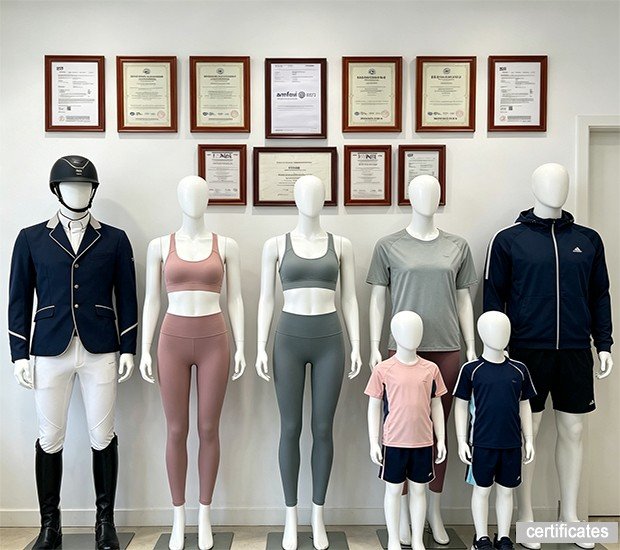
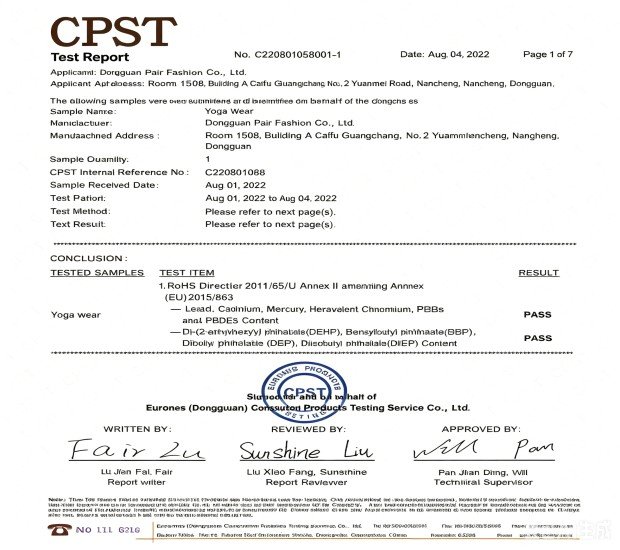
How Can You Tell Whether a Manufacturer Can Reproduce the Approved Sample in Bulk?
A good sample only proves that one garment can be made correctly. It does not mean that 500, 5,000 or 20,000 pieces can keep the same fit, measurements, fabric performance, stitching, color and finishing. Therefore, buyers should check whether the manufacturer has a stable production control system to make sure bulk production follows the approved sample, including confirmed specifications, material control, pre-production approval, in-line inspection and final quality records.
Why Is Sample Quality Alone Not Enough to Select a Manufacturer?
Sample rooms and bulk-production lines operate under very different conditions.
A development sample may be made by one of the factory’s most experienced technicians. The worker can spend more time correcting details, adjusting tension and manually improving the garment.
Bulk production is different.
A production line may involve:
- Multiple sewing operators
- Higher output targets
- Separate cutting teams
- Batch-based fabric handling
- Repeated size changes
- Different machine operators
- Several QC checkpoints
- Thousands of repeated operations
This creates more opportunities for variation.
A sample may be excellent because one technician understood the garment perfectly.
The buyer’s real concern should be:
Can that knowledge be transferred into a production system that hundreds or thousands of garments can follow?
That is the difference between sample capability and manufacturing capability.
What Evidence Shows That a Factory Has a Repeatable Quality System?
A repeatable system creates records.
Buyers should ask how the factory controls:
- Final pattern version
- Measurement chart
- Tolerances
- Fabric code
- Approved color
- Trim specification
- Logo placement
- Sewing construction
- Size grading
- Packaging
- Inspection criteria
The supplier should be able to show how these requirements move from development into production.
A practical production-control chain may look like:
Approved Sample → Final Tech Pack → PP Sample → Production Instruction → In-Line QC → Final Inspection → Shipment Record
If the factory relies mainly on workers remembering what the sample looked like, consistency becomes fragile.
The more complex the product, the more dangerous memory-based production becomes.
Why Should Fabric Be Locked Before Bulk Production?
For yoga clothing, fabric consistency can directly affect garment fit and performance.
Two fabric lots with the same nominal composition can still behave differently.
Differences may appear in:
- Stretch
- Recovery
- Weight
- Surface feel
- Opacity
- Color
- Shrinkage
- Compression
For example, the approved sample may use a fabric with strong recovery.
If the bulk lot has slightly weaker recovery, the same pattern can suddenly feel looser.
The garment has not changed.
The material has.
This is why buyers should confirm:
- Fabric supplier
- Fabric code
- Composition
- GSM
- Color
- Finish
- Stretch characteristics
- Approved lab dip or color reference
- Bulk-lot approval where required
For high-risk programs, it may also be useful to retain a piece of the approved fabric as a physical reference.
What Is a Pre-Production Sample and Why Does It Matter?
A pre-production sample, or PP sample, is intended to represent the actual materials and construction that will be used in bulk production.
This matters because earlier samples may have been made from:
- Available substitute fabric
- Temporary labels
- Sample-room trims
- Non-final colors
- Temporary packaging
A PP sample should confirm the product under conditions much closer to bulk manufacturing.
Before approving the PP sample, check:
- Final fabric
- Final color
- Final pattern
- Final measurements
- Final trims
- Final logo
- Final labels
- Final packaging
- Final sewing construction
The PP sample acts as a bridge between development and production.
Without it, buyers can accidentally approve one product while the factory prepares to manufacture another.
How Should Measurement Tolerances Be Controlled Across Sizes?
A measurement chart without tolerances is incomplete.
Bulk production cannot realistically produce every garment to exactly the same millimeter.
The buyer and manufacturer should agree on acceptable variation.
For example:
| Measurement Point | Spec | Tolerance |
|---|---|---|
| Half Waist | 32.0 cm | ±0.5 cm |
| Half Hip | 39.0 cm | ±0.7 cm |
| Front Rise | 25.0 cm | ±0.5 cm |
| Inseam | 64.0 cm | ±0.7 cm |
The acceptable tolerance depends on the product.
A loose hoodie may tolerate more variation than a fitted sports bra or compression legging.
Buyers should pay special attention to critical fit points, such as:
- Waist
- Hip
- Rise
- Inseam
- Underband
- Strap length
- Armhole
- Leg opening
These measurements have a stronger influence on wearability.
How Should Size Grading Be Verified Before Bulk Production?
Approving size S does not automatically approve the entire size range.
A well-fitted base size can still produce poor results in XL if grading rules are weak.
Before bulk production, buyers should consider:
- Size-set samples
- Measurement grading
- Fit checks across key sizes
- Support changes in sports bras
- Compression changes in leggings
- Strap and elastic adjustments
- Rise and hip relationships
For extended size ranges, this becomes even more important.
The same grading increment may not work equally well across:
XS → S → M
and
XL → 2XL → 3XL
If the brand serves plus-size customers, the manufacturer should demonstrate that larger sizes are developed intentionally rather than simply enlarged proportionally.
What Should Be Checked During Incoming Material Inspection?
Quality control should begin before sewing.
Incoming fabric and trims can already create production problems.
Typical checks may include:
- Fabric color
- Fabric width
- Fabric weight
- Visible defects
- Shade variation
- Stretch
- Shrinkage
- Trim dimensions
- Elastic performance
- Zipper function
- Logo materials
- Labels
For custom colors, shade variation deserves special attention.
If separate fabric rolls vary visibly, the final garments may not look consistent even if the sewing is perfect.
Material inspection is therefore not an administrative step.
It is the first defense against bulk quality failure.
What Should Be Checked During In-Line Inspection?
In-line inspection catches problems while production is still running.
This is much cheaper than discovering the same defect after thousands of garments have been completed.
Typical in-line checks may include:
- Measurements
- Seam construction
- Stitch quality
- Panel alignment
- Logo position
- Elastic placement
- Pocket position
- Label attachment
- Size identification
Imagine that a waistband seam is being sewn 5 mm too low.
If QC finds the problem after 50 pieces, correction is manageable.
If it is found after 3,000 pieces, the financial impact can be much larger.
This is why mature quality systems focus on early detection, not only final inspection.
What Should Be Checked During Final Inspection?
Final inspection should confirm whether the finished shipment meets the agreed acceptance standard.
A typical final inspection may cover:
- Quantity
- Size assortment
- Measurements
- Workmanship
- Color
- Labels
- Branding
- Packaging
- Carton markings
- Visual defects
The buyer should define defect categories clearly.
Common categories include:
Critical Defect
A defect that creates safety, legal or severe usability risk.
Major Defect
A defect likely to cause customer rejection or materially reduce product function.
Minor Defect
A small issue that does not significantly affect function or overall appearance.
The exact classification should be agreed before inspection.
AQL vs 100% Inspection: Which Is Better?
Neither method is automatically better in every situation.
AQL inspection uses a statistical sample from the production lot.
It is efficient for evaluating larger shipments.
100% inspection checks every garment against selected criteria.
It can be more appropriate when:
- Order value is high
- Product risk is high
- Supplier history is weak
- Defects are difficult to tolerate
- The buyer requires stronger screening
A practical strategy may combine methods.
For example:
- 100% check on critical measurements
- AQL inspection for general workmanship
- Additional testing on selected performance areas
The correct method depends on the product and risk level.
How Can Buyers Reduce Sample-to-Bulk Differences?
Several controls help reduce variation:
- Lock final fabric specification
- Approve PP sample
- Freeze the final pattern
- Use clear measurement tolerances
- Confirm size grading
- Approve logo placement
- Record construction details
- Define QC standards
- Conduct in-line inspection
- Retain approved reference samples
The goal is to turn the sample into a controlled production standard.
The less information left to interpretation, the lower the risk.
What Production Records Should Be Retained for Repeat Orders?
Repeat orders are easier when the factory keeps complete product records.
Useful records include:
- Pattern file
- Measurement chart
- Size grading
- Approved fabric code
- Color reference
- Trim specification
- Logo artwork
- Label files
- Packaging specification
- Approved sample
- QC report
- Production notes
- Previous defect records
These records help prevent a common reorder problem:
“The new batch is close to the last one, but not exactly the same.”
A repeat order should not begin from memory.
It should begin from the approved production history.
What Happens If Bulk Production Does Not Match the Approved Sample?
This should be agreed before the order starts.
The purchase agreement should define:
- Quality standard
- Measurement tolerance
- Inspection method
- Defect limits
- Rework responsibility
- Replacement responsibility
- Credit or refund process
- Shipping responsibility for corrective goods
The solution depends on the severity.
Possible outcomes include:
- Rework before shipment
- Sorting defective pieces
- Replacement production
- Partial credit
- Discount
- Rejection of affected goods
The important point is that corrective action should not be negotiated for the first time after a major failure.
How Can Buyers Test Bulk Consistency Before Scaling Orders?
The first production order should be treated as a controlled test.
Do not judge only whether it arrived.
Review:
- Sample-to-bulk consistency
- Measurement accuracy
- Defect rate
- Fabric consistency
- Color consistency
- Packaging accuracy
- Actual lead time
- Communication during production
- Corrective action
- Reorder readiness
A manufacturer that performs well on the first controlled order has earned more confidence for scaling.
A manufacturer that produces a good sample but a poor first bulk order has revealed an important limitation.
Repeatability Is More Valuable Than a Perfect Sample
A perfect sample is impressive.
A repeatable system is more valuable.
Global brands ultimately need a manufacturer that can produce:
Order 1 → Order 2 → Order 3
with controlled consistency.
That requires more than sewing skill.
It requires:
- Documentation
- Material control
- Version control
- Process discipline
- Quality records
- Corrective action
The best supplier is not the one that makes one perfect piece.
It is the manufacturer that can turn an approved product into a stable production standard that survives larger orders, new colors and future reorders.

Custom Plus Size Tennis Dress OEM ODM Cross Back Activewear Dress
Custom Plus Size Sports Bra OEM ODM Curve Activewear Bra
Custom Plus Size Activewear Top OEM ODM Long Sleeve Workout Shirt
Custom Muslim Sportswear Set OEM ODM Full Coverage Activewear

Custom Modest Activewear Tunic OEM ODM Muslim Sportswear Top
Custom Hooded Modest Activewear Set OEM ODM Muslim Loungewear
Custom Modest Activewear Set OEM ODM Muslim Sportswear Outfit
Custom Modest Sports Tunic OEM ODM Muslim Activewear Top

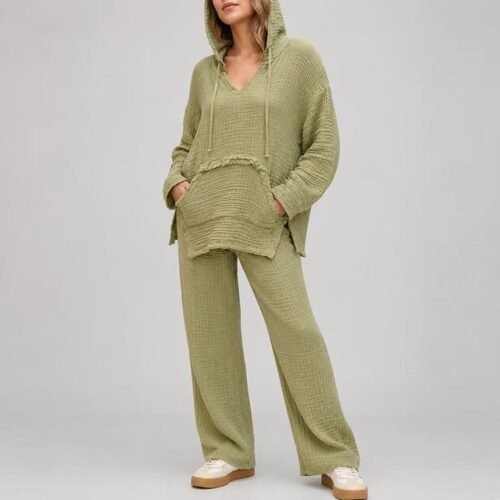
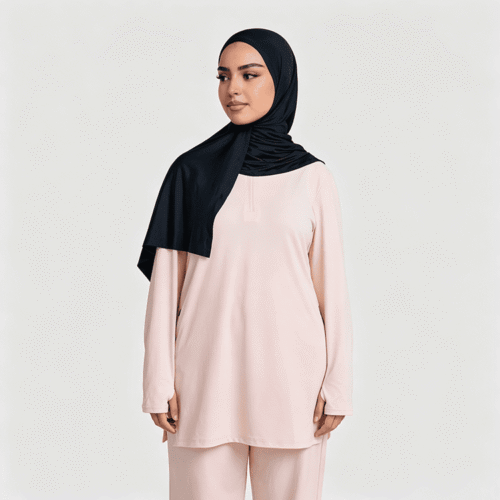
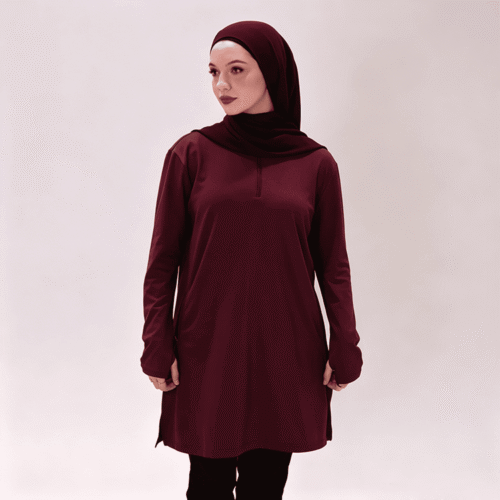
How Should Global Brands Choose the Right Private Label Yoga Clothing Manufacturer?
Global brands should choose a Private Label Yoga Clothing Manufacturer by combining product performance, factory verification, sample results, quality systems, commercial terms and supply reliability rather than relying on price or MOQ alone. A practical selection process uses a weighted supplier scorecard, eliminates manufacturers with unacceptable risks, tests the strongest candidates through sampling and then validates the preferred supplier with a controlled first production order before increasing volume.
What Are the Most Important Factors When Choosing a Yoga Clothing Manufacturer?
Not every sourcing criterion deserves equal weight.
A buyer may collect dozens of data points during supplier research, but the final decision usually comes down to a smaller group of factors:
- Product and technical capability
- Sample and fit performance
- Bulk-production consistency
- Quality-control system
- Commercial fit
- Communication and problem solving
- Compliance
- Capacity and delivery reliability
- Long-term scalability
The weighting should reflect the brand’s business model.
A startup launching its first collection may place more weight on development flexibility and inventory risk.
An established retailer may prioritize compliance, capacity and delivery reliability.
A premium yoga brand may assign more weight to fabric, fit and technical construction.
There is therefore no universal “best” manufacturer.
There is only a manufacturer that scores better against a particular buyer’s requirements.
How Should Buyers Build a Manufacturer Selection Scorecard?
A weighted scorecard converts supplier impressions into comparable information.
A practical framework might look like this:
| Selection Factor | Suggested Weight | What Buyers Should Evaluate |
|---|---|---|
| Product & Technical Capability | 15% | Yoga experience, construction knowledge, fabric understanding |
| Sample & Fit Performance | 15% | Measurements, movement, comfort, revision accuracy |
| Quality-Control System | 15% | Incoming, in-line and final inspection |
| Bulk Repeatability | 15% | Ability to reproduce approved standards |
| Commercial Fit | 10% | MOQ, price, payment terms, assortment flexibility |
| Communication & Problem Solving | 10% | Accuracy, technical responses, corrective action |
| Capacity & Lead Time | 10% | Realistic production planning and available capacity |
| Compliance & Documentation | 5% | Relevant audits, certifications and records |
| Scalability | 5% | Ability to support future growth |
| Total | 100% |
Score each manufacturer from 1 to 5 in every category.
For example:
1 = Poor
2 = Below Expectations
3 = Acceptable
4 = Strong
5 = Excellent
The weighted score can then be calculated as:
Supplier Score = Individual Rating × Category Weight
This prevents one attractive factor—such as a very low price—from dominating the entire decision.
Should Price Have the Highest Weight in Manufacturer Selection?
Usually not.
Price matters because the product still needs to achieve the brand’s target margin.
But price should be treated as one part of commercial fit, rather than the entire sourcing decision.
Consider two manufacturers.
Factory A
- Unit price: $9.80
- Sample quality: Average
- Revision accuracy: Weak
- Lead-time reliability: Uncertain
- QC documentation: Limited
Factory B
- Unit price: $10.60
- Sample quality: Strong
- Revision accuracy: High
- Lead-time planning: Clear
- QC documentation: Strong
Factory B costs $0.80 more per garment.
For a 1,000-piece order, that is an additional $800.
Whether that $800 is expensive depends on what it prevents.
If Factory B reduces:
- Defects
- Returns
- Rework
- Late delivery
- Customer complaints
the higher quotation may produce a lower total business cost.
The objective is not to ignore price.
It is to understand what you are receiving for the price difference.
What Are Deal-Breakers That Should Override a High Supplier Score?
Some risks should not be averaged away.
Suppose a factory scores very well in price, sample quality and communication but cannot provide required compliance documentation for your retailer.
The average score may still look attractive.
But the supplier is commercially unusable.
Buyers should therefore establish non-negotiable requirements before scoring.
Typical deal-breakers may include:
- Unverifiable company identity
- Unacceptable compliance status
- Unauthorized subcontracting
- Failure to meet mandatory product testing
- Inability to meet critical measurements
- Unacceptable payment risk
- Lack of required capacity
- Repeated intellectual-property concerns
- Refusal to accept agreed QC standards
- Serious transparency problems
These should operate as pass/fail criteria.
A manufacturer that fails a mandatory requirement should not win simply because it offers the lowest price.
How Should Startups Weight Manufacturer Selection Differently?
Startups usually face one dominant risk:
uncertain demand.
Their supplier scorecard should therefore give additional importance to:
- MOQ flexibility
- Sample development
- Communication
- Revision accuracy
- Inventory exposure
- Reorder feasibility
A startup scorecard might look like:
| Factor | Startup Weight |
| Sample & Development | 20% |
| Product Quality | 20% |
| MOQ / Commercial Flexibility | 15% |
| Communication | 15% |
| Bulk Repeatability | 10% |
| Lead Time | 10% |
| Price | 5% |
| Capacity | 5% |
This does not mean price is unimportant.
It means saving $1 per unit is less valuable if the brand must buy 1,000 additional units that it cannot sell.
How Should Growing DTC Brands Evaluate Manufacturers?
Growing DTC brands face a different problem.
They usually have some sales data, but demand can move quickly.
Their priorities shift toward:
- Repeat-order consistency
- Replenishment speed
- Fabric continuity
- Capacity
- Product development
- Quality stability
Imagine a legging that suddenly becomes a bestseller after a successful social campaign.
The sourcing question changes from:
“Can this factory make 200 pieces?”
to:
“Can this factory replenish 2,000 pieces without changing the fit, color or fabric feel?”
For DTC brands, repeatability becomes more valuable as sales become predictable.
A slightly flexible sample process cannot compensate for unreliable replenishment once stockouts begin affecting revenue.
How Should Established Brands and Retailers Evaluate Manufacturers?
Established brands often need stronger systems because the consequences of failure are larger.
They may need to evaluate:
- Factory audits
- Social compliance
- Product testing
- Capacity reservation
- AQL requirements
- Shipment deadlines
- Traceability
- Corrective-action procedures
- Documentation
- Supply-chain transparency
For these buyers, the factory is not simply producing clothing.
It is entering a larger operational system.
A late shipment can affect:
- Retail launch dates
- Distribution centers
- Store allocations
- Marketing campaigns
- Wholesale customers
Therefore, the cheapest manufacturer can become very expensive if it cannot operate predictably.
One Manufacturer vs Multiple Manufacturers: Which Strategy Is Better?
Using one manufacturer can simplify:
- Communication
- Product records
- Fabric purchasing
- Quality standards
- Payment
- Reorders
It can also create concentration risk.
If that supplier experiences:
- Capacity shortages
- Material problems
- Financial difficulties
- Quality failure
- Unexpected shutdowns
the buyer may have no immediate alternative.
Multiple manufacturers reduce dependency but create new challenges.
Different factories may produce slightly different:
- Fit
- Color
- Hand feel
- Construction
- Packaging
A growing brand may therefore use a primary + backup supplier strategy.
For example:
Primary Manufacturer
Produces core leggings, sports bras and repeat programs.
Secondary Manufacturer
Is qualified for overflow capacity, another product category or emergency production.
The secondary supplier does not need to receive equal volume.
Its value is maintaining an approved alternative.
Should You Split the Same Yoga Clothing Style Between Two Factories?
This should be done carefully.
Producing the same SKU at two factories sounds like an easy way to reduce supply risk.
In reality, it can create consistency problems.
Even with the same Tech Pack, two factories may use:
- Different fabric lots
- Different machine settings
- Different seam tension
- Different cutting methods
- Different QC interpretation
Customers do not care which factory made the garment.
They expect every unit under the same SKU to feel the same.
If dual production is necessary, the brand needs strong controls around:
- Fabric source
- Pattern version
- Measurement tolerance
- Construction
- Color
- Approved samples
- QC standards
For smaller brands, it is often easier to qualify a backup factory without immediately splitting the same production run.
How Many Manufacturers Should You Shortlist Before Sampling?
For most sourcing projects, contacting too many suppliers will create more work, but it does not always help buyers make a better final decision.
A more controlled funnel can be:
10–15 initial manufacturers
↓
5–7 document and capability reviews
↓
3–4 serious quotation comparisons
↓
2–3 sample developments
↓
1 primary supplier + 1 qualified alternative
The exact numbers can change.
The principle is more important:
screen broadly, test narrowly.
Sampling ten factories can become expensive and difficult to manage.
Sampling only one factory removes comparison.
Two or three serious candidates usually provide enough information to identify meaningful differences.
What Questions Should You Ask Before Making the Final Supplier Decision?
Before selecting the manufacturer, buyers should be able to answer:
Factory Verification
- Have we confirmed who will actually produce the order?
- Do we understand which processes are outsourced?
- Have we verified relevant documentation?
Product
- Does the sample meet fit and performance requirements?
- Were revisions completed accurately?
- Have key sizes been checked?
Materials
- Is the bulk fabric specification locked?
- Do we understand fabric MOQ and color MOQ?
- Can the same material be sourced for repeat orders?
Quality
- Are measurement tolerances agreed?
- Is the inspection method defined?
- Is there a PP sample or equivalent production reference?
Commercial
- Is MOQ suitable for our sales forecast?
- Have all major cost items been identified?
- Are payment terms acceptable?
- Are Incoterms clear?
Delivery
- Is the lead time realistic?
- Is capacity actually available?
- What happens if production is delayed?
Risk
- What happens if bulk quality fails?
- Who pays for rework?
- Do we have a backup plan?
If several of these questions still have unclear answers, the supplier selection process is not finished.
How Long Should You Test a Manufacturer Before Scaling Orders?
There is no universal number of orders, but buyers should avoid increasing volume simply because the first sample was successful.
A more controlled approach is:
Stage 1 — Sample Validation
Confirm product and communication capability.
Stage 2 — Controlled First Order
Test real production performance.
Stage 3 — First Reorder
Test whether the factory can reproduce the same product.
Stage 4 — Controlled Scaling
Increase quantity after consistency is demonstrated.
The first reorder is particularly revealing.
The initial order receives a great deal of attention because the supplier wants to win the customer.
The reorder tests whether the manufacturer has retained:
- Pattern
- Fabric specification
- Color
- Measurements
- Construction
- Packaging
- Production records
If the second order feels noticeably different from the first, scaling immediately becomes risky.
What Does a Strong First Production Order Look Like?
Do not judge the first order only by whether it ships.
Evaluate it against a supplier performance record.
| KPI | What to Measure |
| Sample-to-Bulk Accuracy | Does production match the approved reference? |
| Measurement Pass Rate | Are critical measurements within tolerance? |
| Defect Rate | How many units fail the agreed standard? |
| On-Time Performance | Did production meet the confirmed schedule? |
| Packaging Accuracy | Are sizes, labels and cartons correct? |
| Communication | Were issues reported before they became serious? |
| Corrective Action | Were problems resolved effectively? |
| Reorder Readiness | Are specifications and records retained? |
Keep this information.
Over time, the buyer can stop evaluating manufacturers through impressions and start evaluating them through actual performance.
Final Manufacturer Selection Scorecard
A final comparison might look like this:
| Criteria | Weight | Factory A | Factory B | Factory C |
| Technical Capability | 15% | 4 | 5 | 3 |
| Sample & Fit | 15% | 4 | 5 | 4 |
| Quality System | 15% | 3 | 5 | 4 |
| Bulk Repeatability | 15% | 4 | 5 | 3 |
| Commercial Fit | 10% | 5 | 4 | 4 |
| Communication | 10% | 4 | 5 | 5 |
| Capacity & Lead Time | 10% | 3 | 5 | 4 |
| Compliance | 5% | 4 | 5 | 4 |
| Scalability | 5% | 3 | 5 | 4 |
| Weighted Result | 100% | 3.80 | 4.90 | 3.75 |
The highest score should still be reviewed against the brand’s non-negotiable requirements.
A spreadsheet cannot replace judgment.
It can prevent judgment from being dominated by one attractive quotation, one friendly salesperson or one impressive sample.
What Does the “Best Private Label Yoga Clothing Manufacturer” Actually Mean?
There is no manufacturer that is best for every buyer.
The best supplier for a startup may be wrong for a national retailer.
The best supplier for a $25 legging may be wrong for a $120 technical yoga collection.
The best manufacturer is the one that can consistently deliver the product standard your customer expects, at a cost your business model can support, in quantities your inventory can absorb and within a supply system your team can manage.
That definition changes supplier selection from a search for the “best factory” into a search for the best operational fit.
And that is ultimately how global brands should make the decision:
Verify first. Compare objectively. Test through samples. Validate through production. Scale only after consistency is proven.
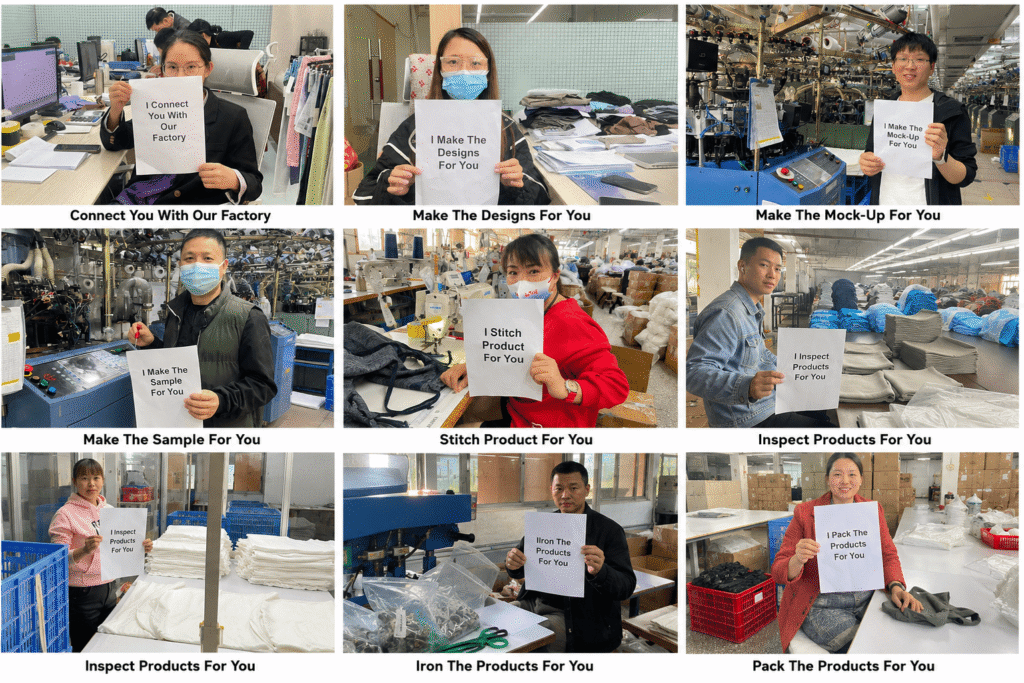
Frequently Asked Questions About Choosing a Private Label Yoga Clothing Manufacturer
1. What Should I Look for in a Private Label Yoga Clothing Manufacturer?
Look for a manufacturer that can demonstrate relevant activewear experience, consistent sample-to-bulk quality, reliable fabric sourcing, clear quality-control procedures and commercial terms that match your order strategy. Do not judge a supplier only by MOQ, price or factory size. Compare manufacturers using the same product specification, test their samples under real movement and washing conditions, verify the production facility and confirm how approved specifications will be controlled during bulk production.
For fitted yoga apparel, technical understanding is particularly important. A capable manufacturer should understand how fabric stretch, recovery, pattern dimensions, seam construction and size grading interact. The supplier should also be willing to identify potential problems rather than simply agreeing to every request.
2. What Is a Good MOQ for Private Label Yoga Clothing?
There is no universally ideal MOQ. The right quantity depends on sales history, number of styles, color assortment, cash flow and the manufacturer’s material requirements.
For a new brand without proven demand, a lower initial quantity can reduce inventory risk even if the unit price is higher. Growing brands with reliable sales data may benefit from larger production runs and better volume pricing.
Buyers should also distinguish between garment MOQ, MOQ per color and fabric minimums. A factory may accept a relatively small garment order while the fabric mill requires a larger commitment for custom-dyed material. Always calculate the total inventory investment rather than comparing MOQ as a single number.
3. How Long Does It Take to Sample and Produce Private Label Yoga Clothing?
Sampling and bulk lead times vary according to product complexity, fabric availability, custom colors, branding, revision rounds, order volume and factory loading.
A simple product using available fabric can usually move through development faster than a technical sports bra or multi-panel legging requiring custom materials and several fit corrections.
More importantly, buyers should separate first-sample lead time from total approval time. A factory producing a sample quickly but requiring several inaccurate revisions may ultimately be slower than a manufacturer that takes slightly longer to produce a more accurate first version.
For bulk production, confirm lead time only after materials, specifications and production capacity have been reviewed.
4. Should I Choose the Cheapest Yoga Clothing Manufacturer?
Not necessarily. The cheapest quotation can become expensive when it results in higher defects, inconsistent fit, delayed shipments, additional inspection, customer returns or unsellable inventory.
Compare suppliers using the same fabric, construction, branding, packaging, quantity and Incoterm. Then consider the effective cost of receiving sellable products rather than only the quoted factory price.
A higher-priced manufacturer may be commercially better if it delivers stronger material performance, more accurate production and fewer defects.
The objective is not to find the lowest quotation. It is to find the lowest sustainable total cost for the product standard your customers expect.
5. How Do I Know Whether a Chinese Yoga Clothing Manufacturer Is a Real Factory?
Verify the supplier’s registered company information, production address and actual manufacturing activities rather than relying only on website photographs or marketplace descriptions.
Ask where pattern making, sampling, cutting, sewing, inspection and packing are performed. Also ask which processes are subcontracted.
A live factory video call or on-site audit can provide additional evidence. Request to see the sample room, cutting area, active sewing lines, QC stations and packing department.
Outsourcing some processes is normal in apparel manufacturing. What matters is whether the supplier clearly explains where your product will be made, who controls each process and who is responsible for quality.
6. How Many Yoga Clothing Manufacturers Should I Compare Before Ordering?
A practical sourcing process usually begins with a broader supplier pool and gradually reduces it to a few serious candidates.
For example:
10–15 suppliers researched → 5–7 verified → 3–4 quotations compared → 2–3 manufacturers sampled → 1 primary supplier selected
There is no requirement to follow these exact numbers, but the principle is useful:
screen broadly and test narrowly.
Comparing only one manufacturer provides little reference point. Sampling ten factories, however, can consume unnecessary time and development cost.
For many brands, two or three well-qualified sample candidates provide enough evidence to compare technical capability, communication, product quality and commercial fit.
7. Should I Request a Sample Before Placing a Bulk Yoga Clothing Order?
Yes. For custom yoga apparel, a sample is one of the most important supplier-evaluation tools because it allows the buyer to assess fit, measurements, fabric performance, construction, branding and the manufacturer’s ability to interpret technical feedback.
However, buyers should not approve a supplier based only on the first sample.
Wear-test the garment, measure it, wash it and inspect its recovery. For leggings, test opacity and waistband stability during movement. For sports bras, evaluate underband stability, coverage and support.
Also pay attention to the revised sample. A manufacturer’s ability to correct development comments accurately can be a strong indicator of how effectively it will manage future product changes.
8. When Should I Change or Add a Second Yoga Clothing Manufacturer?
Consider changing or diversifying suppliers when problems become structural rather than occasional.
Warning signs may include repeated late deliveries, declining quality, capacity shortages, unexplained material changes, poor corrective action, weak documentation or an inability to support your future product requirements.
Do not switch manufacturers simply because another supplier offers a slightly lower price. Changing factories can introduce new differences in fit, fabric, color and construction.
For growing brands, a primary manufacturer plus a qualified backup supplier can reduce dependency without immediately moving existing core products. The second supplier can initially support new categories, overflow capacity or contingency production before being trusted with important repeat programs.