OEM/ODM Sportswear Manufacturer | 3-Day Sampling | Low MOQ | 50K Monthly Capacity | ISO9001 & BSCI Certified

Top 10 Design Details: what makes breeches Suitable for Horse Riding?
Discover what makes breeches suitable for horse riding. Explore ten essential design details, compare Chinese manufacturers, evaluate fabric performance, grip durability, and riding comfort, and learn how equestrian brands can select reliable suppliers based on product quality and evidence.
What Makes Breeches Suitable for Horse Riding? Key Differences Every Buyer Should Know
Riding breeches are different from ordinary pants because they are designed around the rider’s seated position, repeated leg movement, saddle contact, and riding-boot fit. A suitable pair combines stable waist construction, comfortable seam placement, controlled stretch recovery, and a close fit through the lower leg. Grip features may improve saddle contact, but they must suit the riding discipline and the rider’s preferences.
Understanding what makes breeches suitable for horse riding begins with how the garment performs during movement, not how it looks on a model. Two products can have similar fabrics and silhouettes but feel very different once the rider gets into the saddle.
For equestrian brands, identifying what makes breeches comfortable also means recognizing potential problems before they reach customers. Waistbands may roll, fabric may bunch behind the knees, and seams may create pressure during longer riding sessions.
A reliable comparison of what makes breeches suitable for different riders should consider the entire garment rather than treating one feature as proof of quality. A full-seat grip pattern cannot compensate for poor fit, just as expensive fabric cannot correct uncomfortable seam placement.
When evaluating what makes breeches worth stocking, retailers should compare actual riding performance, durability, and customer suitability before relying on product descriptions or supplier claims.
Why Are Breeches Different From Ordinary Leggings, Jeans and Casual Pants?
Ordinary leggings are usually developed for activities such as walking, fitness, or everyday wear. Although some have excellent stretch and recovery, they are not necessarily designed for repeated contact with a saddle or the pressure created by riding boots.
The main factor in what makes breeches different from ordinary leggings is their intended riding function. A rider must bend at the hips and knees while maintaining a balanced position, and the garment should accommodate those movements without creating unnecessary tension.
Jeans present different challenges. Thick inner-leg seams, bulky pockets, and relatively rigid fabrics can create pressure during riding. Stretch denim may improve mobility, but stretch alone does not establish riding suitability.
For brands investigating what makes breeches more comfortable than jeans, the position of seams, waistband construction, and fit through the calf deserve particular attention.
Consider two garments made from similar nylon-elastane fabrics. One may have a waistband that stays flat when the rider leans forward, while the other folds or slides downward. The difference may come from pattern proportions, waistband tension, and construction rather than fabric composition.
This illustrates what makes breeches a specialized apparel category: performance depends on how several design elements work together under actual riding conditions.
Before comparing manufacturers, buyers should identify what makes breeches different from their existing activewear products and establish which riding-specific features need separate evaluation.
Breeches vs Riding Tights vs Jodhpurs: Which Type of Riding Pants Is Best for Different Riders?
Breeches, riding tights, and jodhpurs are closely related products, but they are not always interchangeable. Their differences involve leg length, garment structure, closures, riding-boot compatibility, and customer expectations. Brands comparing these categories can also review what are riding pants called and how different styles are developed for private label orders before selecting the correct product specifications.
Understanding what makes breeches distinct from riding tights is particularly important for brands expanding from general sportswear into equestrian apparel.
| Feature | Riding Breeches | Riding Tights | Jodhpurs |
|---|---|---|---|
| Typical construction | Close-fitting, often more structured | Usually softer, pull-on construction | Traditional riding silhouette |
| Lower-leg design | Usually shorter, designed for tall boots | Often ankle-length | Usually ankle-length |
| Waistband | Traditional closure or pull-on | Commonly elasticated | Often traditional closure |
| Grip options | Knee grip, full seat, or no grip | Knee grip, full seat, or no grip | Depends on the style |
| Common customers | Training and competition riders | Everyday and recreational riders | Riders using short boots, including some children |
| Main evaluation point | Structured riding fit | Comfort and recovery | Boot compatibility and traditional fit |
These descriptions reflect common market conventions rather than strict rules. Some modern breeches have pull-on waistbands, and some riding tights use advanced grip applications and reinforced construction.
The question of what makes breeches preferable to riding tights does not have one answer. Riders who prefer a structured waistband and traditional appearance may choose breeches, while those prioritizing a softer feel may prefer tights.
Similarly, what makes breeches suitable for one riding discipline may not match another rider’s requirements. A competition rider may need a particular appearance and fit, while a recreational rider may prioritize easy movement and practical pockets.
For buyers deciding what makes breeches the right category for a retail collection, product names should be supported by clear specifications, photographs of actual construction, and intended-use information.
How Has the History of Breeches Shaped Modern Equestrian Clothing?
Traditional riding breeches evolved to accommodate movement on horseback while reducing unnecessary fabric around the lower legs. Their close-fitting design helped riders wear tall boots without excessive bunching.
The history of what makes breeches practical for riding explains why lower-leg construction remains important even as fabrics and silhouettes change.
Modern textile technology has introduced lighter stretch fabrics, improved recovery, and different grip applications. These developments give manufacturers more ways to balance comfort, appearance, and riding performance.
However, the evolution of what makes breeches functional does not mean that every newer material or feature is automatically better.
A lightweight fabric may feel comfortable during summer training but provide insufficient opacity when stretched. A heavily textured grip pattern may offer noticeable saddle contact but feel restrictive to a rider who prefers greater freedom of movement.
The lesson from what makes breeches successful across different riding styles is that design improvements must be judged against their intended use.
Brands researching what makes breeches suitable for modern riders should therefore compare new materials and construction methods with practical requirements such as comfort, durability, and fit consistency.
What Are the Most Important Performance Criteria for Comparing Riding Breeches?
A strong product comparison needs more than a list of attractive features. Buyers should identify the conditions under which a garment is expected to perform and the defects that would make it unsuitable.
The most useful way to determine what makes breeches suitable for a particular market is to evaluate each important feature against the rider’s actual experience.
| Performance criterion | What buyers should evaluate | Potential problem |
|---|---|---|
| Riding-position fit | Hip, thigh, knee, and seat comfort while mounted | Pulling, restriction, or excess fabric |
| Waistband stability | Position during forward movement | Rolling, slipping, or gaping |
| Stretch recovery | Shape retention after repeated movement | Bagging at the knees or seat |
| Grip performance | Appropriate contact without restricting movement | Excessive sticking or uneven grip |
| Seam comfort | Pressure and friction during riding | Chafing or concentrated pressure |
| Boot compatibility | Smooth fit through calf and ankle | Bulky folds inside boots |
| Fabric durability | Appearance and performance after use | Pilling, abrasion, or loss of recovery |
| Size consistency | Fit and feature placement across sizes | Different performance between sizes |
One important consideration in what makes breeches commercially reliable is size consistency. A sample may fit a medium-sized model perfectly while showing waistband instability or incorrect knee-grip placement in larger or smaller sizes.
Another consideration in what makes breeches durable is the relationship between fabric, construction, and repeated use. Good initial stretch does not guarantee that a garment will retain its shape after frequent riding and washing.
A useful buyer evaluation should include:
Standing and mounted fit: Compare the garment before and during riding.
Movement comfort: Check bending, forward inclination, and changes of riding position.
Grip suitability: Assess contact and freedom of movement rather than assuming stronger grip is always better.
Wash performance: Examine shape retention, appearance, and grip condition after an agreed washing procedure.
Size-set consistency: Check whether important features remain correctly positioned across the intended size range.
Construction quality: Look for uneven seams, excessive fabric tension, loose stitching, and uncomfortable finishing.
For brands comparing what makes breeches suitable for long-term retail sales, these observations provide a stronger basis for product selection than appearance or marketing descriptions alone.
Ultimately, what makes breeches worth recommending is not the number of technical features listed on a product page. It is whether the garment delivers the intended comfort, fit, movement, and durability for the riders who will actually wear it.
Top 10 Chinese Breeches Manufacturer Options: Which Suppliers Should Equestrian Brands Shortlist?
The best Chinese breeches manufacturer is not necessarily the company with the lowest price, largest product catalog, or shortest advertised lead time. Equestrian brands should compare manufacturers according to their actual riding apparel experience, product specialization, technical development capability, minimum order requirements, quality evidence, and suitability for the intended collection. The following ten supplier options provide a starting point for comparison, but published company information should be verified before a purchasing decision.
Understanding what makes breeches suitable for horse riding is also useful when evaluating manufacturers. A supplier that understands riding-position fit, grip placement, seam comfort, and size consistency may be better prepared to handle technical breeches than one that only offers general stretch pants.
However, identifying what makes breeches different from ordinary activewear does not automatically prove that a supplier can manufacture them consistently. Buyers still need relevant samples, clear production responsibility, and credible supporting documents.
Quick Comparison of 10 Chinese Breeches Manufacturer Options
| Manufacturer | Reported Location | Main Product Focus | Public MOQ Reference | Best-Fit Buyer Profile |
|---|---|---|---|---|
| Pair Fashion | Dongguan, Guangdong | Breeches, riding tights and functional sportswear | From 100 pieces for standard products | Startups and growing equestrian brands |
| Kala Apparel | Dongguan, Guangdong | Equestrian clothing and multi-category apparel | 30–200 pieces across product categories | Brands combining riding and lifestyle apparel |
| Equifactory | Wuhan, Hubei | Riding apparel and equestrian equipment | From 100 pieces | Brands seeking a broad equestrian product range |
| Run Equestrian | Guangzhou, Guangdong | Breeches, jodhpurs and competition wear | From 100 pieces | Riding schools and equestrian retailers |
| Ope Equestrian | Dongguan, Guangdong — verify | Equestrian apparel and related products | Not reliably confirmed | Buyers willing to conduct additional supplier verification |
| Jinjiang Junqi | Jinjiang, Fujian | Technical breeches and equestrian apparel | 50–100 pieces per style/color | Technical equestrian brands |
| Junteng / Fex Equestrian | Jinjiang, Fujian | Breeches, riding tops and competition apparel | From 50 pieces per design | Boutique and UK-focused riding brands |
| Anqi Equestrian | Dongguan, Guangdong — verify | Riding and competition apparel | Not reliably confirmed | Buyers evaluating specialist riding-wear suppliers |
| Dongguan Shuyu Activewear | Dongguan, Guangdong — verify | Performance activewear and equestrian clothing | Not reliably confirmed | Multi-category sportswear buyers |
| Berunwear | Wuhan, Hubei — verify | Custom sportswear and equestrian apparel | Equestrian-specific MOQ unconfirmed | Brands sourcing several sportswear categories |
The figures above are published supplier references or preliminary identification details, not guaranteed quotation terms. MOQ can vary by fabric, color, style, grip artwork, and order structure. Where a company’s identity or commercial information cannot be reliably established, further verification is necessary.
1. Pair Fashion — Custom Equestrian Apparel and Riding Breeches
Location: Dongguan, Guangdong, China
Established: 2016
Standard MOQ: Starting at 100 pieces for standard products
Sample lead time: Normally around 7 days for suitable projects
Bulk lead time: Commonly around 20–25 working days, subject to approved requirements
Core products: Riding breeches, riding tights, competition tops, riding jackets, base layers and functional sportswear
Certification information: Company materials reference ISO 9001, BSCI and GRS-related documentation; current validity and scope should be checked.
Pair Fashion combines equestrian clothing with broader technical sportswear manufacturing. This product mix may be useful for brands that want riding breeches alongside coordinated tops, jackets, and training apparel. Brands planning a complete collection can explore Pair Fashion’s equestrian clothing manufacturer services for private label riding apparel to understand the available product categories and customization options.
When comparing what makes breeches comfortable during riding, buyers can examine Pair Fashion’s experience with stretch garments, pattern development, and riding-specific construction. Its reported resources include seven production lines, with three focused on equestrian products, alongside dedicated development and quality personnel.
The company may suit startup and growing brands that need several related garment categories rather than one fixed wholesale product.
Potential advantages: A combination of equestrian and performance-apparel experience, relatively manageable standard order quantities, and support for multiple clothing categories.
Potential limitations: Buyers seeking extremely large-volume commodity production or a highly specialized single-product facility should compare capacity and technical specialization with other manufacturers.
For buyers investigating what makes breeches suitable for a particular retail market, Pair Fashion is worth evaluating through actual riding samples, approved measurements, and evidence of repeat-production consistency.
2. Kala Apparel — Breeches and Riding Tights
Location: Dongguan, Guangdong, China
Established: The company reports more than ten years of apparel manufacturing experience; the exact legal establishment date should be verified.
MOQ: A published company-wide range of 30–200 pieces, depending on the product
Sample lead time: Approximately 7–14 days, according to published information
Bulk lead time: Approximately 25–40 days, depending on requirements
Core products: Equestrian apparel, riding tights, jackets, activewear and lifestyle clothing
Certification information: The company references BSCI, OEKO-TEX, ISO and GRS credentials; relevant documents should be checked individually.
Kala Apparel presents itself as a multi-category clothing manufacturer with equestrian experience. Its published product range includes technical riding garments as well as activewear and lifestyle apparel.
For buyers researching what makes breeches suitable for different riding disciplines, Kala Apparel’s riding-apparel range provides a reason to request samples and compare technical construction.
Its broader clothing categories may also appeal to brands planning coordinated equestrian and casual collections.
Potential advantages: Equestrian product coverage, private-label experience, and published support for smaller customized orders.
Potential limitations: The advertised MOQ range applies across multiple apparel categories and should not be treated as a confirmed minimum for every custom breeches design.
A supplier’s ability to explain what makes breeches perform differently from general leggings should be supported by riding-specific samples, not simply by a broad clothing catalog.
3. Equifactory — Equestrian Clothing and Riding Pants
Reported business location: Wuhan, Hubei, China
Established: The company describes an equestrian manufacturing history beginning in 2004; buyers should verify the legal entity and establishment date.
MOQ: A published starting point of 100 pieces
Sample lead time: Approximately two weeks
Bulk lead time: Approximately 5–6 weeks, depending on the project
Core products: Riding breeches, leggings, competition shirts, riding jackets, horsewear and accessories
Certification information: The company references ISO, BSCI and other product or material standards; certificates should be verified for the relevant production site and products.
Equifactory offers a broad range of equestrian clothing and related equipment. This may appeal to retailers seeking multiple riding categories from a coordinated sourcing arrangement.
Its website discusses grip materials, stretch fabrics, pattern development, and technical garment construction.
These subjects are relevant when evaluating what makes breeches suitable for dressage, jumping, and everyday riding.
Potential advantages: Broad equestrian product coverage and published experience with riding apparel development.
Potential limitations: A wide product catalog does not prove that every item is manufactured at the same facility. Buyers should establish which products are produced directly and which may involve outside suppliers.
For brands assessing what makes breeches durable and comfortable, Equifactory should be evaluated through actual samples, production-site information, and relevant quality documentation.
4. Run Equestrian — Riding Breeches and Equestrian Apparel
Reported location: Guangzhou, Guangdong, China
Established: The company states that it has operated since 2009.
MOQ: From 100 pieces, according to its website
Sample lead time: Approximately 7 days is advertised on its custom-design page.
Bulk lead time: Published references vary between approximately 15 and 35 days; request a project-specific schedule.
Core products: Breeches, jodhpurs, riding shirts and competition apparel
Certification information: ISO 9001 is claimed; current documentation should be requested.
Run Equestrian presents itself as a specialist supplier of riding clothing for brands, retailers, clubs, and riding schools.
Its product descriptions include full-seat and knee-patch breeches, stretch fabrics, and reinforced construction.
This focus is relevant to buyers studying what makes breeches appropriate for regular training or competition.
Potential advantages: A clear equestrian product focus and published small-order references.
Potential limitations: The published lead-time information varies between pages. Its listed contact number also overlaps with another equestrian supplier website, so buyers should confirm the legal company, actual manufacturing site, and commercial responsibility before relying on the profile.
Understanding what makes breeches technically suitable is important, but transparent supplier identity is equally necessary for responsible purchasing.
5. Ope Equestrian — Equestrian Clothing and Riding Products
Reported location: Dongguan, Guangdong, China — not independently confirmed
Established: Not reliably confirmed
MOQ: Not reliably confirmed
Sample lead time: Not reliably confirmed
Bulk lead time: Not reliably confirmed
Core products: Equestrian apparel and related riding products, subject to verification
Certification information: No current certificate set has been reliably established for this comparison.
Ope Equestrian is included as a preliminary supplier candidate rather than a verified manufacturing recommendation.
Before requesting a quotation, buyers should confirm the legal company name, business registration, production location, and whether the supplier directly manufactures riding breeches.
A company offering riding-related products may have relevant market knowledge, but this does not establish garment production capability.
For brands examining what makes breeches suitable for demanding riding conditions, a supplier should be able to provide actual garments, construction specifications, and evidence of relevant production experience.
Potential advantage: Possible relevance to equestrian sourcing if the company’s identity and product capabilities are confirmed.
Potential limitation: Insufficient verified information currently prevents a meaningful comparison of MOQ, lead time, quality systems, and technical specialization.
Until those details are established, Ope Equestrian should remain a research candidate rather than an approved manufacturer.
6. Jinjiang Junqi — Technical Equestrian Sportswear
Location: Jinjiang, Fujian, China
Established: 2013, according to its website
MOQ: Generally 50–100 pieces per style/color; custom silicone molds have a higher published minimum
Sample lead time: Approximately 5–7 working days
Bulk lead time: Approximately 15–20 days in off-peak periods and 20–30 days during peak periods
Core products: Riding breeches, competition shirts, jackets and protective riding apparel
Certification information: The company claims ISO 9001, OEKO-TEX and BSCI credentials; relevant certificates require verification.
Jinjiang Junqi presents itself as a specialist equestrian apparel manufacturer. Its published information describes riding-specific pattern blocks, silicone grip options, and dedicated development resources.
This specialization may be attractive to brands focused primarily on technical riding garments.
For buyers comparing what makes breeches suitable for particular riding disciplines, a specialist supplier may offer useful pattern knowledge and relevant construction experience.
Potential advantages: Published equestrian specialization, specific breeches-related capabilities, and detailed order references.
Potential limitations: Product claims, production capacity, testing results, and certification coverage remain supplier-reported until independently checked. Buyers should also confirm which protective products are manufactured and certified separately from ordinary apparel.
The most useful evidence of what makes breeches perform well would be comparable samples, relevant test reports, and size-set measurements rather than advertised production statistics alone.
7. Junteng / Fex Equestrian — Breeches and Competition Apparel
Location: Jinjiang, Fujian, China
Established: 2016, according to the company’s published history
MOQ: From 50 pieces per design, according to its website
Sample lead time: Approximately 10 working days
Bulk lead time: Approximately 30–35 days, excluding international freight
Core products: Breeches, competition clothing, riding tops and equestrian outerwear
Certification information: The company references ISO 9001, OEKO-TEX and Sedex SMETA; buyers should request current supporting records.
Junteng / Fex Equestrian describes a manufacturing operation focused on smaller equestrian apparel orders, with particular attention to British-market requirements.
Its published information mentions pattern development, silicone application, and garment finishing.
These capabilities may matter when assessing what makes breeches comfortable and consistent across a range of sizes.
Potential advantages: Published small-order options and a focused riding-apparel product range.
Potential limitations: Buyers should confirm the relationship between the Junteng manufacturing entity and Fex Equestrian brand, as well as the legal entity responsible for orders, certificates, and production.
For brands investigating what makes breeches suitable for the UK retail market, relevant size blocks and riding samples would be more persuasive than general claims about market experience.
8. Anqi Equestrian — Riding and Competition Apparel
Reported location: Dongguan, Guangdong, China — verification required
Established: Not reliably confirmed
MOQ: Not reliably confirmed
Sample lead time: Not reliably confirmed
Bulk lead time: Not reliably confirmed
Core products: Riding and competition apparel, subject to verification
Certification information: Current documentation has not been reliably established.
Anqi Equestrian is another preliminary candidate requiring additional company verification before being treated as a confirmed manufacturing option.
Buyers should request the registered company name, production address, current product catalog, and recent examples of breeches manufacturing.
For buyers comparing what makes breeches suitable for competition use, relevant product samples should demonstrate appropriate fit, seam comfort, and construction quality.
Potential advantage: Possible specialist relevance if the company can demonstrate actual equestrian apparel manufacturing.
Potential limitation: Publicly confirmed information is currently insufficient to assess technical capability or commercial terms.
A supplier should not be rejected simply because its website contains limited information. However, buyers should require consistent and credible evidence before moving forward.
9. Dongguan Shuyu Activewear — Equestrian and Performance Apparel
Reported location: Dongguan, Guangdong, China — verification required
Established: Not reliably confirmed
MOQ: Not reliably confirmed
Sample lead time: Not reliably confirmed
Bulk lead time: Not reliably confirmed
Core products: Functional activewear and possible equestrian apparel production
Certification information: Relevant current certificates have not been reliably confirmed.
Dongguan Shuyu Activewear is a preliminary option for buyers comparing technical sportswear suppliers with dedicated equestrian manufacturers.
A general activewear background may provide useful experience in stretch fabrics, garment fit, and performance construction.
However, understanding what makes breeches suitable for horse riding requires more than general leggings production.
Buyers should request evidence of riding-specific patterns, grip application experience, and actual breeches samples.
Potential advantage: Possible relevance for brands combining equestrian apparel with broader activewear collections.
Potential limitation: Its current equestrian manufacturing scope, business identity, and order conditions need further confirmation.
For buyers assessing what makes breeches different from standard activewear, this distinction should remain central to the supplier evaluation.
10. Berunwear — Custom Sportswear and Equestrian Apparel
Reported location: Wuhan, Hubei, China — confirm the contracting entity and production site
Established: The business describes extensive sportswear industry experience; the precise legal establishment date requires verification.
MOQ: Confirm specifically for custom breeches
Sample lead time: Not confirmed for the intended breeches specification
Bulk lead time: Not confirmed for the intended breeches specification
Core products: Custom sportswear, teamwear and performance apparel, with equestrian products requiring project-specific confirmation
Certification information: Request documents for the actual manufacturing site and relevant product category.
Berunwear may be relevant to brands considering a wider sportswear sourcing program rather than an exclusively equestrian collection.
A multi-sport supplier can offer useful experience with stretch garments, custom decoration, and coordinated product ranges.
However, the ability to explain what makes breeches suitable for horse riding should be demonstrated through technical riding garments, not inferred from experience with unrelated sportswear.
Potential advantage: Possible suitability for brands sourcing several sportswear categories.
Potential limitation: Breeches-specific production experience, MOQ, and manufacturing responsibility should be confirmed before placing the company on a final shortlist.
For buyers evaluating what makes breeches commercially successful, relevant product experience and repeat-order quality should carry more weight than the total number of sportswear categories advertised.
Which Manufacturer Should Equestrian Brands Shortlist First?
A useful shortlist should reflect the actual product requirements rather than a universal ranking.
| Buyer requirement | Suppliers worth investigating | Evidence to request |
|---|---|---|
| A small initial breeches collection | Pair Fashion, Kala Apparel, Junteng / Fex | Confirmed MOQ by style and color, sample quality |
| Technical riding apparel specialization | Jinjiang Junqi, Run Equestrian, Equifactory | Riding samples, grip tests, pattern experience |
| Breeches plus coordinated activewear | Pair Fashion, Kala Apparel, Berunwear | Multi-category production evidence |
| Riding school or club apparel | Run Equestrian, Equifactory, Junteng / Fex | Size range, repeat-order records, branding consistency |
| Additional supplier discovery | Ope Equestrian, Anqi Equestrian, Dongguan Shuyu Activewear | Legal identity, production site, actual breeches samples |
These are suggested research directions, not verified quality rankings. A company should only move from a preliminary shortlist to an approved supplier list after the buyer has checked the relevant evidence.
When comparing what makes breeches suitable for a particular riding market, buyers should give priority to suppliers that can demonstrate the required garment performance through actual samples.
The final question is not simply which company offers the most attractive catalog. It is which manufacturer can produce the specified riding breeches consistently, provide credible supporting information, and meet the buyer’s commercial requirements.
For equestrian brands, understanding what makes breeches suitable for horse riding is the starting point. Choosing the right manufacturer requires evidence that those design requirements can be delivered reliably across the complete order.

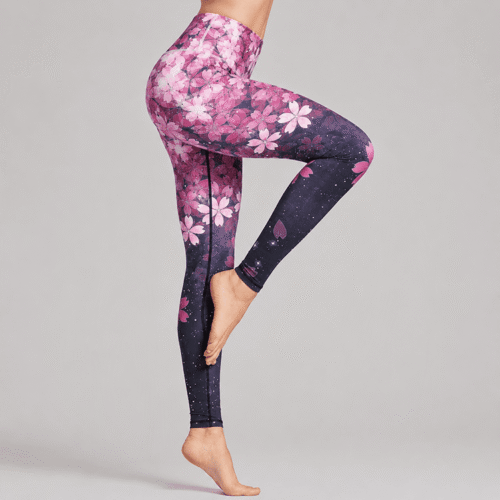
Custom Cherry Blossom Print Yoga Leggings OEM ODM High Waist Workout Pants
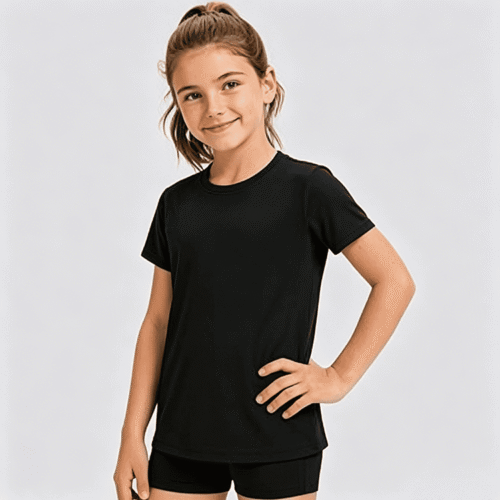
Custom Girls Activewear T-Shirt OEM ODM Kids Performance Tee
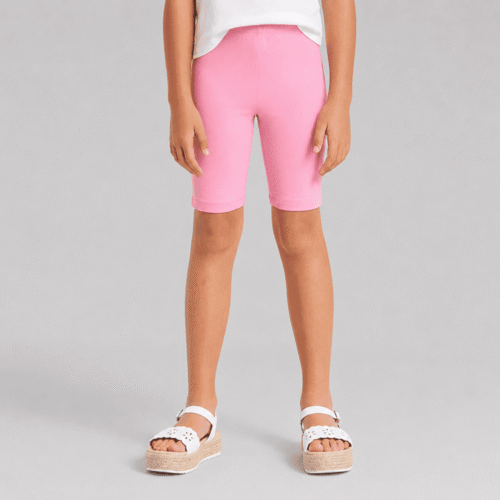
Custom Girls Biker Shorts OEM ODM Kids Activewear Shorts
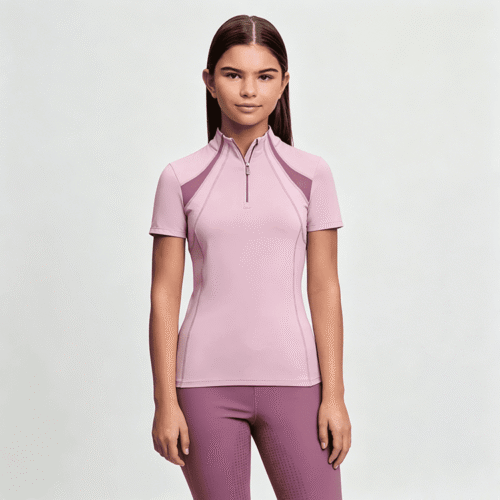
Custom Girls Equestrian Base Layer Short Sleeve Riding Shirt OEM ODM
Custom Girls Sports Bra OEM ODM Youth Activewear Training Bra
Custom High Neck Performance Crop Tank Top OEM ODM Activewear
Custom High Support Cross Back Sports Bra OEM ODM Workout Bra
Custom High Waist Pleated Tennis Skort OEM ODM Women’s Tennis Wear
Which Breeches Design Details Matter Most for Dressage, Jumping and Everyday Riding?
The most important breeches design details depend on the riding discipline, climate, rider’s body shape, and intended use. Dressage riders may prioritize a stable seat, comfortable waist construction, and freedom of movement through the hips. Show jumping riders often need flexibility through the knees and thighs when riding with shorter stirrups. Everyday riders may place greater importance on comfort, durability, easy care, and practical pockets. For equestrian brands, selecting the right features means understanding how customers actually ride rather than applying one design to every market.
Understanding what makes breeches suitable for different disciplines helps retailers avoid a common mistake: treating all riding pants as interchangeable.
A product designed for formal competition may not be the most practical choice for everyday stable work. Similarly, lightweight summer breeches may perform poorly in cold weather, even when their fit and construction are otherwise excellent.
When comparing what makes breeches suitable for different customers, brands should consider both technical requirements and personal preferences. Riders do not always choose the same features simply because they participate in the same discipline.
4.1 Dressage vs Show Jumping: Which Grip and Fit Features Matter Most?
Dressage and show jumping place different demands on a rider’s position, but neither discipline has one universally correct breeches design.
For dressage, what makes breeches comfortable often involves a stable waistband, sufficient flexibility through the hips, and consistent contact with the saddle.
Dressage riders generally spend considerable time in an upright seated position. Full-seat grip is a popular option, but grip strength and coverage should still allow natural movement.
Excessively aggressive grip can create an uncomfortable feeling of being held in one position, particularly when the rider needs to make small adjustments.
For show jumping, what makes breeches practical is often the ability to accommodate a more forward riding position and greater knee flexion.
Jumping riders commonly use shorter stirrups, which can increase fabric tension around the knees and thighs. Knee-grip breeches are a common choice, although some riders prefer full-seat designs or other configurations.
| Design feature | Dressage considerations | Show jumping considerations |
|---|---|---|
| Riding position | More upright seated position | More forward position, with shorter stirrups |
| Grip preference | Full-seat grip is common | Knee grip is common |
| Waistband | Stable coverage while seated | Comfortable during forward movement |
| Knee flexibility | Comfortable bending and contact | Greater flexion without pulling |
| Seat construction | Smooth contact and reduced pressure | Freedom to adjust position |
| Common fit problem | Waist pressure or excessive grip | Knee tension or restricted movement |
These are general tendencies, not fixed rules for every rider.
A key part of what makes breeches suitable for dressage or jumping is whether the rider can maintain the intended position without feeling restricted.
Buyer recommendation: Compare grip configurations and riding-position fit with riders who regularly participate in the intended discipline. Avoid choosing a design based only on the popularity of a particular grip style.
4.2 Competition vs Training Breeches: What Are the Practical Differences?
Competition breeches and training breeches may share similar construction, but customers often evaluate them differently.
For competition, what makes breeches suitable includes the garment’s appearance, fit, comfort, and compliance with the rules of the relevant event or governing organization.
Competition riders may prefer a clean silhouette, limited visible bulk, and colors appropriate for their discipline. However, clothing rules can vary by organization, competition level, and event, so buyers should check the current requirements of their target market.
For training, what makes breeches useful is often a balance of comfort, durability, easy maintenance, and value for money.
A rider training several times a week may care more about how the fabric performs after repeated washing than whether the garment has a particularly formal appearance.
Competition-focused priorities:
Appropriate appearance for the intended event.
Comfortable fit throughout the riding session.
Reliable opacity, particularly in lighter colors.
Smooth construction under riding boots.
Stable waist and seat fit.
Training-focused priorities:
Durability under frequent use.
Good stretch recovery.
Comfortable seams and waistband.
Practical pockets where appropriate.
Straightforward care requirements.
Another factor in what makes breeches suitable for training is the total ownership experience. A garment that requires unusually delicate care may be less attractive to customers who ride frequently.
For brands deciding what makes breeches appropriate for both markets, one design may serve both purposes, but that decision should be based on actual customer requirements rather than assuming competition clothing is automatically superior.
4.3 Summer vs Winter Breeches: Which Fabric Performance Matters in Each Season?
Seasonal riding conditions affect comfort, fabric performance, and customer expectations.
In summer, what makes breeches comfortable often includes suitable fabric weight, moisture management, breathability, and the ability to move without excessive heat buildup.
Lightweight fabrics can feel pleasant in warm weather, but reducing fabric weight may introduce other problems. Some materials become too transparent when stretched, while others may lack sufficient recovery or abrasion resistance.
Brands should therefore evaluate summer breeches under realistic movement and lighting conditions rather than relying only on fabric weight.
In winter, what makes breeches practical may include thermal comfort, wind resistance, and sufficient flexibility when worn with other riding layers.
Brushed fabrics can provide a warmer feel, but their performance depends on material construction, thickness, and intended conditions. A warm garment that restricts knee movement is not automatically suitable for riding.
| Performance factor | Summer breeches | Winter breeches |
|---|---|---|
| Fabric weight | Often lighter | Often medium to heavier |
| Thermal comfort | Heat and moisture management | Warmth and protection from cold |
| Stretch recovery | Important | Equally important |
| Opacity | Especially important in lightweight styles | Important in all styles |
| Layer compatibility | Usually worn with fewer layers | May need to accommodate additional layers |
| Main risk | Excessive heat or transparency | Bulk or restricted movement |
For retailers researching what makes breeches suitable across different seasons, climate should be considered alongside the customer’s riding frequency and location.
A customer riding in a heated indoor arena may have different requirements from someone training outdoors in cold, wet conditions.
Buyer recommendation: Test seasonal designs in representative conditions and check whether fabric performance remains acceptable after washing. Avoid assuming that a heavier fabric is always warmer or that a thinner fabric is always more breathable.
4.4 Women’s vs Men’s vs Kids’ Breeches: Which Fit Problems Should Buyers Watch For?
A successful breeches collection should recognize that different customer groups may require different pattern proportions and fit evaluations.
For women’s collections, what makes breeches comfortable may involve the relationship between waist, hip, thigh, and seat measurements.
A design that fits the hips correctly may still gap at the back waist. Another may fit the waist but create excessive tension through the thighs.
Men’s breeches require their own fit considerations, including rise, crotch comfort, waist proportions, and leg shape.
For men’s riding apparel, what makes breeches suitable should be established through relevant fit testing rather than simply adjusting a women’s pattern.
Children’s breeches introduce additional considerations. Fit must support comfortable movement while remaining appropriate for the intended age and size range.
For children’s products, what makes breeches practical also includes ease of dressing, waistband comfort, and appropriate garment proportions.
| Customer group | Important fit considerations | Common problem to investigate |
|---|---|---|
| Women’s breeches | Waist-to-hip proportions, seat fit, thigh comfort | Back-waist gaping or thigh restriction |
| Men’s breeches | Rise, crotch comfort, waist and leg proportions | Pressure or incorrect seat fit |
| Children’s breeches | Age-appropriate proportions, movement, ease of dressing | Excess fabric, slipping waist or poor knee placement |
These are product-development considerations, not assumptions that every customer within a group has the same body shape.
Another important part of what makes breeches suitable across a size range is the position of technical features. Grip placement, knee shaping, and pocket location should remain functional as garment dimensions change.
Buyer recommendation: Use representative fit models or riders from the intended customer groups and check several sizes. Do not approve an entire collection based on one sample size.
4.5 How Can Buyers Rank Design Features by Riding Discipline and Target Customer?
Not every design feature deserves the same priority.
For a dressage-focused collection, grip behavior and seated comfort may be more important than large storage pockets. For everyday riding tights, easy movement, durability, and pocket practicality may receive greater attention.
The best way to determine what makes breeches suitable for a particular collection is to separate essential performance requirements from optional preferences.
A practical buyer evaluation can use a simple three-level priority system:
Essential: Features that must meet the intended riding requirements.
Important: Features that improve customer satisfaction but allow some design flexibility.
Optional: Features that may help differentiate the product but are not necessary for its basic function.
The following table provides an illustrative starting point.
| Design feature | Dressage collection | Jumping collection | Everyday riding | Children’s riding |
|---|---|---|---|---|
| Riding-position fit | Essential | Essential | Essential | Essential |
| Waistband stability | Essential | Essential | Essential | Essential |
| Stretch recovery | Essential | Essential | Essential | Essential |
| Grip configuration | Important | Important | Important | Depends on intended use |
| Seam comfort | Essential | Essential | Essential | Essential |
| Pocket practicality | Optional | Optional | Important | Depends on intended use |
| Easy care | Important | Important | Essential | Essential |
| Size consistency | Essential | Essential | Essential | Essential |
This table is only a basic reference, not a standard for all products. Brands should adjust their priorities based on their target riders and actual product requirements.
For buyers checking what makes breeches suitable for premium collections, higher prices should be supported by clear improvements in fit, workmanship, materials, or durability.
For value-focused collections, what makes breeches commercially attractive may be dependable everyday performance without unnecessary features that increase cost but provide little benefit to the customer.
The same principle applies to product differentiation. A distinctive grip pattern or fashionable pocket design may help attract attention, but it should not reduce comfort or interfere with riding movement.
The strongest breeches collections are built around clear customer needs rather than the largest possible number of features.
Ultimately, what makes breeches suitable for different riding disciplines is the balance between technical performance and the expectations of the intended rider. Brands that understand these differences can make more informed product comparisons, reduce unsuitable design choices, and offer garments that customers are more likely to wear regularly.
Top 10 Design Details: what makes breeches Perform Better in the Saddle?
What makes breeches perform well in the saddle is the way ten important design details work together: waistband stability, riding-position fit, fabric recovery, grip placement, grip durability, seam construction, lower-leg fit, pocket placement, size grading, and long-term durability. Each feature affects how the garment feels and performs during riding. For equestrian brands, the best breeches are not necessarily those with the most technical features. They are the ones that provide the right balance of comfort, movement, stability, and durability for the intended rider.
Understanding what makes breeches suitable for real riding conditions requires more than checking fabric composition or looking at product photographs. A garment may appear well fitted when the rider is standing but become uncomfortable after twenty minutes in the saddle.
The difference often comes from small construction details. A waistband that is slightly too tight can roll during movement. A poorly positioned seam can rub against the inner thigh. A silicone grip pattern that looks impressive may create excessive friction or lose adhesion after repeated washing.
For buyers comparing what makes breeches worth purchasing, these details should be evaluated individually and then considered as part of the complete garment.
3.1 Design Detail 1 — Waistband Stability: What Prevents Rolling, Gaping and Slipping?
A stable waistband should remain comfortable and properly positioned when the rider bends forward, sits upright, rises from the saddle, or changes riding position.
One important factor in what makes breeches comfortable is the relationship between waistband height, tension, fabric recovery, and body shape.
A high-rise waistband may provide additional coverage, but it can still roll if the pattern or elastic tension is unsuitable. A low-rise design may offer a different appearance but become uncomfortable when the rider leans forward.
Buyers should examine three common problems:
Rolling: The waistband folds over or curls during movement.
Gaping: Excess fabric creates an opening at the back waist.
Slipping: The garment gradually moves downward during riding.
A waistband should not rely on excessive compression to remain stable. Too much pressure can reduce comfort, particularly during longer training sessions.
Buyer check: Ask riders to sit in the saddle, lean forward, and change positions several times. Record whether the waistband stays flat without digging into the abdomen.
3.2 Design Detail 2 — Riding-Position Fit: How Should Breeches Fit When the Rider Is Seated?
A good standing fit does not guarantee a good riding fit.
The pattern must accommodate hip flexion, bent knees, and repeated changes in body position. This is central to what makes breeches different from ordinary fitted trousers.
When a rider sits in the saddle, fabric tension changes across the seat, thighs, and knees. A garment that feels comfortable while walking may pull tightly across the front of the hips or create folds behind the knees.
The most common fit problems include:
Excessive tension across the seat or upper thighs.
Fabric gathering behind the knees.
Uncomfortable pulling through the crotch.
Restriction when the rider shortens the stirrups.
Loose fabric that creates pressure under the rider.
A close fit should not mean a restrictive fit.
For brands evaluating what makes breeches suitable for different riding disciplines, testing should include the intended riding position. A dressage rider sitting relatively upright may experience the garment differently from a jumping rider using a shorter stirrup length.
Buyer check: Evaluate samples on riders representing the target customer group. Photograph the garment from the front, side, and back while mounted, with the rider’s consent, to document fit problems that may not appear during standing inspection.
3.3 Design Detail 3 — Stretch Recovery: Why Is Fabric Recovery as Important as Stretch?
Four-way stretch is a useful feature, but it does not tell buyers how well a fabric will maintain its shape.
Stretch describes how far a material can extend. Recovery describes how effectively it returns toward its original dimensions after the stretching force is removed.
This distinction is essential to what makes breeches retain their fit through repeated riding sessions.
A fabric may stretch easily when new but gradually develop loose areas around the knees or seat. Once this happens, the garment may feel less secure and look worn even if the stitching remains intact.
Consider two fabrics with similar compositions. One may recover quickly after repeated extension, while the other retains visible distortion. Their fiber percentages alone may not explain the difference because yarn structure, knitting construction, finishing, and fabric quality also matter.
For buyers comparing what makes breeches suitable for regular training, fabric recovery deserves as much attention as initial softness.
| Fabric property | Why it matters | What buyers should check |
|---|---|---|
| Stretch | Allows movement in riding positions | Extension in relevant directions |
| Recovery | Helps maintain fit after movement | Residual deformation after repeated extension |
| Opacity | Supports coverage when stretched | Appearance during bending and seated movement |
| Surface durability | Reduces premature wear | Pilling and abrasion after testing |
| Dimensional stability | Helps preserve garment measurements | Changes after washing |
Buyer check: Compare the fabric and garment measurements before and after the agreed stretch and recovery test. Make sure to use the same testing method for all suppliers.
3.4 Design Detail 4 — Full Seat vs Knee Grip: Which Design Offers the Right Level of Saddle Contact?
Full-seat and knee-grip breeches are not simply two versions of the same product.
Full-seat designs generally provide grip across a larger area of the seat and inner legs. Knee-grip designs concentrate grip around the inner knee region, although the exact coverage varies by brand.
Grip placement is a major part of what makes breeches suitable for different riders, but greater grip coverage does not automatically produce better riding performance.
Some dressage riders prefer the contact provided by full-seat designs. Some jumping riders prefer knee-grip styles that allow a different feeling of movement. However, individual preferences, saddle materials, and riding technique can influence these choices.
Buyers should compare:
Grip coverage: Where does the grip contact the saddle?
Grip intensity: Does the rider feel supported or restricted?
Pattern placement: Does the grip align correctly when the rider is mounted?
Flexibility: Does the grip area stretch naturally with the fabric?
Consistency: Is the grip positioned correctly across different sizes?
For brands researching what makes breeches attractive to dressage and jumping customers, the answer should come from target-rider testing rather than assuming one grip style is universally superior.
Buyer check: Test full-seat and knee-grip samples with the same riders under comparable conditions. Ask about comfort, freedom of movement, and perceived saddle contact.
3.5 Design Detail 5 — Silicone Grip Durability: What Causes Grip Peeling, Cracking or Excessive Friction?
Silicone grip is a visible selling feature, but appearance alone does not establish quality.
The material formulation, application method, pattern geometry, adhesion, and compatibility with the base fabric all affect performance.
Grip durability is one of the less obvious factors in what makes breeches reliable over time.
Potential problems include:
Grip elements peeling away from the fabric.
Cracking after repeated stretching.
Uneven application or missing pattern sections.
Excessive stiffness in heavily covered areas.
Changes in grip performance after washing.
Different grip placement between sizes.
A larger silicone pattern is not necessarily more durable. Heavy coverage may also change the fabric’s stretch behavior and hand feel.
When evaluating what makes breeches suitable for repeated riding, buyers should examine both initial grip performance and its condition after wear and care testing.
There is no single wash-cycle number that proves every silicone application is suitable. The test method and acceptance criteria should reflect the product’s intended use and care instructions.
Buyer check: Inspect grip areas before and after repeated stretching, washing, and appropriate abrasion testing. Record peeling, cracking, visual changes, and any noticeable difference in riding comfort.
3.6 Design Detail 6 — Seam Placement: Which Construction Details Reduce Pressure and Chafing?
Seam quality is not determined only by how straight the stitching looks.
For riding breeches, seam placement can be just as important as stitch appearance. A well-sewn seam in the wrong position may still create discomfort.
This is another example of what makes breeches different from ordinary activewear.
During riding, the inner legs and seat remain in contact with the saddle for extended periods. Raised seams, bulky seam allowances, or poorly positioned joins may create concentrated pressure.
Buyers should examine:
Inner-leg seam position and thickness.
Crotch construction and seam intersections.
Stretch compatibility between fabric and stitching.
Seam elasticity during movement.
Areas where multiple fabric panels meet.
Signs of seam opening or thread breakage.
Flat seams may reduce bulk in some locations, but no single seam construction is automatically best for every design. Strength, elasticity, comfort, and manufacturing consistency must be considered together.
Buyer check: Inspect the inside of the garment and conduct mounted wear tests. Pay particular attention to pressure points that only become noticeable after sustained riding.
3.7 Design Detail 7 — Calf and Ankle Fit: What Prevents Bulk and Discomfort Inside Riding Boots?
The lower leg is easy to overlook when buyers focus on waist fit and grip patterns.
However, boot compatibility remains a defining part of what makes breeches practical for horse riding.
Traditional breeches often end above the ankle, while some modern styles extend farther down the leg. Neither approach is automatically better; the correct design depends on the intended footwear and product category.
Common problems include:
Fabric bunching inside tall boots.
Thick seams pressing against the calf.
Tight ankle openings that are difficult to pull on.
Loose lower-leg sections that wrinkle.
Uncomfortable transitions between different fabrics.
A soft lower-leg panel may improve comfort, but it should also maintain sufficient recovery to avoid becoming loose after repeated wear.
Buyer check: Test samples with the boot styles commonly worn by the target customers. Evaluate both comfort during riding and ease of putting boots on and taking them off.
3.8 Design Detail 8 — Pocket Placement: Which Designs Remain Practical and Comfortable While Riding?
Pockets can improve everyday usability, especially for riders who want to carry a phone or small personal items.
However, pocket placement can also affect comfort, appearance, and movement.
The relationship between convenience and riding comfort is part of what makes breeches suitable for modern equestrian customers.
A large thigh pocket may be useful during stable work but uncomfortable if its contents interfere with the rider’s leg position. A rear pocket may look attractive in product photography but become impractical when the rider is seated.
Buyers should consider:
Whether pocket contents interfere with saddle contact.
Whether the pocket opening remains secure during movement.
Whether the pocket creates visible distortion.
Whether the pocket position works across different sizes.
Whether the added construction affects stretch or comfort.
Buyer check: Test pockets with realistic contents rather than evaluating empty garments only. Confirm that pocket placement remains practical in the saddle.
3.9 Design Detail 9 — Size Grading: Why Can a Good Sample Fail in Other Sizes?
A well-fitting medium sample does not prove that the complete size range is ready for retail.
Size grading is particularly important when evaluating what makes breeches consistent across different body shapes.
As sizes change, garment proportions must accommodate differences in waist, hip, thigh, knee, and calf measurements. Simply increasing every dimension by the same amount may produce poor results.
Grip placement introduces another challenge. A knee-grip pattern positioned correctly on one size may sit too high or too low on another.
Buyers should check:
Waistband stability across sizes.
Seat and thigh proportions.
Knee position when the rider is mounted.
Grip coverage and placement.
Lower-leg comfort.
Consistency with the approved size chart.
For brands comparing what makes breeches suitable for women’s, men’s, and children’s collections, separate fit considerations may be necessary. A pattern developed for one customer group should not automatically be reused for another.
Buyer check: Request a representative size set and test more than the base size. Record measurements and riding-fit observations separately for each size.
3.10 Design Detail 10 — Long-Term Durability: What Happens to Breeches After Repeated Riding and Washing?
A pair of breeches may look excellent when new but lose its commercial value if it deteriorates quickly.
Long-term durability brings together several elements of what makes breeches suitable for regular use: fabric strength, recovery, seam quality, grip adhesion, and dimensional stability.
Common signs of premature deterioration include:
Pilling in high-friction areas.
Abrasion damage along the inner legs.
Loss of stretch recovery.
Silicone grip cracking or peeling.
Twisted seams after washing.
Noticeable shrinkage or distortion.
Color changes inconsistent with the agreed requirements.
Not every visible change represents a manufacturing defect. Fabric characteristics, care conditions, frequency of use, and the product’s intended price level should also be considered.
However, a supplier should be able to explain relevant material properties and provide reasonable evidence supporting important performance claims.
Buyer check: Establish a repeatable wear-and-care evaluation procedure before comparing suppliers. Use agreed inspection conditions and record changes with photographs and measurements.
Top 10 Breeches Design Details: Final Buyer Comparison
| Design detail | Primary riding benefit | Main purchasing risk | Recommended evaluation |
|---|---|---|---|
| 1. Waistband stability | Secure, comfortable fit | Rolling or slipping | Mounted movement test |
| 2. Riding-position fit | Freedom of movement | Restriction or pressure | Seated and active riding fit |
| 3. Stretch recovery | Shape retention | Bagging and distortion | Repeated extension test |
| 4. Grip placement | Appropriate saddle contact | Excessive or insufficient grip | Discipline-specific riding comparison |
| 5. Grip durability | Consistent grip condition | Peeling or cracking | Wash and stretch testing |
| 6. Seam placement | Reduced friction | Chafing and seam failure | Internal inspection and wear test |
| 7. Calf and ankle fit | Boot compatibility | Bunching and pressure | Riding-boot fit test |
| 8. Pocket placement | Practical storage | Discomfort or interference | Riding test with contents |
| 9. Size grading | Consistent fit across sizes | Incorrect proportions | Representative size-set testing |
| 10. Long-term durability | Longer useful product life | Premature wear | Wear, wash and appearance assessment |
The strongest way to understand what makes breeches suitable for a particular customer is to evaluate these ten details together. A product with excellent fabric recovery but uncomfortable seams is not a successful riding garment. Likewise, attractive silicone grip cannot compensate for poor size grading.
For equestrian brands, what makes breeches worth adding to a collection is consistent performance under the conditions customers actually experience. Design decisions should be supported by fit observations, relevant testing, and clear product requirements rather than appearance alone.
1. Product Development
Regular monthly product development ensures consistent updates to your brand line.
2. Fabric Sourcing
Regular monthly product development ensures consistent updates to your brand line.
3. Sample Making
Regular monthly product development ensures consistent updates to your brand line.
4. Bulk Production
Regular monthly product development ensures consistent updates to your brand line.
5. Packaging & Delivery
Regular monthly product development ensures consistent updates to your brand line.
Why Choose Chinese Breeches Manufacturers? Comparing Sourcing Advantages and Risks
Chinese breeches manufacturers can offer equestrian brands access to established textile supply chains, technical garment production, specialized materials, and a wide range of apparel development capabilities. These advantages may help brands source riding breeches with different fabrics, grip designs, and performance requirements. However, manufacturing in China does not automatically guarantee better quality, lower costs, or faster delivery. Buyers should compare suppliers according to their actual product experience, production responsibility, technical evidence, and total purchasing requirements.
For international equestrian brands, understanding what makes breeches suitable for horse riding is only one part of selecting a manufacturing location. The other part is finding a supplier that can consistently produce garments meeting those requirements.
China offers a broad apparel manufacturing ecosystem, but supplier capabilities vary considerably. Some manufacturers specialize in equestrian clothing, while others focus on general activewear, fashion garments, or multiple product categories.
A supplier’s location alone cannot explain what makes breeches reliable. Product knowledge, material selection, production controls, and communication are more useful indicators of manufacturing suitability.
5.1 Why Do International Equestrian Brands Consider China for Breeches Sourcing?
China remains an important sourcing destination for many international apparel brands because its manufacturing ecosystem includes fabric suppliers, garment producers, printing and decoration specialists, packaging companies, and logistics providers.
For buyers researching what makes breeches commercially practical, access to these related services can simplify the coordination of technical garment requirements.
A riding breeches collection may involve stretch fabrics, specialized waistbands, silicone grip applications, branded labels, and different packaging requirements. When relevant suppliers are available within established industrial networks, manufacturers may have more options for coordinating these components.
However, proximity does not guarantee that materials will be available immediately or that every production stage takes place within the same facility.
The main potential advantages of sourcing breeches from China include:
Material availability: Access to suppliers offering different stretch fabric constructions, weights, and finishes.
Technical apparel experience: Established manufacturing knowledge across sportswear, activewear, and specialized riding garments.
Product variety: Opportunities to source breeches alongside riding tights, competition tops, and outerwear.
Decoration capabilities: Access to embroidery, printing, heat-transfer applications, and grip-related processes.
Manufacturing flexibility: Different suppliers may accommodate different order structures and product complexities.
Export experience: Many apparel suppliers are familiar with international shipping documentation and buyer requirements.
When evaluating what makes breeches suitable for a particular retail market, these advantages should be considered alongside the manufacturer’s ability to produce the required garment consistently.
A large supply network is useful, but the buyer still needs to identify who is responsible for the finished product.
5.2 Specialized Equestrian Manufacturer vs General Activewear Manufacturer: Which Offers Better Product Expertise?
A specialized equestrian manufacturer and a general activewear manufacturer may both have valuable technical capabilities.
The difference lies in how directly their experience relates to the intended product.
For brands investigating what makes breeches comfortable in the saddle, a specialist equestrian manufacturer may already understand riding-position fit, grip placement, and common pressure points.
A general activewear manufacturer may have strong experience with stretch fabrics, leggings construction, moisture-management materials, and close-fitting garment patterns.
These skills can be relevant to riding breeches, but they do not automatically demonstrate knowledge of equestrian-specific requirements.
| Evaluation area | Specialized equestrian manufacturer | General activewear manufacturer |
|---|---|---|
| Riding-position fit | May have established riding-specific patterns | May need additional riding-fit development |
| Stretch fabric knowledge | Depends on technical product experience | Often relevant to performance leggings |
| Silicone grip application | May have direct riding-apparel experience | Requires product-specific verification |
| Competition apparel | May understand discipline-related requirements | May need additional technical guidance |
| Multi-category sportswear | May offer a narrower product range | May offer broader sportswear categories |
| Best evidence | Relevant breeches samples and riding tests | Relevant breeches samples and riding tests |
Neither category guarantees better quality.
A specialist supplier may understand traditional riding construction but have limited experience with a new fabric technology. A general sportswear manufacturer may have excellent fabric knowledge but need additional riding-specific pattern development.
The important question is what makes breeches perform correctly when produced by that particular supplier.
Buyers should therefore examine actual product samples, technical explanations, and evidence of previous manufacturing experience rather than selecting a company based only on its business category.
For brands comparing what makes breeches suitable for modern riders, a manufacturer combining relevant equestrian knowledge with technical sportswear experience may be worth considering.
However, the final decision should depend on demonstrated capability, not the number of product categories listed on a website.
5.3 What Are the Advantages of China’s Fabric, Grip Application and Garment Supply Chains?
Riding breeches depend on several connected material and manufacturing decisions.
Fabric stretch, recovery, surface durability, grip adhesion, seam elasticity, and garment fit must work together. A problem in one area can reduce the performance of the complete product.
For buyers evaluating what makes breeches durable, China’s textile and garment supply networks may provide access to different material constructions and processing options.
Fabric sourcing
Manufacturers may be able to source nylon-elastane, polyester-elastane, and other stretch fabric blends with different weights, textures, and finishes.
However, two fabrics with similar fiber compositions can perform differently because of yarn quality, knitting structure, finishing, and production consistency.
Understanding what makes breeches retain their shape requires evaluating actual fabric performance rather than relying on composition percentages alone.
Grip application
Some suppliers can coordinate silicone grip applications through internal processes or specialized partners.
For brands researching what makes breeches provide appropriate saddle contact, the important considerations include grip placement, adhesion, flexibility, and durability.
A supplier offering several silicone patterns does not necessarily have stronger technical capability than one offering fewer, well-tested options.
Garment construction
China’s technical apparel manufacturing sector includes companies experienced in stretch stitching, panel construction, elastic waistbands, and close-fitting garments.
These capabilities can contribute to what makes breeches comfortable, provided they are applied correctly to riding-specific patterns.
Material and production coordination
A garment manufacturer may coordinate several suppliers to produce the finished product. This can provide flexibility, but it also creates responsibilities for material consistency, production scheduling, and quality control.
Buyers should establish whether important processes are completed internally or through approved subcontractors.
The following questions help clarify the manufacturing arrangement:
Who supplies the main fabric, and how is the approved material identified?
Who applies the silicone grip, and how is its quality checked?
Which company cuts and sews the garments?
How are material substitutions approved?
Who is responsible when a subcontracted process creates a defect?
Can the supplier provide evidence that the finished garments match the approved requirements?
For buyers investigating what makes breeches suitable for repeat retail orders, clear responsibility across these processes matters more than the size of the supplier network.
5.4 What Are the Common Risks When Sourcing Technical Breeches From China?
China’s manufacturing capabilities do not eliminate sourcing risks.
Buyers can encounter inconsistent product specifications, unclear subcontracting arrangements, misleading production claims, communication problems, or unexpected costs.
A major risk in evaluating what makes breeches suitable for riding is accepting a visually attractive sample without checking its performance.
A sample may have a clean appearance but show poor recovery, uncomfortable seam placement, or inconsistent grip application after repeated use.
Another risk is assuming that a supplier’s product catalog proves direct manufacturing capability.
Some businesses operate as manufacturers, others as trading companies, and some use a combination of internal production and outside processing.
None of these arrangements automatically guarantees or disqualifies quality. What matters is whether manufacturing responsibilities are transparent and appropriately controlled.
| Sourcing risk | Possible consequence | Practical verification |
|---|---|---|
| Unclear manufacturer identity | Difficulty establishing responsibility | Verify registration and contracting entity |
| Unapproved material changes | Different fabric feel or performance | Compare approved and bulk materials |
| Weak riding-specific knowledge | Poor fit or grip placement | Review actual breeches samples |
| Uncontrolled subcontracting | Inconsistent processing quality | Confirm production responsibility |
| Incomplete specifications | Disputes over product requirements | Review written technical documents |
| Unverified certification claims | Compliance and purchasing risk | Check current certificate scope and validity |
| Inconsistent size grading | Fit problems across the collection | Evaluate representative size sets |
| Unrealistic delivery promises | Missed retail launch dates | Review a feasible production schedule |
For brands assessing what makes breeches reliable, supplier communication should be specific enough to identify problems before they affect the finished order.
A manufacturer should be able to explain how relevant product requirements are checked, not simply promise that quality will be good.
A basic website is not automatically a warning sign. Some capable manufacturers have limited marketing resources or publish few technical details online.
Likewise, a professional-looking website does not prove that a company owns production equipment or consistently meets customer requirements.
The strongest evidence comes from relevant product samples, credible documents, consistent answers, and reasonable opportunities for verification.
When comparing what makes breeches suitable for long-term retail sales, buyers should also consider repeat-order consistency. A supplier that produces one excellent sample but cannot reproduce the approved specifications may create significant commercial risk.
5.5 When Should Buyers Consider Alternative Manufacturing Locations?
China may be suitable for many equestrian apparel projects, but it is not necessarily the best manufacturing location for every brand.
For buyers considering what makes breeches commercially successful, manufacturing location should be evaluated alongside delivery requirements, order structure, landed cost, and supply-chain risk.
A European brand may consider production closer to its customers when shorter transport distances, regional supply-chain visibility, or more frequent replenishment are important.
A North American brand may evaluate manufacturers in Mexico or other nearby locations when geographic proximity offers meaningful logistical advantages.
Brands may also consider Vietnam, Türkiye, Portugal, or other apparel-producing countries depending on the product category, supplier capabilities, commercial terms, and target market.
However, country-level comparisons should not be treated as universal quality rankings.
A manufacturer in one country may offer excellent technical expertise, while another supplier in the same country may lack the required experience.
| Sourcing priority | China may be attractive when | Alternative locations may be attractive when |
|---|---|---|
| Material and process variety | Broad supplier access is important | A suitable local material network is available |
| Geographic proximity | Transport distance is not the main constraint | Near-market production reduces logistical risk |
| Small or frequent replenishment | A supplier can support the required order structure | Shorter regional supply chains improve responsiveness |
| Technical riding apparel | Relevant specialist expertise is available | A proven specialist operates elsewhere |
| Total landed cost | Complete costs are competitive | Freight, duties, or inventory costs favor another location |
| Supply-chain diversification | China remains part of a balanced sourcing strategy | Buyers need additional production regions |
For brands researching what makes breeches suitable for their customers, the manufacturing country should never replace product-level evaluation.
A lower unit price may become less attractive after adding freight, duties, inspection, development costs, and inventory exposure.
Similarly, a geographically closer supplier may not provide the required technical expertise or materials.
The most useful comparison examines the same garment specifications under comparable commercial conditions.
How Should Buyers Decide Whether China Is the Right Sourcing Location?
Before selecting a manufacturing country, equestrian brands should answer five practical questions:
Product capability: Can the supplier demonstrate relevant experience with the intended breeches design?
Material suitability: Can the required fabric and grip performance be supported by credible evidence?
Production responsibility: Is it clear who manufactures the garments and controls important processes?
Commercial feasibility: Are order quantities, total costs, and delivery requirements workable?
Repeat-order reliability: Can the supplier maintain the approved product requirements over time?
For buyers evaluating what makes breeches suitable for their retail customers, these questions provide a stronger decision framework than country reputation alone.
A Chinese manufacturer with relevant riding-apparel experience, transparent production arrangements, and dependable quality evidence may be an excellent sourcing partner.
Another manufacturer may offer attractive prices but lack the technical knowledge needed for the intended product.
Ultimately, what makes breeches successful in the market is not where the garments are produced. It is whether the chosen manufacturer can consistently deliver the comfort, fit, performance, and durability expected by the brand’s customers.

How to Choose the Best Chinese Breeches Manufacturer: Evidence, Verification and Red Flags
Choosing the best Chinese breeches manufacturer requires more than comparing product photographs, prices, and company introductions. Equestrian brands should verify the supplier’s actual manufacturing responsibilities, relevant riding apparel experience, technical knowledge, quality evidence, and ability to meet the intended product requirements. A reliable selection process combines mandatory verification checks with a weighted supplier scorecard. This helps buyers distinguish genuine manufacturing capability from unsupported marketing claims and identify suppliers that fit their product and commercial needs.
Understanding what makes breeches suitable for horse riding is an important starting point, but product knowledge alone does not establish manufacturing reliability.
A supplier may describe stretch fabrics, silicone grip, and riding fit convincingly without demonstrating that it can produce consistent garments.
For buyers investigating what makes breeches suitable for long-term retail sales, supplier verification should focus on evidence that can be reviewed, compared, and confirmed.
The strongest manufacturer is not necessarily the one with the most impressive website. It is the company that can demonstrate relevant capability and accept reasonable verification of its claims.
6.1 What Evidence Shows That a Supplier Has Real Breeches Manufacturing Experience?
A manufacturer claiming experience with riding breeches should be able to provide evidence directly related to the intended product.
The ability to manufacture ordinary leggings is useful, but it does not automatically prove experience with riding-position patterns, grip placement, or boot-compatible construction.
For brands researching what makes breeches comfortable during riding, relevant product samples are among the most useful forms of evidence.
A supplier should be able to discuss the relationship between pattern construction, fabric recovery, seam placement, and riding movement.
Five types of evidence worth requesting:
Relevant product samples: Actual breeches with comparable fabrics, grip designs, and construction.
Technical specifications: Measurements, fabric details, seam requirements, and construction information.
Production evidence: Recent production photographs, video demonstrations, or a factory visit where appropriate.
Quality records: Inspection examples and relevant material or garment test results.
Repeat-production evidence: Information showing how approved requirements are maintained across orders.
A manufacturer that understands what makes breeches suitable for different riding disciplines should also explain why certain construction choices may work better than others.
For example, a supplier might identify that a proposed seam crosses a high-pressure area or that a grip pattern needs adjustment for a particular riding position.
However, buyers should not assume that every manufacturer must use identical terminology. Different suppliers may describe the same construction feature in different ways.
The important question is whether the supplier understands the technical requirement and can demonstrate it in the finished garment.
6.2 How Can Buyers Verify Factory Identity, Production Responsibility and Relevant Certifications?
A supplier’s website, company name, and product catalog do not necessarily identify the legal business responsible for manufacturing.
Some suppliers operate their own garment production facilities. Others use approved subcontractors or coordinate manufacturing through a trading arrangement.
None of these business models automatically guarantees or disqualifies product quality.
For buyers evaluating what makes breeches reliable, the critical issue is whether production responsibility is transparent.
Manufacturer identity checks
Buyers should request:
The registered legal company name.
The business registration number and registered address.
The actual garment production location.
The name of the company issuing the quotation and commercial invoice.
Confirmation of any important subcontracted processes.
The party responsible for quality problems and corrective action.
Certification verification
Certifications and audit reports should be checked for validity, scope, and relevance. For textile safety claims, buyers can review the official OEKO-TEX STANDARD 100 certification requirements and confirm whether the relevant materials or finished garments are covered by valid documentation.
For example, a quality management certificate does not automatically prove that a particular pair of breeches meets a performance requirement. Similarly, a material certification may apply to a specific fabric or supply-chain transaction rather than every finished garment produced by the company.
| Document or evidence | What it may help verify | What it does not automatically prove |
|---|---|---|
| Business registration | Legal company identity | Actual garment production capability |
| Factory audit | Conditions and systems within its stated scope | Quality of every finished order |
| ISO 9001 certificate | Certified quality management system within scope | Riding-specific garment performance |
| OEKO-TEX documentation | Compliance of covered materials or products with the stated standard | All materials in every order are covered |
| GRS documentation | Relevant recycled-content and chain-of-custody claims within scope | Every garment contains certified recycled materials |
| Fabric test report | Performance of the tested material | Performance of every production batch |
| Finished garment inspection | Condition of the inspected garments | Future orders will always perform identically |
Buyers should verify certificates with the issuing or responsible organization when possible and check whether the named legal entity and site match the actual supplier.
Understanding what makes breeches suitable for riding also requires distinguishing management-system evidence from product-performance evidence.
A valid management certificate may support confidence in a supplier’s systems, but actual riding fit, grip durability, and fabric performance still require relevant product evaluation.
6.3 Which Questions Reveal a Supplier’s Knowledge of Fit, Grip and Technical Construction?
Technical questions are often more revealing than general claims about manufacturing experience.
A supplier may promise excellent quality, but buyers need to understand how it identifies and prevents common product problems.
For brands comparing what makes breeches suitable for dressage, jumping, or everyday riding, questions should focus on practical construction decisions.
| Technical question | What a useful answer should address |
|---|---|
| How do you evaluate riding-position fit? | Seated movement, pressure points, and pattern adjustments |
| How do you select grip placement? | Riding discipline, intended contact areas, and size positioning |
| How do you assess fabric recovery? | Relevant test methods and acceptance requirements |
| How do you prevent uncomfortable seams? | Seam location, construction, elasticity, and wear testing |
| How do you maintain size consistency? | Measurement specifications, grading, and size-set checks |
| How do you evaluate silicone grip durability? | Adhesion, stretch compatibility, and relevant wear or wash testing |
| How are material changes controlled? | Approval responsibility and documented substitutions |
| How do you handle a failed sample? | Corrective action, revision records, and retesting |
The supplier does not need to provide an immediate perfect answer to every question. Some technical issues require input from pattern makers, material specialists, or production personnel.
However, the response should be consistent, technically reasonable, and supported by evidence where necessary.
A manufacturer that understands what makes breeches comfortable should recognize that grip performance cannot be evaluated separately from fabric stretch and riding movement.
Likewise, a supplier familiar with what makes breeches durable should understand that initial appearance is not enough to establish long-term product performance.
Buyer recommendation: Ask the same technical questions to every shortlisted manufacturer. Record the answers and compare the supporting evidence rather than relying on sales presentations alone.
6.4 What Are the Most Common Warning Signs in Breeches Supplier Selection?
Supplier warning signs should be evaluated according to their potential effect on product quality, commercial responsibility, and delivery reliability.
Not every missing website detail is a serious problem. However, unresolved contradictions in company identity, production responsibility, or product specifications deserve attention.
For buyers investigating what makes breeches suitable for retail customers, the following warning signs are particularly relevant.
High-risk warning signs:
The supplier refuses reasonable verification of its legal identity.
The actual production location cannot be established.
Certification documents appear inconsistent or cannot be verified.
The supplier repeatedly changes agreed material specifications without approval.
Product samples show serious defects that the supplier cannot explain or correct.
The supplier cannot identify who is responsible for important manufacturing processes.
Written commercial terms conflict with the supplier’s verbal commitments.
Warning signs requiring further investigation:
Product photographs appear generic or are not supported by actual samples.
The company claims expertise across many unrelated products without relevant evidence.
Technical questions receive vague or inconsistent answers.
Published MOQ or delivery information changes between communications.
The supplier provides only one sample size for a complex size range.
Quality claims rely entirely on general statements rather than inspection or test evidence.
For brands comparing what makes breeches suitable for demanding riding conditions, an inability to discuss riding-specific fit or grip performance is a reason for additional verification.
However, buyers should distinguish a communication problem from a manufacturing failure.
A supplier may use different English terminology or maintain a basic website while still producing good garments.
The decisive issue is whether the company can provide credible and consistent evidence when asked.
6.5 How Should Buyers Use Mandatory Requirements and Weighted Supplier Scores?
A supplier scorecard can help buyers compare manufacturers using the same evaluation framework.
However, a weighted score should not allow a serious compliance or product-safety problem to be offset by a low price.
For buyers assessing what makes breeches suitable for a particular market, the selection process should begin with mandatory requirements.
Stage 1 — Mandatory verification
A supplier should meet the buyer’s essential conditions before receiving a final commercial ranking.
| Mandatory requirement | Suggested decision rule |
|---|---|
| Legal business identity | Must be verifiable |
| Manufacturing responsibility | Must be clear |
| Relevant product capability | Must be supported by credible evidence |
| Applicable legal and product compliance | Must meet the target market’s requirements |
| Critical product safety | No unresolved unacceptable risk |
| Material and specification approval | Must be documented |
| Serious quality problems | Must be resolved before approval |
A supplier that fails a mandatory requirement should not be approved simply because it offers a competitive quotation.
Stage 2 — Weighted comparison
After mandatory checks, buyers can score qualified suppliers using criteria relevant to the intended order.
| Evaluation criterion | Suggested weight |
|---|---|
| Riding-specific technical capability | 25% |
| Sample quality and fit performance | 25% |
| Quality systems and supporting evidence | 20% |
| Commercial terms and total landed cost | 15% |
| Communication and problem resolution | 10% |
| Delivery and repeat-order reliability | 5% |
| Total | 100% |
These weights are illustrative. Brands should adjust them according to product complexity, business stage, and purchasing priorities.
For example, a premium dressage brand may assign greater weight to fit and grip performance, while a retailer replenishing an established product may prioritize consistency and dependable delivery.
Understanding what makes breeches suitable for a brand’s customers helps determine which criteria deserve the highest scores.
Example scoring method
Rate each criterion from 1 to 5:
1: Insufficient or poor evidence.
2: Significant concerns remain.
3: Acceptable evidence with some limitations.
4: Strong evidence.
5: Excellent evidence directly relevant to the product.
Multiply each rating by its assigned weight to calculate a comparable overall score.
A high score should reflect credible evidence, not simply a manufacturer’s confidence in its own claims.
6.6 Who Should Choose a Specialist Manufacturer, a General Sportswear Manufacturer or a Sourcing Partner?
Different purchasing arrangements may suit different brands.
A specialist equestrian manufacturer may be attractive when the collection requires detailed riding-specific knowledge.
A general sportswear manufacturer may be relevant when the brand wants breeches alongside leggings, training tops, or other technical apparel.
A sourcing partner may help coordinate multiple suppliers, although buyers should understand which company actually manufactures the garments.
For brands researching what makes breeches suitable for different customer groups, the preferred supplier structure should depend on product complexity and the buyer’s ability to manage technical requirements.
| Buyer profile | Supplier type worth considering | Main point to verify |
|---|---|---|
| New equestrian brand | Specialist or experienced multi-category manufacturer | Relevant product samples and manageable order structure |
| Growing riding apparel brand | Manufacturer with proven repeat-production capability | Size consistency and product quality |
| Premium technical riding brand | Specialist manufacturer with strong development evidence | Riding fit, grip performance, and durability |
| Multi-category sportswear brand | Technical sportswear manufacturer with equestrian experience | Genuine riding-specific capability |
| Large retailer sourcing multiple categories | Manufacturer network or sourcing partner | Production responsibility and consistent standards |
No supplier category guarantees the best result.
A specialist manufacturer with limited quality documentation may be less suitable than a broader sportswear producer that can demonstrate strong riding-apparel performance.
Similarly, a sourcing partner may offer useful coordination but should not be treated as the direct manufacturer unless that responsibility is established.
The final decision should reflect what makes breeches suitable for the intended rider, the evidence supporting the supplier’s capability, and the commercial requirements of the order.
Final Manufacturer Selection Checklist
Before approving a Chinese breeches supplier, buyers should confirm that:
The legal business and manufacturing responsibilities are clear.
Relevant breeches production experience has been demonstrated.
Samples meet the intended riding-performance requirements.
Important materials and construction details are documented.
Applicable compliance requirements have been addressed.
Quality problems have a clear correction and escalation process.
Commercial conditions are consistent with the buyer’s purchasing plan.
Repeat-order expectations have been discussed and documented.
The best Chinese breeches manufacturer is the one that can demonstrate relevant product experience, reliable quality controls, transparent manufacturing responsibilities, and commercial conditions that fit the buyer’s business.
For buyers investigating what makes breeches suitable for horse riding, technical terminology is useful, but terminology alone does not prove manufacturing capability.
The strongest purchasing decision combines mandatory verification requirements with weighted evaluation criteria, allowing brands to compare manufacturers using consistent evidence rather than marketing claims.

How Can Buyers Test what makes breeches Suitable for Riding Before Choosing a Supplier?
Buyers can evaluate whether breeches are suitable for riding by combining mounted fit assessments, grip-performance comparisons, fabric durability tests, size-set inspections, and documented sample evaluations. A garment that looks good when standing may behave differently during riding. The most reliable approach is to test samples under comparable conditions, record measurable defects, and distinguish correctable design problems from unacceptable quality or safety risks. This allows equestrian brands to compare manufacturers using actual product performance rather than catalog photographs or general quality claims.
Testing what makes breeches suitable for horse riding begins with the rider’s experience. A fabric can meet its laboratory specifications while the finished garment still causes pressure, slipping, or restricted movement.
For buyers evaluating what makes breeches reliable, testing should answer three practical questions: Does the garment fit correctly? Does it perform as intended? Will its important features remain acceptable after normal use and care?
A useful testing program combines objective measurements with structured rider feedback. Neither laboratory results nor personal impressions should be treated as complete evidence on their own.
7.1 What Should Be Checked During a Real Riding Fit Test?
A standing fit assessment is useful, but it cannot fully reproduce the conditions experienced in the saddle.
One important part of what makes breeches comfortable is how the garment responds when the rider bends at the hips and knees, changes position, and maintains contact with the saddle.
A mounted fit test should include riders who reasonably represent the intended customer group. The riding activity should match the product’s intended use, and the assessment should be conducted under appropriate supervision and safe conditions.
Recommended riding-fit assessment:
Standing inspection: Check waist, hip, thigh, knee, calf, and lower-leg fit.
Mounted position: Observe fabric tension and pressure while the rider sits normally.
Forward movement: Check waistband stability and hip comfort when the rider leans forward.
Position changes: Assess movement through the knees and seat during suitable riding exercises.
Extended comfort: Record whether pressure, rubbing, or slipping develops during a representative session.
Post-riding inspection: Look for unusual wrinkles, displaced seams, or fabric distortion.
When assessing what makes breeches suitable for dressage, riders should evaluate comfort in the relevant seated positions. For jumping-oriented products, the assessment should also consider greater knee flexion and forward movement.
Actual jumping is not necessary for every preliminary fit test. The test should be proportionate to the garment’s intended use and conducted only in an appropriate riding environment.
| Fit area | What to observe | Possible failure |
|---|---|---|
| Waistband | Stability during movement | Rolling, gaping, or slipping |
| Seat | Comfortable saddle contact | Excess pressure or pulling |
| Crotch | Freedom of movement | Restriction or uncomfortable tension |
| Inner thigh | Seam and fabric contact | Rubbing or pressure |
| Knee | Flexibility in riding position | Tightness or fabric bunching |
| Calf and ankle | Compatibility with riding boots | Bulk or discomfort |
Buyer recommendation: Use a consistent evaluation form and record the same observations for every sample. Photographs can support fit records when riders have agreed to their use.
7.2 How Can Buyers Compare Grip Performance Without Assuming More Grip Is Always Better?
Silicone grip is often promoted as a major performance feature, but stronger grip is not automatically more comfortable or appropriate.
Understanding what makes breeches provide suitable saddle contact requires evaluating grip location, surface behavior, flexibility, and the rider’s ability to move naturally.
Full-seat grip may create a different contact sensation from knee grip. The preferred configuration can depend on riding discipline, saddle material, rider technique, and individual preference.
Buyers should compare grip designs using the same riders, similar riding activities, and, where practical, comparable saddles and environmental conditions.
Four questions to ask during grip evaluation:
Does the grip provide the intended contact without making the rider feel stuck?
Does the grip pattern remain correctly positioned when the rider is mounted?
Does the grip area stretch comfortably with the surrounding fabric?
Does the rider experience unwanted pulling or friction during position changes?
For brands researching what makes breeches suitable for different riding disciplines, grip evaluation should include both positive and negative rider feedback.
A rider describing a sample as having “excellent grip” may mean that it feels secure. Another rider may experience the same grip pattern as restrictive.
These observations are not necessarily contradictory. They may indicate that the design suits one customer group better than another.
Buyer recommendation: Compare grip behavior against the intended product specification rather than selecting whichever sample feels the stickiest.
7.3 Which Wash, Abrasion and Stretch-Recovery Tests Help Identify Product Weaknesses?
A new sample can look excellent while hiding weaknesses that only appear after repeated use.
Testing what makes breeches durable requires examining fabric behavior, seam performance, grip condition, and garment dimensions after appropriate wear and care procedures.
Different tests investigate different failure mechanisms. A washing test cannot replace an abrasion test, and a fabric recovery result does not automatically establish the fit of the finished garment. Buyers evaluating riding breeches durability may refer to the ASTM D4966 Martindale abrasion resistance test method when selecting an appropriate fabric evaluation procedure.
| Test area | Example evaluation method | Main issue identified |
|---|---|---|
| Dimensional stability | Compare garment measurements before and after controlled washing | Shrinkage or distortion |
| Stretch recovery | Repeated extension and recovery under defined conditions | Permanent deformation |
| Abrasion resistance | Appropriate laboratory abrasion procedure | Surface wear |
| Pilling resistance | Relevant fabric pilling test | Surface deterioration |
| Colorfastness | Suitable washing or rubbing test | Color change or transfer |
| Grip durability | Repeated washing, stretching, and visual inspection | Peeling, cracking, or deterioration |
| Seam performance | Construction inspection and suitable strength or extension testing | Seam damage or insufficient elasticity |
Relevant standardized methods may include ISO 6330 for domestic washing and drying procedures, ISO 5077 for dimensional change, ISO 12947 for Martindale abrasion, and ISO 12945 for pilling assessment, where applicable.
These methods address different properties. Buyers should confirm the applicable standard edition, procedure, reporting method, and acceptance criteria before testing.
For buyers checking what makes breeches keep their appearance after repeated washing, the test results should be evaluated according to the fabric type, washing instructions, and actual use of the garments.
One test result alone cannot prove the overall quality of the garment.
Buyer recommendation: When comparing different suppliers, buyers should use the same testing conditions. They should also record the condition before testing, testing methods, test results, and any visible changes after testing.
7.4 How Should Buyers Evaluate Size-Set Consistency and Construction Defects?
A good base-size sample does not prove that every size will fit correctly.
For brands evaluating what makes breeches suitable for a complete retail collection, size grading is a major consideration.
As garment sizes change, the relationship between waist, hip, thigh, knee, and calf measurements must remain appropriate for the intended customer group.
Technical features also need to remain correctly positioned. A knee-grip pattern may align well in one size but sit too high or low in another.
Size-set inspection should include:
Measurements against the approved size specifications.
Waistband behavior in representative sizes.
Hip, seat, and thigh proportions.
Knee position and grip alignment.
Calf and ankle comfort.
Pocket placement and usability.
Seam construction and finishing consistency.
Understanding what makes breeches comfortable across sizes also requires recognizing that different body proportions cannot always be accommodated by simple proportional scaling.
A representative size set should include sizes that reveal potential grading problems, not only adjacent middle sizes.
Construction defects should be recorded separately from fit preferences.
For example, an incorrectly positioned grip pattern is a measurable specification issue. A rider preferring a softer waistband may be expressing a design preference unless the garment fails an agreed comfort or fit requirement.
| Observation | Classification | Suggested action |
|---|---|---|
| Incorrect garment measurement | Specification nonconformity | Correct and remeasure |
| Grip positioned outside agreed tolerance | Construction or placement defect | Correct and reinspect |
| Uncomfortable seam in riding position | Functional fit issue | Review construction and retest |
| Rider prefers another waistband height | Design preference | Evaluate against target-customer requirements |
| Loose stitching | Workmanship defect | Correct and verify |
| Inconsistent fit across sizes | Grading or construction issue | Review size set and retest |
For buyers comparing what makes breeches suitable for different body types, consistent measurement records and representative wear testing are more useful than relying on one model’s appearance.
7.5 Which Sample Failures Require Correction, Retesting or Supplier Rejection?
Not every sample problem requires rejecting the manufacturer.
Some issues can be corrected through pattern adjustment, material selection, or construction changes. Others may reveal a more serious problem with technical capability or production responsibility.
When investigating what makes breeches reliable, buyers should distinguish between three levels of concern.
Level 1 — Minor correctable issues
Examples include small measurement deviations, minor finishing problems, or noncritical placement adjustments.
These issues may be resolved through documented correction and confirmation.
Level 2 — Significant functional problems
Examples include waistband instability, repeated seam discomfort, poor fabric recovery, or grip deterioration under agreed test conditions.
These problems generally require technical investigation, correction, and retesting before approval.
Level 3 — Critical or unresolved problems
Examples include an unacceptable product-safety risk, serious misrepresentation of materials, repeated unauthorized substitutions, or a supplier’s inability to establish responsibility for critical manufacturing processes.
Such problems may justify suspending evaluation or rejecting the supplier until satisfactory evidence is available.
For buyers assessing what makes breeches suitable for retail sale, the severity of a defect should depend on its effect on the intended product and agreed requirements.
A cosmetic issue should not automatically receive the same treatment as a serious functional failure.
Likewise, a supplier should not be approved merely because it promises that a defect will not happen again.
Buyer recommendation: Record the defect, suspected cause, corrective action, responsible party, and retest result. Approval should follow evidence that the issue has been resolved.
7.6 How Can Buyers Compare Sample Results From Different Manufacturers Fairly?
A supplier comparison is only meaningful when the products are evaluated against comparable requirements.
For brands researching what makes breeches suitable for their customers, testing one manufacturer’s lightweight riding tights against another manufacturer’s structured competition breeches may produce misleading conclusions.
Before comparing samples, buyers should define the intended product category and the requirements that must remain consistent.
Use a comparable evaluation brief covering:
Intended riding discipline and target customer.
Garment type and fit expectations.
Fabric composition and required performance.
Grip type, coverage, and placement.
Size specifications and tolerances.
Construction and workmanship requirements.
Test methods and acceptance criteria.
Intended care instructions.
When comparing what makes breeches perform well, buyers should separate technical performance from commercial considerations.
A manufacturer may produce an excellent sample but offer commercial conditions unsuitable for the brand. Another may offer an attractive price but fail an essential riding-fit requirement.
These are different evaluation outcomes and should not be combined without explanation.
Example Breeches Sample Evaluation Scorecard
| Evaluation criterion | Suggested weight | Evidence required |
|---|---|---|
| Mounted fit and movement comfort | 25% | Structured rider assessment |
| Fabric stretch, recovery, and opacity | 20% | Relevant material and garment tests |
| Grip suitability and durability | 20% | Riding comparison and durability assessment |
| Construction and seam comfort | 15% | Inspection and wear testing |
| Size-set consistency | 10% | Measurement and representative fit records |
| Appearance and care performance | 10% | Wash and appearance assessment |
| Total | 100% |
These weights are illustrative and should be adjusted according to the intended product. A specialist dressage collection may place greater emphasis on grip behavior, while an everyday training collection may prioritize durability and easy care.
Mandatory safety and compliance requirements should be assessed separately. A high weighted score must not compensate for an unresolved critical issue.
For buyers evaluating what makes breeches suitable for a long-term product range, the most useful supplier is the one that can demonstrate repeatable performance against the agreed requirements.
The final decision should combine riding feedback, measurable test results, size-set consistency, and credible supplier evidence.
Understanding what makes breeches suitable for horse riding is not just about identifying attractive design features. It is about proving that those features work together in a finished garment and remain dependable under the conditions customers will experience.
Trusted Manufacturing Standards For Global Sportswear Brands
We operate under internationally recognized quality, sustainability, and ethical manufacturing standards. Our certifications help ensure consistent product quality, responsible sourcing, and reliable production for global sportswear brands.
- 20+ Countries Served
- 6000+ Styles Developed
- 50,000 PCS Monthly Capacity
- 3-Day Sample Development
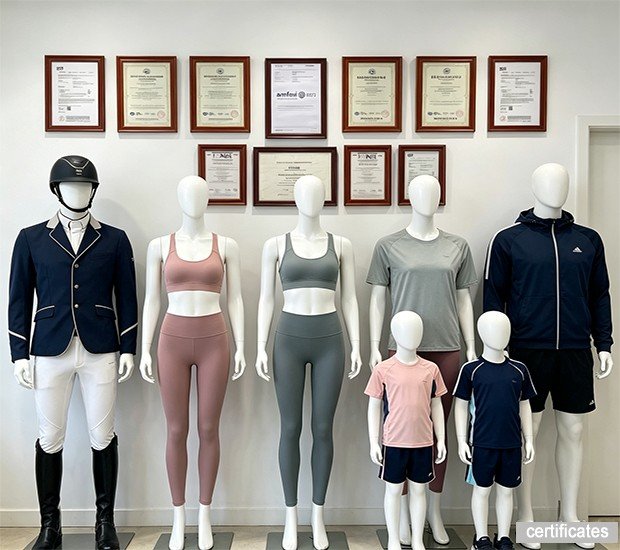
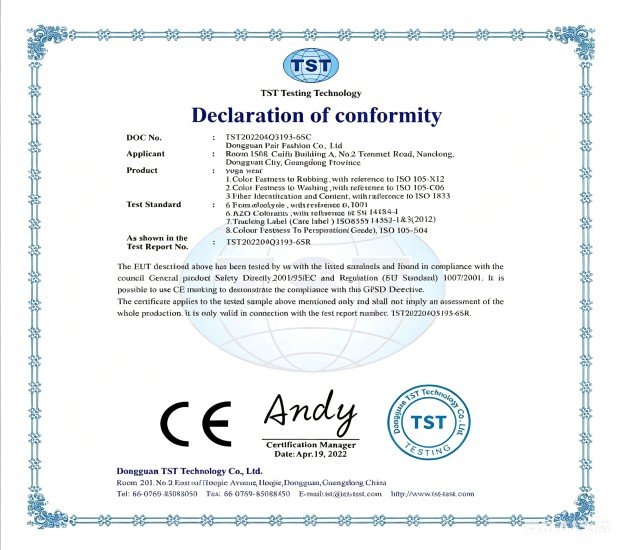


Which Chinese Breeches Manufacturer Is the Best Fit? Final Supplier Comparison and Buying Decision
The best Chinese breeches manufacturer should have relevant riding apparel production experience, provide samples with acceptable performance, clearly explain its manufacturing responsibilities, and offer commercial terms that meet the buyer’s requirements. Not every manufacturer is suitable for all equestrian brands. A startup launching its first collection may pay more attention to manageable order quantities, while an established brand may focus more on consistent technical quality, production capacity, and reliable quality for repeat orders.
Understanding what makes breeches suitable for horse riding helps buyers identify the technical requirements their manufacturer must meet.
However, knowing what makes breeches comfortable and durable does not automatically reveal which supplier can produce them consistently.
A useful final comparison should therefore combine product evidence, supplier verification, sample performance, total purchasing cost, and the brand’s commercial priorities.
8.1 How Do the 10 Manufacturer Options Compare on Product Focus and Verifiable Capabilities?
The ten manufacturers discussed in this guide represent different sourcing possibilities for equestrian brands.
Their published product ranges can help buyers decide which companies deserve further investigation. However, a company’s website does not independently establish the quality of its production, the accuracy of its capacity claims, or its ability to meet a specific buyer’s requirements.
For brands researching what makes breeches suitable for their customers, the first step is to identify suppliers whose stated product experience is relevant to the intended garment.
Ten Chinese Breeches Manufacturer Options to Compare
| Manufacturer | Publicly presented product focus | Main reason to investigate | Essential verification |
|---|---|---|---|
| 1. Pair Fashion | Equestrian apparel and technical sportswear | Breeches alongside broader activewear collections | Riding-specific samples, production responsibilities, and current order terms |
| 2. Kala Apparel | Equestrian clothing and performance apparel | Riding apparel development and multi-category manufacturing | Relevant breeches samples, material capabilities, and current commercial conditions |
| 3. Equifactory | Equestrian apparel and related products | Broader equestrian product sourcing | Actual garment manufacturing arrangements and technical product experience |
| 4. Run Equestrian | Riding apparel and competition clothing | Specialized equestrian garment requirements | Riding-fit experience, sample evidence, and production location |
| 5. Ope Equestrian | Equestrian clothing and related products | Breeches and coordinated riding apparel | Legal entity, manufacturing responsibility, and relevant sample quality |
| 6. Jinjiang Junqi | Technical riding apparel and breeches | Equestrian-specific product development | Published capability claims, technical records, and independent verification |
| 7. Junteng / Fex Equestrian | Breeches, competition clothing, and riding outerwear | Specialist riding apparel and smaller-brand programs | Current MOQ, production evidence, and certification scope |
| 8. Anqi Equestrian | Equestrian apparel | Specialist riding clothing requirements | Current company details, actual product range, and manufacturing evidence |
| 9. Dongguan Shuyu Activewear | Equestrian apparel and activewear | Combined riding apparel and sportswear sourcing | Product-specific experience, order terms, and production responsibilities |
| 10. Berunwear | Multi-category sportswear, including equestrian apparel | Brands purchasing several sportswear categories | Direct breeches experience, relevant samples, and manufacturing arrangements |
This comparison identifies areas for verification rather than assigning unverified quality scores.
Published product descriptions and company claims are starting points only. Capabilities, certifications, MOQ, lead times, and commercial conditions should be confirmed directly before any purchasing decision.
When evaluating what makes breeches suitable for a particular retail market, buyers should request comparable samples rather than assume that every manufacturer offers the same technical expertise.
A manufacturer with extensive general sportswear experience may be suitable for stretch riding tights, while a supplier with specialist equestrian experience may be more relevant for traditional competition breeches.
Neither business category guarantees better performance.
The most suitable manufacturer is the one that can demonstrate the required product capability with credible evidence.
8.2 How Should Buyers Compare Price, MOQ and Total Landed Cost Under Identical Specifications?
A lower unit price does not always represent a better purchasing decision.
For brands investigating what makes breeches commercially successful, purchase price must be considered alongside product quality, inventory exposure, logistics, and the risk of future defects.
A quotation is difficult to compare when suppliers receive different product information.
One manufacturer may quote a standard stretch fabric, while another includes a more expensive material. One price may include silicone grip application and branded packaging, while another excludes them.
To compare manufacturers fairly, buyers should send the same request for quotation to each supplier.
A comparable RFQ should specify:
Garment style and intended riding discipline.
Fabric composition, weight, and required performance.
Full-seat or knee-grip requirements.
Size range and quantity allocation.
Colors and branding requirements.
Construction and workmanship specifications.
Testing and inspection requirements.
Packaging and labeling.
Delivery destination and required date.
Applicable shipping terms.
Understanding what makes breeches suitable for the intended customer helps prevent buyers from reducing specifications merely to obtain a lower quotation.
Example: Why Unit Price Alone Can Be Misleading
The following figures are illustrative and do not represent quotations from the manufacturers listed above.
| Cost item | Supplier A | Supplier B |
|---|---|---|
| Unit price | $15.00 | $17.00 |
| Order quantity | 300 pieces | 300 pieces |
| Garment cost | $4,500 | $5,100 |
| Development and testing | $400 | $200 |
| Freight and logistics | $900 | $750 |
| Inspection | $250 | $250 |
| Illustrative subtotal | $6,050 | $6,300 |
| Subtotal per garment | $20.17 | $21.00 |
The table excludes any additional duties, taxes, financing charges, or other destination-specific costs that may apply.
Supplier A appears less expensive, but the comparison remains incomplete until buyers evaluate product performance, defect risk, and inventory implications.
For brands comparing what makes breeches suitable for repeat retail sales, consistent quality may be more valuable than a small difference in initial unit price.
MOQ also requires careful examination.
A supplier advertising a low minimum order may apply that quantity only to selected fabrics, existing patterns, or standard colors.
The minimum for a customized grip design or specially sourced fabric may be different.
Buyer recommendation: Request written confirmation of MOQ by style, color, fabric, and customization requirement. Compare total landed cost under equivalent specifications and shipping terms.
8.3 Which Design and Quality Criteria Should Carry the Highest Weight in a Supplier Scorecard?
Supplier selection becomes more reliable when buyers separate essential product requirements from commercial preferences.
The first question is what makes breeches suitable for the intended riding discipline.
The second is whether each manufacturer can demonstrate that its garments meet those requirements.
For example, a dressage brand may place considerable importance on full-seat grip behavior and seated comfort. A training apparel brand may prioritize stretch recovery, abrasion resistance, and easy care.
These priorities should influence the scorecard.
Stage 1: Mandatory Requirements
Before assigning weighted scores, buyers should confirm:
The supplier’s legal identity and manufacturing responsibilities.
Applicable legal and product compliance requirements.
Relevant technical manufacturing capability.
No unresolved unacceptable product-safety risks.
Clear material and product specifications.
A workable process for correcting serious quality problems.
A supplier that fails a mandatory requirement should not be approved solely because it offers a lower price.
Stage 2: Weighted Supplier Evaluation
| Evaluation criterion | Suggested weight | Main evidence |
|---|---|---|
| Riding-specific product capability | 20% | Relevant garments and technical explanations |
| Mounted fit and sample performance | 25% | Structured riding tests |
| Material and construction durability | 20% | Relevant test results |
| Quality consistency and documentation | 15% | Inspection and specification records |
| Total landed cost and MOQ suitability | 10% | Comparable written quotations |
| Communication and delivery reliability | 10% | Documented responses and feasible schedules |
| Total | 100% |
These weights are illustrative and should be adjusted to the buyer’s product and business model.
For buyers evaluating what makes breeches suitable for premium riding collections, technical performance may deserve a higher weighting than price.
For buyers researching what makes breeches suitable for everyday training customers, durability and value may be more influential.
Each score should be supported by evidence rather than general marketing statements.
A manufacturer should not receive a higher technical rating simply because its website lists more equipment, services, or certifications.
8.4 Which Supplier Is More Suitable for Startup, Growing and Established Equestrian Brands?
Different brands face different purchasing risks.
A startup may need to control its first inventory investment, while an established brand may be more concerned about consistent replenishment and maintaining the quality of an existing collection.
Understanding what makes breeches suitable for each brand’s target customer is important, but the supplier must also fit the brand’s commercial stage.
Startup Equestrian Brands
New brands often benefit from a focused product range and clearly defined purchasing requirements.
Rather than launching many designs immediately, a startup may begin with one or two styles and a manageable size and color assortment.
For startups researching what makes breeches suitable for their first collection, relevant sample quality and transparent minimum order requirements should take priority over an extensive product catalog.
A supplier offering flexible commercial arrangements may be attractive, but buyers should still verify the actual manufacturing capability.
Growing Equestrian Brands
Growing brands may already know which products their customers prefer.
Their next challenge is often maintaining consistent quality while expanding sizes, colors, and product categories.
For these brands, what makes breeches suitable for repeat sales includes dependable fabric performance, accurate size grading, and consistent construction.
A manufacturer with documented production controls and relevant repeat-order experience may be particularly valuable.
Established Equestrian Brands
Established brands often require more detailed technical specifications, inspection records, and production coordination.
They may need multiple collections, seasonal deliveries, and consistent product performance across larger orders.
For established labels, what makes breeches suitable for long-term retail distribution includes repeatable technical quality and reliable commercial execution.
The supplier should demonstrate that approved requirements can be maintained across production batches rather than relying only on one successful sample.
| Brand stage | Main purchasing priority | Supplier capability to verify |
|---|---|---|
| Startup | Manageable initial investment | Relevant samples and workable MOQ |
| Growing brand | Product consistency and expansion | Repeat-order quality and size grading |
| Established brand | Technical control and supply reliability | Documented systems and production coordination |
No manufacturer should automatically be classified as suitable for every startup or every established brand.
The correct decision depends on the actual garment, order requirements, and evidence provided by the supplier.
8.5 What Are the Final Questions Buyers Should Answer Before Selecting a Breeches Manufacturer?
Before making a final decision, buyers should review the complete purchasing case rather than focusing on one attractive feature.
A supplier may provide an excellent initial sample but have unclear manufacturing responsibilities. Another may offer competitive prices but fail important riding-fit requirements.
For buyers examining what makes breeches suitable for their customers, these differences should be resolved before supplier approval.
Final Breeches Manufacturer Selection Checklist
| Final question | Why it matters |
|---|---|
| Does the supplier have relevant breeches experience? | General apparel experience may not cover riding-specific requirements |
| Has the garment been evaluated in the saddle? | Standing fit alone may hide functional problems |
| Are fabric and grip performance supported by evidence? | Product appearance does not prove durability |
| Have representative sizes been checked? | One approved sample cannot establish size-set consistency |
| Are manufacturing responsibilities clear? | Buyers need to know who controls important processes |
| Are applicable compliance requirements addressed? | Unresolved requirements can create purchasing and retail risks |
| Are quotations based on identical specifications? | Different materials and services make prices difficult to compare |
| Is the total landed cost acceptable? | Unit price excludes important purchasing expenses |
| Are delivery expectations realistic? | Unworkable schedules may disrupt retail launches |
| Can approved quality be maintained on repeat orders? | Long-term product consistency supports customer confidence |
For brands checking what makes breeches suitable for riders with high requirements, the final decision should mainly depend on the actual performance of the samples.
For retailers considering what makes breeches suitable for a broader customer base, consistent sizing, durability, and dependable replenishment may be equally important.
A supplier’s ability to explain product requirements is valuable, but technical language alone does not prove manufacturing capability.
The final supplier decision should depend on documented product identity, credible technical evidence, clear manufacturing responsibility, and acceptable commercial terms. Brands ready to move from supplier comparison to product development can review custom breeches construction, sampling, and bulk-order requirements before discussing their specific manufacturing needs.
Final Recommendation: Choose Evidence Over Marketing Claims
The best Chinese breeches manufacturer is not necessarily the largest company, the lowest-priced supplier, or the business with the most attractive website.
It is the manufacturer that can demonstrate relevant product knowledge, reliable construction quality, transparent production arrangements, and purchasing conditions that support the buyer’s business.
Understanding what makes breeches suitable for riding gives brands a practical foundation for comparing products. Verifying which manufacturer can consistently deliver those requirements turns that knowledge into a sound purchasing decision.
Brands preparing a specific private-label project can also review custom breeches construction, sampling and bulk-order requirements to understand the information needed when moving from product evaluation to manufacturing discussions.
Ultimately, what makes breeches worth purchasing is the combination of suitable riding performance, consistent quality, and a manufacturing arrangement that meets the brand’s expectations. Buyers should select suppliers using comparable specifications, verified evidence, and clearly documented responsibilities rather than relying on promotional claims alone.