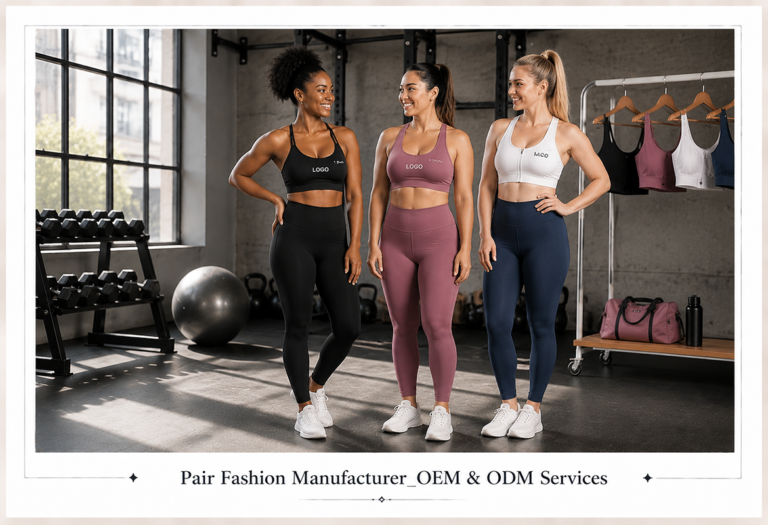
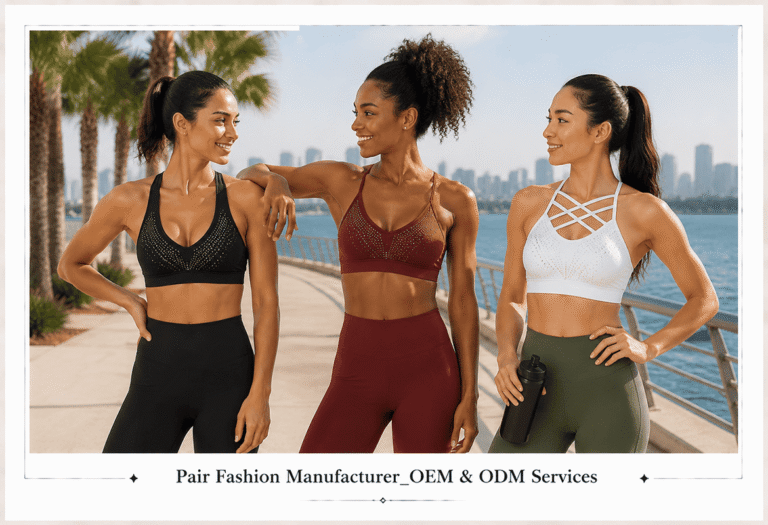
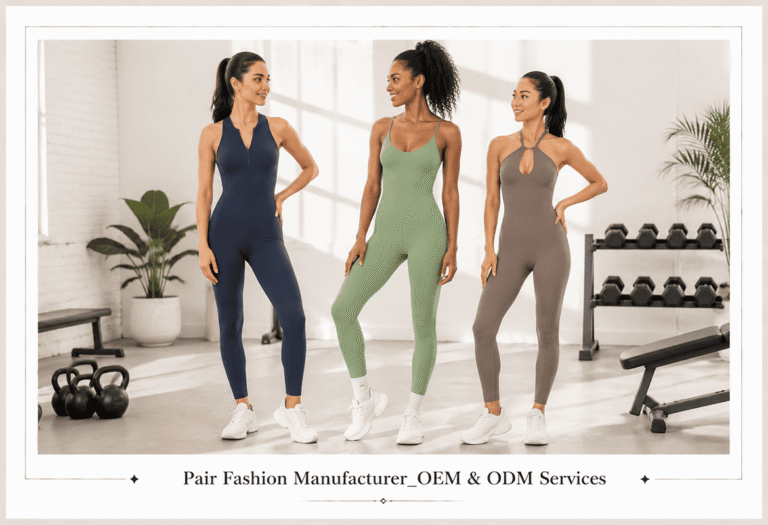
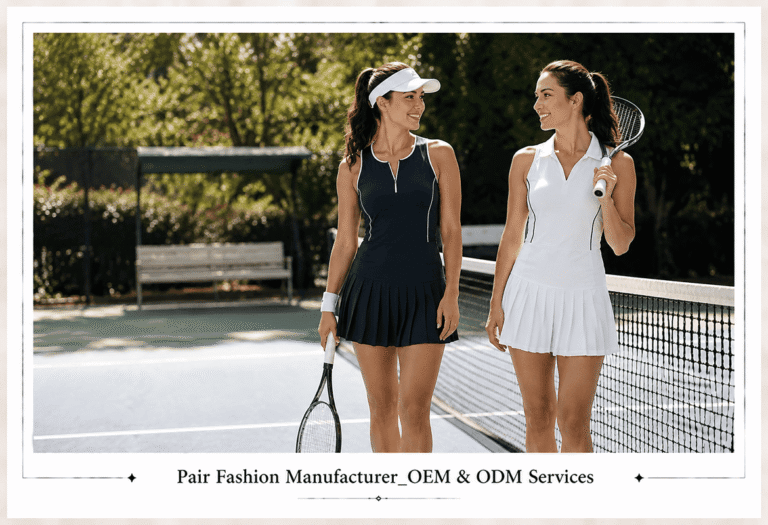
OEM/ODM Sportswear Manufacturer | 3-Day Sampling | Low MOQ | 50K Monthly Capacity | ISO9001 & BSCI Certified

Top Sports Bra Wholesale Manufacturers in China: Global Supplier Selection Guide
Discover leading sports bra wholesale manufacturers in China and learn how global activewear brands compare suppliers based on production capability, quality standards, certifications, pricing factors, and long-term sourcing reliability.
Top Sports Bra Wholesale Manufacturers in China: Supplier Comparison Guide for Global Activewear Brands
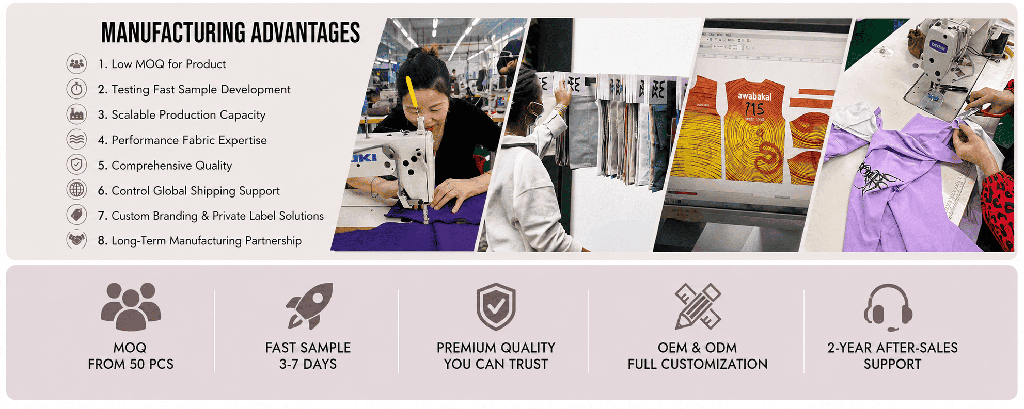
The global activewear market has become increasingly competitive, and choosing the right sports bra supplier can directly influence a brand’s product quality, customer satisfaction, and long-term growth. While many manufacturers offer similar product categories, the real difference often appears behind the product itself — including manufacturing experience, quality consistency, supply chain stability, communication efficiency, and the ability to support changing market demands.
For many new and established activewear brands, the challenge is no longer just finding a supplier who can produce sports bras. The more important thing is finding a reliable manufacturing partner who understands performance needs, ensures stable production quality, and helps brands achieve long-term growth.
The top sports bra wholesale manufacturers in China are suppliers that combine strong production capabilities, consistent quality control, reliable export experience, and the flexibility required by international activewear brands. When comparing manufacturers, buyers should evaluate product specialization, factory capability, compliance standards, communication efficiency, and long-term supply stability rather than focusing only on price.
China remains one of the most important sourcing destinations for sports bra production because of its mature textile supply chain, experienced garment workforce, wide range of functional fabrics, and ability to support different business models. However, not every manufacturer is suitable for every brand. The best supplier depends on a company’s product positioning, order requirements, market expectations, and future development plans.
This guide compares leading sports bra wholesale manufacturers in China and explains the key factors global buyers should evaluate before selecting a reliable sourcing partner.
What Are the Top Sports Bra Wholesale Manufacturers in China?
The top sports bra wholesale manufacturers in China are companies with proven experience in activewear production, stable manufacturing systems, international cooperation experience, and the ability to meet different buyer requirements. Global brands should compare suppliers based on manufacturing focus, production reliability, quality management, and customer suitability instead of simply choosing the lowest-cost option.
Sports Bra Manufacturer Comparison List for Global Buyers
The following manufacturers represent different types of sports bra suppliers in China. Each company has different strengths, production positioning, and ideal customer profiles.
| Manufacturer | Location | Main Strength | Suitable Buyers |
|---|---|---|---|
| Dongguan Pair Fashion Co., Ltd. | Dongguan, Guangdong, China | Functional activewear manufacturing and sportswear development | Growing activewear brands, DTC companies, wholesale buyers |
| Supplier A | China | Large-scale apparel production | High-volume buyers |
| Supplier B | China | Fashion-focused activewear collections | Boutique sportswear brands |
| Supplier C | China | Cost-efficient production | Price-sensitive distributors |
| Supplier D | China | Export-oriented apparel manufacturing | International wholesalers |
| Supplier E | China | Yoga and fitness apparel specialization | Fitness retailers |
| Supplier F | China | Sportswear manufacturing experience | Regional distributors |
| Supplier G | China | Flexible production support | Emerging brands |
| Supplier H | China | Mass production capability | Large retailers |
| Supplier I | China | Multi-category apparel supply | Diversified buyers |
1. Dongguan Pair Fashion Co., Ltd.
Location: Dongguan, Guangdong, China
Founded: 2016
Company Overview
Dongguan Pair Fashion specializes in functional activewear manufacturing, supporting global brands with sportswear production and broader activewear category development. The company operates within Dongguan’s mature apparel supply chain ecosystem, allowing efficient access to fabrics, accessories, and supporting manufacturing resources.
The company focuses on performance-oriented sportswear categories, including sports bras, yoga apparel, fitness clothing, equestrian apparel, maternity activewear, plus-size activewear, and other specialized sportswear segments.
Core Products
- Sports bras
- Yoga leggings
- Fitness apparel
- Activewear collections
- Inclusive sportswear categories
- Equestrian apparel
Manufacturing Strengths
- Activewear-focused production experience
- Functional fabric application knowledge
- Multi-category sportswear capability
- Experience working with international buyers
- Integrated supply chain resources
Certifications
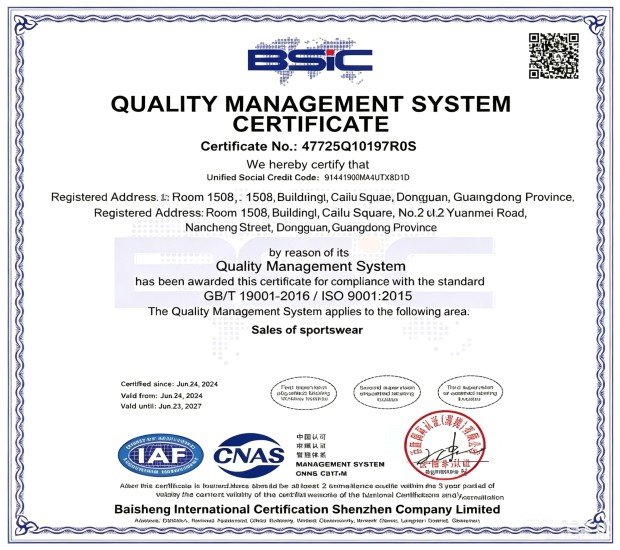
- ISO9001
- BSCI
- GRS
- CE
- ROHS
Suitable Customers
Pair Fashion is suitable for:
- Growing activewear brands
- DTC sportswear companies
- International wholesale buyers
- Brands expanding into specialized sportswear categories
Less Suitable Customers
The company may not be the best choice for buyers whose only priority is obtaining the lowest possible production price without considering quality, product performance, or long-term supplier stability.
Key Advantages
- Strong understanding of functional sportswear requirements
- Broad activewear category experience
- Suitable for brands seeking a long-term manufacturing relationship
Potential Limitation
Brands looking only for basic commodity sportswear with extreme price competition may find specialized activewear manufacturers less aligned with their requirements.
2. Large-Scale Sportswear Manufacturers
Location: China
Company Overview
Large-scale sportswear manufacturers usually focus on high-volume production for retailers, distributors, and established apparel companies. Their main advantage is production capacity and experience handling large orders.
Core Strengths
- High production volume
- Established production systems
- Experience with large purchasing programs
Suitable Customers
- Retail chains
- Large distributors
- Companies with predictable demand
Potential Limitations
Large factories may have less flexibility for smaller brands that require frequent product adjustments or lower-volume purchasing strategies.
3. Fashion-Oriented Activewear Suppliers
Location: China
Company Overview
Fashion-oriented activewear suppliers focus on trend-driven designs, seasonal collections, and consumer-facing sportswear styles.
Core Strengths
- Fast response to fashion trends
- Strong design adaptation
- Diverse appearance options
Suitable Customers
- Boutique activewear brands
- Fashion retailers
- Lifestyle sportswear companies
Potential Limitations
Some suppliers may focus more on appearance than technical performance, which can be a concern for brands requiring advanced functional features.
4. Cost-Focused Sports Bra Suppliers
Location: China
Company Overview
Cost-focused suppliers usually compete through pricing advantages and simplified production models.
Core Strengths
- Competitive pricing
- Basic product manufacturing
- Suitable for entry-level markets
Suitable Customers
- Discount retailers
- Budget-focused distributors
Potential Limitations
Lower production costs may sometimes involve limitations in fabric selection, product development support, or quality consistency.
5. Export-Focused Apparel Manufacturers
Location: China
Company Overview
Export-oriented manufacturers usually have experience serving international customers and understand overseas purchasing requirements.
Core Strengths
- International communication experience
- Export documentation knowledge
- Market compliance awareness
Suitable Customers
- Overseas wholesalers
- International retailers
- Import companies
Potential Limitations
Some export manufacturers cover many apparel categories and may not have deep specialization in sportswear performance products.
How Should Buyers Interpret a Manufacturer Ranking?
A supplier ranking should not be viewed as a simple “number one versus number ten” competition. The most suitable manufacturer depends on the buyer’s business model.
A startup brand may prioritize flexibility and communication.
A growing activewear company may prioritize stable production and product consistency.
A large retailer may prioritize capacity and compliance.
The best supplier is the one whose capabilities match the buyer’s actual requirements.
How Do Global Brands Compare Sports Bra Manufacturers Before Sourcing?
Choosing the right sports bra manufacturer is not only about comparing product styles and prices. The key is finding a reliable supplier who can maintain stable quality, communicate smoothly, control production risks, and support your brand’s long-term growth. Before making a decision, global buyers should evaluate important factors such as manufacturing experience, activewear expertise, quality control systems, compliance standards, and supply chain stability.
A professional supplier evaluation process helps brands avoid common sourcing problems such as inconsistent product quality, delayed delivery, unclear communication, and unexpected production limitations. The goal is not simply to find a manufacturer that can produce sports bras, but to identify a supplier that understands the technical requirements of activewear and can maintain stable cooperation over time.
Which Factors Matter Most When Evaluating Sports Bra Suppliers?
When comparing sports bra suppliers, global brands should focus on five core factors: manufacturing specialization, production stability, quality management, international experience, and communication efficiency. These elements determine whether a supplier can provide reliable products and support long-term business development.
1. Product Specialization and Industry Experience
One of the first questions buyers should ask is:
Does this supplier specialize in sports bras and activewear, or are sports bras only one small category among many products?
Sports bras are not simple apparel products. Compared with standard tops, they require more attention to:
- Support level
- Fabric elasticity
- Recovery performance
- Body movement adaptation
- Seam construction
- Comfort during exercise
- Size consistency
Manufacturers with activewear experience usually understand how different materials perform under movement and how construction details influence wearing experience.
For example, a supplier experienced in performance apparel is more likely to understand the difference between:
- Low-impact sports bras for yoga and lifestyle wear
- Medium-support bras for fitness training
- High-support designs for running and intensive workouts
A buyer should evaluate whether a supplier has experience producing products similar to the brand’s target market instead of selecting a manufacturer based only on price.
2. Production Stability and Manufacturing Capability
A supplier’s production capability directly affects product availability and customer satisfaction.
Global brands should evaluate:
- Number of production lines
- Workforce structure
- Monthly production capacity
- Production planning ability
- Quality control resources
- Experience handling international orders
A manufacturer with strong production management can better handle seasonal demand fluctuations, new product launches, and repeat purchasing cycles.
However, larger production capacity does not always mean better cooperation.
A very large factory may prioritize major accounts and provide limited flexibility for smaller brands.
A smaller specialized manufacturer may provide stronger communication and more attention to product details.
The right choice depends on the brand’s business stage.
| Brand Type | Supplier Priority |
|---|---|
| Startup brand | Flexibility, communication, product guidance |
| Growing brand | Stable production and consistent quality |
| Large retailer | Capacity, compliance, supply chain reliability |
3. Quality Management System
Quality consistency is one of the most important factors when selecting a sports bra manufacturer.
A professional supplier should have clear quality control procedures covering:
Material Inspection
Before production begins, manufacturers should verify:
- Fabric composition
- Stretch performance
- Color consistency
- Durability
- Functional properties
Production Inspection
During manufacturing, suppliers should monitor:
- Cutting accuracy
- Sewing quality
- Construction details
- Measurement consistency
Final Inspection
Before shipment, manufacturers should check:
- Appearance
- Size accuracy
- Packaging condition
- Product defects
For activewear brands, quality problems can directly affect customer reviews and repeat purchases. A single batch with poor elasticity, uncomfortable seams, or incorrect sizing can damage brand reputation.
4. International Market Experience
A manufacturer’s export experience is another important evaluation factor.
Suppliers working with international brands usually understand:
- Different market expectations
- Packaging requirements
- Product compliance standards
- Communication practices
- Shipping documentation
For example, brands selling in North America may focus on performance expectations and product consistency, while European brands may pay more attention to sustainability, environmental requirements, and social compliance.
A supplier familiar with global markets can help reduce communication barriers and sourcing risks.
5. Communication Efficiency
Many sourcing problems are not caused by manufacturing ability but by communication problems.
Before cooperation, buyers should evaluate:
- Response speed
- Understanding of product requirements
- Ability to provide professional suggestions
- Transparency during production
- Problem-solving attitude
A supplier that communicates clearly during the early stages is usually more reliable during production.
Good communication helps avoid:
- Wrong specifications
- Incorrect materials
- Delayed decisions
- Unexpected production changes

Custom Women’s Sleeveless Zip Front Yoga Jumpsuit OEM ODM Sculpting Activewear
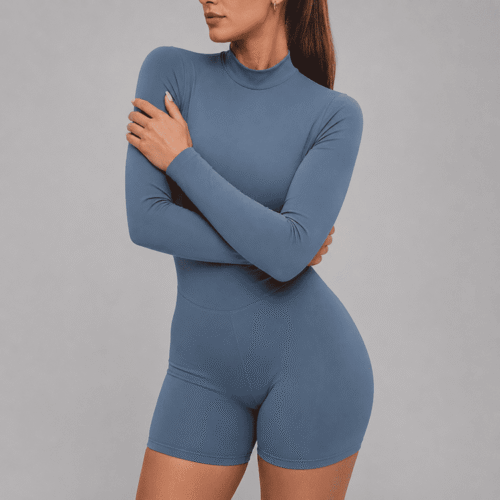
Custom Women’s Long Sleeve Yoga Jumpsuit OEM ODM Mock Neck Activewear Romper
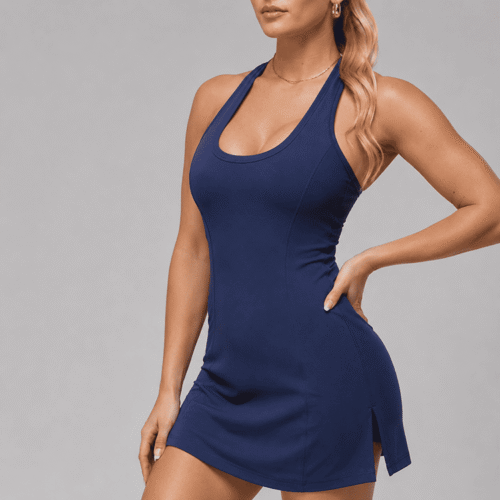
Custom Women’s Tennis Activewear Dress OEM ODM Fitness Sports Dress
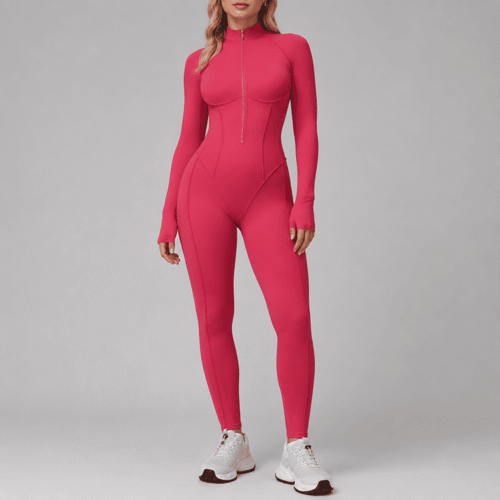
Custom Women’s Zip Front Long Sleeve Yoga Jumpsuit OEM ODM Sculpting Activewear
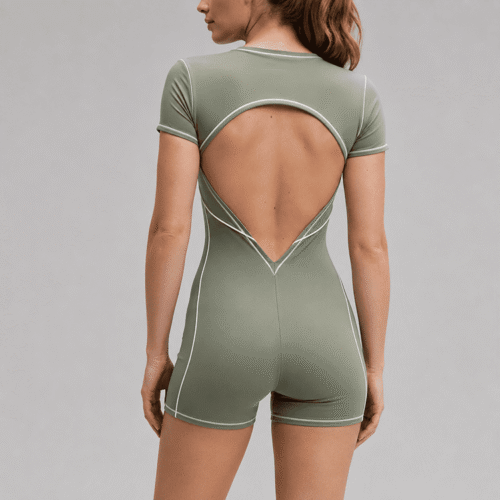
Custom Women’s Open Back Yoga Jumpsuit OEM ODM Activewear Romper
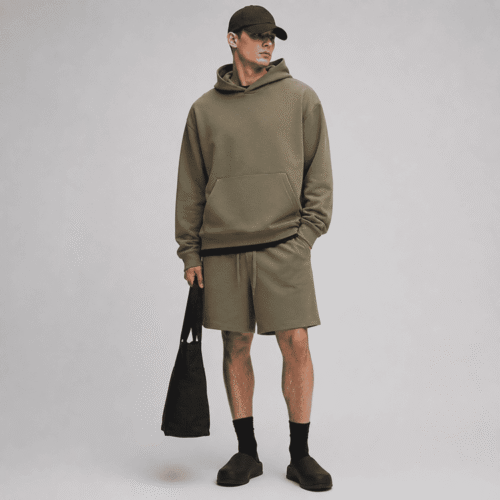
Custom Men’s Hoodie and Shorts Loungewear Set OEM ODM Athleisure Wear
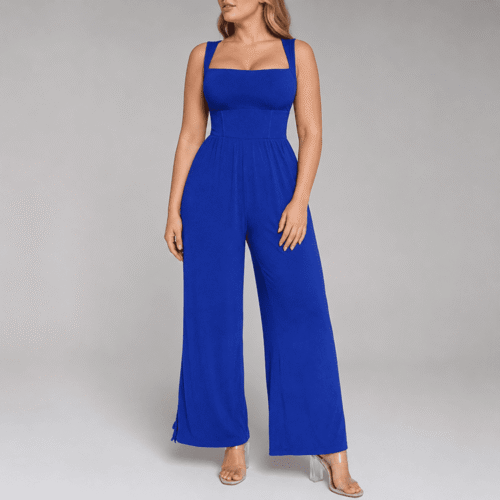
Custom OEM Activewear Jumpsuit Manufacturer
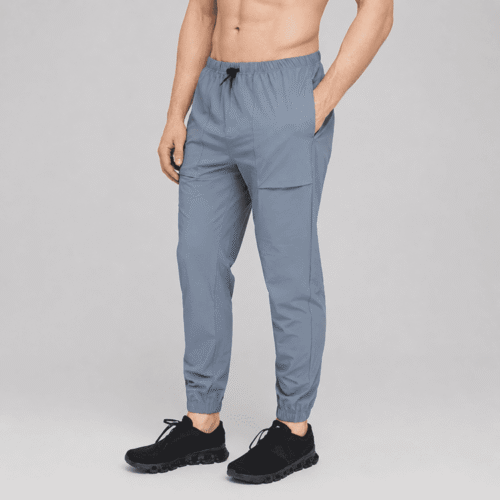
Custom Men’s Cargo Jogger Pants Performance Activewear OEM ODM
What Types of Sports Bra Suppliers Are Available?
Sports bra suppliers can generally be divided into several categories based on their business model, production capability, and target customers. Understanding the differences between supplier types helps global brands avoid choosing a manufacturer that does not match their business stage or sourcing goals.
The main types of sports bra suppliers include wholesale suppliers, development-focused manufacturers, ready-stock suppliers, and large-scale production suppliers. Each supplier type serves different buyer needs, so brands should evaluate whether they need product flexibility, fast inventory access, large production capacity, or long-term manufacturing cooperation before selecting a supplier.
Many sourcing mistakes happen because buyers choose suppliers based only on product appearance or price. However, the right supplier depends on several factors:
- Brand positioning
- Order volume
- Product complexity
- Market requirements
- Expected growth speed
For example, a new activewear brand launching its first collection may need more product support and flexibility, while a large retailer may prioritize production capacity and supply consistency.
Understanding supplier categories makes the sourcing process more efficient and reduces unnecessary risks.
Wholesale Sports Bra Suppliers
Wholesale sports bra suppliers are typically focused on providing ready-made products or standard collections to retailers, distributors, and online sellers.
Their main advantages include:
- Faster purchasing process
- Lower development requirements
- Easier product selection
- Suitable for testing market demand
These suppliers are often suitable for:
- Retail stores
- Online sellers
- Fitness boutiques
- Businesses looking for existing products
However, wholesale suppliers may have limitations when brands require deeper product differentiation.
Potential limitations include:
- Limited design adjustments
- Fewer material choices
- Less control over product specifications
- Reduced brand uniqueness
For companies building a recognizable activewear brand, relying only on standard wholesale products may make it harder to compete in a crowded market.
Sports Bra Development Manufacturers
Development-focused manufacturers work with brands that need more involvement in product creation, technical improvements, or category expansion. For companies looking for a long-term production partner, choosing an experienced sports bra wholesale manufacturer can help ensure better product consistency, communication efficiency, and supply stability.
These suppliers usually have stronger capabilities in:
- Product engineering
- Fabric selection
- Fit improvement
- Manufacturing problem solving
- Product optimization
They are often suitable for:
- Growing activewear brands
- Performance sportswear companies
- Brands developing specialized collections
The key difference between development-focused suppliers and basic wholesalers is that they participate more deeply in solving product challenges.
For sports bras, this can be especially important because small differences in:
- Strap construction
- Support structure
- Fabric recovery
- Cup design
- Seam placement
can significantly affect customer experience.
Ready-Stock Sports Bra Suppliers
Ready-stock suppliers focus on products that are already manufactured and available for immediate purchase.
Their main advantages include:
- Short purchasing cycles
- No product development waiting time
- Lower initial commitment
These suppliers can be useful for:
- Market testing
- Short-term campaigns
- Seasonal promotions
- Businesses needing quick inventory
However, ready-stock products usually provide limited customization opportunities.
Brands may face challenges with:
- Product uniqueness
- Brand identity
- Exclusive designs
- Long-term differentiation
For businesses building a premium activewear brand, ready-stock sourcing may be useful during early testing stages but may not support long-term brand development.
Large-Scale Sports Bra Production Suppliers
Large-scale manufacturers usually specialize in handling higher-volume production programs.
Their advantages include:
- Strong production capacity
- Mature manufacturing systems
- Experience with large purchase orders
- More stable bulk production management
They are commonly suitable for:
- International retailers
- Large distributors
- Established sportswear companies
However, large production suppliers may not always be the best choice for smaller brands.
Some challenges may include:
- Less flexibility for small orders
- Longer communication processes
- Higher minimum requirements
The ideal supplier is not necessarily the largest factory. It is the supplier whose capabilities match the buyer’s actual business needs.
Why Are Chinese Sports Bra Manufacturers Popular Among Global Brands?
Chinese sports bra manufacturers remain popular among international activewear brands because China offers one of the world’s most complete apparel supply chain systems. From fabric development and accessory production to garment manufacturing and export services, buyers can access a wide range of resources within one manufacturing ecosystem.
Chinese sports bra manufacturers are widely selected by global brands because of their mature textile supply chain, strong garment production experience, flexible manufacturing capabilities, and wide range of fabric choices. These advantages help brands create competitive activewear products while improving control over quality, production costs, and delivery efficiency.
China’s advantage is not only based on production cost. Over decades, the country has developed a complete apparel manufacturing network covering almost every stage of garment production.
This ecosystem includes:
- Functional fabric suppliers
- Dyeing facilities
- Printing factories
- Embroidery providers
- Packaging suppliers
- Logistics companies
For sportswear brands, this integrated supply chain can significantly improve production efficiency.
What Makes China a Competitive Sports Bra Manufacturing Hub?
The sportswear market has become more technically demanding. Brands are no longer looking only for basic garments. They require products with:
- Better stretch recovery
- Improved breathability
- Comfortable support
- Sustainable materials
- Better durability
Chinese manufacturers have developed strong experience working with performance fabrics and advanced garment technologies.
Common material options include:
- Nylon blends
- Polyester performance fabrics
- Recycled materials
- Compression fabrics
- Moisture-management textiles
This allows brands to create products for different customer groups, from low-impact yoga users to high-intensity training customers.
China Sports Bra Manufacturers vs Other Countries: Which Option Fits Your Business?
Different sourcing countries offer different advantages. The right choice depends on a brand’s product positioning, order requirements, and development strategy.
| Evaluation Factor | China Manufacturers | Other Manufacturing Regions |
|---|---|---|
| Supply Chain Depth | Extensive textile ecosystem | Often more limited |
| Fabric Options | Wide selection of functional materials | Depends on region |
| Manufacturing Experience | Strong apparel industry background | Varies by country |
| Supplier Availability | Large supplier network | Usually smaller selection |
| Product Development Resources | Strong | Depends on supplier |
For brands that require flexibility, product variety, and access to experienced sportswear manufacturers, China remains one of the most competitive sourcing destinations for global activewear brands. However, selecting the right sports bra manufacturer requires evaluating individual supplier capabilities, product expertise, quality systems, and long-term cooperation potential.
However, buyers should still evaluate individual manufacturers carefully because supplier quality can vary significantly.
A strong sourcing decision depends on selecting the right manufacturer, not simply selecting the right country.
Which Manufacturing Capabilities Should Buyers Evaluate?
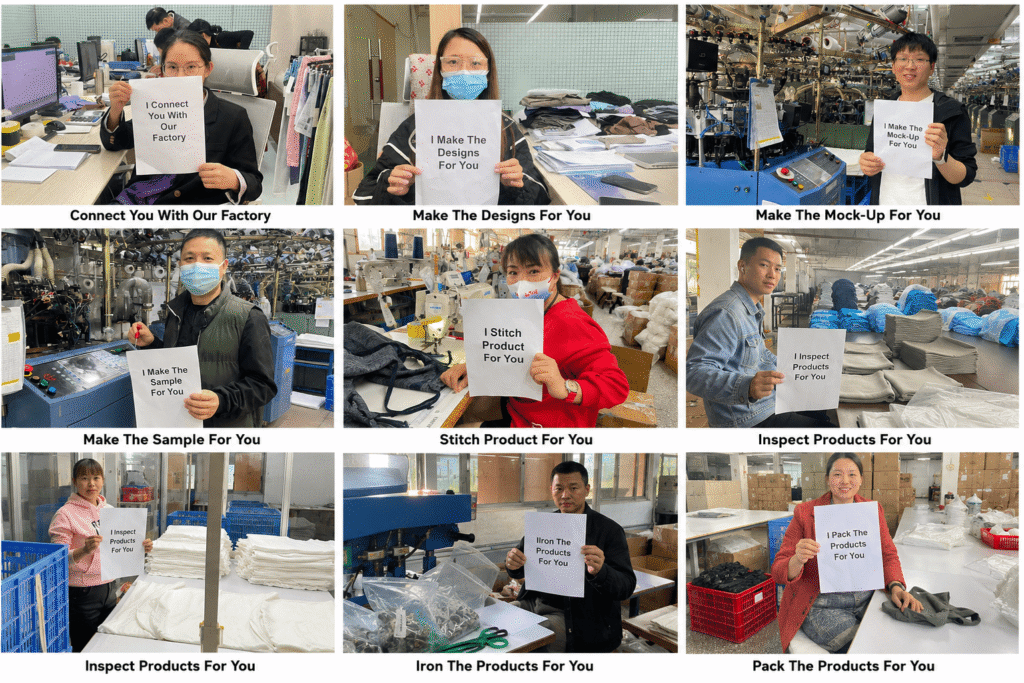
Selecting a sports bra supplier requires careful evaluation of manufacturing capabilities because production quality directly affects customer satisfaction and brand reputation. A supplier with strong technical ability can help prevent problems related to inconsistent sizing, fabric performance, production delays, and quality issues.
Before selecting a sports bra manufacturer, buyers should evaluate production capacity, technical expertise, quality control systems, certifications, material capabilities, and international cooperation experience. These factors provide a clearer picture of whether a supplier can deliver consistent products and support long-term business growth.
Many brands focus heavily on product samples when evaluating suppliers. While samples are important, they only represent one production moment. The bigger question is whether the supplier can consistently reproduce the same quality during larger production runs.
Professional buyers should look beyond the sample and examine the entire manufacturing system.
How Important Is Production Capacity When Choosing a Sports Bra Supplier?
Production capacity reflects whether a manufacturer can handle current orders and future growth.
Important evaluation points include:
| Evaluation Area | What Buyers Should Check |
|---|---|
| Production Lines | Number and type of production lines available |
| Workforce | Skilled operators and technical teams |
| Monthly Output | Ability to support expected order volume |
| Production Planning | Ability to manage deadlines |
| Expansion Ability | Capacity for future growth |
A supplier with insufficient production planning may create problems such as:
- Delayed shipments
- Inconsistent quality
- Poor communication during busy seasons
For growing brands, supplier scalability is especially important because successful products often require faster replenishment and increased production volume.
Why Does Quality Control Matter for Sports Bra Suppliers?
Sports bras require precise manufacturing because customers judge them based on comfort, support, appearance, and durability.
A professional quality control system should cover multiple production stages.
| Quality Control Stage | Main Purpose |
|---|---|
| Material Inspection | Verify fabric quality and performance |
| Cutting Inspection | Maintain accurate sizing |
| Sewing Inspection | Ensure construction durability |
| Finished Product Inspection | Check appearance and specifications |
Common sports bra quality issues include:
- Uneven sizing
- Fabric deformation
- Weak stitching
- Incorrect support structure
- Color inconsistency
A supplier with a strong QC system can identify problems earlier and reduce the risk of large-scale production failures.
Which Certifications Should Sports Bra Manufacturers Have?
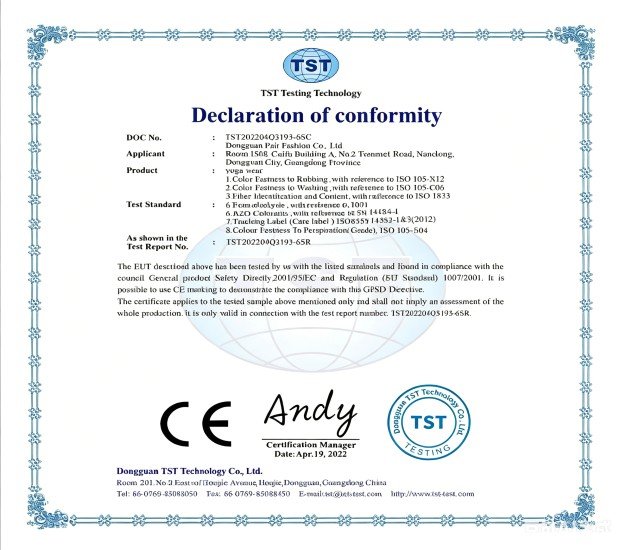
Certifications help buyers understand whether a manufacturer follows recognized quality, environmental, and compliance standards.
Common certifications considered by international buyers include:
| Certification | Why It Matters |
|---|---|
| ISO9001 | Quality management system |
| BSCI | Social compliance and responsible manufacturing |
| Global Recycled Standard (GRS) | Sustainable recycled material verification for recycled materials and responsible production practices |
| CE | Product compliance requirements for specific markets |
| ROHS | Restriction of hazardous substances |
Different markets have different requirements when sourcing sportswear products. European buyers usually pay more attention to sustainability, environmental protection, and responsible manufacturing practices.
North American brands may focus more on product safety and supply chain reliability.
Sustainable activewear companies may prioritize recycled materials and environmental documentation.
Why Should Buyers Evaluate Fabric and Technical Knowledge?
Sports bras are performance products, not simple garments. Brands expanding beyond individual sports bra categories often benefit from working with a functional activewear manufacturer that understands different performance apparel requirements, fabric technologies, and production standards.
The fabric directly influences:
- Comfort
- Support
- Breathability
- Moisture management
- Durability
Important fabric characteristics include:
- Four-way stretch
- Recovery performance
- Sweat absorption
- Breathability
- Soft hand feel
- Shape retention
A supplier with strong material knowledge can help brands choose fabrics that match their target customers.
For example:
A yoga-focused sports bra may prioritize softness and flexibility.
A high-impact training sports bra may require stronger support and compression performance.
The right supplier should understand these differences instead of applying the same solution to every product.
How Much Does It Cost to Source Sports Bras From Manufacturers?
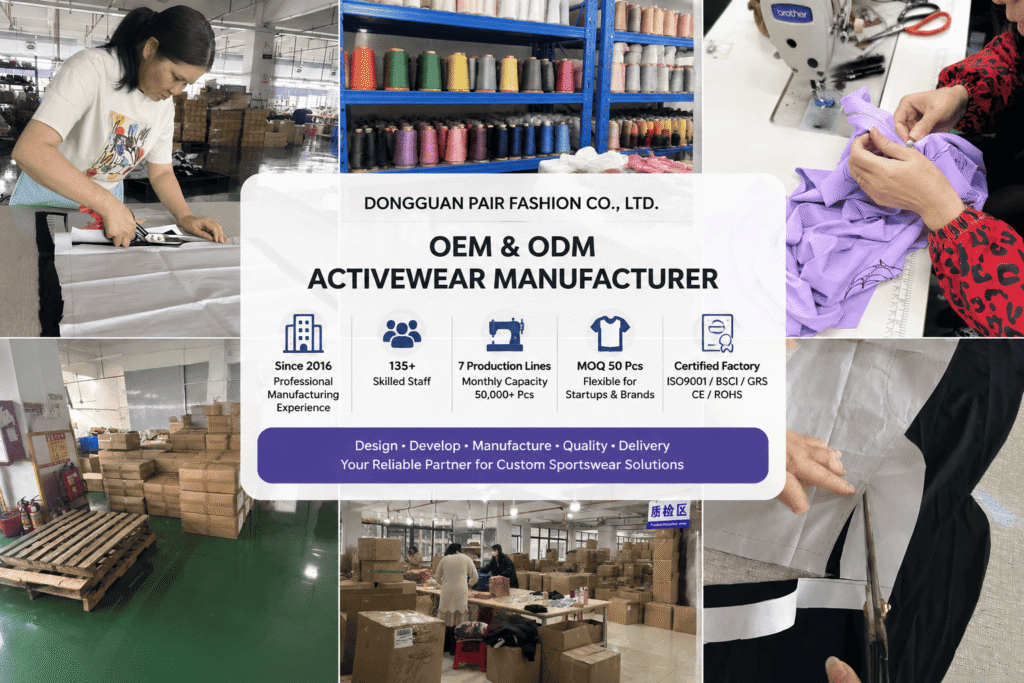
The cost of sourcing sports bras depends on multiple factors, including materials, product construction, order quantity, supplier location, and quality requirements. There is no single standard price because different brands have different product positioning and manufacturing expectations.
Sports bra manufacturing costs are mainly influenced by fabric selection, design complexity, production quantity, accessories, testing requirements, and packaging choices. Brands should evaluate total value instead of choosing suppliers only based on the lowest quotation, because product quality and supply reliability directly affect long-term profitability.
Many new buyers make the mistake of comparing only unit prices. However, experienced purchasing teams understand that the cheapest supplier is not always the most cost-effective option.
A low-priced quotation may sometimes indicate:
- Lower-grade materials
- Limited quality control
- Less production experience
- Reduced product consistency
- Limited support after production
For activewear brands, the real goal is not simply reducing manufacturing costs. The goal is achieving the right balance between:
- Product performance
- Customer expectations
- Production stability
- Brand positioning
- Profit margin
What Factors Influence Sports Bra Wholesale Pricing?
Sports bra pricing is determined by several manufacturing variables. Understanding these factors helps buyers prepare realistic budgets and make better supplier comparisons.
| Cost Factor | How It Affects Pricing |
|---|---|
| Fabric Selection | Performance fabrics usually cost more than basic materials |
| Product Construction | More complex structures require additional production work |
| Order Quantity | Larger quantities usually reduce average production costs |
| Design Details | Special structures, trims, and components increase costs |
| Testing Requirements | Market-specific compliance may add expenses |
| Packaging | Custom packaging affects overall product cost |
Fabric Choice Has a Major Impact on Cost
Fabric is one of the most important cost factors because sports bras depend heavily on material performance.
Common fabric considerations include:
- Stretch recovery
- Softness
- Compression level
- Breathability
- Moisture management
- Sustainability requirements
For example:
A basic fitness sports bra may use standard stretch fabric.
A premium performance sports bra may require:
- Advanced compression materials
- Recycled fabrics
- Enhanced moisture control
- Better durability
The difference in material quality can significantly influence both manufacturing cost and customer perception.
Product Complexity Also Changes Manufacturing Costs
Two sports bras may look similar but require very different manufacturing processes.
Factors that increase production complexity include:
- Multiple fabric panels
- Special back designs
- Adjustable straps
- Padding structures
- Reinforced support areas
- Unique stitching methods
Brands targeting premium customers often invest more in construction because product comfort and performance directly influence customer loyalty.
How Can Brands Balance Cost and Product Quality?
The most successful sourcing strategies focus on value optimization rather than simply reducing prices.
Brands can improve cost efficiency by:
- Selecting appropriate fabrics for target customers
- Avoiding unnecessary design complexity
- Planning production quantities carefully
- Developing long-term supplier relationships
- Comparing multiple manufacturing solutions
A professional supplier should help buyers understand which features create real customer value and which features only increase cost.
1. Product Development
Regular monthly product development ensures consistent updates to your brand line.
2. Fabric Sourcing
Regular monthly product development ensures consistent updates to your brand line.
3. Sample Making
Regular monthly product development ensures consistent updates to your brand line.
4. Bulk Production
Regular monthly product development ensures consistent updates to your brand line.
5. Packaging & Delivery
Regular monthly product development ensures consistent updates to your brand line.
Complete OEM & ODM Sportswear Solutions
We provide complete custom sportswear manufacturing services from concept development and fabric sourcing to bulk production and worldwide delivery.
- OEM & ODM Product Development
- Functional Fabric Sourcing & Material Selection
- Pattern Making & Sample Development
- Private Label Branding & Custom Packaging
- Quality-Controlled Bulk Manufacturing
- Global DDP Shipping & Delivery Support
What Are Common Mistakes When Choosing Sports Bra Manufacturers?
Many activewear brands experience problems during sourcing because they select suppliers based on incomplete information. Choosing a sports bra manufacturer requires a careful evaluation process, because supplier decisions can affect product quality, launch schedules, customer reviews, and brand reputation.
The most common mistakes when choosing sports bra manufacturers include focusing only on price, failing to evaluate production capability, ignoring quality systems, and choosing suppliers without understanding their actual specialization. Buyers can reduce sourcing risks by comparing multiple manufacturers, checking production experience, and evaluating long-term cooperation potential.
A supplier relationship is a long-term business decision rather than a simple purchasing transaction.
The right manufacturer should not only produce products but also help brands avoid unnecessary problems during development and production.
Why Do Brands Choose the Wrong Sports Bra Supplier?
Several common mistakes appear repeatedly among international buyers.
Choosing Only Based on Lowest Price
Price is important, but it should not become the only decision factor.
Extremely low quotations may create hidden risks:
- Lower-quality materials
- Reduced inspection standards
- Production delays
- Inconsistent sizing
- Higher return rates
A successful activewear brand needs reliable product quality because customers often judge the entire brand through product experience.
Ignoring Manufacturing Specialization
A supplier that produces general clothing may not have enough experience with technical sportswear.
Sports bras require understanding of:
- Body movement
- Support requirements
- Fabric performance
- Comfort engineering
- Long-term durability
Brands should evaluate whether a supplier has genuine sportswear experience rather than only general apparel production ability.
Not Evaluating Communication Ability
International sourcing requires constant communication.
Common communication problems include:
- Slow responses
- Unclear product information
- Misunderstanding specifications
- Poor production updates
A supplier with good communication can identify problems earlier and create smoother cooperation.
Skipping Supplier Verification
Before cooperation, buyers should review:
- Company background
- Production capability
- Certifications
- Previous market experience
- Customer suitability
A professional evaluation process reduces future risks.
How Can Buyers Reduce Sports Bra Sourcing Risks?
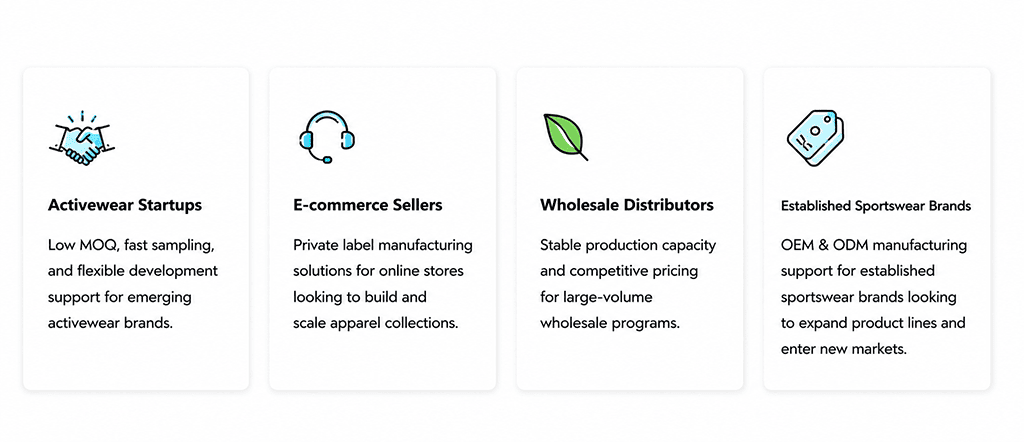
Reducing sourcing risks requires a structured supplier evaluation process. Instead of making decisions based on price or online appearance, professional buyers should build a complete evaluation framework covering manufacturing ability, product quality, communication, and business reliability.
Global buyers can reduce sports bra sourcing risks by comparing multiple suppliers, reviewing manufacturing capabilities, checking quality management systems, confirming product requirements clearly, and selecting manufacturers that match their business goals. A careful evaluation process helps brands avoid production delays, inconsistent quality, and unexpected costs.
Compare Multiple Suppliers Before Making a Final Decision
Comparing suppliers allows buyers to understand market differences.
Important comparison points include:
- Product expertise
- Manufacturing experience
- Quality systems
- Communication speed
- Production capability
- Customer suitability
The goal is not finding the cheapest supplier.
The goal is identifying the supplier with the best balance of quality, reliability, cost, and long-term potential. For brands planning future product expansion, selecting a manufacturer capable of supporting custom activewear collections can provide greater flexibility as the business grows.
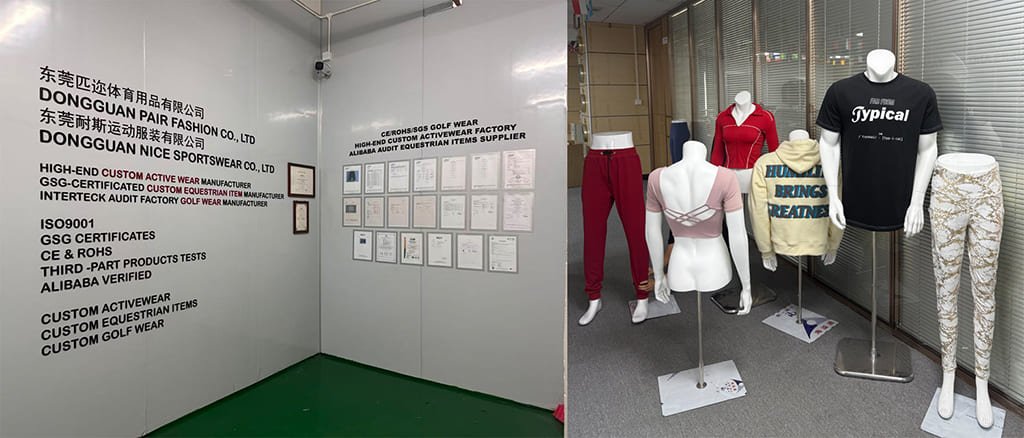
Review Manufacturing Evidence Instead of Relying Only on Marketing Claims
Professional buyers should request practical information, such as:
- Factory background
- Product examples
- Quality procedures
- Production capability information
- Certification documents
Real manufacturing capability should be supported by evidence.
Confirm Product Requirements Clearly Before Production
Many production problems come from unclear expectations.
Brands should confirm:
- Product specifications
- Material requirements
- Size standards
- Quality expectations
- Packaging details
Clear communication at the beginning reduces problems later.
Sports Bra Manufacturer Selection Checklist for Global Buyers
A structured checklist helps purchasing teams evaluate suppliers more efficiently. Whether a company is launching a new activewear collection or expanding an existing product line, asking the right questions can reveal whether a manufacturer is suitable for long-term cooperation.
Before selecting a sports bra manufacturer, global buyers should evaluate experience, production capability, quality systems, certifications, communication ability, product specialization, and business compatibility. A reliable supplier should match the brand’s current needs while also supporting future growth.
The following checklist can help brands make better sourcing decisions.
15 Questions To Ask Before Choosing a Sports Bra Manufacturer
| Question | Why It Matters |
|---|---|
| How many years has the manufacturer worked with sportswear? | Shows industry experience |
| Does the supplier specialize in activewear products? | Ensures technical understanding |
| What markets does the manufacturer serve? | Indicates export experience |
| What production capacity does the supplier have? | Helps evaluate scalability |
| What quality control system is used? | Reduces production risks |
| What certifications are available? | Supports market compliance |
| Can the supplier provide material information? | Helps evaluate product performance |
| How does the supplier manage production communication? | Improves cooperation efficiency |
| Can the supplier support different business stages? | Supports future growth |
| How flexible is the supplier with product requirements? | Shows adaptability |
| Does the supplier understand international sizing? | Prevents fitting problems |
| How does the supplier handle production issues? | Shows problem-solving ability |
| Can the supplier maintain consistent quality? | Important for repeat orders |
| Does the supplier understand target markets? | Improves product positioning |
| Is the supplier suitable for long-term cooperation? | Determines partnership value |
Frequently Asked Questions About Sports Bra Wholesale Manufacturers
1. What should I consider when choosing a sports bra wholesale manufacturer?
Choosing the right sports bra wholesale manufacturer requires evaluating more than price. Global brands should consider manufacturing experience, product specialization, quality control systems, certifications, production capacity, communication efficiency, and the supplier’s ability to support long-term business growth.
2. Why do global brands choose sports bra manufacturers in China?
Global brands choose Chinese sports bra manufacturers because China offers a mature textile supply chain, experienced garment production teams, diverse functional fabric options, and strong manufacturing resources. However, buyers should still compare individual suppliers based on quality, reliability, and product expertise.
3. How do I find a reliable sports bra supplier for my activewear brand?
Brands can find reliable sports bra suppliers by comparing multiple manufacturers, checking production experience, reviewing certifications, evaluating quality systems, and confirming whether the supplier has experience serving international customers with similar product requirements.
4. What types of sports bra suppliers are available for global buyers?
Sports bra suppliers can generally be divided into wholesale suppliers, ready-stock suppliers, development-focused manufacturers, and large-scale production suppliers. The best option depends on the brand’s business stage, product requirements, order volume, and need for product flexibility.
5. Which certifications should a sports bra manufacturer have?
Important certifications for sports bra manufacturers may include ISO9001 for quality management, BSCI for social compliance, GRS recycled material verification. Brands using recycled fabrics should understand sustainability standards such as the Global Organic Textile Standard (GRS certification information) when evaluating material transparency and environmental responsibility.
6. How much does it cost to source sports bras from manufacturers?
Sports bra manufacturing costs depend on factors such as fabric selection, product structure, order quantity, design complexity, testing requirements, and packaging. Brands should evaluate overall value rather than selecting suppliers only based on the lowest price.
7. What questions should I ask before working with a sports bra manufacturer?
Before cooperation, buyers should ask about manufacturing experience, product specialization, production capacity, quality control procedures, certifications, export markets, communication process, and the supplier’s ability to maintain consistent quality for repeat orders.
8. How can brands avoid choosing the wrong sports bra supplier?
Brands can reduce sourcing risks by comparing multiple suppliers, reviewing factory capabilities, checking quality management systems, requesting product information, confirming specifications clearly, and selecting manufacturers that match their business goals rather than focusing only on short-term pricing.