OEM/ODM Sportswear Manufacturer | 3-Day Sampling | Low MOQ | 50K Monthly Capacity | ISO9001 & BSCI Certified

Top 10 Cotton Blend Plus Size Clothing Manufacturer Options in China
Compare 10 China cotton blend plus size clothing manufacturers by extended sizing, fabric capability, MOQ, price, samples, custom service and production evidence. A practical sourcing guide for brands building a reliable supplier shortlist.
Top 10 Cotton Blend Plus Size Clothing Manufacturer Options: Comparing Extended Sizing, Cotton Blends, MOQ and Supplier Capability
A long supplier list does not make sourcing easier if every company describes itself as experienced, flexible and reliable. For buyers searching for a Cotton Blend Plus Size Clothing Manufacturer, the difficult part is separating a relevant production partner from a general clothing supplier that simply lists plus sizes and cotton blends among dozens of capabilities.
The differences often become visible only when buyers ask more specific questions. What extended sizes has the supplier actually produced? Is the published MOQ valid for your fabric and color requirements? Can sizes be mixed within the MOQ? What sample evidence is available? Which certifications can be verified? Is the supplier manufacturing the garments itself or coordinating production elsewhere?
A Cotton Blend Plus Size Clothing Manufacturer should be compared through evidence across extended-sizing experience, cotton blend capability, MOQ structure, sample execution, customization and production reliability. The most suitable supplier is not automatically the company with the lowest quotation, widest advertised size range or smallest MOQ. Buyers should compare manufacturers against the same product requirements and identify which capabilities are documented, which are publicly stated and which still need direct confirmation before sampling or bulk ordering.
For brand founders, sourcing teams, private label buyers and established apparel companies, this creates a more useful shortlist than simply collecting ten company names. The following comparison starts with the factors that can materially change product quality, commercial risk and the supplier’s suitability for a particular order.
What Should Buyers Compare in a Cotton Blend Plus Size Clothing Manufacturer?
Buyers comparing a Cotton Blend Plus Size Clothing Manufacturer should examine product specialization, demonstrated extended-sizing experience, cotton blend knowledge, MOQ structure, sample performance, customization scope and evidence of reliable production. These factors should be evaluated together rather than separately. A manufacturer can offer an attractive price or broad size range while still being poorly matched to the product, quantity, fabric requirements or sourcing stage of a particular brand.
What Type of Manufacturer Is Suitable for Cotton Blend Plus Size Clothing?
Start with relevance to the actual product, not the size of the factory or the number of garments displayed on its website.
A Cotton Blend Plus Size Clothing Manufacturer producing stretch bottoms may need a different technical background from a supplier specializing in cotton-rich T-shirts, hoodies or relaxed loungewear. Even when two suppliers both advertise extended sizes, their strongest product categories may be very different.
That distinction matters because buyers are not purchasing “plus size capability” as an abstract service. They are purchasing a specific garment with a specific silhouette, size range, fabric, construction, price target and expected order quantity.
Before requesting samples, check whether the manufacturer can show evidence related to products reasonably similar to your project.
Useful evidence can include:
- Relevant product categories already produced
- Extended-size ranges previously handled
- Measurement charts or grading examples
- Size-set or production samples
- Cotton blend fabric specifications
- Fabric testing information where relevant
- Production or QC records for comparable garments
- Evidence of repeat orders in similar product categories
A Cotton Blend Plus Size Clothing Manufacturer that can discuss these points clearly gives the buyer more useful information than a supplier whose only evidence is a catalogue containing several products labelled 2XL, 3XL or 4XL.
The objective at this stage is not to decide which supplier has the “best” pattern-making technique. It is to determine whether the supplier has enough relevant experience to justify moving into a more expensive sample evaluation.
Cotton Blend Plus Size Clothing Manufacturer vs General Clothing Manufacturer: What Is the Difference?
The most important difference is specialization that can be demonstrated.
A general apparel supplier may be perfectly capable of sewing cotton blend garments and offering larger sizes. That does not automatically make it unsuitable. However, a specialist Cotton Blend Plus Size Clothing Manufacturer should be able to provide more relevant evidence around extended-size products, appropriate fabric options, sampling and commercial production.
For supplier comparison, buyers should ask questions such as:
- Which extended sizes have you produced in this product category?
- Do you have examples from both tops and bottoms?
- Can you provide a size-set sample?
- Which cotton blend fabrics are regularly available?
- Is your advertised MOQ based on stock fabric?
- Does custom dyeing create another material minimum?
- Can you provide fabric specifications or available test reports?
- How are approved measurements checked during production?
These questions keep the comparison focused on supplier evidence rather than turning the sourcing process into a theoretical discussion about garment construction.
A general manufacturer that provides strong, relevant evidence may be a better candidate than a self-described specialist that provides very little. The label itself should never replace verification.
Which Supplier Capabilities Matter Most for Extended-Size Orders?
There is no universal ranking that works for every buyer.
A startup evaluating its first Cotton Blend Plus Size Clothing Manufacturer may give greater weight to manageable MOQ, sampling support and the ability to communicate clearly about an unfinished product specification. A growing DTC brand with established bestsellers may care more about consistent restocks. A larger retailer may prioritize documented QC, capacity, compliance and predictable delivery.
A practical first comparison can use the following structure:
| Capability | What Buyers Should Compare | Commercial Question |
|---|---|---|
| Extended Sizing | Relevant size ranges, product examples, grading evidence and size-set capability | Has the supplier demonstrated experience beyond standard sizes? |
| Cotton Blend Capability | Available compositions, GSM, stretch, recovery, shrinkage information and testing | Can the supplier support the fabric requirements of this product? |
| MOQ | Order, style, color, fabric and trim minimums | What does the advertised MOQ actually include? |
| Sample | Sample type, fee, timing, revisions and accuracy | Is the supplier worth advancing to production evaluation? |
| Custom Service | Fabric, color, logo, labels, trims and packaging | Which requested specifications can actually be customized? |
| Production Evidence | Facility information, processes, QC records and audit evidence | Can manufacturing claims be supported? |
| Bulk Reliability | PP approval, measurement tolerances, inspection and reorder records | Can an approved product be reproduced consistently? |
A Cotton Blend Plus Size Clothing Manufacturer should therefore be evaluated based on the real risks and requirements of the actual order.
If a brand is developing a new extended-size category that it has not produced before, the supplier’s relevant sizing experience may be more important than a small price difference. If the product needs a special cotton blend, buyers should pay more attention to fabric sourcing capability and material minimums. If the product already has stable sales, production consistency and reliable replenishment may become more important.
How Should Buyers Compare Fit Capability, Fabric Knowledge, MOQ, Price, Sample and Production Reliability?
The most useful comparisons begin with comparable inputs.
Suppose one Cotton Blend Plus Size Clothing Manufacturer receives a complete Tech Pack, another receives several reference images, and a third receives only a short product description. Their quotations, sample assumptions and lead times are not directly comparable because they are responding to different levels of information.
The same problem occurs with fabric.
Supplier A may quote a low unit price using an available cotton blend. Supplier B may quote a higher price based on the buyer’s requested GSM, composition and custom color. Supplier B is not necessarily “expensive”; the two suppliers may simply be quoting different product specifications.
MOQ can create the same confusion. “100 pieces” might mean:
- 100 pieces per total order
- 100 pieces per style
- 100 pieces per color
- 100 pieces using stock fabric
- 100 pieces after a larger fabric minimum has already been met
Before deciding that one Cotton Blend Plus Size Clothing Manufacturer offers better commercial terms, buyers should clarify what sits behind the number.
For a meaningful comparison, shortlisted suppliers should receive substantially the same core information:
- Product drawing or Tech Pack
- Target size range
- Measurement requirements
- Target fabric composition or performance
- Approximate GSM where relevant
- Number of colors
- Branding requirements
- Packaging requirements
- Estimated order quantity
- Target market
- Required sample type
- Expected delivery window
This makes differences in quotation, MOQ, technical response and sample execution much easier to interpret.
What Information Should Be Publicly Verified and What Should Be Confirmed Directly With the Supplier?
A supplier website is useful for discovery, but it should not be treated as the final purchase specification.
When researching a Cotton Blend Plus Size Clothing Manufacturer, buyers can usually begin by checking publicly available information such as:
Information that may be publicly researched
- Company location
- Business history
- Main product categories
- OEM, ODM or private label services
- Published certifications
- Advertised size range
- Advertised MOQ
- General production capability
The next group of information is much more dependent on the specific order.
Information that should be reconfirmed directly
- MOQ for the selected style
- MOQ per color
- MOQ for the required cotton blend
- Whether sizes can be mixed
- Custom dyeing minimum
- Current sample fee
- Current sample lead time
- Current bulk lead time
- Available extended sizes for the exact product
- Logo and packaging minimums
- Testing requirements
- Payment terms
- Current production availability
For example, a Cotton Blend Plus Size Clothing Manufacturer may advertise a low MOQ while using available fabrics and standard colors. The same manufacturer may require a higher quantity when the buyer requests custom knitting, special composition, custom dyeing, printing or branded trims.
Neither number is necessarily misleading. They may simply describe two different production conditions.
This is why buyers should separate publicly stated capability from order-specific confirmation before building a final shortlist.
What Makes a Manufacturer Worth Moving to the Sample Stage?
The purpose of initial supplier research is not to find a perfect company on paper. It is to decide which manufacturers deserve the time and cost of actual product testing.
A Cotton Blend Plus Size Clothing Manufacturer is generally more useful to advance when its product experience is relevant, its commercial conditions are reasonably compatible with the order, its claims can be supported with evidence, and its team can respond clearly to technical questions without repeatedly changing the basic quotation assumptions.
At this point, buyers do not need every production detail finalized. They do need enough clarity to answer four practical questions:
Can this supplier make this type of product?
Can it work within our realistic order structure?
Can its main capability claims be verified?
Is it worth paying for a comparable sample?
For buyers who have completed supplier comparison and are ready to move into actual custom cotton blend plus size clothing production, the next stage is different: product specifications, fit direction, fabric requirements, sampling standards, branding and production references must then be defined for the specific order.
A shortlist should therefore end with fewer, better-qualified suppliers, not simply the ten companies with the most attractive websites. The next comparison can then focus on the actual China manufacturers, what each one publicly states, what evidence is available and what buyers should still verify before placing a sample order.
Top 10 Cotton Blend Plus Size Clothing Manufacturer Options in China
China offers a broad mix of extended-size specialists, women’s fashion manufacturers, activewear producers and full-package OEM/ODM suppliers. The right Cotton Blend Plus Size Clothing Manufacturer depends on more than location or headline MOQ. Buyers should compare each supplier’s actual product specialization, extended-size evidence, cotton blend capability, sampling structure, commercial minimums and production model—and confirm project-specific conditions before treating any published figure as a firm quotation.
The following manufacturers represent different sourcing models rather than ten interchangeable factories. Some are stronger in women’s fashion, some in activewear, some in big-and-tall menswear, and others in multi-category private label production. That difference is useful because a serious shortlist should reflect the product being sourced.
Quick Comparison of 10 China Manufacturing Options
| Manufacturer | Location | Established | Public MOQ | Public Size Information | Product Focus | Sample / Production Information |
|---|---|---|---|---|---|---|
| Pair Fashion | Dongguan, Guangdong | 2016 | Project-dependent | Plus size development available | Activewear, plus size, maternity, equestrian, loungewear | Samples commonly 3–7 days; bulk commonly 15–25 working days |
| NewWay | Zhejiang | 1994 | Plus size from 100 pcs with stock fabric | XL–6XL / up to US women’s 24 stated | Plus size fashion, dresses, knitwear, sportswear | 14-day plus-size sample; 30-day bulk stated |
| Hongyu Apparel | China | 2003 | 50 pcs for some blank/logo programs; custom terms vary | Custom sizing promoted | Fashion, tops, dresses, hoodies, private label | Custom sample and bulk terms vary by service model |
| H&Fourwing | Ningbo, Zhejiang | 2014 | From 200 pcs/color/style | Plus-size women’s garments offered | Premium women’s fashion, dresses, tailoring | Sample timing depends on material development |
| Lezhou Garment | China | 2004 stated on women’s fashion page | Commonly 200 pcs/style for regular styles | Buyer specifications should be confirmed | Women’s fashion and full-package custom clothing | Sample commonly 1–2 weeks |
| Tuer Garment | Guangzhou, Guangdong | 2013 | 150–200 pcs/color/style stated | Confirm by project | Women’s fashion and private label | 7-day sample and 20-day production advertised |
| Shanlinyang Apparel | Xiamen, Fujian | 2018 | 100 pcs/color/style stated | XS–5XL / Curve line | Activewear, sets, dresses, swim, curve fashion | 7–12-day samples; custom production 20–35 days |
| MENWILD | Dongguan, Guangdong | 1998 | From 100 pcs/style stated | 2XL–6XL | Big & tall menswear | Sampling available; current timing should be confirmed |
| Mingxing Clothing | Dongguan, Guangdong | Not clearly stated on reviewed plus-size page | Confirm by project | Plus-size dress specialization | Dresses and women’s fashion | 7–10-day samples; 30–35-day bulk stated |
| Mostnica Garment | Guangzhou, Guangdong | Confirm directly | Trial programs around 100 pcs/style may be discussed | Extended-size womenswear | Dresses, tops, pants, T-shirts, hoodies | Size-set sampling promoted; current timing should be confirme |
Published information may change depending on fabric, color, construction, trims, customization and order quantity. Buyers can use this table to make an initial supplier shortlist, but the final information should still be confirmed based on the quotation for the actual project.
1. Pair Fashion — Flexible Development for Plus Size Performance and Lifestyle Collections
Location: Dongguan, Guangdong, China
Established: 2016
Business Model: OEM, ODM and private label
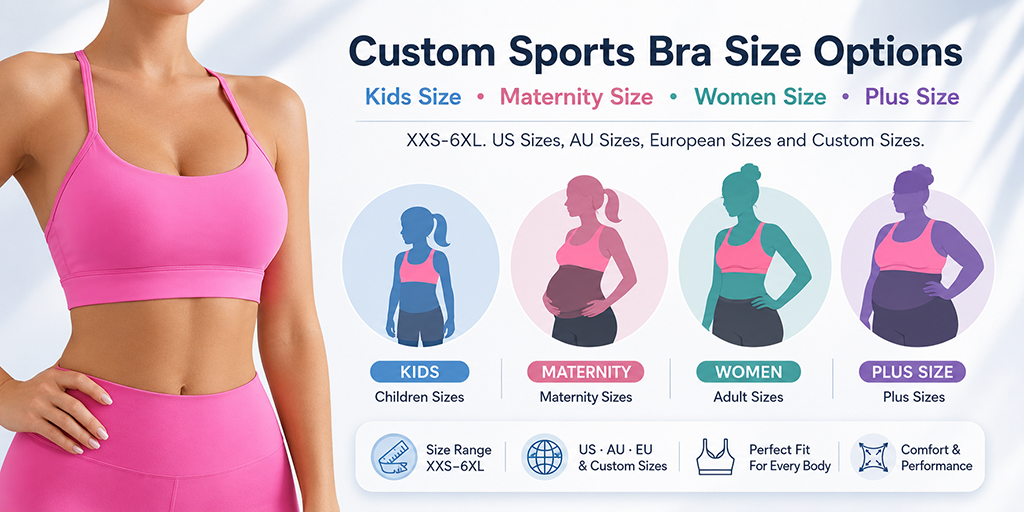
Core Products: Plus size activewear, yoga and fitness apparel, loungewear, maternity apparel, equestrian clothing, tennis apparel and related performance categories
MOQ: Depends on style, fabric, color and customization requirements
Sample Lead Time: Commonly 3–7 days
Bulk Lead Time: Commonly 15–25 working days
Certifications: ISO 9001, BSCI, GRS, CE and ROHS
Best Fit: Brands requiring custom development across performance, stretch and specialist apparel categories
Less Suitable For: Buyers looking only for ready-stock wholesale products with no development work
Pair Fashion is a Dongguan-based Cotton Blend Plus Size Clothing Manufacturer with a broader technical apparel background than manufacturers focused mainly on conventional fashion dresses or ready-stock wholesale products.
Its production structure includes 11 people in pattern and sample development and 13 people in quality control, with seven production lines across functional sportswear and specialist apparel. This makes the company particularly relevant when a buyer’s extended-size collection involves movement, stretch, recovery or products that sit closer to activewear and lifestyle performance clothing than traditional woven fashion.
The main advantage is category overlap. A brand may begin with plus size leggings, tops or loungewear and later extend into maternity, tennis, yoga or other functional categories without necessarily changing its manufacturing partner.
The point to verify is commercial fit. Buyers should not assume that one MOQ applies to every Pair Fashion project. Fabric availability, color requirements, trims, construction and customization can change the commercially workable quantity.
Core Strength: Combination of extended-size development with functional apparel manufacturing.
Point to Verify: Confirm MOQ by style, color and selected cotton blend rather than relying on a general minimum.
2. NewWay — Transparent Plus Size Specifications and Stock-Fabric MOQ
Location: Zhejiang, China
Established: 1994
Core Products: Plus size fashion, dresses, knitwear, sweaters and sportswear
Public Plus Size Range: XL–6XL; its plus-size page also states production up to US women’s size 24
Public MOQ: 100 pieces per style for plus-size products using stock fabric; custom fabric or specialty materials can require higher quantities
Plus Size Sample Lead Time: 14 days stated
Bulk Lead Time: 30 days stated
Certifications: GRS and amfori BSCI information is publicly presented
Best Fit: Buyers wanting clearly published commercial specifications and multi-category extended sizing
Less Suitable For: Very small custom-fabric projects below mill minimums
NewWay is useful to include because it publicly provides unusually specific information about plus-size manufacturing. Its plus-size page describes XL–6XL production, stock-fabric MOQ from 100 pieces, a 14-day sample timeline and 30-day bulk production after approval.
For buyers comparing a Cotton Blend Plus Size Clothing Manufacturer, the important lesson is the distinction between garment MOQ and fabric MOQ. NewWay states that custom or dyed fabrics can move minimums significantly higher than orders using available material.
That is exactly the kind of detail buyers should request from every shortlisted supplier.
NewWay also publicly discusses separate grading specifications for standard and plus-size ranges and states that standard and extended sizes can be produced in the same program using different measurement and grade specifications.
Core Strength: Relatively transparent public information covering size range, MOQ, sampling and production.
Limitation: The attractive stock-fabric MOQ should not be assumed to apply to a specially developed cotton blend.
Point to Verify: Request the actual cotton blend library and confirm whether the required composition, GSM and color are stock or custom.
3. Hongyu Apparel — Multiple Entry Models for New and Developing Brands
Location: China
Established: 2003
Core Products: Women’s, men’s and children’s apparel, including tops, dresses, hoodies and custom fashion
Business Models: Blank wholesale, logo customization and cut-and-sew customization
Published MOQ: 50 pieces for certain blank/logo programs; custom cut-and-sew requirements are higher and vary by program
Sampling: Published sample timing varies according to service level
Best Fit: Buyers that want different levels of customization depending on brand maturity
Less Suitable For: Buyers who compare the headline low MOQ without distinguishing blank products from full custom manufacturing
Hongyu Apparel is interesting because its public structure demonstrates why MOQ should never be compared without first comparing the manufacturing model.
Its ready-made or logo-customization programs can operate at relatively low quantities, while original cut-and-sew development requires different commercial conditions. Hongyu’s plus-size content also promotes customized sizing and private label production.
For a buyer comparing a Cotton Blend Plus Size Clothing Manufacturer, this creates an important decision: do you need an existing garment with your branding, or do you need a product manufactured around your own pattern, measurements, fabric and construction?
Those are not equivalent sourcing projects.
Core Strength: Multiple service levels can suit brands at different development stages.
Limitation: A low MOQ attached to ready-made products should not be compared directly with another supplier’s MOQ for fully custom cut-and-sew manufacturing.
Point to Verify: Ask for a quotation specifically based on full custom extended sizing and the required cotton blend, not only an existing blank style.
4. H&Fourwing — Premium Women’s Fashion and More Complex Construction
Location: Ningbo, Zhejiang, China
Established: 2014
Core Products: Premium women’s dresses, tailored garments and fashion-led womenswear
Published MOQ: From 200 pieces per color per style
Plus Size Capability: Public product information includes plus-size women’s garments and customized size charts
Compliance Information: BSCI, Higg, Higg FEM and SEDEX are publicly listed
Best Fit: Women’s brands prioritizing fashion construction, silhouette and workmanship
Less Suitable For: Buyers whose main priority is extremely low MOQ commodity basics
H&Fourwing occupies a different position from an activewear-focused Cotton Blend Plus Size Clothing Manufacturer. Its public positioning emphasizes premium women’s fashion, dresses, tailoring and more demanding garment construction.
That can make it relevant for plus size brands where the product challenge is not only stretch and comfort but also silhouette, lining, drape, structure and detailed workmanship.
Its published standard MOQ begins at 200 pieces per color per style, which may be less attractive for a very early-stage brand testing many colors. On the other hand, buyers developing more structured women’s garments may value specialization over the smallest possible minimum.
Core Strength: Women’s fashion construction and more complex garment execution.
Limitation: Its commercial model may be less suitable for micro-runs or buyers testing many SKUs at very low quantities.
Point to Verify: Ask for recent extended-size examples in the same construction category as your planned garment.
5. Lezhou Garment — Full-Package Women’s Fashion Development
Location: China
Established: 2004 according to its women’s fashion information
Core Products: Custom women’s fashion and full-package garment production
Published MOQ: Regular styles are commonly stated around 200 pieces per style, with conditions varying by complexity
Sample Lead Time: Approximately 1–2 weeks is publicly stated for custom sampling
Sustainable Fabrics: Available options are stated, although the company notes that selection can be limited
Best Fit: Fashion brands with defined designs, sketches, references or Tech Packs
Less Suitable For: Buyers expecting a very broad sustainable-fabric library without checking availability first
Lezhou is a general custom women’s apparel producer rather than a narrowly positioned Cotton Blend Plus Size Clothing Manufacturer, and that difference should remain visible in the comparison.
Its value for a plus size buyer depends on whether the company can demonstrate relevant extended-size work for the particular garment being sourced. The company publicly supports full-package manufacturing and can work from Tech Packs, sketches or reference images.
This is a good example of why buyers should not automatically eliminate a general manufacturer. If the factory can provide suitable grading evidence, comparable samples and fabric options, it may still be commercially relevant.
Core Strength: Full-package custom women’s fashion development.
Limitation: Public information is less plus-size-specific than suppliers built around extended sizing.
Point to Verify: Ask for actual plus size size-set examples, grading approach and cotton blend specifications before moving to paid sampling.
6. Tuer Garment — Guangzhou Women’s Fashion With Defined Commercial Timelines
Location: Guangzhou, Guangdong, China
Established: 2013
Core Products: Women’s clothing, private label fashion and custom apparel
Published MOQ: Approximately 150–200 pieces per color/style
Sample Time: 7 days advertised
Production Time: 20 days advertised
Facilities: Publicly states two factories and approximately 150 workers
Best Fit: Women’s fashion brands that value relatively quick development and Guangzhou supply-chain access
Less Suitable For: Buyers requiring proven specialist plus-size capability without additional verification
Tuer Garment offers another useful comparison point because it combines Guangzhou sourcing access with a broad women’s fashion model.
For a brand searching for a Cotton Blend Plus Size Clothing Manufacturer, however, speed should not replace evidence. A seven-day sample sounds attractive, but the more important question is whether that sample is being developed against the correct extended-size specifications and whether the supplier can repeat the result across the intended size range.
Tuer therefore makes more sense as a candidate to verify rather than a manufacturer whose plus-size specialization should simply be assumed.
Core Strength: Women’s fashion manufacturing with clearly promoted sample and production speed.
Limitation: Public positioning is broader than specialist extended-size manufacturing.
Point to Verify: Request examples showing the largest sizes previously produced in a comparable garment category.
7. Shanlinyang Apparel — Activewear, Curve Fashion and XS–5XL Capability
Location: Xiamen, Fujian, China
Established: 2018
Core Products: Activewear, two-piece sets, dresses, tracksuits, swimwear and curve fashion
Published Size Range: XS–5XL; Curve line promoted
Published MOQ: 100 pieces per color per style
Sample Lead Time: 7–12 days
Custom Production: 20–35 days stated
QC: AQL 2.5 final inspection is publicly stated
Best Fit: DTC and private label brands combining fashion, activewear and extended sizes
Less Suitable For: Buyers who need to go below the stated custom-production MOQ
Shanlinyang is particularly relevant when the planned Cotton Blend Plus Size Clothing Manufacturer project sits between fashion and activewear.
Its public information is relatively specific: XS–5XL sizing, 100 pieces per color per style, 7–12-day sampling and 20–35-day custom production. It also promotes a dedicated Curve product line.
The advantage is that buyers can compare an extended-size offer across several commercial categories instead of only dresses or basic T-shirts.
The remaining question is how its cotton-rich fabrics perform across the curve range. A published size range does not by itself show whether the supplier has the exact composition, recovery or shrinkage performance required for a particular product.
Core Strength: Broad fashion/activewear mix with a clearly published extended-size range.
Limitation: Size availability should not be treated as proof that every style or fabric can be produced through the full XS–5XL range under identical terms.
Point to Verify: Confirm the actual size range, fabric specification and MOQ for the selected style, rather than relying on the company-wide range.
8. MENWILD — Big & Tall Specialist for Men’s 2XL–6XL Programs
Location: Humen, Dongguan, Guangdong, China
Established: 1998
Core Products: Big & tall menswear, T-shirts, hoodies, shirts, outerwear, activewear, denim and related categories
Published Size Range: 2XL–6XL
Published MOQ: From 100 pieces per style
Business Model: OEM, ODM and private label
Public Scale: More than 200 employees and 80,000+ pieces monthly capacity are stated
Best Fit: Brands building men’s big-and-tall collections
Less Suitable For: Women’s plus size brands requiring female-specific fit development
MENWILD demonstrates why a Top 10 list should not treat “plus size” as synonymous with women’s fashion.
Its specialization is men’s big & tall, with publicly stated 2XL–6XL grading and a product range extending from cotton T-shirts and hoodies to outerwear, activewear and denim.
For a menswear buyer comparing a Cotton Blend Plus Size Clothing Manufacturer, this specialization can be more meaningful than choosing a larger general apparel producer. Larger male body proportions introduce different questions around shoulder width, sleeve length, rise, torso length and garment balance.
At the same time, MENWILD would not be a logical first choice for a women’s curve collection simply because both projects use the phrase “plus size.”
Core Strength: Clear big-and-tall menswear specialization.
Limitation: Its specialist positioning is less relevant to women’s plus size fit requirements.
Point to Verify: Confirm the exact cotton blend options and commercial terms for the required menswear category.
9. Mingxing Clothing — Plus Size Dress and Women’s Fashion Specialist
Location: Humen, Dongguan, Guangdong, China
Established: Not clearly stated on the reviewed plus-size dress page
Core Products: Women’s dresses and custom plus-size dresses
MOQ: Project-specific; confirm directly
Sample Lead Time: 7–10 days stated
Bulk Lead Time: 30–35 days stated
Materials: Publicly states support for materials including organic cotton, bamboo viscose and recycled blends
Best Fit: Women’s brands focused on plus size dresses and fashion-led silhouettes
Less Suitable For: Buyers whose collection is primarily technical activewear or big-and-tall menswear
Mingxing provides a more category-specific option for buyers sourcing women’s dresses.
Its public plus-size information discusses private label production, pre-production sampling and flexible size breakdowns. This makes it worth investigating when the buyer needs a Cotton Blend Plus Size Clothing Manufacturer for dresses rather than performance garments.
The strongest reason to shortlist a category specialist is that garment behavior changes significantly by product. A manufacturer familiar with dress silhouettes may understand issues that matter less in leggings or hoodies, while an activewear specialist may have stronger knowledge of stretch and recovery.
Core Strength: Focused plus-size dress and women’s fashion capability.
Limitation: Published information does not establish the same breadth across performance apparel categories.
Point to Verify: Request comparable cotton-blend dress samples and confirm MOQ before treating published lead times as applicable to the project.
10. Mostnica Garment — Guangzhou OEM/ODM for Everyday Plus Size Womenswear
Location: Guangzhou, Guangdong, China
Established: Confirm directly
Core Products: Plus size dresses, tops, pants, T-shirts and hoodies
MOQ: Public content states that trial orders around 100 pieces per style may be discussed when materials and construction support them
Sampling: Size-set sampling is promoted
QC: Public content refers to measurement checks and AQL 2.5 final inspection
Best Fit: Brands sourcing everyday plus size womenswear with scalable OEM/ODM requirements
Less Suitable For: Luxury couture, one-piece production or highly specialized technical apparel
Mostnica positions itself around practical everyday plus size womenswear rather than luxury bespoke manufacturing.
Its public buyer guidance emphasizes grading, size-set sampling, fabric behavior, MOQ and measurement control, making it relevant for buyers who want to compare more than unit price.
For a brand evaluating a Cotton Blend Plus Size Clothing Manufacturer, its Guangzhou location may also be useful for fabric and trim sourcing, but commercial suitability still depends on the exact cotton blend, size range and quantity.
A trial MOQ should never be separated from its conditions. A simple cotton jersey top using available material can create a very different minimum from a custom-dyed, printed or specially knitted product.
Core Strength: Everyday plus size womenswear with an OEM/ODM sourcing model.
Limitation: Buyers requiring luxury tailoring or highly technical performance construction may need a more specialized supplier.
Point to Verify: Confirm current MOQ, sample timing, available cotton blends and the specific extended-size range before quotation comparison.
Which Cotton Blend Plus Size Clothing Manufacturer Fits Different Buyer Types?
The ten suppliers are easier to understand when buyers stop asking, “Who is number one?” and instead ask, “Which operating model matches this order?”
| Buyer / Project | Manufacturer Type to Investigate | Main Reason |
|---|---|---|
| New plus size activewear brand | Functional / activewear manufacturer | Movement, stretch and recovery matter |
| Women’s curve fashion brand | Women’s plus-size specialist | Category-specific fit and silhouette experience |
| Big & tall menswear brand | Men’s extended-size specialist | Male proportions require different grading priorities |
| Premium dress collection | Dress / tailoring specialist | Construction, drape and silhouette become more important |
| Startup using stock fabric | Low-MOQ full-package supplier | Reduces first-order inventory exposure |
| Brand requiring custom cotton blend | Manufacturer with strong fabric sourcing | Fabric mill minimums and testing become important |
| Growing DTC brand | Supplier with sampling and repeat-order systems | Repeatability becomes more valuable as volume grows |
| Established buyer | Manufacturer with documented QC and capacity | Supply reliability becomes commercially critical |
A Cotton Blend Plus Size Clothing Manufacturer should therefore be shortlisted according to the project rather than a generic popularity ranking.
Publicly Stated Capability vs Buyer-Verified Capability
One of the biggest sourcing mistakes is turning website information into assumed production facts.
If a manufacturer states “MOQ 100 pcs,” that does not automatically mean 100 pieces can be divided into six colors, eight sizes and a custom-developed fabric.
If a supplier advertises “up to 5XL,” it does not automatically mean every garment on the website has already been fitted and commercially produced through 5XL.
If a factory lists cotton, polyester and elastane, it does not automatically mean it can source the buyer’s exact cotton percentage, GSM, stretch, recovery, finish and custom color at the advertised MOQ.
Before moving a Cotton Blend Plus Size Clothing Manufacturer into the final sample stage, buyers should separate three information levels:
- Publicly stated: Information visible on the manufacturer’s website or published company materials.
- Documented: Information supported by certificates, specifications, samples, audit records or other relevant evidence.
- Project-confirmed: Information specifically quoted and agreed for the buyer’s actual style, fabric, colors, sizes and quantity.
That final category is the one that matters most commercially.
The purpose of a Top 10 shortlist is therefore not to declare that one manufacturer is universally superior. It is to reduce a large supplier market into a smaller group of companies whose product specialization, extended-size experience, fabric capability and commercial structure deserve further verification.
The next question is why so many international brands include Chinese manufacturers in that shortlist—and when China’s fabric ecosystem, manufacturing scale and commercial structure create a genuine sourcing advantage.

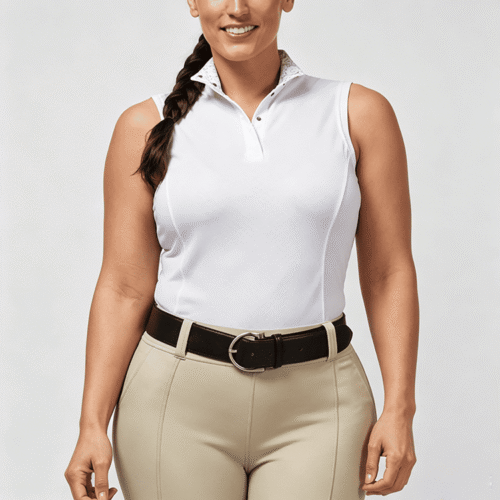
Custom Women’s Sleeveless Equestrian Competition Shirt OEM ODM
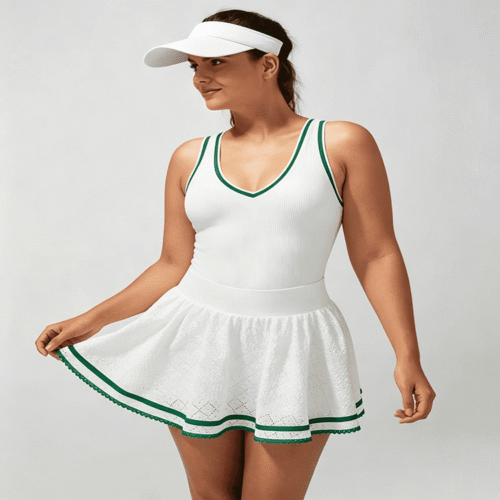
Custom Women’s Tennis Dress OEM ODM Performance Tennis Apparel
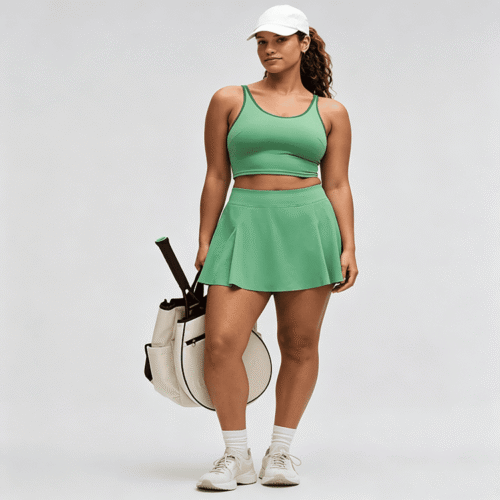
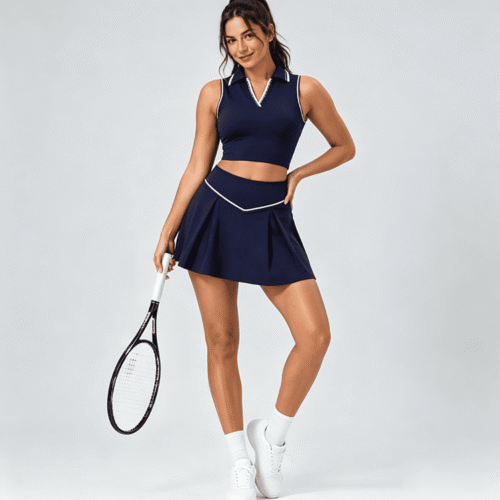
Custom Women’s Tennis Skirt Set OEM ODM Performance Tennis Outfit
Custom Women’s Tennis Skirt Set OEM ODM Performance Tennis Outfit
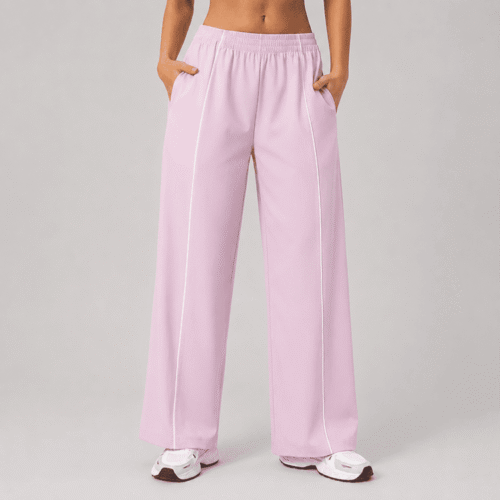
Custom Women’s Wide Leg Lounge Pants OEM ODM Athleisure Wear
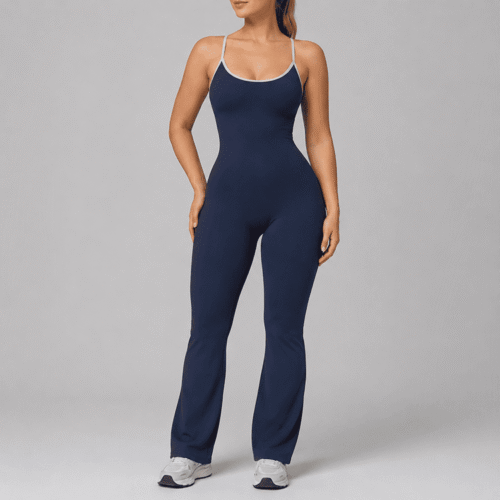
Custom Women’s Flared Yoga Jumpsuit OEM ODM Spaghetti Strap Activewear Bodysuit
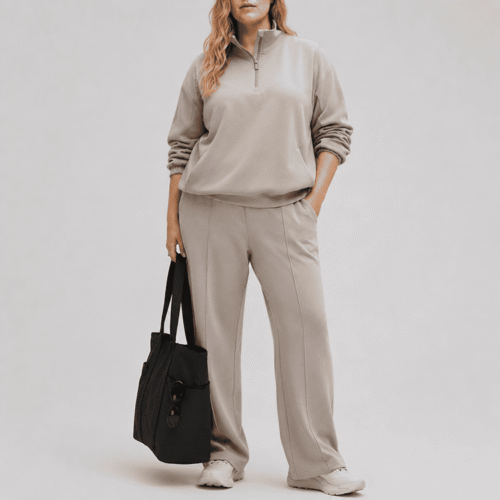
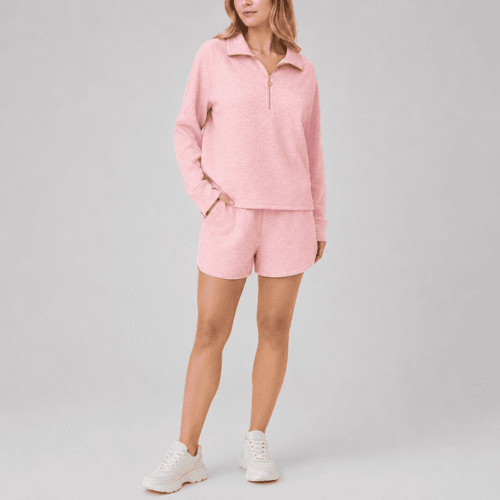
Custom Women’s Half Zip Loungewear Set OEM ODM Relaxed Fit Sweat Set
Custom Women’s Half Zip Loungewear Set OEM ODM Sweatshirt Shorts Set
How Can Buyers Compare Real Extended-Sizing Capability?
Buyers should compare extended-sizing capability through evidence, not through the largest size printed on a supplier’s website. A Cotton Blend Plus Size Clothing Manufacturer should be able to explain what size ranges it has produced, show relevant garments or measurement information, support size-set sampling and demonstrate experience with products similar to the buyer’s collection. A published 4XL, 5XL or 6XL range is useful, but it does not prove that every size has been properly developed, tested or produced in bulk.
This distinction matters because size availability and plus size manufacturing capability are not the same thing.
For sourcing teams, the goal is not to become pattern makers. It is to ask enough practical questions to determine whether the supplier deserves to move from an initial shortlist into paid sampling.
Is an Extended Size Range Proof of Plus Size Manufacturing Expertise?
No. A wide size range is a useful starting point, but it should be treated as a claim to investigate rather than proof of specialization.
A supplier may advertise:
XS–5XL
while another advertises:
XL–6XL
and a third may simply state:
Custom Plus Sizes Available
None of these descriptions tells the buyer how frequently those sizes are produced, which product categories have been made in the largest sizes or whether the manufacturer has completed size-set evaluation before bulk production.
When evaluating a Cotton Blend Plus Size Clothing Manufacturer, buyers should therefore move beyond:
“Can you make 4XL?”
A more useful set of questions is:
- Which styles have you previously produced through 4XL or above?
- What is the largest size you have produced in bulk?
- Was that size range for tops, bottoms, dresses or activewear?
- Can you show a measurement chart from a comparable project?
- Do you support size-set samples?
- Which sizes do you normally recommend checking before bulk?
- Can you provide examples of garments made in the upper end of the range?
These questions reveal much more than a yes/no answer.
A Cotton Blend Plus Size Clothing Manufacturer that regularly handles extended sizes should usually be able to discuss its experience in practical product terms rather than repeatedly responding that “any size can be customized.”
Straight-Size Grade Extension vs Dedicated Plus Size Pattern Blocks: What Should Buyers Ask?
Buyers do not need to dictate a universal grading method to every supplier. Different brands, markets and product categories can use different approaches.
What matters is whether the manufacturer can explain how it handles the transition into extended sizes.
One useful question for a shortlisted Cotton Blend Plus Size Clothing Manufacturer is:
“Do you continue grading from the standard-size block, or do you use a separate block or adjusted grading approach for the plus-size range?”
The answer does not need to follow one fixed formula.
However, the supplier should be able to explain its process clearly enough for the buyer to understand whether extended sizes are being considered deliberately.
For example, a supplier might use a separate plus-size block for one category but continue an established grade rule for a relaxed-fit garment. Another manufacturer may follow the buyer’s supplied measurement chart and pattern specifications rather than its own standard.
Those can all be legitimate production models.
The warning sign is not that two suppliers use different systems. The warning sign is when a manufacturer cannot explain what system it intends to use for your order.
For supplier comparison, buyers should record:
| Question | Supplier A | Supplier B | Supplier C |
|---|---|---|---|
| Standard and plus sizes use the same block? | |||
| Separate plus-size block available? | |||
| Can buyer provide own measurements? | |||
| Size-set sampling available? | |||
| Largest size previously produced? | |||
| Comparable product evidence available? |
This turns a vague claim such as “we specialize in plus size” into information that can actually be compared.
Which Fit and Grading Evidence Should a Manufacturer Be Able to Provide?
A serious supplier should be able to provide some evidence appropriate to the stage of the sourcing process, although customer confidentiality may limit what can be shared.
Buyers should not expect a factory to hand over another brand’s proprietary Tech Pack or complete patterns. That would actually raise a different concern about how the supplier handles confidential information.
Instead, ask a Cotton Blend Plus Size Clothing Manufacturer for evidence that does not compromise another customer’s intellectual property.
Examples can include:
- An anonymized measurement chart
- A general grading example
- Photos of previous extended-size products
- Size-set sample photos
- In-house measurement records
- Quality inspection forms with customer details removed
- Examples of relevant product categories
- Fabric and garment test information
- Video evidence of current or previous production where appropriate
The evidence should match the claim.
If a manufacturer says it has strong experience with plus size leggings but can show only oversized T-shirts, the evidence is only partly relevant.
If it claims experience in sizes through 6XL but all available samples stop at 2XL, the buyer should ask for more information before assuming the upper sizes are routine production.
The objective is not to catch suppliers making mistakes. It is to reduce uncertainty before money is spent on samples, materials and production deposits.
How Can Buyers Verify Experience Across Tops, Bottoms, Sets and Different Size Ranges?
Product category matters because extended sizing creates different risks in different garments.
A loose cotton T-shirt and a fitted cotton-elastane bottom should not be treated as equivalent evidence.
For collections involving leggings, fitted tops or other movement-focused products, buyers can also examine a supplier’s plus size activewear manufacturing capability to understand whether its experience extends beyond relaxed cotton garments into stretch-based performance apparel.
For tops, buyers may want to understand whether a Cotton Blend Plus Size Clothing Manufacturer has experience with:
- Bust-to-waist balance
- Shoulder and upper-arm room
- Sleeve proportions
- Armhole comfort
- Garment length
- Neckline stability
For bottoms, relevant evidence may involve:
- Waist-to-hip relationship
- Front and back rise
- Thigh room
- Leg shape
- Waistband stability
- Pocket placement
For coordinated sets, another issue appears: the customer may not wear the same nominal size on top and bottom.
A brand selling matching sets should therefore ask whether the supplier can support separate top and bottom size quantities if the commercial model requires it.
This is a useful example of why a buyer should not choose a Cotton Blend Plus Size Clothing Manufacturer only because the supplier has produced one plus size garment before.
Relevant experience should be evaluated at three levels:
Size relevance: Has the supplier produced the required extended range?
Product relevance: Has it produced a similar garment category?
Fabric relevance: Has it worked with a comparable fabric structure?
The closer these three areas are to the buyer’s actual project, the stronger the evidence becomes.
Why Should Buyers Ask About the Largest Size, Not Only the Base Size?
Most sample discussions naturally focus on the base size because that is often where initial development begins.
For a plus size collection, however, buyers should also ask what happens at the upper end of the commercial size range.
Suppose a collection will sell from XL through 5XL.
A well-made XL sample does not automatically demonstrate that 5XL will have the intended proportion, garment balance or comfort. The commercial risk can increase as the product moves further away from the initially approved size.
That is why buyers evaluating a Cotton Blend Plus Size Clothing Manufacturer should ask which sizes the supplier recommends checking before bulk production.
The answer may vary by product.
For a relatively forgiving relaxed T-shirt, the testing strategy may be different from a fitted bottom or a structured garment. A buyer should be cautious of any universal statement such as:
“You only need to check one size for every plus size product.”
The better question is:
“Which sizes create the greatest fit risk for this particular style?”
This shifts the conversation away from following a fixed sampling ritual and toward managing the actual product risk.
For some projects, checking a base size plus one or more upper sizes may provide much more useful evidence than approving only the smallest size in the range.
What Can a Size-Set Sample Reveal About Supplier Capability?
A size-set sample helps buyers evaluate whether the approved product has been translated consistently across selected sizes.
For supplier evaluation, it can reveal much more than whether the garments are simply “bigger” or “smaller.”
A size set can help the buyer check:
- Measurement progression
- Overall garment proportion
- Length progression
- Waist-to-hip balance
- Sleeve or leg progression
- Pocket position
- Logo scale and placement
- Trim positioning
- Visual consistency across sizes
It can also expose commercial issues.
For example, the larger sizes may consume more fabric than expected. A trim that looks proportionate on XL may appear too small on 5XL. A fixed-size print may need to be reviewed across the range. Packaging dimensions may also change.
A Cotton Blend Plus Size Clothing Manufacturer that can manage a useful size-set process gives the buyer an opportunity to identify these issues before they become hundreds or thousands of finished garments.
However, buyers should not assume that “size set” means exactly the same thing at every factory.
Ask:
Which sizes are included?
How many pieces are made?
Is there an additional charge?
Does the size set happen before or after PP approval?
What measurements will the factory record?
How are corrections transferred into bulk specifications?
The answers make size-set capability comparable across suppliers.
How Can Buyers Evaluate Fit Without Turning Supplier Selection Into a Pattern-Making Exercise?
One common sourcing mistake is going too far in either direction.
At one extreme, buyers accept a manufacturer’s statement that it “can make all sizes” without asking for evidence.
At the other extreme, a buyer tries to audit every mathematical grading rule before even deciding whether the supplier is commercially suitable.
Neither approach is efficient.
When shortlisting a Cotton Blend Plus Size Clothing Manufacturer, the buyer needs enough information to assess risk, not enough information to personally reconstruct every pattern.
A practical sequence is:
1. Verify previous experience.
Has the supplier made comparable products in relevant extended sizes?
2. Review measurement logic.
Can it explain how it will work from the buyer’s size chart or its own grading system?
3. Request an initial sample.
Does the supplier interpret the specifications accurately?
4. Review strategically selected sizes.
Does the garment remain proportionate where fit risk is highest?
5. Lock approved specifications before bulk.
Are corrections documented clearly enough to become a production reference?
This sequence also helps brands control development cost.
There is little value in paying for an extensive size set from a supplier that already failed the basic sample, repeatedly misunderstood the Tech Pack or cannot meet the required MOQ.
Which Plus Size Claims Should Buyers Treat as Red Flags?
Not every ambitious claim is false, but some statements deserve additional verification.
Be cautious when a Cotton Blend Plus Size Clothing Manufacturer says:
- “Any size is no problem” but cannot show relevant examples
- “We use the same grading for every product”
- “One sample size is always enough”
- “Fabric does not affect sizing”
- “5XL costs exactly the same as XS under every condition”
- “There is no need to check shrinkage”
- “We can make any custom fabric at any MOQ”
- “All products can use the same measurement tolerance”
The problem with these statements is their lack of conditions.
Manufacturing decisions depend on product construction, material, size range, quantity and quality requirements. An experienced supplier is often more credible when it explains where limitations exist.
For example:
“We can support this size range, but we recommend checking an upper size before bulk because the style is fitted.”
is more useful than:
“Everything is possible.”
Similarly:
“100 pieces is possible with this available fabric, but custom dyeing requires us to check the mill minimum.”
provides more actionable information than a headline low MOQ.
Good sourcing is not about finding a supplier that says yes to every question. It is about finding one whose answers remain commercially and technically consistent as the project becomes more specific.
How Should Buyers Score Extended-Sizing Capability?
After initial verification, buyers can convert qualitative information into a simple scorecard.
The purpose is not to create mathematical certainty. It is to stop one attractive factor—such as a low quotation—from dominating the decision.
| Extended-Sizing Evidence | Stronger Evidence | Weaker Evidence |
|---|---|---|
| Relevant Experience | Comparable products produced in required sizes | General plus-size claim only |
| Largest Size Evidence | Samples or records from upper size range | Largest size only listed online |
| Grading Explanation | Clear project-specific approach | “We can make any size” |
| Size-Set Capability | Process, timing and checks clearly explained | No clear process |
| Measurement Control | Recorded tolerances and inspection method | Visual checking only |
| Product Relevance | Same or similar garment category | Unrelated products |
| Fabric Relevance | Comparable cotton blend experience | Fabric experience unclear |
| Communication | Limitations and assumptions explained | Automatic agreement with every request |
A startup does not necessarily need the Cotton Blend Plus Size Clothing Manufacturer with the most sophisticated system in every category. A simple product may not justify the same development process as a highly fitted garment.
What matters is whether the supplier’s capability is appropriate for the risk and complexity of the order.
When Should a Supplier Move From Extended-Size Verification to Paid Sampling?
A supplier should normally reach paid sampling only after the buyer has enough evidence to believe that the project is commercially realistic.
Before advancing a Cotton Blend Plus Size Clothing Manufacturer, confirm at least:
- The manufacturer handles the relevant product category
- The intended extended size range is feasible
- The basic cotton blend direction is available or sourceable
- MOQ is reasonably compatible with the order
- Customization requirements are understood
- Sample cost and timing are acceptable
- Key technical questions receive clear answers
- Major commercial assumptions are documented
This creates an important sourcing gate.
Website claim → Evidence → Commercial confirmation → Sample
Once supplier verification is complete, brands that are ready to move from comparison into actual development can continue with custom cotton blend plus size clothing production, including project-specific sizing, fabric selection, sampling, branding and manufacturing requirements.
rather than:
Website claim → Immediate bulk order
Sampling will provide stronger evidence later, but it should not be used to investigate suppliers that already fail basic qualification.
The next stage is therefore not to ask a Cotton Blend Plus Size Clothing Manufacturer to explain every detail of pattern development. It is to determine whether its sizing evidence is strong enough to justify further investment—and then compare that evidence with its cotton blend capability, MOQ and price under the same project requirements.
Why Choose a Cotton Blend Plus Size Clothing Manufacturer in China?
Brands choose a Cotton Blend Plus Size Clothing Manufacturer in China when they need access to a broad apparel supply chain, multiple fabric options, custom manufacturing, scalable capacity and competitive commercial structures in one sourcing market. China is not automatically the right choice for every order, however. Its real advantage becomes stronger when the buyer needs coordinated fabric sourcing, extended sizing, private label customization and repeat production rather than only the lowest possible garment price.
For plus size buyers, the decision should be based on the complete sourcing model. Fabric availability, pattern and sample support, trims, printing, labels, packaging, inspection and production capacity can influence the project just as much as sewing cost.
Why Do International Brands Source Plus Size Clothing From China?
China remains useful to international apparel buyers because a Cotton Blend Plus Size Clothing Manufacturer rarely operates in isolation. Garment factories can work within wider networks of fabric suppliers, dyeing facilities, trim suppliers, printing and embroidery companies, packaging manufacturers and logistics providers.
Buyers planning to extend one plus size program into several performance or specialist apparel categories can also evaluate the broader custom sportswear manufacturing capability available behind the supplier’s core product range.
That concentration can be particularly valuable when a collection includes several related requirements.
Consider a brand developing:
- Cotton-elastane T-shirts
- Cotton-polyester hoodies
- Stretch cotton joggers
- Plus size leggings
- Custom neck labels and care labels
- Branded packaging
- Several colors across an extended size range
The sourcing challenge is no longer simply finding someone who can sew four garments. The buyer needs to coordinate different fabrics, colors, trims, measurements, branding requirements and commercial minimums.
A Chinese Cotton Blend Plus Size Clothing Manufacturer with an established supplier network may be able to consolidate more of these requirements through one production relationship.
This does not mean the quality will automatically be better. China has large manufacturers, small manufacturers, specialist manufacturers, general manufacturers, trading companies and different suppliers with different quality control systems. The main advantage is more supplier choices and a deeper supply chain, but this does not mean every supplier can provide the same quality level.
Buyers still need to verify whether a particular supplier fits the product.
What Advantages Does China Offer for Fabric, Trim and Apparel Supply Chains?
Fabric is one of the strongest reasons to evaluate China as a sourcing market.
Cotton blend clothing can require much more than choosing a composition from a fabric card. Buyers may need to compare composition, yarn, knitting structure, GSM, stretch direction, recovery, shrinkage, hand feel, finish, color and price.
A Cotton Blend Plus Size Clothing Manufacturer located close to established textile supply chains may have access to several possible solutions for the same garment.
For example, two fabrics can both be described as 95% cotton / 5% elastane and still behave differently because of their yarn, knitting density, finishing, weight and stretch characteristics. Likewise, two cotton-polyester fleece fabrics can have different surfaces, warmth, shrinkage and price.
For sourcing teams, a broader material network creates several practical possibilities:
Use available fabric for a lower-risk first order.
A startup may choose an existing cotton blend in a standard color to avoid committing to a larger custom material quantity.
Move into custom color when sales become more predictable.
Once the brand knows which products sell, custom dyeing may become commercially easier to justify.
Compare alternative fabric structures.
If the original fabric exceeds the target cost, the manufacturer may be able to source another construction with similar commercial characteristics.
Consolidate trims and branding.
Labels, heat transfers, embroidery, zippers, drawcords, packaging and other components may be coordinated within the same regional supply chain.
However, access to many materials can also create confusion. A buyer should not ask a Cotton Blend Plus Size Clothing Manufacturer to simply “find good cotton fabric.” The manufacturer needs enough direction to understand the required product level and price range.
Why Are Guangdong and the Pearl River Delta Important Apparel Sourcing Regions?
Guangdong is particularly relevant to brands comparing Chinese apparel suppliers because cities such as Guangzhou, Dongguan, Shenzhen and Foshan sit within a dense manufacturing and commercial network.
For a buyer, geography can affect more than freight.
A Cotton Blend Plus Size Clothing Manufacturer operating within a developed apparel cluster may have easier access to fabric markets, trim suppliers, printing, embroidery, packaging and supporting production services. This can shorten communication loops when a sample needs a different fabric, a logo process needs adjustment or a trim must be replaced.
Dongguan and Guangzhou also contain different types of apparel businesses. Some focus on fashion; others specialize in sportswear, knitwear, private label development or particular garment categories.
That makes Guangdong useful for supplier comparison, but buyers should avoid treating location as proof of capability.
“Made in Dongguan” or “Made in Guangzhou” does not tell you whether the supplier understands plus size fit, cotton blend behavior or your target product category.
Location is an ecosystem advantage. Supplier capability still needs evidence.
China Manufacturer vs Local Manufacturer: How Do MOQ, Price, Custom Capability and Lead Time Differ?
There is no universal rule that a Chinese manufacturer will always be cheaper or that a local manufacturer will always be faster.
The comparison depends on the product.
| Factor | China Manufacturer | Local / Near-Market Manufacturer |
|---|---|---|
| Fabric Choice | Often broader sourcing options | May be narrower but easier to inspect locally |
| Custom Development | Strong ecosystem for fabric, trims and private label | Can be highly flexible depending on supplier |
| MOQ | Competitive, but fabric minimums can increase quantity | Some workshops can support smaller runs |
| Unit Cost | Often attractive as volume increases | Higher labor costs may raise garment price |
| Sampling Communication | Requires strong remote communication | Face-to-face development may be easier |
| Freight | International freight and customs required | Usually simpler domestic logistics |
| Lead Time | Production can be efficient, but transit adds time | Shorter transport distance can help |
| Scaling | Broad choice of production capacities | Capacity may become a constraint for some suppliers |
For a new brand ordering 40 garments to photograph and test locally, importing from a Chinese Cotton Blend Plus Size Clothing Manufacturer may create unnecessary complexity.
For a brand ordering several hundred or several thousand pieces across repeated collections, the equation can change significantly.
The relevant comparison is therefore not:
China price vs local price.
It is:
Total sourcing cost and operational fit vs total sourcing cost and operational fit.
That includes development, samples, garments, rejected units, freight, duty, inventory exposure, communication time and the cost of delays.
China Manufacturer vs Wholesale Supplier: Which Model Fits Your Business?
Manufacturing and wholesale solve different business problems.
A wholesale supplier is useful when the buyer wants to select an existing product and bring it to market quickly. A manufacturer becomes more relevant when the brand wants control over the product itself.
A typical wholesaler may offer:
- Existing styles
- Lower purchasing complexity
- Faster access to finished inventory
- Limited changes to product construction
- Limited exclusivity
A Cotton Blend Plus Size Clothing Manufacturer may support:
- Buyer-defined size specifications
- Custom fabric or selected fabric options
- Custom colors
- Original patterns or product references
- Labels and branding
- Construction changes
- Packaging
- Repeat production
Neither model is automatically better.
If a startup is trying to learn whether its audience will purchase plus size loungewear at all, wholesale may be a practical way to test demand.
If the brand already knows that its customer wants a particular waistband, fit, fabric weight, pocket position, color palette and size range, manufacturing becomes more relevant because the product itself is part of the brand value.
If the brand already knows that its customer wants a particular waistband, fit, fabric weight, pocket position, color palette and size range, working with a supplier that offers broader custom plus size apparel manufacturing becomes more relevant because the product itself is part of the brand value.
This distinction should be made before contacting suppliers. Otherwise, buyers can spend weeks asking manufacturers to quote a project that would be more efficiently tested through existing products.
When Does Sourcing From China Make Commercial Sense?
Working with a Chinese Cotton Blend Plus Size Clothing Manufacturer tends to make more commercial sense when several of the following conditions are present:
- The brand needs private label or custom manufacturing
- The product requires a specific cotton blend
- Several colors or related styles will be produced
- Extended sizing is part of the core collection
- The buyer expects future replenishment
- Order volume can justify international sourcing
- Custom labels, trims or packaging are required
- The brand expects the collection to scale
- The buyer can manage sample approval before production
- Lead time can accommodate international transportation
The last point matters.
A low ex-factory garment price can become irrelevant if the buyer has allowed no time for sampling, production, inspection and freight.
The best sourcing strategy usually begins with the required in-market delivery date and works backward.
For example, if a retailer needs goods available before a seasonal campaign, the purchase timeline should include sample revisions, PP approval where required, production, inspection, freight, customs clearance and a reasonable contingency period.
A Cotton Blend Plus Size Clothing Manufacturer should therefore be evaluated partly on whether its realistic production model fits the buyer’s calendar—not simply whether it promises the shortest lead time.
When Might China Not Be the Best Sourcing Option?
China is not the correct sourcing answer for every brand.
A buyer should consider alternatives when the order is extremely small, the delivery window is unusually short, local production is central to the brand proposition, frequent in-person fittings are required or the buyer is not yet ready to define the product.
Suppose a founder wants:
20 pieces × 5 styles × 4 colors × 8 sizes.
The total quantity sounds substantial, but each individual SKU becomes extremely small. Fabric dyeing, cutting efficiency, labels, packaging and production setup may make the program commercially unattractive for a custom manufacturer.
Likewise, a brand that changes its design every few days may struggle with overseas sampling because constant revisions create courier costs and development delays.
In these situations, a local sample room, small-batch studio, wholesaler or print-on-demand model may be more practical for the first stage.
The decision should also account for communication. A professional Cotton Blend Plus Size Clothing Manufacturer can provide development support, but the buyer still needs to make decisions. No supplier can efficiently finalize a collection when the brand repeatedly changes its size range, fabric, color, logo position and target price after sampling begins.
How Should Buyers Decide Whether China Belongs on Their Supplier Shortlist?
The most useful question is not “Is China good for clothing manufacturing?”
That question is too broad.
Instead, buyers should ask whether a Chinese Cotton Blend Plus Size Clothing Manufacturer offers a meaningful advantage for this specific product, quantity and stage of the business.
A simple commercial test is:
| Question | If Yes | If No |
|---|---|---|
| Do we need a product different from existing wholesale garments? | Custom manufacturing becomes more relevant | Wholesale may be sufficient |
| Do we need specific cotton blend properties? | Fabric sourcing capability matters | Available stock fabrics may work |
| Is extended sizing central to the brand? | Plus size evidence should be heavily weighted | General manufacturing may be enough |
| Can we meet realistic production minimums? | China becomes easier to evaluate | Local small-batch options may fit better |
| Do we expect repeat orders? | Supply-chain repeatability becomes valuable | First-order flexibility may matter more |
| Can we allow time for sampling and international freight? | Overseas sourcing is workable | Near-market production may reduce timing risk |
This prevents country-of-origin from becoming the main decision criterion.
A Chinese supplier can offer an excellent fabric network and competitive manufacturing structure while still being the wrong manufacturer for a particular order. A nearby supplier can offer convenience while still lacking the required extended-size capability.
The strongest shortlist therefore combines country-level sourcing advantages with supplier-level evidence.
Once China makes commercial sense, the next task is more specific: determining whether a supplier that advertises extended sizes actually has meaningful extended-sizing capability. A published 4XL or 5XL size is useful information, but it is not enough by itself to prove that the manufacturer should receive your sample order.
How Should Buyers Compare Cotton Blend Capability, MOQ and Price?
Buyers should compare a Cotton Blend Plus Size Clothing Manufacturer by looking beyond fabric composition, headline MOQ and unit price. A meaningful comparison should confirm whether the quoted fabric is stock or custom, its GSM, stretch, recovery and shrinkage expectations, and whether the MOQ applies per order, style, color or fabric. Price should then be compared only after suppliers are quoting substantially the same garment specifications, size range, material standard, branding and order structure.
A quotation can look very competitive because important requirements have not yet been included. The cheapest supplier may be quoting an available fabric, while another supplier has included custom dyeing, testing or a different material quality.
The same problem occurs with MOQ. 100 pieces sounds simple until the buyer asks what those 100 pieces are allowed to contain.
Cotton-Polyester vs Cotton-Elastane: Which Capability Does Your Product Require?
The first question should not be, “Which cotton blend is best?”
It should be:
“Which cotton blend characteristics does this product require, and can the supplier source them consistently?”
That distinction keeps supplier comparison connected to the actual garment.
A cotton-polyester blend may be suitable for T-shirts, sweatshirts, joggers or casual products where buyers want a balance between cotton feel, durability and commercial cost. Cotton-elastane can become more relevant when the garment requires additional stretch and recovery.
But composition alone is not enough.
A Cotton Blend Plus Size Clothing Manufacturer may show two fabrics with exactly the same fiber percentages while the fabrics differ noticeably in:
- GSM and thickness
- Knitting construction
- Stretch direction
- Stretch percentage
- Recovery
- Surface texture
- Drape
- Shrinkage
- Colorfastness
- Pilling behavior
- Hand feel
- Finished cost
For plus size clothing, these differences can become commercially important because more fitted products rely on the relationship between garment measurements and fabric behavior.
This does not mean the buyer needs to become a textile engineer before requesting a quotation. It means “95% cotton / 5% elastane” should not be treated as a complete fabric specification.
Buyers selling into the United States should also verify applicable textile fiber labeling requirements, because commercial fabric descriptions and final consumer labeling serve different purposes.
When comparing manufacturers, ask each supplier what fabric it is actually quoting, and make sure the confirmed composition can support the cotton fiber content information required for the intended market.
Stock Cotton Blend vs Custom-Developed Fabric: How Does Supplier Capability Differ?
One of the biggest differences between quotations can come from whether the manufacturer is using available material or developing material specifically for the order.
Stock fabric usually offers practical advantages:
- Lower material commitment
- Faster sourcing
- Easier sampling
- Potentially lower MOQ
- Less development cost
Custom fabric can provide greater control over:
- Composition
- GSM
- Color
- Hand feel
- Finish
- Stretch
- Recovery
- Surface appearance
but it can also introduce mill minimums, dyeing minimums, longer lead times and additional testing requirements.
This is why an advertised low MOQ from a Cotton Blend Plus Size Clothing Manufacturer should always be connected to the fabric condition.
For example:
Supplier A: 100 pieces per style using available cotton blend fabric.
and:
Supplier B: 300 pieces per color using custom-dyed cotton blend fabric.
are not directly competing offers.
Supplier B may appear less flexible, but it is supporting a different level of product control.
A startup testing a new silhouette may deliberately choose Supplier A’s model. A mature brand replacing an established bestseller may need Supplier B’s material consistency.
The right commercial structure depends on the stage of the product.
Why Should Buyers Compare GSM, Stretch, Recovery, Shrinkage and Fabric Testing?
These terms help turn a vague fabric description into something that can be compared.
| Fabric Factor | What Buyers Should Ask | Why It Matters |
|---|---|---|
| Composition | What are the fiber percentages? | Establishes the basic material direction |
| GSM | What is the fabric weight? | Influences coverage, drape, warmth and cost |
| Stretch | How much and in which direction? | Affects comfort and fit in movement |
| Recovery | Does the fabric return after stretching? | Helps reduce bagging and shape loss |
| Shrinkage | What change is expected after washing? | Can affect finished measurements |
| Colorfastness | Has color performance been tested? | Relevant to washing and wear |
| Pilling | Is pilling performance available? | Important for repeated friction and wear |
| Testing | Which reports are available or can be arranged? | Helps verify performance claims |
A Cotton Blend Plus Size Clothing Manufacturer does not necessarily need laboratory reports for every stock fabric before the first conversation. Testing requirements should match the product, market and order risk.
However, suppliers should be able to distinguish between:
“This fabric feels good.”
and:
“This is the composition, weight and available performance information for the fabric we are quoting.”
The second answer is much more useful for sourcing.
Shrinkage deserves particular attention with cotton-rich materials. A garment can pass initial measurement inspection and still move outside the intended specification after washing if fabric behavior has not been considered.
Buyers who require measurable fabric and garment performance can also refer to recognized textile testing methods for areas such as dimensional change after laundering, colorfastness and other relevant material properties.
For supplier comparison, buyers should therefore ask whether quoted shrinkage information comes from a mill specification, internal test, third-party test or assumption based on previous use.
Those are different levels of evidence.
MOQ Per Order vs Per Style vs Per Color vs Per Fabric: What Is the Difference?
MOQ is one of the most misunderstood numbers in apparel sourcing.
A Cotton Blend Plus Size Clothing Manufacturer may advertise “MOQ 100 pcs,” but the commercial meaning can vary considerably.
Consider four examples:
100 pieces per order
The buyer may be able to divide the total between several styles, although this is relatively uncommon for fully custom manufacturing.
100 pieces per style
One garment design must reach 100 pieces, but colors and sizes may have some flexibility.
100 pieces per color per style
Three colors could turn a 100-piece headline MOQ into a 300-piece commercial commitment.
Fabric MOQ
The garment manufacturer may accept 100 pieces, but the fabric mill may require enough custom material for several hundred garments.
This is why buyers should never record only one MOQ number in a supplier comparison sheet.
Instead, ask:
- MOQ per order?
- MOQ per style?
- MOQ per color?
- MOQ per fabric?
- MOQ for custom dyeing?
- MOQ for custom knitting?
- MOQ for printing?
- MOQ for labels and trims?
- Can sizes be mixed?
A low garment MOQ has limited value if another required component creates a much larger commitment.
Can Sizes Be Mixed Within the MOQ?
For plus size brands, this question is particularly important.
Suppose a Cotton Blend Plus Size Clothing Manufacturer quotes 200 pieces per style. The buyer plans to order XL, 2XL, 3XL, 4XL and 5XL.
Can the 200 pieces be divided:
40 / 40 / 40 / 40 / 40?
Or can the buyer use a sales-driven ratio such as:
25 / 45 / 55 / 45 / 30?
Or does the manufacturer impose a minimum cutting quantity per size?
These details can affect inventory risk even when the total MOQ remains unchanged.
The same issue becomes more complicated when colors are added.
A program with:
1 style × 3 colors × 5 sizes
already creates 15 SKUs.
If a brand launches five styles under the same structure, it reaches 75 SKUs before considering different top and bottom size ratios.
This is why a low headline MOQ can still create a large inventory commitment.
When comparing suppliers, buyers should ask for the minimum commercial structure, not just the minimum total quantity.
Why Can Custom Colors and Custom Fabric Increase MOQ?
Custom colors often move the commercial minimum away from the garment factory and toward the material supplier.
A garment factory can sometimes cut and sew a relatively small order, but a dye house or knitting mill still needs an economically workable batch.
For a Cotton Blend Plus Size Clothing Manufacturer, the final MOQ can therefore be influenced by:
- Fabric mill minimums
- Dyeing minimums
- Yarn availability
- Custom composition
- Special finishes
- Printing processes
- Color matching requirements
- Fabric width and consumption
- Expected cutting loss
This explains why two colors can produce different sourcing conditions even when the garment construction is identical.
A common startup mistake is to request too many custom colors in the first order.
For example, a brand may have enough budget for 600 pieces.
One color across two styles creates a very different production structure from six colors across six styles. The second option spreads the same quantity across many smaller material and cutting batches.
For early market testing, reducing the number of styles and colors can sometimes create more sourcing flexibility than aggressively negotiating the unit price.
What Makes One Manufacturer’s Price Higher Than Another?
A quotation should be treated as the output of a specification, not as a standalone number.
Suppose three manufacturers quote the same plus size hoodie:
| Supplier | Unit Price | What Is Included? |
|---|---|---|
| Supplier A | Lowest | Stock fabric, standard color, basic label |
| Supplier B | Medium | Specified GSM, custom color, branded trims |
| Supplier C | Highest | Specified fabric, testing, more complex construction, custom packaging |
Without normalizing the requirements, choosing Supplier A because it is cheapest may simply mean choosing a different product.
A Cotton Blend Plus Size Clothing Manufacturer may quote higher because of:
- Higher fabric quality
- Heavier GSM
- Greater fabric consumption
- Custom dyeing
- More complicated sewing
- Larger size range
- Special trims
- Printing or embroidery
- Additional testing
- Smaller production quantity
- More complex packaging
- Stricter inspection requirements
The buyer should therefore ask for enough quotation detail to identify where the cost difference comes from.
This does not mean the highest quotation is better.
A supplier can also simply be expensive.
The objective is to understand whether the price difference reflects a real difference in materials, construction, service or commercial structure.
Does Extended Sizing Increase Fabric Consumption and Unit Cost?
Often, yes—but buyers should avoid simplistic rules such as assuming that every 4XL garment must cost a fixed percentage more than every XL garment.
Larger garments generally require more fabric. The effect on cost depends on the garment, fabric width, marker efficiency, size ratio and construction.
A Cotton Blend Plus Size Clothing Manufacturer may handle this commercially in several ways:
- One blended price across the entire size range
- Separate pricing for upper sizes
- A surcharge above a certain size
- Pricing based on the final size ratio
None of these structures is automatically wrong.
The important issue is transparency before ordering.
A brand selling XS–5XL at one retail price may prefer a blended manufacturing price for simpler merchandising. Another buyer may accept size-based costing because its wholesale pricing structure allows it.
Ask suppliers how they price the upper end of the range before comparing quotations.
Unexpected surcharges after sample approval are much harder to manage.
Low MOQ vs Low Unit Price: Which Creates Less Commercial Risk?
For a new product, the lowest unit price does not always create the lowest total risk.
Consider two simplified offers:
Supplier A
MOQ: 100 pieces
Unit price: $14
Supplier B
MOQ: 500 pieces
Unit price: $10
Supplier B saves $4 per garment, but the first inventory commitment increases from $1,400 to $5,000 before freight, duty, packaging and other costs.
If the product is untested, the additional $3,600 of inventory exposure may matter more than the lower unit price.
For a proven bestseller, the conclusion can reverse. If the brand knows it can sell 5,000 units annually, repeatedly buying tiny quantities at a high unit cost may reduce margin unnecessarily.
A suitable Cotton Blend Plus Size Clothing Manufacturer should therefore fit the commercial stage of the product.
New product: prioritize manageable inventory exposure.
Validated product: start optimizing unit economics.
Growing bestseller: prioritize repeatability and replenishment.
Large program: capacity, QC and supply stability become increasingly important.
This is a more useful framework than assuming low MOQ is always good or high MOQ is always bad.
How Should Buyers Normalize Quotations Before Choosing a Supplier?
Before making a price comparison, create one commercial baseline and ask every shortlisted supplier to quote as close to it as possible.
For example:
- One specified garment
- Same target size range
- Same cotton blend direction
- Same approximate GSM
- Same number of colors
- Same quantity
- Same logo method
- Same labels
- Same packaging
- Same testing expectation
- Same Incoterm
- Same delivery destination where freight is being compared
Then record what each Cotton Blend Plus Size Clothing Manufacturer has changed or excluded.
A useful comparison sheet can include:
| Commercial Item | Supplier A | Supplier B | Supplier C |
|---|---|---|---|
| Fabric Composition | |||
| GSM | |||
| Stock / Custom Fabric | |||
| Size Range | |||
| MOQ / Style | |||
| MOQ / Color | |||
| Size Mixing | |||
| Sample Fee | |||
| Sample Time | |||
| Unit Price | |||
| Logo Included | |||
| Packaging Included | |||
| Testing Included | |||
| Incoterm | |||
| Bulk Lead Time |
This exposes a common sourcing problem: two quotations that initially looked similar can become very different after all assumptions are visible.
When Is the Cheapest Cotton Blend Plus Size Clothing Manufacturer Actually More Expensive?
The cheapest quotation becomes more expensive when savings at the purchasing stage create additional costs elsewhere.
That can happen through:
- Unusable samples
- Excessive revisions
- Unexpected fabric MOQ
- Poor shrinkage performance
- Measurement failures
- Rework
- High defect rates
- Late delivery
- Expensive air freight caused by delay
- Overstock created by an unsuitable MOQ
- Inconsistent repeat orders
For example, saving $1 on 500 garments creates a $500 purchasing saving.
If production is late and the buyer then spends an additional $1,500 upgrading part of the shipment from sea freight to air freight, the original price advantage disappears.
The same applies to inventory.
A Cotton Blend Plus Size Clothing Manufacturer offering a slightly higher unit price but a commercially suitable MOQ may create a lower total first-order risk than a supplier demanding several times the quantity.
Price therefore belongs near the end of supplier analysis, not at the beginning.
First confirm that suppliers are quoting substantially the same product. Then compare MOQ structure. Then compare what is included. Only after those points are clear does the unit price become genuinely useful.
For buyers, the next step is to determine whether the information behind these quotations can be trusted. That requires moving beyond websites and sales presentations into business verification, production evidence, certifications, RFQ consistency and supplier red flags.
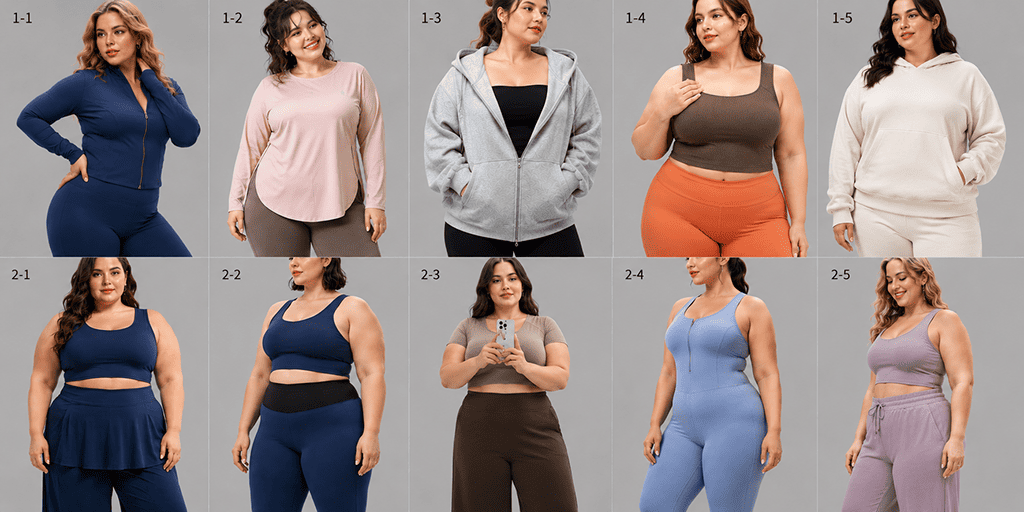
How Do You Verify and Shortlist China Manufacturers Before Sampling?
Before paying for samples, buyers should verify whether a Cotton Blend Plus Size Clothing Manufacturer is a real and relevant production partner, not simply whether the company has an attractive website. Check the legal business identity, production location, relevant product evidence, certifications, factory processes, quotation consistency and communication quality. Then send shortlisted suppliers substantially the same RFQ so that MOQ, price, sample terms and manufacturing capability can be compared on a consistent basis.
Supplier verification does not need to become a month-long investigation of every factory. The objective is to remove obviously unsuitable candidates before sampling becomes expensive.
A useful process moves from inexpensive checks to more expensive ones:
Business Verification → Product Evidence → RFQ → Video/Factory Verification → Sample
This prevents buyers from paying five or six suppliers to make samples when several could have been eliminated through basic verification.
Manufacturer vs Trading Company: How Can Buyers Verify Who Will Produce the Order?
A trading company is not automatically a bad supplier.
Some trading companies provide strong sourcing, communication and quality-control services, especially when a collection requires several factories or product categories. The problem begins when a buyer believes it is dealing directly with a manufacturer but the actual production structure is different.
When evaluating a Cotton Blend Plus Size Clothing Manufacturer, ask directly:
- What is the legal company name?
- Where is the production facility?
- Is production owned, subcontracted or mixed?
- Which processes are completed in-house?
- Which processes are outsourced?
- How many sewing lines are available?
- Is pattern making in-house?
- Is sampling in-house?
- Who performs final inspection?
- Can the production location be shown by live video?
Outsourcing itself should not automatically disqualify a supplier. Even genuine garment manufacturers commonly use external partners for fabric knitting, dyeing, printing, embroidery, washing or specialized trims.
The important distinction is whether the supplier is transparent about the process and can control outsourced work.
A factory saying, “We outsource embroidery to a specialist partner and inspect it before sewing,” is providing useful information.
A supplier repeatedly avoiding basic questions about where garments are cut and sewn deserves more investigation.
What Factory Information and Production Evidence Should Buyers Request?
A professional supplier should be able to provide enough evidence for a buyer to understand how an order moves through production.
For a Cotton Blend Plus Size Clothing Manufacturer, useful evidence can include:
- Business registration information
- Factory address
- Production-floor photos or videos
- Cutting equipment
- Sewing lines
- Pattern and sample room
- Fabric inspection area
- In-line inspection records
- Final inspection records
- Needle or metal-control procedures where relevant
- Packing area
- Production planning records
- Examples of comparable garments
Do not collect documents simply to create a large supplier folder. Each piece of evidence should answer a sourcing question.
For example:
Pattern room evidence helps determine whether development is handled internally.
Production-line evidence helps confirm whether the supplier operates manufacturing facilities relevant to the order.
Inspection records help show whether QC is a defined process rather than a statement such as “our workers check quality carefully.”
Comparable garments help establish category relevance.
Buyers should also consider whether the evidence is current. A factory audit from many years ago or an old production video provides less information about current capability than recent evidence.
Which Certifications and Test Reports Are Relevant to Your Order?
Certifications can support supplier verification, but more certificates do not automatically mean a better manufacturer.
The first question is:
What does this certificate actually verify?
Different documents can relate to different areas, including:
- Quality-management systems
- Social compliance
- Recycled material chain of custody
- Chemical or material requirements
- Product testing
- Factory environmental performance
When a Cotton Blend Plus Size Clothing Manufacturer presents a certification, buyers should check:
The legal entity name.
Does it match the supplier or production facility being evaluated?
The scope.
Does the certificate cover the relevant activity, facility or material?
The validity period.
Is it current?
The issuing or verification organization.
Can the information be independently checked where appropriate?
Its relevance to the order.
Does it address a requirement that matters for the buyer’s product or market?
A recycled-material certification, for example, should not be interpreted as proof that every garment produced by the factory contains recycled material. Likewise, a quality-management certification does not replace inspection of the actual order.
For fabric performance, buyers may also need test reports rather than factory certificates.
If a supplier claims a specific level of shrinkage, colorfastness, pilling resistance or another measurable property, ask what evidence supports the claim and whether additional testing is required for the order.
How Can Buyers Verify Real Plus Size Production History?
A manufacturer may have years of apparel experience without having equivalent experience in plus size production.
That is why the age of the company should not be used as a substitute for product relevance.
A Cotton Blend Plus Size Clothing Manufacturer claiming substantial extended-size experience should ideally be able to provide some combination of:
- Previous extended-size product examples
- Relevant size charts
- Size-set records
- Measurement inspection records
- Photos of larger-size samples
- Comparable fabric experience
- Evidence of repeat orders
- Production examples from similar garment categories
Customer confidentiality can limit what a supplier can share. Buyers should respect that.
In fact, a factory freely sending another brand’s complete confidential Tech Pack may create a different red flag.
The buyer does not need another customer’s proprietary information. Anonymized records, general examples and physical production evidence can often provide enough information.
The strongest evidence usually combines three areas:
Product relevance + Size relevance + Fabric relevance
A manufacturer that has produced cotton-rich plus size hoodies through 5XL provides stronger evidence for another plus size hoodie project than a supplier whose only extended-size experience is loose woven dresses.
What Should Buyers Check During a Video Factory Tour or On-Site Audit?
A live video tour can be useful when an on-site visit is not practical.
Rather than asking the salesperson to walk randomly through the building, buyers should request a simple sequence that follows the product flow.
For a shortlisted Cotton Blend Plus Size Clothing Manufacturer, that might include:
1. Sample Room
Look for pattern development, sample sewing and current work.
2. Fabric Receiving or Storage
Ask how incoming materials are identified and stored.
3. Cutting Area
Observe cutting equipment, marker handling and bundle identification.
4. Sewing Lines
Look at the types of garments currently being produced.
5. QC Areas
Ask where in-line and final inspection occur.
6. Packing Area
Check how finished goods are identified and packed.
The purpose is not to judge a factory by how modern the building looks.
A visually impressive facility can still be unsuitable for the product, while a less polished specialist factory can have excellent technical capability.
Focus on process relevance and consistency.
During a live tour, buyers can also ask the supplier to show a specific area spontaneously. This can provide more confidence than relying only on edited promotional videos.
What Should Be Included in the Same RFQ Sent to Every Supplier?
Once basic verification is complete, send each shortlisted supplier substantially the same core RFQ.
This is one of the most important steps in making quotations comparable.
A useful RFQ for a Cotton Blend Plus Size Clothing Manufacturer can include:
- Product name and category
- Technical drawing or reference
- Tech Pack where available
- Target size range
- Measurement chart
- Target cotton blend composition
- Approximate GSM
- Required colors
- Estimated quantity
- Quantity per color
- Expected size ratio
- Logo method
- Main labels
- Care labels
- Packaging
- Required testing
- Target delivery date
- Destination country
- Requested Incoterm
- Sample requirements
Then ask each supplier to return the same commercial information:
| RFQ Item | Supplier Response |
|---|---|
| MOQ per style | |
| MOQ per color | |
| Fabric MOQ | |
| Available / custom fabric | |
| Sample fee | |
| Sample lead time | |
| Bulk lead time | |
| Unit price | |
| Price basis / Incoterm | |
| Size range supported | |
| Custom color minimum | |
| Logo minimum | |
| Packaging minimum | |
| Testing cost | |
| Payment terms | |
| Quote validity |
Without this structure, buyers can easily compare three quotations that describe three different products.
What Are the Red Flags in Quotations, MOQ Claims and Lead-Time Promises?
Red flags should trigger additional questions rather than automatic rejection.
For example, a very low price may be legitimate if the supplier has stock fabric, efficient production and a simple garment. But if the quotation is dramatically below every comparable offer, the buyer should identify what is different.
Be cautious when a Cotton Blend Plus Size Clothing Manufacturer:
- Gives a firm price before receiving meaningful specifications
- Quotes every fabric at the same MOQ
- Says custom fabric has no material minimum
- Promises every sample can be completed in the same number of days
- Claims every size costs exactly the same under all conditions
- Refuses to clarify whether production is in-house
- Changes the MOQ repeatedly without explaining why
- Provides certificates under unrelated company names without explanation
- Cannot explain what is included in the quotation
- Promises an unusually short bulk lead time without discussing capacity
- Avoids putting important commercial terms in writing
Another warning sign is automatic agreement.
If every technical request receives an immediate “yes, no problem,” the buyer may not actually be receiving technical evaluation.
Experienced manufacturers sometimes say:
“We need to check the fabric mill.”
or:
“This construction may require a higher MOQ.”
or:
“We recommend testing this size before bulk.”
Those answers can be inconvenient, but they often provide more useful information than unconditional agreement.
How Many Suppliers Should Move From Initial RFQ to Sample Development?
There is no perfect number, but paying ten suppliers to develop the same sample is usually inefficient.
A practical sourcing funnel may look like this:
10–15 suppliers researched
↓
5–7 suppliers receive a detailed RFQ
↓
3–4 suppliers complete serious commercial comparison
↓
2–3 suppliers make comparable samples
↓
1 primary supplier + 1 potential backup
The exact numbers depend on product complexity and order value.
For a relatively simple cotton T-shirt, the funnel may be shorter. For a strategic plus size collection representing a large annual purchase, deeper comparison may be justified.
The key principle is that each stage should require more evidence and more investment.
Do not spend heavily at the beginning.
A Cotton Blend Plus Size Clothing Manufacturer that cannot provide a coherent quotation, relevant evidence or commercially workable MOQ does not need to reach paid sampling merely because it appeared on an initial supplier list.
How Should Buyers Build a Supplier Verification Scorecard?
A scorecard can help prevent one attractive feature from controlling the entire decision.
For example:
| Verification Area | Suggested Questions |
|---|---|
| Business Identity | Can the legal company and production location be verified? |
| Manufacturer Status | Is the production model transparent? |
| Product Relevance | Has the supplier made similar garments? |
| Plus Size Evidence | Can extended-size experience be demonstrated? |
| Cotton Blend Capability | Can the required material direction be supported? |
| MOQ Fit | Does the commercial minimum fit the order? |
| Quotation Quality | Are assumptions and exclusions clear? |
| Compliance | Are relevant certificates or reports verifiable? |
| Communication | Are technical questions answered clearly? |
| Production Evidence | Can manufacturing and QC processes be demonstrated? |
The scorecard should not be treated as a mathematical machine that automatically selects the supplier with the highest total.
Weighting matters.
A startup may give more importance to MOQ fit and development communication.
A mature retailer may increase the importance of compliance, production capacity and delivery reliability.
A highly fitted plus size product may place greater weight on extended-sizing evidence and sample execution.
The purpose is to make the buyer’s reasoning visible.
When Should a Cotton Blend Plus Size Clothing Manufacturer Reach the Sample Stage?
A supplier is ready for serious sample comparison when the buyer has enough evidence that the commercial relationship could realistically work.
Before paying the sample fee, confirm:
- Business identity and production model are reasonably clear
- Relevant product experience has been demonstrated
- Extended-size capability appears credible
- Required cotton blend direction is feasible
- MOQ fits the commercial plan
- Sample fee and timing are understood
- Bulk lead time is realistic
- Key customization requirements are accepted
- Major quotation assumptions are written down
- Relevant compliance requirements can be supported
This does not eliminate all sourcing risk.
Sampling exists precisely because websites, quotations and conversations cannot prove everything.
However, it ensures that a Cotton Blend Plus Size Clothing Manufacturer reaches sampling because it passed a meaningful qualification process—not simply because its website looked professional or its salesperson replied first.
What Should Buyers Lock Before Paying for a Sample?
Before payment, create a short written sample specification confirmation.
It does not need to duplicate a complete Tech Pack. Its purpose is to make sure both sides understand what the sample fee is supposed to produce.
Confirm:
Style: Which exact garment is being sampled?
Size: Which size will be made?
Measurements: Which chart or specification will be followed?
Fabric: Is it the intended bulk fabric, a close substitute or only a temporary development fabric?
Color: Is the sample color final or approximate?
Branding: Which logos, labels and trims are included?
Sample Fee: What does the fee cover?
Courier: Is shipping included or separate?
Timing: When should the sample be completed?
Revisions: Are corrections included, and under what conditions?
This step becomes especially important when comparing two or three suppliers.
If Supplier A makes the sample in intended fabric, Supplier B uses a close substitute and Supplier C uses whatever material is available without telling the buyer, the resulting garments cannot be evaluated on the same basis.
A qualified Cotton Blend Plus Size Clothing Manufacturer should be willing to identify these differences before sampling begins.
Verification Reduces Risk; Sampling Tests Execution
Supplier verification and sampling answer different questions.
Verification asks:
Is this company credible and commercially relevant enough to test?
Sampling asks:
Can this supplier actually interpret and execute our product requirements?
A buyer should not expect certificates, factory videos or company history to predict sample quality perfectly. Likewise, one beautiful sample cannot prove that a manufacturer has a stable business, appropriate compliance or repeatable bulk production.
This is why the strongest sourcing process uses both.
Verify first. Test second.
Once the shortlist has been reduced to two or three credible suppliers, the next comparison becomes much more revealing. Buyers can send substantially the same Tech Pack and product requirements, then compare fit, measurements, cotton blend behavior, shrinkage, workmanship, branding, communication and correction accuracy under similar conditions.
That is where supplier claims begin to turn into measurable product evidence.
Trusted Manufacturing Standards For Global Sportswear Brands
We operate under internationally recognized quality, sustainability, and ethical manufacturing standards. Our certifications help ensure consistent product quality, responsible sourcing, and reliable production for global sportswear brands.
- 20+ Countries Served
- 6000+ Styles Developed
- 50,000 PCS Monthly Capacity
- 3-Day Sample Development
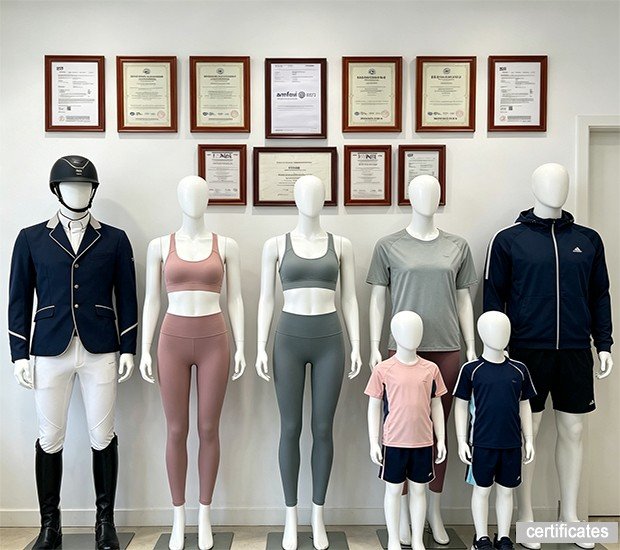
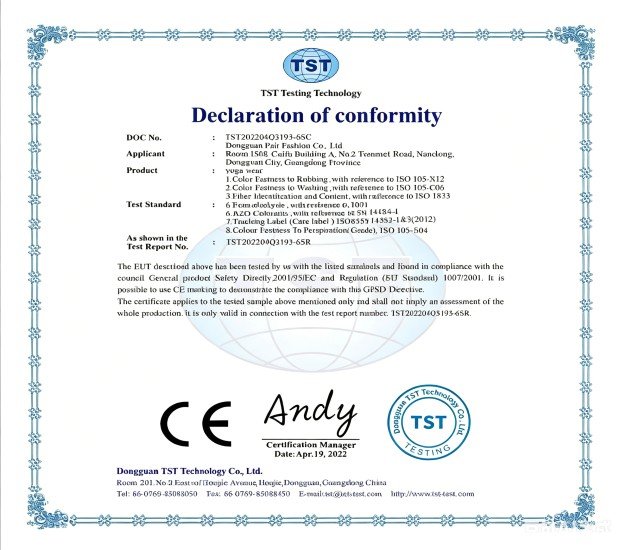
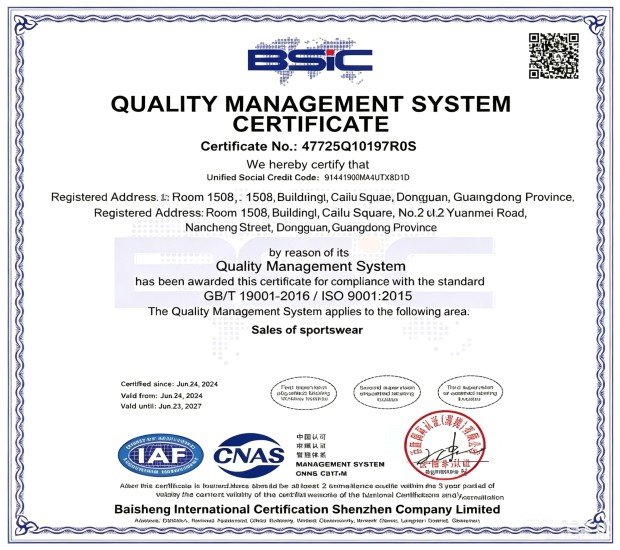
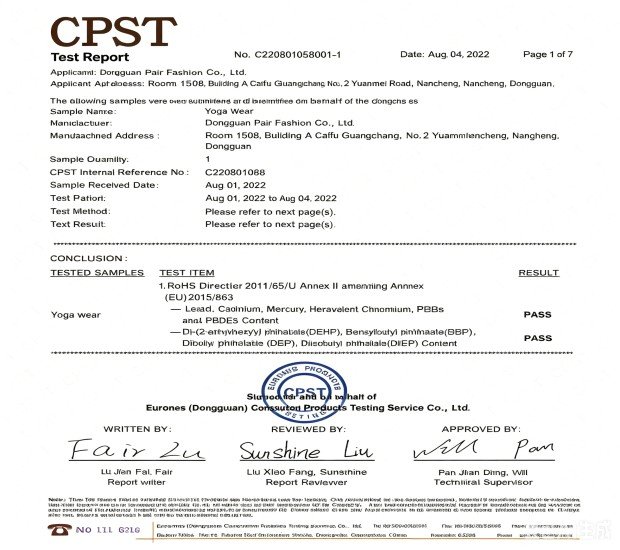
How Should Buyers Compare Samples From Shortlisted Manufacturers?
Buyers should compare samples from each Cotton Blend Plus Size Clothing Manufacturer under almost the same conditions. If possible, give each shortlisted supplier the same Tech Pack, measurement chart, target fabric requirements, sample size, branding details and evaluation standards. Then buyers can compare the measurements, fit, cotton blend performance, shrinkage, workmanship, branding accuracy, communication and revision results. A sample that looks good is not enough. The more important point is to check which supplier can understand the product requirements correctly, make the sample properly and correct the problems consistently.
By this stage, most obviously unsuitable suppliers should already be removed.
The remaining manufacturers should have passed basic business verification, demonstrated relevant product capability, provided reasonably comparable quotations and shown enough evidence to justify spending money on physical development.
Sampling now gives the buyer something much more useful than another sales presentation:
a product that can be measured, worn, washed, inspected and compared.
Why Should Every Supplier Receive the Same Tech Pack and Core Requirements?
For a meaningful comparison, the final two or three suppliers should receive substantially the same core product requirements.
If Supplier A receives a detailed Tech Pack, Supplier B receives three reference photos and Supplier C receives only a short message, the resulting samples cannot tell the buyer much about comparative manufacturing capability.
A fair test for a Cotton Blend Plus Size Clothing Manufacturer should control as many important variables as reasonably possible.
Provide each supplier with:
- The same technical drawing
- The same measurement chart
- The same target size
- The same target cotton blend composition
- The same approximate GSM
- The same construction requirements
- The same color direction
- The same logo dimensions and placement
- The same labels and trims
- The same requested completion date
- The same comments about critical fit points
If the exact intended fabric is unavailable at one supplier, record the difference.
Do not automatically reject the sample because a substitute material was used during early development. Instead, determine why it was substituted and how different it is from the intended bulk fabric.
The key is transparency.
A supplier saying:
“The bulk fabric is not available for this first sample, so we are using a similar 220 GSM cotton-elastane fabric. Stretch is close, but the hand feel is different.”
gives the buyer information that can be considered during evaluation.
A supplier silently changing the material creates a much larger problem.
Base-Size Sample vs Size-Set Sample vs PP Sample: Which One Should Be Used for Supplier Evaluation?
These samples answer different questions.
Base-Size Sample
The base-size sample helps determine whether the supplier can interpret the basic product specifications. Buyers can evaluate construction, measurements, general fit, workmanship and overall execution.
It is often the most economical place to start.
Size-Set Sample
A size set helps determine whether selected measurements and proportions are being translated appropriately across the extended range.
For a Cotton Blend Plus Size Clothing Manufacturer, this can be especially useful when the collection includes fitted garments or a broad size range.
PP Sample
A pre-production sample should represent the specifications that will become the production reference once the project is ready for bulk manufacturing.
The buyer should not treat these three stages as interchangeable.
A first development sample may use substitute fabric or temporary trims. A PP sample should normally be much closer to the intended bulk product.
Likewise, a beautiful base-size sample does not automatically prove that the supplier can execute the complete size range.
The sample strategy should match the commercial risk of the garment.
A relaxed cotton T-shirt may not require the same level of size verification as a fitted cotton-elastane bottom.
What Should a Supplier Sample Scorecard Include?
Without a scorecard, sample evaluation can become too emotional.
One supplier sends a beautifully packed garment.
Another has faster communication.
A third offers the lowest price.
None of those factors tells the buyer whether the actual product is better.
A structured scorecard helps compare each Cotton Blend Plus Size Clothing Manufacturer against the same criteria.
| Sample Area | What to Check |
|---|---|
| Measurement Accuracy | Does the garment match the supplied specification within agreed tolerance? |
| Fit | Does the garment behave appropriately on the intended body size? |
| Fabric | Is composition, GSM, stretch and hand feel close to the requirement? |
| Recovery | Does the fabric recover after normal stretching? |
| Shrinkage | How do measurements change after the agreed wash method? |
| Construction | Are seams and construction executed as specified? |
| Workmanship | Are there skipped stitches, puckering, loose threads or visible defects? |
| Branding | Are logo size, placement, labels and trims correct? |
| Finishing | Is the garment clean, pressed and presented appropriately? |
| Revision Accuracy | Were previous comments implemented correctly? |
| Communication | Were technical questions identified before becoming sample errors? |
| Timing | Was the agreed sample schedule realistic and reasonably followed? |
Brands can weight these categories differently.
For a highly fitted garment, fit and measurement accuracy may carry greater weight.
For a cotton-rich basic where wash performance is important, shrinkage and fabric stability may deserve more attention.
The scorecard is not intended to create mathematical certainty. Its purpose is to prevent one impressive feature from hiding several important weaknesses.
How Should Buyers Compare Measurements and Fit?
Begin with objective measurements.
Place the garment under consistent measuring conditions and compare key points against the supplied specification.
Record:
Specification → Actual Sample Measurement → Difference
Do not rely on memory.
If Supplier A’s sample is 1.5 cm outside the requested measurement and Supplier B’s is 0.5 cm outside, those differences should be recorded rather than described only as “A feels slightly bigger.”
For a Cotton Blend Plus Size Clothing Manufacturer, fit evaluation should then consider the intended wearer and product category.
A garment can technically match a measurement chart while still revealing practical fit concerns.
For example:
- Armhole position may restrict movement
- Waistband may roll
- Rise may feel unsuitable
- Garment length may shift in wear
- Sleeve or upper-arm area may feel restrictive
- Pocket placement may become awkward
- Fabric may stretch more than expected
These observations should be converted into specific comments.
Instead of:
“The fit is not good.”
write:
“Increase upper-arm circumference by 2 cm and review sleeve cap comfort.”
or:
“Waistband rolls during seated movement; review waistband structure and recovery.”
Specific feedback also tests the manufacturer’s ability to understand and execute revisions.
Why Should Cotton Blend Samples Be Washed and Re-Measured?
A sample can measure correctly before washing and differently afterward.
This is especially relevant when cotton is a meaningful part of the fabric composition.
For supplier comparison, buyers can establish one consistent wash method and apply it to comparable samples.
Before washing:
- Condition the garment consistently.
- Record key measurements.
- Photograph the sample where useful.
After washing and drying according to the agreed method:
- Allow the garment to settle.
- Re-measure the same points.
- Record the differences.
- Inspect twisting, surface change, color and overall appearance.
The purpose is not simply to ask whether the fabric “shrinks.”
A Cotton Blend Plus Size Clothing Manufacturer should be evaluated on whether the resulting garment remains commercially acceptable after the expected care process.
For example:
Before wash chest width: 60.0 cm
After wash chest width: 58.8 cm
The buyer now has measurable information.
That can be compared against Supplier B and Supplier C instead of relying on statements such as “our fabric has good shrinkage control.”
How Should Buyers Compare Fabric Between Supplier Samples?
Fabric comparison should be tied to the original specification.
Ask:
- Is the composition correct?
- Is the GSM close to target?
- Does the fabric stretch as expected?
- Does it recover?
- Is the hand feel appropriate?
- Is coverage acceptable?
- Does the fabric drape appropriately?
- Does it change noticeably after washing?
- Is the bulk fabric expected to be the same as the sample?
This last question is critical.
A Cotton Blend Plus Size Clothing Manufacturer may produce an excellent development sample using available fabric, but if the bulk order will use a newly dyed or newly knitted material, the buyer should understand that the sample has not yet verified the final fabric.
Record the sample material status as:
Bulk Fabric
Equivalent Development Fabric
or
Temporary Substitute Fabric
This simple classification prevents confusion later.
How Should Buyers Compare Sewing, Construction and Branding?
Do not inspect only the outside of the garment.
Turn it inside out.
Review areas such as:
- Seam consistency
- Stitching
- Seam allowance
- Stress points
- Hemming
- Waistband attachment
- Pocket construction
- Zippers or closures
- Label attachment
- Loose threads
- Puckering
- Symmetry
Then compare these details with the specification.
Branding should receive the same treatment.
Check:
Logo dimensions
Is the actual logo the specified size?
Logo position
Measure it from a defined reference point rather than judging by eye.
Label information
Are size, fiber content, care information and brand details correct?
Color
Does the logo or trim match the approved direction?
Durability
If appropriate, include branding in wash evaluation.
A supplier should not receive a high score simply because the garment looks clean in a photograph.
A professional Cotton Blend Plus Size Clothing Manufacturer should be evaluated against the details the buyer actually requested.
Why Is Revision Accuracy One of the Most Useful Supplier Tests?
The first sample does not need to be perfect.
In custom manufacturing, corrections are normal.
What matters is how the supplier responds to those corrections.
Suppose the first sample requires eight changes.
Supplier A corrects seven, asks a sensible question about the eighth and clearly marks the updated specification.
Supplier B corrects four, misses two and changes two unrelated details.
Supplier C says everything has been corrected, but the second sample still contains most of the original problems.
Even if all three first samples looked similar, the revision cycle reveals very different development capability.
For each Cotton Blend Plus Size Clothing Manufacturer, track:
- Number of requested corrections
- Number correctly completed
- Number missed
- Unrequested changes introduced
- Questions raised before revision
- Time required
- Clarity of updated documentation
This is particularly valuable because real production relationships involve changes.
A supplier that can understand, document and execute corrections may be more valuable than one that happens to produce a good first sample but handles revisions poorly.
Sample Quality vs Bulk Repeatability: What Is the Difference?
An approved sample proves that a supplier can make that sample.
It does not automatically prove that 500, 2,000 or 10,000 garments will match it.
This distinction is important when evaluating a Cotton Blend Plus Size Clothing Manufacturer.
Samples can receive more individual attention than normal production. They may be sewn by experienced sample-room workers rather than production-line operators.
Bulk production introduces additional variables:
- Larger fabric lots
- Multiple cutting bundles
- More sewing operators
- Different sizes
- Different colors
- Production speed
- Measurement tolerances
- In-line inspection
- Final inspection
That is why sample approval should create a production reference, not just a visual memory.
Important approved information should be documented through the relevant specifications, comments, material approvals, measurements and PP sample where appropriate.
The question changes from:
“Can this factory make one good garment?”
to:
“Can this factory reproduce the approved garment consistently?”
The second question cannot be fully answered during initial supplier sampling, but buyers can ask how the manufacturer controls the transition.
How Should Communication and Problem-Solving Be Evaluated During Sampling?
Communication quality should be judged by what it prevents and resolves—not simply by reply speed.
A salesperson answering within three minutes is not necessarily more effective than someone who takes two hours to check a technical point with the pattern or fabric team.
Useful communication from a Cotton Blend Plus Size Clothing Manufacturer includes:
- Identifying unclear specifications
- Asking questions before making assumptions
- Explaining material limitations
- Reporting delays before the deadline passes
- Confirming corrections
- Sending clear photos or measurements
- Separating confirmed facts from estimates
- Providing alternatives when a requested option is not feasible
Buyers should also evaluate their own communication.
If specifications change repeatedly without version control, even a strong manufacturer can make the wrong sample.
Use clear version names, dated comments and one consolidated correction document where practical.
Avoid sending one measurement change by email, another by WhatsApp and three more through separate image annotations without identifying which instruction is final.
Supplier evaluation becomes more accurate when the buyer also provides a controlled development process.
Which Suppliers Should Move From Sampling to Final Commercial Negotiation?
By the end of comparative sampling, the buyer should have enough evidence to reduce the shortlist again.
A practical comparison might look like this:
| Evaluation Area | Supplier A | Supplier B | Supplier C |
|---|---|---|---|
| Measurement Accuracy | |||
| Fit | |||
| Fabric Match | |||
| Wash Performance | |||
| Workmanship | |||
| Branding Accuracy | |||
| Revision Accuracy | |||
| Communication | |||
| Sample Timing | |||
| MOQ Fit | |||
| Quotation Fit |
Do not automatically select the Cotton Blend Plus Size Clothing Manufacturer with the highest total if one critical weakness creates unacceptable risk.
For example:
Supplier A may perform well overall but cannot meet a mandatory compliance requirement.
Supplier B may have excellent quality but requires a fabric MOQ far beyond the buyer’s sales forecast.
Supplier C may have a slightly higher unit price but delivers the strongest sample, clear revisions and a commercially manageable MOQ.
The purpose of the scorecard is to expose these trade-offs.
Should Buyers Always Choose the Supplier With the Best Sample?
Not necessarily.
Sample quality is extremely important, but supplier selection is a commercial decision involving several variables.
A manufacturer can make the strongest sample but still be unsuitable because of:
- MOQ
- Capacity
- Lead time
- Compliance
- Payment terms
- Fabric minimums
- Communication
- Production model
- Delivery requirements
Likewise, a manufacturer should not be selected only because it is cheaper if its sample repeatedly fails critical specifications.
The final Cotton Blend Plus Size Clothing Manufacturer should therefore survive both tests:
Product Test:
Can the supplier execute the garment?
Commercial Test:
Can the supplier support the actual order?
A manufacturer that passes only one is not yet the right production partner.
What Should Be Locked Before Final Supplier Selection?
Before final negotiation, consolidate what has actually been approved.
Depending on the product, this can include:
- Approved measurements
- Approved size range
- Approved fabric
- Approved color
- Approved construction
- Approved branding
- Approved labels
- Approved trims
- Approved packaging
- Agreed measurement tolerances
- Agreed testing requirements
- Final MOQ structure
- Final unit price basis
- Production lead time
- Inspection requirements
This creates a clearer commercial baseline for the final supplier comparison.
If Supplier A is negotiating from an approved cotton-elastane fabric while Supplier B’s price still assumes an unconfirmed substitute, their final prices are not yet directly comparable.
The same applies to sizing.
If one Cotton Blend Plus Size Clothing Manufacturer has completed a relevant size-set check while another has only produced one base-size sample, the remaining risk is different.
The buyer should make those differences visible before placing a deposit.
Sampling Should Reduce Uncertainty, Not Just Produce a Garment
The real value of comparative sampling is the information it creates.
Before sampling, buyers mostly have claims, quotations and evidence from previous work.
After sampling, they can evaluate:
What the supplier understood.
What the supplier produced.
What changed after washing.
What happened in larger sizes.
What the supplier corrected.
How accurately the second sample followed the comments.
That evidence makes the final decision more disciplined.
The final stage is therefore not simply choosing the most attractive sample. Buyers need to combine sample performance with MOQ, price, fabric capability, production reliability, compliance and business stage, then determine which supplier’s weaknesses are acceptable and which create unacceptable risk for the actual order.

How Do You Choose the Right Cotton Blend Plus Size Clothing Manufacturer?
The right Cotton Blend Plus Size Clothing Manufacturer is the supplier whose verified capabilities match the product, order quantity, size range, fabric requirements, quality expectations and current stage of the brand. Buyers should combine supplier verification, comparable quotations and sample results rather than choosing on one factor alone. A low MOQ may matter most for a startup, while repeatability, capacity and delivery reliability may become more important for an established program with predictable replenishment.
By the final selection stage, the question should no longer be:
“Which supplier looks best?”
It should become:
“Which supplier’s strengths match the requirements that matter most, and which remaining weaknesses can we commercially accept?”
This distinction helps buyers make a decision based on the actual order rather than a generic manufacturer ranking.
Who Is Better Suited to a Startup Testing Its First Order?
A startup usually has a different risk profile from an established retailer.
The biggest problem may not be production capacity. It may be inventory exposure.
A new brand does not yet know with certainty:
- Which style will sell fastest
- Which color customers will prefer
- Which sizes will have the highest demand
- Whether the target retail price will convert
- How quickly replenishment will be required
For this buyer, a Cotton Blend Plus Size Clothing Manufacturer with a commercially manageable MOQ can be more suitable than a larger manufacturer offering a lower unit price but requiring much more inventory.
Suppose:
Supplier A: 100 pieces at $15
Supplier B: 500 pieces at $11
Supplier B is cheaper per garment.
But if the product has never been sold before, Supplier A allows the brand to test the market with a much smaller inventory commitment.
That flexibility has economic value.
Startups should therefore give greater attention to:
MOQ flexibility, stock-fabric options, sampling communication, revision accuracy, manageable customization and clear commercial terms.
They should also resist launching too many SKUs.
A focused first order with fewer styles and colors can provide better sales information than a large collection in which every SKU receives only a small amount of demand.
Which Supplier Type Fits a Growing DTC or Private Label Brand?
A growing brand begins to face a different challenge.
It may already know that customers want the product. Now it needs to make the supply chain more repeatable without losing flexibility.
At this stage, a Cotton Blend Plus Size Clothing Manufacturer should be evaluated on whether it can support:
- Several related styles
- A broader size range
- More controlled fabrics
- Custom colors
- Private label details
- Repeat orders
- Seasonal launches
- Increasing order quantities
- Consistent specifications
A growing DTC brand may still value a moderate MOQ, but the lowest possible MOQ becomes less important than it was during initial testing.
For example, a brand that has already sold 1,500 units of a cotton-elastane bottom has more information than a startup launching its first 100 pieces.
The sourcing priority can begin moving from:
“How little can we order?”
toward:
“How reliably can we reproduce what is selling?”
This is also where supplier switching becomes more expensive. Once the brand has approved fabrics, measurements, colors, labels and packaging, moving to a new manufacturer may require part of that development work to be repeated.
Supplier selection should therefore consider the next realistic stage of the business, not only the next purchase order.
Which Manufacturer Type Fits Larger Orders and Regular Replenishment?
For larger programs, production reliability becomes increasingly important.
A buyer ordering 10,000 pieces faces a different risk from a buyer ordering 100.
A Cotton Blend Plus Size Clothing Manufacturer supporting larger or recurring programs should be evaluated more closely on:
- Production capacity
- Capacity allocation
- Fabric lot control
- Measurement consistency
- In-line inspection
- Final inspection
- Delivery performance
- Documentation
- Repeat-order control
- Problem resolution
The consequences of inconsistency increase with volume.
A 3% issue in a 100-piece test order affects three garments.
The same rate in a 10,000-piece order affects 300.
This does not mean larger buyers should automatically choose the largest factory. Factory scale is only useful when the supplier also has relevant product capability and effective production control.
A highly specialized medium-sized manufacturer can be a better operational match than a much larger general manufacturer if the product requires experience the larger supplier does not have.
How Should Buyers Weight Fit Capability, Fabric, MOQ, Price, Sample and Supply Reliability?
Not every criterion should carry the same weight.
A weighted scorecard can help buyers make their priorities explicit before the final commercial negotiation.
For example:
| Evaluation Category | Example Weight |
|---|---|
| Extended-Size Capability | 20% |
| Cotton Blend Capability | 15% |
| Sample Execution | 20% |
| Production / Quality Evidence | 15% |
| MOQ and Commercial Fit | 10% |
| Price | 10% |
| Communication | 5% |
| Lead Time | 5% |
| Total | 100% |
These percentages are only an example.
A buyer should change them according to the order.
For a fitted plus size collection, extended-size capability and sample execution may deserve more weight.
For a price-sensitive basic T-shirt program, material cost, production efficiency and price may receive more weight.
For a retailer with fixed launch dates, delivery reliability may become critical.
The purpose is not to declare one Cotton Blend Plus Size Clothing Manufacturer universally superior.
It is to evaluate suppliers against the requirements of one defined sourcing project.
How Should a Startup Weight the Same Suppliers Differently From an Established Buyer?
Consider three hypothetical suppliers.
| Category | Supplier A | Supplier B | Supplier C |
|---|---|---|---|
| MOQ Flexibility | Strong | Medium | Low |
| Unit Price at Volume | Medium | Strong | Strong |
| Plus Size Evidence | Strong | Strong | Medium |
| Sample Performance | Strong | Medium | Strong |
| Capacity | Medium | Strong | Strong |
| Replenishment Systems | Medium | Strong | Strong |
A startup may reasonably give more weight to Supplier A because inventory flexibility matters.
A mature retailer placing predictable repeat orders may place greater emphasis on the production structure offered by Supplier B or Supplier C.
This does not mean Supplier A is the “best startup manufacturer” or Supplier B is the “best large-order manufacturer.”
It means buyer requirements change the importance of supplier capabilities.
The same Cotton Blend Plus Size Clothing Manufacturer can therefore be a strong match for one project and a weak match for another.
What Supplier Weaknesses Are Acceptable and Which Are Deal Breakers?
No supplier is perfect.
The objective is not to find a manufacturer with zero weaknesses. It is to understand which weaknesses create manageable inconvenience and which create unacceptable risk.
An acceptable weakness might be:
- Slightly longer sample lead time
- Higher sample fee
- Fewer stock colors
- Higher unit price within budget
- Limited packaging options that can be sourced separately
A potential deal breaker might be:
- Repeated failure to follow approved measurements
- Inability to support the required size range
- Unverifiable mandatory compliance
- Material substitution without approval
- MOQ far beyond the commercial plan
- Repeated unexplained quotation changes
- Serious communication failures around specifications
- Production lead time incompatible with the launch date
The classification depends on the buyer.
For one brand, custom packaging is essential. For another, it is optional.
For one retailer, a particular compliance requirement may be mandatory. For a small DTC brand selling into another market, different requirements may apply.
When evaluating a Cotton Blend Plus Size Clothing Manufacturer, buyers should therefore separate:
Preference
from:
Requirement
and:
Deal Breaker
before making the final decision.
What Should Be Confirmed Before Paying a Bulk Production Deposit?
The final quotation should not depend on assumptions that have never been written down.
Before paying a production deposit, confirm the commercial and product baseline.
This can include:
- Final style number
- Final order quantity
- Quantity by color
- Size breakdown
- Approved measurement specifications
- Approved fabric
- Fabric composition
- Fabric GSM where specified
- Approved colors
- Approved construction
- Approved logo
- Labels and trims
- Packaging
- Measurement tolerances
- Testing requirements
- Inspection requirements
- Unit price
- Currency
- Incoterm
- Payment terms
- Production lead time
- Shipping responsibility
For a Cotton Blend Plus Size Clothing Manufacturer, fabric status deserves particular attention.
The buyer should know whether bulk will use:
the same fabric as the approved sample, an approved bulk lot, or a material that still requires final confirmation.
If custom dyeing is involved, color approval should also be clearly documented.
The purpose is simple:
Reduce the number of decisions that remain open after production starts.
Open decisions become expensive when fabric has already been purchased and garments are already being cut.
Should Buyers Keep a Backup Manufacturer?
For important or growing programs, maintaining knowledge of a second qualified supplier can reduce long-term sourcing risk.
This does not necessarily mean splitting every order between two factories.
Dual sourcing can introduce its own problems, including differences in:
- Fabric
- Dye lots
- Measurements
- Sewing
- Finishing
- Branding
- Packaging
Instead, the buyer may keep one primary Cotton Blend Plus Size Clothing Manufacturer and maintain a second supplier that has already passed basic verification or sample evaluation.
A backup can become useful when:
- Capacity becomes unavailable
- Lead times increase
- MOQ changes
- Material sourcing changes
- A new category falls outside the primary supplier’s expertise
- The business grows beyond one supplier’s practical capacity
The backup supplier should not be treated as an emergency name found on the internet after a problem has already occurred.
Qualification takes time.
How Should Buyers Make the Final Manufacturer Shortlist?
By this stage, a buyer may have reduced ten or more researched companies to two final candidates.
A practical final comparison can combine evidence from the entire sourcing process.
| Final Decision Area | Supplier A | Supplier B |
|---|---|---|
| Business Verification | ||
| Relevant Product Experience | ||
| Extended-Size Evidence | ||
| Cotton Blend Capability | ||
| Sample Measurement Accuracy | ||
| Fit Evaluation | ||
| Wash / Shrinkage Result | ||
| Revision Accuracy | ||
| MOQ Structure | ||
| Unit Price | ||
| Fabric Minimum | ||
| Production Lead Time | ||
| Compliance | ||
| QC Evidence | ||
| Communication | ||
| Bulk Production Risk |
The buyer should then review why each difference exists.
If Supplier A costs $0.80 more, what does the additional cost represent?
If Supplier B requires twice the MOQ, is that caused by the garment factory or the fabric mill?
If Supplier A’s sample was better, did it use the intended bulk fabric?
If Supplier B has stronger production capacity, the buyer should also consider whether the project really needs this level of capacity.
This can help buyers avoid making the final Cotton Blend Plus Size Clothing Manufacturer decision only based on price, MOQ and how the sample looks.
Final Manufacturer Shortlist and Supplier Selection Checklist
Before selecting the supplier, confirm that the answer to the following questions is clear:
Business and Production
- Is the legal business identity reasonably verified?
- Is the production model understood?
- Is the manufacturing location clear?
- Are outsourced processes disclosed where relevant?
Extended Sizing
- Has the required size range been confirmed?
- Is there relevant plus size production evidence?
- Have important sizes been evaluated where necessary?
- Are measurement tolerances understood?
Cotton Blend
- Is the final fabric identified?
- Is composition confirmed?
- Is GSM confirmed where required?
- Have relevant wash or shrinkage expectations been reviewed?
- Is the fabric MOQ understood?
Sampling
- Has the sample been evaluated against the specification?
- Have major corrections been completed?
- Has revision accuracy been acceptable?
- Is there an approved production reference?
Commercial Terms
- Is MOQ confirmed by style, color and fabric where applicable?
- Is the final unit price clear?
- Are additional charges identified?
- Are payment terms agreed?
- Is the Incoterm clear?
Production
- Is bulk lead time confirmed?
- Are inspection expectations clear?
- Can the supplier support the required capacity?
- Are critical quality requirements documented?
If major answers remain unclear, the supplier may not yet be ready for a production deposit.
The Right Supplier Depends on the Order, Not the Ranking
A Top 10 list is useful for discovering suppliers, but it cannot make the final sourcing decision for the buyer.
Public information can identify potential manufacturers.
Verification can remove unsuitable candidates.
Comparable RFQs can expose commercial differences.
Samples can test execution.
Size sets and wash evaluation can reveal additional product risk.
Commercial negotiation can show whether the order is financially workable.
Only after these steps can a buyer determine which Cotton Blend Plus Size Clothing Manufacturer is better aligned with the actual program.
For one brand, the priority may be low inventory exposure.
For another, it may be extended-size fit evidence.
For another, it may be cotton blend sourcing, repeatability and regular replenishment.
The correct decision therefore depends on the order.
A Cotton Blend Plus Size Clothing Manufacturer should move into production because its verified strengths match the requirements that matter most, its remaining limitations are commercially acceptable, and its production model can support the next realistic stage of the brand—not simply because it has the lowest quotation or the most impressive supplier profile.
1. Product Development
Regular monthly product development ensures consistent updates to your brand line.
2. Fabric Sourcing
Regular monthly product development ensures consistent updates to your brand line.
3. Sample Making
Regular monthly product development ensures consistent updates to your brand line.
4. Bulk Production
Regular monthly product development ensures consistent updates to your brand line.
5. Packaging & Delivery
Regular monthly product development ensures consistent updates to your brand line.