OEM/ODM Sportswear Manufacturer | 3-Day Sampling | Low MOQ | 50K Monthly Capacity | ISO9001 & BSCI Certified


Top 10 Equestrian Clothing Suppliers in China: Complete Comparison for International Buyers
Compare the top 10 equestrian clothing suppliers in China by product specialization, buyer suitability, certifications, export experience, and manufacturing strengths. Learn how international brands evaluate suppliers and choose the right manufacturing partner with confidence.
Quick Answer: Who Are the Best Equestrian Clothing Suppliers in China?
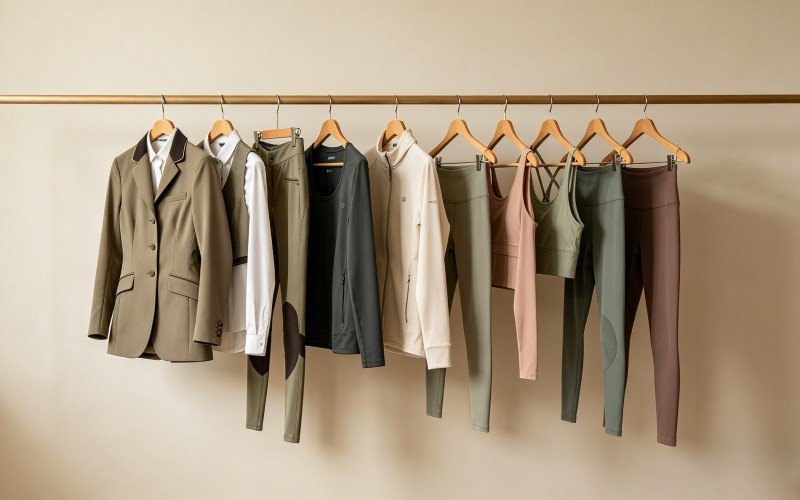
China is home to many apparel manufacturers, but only a limited number have meaningful experience producing technical equestrian clothing. The best suppliers are not necessarily the largest factories or the lowest-cost manufacturers. Instead, they consistently demonstrate strong product expertise, reliable quality management, flexible order quantities, effective communication, and the ability to support long-term brand growth. Buyers should compare suppliers based on their specialization in riding apparel, export experience, product development resources, compliance standards, and overall supply chain reliability rather than making decisions based solely on unit price.
Finding the right supplier also depends on your business model. A startup launching its first riding apparel collection has very different priorities from an established equestrian brand supplying retailers across multiple countries. Some manufacturers are better suited to small-batch private label projects, while others focus on high-volume wholesale production or technical competition apparel. Understanding these differences before requesting quotations can save significant time, reduce sourcing risks, and improve product consistency over the long term. Buyers who have already decided to develop their own riding apparel collection can also explore our Equestrian Clothing Suppliers for Private Label and Custom Riding Brands for a more detailed overview of manufacturing capabilities.
Top 10 Equestrian Clothing Suppliers in China at a Glance
| Supplier | City | Founded | Main Product Focus | Typical MOQ* | Best For |
|---|---|---|---|---|---|
| Pair Fashion | Dongguan | 2016 | Technical equestrian apparel, activewear, private label collections | From 50 pcs | Startups, growing brands, premium private label |
| Hucai Sportswear | Dongguan | — | Sportswear, riding tights, leggings | Varies | Sportswear brands entering the equestrian market |
| Baoxin Garment | Guangzhou | — | Riding apparel and general sportswear | Varies | Importers and distributors |
| Sunsle Sports | Xiamen | — | Functional sportswear | Varies | Mid-sized international brands |
| Aika Sportswear | Dongguan | — | Fitness apparel and riding basics | From small orders | Emerging DTC brands |
| Lezhou Garment | Guangzhou | — | Riding uniforms and club apparel | Varies | Riding schools and clubs |
| Ingor Sportswear | Guangzhou | — | Sustainable activewear | Varies | Eco-conscious brands |
| Hongyu Apparel | Ningbo | — | Large-scale apparel manufacturing | Higher MOQ | Wholesale buyers |
| Fexwear | Shenzhen | — | Sports and casual apparel | Varies | Multi-category apparel businesses |
| Wearce | Xiamen | — | OEM sportswear production | Varies | General sportswear sourcing |
*MOQ may vary depending on product complexity, fabric availability, customization requirements, and seasonal production schedules. Buyers should confirm current requirements directly with each supplier before requesting samples or quotations.
Which Supplier Is Right for Your Business?
Different buyers often reach different conclusions even when evaluating the same supplier. Instead of asking, “Which supplier is the best?”, experienced sourcing teams usually ask, “Which supplier is the best fit for our business?”
The following recommendations provide a practical starting point.
| Buyer Type | Recommended Supplier Characteristics |
|---|---|
| Startup equestrian brands | Low MOQ, flexible sampling, strong product development support |
| Private label brands | Experience with branding, stable quality systems, consistent sizing |
| Wholesale distributors | Large production capacity, reliable delivery performance |
| Premium riding brands | Technical fabric expertise, advanced garment construction, strict quality control |
| Riding clubs and training centers | Consistent repeat production, durable products, dependable lead times |
| Multi-category sportswear brands | Manufacturers capable of producing both equestrian and activewear collections |
No single supplier can meet the needs of every project. A factory that specializes in premium competition apparel may not be the most suitable choice for high-volume production of basic riding leggings. Likewise, a manufacturer that mainly handles large wholesale orders may not provide the flexibility required by a new brand launching its first collection.
For this reason, experienced buyers rarely compare suppliers using only price lists. They typically evaluate several factors together, including product specialization, communication efficiency, development capability, quality systems, export experience, delivery consistency, and the supplier’s willingness to support future product expansion. Taking this broader view often leads to stronger partnerships and lower sourcing risks over time.
Key Factors Buyers Should Compare Before Shortlisting Suppliers
Rather than focusing only on quotations, consider evaluating suppliers across multiple dimensions:
- Product specialization – Does the supplier have proven experience in equestrian apparel rather than general sportswear?
- Development capability – Can they work from a Tech Pack, reference sample, or initial concept?
- Quality management – Do they follow documented inspection procedures and recognized quality standards?
- Export experience – Are they familiar with your target market’s quality expectations and compliance requirements?
- Communication efficiency – Do they respond clearly, ask technical questions, and provide practical solutions?
- Supply chain stability – Can they maintain consistent quality and delivery as your order volume grows?
- Long-term compatibility – Will the supplier still meet your needs as your product range expands?
These criteria form a much stronger basis for supplier selection than comparing prices alone and are commonly used by experienced sourcing professionals when evaluating manufacturing partners.
Top 10 Equestrian Clothing Suppliers in China (Detailed Comparison)
Choosing an equestrian clothing supplier is rarely about identifying a single “best” factory. Every manufacturer has different strengths, production priorities, and customer profiles. Some specialize in helping startup brands launch small collections with flexible order quantities, while others focus on high-volume manufacturing for distributors and established retailers. A supplier that performs exceptionally well for technical competition apparel may not be the right partner for large-scale wholesale basics.
The following comparison evaluates ten Chinese suppliers using consistent criteria, including company background, product specialization, export experience, target customer profile, competitive advantages, and potential limitations. Rather than ranking manufacturers solely by size or price, the comparison focuses on factors that international buyers typically consider during supplier selection.
1. Pair Fashion
Headquarters
Dongguan, Guangdong, China
Established
2016
Primary Product Categories
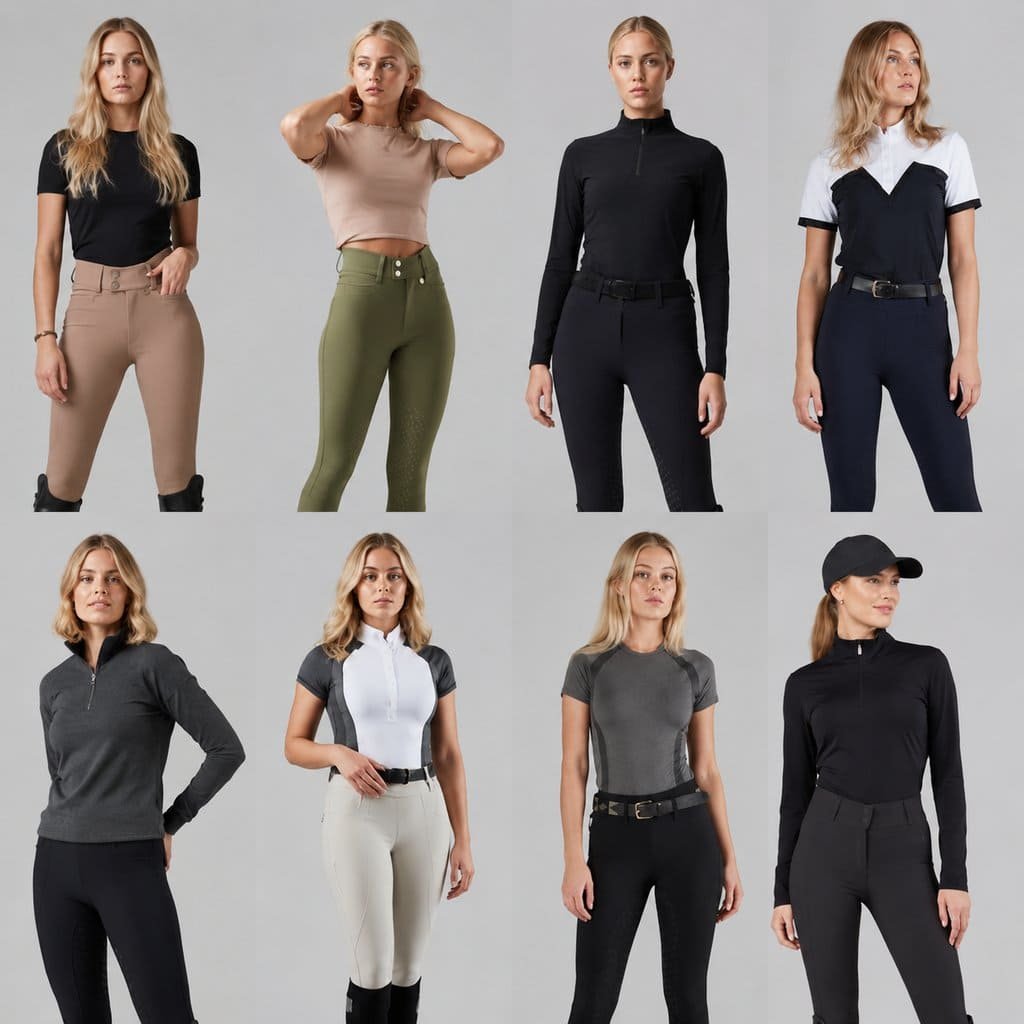
- Riding Breeches
- Riding Tights
- Riding Shirts
- Competition Shirts
- Riding Jackets
- Base Layers
- Stable Wear
- Women’s Riding Apparel
- Men’s Riding Apparel
- Children’s Riding Apparel
- Plus Size Riding Apparel
- Functional Activewear
Main Export Markets
- United States
- Canada
- United Kingdom
- Germany
- Netherlands
- Australia
- United Arab Emirates
Recommended Buyer Types
- Startup equestrian brands
- Growing private label brands
- Boutique retailers
- Riding clubs
- DTC e-commerce businesses
- Brands expanding into equestrian apparel
Company Overview
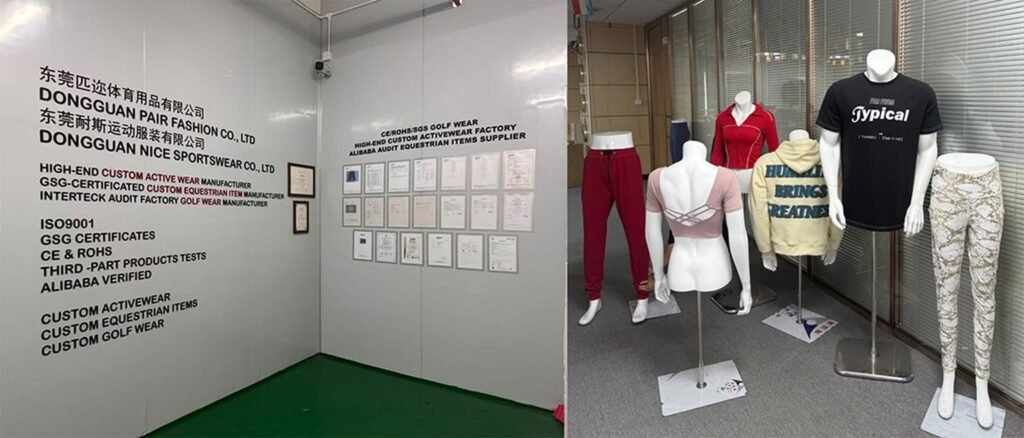
Based in Dongguan, Pair Fashion focuses on technical sportswear and equestrian apparel rather than general fashion garments. The company serves international brands looking for flexible production, stable quality, and long-term manufacturing partnerships. Its product portfolio covers both riding apparel and functional activewear, allowing brands to develop coordinated collections under one supplier.
Instead of concentrating on mass commodity production, Pair Fashion places greater emphasis on product consistency, functional garment construction, and collaborative development throughout the sourcing process. This approach makes the company particularly suitable for brands introducing new riding collections or expanding existing product lines.
Competitive Strengths
- Strong specialization in equestrian clothing
- Flexible minimum order quantities
- Broad experience with technical stretch fabrics
- Well-developed sampling capabilities
- Multiple international compliance certifications
- Stable quality management procedures
- Experience serving buyers across North America, Europe, Australia, and the Middle East
Potential Limitations
Because Pair Fashion primarily focuses on customized production rather than ready-stock inventory, projects typically require a product development and sample approval stage before bulk manufacturing begins. Buyers seeking immediate off-the-shelf inventory may find wholesale-focused suppliers more suitable.
Overall Assessment
Pair Fashion is best suited for international brands seeking a long-term manufacturing partner capable of supporting technical riding apparel, consistent product quality, and gradual collection expansion rather than purely price-driven sourcing.
2. Hucai Sportswear
Headquarters
Dongguan, Guangdong, China
Primary Product Categories
- Compression Apparel
- Sports Leggings
- Fitness Wear
- Riding Tights
- Performance Tops
Main Export Markets
North America
Europe
Australia
Recommended Buyer Types
- Activewear brands
- Sportswear importers
- Buyers adding equestrian products to existing collections
Company Overview
Hucai Sportswear has extensive experience in performance sportswear manufacturing, particularly compression garments and leggings. Some of its production capabilities can be applied to riding apparel, making it an option for brands looking to combine equestrian products with broader activewear collections.
Its manufacturing experience lies primarily in general performance apparel rather than highly specialized riding competition garments.
Competitive Strengths
- Mature sportswear production
- Reliable export experience
- Stable production capacity
- Suitable for medium-volume projects
Potential Limitations
Brands developing highly technical riding products requiring specialized silicone grip placement, advanced saddle ergonomics, or competition-level garment construction may need suppliers with deeper equestrian specialization.
Overall Assessment
Hucai Sportswear is generally more suitable for sportswear companies expanding into riding apparel than for brands exclusively focused on premium equestrian collections.
3. Baoxin Garment
Headquarters
Guangzhou, Guangdong, China
Primary Product Categories
- Riding Apparel
- Outdoor Sportswear
- Training Clothing
- Casual Activewear
Main Export Markets
Europe
North America
South America
Recommended Buyer Types
- Regional distributors
- Importers
- Retail chains
- Multi-category apparel buyers
Company Overview
Baoxin Garment manufactures a broad range of sportswear products and supplies customers across several international markets. Its experience with riding apparel is supported by a wider activewear manufacturing background, allowing buyers to source multiple product categories from one supplier.
The company is generally positioned toward customers requiring dependable production rather than highly customized technical development.
Competitive Strengths
- Broad product portfolio
- Established export business
- Suitable for repeat production
- Stable manufacturing operations
Potential Limitations
Buyers looking for advanced riding-specific product innovation may require additional product development support beyond standard manufacturing services.
Overall Assessment
Baoxin Garment is a practical option for buyers seeking stable production of established riding apparel styles while consolidating multiple sportswear categories within one supplier.
4. Sunsle Sports
Headquarters
Xiamen, Fujian, China
Primary Product Categories
- Functional Sportswear
- Running Apparel
- Riding Tights
- Outdoor Clothing
Main Export Markets
Europe
Australia
North America
Recommended Buyer Types
- Medium-sized brands
- Outdoor apparel companies
- Technical performance brands
Company Overview
Sunsle Sports is recognized for manufacturing functional performance apparel using lightweight, moisture-management, and stretch fabrics. Although equestrian clothing represents only part of its overall business, its technical fabric experience provides a solid foundation for producing riding garments requiring flexibility and comfort.
Competitive Strengths
- Strong technical fabric sourcing
- Consistent garment quality
- International manufacturing experience
- Suitable for functional performance apparel
Potential Limitations
Compared with suppliers dedicated primarily to equestrian apparel, its riding product portfolio is relatively limited.
Overall Assessment
Sunsle Sports is well suited to brands emphasizing technical performance fabrics while producing riding apparel alongside broader sportswear collections.
Supplier Comparison Snapshot
| Supplier | Product Specialization | Export Experience | MOQ Flexibility | Best Buyer Type |
|---|---|---|---|---|
| Pair Fashion | ★★★★★ | ★★★★★ | ★★★★★ | Private Label Brands |
| Hucai Sportswear | ★★★★☆ | ★★★★☆ | ★★★☆☆ | Activewear Brands |
| Baoxin Garment | ★★★★☆ | ★★★★☆ | ★★★☆☆ | Importers & Retailers |
| Sunsle Sports | ★★★★☆ | ★★★★☆ | ★★★☆☆ | Technical Sportswear Brands |
Professional sourcing teams rarely shortlist suppliers based on pricing alone. They compare specialization, communication quality, production stability, and long-term compatibility because these factors usually have a much greater impact on product success than small differences in manufacturing cost.
5. Aika Sportswear
Headquarters
Dongguan, Guangdong, China
Primary Product Categories
- Activewear
- Yoga Apparel
- Fitness Clothing
- Riding Leggings
- Training Apparel
Recommended Buyer Types
- Startup brands
- DTC apparel businesses
- Boutique activewear companies
- Buyers developing crossover activewear and equestrian collections
Company Overview
Aika Sportswear is widely recognized as an activewear manufacturer serving international brands across multiple performance apparel categories. While its primary focus is fitness and yoga clothing, the factory also manufactures stretch garments that can be adapted for entry-level riding apparel.
For buyers whose collections combine equestrian products with general activewear, Aika provides the advantage of sourcing multiple product categories from a single supplier.
Competitive Strengths
- Flexible production for growing brands
- Broad activewear manufacturing experience
- Suitable for multiple product categories
- Familiar with international export markets
Potential Limitations
Aika’s primary expertise is activewear rather than technical equestrian apparel. Buyers developing competition garments or highly specialized riding products should evaluate whether the factory’s riding experience aligns with their product requirements.
Overall Assessment
Aika Sportswear is a practical choice for brands expanding from activewear into equestrian products, particularly when product complexity remains relatively moderate.
6. Lezhou Garment
Headquarters
Guangzhou, Guangdong, China
Primary Product Categories
- Riding Uniforms
- Club Apparel
- Sportswear
- Team Clothing
Recommended Buyer Types
- Riding schools
- Equestrian clubs
- Regional distributors
- Institutional buyers
Company Overview
Lezhou Garment supplies a variety of sports apparel for commercial customers and organizations. Buyers sourcing uniforms or standardized riding apparel for clubs and riding schools may find its manufacturing profile suitable for repeat production.
Rather than emphasizing technical product innovation, the company is generally positioned toward stable manufacturing and standardized garment production.
Competitive Strengths
- Stable production capability
- Suitable for repeat programs
- Experience with organizational apparel
Potential Limitations
Brands seeking premium retail collections or frequent seasonal product innovation may require suppliers with stronger development resources.
Overall Assessment
Lezhou Garment may be better suited to organizations purchasing practical riding apparel than fashion-oriented equestrian brands seeking differentiated products.
7. Ingor Sportswear
Headquarters
Guangzhou, Guangdong, China
Primary Product Categories
- Sustainable Activewear
- Yoga Clothing
- Sports Bras
- Leggings
- Selected Riding Apparel
Recommended Buyer Types
- Sustainable brands
- Premium activewear companies
- Eco-conscious retailers
Company Overview
Ingor Sportswear has established a reputation within the sustainable activewear sector by incorporating environmentally preferred materials into many of its product lines. Buyers prioritizing recycled fabrics or sustainability initiatives may consider Ingor when developing riding apparel with similar material requirements.
Its strengths lie more in fabric sourcing and sustainability than in specialization within the equestrian sector.
Competitive Strengths
- Sustainable material options
- Modern activewear manufacturing
- International customer base
Potential Limitations
Brands requiring extensive riding-specific garment engineering should confirm the factory’s experience with technical equestrian products during the sampling stage.
Overall Assessment
Ingor Sportswear is most appropriate for brands placing sustainability alongside performance when evaluating manufacturing partners.
8. Hongyu Apparel
Headquarters
Ningbo, Zhejiang, China
Primary Product Categories
- Sportswear
- Outdoor Apparel
- Casual Clothing
- Teamwear
Recommended Buyer Types
- Large distributors
- Import companies
- High-volume buyers
Company Overview
Hongyu Apparel manufactures a broad range of apparel products for international customers. Buyers looking for stable volume production across multiple apparel categories may find the company’s manufacturing scale attractive.
Because its product range extends beyond equestrian clothing, buyers should confirm riding apparel experience during supplier evaluation.
Competitive Strengths
- Larger production capacity
- Suitable for volume purchasing
- Diverse apparel categories
Potential Limitations
Smaller brands seeking highly collaborative product development may find larger production-oriented suppliers less flexible during early-stage collection development.
Overall Assessment
Hongyu Apparel may be better suited to mature buyers with established products than startups developing their first equestrian collection.
9. Fexwear
Headquarters
Shenzhen, Guangdong, China
Primary Product Categories
- Sportswear
- Casual Activewear
- Outdoor Apparel
- Performance Clothing
Recommended Buyer Types
- Multi-category apparel brands
- Trading companies
- International sourcing agencies
Company Overview
Fexwear manufactures a variety of sports and casual apparel for export markets. Buyers managing several apparel categories under one sourcing program may benefit from its broad manufacturing capabilities.
Its equestrian offering should be evaluated alongside the specific technical requirements of each project.
Competitive Strengths
- Wide product coverage
- Flexible apparel manufacturing
- Export-oriented production
Potential Limitations
Brands requiring advanced riding-specific construction should verify previous equestrian manufacturing experience before proceeding with development.
Overall Assessment
Fexwear is generally better suited to diversified apparel sourcing than highly specialized equestrian product programs.
10. Wearce
Headquarters
Xiamen, Fujian, China
Primary Product Categories
- Sportswear
- Outdoor Clothing
- Running Apparel
- Functional Garments
Recommended Buyer Types
- Sportswear brands
- OEM sourcing companies
- Regional distributors
Company Overview
Wearce supplies functional sportswear to international customers across several product categories. Buyers combining equestrian apparel with broader sportswear collections may appreciate the convenience of sourcing multiple product lines through one manufacturer.
As with many diversified sportswear suppliers, buyers should evaluate riding-specific expertise separately from general apparel production capabilities.
Competitive Strengths
- Functional sportswear experience
- Export manufacturing
- Broad product portfolio
Potential Limitations
Brands focused exclusively on premium equestrian apparel may require suppliers with deeper riding industry specialization.
Overall Assessment
Wearce represents a practical option for buyers seeking balanced sportswear manufacturing rather than highly specialized equestrian garment development.
Buyer Comparison Summary
After comparing these ten suppliers, one conclusion becomes clear: there is no universally “best” equestrian clothing supplier—only the supplier that best matches your business model, product positioning, and growth stage.
Some manufacturers are more suitable for startup brands because they provide greater flexibility and lower requirements for getting started. Others are more suitable for stable, high-volume repeat orders, while some suppliers have stronger experience in technical riding apparel and premium product development.
Experienced sourcing teams usually do not choose a supplier based on only one factor. Instead, they consider product expertise, communication efficiency, quality consistency, commercial flexibility, and long-term supply chain compatibility together. This more comprehensive evaluation method often leads to better partnerships and more consistent product quality than making decisions mainly based on price.
Why Has China Become the World's Leading Source for Equestrian Clothing?
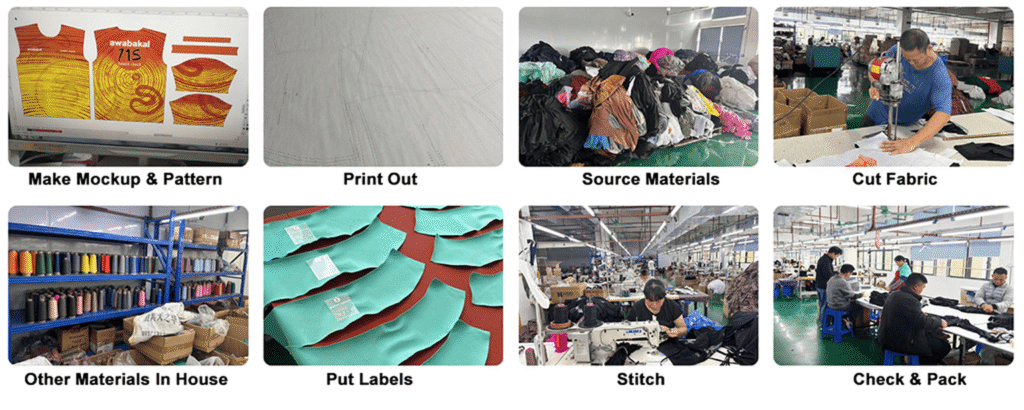
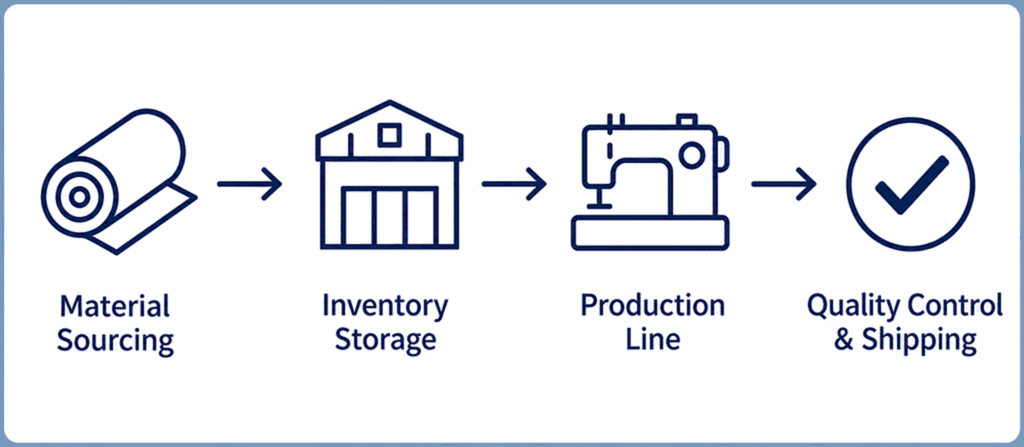
China has become the world’s largest manufacturing base for equestrian clothing, not simply because production costs are competitive, but because it has built one of the most complete apparel supply chains anywhere in the world. From performance fabric development and precision pattern making to silicone grip application, garment testing, packaging, and international logistics, nearly every stage of production can be coordinated within a highly integrated manufacturing ecosystem.
International trade statistics published by the World Trade Organization (WTO) also demonstrate China’s long-standing position as one of the world’s leading apparel exporting countries.
For international buyers, this integration offers advantages that extend far beyond pricing. It shortens development cycles, improves production consistency, simplifies communication across multiple suppliers, and allows brands to scale collections without rebuilding their supply chain each season. These structural advantages explain why many established riding brands continue to source from China despite rising manufacturing costs.
A Complete Manufacturing Ecosystem Supports Faster Product Development
Unlike industries where production depends on suppliers spread across different countries, China’s apparel industry operates within highly concentrated manufacturing clusters. Cities such as Dongguan, Guangzhou, Shenzhen, Ningbo, Xiamen, and Hangzhou have developed specialized networks of fabric mills, printing facilities, embroidery workshops, trim suppliers, testing laboratories, packaging manufacturers, and logistics providers.
For equestrian clothing, this concentration is particularly valuable because riding garments often combine multiple technical components within a single product. A pair of riding breeches, for example, may require high-stretch woven fabrics, silicone grip technology, reinforced stitching, moisture-management materials, elastic waist construction, branded trims, and precise pattern engineering. Having these resources available within the same manufacturing region reduces coordination time and helps maintain consistent quality throughout production.
This ecosystem also enables suppliers to respond more efficiently when products require revisions during sampling or when brands introduce seasonal updates to existing collections.
China Offers One of the Broadest Technical Fabric Supply Networks
Modern riding apparel is no longer manufactured using ordinary stretch fabrics. Riders expect garments that combine comfort, durability, freedom of movement, and long-term performance under demanding riding conditions. Meeting these expectations depends heavily on access to specialized textile suppliers.
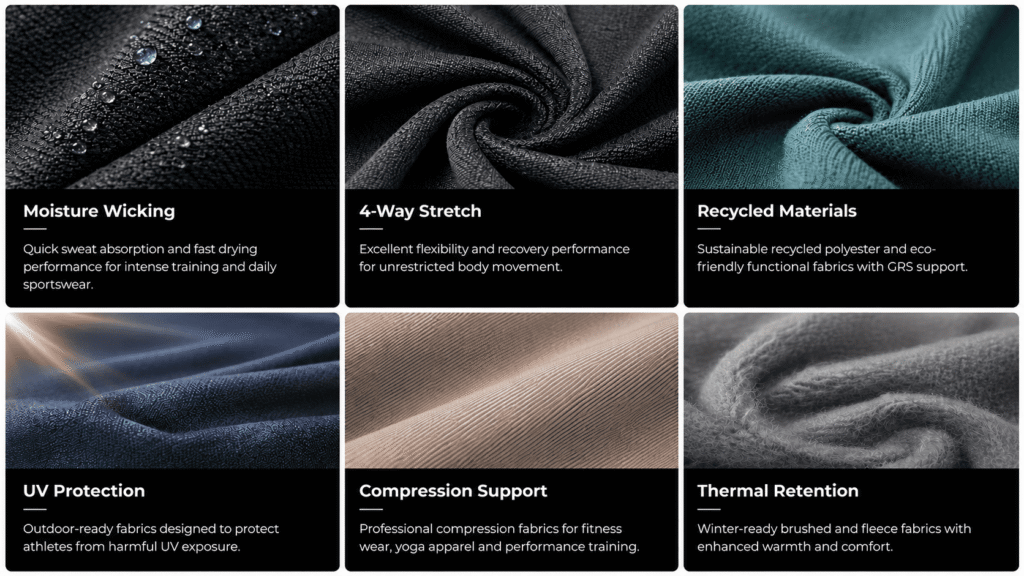
Chinese manufacturers can source a wide variety of functional fabrics suitable for equestrian products, including:
- Four-way stretch performance fabrics
- High-compression knitted materials
- Abrasion-resistant woven fabrics
- Moisture-wicking textiles
- UV-protection fabrics
- Anti-pilling materials
- Brushed winter fabrics
- Recycled performance fabrics
- Water-repellent softshell fabrics
- Breathable mesh constructions
Buyers looking for the latest functional textile innovations can also follow developments presented by ISPO, one of the world’s leading sports textile and outdoor industry platforms.
Because many textile mills operate within the same regional supply chain, manufacturers can compare different fabric options quickly, evaluate performance characteristics, and recommend alternatives when availability or pricing changes. This flexibility helps buyers balance product performance, target pricing, and production schedules without redesigning entire collections.
Specialized Manufacturing Experience Improves Product Consistency
Equestrian apparel differs significantly from ordinary activewear. Garments must remain comfortable during extended riding sessions while maintaining shape, flexibility, and durability under repeated movement and friction.
Factories with experience producing riding apparel generally develop stronger understanding of:
- Rider movement patterns
- Saddle contact zones
- Silicone grip placement
- High-stress seam construction
- Stretch recovery requirements
- Competition apparel standards
- Size consistency across repeat production
As a brand’s product range continues to grow, this accumulated manufacturing experience becomes increasingly important. Maintaining consistent fit and garment construction across different seasons is often more valuable than introducing completely new designs every year.
Integrated Supply Chains Reduce Purchasing Complexity
Many international buyers underestimate the management costs associated with coordinating multiple suppliers. Even when individual factories offer competitive pricing, fragmented sourcing can increase communication challenges, extend development timelines, and create quality inconsistencies between products.
Working within China’s integrated manufacturing ecosystem often allows brands to reduce these hidden costs because supporting resources—including trims, packaging, printing, testing, and logistics—are located close to production facilities. This geographical concentration simplifies project coordination and helps suppliers resolve production issues more efficiently.
For brands managing several product categories, a well-connected manufacturing region can provide operational advantages that are difficult to achieve when sourcing across multiple countries.
China Continues to Invest in Manufacturing Technology
Over the past decade, Chinese apparel manufacturers have significantly increased investment in automation, digital pattern development, cutting technology, and production management systems. While apparel manufacturing still relies heavily on skilled craftsmanship, technology now plays a much larger role in improving consistency and reducing production errors.
Examples include:
| Manufacturing Area | Typical Technology Used |
|---|---|
| Pattern Development | CAD Pattern Systems |
| Fabric Cutting | Automatic CNC Cutting Machines |
| Production Planning | Digital Production Scheduling |
| Quality Control | Digital Inspection Records |
| Color Management | Pantone Color Matching Systems |
| Warehouse Management | Barcode Inventory Systems |
Although technology alone does not guarantee better garments, it supports more standardized production processes, especially for repeat orders requiring consistent specifications.
China Remains Competitive Beyond Manufacturing Costs
A common misconception is that buyers choose China only because of lower prices. In reality, purchasing decisions are increasingly influenced by total sourcing value rather than manufacturing cost alone.
Professional sourcing teams typically evaluate factors such as:
- Supply chain reliability
- Product consistency
- Development efficiency
- Communication quality
- Technical expertise
- Compliance support
- Delivery stability
- Long-term scalability
When these factors are considered together, China often provides stronger overall value than comparing labor costs alone.
This explains why many international equestrian brands continue expanding their supplier relationships in China even as manufacturing wages increase. Stable production systems, experienced technical teams, and mature industrial infrastructure frequently offset differences in unit pricing through greater operational efficiency and reduced sourcing risk.
Key Takeaways
China’s position as a global leader in equestrian clothing manufacturing is built on decades of supply chain development rather than cost alone. Its advantages come from an integrated industrial ecosystem, deep technical expertise, broad access to performance fabrics, experienced manufacturing clusters, and continuous investment in production technology.
For international buyers, the most successful sourcing strategy is rarely about finding the cheapest factory. It is about selecting a supplier within this mature manufacturing ecosystem whose capabilities, experience, and long-term business approach align with the objectives of the brand.
Lorem ipsum dolor sit amet, consectetur adipiscing elit. Ut elit tellus, luctus nec ullamcorper mattis, pulvinar dapibus leo.
Factory vs Trading Company: Which One Fits Your Business?
There is no single answer to whether a factory or a trading company is the better sourcing partner. The right choice depends on product complexity, purchasing experience, order quantity, and internal supply chain resources. Many successful apparel brands choose to work directly with manufacturers, while others prefer experienced trading companies to simplify sourcing across different product categories.
Rather than asking “Which is better?”, professional buyers usually ask “Which option is better for our business model?” Understanding the differences between these two sourcing approaches helps buyers make decisions based on long-term business objectives rather than assumptions.
What Is the Difference Between a Factory and a Trading Company?
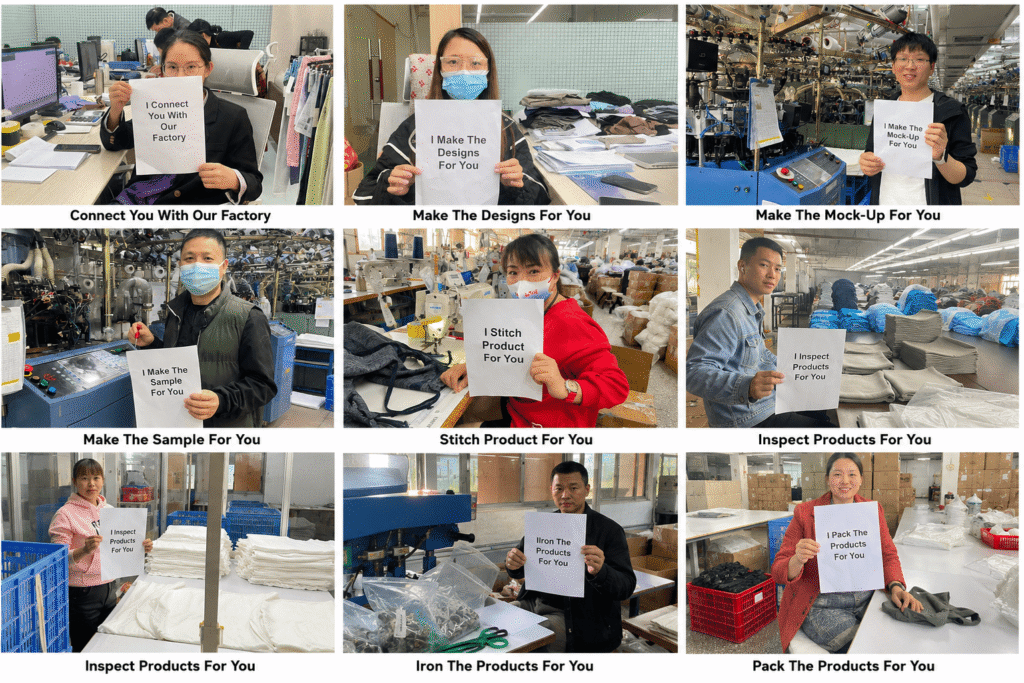
A factory is responsible for manufacturing garments. It operates production lines, employs technical teams, manages quality control, and coordinates daily production activities. Communication with a factory is usually more direct because buyers work closely with the organization responsible for developing and producing the garments.
A trading company, by contrast, normally does not manufacture products itself. Instead, it works with one or more factories and manages supplier coordination on behalf of customers. Depending on the project, a trading company may source fabrics, arrange production, organize quality inspections, and coordinate logistics across multiple manufacturers.
Both business models exist throughout the global apparel industry, and both can create value when matched with the appropriate sourcing strategy.
Factory vs Trading Company: A Practical Comparison
| Evaluation Factor | Factory | Trading Company |
|---|---|---|
| Direct communication with production | ✔ Yes | Usually indirect |
| Product development feedback | Usually faster | Depends on supplier network |
| Production transparency | Higher | Varies by company |
| Multi-category sourcing | Limited to factory capabilities | Often stronger |
| Cost transparency | Usually clearer | May include service margin |
| Supply chain coordination | Buyer manages more tasks | Trading company manages coordination |
| Suitable for long-term product development | Excellent | Depends on sourcing model |
| Suitable for one-stop purchasing | Moderate | Excellent |
Neither model is inherently better. Each offers advantages under different purchasing conditions.
When Working Directly With a Factory Makes Sense
Many established brands prefer working directly with manufacturers because communication flows more efficiently between product managers, pattern makers, technicians, and production teams.
Direct factory cooperation is often suitable when buyers:
- Develop highly technical riding apparel
- Require frequent product improvements
- Place repeat production orders
- Need consistent sizing across multiple collections
- Have internal sourcing experience
- Build long-term manufacturing partnerships
Because technical discussions occur directly with the production team, design revisions and quality improvements can often be resolved more efficiently during sampling and production.
For brands investing in long-term product development, direct cooperation also helps preserve technical knowledge and product history across future collections.
When a Trading Company May Be the Better Choice
Trading companies can provide significant value under certain circumstances, particularly when buyers need broader sourcing support rather than deep product specialization.
A trading company may be a practical option when:
- Purchasing many unrelated product categories
- Managing suppliers in several countries
- Lacking internal sourcing experience
- Requiring one point of contact for multiple factories
- Coordinating complex logistics across different manufacturers
Some trading companies also provide supplier audits, factory selection, production monitoring, and quality inspections that smaller brands may find difficult to manage independently.
For businesses purchasing apparel alongside accessories, packaging, or promotional products, centralized supplier management can reduce administrative workload.
How Can Buyers Identify a Genuine Factory?
Many companies describe themselves as manufacturers, even though production is subcontracted to other facilities. This does not automatically indicate poor quality, but buyers should understand who is actually responsible for manufacturing.
Questions that help clarify this include:
- Where are garments physically produced?
- Does the company operate its own production lines?
- Can production facilities be visited or audited?
- Who manages quality inspections?
- Who develops patterns and samples?
- Who is responsible for technical problem solving during production?
The objective is not necessarily to avoid trading companies, but to understand the production structure before placing orders.
Clear answers to these questions generally indicate a more transparent sourcing relationship.
Which Option Fits Different Buyer Types?
Different buyers often benefit from different sourcing models.
| Buyer Type | Recommended Option | Reason |
|---|---|---|
| Startup brands | Factory or experienced trading company | Depends on sourcing knowledge and product complexity |
| Growing private label brands | Factory | Better product consistency and direct technical communication |
| Large wholesalers | Trading company or factory | Depends on product range and sourcing scale |
| Premium equestrian brands | Factory | Stronger collaboration on technical products |
| Multi-category retailers | Trading company | Easier coordination across several product categories |
| Experienced sourcing teams | Factory | Greater production transparency and long-term efficiency |
The choice should reflect operational priorities rather than assumptions about either business model.
Think Beyond the First Order
Many buyers select suppliers based only on the first quotation. However, sourcing decisions should also consider what happens after the initial production run.
Questions worth asking include:
- Can future collections be developed efficiently?
- Will sizing remain consistent across repeat orders?
- Can production capacity grow alongside the business?
- How easily can technical improvements be implemented?
- Will communication remain stable during long-term cooperation?
These questions often become more important than small differences in unit pricing once a brand begins scaling.
A sourcing strategy that supports repeat production, continuous improvement, and efficient communication usually creates greater long-term value than one focused exclusively on minimizing initial purchasing costs.
Key Takeaways
Choosing between a factory and a trading company is not about finding a universally superior option. It is about selecting the sourcing model that best aligns with your products, internal resources, and long-term business objectives.
Brands developing technical equestrian apparel often benefit from direct collaboration with manufacturers because product expertise, development discussions, and production decisions remain closely connected. Businesses managing multiple product categories or requiring broader sourcing coordination may find greater efficiency through experienced trading companies.
The most successful international buyers understand both models, evaluate them objectively, and choose the one that supports sustainable growth rather than simply the lowest short-term cost.
How Should International Buyers Evaluate an Equestrian Clothing Supplier?
Choosing an equestrian clothing supplier is an important business decision, not just a purchasing task. Although price quotations and lead times are important, they are only part of the supplier evaluation process. Successful riding brands usually evaluate suppliers through a systematic process that includes technical expertise, manufacturing consistency, communication efficiency, commercial flexibility, and long-term supply chain stability.
Experienced sourcing teams rarely choose a supplier after reviewing a website or comparing prices alone. Instead, they assess whether a manufacturer can consistently support product quality, future product expansion, and changing business requirements over multiple production cycles. A structured evaluation process reduces sourcing risks and helps brands build stronger supplier relationships over time.
Look Beyond Price and Compare Total Sourcing Value
One of the most common sourcing mistakes is comparing suppliers only by unit price.
Lower prices can sometimes reflect lower-grade materials, simplified construction methods, inconsistent quality control, or limited technical support. While these savings may appear attractive during quotation, they often increase costs later through product returns, delayed launches, repeated sampling, or inconsistent customer experiences.
Professional buyers usually evaluate the total sourcing value, including:
- Product quality consistency
- Technical expertise
- Development efficiency
- Communication responsiveness
- Production reliability
- Compliance capability
- Long-term partnership potential
A supplier with a slightly higher quotation may ultimately reduce overall sourcing costs by delivering more consistent products and requiring fewer corrective actions.
Evaluate Product Specialization Instead of Product Quantity
Many apparel factories produce hundreds of different garment categories. While broad product coverage may appear impressive, it does not necessarily indicate expertise in technical riding apparel.
Equestrian clothing requires knowledge that differs from ordinary sportswear, including:
- Saddle contact reinforcement
- Silicone grip placement
- Rider ergonomics
- Competition garment standards
- Stretch recovery performance
- High-abrasion construction
- Riding-specific fit development
Rather than asking:
“How many products do you make?”
buyers often gain more useful information by asking:
“How many equestrian brands have you worked with?”
or
“What percentage of your production involves riding apparel?”
These questions provide better insight into a supplier’s practical experience within the equestrian market.
Assess Product Development Capability
Not every buyer approaches a supplier with complete technical documentation.
Some brands provide detailed Tech Packs, while others begin with sketches, reference garments, mood boards, or product concepts. A capable supplier should be able to understand different starting points and convert them into production-ready garments through a structured development process.
When evaluating suppliers, buyers may consider questions such as:
- Can the supplier interpret incomplete product information?
- Do they recommend practical improvements?
- Can they explain why certain construction methods are preferred?
- Are fabric alternatives suggested when necessary?
- Do they identify potential production risks before sampling?
These conversations often reveal far more about a supplier’s experience than a quotation alone.
Review Quality Management Systems
Consistent product quality depends on repeatable manufacturing systems rather than final inspection alone.
When discussing quality management, buyers should understand how suppliers monitor production throughout the manufacturing process.
Important questions include:
- How are incoming materials inspected?
- How is production monitored?
- How are measurement tolerances controlled?
- What happens if defects are identified?
- How are repeat orders standardized?
Factories with documented inspection procedures generally provide greater production consistency than suppliers relying primarily on manual experience.
Evaluate Communication as Carefully as Manufacturing
Communication quality directly influences product quality.
Many sourcing problems are not caused by production errors, but by misunderstandings during product development. Slow communication, incomplete technical discussions, or unclear confirmations can eventually result in costly manufacturing problems.
Professional buyers often evaluate communication by observing whether suppliers:
- Ask detailed technical questions
- Confirm important information in writing
- Explain production limitations honestly
- Offer practical alternatives
- Respond consistently throughout development
Good communication usually reflects organized internal management rather than simply strong English skills.
Consider Long-Term Supply Chain Compatibility
Choosing a supplier should not focus only on the first order.
Many successful riding brands gradually expand from a small capsule collection into broader seasonal product lines. Changing suppliers every year often creates unnecessary challenges, including inconsistent sizing, repeated sampling, and fragmented product specifications.
Instead, buyers should consider whether a supplier can continue supporting the business as it grows.
Questions worth considering include:
- Can production capacity increase when demand grows?
- Will the supplier maintain consistent quality across repeat orders?
- Are technical documents properly archived?
- Can additional product categories be introduced in the future?
- Does the supplier demonstrate long-term stability?
Evaluating these factors early often prevents supply chain disruption later.
Supplier Evaluation Matrix
The following framework summarizes the evaluation criteria commonly used by experienced sourcing professionals when comparing apparel manufacturers.
| Evaluation Criteria | Why It Matters | Suggested Weight |
|---|---|---|
| Product Specialization | Determines technical capability for riding apparel | 25% |
| Quality Management | Influences product consistency | 20% |
| Product Development Capability | Supports new product creation | 15% |
| Communication Efficiency | Reduces sourcing errors | 15% |
| Production Reliability | Supports repeat orders | 10% |
| Compliance & Certifications | Meets market requirements | 10% |
| Commercial Flexibility | Supports different business stages | 5% |
Rather than relying on a single factor, buyers can score each supplier across these categories to create a more objective comparison. Once a supplier has been shortlisted, reviewing a professional Equestrian Clothing Suppliers for Private Label and Custom Riding Brands guide can help buyers better understand manufacturing capabilities before requesting samples. This approach is especially useful when several manufacturers appear equally competitive on price alone.
Buyer Evaluation Checklist
Before shortlisting a supplier, consider whether you can confidently answer the following questions:
✔ Does the supplier regularly manufacture equestrian clothing?
✔ Can they clearly explain their production process?
✔ Do they understand the technical requirements of riding apparel?
✔ Are communication responses detailed and consistent?
✔ Can they provide relevant compliance documentation?
✔ Do they demonstrate structured quality management?
✔ Is their production capacity aligned with future growth?
✔ Would you feel confident placing repeat orders with this supplier?
If several of these questions cannot be answered confidently, additional supplier evaluation is usually worthwhile before moving into sampling or production.
Key Takeaways
The strongest equestrian clothing supplier is not always the lowest-priced or the largest factory. In many cases, the best long-term partner is the manufacturer that consistently combines technical expertise, transparent communication, reliable quality management, and the ability to grow alongside your business.
Using a structured evaluation framework allows buyers to compare suppliers more objectively, reduce sourcing risks, and build partnerships that support product quality and business growth over many seasons rather than a single purchase order.
China vs India vs Pakistan vs Vietnam: Which Country Is Better for Equestrian Clothing Sourcing?
There is no single country that is the best choice for every equestrian clothing project. The ideal sourcing destination depends on your target market, product positioning, order volume, quality expectations, and long-term business strategy. While China remains the largest global manufacturing hub for technical riding apparel, countries such as Vietnam, Pakistan, and India have also developed competitive advantages in specific areas of apparel production.
Instead of asking “Which country is the cheapest?”, experienced buyers usually ask “Which country delivers the best overall sourcing value for our products?” Factors such as product quality, technical capability, lead time, supply chain maturity, communication efficiency, and production consistency often have a greater impact on business performance than labor costs alone.
Country Comparison at a Glance
| Country | Main Strength | Main Limitation | Best For |
|---|---|---|---|
| China | Complete supply chain, technical apparel expertise, flexible manufacturing | Manufacturing costs are generally higher than some emerging markets | Premium brands, private label collections, technical riding apparel |
| Vietnam | Strong garment workmanship, stable export manufacturing | More limited upstream textile supply chain | Established brands with standardized products |
| Pakistan | Competitive pricing, cotton-based garments | Less specialization in technical equestrian apparel | Basic riding wear and price-sensitive markets |
| India | Cotton textiles, embroidery, handcrafted details | Longer development cycles for technical performance garments | Lifestyle brands and cotton-rich collections |
Each country offers different advantages, and buyers should evaluate them according to the specific requirements of their collections rather than relying on generalized assumptions.
Why China Continues to Lead Technical Equestrian Apparel Manufacturing
China’s strongest advantage is not simply production capacity—it is the depth of its manufacturing ecosystem.
Technical equestrian clothing often requires multiple specialized processes within a single garment, including:
- High-stretch performance fabrics
- Silicone grip application
- Precision pattern engineering
- Reinforced seam construction
- Moisture-management materials
- Durable trims and accessories
- Consistent grading across size ranges
Many of these supporting industries operate within the same manufacturing regions, allowing suppliers to coordinate sourcing, sampling, production, and quality control more efficiently than fragmented supply chains.
For brands producing performance-oriented riding apparel, this integrated ecosystem often shortens development cycles and improves consistency across repeat orders.
Vietnam: Strong Manufacturing with a Narrower Supply Chain
Vietnam has become one of the world’s leading garment exporters, particularly for international sportswear and outdoor brands.
Its strengths include:
- Reliable garment construction
- Consistent sewing quality
- Experienced export workforce
- Strong compliance standards
However, Vietnam imports a significant proportion of its fabrics and trims, especially for highly technical apparel. As a result, buyers developing specialized riding garments may find fewer domestic sourcing options compared with China.
Vietnam is often an excellent choice for established products with stable specifications rather than projects requiring frequent sampling or extensive product revisions.
Pakistan: Competitive for Cost, Less Focused on Technical Riding Apparel
Pakistan has long been recognized for its textile industry, particularly cotton production and knitted apparel.
For equestrian clothing, Pakistan may offer advantages such as:
- Competitive manufacturing costs
- Strong cotton fabric production
- Suitable for basic garments
- Attractive pricing for larger orders
However, buyers developing premium riding apparel should carefully evaluate technical capabilities such as silicone grip application, advanced stretch fabric handling, and riding-specific garment construction.
Cost savings should always be balanced against quality consistency, technical expertise, and long-term supply reliability.
India: Strong Textile Heritage and Lifestyle Manufacturing
India is one of the world’s largest textile producers and offers significant strengths in natural fibers, embroidery, printing, and decorative garment production.
For equestrian apparel, India may be suitable when collections emphasize:
- Cotton-rich fabrics
- Lifestyle riding apparel
- Heritage-inspired designs
- Decorative trims and handcrafted elements
Brands focused on highly technical riding tights, competition apparel, or advanced performance fabrics should confirm whether prospective suppliers have dedicated experience with functional equestrian garments rather than general apparel manufacturing.
Compare More Than Manufacturing Costs
One of the biggest sourcing mistakes is selecting a country based solely on labor costs.
Professional sourcing teams usually evaluate the total cost of ownership, which includes:
- Product quality
- Development efficiency
- Communication
- Compliance
- Sampling costs
- Logistics
- Repeat order consistency
- Inventory risk
- Supplier responsiveness
For example, a lower manufacturing price may be offset by longer development cycles, additional sampling, inconsistent sizing, or delayed deliveries. In contrast, a supplier with slightly higher production costs may reduce overall business expenses by delivering more predictable results and requiring fewer revisions.
Looking beyond the initial quotation often leads to stronger commercial outcomes over the lifetime of a product collection.
Which Country Fits Different Buyer Types?
The following framework can help buyers align sourcing destinations with their business objectives.
| Buyer Profile | Recommended Country | Primary Reason |
|---|---|---|
| Startup equestrian brand | China | Flexible development support and broad manufacturing resources |
| Premium riding brand | China | Technical garment expertise and mature supply chain |
| High-volume wholesale importer | Pakistan or China | Cost efficiency or scalable production, depending on product complexity |
| Established sportswear brand | Vietnam | Consistent production for standardized collections |
| Lifestyle equestrian brand | India | Natural textiles and decorative manufacturing strengths |
| Multi-category global retailer | China | Broad product coverage and integrated supply chain |
This comparison is intended as a strategic reference rather than a definitive ranking. The most suitable sourcing country depends on each buyer’s products, customers, and long-term business priorities.
Key Takeaways
Every sourcing destination has unique strengths, and no country is the right solution for every apparel business. China remains the leading choice for many international equestrian brands because of its mature manufacturing ecosystem, technical apparel expertise, and highly integrated supply chain. Vietnam offers reliable export manufacturing, Pakistan provides cost advantages for selected products, and India brings strengths in textiles and lifestyle apparel.
Rather than comparing countries by labor cost alone, successful buyers evaluate how each sourcing destination supports product quality, development efficiency, supply chain stability, and long-term brand growth. This broader perspective usually leads to better purchasing decisions and more sustainable supplier relationships.
How to Prepare Before Contacting an Equestrian Clothing Supplier
Lorem ipsum dolor sit amet, consectetur adipiscing elit. Ut elit tellus, luctus nec ullamcorper mattis, pulvinar dapibus leo.
Successful sourcing begins long before the first quotation is requested. Buyers who prepare clear product information, realistic expectations, and structured documentation usually receive more accurate quotations, faster technical feedback, and better sample results. In contrast, incomplete inquiries often lead to repeated communication, pricing revisions, and unnecessary delays during product development.
Preparing for supplier discussions does not require a complete technical package. Even simple information about your target customer, product positioning, expected order quantity, and quality expectations can significantly improve communication and help suppliers recommend practical manufacturing solutions.
Define Your Product Before Requesting Quotations
One of the biggest reasons suppliers provide different quotations is that buyers often describe different products without realizing it.
For example, “riding leggings” can refer to entry-level training tights, premium competition garments, winter fleece-lined products, or compression riding tights with advanced silicone grip systems. Each option requires different fabrics, construction methods, and production costs.
Before requesting quotations, define the basic product specifications as clearly as possible.
Helpful information includes:
- Product category
- Intended rider (women, men, children)
- Target price range
- Target market
- Performance expectations
- Seasonal use
- Estimated annual sales volume
The clearer the product definition, the more meaningful the supplier’s quotation and recommendations will be.
Prepare Technical References
Many buyers believe that every project requires a professionally prepared Tech Pack. While a complete specification document is helpful, it is not always necessary during the early stages of supplier selection.
Most experienced manufacturers can evaluate products using different types of reference materials. Buyers preparing their first collection may also benefit from learning how professional custom equestrian clothing suppliers typically organize product development before sampling begins, including:
- Tech Packs
- Reference garments
- Product photographs
- Hand sketches
- Design mock-ups
- Fabric samples
- Size charts
- Measurement specifications
Providing several reference sources often produces better communication than relying on only one document.
If technical details are still under development, buyers should explain which specifications are confirmed and which areas remain open for discussion.
Estimate Your Expected Order Volume
Order quantity influences much more than pricing.
It also affects:
- Fabric purchasing methods
- Production planning
- Manufacturing efficiency
- Material utilization
- Packaging requirements
- Delivery schedules
Rather than requesting quotations for unrealistic quantities, buyers should provide their expected order range whenever possible.
Examples include:
- Initial launch: 100–300 pieces
- Repeat orders: 500–1,000 pieces
- Seasonal production: 2,000+ pieces
Even approximate estimates help suppliers recommend more suitable manufacturing approaches.
Establish a Realistic Budget
Some buyers hesitate to discuss budgets because they assume suppliers will simply quote the highest possible price. In practice, a reasonable budget often helps suppliers recommend materials and construction methods that better match commercial objectives.
For example:
- Premium riding apparel may require advanced performance fabrics and higher-cost trims.
- Mid-market collections may prioritize balanced performance and cost efficiency.
- Entry-level products may focus on simplified construction while maintaining essential functionality.
Discussing target price ranges early allows both parties to evaluate whether the proposed product concept is commercially achievable.
Prepare Questions Before the First Meeting
The first conversation with a supplier is an opportunity to evaluate expertise rather than simply collect prices.
Useful questions may include:
- Which equestrian products does your company manufacture regularly?
- What export markets do you currently serve?
- How is quality monitored during production?
- What information is required before sampling?
- How are fabric alternatives recommended?
- How are production timelines planned?
- What happens if product adjustments are required after sampling?
The quality of a supplier’s answers often reveals more about its experience than the quotation itself.
Organize Internal Decision-Making
Many sourcing delays occur because buyers and suppliers communicate efficiently while internal approval processes remain unclear.
Before requesting quotations, companies should determine:
- Who approves product specifications?
- Who confirms colors?
- Who approves samples?
- Who makes purchasing decisions?
- Who communicates technical feedback?
Clear internal responsibilities reduce unnecessary revisions and help suppliers maintain realistic production schedules.
Documents That Can Speed Up Supplier Communication
The following checklist summarizes the information that buyers commonly prepare before approaching potential suppliers.
| Document or Information | Required? | Purpose |
|---|---|---|
| Product photos | ✔ Recommended | Visual reference |
| Tech Pack | Optional | Technical specifications |
| Size chart | ✔ Recommended | Fit requirements |
| Fabric reference | Optional | Material expectations |
| Logo artwork | Optional | Branding preparation |
| Quantity estimate | ✔ Recommended | Production planning |
| Target delivery date | ✔ Recommended | Capacity evaluation |
| Target market | ✔ Recommended | Compliance and product positioning |
Providing even part of this information usually improves quotation accuracy and reduces unnecessary clarification during early discussions.
Common Preparation Mistakes
Before contacting suppliers, avoid these common sourcing mistakes:
- Requesting quotations without defining the product.
- Comparing prices for products with different specifications.
- Assuming every supplier understands equestrian apparel requirements.
- Sending incomplete reference materials.
- Expecting final pricing before fabrics and construction are confirmed.
- Contacting only one supplier without making comparisons.
Well-prepared buyers generally receive faster responses, more accurate quotations, and higher-quality sample recommendations.
Key Takeaways
Preparing before contacting an equestrian clothing supplier is one of the simplest ways to improve sourcing efficiency. Clear product information, realistic order expectations, organized documentation, and thoughtful questions help suppliers provide more accurate quotations and more practical technical recommendations.
Rather than viewing the first conversation as a price negotiation, experienced buyers use it to evaluate communication quality, technical understanding, and long-term compatibility. This approach often leads to smoother product development, fewer revisions, and stronger supplier relationships throughout future production cycles.
What Are the Most Common Mistakes Buyers Make When Choosing Suppliers?
Even experienced sourcing teams occasionally make supplier selection mistakes. In most cases, these problems are not caused by poor manufacturing but by incomplete evaluation during the early stages of supplier selection. Decisions based solely on price, assumptions, or limited information often lead to higher long-term costs than expected.
Fortunately, many of these risks are predictable. By understanding the most common sourcing mistakes before placing an order, buyers can improve supplier selection, reduce development delays, and build more stable manufacturing partnerships.
Mistake 1: Choosing the Lowest Price Instead of the Best Overall Value
The lowest quotation is not always the lowest cost.
Many buyers compare suppliers using only unit pricing, assuming that lower manufacturing costs automatically improve profit margins. In reality, production costs represent only one part of the total sourcing equation.
Lower quotations may result from:
- Lower-grade materials
- Simplified garment construction
- Reduced inspection procedures
- Less experienced technical teams
- Limited product development support
These differences may not be obvious during quotation but can become visible after production begins or when products reach customers.
Instead of comparing only manufacturing prices, buyers should also evaluate:
- Product consistency
- Communication quality
- Development capability
- Delivery reliability
- Long-term cooperation potential
A supplier that charges slightly more but consistently delivers stable quality often creates greater commercial value over several production cycles.
Mistake 2: Assuming Every Sportswear Factory Understands Equestrian Apparel
Equestrian clothing shares certain characteristics with general activewear, but the products are not interchangeable.
Riding garments must accommodate repeated movement in the saddle, maintain consistent stretch recovery, withstand friction in high-contact areas, and deliver reliable fit across different riding positions.
Factories experienced in general leggings or fitness apparel may not automatically understand:
- Silicone grip positioning
- Riding-specific pattern construction
- Saddle pressure zones
- Competition apparel requirements
- Reinforced stitching for riding movement
Rather than assuming all sportswear manufacturers have the same capabilities, buyers should evaluate previous experience with equestrian products and request relevant production examples whenever possible.
Mistake 3: Skipping Proper Sample Evaluation
Some buyers approve samples after checking only appearance.
However, a production sample should be evaluated from several perspectives before moving into bulk manufacturing.
A practical evaluation includes:
- Overall fit
- Fabric recovery
- Silicone adhesion
- Stitch quality
- Measurement accuracy
- Comfort during movement
- Color consistency
- Washing performance
- Packaging presentation
Whenever possible, garments should also be tested under actual riding conditions rather than being evaluated only on mannequins or fitting models.
A careful sample review often prevents much larger quality issues during bulk production.
Mistake 4: Ignoring Communication Quality
Communication is often underestimated during supplier evaluation.
Many sourcing problems begin not in the sewing room, but in email conversations, specification discussions, or technical approvals.
Reliable suppliers generally demonstrate several communication characteristics:
- They ask clarifying questions.
- They summarize technical discussions clearly.
- They identify potential production challenges early.
- They explain alternative solutions rather than simply agreeing with every request.
- They confirm important details before production begins.
Clear communication reduces misunderstandings and improves decision-making throughout the project.
Mistake 5: Focusing Only on the First Order
Many buyers evaluate suppliers only for the immediate production run.
However, supplier relationships usually become more valuable over time.
As cooperation develops, manufacturers gain a deeper understanding of:
- Approved measurements
- Preferred fabrics
- Branding standards
- Packaging requirements
- Quality expectations
- Customer preferences
This accumulated knowledge helps reduce repeated development work, improve consistency, and shorten future production cycles.
Changing suppliers frequently may interrupt this learning process and increase both development costs and operational complexity.
Mistake 6: Failing to Verify Supplier Information
Professional websites and attractive product photographs are useful, but they should not replace supplier verification.
Before making purchasing decisions, buyers should verify important business information whenever possible.
This may include:
- Business registration
- Export experience
- Factory certifications
- Previous production experience
- Product consistency
- Customer references
- Third-party audit reports
Verification helps buyers distinguish between marketing claims and demonstrated manufacturing capability.
Mistake 7: Not Planning for Business Growth
The right supplier should not only meet today’s requirements but also support tomorrow’s expansion.
Questions worth considering include:
- Can additional product categories be introduced?
- Is production capacity sufficient for future growth?
- Can quality remain consistent as order volumes increase?
- Will communication remain efficient as projects become more complex?
Planning for future growth often leads to more stable supply chains and fewer disruptions as the business develops.
Buyer Risk Assessment Checklist
Before confirming a supplier, review the following questions:
| Evaluation Question | Yes | No |
|---|---|---|
| Does the supplier regularly manufacture equestrian clothing? | ☐ | ☐ |
| Have relevant product samples been evaluated? | ☐ | ☐ |
| Is communication clear and technically detailed? | ☐ | ☐ |
| Have certifications been verified where necessary? | ☐ | ☐ |
| Does the supplier understand your target market? | ☐ | ☐ |
| Are delivery expectations realistic? | ☐ | ☐ |
| Can the supplier support future business growth? | ☐ | ☐ |
| Has more than one supplier been compared? | ☐ | ☐ |
This checklist provides a practical framework for reducing sourcing risks before moving into sample approval or production planning.
Key Takeaways
Most sourcing challenges do not arise from a single mistake. They result from several small decisions made without sufficient information. Comparing suppliers only by price, overlooking technical expertise, approving samples too quickly, or failing to verify manufacturing capabilities can all increase costs later in the project.
Successful buyers follow a structured evaluation process, compare multiple suppliers, verify key information, and consider long-term business compatibility rather than short-term purchasing costs. This approach not only reduces sourcing risks but also helps establish stronger supplier relationships that support consistent product quality and sustainable business growth.
Frequently Asked Questions About Equestrian Clothing Suppliers in China
1. How do I choose the best equestrian clothing supplier in China?
The best equestrian clothing supplier is the one that matches your product requirements, business model, and long-term sourcing strategy rather than simply offering the lowest quotation. Buyers should compare suppliers based on equestrian apparel experience, product specialization, quality management, communication efficiency, export experience, and production consistency.
Instead of selecting a supplier after receiving the first quotation, compare several manufacturers using the same evaluation criteria. Request product samples, verify certifications when necessary, review previous export experience, and assess communication quality during technical discussions. A supplier that consistently demonstrates professionalism and transparency usually becomes a stronger long-term manufacturing partner than one competing primarily on price.
2. What should buyers compare besides price when evaluating equestrian clothing suppliers?
Price should never be the only factor when selecting an equestrian clothing supplier because the total sourcing cost includes product quality, communication efficiency, development support, delivery reliability, and long-term production consistency. These factors often have a greater impact on profitability than small differences in manufacturing cost.
Professional sourcing teams normally evaluate product specialization, quality systems, sampling capability, production stability, certifications, communication, and supply chain reliability before making purchasing decisions. Looking beyond unit price helps reduce product returns, development delays, and repeated production problems.
3. How many equestrian clothing suppliers should I compare before placing an order?
Comparing at least three qualified suppliers is generally considered good sourcing practice because it allows buyers to evaluate pricing, technical expertise, communication quality, manufacturing capability, and commercial compatibility before making a final decision.
Request quotations using identical product specifications so comparisons remain meaningful. Differences in supplier recommendations often reveal valuable insights about manufacturing experience, product construction, and commercial flexibility. A structured comparison also helps buyers identify unrealistic promises or unusually low quotations that may involve hidden compromises.
4. Is it better to work directly with a factory or through a trading company?
Neither sourcing model is universally better. Factories often provide more direct technical communication and production transparency, while trading companies may simplify sourcing for buyers purchasing multiple product categories or managing several suppliers simultaneously.
The most suitable option depends on your sourcing experience, product complexity, internal purchasing resources, and long-term business objectives. Understanding how production is organized is usually more important than focusing only on whether a company describes itself as a factory or a trading company.
5. What certifications should an equestrian clothing supplier have?
The required certifications depend on your target market and product category, but buyers should always confirm that a supplier follows recognized quality management and compliance systems relevant to their business. Certifications support confidence, but they should not replace practical supplier evaluation.
In addition to reviewing certification documents, buyers should assess product samples, communication quality, production organization, and previous export experience. Strong manufacturing performance comes from consistent management systems rather than certificates alone.
Buyers can also review internationally recognized certification requirements through OEKO-TEX® when evaluating textile safety and product compliance.
6. What is the biggest mistake buyers make when sourcing equestrian clothing?
The most common sourcing mistake is selecting a supplier based only on the lowest quotation without evaluating technical capability, product specialization, quality systems, and long-term supply chain compatibility. Lower prices do not always result in lower overall purchasing costs.
Other frequent mistakes include approving samples too quickly, comparing suppliers using different product specifications, failing to verify supplier information, and overlooking communication quality during development. A structured supplier evaluation process significantly reduces these risks.
7. Why do many international riding brands continue sourcing from China?
Many international riding brands continue sourcing from China because of its highly integrated manufacturing ecosystem, experienced technical workforce, mature textile supply chain, and ability to support consistent production across multiple product categories.
China’s competitive advantage extends beyond manufacturing cost. Buyers also benefit from broad access to functional fabrics, specialized garment construction expertise, efficient logistics, and well-established export experience. These advantages often improve overall sourcing efficiency throughout the product lifecycle.
8. How can buyers reduce sourcing risks before placing a bulk order?
The most effective way to reduce sourcing risks is to evaluate suppliers systematically before production begins. Comparing multiple manufacturers, reviewing product samples carefully, verifying supplier information, and confirming technical specifications all contribute to more reliable purchasing decisions.
Buyers should also establish realistic production timelines, maintain clear written communication, and document approved product specifications before bulk manufacturing starts. Investing more time during supplier evaluation usually prevents far more expensive problems during production and future repeat orders.