OEM/ODM Sportswear Manufacturer | 3-Day Sampling | Low MOQ | 50K Monthly Capacity | ISO9001 & BSCI Certified
Top 10 Plus Size Organic Cotton Clothing Manufacturer Options: Buyer Comparison Guide
Compare 10 plus size organic cotton clothing manufacturers by extended sizing, organic cotton evidence, MOQ, sampling and order requirements. Learn what buyers should verify before shortlisting a supplier in China.
Top 10 Plus Size Organic Cotton Clothing Manufacturer Options: How Buyers Compare Sizing, Fabric Standards and Order Requirements
Finding a supplier that offers organic cotton is relatively easy. Finding one that produces extended sizes is also possible across many apparel sourcing markets. The harder question is whether the same supplier can manage both requirements consistently within one commercial program.
A Plus Size Organic Cotton Clothing Manufacturer may look suitable because its website lists 2XL–6XL sizing, organic fabrics, private label services and a low MOQ. Those claims are useful starting points, but they do not tell a buyer how the larger sizes were graded, whether the organic cotton documentation applies to the actual material being ordered, what the MOQ includes or whether an approved sample can be reproduced consistently in bulk.
That distinction matters because two suppliers quoting what appears to be the same T-shirt can actually be quoting very different products.
One may use available organic cotton jersey and an existing size chart. Another may quote custom-dyed fabric, a buyer-supplied measurement chart and a newly developed extended-size grade. Their unit prices, sample times and minimum quantities should not be compared until those differences are understood.
A suitable Plus Size Organic Cotton Clothing Manufacturer should be compared through evidence rather than headline claims. Buyers should examine extended-size grading, sample and size-set results, organic cotton documentation, fabric specifications, wash-test information, MOQ structure, quotation assumptions and bulk-production controls. The most appropriate supplier is the one whose technical capability and commercial requirements fit the actual product, size range, order quantity and stage of the brand—not automatically the largest or lowest-priced manufacturer.
This guide compares ten sourcing options and then shows how to reduce that list through technical verification, commercial normalization and supplier due diligence.
Which Top 10 Plus Size Organic Cotton Clothing Manufacturer Options Should Buyers Compare?
A useful manufacturer shortlist should include suppliers with evidence of extended-size development, organic cotton sourcing or both, but buyers should not assume that every company has equal capability in each area. Compare supplier type, size evidence, material documentation, MOQ, sampling conditions and intended customer profile before deciding which companies deserve an RFQ or sample order.
The following companies represent different manufacturing models. Some have stronger public evidence around plus-size grading; others place more emphasis on organic cotton or sustainable materials. Some are positioned for lower-volume private label development, while others may be more suitable for established programs.
Quick Manufacturer Comparison
| Manufacturer | Location | Plus Size Evidence | Organic Cotton Evidence | MOQ Structure | More Relevant For | Verify Before Ordering |
|---|---|---|---|---|---|---|
| Pair Fashion | Dongguan, China | Custom plus-size pattern development and grading | Organic cotton fabric sourcing | Depends on style and program | Custom inclusive collections | Exact fabric documentation, size range and project MOQ |
| JUNSHEEN | Dongguan, China | Extended-size development | Dedicated organic cotton programs | Published from 100 pcs on selected programs | Organic cotton casualwear | Required certification and extended-size limits |
| NewWay Apparel | Zhejiang, China | XL–6XL published capability | Sustainable fabric sourcing | Stock and custom-fabric MOQ differ | Structured extended-size programs | Organic cotton source and documentation |
| MENWILD | Dongguan, China | 2XL–6XL Big & Tall focus | Confirm by selected fabric | Published from 100 pcs on selected programs | Men’s Big & Tall | Organic cotton availability and certification |
| Mingxing Clothing | Dongguan, China | Plus-size fashion development | Organic cotton options | Project-dependent | Women’s dresses and fashion | Grade rules and order-specific material evidence |
| Setor Fashion | Guangzhou, China | Plus-size fit and grading focus | Sustainable fabric options | Confirm by project | Women’s private label | MOQ and certification scope |
| Ingor Sportswear | China | Custom sizing | Organic cotton products available | Product-dependent | Active/casual sportswear | Full extended-size grading evidence |
| Newasia Garment | China | Extended sizing on selected programs | Organic cotton options | Published from 100 pcs on selected programs | Growing and established brands | Category-specific plus-size experience |
| FROM ATTITUDE | China | Dedicated plus-size categories | Confirm by project | Published from 100 pcs | Multi-category plus-size fashion | Organic cotton source and documentation |
| Taian Lianchuang Textile | Shandong, China | Published larger-size products | Organic cotton products | Product-dependent | Organic cotton basics | Custom grading and private label depth |
The table is a starting point, not a substitute for supplier verification. A buyer searching for a Plus Size Organic Cotton Clothing Manufacturer should pay particular attention to the final column. The information that a manufacturer does not clearly publish can be just as important as the information displayed prominently on its website.
1. Pair Fashion — Custom Extended Sizing and Organic Cotton Sourcing
Location: Dongguan, Guangdong, China
Founded: 2016
Business Model: OEM, ODM and Private Label
Core Categories: Activewear, casual sportswear, plus-size apparel, maternity, modest sportswear and equestrian apparel
Plus Size Capability: Custom pattern development and full-size grading
Organic Cotton Capability: Organic cotton sports and apparel fabric sourcing
Sampling: Proto, Fit, Pre-production and Size Set samples are available within its development system
MOQ: Confirm according to style, fabric, color, size range, branding and packaging
Production Capacity: Approximately 50,000 pieces per month under stable production conditions
Company Certifications: ISO9001, BSCI, GRS, CE and ROHS
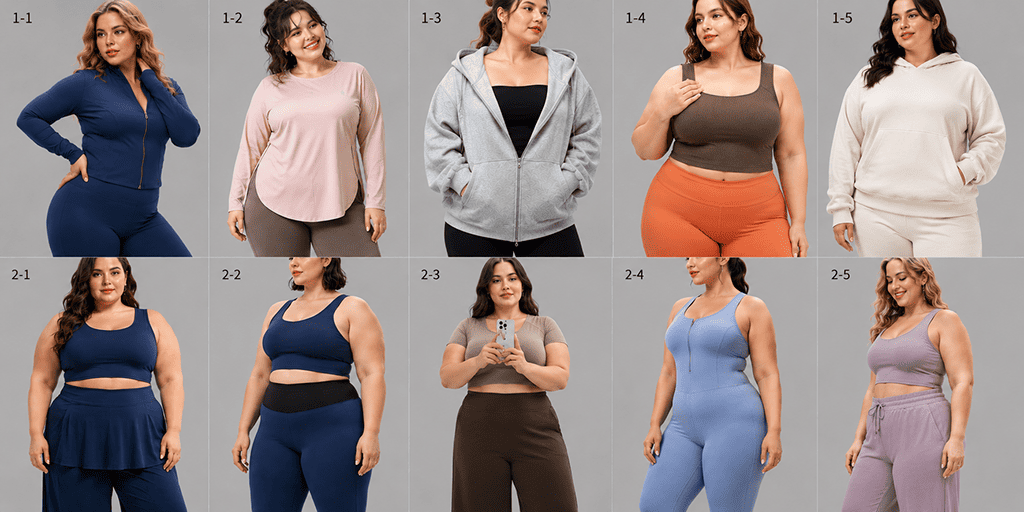
Pair Fashion is particularly relevant to brands that need a Plus Size Organic Cotton Clothing Manufacturer to work from more than an existing blank style. Product development can begin from a Tech Pack, physical sample, reference image or product concept, allowing buyers with different levels of technical preparation to enter the sampling process.
For extended sizing, its company documentation identifies dedicated development for plus-size and other special-fit patterns, together with full-size grading. Its sample structure includes Proto, Fit, Pre-production and Size Set samples, which gives buyers several checkpoints for evaluating a size system rather than relying on one finished sample.
The company has an 11-person pattern and sample-development team and a 13-person QC team. Its material resources include organic cotton sports fabrics as well as recycled and performance textiles. For buyers comparing suppliers, these capabilities are most relevant when the project requires custom fit development, material sourcing and private label execution within the same supply chain.
Pair Fashion may be less relevant to buyers whose only objective is purchasing the lowest-cost commodity blanks or extremely large standardized programs where product development support has little commercial value.
Brands requiring deeper information about custom grading, organic cotton fabric sourcing, sampling and private label production can review Pair Fashion’s plus size organic cotton clothing manufacturer capabilities before requesting a project-specific quotation.
2. JUNSHEEN — Organic Cotton Casualwear With Extended-Size Development
Location: Dongguan, Guangdong, China
Founded: 2010
Core Categories: T-shirts, hoodies, sweatshirts, joggers, knitwear and casualwear
Business Model: OEM, ODM and Private Label
Organic Cotton: Dedicated organic cotton manufacturing programs
Size Capability: Extended-size development is available
MOQ: Selected programs are published from approximately 100 pieces
Buyer Profile: Casualwear and lifestyle brands
JUNSHEEN is worth examining when organic cotton T-shirts, sweatshirts, hoodies and joggers make up a large part of the planned collection. Its manufacturing information combines fabric sourcing, pattern development, sampling, decoration, production, QC and packaging, which can reduce the number of separate vendors involved in a private label program.
For a buyer comparing it with another Plus Size Organic Cotton Clothing Manufacturer, the critical question is how far its extended-size development matches the intended customer. A supplier experienced with XS–3XL should not automatically be assumed to have the same fit evidence for 4XL–6XL.
Buyers should therefore request the proposed base size, finished measurement chart and grading progression for the actual order. If certified organic cotton is required, the relevant certification and transaction documentation should also be confirmed against the selected material rather than inferred from general organic cotton capability.
More suitable for: organic cotton casualwear and coordinated basics.
Verify carefully: maximum developed size, custom grading requirements and order-specific organic cotton documentation.
3. NewWay Apparel — Extended Sizing With Clearer MOQ Segmentation
Location: Zhejiang, China
Founded: 1994
Core Categories: Dresses, knitwear, sportswear and plus-size apparel
Published Size Capability: XL–6XL on its plus-size manufacturing information
MOQ: Different conditions for available fabrics and custom fabrics
Sampling: Published sample timelines are available
Buyer Profile: Brands with defined specifications and structured sourcing requirements
NewWay provides a useful lesson for buyers comparing MOQ: garment MOQ and fabric MOQ are not necessarily the same thing.
A manufacturer may be willing to cut and sew a relatively small quantity when an available fabric is selected, while custom knitting, dyeing, printing or finishing can require a substantially larger material commitment. A headline such as “MOQ 100 pcs” therefore has limited value until the buyer knows whether it applies per style, per color, per fabric or to the complete order.
Its published plus-size information also addresses extended-size grading rather than presenting 6XL only as a size label.
For an organic cotton project, however, buyers should separately verify the exact organic cotton material, certification requirement and fabric MOQ. Strong plus-size evidence does not automatically prove that every organic cotton specification can be supplied under the same commercial terms.
More suitable for: buyers with established measurement specifications who want structured extended-size production.
Verify carefully: organic cotton documentation, custom-fabric minimums and whether all quoted suppliers are pricing the same fabric specification.
4. MENWILD — A More Specialized Option for Men’s Big & Tall
Location: Dongguan, Guangdong, China
Founded: 1998
Size Focus: 2XL–6XL Big & Tall
Core Categories: T-shirts, polos, hoodies, joggers, shorts, outerwear and menswear
Business Model: OEM, ODM and Private Label
MOQ: Selected programs are published from approximately 100 pieces
Buyer Profile: Men’s extended-size and Big & Tall brands
MENWILD demonstrates why buyers should not treat every plus-size supplier as interchangeable.
Women’s curve sizing, men’s Big & Tall, extended activewear and oversized fashion may all use labels such as 2XL or 4XL, but the body proportions and grading logic behind those labels can be very different.
A brand developing men’s Big & Tall organic cotton basics may therefore value specialist experience more than a supplier with a broader product catalog but less relevant fit history.
Organic cotton should still be treated as a separate verification point. Buyers should establish the intended composition, GSM, knit construction, certification requirement and color program before comparing the quotation with suppliers that specialize more heavily in organic textiles.
More suitable for: men’s Big & Tall casualwear and streetwear.
Less directly comparable for: women’s curve-specific collections where bust, waist, hip and rise progression require a different grading system.
5. Mingxing Clothing — Plus Size Women’s Fashion With Eco-Material Options
Location: Dongguan, Guangdong, China
Core Focus: Women’s dresses and fashion apparel
Business Model: OEM/ODM
Organic Material Options: Organic cotton and other eco-oriented materials
Sampling: Sample development is available
MOQ: Confirm according to the selected product and material
Buyer Profile: Women’s fashion and dress brands
Mingxing is more relevant where the product is fashion-led rather than performance-led. This distinction matters because a loose organic cotton dress, a fitted knit top and a high-stretch activewear legging do not create the same plus-size development risks.
For dresses, buyers may need to pay closer attention to bust shaping, waist placement, hip room, armhole depth, sleeve proportion and garment length. The supplier should therefore be evaluated against the actual category being ordered rather than a general statement that it “makes plus sizes.”
A buyer comparing Mingxing with a more sportswear-oriented Plus Size Organic Cotton Clothing Manufacturer should send both suppliers the same measurement chart, fabric requirement and intended fit. Otherwise, the resulting samples and quotations will not provide a meaningful comparison.
More suitable for: women’s plus-size dresses and fashion-oriented collections.
Verify carefully: exact grade rules, organic cotton specification, certification needs and sample-to-bulk controls.
6. Setor Fashion — Plus Size Fit Development for Women’s Private Label
Location: Guangzhou, Guangdong, China
Core Focus: Women’s plus-size apparel
Development: Fit and grading services are promoted as part of its plus-size manufacturing capability
Organic Cotton: Sustainable fabric options are available
Private Label: Branding and packaging support
MOQ: Confirm according to project requirements
Setor is relevant to buyers who place significant weight on fit development rather than simply ordering larger labeled sizes.
When comparing this type of supplier, buyers should ask for evidence that can be reviewed objectively: the proposed measurement chart, grading increments, sample comments, size-set results and permitted production tolerance. These documents are more useful than broad statements such as “we specialize in plus size.”
The same principle applies to sustainable materials. “Organic cotton available” should lead to another set of questions: which composition, which mill, which certification, what GSM, what minimum fabric quantity and whether the approved sample uses the same material specification planned for production.
More suitable for: women’s private label programs where fit development is a major purchasing criterion.
Verify carefully: project MOQ, organic cotton documentation and whether the required size range has been developed in comparable products.
7. Ingor Sportswear — Organic Cotton Options Within a Sportswear Supply Chain
Location: China
Core Focus: Activewear and sportswear
Organic Cotton: Organic cotton products are available within published programs
Customization: Size, color, logo and branding options
MOQ: Product-dependent
Buyer Profile: Activewear and athleisure brands
Ingor offers a different comparison point because its wider manufacturing identity is connected to activewear and sportswear rather than only conventional cotton basics.
That may be useful for brands developing an inclusive collection that combines organic cotton sweatshirts, tops or casual pieces with more technical sports products.
However, buyers should not infer specialist extended-size capability from custom sizing alone. The more useful questions are whether the supplier can show relevant grading evidence across the requested range, whether real fit evaluation is available and whether a Size Set can be reviewed before bulk production when the risk justifies it.
More suitable for: activewear and athleisure brands combining casual organic cotton products with wider sportswear development.
Verify carefully: plus-size grading evidence, exact MOQ structure and material documentation for the selected organic cotton.
8. Newasia Garment — Broader Manufacturing Scale With Extended Sizing
Location: China
Core Categories: Men’s and women’s apparel, plus-size products and sustainable clothing
Size Capability: Extended sizing is available on selected programs
Organic Cotton: Organic cotton options are promoted
Private Label: Printing, embroidery, labels and packaging
MOQ: Selected programs are published from approximately 100 pieces
Buyer Profile: Growing and established brands requiring broader production resources
A larger manufacturer can provide capacity and category breadth, but factory scale should not be confused with specialized fit capability.
For a growing brand, the advantage of a broader supplier may become more important after products have been validated and reorder volumes increase. At that stage, capacity, production planning and multi-category coordination can carry more weight.
For a new plus-size program, however, buyers should still start with evidence at product level. Ask how the base pattern is created, how the requested size range is graded, which samples are required and how the supplier records approved measurements.
More suitable for: growing or established brands that need broader production capacity.
Verify carefully: category-specific extended-size experience and the documentation attached to the selected organic cotton program.
9. FROM ATTITUDE — Multi-Category Plus Size Manufacturing
Location: China
Core Focus: Plus-size dresses, tops, bottoms and outerwear
MOQ: Selected custom programs are published from approximately 100 pieces
Production Model: Multi-category plus-size manufacturing
Organic Cotton: Confirm for the selected project
Buyer Profile: Brands building broader plus-size fashion collections
FROM ATTITUDE places plus-size manufacturing near the center of its product positioning, making it relevant to buyers who want several extended-size categories under one supplier.
The key issue for this article is whether that plus-size capability can be combined with the buyer’s exact organic cotton requirement.
A supplier can be strong at grading and still be commercially unsuitable if the requested certified fabric requires a textile MOQ far above the planned garment order. Conversely, a strong organic textile supplier may not be the best fit partner for a complex extended-size system.
Buyers should therefore verify these two capabilities separately before treating the supplier as a complete Plus Size Organic Cotton Clothing Manufacturer solution.
More suitable for: multi-category women’s plus-size collections.
Verify carefully: organic cotton source, certification scope, fabric MOQ and whether the required material has been tested within the intended size and garment structure.
10. Taian Lianchuang Textile — Organic Cotton Basics With Larger-Size Product Experience
Location: Shandong, China
Established: 2005 according to company information
Core Focus: Eco-oriented textiles and apparel
Organic Cotton: Organic cotton products are available
Extended Sizes: Larger-size products, including published 2XL–6XL examples
MOQ: Product-dependent
Buyer Profile: Buyers sourcing organic cotton basics and larger-size casual products
Taian Lianchuang provides an interesting comparison for buyers whose priority is the textile and basic garment combination rather than highly complex fashion development.
Published larger-size organic cotton products can demonstrate that a supplier has produced this type of merchandise before, but they do not answer every custom-development question. A buyer with its own size chart should still establish whether the manufacturer can develop a new grade rather than simply use an existing 2XL–6XL specification.
The same distinction matters for private label requirements. Existing organic cotton production experience can reduce material uncertainty, while custom labels, packaging, special colors, new fits and brand-specific testing may change the commercial structure.
More suitable for: organic cotton basics and straightforward extended-size casual products.
Verify carefully: custom grading capability, private label depth, certification documentation and the MOQ created by any custom fabric or color requirement.
What Should Buyers Learn From the Top 10?
The shortlist shows why selecting a Plus Size Organic Cotton Clothing Manufacturer cannot be reduced to four columns labeled price, MOQ, size range and lead time.
A manufacturer offering 6XL is not automatically stronger than one offering 3XL if the first cannot explain its grade rules. A supplier offering a lower MOQ may not be cheaper if its quotation excludes custom fabric, certification documents, size-set development, labels or packaging. Likewise, a company with organic cotton experience should not automatically be treated as capable of providing the same certification evidence for every fabric and finished order.
Before reducing ten manufacturers to three, buyers should establish three things:
- Sizing evidence: How was the extended-size range developed, sampled and checked?
- Material evidence: What exactly supports the organic cotton claim for the selected fabric and order?
- Commercial fit: What do the MOQ, sample requirements, price assumptions and production conditions actually require the buyer to commit to?
These questions create a much stronger shortlist than choosing a supplier because it has the lowest published MOQ or the largest size label.

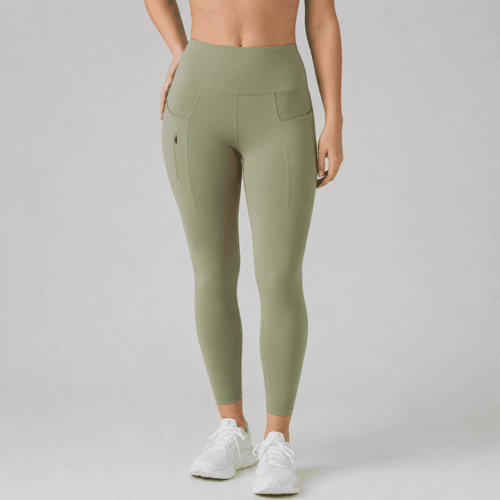
Custom High Waist Pocket Yoga Leggings OEM ODM Workout Pants
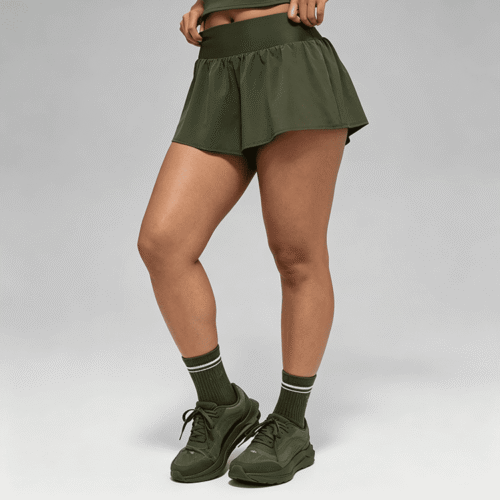
Custom High Waist Tennis Skort with Built-In Shorts OEM ODM
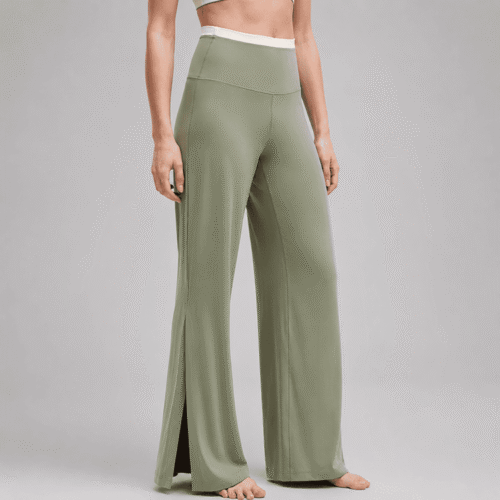
Custom High Waist Wide Leg Yoga Pants OEM ODM Athleisure Trousers
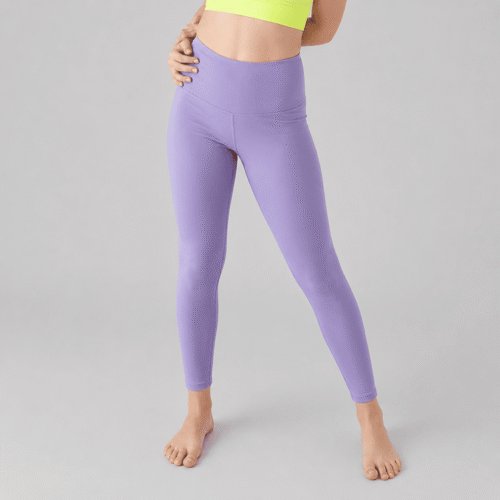
Custom High Waist Yoga Leggings OEM ODM Four-Way Stretch Workout Tights
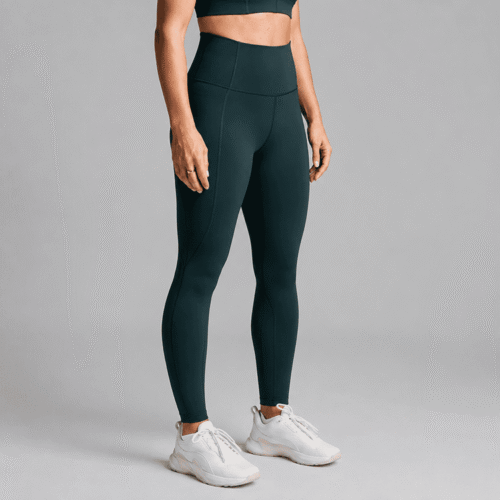
Custom High Waist Yoga Leggings OEM ODM Performance Workout Pants
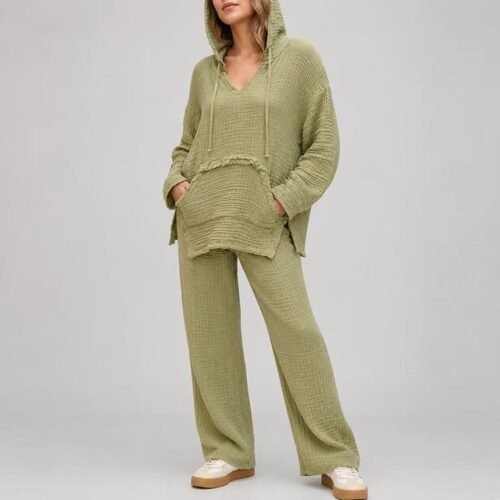
Custom Hooded Modest Activewear Set OEM ODM Muslim Loungewear
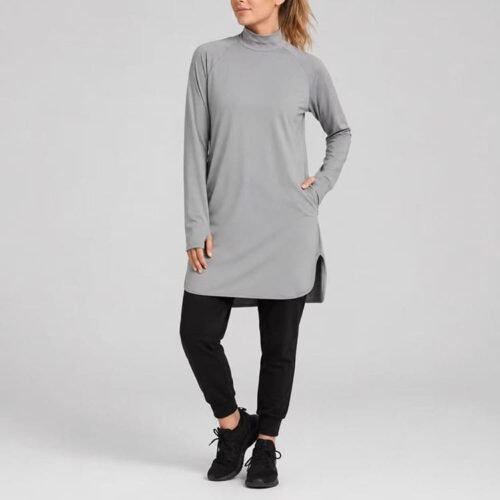
Custom Long Sleeve Modest Sports Tunic OEM ODM Muslim Activewear
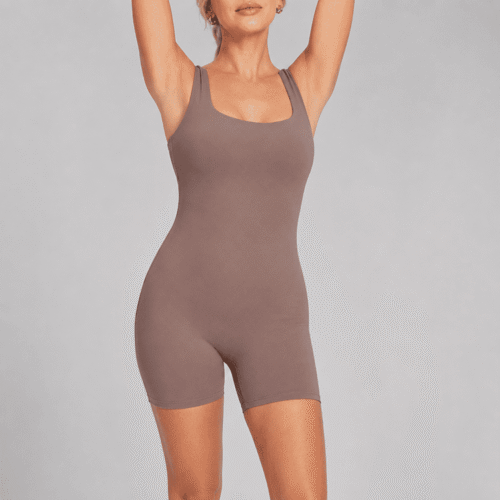
Custom Maternity Activewear Romper OEM ODM Pregnancy Workout Jumpsuit
Why Do Buyers Source Plus Size Organic Cotton Clothing From China?
Buyers consider China because its apparel supply chain can combine garment development, textile sourcing, trims, decoration, packaging and export production within a mature manufacturing ecosystem. For plus size organic cotton programs, the practical advantage is not simply lower cost. It is the ability to coordinate extended-size development with fabric requirements, customization and commercial order quantities through fewer disconnected suppliers.
China remains one of the world’s major textile and apparel sourcing markets, but that scale should not be confused with automatic suitability. A large manufacturing base gives buyers more supplier choices; it does not guarantee that every factory understands plus-size grading or can provide the organic cotton documentation required for a specific order.
For a buyer searching for a Plus Size Organic Cotton Clothing Manufacturer, China becomes particularly relevant when several requirements need to be managed together rather than purchased as separate services.
Why Can China Be Practical When a Product Needs Both Extended Sizing and Organic Cotton?
A plus-size organic cotton garment brings together two sourcing challenges that are easy to underestimate.
The first is fit. A brand may need a new base pattern, a wider size range, different grade rules and more than one fitting checkpoint.
The second is material. The buyer may specify organic cotton composition, fabric weight, knit construction, color, finish, shrinkage requirements and supporting documentation.
These requirements eventually meet in the same garment.
That is where a concentrated apparel supply chain can become useful. A manufacturer working within an established textile and garment cluster may be able to coordinate several inputs:
- Pattern and grading for the intended extended-size range
- Fabric sourcing by composition, GSM, structure and finish
- Dyeing or color matching when stock colors are unsuitable
- Labels, hangtags and trims for private label programs
- Printing or embroidery where branding is required
- Sample development before commercial production
- Packaging and export preparation after final inspection
China’s scale in both textiles and finished apparel illustrates the depth of this supply base. Chinese customs data reported approximately US$142.6 billion in textile yarn, fabrics and related articles exports and US$151.2 billion in garments and clothing accessories exports in 2025. Those numbers do not prove that an individual supplier is suitable, but they help explain why international buyers can find textile production and garment manufacturing within the same sourcing market.
For buyers, the commercial benefit is often coordination rather than scale alone.
Consider two sourcing models.
In the first, the brand finds an organic cotton fabric supplier, sends the material to another company for pattern development, works with a third factory for sewing and then coordinates labels and packaging separately.
In the second, one manufacturing partner manages most of those inputs and reports them back through one product-development process.
The second model can reduce coordination work, but only when the manufacturer actually controls those relationships well. A supplier that says “we can source everything” without documenting specifications may create more risk rather than less.
This is why the buyer should ask not only:
Can you source organic cotton?
but also:
What exact fabric are you proposing, who supplies it, what is its MOQ, and will the same specification be used for the approved sample and bulk order?
The same principle applies to sizing. “We can make 5XL” is not enough. Buyers need to understand how the range is developed and checked.
China Manufacturer vs Local Manufacturer: Which Type of Supplier Fits the Order?
China is not automatically the better sourcing location, and local manufacturing is not automatically the safer one. The more useful comparison is whether each supply model fits the brand’s product complexity, order quantity, development needs, communication structure, delivery plan and total landed cost.
A local manufacturer may be attractive when a brand needs frequent physical meetings, very short transport distances or extremely rapid product adjustments. For some businesses, the ability to visit a sample room in a few hours is worth paying more for.
A Chinese manufacturer may become more practical when the project requires a wider combination of fabric sourcing, custom development, decoration, labels, packaging and scalable production.
The comparison should therefore go beyond unit price.
| Buying Factor | China Manufacturing | Local Manufacturing |
|---|---|---|
| Supplier Choice | Large range of specialized apparel suppliers | Depends heavily on local manufacturing market |
| Fabric Sourcing | Broad textile and trim supply network | May rely partly on imported materials |
| Custom Development | Widely available, but capability varies significantly | Often easier to supervise in person |
| MOQ | Can range from low-volume private label to very large production | May support smaller runs, depending on supplier |
| Communication | Requires disciplined specifications and remote communication | Easier face-to-face access |
| Sample Shipping | International courier time must be planned | Usually faster domestically |
| Bulk Freight | International freight and customs must be included | Usually simpler domestic transport |
| Factory Verification | May require video audits, third-party audits or visits | Physical visits may be easier |
| Unit Price | Can be competitive at suitable volumes | Often higher in higher-cost manufacturing markets |
| Landed Cost | Must include freight, duty, testing and other import costs | Fewer international import variables |
The important row is the last one.
A buyer should compare landed commercial reality, not only ex-factory price.
Suppose Supplier A in China quotes $9.50 per garment and a local supplier quotes $12.00. The $2.50 difference does not automatically mean Supplier A is cheaper.
The Chinese quotation may still require international freight, import duty, customs clearance, inspection or testing. On the other hand, the local supplier may need to import the organic cotton fabric and pass that cost back to the buyer.
Until the commercial assumptions are normalized, neither number gives a reliable purchasing answer.
Which Type of Plus Size Organic Cotton Project Benefits Most From China Sourcing?
China becomes particularly worth comparing when a project contains several variables at the same time.
For example, consider a brand developing:
- 3 organic cotton styles
- 3 colors per style
- 7 sizes from XL to 6XL
- custom neck labels
- branded hangtags
- printed packaging
- two different fabric weights
At first glance, that is only three garments.
Commercially, however, it creates 63 style-color-size combinations before packaging or fabric variations are considered.
That changes the sourcing question.
The buyer is no longer simply looking for someone who can sew an organic cotton T-shirt. The buyer needs a supplier that can explain how quantities are divided across colors and sizes, whether the fabric MOQ supports the planned order, how the larger sizes affect consumption and how all approved specifications will remain connected to the correct SKU.
A brand sourcing this type of program may gain more from a manufacturing cluster than a buyer ordering one standard T-shirt in four sizes.
However, supply-chain depth should never be used as a substitute for product specialization.
A factory that produces millions of standard cotton garments is not automatically a suitable Plus Size Organic Cotton Clothing Manufacturer. If the project requires a carefully developed XL–6XL range, relevant pattern and grading evidence may matter more than total factory capacity.
When Does China Make More Sense for a Startup?
For a startup, the most important issue is usually not achieving the lowest theoretical unit price. It is controlling how much cash and inventory must be committed before the product has proven demand.
This makes MOQ structure particularly important.
A startup may see:
MOQ: 100 pcs
and assume the project is commercially safe.
But 100 pieces can mean very different things:
- 100 pieces total with mixed sizes
- 100 pieces per style
- 100 pieces per color
- 100 pieces per fabric
- 100 pieces per color with sizes mixed
- 100 pieces only when stock fabric is used
If a brand launches three styles in three colors and discovers that the actual requirement is 100 pieces per color, the planned 300-piece collection suddenly becomes a 900-piece order.
The situation becomes more complicated when custom organic cotton fabric has its own mill MOQ.
Startups should therefore favor manufacturers that can explain the complete MOQ structure before sampling begins.
A smaller first order can be commercially valuable when it allows the brand to test:
fit acceptance → size demand → color demand → return reasons → reorder potential
before expanding the collection.
Low MOQ is useful only when the resulting order still makes commercial sense.
When Does China Make More Sense for a Growing Brand?
A growing brand has a different problem.
It may already know that a product sells, but now it needs to make reorders more predictable.
At this stage, the questions become more operational:
- Can the same fabric be sourced again?
- Can the approved measurements be reproduced?
- Will color remain reasonably consistent between lots?
- Can the supplier add new colors without rebuilding the entire product?
- Can order volume increase without changing the production standard?
- Are sample and bulk specifications recorded clearly enough for repeat orders?
This is where buyers should begin separating development flexibility from repeatability.
A supplier may be excellent at making one attractive sample but weak at maintaining specifications over several production runs. Another may be less flexible during development but highly disciplined once specifications are locked.
Neither characteristic is automatically better.
The correct choice depends on the brand’s stage.
For a growing business, a Plus Size Organic Cotton Clothing Manufacturer should increasingly be evaluated on whether the supplier can turn an approved product into a repeatable commercial SKU, not only whether it can produce the first order.
When Does China Make More Sense for an Established Retailer?
Established retailers typically place greater weight on capacity, documentation, production planning, compliance, inspection and delivery reliability.
The buying team may already have detailed Tech Packs, approved measurement standards, testing protocols, packaging manuals and supplier compliance requirements.
In this situation, the manufacturer is not being asked to invent the sourcing system. It is being asked to operate reliably inside one.
That changes the questions again.
Instead of:
Can you make organic cotton plus-size clothing?
the buyer may ask:
Can you reserve capacity for this delivery window?
Can you maintain this tolerance across the complete size set?
Can you provide the required material documentation for this purchase order?
How do you separate approved and unapproved materials?
How are inspection results recorded?
A manufacturer that works well with startups may not necessarily be the best match for a large retailer, and a factory designed for high-volume programs may be commercially uncomfortable for a startup ordering 150 pieces.
Supplier capability and buyer fit are two different things.
What Are the Trade-Offs of Sourcing From China?
The depth of China’s apparel supply chain does not remove the practical disadvantages of international sourcing.
Buyers should account for them before comparing quotations.
Distance increases the cost of unclear communication. A vague instruction that could be corrected during a local factory visit may become a sample revision, another courier shipment and another week of development when the supplier is overseas.
International freight adds planning risk. Production completion is not the same as delivery to the warehouse. Air freight can reduce transit time but increase cost. Sea freight is usually more economical for volume but requires more planning.
Certification claims require verification. A website displaying an organic textile logo does not automatically prove that the buyer’s specific fabric, supplier chain or finished order qualifies for the claim the brand wants to make.
Low MOQ can hide upstream minimums. A garment factory may accept 100 pieces while the fabric mill requires a much larger quantity for a custom color or construction.
Time-zone differences affect communication. They are manageable, but approvals should be documented clearly rather than relying on fragmented messages.
Quality cannot be assumed from country of origin. China has manufacturers serving very different price levels, categories and quality standards. Country-level reputation is a poor substitute for supplier-level evidence.
These trade-offs are not reasons to reject China. They are reasons to source more systematically.
How Should Buyers Decide Whether China Belongs on the Shortlist?
Before contacting ten factories, define the order first.
At minimum, a buyer should know:
- Product type: T-shirt, sweatshirt, dress, legging, top or another category
- Target size range: for example XL–5XL rather than simply “plus size”
- Fabric direction: composition, approximate GSM and structure
- Organic requirement: organic material only, or a specific certification/documentation requirement
- Order quantity: total units and expected split by style/color
- Customization: print, embroidery, labels, hangtags and packaging
- Target market: where the garments will be sold
- Target delivery window: when goods are actually needed
- Commercial stage: test order, growth reorder or established program
With these inputs, buyers can compare Chinese manufacturers against local or alternative sourcing markets on the same basis.
Without them, sourcing often becomes a collection of attractive but incomparable quotations.
The question is therefore not whether China is universally the “best” place to manufacture plus-size organic cotton clothing.
The more useful question is:
Does China give this particular brand access to the combination of fit capability, material sourcing, commercial quantities and production support required for this particular order?
When the answer appears to be yes, the next step is not to choose a factory immediately. It is to test whether each shortlisted supplier can actually prove the most difficult part of the project: true plus-size development rather than simply adding larger size labels.
Which Organic Cotton Claims and Documents Should Buyers Verify?
Buyers should verify more than a supplier’s statement that it “uses organic cotton.” Ask what standard supports the claim, which company or facility holds the certification, whether the selected fabric falls within the certified scope, and what order-level documentation can be provided. GOTS, OCS, a Scope Certificate and a Transaction Certificate answer different questions, so seeing one certificate should not automatically be treated as proof that every finished garment can carry the same certified claim.
This distinction is especially important when comparing a Plus Size Organic Cotton Clothing Manufacturer. Plus-size capability can be checked through patterns, measurements and samples; organic cotton claims require a different evidence trail.
A supplier may genuinely be able to purchase organic cotton fabric without the garment factory itself holding every certification a buyer expects. Another supplier may hold a certification, but the scope may not cover the exact product, process or material being discussed.
Neither situation can be understood from a sustainability logo alone.
The buyer needs to connect four things:
Material → Supplier → Certification Scope → Actual Order
If one link is unclear, the organic cotton claim deserves further verification before it becomes part of a purchase order, garment label or marketing statement.
Organic Cotton vs GOTS vs OCS: What Does Each Claim Actually Tell a Buyer?
“Organic cotton,” “GOTS-certified” and “OCS-certified” are related terms, but they are not interchangeable.
At the most basic level, organic cotton describes cotton associated with organic agricultural production. In commercial apparel sourcing, however, a buyer usually needs more than a verbal statement about how the cotton was grown. The buyer needs to understand how the claimed organic material is identified and tracked through the textile supply chain.
Two standards frequently encountered in apparel sourcing are GOTS and OCS.
GOTS — Global Organic Textile Standard
GOTS covers textiles made from certified organic fibres and includes requirements extending beyond fibre content into processing criteria. Under the standard, products sold or labelled as GOTS-certified must meet the applicable requirements across the certified processing and trading chain.
For a buyer, the important point is that GOTS should not be reduced to:
“This is organic cotton.”
It is a textile processing and certification system with defined requirements and certification controls.
OCS — Organic Content Standard
Buyers who need to understand the standard in more detail can review the Organic Content Standard from Textile Exchange and confirm which current requirements, documentation and claims apply to the material and supply chain involved in their order.
For buyers, this means the first question should not be:
“Which certification is better?”
The better question is:
“What claim does my brand need to make, and what documentation is required to support that claim for this product and supply chain?”
That answer can affect fabric selection, supplier selection, cost and documentation before production begins.
Is the Certificate for the Fabric Mill, Garment Manufacturer or Finished Product?
This is one of the most important distinctions in organic apparel sourcing.
A buyer may ask:
“Do you have GOTS?”
and receive a certificate.
The conversation often stops there.
It should not.
The buyer should identify whose certificate it is.
For example, a supply chain can include:
- fibre or raw-material source;
- spinner;
- fabric mill;
- dyeing or finishing facility;
- garment manufacturer;
- trader or exporter;
- brand or retailer.
Depending on the supply chain and the claim being made, different certified organizations can be involved.
A fabric mill holding certification is not automatically the same thing as the garment factory holding certification. Likewise, a manufacturer showing a supplier’s certificate does not automatically establish that the buyer’s finished garment can be marketed using whatever certification language the buyer wants.
This is why the document should be read rather than simply collected.
When a supplier sends a certificate, buyers should check:
- Company name
- Certified address
- Certification body
- Standard
- Validity period
- Certified product or processing scope
- Certificate number
- Whether the company named on the certificate is actually part of the proposed supply chain
If the company named on the document has no clear relationship to the quotation, ask why the certificate is being presented.
What Is a Scope Certificate and What Should Buyers Check?
A Scope Certificate, often shortened to SC, is useful because it helps identify whether an organization has been certified for specified products, processes or activities under the relevant standard.
It should not be interpreted as:
“Everything this company sells is certified forever.”
Buyers should read the details.
A practical review can start with the following:
| What to Check | Why It Matters |
|---|---|
| Certified Organization | Confirms who actually holds the certification |
| Facility / Address | Helps connect the certificate to the facility involved |
| Standard | Shows whether the document relates to GOTS, OCS or another standard |
| Validity | An expired certificate should not be treated as current evidence |
| Product Categories | Helps determine whether relevant products fall within scope |
| Processes / Activities | Shows which certified operations are covered |
| Certification Body | Identifies who issued the certificate |
| Certificate Number | Allows further verification where databases or certification bodies provide lookup tools |
A buyer should also pay attention to timing.
A PDF stored in a supplier’s sales folder may have been valid when it was first downloaded but expired before the buyer’s current order.
Certificate review should therefore happen for the current sourcing decision, not only during the first introduction to the supplier.
What Is a Transaction Certificate and When Does It Matter?
A Scope Certificate and a Transaction Certificate serve different purposes.
A Scope Certificate is associated with the certified organization and its certified scope.
A Transaction Certificate, commonly called a TC, is connected to transactions involving certified products and is used within chain-of-custody systems to provide evidence related to certified goods moving between organizations.
This difference is highly relevant for procurement.
Imagine a manufacturer sends a valid certification document showing that a facility is certified.
That answers an important question:
Is this organization certified within the stated scope?
But a buyer may also need evidence connected more specifically to the certified material or transaction associated with the order.
That is where transaction-level documentation becomes relevant.
The exact documentation required depends on the standard, supply chain and intended claim, so buyers should establish this before issuing the purchase order, particularly when certification is part of the product’s commercial positioning.
Waiting until the garments are finished and then asking:
“Can you send the organic certificate for this order?”
can create a problem that is no longer easy to solve.
Can a Manufacturer Use Organic Cotton Without the Finished Garment Being Sold as Certified?
Yes, and this distinction is important.
A garment manufacturer may be able to source fabric made with organic cotton even when the finished garment is not being sold under a specific third-party certified product claim.
For some brands, the purchasing requirement may simply be to use a specified organic cotton material supported by agreed supplier documentation.
Other brands may require a much more specific certified claim for the finished product or supply chain.
Those are different sourcing briefs.
A buyer should therefore define the requirement in the RFQ.
Weak RFQ:
Fabric: Organic cotton
Stronger RFQ:
Fabric: 100% organic cotton jersey, target 220 GSM. Supplier to identify the applicable certification standard and provide relevant current documentation for review before bulk approval.
A more certification-sensitive buyer may need to specify additional chain-of-custody or transaction-document requirements.
The important point is to avoid making the manufacturer guess what “organic” means commercially to the brand.
Why Is a Certification Logo on a Supplier Website Not Enough?
A certification logo is useful for discovering what standards a supplier may work with.
It is not sufficient purchasing evidence by itself.
There are several reasons.
The logo may refer to:
- one facility rather than all facilities;
- one material supplier rather than the garment manufacturer;
- only certain product categories;
- a certificate that has since expired;
- a previous certification period;
- a standard unrelated to the exact claim being discussed.
This does not mean buyers should automatically distrust every sustainability logo.
It means marketing evidence and procurement evidence serve different purposes.
Marketing evidence helps a buyer decide what to investigate.
Procurement evidence helps the buyer decide what to approve.
When evaluating a Plus Size Organic Cotton Clothing Manufacturer, buyers should move from the first category to the second before paying a production deposit based on a certification-sensitive specification.
How Can Buyers Verify Certification Claims More Carefully?
Verification should be systematic but does not need to become unnecessarily complicated.
Start by requesting the document itself rather than a screenshot of a logo.
Check whether:
1. The company name matches.
If it does not, ask whether the certificate belongs to the fabric mill, dye house, trading company or another supply-chain partner.
2. The certificate is current.
Check the stated validity information.
3. The scope is relevant.
A real certificate can still be irrelevant to the product being ordered.
4. The issuer is identifiable.
The certification body should be clearly stated.
5. The certificate can be independently checked where an official verification route is available.
For GOTS, buyers can use the official GOTS Certified Suppliers Database to search certified entities and then review the applicable Scope Certificate, including the supplier details, certification scope and validity period, before treating the certification as relevant to the proposed order.
For Textile Exchange standards such as OCS, buyers can use Textile Exchange certification resources and applicable certificate verification systems rather than relying only on files forwarded by a salesperson.
The objective is not to catch the supplier making a mistake.
It is to make sure buyer and manufacturer are talking about the same level of certification evidence.
What Should Buyers Ask About the Actual Organic Cotton Fabric?
Certification is only one part of fabric evaluation.
A technically correct certificate does not tell the buyer whether the fabric is suitable for the garment.
Before comparing two suppliers, buyers should also identify:
- Fibre composition
- Organic content percentage
- GSM
- Knit or woven construction
- Stretch
- Recovery where relevant
- Finishing
- Color method
- Usable width
- Shrinkage expectation
- Colorfastness requirements
- Fabric MOQ
- Available vs custom color status
Consider these two offers:
Supplier A
100% organic cotton single jersey, 180 GSM, available black.
Supplier B
95% organic cotton / 5% elastane jersey, 230 GSM, custom-dyed black.
Both may appear in an RFQ under the heading “organic cotton fabric.”
Commercially and technically, they are not equivalent.
Supplier B may have a higher price and MOQ for legitimate reasons. It uses a different composition, heavier fabric, stretch fibre and custom coloration.
A buyer who compares only the unit price may mistakenly conclude that Supplier A is more competitive when the two manufacturers are quoting different products.
What Should Buyers Verify When Organic Cotton Is Blended With Other Fibres?
This question becomes particularly relevant for products requiring stretch or recovery.
A brand may want the hand feel and fibre story of organic cotton but still need elastane for a fitted top or bottom.
The resulting fabric might be:
95% organic cotton / 5% elastane
rather than:
100% organic cotton
That change affects more than marketing wording.
It can influence:
- stretch;
- recovery;
- garment fit;
- GSM;
- shrinkage behavior;
- price;
- recyclability considerations;
- certification documentation;
- permitted product claims.
Buyers should therefore avoid using “organic cotton” as shorthand for the entire fabric specification.
The exact composition should remain visible in the Tech Pack, quotation, sample approval and purchase order.
How Should Buyers Compare Organic Cotton Evidence Across Several Manufacturers?
The easiest approach is to create the same evidence request for every shortlisted supplier.
For example:
| Evidence Requested | Supplier A | Supplier B | Supplier C |
|---|---|---|---|
| Exact Fabric Composition | ✓ | ✓ | ✓ |
| GSM | ✓ | ✓ | ✓ |
| Fabric Construction | ✓ | ✓ | ✓ |
| Organic Standard Identified | ✓ | ✓ | ✓ |
| Current Scope Certificate | ✓ | Pending | ✓ |
| Certificate Holder Identified | Fabric Mill | Garment Facility | Fabric Mill |
| Relevant Product/Process Scope Checked | ✓ | Pending | ✓ |
| Transaction Documentation Requirement Confirmed | ✓ | No | Pending |
| Fabric MOQ | 500 kg | Stock | 300 kg |
| Custom Color MOQ | Yes | Yes | Yes |
| Wash/Shrinkage Data | ✓ | Pending | ✓ |
This table does something a sustainability slogan cannot do.
It shows where the evidence is complete and where the buyer is still making an assumption.
The supplier with the longest list of certificates is not automatically the best choice. One supplier may have excellent documentation but a fabric MOQ that is commercially impossible for the order. Another may offer a practical stock organic cotton fabric with simpler documentation that is fully adequate for the buyer’s intended claim.
The correct decision depends on the product and what the brand needs to communicate to its customers.
What Organic Cotton Questions Should Buyers Put in an RFQ?
A short material-verification section can prevent long email chains later.
Useful questions include:
- What exact organic cotton composition are you quoting?
- What is the fabric GSM and construction?
- Is the fabric available or made specifically for this order?
- What is the fabric MOQ for available colors?
- What is the MOQ for a custom Pantone color?
- Which organic textile standard applies to this material?
- Who holds the relevant certification?
- Can you provide the current Scope Certificate for review?
- Does the relevant scope cover the proposed product or process?
- Will transaction-level documentation be available if required for this order?
- What shrinkage or dimensional-stability information is available for the proposed fabric?
These questions make supplier responses much easier to compare.
They also reduce the risk of discovering after sampling that the “organic cotton option” requires a textile MOQ far above the brand’s commercial order.
What Organic Cotton Red Flags Deserve Further Investigation?
Not every incomplete answer means a supplier is unsuitable. Sales staff may need time to collect technical documents from the fabric mill or certification team.
The concern is whether the information can ultimately be connected and verified.
Buyers should investigate further when:
- the supplier sends only a certification logo rather than a document;
- the certificate holder cannot be identified;
- the company name on the certificate has no explained connection to the supply chain;
- the document is expired;
- the supplier cannot explain whether certification belongs to the fabric mill or garment facility;
- “100% organic cotton” appears in sales material but the quotation does not specify composition;
- fabric GSM is missing;
- custom color is promised without any discussion of fabric or dyeing MOQ;
- the supplier guarantees any certification claim immediately without first checking the material and supply chain;
- the sample fabric and proposed bulk fabric have different specifications without clear reapproval.
A credible supplier does not need to know every certification answer instantly.
It should, however, be able to obtain the relevant information and distinguish between what is already verified and what still needs confirmation.
For buyers, that distinction is far more valuable than a quick “yes.”
Why Should Organic Cotton Verification Happen Before Price Becomes the Final Deciding Factor?
Organic cotton sourcing can fail commercially even when the fabric itself is genuine.
The problem may be that:
- the fabric MOQ is too high;
- the custom color requires more material than the garment order can consume;
- the documentation does not support the brand’s intended claim;
- the certificate scope does not match what the buyer assumed;
- the sample uses one fabric while the bulk quotation assumes another;
- the selected fabric changes the fit or washing behavior.
These are not purely sustainability issues.
They affect inventory, product claims, fit, cost and production risk.
That is why a buyer should verify the organic cotton offer before reducing a shortlist based on price.
Once the documentation and fabric specification are clear, the next comparison becomes much more meaningful: whether different manufacturers are actually sampling and quoting the same material standard, and how that material behaves before and after washing.
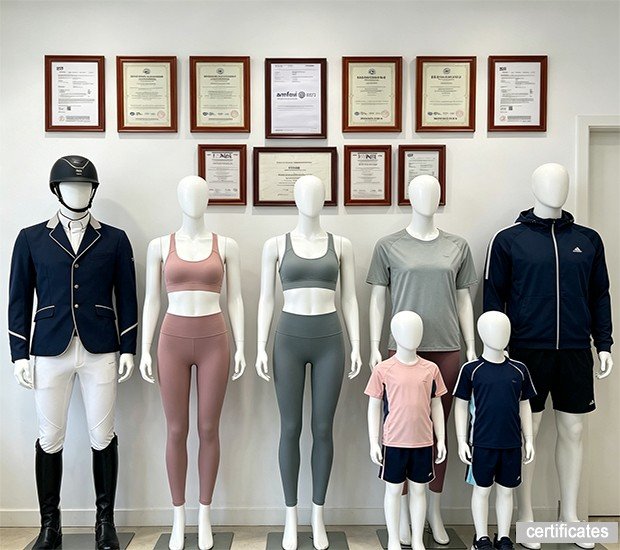
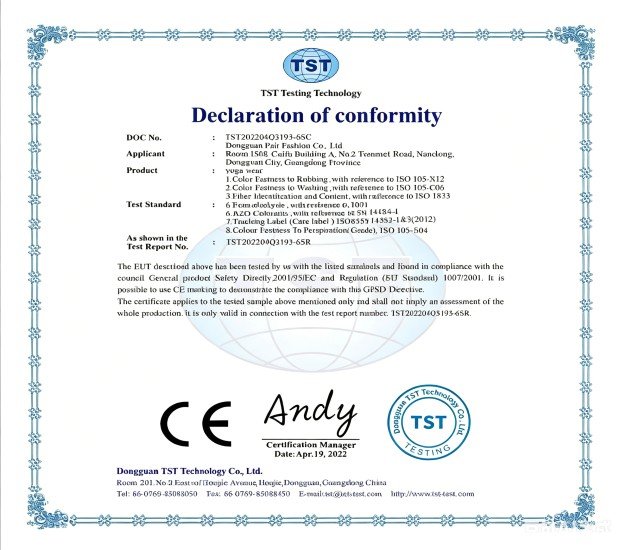
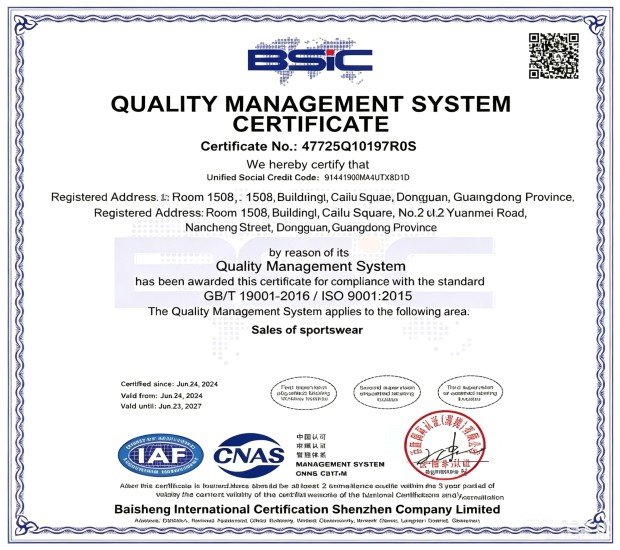
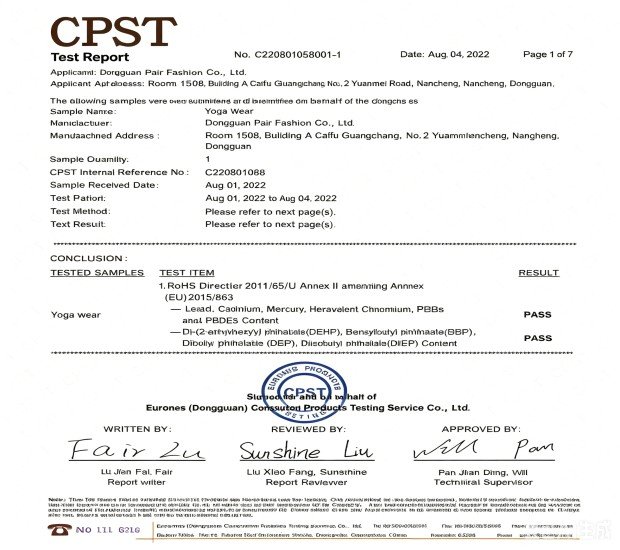
Trusted Manufacturing Standards For Global Sportswear Brands
We operate under internationally recognized quality, sustainability, and ethical manufacturing standards. Our certifications help ensure consistent product quality, responsible sourcing, and reliable production for global sportswear brands.
- 20+ Countries Served
- 6000+ Styles Developed
- 50,000 PCS Monthly Capacity
- 3-Day Sample Development
How Do Buyers Compare True Plus Size Capability Instead of Just the Maximum Size Label?
Buyers who also source performance-oriented products can compare these grading principles with the fit, support and movement requirements used in plus size activewear manufacturing, where larger sizes often require more than simply scaling up a standard pattern.
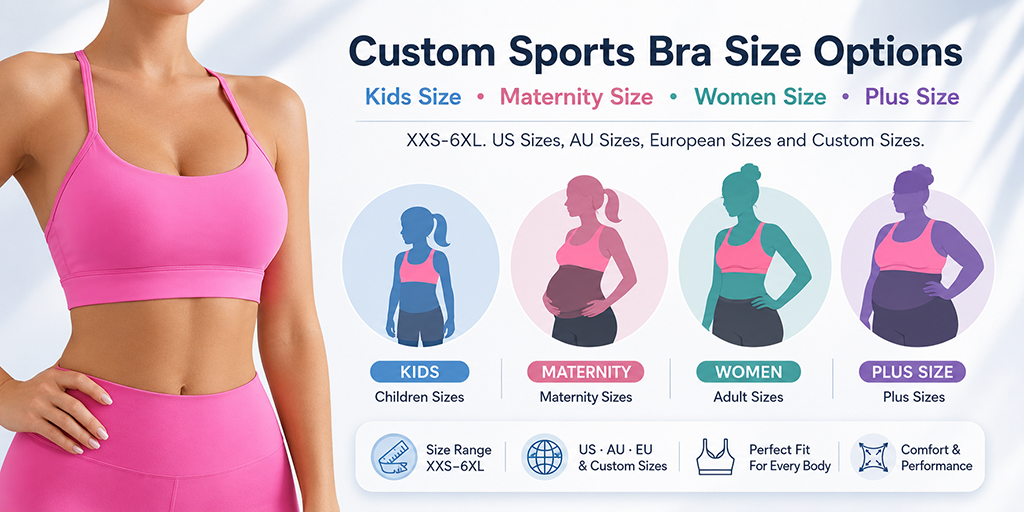
Buyers should not judge plus-size capability by asking only whether a manufacturer can produce 3XL, 5XL or 6XL. A stronger evaluation looks at how the supplier builds those sizes: the base pattern, grade rules, measurement progression, fit samples, Size Set results and production tolerances. A larger size label is easy to offer; a consistent extended-size system requires evidence that proportions remain appropriate as the garment moves through the size range.
This distinction becomes especially important when comparing suppliers online.
Two factories may both write “sizes up to 6XL” on their websites. One may have developed a dedicated extended-size block and tested several sizes on appropriate fit models. The other may simply enlarge an existing standard-size pattern according to fixed increments.
Both can technically sew a garment with a 6XL label.
They are not demonstrating the same capability.
For buyers comparing a Plus Size Organic Cotton Clothing Manufacturer, the practical question should therefore change from:
“What is the largest size you can make?”
to:
“Show me how the size range is developed and what evidence you use to approve it.”
That question reveals much more about the supplier.
Standard Size Scaling vs True Plus Size Pattern Development: What Is the Difference?
Standard scaling increases or decreases pattern measurements according to predetermined grade rules. True plus-size development goes further by checking whether body proportions, garment balance, ease, length and movement still work across the extended-size range. The difference matters because the relationship between bust, waist, hip, rise, armhole, thigh and length does not always progress satisfactorily through simple mechanical enlargement.
Imagine a fitted cotton top developed initially in a medium size.
If every measurement is simply increased by a fixed amount, the garment may become wider, but that does not guarantee that:
- the shoulder still sits correctly;
- the armhole has the right depth;
- the sleeve has enough upper-arm room;
- the bust position remains appropriate;
- the front and back lengths remain balanced;
- the hem sits correctly;
- the neckline keeps the intended shape.
The same issue appears in bottoms.
A pair of pants can have enough hip circumference and still fit poorly because the front rise, back rise, thigh, crotch shape or waistband position does not progress correctly.
This is why buyers should avoid treating “plus size” as a single measurement problem.
It is a proportion system.
The exact grading strategy also depends on the product. A relaxed organic cotton sweatshirt has more tolerance than a fitted rib top. A loose T-shirt has different risks from leggings. A structured dress creates different fitting problems from an oversized hoodie.
A supplier should therefore be able to explain its grading approach in relation to the actual garment, not only provide a generic size chart.
What Base Size Does the Manufacturer Use?
The base size is one of the most useful questions a buyer can ask because it reveals where the manufacturer begins its development logic.
Suppose Brand A wants sizes:
XL / 2XL / 3XL / 4XL / 5XL / 6XL
The buyer should not assume that the manufacturer develops XL first and mechanically grades upward through every size.
Depending on the product, target market and existing block system, a supplier may use a different development base or introduce another fitting checkpoint further into the range.
The important issue is not that there is one universally correct base size.
The important issue is that the supplier can explain:
Which size was developed first?
Why was that size selected?
Which measurements are graded from it?
Where do the grade rules change?
Which sizes will be physically sampled?
This becomes even more important when a brand already has its own measurement chart.
If the brand supplies measurements for 2XL–6XL, the manufacturer should not silently replace them with its internal “standard plus size” chart simply because that chart is easier to produce.
The two systems should be compared before pattern development.
What Should Buyers Look for in a Grade Rule?
A grade rule defines how pattern dimensions change from one size to the next.
Buyers do not necessarily need to become professional pattern makers, but they should understand enough to recognize whether a supplier has a controlled sizing system.
A simplified review might look like this:
| Measurement Area | 2XL | 3XL | 4XL | 5XL | 6XL | What the Buyer Should Check |
|---|---|---|---|---|---|---|
| Bust | — | + | + | + | + | Is progression intentional rather than arbitrary? |
| Waist | — | + | + | + | + | Does it match the intended silhouette? |
| Hip | — | + | + | + | + | Is enough ease maintained? |
| Shoulder | — | + | + | + | + | Does shoulder growth remain controlled? |
| Upper Arm | — | + | + | + | + | Is sleeve comfort considered? |
| Front Length | — | + | + | + | + | Does the front remain balanced? |
| Back Length | — | + | + | + | + | Does it coordinate with front length? |
| Armhole | — | + | + | + | + | Does depth increase appropriately? |
The buyer does not need every measurement to increase by a different number.
In some products, several increments may legitimately remain consistent.
What matters is whether the manufacturer can show that the rules are defined, documented and appropriate for the intended fit.
A supplier that can provide a measurement chart and explain its grading logic gives the buyer more evidence than a supplier that responds only:
“No problem, we can make 6XL.”
Why Is the Maximum Size Label a Weak Comparison Metric?
A size label has no universal measurement.
One manufacturer’s 3XL can be close to another manufacturer’s 2XL or 4XL. Differences become even larger when comparing markets, customer groups and brand positioning.
For this reason, the statement:
“Factory A can make 6XL, while Factory B only makes 5XL.”
does not prove that Factory A has stronger plus-size capability.
The better comparison is:
What finished measurements sit behind those labels?
Buyers should request actual measurements for key points and compare them with the target customer rather than assuming that an alphabetic size communicates a universal body standard.
This is particularly important for international brands. A supplier’s existing domestic-market 3XL block may not match a brand selling to customers in the United States, United Kingdom, Germany or Australia.
The label can stay the same while the body assumptions behind it are completely different.
Which Measurements Deserve More Attention Across an Extended Size Range?
Not every measurement creates the same fit risk.
The priority depends on the product category, but buyers should generally pay close attention to areas that affect balance, movement and major body circumference.
For tops and dresses, these can include:
- Bust circumference
- Waist and hip
- Shoulder width
- Across-front and across-back
- Armhole depth
- Upper-arm circumference
- Sleeve length
- Front body length
- Back body length
- Neck opening
For pants and bottoms:
- Waist
- High hip and full hip
- Front rise
- Back rise
- Thigh
- Knee
- Leg opening
- Inseam
- Outseam
This does not mean buyers should select the manufacturer with the most complicated measurement chart.
Complexity is not automatically quality.
The goal is to make sure that the measurements controlling the actual fit are identified before bulk production rather than discovered through customer returns.
Fit Sample vs Size Set: What Does Each One Actually Prove?
A Fit Sample helps buyers evaluate the fit and construction of a selected development size. A Size Set checks whether the approved fit logic has been translated correctly into additional sizes. One successful Fit Sample therefore does not prove that the complete extended-size range is ready for bulk production.
This distinction is especially useful when comparing manufacturers.
Suppose two suppliers both submit an excellent 2XL sample.
Supplier A then produces selected sizes across the range and checks them against the approved measurement chart.
Supplier B moves directly from the approved 2XL sample into bulk production for 2XL–6XL.
The initial samples may look equally good.
The risk profile is not equal.
A full Size Set is not necessary for every project. Producing every size as a development sample increases time and cost, and a simple loose-fit product may not justify the same verification process as a fitted garment.
But for a new extended-size system, buyers should at least discuss whether representative sizes need to be sampled.
For example, a buyer might evaluate:
2XL + 4XL + 6XL
rather than physically sampling every size.
The correct approach depends on the garment and the consequences of a sizing error.
The important point is that the decision should be deliberate.
Should Buyers Require Real Plus Size Fit Models?
Measurements are essential, but measurements alone cannot describe every aspect of fit.
A garment can sit within tolerance on a table and still behave differently when worn.
For fitted or proportion-sensitive products, an appropriate fit model can help identify issues such as:
- armhole restriction;
- bust placement;
- neckline behavior;
- waistband rolling;
- excess or insufficient rise;
- thigh restriction;
- hem position;
- garment balance during movement.
However, “we use fit models” should not become another unchecked marketing claim.
Buyers should ask:
Which size is the fit model?
What measurements does the model represent?
Is the same fitting standard used between revisions?
If the supplier changes models repeatedly without recording body measurements, subjective fit comments become harder to reproduce.
For simpler products, measurement control may carry more commercial value than extensive model fittings. Again, the appropriate level of verification depends on product risk.
What Evidence Shows That a Manufacturer Has Real Plus Size Experience?
The strongest evidence is rarely a factory saying, “We have made plus-size clothing for many years.”
Buyers should look for evidence that connects experience to the product being sourced.
Useful evidence can include:
- Relevant finished products in similar categories
- Graded measurement charts
- Defined base size and grade rules
- Fit Sample records
- Size Set samples or reports
- Fit comments and revision history
- Measurement tolerances
- Pattern version control
- Pre-production approval records
- Bulk measurement inspection records
Not every supplier will share confidential customer documents, and buyers should not expect another brand’s proprietary Tech Pack.
But a competent manufacturer should normally be able to demonstrate its process without exposing another customer’s confidential information.
For example, the supplier can show a redacted measurement report, an internal grading format or a generic example of how sample revisions are recorded.
This is more meaningful than a gallery containing twenty attractive plus-size model photographs.
How Should Buyers Test a Manufacturer Before Committing to the Full Size Range?
A practical supplier test does not need to begin with a large order.
The buyer can give shortlisted manufacturers substantially the same development inputs and compare how they respond.
Those inputs may include:
- the same reference style or Tech Pack;
- the same target customer;
- the same base measurements;
- the same intended size range;
- the same fabric direction;
- the same fit description;
- the same branding requirements.
Then compare not only the physical samples but also the questions each supplier asks.
A manufacturer that immediately says “yes” to everything may appear easy to work with.
A manufacturer that asks:
Which size should be the development base?
Is this body measurement or finished garment measurement?
How much ease do you want?
Should the larger sizes keep the same silhouette?
Which sizes do you want to verify physically?
may initially create more discussion, but those questions can indicate that the supplier is identifying fit decisions before cutting fabric.
This is one reason supplier communication should be evaluated for technical relevance, not simply response speed.
How Does Organic Cotton Make Plus Size Fit Evaluation More Important?
Organic cotton does not automatically fit differently simply because the cotton was organically grown.
The relevant issue is the finished fabric behavior.
Two fabrics described as organic cotton can have different:
- GSM;
- knit structures;
- stretch;
- recovery;
- finishing;
- dimensional stability;
- washing behavior.
This means buyers should avoid approving the fit in one convenient development fabric and assuming the result will remain identical after switching to the intended bulk fabric.
For a fitted garment, even a modest change in stretch or recovery can change how the product feels across several body measurements.
For a looser T-shirt or sweatshirt, dimensional change after washing may become more important.
The relationship is therefore:
approved measurements + actual fabric behavior + grading = finished fit
not simply:
size label = finished fit
The fabric-comparison section later in this guide examines how buyers can compare these variables without turning supplier selection into a laboratory exercise.
What Plus Size Questions Should Be Included in an RFQ?
Before requesting a sample, buyers can add a short sizing section to the RFQ.
Useful questions include:
- What extended-size ranges have you produced in this product category?
- Can you work from our own finished garment measurement chart?
- Which size would you recommend as the development base, and why?
- Can you provide or work from defined grade rules?
- Which sizes would you recommend sampling before bulk production?
- Can you produce a Size Set if required?
- How are measurement tolerances recorded for bulk inspection?
- How are pattern and measurement revisions controlled after sample approval?
These questions do something important: they turn “plus-size experience” from a marketing statement into a comparable supplier response.
If five manufacturers receive the same questions, the buyer can see which suppliers provide specific technical answers and which respond mainly with general assurances.
What Should Make a Buyer Remove a Supplier From the Shortlist?
No single weakness automatically disqualifies a manufacturer. A supplier may have strong production capability but weaker documentation, while another may have excellent development systems but commercial terms that do not fit the order.
However, several warning signs deserve attention:
- The supplier defines plus size only by saying “we can make any size.”
- It cannot explain which base size will be developed.
- There is no finished garment measurement chart before sampling.
- The factory cannot explain how 2XL becomes 3XL, 4XL and larger sizes.
- A single sample is treated as proof that the entire range is correct.
- The manufacturer changes measurements without recording revisions.
- Size tolerances are not defined.
- The supplier wants to change the buyer’s size chart without explaining why.
- It cannot provide relevant examples of comparable extended-size categories.
The purpose is not to demand unnecessary paperwork.
It is to prevent an expensive misunderstanding: a factory’s ability to physically sew a 6XL garment is not the same as its ability to develop a commercially reliable 6XL fit.
For buyers comparing a Plus Size Organic Cotton Clothing Manufacturer, that distinction should be established before price becomes the deciding factor. Once the size-development evidence is credible, the next question is whether the “organic cotton” side of the offer is equally well supported by documents that actually apply to the material and order being purchased.
How Should Buyers Compare Fabric and Wash-Test Evidence Across Suppliers?
Buyers should compare fabric and wash-test evidence only after shortlisted manufacturers are working from substantially the same material specification. Fibre composition alone is not enough. GSM, fabric construction, stretch, recovery, finishing, color method and dimensional stability can all affect fit, cost and washing behavior. For plus-size products, these differences become particularly important because even moderate dimensional change can influence garment length, body width, rise, sleeve fit and the consistency of an extended-size range.
A quotation stating “100% organic cotton” does not define a complete fabric.
Neither does a fabric swatch that feels good in the buyer’s hand.
Two suppliers can both quote 100% organic cotton jersey while one uses 180 GSM single jersey and the other uses a denser 240 GSM construction. They may differ in finishing, usable width, shrinkage and minimum quantity.
If the buyer compares only unit price, the cheaper quotation may simply represent a different fabric.
The same problem appears during sampling. A manufacturer may use an available substitute fabric to develop the first Fit Sample while waiting for the intended bulk material. That can be practical during early development, but the buyer needs to know that the sample does not yet prove how the final fabric will behave.
The objective is therefore not to collect as many fabric reports as possible.
It is to make sure that every Plus Size Organic Cotton Clothing Manufacturer being seriously compared is working from a clearly defined and commercially relevant material standard.
Which Fabric Specifications Should Be the Same Before Comparing Two Manufacturers?
Before comparing price or sample performance, buyers should normalize the main fabric variables.
At minimum, the comparison should identify:
| Fabric Variable | Supplier A | Supplier B | Supplier C | Why It Matters |
|---|---|---|---|---|
| Composition | 100% Organic Cotton | 100% Organic Cotton | 95% Organic Cotton / 5% Elastane | Changes stretch, recovery and cost |
| GSM | 180 | 220 | 220 | Affects weight, opacity, drape and consumption |
| Construction | Single Jersey | Single Jersey | Stretch Jersey | Influences hand feel and performance |
| Width | Confirm | Confirm | Confirm | Can affect fabric consumption |
| Color | Stock Black | Custom Black | Custom Black | Can change MOQ and lead time |
| Finish | Standard | Soft Finish | Enzyme Wash | Influences feel and dimensional behavior |
| Stretch | Low | Low | Higher | Important for fitted garments |
| Recovery | Limited | Limited | Higher | Influences shape retention |
| Shrinkage Data | Available | Pending | Available | Affects finished measurements |
| Fabric MOQ | Stock | Custom MOQ | Custom MOQ | Changes commercial feasibility |
This table immediately reveals why quotations that look similar may not actually be comparable.
If Supplier A quotes an available 180 GSM fabric while Supplier B quotes custom-dyed 220 GSM organic cotton, the buyer should not conclude that Supplier A is more efficient simply because its unit price and MOQ are lower.
The specification is different.
Why Can Two “Organic Cotton” Quotations Represent Different Products?
Fabric descriptions often become compressed during early sourcing.
A buyer writes:
100% organic cotton, soft hand feel, premium quality.
Five suppliers then interpret “premium” differently.
One proposes 160 GSM jersey.
Another proposes 200 GSM.
A third recommends 240 GSM.
Another uses combed cotton with a particular finish.
Another quotes a fabric already available in stock.
All five may genuinely believe they have answered the RFQ.
The problem is not necessarily supplier dishonesty.
The problem is an underspecified buying request.
A stronger RFQ might define:
100% organic cotton single jersey, target 200–220 GSM, soft hand feel, suitable for casual plus-size T-shirts, target shrinkage requirement to be confirmed through wash testing, custom Pantone colors required.
This does not eliminate every variable, but it makes supplier responses much more comparable.
If the brand does not yet know the ideal GSM or construction, it can ask suppliers to recommend options. In that case, recommendations should be clearly separated from the final price comparison.
For example:
Option A — Supplier Recommended Fabric
Option B — Buyer-Normalized Fabric
This allows technical input without confusing the commercial comparison.
Why Does Fabric Behavior Matter More Than a Fabric Name?
A fabric name tells the buyer what material category is being discussed.
It does not fully describe what the finished garment will do.
For example, two 100% organic cotton jerseys may behave differently after washing because of differences in yarn, knitting, finishing, dyeing and stabilization.
The buyer may observe changes in:
- garment length;
- body width;
- sleeve length;
- neckline shape;
- twisting;
- surface appearance;
- hand feel;
- color;
- overall garment balance.
This matters in every size.
It can become more commercially significant in an extended-size range because the buyer is already managing more measurements and more SKU combinations.
If a 2XL Fit Sample is approved before washing but the finished fabric loses meaningful body length after laundering, the problem is not limited to one sample.
The same material behavior may affect the rest of the size range.
That is why fabric behavior should be connected to finished garment measurements, not evaluated only as a textile characteristic.
What Should a Pre-Wash vs Post-Wash Measurement Report Show?
A useful wash comparison should make dimensional change visible.
The buyer does not need an unnecessarily complicated laboratory-style report for every early sample, but key measurements should be recorded consistently.
A simple format can look like this:
| Measurement | Before Wash | After Wash | Change | Allowed Tolerance | Buyer Decision |
|---|---|---|---|---|---|
| Body Length | 74.0 cm | 72.8 cm | -1.2 cm | Project Standard | Review |
| Chest Width | 64.0 cm | 63.5 cm | -0.5 cm | Project Standard | Accept / Review |
| Shoulder | 48.0 cm | 47.8 cm | -0.2 cm | Project Standard | Accept |
| Sleeve Length | 25.0 cm | 24.6 cm | -0.4 cm | Project Standard | Accept / Review |
| Bottom Width | 66.0 cm | 65.4 cm | -0.6 cm | Project Standard | Review |
The numbers above are illustrative rather than universal tolerances.
That distinction matters.
There is no single shrinkage percentage that should automatically be accepted for every plus-size organic cotton garment. The appropriate requirement depends on the fabric, garment type, intended fit, care instructions and buyer’s quality standard.
The important sourcing question is:
What changed, and does that change still leave the garment inside the approved commercial fit?
How Should Buyers Calculate Dimensional Change?
Buyers do not need to turn supplier selection into a mathematics exercise, but they should understand what a shrinkage percentage represents.
A simplified dimensional-change calculation is:
Dimensional Change (%) = (After-Wash Measurement − Before-Wash Measurement) ÷ Before-Wash Measurement × 100
For example, if a garment length changes from 75 cm to 72.75 cm:
(72.75 − 75) ÷ 75 × 100 = -3%
The negative result indicates shrinkage in that direction.
But the percentage alone should not make the decision.
A 3% change can have different consequences depending on the measurement.
Three percent in garment length may be visually noticeable on one style.
Three percent in another measurement may have less commercial effect.
The buyer should therefore interpret wash data together with the intended fit.
Why Is This Especially Important for Plus Size Clothing?
Extended sizing increases the number of relationships that must remain controlled.
Suppose a T-shirt is developed from XL to 6XL.
The brand may have intentionally adjusted:
- chest;
- waist;
- hip;
- shoulder;
- upper arm;
- body length;
- sleeve opening.
If the fabric then changes dimension after washing, those approved relationships can shift.
The garment may still technically remain “6XL,” but the customer does not wear the label.
The customer experiences the actual finished measurements after normal use and care.
For this reason, buyers should be cautious when a supplier approves the full size range based entirely on unwashed measurements while the selected organic cotton fabric has not yet been evaluated for dimensional stability.
This does not mean every size must undergo extensive wash testing.
It means the buyer should decide which tests provide enough evidence for the risk level of the product.
Should Every Size Be Wash Tested?
Not necessarily.
Testing every size can increase cost and development time without always providing proportional value.
A practical approach is to select representative sizes based on risk.
For a newly developed extended-size range, a buyer might choose:
- one development size;
- one middle size;
- one upper-end size.
For example:
2XL / 4XL / 6XL
The purpose is not to create a universal testing formula.
It is to check whether the relationship between fabric behavior and grading remains acceptable across meaningful points in the range.
A relaxed organic cotton sweatshirt may require less intensive verification than a fitted organic cotton stretch top.
The more fitted and proportion-sensitive the garment, the stronger the case for additional physical evidence.
When Are Two Supplier Samples Not Actually Comparable?
Two samples are not truly comparable when they differ in variables that materially affect fit, cost or performance.
This happens frequently during supplier selection.
For example:
Supplier A Sample
- 100% organic cotton
- 180 GSM
- stock black
- standard finish
- existing factory size chart
Supplier B Sample
- 95% organic cotton / 5% elastane
- 230 GSM
- custom Pantone black
- soft finish
- buyer’s custom grade rules
If Supplier A’s sample costs less and arrives faster, that does not prove that Supplier A is the stronger manufacturer.
Supplier A completed an easier development brief.
The same principle applies to sample appearance.
A sample with more expensive finishing may feel “better” during a hand-feel comparison while being commercially unsuitable because the fabric MOQ is far above the buyer’s planned order.
A fair comparison requires suppliers to receive substantially the same core requirements.
If Supplier A receives a detailed Tech Pack, Supplier B receives three photographs and Supplier C receives only a short message, the resulting samples cannot give the buyer a meaningful comparison of manufacturing capability.
What Happens When a Manufacturer Uses Substitute Fabric for Sampling?
Using substitute fabric is not automatically a problem.
During early product development, the exact bulk fabric may not yet be available. Producing a Proto or early Fit Sample in a similar fabric can save time and avoid committing to a large material quantity before the pattern is stable.
The problem begins when the substitute is treated as if it proves the final garment.
Buyers should ask:
- Is this the intended bulk fabric?
- If not, what is different?
- Is the composition the same?
- Is the GSM similar?
- Is the stretch similar?
- Is the shrinkage expected to be similar?
- Will another sample be required after the final fabric is selected?
The sample should be understood according to what it is capable of proving.
A substitute-fabric sample may be good evidence for construction direction.
It may be weaker evidence for final fit, hand feel, washing behavior or bulk performance.
Why Should Buyers Lock the Fabric Specification Before Final Supplier Comparison?
The later the fabric remains undefined, the less reliable the price comparison becomes.
A quotation based on “organic cotton fabric” can change when the buyer later confirms:
- heavier GSM;
- certified material;
- custom Pantone dyeing;
- special finish;
- stretch content;
- stricter dimensional-stability requirements.
These changes can affect material price, consumption, MOQ, sample cost and lead time.
For this reason, buyers should move toward a locked comparison specification before selecting the final supplier.
A practical comparison package might include:
Product: Plus-size relaxed T-shirt
Composition: 100% organic cotton
Construction: Single jersey
GSM: 210 ± agreed tolerance
Size Range: XL–6XL
Color: Two custom Pantone colors
Branding: Neck label + care label + small embroidery
Packaging: Individual recycled polybag or agreed alternative
Wash Requirement: Buyer-defined dimensional-stability standard
Quantity: 600 pieces total with defined color and size split
Now Supplier A, Supplier B and Supplier C are much closer to quoting the same commercial project.
What Fabric and Wash Evidence Should Buyers Request Before Shortlisting?
Not every project requires every possible test.
The evidence should reflect product risk.
For a relatively straightforward organic cotton T-shirt, a buyer may request:
- fabric specification sheet;
- composition;
- GSM;
- fabric construction;
- color information;
- wash-care recommendation;
- pre-wash garment measurements;
- post-wash garment measurements;
- shrinkage or dimensional-change results.
For a more demanding fitted product, the buyer may add:
- stretch information;
- recovery information;
- selected size-set wash checks;
- additional performance tests where commercially relevant.
The goal is not to reward the supplier producing the thickest document folder.
It is to answer the questions that could realistically create customer complaints or production losses.
How Should Buyers Compare Wash-Test Results Between Manufacturers?
The wash method must be reasonably comparable.
If Supplier A washes at one temperature and Supplier B uses another method, the numbers may not tell the buyer which fabric is more stable.
The buyer should therefore establish:
- washing method;
- water temperature where relevant;
- drying method;
- number of wash cycles;
- measurement method;
- conditioning requirements if formal testing is used.
For formal laboratory testing, brands can define recognized test methods according to their market, product and compliance requirements.
For early supplier comparison, the most important principle is simpler:
Do not compare numbers generated under materially different conditions as if they were equivalent.
The same logic applies to sample fit, price and MOQ throughout the sourcing process.
What Red Flags Should Buyers Watch for in Fabric and Wash Evidence?
Further investigation is appropriate when:
- the quotation says only “organic cotton” without composition or GSM;
- the supplier changes fabric after sample approval without clearly identifying the change;
- a custom color is quoted as if it has the same MOQ as available stock without explanation;
- the supplier cannot provide any dimensional-change information for a cotton product when requested;
- the wash method is not recorded;
- pre-wash and post-wash measurements cannot be connected to the same garment;
- a substitute sample fabric is presented as proof of final bulk performance;
- different suppliers are being compared using clearly different fabric constructions;
- fabric MOQ is discovered only after the buyer has paid for development.
These issues do not automatically mean the supplier is incapable.
They mean the buyer does not yet have enough normalized information to make a reliable comparison.
What Should the Buyer Decide Before Moving to Price Comparison?
Before price becomes a major shortlisting factor, the buyer should be able to answer five questions:
1. Are the suppliers quoting substantially the same fabric?
2. Is the sample made from the intended material, or is it clearly identified as a substitute?
3. Is dimensional change after washing understood well enough for the product risk?
4. Does the approved fit remain commercially acceptable after normal care?
5. Are fabric MOQ and custom-color requirements included in the commercial discussion?
If these answers are clear, the quotations become much more useful.
If they are not, a $1.00 price difference may be less important than a hidden fabric difference that changes the entire order.
The next step is therefore commercial normalization: converting different MOQ statements, fabric minimums, size ranges, branding charges and quotation assumptions into the same buying scenario before deciding which manufacturer is genuinely more competitive.
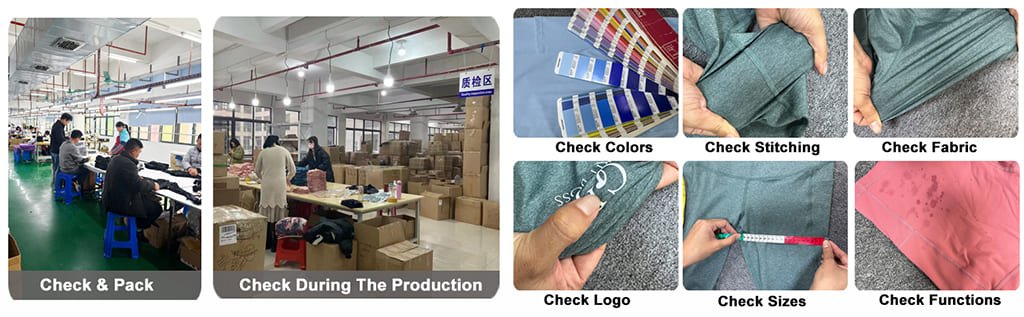
What MOQ, Price and Order Requirements Should Buyers Normalize Before Comparing Manufacturers?
Buyers should not compare manufacturer quotations until MOQ, fabric, size range, color quantity, branding, packaging, testing and delivery assumptions have been normalized. A supplier quoting 100 pieces may mean 100 per style, per color or only when stock fabric is used. Another supplier may quote a higher MOQ but include custom fabric, labels and testing. Commercial normalization converts these different offers into the same purchasing scenario so buyers can compare actual order requirements rather than headline prices.
This is one of the most common weaknesses in supplier comparisons.
A buyer creates a spreadsheet with three columns:
| Supplier | MOQ | Unit Price |
|---|---|---|
| Supplier A | 100 pcs | $8.20 |
| Supplier B | 300 pcs | $7.60 |
| Supplier C | 500 pcs | $6.90 |
Supplier C immediately appears cheaper.
Supplier A appears more flexible.
But the table tells the buyer almost nothing until the commercial conditions behind those numbers are understood.
Supplier A may be quoting stock fabric and one available color.
Supplier B may include custom organic cotton fabric.
Supplier C may require 500 pieces per color.
The cheapest unit price can therefore create the largest inventory commitment.
For buyers comparing a Plus Size Organic Cotton Clothing Manufacturer, the correct comparison is not simply:
MOQ + Price
It is:
Product + Fabric + Size Range + Color Structure + Quantity + Branding + Packaging + Testing + Delivery Terms
Only after these variables are reasonably aligned does unit price become a meaningful comparison.
MOQ Per Style vs Per Color vs Per Fabric: What Does the Number Actually Mean?
“MOQ 100 pcs” sounds clear.
It often is not.
The buyer should immediately ask:
100 pieces of what?
A manufacturer may use MOQ in several ways.
MOQ per style means the minimum applies to one garment design, while colors and sizes may be mixed under certain conditions.
MOQ per color means every color must reach the stated quantity.
MOQ per fabric can apply when a material needs to be knitted, dyed or specially finished.
MOQ per order may allow several products to be combined, although this is less common for highly customized programs.
MOQ per SKU is much more restrictive because each style-color-size combination can become a separate minimum.
These structures produce completely different inventory requirements.
Consider a brand ordering:
- 2 styles
- 3 colors per style
- 6 sizes per color
If the MOQ is 100 pieces per style, the theoretical garment commitment may begin around 200 pieces.
If it is 100 pieces per color, the same collection may require at least 600 pieces.
If the supplier requires 100 pieces for every style-color combination, the result is also 600 pieces before the buyer decides how quantities will be divided across six sizes.
The phrase “MOQ 100 pcs” therefore has little commercial value without its unit of application.
Garment MOQ vs Fabric MOQ: Why Can They Be Different?
Garment MOQ is controlled mainly by the economics of cutting, sewing, finishing and order handling.
Fabric MOQ comes from another part of the supply chain.
A garment manufacturer may genuinely accept 100 pieces, while the fabric mill requires substantially more material to:
- knit a custom construction;
- dye a custom Pantone color;
- apply a particular finish;
- produce a special GSM;
- manufacture a custom blend.
This is not necessarily a contradiction.
It means the garment factory and textile mill have different minimum-production economics.
Suppose a manufacturer accepts:
Garment MOQ: 100 pcs per style
but the selected custom organic cotton fabric requires:
Fabric MOQ: 300 kg per color
The brand cannot evaluate the order using the garment MOQ alone.
The important question becomes:
How many garments will 300 kg of fabric produce in our actual size range?
If the answer is 1,000 garments and the buyer wants only 100, the technically low garment MOQ does not solve the commercial problem.
The manufacturer may offer alternatives:
- use an available stock color;
- select an existing organic cotton fabric;
- share a fabric lot where commercially possible;
- accept an unused-fabric balance;
- increase the garment quantity.
Each option changes either the product or the financial commitment.
The buyer should know which solution is being quoted.
How Does a Wider Plus Size Range Change the Commercial Order Structure?
A wider size range creates more SKUs even when the total garment quantity stays the same.
Consider a 600-piece order.
Program A
3 colors × 4 sizes = 12 SKUs
Average theoretical quantity = 50 pieces per SKU
Program B
3 colors × 8 sizes = 24 SKUs
Average theoretical quantity = 25 pieces per SKU
Both orders contain 600 garments.
Operationally, they are not identical.
Program B requires more size separation, more cutting allocation, more labels, more packing combinations and potentially more measurement control.
It also creates a difficult buying decision: how should the 600 pieces be distributed across the size range?
Equal allocation may be easy mathematically but poor commercially.
If customer demand is concentrated in 2XL–4XL, ordering the same number of 6XL units may create unnecessary inventory. Conversely, under-ordering the upper sizes can undermine the purpose of offering an inclusive range.
The manufacturer can provide production information, but the brand should use its own sales data whenever possible to determine the size curve.
For a new brand without historical data, the initial size split should be treated as a commercial hypothesis to test, not as a permanent size ratio.
Does Plus Size Organic Cotton Clothing Always Cost More Than Standard Sizes?
Not automatically, but larger sizes can change material consumption.
Fabric is often one of the largest components of garment cost.
A 5XL T-shirt generally requires more fabric than the same style in size M. The exact difference depends on:
- garment measurements;
- fabric width;
- marker efficiency;
- sleeve shape;
- body length;
- pattern layout;
- fabric defects or cutting allowance.
This creates several possible pricing structures.
One-price structure:
The manufacturer averages material consumption across the complete size range and quotes one unit price.
Size-based surcharge:
Larger sizes receive an additional charge when consumption passes defined thresholds.
Grouped pricing:
For example, XL–3XL may share one price while 4XL–6XL uses another.
None of these structures is automatically wrong.
The buyer should ask how the quotation works before placing the order.
A single averaged price is simple for retail planning, but it may hide the cost distribution between sizes.
Size-based pricing is more transparent to consumption but can make purchasing and margin calculations more complicated.
The right structure depends on the collection.
Why Should Buyers Ask About Fabric Width?
Fabric width can affect consumption and therefore cost.
Two suppliers may quote fabrics with the same composition and GSM but different usable widths.
If one fabric allows more efficient pattern placement, the required meterage or weight per garment may differ.
This becomes especially relevant for larger pattern pieces.
A wider plus-size front or back panel may fit efficiently on one fabric width but create more cutting waste on another.
Buyers do not need to calculate marker efficiency themselves for every RFQ.
But when two quotations using apparently identical fabric show a large cost difference, it can be useful to ask:
What usable fabric width are you quoting?
What fabric consumption is assumed for the requested size range?
This can reveal whether the price difference comes from manufacturing efficiency, material assumptions or simply a different fabric.
What Is Commercial Normalization?
Commercial normalization means adjusting supplier quotations so that they represent substantially the same order before price, MOQ or lead time is compared.
It prevents one supplier from appearing cheaper simply because it excluded requirements included by another.
A normalized comparison might look like this:
| Comparison Item | Required Buying Scenario |
|---|---|
| Product | Relaxed Plus Size T-Shirt |
| Fabric | 100% Organic Cotton Single Jersey |
| Fabric Weight | 210 GSM |
| Size Range | XL–6XL |
| Colors | 3 Custom Colors |
| Quantity | 900 pcs Total |
| Size Split | Buyer-Defined Curve |
| Branding | Neck Label + Care Label |
| Decoration | Small Front Embroidery |
| Packaging | Individual Branded Bag |
| Sampling | Fit Sample + Selected Size Set + PP Sample |
| Wash Evidence | Required |
| Organic Documentation | Defined in RFQ |
| Inspection | Agreed Final Inspection Standard |
| Delivery Term | Same Incoterm for Comparison |
Now the buyer can ask all shortlisted manufacturers to quote against the same structure.
This does not mean every manufacturer must offer identical terms.
Supplier differences are exactly what the buyer is trying to discover.
The difference is that those variations become visible.
How Should Buyers Normalize Three Manufacturer Quotes?
Suppose three suppliers return these offers:
Supplier A
- $8.40 per piece
- 100 pcs per style
- stock fabric
- standard colors
- basic label included
Supplier B
- $9.10 per piece
- 300 pcs per style
- custom organic cotton fabric
- custom Pantone color
- labels and packaging included
Supplier C
- $7.80 per piece
- 500 pcs per color
- fabric specification unclear
- labels excluded
- packaging excluded
It would be misleading to rank them:
- Supplier C
- Supplier A
- Supplier B
based on unit price.
Instead, send each supplier the same normalized requirement.
For example:
Please requote 900 pieces total, three colors, XL–6XL, 100% organic cotton single jersey at the agreed GSM, custom color, buyer labels, individual packaging and the stated sample requirements.
The revised results may reveal:
- Supplier A cannot maintain the 100-piece MOQ with custom-dyed fabric.
- Supplier B’s price changes very little because those requirements were already included.
- Supplier C becomes more expensive after fabric, labels and packaging are added.
Now the buyer is comparing manufacturers rather than quotation formats.
What Costs Are Commonly Missing From the First Quotation?
A low initial price is not always misleading intentionally.
Early quotations are often based on incomplete information.
Costs that may appear later include:
- sample fees;
- pattern-development fees;
- custom fabric development;
- fabric surcharges;
- custom dyeing;
- print or embroidery setup;
- labels;
- hangtags;
- branded packaging;
- testing;
- certification-related documentation or administration where applicable;
- third-party inspection;
- carton requirements;
- freight;
- duty and customs costs.
The buyer should therefore ask:
What is not included in this quotation?
That question can be more useful than negotiating the unit price immediately.
When Is the Lowest Quotation Actually the Most Expensive Option?
A low unit price becomes expensive when it creates costs elsewhere.
Consider a manufacturer that is $0.80 cheaper per garment but requires 1,000 additional pieces because of its MOQ.
The apparent saving is:
$0.80 per piece
But the brand must finance and store hundreds of units it may not yet know how to sell.
Likewise, a cheap sample can become expensive if the supplier does not control grading and the brand later discovers size problems after production.
A lower-cost organic cotton fabric can become expensive if its washing behavior produces customer returns.
This is why buyers should consider:
Purchase Cost + Development Cost + Inventory Exposure + Quality Risk + Logistics Cost
rather than unit price alone.
Not every risk can be converted into a precise dollar amount.
But ignoring those risks does not make them disappear.
How Should Startups Compare MOQ?
Startups should pay particular attention to total cash commitment.
A higher unit price with a lower commercially workable quantity can sometimes be safer than a low unit price that requires excessive inventory.
For example:
Supplier A:
200 pcs × $11 = $2,200
Supplier B:
600 pcs × $8 = $4,800
Supplier B is significantly cheaper per piece.
Supplier A requires less than half the initial product investment.
Which is better depends on expected sales, margin, cash flow and reorder capability.
If the product is untested, the smaller commitment may have strategic value.
If demand is already established, Supplier B’s economics may become more attractive.
The manufacturer cannot answer this decision for the brand.
The brand needs to understand its own inventory risk.
How Should Growing Brands Compare MOQ?
Growing brands should look beyond the first production quantity.
A supplier may support a 200-piece trial but become inefficient at 3,000 pieces.
Another manufacturer may be uncomfortable below 500 pieces but become highly competitive as volume grows.
The buyer should therefore request volume-based quotations where future demand is realistic.
For example:
| Quantity | Supplier A | Supplier B | Supplier C |
|---|---|---|---|
| 300 pcs | Quote | Quote | Quote |
| 600 pcs | Quote | Quote | Quote |
| 1,500 pcs | Quote | Quote | Quote |
| 3,000 pcs | Quote | Quote | Quote |
This helps buyers see whether the commercial relationship can support the next stage of the product.
The purpose is not to force a manufacturer to promise future prices indefinitely.
Fabric prices, labor costs and exchange rates can change.
The purpose is to understand how the supplier’s production model behaves at different order volumes.
How Should Established Retailers Compare Commercial Terms?
Larger buyers often need more than a unit-price comparison.
Commercial evaluation can include:
- payment terms;
- capacity reservation;
- delivery windows;
- testing requirements;
- inspection conditions;
- packaging standards;
- order tolerance;
- claims procedures;
- compliance requirements;
- Incoterms;
- reorder planning.
At this stage, a small price difference may matter less than predictable execution.
A manufacturer that is $0.20 cheaper but repeatedly misses required delivery windows can create costs far beyond the saving.
Likewise, a supplier that cannot produce the required documentation may be commercially unsuitable regardless of price.
This is why procurement maturity changes the weighting of supplier criteria.
How Should Buyers Compare Sample Costs?
Sample cost should also be normalized.
One supplier may quote:
Sample: $50
Another:
Sample: $150
The first looks cheaper.
But Supplier A may be quoting one Proto Sample using available fabric.
Supplier B may include:
- custom pattern development;
- intended fabric sourcing;
- logo setup;
- fit revision;
- courier preparation.
The buyer should ask what each sample fee covers.
The same applies to refund policies. Some manufacturers credit sample fees against a later bulk order, while others do not.
A lower sample price is valuable only when the samples are designed to answer the buyer’s actual development questions.
What Should Buyers Confirm About Lead Time?
Lead time can be as ambiguous as MOQ.
A supplier may state:
Lead time: 25 days.
The buyer should ask:
Twenty-five days starting from when?
Possible starting points include:
- deposit received;
- fabric received;
- lab dip approved;
- PP Sample approved;
- all trims received;
- purchase order confirmed.
These starting points can be weeks apart.
Buyers should therefore compare a timeline rather than a single number.
A more useful structure is:
Material Preparation → Sample Approval → Bulk Production → Final Inspection → Shipment
The buyer can then identify which stages are included in the quoted lead time.
This becomes especially important when custom organic cotton fabric is required, because material preparation may take place before the garment-production clock begins.
Which Incoterm Is the Supplier Quoting?
A quotation is incomplete if the delivery basis is unclear.
EXW, FOB, CIF, DDP and other Incoterms allocate costs and responsibilities differently between seller and buyer.
A $9.00 EXW price should not be directly compared with a $10.00 FOB or delivered quotation as if they represented the same commercial offer.
For supplier comparison, buyers should request the same Incoterm whenever practical.
If that is not possible, logistics costs should be added separately before comparing the total commercial position.
This becomes especially important when comparing a Chinese manufacturer with a local or nearshore supplier.
What Should a Commercial Comparison Sheet Include?
Before reducing the shortlist, buyers can create a simple normalized sheet:
| Commercial Factor | Supplier A | Supplier B | Supplier C |
|---|---|---|---|
| Unit Price | |||
| MOQ per Style | |||
| MOQ per Color | |||
| Fabric MOQ | |||
| Custom Color MOQ | |||
| Size Range Included | |||
| Plus Size Surcharge | |||
| Sample Cost | |||
| Pattern Fee | |||
| Branding Included | |||
| Packaging Included | |||
| Testing Included | |||
| Organic Documentation | |||
| Production Lead Time | |||
| Lead-Time Starting Point | |||
| Payment Terms | |||
| Incoterm | |||
| Estimated Freight | |||
| Estimated Landed Cost |
The purpose is not to select whichever column contains the most attractive numbers.
It is to expose assumptions.
Once those assumptions are visible, buyers can decide which differences matter to their order.
What Commercial Questions Should Buyers Put in the RFQ?
Before requesting final quotations, ask each shortlisted supplier substantially the same questions:
- Is the MOQ per style, color, fabric or total order?
- Can sizes be mixed within the MOQ?
- Does the selected organic cotton fabric have a separate MOQ?
- Does custom dyeing create another minimum quantity?
- Are larger sizes priced differently?
- What fabric GSM and width are included in the quotation?
- What labels, trims and packaging are included?
- What sample and development charges are separate?
- What testing or inspection costs are excluded?
- When does the quoted production lead time begin?
- Which Incoterm is being quoted?
- What payment terms apply?
These questions turn a quotation into a commercial offer that can actually be evaluated.
What Commercial Red Flags Deserve Further Investigation?
Buyers should investigate further when:
- MOQ is given without explaining whether it applies per style or color;
- a custom organic cotton fabric has no stated fabric minimum;
- every size from XL to 6XL is quoted at one price but the supplier cannot explain how consumption was calculated;
- custom Pantone colors are offered with no discussion of dyeing MOQ;
- the quotation does not identify the fabric specification;
- major branding or packaging requirements are missing;
- lead time has no defined starting point;
- the supplier changes the Incoterm during price negotiation without explaining the effect;
- a very low unit price depends on a much larger quantity than the buyer requested;
- the quotation cannot be connected to the approved sample specification.
A commercial offer does not need to be complicated.
It needs to be clear enough that the buyer understands what will be purchased for the quoted amount.
What Should Buyers Decide Before Moving From Price Comparison to Sample Comparison?
By this stage, the buyer should know whether each shortlisted supplier is commercially capable of supporting the project.
That means confirming:
Product — Are all suppliers quoting the same garment?
Fabric — Is the material specification substantially equivalent?
Sizes — Is the same extended-size range included?
Quantity — Are the MOQ conditions understood?
Colors — Are stock and custom colors being treated consistently?
Branding — Are labels, logos and packaging included on the same basis?
Testing — Are required tests and documentation identified?
Lead Time — Does the timeline begin from the same milestone?
Delivery Terms — Are the Incoterms comparable?
After this commercial normalization, the lowest quotation may still be the best commercial offer.
But now the buyer knows why it is cheaper.
That is a much stronger basis for supplier selection.
Price tells the buyer what the supplier wants to charge. The next stage—sample evidence—shows what the supplier can actually execute against the agreed requirements.
1. Product Development
Regular monthly product development ensures consistent updates to your brand line.
2. Fabric Sourcing
Regular monthly product development ensures consistent updates to your brand line.
3. Sample Making
Regular monthly product development ensures consistent updates to your brand line.
4. Bulk Production
Regular monthly product development ensures consistent updates to your brand line.
5. Packaging & Delivery
Regular monthly product development ensures consistent updates to your brand line.
What Sample Evidence Should Buyers Compare Before Creating a Shortlist?
Buyers should compare samples according to what each sample is designed to prove. A Proto Sample can confirm an early product direction, a Fit Sample can evaluate fit and measurements, a Size Set can test grading across selected sizes, and a PP Sample can establish the approved reference before bulk production. A good-looking sample alone does not prove that a manufacturer can reproduce the same fabric, measurements, construction and workmanship consistently across a commercial order.
Sampling is often where a long supplier list begins to become a serious shortlist.
Before samples arrive, manufacturers can make similar claims:
- “We specialize in plus size.”
- “We can source organic cotton.”
- “Custom sizing is no problem.”
- “Quality is very good.”
- “We can follow your Tech Pack.”
A physical sample gives the buyer something more useful: execution evidence.
However, buyers can still draw the wrong conclusion if they compare samples without understanding what stage each sample represents.
A beautiful first sample may show strong sewing quality while using the wrong fabric.
A Fit Sample may fit the development size well but reveal nothing about 5XL or 6XL.
A Size Set may measure correctly but still use temporary trims.
A PP Sample may be much more valuable for bulk-production approval than an earlier showroom-quality sample.
For this reason, buyers comparing a Plus Size Organic Cotton Clothing Manufacturer should ask not only:
“Is the sample good?”
but:
“What exactly does this sample prove, and what does it still not prove?”
Proto vs Fit Sample vs Size Set vs PP Sample: What Does Each One Prove?
Different sample stages answer different sourcing questions.
| Sample Type | Main Purpose | What It Can Help Prove | What It Does Not Automatically Prove |
|---|---|---|---|
| Proto Sample | Test initial concept and construction | Basic silhouette, construction direction, feasibility | Final fit, final fabric, bulk repeatability |
| Fit Sample | Evaluate measurements and fit | Development-size fit, proportion, construction revisions | Complete size-range accuracy |
| Size Set | Evaluate grading across sizes | Whether approved grading translates across selected or all sizes | Bulk consistency by itself |
| PP Sample | Establish pre-production reference | Approved fabric, measurements, construction, branding and workmanship | That every bulk unit will automatically match |
| Production Sample | Check actual production output | Evidence from the bulk-production environment | Complete order quality unless sampling is representative |
The terminology can vary between manufacturers.
One supplier may call an early sample a “development sample,” while another uses “Proto Sample.” Some factories may combine certain stages for simpler products.
The name matters less than the question being answered.
Before approving a sample, the buyer should know:
What stage is this?
Which materials are final?
Which measurements are approved?
Which details remain temporary?
What must happen before bulk production?
This prevents an early development sample from becoming an accidental production standard.
Which Size Should Buyers Use for the First Fit Evaluation?
There is no universal answer.
The appropriate development size depends on the brand’s existing block, target customer, product type and intended size range.
For an established brand, the buyer may already have a proven base size and finished garment measurement chart.
For a new brand, the manufacturer may recommend a development size based on its pattern system.
The key issue is not whether the first sample is 1XL, 2XL or another size.
The key issue is whether that size provides a useful foundation for the intended range.
Suppose a brand plans:
XL / 2XL / 3XL / 4XL / 5XL / 6XL
Approving one 2XL Fit Sample can establish important product decisions, but it should not automatically answer every question about 6XL.
As the range expands, proportions may need further evaluation.
Buyers should therefore ask:
Which size are we approving first?
Why is it the development size?
Which additional sizes should be physically checked before production?
A supplier that can explain this logic provides stronger evidence than one that simply asks the buyer to choose any sample size.
When Is a Full Size Set Worth Requesting?
A full Size Set means physically producing samples across the complete size range.
It can provide strong evidence.
It also costs time and money.
Therefore, buyers should use it according to risk rather than making it mandatory for every garment.
A full Size Set may be more valuable when:
- the size range is newly developed;
- the product is closely fitted;
- the grading system has not been commercially tested;
- the brand is entering a new customer size range;
- measurement relationships change significantly through the range;
- the first order is commercially large;
- a sizing mistake would create expensive returns.
A full Size Set may provide less incremental value when:
- the style is very relaxed;
- the grading system is already proven;
- the order is a small repeat of an established product;
- representative-size checking already provides sufficient evidence.
A buyer might instead request selected sizes such as:
2XL / 4XL / 6XL
This creates checkpoints at different parts of the range without producing every size during development.
The correct approach should reflect product risk, not habit.
Should Buyers Compare Samples Before and After Washing?
For cotton garments, this can be highly useful.
A Fit Sample may look correct before washing and change after normal care.
If the buyer approves only the unwashed garment, the production standard may not reflect what the customer experiences after wearing and laundering the product.
A practical evaluation can compare:
Before Wash
- finished measurements;
- garment balance;
- hand feel;
- appearance;
- fit.
After Wash
- dimensional change;
- twisting or distortion;
- neckline condition;
- surface appearance;
- hand feel;
- fit.
For plus-size garments, the question is not simply whether the fabric shrank.
The buyer should ask:
Does the garment still deliver the approved fit after the expected care process?
That is a more commercially useful question.
A small dimensional change may be acceptable if the garment remains within the intended fit and buyer standard.
A similar percentage may be unacceptable in another measurement or another fitted product.
How Should Buyers Compare Samples From Different Manufacturers Fairly?
The final two or three suppliers should receive substantially the same core product requirements.
Brands that need broader support beyond this supplier-comparison process can also review Pair Fashion’s custom sportswear manufacturing services, including product development, fabric sourcing, sampling, private label customization and bulk production.
This is essential.
If Supplier A receives a detailed Tech Pack, Supplier B receives three reference photos and Supplier C receives only a short message, the resulting samples cannot tell the buyer much about comparative manufacturing capability.
The comparison has already been distorted by the inputs.
A normalized sample brief should ideally define:
- product type;
- intended silhouette;
- target customer;
- finished garment measurements;
- intended size range;
- fabric composition;
- target GSM;
- construction details;
- color;
- logo method;
- labels;
- key workmanship requirements;
- wash requirements where relevant;
- sample stage being requested.
If one variable cannot be identical, record the difference.
For example:
Supplier B used substitute 200 GSM organic cotton jersey because the final 220 GSM fabric was not available for the first Fit Sample.
Now the buyer knows that fabric hand feel and washing behavior should not be scored as if Supplier B had used the final material.
Fair supplier comparison requires equal inputs or transparent differences.
What Should Buyers Inspect When a Sample Arrives?
The first reaction should not be:
“Do I like it?”
That is useful, but incomplete.
A structured review can separate the sample into several areas.
1. Specification Accuracy
Check whether the supplier followed the agreed brief.
Review:
- style details;
- fabric;
- color;
- measurements;
- stitching;
- trims;
- labels;
- logo position;
- packaging where relevant.
A technically beautiful sample that ignores the Tech Pack is not necessarily a strong sample.
2. Measurement Accuracy
Measure agreed Points of Measurement using the same method used in the specification.
Record:
Target Measurement → Actual Measurement → Difference → Tolerance → Decision
Do not rely only on visual fit.
3. Fit and Proportion
Evaluate the garment on the appropriate fit model or fitting method.
Look for balance, comfort and movement—not only circumference.
4. Construction
Check:
- seam type;
- stitch consistency;
- reinforcement;
- seam appearance;
- edge finishing;
- pocket construction;
- neckline construction;
- waistband or hem construction where applicable.
5. Material Behavior
Confirm whether the fabric is the intended material.
If it is temporary, identify which conclusions should wait until the final fabric arrives.
6. Branding
Check:
- logo dimensions;
- logo position;
- label placement;
- label quality;
- print or embroidery execution.
This creates a much more useful sample report than:
“Looks good, please improve the fit.”
How Should Buyers Record Sample Revisions?
Revision history is important because the final approved sample may be the result of several changes.
Suppose Sample 1 has:
- body length too short;
- armhole too tight;
- sleeve opening too small.
Sample 2 corrects those problems but introduces a wider neckline.
Sample 3 is finally approved.
If the changes exist only across WhatsApp messages, emails and photographs, there is a greater risk that production uses an outdated instruction.
A simple revision table can help:
| Revision | Issue | Requested Change | Supplier Action | Status |
|---|---|---|---|---|
| V1 | Body too short | +2 cm body length | Pattern updated | Closed |
| V1 | Armhole restrictive | Increase agreed measurement | Pattern updated | Closed |
| V2 | Neckline too wide | Return to approved width | Corrected | Closed |
| V3 | Final fit | No further change | Approved | Locked |
The goal is not paperwork for its own sake.
The goal is to create one clear final specification.
When the PP Sample is approved, unresolved comments should not remain scattered across earlier versions.
How Long Does Sampling Take, and Are Suppliers Measuring the Same Starting Point?
Sample lead time should be compared carefully.
Supplier A may say:
Sample in 7 days.
Supplier B may say:
Sample in 12 days.
Supplier A appears faster.
But Supplier A may start counting after all fabric and trims are available, while Supplier B starts counting from receipt of the Tech Pack.
Or Supplier A may be producing a Proto Sample with available material while Supplier B is waiting for the intended organic cotton fabric.
The buyer should ask:
When does the sample lead time begin?
Possible starting points include:
- Tech Pack received;
- sample payment received;
- pattern confirmed;
- fabric available;
- custom fabric completed;
- trims available.
The buyer should also distinguish:
sample-making time from total development time.
A factory may physically sew a sample in three days, but material sourcing and revision cycles can make the complete development process much longer.
The most useful supplier is not necessarily the one with the shortest headline sample time.
It is the one whose timeline is predictable enough for the buyer’s launch plan.
Why Does a Good Sample Not Automatically Prove Bulk Repeatability?
A sample is usually produced in a highly controlled, low-volume environment.
One garment can receive more individual attention than hundreds or thousands of production pieces.
Bulk production introduces variables that may not exist at sample scale:
- larger fabric lots;
- multiple cutting bundles;
- more sewing operators;
- production-line balancing;
- size and color separation;
- more trims;
- more packaging combinations;
- time pressure;
- inspection sampling.
This means:
Sample Quality ≠ Automatic Bulk Repeatability
The approved sample should instead become a reference standard that bulk production is expected to reproduce within agreed tolerances.
The buyer should then ask how the manufacturer connects that standard to production.
Useful questions include:
- Is there an approved PP Sample?
- Are final measurements locked?
- Is the approved fabric specification recorded?
- Are logo and trim approvals recorded?
- Do production teams receive the approved specification?
- Are measurements checked during production?
- How are deviations handled?
- Is final inspection performed against the approved requirements?
These questions evaluate whether the supplier has a bridge between development and production.
What Does a PP Sample Prove?
A PP Sample, or Pre-production Sample, is valuable because it should represent the product much closer to the conditions intended for bulk production.
Ideally, the PP Sample reflects approved:
- fabric;
- color;
- measurements;
- construction;
- trims;
- branding;
- labels;
- workmanship.
Once approved, it can form part of the production reference.
However, buyers should avoid assuming:
PP Sample approved = production cannot go wrong.
Bulk still requires process control.
The value of PP approval is that it reduces ambiguity.
Without a clearly approved production reference, a later quality dispute becomes difficult because buyer and manufacturer may be comparing the goods against different expectations.
What Sample Evidence Is More Valuable Than a Perfect Showroom Sample?
A perfect sample is attractive.
A transparent development record can be more useful.
Consider two suppliers.
Supplier A
The first sample looks almost perfect. The factory says:
“No problem. Bulk will be same.”
There is little documentation.
Supplier B
The first sample has three measurable issues. The manufacturer records them, explains the pattern changes, produces a revised Fit Sample, checks representative sizes and then locks the PP specification.
Supplier A may still be the better manufacturer.
But Supplier B has provided more evidence about how problems are identified and controlled.
Real apparel development often requires revision.
The absence of a revision is not automatically proof of higher capability.
Sometimes it means the product was simple.
Sometimes the supplier used an existing pattern.
Sometimes problems were not measured carefully enough to be identified.
Buyers should therefore evaluate both sample result and development discipline.
What Sample Questions Should Buyers Ask Every Shortlisted Manufacturer?
A standardized sample questionnaire makes comparison easier.
Useful questions include:
- Which sample stage are you quoting?
- Will the sample use the intended bulk fabric?
- If substitute fabric is used, what is different from the final material?
- Which size will be sampled first?
- Which sizes do you recommend checking before bulk production?
- Can you produce a Size Set if required?
- How are sample measurements recorded?
- How are revisions documented?
- What is the sample tolerance?
- Can the sample be wash tested using the agreed method?
- Will a PP Sample be required before bulk production?
- When does the quoted sample lead time begin?
The answers help buyers distinguish suppliers that simply make samples from suppliers that use samples as part of a controlled development process.
What Sample Red Flags Should Remove or Downgrade a Supplier?
Not every mistake should eliminate a supplier.
The important question is how the manufacturer responds to the mistake.
A supplier deserves further investigation when:
- it repeatedly ignores clearly documented measurements;
- sample revisions are made without recording what changed;
- the supplier cannot identify which fabric was used;
- the sample is presented as final while major temporary materials remain;
- a supplier refuses reasonable measurement checks;
- it cannot explain how the approved size will be graded;
- the sample repeatedly solves one issue while reintroducing previously corrected problems;
- the manufacturer wants to begin bulk production while important sample comments remain open;
- the PP Sample differs materially from the agreed specification without explanation.
A first sample that needs revision is not necessarily a red flag.
Repeated uncontrolled variation is.
How Should Buyers Reduce the Supplier List After Sampling?
By this stage, the buyer should have much more than product photographs and quotation spreadsheets.
For each manufacturer, there should now be evidence across several areas:
Plus Size Evidence
- grading approach;
- measurements;
- Fit Sample;
- Size Set where required.
Organic Cotton Evidence
- material specification;
- relevant documentation;
- certificate-holder information where applicable.
Fabric Evidence
- GSM;
- construction;
- wash behavior;
- intended bulk material.
Commercial Evidence
- MOQ;
- price;
- size structure;
- branding;
- packaging;
- lead time.
Sample Evidence
- accuracy;
- revision control;
- communication;
- PP readiness.
This is enough to remove suppliers that looked attractive during initial sourcing but cannot support the actual order.
A manufacturer should not remain on the shortlist simply because it has already consumed development time.
That is a form of sunk-cost thinking.
If the sample process reveals a fundamental mismatch in fit capability, fabric requirements or commercial structure, removing the supplier before bulk production is usually less expensive than hoping the problem disappears later.
The remaining two or three manufacturers should now be subjected to a different type of test: supplier verification.
The buyer has evidence that they may be able to make the product.
The next question is whether the companies, facilities, certification claims and production controls behind those samples are sufficiently credible for the buyer to place a deposit.
- Yoga Pant
- Sports Bras
- Tank Tops
- Gym Shorts
- Men & Kids Sportswear
- Riding Tops
- Breeches
- Competition Wear
- Jackets
- Man & Kids Equestrian
- Joggers
- Sweatshirt & Hoodies
- Sweaters
- Coat & Jacket
- Men & Kids Loungewear
Other OEM Apparel
- Tennis Clothing
- Jumpsuit
- Dress & Skirts
- Plus Size Activewear
- Maternity Activewear
How Do Buyers Verify a Chinese Manufacturer Before Paying a Deposit and Create a Final Shortlist?
Before paying a deposit, buyers should verify who the supplier is, who controls production, where the garments will be made, whether important certification claims can be independently checked, and whether the final quotation matches the approved product. The final shortlist should then compare technical evidence, organic cotton documentation, sample accuracy, MOQ, price transparency and bulk-production controls rather than relying on website appearance, factory size or one successful sample.
By this stage, most obviously unsuitable suppliers should already be gone.
The remaining manufacturers should have passed basic product screening, demonstrated relevant sizing capability, provided reasonably comparable quotations and completed enough sample work to show how they respond to the project.
The final decision is therefore different from the initial sourcing decision.
At the beginning, the question was:
Which manufacturers might be able to make this product?
Now the question becomes:
Which manufacturer has provided enough verifiable evidence for us to commit money and production responsibility?
That distinction is important.
A professional website can help a buyer discover a supplier. A good salesperson can make communication easier. A successful sample can demonstrate development capability.
None of these individually proves that the complete commercial order will be executed as expected.
Manufacturer vs Trading Company vs Sourcing Company: Who Actually Controls Production?
The first verification question should be simple:
Who will actually manufacture the garments?
A buyer may be communicating with:
- a direct garment manufacturer;
- a trading company;
- a sourcing company;
- a manufacturer with outsourced specialist processes;
- a group operating several production facilities.
These business models are not automatically good or bad.
A capable sourcing company may coordinate several specialized factories more effectively than a poorly managed direct manufacturer.
Likewise, a trading company may provide useful communication, development and sourcing support.
The problem occurs when the buyer believes one business model is being used while the order is actually handled through another.
For example, if the supplier presents itself as the direct manufacturer but intends to subcontract the complete order to an unknown facility, the buyer may be evaluating the wrong production capability.
The better question is therefore not:
“Are you a factory?”
It is:
“Which facility will cut, sew and finish this order, and which processes will be handled elsewhere?”
That produces a more useful answer.
What Business Information Should Buyers Verify?
Before a meaningful deposit is transferred, buyers should know the legal entity receiving the order and payment.
Basic checks can include:
- registered company name;
- business address;
- manufacturing address if different;
- business registration information;
- bank beneficiary name;
- company email domain;
- primary sales contact;
- invoice entity;
- export entity where relevant.
Names should connect logically.
If the quotation is issued by Company A, the invoice comes from Company B and payment is requested to Company C, the buyer should ask for an explanation before transferring funds.
There can be legitimate reasons for different entities, particularly within company groups or export structures.
The concern is not that every name must always be identical.
The concern is whether the relationship is clear and verifiable.
What Factory Evidence Should Buyers Request?
A supplier should be able to provide evidence relevant to the order without turning the verification process into a demand for confidential information.
Useful evidence may include:
- production-floor photographs;
- live video walkthrough;
- cutting area;
- sewing lines;
- sample room;
- QC area;
- packing area;
- fabric or trim storage;
- relevant machinery;
- current production examples where confidentiality allows;
- audit documentation where applicable.
Buyers should prefer connected evidence over isolated photographs.
Ten professional factory images can be copied into a sales presentation.
A live walkthrough showing the entrance, sample room, cutting area, sewing lines and QC area in sequence is harder to disconnect from the actual operation.
For higher-value orders, a third-party factory audit or an in-person visit may provide stronger verification.
The level of due diligence should match the financial and product risk.
What Should Buyers Ask During a Video Factory Audit?
A video call can provide more useful information when it follows the production flow rather than becoming a general factory tour.
The buyer can ask to see:
1. Sample Room
Who develops patterns and samples? How are revisions recorded?
2. Fabric Receiving or Storage
How are fabrics identified and separated? How are approved materials connected to an order?
3. Cutting Area
How are styles, colors and sizes separated during cutting?
4. Sewing Lines
Is the factory currently producing categories relevant to the buyer’s project?
5. In-Line Quality Control
Where are measurements and workmanship checked during production?
6. Final Inspection
What records are created before packing?
7. Packing Area
How are size, color, labels and carton information checked?
The objective is not to judge a manufacturer because the factory does not look like a showroom.
A highly polished building is not proof of product capability.
Buyers should look for whether the process they were told about can actually be seen and explained.
How Should Buyers Verify Organic Cotton Certification Claims?
Certification evidence should be verified separately from general factory evidence.
If the supplier provides OCS documentation, buyers should identify the certificate holder and confirm whether the company, material and relevant supply-chain position match the sourcing claim being made.
Textile Exchange describes OCS as a third-party certification and chain-of-custody standard for tracking certified organically grown material through the supply chain. It also provides official routes for checking certified companies and authenticating applicable transaction certificates.
This allows buyers to move beyond receiving a PDF from a salesperson.
The verification process can ask:
- Who holds the Scope Certificate?
- Is the certificate current?
- Does the proposed material fall within the relevant scope?
- Which company will sell the certified material or product?
- Is transaction-level documentation required for the intended claim?
- Can the applicable certificate be independently authenticated?
The same principle applies when evaluating other certification systems.
A certificate should support a specific sourcing claim.
It should not be treated as a general quality badge for everything the manufacturer produces.
Why Should Buyers Recheck Certification Near the Time of the Order?
Certification status can change.
Documents expire, scopes can change, suppliers can change fabric mills, and the material selected during sampling may not be the material finally used for production.
For this reason, certification verification should not happen only when the supplier is first added to a database.
It should be connected to the actual order being approved.
This is particularly relevant during a period of standards transition. Textile Exchange has published its Materials Matter Standard and is transitioning parts of its current standards system over the coming years, while the current OCS framework remains part of the active sourcing landscape during the transition.
Buyers should therefore rely on the current applicable standard and current certificate information at the time of sourcing, rather than an old sustainability guide saved several years earlier.
What Production-Control Evidence Should Buyers Request?
Once the business itself has been verified, the buyer should return to the product.
The question is:
How will the approved sample become the production standard?
Useful evidence can include:
- approved PP Sample;
- locked measurement specification;
- approved fabric specification;
- approved color reference;
- approved logo artwork;
- trim approval;
- packaging specification;
- in-line inspection records;
- final inspection records;
- measurement reports.
The terminology can differ between factories.
The important point is whether approved information moves from development into production without becoming fragmented.
If the final product standard exists only across dozens of messages, photographs and separate files, the buyer should consolidate it before bulk production.
Why Should Buyers Ask About Subcontracting?
Subcontracting is common in apparel production.
A garment manufacturer may use external specialists for:
- printing;
- embroidery;
- washing;
- dyeing;
- special finishing;
- certain trims.
This is not automatically a weakness.
Many specialized processes are more efficiently handled by dedicated facilities.
The relevant question is:
What is subcontracted, and who controls the result?
If embroidery is external, who approves the embroidery sample?
If printing is external, who checks placement and color?
If washing is external, who verifies dimensional change afterward?
If the entire sewing order is outsourced, does the buyer know which facility is producing it?
Subcontracting becomes risky when responsibility becomes unclear.
What Red Flags Should Remove a Supplier From the Final Shortlist?
At this stage, red flags should be evaluated more seriously because the next action may involve a production deposit.
Potential reasons for removing or downgrading a supplier include:
- company identity cannot be verified;
- payment is requested to an unexplained unrelated account;
- the supplier refuses reasonable production-facility verification;
- certification documents cannot be connected to the claimed company or material;
- major quotation assumptions change immediately before deposit;
- the intended bulk fabric differs from the approved fabric without reapproval;
- unresolved sample comments remain open;
- the manufacturer cannot identify the final measurement specification;
- MOQ or pricing changes substantially without a clear commercial reason;
- production is moved to another facility without disclosure;
- the supplier pressures the buyer to begin bulk production before important specifications are confirmed.
One small inconsistency does not necessarily prove misconduct or poor manufacturing.
The buyer should look for patterns of unexplained inconsistency.
A supplier that identifies a problem early and explains it clearly can be safer than one that agrees to every request and reveals limitations only after payment.
Which Criteria Should Carry the Most Weight in the Final Decision?
There is no universal supplier scorecard.
A fitted plus-size fashion brand and a retailer buying relaxed organic cotton basics should not weight risks identically.
However, an illustrative scorecard can help prevent one attractive factor—usually price—from controlling the entire decision.
| Evaluation Area | Example Weight |
|---|---|
| Plus Size Grading Evidence | 20% |
| Organic Cotton Documentation | 20% |
| Fabric & Wash Evidence | 15% |
| Sample / Size-Set Accuracy | 15% |
| Bulk Repeatability Evidence | 10% |
| MOQ & Commercial Fit | 10% |
| Price Transparency | 5% |
| Communication & Lead-Time Clarity | 5% |
| Total | 100% |
These percentages are an example, not a universal sourcing formula.
A brand producing relaxed organic cotton T-shirts may reduce the weight assigned to complex grading evidence.
A fitted plus-size collection may increase it.
A large retailer may increase the weight assigned to production controls, compliance and delivery reliability.
A startup may give more weight to MOQ and total inventory commitment.
The value of the scorecard is not mathematical precision.
Its value is forcing the buyer to define what matters before seeing the final price.
Should Buyers Simply Select the Manufacturer With the Highest Score?
No.
A weighted scorecard is a decision tool, not an automatic purchasing system.
Suppose Supplier A scores strongly overall but requires 1,000 pieces per color.
Supplier B scores slightly lower but can commercially support the brand’s 300-piece test order.
For a startup, Supplier A may be technically excellent but commercially unsuitable.
Now consider an established retailer ordering 20,000 pieces.
Supplier B’s low MOQ may have almost no strategic value. Capacity, inspection systems and repeatability may matter much more.
This is why the final selection should consider two dimensions:
Manufacturing Capability
and
Commercial Fit
A strong manufacturer can still be the wrong supplier for a particular order.
How Should a Startup Weight the Final Shortlist?
A startup usually needs to protect cash and learn from the first commercial order.
Useful priorities may include:
- manageable total MOQ;
- clear sampling process;
- willingness to develop the intended size range;
- available or commercially practical organic cotton;
- transparent quotation;
- realistic communication;
- ability to reorder successful products.
The startup should be careful about paying a higher hidden cost for “low MOQ.”
For example, a supplier may accept only 100 garments but require the buyer to purchase a much larger custom fabric lot.
The garment MOQ looks flexible.
The total financial commitment is not.
How Should a Growing Brand Weight the Final Shortlist?
A growing brand should increasingly consider whether the supplier can support the next order, not only the current one.
Relevant questions include:
- Can the approved fabric be sourced again?
- Are pattern and grading records controlled?
- Can production increase from hundreds to thousands of pieces?
- Can successful colors be reordered?
- Can new colors be introduced without rebuilding the entire product?
- Does quality remain stable as volume grows?
- Can the supplier provide more disciplined production scheduling?
At this stage, the cheapest sample-development partner may not become the strongest long-term manufacturing partner.
How Should an Established Retailer Weight the Final Shortlist?
Established retailers generally have more internal systems and greater exposure if a supplier fails.
They may therefore assign greater importance to:
- production capacity;
- compliance;
- audit results;
- documentation;
- testing;
- inspection systems;
- delivery planning;
- claims verification;
- capacity allocation;
- corrective-action procedures.
The product still matters.
But supplier selection increasingly becomes an operational-risk decision as well as a product-development decision.
What Should the Final Two or Three Manufacturers Receive?
The final suppliers should receive substantially the same locked sourcing package.
This may include:
- final Tech Pack;
- approved measurement chart;
- grade rules where buyer-controlled;
- intended fabric specification;
- organic cotton documentation requirements;
- approved colors;
- logo artwork;
- labels;
- packaging;
- testing requirements;
- quantity by style;
- quantity by color;
- size range;
- expected size split;
- delivery target;
- required Incoterm.
This creates a final commercial comparison under much more equal conditions.
At this stage, the buyer should avoid introducing major new requirements to only one supplier and then comparing the resulting price with quotations based on the older specification.
A fair comparison requires commercially equivalent inputs.
How Should Buyers Run the Final Supplier Comparison?
A useful final comparison can combine evidence from the entire sourcing process:
| Decision Area | Supplier A | Supplier B | Supplier C |
|---|---|---|---|
| Business Verified | |||
| Production Facility Verified | |||
| Relevant Plus Size Experience | |||
| Grade Rules Reviewed | |||
| Fit Sample Approved | |||
| Size Set Evidence | |||
| Organic Cotton Documentation | |||
| Fabric Specification Locked | |||
| Wash Evidence Reviewed | |||
| PP Sample Capability | |||
| Bulk QC Evidence | |||
| MOQ Structure | |||
| Normalized Unit Price | |||
| Total Order Commitment | |||
| Lead Time | |||
| Incoterm | |||
| Main Risk | |||
| Main Advantage |
The final two rows are particularly useful.
Every supplier has weaknesses.
The objective is not to find a manufacturer with no disadvantages.
It is to understand which disadvantage creates the greatest risk for this particular order.
What Must Be Confirmed Before the Purchase Order and Deposit?
Before releasing a production deposit, the buyer should confirm that the commercial and technical versions of the order agree with each other.
A final check should cover:
Product
- correct style number;
- correct version of Tech Pack;
- approved measurements;
- approved size range.
Material
- exact composition;
- GSM;
- construction;
- color;
- intended organic cotton documentation;
- approved bulk material or clearly defined approval procedure.
Branding
- logo;
- labels;
- hangtags;
- packaging.
Quantity
- total units;
- color quantities;
- size split;
- permitted order tolerance where applicable.
Quality
- approved PP Sample requirement;
- measurement tolerance;
- workmanship standard;
- inspection arrangement;
- testing requirements.
Commercial Terms
- final unit price;
- sample or development charges;
- payment terms;
- Incoterm;
- production lead-time starting point;
- target shipment date.
Supplier Identity
- contracting entity;
- invoice entity;
- bank beneficiary;
- manufacturing facility.
If these points exist only across separate conversations, consolidate them.
The purchase order should not require the production team to guess which message contains the latest instruction.
How Should Buyers Choose From the Final Shortlist?
After all verification is complete, the decision becomes more specific.
The buyer is no longer asking:
Which company has the most impressive website?
or:
Which supplier says it can make the largest size?
or:
Which factory gave me the lowest number?
The buyer can instead ask:
Which supplier has provided the strongest evidence for the requirements that create the greatest risk in this order?
For a fitted XL–6XL collection, that may be grading and size-set evidence.
For a certification-sensitive organic cotton program, documentation and traceability may carry more weight.
For a startup, commercially workable MOQ may determine whether the collection can launch at all.
For a mature retailer, production controls and delivery reliability may dominate the decision.
That is the purpose of the entire comparison process.
A Plus Size Organic Cotton Clothing Manufacturer should not be selected because it performs best on one attractive headline metric. Buyers should compare whether the supplier’s fit capability, organic cotton evidence, fabric performance, sampling discipline, commercial structure and production controls match the actual risks of the order.
The strongest shortlist is therefore not the one containing the largest factories.
It is the one in which every remaining supplier has enough verified evidence to justify moving from sourcing possibility to commercial commitment.