OEM/ODM Sportswear Manufacturer | 3-Day Sampling | Low MOQ | 50K Monthly Capacity | ISO9001 & BSCI Certified

Top 10 Plus Size Womens Cotton Clothing Manufacturer Options for B2B Buyers
Compare each plus size womens cotton clothing manufacturer by product range, extended sizing, cotton capability, sampling, MOQ, order flexibility and production evidence. This guide helps B2B buyers evaluate sourcing conditions, commercial risks and supplier suitability before placing custom orders confidently.
Which Plus Size Womens Cotton Clothing Manufacturer Options Should Buyers Compare?
A useful manufacturer shortlist should compare suppliers by business model, relevant product experience, plus size evidence, cotton sourcing capability, sampling conditions and commercial order structure. Buyers should not assume that every company appearing in a manufacturer search provides the same service. Some focus on custom OEM/ODM production, while others are better suited to ready wholesale or established product programs.
Finding ten supplier names is not the difficult part.
The difficult part is deciding whether those ten businesses are actually comparable.
A plus size womens cotton clothing manufacturer may work from original Tech Packs and custom specifications, while another supplier may concentrate on modifying existing styles. A wholesaler can provide fast access to ready-developed products but may offer less control over fit, fabric and construction. A larger factory may have more production capacity but require commercial quantities that do not suit a startup testing its first collection.
For buyers, the shortlist should therefore begin with supplier type and purchasing fit, not popularity.
Top 10 Manufacturer Shortlist at a Glance
| Supplier | Country | Supplier Model | Main Reason to Investigate |
|---|---|---|---|
| Pair Fashion | China | OEM/ODM and private label manufacturer | Custom development, extended sizing, sampling and scalable production |
| Yunli Apparel | China | OEM/ODM apparel manufacturer | Plus size categories and flexible published order conditions |
| Hongyu Apparel | China | Custom/private label manufacturer | Broad womenswear development and customization |
| Mostnica Garment | China | OEM/ODM manufacturer | Plus size womenswear and buyer-focused sourcing information |
| Billoomi Fashion | India | Private label manufacturer | Small and growing private label brands |
| Wings2Fashion | India | Custom apparel manufacturer | Export-oriented custom womenswear |
| Nelly Textile | Turkey | Apparel/textile supplier | Alternative regional sourcing and womenswear supply |
| Whispering Smith | United Kingdom | Fashion supplier | Established fashion and retail supply |
| Europa Fashions | United Kingdom | Wholesale supplier | Ready-wholesale womenswear for boutiques and retailers |
| Praslin Clothing | United Kingdom | Plus size fashion supplier | Trend-led plus size womenswear |
This comparison is a starting point rather than a final ranking. The companies operate under different manufacturing and wholesale models, so published information should be checked against the requirements of the actual order before a buyer makes a sourcing decision.
Manufacturer, Wholesaler or Private Label Supplier: Why Does the Difference Matter?
The word manufacturer is used loosely across the apparel industry.
A business can appear in the same Google search while offering a very different purchasing model. One supplier may cut and sew original garments according to customer specifications. Another may offer existing styles with label changes. A third may operate mainly as a wholesaler or fashion supplier.
That difference affects what a buyer can realistically control.
If the project depends on proprietary sizing, specific cotton material, original construction and custom branding, the buyer will normally need a supplier with genuine product-development and manufacturing capability. If the priority is launching quickly with proven products, ready wholesale may be commercially more practical.
Neither model is automatically better. They solve different sourcing problems.
Before adding any plus size womens cotton clothing manufacturer to a serious shortlist, buyers should establish:
- Supplier type: manufacturer, trading company, wholesaler or brand.
- Development model: OEM, ODM, private label or ready wholesale.
- Relevant category: whether the supplier actually works with the intended womenswear products.
- Extended-size evidence: what supports its stated plus size capability.
- Cotton availability: whether the required material can be sourced under realistic commercial conditions.
- Sampling: what type of sample can be produced before an order is committed.
- Order structure: how style, color, fabric and size requirements affect MOQ.
- Repeatability: whether an approved product can realistically be reproduced for future orders.
These questions remove many unsuitable suppliers before the buyer spends money on samples.
Published Claims Should Start a Question, Not Finish One
Supplier websites are useful research tools, but published claims should be converted into project-specific questions.
Consider a manufacturer advertising “low MOQ.”
That statement has limited purchasing value until the buyer knows what the minimum applies to. It may mean 100 pieces per style, 100 pieces per color, a minimum fabric purchase, or a total order quantity that can be distributed across several sizes.
The same problem appears with other common claims.
| Published Claim | What a Buyer Still Needs to Confirm |
|---|---|
| Low MOQ | Per style, color, fabric or total order? |
| 100% Cotton Available | Which structure, GSM, finish and commercial minimum? |
| Sizes Up to 6XL | What measurement system and grading evidence support the range? |
| Fast Sample | Development sample, fit sample or production-ready sample? |
| Custom Clothing | Which parts of the garment can actually be changed? |
| Strict QC | Which inspections are performed and what evidence is available? |
| Fast Lead Time | From deposit, material approval, PP approval or another starting point? |
| Certified Factory | Which facility, legal entity, scope and validity period are covered? |
This distinction becomes especially important when comparing manufacturers across countries.
A supplier publishing a lower MOQ is not automatically more flexible. A supplier quoting a lower unit price is not automatically less expensive overall. And a company showing more plus size products is not automatically more experienced with the specific fit, fabric and construction required for the buyer’s collection.
Which Manufacturers Fit Different Buyer Stages?
The same shortlist can produce different results for different buyers.
A startup launching its first collection may care most about manageable inventory exposure. Instead of asking only for the lowest unit price, it should look at the number of styles, colors and fabric minimums required to place the first commercially realistic order.
A growing DTC brand may place more value on sampling response, documentation, repeat orders and supply continuity. Once a product begins selling consistently, reproducing it can become more important than saving a small amount on the initial quotation.
An established apparel company may already control its own specifications, testing procedures and inspection requirements. It may therefore prefer a manufacturer that can follow detailed documentation consistently rather than one offering extensive design assistance.
The practical question is not:
“Which company is the best manufacturer?”
It is:
“Which supplier structure fits the risks and requirements of this order?”
What Makes a Manufacturer Worth Moving to the Next Round?
A shortlist should become smaller as the buyer gathers better evidence.
At the first stage, basic business information, relevant product categories and commercial compatibility may be enough. Before sampling, however, buyers should expect more specific answers about materials, sizes, customization and order conditions.
Before bulk production, the standard should become higher again.
A manufacturer worth advancing should be able to provide enough information for the buyer to understand:
what is confirmed, what is still an estimate, what requires sampling, what affects price and MOQ, and what must be approved before production.
That transparency is often more useful than a long list of marketing claims.
For brands specifically looking for original product development rather than ready wholesale, working with a plus size womens cotton clothing manufacturer that supports custom specifications provides a different sourcing route from buying existing products and simply changing labels.
The detailed manufacturer profiles in the next section can therefore be read as a shortlisting comparison, not a universal ranking. Each supplier should be judged against the same core question: does its product focus, sampling structure and commercial model fit the order the buyer is actually preparing to place?
Top 10 Plus Size Womens Cotton Clothing Manufacturer Options for B2B Buyers
The following suppliers represent different ways to source plus size womenswear, from custom OEM/ODM manufacturing to private label production and ready wholesale. They should not be treated as interchangeable factories. Buyers should compare what each company publicly offers, which commercial conditions are disclosed, and which important details still need to be confirmed through an RFQ, sample or direct supplier verification.
A Top 10 list is most useful when it explains why one supplier may fit a particular order better than another.
For this reason, the profiles below separate publicly available information from purchasing judgments. MOQ, sample time and lead time can change with fabric, color, construction, customization and quantity. Where a supplier does not clearly publish a condition, buyers should request project-specific confirmation rather than relying on an assumed industry average.
Quick Manufacturer Comparison
| Supplier | Location | Supplier Type | Published MOQ/Order Information | Buyer Profile |
|---|---|---|---|---|
| Pair Fashion | Dongguan, China | OEM/ODM manufacturer | Project-dependent | Custom plus size development and repeat production |
| Yunli Apparel | Dongguan, China | OEM/ODM manufacturer | 50 pcs per color published on its main site | Emerging and custom fashion brands |
| Hongyu Apparel | China | Custom/private label manufacturer | Different minimums by service model | Startups through established custom brands |
| Mostnica Garment | Guangzhou, China | OEM/ODM/private label manufacturer | From 100 pcs per style for cut-and-sew | Trial orders and scalable everyday apparel |
| Billoomi Fashion | India | Full-service private label manufacturer | From 25 pcs per style for qualifying orders | Startups and small-to-mid private labels |
| Wings2Fashion | India | Custom/private label manufacturer | From 100 pcs per design on its USA-facing page | Startups and export-oriented brands |
| Nelly Textile | Turkey | Textile/apparel supplier | Confirm by RFQ | Buyers comparing regional sourcing alternatives |
| Whispering Smith | Manchester, UK | Designer, importer, wholesaler and sourcing/manufacturing supplier | Flexible MOQ stated; exact minimum requires confirmation | Retailers and established fashion businesses |
| Europa Fashions | Birmingham, UK | Fashion wholesaler | Low-MOQ wholesale model | Boutiques and ready-stock buyers |
| Praslin Clothing | Manchester, UK | Plus size wholesale supplier/distributor | Pack-based wholesale | Retailers seeking ready-developed plus size fashion |
The most important distinction is visible immediately: not every company in the table serves the same purchasing purpose.
A buyer seeking an original plus size womens cotton clothing manufacturer should place more weight on OEM capability, specifications, samples and manufacturing evidence. A boutique looking for existing products may care more about stock availability, pack quantities and delivery speed.
1. Pair Fashion — Dongguan, China
Established: 2016
Supplier Type: OEM, ODM and private label manufacturer
Core Products: Plus size apparel, activewear, equestrian apparel, maternity wear, yoga and other functional apparel
Sampling: Regular sampling around 7 days; fastest development can be shorter depending on the project
Bulk Lead Time: Typically project-dependent; standard production is commonly planned around 20–25 working days after required approvals
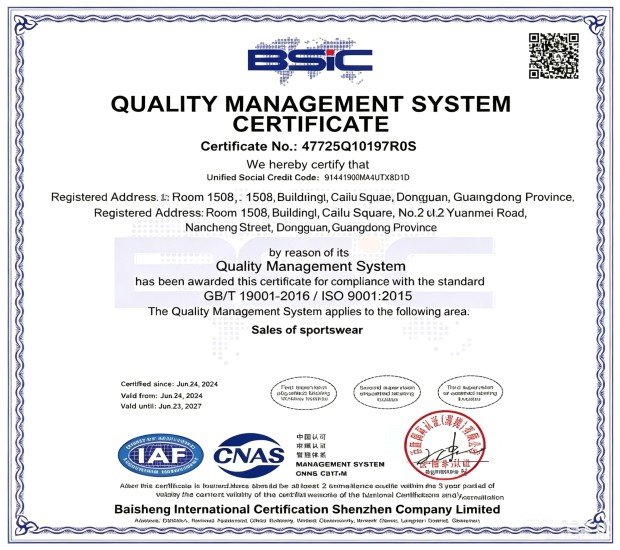
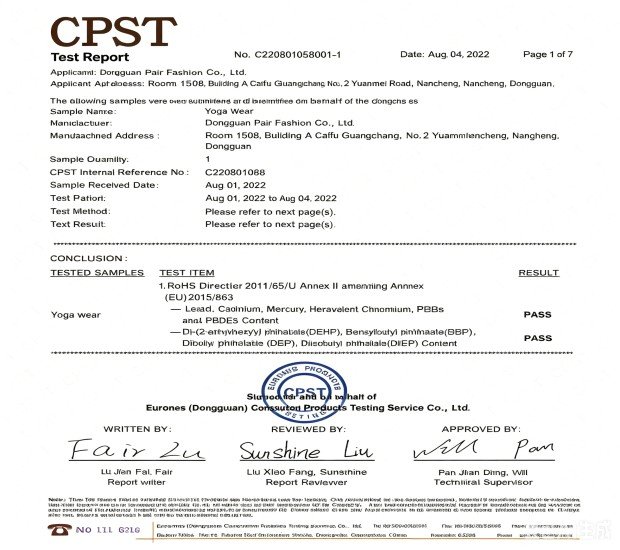
Certifications: ISO 9001, BSCI, GRS, CE and RoHS
MOQ: Depends on product, fabric, color and customization structure
Pair Fashion is positioned more toward custom product development than ready-stock wholesale. That distinction matters for buyers who already have a Tech Pack, reference garment, measurement requirements or a product concept that needs to become a commercially manufacturable style.
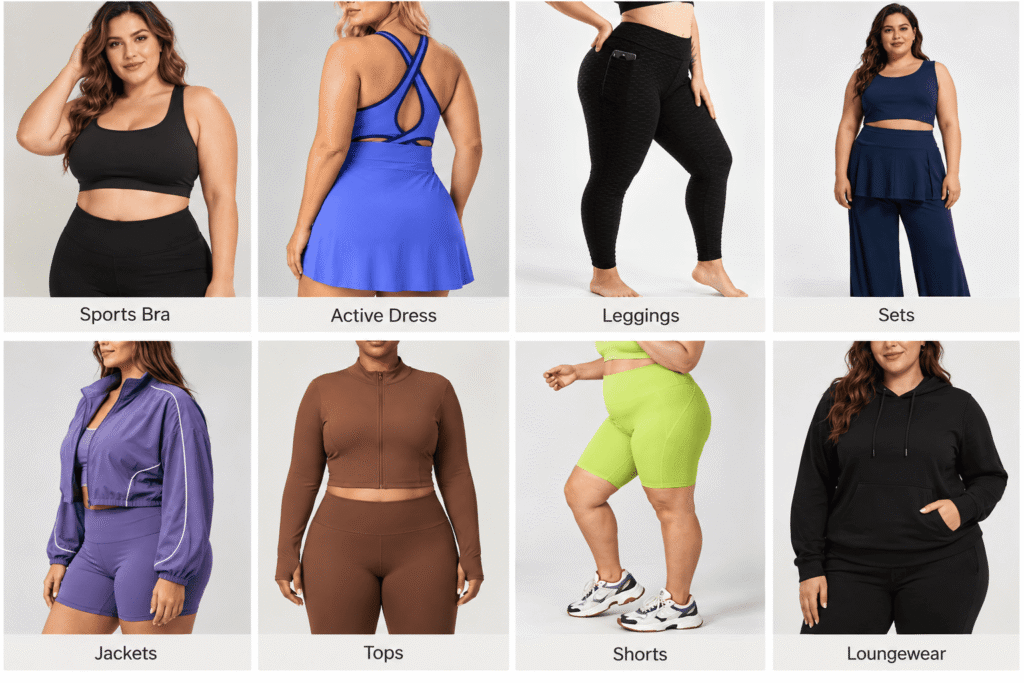
The company is particularly relevant when the project combines extended sizing with custom apparel development rather than simply purchasing an existing plus size style. For brands developing stretch-based fitness categories alongside cotton casualwear, its plus size activewear manufacturing capabilities also cover leggings, sports bras, tops, shorts and coordinated private label collections.
Core strength: A buyer can keep development and production within one manufacturing relationship rather than sourcing patterns, samples, labels and bulk production from separate suppliers.
Potential limitation: Buyers looking only for immediate ready-stock cotton fashion may find a wholesaler more commercially efficient because custom manufacturing involves development and approval before production.
Suitable for: Startup and growing brands developing proprietary plus size products, as well as established buyers requiring OEM/ODM production.
Less suitable for: Buyers looking for one-piece print-on-demand production or immediate ready-wholesale inventory.
What to verify: The exact MOQ, cotton specification, color minimum, sampling cost and production schedule for the actual style should be confirmed before comparing the quotation with other suppliers.
Brands that want to move from supplier research into an actual development project can review Pair Fashion’s custom plus size cotton womenswear manufacturing capabilities separately.
2. Yunli Apparel — Dongguan, China
Established: 2008
Supplier Type: Custom OEM/ODM apparel manufacturer
Core Products: T-shirts, hoodies, denim, tracksuits, streetwear and other fashion categories
Published MOQ: 50 pieces per color on its main website
Sampling: Confirm for the specific product
Bulk Lead Time: Confirm by RFQ
Certifications: Confirm current certification scope directly
Yunli Apparel is a useful candidate for buyers prioritizing customization and relatively accessible published minimums. Its public material positions the business around custom apparel manufacturing for international fashion brands and shows experience across multiple casual and fashion categories.
That broad range can be useful when a brand plans to source more than one type of garment from the same supplier.
It can also create an important due-diligence question.
A broad catalog does not automatically prove equal specialization in every category. A buyer sourcing extended-size cotton womenswear should therefore ask for examples relevant to the specific product type and size range, rather than judging capability from unrelated denim, streetwear or standard-size products.
Core strength: Broad OEM/ODM category coverage combined with a published low-volume entry point.
Potential limitation: Buyers should separately verify how much of the supplier’s broader apparel experience applies specifically to their intended plus size cotton products.
Suitable for: Emerging fashion brands seeking customized casualwear and relatively flexible quantities.
Less suitable for: Buyers who need highly specialized plus size evidence but do not want to conduct additional sample and capability verification.
What to verify: Confirm whether the stated MOQ applies to the requested fabric and color structure, what extended-size grading evidence is available, sample timing and what cotton constructions can be sourced for the project.
3. Hongyu Apparel — China
Established: 2003
Supplier Type: Custom clothing and private label manufacturer
Core Products: Womenswear, menswear, childrenswear and multiple custom apparel categories
Published Capacity: Approximately 73,685 pieces per month
MOQ: Varies by cooperation model; its public materials distinguish ready wholesale from customized production
Sampling: Published blank-wholesale sample time is around 3 days; custom development should be confirmed separately
Certifications: Confirm certificates required for the specific order
Hongyu has a longer publicly stated manufacturing history than several companies in this comparison. Its website describes a supply-chain service covering fabric and accessory sourcing, sampling, logo development, bulk production, packaging, QC and delivery.
One detail is particularly useful for buyers: Hongyu does not present every order type under one identical commercial condition.
Its public information separates blank wholesale, customization and custom production, demonstrating why buyers should avoid copying one MOQ number from a supplier website without checking which service model that number belongs to.
Core strength: Broad apparel category coverage and an established custom-manufacturing structure serving brands at different stages.
Potential limitation: A broad product portfolio means buyers still need to verify product-specific plus size and cotton experience rather than assuming every category has the same technical depth.
Suitable for: Brands seeking a broad China-based custom apparel supplier and buyers who may expand across multiple product categories.
Less suitable for: Buyers who want a single published MOQ or sample figure to apply automatically to every custom product.
What to verify: Ask for the commercial conditions specifically applicable to your design, cotton fabric, color count, size range and branding requirements.
4. Mostnica Garment — Guangzhou, China
Established: Publicly states manufacturing and export experience since 2008
Supplier Type: OEM, ODM, private label and in-stock apparel sourcing
Core Products: Womenswear, menswear, kidswear and everyday apparel
Published MOQ: From approximately 100 pieces per style for qualifying cut-and-sew OEM orders
Typical Sample Development: Approximately 5–8 days for custom cut-and-sew styles
Published Capacity: Approximately 600,000 pieces per month across its coordinated production network
QC: Publicly states AQL 2.5 final sampling
Mostnica provides more public commercial detail than many apparel supplier websites. For a buyer building an initial shortlist, that transparency makes it easier to understand the supplier’s intended operating range before requesting a quotation.
Its positioning is particularly relevant to everyday scalable apparel, including dresses, tops, pants, T-shirts and hoodies.
The useful lesson here is not simply that the MOQ begins around 100 pieces. Mostnica itself notes that MOQ and sample time depend on garment complexity, fabric availability and customization.
That qualification is important. Published numbers are useful for eliminating obviously unsuitable suppliers, but they are not substitutes for a quotation based on the actual product.
Core strength: Clear public information around trial MOQ, sample development and production structure.
Potential limitation: The company states that it is not positioned as a luxury bespoke atelier or one-piece print-on-demand service.
Suitable for: B2B buyers developing scalable everyday apparel and brands wanting a relatively clear starting framework before RFQ.
Less suitable for: One-off bespoke production or buyers requiring a luxury atelier model.
What to verify: Cotton sourcing options, exact size range, color split, sample requirements and the MOQ that applies after the full specification is reviewed.
5. Billoomi Fashion — Noida, India
Established: 2005
Supplier Type: Full-service private label apparel manufacturer and exporter
Core Products: Womenswear, kidswear, menswear, T-shirts, activewear, yoga apparel and other custom categories
Published MOQ: From 25 pieces per style for qualifying solid-color styles; higher minimums apply to some printing, embroidery, denim and CMT programs
Published Capacity: More than 60,000 pieces per month
Certifications/Audits: ISO 9001:2015 certified and SEDEX audited according to company information
Market Model: Export-focused
Billoomi is an interesting comparison for brands that assume China is the only practical option for low-volume custom production.
Its public information is unusually specific about how MOQ changes according to the production method. Solid-color styles can begin at lower quantities, while printed, embroidered, denim or CMT programs can require different minimums.
This is exactly why buyers should compare order structures rather than headline MOQ numbers.
Billoomi also describes a full-service model covering material sourcing, pattern making, grading, sampling, production, labels, finishing, packing and logistics.
Core strength: Low published entry quantities for qualifying products and a business model explicitly aimed at startups and emerging private labels.
Potential limitation: The lowest MOQ does not apply equally to every decoration, fabric or manufacturing model.
Suitable for: Small and emerging brands that need full-package custom manufacturing and want to compare India with China.
Less suitable for: Buyers assuming every product can be manufactured at the company’s lowest published quantity.
What to verify: The MOQ for the exact cotton material, whether extended sizing changes consumption or commercial requirements, sample lead time, bulk schedule and certification scope.
6. Wings2Fashion — India
Supplier Type: Custom and private label apparel manufacturer/exporter
Core Products: Womenswear, menswear, sportswear, streetwear, resort wear, plus size apparel and kidswear
Published MOQ: From 100 pieces per design on its USA-facing manufacturing page
Sampling: Confirm according to product
Lead Time: Confirm by RFQ
Certifications: Confirm current certificates required for the order
Wings2Fashion positions itself toward international brands, startups and boutiques seeking custom production from India. Its public product coverage includes plus size apparel across multiple categories, making it relevant as an alternative sourcing option rather than another China supplier.
For buyers, the main comparison should not become “India vs China—which country is better?”
That question is too broad to produce a useful purchasing decision.
A better comparison is whether the supplier can meet the same product specification, sample standard, order quantity and commercial requirement under competitive total sourcing conditions.
Core strength: Broad custom/private label category coverage and an export-oriented model.
Potential limitation: Product-specific sample, cotton and lead-time conditions require direct confirmation.
Suitable for: International startups and brands comparing India-based custom production with Chinese suppliers.
Less suitable for: Buyers unwilling to run an RFQ and sample comparison before selecting a production source.
What to verify: Cotton fabric options, plus size measurement capability, sample cost, sample lead time, bulk lead time and the exact interpretation of its MOQ.
7. Nelly Textile — Turkey
Supplier Type: Textile/apparel sourcing option
MOQ: Not reliably standardized in the public information reviewed
Sampling: Confirm directly
Lead Time: Confirm directly
Certifications: Verify according to the specific manufacturing entity and order
Turkey deserves consideration in a global supplier comparison because geography can change the commercial equation for European buyers. Freight distance, fabric access, development speed and communication windows can sometimes matter as much as the ex-factory garment price.
However, buyers should be careful with supplier names that are difficult to verify consistently across public sources.
For this reason, Nelly Textile should be treated as a verification-first candidate rather than assigning unsupported factory data to it.
Core strength: Potential access to Turkey’s established textile and apparel supply ecosystem.
Potential limitation: Public information available under this supplier name does not provide enough consistent detail to treat MOQ, plus size specialization, sampling or certifications as confirmed facts.
Suitable for: Buyers intentionally building a geographically diversified shortlist and willing to perform direct company verification.
Less suitable for: Procurement teams requiring complete public due-diligence information before initial contact.
What to verify: Legal company identity, manufacturing location, whether production is owned or outsourced, plus size womenswear experience, cotton sourcing, MOQ, lead time, QC and current certifications.
8. Whispering Smith — Manchester, United Kingdom
Established: 1967
Head Office: Manchester, United Kingdom
Supplier Type: Designer, importer, wholesaler, distributor and made-to-order sourcing/manufacturing partner
Core Products: Men’s and women’s fashion
MOQ: Described as flexible for made-to-order programs; exact project minimum should be confirmed
Services: Design, sourcing, labels, packaging, QC, shipping, custom designs and ready designs
Whispering Smith represents a very different sourcing model from a conventional cut-and-sew factory.
The company describes itself as a major UK creator, importer, wholesaler and distributor and offers both in-stock and made-to-order strategies. It also states that some of its factory relationships extend beyond 20 years.
For certain retailers, this hybrid structure can be an advantage. A buyer may be able to combine ready stock with bespoke development rather than committing every product to a custom manufacturing program.
For a buyer specifically searching for a plus size womens cotton clothing manufacturer, however, that broader sourcing structure requires a different type of verification from dealing directly with one identified production facility.
Core strength: Long operating history, established retail-fashion infrastructure and the ability to work across stock and made-to-order sourcing.
Potential limitation: Buyers seeking direct factory-level specialization in plus size cotton production may need more information about the actual production source used for their program.
Suitable for: Retailers and established fashion businesses that value design, sourcing and distribution infrastructure.
Less suitable for: Buyers whose procurement policy requires a direct relationship with one clearly identified specialist factory.
What to verify: Which facility will manufacture the order, its plus size experience, cotton capabilities, MOQ, sample structure and applicable compliance documents.
9. Europa Fashions — Birmingham, United Kingdom
Location: Birmingham, United Kingdom
Supplier Type: Wholesale fashion supplier
Core Products: Women’s fashion, including plus size clothing and cotton-containing styles
Size Range: Its current plus size collection publicly covers approximately UK 16–28+
Order Model: Ready wholesale with low-quantity purchasing options
Custom Manufacturing: Not the primary proposition presented on its wholesale site
Europa Fashions illustrates why a useful Top 10 comparison should include more than factories.
A boutique may not actually need a custom manufacturer.
If the business needs to test plus size demand quickly, buying existing wholesale inventory can reduce development time and eliminate much of the sampling process. Europa currently lists a substantial plus size assortment, including cotton products, with low-volume wholesale purchasing options.
The trade-off is product control.
A wholesale buyer selects from products that already exist. A custom manufacturing buyer defines more of the garment.
Core strength: Fast access to ready-developed plus size inventory with relatively low purchasing commitment.
Potential limitation: It is not a substitute for a custom OEM manufacturer when proprietary fit, cotton specification, construction or exclusive product development is required.
Suitable for: Boutiques, online retailers and market testing with existing products.
Less suitable for: Brands building proprietary products from their own technical specifications.
What to verify: Current stock, pack structure, fiber composition, available sizes and whether a particular product can be reordered consistently.
10. Praslin Clothing — Manchester, United Kingdom
Location: Manchester, United Kingdom
Supplier Type: Plus size wholesale clothing supplier and distributor
Core Products: Dresses, tops, outerwear, loungewear and trend-led plus size women’s fashion
Published Size Range: Primarily UK sizes 16–26
Order Model: Ready wholesale; products can be sold in packs depending on the style
Custom Manufacturing: Not presented as its main business model
Praslin has one of the clearest plus size consumer-category positions on this list. It describes itself as a wholesale distributor of women’s plus size fashion and operates its own design-led labels, including Praslin and Aarya.
That makes it relevant to a retailer searching for finished plus size products, but less directly comparable with an OEM factory.
For example, a retailer may purchase an existing pack, put it into the store and test demand without spending weeks developing a new product. A brand wanting its own measurement chart, fabric specification and construction details needs a different sourcing model.
Core strength: Clear specialization in ready-to-buy plus size women’s fashion.
Potential limitation: Ready wholesale provides substantially less product ownership than original OEM development.
Suitable for: Physical and online retailers wanting trend-led plus size inventory without developing every style from scratch.
Less suitable for: Brands looking for an original plus size womens cotton clothing manufacturer to manufacture proprietary designs.
What to verify: Product composition, current pack quantities, stock continuity, size availability and reorder conditions for the specific style.
What Does This Top 10 Comparison Actually Show?
The list does not reveal one manufacturer that is automatically superior in every situation.
Instead, it reveals four different sourcing models:
- Custom OEM/ODM manufacturers — more relevant when product specifications, fit, materials and branding need to be controlled.
- Small-batch private label manufacturers — useful when development is required but inventory exposure must remain manageable.
- Integrated sourcing/manufacturing businesses — useful when buyers value design, sourcing, production coordination and distribution within a broader service model.
- Ready-wholesale suppliers — useful when speed and market testing matter more than product exclusivity.
A buyer should therefore avoid ranking these companies by one number.
A 25-piece published MOQ does not automatically make one supplier better than a 100-piece manufacturer. A UK wholesaler with immediate stock may be faster than either. A larger OEM manufacturer may become commercially stronger once an order reaches repeat-production volume.
The right comparison starts with the order and works backward to the supplier.
For a custom collection, that means defining the required product category, extended-size range, cotton direction, customization level and realistic order quantity before asking manufacturers to quote. For ready wholesale, the questions shift toward stock, pack quantities, composition, delivery and reorder availability.
Once those differences are clear, the Top 10 becomes much more useful: it stops being a popularity list and becomes the first stage of a disciplined supplier shortlist.

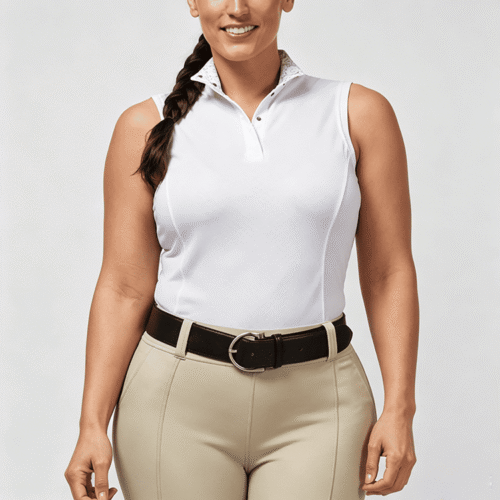
Custom Women’s Sleeveless Equestrian Competition Shirt OEM ODM
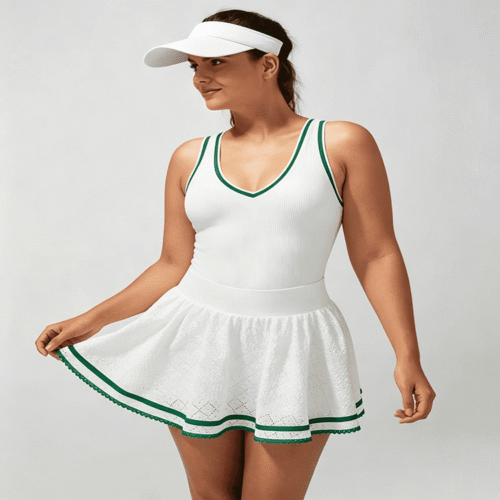
Custom Women’s Tennis Dress OEM ODM Performance Tennis Apparel
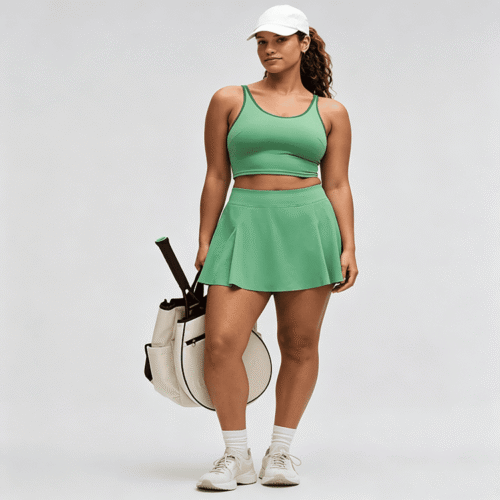
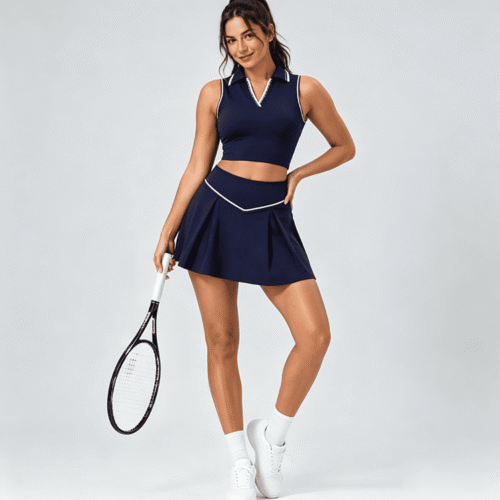
Custom Women’s Tennis Skirt Set OEM ODM Performance Tennis Outfit
Custom Women’s Tennis Skirt Set OEM ODM Performance Tennis Outfit
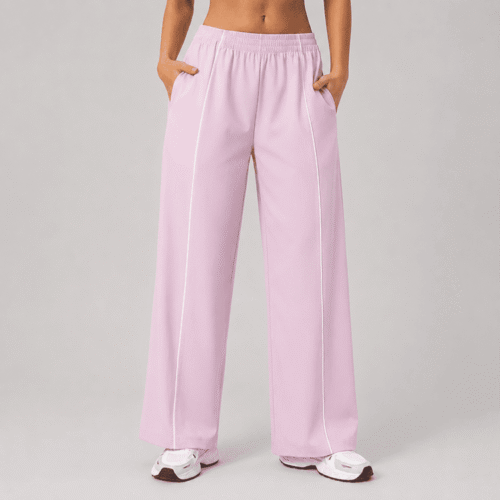
Custom Women’s Wide Leg Lounge Pants OEM ODM Athleisure Wear
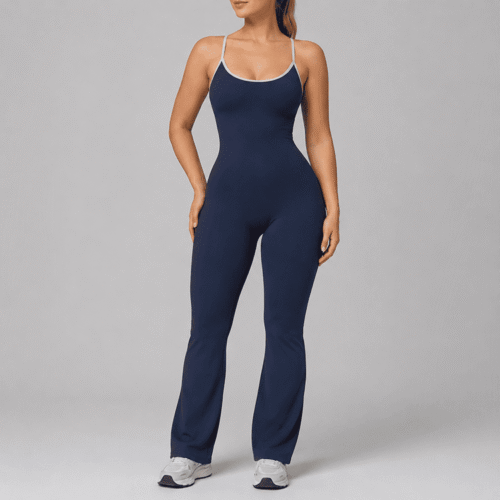
Custom Women’s Flared Yoga Jumpsuit OEM ODM Spaghetti Strap Activewear Bodysuit
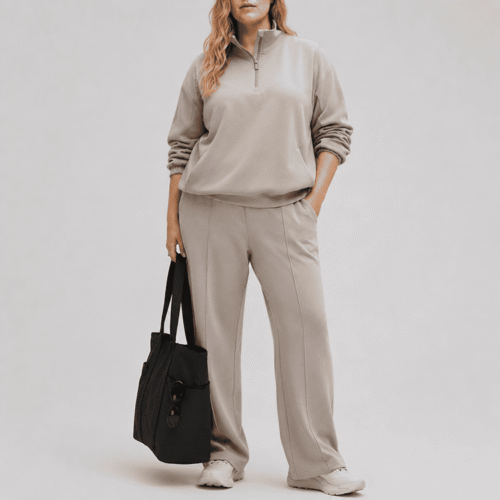
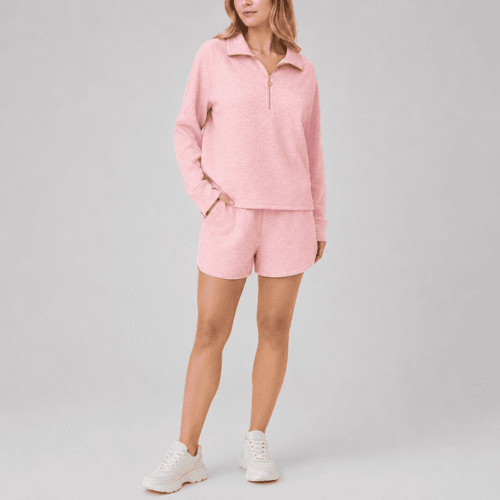
Custom Women’s Half Zip Loungewear Set OEM ODM Relaxed Fit Sweat Set
Custom Women’s Half Zip Loungewear Set OEM ODM Sweatshirt Shorts Set
Why Do Buyers Consider a Plus Size Womens Cotton Clothing Manufacturer in China?
Buyers consider China because one sourcing program can often connect fabric sourcing, extended-size production, custom manufacturing, labels, packaging and repeat orders within a mature apparel supply chain. However, China is not automatically cheaper, faster or better for every project. The real advantage appears when the supplier’s product experience, material resources, MOQ structure and production model match the requirements of the actual order.
Country should be a sourcing filter, not a quality score.
China has a deep apparel manufacturing ecosystem, but a factory’s location does not prove that it understands plus size womenswear, can source the required cotton fabric or will accept the commercial structure of a particular order.
For that reason, buyers comparing a plus size womens cotton clothing manufacturer in China should evaluate the supplier and the order together.
Why Does China Offer a Deep Apparel Manufacturing and Material Supply Chain?
One practical advantage of sourcing in China is the concentration of different apparel resources within established manufacturing regions.
A custom garment may require much more than sewing. Depending on the product, the sourcing program can involve fabric mills, dyeing, printing, embroidery, labels, elastics, zippers, drawcords, packaging, testing, finishing and international logistics.
When these resources are accessible through one manufacturing network, product development and production can become easier to coordinate.
This is particularly relevant when a brand is not buying one standard garment.
Consider a collection containing a cotton T-shirt, relaxed top, sweatshirt and jogger. Even when cotton is central to all four products, the garments may require different knit structures, weights, rib specifications, trims and sewing methods. A manufacturer with access to a broad material and processing network may be able to source these requirements without forcing the buyer to manage several unrelated vendors.
But supply-chain depth should not be confused with automatic suitability.
A large sourcing network is valuable only when the manufacturer can control it well enough to meet the buyer’s specifications.
China Manufacturer vs Local Manufacturer: What Should Buyers Compare?
The useful comparison is not simply China vs local.
It is total sourcing conditions vs total sourcing conditions.
A local manufacturer can be commercially attractive when the buyer needs very small quantities, frequent physical meetings, rapid domestic transport or close proximity to the target market. Local production can also reduce some communication and logistics complexity.
A Chinese manufacturer may become more attractive when the program requires a broader combination of fabric sourcing, trims, customization, size ranges, production capacity and repeat orders.
The comparison should therefore include more than the garment quotation.
| Factor | Questions Buyers Should Ask |
|---|---|
| Unit Price | Are both quotations based on the same fabric, construction and quantity? |
| MOQ | Is the minimum per style, color, fabric or total order? |
| Fabric Access | Is the required cotton material locally available or specially sourced? |
| Sampling | How many development rounds are likely before approval? |
| Customization | Can both suppliers provide the same level of product control? |
| Freight | What is the landed logistics cost, not only the factory price? |
| Import Costs | Which duties, taxes and clearance costs apply? |
| Lead Time | When does the clock start, and what approvals are required first? |
| Communication | How quickly are technical questions and revisions resolved? |
| Reorders | Can the approved product and material be reproduced later? |
This prevents a common sourcing mistake: comparing a fully customized offshore quotation with a simpler local product and concluding that the price difference comes only from geography.
The two quotations may not represent the same product.
When Does China Make Sense for Custom Production Rather Than Ready Wholesale?
China tends to become more relevant when the buyer wants to control the product rather than simply select it.
For example, a brand may have its own measurement chart, fit direction, cotton specification, colors, labels, hangtags and packaging. It may also want the successful style to remain available for future production.
That is a different sourcing problem from purchasing 30 existing tops from a wholesaler.
Ready wholesale can be a very practical choice when:
- the priority is speed to market;
- the buyer is testing a new category with limited capital;
- existing styles are acceptable;
- proprietary fit is not essential;
- the buyer does not need control over the original fabric specification.
Custom manufacturing becomes more relevant when:
- the brand wants product differentiation;
- fit and size specifications belong to the brand;
- specific cotton materials or weights are required;
- colors and construction need to follow defined requirements;
- private label details go beyond replacing a neck label;
- repeat production is expected after market validation.
This distinction is important because many buyers begin searching for a “manufacturer” when their immediate commercial need may actually be better served by wholesale.
Choosing the correct sourcing model can save more money than negotiating a few cents from the garment price.
Is a China Manufacturer Always Cheaper?
No.
A Chinese supplier can quote competitively and still be the more expensive option for a particular order.
Suppose a startup wants only 40 pieces of one highly customized cotton style. If the fabric requires special dyeing, the trims are custom made, the labels require separate minimums and the finished garments must be sent by express air freight, the total sourcing cost may be unattractive even if the sewing price is low.
Now consider another buyer ordering several thousand units of established products with stable specifications and planned replenishment.
The economics can change significantly.
This is why buyers should distinguish unit price from total sourcing cost.
Total sourcing cost can include:
development + samples + fabric minimums + trims + labels + packaging + bulk garments + inspection + freight + duties + payment costs + inventory exposure
A quotation should therefore be understood in context.
If Supplier A offers a lower garment price but requires 500 pieces per color, while Supplier B charges slightly more but allows a commercially manageable first order, Supplier B may require less cash and create less unsold inventory risk.
The lowest unit price and the lowest-risk purchase are not always the same decision.
Who Benefits Most From OEM, ODM and Private Label Manufacturing in China?
Different manufacturing models solve different problems.
OEM is generally relevant when the buyer already controls much of the product specification. The brand may provide a Tech Pack, measurements, artwork or an approved reference and require the manufacturer to execute it.
ODM can be useful when the buyer has a clear commercial direction but needs more development support before the garment becomes production-ready.
Private label covers a wider range of arrangements. Depending on the supplier, it may range from branding an existing style to developing a substantially customized product.
China’s supply-chain depth can make all three models available, but buyers should never assume that every supplier defines OEM, ODM or private label in the same way.
Ask what the service actually includes.
A supplier calling itself an ODM manufacturer may provide extensive product development. Another may simply allow modifications to existing styles. Those are very different levels of involvement.
Why Should Buyers Compare Total Sourcing Conditions Instead of Country Labels?
Country labels simplify a decision that is actually multi-dimensional.
“Made in China,” “Made in India,” “Made in Turkey” or “Made locally” does not tell the buyer whether the supplier has relevant extended-size experience, whether the fabric is appropriate, whether the sample will meet expectations or whether the MOQ works commercially.
Even two factories in the same city can have completely different strengths.
One may specialize in low-volume fashion programs. Another may be structured for large repeat orders. One may have strong access to cotton knits. Another may be better at technical synthetics. One may communicate quickly during sample revisions. Another may be more efficient after specifications are already locked.
The correct sourcing question is therefore not:
“Which country makes the best plus size cotton clothing?”
It is:
“Which sourcing environment and supplier combination gives this product the best balance of capability, commercial feasibility and controllable risk?”
For buyers already considering China, the next step is not to assume that every Chinese plus size womens cotton clothing manufacturer offers the same advantage. It is to verify whether the individual supplier has enough relevant evidence to deserve a place on the final shortlist.

How Can Buyers Use Samples to Compare Different Manufacturers Fairly?
Buyers should compare samples from shortlisted manufacturers under substantially the same conditions. Give each supplier the same product brief, measurement requirements, target fabric direction, size, branding details and evaluation criteria. Then compare fit, measurements, fabric, construction, workmanship and revision handling. A sample is most useful as a supplier-selection tool when the differences reflect manufacturing capability rather than differences in the instructions each supplier received.
A buyer can order three samples and still learn very little about which manufacturer is stronger.
If Supplier A receives a complete Tech Pack, Supplier B receives three reference photos and Supplier C receives only a short product description, the resulting samples are not directly comparable.
The same problem occurs when manufacturers use different fabrics, different sizes or different construction requirements.
Before judging the suppliers, make the test reasonably fair.
Why Should Shortlisted Suppliers Receive the Same Product Brief?
The purpose of comparative sampling is not simply to collect garments. It is to see how different manufacturers respond to the same commercial problem.
For the final two or three candidates, prepare one core sample brief containing the information that matters to the product.
Depending on the style, this can include:
- product sketch or reference images;
- measurement chart and target sample size;
- intended size range;
- target cotton composition or fabric direction;
- approximate GSM where relevant;
- construction details;
- stitching requirements;
- trims and hardware;
- color reference;
- logo or branding requirements;
- label requirements;
- special finishing requirements;
- expected order quantity.
Not every startup has a complete technical package. That is not necessarily a problem.
The important point is consistency.
If some details are intentionally left open for manufacturer recommendations, leave the same details open for each shortlisted supplier and record what each one proposes.
This can reveal something valuable: how the manufacturer thinks when the specification is incomplete.
One supplier may identify an unclear measurement before making the sample. Another may silently make an assumption. A third may suggest a commercially practical alternative and explain how it affects price or MOQ.
Those differences can matter later in bulk production.
What Should Buyers Compare on the First Physical Sample?
Do not judge the first sample only by asking, “Do I like it?”
Break the garment into observable criteria.
A practical sample review can cover:
| Evaluation Area | What to Check |
|---|---|
| Measurements | Key points against the agreed sample specification |
| Overall Fit | Balance, ease, coverage and intended silhouette |
| Fabric | Structure, weight, hand feel, stretch and visual appearance |
| Construction | Seams, reinforcement, pockets, neckline, hems and other details |
| Workmanship | Stitch consistency, puckering, skipped stitches, loose threads and finishing |
| Color | Match to approved reference where applicable |
| Branding | Logo placement, labels, hangtags and other requested details |
| Function | Whether the garment performs as intended in normal wear |
| Wash Response | Dimensional and appearance changes where relevant |
| Specification Compliance | Whether the supplier followed the information actually provided |
A visually attractive sample can still be a poor technical result if the manufacturer ignored important measurements.
Likewise, a first sample requiring revisions does not automatically indicate a weak supplier.
Development samples exist partly to expose issues before bulk production.
What matters is what went wrong, why it happened, whether the manufacturer identifies it correctly and how effectively the next version improves.
Base-Size Sample vs Size-Set Sample: What Different Evidence Do They Provide?
One approved sample does not prove that an entire extended-size range will behave correctly.
A base-size sample mainly helps evaluate the intended product in one size. It can show whether the general silhouette, fabric, construction and measurements are moving in the right direction.
A size-set sample answers a different question:
How does the product behave as the measurements move through the commercial size range?
For plus size womenswear, this can be particularly useful because the buyer may need confidence that important dimensions and proportions remain commercially appropriate beyond the base size.
That does not mean every project must sample every size.
A more practical approach may be to evaluate selected sizes that give useful information across the range—for example, a base size and one or more strategically chosen extended sizes—depending on the product, risk and buyer’s own approval procedure.
The key is to avoid assuming:
“The base size looks good, therefore every graded size must also be good.”
That conclusion requires evidence.
How Can Buyers Compare Fit, Measurements, Construction and Cotton Fabric Under the Same Conditions?
Comparative sampling works best when observations are recorded rather than remembered.
Create a simple evaluation sheet and use the same measurement method for every supplier.
For example:
| Criteria | Supplier A | Supplier B | Supplier C |
|---|---|---|---|
| Key measurements within agreed tolerance | |||
| Intended silhouette achieved | |||
| Fabric matches requested direction | |||
| Construction follows specification | |||
| Workmanship issues identified | |||
| Wash result acceptable | |||
| Branding/details correctly executed | |||
| Questions raised before sampling | |||
| Revision instructions understood | |||
| Revised sample improves identified issues |
Avoid reducing everything immediately to one numerical score.
Two problems can have very different commercial significance.
A slightly misplaced temporary label on an early development sample is not equivalent to a major fit problem. A replaceable trim issue is not equivalent to a fabric problem that would require changing the material program.
Record both the issue and its consequence.
What Can Sample Revision Handling Reveal About a Supplier?
The first sample tells you something about the garment.
The revision process can tell you something about the manufacturer.
Imagine that the first sample has four issues:
- chest measurement is outside the requested tolerance;
- sleeve opening is too tight;
- fabric is lighter than the requested direction;
- pocket position does not match the specification.
A useful supplier does more than reply, “We can fix it.”
It should be able to identify which issues came from misunderstanding, pattern execution, fabric availability or production workmanship and explain what will change in the next sample.
This is where buyers can observe:
communication accuracy, technical interpretation, record keeping, response speed and corrective-action discipline.
A manufacturer that produces an imperfect first sample but handles revisions methodically may be a stronger long-term candidate than one that happens to produce an attractive first sample from vague instructions but cannot explain how the result will be controlled later.
Sampling is therefore not only a product test.
It is also a working-relationship test.
How Should Buyers Evaluate Cotton Garments After Washing?
Cotton-containing garments deserve particular attention because the product seen before washing may not behave identically afterward.
The purpose of a wash review is not to demand “zero change.” That may be unrealistic depending on the material and construction.
Instead, buyers should define what changes are commercially acceptable.
For comparative purposes, keep the test conditions consistent and record key observations before and after washing. Depending on the garment, this may include:
- garment length;
- chest width;
- sleeve length;
- waist or hip measurement;
- twisting or skewing;
- surface appearance;
- color appearance;
- hand feel;
- overall fit after washing.
If Supplier A and Supplier B use materially different cotton fabrics, the wash results should not be interpreted as a pure factory-quality comparison.
The material itself is a variable.
This is another reason to align fabric requirements as closely as practical before using samples to compare manufacturers.
When Should a Supplier Advance From Sample Evaluation to Commercial Negotiation?
A supplier does not need a flawless first sample to remain under consideration.
It does need to show that the remaining problems are understood, correctable and commercially manageable.
Before moving a supplier into final commercial negotiation, buyers should normally be able to answer questions such as:
- Is the supplier technically capable of producing the product?
- Are the major fit and measurement issues moving toward approval?
- Is the proposed fabric commercially realistic?
- Does the manufacturer follow revision instructions accurately?
- Are communication and documentation reliable enough for the project?
- Are unresolved issues likely to affect MOQ, price or lead time?
- Is another sample required before the commercial decision?
At this stage, sample quality and commercial terms begin to interact.
A supplier may produce the strongest sample but require an order quantity that is commercially impossible for the buyer. Another may have slightly more development work remaining but provide a much more practical order structure.
Neither fact should be considered in isolation.
What Should Be Recorded in a Sample Comparison Sheet?
The most useful sample comparison sheet combines technical observations with supplier behavior.
Record the sample date, version, fabric reference, sample size, measurements, identified issues, requested corrections and the supplier’s response.
For each important revision, note whether it was:
accepted, questioned, misunderstood, changed correctly or still unresolved.
This creates a history instead of relying on scattered emails and memory.
It also prevents an unfair comparison.
If Supplier A is already on Sample Version 3 while Supplier B has produced only Version 1, comparing the two garments without considering their development history can produce the wrong conclusion.
For buyers evaluating several candidates for a plus size womens cotton clothing manufacturer, the objective of sampling is not to discover which supplier can make the most impressive one-off garment.
The objective is to identify which supplier can understand the specification, execute it, respond to evidence, correct deviations and move the product toward a repeatable commercial standard.
That is a much stronger indicator of manufacturing fit than appearance alone.
What Should Buyers Verify Before Adding a Manufacturer to the Shortlist?
Before shortlisting a manufacturer, buyers should verify the supplier’s business model, relevant plus size experience, cotton sourcing capability, size evidence, commercial conditions, production information and quality claims. A strong website can help identify potential suppliers, but product photos, broad size ranges and statements such as “low MOQ” or “strict QC” should be treated as claims to investigate rather than proof of project-specific capability.
Supplier verification does not need to start with an expensive factory audit.
The first step can be simpler: clearly separate what the supplier says, what the supplier can show with evidence, and what still needs to be tested and confirmed through an actual project.
That distinction can save considerable time. If a supplier cannot answer basic questions about its business model, relevant products, MOQ structure or sampling conditions, there may be little value in progressing immediately to detailed development.
Is the Supplier a Manufacturer, Trading Company, Wholesaler or Fashion Brand?
The first question is surprisingly important because apparel search results often mix very different businesses.
A company may describe itself as a manufacturer while coordinating production through partner factories. A trading company may have excellent sourcing capability without owning sewing lines. A wholesaler may hold finished stock but offer little control over original product specifications. A fashion brand may appear in manufacturer-related searches even though its primary business is selling its own products.
None of these business models is automatically unsuitable.
The problem begins when a buyer assumes they are the same.
For a custom order, ask practical questions:
- Where will the garments actually be cut and sewn?
- Does the supplier own the facility or coordinate production externally?
- Who controls patterns, samples and production records?
- Who performs in-line and final inspection?
- Can the buyer identify the production facility before bulk manufacturing?
- Which legal entity receives the purchase order and payment?
A capable sourcing company can sometimes outperform a poorly managed direct factory because it may have stronger supplier coordination, material access and communication. Conversely, a buyer with strict factory-audit requirements may need a direct relationship with the production facility.
The label matters less than understanding who is responsible for what.
Does the Supplier Show Relevant Plus Size Production Evidence?
A supplier displaying plus size garments has passed only the first screening test.
The next question is whether the evidence is relevant to the buyer’s intended category.
A factory may have experience producing loose T-shirts in extended sizes but limited experience with fitted dresses, structured pants or garments where body proportions and movement create more complex fit requirements. Similarly, a supplier experienced with standard-size cotton basics should not automatically be assumed to have the same depth in extended sizing.
Buyers can request evidence such as:
- examples from a similar product category;
- the commercial size range previously produced;
- measurement charts with multiple sizes;
- size-set or fitting records where appropriate;
- examples of how measurements progress across the range;
- production photos connected to relevant garments;
- references to repeat orders in the same or similar category.
The purpose is not to collect confidential information from other brands. A professional manufacturer should protect customer designs and proprietary documents.
Instead, the buyer is looking for enough non-confidential evidence to establish that the supplier’s claimed experience is credible.
Does Its Cotton Capability Match the Products You Actually Want to Source?
“Cotton available” is too broad to qualify a supplier. For products sold in the United States, buyers should also verify that cotton fiber claims are supported by accurate composition information, following the FTC guidance for labeling and advertising cotton products.
Cotton T-shirts, heavyweight tops, sweatshirts, joggers and dresses do not necessarily use the same material. Buyers specifically evaluating 100% cotton plus size clothing should also compare fabric purity, construction, GSM, finishing and expected wash performance rather than assuming that every cotton garment represents the same material requirement.
At the supplier-screening stage, buyers do not need to finalize every fabric parameter. They do need to establish whether the manufacturer can realistically source the type of material required.
For example, useful questions include:
- Is the proposed fabric stock-supported or custom sourced?
- What compositions and fabric structures are normally available?
- Which GSM ranges are practical?
- Does a custom color create a separate material minimum?
- Can the supplier provide swatches before full sample development?
Are test reports or material documentation available when a project requires specific claims? For programs using certified or traceable materials, buyers can separately review the sourcing considerations involved in working with a Plus Size Organic Cotton Clothing Manufacturer before confirming the selected fabric.
- If the fabric is discontinued later, what alternatives can be sourced?
This is a capability check, not a fabric-development exercise.
Detailed product development can happen after the supplier has passed the shortlist.
Can Published Size Ranges Be Supported by Evidence?
A size label is not a measurement system.
Two garments marked 3XL can have substantially different bust, waist, hip and length measurements. The label can also represent different body expectations across markets.
For that reason, a website advertising XS–5XL or XS–6XL gives buyers useful initial information, but it should not be the end of the investigation.
Ask what the range actually means.
Does the supplier work from its own standard chart? Can it follow the buyer’s measurement chart? Has it manufactured the largest sizes in the advertised range, or are those sizes theoretically available? How are measurement tolerances handled?
A buyer does not need to solve every fit issue during supplier screening. The objective is to determine whether there is enough evidence to justify paying for a sample.
That creates a useful sequence:
Published Size Range → Measurement Evidence → Sample Evidence → Production Evidence
Each stage should increase confidence.
Are MOQ and Lead-Time Claims Project-Specific or General Marketing Statements?
MOQ and lead time are two of the easiest numbers to misunderstand.
Suppose a website advertises MOQ 50 pieces.
Before comparing that supplier with another manufacturer quoting 100 pieces, the buyer should ask:
50 pieces of what?
It could mean:
- 50 pieces per design;
- 50 pieces per color;
- 50 pieces using available fabric;
- 50 pieces excluding custom-dyed fabric;
- 50 pieces with a required size ratio;
- 50 pieces only for selected product categories.
Lead time requires the same discipline.
“20-day production” has limited meaning unless the starting point is defined. Does production begin after deposit, after fabric arrival, after artwork approval or after the final pre-production reference is confirmed?
A better RFQ records both the number and its commercial definition.
| Published Information | Better Buyer Question |
|---|---|
| MOQ: 50 pcs | Does this apply per style, color or total order? |
| Sample: 7 days | What type of sample and when does the timing begin? |
| Production: 25 days | Does this start after all materials and approvals are ready? |
| Custom color available | Is there a fabric dyeing minimum? |
| Any size available | Are there quantity or cost implications for the extended range? |
This prevents buyers from eliminating a suitable supplier because its headline number appears higher while the actual commercial structure may be more flexible.
Which Certifications, Factory Information and QC Claims Can Be Verified?
Certifications can be important, but the certificate name alone is not enough.
Buyers should check whether the document applies to the relevant legal entity, material or production facility, what its scope covers and whether it is current. For projects making specific organic cotton claims, buyers can also review the OEKO-TEX® ORGANIC COTTON certification framework to understand how verification, chain-of-custody review, material testing and certification can form part of material due diligence.
The same principle applies to quality control.
“Strict QC” is a marketing phrase until the supplier can explain what it means operationally.
Useful evidence may include:
- incoming-material inspection records;
- in-process inspection procedures;
- measurement inspection sheets;
- final inspection standards;
- defect classification;
- third-party inspection acceptance;
- traceable production or lot records.
A buyer does not need every document during the first email exchange. The amount of verification should increase with order value, product risk and compliance requirements.
A small market test and a six-figure annual program do not justify exactly the same due-diligence cost.
Product Photos vs Production Evidence: What Does Each Actually Prove?
Product photography is useful for understanding a supplier’s style direction and category exposure.
It proves much less about manufacturing control.
A polished image does not tell the buyer who made the garment, whether the product was produced repeatedly, what the defect rate was or whether bulk matched the approved reference.
Different evidence answers different questions:
| Evidence | What It Can Help Establish | What It Does Not Prove by Itself |
|---|---|---|
| Product Photo | Category relevance and visual product direction | Factory ownership or bulk consistency |
| Fabric Swatch | Hand feel, structure and color direction | Finished garment fit |
| Measurement Chart | Intended dimensional specification | Actual production accuracy |
| Physical Sample | Fit, construction and material execution | Consistency across hundreds of units |
| Factory Video/Photos | Existence of equipment and production activity | Performance on the buyer’s order |
| QC Record | Presence of a documented inspection process | That every order will be defect-free |
| Third-Party Audit | Specific audited conditions at a point in time | Future product quality |
| Repeat-Order Records | Some evidence of production continuity | Suitability for a different product category |
Strong sourcing decisions normally need to be based on different types of evidence, instead of depending only on one impressive document or photo.
When Should a Manufacturer Move to the Final Shortlist?
A supplier does not need to prove everything before the first sample, but major uncertainties should become smaller as the purchasing process progresses.
Before sampling, the buyer should normally understand the supplier’s business model, relevant product experience, approximate MOQ structure, expected sample conditions and whether the required material direction appears feasible.
After that, the manufacturer can move from a broad list into a smaller group of serious candidates.
For a buyer evaluating a plus size womens cotton clothing manufacturer, a useful final shortlist may contain only two or three suppliers. That is often enough to compare real samples and commercial terms without creating unnecessary development cost and communication work.
The objective is not to find a supplier with no weaknesses.
Every sourcing option has trade-offs.
The objective is to identify manufacturers whose strengths match the requirements that matter most, whose limitations are acceptable for the order, and whose claims can be progressively converted into evidence before a larger commercial commitment is made.
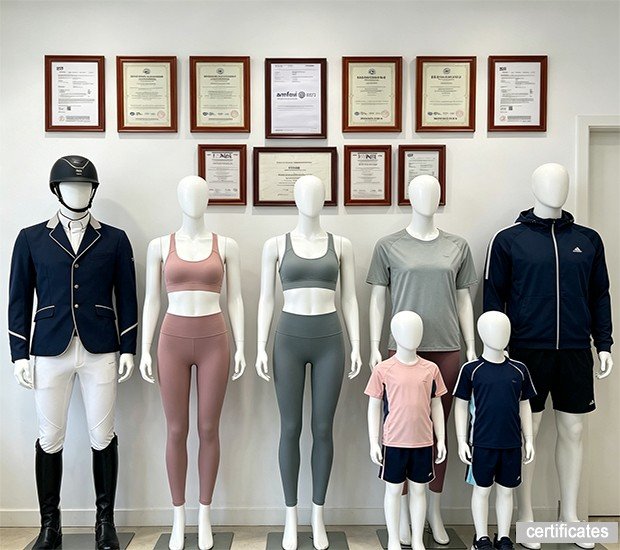
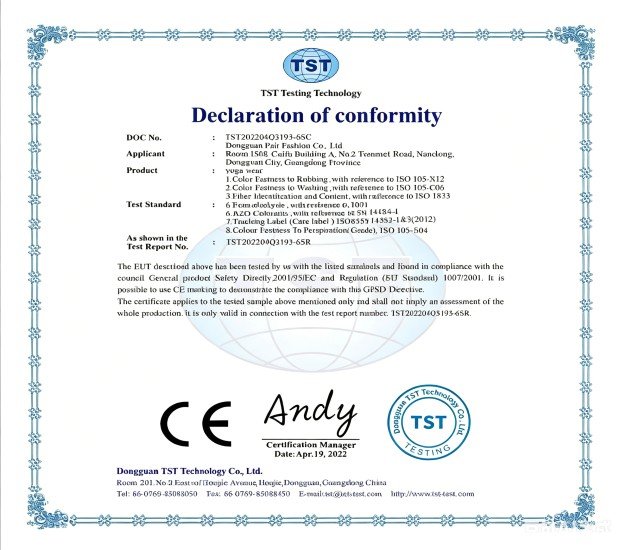
Trusted Manufacturing Standards For Global Sportswear Brands
We operate under internationally recognized quality, sustainability, and ethical manufacturing standards. Our certifications help ensure consistent product quality, responsible sourcing, and reliable production for global sportswear brands.
- 20+ Countries Served
- 6000+ Styles Developed
- 50,000 PCS Monthly Capacity
- 3-Day Sample Development
MOQ, Price and Order Flexibility: How Do You Compare the Real Commercial Commitment?
Buyers should compare MOQ and price by calculating the total commercial commitment behind the quotation. A low MOQ can still create a large inventory risk if it applies separately to every color, fabric or style. Likewise, the lowest unit price may require a larger order. Compare style MOQ, color minimums, fabric minimums, size distribution, customization costs and total order value before deciding which supplier is genuinely more flexible.
“What’s your MOQ?” is one of the most common questions sent to apparel manufacturers.
It is also one of the easiest questions to ask too simply.
A manufacturer answering 100 pieces has not yet given enough information for a purchasing decision. Buyers need to understand how those 100 pieces can be distributed and whether another minimum exists further upstream in the supply chain.
The real question is:
“What do I need to buy to manufacture this exact product under these specifications?”
MOQ Per Style vs Per Color vs Per Fabric: What Is the Difference?
MOQ can exist at several levels of the order.
A factory may allow 100 pieces per style but require a minimum quantity for each color. A fabric supplier may impose a separate minimum for custom dyeing. A trim supplier may require hundreds or thousands of custom labels, zippers or branded components even when the garment order is smaller.
Consider two simplified quotations:
| Commercial Condition | Supplier A | Supplier B |
|---|---|---|
| Advertised MOQ | 50 pcs | 100 pcs |
| Minimum | Per color | Per style |
| Planned Colors | 4 | 4 |
| Garment Commitment | 200 pcs | 100 pcs |
| Unit Price | $9.20 | $10.10 |
| Garment Value | $1,840 | $1,010 |
Supplier A appears more flexible when the buyer sees 50 pcs MOQ.
Once the color condition is included, Supplier B requires half as many garments for the proposed test.
This simplified example excludes freight, samples, packaging and other charges, but it illustrates why an MOQ number should never be evaluated without its definition.
For a plus size womens cotton clothing manufacturer, buyers should clarify at least:
- MOQ per style
- MOQ per color
- fabric MOQ
- custom-dye MOQ
- size distribution rules
- trim or branding minimums
- total order minimum, if any
Only then does “low MOQ” become commercially meaningful.
How Does a Broad Size Range Affect the Order Structure?
Plus size collections also have another important factor: size distribution.
For example, a buyer orders 100 pieces covering sizes from XL to 5XL.
If the quantity is divided equally, each size will have 20 pieces. But the actual market demand may not be the same for every size. The brand may expect higher sales for 2XL and 3XL, while XL and 5XL may have lower demand.
T
This matters even more when the buyer adds colors.
A collection with:
1 style × 4 colors × 5 sizes
already creates 20 SKU combinations.
If the order is only 100 pieces, the average is five units per SKU before demand weighting.
Now add a second style.
The buyer may still describe the project as “a small 200-piece order,” but commercially it has become a 40-SKU inventory decision.
This is why order flexibility should be judged partly by how well the manufacturer can accommodate a practical size ratio—not only by the headline MOQ.
How Can Stock Fabric and Custom Fabric Create Different Minimums?
Garment MOQ and material MOQ are not always the same.
A manufacturer may be willing to sew 100 pieces, but the required custom cotton fabric could create a much larger upstream commitment.
If the buyer selects an existing fabric in an available color, the manufacturer may be able to purchase relatively small quantities from stock.
If the buyer requires a specific custom color, composition, GSM, knit structure or finishing process, the material supplier may require a larger production run.
That can create several possible outcomes:
- the buyer accepts a stock-supported fabric;
- the buyer increases the garment quantity;
- excess material is purchased and reserved for future production;
- the buyer pays a surcharge for a smaller material run where available;
- the specification is adjusted to use a commercially available alternative.
None of these solutions is automatically right.
The important point is to identify the constraint before approving the commercial plan.
A manufacturer advertising a low garment MOQ may still be a poor match for a project that depends on highly customized material.
Why Can Similar-Looking Cotton Garments Receive Very Different Prices?
Two cotton T-shirts can look nearly identical in a product photograph and still be very different manufacturing projects.
Price can change with:
- cotton composition;
- fabric structure;
- GSM;
- yarn and finishing;
- dyeing method;
- garment measurements and material consumption;
- construction complexity;
- stitching requirements;
- pockets and panels;
- print or embroidery;
- labels and trims;
- packaging;
- order quantity;
- color quantity;
- inspection requirements.
Plus size garments can also consume more fabric than smaller standard sizes. The commercial effect depends on the product, size range, marker efficiency and material cost.
Therefore, a buyer should not send Supplier A a lightweight stock jersey and Supplier B a heavier custom cotton specification and then treat the resulting quotations as evidence that one factory is “expensive.”
The inputs are different.
The quotation comparison must be normalized first.
What Should Be Included in a Comparable Supplier Quotation?
A useful quotation should make the commercial assumptions visible.
At minimum, buyers should try to align:
Product Specification → Fabric → Size Range → Colors → Quantity → Branding → Packaging → Delivery Terms
A comparison table can help:
| Quotation Item | Supplier A | Supplier B | Supplier C |
|---|---|---|---|
| Product specification | |||
| Fabric composition | |||
| Fabric GSM/structure | |||
| Quantity | |||
| Number of colors | |||
| Size range | |||
| Size ratio flexibility | |||
| Unit price | |||
| Sample cost | |||
| Custom label cost | |||
| Packaging included | |||
| Testing/inspection included | |||
| Incoterm | |||
| Payment terms | |||
| Production lead time | |||
| Exclusions |
The exclusions row deserves attention.
A quotation can look attractive because something another supplier included has been left out.
For example, one price may include custom polybags and labels while another covers only the finished garment. One supplier may quote EXW while another quotes FOB. Comparing the two unit prices without adjusting for these differences can produce the wrong conclusion.
Unit Price vs Total Inventory Commitment: Which Number Matters More?
For an established bestseller, unit price can carry substantial weight because the brand already has evidence that the inventory will sell.
For an untested product, inventory commitment may matter more.
Consider a simplified example:
Supplier A quotes $8.40 but requires 600 pieces.
Supplier B quotes $10.20 but accepts 150 pieces.
The initial garment commitment becomes:
Supplier A: $5,040
Supplier B: $1,530
Supplier A is cheaper per garment.
Supplier B requires $3,510 less initial garment expenditure.
If the product is untested, that difference can be more important than saving $1.80 per piece.
If the product is already selling 1,000 units every month, the opposite may be true.
This is why price should be evaluated according to the stage of the product, not as an isolated score.
How Should Startups Compare Small Trial Orders?
A startup should use the first order to answer commercial questions, not to prove how many SKUs it can launch.
If capital is limited, increasing styles, colors and sizes at the same time can spread the order too thinly.
For example, compare:
Option A:
5 styles × 4 colors × 5 sizes = 100 SKU combinations
Option B:
2 styles × 2 colors × 5 sizes = 20 SKU combinations
Both collections may look small on a mood board.
They are very different inventory structures.
Option B concentrates more units behind fewer product decisions, which can make sales data easier to interpret and replenishment decisions clearer.
The right structure depends on the brand, but buyers should ask whether each additional style or color creates enough commercial value to justify another inventory commitment.
A flexible manufacturer is therefore not simply one willing to accept fewer garments.
It is one whose commercial structure allows the buyer to build a sensible first order.
When Does a Larger Order Become More Commercially Efficient?
Low MOQ is valuable during market testing, but it should not become the only supplier-selection criterion.
As order quantities increase, fixed costs can be distributed across more garments. Material purchasing can become more efficient. Cutting and production planning may improve. Custom components can become more economical.
This can reduce unit cost.
However, ordering more pieces purely to reach a lower price is not automatically a saving.
If 30% of the additional inventory remains unsold, the lower unit price may create a worse commercial outcome.
Buyers should therefore ask manufacturers for quantity breakpoints.
For example:
- price at 100 pieces;
- price at 300 pieces;
- price at 500 pieces;
- price at 1,000 pieces.
Then compare the saving against the additional inventory commitment.
This allows the brand to identify where manufacturing efficiency improves enough to justify a larger order.
What Does Real Order Flexibility Look Like?
Real flexibility is multi-dimensional.
It can include:
- manageable style MOQ;
- practical color minimums;
- flexible size ratios;
- access to stock-supported fabrics;
- realistic custom-material options;
- clear quantity price breaks;
- ability to scale successful products;
- workable reorder conditions;
- commercial alternatives when one specification creates an impractical minimum.
A supplier does not need to be flexible in every dimension.
A manufacturer structured for 1,000-piece repeat orders may be excellent for an established brand and completely unsuitable for a 100-piece market test.
Likewise, a small-batch manufacturer can be ideal during product validation but less competitive once the buyer requires tens of thousands of units.
For buyers comparing a plus size womens cotton clothing manufacturer, the strongest commercial fit is therefore not automatically the supplier with the lowest MOQ or lowest price. It is the supplier whose minimums, pricing structure, size flexibility, material requirements and production scale match the commercial reality of the order.
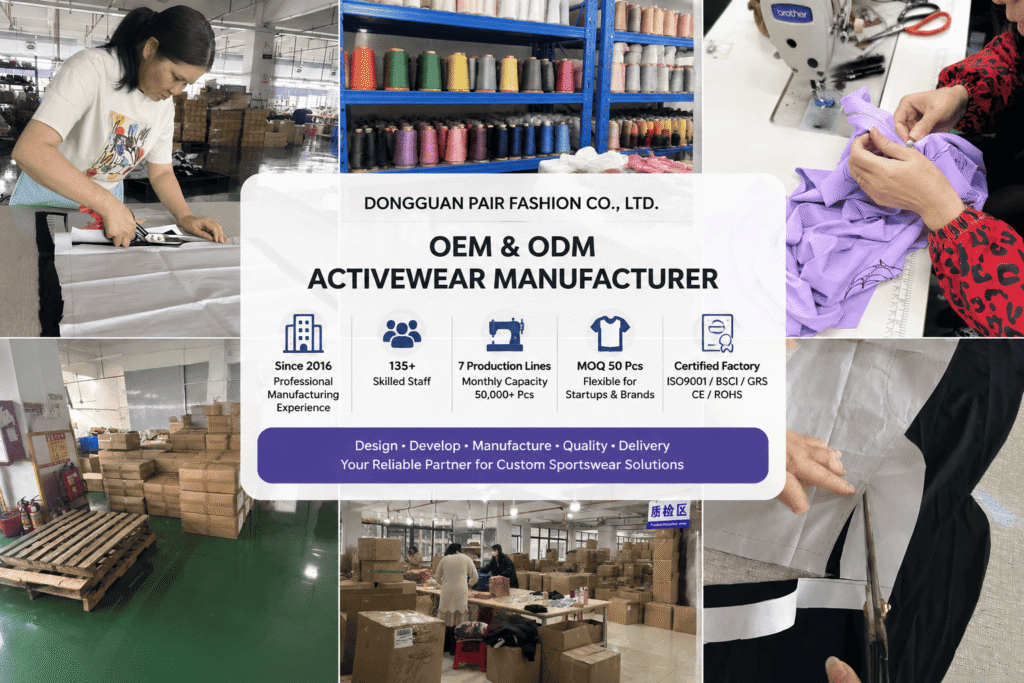
How Do You Build a Fair Supplier Comparison Instead of Comparing Marketing Claims?
A fair supplier comparison should start by giving the shortlisted manufacturers basically the same RFQ, product requirements and commercial conditions. Buyers should separate the information published by suppliers from the conditions actually confirmed for the project. Fabric, size range, colors, customization and quantity should be compared under the same requirements, and then buyers can compare samples, quotations, communication and production evidence under the same standard. The purpose is not to find which supplier looks strongest on paper, but to clearly understand
Supplier websites are useful for building a shortlist.
They are much less useful for making the final purchasing decision.
“Low MOQ,” “premium cotton,” “fast sampling,” “strict QC,” “custom clothing” and “sizes up to 6XL” may all be legitimate statements, but they do not necessarily describe what will happen with your particular garment.
The final comparison should therefore move away from general marketing language and toward project-specific evidence.
Step 1: Give Finalists the Same RFQ
A fair comparison begins with a common request for quotation.
The final two or three manufacturers should receive substantially the same core information, including:
- product type;
- reference images, sketch or Tech Pack;
- target fabric direction;
- target sample size;
- intended commercial size range;
- colors;
- logo and branding requirements;
- packaging requirements;
- expected order quantity;
- target market;
- required testing or compliance conditions;
- requested Incoterm;
- expected delivery window.
If important information is unknown, tell each supplier that it is open for recommendation.
This is better than silently giving different suppliers different assumptions.
For example, if the buyer has not decided between 180 GSM and 220 GSM cotton jersey, the RFQ can state the intended product performance and ask each manufacturer to recommend a commercially suitable option.
The recommendations themselves then become part of the comparison.
Step 2: Separate Published Claims From Confirmed Project Conditions
A supplier comparison sheet should have two different columns:
Published / General Information
and
Confirmed for This Project
This small change can prevent a surprising number of purchasing mistakes.
Consider the following examples:
| General Supplier Claim | Project-Specific Confirmation Needed |
|---|---|
| MOQ from 50 pcs | MOQ for this style, fabric, color structure and size range |
| 100% cotton available | Composition, structure, GSM, color and material minimum for this garment |
| Sizes up to 6XL | Ability to follow the required measurement chart across the intended range |
| Fast sample | Sample type, timing, cost and start point for this project |
| OEM/ODM available | Which development services are actually included |
| Strict QC | Inspection method and records relevant to this order |
| Fast production | Lead time after which approvals and material conditions are satisfied |
| Custom packaging | MOQ, unit cost and lead time for the requested packaging |
The first column helps buyers discover suppliers.
The second column helps them place orders.
Do not allow information to move from the first column into the second without confirmation.
Step 3: Normalize Fabric, Size Range, Colors and Customization Requirements
Supplier quotations are only comparable when the underlying product is reasonably comparable.
Suppose three manufacturers quote the same plus size cotton top:
Supplier A: 180 GSM stock cotton jersey
Supplier B: 220 GSM custom-dyed cotton jersey
Supplier C: cotton-elastane fabric with custom finishing
The prices will differ.
That difference does not prove that one supplier has a better price.
The products are different.
Before comparing quotations, normalize the important inputs as far as practical:
Fabric: same or commercially equivalent material direction
Size Range: same intended commercial range
Colors: same number of colors
Quantity: same requested order volume
Branding: same logo and label requirements
Packaging: same packing expectation
Testing: same inspection or compliance requirement
Incoterm: same delivery basis where possible
Perfect normalization is not always possible.
When a manufacturer proposes an alternative, record the difference rather than hiding it.
An alternative fabric may actually be commercially better. It simply should not be compared as though it were identical to the original specification.
Step 4: Compare Samples Under the Same Evaluation Criteria
Once samples arrive, use one evaluation framework.
Do not allow Supplier A to win because its sample photography looks better or Supplier B to lose because its garment was evaluated more critically.
Compare the same categories:
- measurement accuracy;
- fit and balance;
- fabric suitability;
- construction;
- workmanship;
- wash response where relevant;
- branding execution;
- specification compliance;
- revision handling.
The result should contain observations, not only a score.
For example:
Supplier A — neckline construction clean; chest measurement +1.5 cm outside requested tolerance; fabric close to target; pocket position needs correction.
That is more useful than:
Supplier A — 8/10.
A numerical score can support a comparison, but it should not replace the evidence behind the score.
Step 5: Normalize MOQ, Unit Price and Total Order Value
After the technical comparison, normalize the commercial terms.
This is where many apparently cheap quotations change position.
Imagine three offers:
| Commercial Factor | Supplier A | Supplier B | Supplier C |
|---|---|---|---|
| Unit Price | $8.60 | $9.20 | $10.00 |
| Style MOQ | 300 | 200 | 100 |
| Color Condition | 100/color | 100/color | Flexible within style |
| Planned Colors | 3 | 3 | 3 |
| Minimum Garment Commitment | 300 | 300 | 100 |
| Garment Value | $2,580 | $2,760 | $1,000 |
Supplier A has the lowest unit price.
Supplier C requires the lowest initial garment expenditure.
Those are two different advantages.
Now add fabric minimums, sample costs, labels, packaging, inspection and freight. The commercial picture may change again.
A buyer should therefore record at least:
Unit Price + Required Quantity + Total Garment Value + Additional Fixed Costs + Inventory Commitment
This is especially important for a startup because cash tied up in unsold inventory cannot be used for marketing, product development or replenishing successful styles.
Step 6: Compare Communication, Revision Handling and Documentation
Communication is difficult to measure before a project begins, but sampling provides useful evidence.
Record practical behavior.
Did the supplier identify missing information before sampling?
Did it confirm important changes in writing?
Were measurement questions specific?
Did the second sample reflect the requested corrections?
Were quotation revisions clearly documented?
Did the salesperson answer technical questions directly or repeatedly avoid them?
Response speed matters, but response quality matters more.
A supplier replying in ten minutes with “No problem, we can do everything” may provide less useful information than a supplier replying several hours later with three specific questions about fabric, measurements and MOQ.
For repeat production, documentation becomes even more important.
Brands change employees. Sales representatives change. Orders may return months later.
Important product information should not depend entirely on one person’s memory.
Step 7: Verify Factory, QC and Production Evidence
As the shortlist becomes smaller and the potential order becomes larger, verification should become deeper.
The level of due diligence can be proportional to risk.
For a small trial order, buyers may begin with business information, production photos or video, sample evidence and basic quality documentation.
For larger or higher-risk programs, buyers may consider:
- live factory video verification;
- business-license review;
- certification verification;
- third-party factory audit;
- social-compliance audit where required;
- pre-production checks;
- in-line inspection;
- pre-shipment inspection.
The purpose is not to create paperwork for its own sake.
Verification should answer a commercial question.
If a buyer is concerned about whether the supplier can manufacture the intended category at the required scale, production evidence matters. If the buyer has retailer compliance obligations, relevant audit documentation may matter. If bulk consistency is the primary risk, inspection planning may deserve more attention.
Different risks require different evidence.
Step 8: Record Commercial Trade-Offs Instead of Looking for a Perfect Supplier
The final comparison should not ask:
“Which supplier has no weaknesses?”
That supplier probably does not exist.
Instead, record the trade-offs.
| Supplier | Main Advantage | Main Limitation | Commercial Consequence |
|---|---|---|---|
| A | Lower unit price | Higher MOQ | Better economics after demand is proven |
| B | Strong sample execution | Longer lead time | Better technical fit but slower launch |
| C | Low trial quantity | Higher unit price | Lower initial inventory exposure |
| D | Broad material access | Higher custom-fabric minimum | Stronger choice for larger programs |
This type of comparison is more useful than giving every manufacturer a generic score out of ten.
The importance of each trade-off depends on the buyer.
A startup may accept a higher unit price to reduce inventory risk.
A mature brand with predictable monthly sales may accept a larger MOQ to improve manufacturing economics.
A buyer with a fixed launch date may give lead-time reliability greater weight.
A product with unusual material requirements may place more weight on sourcing capability.
Build the Final Comparison Around the Risks of the Actual Order
The final supplier decision should reflect what can realistically go wrong with the product being purchased.
If a brand is entering extended sizing for the first time, relevant size experience and sample evidence may deserve more attention than a small unit-price difference.
If the collection depends on a particular cotton specification, material sourcing and fabric minimums become more important.
If the product already has stable sales and requires regular replenishment, repeatability, production capacity and documentation may carry greater weight.
This is why the same plus size womens cotton clothing manufacturer may be an excellent match for one buyer and an unsuitable match for another.
A fair comparison does not remove these differences.
It makes them visible.
By the end of this process, the buyer should be able to explain not only which manufacturers remain on the shortlist, but also what each supplier offers, what remains uncertain, what commercial compromises are involved and which risks still need to be controlled before an order is placed.

Which Plus Size Womens Cotton Clothing Manufacturer Fits Different Buyer Scenarios?
The right manufacturer depends on the buyer’s current business model, product maturity, order quantity and sourcing priorities. A startup testing its first collection may need manageable inventory exposure, while an established brand may place greater importance on technical execution, documentation, production capacity and repeatability. Buyers should therefore match supplier capabilities to the risks of the actual order instead of searching for one manufacturer that appears best in every category.
A manufacturer can be a good supplier, but it may still not be the right supplier for a specific buyer.
This is because the sourcing requirements will change when the brand develops to different stages.
A startup may only need 100 pieces and several months to test and learn about the product. A growing DTC brand may need frequent new product launches and stable replenishment. An established company may already have complete product specifications and need thousands of pieces with c
The products may all be described as plus size cotton womenswear, but the manufacturing relationship required behind them is different.
Which Supplier Type Fits a Startup Testing Its First Collection?
For a startup, the first objective is often market validation rather than maximum manufacturing efficiency.
Suppose a new brand has $12,000 available for product development, inventory, photography, freight and launch marketing.
Supplier A offers a lower unit price but requires a large commitment across several colors.
Supplier B has a higher unit price but allows the brand to test fewer styles and colors with substantially less inventory.
The lower-priced factory is not automatically the more practical starting point.
A startup should normally investigate:
- manageable MOQ;
- flexible size distribution;
- stock-supported material options;
- reasonable sample cost;
- clear communication;
- ability to work from incomplete but improving product information;
- practical branding options;
- transparent additional costs;
- realistic reorder conditions.
The manufacturer should also be willing to explain when a requested customization creates a commercially inefficient minimum.
That information can be more valuable than simply agreeing to every request.
For an unproven collection, capital preservation and learning speed may deserve more attention than achieving the lowest possible garment price.
Which Supplier Type Fits a Growing DTC Brand With Regular New Releases?
A growing direct-to-consumer brand faces a different problem.
The business may already know that customers will buy, but demand is distributed across new launches, existing bestsellers and replenishment.
The manufacturer therefore needs to support more than one first order.
A growing DTC buyer may prioritize:
development responsiveness + reliable production + manageable MOQ + repeat-order consistency
For example, the brand might launch two new styles this month while reordering three successful styles from the previous season.
If every reorder requires rebuilding specifications or resolving the same questions again, growth becomes operationally expensive.
This makes documentation increasingly important.
The buyer should ask whether the supplier can retain relevant product references, material information, approved details and production records for future orders.
A slightly higher quotation can sometimes be commercially acceptable if it reduces repeated development work and helps the brand maintain a more stable product.
Which Supplier Type Fits an Established Brand With Its Own Tech Pack and QC Standards?
An established brand usually needs less basic product guidance and more execution discipline.
It may already provide:
- complete Tech Packs;
- measurement charts;
- approved material specifications;
- artwork;
- label manuals;
- packaging standards;
- testing requirements;
- inspection criteria;
- shipping instructions.
For this buyer, a supplier’s ability to follow controlled documentation may matter more than its ability to generate design ideas.
Production capacity can also become more important.
A manufacturer that works effectively with 100-piece test orders may not necessarily be structured for repeated multi-thousand-piece programs. Conversely, a larger production supplier may be commercially inefficient for very small development orders.
Established buyers should therefore investigate whether the manufacturer’s capacity, production planning, quality system and commercial structure match the expected order volume.
The relevant question changes from:
“Can you make this garment?”
to:
“Can you reproduce this approved product at the required volume and standard?”
Which Supplier Type Fits Buyers Prioritizing Low MOQ?
Buyers prioritizing low MOQ should first identify why they need a low minimum.
The reason may be:
- testing a new category;
- limited startup capital;
- uncertain demand;
- many sizes;
- several colors;
- seasonal products;
- a niche customer group;
- influencer or crowdfunding launch;
- frequent small product drops.
Once the reason is clear, buyers can evaluate the right type of flexibility.
A 50-piece MOQ is not particularly helpful if the manufacturer requires 50 pieces in every color and the buyer wants six colors.
Likewise, a 100-piece style MOQ may be more flexible if the supplier allows practical color and size distribution.
Buyers should compare:
MOQ definition + SKU structure + total order value
rather than MOQ alone.
Ready wholesale can also be worth considering when the purpose is simply to test demand. If proprietary design is not yet important, purchasing existing inventory can sometimes create a smaller and faster market test than developing a custom product.
Which Supplier Type Fits Buyers Prioritizing Cotton Fabric Choice?
A buyer prioritizing material choice should look beyond a supplier’s product catalog.
The relevant question is whether the manufacturing network can provide commercially appropriate cotton options for the intended garment and quantity.
A manufacturer with access to many custom materials may appear attractive, but some of those fabrics can require minimums that exceed the buyer’s garment order.
Another supplier may offer fewer options but maintain relationships with stock-supported materials that fit smaller programs more easily.
Neither structure is automatically better.
The buyer should compare:
- available cotton structures;
- composition options;
- practical GSM ranges;
- stock colors;
- custom-color requirements;
- fabric MOQ;
- swatch availability;
- repeat sourcing conditions;
- testing documentation where required.
This is particularly important when material identity is central to the brand.
The strongest material choice is not necessarily the fabric with the most impressive description. It is the one that meets the product requirement and can be sourced under commercially workable conditions.
Which Supplier Type Fits Buyers Prioritizing Extended Size Capability?
For buyers whose main risk is extended sizing, relevant production evidence deserves more attention.
A broad website size claim such as XS–6XL can be useful during initial research, but the buyer should still determine how much of that range has actually been produced in comparable products.
A loose cotton T-shirt and a fitted cotton dress create different fit challenges.
Therefore, a supplier with more general plus size products is not automatically stronger for every extended-size category.
Buyers can investigate:
- comparable products already manufactured;
- size ranges actually produced;
- ability to follow buyer-provided measurement charts;
- sample evidence in selected extended sizes;
- measurement control;
- experience handling commercially realistic size ratios.
This is one area where paying for additional sample evidence can be more useful than collecting another ten supplier quotations.
If extended sizing is a major product risk, it should carry corresponding weight in the supplier decision.
Which Supplier Type Fits Buyers Planning Repeat Orders?
Repeat-order buyers should evaluate a manufacturer differently from one-time purchasers. Brands expanding beyond one cotton category can also review Pair Fashion’s broader OEM & ODM custom sportswear manufacturing capabilities when comparing whether one supplier can support additional apparel categories as the collection grows.
The first production run proves that a product can be made once.
The next question is whether it can be made again without unnecessary variation.
Important considerations include:
- specification records;
- material identification;
- color references;
- approved sample references;
- label and packaging records;
- measurement standards;
- inspection history;
- material availability;
- production capacity;
- communication continuity.
Fabric deserves particular attention.
A successful product may return for reorder several months later, but the original material may no longer be readily available. Buyers should ask how the supplier handles this situation before it becomes urgent.
Can the original material be reordered?
Is stock normally available?
If substitution becomes necessary, how will the alternative be presented for approval?
Repeatability does not mean that supply chains never change.
It means changes are identified, communicated and controlled before they silently alter the product.
When Is a Ready-Wholesale Supplier More Practical Than a Custom Manufacturer?
Custom manufacturing is not always the correct starting point.
A ready-wholesale supplier may be more practical when the buyer needs:
- immediate inventory;
- very small market tests;
- existing designs;
- minimal development cost;
- fast seasonal purchasing;
- boutique replenishment;
- products without proprietary specifications.
A custom manufacturer becomes more relevant when the buyer needs greater control over:
- measurements;
- size range;
- material;
- colors;
- construction;
- branding;
- packaging;
- product differentiation;
- future production.
Consider a boutique testing whether its customers will buy plus size cotton loungewear.
It may be commercially sensible to begin with ready wholesale.
If sales data later shows consistent demand and customers repeatedly request specific fit changes, colors or product features, the business may then have enough evidence to justify custom development.
This creates a natural progression:
Ready Product Test → Market Evidence → Custom Development → Repeat Production
Not every brand needs to begin at the final stage.
Match the Manufacturer to the Current Stage, Not the Future Dream
One of the most expensive sourcing mistakes is choosing a supplier for the company a buyer hopes to become rather than the order it can realistically place today.
A startup planning to become an international brand may eventually need large-scale production capacity.
That does not mean a high-volume manufacturer is automatically suitable for its first 150-piece launch.
Similarly, a growing brand should not remain indefinitely with a small-order supplier if volume has reached a point where capacity, repeatability and manufacturing economics require a different production structure.
Supplier fit can change over time.
For buyers selecting a plus size womens cotton clothing manufacturer, the practical objective is to find a supplier whose capabilities match the next realistic stage of the business—not every possible future stage at once.
Brands that have already moved beyond general supplier comparison and need an OEM/ODM partner for proprietary products can evaluate custom cotton womenswear development separately, including whether the manufacturing structure matches their product, size range and order requirements.
The strongest supplier relationship is therefore not defined by one universal manufacturer profile.
It is defined by commercial fit at the time the order is actually being placed.
1. Product Development
Regular monthly product development ensures consistent updates to your brand line.
2. Fabric Sourcing
Regular monthly product development ensures consistent updates to your brand line.
3. Sample Making
Regular monthly product development ensures consistent updates to your brand line.
4. Bulk Production
Regular monthly product development ensures consistent updates to your brand line.
5. Packaging & Delivery
Regular monthly product development ensures consistent updates to your brand line.
What Should You Ask the Final Two or Three Manufacturers Before Ordering?
Before ordering, buyers should ask the final two or three manufacturers to confirm project-specific MOQ, quotation inclusions, sample and production timing, approved product references, extended-size evidence, size distribution, cotton availability, inspection options, payment terms and shipping conditions. The purpose is to convert general supplier claims into written commercial conditions that can be compared before money, materials and production capacity are committed.
By this stage, most obviously unsuitable suppliers should already be gone.
The remaining manufacturers should have passed basic business verification, demonstrated relevant product capability, provided reasonably comparable quotations and completed enough sample work to show how they respond to the project.
The final questions should therefore become more specific.
Do not ask again whether the supplier offers “custom clothing.”
Ask exactly what will happen with this style, this cotton fabric, this size range, this quantity and this delivery requirement.
1. What Is Your Confirmed MOQ for This Exact Style, Color and Fabric?
Do not finish supplier selection using an MOQ copied from a website.
Ask the manufacturer to confirm the minimum after reviewing the actual order structure.
A useful confirmation might cover:
Style: Plus size cotton T-shirt
Quantity: 200 pieces
Colors: Black and off-white
Size Range: XL–5XL
Fabric: Specified cotton jersey
Branding: Custom neck label and print
Packaging: Individual branded polybag
Then ask:
- Can 200 pieces be divided between both colors?
- Can sizes be mixed according to the requested ratio?
- Does the selected fabric create another minimum?
- Does custom dyeing change the quantity?
- Do labels, printing or packaging create separate minimums?
- Would the MOQ change on a repeat order?
This converts “MOQ 100 pcs” into an actual purchasing condition.
2. What Is Included and Excluded From the Quoted Price?
A unit price without scope is difficult to compare.
Before choosing a supplier, buyers should ask what the quotation includes.
Depending on the order, clarify:
- main fabric;
- rib or secondary fabrics;
- trims;
- sewing;
- print or embroidery;
- main label;
- size label;
- care label;
- hangtag;
- polybag;
- carton;
- testing;
- inspection;
- freight;
- duties and taxes.
For products entering the U.S. market, buyers should also confirm that required garment labeling information is correctly prepared; the FTC Textile Fiber Rule covers disclosures such as fiber names and percentages, the manufacturer or marketer identity, and the country where the textile product was processed or manufactured. Also confirm the Incoterm and currency used in the quotation.
A $9.50 EXW quotation and a $10.20 FOB quotation are not directly comparable. The second price may include costs and responsibilities that the first does not.
Ask each supplier to identify exclusions rather than assuming that an unmentioned item is included.
3. How Long Will Sampling and Bulk Production Take for This Specific Order?
Lead time should be connected to a starting condition.
Instead of asking:
“What is your lead time?”
ask:
“After all required sample approvals, material confirmation, deposit and production information are complete, what is the estimated production time for this order?”
For sampling, clarify whether the quoted timing begins after:
- sample payment;
- fabric availability;
- Tech Pack confirmation;
- artwork confirmation;
- trim availability.
For bulk production, ask what could change the schedule.
Custom-dyed fabric, special trims, printing, embroidery, packaging or testing can create lead-time dependencies that do not exist in a simple stock-fabric order.
A realistic supplier should be able to identify these dependencies instead of giving the shortest possible number without conditions.
4. Which Parts of the Sample Are Considered Approved Production References?
Before bulk production, both parties should understand what has actually been approved.
The reference may include more than one item.
For example:
- approved garment sample;
- measurement specification;
- fabric swatch or reference;
- approved color;
- print or embroidery artwork;
- logo placement;
- label files;
- packaging details.
This prevents a common problem: buyer and manufacturer both say “sample approved” while understanding different things.
If one aspect of the sample is temporary—for example, substitute fabric used only to check fit—record that clearly.
Approval should reduce ambiguity, not create it.
5. Can You Provide Evidence Relevant to This Product Category and Size Range?
At the final shortlist stage, general product photos are no longer enough when extended sizing is a major purchasing risk.
Ask for evidence related to the intended product.
That may include non-confidential examples of comparable categories, commercial size ranges previously produced, selected measurement documentation, production evidence or other information the supplier is permitted to share.
Do not ask manufacturers to disclose another customer’s confidential Tech Pack or proprietary design.
The objective is to verify experience, not obtain someone else’s intellectual property.
If a supplier claims broad plus size capability but cannot provide any relevant evidence beyond a website statement, record that uncertainty in the final comparison.
6. How Are Size Ratios Handled Within the MOQ?
A manufacturer may accept the required total quantity but still have restrictions on how units are distributed.
Suppose the buyer wants:
| Size | Quantity |
|---|---|
| XL | 20 |
| 2XL | 35 |
| 3XL | 50 |
| 4XL | 35 |
| 5XL | 20 |
| Total | 160 |
Ask whether this ratio is commercially acceptable.
Then repeat the question if there are multiple colors.
Some suppliers may allow flexible size distribution within a color. Others may have minimum cutting or production considerations.
The buyer should know this before building the final purchase order.
For a plus size collection, size flexibility can be more commercially important than reducing the unit price by a small amount.
7. What Happens if the Selected Cotton Fabric Is Unavailable for a Reorder?
This question is easy to ignore during the first order because the immediate priority is getting the product launched.
It becomes much more important if the style sells.
Ask:
- Is the fabric a regular stock item or specially produced?
- Is there a fabric code or supplier reference?
- Can the same material normally be reordered?
- Is unused material retained?
- What happens if the mill discontinues it?
- How will an alternative be submitted for approval?
- Will a replacement material require another sample?
The manufacturer cannot guarantee that every textile will remain available forever.
The important issue is whether material changes can be managed transparently.
For repeat products, an unapproved substitution can change hand feel, appearance, shrinkage, fit and customer perception even when the new material appears similar on paper.
8. Which Testing, Inspection or Third-Party Verification Can Buyers Request?
Testing and inspection should reflect the risk of the order.
Ask what the manufacturer performs internally and what can be arranged through an independent third party.
Depending on the project, buyers may discuss:
- fabric or garment testing;
- measurement inspection;
- workmanship inspection;
- in-line inspection;
- final random inspection;
- AQL-based inspection;
- third-party pre-shipment inspection;
- factory or social-compliance audit.
Do not assume that every order needs every type of verification.
A small test order and a large retail program can justify different levels of control.
Also clarify who pays, when the inspection occurs and what happens if the result does not meet the agreed acceptance criteria.
An inspection requirement without an agreed response procedure is incomplete.
9. What Payment, Shipping and Incoterm Conditions Apply?
Price negotiations sometimes receive more attention than payment and logistics even though all three affect cash flow and risk.
Before placing the order, confirm:
Payment
- deposit requirement;
- balance timing;
- accepted payment method;
- currency;
- bank charges where relevant.
Shipping
- EXW, FOB, CIF, DDP or another agreed Incoterm;
- shipping origin;
- carton information;
- responsibility for freight booking;
- export documentation;
- customs responsibility;
- expected transit method.
Do not use shipping terms casually.
If a supplier quotes DDP, ask what destination and charges are covered. If it quotes FOB, confirm the named port.
The objective is to understand where the supplier’s responsibility ends and the buyer’s responsibility begins.
10. What Changes Would Require a New Sample or New Quotation?
This is one of the most useful questions before order confirmation.
After sampling, buyers sometimes make what appear to be small changes:
- increase fabric weight;
- change cotton composition;
- add a pocket;
- change neckline construction;
- replace printing with embroidery;
- add a new color;
- extend the size range;
- change packaging;
- increase logo size.
Some changes are minor.
Others affect material consumption, labor, supplier minimums, production method or lead time.
Ask the manufacturer which changes require:
new costing, new material confirmation, another sample or revised production timing.
This protects both sides from assuming that an earlier quotation still applies after the product has changed.
Create a Final Pre-Order Confirmation Sheet
The last supplier comparison can be surprisingly simple.
| Item | Supplier A | Supplier B | Supplier C |
|---|---|---|---|
| Confirmed style MOQ | |||
| Color minimum | |||
| Size ratio accepted | |||
| Fabric confirmed | |||
| Fabric MOQ | |||
| Final unit price | |||
| Quotation exclusions | |||
| Sample status | |||
| Production lead time | |||
| Inspection conditions | |||
| Payment terms | |||
| Incoterm | |||
| Reorder material status | |||
| Unresolved issues |
Do not ignore important unknown points only because one supplier looks more attractive at the moment.
Write all these points down clearly.
A manufacturer with a slightly higher quotation but fewer unclear commercial conditions may have a different risk level compared with a cheaper supplier whose fabric, MOQ or inspection conditions are still not clearly confirmed.
Move From Supplier Comparison to an Order-Specific Decision
By the final stage, the buyer should no longer be comparing marketing pages.
The comparison should be based on:
confirmed product requirements + physical sample evidence + written commercial terms + relevant supplier evidence + remaining risks
This is also the point where a long supplier list becomes unnecessary.
Two or three serious candidates usually provide enough information for a meaningful final comparison.
For buyers choosing a plus size womens cotton clothing manufacturer, the final decision should be based on whether the supplier can support the actual order under conditions the buyer understands—not whether it has the most attractive website, the lowest advertised MOQ or the shortest general lead-time claim.
Before issuing the purchase order, convert every important assumption that could affect product, quantity, cost, timing or quality into a written confirmation.
That final discipline can prevent far more sourcing problems than collecting another twenty supplier names.