OEM/ODM Sportswear Manufacturer | 3-Day Sampling | Low MOQ | 50K Monthly Capacity | ISO9001 & BSCI Certified
Top 10 western riding apparel manufacturer Picks in China for Western Wear Brands
Compare the top 10 western riding apparel manufacturer options in China for Western wear brands. Explore supplier capabilities, product expertise, minimum order quantities, pricing, quality standards, and sourcing risks to identify reliable manufacturing partners for your next apparel collection.
Who Are the Top 10 Western Riding Apparel Manufacturers in China in 2026?
China offers a wide selection of equestrian apparel and performance sportswear suppliers, but not every company has the same experience with Western riding products. Some specialize in technical breeches and stretch garments, while others focus on riding jackets, sportswear, or broader equestrian collections. The best supplier is the one whose proven manufacturing capabilities match your product requirements, order size, and quality expectations. Western wear brands should compare suppliers by product specialization, actual production arrangements, minimum order conditions, and evidence of similar completed garments.
Top 10 Western Riding Apparel Manufacturers: Quick Comparison Table
Manufacturer | Main Location | Main Product Focus | MOQ Information | Suitable Buyer Type |
|---|---|---|---|---|
Pair Fashion | Dongguan, Guangdong | Functional riding apparel, performance tops, riding pants | Standard 100 pcs | Startup and growing performance apparel brands |
Zest Equestrian | Dongguan, Guangdong | Breeches, show shirts, riding jackets | Product-dependent; 100–200 pcs reported | Specialist equestrian brands |
SGL Sports | Dongguan, Guangdong | Riding tights, breeches, technical tops | 200 pcs per design/color in published FAQ | Performance riding brands |
Equifactory | Wuhan business address | Equestrian clothing and accessories | From 100 pcs advertised | Multi-category equestrian retailers |
Quanzhou UBI Garments | Shishi, Fujian | Riding jackets, outerwear, show coats | Product-dependent | Riding outerwear brands |
Dongguan Shuyu Activewear | Dongguan, Guangdong | Breeches, technical tops, activewear | 100 pcs reported | Performance apparel labels |
Dongguan Tianchen Garment | Dongguan, Guangdong | Activewear and reported equestrian apparel | Bulk MOQ requires confirmation | Buyers evaluating flexible development |
Guangzhou New Apparel | Guangzhou, Guangdong | Riding apparel, casual clothing, accessories | 100 pcs reported | Multi-category sourcing businesses |
Xiamen Bella Fitness | Xiamen, Fujian | Riding breeches, leggings, activewear | 300 pcs on selected products | Technical apparel brands |
Xiamen Sikesport Garment | Xiamen, reported | Sportswear; equestrian experience requires verification | Not confirmed | Preliminary supplier research |
Minimum order quantities are indicative and may vary by garment, color, fabric, and order structure. The companies are presented as sourcing candidates rather than an independently audited performance ranking.
1. Pair Fashion — Functional Riding Apparel and Private Label Manufacturing
Company overview
Dongguan Pair Fashion Sporting Goods Co., Ltd. was established in 2016 in Dongguan, Guangdong Province. The company manufactures functional sportswear and equestrian apparel for international brands, with experience in riding pants, performance tops, riding jackets, and coordinated apparel collections.
For a Western wear brand developing technical garments, Pair Fashion is a potential western riding apparel manufacturer to evaluate for its stretch-fabric construction experience and established production resources.
Company information
Location: Dongguan, Guangdong, China
Established: 2016
Core products: Riding pants, technical riding tops, lightweight jackets, functional activewear
Standard MOQ: 100 pieces
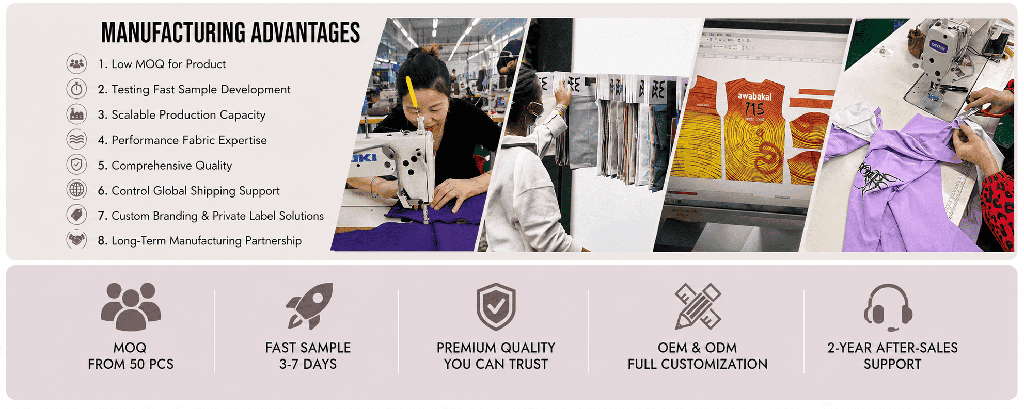
Sampling: Normally around 7 days; faster sampling may be available for suitable projects
Bulk lead time: Generally 20–25 working days, depending on confirmed specifications
Production resources: 7 production lines and approximately 50,000 pieces of regular monthly capacity
Quality resources: Dedicated inspection team covering incoming materials, production, and finished garments
Certification documents: Relevant audit and certification records should be checked for current scope and validity
Core strengths
Pair Fashion’s background in technical apparel is relevant to brands that prioritize movement, stretch recovery, comfort, and repeatable garment construction. Its standard order minimum may also suit smaller brands that want to control inventory exposure.
Potential limitations
Traditional heavyweight Western denim, leather garments, and heavily embellished rodeo showwear require different equipment and specialist skills. Buyers should request examples of comparable products before including these categories in an order.
Best suited for: Startup and growing brands developing functional riding pants, technical tops, and performance-oriented Western collections.
Less suited for: Buyers requiring specialist denim washing, leather production, or complex decorative showwear without additional capability verification.
Brands considering Pair Fashion as a western riding apparel manufacturer can review its custom Western riding apparel manufacturing capabilities before requesting product-specific quotations.
2. Zest Equestrian — Specialized Equestrian Clothing Supplier
Company overview
Zest Equestrian is associated with Dongguan, Guangdong, and supplies equestrian clothing including riding breeches, technical tops, jackets, and show apparel.
Its specialized equestrian focus makes it a relevant western riding apparel manufacturer candidate for brands looking beyond general fitness clothing.
Company information
Location: Dongguan, Guangdong, China
Business history: Manufacturing experience dating to 2009 is publicly stated
Core products: Riding breeches, show shirts, softshell jackets, technical base layers
MOQ: Product-specific; published comparisons indicate different minimums for tops and riding pants
Sampling: Confirm by garment type
Lead time: Request a written production schedule
Certifications: Confirm applicable factory audits and material documentation
Core strengths
Zest’s riding-specific product range gives buyers a useful starting point for assessing technical garment knowledge. Its jackets, breeches, and base layers may suit brands offering practical riding apparel across different seasons.
Potential limitations
Its published range is more closely associated with conventional equestrian clothing. Brands requiring Western show shirts with extensive embroidery or traditional Western denim should request matching production references.
Best suited for: Specialist equestrian retailers and brands sourcing technical riding clothing.
Less suited for: Buyers whose collections primarily require heavyweight denim or elaborate Western competition garments.
Before selecting Zest as a western riding apparel manufacturer, buyers should confirm that its previous projects include the Western-specific products they intend to sell.
3. SGL Sports — Performance Riding Apparel Manufacturing
Company overview
Dongguan SGL Sports Clothing Co., Ltd. manufactures functional sportswear and equestrian garments, including riding breeches, tights, base layers, and jackets.
Its technical sportswear background makes SGL Sports a western riding apparel manufacturer candidate for brands developing performance-focused riding collections.
Company information
Location: Dongguan, Guangdong, China
Established: Exact incorporation date requires confirmation
Core products: Riding tights, breeches, technical shirts, jackets, leggings
MOQ: Published FAQ information indicates 200 pieces per design and color
Sampling: Approximately one week according to published FAQ information
Bulk lead time: Approximately 30 days in published FAQ information
Certifications: Request current facility and material documentation
Core strengths
SGL’s product range emphasizes stretch, mobility, and functional riding details. This can be valuable for brands targeting riders who want garments that perform in the saddle while remaining comfortable during stable work and everyday wear.
Potential limitations
Experience with technical breeches does not automatically translate into expertise in Western denim construction or heavily embellished showwear.
Best suited for: Brands developing riding tights, technical tops, and stretch-based riding collections.
Less suited for: Traditional denim specialists and brands requiring complex Western decorative garments without supporting samples.
A brand comparing SGL Sports with another western riding apparel manufacturer should use identical fabric, fit, decoration, and quantity requirements rather than relying on general catalog prices.
4. Equifactory — Equestrian Clothing and Equipment Supplier
Company overview
Equifactory supplies equestrian clothing and horse-related products, including riding pants, jackets, base layers, and accessories.
Its broad product coverage makes it a western riding apparel manufacturer sourcing candidate for brands considering both clothing and selected equestrian accessories.
Company information
Published business location: Wuhan, Hubei, China
Established: 2010 is stated in its published supplier content
Core products: Riding breeches, jackets, coats, base layers, equestrian accessories
MOQ: From 100 pieces advertised
Sampling: Product-specific quotation required
Lead time: Confirm by category and production facility
Certifications: Factory-specific documents should be requested
Core strengths
Equifactory’s broader catalog may benefit retailers looking to coordinate several equestrian product categories through one supplier relationship.
For buyers, the potential advantage is simpler communication and order coordination across apparel and accessories.
Potential limitations
A broad catalog does not establish that every item is produced in-house. Buyers should identify the contracting company, actual production location, and quality responsibilities for each category.
Best suited for: Equestrian retailers and distributors developing multi-category collections.
Less suited for: Buyers requiring every garment and accessory to come from one verified manufacturing facility.
When comparing Equifactory with another western riding apparel manufacturer, buyers should separate direct manufacturing capability from broader product sourcing services.
5. Quanzhou UBI Garments — Riding Jackets and Technical Outerwear
Company overview
Quanzhou UBI Garments Co., Ltd. is located in Shishi, Fujian Province, and manufactures equestrian jackets, riding tops, and functional outerwear.
Established in 2007, the company has published experience with different jacket constructions, making it a western riding apparel manufacturer candidate for outerwear-focused collections.
Company information
Location: Shishi, Quanzhou, Fujian, China
Established: 2007
Core products: Riding jackets, show coats, padded outerwear, riding tops
MOQ: Varies by product; selected jacket listings specify minimums per color
Sampling: Selected listings indicate approximately 10–15 days
Lead time: Depends on materials, construction, and order volume
Certifications: Request current facility and product-specific records
Core strengths
UBI’s outerwear experience is relevant to Western brands developing riding jackets for cold weather, outdoor work, and seasonal collections.
Its experience with different jacket materials and constructions may offer more relevant expertise than a supplier focused exclusively on lightweight leggings.
Potential limitations
Many of its publicly promoted equestrian jackets are associated with English riding disciplines. Western-specific styling, trims, and decorative construction require separate evaluation.
Best suited for: Brands sourcing riding jackets, outdoor apparel, and seasonal outerwear.
Less suited for: Buyers focused mainly on traditional Western jeans or embroidered competition shirts.
Before choosing UBI as a western riding apparel manufacturer, buyers should inspect comparable outerwear samples and confirm whether the proposed garments will be produced at the stated facility.
6. Dongguan Shuyu Activewear — Technical Riding Wear and Sportswear
Company overview
Dongguan Shuyu Activewear Co., Ltd. supplies equestrian apparel and functional sportswear. Its published business history traces predecessor manufacturing operations to 2012.
Shuyu is a western riding apparel manufacturer candidate worth evaluating for stretch-based riding pants, technical tops, and performance garments.
Company information
Location: Dongguan, Guangdong, China
Business history: Predecessor manufacturing operations reported from 2012
Core products: Riding breeches, technical tops, base layers, leggings, activewear
MOQ: 100 pieces per design/color reported in supplier comparisons
Sampling: Confirm against the required product specifications
Lead time: Request a current production schedule
Certifications: Verify applicable factory and material documentation
Core strengths
Shuyu’s combination of equestrian and sportswear categories may be suitable for brands developing riding apparel with an emphasis on flexibility, comfort, and performance.
Its product range also makes it relevant to brands expanding an existing activewear business into riding clothing.
Potential limitations
Published product information does not establish specialist experience in traditional Western jeans, leather apparel, or elaborate showwear.
Best suited for: Performance riding brands and activewear labels entering the equestrian market.
Less suited for: Brands requiring specialist Western denim or decorative showwear without relevant sample evidence.
Buyers evaluating Shuyu as a western riding apparel manufacturer should compare finished garment samples rather than assuming that all stretch riding pants offer equivalent durability or fit.
7. Dongguan Tianchen Garment — Activewear and Small-Project Supplier Candidate
Company overview
Dongguan Tianchen Garment Technology Co., Ltd. is mentioned in Chinese equestrian apparel supplier comparisons for activewear, seamless garments, and reported equestrian clothing.
For brands exploring flexible garment development, Tianchen may be considered as a preliminary western riding apparel manufacturer candidate.
Company information
Reported location: Dongguan, Guangdong, China
Established: Requires company-level confirmation
Reported products: Activewear, seamless garments, yoga clothing, selected equestrian apparel
MOQ: Bulk minimum not reliably established
Sampling: Request written development terms
Lead time: Confirm by product and production quantity
Certifications: Obtain current documents directly
Core strengths
A supplier with experience in seamless and technical activewear may offer useful capabilities for lightweight riding tops and performance garments.
However, this depends on the actual equipment, pattern-development resources, and garment examples available for review.
Potential limitations
Published comparisons provide limited evidence of Western-specific manufacturing experience. Unusually low advertised quantities should not be treated as confirmed bulk-production terms.
Best suited for: Brands conducting initial supplier screening for technical apparel.
Less suited for: Buyers requiring immediately verified Western riding production capacity.
A buyer should qualify Tianchen as a western riding apparel manufacturer only after reviewing its actual production facility, relevant garment samples, and written commercial conditions.
8. Guangzhou New Apparel — Multi-Category Clothing and Accessories Supply
Company overview
Guangzhou New Apparel Trade Company Limited is listed in equestrian supplier comparisons for riding apparel, casual clothing, and accessories.
Its reported multi-category range makes it a western riding apparel manufacturer sourcing candidate for brands developing collections that extend beyond riding garments.
Company information
Reported location: Guangzhou, Guangdong, China
Established: Requires verification
Reported products: Riding jackets, breeches, T-shirts, headwear, casual apparel
MOQ: From 100 pieces reported in third-party comparisons
Sampling: Product-specific confirmation required
Lead time: Confirm separately for each category
Certifications: Request applicable company and facility records
Production arrangement: Direct manufacturing and subcontracting responsibilities require clarification
Core strengths
A multi-category supplier may help brands coordinate apparel and accessories under one commercial relationship.
This can be convenient for collections combining riding tops, casual T-shirts, hats, and selected seasonal products.
Potential limitations
A trading-oriented business model may involve several production facilities. Buyers need to understand which party controls materials, production quality, and corrective actions.
Best suited for: Retailers and Western lifestyle brands seeking coordinated sourcing across several categories.
Less suited for: Buyers who require one verified direct manufacturer for every product.
When comparing Guangzhou New Apparel with a western riding apparel manufacturer operating its own production lines, buyers should consider communication efficiency alongside manufacturing transparency.
9. Xiamen Bella Fitness — Performance Activewear and Riding Breeches
Company overview
Xiamen Bella Fitness Co., Ltd. supplies technical activewear, including leggings, sports bras, jackets, and selected equestrian riding breeches.
Its experience with stretch-based sportswear makes Bella Fitness a western riding apparel manufacturer candidate for performance-oriented garments.
Company information
Location: Xiamen, Fujian, China
Established: 2007 according to published supplier information
Core products: Riding breeches, leggings, sports bras, jackets, performance apparel
MOQ: 300 pieces on selected riding breeches listings
Sampling: Confirm by development requirements
Lead time: Product-specific schedule required
Certifications: Obtain current factory and product-related documentation
Core strengths
Bella’s technical sportswear background is relevant to products requiring stretch recovery, comfortable movement, and consistent performance fabric construction.
This may be useful for brands developing hybrid riding and activewear collections.
Potential limitations
Published equestrian products focus primarily on technical breeches and related performance garments. Traditional Western denim production is not established by these listings.
Best suited for: Technical riding brands and established activewear companies.
Less suited for: Buyers unable to meet the applicable MOQ or requiring specialist Western denim manufacturing.
Before selecting Bella Fitness as a western riding apparel manufacturer, buyers should verify that the quoted order minimum and fabric specifications match their actual product plan.
10. Xiamen Sikesport Garment — Sportswear Supplier Requiring Further Qualification
Company overview
Xiamen Sikesport Garment has been identified as a potential sportswear sourcing contact in Xiamen. Its current legal identity, production facilities, and Western riding apparel specialization require further confirmation.
It should therefore be treated as an early-stage western riding apparel manufacturer sourcing candidate rather than an already qualified production partner.
Company information
Reported location: Xiamen, Fujian, China
Established: Not confirmed
Core products: Sportswear; current equestrian product range requires confirmation
MOQ: Not confirmed
Sampling: Not confirmed
Lead time: Not confirmed
Certifications: Not confirmed
Production facility: Verification required
Potential strengths
If the company can demonstrate relevant technical apparel manufacturing capabilities, it may provide another option for buyers comparing Chinese sportswear suppliers.
Potential limitations
The available information is insufficient to establish its suitability for specialized Western riding garments or to compare its commercial performance with better-documented suppliers.
Best suited for: Buyers conducting preliminary supplier discovery.
Less suited for: Buyers requiring a fully qualified supplier before requesting production commitments.
A company should not advance from an initial contact to an approved western riding apparel manufacturer without a verified business identity, relevant production evidence, and clearly documented commercial terms.
Which Suppliers Are Better Suited to Different Western Wear Brands?
The right choice depends on the product category, not simply the supplier’s overall experience or company size.
Buyer Requirement | Suppliers Worth Evaluating | Main Decision Factor |
|---|---|---|
Functional riding pants and performance tops | Pair Fashion, SGL Sports, Shuyu | Relevant garment samples and fit consistency |
Technical breeches and equestrian apparel | Zest Equestrian, Bella Fitness | Riding-specific construction and material performance |
Riding jackets and outdoor clothing | UBI Garments, Zest Equestrian | Outerwear construction and material suitability |
Multi-category equestrian collections | Equifactory, Guangzhou New Apparel | Production responsibility across categories |
Flexible product development | Pair Fashion, Tianchen | Confirmed MOQ, sample scope, and technical resources |
Traditional Western denim | No supplier qualified solely from the available evidence | Denim production equipment and relevant product history |
Highly decorated Western showwear | No supplier qualified solely from the available evidence | Embroidery, embellishment, and specialist garment samples |
A supplier with the lowest price is not necessarily the best sourcing choice. A technically unsuitable manufacturer can create additional costs through repeated samples, production corrections, delayed deliveries, and customer complaints.
Before reducing the list to three finalists, compare every supplier against the same product requirements:
Product experience: Has the supplier produced garments comparable to your intended collection?
Manufacturing responsibility: Which products are made in-house, and which are outsourced?
Commercial conditions: Are MOQ, pricing, sample charges, and delivery terms clearly defined?
Quality evidence: Can the supplier provide relevant finished samples, inspection records, and material information?
Production reliability: Can the supplier demonstrate capacity and provide a realistic delivery schedule?
Business suitability: Does the supplier’s operating model match your brand’s order volume and growth plans?
The strongest shortlist is not necessarily the one containing the largest manufacturers. It is the one containing suppliers that can demonstrate relevant product experience, dependable production arrangements, and commercial terms that fit your business.

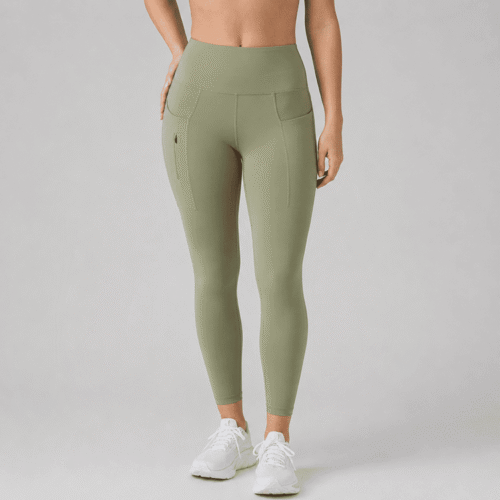
Custom High Waist Pocket Yoga Leggings OEM ODM Workout Pants
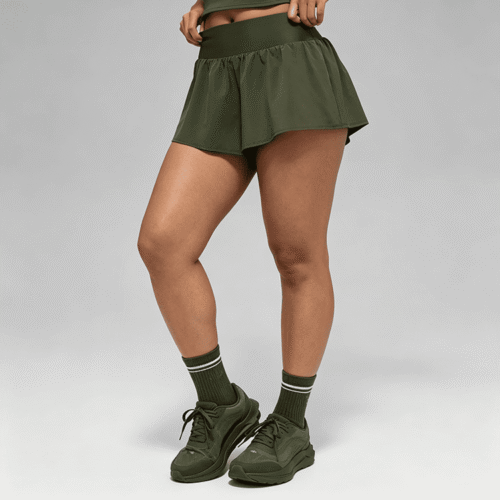
Custom High Waist Tennis Skort with Built-In Shorts OEM ODM
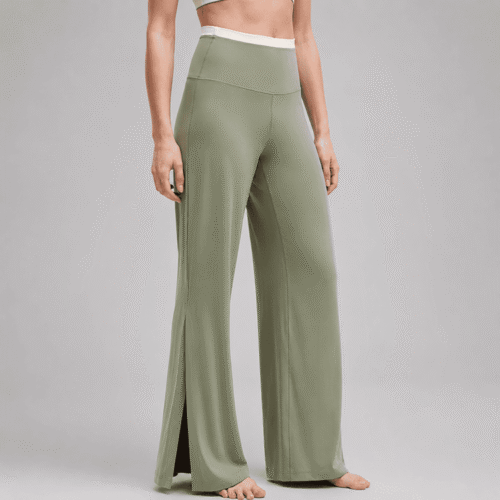
Custom High Waist Wide Leg Yoga Pants OEM ODM Athleisure Trousers
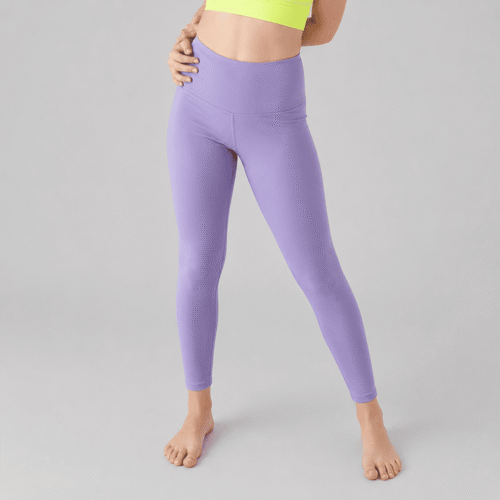
Custom High Waist Yoga Leggings OEM ODM Four-Way Stretch Workout Tights
Custom High Waist Yoga Leggings OEM ODM Performance Workout Pants
Custom Hooded Modest Activewear Set OEM ODM Muslim Loungewear
Custom Long Sleeve Modest Sports Tunic OEM ODM Muslim Activewear
Custom Maternity Activewear Romper OEM ODM Pregnancy Workout Jumpsuit
Why Should Western Wear Brands Source Riding Apparel from China?
China is a practical sourcing destination for Western wear brands because it combines established textile supply chains, technical garment manufacturing, and access to specialized materials and trims. However, choosing a western riding apparel manufacturer in China is not automatically cheaper or better than sourcing elsewhere. The strongest advantage comes when a brand matches its product requirements with the right production capabilities, order quantities, and delivery arrangements. Buyers should compare total purchasing costs, manufacturing expertise, and supply chain risks before choosing a country or supplier.
What Makes China’s Apparel Supply Chain Competitive for Western Wear Brands?
China’s apparel industry benefits from a large network of fabric mills, garment manufacturers, accessory suppliers, printing companies, embroidery workshops, and logistics providers.
For Western wear brands, this network can make it easier to source several materials and manufacturing services without coordinating suppliers across multiple countries.
A western riding apparel manufacturer working within an established textile supply chain may have access to:
Performance fabrics: Nylon-spandex, polyester-spandex, moisture-management fabrics, and stretch woven materials for riding apparel.
Durable woven fabrics: Cotton twill, canvas, denim, and other materials suitable for selected Western clothing categories.
Garment accessories: Zippers, snaps, buttons, elastic waistbands, labels, and functional trims.
Decoration services: Embroidery, screen printing, heat transfers, and selected decorative applications.
Testing resources: Fabric composition, colorfastness, dimensional stability, and other product-specific testing services.
Logistics options: Consolidated shipments, sea freight, air freight, and freight-forwarding services.
The main benefit is not simply having more suppliers available. It is the ability to coordinate materials, production, and related services within an established manufacturing network.
For example, a brand developing stretch riding pants and lightweight performance shirts may benefit from sourcing both products through suppliers familiar with technical sportswear.
However, a collection containing traditional Western jeans, embroidered show shirts, and leather accessories may require several different manufacturing specialists.
A western riding apparel manufacturer should be evaluated according to the products it can actually produce, not the number of categories displayed in its catalog.
This distinction matters because supplier specialization affects construction quality, sampling accuracy, and the consistency of repeat orders.
China vs USA vs Other Sourcing Countries: Which Offers Better Overall Value?
China, the United States, Vietnam, India, and other apparel-producing countries offer different advantages. No single manufacturing location is best for every Western wear brand.
A western riding apparel manufacturer in China may offer competitive production costs and access to a broad material network. A US manufacturer may provide easier domestic coordination and shorter transportation distances for American customers. Manufacturers in Vietnam or India may be attractive for particular garment categories, depending on their production experience and available supply chains.
Sourcing Factor | China | United States | Vietnam | India |
|---|---|---|---|---|
Technical sportswear manufacturing | Established supplier base | Available through specialized manufacturers | Established export manufacturing base | Available; supplier specialization varies |
Traditional Western denim | Available through specialized producers | Available through denim specialists | Available through selected manufacturers | Available through denim and woven garment producers |
Decorative embroidery | Broad supplier availability | Available through specialist workshops | Available through selected suppliers | Established embroidery and embellishment capabilities |
Small-order flexibility | Depends on supplier and material | Depends on supplier | Depends on supplier | Depends on supplier |
Material sourcing | Extensive domestic network | Domestic and imported options | Domestic and imported options | Strong textile base in selected categories |
Shipping to US customers | International freight and import clearance | Domestic transportation | International freight and import clearance | International freight and import clearance |
Main consideration | Supplier specialization and landed cost | Domestic coordination and production cost | Product specialization and material sourcing | Construction, materials, and supplier coordination |
These are general sourcing characteristics, not guaranteed advantages of individual manufacturers.
A Western wear brand should avoid selecting a country based only on advertised labor costs.
For example, one western riding apparel manufacturer may quote a lower garment price but require expensive imported fabric. Another supplier may offer a higher unit price while using locally available materials and providing more favorable production conditions.
The second quotation may produce a better overall purchasing result.
Compare the Same Product Before Comparing Countries
Suppose a brand requests quotations for 500 performance riding shirts.
The technical requirements include:
85% polyester and 15% spandex fabric, subject to approved performance specifications
A defined fabric weight and stretch requirement
Four sizes and two colors
Embroidered chest branding
Individual packaging
A specified inspection standard
Delivery to the same US destination
Every supplier should receive these identical requirements.
A western riding apparel manufacturer quoting an alternative fabric or different packaging should identify those changes separately.
Otherwise, the buyer may believe one supplier is cheaper when the two quotations actually describe different products.
Compare the same specifications, quantity, quality requirements, and delivery destination before deciding which manufacturing country offers better value.
Which Western Riding Apparel Categories Are Better Suited to Chinese Suppliers?
China offers manufacturing resources for many types of Western riding apparel, but the suitability of individual suppliers varies significantly by garment construction.
A western riding apparel manufacturer specializing in functional sportswear may be a strong candidate for performance riding pants but a poor match for heavyweight Western jeans.
Similarly, a company producing technical riding jackets may not have the embroidery equipment or garment construction experience required for elaborate Western show shirts.
The following categories require different manufacturing capabilities.
Western Riding Apparel Category | Important Manufacturing Capabilities | Key Buyer Considerations |
|---|---|---|
Performance riding pants | Stretch woven or knitted fabrics, pattern engineering, reinforced seams | Riding comfort, fit consistency, stretch recovery |
Western performance shirts | Technical fabrics, collar construction, durable stitching | Movement, breathability, appearance after washing |
Western show shirts | Decorative stitching, embroidery, fitted woven construction | Decoration quality, fit, color consistency |
Western riding jeans | Denim cutting, reinforced construction, washing and finishing | Durability, shrinkage, saddle comfort |
Riding jackets | Outerwear construction, lining, insulation, weather-resistant materials | Mobility, bulk, weather protection |
Western lifestyle tops | Jersey or woven apparel production, printing, embroidery | Brand appearance, cost, repeat consistency |
Performance Riding Apparel
A western riding apparel manufacturer with experience in technical sportswear may be a good choice for making stretch riding pants, lightweight riding tops, and functional jackets.
These products need to allow comfortable body movement, have good fabric stretch recovery, and maintain consistent garment construction quality.
For example, riding pants must remain comfortable while the rider sits, bends, mounts, and dismounts. Poorly positioned seams or an unstable waistband can become uncomfortable during extended riding.
A suitable supplier should demonstrate experience with garments that face comparable movement and wear conditions.
Traditional Western Denim
Traditional Western riding jeans require a different production approach.
A western riding apparel manufacturer specializing in stretch leggings should not automatically be considered qualified to produce heavyweight denim jeans.
Buyers should look for experience with:
Denim cutting and sewing equipment
Reinforced seams and stress points
Pocket construction and rivet application
Fabric shrinkage management
Denim washing and finishing
Consistent measurements after laundering
The relevant question is not whether a supplier can purchase denim fabric. It is whether the supplier can produce finished jeans that meet the brand’s fit, durability, and appearance requirements.
Western Show Apparel
Western show shirts may require decorative embroidery, contrasting panels, shaped collars, fitted woven construction, and carefully positioned embellishments.
A western riding apparel manufacturer offering basic embroidery services may not have experience managing these details across different garment sizes.
For decorative showwear, buyers should evaluate the finished garment rather than approving decoration samples alone.
Embroidery placement, garment balance, fabric stability, and comfort must work together.
The best sourcing strategy is to match each product category with the manufacturing skills it actually requires.
How Do Production Scale, Material Availability and Logistics Affect Sourcing Decisions?
Production capacity matters, but bigger is not always better.
A large western riding apparel manufacturer may be suitable for established brands ordering thousands of garments per season. A smaller specialist may be more appropriate for a brand developing its first collection.
The important issue is whether the supplier can handle the required order without compromising quality, delivery, or communication.
Production Scale and Order Flexibility
Consider two different Western wear brands.
Brand A is launching its first collection with three performance riding styles and a limited inventory budget.
Brand B already sells riding apparel internationally and needs repeat production across multiple seasons.
Brand A may prioritize:
Manageable minimum quantities
Accurate first samples
Clear development responsibilities
Limited inventory exposure
Reliable communication during initial production
Brand B may prioritize:
Repeat-order consistency
Stable material sourcing
Capacity during peak seasons
Detailed production documentation
Predictable shipment schedules
The same western riding apparel manufacturer may not be the strongest choice for both businesses.
A supplier with attractive volume pricing may require quantities that expose a startup to unnecessary inventory risk. Conversely, a small supplier may struggle to support a mature brand’s seasonal production schedule.
Material Availability and Production Planning
Material availability can influence both price and delivery.
A western riding apparel manufacturer using regularly stocked performance fabric may be able to begin production sooner than a supplier ordering a special fabric color or custom-developed material.
However, stock availability should not be assumed.
Buyers should confirm:
Whether the quoted fabric is stocked or made to order
Minimum material purchase quantities
Color availability and dye-lot requirements
Fabric testing and approval responsibilities
Replacement options if the original material becomes unavailable
Whether repeat orders can use the same material specification
A garment’s production schedule may depend more on material availability than on sewing capacity.
Shipping and Import Costs
International freight is another important consideration.
A western riding apparel manufacturer may offer competitive production prices, but the final cost depends on shipping arrangements, customs duties, applicable tariffs, and other import charges.
For US-bound orders, buyers should confirm the applicable tariff classification, country-of-origin requirements, and import duties before accepting a landed-cost estimate. Buyers can also review the US Customs and Border Protection guidance on importing textiles to understand additional requirements for imported apparel.
The cheapest shipping method is not always the most economical.
Air freight may reduce transit time but increase costs significantly. Sea freight may lower transportation expense per garment for suitable shipments, while requiring more planning.
A brand that delays production decisions may eventually pay more for urgent shipping than it saved by negotiating a lower garment price.
Production cost and delivery cost should be evaluated together, not as separate purchasing decisions.
When Is China Not the Best Manufacturing Location for Your Brand?
China can be a strong sourcing option, but there are situations where another manufacturing location may better serve a Western wear brand.
A western riding apparel manufacturer in China may not be the most practical partner when the order requires extremely short domestic delivery times, frequent in-person development meetings, or specialized production capabilities that are more readily available elsewhere.
The decision should depend on the business model and product requirements.
1. Your Brand Requires Very Short Domestic Replenishment
A US-based brand selling limited seasonal products may need to replenish popular styles quickly.
If the business relies on small, frequent orders with very short delivery windows, domestic manufacturing may reduce transportation complexity.
A western riding apparel manufacturer in China may still offer attractive production pricing, but international shipping and customs clearance must be included in replenishment planning.
2. Your Products Require Highly Specialized Craftsmanship
Some Western wear collections involve extensive leatherwork, handcrafted embellishments, traditional denim finishing, or specialist tailoring.
A general western riding apparel manufacturer may not have the equipment or experience required for these categories.
Buyers should compare specialist producers based on actual finished products, not general apparel manufacturing claims.
3. Your Order Volume Is Too Small for Economical Production
Very small orders can create disproportionate costs for material purchasing, cutting, production setup, decoration, and international shipping.
A western riding apparel manufacturer may accept a small order but still require a price that makes the finished product commercially unattractive.
For certain products, domestic small-batch production or an established wholesale program may be more practical during the earliest stages of a brand.
4. Your Brand Depends on Local Production Claims
Some Western wear brands build their identity around domestic manufacturing or specific regional craftsmanship.
If local production is central to the brand’s positioning, sourcing overseas may conflict with customer expectations.
In this situation, choosing a western riding apparel manufacturer in China should be considered only if it fits the brand’s product strategy and marketing commitments.
5. Your Total Landed Cost Is No Longer Competitive
A lower unit price does not guarantee a lower final cost.
A western riding apparel manufacturer should be compared against alternative suppliers using the same purchasing assumptions.
Consider the following illustrative example:
Cost Component | Supplier A | Supplier B |
|---|---|---|
Garment unit price | $15.00 | $17.00 |
Freight and import costs per garment | $4.50 | $1.50 |
Inspection and other allocated costs | $0.80 | $0.50 |
Total estimated landed cost | $20.30 | $19.00 |
Illustrative figures only; not actual supplier quotations or current import-cost estimates.
Supplier A has the lower garment price, but Supplier B has the lower estimated total cost.
This is why brands should not select a manufacturing partner based on unit price alone.
How Should Western Wear Brands Make the Final Country-Sourcing Decision?
The best manufacturing location is the one that supports the brand’s product requirements, quality expectations, inventory strategy, and delivery commitments.
Before selecting a western riding apparel manufacturer, buyers should answer five questions:
Product suitability: Does the supplier have proven experience with the exact garment category?
Commercial suitability: Are MOQ, unit costs, development charges, and payment terms practical for the business?
Quality reliability: Can the supplier demonstrate consistent production against approved requirements?
Supply chain stability: Are materials, production resources, and delivery schedules dependable?
Total purchasing value: Does the final landed cost justify the sourcing arrangement?
For brands considering functional riding pants, performance tops, and technical apparel, China’s established sportswear manufacturing network can provide useful sourcing options.
Brands that want to evaluate a specific production partner can explore Pair Fashion’s Western riding apparel OEM and private label services alongside other shortlisted suppliers.
The strongest sourcing decision is not about choosing China simply because it is China. It is about selecting a manufacturer whose actual capabilities, commercial terms, and production reliability support your brand’s long-term success.
Western Riding Apparel vs English Equestrian Wear: Which Manufacturers Have the Right Expertise?
Western riding apparel and English equestrian clothing need different manufacturing skills. Western riding clothing usually focuses more on denim, structured shirts, decorative details, and comfort for daily riding, while English equestrian clothing mainly includes fitted breeches, technical jackets, and competition wear. A suitable western riding apparel manufacturer should understand the garment construction, fabric performance, and design requirements of your products. Brands should check actual production samples because a supplier with experience in English equestrian clothing does not mean it also has the ability to produce Western riding apparel.
What Are the Main Differences Between Western Riding Apparel and English Equestrian Clothing?
The differences extend beyond appearance. Riding posture, garment fit, fabric selection, and customer expectations all influence production requirements.
Comparison | Western Riding Apparel | English Equestrian Apparel |
|---|---|---|
Common products | Riding jeans, Western shirts, performance tops | Breeches, riding tights, show jackets |
Typical fit | Relaxed to fitted, depending on discipline | Generally closer-fitting |
Common fabrics | Denim, cotton blends, stretch woven fabrics | Technical stretch knits and woven fabrics |
Design details | Western yokes, snaps, embroidery, decorative stitching | Grip panels, reinforced seams, tailored silhouettes |
Main priorities | Saddle comfort, durability, Western styling | Mobility, close fit, technical riding performance |
These are common product differences, not fixed rules for every garment.
A western riding apparel manufacturer should understand how Western styling interacts with garment construction. Decorative stitching may look attractive, but poorly positioned seams can cause discomfort during riding.
Similarly, a western riding apparel manufacturer experienced with English breeches may still need additional denim construction or embroidery capabilities for Western collections.
Which Types of Western Riding Apparel Require Specialized Production Experience?
Different products require different machinery, pattern development, and quality checks.
1. Western Riding Jeans
A western riding apparel manufacturer producing jeans should understand denim shrinkage, reinforced stitching, pocket placement, and fit while seated in the saddle.
Buyers should check:
Denim weight and stretch recovery
Inseam and crotch seam durability
Waistband comfort while riding
Shrinkage after washing
Consistency between sample and bulk production
2. Western Show Shirts
A western riding apparel manufacturer making show shirts needs experience with shaped collars, fitted woven construction, embroidery, and decorative panels.
The main challenge is maintaining accurate decoration placement across different sizes without affecting garment comfort.
3. Performance Riding Tops
A western riding apparel manufacturer specializing in performance tops should demonstrate knowledge of moisture management, fabric recovery, and construction that supports movement.
4. Riding Jackets
A western riding apparel manufacturer producing jackets should evaluate shoulder mobility, sleeve construction, hem positioning, and weather protection where required.
The key is product-specific experience. A supplier with excellent riding leggings may not be equally qualified to produce heavyweight jeans or elaborate showwear.
Western Show Shirts vs Performance Riding Tops: What Should Buyers Compare?
Western show shirts and performance riding tops may serve similar customers, but their manufacturing priorities are different.
Evaluation Area | Western Show Shirts | Performance Riding Tops |
|---|---|---|
Main priority | Appearance and fit | Comfort and movement |
Construction | Structured woven or stretch woven | Technical knit or lightweight woven |
Decoration | Embroidery, contrast panels, snaps | Printing, embroidery, simple trims |
Main quality risk | Misaligned decoration and inconsistent fit | Poor stretch recovery and seam discomfort |
A western riding apparel manufacturer experienced in technical sportswear may be suitable for performance tops but require specialist support for decorative show shirts.
For showwear, buyers should request finished samples with the actual decoration rather than approving embroidery artwork alone.
For performance tops, a western riding apparel manufacturer should provide samples that can be evaluated for movement, washing performance, and comfort during riding.
Riding Jeans vs Stretch Riding Pants: Which Manufacturing Skills Are Different?
Riding jeans and stretch riding pants are not interchangeable manufacturing categories.
A western riding apparel manufacturer producing traditional jeans may use denim-specific cutting, heavy-duty sewing, washing, and finishing processes.
By comparison, a western riding apparel manufacturer producing stretch riding pants may rely more heavily on technical fabric handling, stretch-compatible seams, and pattern engineering.
Buyers should compare the following:
Fabric behavior: Denim shrinkage versus technical fabric recovery
Seam construction: Reinforced denim seams versus stretch-compatible stitching
Fit approval: Seated comfort, waistband stability, and leg movement
Finishing: Denim washing versus technical fabric finishing
Quality testing: Abrasion, dimensional stability, and seam durability
A western riding apparel manufacturer should demonstrate relevant equipment and finished-product experience before accepting a technically unfamiliar category.
How Can Buyers Identify Suppliers with Relevant Western Riding Product Experience?
A supplier’s website may display riding apparel, but product photographs alone do not establish manufacturing capability.
Before selecting a western riding apparel manufacturer, request evidence related to the exact garments your brand plans to produce.
Five practical verification questions:
Have you manufactured this Western riding product category before?
Can you provide samples showing comparable construction and materials?
Which production processes are completed in-house?
What equipment is used for specialized stitching, denim, or decoration?
How do you inspect the finished garments against approved specifications?
A reliable western riding apparel manufacturer should explain which capabilities are available directly and which require specialist production partners.
For example, a western riding apparel manufacturer may produce technical riding pants in-house while outsourcing decorative embroidery. This arrangement is not necessarily a problem, provided quality responsibilities are clear.
Buyers should also evaluate actual garment performance. A shirt may look excellent on a mannequin but pull across the shoulders when the rider reaches forward.
Likewise, a western riding apparel manufacturer may produce attractive riding jeans that become uncomfortable after several hours in the saddle.
The strongest evidence is a relevant finished sample tested under realistic conditions.
Which Manufacturing Expertise Should Your Brand Prioritize?
The best choice depends on your collection.
A western riding apparel manufacturer specializing in functional sportswear may be a suitable partner for stretch riding pants, breathable tops, and lightweight jackets.
For traditional Western denim, a western riding apparel manufacturer with proven denim production experience is generally a stronger starting point.
For decorative competition clothing, a western riding apparel manufacturer should demonstrate accurate embroidery, consistent sizing, and specialist garment finishing.
Brands developing functional Western riding collections can also review Pair Fashion’s custom Western riding apparel production capabilities when comparing relevant suppliers.
Choose manufacturing expertise based on the garments you intend to sell—not simply the number of equestrian products a supplier advertises.

How Do Western Riding Apparel Manufacturers in China Compare on Price and MOQ?
The manufacturing price of Western riding apparel depends on the fabric, garment construction, decoration, order quantity, and delivery terms. A lower unit price does not always mean the buyer can get a better deal. When comparing a western riding apparel manufacturer, buyers should check the MOQ, sample fees, material requirements, and total landed cost. To make a fair comparison, buyers should send the same product specifications to different suppliers and compare their quotations based on the same purchasing conditions.
What Is Included in a Comparable Western Riding Apparel Manufacturing Quote?
A quotation should explain exactly what the buyer will receive, not simply provide a price per garment.
A western riding apparel manufacturer may quote $12 for a basic performance top, while another supplier quotes $16 for a similar-looking product with different fabric, construction, and packaging.
Without identical specifications, the two prices cannot be compared fairly.
A complete quotation should identify:
Fabric: Composition, weight, performance requirements, and approved alternatives
Construction: Stitching, reinforcements, closures, and special garment details
Decoration: Embroidery, printing, labels, and custom trims
Order quantity: Pieces per style, color, and size
Additional charges: Samples, development, testing, and special packaging
Delivery terms: Incoterms, production schedule, and quotation validity
A professional western riding apparel manufacturer should clearly identify what is included and which services require additional payment. For apparel intended for the US market, buyers should also check applicable fiber content, origin, and labeling requirements using the Federal Trade Commission’s clothing and textiles guidance before finalizing product specifications and packaging costs.
The lowest quotation is useful only when every supplier is pricing the same product.
How Do MOQ Rules Differ by Style, Color, Size and Material?
MOQ is one of the most important commercial conditions for startup and growing Western wear brands.
However, a western riding apparel manufacturer advertising a 100-piece MOQ may apply that minimum differently from another supplier.
For example:
MOQ Structure | Example | Total Order Requirement |
|---|---|---|
Per style | 100 pcs across approved colors and sizes | 100 pcs |
Per style and color | 100 pcs × 3 colors | 300 pcs |
Per fabric color | 200 pcs × 2 custom fabric colors | 400 pcs |
Per size | 50 pcs × 5 sizes | 250 pcs |
Illustrative MOQ structures, not confirmed terms from specific suppliers.
A western riding apparel manufacturer may also require higher quantities when the order includes custom-dyed fabric, specialized trims, or complicated embroidery.
Before comparing quotations, buyers should ask:
Does MOQ apply per style, color, fabric, or total order?
Can different sizes be combined?
Are sample quantities included in the minimum?
Does a custom fabric require a separate material MOQ?
Will repeat orders follow the same minimum quantities?
A western riding apparel manufacturer offering a lower minimum may be more suitable for testing a new collection, even when its unit price is slightly higher.
Low Unit Price vs Low Total Cost: Which Offer Is Better for Buyers?
A low garment price can become expensive when additional charges are included.
Consider two hypothetical quotations for 500 Western performance riding shirts.
Cost Component | Supplier A | Supplier B |
|---|---|---|
Unit production price | $13.00 | $14.50 |
Garment production total | $6,500 | $7,250 |
Development and setup | $400 | $150 |
Inspection | $250 | $250 |
Freight and estimated import charges | $1,500 | $900 |
Total estimated purchasing cost | $8,650 | $8,550 |
Effective cost per garment | $17.30 | $17.10 |
Illustrative calculation only. Actual charges depend on product specifications, shipment arrangements, origin, and applicable import requirements.
Supplier A offers the lower unit price, but Supplier B has the lower estimated total cost.
When evaluating a western riding apparel manufacturer, buyers should calculate the full purchasing cost rather than focusing exclusively on the garment price.
This becomes particularly important for brands operating with limited margins or tight inventory budgets.
FOB vs EXW vs DDP: How Do Trade Terms Change the Final Cost?
International trade terms determine how transportation costs, responsibilities, and risks are allocated between the buyer and seller.
A western riding apparel manufacturer may offer several quotation options, but buyers must understand what each one includes.
Trade Term | General Meaning | Important Buyer Consideration |
|---|---|---|
EXW | Goods made available at the named location | Buyer takes on extensive collection and export arrangements |
FOB | Seller delivers goods on board the vessel at the named port | Suitable for sea or inland waterway transport; buyer manages main carriage |
DDP | Seller delivers to the named destination with import clearance and applicable duties handled under the term | Confirm exactly what destination and charges are covered |
A western riding apparel manufacturer quoting FOB Shenzhen should not be compared directly with another supplier quoting DDP Los Angeles without adjusting the costs.
For containerized shipments, FCA may sometimes be more appropriate than FOB, depending on the delivery arrangements.
Buyers should specify the applicable Incoterms® 2020 rule and named place or port in the purchase agreement.
For detailed trade-term definitions, consult the International Chamber of Commerce Incoterms rules.
How Can Buyers Use a Standard RFQ to Compare Multiple Manufacturers?
A standard request for quotation (RFQ) helps buyers compare suppliers under identical conditions.
Before contacting a western riding apparel manufacturer, prepare one product specification package and send it to every shortlisted supplier.
Example RFQ for Western Riding Pants
Specification | Buyer Requirement |
|---|---|
Product | Women’s stretch Western riding pants |
Fabric | 75% nylon, 25% spandex, subject to approved performance requirements |
Quantity | 600 pcs |
Colors | Black, navy, brown |
Sizes | XS–XXL |
Branding | One embroidered logo |
Packaging | Individual recyclable polybags |
Quality requirements | Approved measurement tolerances and inspection criteria |
Destination | Los Angeles, USA |
Quotation request | EXW and FOB options |
Delivery target | Confirmed before purchase order |
These specifications are illustrative and should be adjusted to the actual product.
A western riding apparel manufacturer should quote the requested construction and identify any proposed alternatives separately.
This prevents a supplier from appearing cheaper simply because it has substituted a lighter fabric or removed a construction detail.
For brands comparing technical riding apparel suppliers, Pair Fashion’s custom Western riding apparel manufacturing services can be evaluated using the same RFQ structure.
Which Hidden Charges Should Buyers Check Before Accepting a Quotation?
Unexpected costs often arise from unclear specifications or incomplete commercial agreements.
A western riding apparel manufacturer should identify additional charges before the buyer approves production.
Common items to check include:
Sample revisions: Whether additional development rounds are charged separately
Fabric surcharges: Costs for special colors, finishes, or minimum material purchases
Decoration setup: Embroidery digitizing, printing screens, and custom molds
Testing: Fabric performance, colorfastness, and other required laboratory tests
Packaging: Custom labels, hangtags, cartons, and individual packing
Inspection: Third-party inspection fees and reinspection arrangements
Shipping: Inland transportation, freight, customs clearance, and import charges
A western riding apparel manufacturer offering an attractive initial quotation may still be less competitive if these expenses are excluded.
Buyers should request written confirmation of all charges before paying a deposit.
How Should Buyers Compare Price, MOQ and Purchasing Risk?
Price and MOQ should be evaluated together with product quality, delivery reliability, and inventory exposure.
A startup may benefit from a western riding apparel manufacturer offering smaller order quantities, even when the unit price is higher.
An established brand may prefer a supplier with stronger volume pricing and dependable repeat production.
Before making a final decision, compare:
Total landed cost, not just unit price
Actual MOQ rules, not advertised minimums alone
Sample and development charges
Production and delivery commitments
Inspection responsibilities
Financial exposure from unsold inventory
A suitable western riding apparel manufacturer should provide clear quotations that allow buyers to understand both the initial order cost and the likely cost of future production.
The best purchasing decision is not necessarily the cheapest quotation. It is the offer that meets your product requirements while keeping total costs, inventory commitments, and sourcing risks under control.
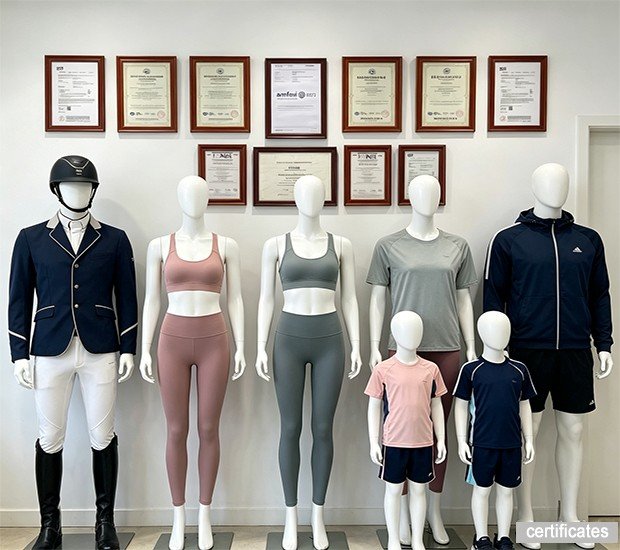
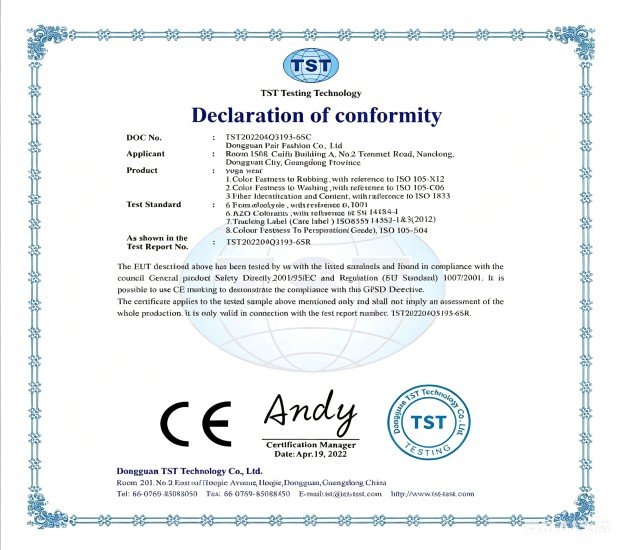
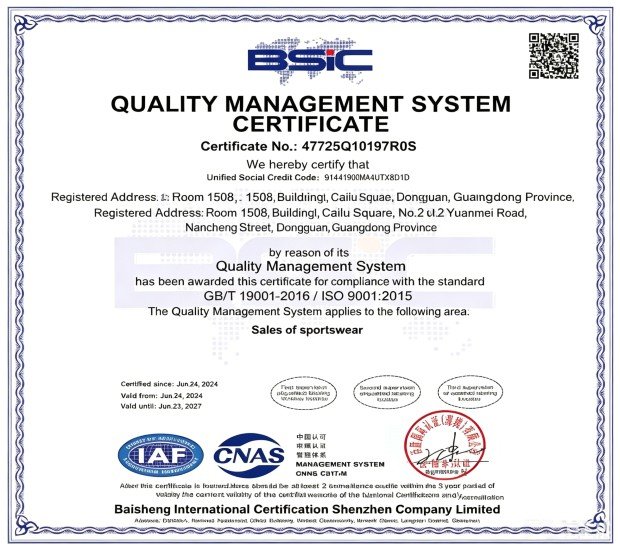
Trusted Manufacturing Standards For Global Sportswear Brands
We operate under internationally recognized quality, sustainability, and ethical manufacturing standards. Our certifications help ensure consistent product quality, responsible sourcing, and reliable production for global sportswear brands.
- 20+ Countries Served
- 6000+ Styles Developed
- 50,000 PCS Monthly Capacity
- 3-Day Sample Development
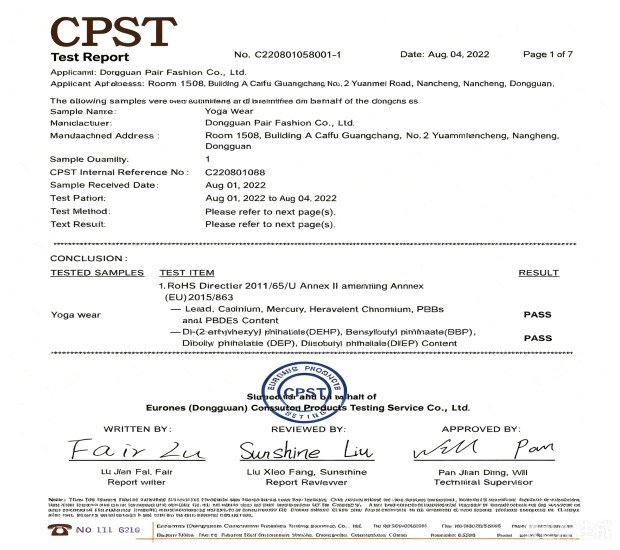
How Can Buyers Verify Western Riding Apparel Manufacturers Before Shortlisting?
The most reliable way to verify a western riding apparel manufacturer is to check its legal identity, actual production location, relevant product experience, and quality management evidence before requesting a final quotation. A professional website, attractive product photographs, or a long list of certifications does not guarantee manufacturing capability. Buyers should distinguish between information provided by the supplier and evidence that can be independently verified. This helps Western wear brands avoid unreliable production arrangements, unexpected outsourcing, and costly order disputes.
Manufacturer vs Trading Company: Which Business Model Fits Your Sourcing Needs?
A direct manufacturer operates production facilities, while a trading company generally coordinates orders through manufacturing partners. Both models can serve Western wear brands, but their responsibilities differ.
Comparison | Direct Manufacturer | Trading Company |
|---|---|---|
Production control | Direct control over owned operations | Depends on manufacturing partners |
Product selection | Usually focused on specific capabilities | May offer broader product categories |
Communication | Potentially direct access to production teams | Communication through supplier coordination |
Pricing | Depends on costs and order requirements | May include sourcing and management services |
Main risk | Limited capabilities outside core products | Limited visibility into subcontractors |
A western riding apparel manufacturer with its own production lines may offer clearer communication about technical adjustments and quality problems.
However, a trading company can be useful when a collection requires denim, performance tops, jackets, and accessories from different specialists.
The important question is not simply who owns the production facility, but who is responsible for product quality, delivery, and corrective actions.
Before choosing a western riding apparel manufacturer, confirm the legal entity signing the contract and the facility producing the garments.
What Evidence Confirms a Supplier’s Actual Production Location?
A supplier’s office address is not necessarily its manufacturing address.
A western riding apparel manufacturer should be able to provide information that connects its registered business, production location, and relevant manufacturing activities.
Buyers can request:
Business registration: Registered company name, address, and operating status
Production address: Exact location where the garments will be manufactured
Factory walkthrough: Live video showing relevant equipment and production areas
Production examples: Recent garments with comparable construction requirements
Inspection arrangements: Access for approved third-party inspections
Commercial documents: Consistent company details across quotations, contracts, and invoices
A live video tour is useful, but it should not be treated as complete proof of ownership or production capability.
When evaluating a western riding apparel manufacturer, buyers should confirm that the equipment shown is relevant to their products.
For example, machines used for stretch leggings do not establish the ability to manufacture heavyweight denim jeans.
How Can Buyers Identify In-House Production vs Outsourced Manufacturing?
Outsourcing is common in apparel manufacturing, particularly for specialized processes such as embroidery, printing, fabric finishing, and washing.
A western riding apparel manufacturer may perform cutting and sewing internally while using external specialists for selected decoration processes.
This arrangement can work well when responsibilities are clearly defined.
The problems begin when buyers do not know where their products are made or who controls quality.
Production Process | What Buyers Should Confirm |
|---|---|
Pattern development | Who prepares and approves the patterns? |
Fabric sourcing | Who selects, purchases, and checks materials? |
Cutting and sewing | Which facility performs the main garment production? |
Embroidery and printing | Are specialist processes performed internally or externally? |
Final inspection | Who checks garments against approved requirements? |
Packing and shipping | Who verifies quantities, labeling, and shipment readiness? |
A western riding apparel manufacturer should disclose material subcontracting arrangements that affect quality, confidentiality, or delivery.
For brands with proprietary designs, subcontracting restrictions and confidentiality responsibilities should be agreed before production.
Which Factory Certifications, Audit Reports and Customer References Should Be Verified?
Certifications can support supplier evaluation, but they should never replace product-specific manufacturing evidence.
A western riding apparel manufacturer may present quality management certificates, social compliance audits, or material-related certifications. Buyers should check what each document actually covers.
Document | What It May Demonstrate | What It Does Not Automatically Prove |
|---|---|---|
ISO 9001 certificate | Quality management system certification within its stated scope | Every garment meets the buyer’s specifications |
BSCI audit report | Social compliance assessment information | Product quality or technical expertise |
GRS certificate | Certification within a defined recycled-material supply chain scope | Every product contains certified recycled material |
Fabric test report | Tested performance of a specified material or sample | All future fabric lots will perform identically |
Inspection report | Findings for a particular inspected order | Consistent performance across every production run |
A western riding apparel manufacturer should provide documents showing the certificate holder, validity period, issuing organization, and applicable scope.
For example, a recycled-fabric claim should be supported by documentation relevant to the actual material and transaction.
Buyers should also avoid treating an impressive customer list as proof of current production quality. References are most useful when they relate to comparable garments and recent orders.
What Are the Most Important Red Flags When Screening Chinese Apparel Suppliers?
Supplier problems are often visible before the first deposit is paid.
A western riding apparel manufacturer that cannot explain basic production arrangements may create unnecessary commercial risk.
Watch for these warning signs:
Unclear company identity: The registered business name does not match commercial documents without explanation.
Unverified production location: The supplier refuses reasonable factory verification.
Unrealistic promises: Every product is offered at an unusually low price with extremely short delivery.
Inconsistent specifications: Fabric composition, quantities, or construction details change between quotations.
Unclear subcontracting: The supplier cannot identify who will perform critical production processes.
Weak sample records: No clear distinction between approved samples and bulk-production requirements.
One warning sign does not automatically prove that a supplier is unreliable. However, unresolved critical issues should prevent order approval.
A trustworthy western riding apparel manufacturer should be willing to explain limitations rather than promise capabilities it cannot demonstrate.
How Should Buyers Classify Verified, Supplier-Reported and Unconfirmed Information?
Not all supplier information carries equal weight.
A practical approach is to classify important claims according to the evidence available.
Evidence Level | Example | Recommended Buyer Action |
|---|---|---|
Independently verified | Factory inspection confirming relevant equipment | Include in supplier evaluation |
Document-supported | Current certificate with matching company and scope | Verify authenticity and relevance |
Supplier-reported | Claimed monthly capacity or typical lead time | Request supporting production records |
Unconfirmed | MOQ or capabilities found only in an outdated directory | Obtain written confirmation |
Contradictory | Different company names or production addresses | Resolve before supplier approval |
A western riding apparel manufacturer should not receive a higher evaluation score simply because its website lists more services.
Evidence quality matters more than the number of claims.
For example, a supplier with three relevant finished garments, clear production records, and a verified facility may be a stronger candidate than a company advertising twenty product categories without supporting evidence.
How Can Buyers Build a Reliable Supplier Shortlist?
A strong shortlist should contain manufacturers that meet the brand’s essential requirements, not merely companies that respond quickly to inquiries. Brands planning broader riding collections can also examine the product range and production services of an equestrian clothing manufacturer before deciding which suppliers deserve further evaluation.
Before selecting a western riding apparel manufacturer, apply the same screening process to every candidate.
Example supplier qualification scorecard
Evaluation Criteria | Weight |
|---|---|
Relevant Western riding product experience | 30% |
Verified production capability | 25% |
Quality management evidence | 20% |
Commercial transparency | 15% |
Communication and responsiveness | 10% |
Total | 100% |
Illustrative weighting for supplier screening. Adjust it to your product category and purchasing priorities.
A high overall score should not cancel a critical failure. For example, a western riding apparel manufacturer that cannot establish its legal identity or actual production arrangements should not qualify solely because its quotation is attractive.
For functional riding apparel projects, buyers can include Pair Fashion’s Western riding apparel manufacturing services among the suppliers being evaluated against the same requirements.
The final objective is to identify three manufacturers with relevant product experience, verifiable production arrangements, and clear commercial terms.
Choose a western riding apparel manufacturer based on demonstrated capability and accountable production—not marketing claims alone.

Which Western Riding Apparel Manufacturer Risks Should Buyers Evaluate Before Ordering?
Before placing a production order, Western wear brands should evaluate sample reliability, production consistency, delivery commitments, subcontracting arrangements, and responsibility for defective goods. A reliable western riding apparel manufacturer should provide evidence that it can reproduce approved garments at the required quantity and quality level. Attractive samples and competitive quotations are not enough. Buyers need clear acceptance standards, realistic production schedules, and written agreements that explain what happens when production does not meet expectations.
What Sample Evidence Is Needed to Confirm a Supplier’s Production Capability?
A good-looking sample does not automatically prove that a supplier can deliver consistent bulk production.
When evaluating a western riding apparel manufacturer, buyers should request samples that demonstrate the actual construction, materials, and technical details required for their collection.
For example, a Western riding shirt may look excellent in photographs but become uncomfortable when the rider reaches forward or spends several hours in the saddle.
A western riding apparel manufacturer should provide evidence covering:
Fit accuracy: Measurements, grading, and comfort in riding positions
Material performance: Stretch recovery, shrinkage, colorfastness, and durability
Construction quality: Seam strength, reinforcement, and finishing
Decoration accuracy: Embroidery placement, printing, and trims
Production consistency: Ability to reproduce the approved sample
Buyers should identify the approved sample version and record any remaining changes before production.
A sample should demonstrate manufacturing capability, not simply visual appearance. For garments sold in the United States, buyers should also review the FTC Care Labeling Rule guidance and ensure that proposed care instructions are supported by reliable evidence before approving production.
Which Western Riding Apparel Quality Failures Are Most Expensive for Brands?
Not all defects have the same commercial impact.
A minor packaging issue may be relatively easy to correct. Incorrect sizing across an entire production order can create returns, inventory losses, and dissatisfied customers.
A western riding apparel manufacturer should understand the quality risks associated with each product category.
Product Category | Common Quality Risk | Potential Business Impact |
|---|---|---|
Western riding jeans | Shrinkage, seam failure, inconsistent fit | Returns and customer complaints |
Performance riding pants | Poor stretch recovery, uncomfortable seams | Reduced comfort and product durability |
Western show shirts | Misaligned embroidery, incorrect sizing | Rejected products and brand-image damage |
Riding jackets | Restricted movement, zipper problems | Customer dissatisfaction |
Technical riding tops | Color fading, fabric pilling | Poor repeat-purchase experience |
- A western riding apparel manufacturer producing technical riding pants should prioritize fit and fabric performance, while a supplier making decorative show shirts must also control embellishment placement and garment appearance.
Buyers should identify the most expensive potential failures before agreeing on inspection standards.
How Can Buyers Detect Unrealistic Production and Delivery Promises?
Fast delivery is attractive, but an unrealistic schedule can create expensive problems.
A western riding apparel manufacturer may promise a short lead time without accounting for fabric procurement, sample approval, decoration, production capacity, and inspection.
Instead of accepting a single delivery date, buyers should request a production schedule with clear milestones.
Production Milestone | What Buyers Should Confirm |
|---|---|
Material preparation | Fabric and trims available or ordered |
Pre-production approval | Final specifications and sample approved |
Cutting and sewing | Production start and planned completion |
Decoration and finishing | Embroidery, printing, washing, or other processes |
Final inspection | Inspection date and acceptance criteria |
Shipment | Packing completion and handover arrangements |
- A western riding apparel manufacturer should explain which activities can run simultaneously and which depend on earlier approvals.
For example, custom fabric dyeing may delay production even when sewing capacity is available.
A realistic production schedule is more valuable than an attractive delivery promise that cannot be supported.
What Should Buyers Check About Subcontracting and Material Substitution?
Subcontracting is not necessarily a problem. Many apparel manufacturers use specialist partners for embroidery, printing, washing, and other processes.
However, a western riding apparel manufacturer should clearly identify which production activities are outsourced and who remains responsible for the finished garments.
Buyers should confirm:
Which processes are completed at the main production facility
Whether subcontractors are approved before production
Who controls material quality and decoration accuracy
Whether subcontractors can access confidential designs
Who handles defects caused by outsourced processes
Material substitution presents another important risk.
A western riding apparel manufacturer should not replace an approved fabric, zipper, thread, or decoration material without written authorization.
Two fabrics with similar appearances may perform differently during washing, stretching, or prolonged riding.
Any material change affecting fit, appearance, performance, or cost should be reviewed before production continues.
Which Problems Should Disqualify a Supplier Before Deposit Payment?
Some supplier problems can be resolved through clarification. Others create unacceptable purchasing risks.
Before paying a deposit to a western riding apparel manufacturer, buyers should identify non-negotiable requirements.
Supplier risk screening
Warning Sign | Recommended Decision |
|---|---|
Business identity cannot be verified | Do not pay a deposit |
Production location remains undisclosed | Suspend qualification |
Relevant product experience cannot be demonstrated | Request evidence or reject |
Supplier refuses written specifications | Reject until resolved |
Unapproved material substitution is proposed | Require written correction |
Delivery commitments contradict available capacity | Reassess the production plan |
Quality responsibility is unclear | Resolve before contracting |
A western riding apparel manufacturer should not receive approval simply because it offers the lowest price.
For example, a supplier may score highly on communication and cost but fail to provide evidence of its actual production facility. That critical failure should outweigh the attractive commercial terms.
How Should Buyers Allocate Responsibility for Failed Inspections and Defective Goods?
Quality disputes are easier to manage when responsibilities are established before production.
A western riding apparel manufacturer should agree with the buyer on measurable acceptance criteria rather than relying on statements such as “good quality” or “standard workmanship.”
The purchase agreement should address:
Measurement tolerances: Acceptable differences from approved garment specifications
Defect classification: Critical, major, and minor defects
Inspection method: Sampling plan, testing requirements, and inspection timing
Corrective action: Repair, replacement, rework, or other agreed remedies
Reinspection costs: Responsibility when an order fails inspection
Shipment approval: Conditions that must be satisfied before goods are released
A western riding apparel manufacturer should also identify who pays for corrective work when defects result from manufacturing errors.
For brands sourcing multiple products, inspection requirements should reflect the risks of each garment category.
A decorative Western show shirt may require detailed embroidery checks, while performance riding pants may require additional fit and stretch-recovery evaluations.
How Can Buyers Reduce Production Risk Before Placing a Full Order?
The safest purchasing decision is not always to choose the supplier with the most impressive presentation.
A western riding apparel manufacturer should demonstrate that its manufacturing processes, quality controls, and commercial commitments match the buyer’s requirements.
For an unfamiliar supplier or technically demanding product, a trial order may help evaluate:
Consistency between approved samples and finished garments
Accuracy of sizes, colors, and decoration
Communication during production
Inspection performance
Actual delivery reliability
A trial order cannot eliminate every risk, but it can reveal problems before the brand commits to larger quantities.
When comparing a western riding apparel manufacturer, buyers should also consider how the supplier responds when a problem occurs.
A company that identifies a material issue early and proposes a documented correction may be more dependable than one that repeatedly promises everything is perfect.
The goal is to choose a western riding apparel manufacturer that can demonstrate reliable production, communicate problems clearly, and accept responsibility for agreed quality requirements.
The best supplier is not the one that promises zero problems. It is the one that has credible systems to prevent problems, identify them early, and resolve them before they damage your business.
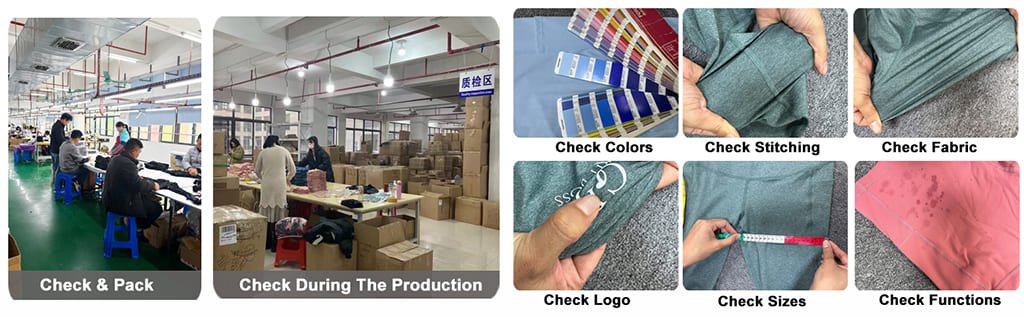
How Do You Choose the Best Western Riding Apparel Manufacturer for Your Brand?
Choosing the right western riding apparel manufacturer requires more than comparing prices, product catalogs, and minimum order quantities. Western wear brands should evaluate suppliers according to their product specialization, verified manufacturing capabilities, quality performance, and commercial requirements. The best supplier for a startup may not be the best choice for an established brand. A structured shortlist, weighted scorecard, and controlled sample comparison can help buyers select a manufacturing partner with lower purchasing risks.
Which Suppliers Are Better Suited to Startup, Growing and Established Western Wear Brands?
Different brands have different sourcing priorities. A western riding apparel manufacturer should be evaluated according to the buyer’s current business needs rather than its overall company size.
Brand Type | Main Purchasing Priority | Preferred Supplier Characteristics |
|---|---|---|
Startup brands | Lower inventory exposure | Manageable MOQ, accurate samples, clear pricing |
Growing brands | Stable quality and repeat orders | Reliable production, consistent materials, flexible capacity |
Established brands | Scalable supply and delivery reliability | Documented quality systems, production capacity, technical coordination |
A startup may prefer a western riding apparel manufacturer offering smaller initial quantities, even if the unit price is higher.
An established brand may prioritize production consistency, detailed quality documentation, and reliable seasonal deliveries.
The right supplier is the one whose capabilities match your brand’s current purchasing requirements and future development plans.
How Do You Narrow Ten Manufacturers Down to Three Qualified Finalists?
Comparing ten suppliers in detail can consume unnecessary time. Buyers should first eliminate candidates that fail essential requirements.
A western riding apparel manufacturer should pass three initial screening stages.
Stage 1: Product suitability
Confirm experience with the exact garment category, whether Western riding jeans, show shirts, performance riding pants, or technical jackets.
Stage 2: Manufacturing verification
Check business identity, production location, relevant equipment, and quality responsibilities.
Stage 3: Commercial suitability
Review MOQ, quotation completeness, sampling arrangements, and realistic delivery schedules.
A western riding apparel manufacturer that fails a critical requirement should not advance simply because its quotation is attractive.
The objective is to identify three qualified suppliers for detailed sample and commercial comparisons.
Which Criteria Should Carry the Most Weight in a Supplier Scorecard?
A weighted scorecard makes supplier comparisons more consistent.
However, buyers should adjust the criteria according to the products they intend to manufacture.
Evaluation Criteria | Weight | What Buyers Should Evaluate |
|---|---|---|
Relevant product experience | 25% | Comparable Western riding garments |
Sample quality and technical capability | 25% | Fit, construction, materials, decoration |
Production and quality reliability | 20% | Verified facilities, inspection arrangements |
Total purchasing cost and MOQ | 20% | Landed cost, inventory exposure |
Communication and delivery planning | 10% | Responsiveness, schedule accuracy |
Total | 100% |
Illustrative scorecard; weights should reflect the brand’s actual sourcing priorities.
Each western riding apparel manufacturer should receive a score based on documented evidence, not advertising claims.
A supplier with excellent pricing but weak sample quality should not automatically rank above a supplier offering better manufacturing reliability.
Critical failures should remain disqualifying even when a supplier achieves a high total score.
How Can Buyers Compare Finalists Using Identical Product Specifications?
The final three suppliers should receive the same technical package.
For example, when comparing a western riding apparel manufacturer for performance riding pants, provide identical requirements for:
Fabric composition, weight, and performance
Size chart and measurement tolerances
Seam construction and waistband design
Logo placement and decoration method
Order quantity and color distribution
Packaging and inspection requirements
Delivery destination and requested trade terms
A western riding apparel manufacturer proposing alternative materials should quote them separately.
Buyers should compare the finished samples under similar conditions, including garment measurements, washing performance, and comfort during riding.
This helps prevent a supplier from winning solely by offering a cheaper but technically different product.
When Should You Request a Trial Order Instead of Full Production?
A trial order is useful when a brand has limited experience with a supplier or is introducing a technically demanding product.
A western riding apparel manufacturer may produce an excellent sample but still need to demonstrate consistent bulk production.
A controlled trial order can evaluate:
Accuracy against the approved sample
Consistency across sizes and colors
Production communication
Final inspection results
Actual shipment performance
The trial quantity should be commercially practical and sufficient to evaluate the agreed production requirements.
A western riding apparel manufacturer that performs well during a trial order may become a stronger candidate for larger seasonal production.
However, one successful trial does not guarantee consistent performance on every future order.
What Final Checks Should Be Completed Before Signing a Manufacturing Agreement?
Before paying a deposit, confirm that the supplier agreement reflects the approved product and commercial conditions.
A western riding apparel manufacturer should provide written confirmation of:
Approved specifications and sample versions
Order quantities, sizes, and colors
Total prices and additional charges
Payment terms and delivery commitments
Inspection standards and acceptance criteria
Material substitution and subcontracting rules
Responsibilities for defects, delays, and corrective actions
For brands evaluating functional Western riding apparel, Pair Fashion’s Western riding apparel OEM and private label manufacturing services can be included in the same supplier qualification process.
A western riding apparel manufacturer should be selected only after the buyer understands its technical capabilities, commercial obligations, and quality responsibilities.
The strongest supplier decision combines verified manufacturing evidence, comparable quotations, approved samples, and clear contractual responsibilities.
1. Product Development
Regular monthly product development ensures consistent updates to your brand line.
2. Fabric Sourcing
Regular monthly product development ensures consistent updates to your brand line.
3. Sample Making
Regular monthly product development ensures consistent updates to your brand line.
4. Bulk Production
Regular monthly product development ensures consistent updates to your brand line.
5. Packaging & Delivery
Regular monthly product development ensures consistent updates to your brand line.
Frequently Asked Questions About Choosing Western Riding Apparel Manufacturers in China
1. Which Chinese Manufacturers Are Most Suitable for Western Riding Apparel Brands?
The most suitable western riding apparel manufacturer depends on your product category, order quantity, and technical requirements. Suppliers specializing in performance sportswear may be suitable for stretch riding pants and lightweight tops, while denim specialists may be better equipped for traditional Western riding jeans.
Before choosing a western riding apparel manufacturer, buyers should ask for samples of similar products, check the supplier’s actual production capabilities, and confirm the MOQ and quality requirements. A supplier may have experience in making English equestrian clothing, but this does not mean it also has experience in producing Western riding apparel.
2. Are All Equestrian Clothing Manufacturers Qualified to Produce Western Riding Wear?
No. Not every equestrian clothing supplier has the manufacturing experience required for Western riding garments. A western riding apparel manufacturer may need specialized capabilities for denim construction, decorative embroidery, Western shirt patterns, or technical stretch fabrics.
For example, a supplier producing English riding breeches may understand performance fabrics but lack experience with heavyweight denim or Western show shirts. Buyers should evaluate each western riding apparel manufacturer according to relevant finished products, machinery, construction quality, and sample performance rather than relying on general equestrian apparel experience.
3. Is a Direct Manufacturer Always Better Than a Trading Company?
Not necessarily. A direct western riding apparel manufacturer may provide greater visibility into production processes, technical adjustments, and quality control. However, a trading company can offer useful coordination when a Western wear collection requires several specialized production partners.
The better choice depends on product complexity, order volume, and the buyer’s management resources. When working with a western riding apparel manufacturer or trading company, confirm the actual production location, subcontracting arrangements, contractual responsibilities, and inspection procedures before placing an order.
4. What Is the Best Way to Verify a Chinese Apparel Manufacturer Remotely?
Remote verification should combine business registration checks, production evidence, live video inspections, relevant samples, and independent verification where appropriate. A legitimate western riding apparel manufacturer should be able to explain its production location, equipment, quality procedures, and manufacturing responsibilities.
Buyers can also arrange a third-party inspection to confirm relevant production capabilities. Before approving a western riding apparel manufacturer, check that company names, addresses, and commercial documents are consistent. A professional website or attractive product catalog should not replace manufacturing verification.
5. How Many Manufacturers Should Buyers Compare Before Selecting One?
A practical approach is to identify approximately eight to ten potential suppliers, screen them against essential requirements, and select three qualified finalists for detailed comparison. This allows buyers to evaluate a western riding apparel manufacturer without spending excessive time developing samples with unsuitable candidates.
Each finalist should receive the same specifications, quantities, and quality requirements. A western riding apparel manufacturer should advance based on relevant product experience, verified capabilities, sample quality, total purchasing cost, and delivery reliability rather than price alone.
6. Do Low Prices Indicate Higher Sourcing Risks?
Not always. A lower quotation may reflect efficient production, favorable material sourcing, or larger order quantities. However, an unusually low price from a western riding apparel manufacturer should be examined carefully when specifications or commercial terms are unclear.
Buyers should confirm fabric quality, construction details, decoration, inspection requirements, and additional charges. A western riding apparel manufacturer offering a lower unit price may become more expensive after freight, import duties, development fees, or quality problems are considered. Compare total landed costs using identical product specifications.
7. What Should Buyers Do When Two Manufacturers Receive Similar Evaluation Scores?
When two suppliers achieve similar scores, buyers should compare the areas with the greatest impact on their business. One western riding apparel manufacturer may offer better pricing, while another provides stronger sample quality, lower inventory exposure, or more dependable production planning.
Review critical requirements first, then compare samples and commercial conditions using the same standards. A small trial order may help distinguish two qualified suppliers. The selected western riding apparel manufacturer should demonstrate the best combination of technical suitability, purchasing value, and manageable production risk.
8. When Should a Western Wear Brand Change Its Existing Manufacturer?
A Western wear brand should consider changing suppliers when repeated quality failures, unreliable deliveries, unauthorized material changes, or unresolved commercial disputes threaten business performance. However, switching to another western riding apparel manufacturer also creates sampling, qualification, and production-transition costs.
Before changing suppliers, document the existing problems and determine whether corrective action is realistic. If a replacement is necessary, qualify the new western riding apparel manufacturer through relevant samples, verified production capabilities, and a controlled trial order before transferring major production volumes.