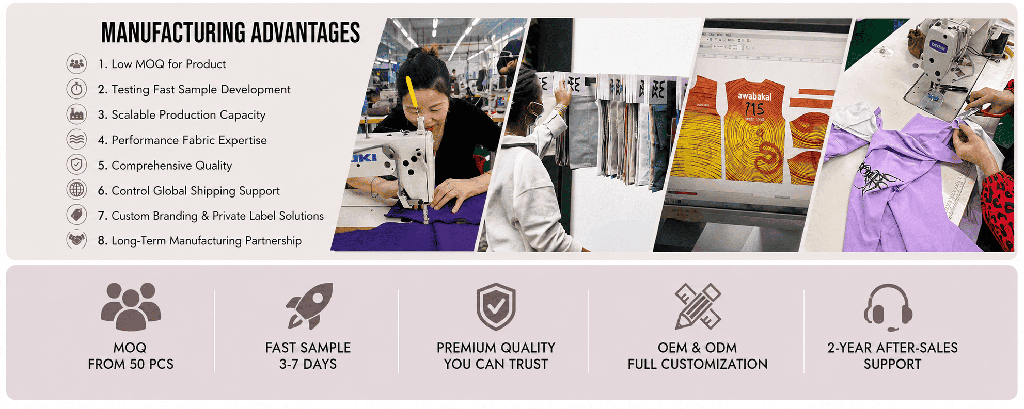
OEM/ODM Sportswear Manufacturer | 3-Day Sampling | Low MOQ | 50K Monthly Capacity | ISO9001 & BSCI Certified

Top 10 Wholesale Equestrian Clothing Manufacturers in China (2026): Compare Suppliers, Factories & Sourcing Guide
Compare the top wholesale equestrian clothing manufacturers in China. Discover the best suppliers, factory strengths, MOQ, lead times, certifications, pricing factors, and sourcing strategies to help equestrian brands, distributors, and retailers choose the right manufacturing partner.
Top 10 Wholesale Equestrian Clothing Manufacturers in China: Complete Supplier Comparison & Buying Guide
The global equestrian apparel industry has changed dramatically over the past decade. Riding clothing is no longer viewed simply as functional sportswear—it has become a lifestyle category where technical performance, premium fabrics, modern aesthetics, sustainability, and brand identity all influence purchasing decisions. Buyers can explore industry initiatives and best practices for sustainable textile production through the Textile Exchange. Whether you operate an equestrian brand, an online riding store, a regional distributor, or a private label business, choosing the right wholesale equestrian clothing manufacturer can significantly impact product quality, customer satisfaction, inventory turnover, and long-term business growth.
China has built one of the world’s most mature wholesale equestrian apparel supply ecosystems, supported by advanced textile manufacturing, experienced export suppliers, specialized garment factories, and highly integrated supply chains. However, not every wholesale equestrian clothing manufacturer offers the same capabilities. Some suppliers specialize in competition apparel, others excel in performance riding wear, while some focus on flexible wholesale programs for growing brands. Understanding these differences allows buyers to make informed sourcing decisions instead of selecting suppliers based solely on quotations.
China continues to be one of the world’s leading destinations for wholesale equestrian clothing manufacturing because it combines an advanced textile supply chain, experienced export suppliers, extensive performance fabric resources, flexible production capabilities, and competitive commercial value. The best wholesale equestrian clothing manufacturer is not necessarily the largest factory or the lowest-cost supplier, but the company whose product specialization, communication quality, supply stability, and business model best align with your brand’s long-term sourcing strategy.
This guide compares ten leading wholesale equestrian clothing manufacturers in China, evaluates their strengths from a buyer’s perspective, explains which businesses they are best suited for, and provides practical sourcing insights that help equestrian brands reduce purchasing risks while building stronger and more reliable supply chain partnerships.
What Are the Best Wholesale Equestrian Clothing Manufacturers in China?
Selecting the best wholesale equestrian clothing manufacturer requires more than comparing factory quotations. Successful buyers evaluate suppliers based on multiple commercial factors, including product specialization, export experience, communication efficiency, order flexibility, quality consistency, and long-term partnership potential. Every manufacturer serves different customer groups, and understanding these differences allows buyers to identify suppliers that genuinely support their business objectives rather than simply offering the lowest price.
The manufacturers listed below have established export experience and serve a variety of international equestrian brands, distributors, retailers, and private label businesses.
Top 10 Wholesale Equestrian Clothing Manufacturers in China
| Manufacturer | Headquarters | Founded | Typical MOQ | Best For |
|---|---|---|---|---|
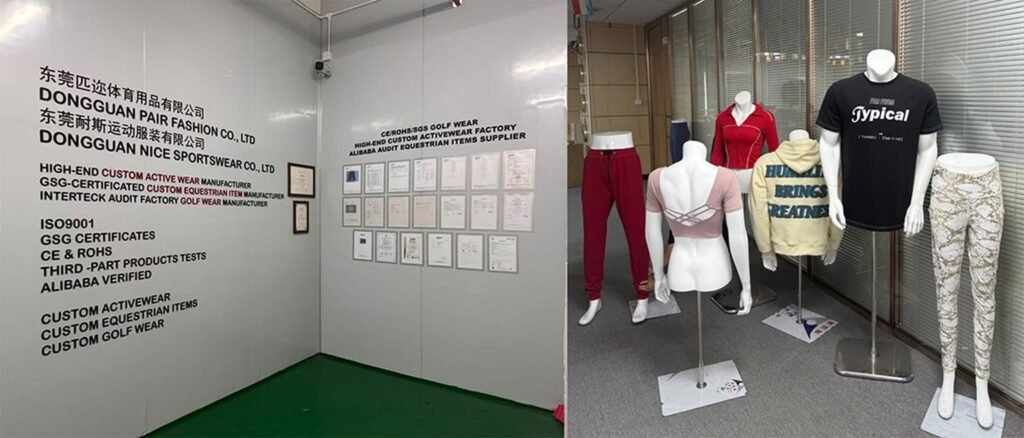
| Pair Fashion | Dongguan | 2016 | 50 pcs | Private Label & Growing Equestrian Brands |
| Hucai Sportswear | Guangzhou | 1998 | Medium | Performance Apparel Programs |
| Aika Sportswear | Dongguan | 2008 | Medium | Riding & Activewear Collections |
| INGOR Sportswear | Guangzhou | 2009 | Medium | Sustainable Riding Apparel |
| Arabella Clothing | Xiamen | 2014 | Medium | Boutique Sportswear Brands |
| SGL Sportswear | Guangzhou | 2009 | Medium | Long-Term Wholesale Supply |
| Yotex Apparel | Hangzhou | 2015 | Medium | Lifestyle Riding Collections |
| ApparelCN | Shenzhen | 2009 | Flexible | Startup Apparel Businesses |
| Lezhou Garment | Guangzhou | 2006 | Medium–High | Women’s Riding Apparel |
| Doven Garments | Guangzhou | 2013 | Medium | Boutique Fashion Retailers |
1. Pair Fashion
Headquarters: Dongguan, Guangdong
Founded: 2016
Typical MOQ: 50 pieces
Typical Lead Time: 15–25 working days
Core Product Categories
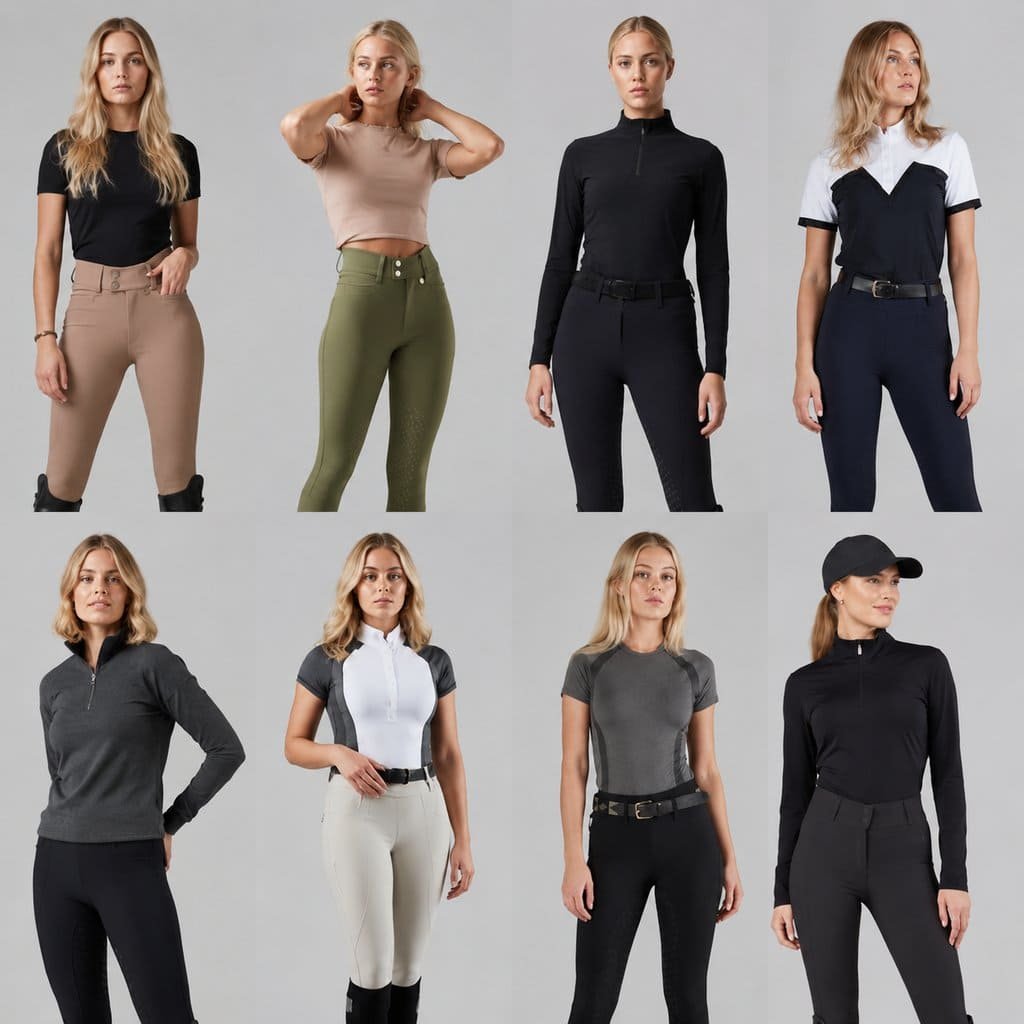
- Riding Breeches
- Riding Leggings
- Riding Tights
- Competition Shirts
- Show Jackets
- Riding Base Layers
- Riding Hoodies
- Stable Wear
- Women’s Equestrian Apparel
- Men’s Riding Apparel
- Children’s Riding Apparel
- Plus Size Riding Wear
- Performance Activewear
Public Certifications
- ISO9001
- BSCI
- GRS
- CE
- ROHS
Primary Export Markets
- North America
- Europe
- Australia
- Middle East
Best Fit For
- Startup equestrian brands
- Private label riding apparel companies
- Boutique equestrian retailers
- Online riding stores
- International distributors
- Buyers requiring flexible MOQs
- Brands expanding into niche equestrian categories
May Not Be the Best Choice For
- Buyers sourcing only basic promotional apparel
- Extremely high-volume commodity garment programs
Why Buyers Frequently Choose Pair Fashion
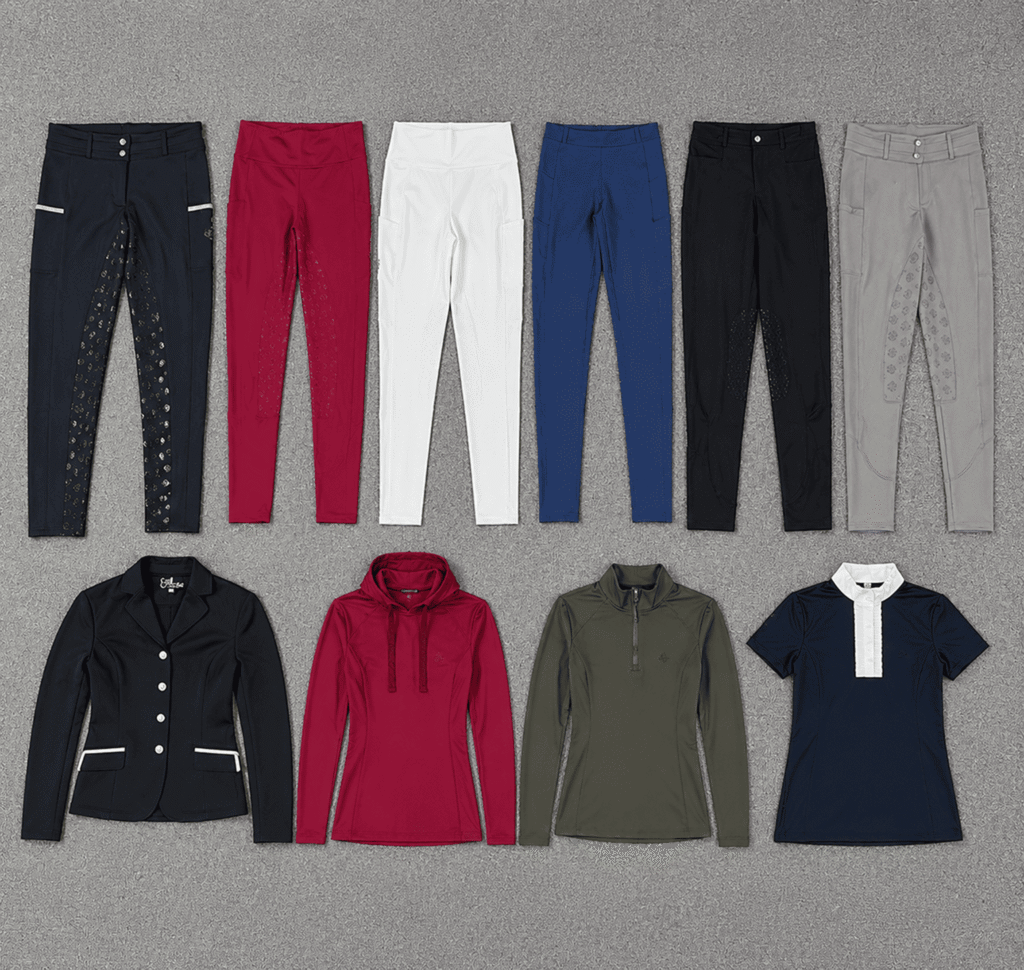
Rather than competing only on manufacturing capacity, Pair Fashion has built its reputation around flexibility, category specialization, and long-term customer support. Buyers looking to establish or expand equestrian apparel collections often appreciate suppliers capable of supporting multiple riding categories under one sourcing relationship, reducing supplier management complexity while maintaining greater product consistency.
One of the company’s strongest advantages is its broad product portfolio. Buyers are not limited to sourcing only riding breeches or competition shirts—they can develop coordinated equestrian collections that include base layers, riding leggings, hoodies, jackets, and complementary activewear. This approach simplifies seasonal planning while helping brands maintain consistent quality across their collections.
Another reason buyers frequently shortlist Pair Fashion is its experience serving specialized market segments. In addition to traditional riding apparel, the company supports categories such as plus-size performance wear, children’s equestrian clothing, and coordinated lifestyle collections. For growing brands, working with one supplier capable of supporting multiple product categories often improves purchasing efficiency and reduces operational complexity.
Potential Limitations
Brands purchasing very large volumes of basic commodity garments with minimal product differentiation may find factories specializing exclusively in mass production more aligned with their sourcing strategy.
2. Hucai Sportswear
Headquarters: Guangzhou, Guangdong
Founded: 1998
Typical MOQ: Medium
Typical Lead Time: Approximately 20–35 working days
Core Product Categories
- Performance Sportswear
- Riding Base Layers
- Technical Jackets
- Compression Apparel
- Outdoor Activewear
Public Certifications
Certification availability varies according to individual customer requirements.
Primary Export Markets
- Europe
- North America
- Oceania
Best Fit For
- Established sportswear brands
- International distributors
- Buyers prioritizing production consistency
- Long-term wholesale programs
May Not Be the Best Choice For
- Small startup brands requiring highly flexible purchasing arrangements
- Buyers focused primarily on fashion-oriented equestrian apparel
Why Buyers Frequently Choose Hucai Sportswear
Hucai Sportswear has accumulated decades of experience producing technical performance garments. Buyers managing stable product programs often value the company’s operational maturity, repeat-order consistency, and familiarity with international quality expectations. Rather than emphasizing rapid fashion changes, Hucai is generally better suited for businesses seeking dependable long-term supply relationships built around functional riding apparel.
3. Aika Sportswear
Headquarters: Dongguan, Guangdong
Founded: 2008
Typical MOQ: Medium
Typical Lead Time: Approximately 20–30 working days
Core Product Categories
- Riding Leggings
- Riding Tights
- Performance Base Layers
- Activewear
- Technical Training Apparel
Public Certifications
Certification availability depends on customer specifications and destination markets.
Primary Export Markets
- North America
- Europe
- Australia
Best Fit For
- Modern equestrian brands
- Riding fitness collections
- DTC sportswear businesses
- Performance apparel retailers
May Not Be the Best Choice For
- Premium tailored competition apparel
- Traditional luxury riding collections
Why Buyers Frequently Choose Aika Sportswear
Aika Sportswear combines activewear manufacturing expertise with contemporary athletic styling. Buyers introducing riding leggings, technical tops, and stretch performance garments frequently evaluate Aika because of its experience with modern performance fabrics and functional garment construction. The supplier is particularly suitable for brands positioned between traditional equestrian apparel and premium activewear.
4. INGOR Sportswear
Headquarters: Guangzhou, Guangdong
Founded: 2009
Typical MOQ: Medium
Typical Lead Time: Approximately 25–35 working days
Core Product Categories
- Sustainable Riding Apparel
- Performance Base Layers
- Riding Leggings
- Activewear
- Technical Sportswear
Public Certifications
Certification programs vary according to customer requirements and selected product categories.
Primary Export Markets
- Europe
- North America
- Australia
Best Fit For
- Sustainable equestrian brands
- Premium riding apparel retailers
- Eco-conscious private label businesses
- Brands emphasizing recycled materials
May Not Be the Best Choice For
- Buyers competing exclusively on entry-level wholesale pricing
Why Buyers Frequently Choose INGOR Sportswear
INGOR Sportswear has positioned itself as a supplier for brands integrating sustainability into their sourcing strategies. Buyers seeking environmentally responsible collections frequently evaluate INGOR because of its experience with recycled fabrics, responsible sourcing initiatives, and premium performance materials. For brands serving environmentally conscious consumers, sustainability credentials may provide meaningful commercial value beyond manufacturing alone.
5. Arabella Clothing
Headquarters: Xiamen, Fujian
Founded: 2014
Typical MOQ: Medium
Typical Lead Time: Approximately 20–35 working days
Core Product Categories
- Riding Leggings
- Training Apparel
- Activewear
- Base Layers
- Sports Bras
- Lightweight Outerwear
Public Certifications
Certification availability varies depending on customer specifications and destination markets.
Primary Export Markets
- Europe
- North America
- Australia
- Southeast Asia
Best Fit For
- Boutique equestrian brands
- Growing DTC businesses
- Online riding apparel retailers
- Buyers seeking fashion-forward riding collections
May Not Be the Best Choice For
- Buyers sourcing traditional competition apparel only
- Large-volume commodity manufacturing programs
Why Buyers Frequently Choose Arabella Clothing
Arabella Clothing is often shortlisted by buyers looking for modern, fashion-conscious riding apparel that combines athletic performance with everyday wearability. The company has experience producing coordinated collections rather than isolated products, allowing brands to launch matching riding leggings, base layers, lightweight jackets, and lifestyle apparel within the same seasonal release.
For emerging equestrian brands, maintaining consistent design language across multiple product categories can strengthen brand identity and improve customer retention. Suppliers capable of supporting complete collections often simplify merchandising and reduce sourcing complexity.
Potential Limitations
Arabella Clothing is generally more suitable for premium active-inspired riding collections than for highly traditional equestrian competition uniforms.
6. SGL Sportswear
Headquarters: Guangzhou, Guangdong
Founded: 2009
Typical MOQ: Medium
Typical Lead Time: Approximately 20–35 working days
Core Product Categories
- Performance Sportswear
- Riding Base Layers
- Technical Activewear
- Training Jackets
- Outdoor Apparel
Public Certifications
Certification programs vary depending on customer requirements.
Primary Export Markets
- Europe
- North America
- Middle East
Best Fit For
- International wholesalers
- Established distributors
- Long-term sourcing partnerships
- Buyers requiring production consistency
May Not Be the Best Choice For
- Startup brands with highly limited budgets
- Buyers seeking highly customized fashion collections
Why Buyers Frequently Choose SGL Sportswear
SGL Sportswear has built long-term relationships with wholesale buyers by emphasizing operational stability rather than frequent product changes. Businesses managing replenishment programs often prioritize suppliers capable of delivering consistent workmanship, predictable lead times, and dependable communication.
Instead of constantly chasing seasonal fashion trends, many distributors value suppliers that maintain stable quality standards over multiple production cycles.
Potential Limitations
Brands seeking highly fashion-driven equestrian collections may require suppliers with stronger design-oriented capabilities.
7. Yotex Apparel
Headquarters: Hangzhou, Zhejiang
Founded: 2015
Typical MOQ: Medium
Typical Lead Time: Approximately 25–35 working days
Core Product Categories
- Lifestyle Apparel
- Casual Riding Wear
- Knitwear
- Women’s Fashion
- Outerwear
Public Certifications
Available certifications vary according to customer requirements.
Primary Export Markets
- Europe
- North America
- Japan
Best Fit For
- Lifestyle equestrian brands
- Boutique retailers
- Fashion-focused riding collections
- Multi-category apparel businesses
May Not Be the Best Choice For
- Technical riding competition apparel
- Performance compression garments
Why Buyers Frequently Choose Yotex Apparel
Yotex Apparel appeals to buyers seeking to combine equestrian style with contemporary lifestyle fashion. As casual riding-inspired apparel becomes increasingly popular outside traditional equestrian communities, many brands are expanding beyond technical competition wear into everyday collections.
This positioning makes Yotex particularly attractive for businesses developing apparel that transitions naturally between riding activities and daily casual wear.
Potential Limitations
Brands focused exclusively on highly technical equestrian performance garments may require suppliers with greater expertise in functional sports fabrics.
8. ApparelCN
Headquarters: Shenzhen, Guangdong
Founded: 2009
Typical MOQ: Flexible
Typical Lead Time: Approximately 20–30 working days
Core Product Categories
- Women’s Apparel
- Riding Lifestyle Collections
- Casual Fashion
- Private Label Clothing
- Boutique Apparel
Public Certifications
Certification availability depends on customer programs.
Primary Export Markets
- North America
- Europe
- Australia
Best Fit For
- Startup apparel businesses
- Online retailers
- Boutique brands
- Small wholesalers
May Not Be the Best Choice For
- Large multinational retail programs
- Highly specialized technical riding apparel
Why Buyers Frequently Choose ApparelCN
Many first-time buyers appreciate suppliers that provide flexible purchasing arrangements and broad product selections. ApparelCN is often evaluated by startups because it allows businesses to test market demand before committing to larger inventory investments.
For brands entering the equestrian apparel market for the first time, reducing purchasing risk is often more important than obtaining the absolute lowest manufacturing cost.
Potential Limitations
Businesses requiring advanced technical garment engineering may need suppliers with stronger specialization in performance apparel.
9. Lezhou Garment
Headquarters: Guangzhou, Guangdong
Founded: 2006
Typical MOQ: Medium to High
Typical Lead Time: Approximately 25–40 working days
Core Product Categories
- Women’s Riding Apparel
- Fashion Jackets
- Riding Trousers
- Casual Collections
- Seasonal Apparel
Public Certifications
Certification availability varies according to production requirements.
Primary Export Markets
- Europe
- North America
Best Fit For
- Women’s equestrian retailers
- Fashion distributors
- Boutique riding brands
- Regional wholesalers
May Not Be the Best Choice For
- Startup brands requiring very low MOQs
- Buyers focused on technical competition apparel
Why Buyers Frequently Choose Lezhou Garment
Lezhou Garment primarily serves businesses sourcing women’s fashion apparel and riding-inspired collections. Buyers targeting premium boutiques often value suppliers capable of balancing fashionable styling with dependable production quality.
For retailers serving style-conscious riders, visual appeal is often as important as garment functionality, making Lezhou a suitable option for fashion-oriented collections.
Potential Limitations
The company is generally less focused on highly technical riding garments intended for professional competition.
10. Doven Garments
Headquarters: Guangzhou, Guangdong
Founded: 2013
Typical MOQ: Medium
Typical Lead Time: Approximately 20–35 working days
Core Product Categories
- Women’s Riding Fashion
- Casual Riding Apparel
- Boutique Collections
- Lifestyle Clothing
- Seasonal Fashion
Public Certifications
Available certifications vary depending on customer requirements.
Primary Export Markets
- Europe
- North America
- Australia
Best Fit For
- Boutique retailers
- Lifestyle equestrian brands
- Fashion distributors
- Private label businesses
May Not Be the Best Choice For
- Technical riding apparel specialists
- Buyers requiring industrial-scale production
Why Buyers Frequently Choose Doven Garments
Doven Garments focuses on commercially attractive women’s fashion collections with relatively flexible wholesale purchasing options. Buyers serving boutique retail markets frequently evaluate suppliers capable of producing visually appealing collections that align with evolving consumer preferences.
Its emphasis on fashionable styling makes the company suitable for brands positioning equestrian apparel as part of a broader lifestyle offering rather than exclusively as professional riding equipment.
Potential Limitations
Brands requiring highly specialized competition apparel or advanced functional fabric development may prefer manufacturers with stronger technical expertise.
Which Wholesale Equestrian Clothing Manufacturer Fits Your Business Best?
Selecting the right supplier depends on your business model rather than searching for a universally “best” manufacturer.
The table below provides a practical comparison based on common buyer profiles.
| Buyer Profile | Recommended Manufacturers |
|---|---|
| Startup Equestrian Brand | Pair Fashion, ApparelCN |
| Growing Private Label Brand | Pair Fashion, Arabella Clothing |
| Boutique Riding Retailer | Yotex Apparel, Doven Garments |
| Sustainable Equestrian Brand | INGOR Sportswear |
| Performance Riding Apparel Brand | Hucai Sportswear, Aika Sportswear |
| International Distributor | Pair Fashion, Hucai Sportswear, SGL Sportswear |
| Women’s Riding Fashion Brand | Lezhou Garment, Doven Garments |
| Multi-Category Equestrian Business | Pair Fashion |
Rather than comparing manufacturers based solely on pricing, experienced buyers evaluate which supplier best supports their long-term commercial strategy. A growing private label brand may prioritize flexibility, communication, and product diversity, while an established distributor may place greater value on production stability and supply continuity. The strongest sourcing partnerships are built by matching supplier strengths with business objectives instead of selecting manufacturers purely on cost.
Why Is China the Global Leader in Wholesale Equestrian Clothing Manufacturing?
China has become the preferred sourcing destination for wholesale equestrian clothing manufacturing because it offers far more than competitive pricing. Today’s international buyers value product consistency, technical expertise, flexible production, reliable delivery, and long-term supply chain stability just as much as manufacturing cost. Over the past two decades, China has built one of the world’s most complete apparel ecosystems, enabling equestrian brands to source performance fabrics, trims, accessories, garment production, testing, packaging, and logistics through an integrated supply chain that aligns with best practices promoted by the Textile Exchange.
For brands developing riding apparel collections, this integrated manufacturing environment reduces development time, improves communication efficiency, and creates greater flexibility when expanding product lines. Rather than working with multiple suppliers across different countries, buyers can often manage their entire equestrian apparel program through a smaller network of experienced Chinese manufacturing partners.
China’s Equestrian Apparel Industry Has Evolved Alongside Global Demand
The global equestrian market has changed significantly over the last decade. Modern riders expect apparel that combines technical performance with everyday comfort and contemporary fashion. Riding leggings, breathable base layers, lightweight jackets, and lifestyle-inspired equestrian clothing have become increasingly popular across both professional and recreational riding communities.
Chinese manufacturers have adapted quickly to these market changes by expanding beyond traditional garment production. Today, many suppliers support buyers with:
- Product category planning
- Fabric sourcing recommendations
- Performance textile options
- Small-batch production
- Seasonal collection development
- International logistics coordination
Rather than acting only as manufacturers, many suppliers have become long-term sourcing partners capable of supporting brands throughout different stages of business growth.
China’s Textile Supply Chain Creates Significant Competitive Advantages
One of China’s greatest strengths is the close integration of its textile industry.
Unlike countries where fabrics, trims, printing, and garment production may be spread across different regions or imported from overseas, China has developed highly connected industrial clusters that bring together almost every stage of apparel manufacturing.
Buyers sourcing equestrian clothing benefit from access to:
- Performance fabric mills
- Stretch fabric manufacturers
- Waterproof textile suppliers
- Breathable membrane producers
- Zipper and trim suppliers
- Silicone grip manufacturers
- Embroidery factories
- Heat-transfer printing specialists
- Packaging suppliers
- Third-party testing laboratories
- International freight companies
This ecosystem shortens sourcing cycles while improving communication between suppliers.
Instead of coordinating five or six independent vendors, buyers often work with one primary supplier capable of managing the complete production process.
China Offers Extensive Performance Fabric Resources
Fabric selection plays a critical role in riding apparel.
Professional riders expect garments that remain comfortable throughout long training sessions while providing durability under demanding conditions.
Chinese textile suppliers now offer a broad selection of technical fabrics suitable for equestrian clothing, including:
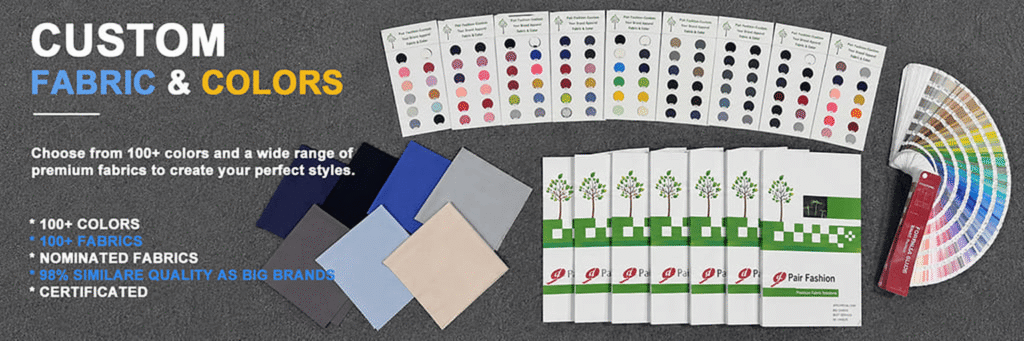
- Nylon-Spandex Performance Fabric
- Polyester-Spandex Stretch Fabric
- Recycled Polyester
- Recycled Nylon
- Brushed Winter Fabrics
- Compression Knits
- Four-Way Stretch Materials
- Moisture-Wicking Fabrics
- UV Protection Fabrics
- Anti-Pilling Fabrics
- Quick-Dry Textiles
- Thermal Fleece Fabrics
- Softshell Materials
- Waterproof Laminated Fabrics
Because many fabric mills work closely with garment manufacturers, buyers often gain faster access to newly developed materials and seasonal fabric innovations.
This flexibility allows brands to differentiate their collections without managing multiple international sourcing channels.
Specialized Manufacturing Clusters Improve Sourcing Efficiency
China’s apparel industry has developed regional manufacturing clusters, each with different areas of expertise.
| Manufacturing Region | Typical Specialization |
|---|---|
| Dongguan | Activewear, equestrian apparel, private label manufacturing |
| Guangzhou | Fashion apparel, riding lifestyle collections, export manufacturing |
| Xiamen | Performance sportswear, technical garments |
| Hangzhou | Lifestyle apparel, knitwear, premium casualwear |
| Shenzhen | Fashion development, startup apparel sourcing |
This regional specialization helps buyers identify suppliers whose experience aligns with their target product categories rather than simply selecting the nearest factory.
For example:
- Brands developing technical riding leggings often evaluate suppliers experienced in stretch performance fabrics.
- Premium equestrian retailers may prioritize manufacturers specializing in tailored riding jackets and competition apparel.
- Lifestyle brands frequently work with suppliers combining equestrian aesthetics with contemporary fashion trends.
Flexible Production Supports Businesses at Different Growth Stages
One reason China remains attractive to international buyers is its ability to support businesses of different sizes.
Depending on the supplier, buyers can often source:
- Small product validation orders
- Seasonal capsule collections
- Boutique retail programs
- Private label collections
- Multi-category apparel ranges
- Continuous replenishment orders
- Long-term wholesale partnerships
This flexibility allows brands to scale production gradually without rebuilding their supplier network each time the business expands.
Maintaining long-term supplier relationships also improves production consistency and reduces onboarding costs for future collections.
China’s Export Experience Improves International Business Efficiency
Chinese apparel exporters have supplied international markets for decades.
Many experienced suppliers understand the commercial requirements of buyers from:
- United States
- Canada
- United Kingdom
- Germany
- France
- Australia
- Netherlands
- Middle East
This experience often includes familiarity with:
- Retail packaging standards
- Barcode requirements
- Care label regulations
- Carton marking specifications
- Customs documentation
- International freight procedures
- Third-party inspections
For buyers, working with export-oriented suppliers often reduces administrative complexity while improving communication throughout the sourcing process.
Innovation Is Becoming a Major Competitive Advantage
The perception that China competes primarily on low-cost labor no longer reflects today’s apparel industry.
Many manufacturers have invested heavily in:
- Computer-aided pattern systems
- Automated fabric cutting
- Digital printing
- ERP production management
- Barcode inventory systems
- Production scheduling software
- Quality traceability systems
These investments improve production efficiency while giving buyers greater visibility throughout the manufacturing process.
As apparel brands shorten product development cycles and introduce more seasonal collections, suppliers capable of responding quickly become increasingly valuable.
Why Many International Equestrian Brands Continue Choosing China
While countries such as Pakistan, India, Turkey, and Vietnam each offer advantages for certain apparel categories, China continues to provide one of the most balanced sourcing environments for wholesale equestrian clothing.
Its combination of:
- Extensive supplier diversity
- Technical textile expertise
- Flexible production capability
- Strong export infrastructure
- Reliable supply chains
- Broad product specialization
allows brands to source multiple equestrian apparel categories through experienced manufacturing partners.
Rather than asking which country offers the lowest production cost, many professional buyers now ask a more strategic question:
Which sourcing destination provides the greatest long-term value, reliability, and growth potential?
For many international equestrian brands, China continues to provide one of the strongest answers.
How Do Professional Buyers Evaluate Wholesale Equestrian Clothing Manufacturers?
Selecting a wholesale equestrian clothing manufacturer should never be based on price alone. Professional buyers evaluate suppliers through a combination of commercial reliability, product specialization, communication efficiency, supply chain stability, and long-term partnership potential. While an attractive quotation may reduce initial purchasing costs, it does not guarantee consistent product quality or dependable delivery. A structured supplier evaluation process, following best practices recommended by the Chartered Institute of Procurement & Supply (CIPS), helps brands minimize sourcing risks while building manufacturing relationships capable of supporting future business growth.
Experienced importers rarely ask, “Who offers the cheapest price?” Instead, they ask, “Which supplier is most likely to help my business succeed over the next five years?” That difference in mindset often separates successful brands from those constantly changing suppliers.
Business Stability Is More Important Than Company Size
Many buyers assume that larger factories automatically provide better service. In reality, business stability is often a more valuable indicator than factory size alone.
When evaluating a supplier, consider:
- Years serving international buyers
- Financial stability
- Production consistency
- Repeat customer relationships
- Management experience
- Long-term business development
A well-managed medium-sized manufacturer may provide more responsive service and stronger long-term cooperation than a much larger factory focused primarily on volume production.
Rather than asking how many employees a supplier has, buyers should ask whether the supplier has demonstrated sustainable business growth and consistent export performance.
Export Experience Reduces International Sourcing Risks
Export experience influences far more than shipping.
Manufacturers serving international markets usually understand:
- International quality expectations
- Retail packaging standards
- Customs documentation
- Barcode requirements
- Country-specific labeling regulations
- International communication practices
- Third-party inspection procedures
Suppliers lacking export experience may still produce quality garments, but international buyers often spend considerably more time explaining documentation, packaging, and compliance requirements.
Choosing an experienced export supplier frequently shortens the learning curve and reduces avoidable sourcing mistakes.
Product Specialization Matters More Than Product Quantity
Some manufacturers produce hundreds of different apparel categories, while others specialize in only a few.
For equestrian brands, specialization often provides greater value than product variety.
Suppliers experienced in riding apparel generally have stronger knowledge of:
- Silicone grip applications
- Technical riding fabrics
- Reinforced seam construction
- Stretch recovery
- Rider mobility
- Competition apparel standards
A supplier producing thousands of unrelated garments may not fully understand the performance expectations associated with equestrian clothing.
Buyers should therefore evaluate whether a supplier’s existing product portfolio closely aligns with their own target market.
MOQ Flexibility Supports Sustainable Business Growth
Minimum Order Quantity (MOQ) directly affects inventory investment and financial risk.
The ideal MOQ depends on the buyer’s business stage.
| Buyer Type | Recommended MOQ Strategy |
|---|---|
| Startup Brand | Lower MOQ for market validation |
| Boutique Retailer | Moderate MOQ with seasonal flexibility |
| Growing DTC Brand | Balanced MOQ based on repeat orders |
| International Distributor | Higher MOQ with long-term planning |
| Established Retail Chain | Forecast-based volume purchasing |
Negotiating the lowest MOQ is not always the best strategy.
Instead, buyers should select order quantities that balance inventory turnover, production efficiency, and cash flow.
Communication Efficiency Predicts Long-Term Cooperation
Communication quality is often one of the earliest indicators of future supplier performance.
Professional suppliers typically:
- Reply within reasonable timeframes
- Answer technical questions clearly
- Confirm important details in writing
- Explain potential production challenges
- Provide realistic delivery expectations
- Maintain consistent communication throughout projects
Poor communication during quotation often leads to misunderstandings during production.
Buyers should therefore evaluate communication as carefully as pricing.
Supply Stability Supports Business Expansion
Changing manufacturers every season increases operational complexity.
Long-term supplier relationships typically improve:
- Product consistency
- Forecast accuracy
- Material planning
- Production scheduling
- Cost control
- Communication efficiency
When evaluating suppliers, buyers should consider whether the manufacturer can support future business growth rather than only current purchasing requirements.
Questions worth asking include:
- Can production capacity expand as demand grows?
- Does the supplier support repeat orders efficiently?
- Are key materials consistently available?
- How does the supplier manage peak production seasons?
Stable supply chains become increasingly valuable as brands scale internationally.
Customer Reputation Provides Practical Market Insight
Customer reviews should never be the only evaluation factor, but they provide useful context.
Buyers should look for patterns rather than isolated comments.
Useful indicators include:
- Repeat international customers
- Long-term export relationships
- Industry reputation
- Customer retention
- Professional communication
- Consistent delivery performance
Speaking with existing customers, when possible, often provides more valuable information than relying solely on online reviews.
Verify Business Credentials Before Placing Orders
Professional sourcing teams routinely verify supplier information before making purchasing commitments.
Basic verification may include:
- Business registration
- Export licenses
- Factory address
- Company website
- Product certifications
- Trade records
- Independent audit reports (when available)
Verification cannot eliminate every sourcing risk, but it significantly improves purchasing confidence.
Wholesale Manufacturer Evaluation Scorecard
The following scorecard provides a structured framework for comparing multiple suppliers objectively.
| Evaluation Area | Why It Matters | Priority |
|---|---|---|
| Business Stability | Indicates long-term reliability | ★★★★★ |
| Export Experience | Reduces international sourcing risk | ★★★★★ |
| Product Specialization | Improves technical product quality | ★★★★★ |
| Communication Efficiency | Prevents costly misunderstandings | ★★★★★ |
| MOQ Flexibility | Supports healthy inventory planning | ★★★★☆ |
| Lead Time Consistency | Improves supply chain planning | ★★★★★ |
| Quality Consistency | Protects brand reputation | ★★★★★ |
| Customer Reputation | Reflects market credibility | ★★★★☆ |
| Certification & Compliance | Supports international market entry | ★★★★☆ |
| Long-Term Partnership Potential | Enables future business growth | ★★★★★ |
Rather than assigning equal importance to every factor, buyers should adjust evaluation priorities according to their own business model. A startup brand may place greater emphasis on communication and MOQ flexibility, while a multinational retailer may prioritize production capacity and supply stability.
Supplier Evaluation Checklist
Before selecting a wholesale equestrian clothing manufacturer, confirm the following:
✅ Business registration verified
✅ Export experience confirmed
✅ Product specialization matches your market
✅ MOQ aligns with your purchasing plan
✅ Lead time meets your sales schedule
✅ Communication is professional and responsive
✅ Product samples meet expectations
✅ Certifications support your market requirements
✅ Quality standards are clearly documented
✅ Long-term cooperation appears commercially viable
A disciplined supplier evaluation process helps buyers reduce sourcing uncertainty, improve purchasing efficiency, and establish partnerships capable of supporting sustainable business growth. The most successful equestrian brands rarely work with the cheapest suppliers—they work with suppliers that consistently deliver reliable quality, transparent communication, and dependable long-term performance.
What Types of Equestrian Clothing Are Most Popular in Today's Global Wholesale Market?
The global equestrian apparel market has expanded well beyond traditional riding uniforms. Modern consumers expect garments that combine technical performance, comfort, durability, and contemporary style, creating opportunities for brands to serve both professional riders and lifestyle customers. Instead of relying on one or two bestselling products, successful equestrian brands build balanced collections that include competition apparel, everyday riding wear, stable clothing, and athleisure-inspired pieces.
For wholesale buyers, understanding which product categories continue to grow is just as important as selecting the right manufacturing partner. Market demand, seasonal purchasing behavior, fabric innovation, and consumer lifestyle trends all influence which products generate long-term sales rather than short-lived popularity.
Riding Breeches
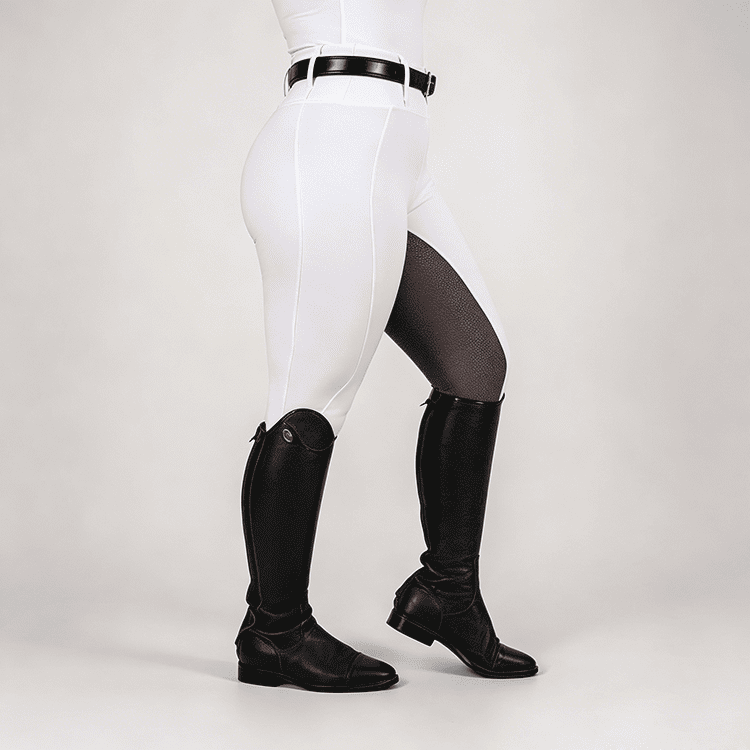
Riding breeches remain one of the core product categories in the equestrian apparel industry because they combine safety, comfort, durability, and professional appearance. Buyers sourcing riding breeches should evaluate fabric stretch, silicone grip technology, seam construction, and long-term shape retention rather than focusing only on appearance.
Modern riding breeches are available in various styles to meet different riding disciplines, climates, and rider preferences.
Common wholesale styles include:
- Full Seat Breeches
- Knee Patch Breeches
- High-Waisted Breeches
- Summer Riding Breeches
- Winter Thermal Breeches
- Compression Riding Breeches
- Competition Breeches
Wholesale buyers generally prioritize:
- Four-way stretch fabrics
- Silicone grip durability
- Abrasion resistance
- Breathability
- Comfort during extended riding sessions
- Consistent fit across multiple sizes
As equestrian consumers increasingly seek garments suitable for both riding and everyday wear, many brands also introduce cleaner silhouettes and lifestyle-inspired colors alongside traditional white and beige competition styles. This shift reflects the broader growth of lifestyle activewear, a trend highlighted in the State of Fashion report published by McKinsey & Company.
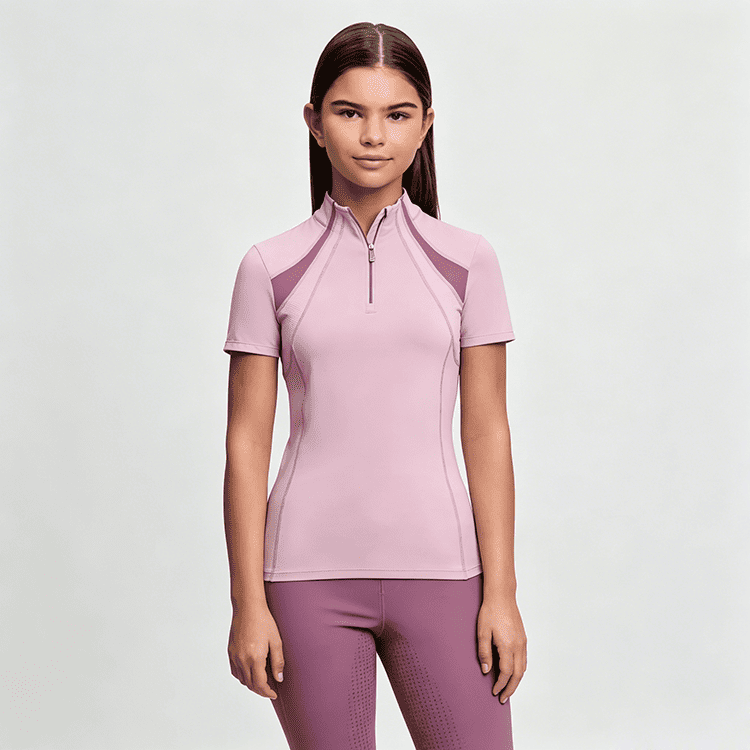
Riding Leggings
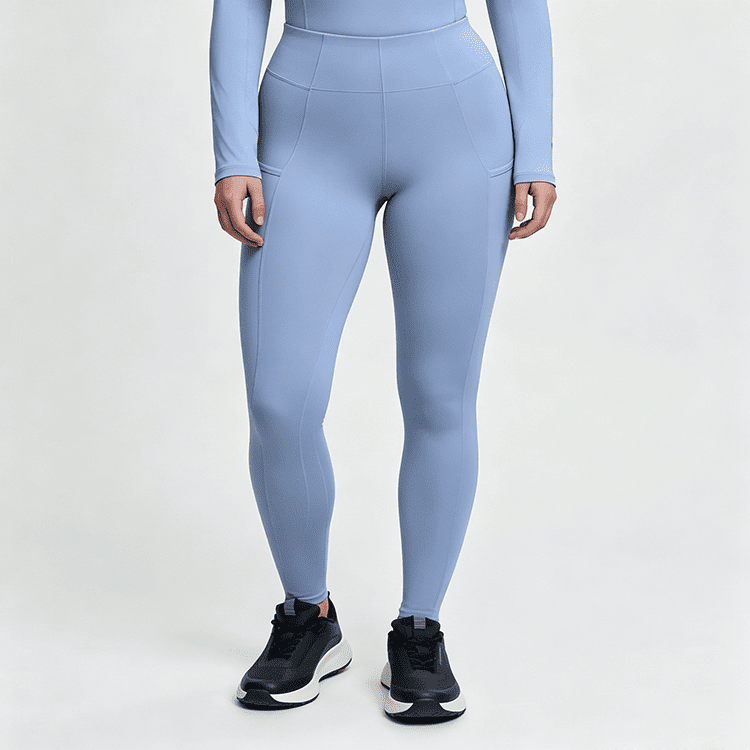
Riding leggings have become one of the fastest-growing segments of the global equestrian apparel market. They appeal to recreational riders, younger consumers, and lifestyle-focused equestrian brands because they combine athletic comfort with riding-specific functionality.
Compared with traditional breeches, riding leggings typically provide:
- Lightweight construction
- Greater flexibility
- Enhanced comfort
- Modern athletic styling
- Easy everyday wear
Popular wholesale features include:
- Silicone full-seat grip
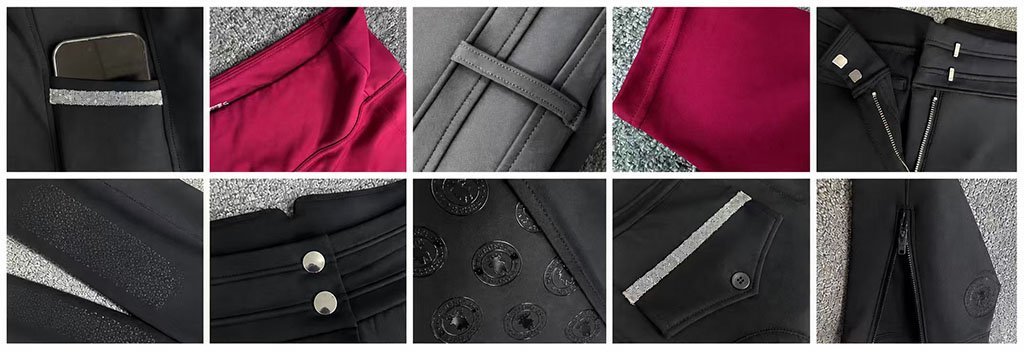
- Side phone pockets
- Wide waistband support
- Moisture-wicking fabrics
- Flatlock seams
- Four-way stretch materials
Many online equestrian brands now consider riding leggings an essential year-round product because they attract both experienced riders and newcomers entering the sport.
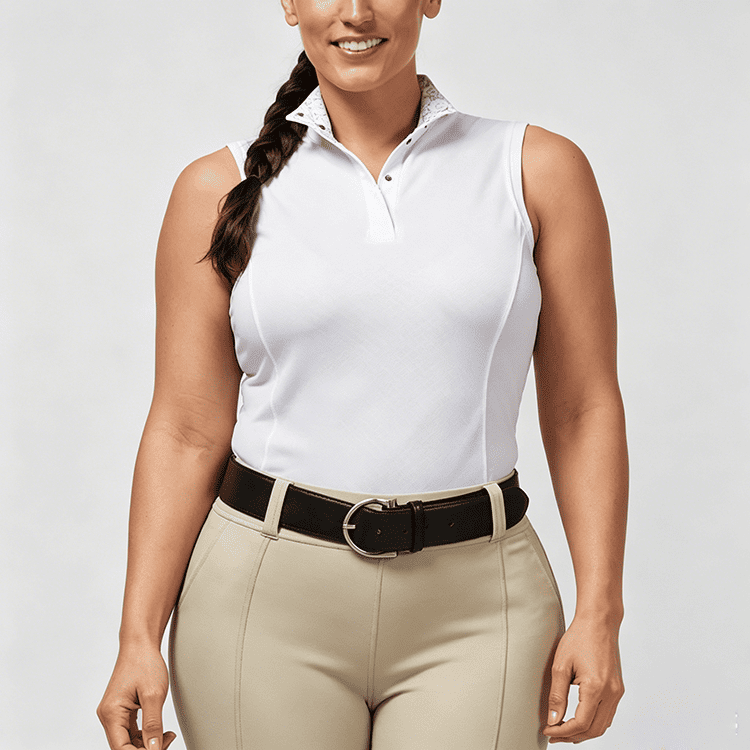
Competition Shirts
Competition shirts remain one of the highest-value categories within professional equestrian apparel.
Unlike casual riding tops, competition shirts must balance elegant presentation with technical performance.
Wholesale buyers often evaluate:
- Moisture management
- Lightweight fabrics
- UV protection
- Breathability
- Collar construction
- Wrinkle resistance
- Color stability
Modern competition shirts frequently incorporate mesh ventilation panels and stretch inserts that improve rider comfort without compromising competition appearance.
Premium retailers increasingly favor minimalist designs with subtle branding, allowing garments to appeal across multiple international markets.
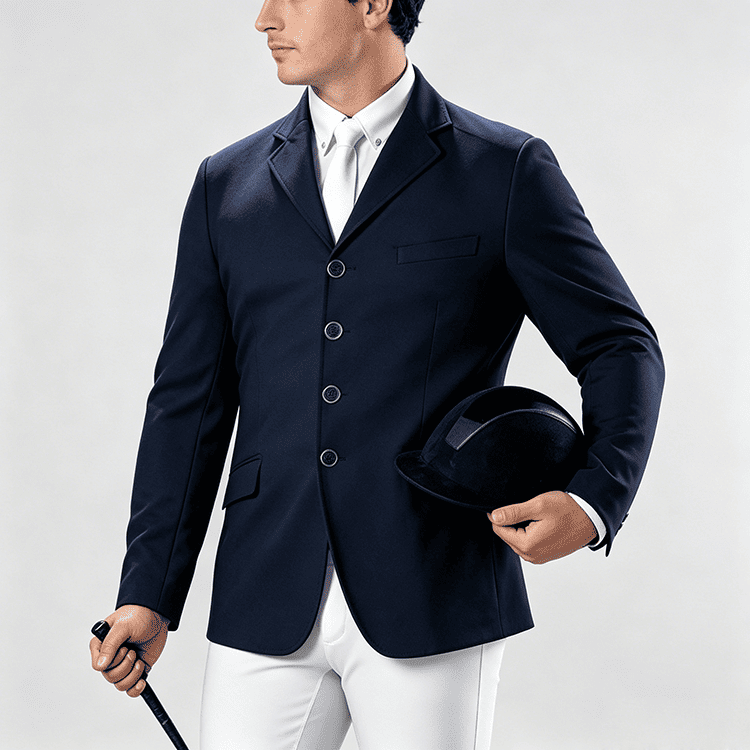
Show Jackets
Show jackets continue to represent one of the most technically demanding categories within equestrian apparel manufacturing.
Although traditional tailoring remains important, today’s riders also expect:
- Lightweight fabrics
- Greater stretch
- Improved mobility
- Better ventilation
- Wrinkle resistance
- Easy garment care
Modern competition jackets often combine classic equestrian aesthetics with advanced performance textiles, making them significantly more comfortable than traditional woven jackets.
Because show jackets involve more complex construction, buyers should carefully evaluate suppliers’ experience with structured tailoring before placing larger wholesale orders.
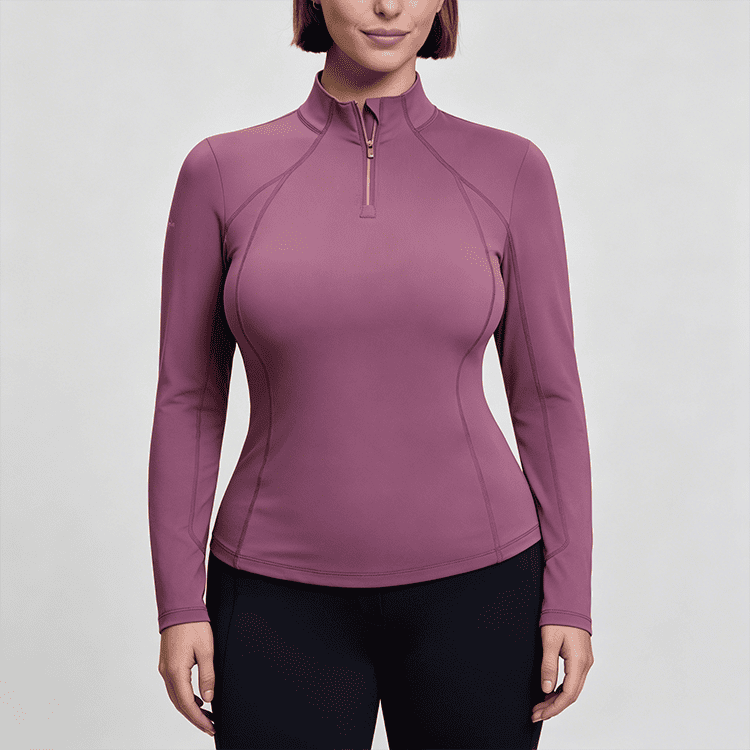
Riding Base Layers
Base layers have evolved from simple thermal garments into essential year-round riding apparel.
Professional riders appreciate garments capable of regulating body temperature during varying weather conditions while remaining comfortable beneath additional riding equipment.
Common features include:
- Moisture-wicking performance
- Four-way stretch
- Breathable mesh panels
- Lightweight compression
- Flatlock stitching
- Quick-dry technology
For brands serving competitive riders, base layers often generate repeat purchases because customers frequently buy multiple colors throughout the season.
Riding Jackets & Outerwear
Outerwear remains one of the most profitable categories for many equestrian retailers because products generally command higher retail prices while offering opportunities for seasonal product launches.
Popular wholesale products include:
- Softshell Riding Jackets
- Waterproof Riding Jackets
- Lightweight Windbreakers
- Quilted Jackets
- Insulated Winter Jackets
- Packable Rain Jackets
Wholesale buyers usually prioritize:
- Wind resistance
- Water repellency
- Lightweight construction
- Breathability
- Durable zippers
- Practical storage pockets
Seasonal outerwear collections also allow brands to introduce updated colors and designs without changing their core product assortment.
Stable Wear
Stable wear is designed for daily horse care, training, and barn activities rather than competition.
Although often overlooked, this category generates stable year-round demand because riders spend considerably more time training and working around horses than competing.
Typical wholesale products include:
- Stable Hoodies
- Sweatshirts
- Joggers
- Softshell Vests
- Utility Jackets
- Work Trousers
- Training Tops
Stable wear emphasizes practicality, durability, and comfort while maintaining a professional equestrian appearance.
For many retailers, stable wear helps diversify product offerings beyond competition-focused apparel.
Women’s Equestrian Apparel
Women’s riding apparel continues to dominate global equestrian retail sales.
Successful wholesale collections generally combine:
- Technical performance
- Contemporary styling
- Inclusive sizing
- Seasonal colors
- Premium fabrics
Popular products include:
- Riding Breeches
- Riding Leggings
- Competition Shirts
- Base Layers
- Riding Jackets
- Stable Wear
- Lifestyle Hoodies
As consumers increasingly wear equestrian-inspired clothing beyond the riding arena, brands often develop coordinated collections suitable for both equestrian activities and casual everyday wear.
Men’s Equestrian Apparel
Demand for men’s riding apparel has grown steadily alongside increasing participation in equestrian sports.
Modern collections typically include:
- Technical Breeches
- Riding Tights
- Polo Shirts
- Competition Shirts
- Base Layers
- Waterproof Jackets
- Stable Jackets
Compared with women’s collections, men’s apparel generally emphasizes durability, functionality, and classic styling rather than seasonal fashion trends.
Children’s Equestrian Apparel
Youth participation remains essential to the long-term growth of the equestrian industry.
Parents increasingly seek riding apparel that combines:
- Comfort
- Durability
- Easy care
- Safety
- Affordable pricing
Popular wholesale products include:
- Junior Riding Breeches
- Children’s Riding Leggings
- Base Layers
- Riding Hoodies
- Waterproof Jackets
- Competition Shirts
Because children outgrow clothing quickly, repeat purchasing frequency tends to be higher than many adult product categories.
Sustainable Equestrian Apparel
Sustainability has become an increasingly important purchasing factor across many international equestrian markets.
Retailers are expanding environmentally responsible collections by incorporating:
- Recycled Polyester
- Recycled Nylon
- Organic Cotton Blends
- Low-Impact Dyeing
- Recyclable Packaging
- Durable Long-Life Garments
Rather than replacing traditional collections entirely, many brands introduce sustainable alternatives alongside existing product lines to meet evolving consumer expectations.
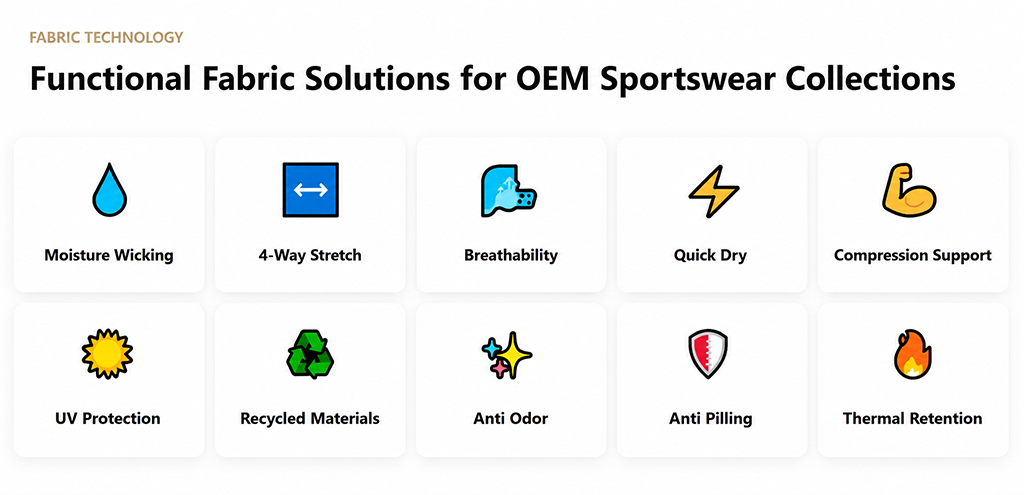
Best-Selling Fabrics for Wholesale Equestrian Clothing
Selecting the appropriate fabric influences not only manufacturing cost but also rider comfort, garment durability, and overall brand positioning.
| Fabric | Typical Application | Key Advantages |
|---|---|---|
| Nylon-Spandex | Riding Leggings & Breeches | High stretch, durability, recovery |
| Polyester-Spandex | Base Layers | Moisture management, quick drying |
| Softshell Fabric | Riding Jackets | Windproof, water-resistant |
| Thermal Brushed Knit | Winter Riding Apparel | Warmth and comfort |
| Cotton Blend | Stable Wear | Softness and breathability |
| Recycled Polyester | Sustainable Collections | Environmental positioning |
| French Terry | Riding Hoodies | Comfort and durability |
| Ponte Knit | Lifestyle Riding Wear | Structure and shape retention |
Global Market Trends Driving Wholesale Demand
Several long-term trends continue shaping purchasing decisions across the international equestrian apparel market.
Performance Meets Lifestyle
Consumers increasingly expect riding apparel to transition naturally between training, travel, and everyday activities.
Athleisure Influence
Modern silhouettes inspired by activewear continue gaining popularity among recreational riders.
Inclusive Product Development
Brands are expanding size ranges and introducing more products for women, men, children, and plus-size riders.
Sustainable Materials
Demand for recycled and environmentally responsible fabrics continues to grow across Europe, North America, and Australia.
Premium Everyday Collections
Rather than purchasing separate wardrobes for riding and casual wear, consumers increasingly favor versatile garments suitable for multiple occasions.
Brands that balance these trends with timeless equestrian functionality are generally better positioned to build sustainable long-term growth and stronger customer loyalty.
China vs Pakistan vs India vs Turkey: Which Country Offers Better Value for Wholesale Equestrian Clothing?
Choosing the right manufacturing country is just as important as choosing the right supplier. While production cost remains an important consideration, experienced buyers understand that total sourcing value depends on many additional factors, including product quality, supply chain efficiency, technical expertise, communication, production flexibility, export experience, and long-term reliability. A country offering the lowest manufacturing cost does not always deliver the lowest overall purchasing cost once quality issues, delays, inventory risks, and after-sales support are taken into account.
China, Pakistan, India, and Turkey have all developed strong apparel industries, but each country serves different market segments. Understanding these differences allows buyers to align their sourcing strategy with their business objectives rather than making decisions based solely on factory quotations.
Manufacturing Capability Comparison
Manufacturing capability involves far more than garment production. It also includes product development, fabric innovation, quality management, technical garment construction, and the ability to support increasingly sophisticated equestrian apparel collections.
China has developed one of the world’s most complete apparel manufacturing ecosystems. Buyers can source riding breeches, riding leggings, competition shirts, show jackets, base layers, waterproof outerwear, stable wear, and coordinated equestrian collections from experienced suppliers operating within highly integrated supply chains that follow internationally recognized textile sourcing and sustainability best practices promoted by the Textile Exchange.
Pakistan has established a strong reputation in sportswear and knitwear manufacturing, while India offers extensive experience in cotton apparel and fashion garments. Turkey combines apparel production with proximity to European markets and strong textile capabilities, particularly for premium fashion.
For brands requiring technical riding apparel with multiple fabric technologies, China generally provides the widest supplier network and the greatest manufacturing flexibility.
Product Variety Comparison
Wholesale buyers increasingly prefer working with suppliers capable of producing multiple product categories under one manufacturing partnership.
China offers one of the broadest product selections available, including:
- Riding Breeches
- Riding Leggings
- Competition Shirts
- Show Jackets
- Riding Base Layers
- Stable Wear
- Riding Hoodies
- Waterproof Riding Jackets
- Children’s Equestrian Apparel
- Women’s Collections
- Men’s Collections
- Lifestyle Riding Apparel
- Sustainable Equestrian Clothing
Pakistan and India also provide broad apparel manufacturing capabilities, but many suppliers focus on fewer specialized equestrian categories.
Turkey performs particularly well in premium fashion garments but offers a comparatively smaller supplier base for technical riding apparel.
For brands expanding their product portfolio, China’s supplier diversity provides greater sourcing flexibility.
Fabric Supply Chain Comparison
Fabric quality directly influences rider comfort, garment durability, and overall product positioning.
China has invested heavily in textile innovation, giving buyers access to an extensive range of technical materials, including:
- Four-way stretch fabrics
- Nylon-Spandex performance textiles
- Recycled Polyester
- Recycled Nylon
- Softshell fabrics
- Waterproof laminated materials
- Thermal brushed knits
- UV-protection fabrics
- Moisture-wicking fabrics
- Compression textiles
- Anti-pilling fabrics
- Lightweight woven performance fabrics
Because many textile mills are located close to garment manufacturers, material sourcing is generally faster and more efficient.
Pakistan remains highly competitive in cotton textiles, while India offers broad cotton and woven fabric capabilities.
Turkey is widely recognized for premium fabrics and quality finishing, particularly for European fashion brands.
MOQ Flexibility Comparison
Minimum Order Quantity (MOQ) plays an important role in inventory management, especially for growing apparel businesses.
Typical market tendencies include:
| Country | Typical MOQ Flexibility |
|---|---|
| China | High flexibility across different supplier types |
| Pakistan | Medium |
| India | Medium |
| Turkey | Medium to High |
China’s extensive supplier ecosystem allows buyers to identify manufacturers serving both startups and established international brands.
This flexibility benefits:
- Startup equestrian brands
- Boutique retailers
- DTC businesses
- Seasonal capsule collections
- Product testing programs
Rather than committing to excessive inventory, buyers can often scale production gradually as demand increases.
Lead Time Comparison
Fast and reliable delivery has become increasingly important as apparel brands launch more frequent collections and reduce inventory levels.
Typical production lead times are shown below.
| Country | Typical Lead Time |
|---|---|
| China | 20–35 working days |
| Pakistan | 30–45 working days |
| India | 30–45 working days |
| Turkey | 20–35 working days |
Actual delivery schedules depend on product complexity, order quantity, seasonal demand, and fabric availability.
China’s integrated supply chain often shortens overall development cycles because materials, trims, production, quality inspection, and logistics are closely connected.
Export Experience Comparison
Export experience influences much more than international shipping.
Experienced export suppliers typically understand:
- International quality expectations
- Retail packaging standards
- Country-specific labeling requirements
- Customs documentation
- Third-party inspections
- Barcode systems
- International communication practices
China has accumulated decades of experience serving buyers across North America, Europe, Australia, and the Middle East.
Pakistan, India, and Turkey also maintain mature export industries, but supplier specialization varies more significantly between regions.
For buyers entering international retail markets, export experience often reduces administrative complexity and minimizes avoidable sourcing errors.
Price vs Total Commercial Value
Factory quotations rarely represent the complete purchasing cost.
Professional buyers calculate total commercial value, including:
- Manufacturing price
- Fabric quality
- Product consistency
- Sampling cost
- Packaging
- Freight
- Customs duties
- Communication efficiency
- Delivery reliability
- Defect rates
- Inventory turnover
- Long-term supplier support
A supplier offering a slightly higher quotation may ultimately generate greater profitability by reducing production delays, quality issues, and customer returns.
This broader perspective helps brands build stronger and more sustainable sourcing strategies.
Country Comparison Matrix
| Evaluation Factor | China | Pakistan | India | Turkey |
|---|---|---|---|---|
| Supplier Diversity | ⭐⭐⭐⭐⭐ | ⭐⭐⭐ | ⭐⭐⭐ | ⭐⭐⭐ |
| Product Variety | ⭐⭐⭐⭐⭐ | ⭐⭐⭐ | ⭐⭐⭐⭐ | ⭐⭐⭐ |
| Performance Fabric Resources | ⭐⭐⭐⭐⭐ | ⭐⭐⭐ | ⭐⭐⭐ | ⭐⭐⭐⭐ |
| MOQ Flexibility | ⭐⭐⭐⭐⭐ | ⭐⭐⭐ | ⭐⭐⭐ | ⭐⭐⭐ |
| Product Development Capability | ⭐⭐⭐⭐⭐ | ⭐⭐⭐ | ⭐⭐⭐ | ⭐⭐⭐⭐ |
| Export Experience | ⭐⭐⭐⭐⭐ | ⭐⭐⭐⭐ | ⭐⭐⭐⭐ | ⭐⭐⭐⭐ |
| Production Stability | ⭐⭐⭐⭐⭐ | ⭐⭐⭐⭐ | ⭐⭐⭐⭐ | ⭐⭐⭐⭐ |
| Fashion Innovation | ⭐⭐⭐⭐⭐ | ⭐⭐⭐ | ⭐⭐⭐⭐ | ⭐⭐⭐⭐⭐ |
| Technical Riding Apparel Expertise | ⭐⭐⭐⭐⭐ | ⭐⭐⭐ | ⭐⭐⭐ | ⭐⭐⭐⭐ |
| Overall Supply Chain Integration | ⭐⭐⭐⭐⭐ | ⭐⭐⭐ | ⭐⭐⭐ | ⭐⭐⭐⭐ |
Which Country Is the Best Choice for Your Business?
There is no universal answer because every sourcing strategy is different.
The following recommendations reflect common purchasing priorities.
| Buyer Profile | Recommended Country |
|---|---|
| Startup Equestrian Brand | China |
| Private Label Riding Brand | China |
| Boutique Equestrian Retailer | China or Turkey |
| Performance Riding Apparel Brand | China |
| Cotton Apparel Buyer | India |
| Price-Focused Basic Apparel Importer | Pakistan |
| European Premium Fashion Retailer | Turkey |
| Multi-Category Equestrian Brand | China |
For brands seeking product diversity, technical garment expertise, flexible order quantities, reliable export experience, and long-term supply chain stability, China continues to provide one of the most comprehensive wholesale sourcing environments available. Rather than competing solely on manufacturing cost, China increasingly differentiates itself through innovation, efficiency, integrated supply chains, and the ability to support brands as they scale, making it a preferred choice for many international equestrian apparel businesses.
How Much Does It Cost to Source Wholesale Equestrian Clothing from China?
The cost of sourcing wholesale equestrian clothing from China depends on product type, fabric performance, garment complexity, order quantity, branding requirements, packaging, inspection needs, and shipping method. Buyers should avoid judging suppliers by unit price alone because the lowest quotation may create higher hidden costs through poor fit, delayed delivery, inconsistent quality, or higher return rates. A realistic sourcing budget should include product cost, sampling, trims, labels, packaging, freight, duties, and quality control.
For professional buyers, the most useful question is not “What is the cheapest price?” but “Which supplier provides the best total purchasing value for my target market?”
What Determines Wholesale Pricing?
Equestrian clothing pricing is shaped by multiple cost layers. A basic riding hoodie and a technical full-seat riding breech may both belong to the equestrian category, but their manufacturing requirements are completely different.
Main pricing factors include:
- Fabric type and performance level
- Garment construction complexity
- Silicone grip application
- Printing or embroidery
- Order quantity
- Size range
- Color quantity
- Branding and packaging
- Quality inspection requirements
- Shipping method
Technical riding garments often cost more than standard sportswear because they need better stretch recovery, stronger seam performance, rider mobility, and long-term durability.
Fabric Cost
Fabric is usually one of the largest cost drivers in equestrian apparel.
For example, riding leggings made from basic polyester-spandex fabric will cost less than premium nylon-spandex fabric with compression, moisture-wicking performance, and high stretch recovery. Winter riding breeches using brushed thermal fabric or softshell materials will also cost more than lightweight summer styles.
Common fabric cost levels:
| Fabric Type | Typical Cost Level | Common Use |
|---|---|---|
| Cotton Blend | Low to Medium | Stable wear, hoodies |
| Polyester-Spandex | Medium | Base layers, riding tops |
| Nylon-Spandex | Medium to High | Riding leggings, breeches |
| Softshell Fabric | High | Riding jackets, winter breeches |
| Recycled Polyester | Medium to High | Sustainable collections |
| Thermal Brushed Knit | Medium to High | Winter riding apparel |
| Waterproof Laminated Fabric | High | Outerwear |
Buyers should select fabric based on target customer expectations rather than cost alone. A premium riding brand cannot rely on cheap fabric without damaging customer trust.
Trim and Accessories Cost
Equestrian apparel often requires functional trims that are not always used in basic fashion garments.
These may include:
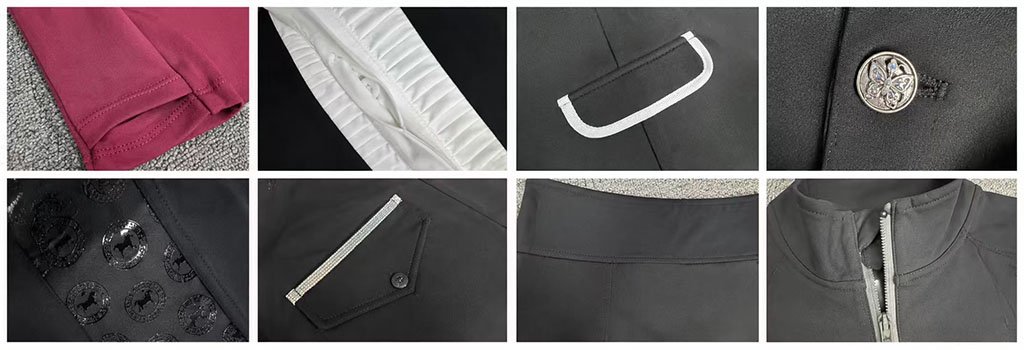
- Silicone grip panels
- Performance zippers
- Elastic waistbands
- Snap buttons
- Reinforced pocket openings
- Reflective details
- Branded pullers
- Inner waist grip
- Heat-transfer labels
Small details can significantly affect both product performance and retail presentation. For example, silicone grip quality can influence rider security, comfort, and product reputation. Choosing a cheaper grip material may reduce initial cost but increase complaints if the grip peels, cracks, or loses effectiveness after washing.
Branding and Packaging Cost
Private label and retail-ready programs usually include branding costs beyond garment production.
Common branding elements include:
- Woven main labels
- Printed care labels
- Size labels
- Hangtags
- Logo printing
- Embroidery
- Branded zipper pullers
- Custom polybags
- Retail packaging
- Barcode stickers
- Carton markings
These details matter because equestrian consumers often associate product presentation with brand quality. A well-packaged riding apparel collection can appear more professional online, in tack shops, and in boutique retail environments.
However, buyers should confirm branding costs early. If labels, hangtags, packaging, and barcodes are added late in the process, total purchasing cost can rise unexpectedly.
Shipping and Logistics Cost
Shipping cost depends on order volume, carton size, destination, shipping method, and customs requirements.
Common shipping options include:
- Express shipping for samples or urgent small orders
- Air freight for time-sensitive launches
- Sea freight for larger wholesale shipments
- DDP delivery for buyers wanting simpler import handling
- Freight forwarder-managed shipment for experienced importers
The key number buyers should calculate is landed cost, not factory price.
Landed cost includes:
- Product cost
- Packaging cost
- Inland transportation
- Export documentation
- Freight
- Customs duties
- Import taxes
- Local delivery
Without landed cost analysis, buyers may overestimate margins and underprice their retail products.
Hidden Costs Buyers Often Overlook
Many sourcing problems begin because buyers compare only the garment quotation.
Common hidden costs include:
- Repeated sample revisions
- Fabric changes after quotation
- Color correction
- Failed inspection rework
- Late delivery penalties
- Additional packaging requirements
- Shipping upgrades due to production delays
- Higher return rates caused by poor fit
- Inventory markdowns from over-ordering
- Communication delays
A supplier offering a slightly higher price may deliver better total value if they reduce these risks.
Practical Ways to Reduce Total Purchasing Cost
Reducing cost does not always mean choosing cheaper fabric or forcing suppliers to lower prices. In many cases, better planning creates greater savings.
Useful strategies include:
- Start with fewer colors per style
- Use proven fabrics recommended by the supplier
- Avoid unnecessary construction complexity
- Consolidate multiple products with one supplier
- Plan repeat orders based on actual sales data
- Confirm labels and packaging before production
- Calculate landed cost before confirming retail price
- Arrange inspection for larger orders
- Build long-term supplier relationships
A good sourcing strategy protects both margin and brand reputation. Buyers who control costs through planning rather than compromise usually build stronger wholesale programs over time.
What Risks Should Buyers Consider Before Choosing a Wholesale Equestrian Clothing Supplier?
Working with wholesale equestrian clothing suppliers in China can provide significant commercial advantages, but every sourcing decision carries potential risks. Fortunately, most sourcing problems are preventable. The majority of quality issues, delivery delays, and communication breakdowns result from insufficient supplier evaluation rather than the manufacturing country itself. Buyers who establish a structured sourcing process before production begins typically experience smoother projects, lower operating costs, and stronger long-term supplier relationships.
Rather than trying to eliminate every possible risk, professional buyers focus on identifying controllable risks early and implementing practical strategies to minimize their impact throughout the purchasing process.
Supplier Verification Risk
One of the most common sourcing mistakes is selecting a supplier without completing basic business verification.
Before placing an order, buyers should confirm:
- Business registration
- Company location
- Export experience
- Product specialization
- Public certifications
- Years in operation
- Company website
- International customer references (when available)
For larger purchasing programs, additional verification methods may include:
- Video factory tours
- Third-party factory audits
- Independent verification services
- Sample evaluation
- Virtual production meetings
Professional suppliers are generally transparent about their facilities, production capabilities, and export experience.
Product Quality Consistency Risk
Receiving an excellent sample does not automatically guarantee consistent bulk production.
Quality consistency should be evaluated throughout the entire manufacturing process.
Areas requiring attention include:
- Fabric consistency
- Color matching
- Silicone grip quality
- Stitch density
- Size tolerance
- Pattern accuracy
- Logo placement
- Packaging consistency
To reduce quality risk, buyers should establish written quality standards before production begins.
Whenever possible, confirm:
- Fabric specifications
- Measurement tolerances
- Approved color standards
- Workmanship expectations
- Packaging requirements
Clear documentation reduces misunderstandings during production.
MOQ Planning Risk
Many buyers attempt to secure lower pricing by increasing order quantities.
However, purchasing excessive inventory creates its own financial risks.
Common inventory problems include:
- Slow-moving products
- End-of-season markdowns
- High warehouse costs
- Cash flow pressure
- Reduced flexibility for future collections
Instead of maximizing order volume, buyers should balance:
- Sales forecasts
- Inventory turnover
- Marketing plans
- Cash flow
- Seasonal demand
The best MOQ is not necessarily the lowest—or the highest—but the quantity that supports healthy business growth.
Delivery Delay Risk
Late shipments affect much more than logistics.
Delayed production may result in:
- Missed product launches
- Seasonal inventory arriving too late
- Retail stock shortages
- Increased freight costs
- Customer dissatisfaction
- Reduced repeat business
Common causes of production delays include:
- Late fabric approval
- Frequent design revisions
- Material shortages
- Peak-season production congestion
- Unclear packaging instructions
- Shipping disruptions
Professional buyers reduce delivery risks by confirming product specifications early, approving samples promptly, and maintaining realistic production schedules.
Communication Risk
Communication quality often determines the success of an international sourcing project.
Warning signs may include:
- Slow responses
- Inconsistent answers
- Missing documentation
- Unclear responsibilities
- Delayed confirmations
- Technical questions left unanswered
Reliable suppliers generally:
- Respond consistently
- Confirm important decisions in writing
- Explain production limitations honestly
- Provide regular progress updates
- Notify buyers of potential delays early
Strong communication reduces costly misunderstandings throughout production.
Intellectual Property Protection
Brands investing in original product development should protect their intellectual property throughout the sourcing process.
Recommended practices include:
- Register trademarks in target markets
- Share technical files only when necessary
- Use written confidentiality agreements
- Keep design documentation organized
- Work with reputable suppliers
- Limit distribution of proprietary product information
While intellectual property protection is relevant in every manufacturing country, proactive documentation significantly reduces unnecessary commercial risk.
Third-Party Inspection
Independent inspection remains one of the most effective quality management tools available to international buyers.
Typical inspection areas include:
- Quantity verification
- Size measurement
- Workmanship
- Fabric defects
- Color consistency
- Logo accuracy
- Packaging
- Carton labeling
Inspection timing may include:
- During production
- Before shipment
- Container loading
For larger wholesale programs, inspection costs are often small compared with the financial impact of receiving defective merchandise.
Long-Term Partnership Risk
Many buyers focus exclusively on completing the first order.
Professional sourcing teams think differently.
Instead of asking:
“Can this supplier produce my first order?”
They ask:
“Can this supplier support my business over the next five years?”
Long-term supplier evaluation includes:
- Repeat-order consistency
- Continuous quality improvement
- Communication reliability
- Capacity expansion
- Product innovation
- Problem-solving attitude
- Commercial transparency
Strong long-term partnerships often reduce purchasing costs naturally over time while improving forecasting accuracy and supply chain stability.
Buyer Risk Assessment Checklist
Before confirming a wholesale equestrian clothing supplier, complete the following checklist:
| Evaluation Item | Verified |
|---|---|
| Business registration confirmed | □ |
| Export experience evaluated | □ |
| Product specialization matches requirements | □ |
| Samples approved | □ |
| MOQ fits inventory plan | □ |
| Lead time confirmed | □ |
| Quality standards documented | □ |
| Branding details approved | □ |
| Inspection arranged (if applicable) | □ |
| Shipping terms confirmed | □ |
| Communication process established | □ |
| Long-term cooperation potential evaluated | □ |
Completing this checklist before production begins can significantly reduce sourcing uncertainty and improve purchasing confidence.
The Most Successful Buyers Focus on Prevention, Not Correction
One of the biggest differences between experienced sourcing professionals and first-time buyers is their approach to risk.
Experienced buyers rarely rely on assumptions. Instead, they establish clear specifications, verify supplier capabilities, maintain written communication, and review each stage of production systematically. By identifying potential issues before they become expensive problems, they protect both profit margins and brand reputation.
When selecting a wholesale equestrian clothing supplier, success is rarely determined by finding the cheapest quotation. It is far more often the result of choosing a supplier that consistently delivers reliable quality, transparent communication, dependable lead times, and long-term commercial value. These qualities form the foundation of sustainable sourcing partnerships and support continued business growth in the competitive global equestrian apparel market.
Frequently Asked Questions About Wholesale Equestrian Clothing Manufacturers in China
Choosing a wholesale equestrian clothing manufacturer involves much more than comparing quotations. Buyers frequently ask about supplier reliability, production flexibility, private label capabilities, quality control, and long-term cooperation before making purchasing decisions. The following questions represent the issues most commonly raised by international equestrian brands, distributors, retailers, and sourcing professionals. Addressing these questions early helps buyers reduce uncertainty and establish stronger supplier relationships.
1. Who Is the Best Wholesale Equestrian Clothing Manufacturer in China?
There is no single wholesale equestrian clothing manufacturer that is ideal for every buyer. The best supplier depends on your product positioning, target customers, order volume, sourcing strategy, and long-term business goals rather than simply offering the lowest price.
For example:
- Startup equestrian brands usually prioritize flexible MOQs, responsive communication, and product development support.
- Boutique retailers often value suppliers with broad product portfolios and consistent quality.
- International distributors typically focus on production stability, export experience, and long-term supply capacity.
- Premium riding brands generally require manufacturers with strong technical garment expertise and performance fabric resources.
Instead of searching for the “largest” manufacturer, buyers should compare suppliers according to how well their capabilities match specific commercial objectives. A supplier that aligns with your growth strategy often delivers greater long-term value than one selected solely because of pricing.
2. How Do I Choose a Reliable Wholesale Equestrian Clothing Supplier?
Choosing a reliable supplier requires evaluating business stability, export experience, communication quality, product specialization, quality management, and long-term supply capability rather than focusing only on manufacturing cost.
Professional buyers usually compare multiple suppliers before making a decision.
Key evaluation factors include:
- Business registration
- Export experience
- Product specialization
- MOQ flexibility
- Lead time consistency
- Communication responsiveness
- Public certifications
- Sample quality
- Customer reputation
- Long-term cooperation potential
A structured evaluation process helps buyers reduce sourcing risks while improving purchasing confidence.
3. What Is the Typical MOQ for Wholesale Equestrian Clothing?
Minimum order quantities vary according to the supplier, garment complexity, fabric selection, and customization requirements. There is no universal MOQ across the industry.
Typical purchasing strategies include:
| Buyer Type | Recommended MOQ Strategy |
|---|---|
| Startup Brand | Lower MOQ for market validation |
| Boutique Retailer | Flexible seasonal purchasing |
| Growing Private Label Brand | Medium MOQ with repeat-order planning |
| Distributor | Forecast-based purchasing |
| Large Retail Chain | Higher-volume production agreements |
Rather than negotiating the lowest MOQ possible, buyers should choose quantities that support healthy inventory turnover and sustainable cash flow.
4. How Much Does Wholesale Equestrian Clothing Manufacturing Cost?
Wholesale pricing depends on garment construction, fabric quality, branding requirements, order quantity, packaging, inspection, and shipping rather than one fixed industry price. Buyers should calculate total landed cost instead of comparing factory quotations alone.
Typical cost components include:
- Fabric
- Trims
- Printing
- Embroidery
- Branding
- Packaging
- Sampling
- Freight
- Import duties
- Quality inspection
Suppliers offering slightly higher prices often deliver greater long-term value through consistent quality, reliable communication, and reduced production risks.
5. Can Chinese Manufacturers Support Private Label Equestrian Clothing?
Yes. Many wholesale equestrian clothing manufacturers support private label programs, although branding services differ between suppliers. Buyers should confirm available customization options before placing production orders.
Common private label services include:
- Custom woven labels
- Printed care labels
- Hangtags
- Logo embroidery
- Heat transfer logos
- Branded packaging
- Barcode stickers
- Retail-ready presentation
Experienced suppliers often help brands create consistent product presentation across multiple equestrian apparel categories while maintaining manufacturing efficiency.
6. Why Do So Many Global Riding Brands Source from China?
China remains one of the world’s leading sourcing destinations because it combines an advanced textile industry, experienced export suppliers, flexible manufacturing capacity, extensive fabric resources, and one of the largest apparel supply chains available.
International buyers benefit from:
- Broad supplier selection
- Performance fabric innovation
- Integrated textile ecosystem
- Competitive commercial value
- Flexible production
- Mature export infrastructure
- Reliable logistics
- Multi-category sourcing capability
Rather than competing solely on manufacturing cost, China increasingly competes through efficiency, supply chain integration, technical expertise, and long-term reliability.
7. How Can Buyers Reduce Risks When Working with Wholesale Equestrian Clothing Manufacturers?
Most sourcing risks can be significantly reduced through careful supplier evaluation before production begins. Buyers who verify suppliers, approve samples, document specifications, and maintain clear communication generally experience fewer production problems.
Recommended risk-control practices include:
- Compare multiple suppliers
- Verify business credentials
- Review samples carefully
- Confirm specifications in writing
- Calculate landed cost
- Arrange third-party inspection for larger orders
- Monitor production schedules
- Build long-term supplier relationships
Successful sourcing is usually the result of preparation rather than reacting to problems after production has started.
8. Should I Work Directly with a Factory, a Trading Company, or a Wholesale Supplier?
The most suitable sourcing model depends on your purchasing objectives, product range, and operational resources. No single option is universally better for every buyer.
General comparison:
| Supplier Type | Best For |
|---|---|
| Factory | Buyers seeking direct production and long-term manufacturing partnerships |
| Trading Company | Buyers sourcing multiple apparel categories from different factories |
| Wholesale Supplier | Businesses seeking purchasing flexibility and broader product sourcing |
Many growing equestrian brands begin with experienced wholesale suppliers before gradually establishing direct manufacturing relationships as purchasing volume increases.
Ultimately, the most important factor is not whether the supplier is a factory or a trading company, but whether they consistently deliver reliable quality, transparent communication, dependable lead times, and long-term commercial value.