OEM/ODM Sportswear Manufacturer | 3-Day Sampling | Low MOQ | 50K Monthly Capacity | ISO9001 & BSCI Certified

Top 10 Women's Plus Size Cotton Clothing Manufacturer Choices for Supplier Comparison
Compare each Women’s Plus Size Cotton Clothing Manufacturer by plus size experience, cotton capability, MOQ, sampling, lead time, commercial terms and supplier evidence. This buyer-focused guide helps brands verify manufacturing options, compare sourcing conditions and build a more suitable shortlist.
Top 10 Women's Plus Size Cotton Clothing Manufacturer Choices in China
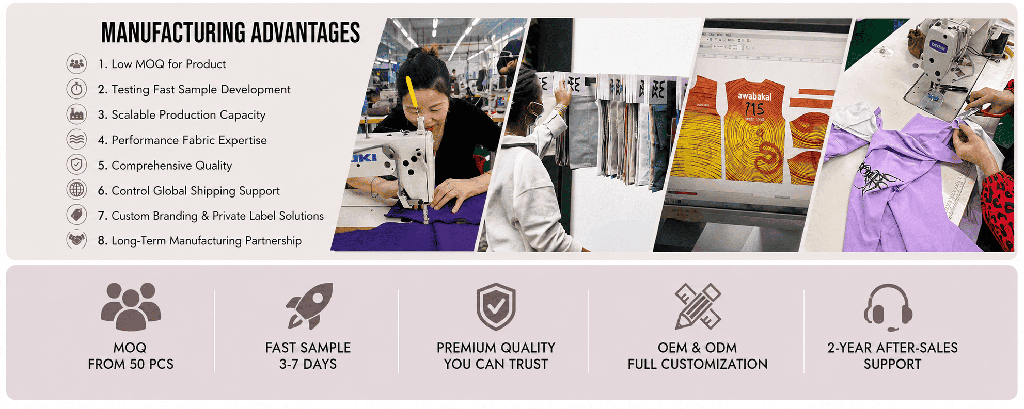
A useful manufacturer shortlist should do more than collect ten company names. Buyers need to compare where each supplier is located, what products it actually focuses on, whether it shows relevant plus size and cotton experience, how its MOQ is structured, what sampling support is available and which commercial conditions still need direct confirmation. The ten companies below represent different manufacturing models, so the right choice depends on the requirements and risk profile of the actual order.
A search for a Women’s Plus Size Cotton Clothing Manufacturer can quickly produce dozens of suppliers describing themselves as OEM, ODM, private label, low MOQ or plus size specialists. Those descriptions are useful for discovery, but they are not enough for a purchase decision.
The comparison becomes more meaningful when the same questions are applied to every supplier. Does the manufacturer show relevant extended-size experience? Does its advertised MOQ apply per style, per color or only when stock fabric is used? Can it source the required cotton specification? What does the sample cost include? Which information is publicly stated, and which conditions need to be confirmed against your RFQ?
The following ten manufacturers are therefore presented as sourcing candidates rather than a universal ranking from best to worst.
Quick Comparison of 10 Manufacturer Choices
| Manufacturer | Location | Main Sourcing Relevance | MOQ | Sampling | Best Suited For |
|---|---|---|---|---|---|
| Pair Fashion | Dongguan, Guangdong | Plus size development, custom apparel, private label | Project-dependent; special categories may start around 80 pcs | As fast as 3 days; regular sampling around 7 days | Brands needing development plus production support |
| NewWay Apparel | Zhejiang | Extended-size apparel and custom manufacturing | 100 pcs with stock fabric under published terms | Around 14 days | Buyers wanting clearly stated size and commercial information |
| Shanlinyang Apparel | Xiamen, Fujian | Curve apparel, activewear and private label | Published from 100 pcs/color/style | Around 7–12 days | DTC and growing fashion brands |
| Mostnica | Guangzhou, Guangdong | OEM/ODM and plus size apparel | Published from 100 pcs/style | Around 5–8 days | Buyers sourcing several apparel categories |
| JUNSHEEN | Dongguan, Guangdong | Cut-and-sew, pattern and grading support | Published from 100 units/style/color | Project-dependent | Fit-focused custom apparel programs |
| Crest Fashion | Dongguan, Guangdong | Women’s fashion and plus size manufacturing | Project-dependent | Project-dependent | Broader women’s fashion collections |
| Essty Garment | Guangzhou, Guangdong | Women’s apparel and private label | Published from 100 pcs/style | Around 5–7 days for certain sample stages | Emerging womenswear brands |
| Lancai Garment | China | Custom womenswear and smaller runs | Published from 50 pcs/style | Around 10–15 days | Buyers testing smaller initial quantities |
| Chicupup | Guangzhou, Guangdong | Small-batch custom womenswear | Published from 50 pcs/style for many projects | Around 7–10 days | Fast-moving fashion programs |
| Dongguan Dali Clothing | Dongguan, Guangdong | Broad-category OEM/ODM apparel | Some published offers start around 50 pcs | Confirm by project | Buyers seeking a generalist apparel supplier |
MOQ, sample time and production conditions can change with fabric, color, construction, customization and order quantity. Published figures should be used for initial screening and reconfirmed through a project-specific RFQ.
1. Pair Fashion — Custom Development for Plus Size and Private Label Programs
Location: Dongguan, Guangdong, China
Established: 2016
MOQ: Common production conditions vary by product; special categories including plus size may start around 80 pieces
Sampling: As fast as 3 days; regular sampling around 7 days
Bulk Lead Time: As fast as 15 working days; standard orders approximately 20–25 working days
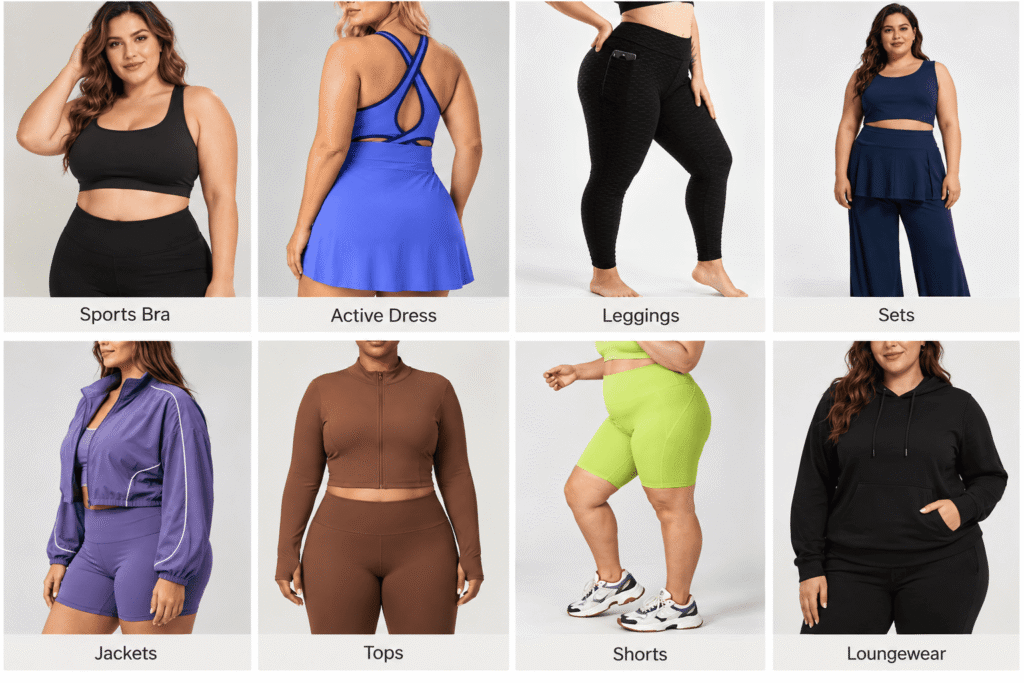
Core Products: Plus size activewear, yoga and fitness apparel, maternity activewear, equestrian apparel, modest sportswear, sweatshirts, hoodies and joggers
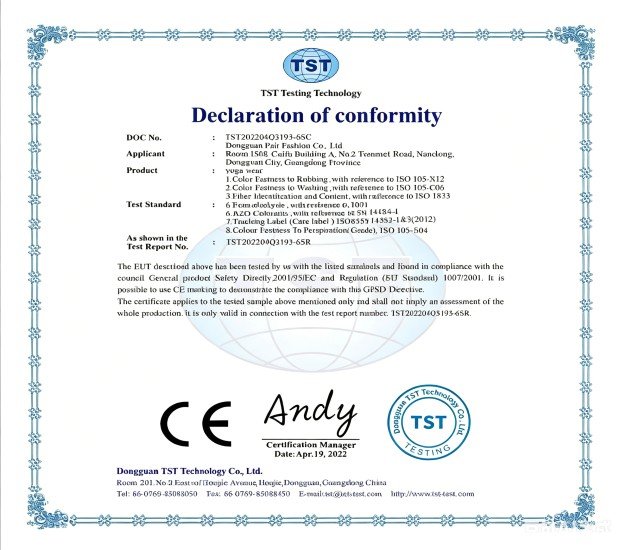
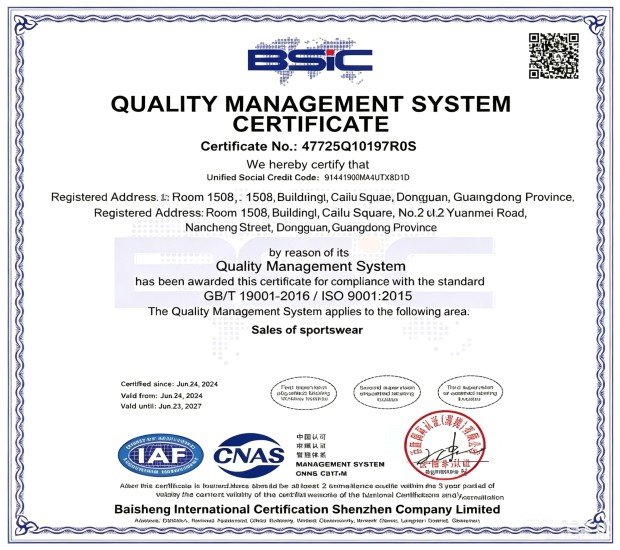
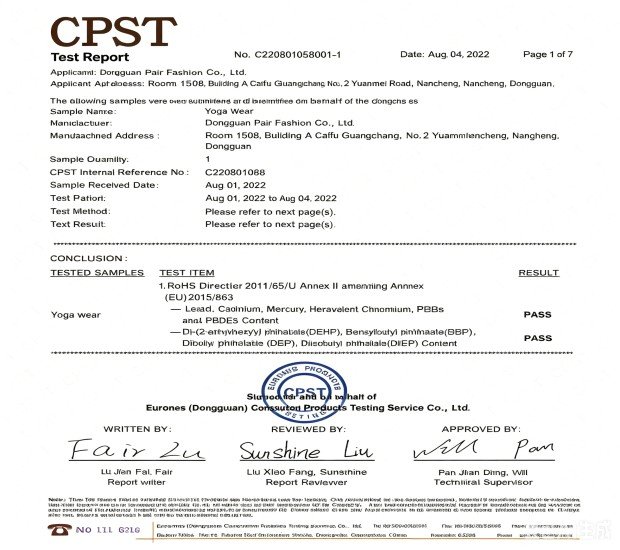
Certifications: ISO 9001, BSCI, GRS, CE and ROHS
Suitable For: Brands requiring custom development, extended sizing, private label support and repeat production
What to Consider: Buyers looking only for ready-stock, ultra-low-cost wholesale products may not need a development-oriented manufacturing structure.
Pair Fashion operates as an OEM, ODM and private label manufacturer with 11 people in pattern and sample development, 13 QC staff and seven production lines. For buyers building a shortlist, those resources are more useful when connected to the requirements of the actual order rather than treated simply as factory-size statistics.
The company supports pattern development and full-size grading as well as different sample stages. That makes it relevant to buyers whose sourcing brief involves extended sizing rather than only standard-size garments with a larger label attached.
However, buyers should still request a quotation against their exact size range, cotton specification, colors, quantity and branding requirements. A published capability does not replace project-level confirmation.
For brands that want to examine Pair Fashion’s product-development and manufacturing service in more detail, its Women’s Plus Size Cotton Clothing Manufacturer page covers the custom fit, cotton apparel and private label production side separately from this supplier comparison.
What buyers should confirm
- MOQ by style, color and required cotton fabric
- Intended size range and size distribution
- Required sample stages
- Fabric sourcing or custom-color minimums
- Label and packaging requirements
- Bulk lead time for the intended ordering period
2. NewWay Apparel — Extended Sizing With Clearly Published Commercial Information
Location: Zhejiang, China
Established: 1994
Published Size Range: XL–6XL, with custom sizing available
Published MOQ: 100 pieces per style when using stock fabric; custom fabric can require a higher minimum
Sample Lead Time: Around 14 days
Bulk Lead Time: Around 30 days after sample approval and deposit
Core Products: Dresses, knitwear, sportswear, occasion wear and plus size apparel
Suitable For: Buyers who value relatively clear published information about size range, MOQ and lead time
What to Consider: Stock-fabric MOQ should not be assumed to apply to a custom cotton fabric or custom-dyed material.
NewWay is useful for comparison because its published information shows why a headline MOQ can be misleading without context.
A buyer may see “100 pieces” and conclude that every custom order can begin at that quantity. In practice, the material decision can change the commercial structure. Stock fabric and custom-developed fabric do not necessarily carry the same minimum.
Before comparing its quotation with another supplier, buyers should confirm whether the MOQ is per style, per color or per fabric, whether sizes can be mixed, and whether a required cotton fabric introduces a separate mill minimum.
3. Shanlinyang Apparel — Curve Sizing With Accessible Private Label Terms
Location: Xiamen, Fujian, China
Published Experience: More than seven years
Published Size Range: S–5XL, with curve-focused sizing from XL–5XL
Published MOQ: From 100 pieces per color per style for custom production
Sample Lead Time: Around 7–12 days
Bulk Lead Time: Around 20–35 days
Core Products: Activewear, dresses, two-piece sets, tracksuits, swimwear and curve apparel
Suitable For: DTC brands, boutiques and growing private label businesses
What to Consider: Buyers should verify cotton composition, GSM, shrinkage expectations and fabric minimums for the specific style.
The important commercial detail here is not simply “MOQ 100.” It is the published condition per color per style.
Suppose a buyer plans three styles in four colors. A 100-piece per-color-per-style structure creates a very different inventory commitment from a supplier that permits a total style MOQ to be divided among colors.
This is why the search for a Women’s Plus Size Cotton Clothing Manufacturer should move quickly from headline numbers to the rules behind those numbers.
4. Mostnica — Broad OEM/ODM Development With Plus Size Experience
Location: Guangzhou, Guangdong, China
Manufacturing Experience: Published information traces manufacturing operations to 2008
Published MOQ: From approximately 100 pieces per style for trial orders, depending on the project
Sample Lead Time: Typically around 5–8 days
Core Products: Dresses, tops, hoodies, sweatshirts, children’s clothing and plus size apparel
Suitable For: Buyers wanting broad OEM/ODM support across multiple apparel categories
What to Consider: Relevant experience should be verified against the exact garment category, size range and cotton construction required.
Mostnica publishes dedicated information around plus size apparel and discusses the limitations of treating extended sizing as simple linear enlargement.
For sourcing teams, the next question should be more specific: Has the manufacturer made something sufficiently similar to the product being purchased?
Experience with a plus size woven dress does not automatically establish equal experience with a heavyweight cotton sweatshirt or another structurally different garment. Ask for comparable examples, applicable size ranges and the sample stage used to verify grading.
5. JUNSHEEN — Fit-Focused Cut-and-Sew Manufacturing
Location: Humen, Dongguan, Guangdong, China
Established: 2010
Published MOQ: From approximately 100 units per style and color
Published Size Development: XS–3XL, including oversized and extended-size fits
Core Capabilities: Pattern making, grading, cutting, sewing, washing, finishing and private label manufacturing
Suitable For: Brands that place strong importance on cut-and-sew development and fit
What to Consider: Brands requiring 4XL, 5XL or 6XL should verify whether those additional sizes can be developed and validated for their particular product.
JUNSHEEN illustrates another important sourcing point: the words “plus size” do not define the same size range for every supplier.
A manufacturer whose established development range ends at 3XL may be appropriate for one brand and unsuitable for another whose commercial range extends to 6XL.
Instead of asking only, “Do you make plus size?”, send the complete intended size range and ask which sizes have existing development experience, which require new grading work and how the supplier proposes to verify the upper end of the range.
6. Crest Fashion — Broad Women’s Fashion and Plus Size Production
Location: Dongguan, Guangdong, China
Established: 2012
Published Facility: Approximately 8,000 m²
Published Workforce: More than 180 employees
Core Products: Women’s casualwear, workwear, activewear, knitwear, loungewear, resort wear and plus size apparel
Services: OEM, ODM, private label, pattern making, sourcing, sampling and production
MOQ: Confirm by project
Suitable For: Buyers developing broader women’s fashion collections
What to Consider: Factory scale alone does not demonstrate specialization in a particular cotton product or extended-size range.
A larger manufacturing operation can offer useful capacity and broader category coverage. It does not automatically make the supplier the better choice for every order.
A buyer sourcing cotton plus size loungewear, for example, should still ask for evidence related to similar fabric weight, construction, size range and order type. This produces a more useful comparison than employee count or factory floor area alone.
7. Essty Garment — Women’s Apparel Manufacturing for Emerging Brands
Location: Guangzhou, Guangdong, China
Established: 2014
Published MOQ: From approximately 100 pieces per style
Sample Timing: Certain published sample stages are around 5–7 days
Core Products: Dresses, sets, jumpsuits and general women’s fashion
Services: OEM, ODM, private label, labels, packaging and shipping support
Suitable For: Emerging brands looking for relatively accessible custom womenswear production
What to Consider: Extended-size grading and cotton-specific capability should be confirmed for the intended product rather than inferred from general womenswear experience.
Essty can be commercially interesting for buyers entering custom womenswear at relatively manageable quantities.
The main verification question is technical relevance. General women’s clothing capability, low MOQ and private label support are valuable, but they do not automatically demonstrate that the supplier has already solved the fit and material issues of your particular plus size cotton product.
Ask for evidence first. Then compare price.
8. Lancai Garment — Smaller Pilot Quantities for Custom Womenswear
Location: China; confirm the production location for the intended order
Published MOQ: From approximately 50 pieces per style
Sample Lead Time: Around 10–15 days
Bulk Lead Time: Around 25–40 days depending on style and quantity
Core Products: Dresses, hoodies, sweats, sportswear, activewear and plus size apparel
Suitable For: Brands testing smaller initial quantities
What to Consider: Confirm whether the published low MOQ applies to the required cotton fabric, colors and branding components.
Low MOQ can reduce garment inventory, but it does not necessarily remove material commitments.
If a garment manufacturer accepts 50 pieces while the selected custom fabric requires a larger mill quantity, the buyer still carries the commercial effect of that fabric minimum.
For a small test order, request separate confirmation of garment MOQ, fabric MOQ, color MOQ, label MOQ and packaging MOQ. The resulting numbers are far more useful than a single “low MOQ” claim.
9. Chicupup — Small-Batch Womenswear and Fast Product Testing
Location: Guangzhou, Guangdong, China
Published MOQ: From approximately 50 pieces per style for many projects
Sample Lead Time: Around 7–10 days
Bulk Lead Time: Around 20–30 days
Core Products: Fast-fashion womenswear and custom women’s apparel
Services: OEM/ODM development and private label customization
Suitable For: Fashion businesses prioritizing relatively fast development and smaller first runs
What to Consider: Buyers should request direct evidence of extended-size cotton experience for the proposed style.
Fast sampling is useful only when the resulting sample answers the right questions.
A sample produced in seven days is not automatically more valuable than one produced in fourteen. It needs to use an appropriate material, follow the intended measurements and provide enough evidence to judge whether the supplier should move to the next sourcing stage.
For a Women’s Plus Size Cotton Clothing Manufacturer shortlist, speed should therefore be evaluated together with sample relevance and revision accuracy.
10. Dongguan Dali Clothing — Broad-Category OEM/ODM Manufacturing
Location: Dongguan, Guangdong, China
Core Product Range: Women’s wear, men’s wear, children’s wear, dresses, shirts, tops, sportswear, yoga wear, knitwear and plus size clothing
Published MOQ: Some current product offers begin around 50 pieces; confirm for the actual order
Services: Design review, fabric sourcing, sampling, production, inspection and export preparation
Suitable For: Buyers wanting a broad-category OEM/ODM candidate
What to Consider: A broad product catalog should not be treated as proof of deep specialization in plus size cotton womenswear.
Generalist manufacturers can be valuable when a buyer wants to consolidate several product categories with one supplier. Brands whose expansion includes yoga, training or fitness collections may separately evaluate an Activewear Manufacturer with experience in performance apparel, while specialists can be more useful when the product presents a narrower technical challenge.
Neither model is automatically superior. What matters is whether the supplier can show evidence that matches the product, size range, material, quantity and quality expectations of the order being quoted.
Who Is Each Manufacturer Best Suited For?
The answer changes with the buyer’s stage.
A startup testing its first two cotton styles may place greater weight on manageable MOQ, sample cost, size mixing and clear communication. Brands that are also developing inclusive performance collections can compare these sourcing priorities with the requirements of a Plus Size Activewear Manufacturer, where movement, support and extended sizing create a different product-development environment. A growing brand with proven products may care more about fabric continuity, production consistency and replenishment, while a mature buyer may prioritize capacity planning, documented inspection, audit requirements and stable commercial terms.
The same manufacturer can therefore be a strong candidate for one sourcing program and a poor fit for another.
Instead of asking which company is universally the best Women’s Plus Size Cotton Clothing Manufacturer, ask which supplier’s verified capabilities and commercial structure fit the risks of the order you are actually preparing to place.
Published Claims vs Verified Project Conditions
Supplier websites are useful for building a shortlist. They should not replace an RFQ.
Terms such as low MOQ, plus size specialist, 100% cotton, fast sample, factory direct and private label need to be converted into measurable project conditions before suppliers can be compared fairly.
For every shortlisted manufacturer, confirm:
- Exact product: What garment is being quoted?
- Size range: Which sizes are included, and can quantities be mixed?
- Fabric: What composition, structure and GSM are assumed?
- MOQ: Is it per style, color, fabric or order?
- Sample: Which sample stage is included, and what does it cost?
- Lead time: When does the production clock actually start?
- Branding: Are labels, hangtags and packaging included?
- Price basis: Is the quotation EXW, FOB, DDP or another Incoterm?
- Bulk standard: What approved reference will production follow?
Once these conditions are normalized, the shortlist becomes much more useful. You are no longer comparing ten websites. You are comparing ten potential manufacturing arrangements against the same purchasing requirement.

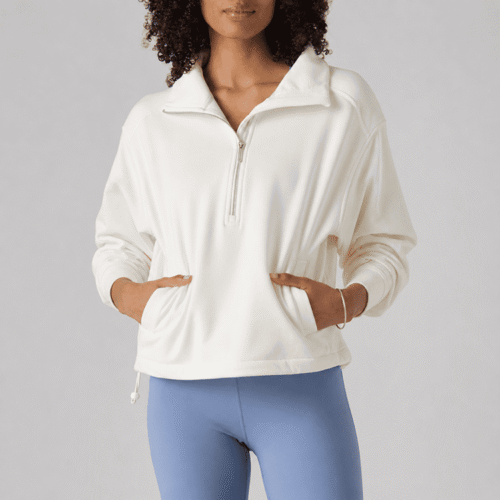
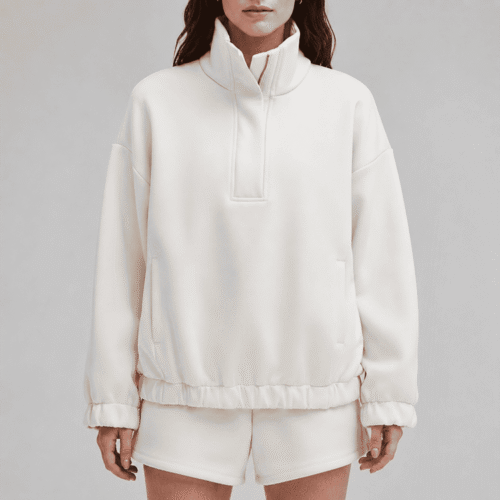
Custom Women’s Half Zip Oversized Sweatshirt Athleisure Pullover OEM ODM
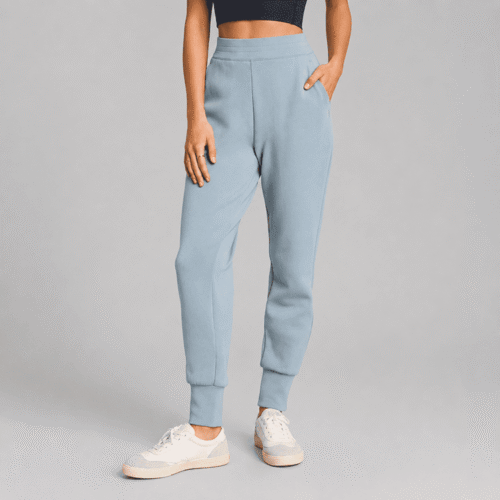
Custom Women’s High-Waist Jogger Pants OEM ODM Athleisure Sweatpants
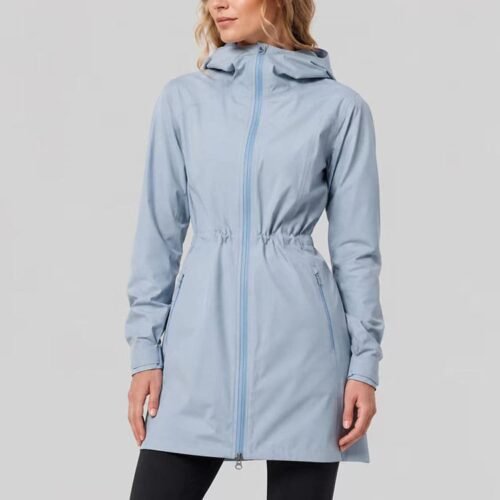
Custom Women’s Hooded Longline Windbreaker Jacket Waterproof Outerwear OEM ODM
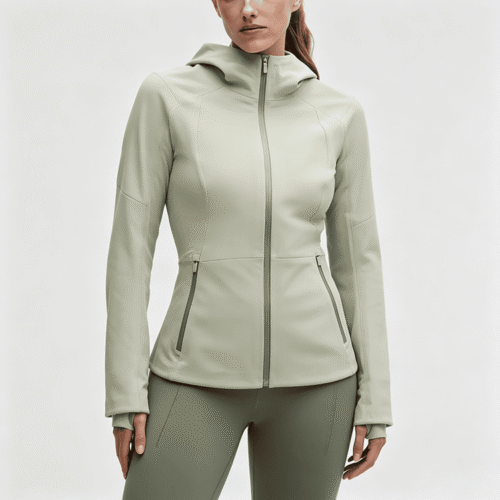
Custom Women’s Hooded Performance Jacket Full Zip Athleisure Outerwear OEM ODM
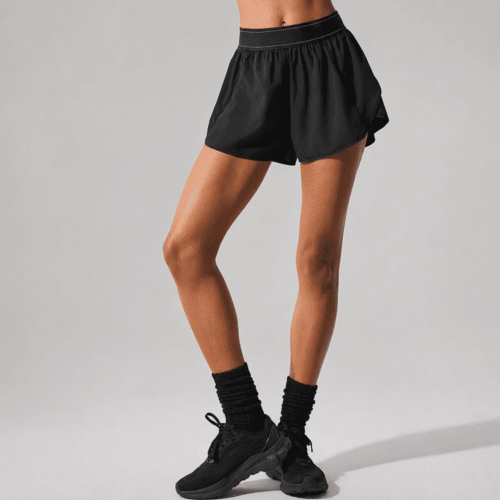
Custom Women’s Lightweight Running Shorts OEM ODM Workout Shorts
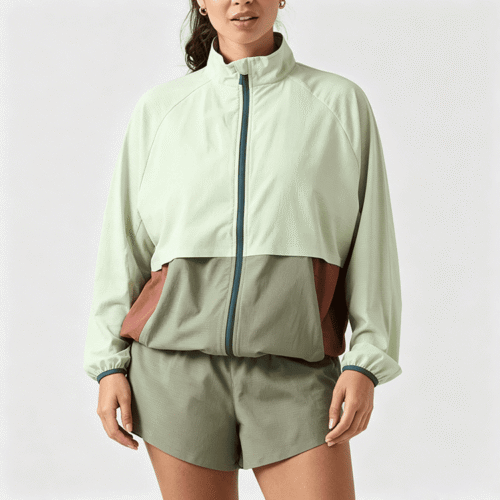
Custom Women’s Lightweight Windbreaker Jacket Full Zip Training Outerwear OEM ODM
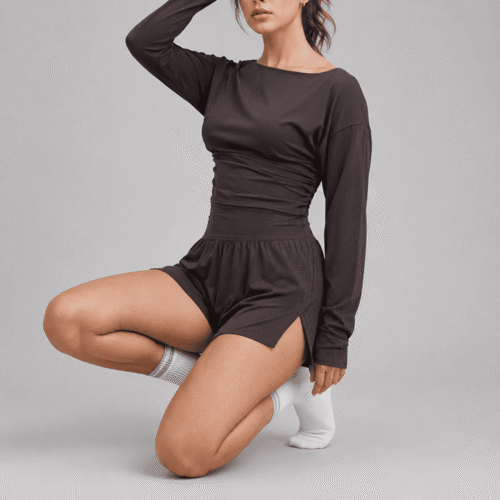
Custom Women’s Long Sleeve Lounge Romper OEM ODM Loungewear
Custom Women’s Oversized Half Zip Sweatshirt Fleece Pullover OEM ODM
Why Do Buyers Choose a Women's Plus Size Cotton Clothing Manufacturer in China?
Buyers consider China because one sourcing project can often connect garment manufacturing, fabric sourcing, trims, labels, packaging, sampling and repeat production within a developed apparel supply chain. The advantage is not only about getting a lower factory price. China can be more suitable when buyers need different parts of the sourcing process to work together. However, the final decision still needs to consider product complexity, order quantity, lead time, landed cost and supply-chain risk.
China has been an important apparel sourcing base for decades, but its role should not be reduced to “cheap manufacturing.” For a buyer searching for a Women’s Plus Size Cotton Clothing Manufacturer, the more useful question is whether China’s manufacturing ecosystem can make the particular order easier to source, control and repeat.
That distinction matters with plus size cotton womenswear. The purchase may involve more than sewing finished garments. A buyer may need a particular cotton construction, multiple sizes, custom colors, labels, hangtags, packaging and later replenishment. Every additional requirement creates another commercial dependency.
China’s textile and apparel supply chain has historically combined garment production with extensive upstream textile and accessory resources. This depth is one reason Chinese materials and components are also used by garment manufacturers elsewhere in Asia. At the same time, sourcing patterns are becoming more diversified, so China should be treated as one sourcing option to evaluate—not the automatic answer to every apparel order.
Why Is China Considered for Plus Size Cotton Womenswear Sourcing?
China can be attractive when the buyer needs to coordinate several purchasing requirements within one program.
Consider a collection containing three cotton tops across an extended size range. The garment price is only one part of the project. The buyer may also need to coordinate:
- Cotton fabric specifications
- Multiple garment sizes
- Custom Pantone colors
- Main labels and care labels
- Hangtags and branded packaging
- Sample revisions
- Bulk production
- Inspection
- Export preparation
- Future replenishment
The practical advantage appears when these requirements can be managed without creating too many disconnected suppliers.
This does not mean every Chinese manufacturer has the same supply-chain capability. Some factories specialize in narrow product categories. Some depend heavily on outside subcontractors. Some are strong at sewing but less developed in product management. Others offer broader OEM/ODM support.
The buyer therefore needs to verify which parts of the supply chain the manufacturer actually controls, which parts it coordinates externally and which responsibilities remain with the buyer.
This distinction is more useful than simply asking whether a company is a factory.
What Supply-Chain Advantages Can China Offer for Fabric, Trims, Labels and Packaging?
A mature apparel supply chain can shorten the distance—commercially and operationally—between the garment manufacturer and the companies supplying its materials.
This matters because apparel manufacturing is not one isolated production step. Textile Exchange’s current industry taxonomy treats the textile and apparel supply chain as multiple connected tiers and processes rather than a single “factory” activity, highlighting why consistent terminology and supply-chain visibility matter when brands work across materials, processing and finished-product manufacturing.
For buyers, the practical benefit can be straightforward.
If the main fabric needs to change, the manufacturer may need to locate another material. If a custom label is delayed, production or packing can be affected. If a color cannot meet the required minimum, the buyer may need to change the color plan or quantity. If packaging arrives late, finished garments can sit waiting instead of shipping.
A Women’s Plus Size Cotton Clothing Manufacturer operating within a broad sourcing network may therefore offer value beyond sewing capacity. But buyers should verify that network instead of assuming it exists.
Useful questions include:
- Where is the main fabric sourced?
- Is the quoted fabric already available or made to order?
- Who supplies labels, hangtags and packaging?
- Are printing, embroidery or washing processes completed internally or externally?
- What happens if the nominated fabric becomes unavailable?
- Can the same material be sourced again for a reorder?
- Which supplier minimums sit behind the garment MOQ?
These questions turn the vague phrase “one-stop service” into something a purchasing team can actually evaluate.
China Manufacturer vs Local Manufacturer: What Should Buyers Actually Compare?
A China manufacturer and a local manufacturer should be compared on total sourcing conditions, not country labels.
A local supplier may have shorter transport distance and easier face-to-face communication. It may also be attractive for highly time-sensitive orders or products that benefit from frequent physical development meetings.
A Chinese supplier may offer access to a broader manufacturing and material ecosystem, different production economics or more integrated private label sourcing.
Neither advantage is universal.
For example, a local manufacturer is not automatically faster if it must import the required fabric. A Chinese manufacturer is not automatically cheaper if the order is extremely small, highly customized and then shipped by expensive air freight.
The comparison should therefore include more than unit price:
| Comparison Area | Questions Buyers Should Ask |
|---|---|
| Garment Price | Are both suppliers quoting the same specification? |
| MOQ | Is it per style, color, fabric or total order? |
| Fabric | Is the material stock, custom dyed or specially developed? |
| Sampling | How many stages and revisions are included? |
| Freight | What is the expected shipping method and cost? |
| Duty & Tax | What import costs apply at the destination? |
| Lead Time | When does the clock begin, and what dependencies can delay it? |
| Inventory Risk | How many pieces must the buyer commit to before demand is proven? |
| Replenishment | Can the same product be reproduced commercially later? |
| Communication | Can specifications, revisions and approvals be managed clearly? |
This is a more realistic version of China vs local manufacturing than comparing two unit prices in isolation.
When Does China Make Sense for Small Tests, Growing Orders and Repeat Production?
The answer changes as the brand grows.
For a startup, the priority may be learning. The first order needs to provide enough commercial information to answer questions such as: Does the customer want the product? Which sizes sell? Which colors move? Is the retail price realistic?
In that situation, a manufacturer offering a slightly lower unit price but requiring a much larger commitment may not create the better business outcome.
For a growing brand, the problem changes. Demand may already exist, but the company needs more styles, more colors or more reliable replenishment. Brands expanding into specialized categories such as pregnancy and postpartum apparel may also need a Maternity Activewear Manufacturer with category-specific development experience. Supplier coordination and repeatability can therefore become more important than saving a small amount on the first quotation.
For an established buyer, the priorities can shift again toward capacity, documentation, quality-control visibility, delivery planning and supply continuity.
This is why a manufacturer’s suitability should be judged against the buyer’s current stage.
A 100-piece trial order and a 10,000-piece repeat program are not simply the same purchasing decision at different quantities. They expose the buyer to different risks.
Is a Lower Factory Price Really a Lower Total Sourcing Cost?
Not necessarily.
Suppose Supplier A quotes a cotton top at $6.20 and Supplier B quotes $6.80.
At first glance, Supplier A appears cheaper.
But Supplier A requires 500 pieces per color, while Supplier B allows a more manageable quantity across the intended size range. Supplier A also charges separately for labels, packaging and sample revisions, while Supplier B includes some of those items in its commercial structure.
The unit-price comparison no longer tells the full story.
The buyer should instead consider:
Total sourcing commitment = garment quantity + material commitments + development costs + branding costs + logistics + duty/tax + inventory exposure + potential correction costs.
This is particularly important for new plus size collections because size distribution creates another inventory variable. Ordering equal quantities of XL, 2XL, 3XL, 4XL and 5XL may be simple for production planning, but customer demand may not be evenly distributed across those sizes.
A low unit price attached to an inflexible size or color commitment can therefore create more inventory risk than a slightly higher unit price with better commercial flexibility.
The objective is not to find the cheapest factory. It is to understand what you are committing to in exchange for the quoted price.
What Are the Risks of Choosing a Supplier Only Because It Is Based in China?
China’s manufacturing depth does not make every Chinese supplier suitable.
The country contains large factories, small factories, specialists, generalists, trading companies and hybrid sourcing businesses. Their capabilities, management systems, product experience and commercial structures can be very different.
The same caution applies to the opposite assumption. A buyer should not reject a Chinese manufacturer simply because another country has a lower headline labor cost.
Recent sourcing research shows that fashion companies have increasingly diversified their supplier bases away from heavy dependence on China, including greater use of other Asian and nearshore markets. That makes supply-chain diversification a legitimate strategic consideration, particularly for larger buyers.
The practical question is therefore not:
“Is China the best country for clothing manufacturing?”
It is:
“Does this particular supplier, in this particular sourcing location, offer the right combination of product capability, commercial terms, supply-chain access and risk for this order?”
A buyer searching for a Women’s Plus Size Cotton Clothing Manufacturer should use China as a way to define a sourcing pool, not as a substitute for supplier verification.
Country comes first in a search query.
Evidence should come first in a purchase decision.
How Do You Build the Same RFQ Before Comparing Manufacturers?
A fair manufacturer comparison starts with a substantially consistent RFQ. Give shortlisted suppliers the same product type, size range, fabric requirements, colors, quantities, customization details, packaging expectations and commercial assumptions. Then separate confirmed requirements from options that are still open. If one manufacturer quotes stock cotton, another quotes custom-dyed fabric and a third assumes different sizing or packaging, their prices, MOQs and lead times are not directly comparable.
An RFQ is not only a request for a price.
Used properly, it is a comparison control.
This becomes especially important when sourcing plus size cotton womenswear because apparently small differences in the brief can change fabric consumption, pattern work, sample requirements, material minimums and final order quantities.
Suppose three manufacturers receive the same reference image.
Supplier A assumes standard cotton jersey, five sizes and one color. Supplier B assumes heavyweight 100% cotton, seven sizes and three custom colors. Supplier C quotes a cotton blend using available colors.
All three suppliers may return professional quotations.
But the buyer still does not have three comparable prices.
Before asking which supplier is cheaper, make sure they are being asked to manufacture substantially the same product.
What Information Should Every Manufacturer Receive?
The RFQ should contain enough information for suppliers to understand the commercial shape of the order without forcing the buyer to finalize every technical detail too early.
At minimum, shortlisted manufacturers should receive the same core information:
| RFQ Area | Information to Provide |
|---|---|
| Product | T-shirt, top, sweatshirt, jogger, loungewear set or other garment |
| Reference | Tech Pack, sketch, physical sample or reference images |
| Size Range | For example XL–5XL |
| Order Quantity | Total units and expected quantity by style |
| Colors | Number of colors and whether custom Pantone matching is required |
| Fabric | Composition, construction, target GSM and important performance requirements |
| Branding | Print, embroidery, woven label or other logo application |
| Labels | Main label, size label and care label requirements |
| Packaging | Standard polybag or custom packaging requirements |
| Sample | Required sample type and requested size |
| Target Date | Required sample, production or delivery timing |
| Destination | Country or port needed for freight/Incoterm discussions |
| Quotation Basis | EXW, FOB, DDP or other requested commercial basis |
Not every RFQ needs a finished Tech Pack.
A startup may still be working from a physical garment, sketch or reference image. In that case, tell every supplier what information is still open instead of allowing each manufacturer to silently make different assumptions.
For example:
Confirmed: 100% cotton, relaxed top, XL–5XL, three colors, private label.
Open for supplier proposal: exact GSM, neckline construction and packaging format.
This distinction helps suppliers identify where they should follow instructions and where they are being invited to recommend an option.
How Should You Define Product Type, Size Range, Fabric, Colors and Custom Details?
Avoid descriptions that sound clear but leave too much room for interpretation.
“Plus size cotton top” is not enough.
Two suppliers can read that phrase and imagine completely different products.
A more useful sourcing brief could define:
- Women’s relaxed short-sleeve top
- Intended size range: XL–5XL
- 100% cotton jersey preferred
- Target GSM range
- Three colors
- Custom neck label and care label
- Small chest embroidery
- Individual packaging
- Initial order quantity
- Target market
- Reference garment measurements or Tech Pack available
The objective is not to make the RFQ unnecessarily technical. It is to remove variables that would otherwise make quotations misleading.
Size range deserves particular attention.
A quotation for XL–3XL should not be compared directly with one covering XL–6XL if the larger sizes materially change consumption or development requirements. The same applies when one supplier assumes equal quantities across sizes while another assumes a buyer-provided size ratio.
Write the intended range and, when possible, the provisional quantity distribution.
What Plus Size Requirements Need to Be Written Into the RFQ?
The RFQ should define what the buyer expects, not prescribe a manufacturer’s entire technical method.
That distinction helps keep the sourcing process practical.
Instead of telling every supplier exactly how to grade the garment, provide the information needed to quote and evaluate the project:
- Intended size range
- Base or reference size
- Measurement chart, if available
- Required garment fit
- Important body or garment areas
- Intended customer market
- Size distribution estimate
- Whether a size set is required
- Measurement tolerance requirements, if already established
If a measurement chart is not ready, say so.
Then ask each supplier how it proposes to develop and verify the requested range. The answers themselves become useful comparison evidence.
One manufacturer may identify a need for an additional fitting stage. Another may immediately accept the project without asking any sizing questions. A third may explain that its existing block is close to the requested range but requires adjustment.
Those responses tell the buyer more than a simple “yes, we can make plus size.”
How Should Cotton Composition, GSM and Fabric Requirements Be Specified?
Fabric is one of the easiest places for quotations to become commercially unequal.
“Cotton” can describe many different materials.
At a minimum, state whether the requirement is:
100% cotton, a specific cotton blend, or still open to supplier recommendations.
Then add the information that matters for the garment, such as:
- Knit or woven construction
- Jersey, French terry or another structure
- Target GSM or acceptable range
- Surface and hand-feel direction
- Stretch requirement, if applicable
- Color requirements
- Wash expectations
- Finishing requirements
- Certification or traceability requirements, when relevant to the order
Do not specify a certification or traceability requirement simply because it sounds valuable. Require it when the product, brand policy, customer or target market actually needs it. Buyers whose sourcing program requires deeper cotton-origin visibility can also review how Physical BCI Cotton traceability follows cotton through defined physical Chain of Custody models before deciding what evidence should be requested from shortlisted suppliers.
The commercial question should follow immediately:
Does this fabric specification change the garment MOQ?
A supplier may accept 100 garments when using an available fabric but require a different commitment when the buyer requests custom color or a material that must be produced specifically for the order.
That difference needs to appear in the quotation—not after the sample has already been approved.
Which Branding and Packaging Requirements Affect the Quotation?
Private label costs are often individually small compared with the garment, which makes them easy to ignore during early sourcing.
Collectively, they can change both cost and MOQ.
The RFQ should state whether the buyer needs:
- Custom main labels
- Size labels
- Care labels
- Hangtags
- Barcode stickers
- Printed logos
- Embroidery
- Branded polybags
- Custom boxes
- Tissue paper
- Inserts
- Carton markings
The important issue is not simply the unit cost.
A label supplier may require 1,000 labels even when the garment order is only 200 pieces. A custom packaging supplier may have another minimum. An embroidery design may require setup before production.
Ask manufacturers to separate these costs where practical.
This allows the buyer to distinguish between garment manufacturing cost and brand-development costs that may be reused across future orders.
It also makes two quotations easier to normalize.
Why Should Every Shortlisted Manufacturer Quote Against Substantially the Same Requirements?
Because otherwise the buyer may accidentally reward the supplier that made the cheapest assumptions.
Consider this simplified comparison:
| Requirement | Supplier A | Supplier B | Supplier C |
|---|---|---|---|
| Fabric | Stock cotton jersey | Custom 100% cotton jersey | Cotton blend |
| Size Range | XL–3XL | XL–5XL | XL–5XL |
| Colors | 1 stock color | 3 custom colors | 3 available colors |
| Packaging | Standard | Custom branded | Standard |
| Sample | Basic prototype | Fit + size set | Fit sample |
| Quote | $6.10 | $8.40 | $6.85 |
Supplier A appears cheapest.
But Supplier A is not quoting the same project.
The correct next step is not to negotiate Supplier B down to $6.10. It is to normalize the assumptions.
Ask all three manufacturers to quote the same agreed version:
- Same fabric specification
- Same size range
- Same colors
- Same branding
- Same packaging
- Same quantity
- Same Incoterm
Only then does the price difference begin to carry useful purchasing information.
This process is sometimes called commercial normalization. The terminology matters less than the principle: remove major specification differences before interpreting price differences.
What Happens When Suppliers Are Quoting Different Product Assumptions?
The lowest quotation can become the most expensive order surprisingly quickly.
Suppose Supplier A excludes custom packaging, size-set development and freight. Supplier B includes packaging and a size set but quotes FOB. Supplier C quotes DDP but uses a different fabric.
A spreadsheet that simply places the three total prices side by side creates an illusion of precision.
The numbers are precise.
The comparison is not.
Before choosing a Women’s Plus Size Cotton Clothing Manufacturer, build a quotation comparison sheet that separates at least the following:
Product Variables
- Fabric
- Size range
- Color count
- Construction
- Branding
- Packaging
Commercial Variables
- Garment MOQ
- Color MOQ
- Fabric MOQ
- Unit price
- Sample charges
- Development charges
- Label/packaging charges
- Payment terms
Timing Variables
- Fabric lead time
- Sample lead time
- Bulk lead time
- Shipping time
Delivery Variables
- Incoterm
- Freight
- Duty and tax responsibility
- Delivery destination
Once these variables are visible, the buyer can ask much better questions.
A quotation that is 8% higher may include costs that another supplier has excluded. A supplier with a higher garment MOQ may allow better size mixing. A lower-priced supplier may require more custom fabric than the first order can realistically consume.
This is also why RFQ quality affects supplier quality indirectly. Clear purchasing information gives capable manufacturers a better opportunity to identify risks before they become expensive production problems.
The purpose of a standardized RFQ is not to force every manufacturer to work in exactly the same way.
It is to create a common commercial starting point.
After that, the differences between suppliers become useful: one may propose a more practical fabric, another may offer better color flexibility, and another may identify a sizing risk that the buyer had not considered.
Those differences are worth evaluating.
Uncontrolled assumptions are not.
How Do You Verify a Women's Plus Size Cotton Clothing Manufacturer Before Sampling?
Verify the supplier before spending money on samples. Start with its legal business identity, manufacturing role, relevant product history, factory evidence, certifications and examples that are close to your intended garment. Then separate what the supplier publishes from what it can prove for your project. A large factory, polished website or long product catalog may support an initial shortlist, but none of these alone proves that the supplier can handle your required size range, cotton specification and order structure.
Supplier verification does not need to begin with an expensive factory audit.
The first objective is simpler: remove obviously unsuitable suppliers before paying for development work.
A buyer may begin with 15 or 20 possible manufacturers and reduce that list to three or four candidates through document checks, video calls, relevant product evidence and a structured RFQ. More expensive verification can then be reserved for suppliers that survive the earlier stages.
This creates a verification funnel:
Identity → Manufacturing Role → Relevant Experience → Product Evidence → Commercial Fit → Sample → Factory/Audit Evidence → Final Shortlist
The order matters. There is little value in spending heavily to audit a supplier whose MOQ, product experience or commercial terms already make it unsuitable for the project.
Manufacturer vs Trading Company vs Hybrid Supplier: Who Are You Actually Buying From?
The words manufacturer, factory, supplier and trading company are often used loosely in apparel sourcing. Buyers should understand the actual business model before deciding whether it creates a problem.
A manufacturer generally performs important production activities through its own facility and workforce. A trading company primarily coordinates sourcing through other manufacturers. A hybrid business may operate some manufacturing internally while outsourcing particular products or processes.
None of these structures is automatically good or bad.
A capable trading company may manage several specialist factories more effectively than a poorly managed factory handles its own production. A direct manufacturer may provide better technical communication, production visibility and cost control when the product matches its specialization.
The problem begins when the buyer believes one business model is being offered but the order is actually handled through another.
Ask practical questions:
- What is the legal company name receiving the order and payment?
- What is the name and address of the production facility?
- Which production stages are completed there?
- Which processes are subcontracted?
- Who employs the merchandising and QC teams?
- Can the supplier show the production floor during a live video call?
- Will the same facility make both the sample and bulk order?
- If another factory is used, will that be disclosed before production?
For a Women’s Plus Size Cotton Clothing Manufacturer, this matters because fit, fabric, sewing, finishing and inspection responsibilities may sit with different parties. The buyer needs to know who is accountable when something changes.
What Business Records, Factory Information and Certifications Should Be Verified?
Documents are useful when they answer a specific purchasing question.
A business license can help establish that a company exists under a particular legal identity. A quality-management certificate can provide information about a management system. A social-compliance audit may address another area. A material certification may relate to a particular supply chain or input.
They should not all be treated as interchangeable proof of “good quality.”
For example, ISO 9001 defines requirements for establishing, maintaining and continually improving a quality management system. It should therefore be treated as evidence related to the supplier’s management system rather than as an automatic guarantee that every garment will meet your Tech Pack, measurements or aesthetic expectations.
Likewise, a certification shown on a website should not simply be copied into a supplier scorecard. Buyers can request:
- Certificate holder name
- Certificate number
- Issuing or auditing organization
- Scope
- Issue and expiry dates
- Production-site address
- Whether the document applies to the entity making the order
The names matter. If the quotation comes from Company A, the certificate belongs to Company B and production takes place at Factory C, the relationship between those entities should be explained.
For Pair Fashion, for example, current company information lists ISO 9001, BSCI, GRS, CE and ROHS among its certifications and compliance-related documentation. Those records can be part of a buyer’s verification process, but they should still be reviewed according to the requirements of the actual order rather than treated as a substitute for product evaluation.
How Can You Verify Real Plus Size Experience Instead of Relying on Catalog Photos?
A photograph can prove that a garment existed.
It does not necessarily prove who developed it, who manufactured it, which size was photographed, how the grading was built or whether the supplier can reproduce it for your order.
That is why buyers should move from visual evidence to production evidence.
Instead of asking:
“Do you make plus size?”
Ask questions such as:
- Which extended size ranges have you produced?
- What type of products were involved?
- Which size was used as the fitting or development reference?
- Can you show a measurement chart with confidential customer information removed?
- Can you show examples of graded size specifications?
- Have you produced a full size set for similar products?
- Which measurements typically require closer review as sizes increase?
- Can you explain how you would validate the upper end of our proposed range?
A supplier does not need to disclose another customer’s proprietary Tech Pack. In fact, willingness to share confidential customer documents would create a different concern.
What you need is enough non-confidential evidence to understand whether the supplier has relevant working experience, not access to another brand’s intellectual property.
This is a stronger test than counting plus size photos on a website.
What Evidence Supports a Supplier’s Claimed Cotton Capability?
“Cotton clothing manufacturer” is also a broad claim.
A supplier may have experience with lightweight cotton jersey but little experience with heavyweight French terry. Another may frequently produce cotton-blend garments but rarely work with 100% cotton. A third may be comfortable using available fabrics but require much larger quantities for custom-dyed material.
The correct verification depends on the order.
If your collection depends on a particular cotton material, sourcing evidence may also need to extend beyond the finished garment. For buyers working with traceable cotton programs, the Better Cotton Initiative Chain of Custody Standard provides a useful example of how supply-chain requirements can connect organisations buying and selling cotton across different stages. Buyers should therefore ask the manufacturer to identify:
If your collection depends on a particular cotton material, ask the manufacturer to identify:
- Fiber composition
- Fabric construction
- Target GSM
- Usable width
- Available or custom color
- Fabric supplier or sourcing route
- Material MOQ
- Expected testing or approval requirements
- Whether the same material can be sourced for replenishment
Do not ask only, “Can you make 100% cotton?”
That question is too easy to answer with “yes.”
A better question is:
“Can you source this cotton specification for 300 garments across three colors, and what fabric minimum applies to each color?”
Now the supplier has to connect technical capability with commercial reality.
What Can Previous Samples, Size Sets and Production Records Tell You?
Previous work can be useful, but only when it is reasonably comparable to the proposed order.
Suppose a supplier shows an excellent plus size polyester legging. That demonstrates some extended-size experience, but it does not prove equal experience with a structured cotton sweatshirt. Fabric behavior, construction, fit expectations and manufacturing risks are different.
Evidence becomes stronger as it gets closer to the intended product.
A simple evidence hierarchy can help:
| Evidence | What It Can Tell You | What It Cannot Prove Alone |
|---|---|---|
| Website Product Photo | Supplier markets similar products | Who made it or how it was developed |
| Physical Sample | Construction and finishing capability | Repeatability in bulk |
| Size Set Example | Experience reviewing multiple sizes | Suitability for your grading rules |
| Measurement Record | Process discipline around dimensions | Fabric and bulk consistency |
| Production Record | Experience managing an actual order | Performance on your future order |
| Live Factory Evidence | Facility and activities exist at that time | Long-term quality consistency |
| Your Own Paid Sample | Response to your specification | Full bulk-production performance |
The strongest evidence before bulk production is usually not one document. It is a consistent chain of evidence.
The supplier’s answers, quotation, sample, revision history and factory information should tell broadly the same story.
Factory Size vs Relevant Product Experience: Which Evidence Matters for Your Order?
Factory size can matter, but it answers only certain questions.
A large facility may provide more machines, employees and available capacity. This can be important for high-volume programs or buyers that need several production lines.
But size does not automatically prove specialization.
Imagine two suppliers.
Supplier A has 500 sewing workers but mainly produces woven fashion dresses.
Supplier B is smaller but regularly handles the exact type of cotton knit product, extended sizing and order quantity you need.
If your order is a relatively small plus size cotton knit collection, Supplier B may present more relevant evidence even though Supplier A is much larger.
The reverse could be true for a very large multi-category program.
This is why factory metrics should be connected to the purchasing requirement:
Capacity matters when capacity is your risk.
Specialization matters when technical execution is your risk.
Commercial flexibility matters when inventory is your risk.
Do not turn one metric into a universal definition of a good supplier.
When Is a Video Audit, Third-Party Audit or Factory Visit Worth Considering?
Verification should become more intensive as the commercial exposure increases.
For an early shortlist, business records, product evidence, quotation quality and a live video call may provide enough information to decide which suppliers deserve a paid sample.
A live factory video can be surprisingly useful when it is not staged as a five-minute sales presentation. Ask to see specific areas relevant to the order: sample room, cutting, sewing, inspection, warehouse or current production. Ask questions while moving through the facility.
For larger or strategically important orders, a third-party audit or physical visit may be justified.
Independent inspection and auditing organizations can verify areas such as supplier capability, quality systems, production processes or shipment conformity depending on the service purchased. SGS, for example, offers supplier audits and factory assessment services for supply-chain verification.
The important point is to define the purpose before buying the audit.
Do you need to verify:
- The factory exists?
- Production capacity?
- Quality-management processes?
- Social-compliance requirements?
- Machinery?
- Subcontracting?
- Production progress?
- Finished goods before shipment?
Different questions require different verification methods.
An expensive audit that answers the wrong question is still poor due diligence.
Pre-Sample Supplier Verification Checklist
Before paying for a sample, buyers should be able to answer most of the following questions:
- Legal identity: Do the company name, quotation and payment information make sense together?
- Manufacturing role: Is the business a direct manufacturer, trading company or hybrid supplier?
- Production location: Do you know where the garment is expected to be produced?
- Relevant products: Has the supplier shown credible experience with a reasonably similar garment?
- Plus size evidence: Can it explain its experience with extended sizing rather than simply say “yes”?
- Cotton evidence: Can it discuss the required material in specific technical and commercial terms?
- MOQ: Does the stated minimum apply to the actual fabric, colors and size range?
- Sample terms: Are sample type, price, timing and revision conditions clear?
- Lead time: Does the stated schedule fit your intended launch?
- Certifications: Have relevant documents been checked for holder, scope and validity?
- Communication: Does the supplier answer technical questions clearly and consistently?
- Confidentiality: Does it handle other customers’ information professionally?
- Commercial transparency: Are important exclusions and additional charges disclosed before sampling?
A supplier does not need to be perfect in every category.
What matters is whether the remaining uncertainties are visible, commercially acceptable and possible to test before the buyer takes a larger risk.
Supplier verification is therefore not about collecting the largest possible folder of certificates and factory photographs. It is about reducing uncertainty in the right order.
By the time you pay for a sample, you should already know why that manufacturer deserves to remain on the shortlist.
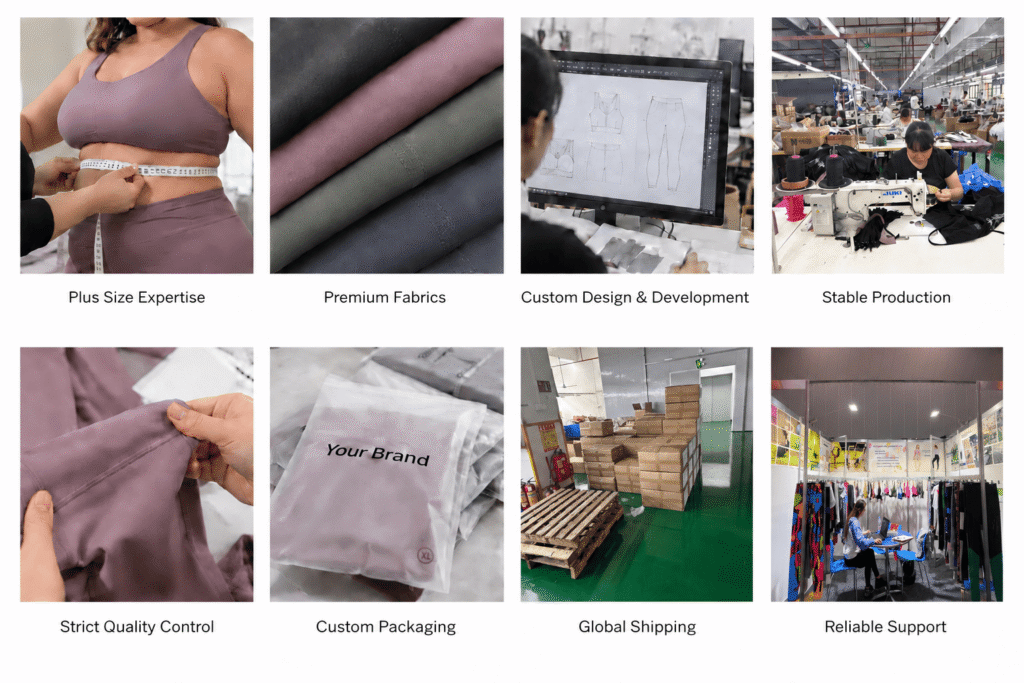
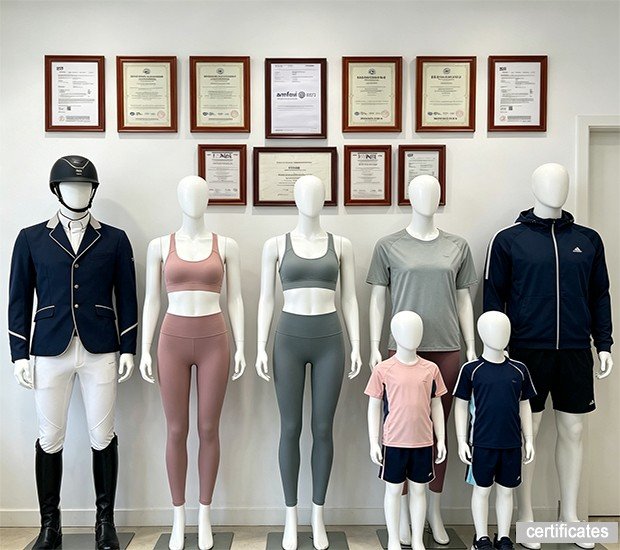
Trusted Manufacturing Standards For Global Sportswear Brands
We operate under internationally recognized quality, sustainability, and ethical manufacturing standards. Our certifications help ensure consistent product quality, responsible sourcing, and reliable production for global sportswear brands.
- 20+ Countries Served
- 6000+ Styles Developed
- 50,000 PCS Monthly Capacity
- 3-Day Sample Development
How Should Buyers Compare Samples From Different Manufacturers?
Buyers should compare samples from shortlisted manufacturers under substantially the same conditions. Give each supplier the same product requirements, measurement information, target fabric direction, size, branding details and evaluation criteria. Then compare the samples for fit, measurements, cotton fabric, construction, workmanship and response to revisions. A good sample is valuable evidence, but it does not prove that hundreds or thousands of bulk garments will automatically match it. The sample should help buyers decide which suppliers deserve the next level of commercial commitment.
Sampling is where supplier claims begin to become physical evidence.
Before sampling, buyers mainly compare websites, documents, quotations, factory information and communication. Once samples arrive, they can compare what different suppliers actually produced from substantially the same brief.
However, the comparison is only useful when the samples are reasonably comparable.
If Supplier A receives a detailed Tech Pack, Supplier B receives three reference photos and Supplier C receives only a short product description, the finished samples tell you very little about comparative manufacturing capability.
The same principle used for RFQs should therefore continue into sampling:
Same brief → Comparable samples → Consistent evaluation → Better supplier decision
Which Sample Type Are You Actually Comparing?
Not every sample is made to answer the same question.
One supplier may call the first garment a prototype sample, another supplier may call it a development sample, while another may directly start with a fit sample. Different manufacturers may use different names for these sample stages.
What matters is the purpose of the sample.
| Sample Stage | Main Question It Should Help Answer |
|---|---|
| Proto / Development Sample | Can the concept and construction be translated into a physical garment? |
| Fit Sample | Does the garment fit and measure as intended in the selected fitting size? |
| Size Set Sample | Does the approved direction remain acceptable across selected sizes? |
| Salesman / Photo Sample | Is the garment suitable for sales, marketing or photography requirements? |
| PP Sample | Is the product sufficiently confirmed to serve as a pre-production reference? |
| Wash / Print Confirmation | Does a particular material, print or process meet the required approval criteria? |
Pair Fashion’s current development information, for example, lists Proto Sample, Fit Sample, Salesman Sample, Pre-production Sample, Photo Sample, Size Set Sample and wash/print confirmation samples among its available sample stages.
For supplier comparison, the important point is not whether every manufacturer uses exactly these names.
It is whether you are comparing samples intended to answer approximately the same purchasing question.
A first prototype from Supplier A should not receive a lower score simply because Supplier B has already completed several revisions and submitted a later-stage sample.
How Long Should a Sample Take?
There is no single correct number of days for every garment.
Sample timing can change according to fabric availability, custom dyeing, pattern requirements, trims, printing, embroidery, construction complexity and the number of revisions required.
This is why “3-day sample” or “7-day sample” should not automatically be interpreted as better than “14-day sample.”
Instead, record three separate dates:
- RFQ/sample request confirmed
- All required materials and specifications confirmed
- Sample completed and dispatched
This helps identify what the quoted lead time actually measures.
For example, Supplier A may say that sampling takes seven days but begin counting only after custom fabric arrives. Supplier B may quote fourteen days including material sourcing.
Supplier A appears faster on a comparison sheet even though the total calendar time may be similar.
Buyers should therefore ask:
“From which point does your sample lead time begin?”
The answer is more useful than the headline number.
What Should Be Included in the Sample Price?
Sample charges can include different things from different suppliers.
A quotation of $80 for one sample cannot be compared directly with $150 for one sample until the buyer understands what each price covers.
Possible sample-related costs include:
- Pattern development
- Fabric
- Custom-dyed material
- Trims
- Cutting and sewing
- Print or embroidery setup
- Labels
- Packaging
- Pattern revision
- Second sample
- Size-set samples
- Courier charges
Development work is naturally expensive on a per-piece basis because one sample does not benefit from bulk-production efficiency.
The useful question is therefore not:
“Why is one sample so expensive?”
It is:
“What work and materials are included in this sample charge, and what will be charged again if revisions are required?”
Also ask whether any sample fee is credited against a later bulk order. Policies vary, so this should be confirmed rather than assumed.
How Should Buyers Compare Fit and Measurements Across the Size Range?
For plus size clothing, a visually attractive sample in one size is not enough evidence to evaluate an entire extended-size program.
Start with the agreed fitting size.
Measure the garment against the specification and record deviations. Then assess the areas that matter most for the intended product, such as:
- Chest width
- Waist
- Hip
- Garment length
- Shoulder
- Sleeve length
- Armhole
- Rise
- Thigh
- Leg opening
- Neck opening
The exact measurement points depend on the garment.
Do not create a universal checklist and assume every product needs equal attention in every area.
Once the base or fitting size is sufficiently stable, the buyer can determine whether additional sizes should be reviewed through a size set.
The objective is not simply to confirm that each larger garment contains more fabric. It is to determine whether the intended fit direction remains commercially acceptable across the required range.
This is one reason a supplier’s ability to produce a good sample should be evaluated separately from its ability to explain how it will verify the required size range.
How Should You Compare Cotton Fabric and Wash Results?
When multiple manufacturers are sampling the same product, make sure the fabrics being compared are actually similar enough for the comparison to be meaningful.
Record at least:
- Fiber composition
- Fabric structure
- GSM
- Color
- Stretch characteristics where relevant
- Hand feel
- Surface appearance
- Finishing
- Supplier or fabric reference
- Wash-test conditions when testing is required
A softer sample is not automatically a better sample.
Supplier A may use a lighter material. Supplier B may use a heavier cotton jersey. Supplier C may add a finishing treatment that changes the hand feel.
Without fabric information, the buyer may interpret a material difference as a manufacturing-quality difference.
Wash comparison should follow the same logic.
If wash stability matters to the project, record the garment measurements before and after the agreed wash procedure and compare the result against the buyer’s requirement. Do not assume one universal acceptable shrinkage percentage for every cotton garment.
The acceptable result should come from the product specification and intended use, not from a generic statement that all cotton must behave identically.
How Should Sewing, Branding, Labels and Packaging Be Evaluated?
Sample comparison should move from major product requirements to smaller execution details.
For sewing and construction, examine areas such as:
- Seam appearance
- Stitch consistency
- Symmetry
- Seam allowance where relevant
- Neckline and opening shape
- Hem appearance
- Pocket positioning
- Reinforcement points
- Loose threads
- Visible puckering or twisting
Then check the brand components.
Is the logo the correct size and position? Are labels readable and correctly placed? Does the hangtag contain the intended information? Is the packaging only a temporary sample solution, or is it intended to represent bulk packing?
Separate sample-stage substitutions from actual mistakes.
For example, a supplier may use an available zipper color for an early prototype because the final custom zipper has not been ordered. That can be acceptable if it is clearly disclosed.
An undisclosed substitution is different.
The buyer should record both cases, but they should not receive the same evaluation.
What Does One Good Sample Prove—and What Does It Not Prove?
A good sample can demonstrate that the supplier was able to interpret the buyer’s requirements and produce one acceptable garment under sample-room conditions.
That is meaningful evidence.
But it does not automatically prove:
- Bulk garments will use the same material
- Measurements will remain consistent across hundreds of pieces
- Color will remain stable
- Sewing quality will remain consistent
- Production will finish on time
- The supplier can manage the required size distribution
- Reorders will match the first production run
Sample making and bulk manufacturing operate under different conditions.
One sample can receive concentrated attention from a skilled sample maker. Bulk production involves material receiving, cutting, line production, multiple operators, in-line control, finishing and final inspection.
The buyer should therefore avoid two opposite mistakes.
The first is treating samples as unimportant because “bulk production is different.”
The second is treating one excellent sample as proof that bulk production no longer needs control.
The correct interpretation is:
A sample is evidence for the next decision, not a guarantee of every later result.
Build a Sample Scorecard Before the Samples Arrive
A scorecard works best when the criteria are defined before the buyer sees the samples.
Otherwise, an attractive garment can create an unconscious preference that affects how other criteria are judged.
A practical comparison can use categories such as:
| Evaluation Area | What to Record |
|---|---|
| Specification Accuracy | Did the supplier follow the RFQ and Tech Pack? |
| Measurements | Which points are within or outside agreed tolerance? |
| Fit | Does the sample achieve the intended fit direction? |
| Fabric | Does composition, structure, GSM and hand feel match the requirement? |
| Construction | Are seams, openings, hems and key details executed correctly? |
| Branding | Are logo, labels and trims correctly positioned and executed? |
| Finishing | Are appearance and workmanship commercially acceptable? |
| Communication | Were questions raised before incorrect assumptions were made? |
| Revision Accuracy | Were requested corrections understood and completed? |
| Timing | Was the agreed sample schedule met? |
| Commercial Alignment | Do confirmed MOQ and production terms still fit the project? |
Do not put everything into one numerical score too quickly.
A supplier may get a good overall score, but still fail one important requirement that cannot be accepted from the commercial side.
For example, good communication and good sewing quality cannot solve the problem if the supplier cannot source the required cotton material. In the same way, the lowest sample price has little value if the supplier cannot support the size range required by the brand’s target market.
The scorecard should therefore identify both:
Comparative factors — areas where one supplier may perform better or worse.
Pass/fail requirements — conditions that must be satisfied for the supplier to remain on the shortlist.
For buyers comparing more than one Women’s Plus Size Cotton Clothing Manufacturer, this structure prevents the sample decision from becoming a beauty contest.
The objective is not to choose the garment that looks nicest when the courier box is opened.
The objective is to determine which supplier most reliably converted the same purchasing brief into acceptable physical evidence—and which suppliers have earned the opportunity to be evaluated at the next stage.
How Do You Compare MOQ, Price and Commercial Terms Fairly?
Buyers should compare MOQ, price and commercial terms only after the product assumptions have been normalized. Confirm whether MOQ applies per style, color or fabric; whether different sizes can be mixed; which fabric and branding costs are included; and whether quotations use the same Incoterm. A lower unit price can require a much larger inventory commitment, while a higher quotation may include development, packaging or delivery costs excluded elsewhere. The most useful comparison is therefore total commercial commitment, not garment price alone.
Price attracts attention because it gives buyers an apparently simple number to compare.
Commercial terms are more complicated.
Two manufacturers may both quote a cotton top at a competitive price while requiring completely different order quantities, color commitments, deposits, packaging minimums and delivery responsibilities.
This is why buyers should not ask only:
“What is your MOQ and price?”
They should ask:
“What conditions create this MOQ and price?”
That second question usually reveals much more about whether a supplier fits the order.
Is the MOQ Per Style, Per Color or Per Fabric?
A published MOQ such as 100 pieces is incomplete until the supplier explains how it is calculated.
It could mean:
- 100 pieces per style
- 100 pieces per color
- 100 pieces per style per color
- 100 pieces total with mixed colors
- 100 pieces only when using available fabric
- 100 pieces for the garment, with a separate fabric minimum
- 100 pieces excluding custom labels or packaging minimums
These structures can produce very different purchasing commitments.
Consider a collection with three styles and three colors.
If the MOQ is 100 pieces per style, the garment commitment may begin at 300 pieces.
If it is 100 pieces per style per color, the same collection could require 900 pieces.
The number “100” has not changed.
The commercial exposure has.
Always ask the manufacturer to write the MOQ structure directly into the quotation.
Can Different Plus Sizes Be Mixed Within the MOQ?
Plus size collections introduce another variable: size distribution.
Suppose a buyer orders 100 pieces across XL–5XL.
An equal split would provide 20 pieces per size. But actual demand may not be evenly distributed. The brand may expect stronger sales in 2XL and 3XL and lower demand at the two ends of the range.
The manufacturer therefore needs to confirm whether sizes can be mixed freely within the style MOQ.
A possible size ratio could look like this:
| Size | Quantity |
|---|---|
| XL | 15 |
| 2XL | 25 |
| 3XL | 25 |
| 4XL | 20 |
| 5XL | 15 |
| Total | 100 |
The supplier may accept this distribution without changing the price.
Another manufacturer may apply restrictions because of cutting efficiency, packaging requirements or very small quantities in individual sizes.
There is also a separate question: Does the unit price remain the same across all sizes?
Larger garments generally consume more material. Some manufacturers absorb this difference into one averaged unit price, while others may apply size surcharges beyond a certain point.
Neither structure should be assumed.
Ask for it in writing before comparing quotations.
How Do Fabric Minimums and Custom Colors Change the Real MOQ?
The garment MOQ and the fabric MOQ are not always the same thing.
This distinction becomes particularly important with cotton.
A garment manufacturer may be willing to sew 100 pieces, but the selected fabric supplier may require a larger quantity for custom knitting, dyeing, finishing or color matching.
Suppose a buyer needs three custom colors.
The garment factory may accept:
100 pieces per style × 3 colors = 300 garments
But if the fabric mill requires a larger minimum for each custom color, the buyer may face excess fabric, an additional surcharge or a higher garment quantity.
That creates several possible commercial solutions:
- Use available stock colors
- Increase the garment quantity
- Pay a low-quantity dyeing surcharge
- Purchase excess fabric for later use
- Change the material
- Reduce the number of colors
None of these is automatically the right answer.
The important point is that the buyer knows about the fabric minimum before approving the commercial plan.
When requesting a quotation, ask suppliers to separate:
Garment MOQ
Color MOQ
Fabric MOQ
Custom dye MOQ
Trim MOQ
Packaging MOQ
This makes a “low MOQ” claim much easier to evaluate.
Is the Lowest Unit Price the Best Commercial Offer?
Not necessarily.
Imagine two manufacturers quoting the same style.
Supplier A
- Unit price: $6.40
- MOQ: 500 pieces per color
- Three colors required
- Total commitment: 1,500 pieces
Supplier B
- Unit price: $7.10
- MOQ: 100 pieces per color
- Three colors required
- Total commitment: 300 pieces
Supplier A is $0.70 cheaper per garment.
But the buyer must purchase 1,200 more garments to access that price.
For a proven product with predictable demand, the larger commitment may be commercially reasonable.
For a new collection with uncertain demand, it may create unnecessary inventory exposure.
The correct question is therefore not:
“Which supplier has the lowest price?”
It is:
“Which commercial structure fits the amount of demand we can reasonably support?”
This is especially important for startups and brands entering an unfamiliar extended-size category. Unsold inventory can cost far more than the unit-price saving that originally made a quotation attractive.
How Do You Create a Comparable Factory Quotation?
Before comparing suppliers, place their quotations into the same structure.
A simple commercial normalization table can look like this:
| Commercial Item | Supplier A | Supplier B | Supplier C |
|---|---|---|---|
| Product Specification | Confirmed | Confirmed | Confirmed |
| Fabric | 100% Cotton Jersey | 100% Cotton Jersey | 100% Cotton Jersey |
| GSM | Same Target | Same Target | Same Target |
| Size Range | XL–5XL | XL–5XL | XL–5XL |
| Order Quantity | Same | Same | Same |
| Colors | 3 | 3 | 3 |
| Size Mixing | Confirm | Confirm | Confirm |
| Garment MOQ | — | — | — |
| Color MOQ | — | — | — |
| Fabric MOQ | — | — | — |
| Unit Price | — | — | — |
| Sample Cost | — | — | — |
| Labels | Included/Excluded | Included/Excluded | Included/Excluded |
| Packaging | Included/Excluded | Included/Excluded | Included/Excluded |
| Bulk Lead Time | — | — | — |
| Payment Terms | — | — | — |
| Incoterm | — | — | — |
Do not normalize quotations by deleting meaningful differences.
The purpose is to expose those differences.
If Supplier A uses a different fabric, record it. If Supplier B requires a larger color MOQ, record it. If Supplier C includes packaging while the others exclude it, record that too.
Once the variables are visible, the purchasing team can understand why prices differ instead of assuming every price represents the same manufacturing offer.
EXW vs FOB vs DDP: Are You Comparing the Same Price Basis?
Incoterms can make two quotations look more similar—or more different—than they really are.
The International Chamber of Commerce’s Incoterms® 2020 rules define responsibilities between sellers and buyers for delivery, costs and risks under different trade terms. Buyers should therefore identify the exact Incoterm and named place used in each quotation rather than treating EXW, FOB and DDP as interchangeable price labels.
At a simplified purchasing level:
- EXW places relatively more transport responsibility on the buyer from the seller’s premises.
- FOB is commonly used for sea freight and allocates responsibilities around delivery on board at the named port.
- DDP places much more delivery responsibility on the seller, including delivery to the named destination under the rule’s defined obligations.
The exact responsibilities should be checked against the applicable Incoterms® rule and quotation.
This means a $7.00 EXW price and a $7.70 DDP price cannot be compared simply by concluding that the first supplier is $0.70 cheaper.
The buyer needs to understand what happens between those two price points.
For international orders, commercial comparison may need to consider:
Garment cost + origin handling + freight + insurance where applicable + destination charges + duty + tax + customs-related costs + final delivery
Not every component will apply in the same way to every Incoterm or destination.
The objective is to understand the expected landed commercial position, not only the number printed next to the garment.
Which Sample, Development and Packaging Charges Should Be Separated?
A garment quotation can contain costs that are one-time, recurring or quantity-dependent.
Separating them makes future order economics easier to understand.
For example:
Development Costs
- Pattern development
- Sample making
- Logo setup
- Special artwork setup
Recurring Product Costs
- Fabric
- Cutting
- Sewing
- Printing or embroidery
- Trims
- Labels
- Packaging
Order-Specific Costs
- Custom dye surcharge
- Low-quantity surcharge
- Inspection
- Freight
- Special testing
Suppose a first order appears expensive because the buyer is paying for pattern work and branding setup.
The repeat order may not carry exactly the same costs.
The opposite can also happen. A supplier may charge very little for development but recover more of its cost through the bulk unit price.
Neither model is automatically better.
Separating the charges helps buyers understand what they are actually paying for.
How Should Buyers Compare Deposits, Balance Payments and Payment Terms?
Payment terms affect cash flow and purchasing risk.
A quotation is not complete when it contains only MOQ, unit price and lead time.
Buyers should also confirm:
- Deposit percentage
- When the deposit becomes due
- What event starts bulk production
- When the balance is due
- Whether the balance is required before shipment
- Accepted payment method
- Bank charges
- Currency
- Whether material deposits are refundable after cancellation
- How approved changes affect price
- What happens if the final quantity changes
For example, two suppliers may both quote $8.00 per garment.
One may require a larger upfront payment because custom fabric must be purchased before production. Another may use available material and operate under a different deposit structure.
The unit prices are equal.
The buyer’s cash-flow exposure is not.
This is why payment terms belong in the supplier comparison rather than being discussed only after a manufacturer has already been selected.
Compare Commercial Commitment, Not One Attractive Number
A fair comparison combines the technical and commercial conditions of the order.
For each shortlisted Women’s Plus Size Cotton Clothing Manufacturer, buyers should be able to identify:
- What quantity must be purchased?
- How many colors can be ordered?
- Can sizes be mixed?
- What material minimum sits behind the garment MOQ?
- Which charges are included?
- Which charges are separate?
- What Incoterm is being quoted?
- How much cash is required before production?
- When is the remaining balance due?
- What inventory risk does the order create?
- What changes when the order is repeated?
A supplier offering a low unit price but requiring 500 pieces per color can create an inventory commitment that is too large for a market test. Another supplier may quote a higher unit price but allow fewer pieces, mixed sizes and a more manageable first order.
For a mature bestseller, the first structure may become attractive.
For an untested collection, the second may be commercially safer.
That is why price should be interpreted together with MOQ, inventory exposure, payment terms and landed cost.
The cheapest garment and the lowest-risk purchasing decision are not always the same thing.

What Production and Commercial Risks Should You Compare Before Choosing a Supplier?
Before choosing a supplier, buyers should compare what can go wrong after sample approval and how each manufacturer controls or responds to those risks. Important areas include bulk-to-sample consistency, measurement control across extended sizes, incoming and in-line inspection, final inspection, material substitutions, production delays, defect handling and reorder repeatability. A good sample reduces uncertainty, but the stronger supplier is the one that can explain how the approved standard is transferred into bulk production and what happens when production does not follow the plan.
By this stage, several suppliers may already look capable.
Their quotations are acceptable. Samples have been reviewed. MOQ and payment terms have been normalized. Communication may also appear professional.
The remaining question is different:
What happens when the order moves from a controlled sample environment into commercial production?
This is where buyers should stop evaluating only what went right during development and begin comparing how each supplier manages what could go wrong.
Why Does an Approved Sample Not Automatically Guarantee Bulk Production?
An approved sample is an important production reference.
It is not a guarantee that every bulk garment will automatically match it.
Sample making and bulk production operate under different conditions. One sample may be cut and sewn by an experienced sample maker with close attention to individual details. Bulk production introduces larger material quantities, production cutting, multiple sewing operators, line balancing, finishing, inspection and packing.
The question is therefore not whether the manufacturer promises:
“Bulk will be exactly the same as the sample.”
A more useful question is:
“How do you transfer the approved sample and specifications into bulk production, and how do you control differences during production?”
Ask what becomes locked before production begins:
- Approved sample
- Measurement specification
- Approved fabric
- Approved color
- Construction details
- Logo position and size
- Labels and trims
- Packaging
- Accepted tolerances
- Any approved comments or revisions
Pair Fashion’s current company information describes the use of PP sample confirmation, same-lot fabric where applicable and standardized process parameters as measures intended to reduce differences between approved development and bulk production.
For a comparison article, the important issue is not whether one supplier uses exactly the same terminology. It is whether each shortlisted manufacturer has a clear method for turning approved information into a controlled production reference.
How Should Measurement Control Be Compared Across Extended Sizes?
Measurement risk becomes more important when an order contains a broad size range.
A buyer may approve one fitting size successfully and still experience problems in larger or smaller sizes if grading, cutting or sewing variation is not adequately controlled.
Before placing the order, ask:
- Which measurements are treated as critical?
- What tolerance is used for each point?
- How are size specifications communicated to cutting and sewing teams?
- Are measurements checked during production?
- Which sizes are included in inspection?
- How are out-of-tolerance garments handled?
- Are measurement records available when required?
Do not assume that checking the base size is enough for an XL–5XL program.
At the same time, it is usually unnecessary to measure every possible point on every garment. Inspection needs to focus on commercially meaningful measurements and agreed tolerances.
For example, a small variation in one non-critical measurement may have little effect on the customer experience, while the same numerical variation at another point can materially affect fit.
The buyer should therefore evaluate whether the supplier’s measurement controls reflect the actual risks of the product.
What Evidence Should You Request for Incoming, In-Line and Final Inspection?
“100% QC” and “strict quality control” are common supplier statements.
They are not very useful until the buyer understands what is checked, when it is checked and what happens after a problem is found.
A more practical comparison separates quality control into stages.
Incoming Inspection
This stage can cover fabrics, trims, labels and other materials before they move further into production. The purpose is to identify obvious material problems before additional manufacturing value is added.
In-Line Inspection
Inspection during production can identify recurring sewing, construction or measurement problems while correction is still possible. It can also show whether an issue is isolated or appearing repeatedly on the line.
Final Inspection
Finished goods can be checked against agreed requirements before shipment. The inspection plan should define the relevant workmanship, measurements, quantity, labeling, packaging and other acceptance criteria.
Pair Fashion’s current QC structure identifies IQC incoming inspection, IPQC in-line inspection and FQC final inspection, together with AQL-based inspection and an ISO 9001 quality-management framework.
When comparing suppliers, ask for evidence rather than only terminology.
Useful evidence may include:
- Blank inspection forms
- Measurement records with confidential information removed
- Examples of defect classifications
- Photos of inspection points
- Explanation of escalation procedures
- Final inspection reports
- Third-party inspection acceptance where required
The existence of a QC department is useful information.
The ability to explain how quality decisions are made is stronger evidence.
What Happens If Bulk Production Does Not Match the Approved Standard?
This question should be asked before the deposit is paid, not after a problem appears.
A bulk mismatch can involve:
- Incorrect measurements
- Wrong fabric
- Color differences
- Incorrect logo placement
- Sewing defects
- Missing labels
- Packaging errors
- Quantity shortages
- Unapproved substitutions
The first issue to clarify is what counts as a defect or non-conformity.
Without an agreed specification, tolerance or approved reference, buyer and supplier may interpret the same result differently.
The second issue is the response process.
Ask the manufacturer:
If an in-line inspection finds a repeated problem, what happens next?
A useful answer should describe a process, not simply promise that the factory will “be careful.”
Depending on the problem and production stage, the response might involve stopping the affected operation, separating goods, correcting the process, reworking repairable garments, replacing components or escalating the issue for buyer approval.
The exact solution depends on the defect.
What matters during supplier selection is whether there is a recognizable problem → containment → correction → verification process.
How Should Rework, Replacement and Claims Be Discussed?
No responsible sourcing plan should assume that manufacturing problems can never happen.
The commercial question is how problems will be handled when they do.
Before bulk production, buyers should understand the supplier’s general approach to:
- Rework before shipment
- Replacement of defective goods
- Quantity shortages
- Incorrect materials or trims
- Claims discovered after receipt
- Documentation required for a claim
- Time limits for reporting problems
- Freight responsibility for agreed replacements
- Credit against future orders where applicable
These conditions can vary significantly between suppliers and contracts.
Avoid accepting a vague statement such as:
“If there is a quality problem, we will solve it.”
Ask what “solve it” means.
If 20 garments fail inspection, is the proposed action rework, replacement or credit?
If a material substitution was made without approval, who carries the resulting cost?
If a problem is discovered after delivery, what evidence does the manufacturer require?
The objective is not to negotiate every hypothetical dispute before ordering.
It is to identify whether the supplier has a commercially workable claims process rather than relying entirely on goodwill after a problem occurs.
What Happens When Materials Change or Production Is Delayed?
Production risk is not limited to workmanship.
Materials can become unavailable. Dyeing can take longer than expected. A trim supplier can miss a delivery date. A color can fail approval. Production capacity can tighten during busy periods.
The supplier’s response to these situations matters.
Ask:
- Which materials are already available?
- Which materials must be ordered after deposit?
- What is the longest-lead component?
- What happens if the approved fabric becomes unavailable?
- Can a substitute be used without written buyer approval?
- When will the buyer be informed about a likely delay?
- Does the production lead time begin at deposit, material approval or another milestone?
- How does a buyer-requested change affect the schedule?
A manufacturer should not silently replace an important material simply to protect the delivery date.
A proposed alternative can be commercially reasonable, but it should be identified, evaluated and approved before use when it changes the agreed product.
This distinction is important:
Problem solving is valuable.
Unapproved substitution is not the same as problem solving.
How Should Buyers Evaluate Reorder Repeatability?
The first order proves only part of the supplier relationship.
If the product sells, the next sourcing challenge is reproducing it.
For repeat orders, ask what information the supplier retains:
- Pattern or electronic pattern
- Approved measurements
- Sealed or approved sample
- Fabric reference
- Color reference
- Trim specifications
- Logo artwork
- Label information
- Packaging requirements
- Production comments
- Inspection history
Pair Fashion states that patterns and electronic pattern information are archived and that sealed samples can be retained for at least three years, allowing repeat orders to refer back to previous fit, fabric and process information.
This kind of recordkeeping can support repeatability, but buyers should still confirm what happens when the original material is no longer available.
A reorder made twelve months later may face a new fabric lot, dye lot, trim batch or production team.
“Same style number” does not automatically mean “identical production conditions.”
A capable supplier should be able to identify which variables need to be reconfirmed before the repeat order begins.
First Order Risk and Repeat Order Risk Are Different
The first order usually contains more uncertainty.
The supplier is learning the buyer’s specifications. The buyer is learning the supplier’s working methods. Patterns, materials, labels and communication routines may all be new.
Repeat orders remove some of that uncertainty, but they introduce different questions:
First Order Risks
- Specification interpretation
- Sample-to-bulk transfer
- Initial material approval
- New branding components
- Unproven communication process
- Unknown bulk consistency
Repeat Order Risks
- Material availability
- New dye lots
- Changes in trims
- Archived specification accuracy
- Production-team changes
- Replenishment timing
- Consistency with previous shipments
A supplier that performs well on the first order should not automatically be assumed to remain unchanged forever.
At the same time, a manufacturer with good product records, clear approval references and disciplined reorder procedures can reduce the amount of development work that must be repeated.
For a buyer comparing a Women’s Plus Size Cotton Clothing Manufacturer, repeatability can become more commercially important than a small difference in the original quotation.
Compare Risk Before Making the Final Shortlist
By this point, the buyer should be able to create a simple risk comparison.
| Risk Area | Evidence to Compare |
|---|---|
| Sample-to-Bulk Transfer | Approved references, PP confirmation, locked specifications |
| Extended-Size Measurements | Measurement controls, tolerances, size inspection |
| Materials | Approved fabric reference, incoming inspection, substitution rules |
| Production Quality | In-line inspection process and corrective action |
| Final Goods | Final inspection method and acceptance criteria |
| Delays | Escalation and communication process |
| Defects | Rework, replacement and claims procedure |
| Reorders | Pattern, sample, fabric and production records |
| Commercial Exposure | Deposit, inventory commitment and correction costs |
The objective is not to find a manufacturer that claims to have zero risk.
Such a claim would not be useful.
Manufacturing always contains variables.
A stronger sourcing decision comes from understanding which risks exist, which supplier controls are supported by evidence, which risks remain with the buyer and what happens when actual production differs from the approved plan.
That information prepares the shortlist for the final decision.
1. Product Development
Regular monthly product development ensures consistent updates to your brand line.
2. Fabric Sourcing
Regular monthly product development ensures consistent updates to your brand line.
3. Sample Making
Regular monthly product development ensures consistent updates to your brand line.
4. Bulk Production
Regular monthly product development ensures consistent updates to your brand line.
5. Packaging & Delivery
Regular monthly product development ensures consistent updates to your brand line.
How Do You Choose the Right Women's Plus Size Cotton Clothing Manufacturer for Your Order?
Choose the manufacturer whose verified capability, sample performance, commercial terms and production control can better match the actual risks of your order. First, remove the suppliers that cannot provide enough relevant evidence. Then compare the remaining suppliers under the same product specifications, sample standards, MOQ conditions, price basis, lead time definition and payment terms. The final choice should be based on your actual product, order quantity, size range, cotton requirements, inventory pressure and reorder plan, instead of only looking at factory size, website presentation or the lowest quotation.
At this stage, most suppliers that are clearly not suitable should already be removed.
The remaining manufacturers should have passed the basic business verification, shown relevant product capability, provided comparable quotations and completed enough sample work to show how they understand and handle your project.
The final decision is therefore not about finding one more supplier.
It is about deciding which uncertainties you are prepared to accept.
A startup placing 150 pieces does not carry the same risk as an established brand ordering 10,000 pieces. A simple stock-fabric cotton top does not create the same sourcing dependencies as a custom-dyed multi-style collection. A product being tested for the first time should not automatically use the same purchasing logic as a proven bestseller.
The final shortlist should reflect those differences.
Remove Suppliers That Cannot Provide Relevant Evidence
Begin with elimination rather than scoring.
A supplier should not remain on the shortlist simply because it has an attractive price or responds quickly.
Review the non-negotiable requirements first.
For example:
- Can it support the required size range?
- Can it source the required cotton material?
- Does the MOQ fit the purchasing plan?
- Can it meet the required timeline?
- Can it provide the necessary private label elements?
- Does the sample meet the critical product requirements?
- Are the legal company and production arrangements sufficiently clear?
- Can required certifications or compliance documents be supported where relevant?
- Are payment terms commercially workable?
- Is the supplier willing to follow agreed approval and inspection requirements?
If the answer to a genuinely essential requirement is no, a high score in unrelated areas should not keep the supplier in consideration.
This prevents a common sourcing mistake: allowing several attractive strengths to hide one commercially critical weakness.
Separate Published Claims From Verified Project Conditions
Supplier websites are useful at the beginning of sourcing.
Purchase decisions need stronger information.
Create two columns in the final supplier file:
Published or Supplier-Stated Information
and
Confirmed for This Order
For example:
| Supplier Statement | Project Condition to Confirm |
|---|---|
| Low MOQ | Exact MOQ for this style, fabric and color plan |
| 100% Cotton Available | Composition, structure, GSM, color and material minimum |
| Plus Size Manufacturer | Experience relevant to the intended size range |
| Fast Sampling | Sample type, starting point and actual calendar timing |
| Private Label | Exact labels, branding and packaging included |
| Fast Production | Lead-time starting point and material dependencies |
| Quality Control | Inspection stages, tolerances and acceptance method |
| Competitive Price | Comparable specification and Incoterm |
The purpose is not to assume that published claims are unreliable.
It is to convert general marketing information into order-specific purchasing conditions.
“Low MOQ” becomes useful only when the buyer knows what quantity applies to the actual fabric, colors and style.
“Fast lead time” becomes useful only when everyone agrees when the production clock starts.
Normalize the Product Specification One Final Time
Before the final commercial comparison, confirm that the shortlisted suppliers are still quoting substantially the same product.
Sampling often changes a project.
The buyer may approve a heavier fabric, adjust measurements, remove one color, change embroidery or upgrade packaging. If Supplier A’s price reflects the original specification while Supplier B’s price reflects the revised version, the comparison has become unequal again.
Create a final locked comparison specification containing the latest agreed information:
- Product/style
- Fabric composition
- Fabric structure
- GSM or approved reference
- Size range
- Measurement specification
- Color count
- Order quantity
- Size ratio
- Construction
- Logo application
- Labels
- Trims
- Packaging
- Inspection requirements
- Required delivery timing
Then ask the final suppliers to reconfirm their quotation against that version.
This step is easy to skip because buyers may feel that the RFQ was already normalized earlier.
But product development changes assumptions.
The final quotation should reflect the product you intend to order—not the product you originally described several weeks earlier.
Compare Samples Using the Same Scorecard
Return to the sample scorecard from the earlier evaluation.
Do not compare samples from memory.
Record what happened.
Which supplier followed the specification most accurately?
Which supplier identified unclear information before making an incorrect assumption?
Which sample required major revision?
Which supplier corrected comments accurately?
Which measurements remained outside the agreed tolerance?
Which fabric was closest to the approved direction?
Which supplier clearly documented substitutions?
This gives the final decision more structure.
However, avoid turning the scorecard into a mathematical answer that makes the purchasing decision automatically.
Suppose Supplier A scores slightly higher overall but cannot support the required reorder quantity.
Supplier B scores slightly lower because its first sample needed one additional revision, but it offers stronger commercial conditions for the expected repeat program.
The total score alone does not resolve that trade-off.
A scorecard organizes evidence.
It should not replace purchasing judgment.
Normalize MOQ, Price, Lead Time and Payment Terms
The final commercial comparison should use the same assumptions wherever possible.
A practical shortlist might include:
| Final Comparison Area | Supplier A | Supplier B | Supplier C |
|---|---|---|---|
| Final Unit Price | |||
| Garment MOQ | |||
| Color MOQ | |||
| Fabric MOQ | |||
| Size Mixing | |||
| Sample/Development Cost | |||
| Labels & Packaging | |||
| Bulk Lead Time | |||
| Lead-Time Starting Point | |||
| Incoterm | |||
| Deposit | |||
| Balance Payment | |||
| Estimated Freight | |||
| Inspection Requirement | |||
| Reorder Conditions |
This table often explains why a supplier with the lowest garment price does not necessarily create the lowest commercial commitment.
It can also reveal the opposite.
A higher MOQ is not automatically bad if the product already has stable demand and the larger quantity creates meaningful production efficiency.
The commercial structure needs to match the order’s stage.
Compare Production Risk and Reorder Risk Separately
A supplier can look suitable for the first order but less attractive for replenishment.
Another may require slightly more work during initial development but offer a clearer structure for repeat production.
Evaluate both periods.
For the first order, consider:
- Sample-to-bulk transfer
- New material risk
- Measurement control
- New labels and trims
- Production communication
- Inspection
- Delivery schedule
For repeat orders, consider:
- Pattern and specification records
- Approved sample retention
- Fabric availability
- Color continuity
- Trim availability
- Minimum reorder quantity
- Replenishment lead time
- Production consistency
Pair Fashion’s current company information states that electronic patterns and related pattern information are archived and sealed samples can be retained for at least three years for repeat-order reference.
That type of recordkeeping can be relevant to a reorder comparison, but buyers should apply the same question to every shortlisted manufacturer:
What information from my first order will still be available when I reorder?
Which Supplier Fits a Startup, Growing Brand or Established Buyer?
Supplier suitability changes with the buyer’s stage.
Startup or First Product Test
A startup may prioritize:
- Manageable initial MOQ
- Reasonable sample investment
- Clear communication
- Flexible size distribution
- Available fabric options
- Limited number of colors
- Transparent additional charges
The main commercial risk is often committing too much inventory before demand is proven.
Growing Brand
A growing brand may place more weight on:
- Repeatability
- Faster replenishment
- Wider product development capability
- Material continuity
- Stable quality control
- Multiple styles
- More predictable production scheduling
At this stage, the cost of inconsistency can become more important than saving a small amount on each garment.
Established Buyer
An established buyer may require:
- Larger production capacity
- Formal supplier documentation
- Audit support
- Structured inspection
- Capacity planning
- More developed supply-chain management
- Reliable shipping coordination
- Reorder planning
This does not mean startups always need small manufacturers and established brands always need large ones.
It means the supplier’s operating structure should fit the buyer’s current commercial requirements.
Use a Final Shortlist Checklist Before Paying the Production Deposit
Before placing the first bulk order, confirm the final conditions in writing.
Supplier Verification
- Legal entity confirmed
- Production location understood
- Manufacturing role understood
- Relevant product experience reviewed
Product
- Final specification confirmed
- Size range confirmed
- Measurements confirmed
- Fabric approved
- Colors approved
- Branding approved
- Labels and trims approved
- Packaging confirmed
Commercial Terms
- MOQ confirmed
- Size distribution confirmed
- Unit price confirmed
- Additional charges identified
- Incoterm confirmed
- Payment terms confirmed
- Bank information checked
Production
- Approved production reference identified
- Bulk lead time confirmed
- Lead-time starting point confirmed
- Inspection requirements confirmed
- Material-substitution approval rules confirmed
Risk and Reorder
- Defect-handling process understood
- Delay communication process understood
- Reorder records confirmed
- Future fabric availability discussed
- Replenishment conditions understood
If important information is still unclear, resolve it before the deposit creates a larger commitment.
The Right Manufacturer Depends on the Order
There is no universal Women’s Plus Size Cotton Clothing Manufacturer that is automatically suitable for every brand, product and order quantity.
A fair supplier comparison starts by giving shortlisted manufacturers substantially the same RFQ, product requirements and commercial assumptions. Buyers should separate published claims from confirmed project conditions, normalize fabric, size range, colors, customization and quantity, then compare samples, quotations, communication and production evidence under the same framework.
The objective is not to find a supplier that looks strongest on paper, but to understand the trade-offs behind each manufacturing option.
One supplier may offer the lowest MOQ.
Another may provide stronger evidence for the required product.
Another may offer a higher unit price but better size flexibility.
Another may become commercially attractive only when order volume grows.
The final decision should therefore answer one practical question:
Which supplier’s verified capabilities, commercial structure and remaining risks make sense for this particular order?
Once that question can be answered with evidence rather than assumptions, the shortlist has done its job.