OEM/ODM Sportswear Manufacturer | 3-Day Sampling | Low MOQ | 50K Monthly Capacity | ISO9001 & BSCI Certified

Top equestrian clothing brands Compared: Style, Fit & Price
Compare top equestrian clothing brands by riding apparel, fit, style and price. Explore China manufacturers, sampling requirements and sourcing considerations to decide whether branded wholesale or custom production is the right choice for your equestrian business and target customer needs.
Which 10 top equestrian clothing brands Are Worth Comparing—and for Whom?
The 10 top equestrian clothing brands worth comparing here are Ariat, LeMieux, Pikeur, Kerrits, Cavalleria Toscana, Equiline, Samshield, Kingsland, Aztec Diamond and PS of Sweden. Each offers a different starting point for evaluating riding apparel. Choose comparable garments first, then examine fit, construction, size availability and price. For retailers and brand founders, the most useful question is whether a collection fits their customers—not whether one brand can be declared the best for every rider.
Brand Comparison at a Glance
This 10 top equestrian clothing brands comparison separates the products worth examining from the questions buyers should ask. The entries below are purchasing priorities, not a sales-volume ranking or a claim that every garment from one brand performs the same way.
| Brand | Products to examine first | Main comparison question |
|---|---|---|
| Ariat | Breeches, riding tights, training tops | Which construction and price suit the intended riding routine? |
| LeMieux | Base layers, breeches, show wear | Can the collection support the customer’s training and competition wardrobe? |
| Pikeur | Breeches and riding apparel | Which specific fit and grip configuration match the target rider? |
| Kerrits | Riding tights, breeches, seasonal layers | Does the garment offer the preferred balance of structure and flexibility? |
| Cavalleria Toscana | Competition shirts, show jackets, breeches | Does the product’s tailoring and presentation justify its place in the assortment? |
| Equiline | Breeches, competition jackets, shirts | Which products fill a defined competition or training requirement? |
| Samshield | Breeches, jackets, shirts | Does the apparel itself meet the buyer’s requirements beyond brand recognition? |
| Kingsland | Breeches, tights, training shirts, outerwear | Which core and seasonal products fit the planned assortment? |
| Aztec Diamond | Competition clothing and contemporary performance wear | Does the design direction fit the customer’s riding and everyday wardrobe? |
| PS of Sweden | Rider clothing alongside horsewear | Is the apparel commercially attractive on its own and within a coordinated assortment? |
1. Ariat: Compare Breeches and Tights as Different Products
Ariat’s official riding collection includes breeches, tights, base layers and outerwear. Its US site lists the Tri Factor Grip Knee Patch Breech at $169.95, the Tri Factor Grip Full Seat Breech at $179.95, and the Eos 2.0 Full Seat Tight at $124.95. These are individual product examples, not a price range for the entire brand; prices and availability may change.
This difference is important when purchasing. A lower-priced riding tight cannot always replace a riding breech with more structure. Compare the waistband, fastening, fabric, grip and intended use before deciding which offers better value.
- Worth considering for: assortments that need both breeches and riding tights.
- Check carefully: whether the chosen product matches customers’ expectations for structure, support and pocket placement.
- Potential mismatch: buying a tight because it costs less when customers specifically want a tailored breech.
2. LeMieux: Assess the Wardrobe, Not Just One Garment
LeMieux’s official clothing range covers base layers, coats, jackets, breeches, pull-ons and show wear. Its navigation also separates women’s, men’s and younger riders’ products, making it a useful reference for studying collection breadth.
For a retailer, the question is how those products work within a manageable assortment. A broad collection creates choice, but stocking too many combinations of color, style and size can spread the purchasing budget thin.
- Worth considering for: businesses building a wardrobe across several clothing categories.
- Check carefully: current product availability, size coverage and opportunities for repeat purchasing.
- Potential mismatch: expanding into a large seasonal assortment before identifying the products customers consistently buy.
3. Pikeur: Start with the Exact Fit and Product Specification
Pikeur’s official store presents separate men’s and women’s collections. Buyers should examine the relevant collection and individual product details rather than treating the brand name as a single fit standard. The store also states that direct orders currently require a German delivery address, a practical consideration when comparing purchasing routes.
When comparing 10 top equestrian clothing brands, a strong reputation should begin the investigation, not finish it. The useful test is whether the selected garment fits the customer, can be sourced through an appropriate channel and remains commercially viable at its actual purchase cost.
- Worth considering for: a shortlist built around specific riding apparel requirements.
- Check carefully: measurements, grip version, product availability and the purchasing channel.
- Potential mismatch: assuming that familiarity with one model guarantees the same fit across the collection.
4. Kerrits: Examine the Space Between Tights and Traditional Breeches
Kerrits describes its Crossover II breeches as combining tailored breech styling with the ease of tights. The collection includes knee-patch and full-seat versions, while its broader seasonal range includes riding tights, breeches and layering pieces.
This makes the collection useful for buyers exploring how much structure their customers actually want. Evaluate fabric feel and mobility alongside appearance: a garment can look suitably tailored without delivering the same sensation as a heavier or more rigid alternative.
- Worth considering for: customers comparing flexible riding clothing with a more traditional breech appearance.
- Check carefully: the specific fabric, grip configuration and available size options.
- Potential mismatch: choosing by silhouette alone without checking how the garment feels in riding position.
5. Cavalleria Toscana: Compare the Details Behind the Presentation
Cavalleria Toscana’s official range includes competition clothing, equestrian shirts, breeches, show jackets and casual riding pieces. Its collection positioning emphasizes elegance, performance and innovation.
For a buyer, those promises need to be examined garment by garment. Look at collar construction, panel placement, finishing, care requirements and movement allowance. An appealing competition photograph does not establish whether the product is the right choice for daily schooling or a particular retail price point.
- Worth considering for: an assortment where competition presentation is a clear purchasing priority.
- Check carefully: the selected product’s practical advantages and actual price.
- Potential mismatch: paying for a design direction that the target customer does not value.
6. Equiline: Define the Category Before Comparing the Collection
Equiline’s official women’s collection separates breeches, riding leggings, competition jackets, tailcoats, competition shirts and leisure layers. That breadth makes category selection important: a technical competition jacket and an everyday training layer solve different problems.
clothing brands shortlist therefore needs a defined purchasing brief. Decide whether the immediate gap is a show shirt, breech or outer layer before comparing prices across brands.
- Worth considering for: buyers evaluating several training and competition categories.
- Check carefully: product specifications, current sizing and the intended place in the assortment.
- Potential mismatch: buying several categories without a clear customer or use case for each.
7. Samshield: Evaluate Clothing Separately from Other Equipment
Samshield’s official site presents clothing categories including jackets, breeches and shirts alongside its helmet offering. Buyers researching apparel should assess those garments on their own specifications. Recognition in one product category does not replace clothing evaluation.
For competition apparel, examine the garment’s movement, finish, fit and care requirements. If a retailer already attracts customers familiar with the brand, that is a reason to investigate demand—not evidence that every clothing style will sell.
- Worth considering for: a product-specific competition clothing comparison.
- Check carefully: the garment’s practical features and customer demand at its price.
- Potential mismatch: relying on general brand recognition instead of evaluating the apparel.
8. Kingsland: Separate Core Products from Seasonal Choices
Kingsland’s official shop distinguishes classic and seasonal collections and separates full-grip and knee-grip breeches and tights. It also offers training shirts and outerwear categories.
For purchasing, this creates two different decisions: which products form the dependable core of an assortment, and which seasonal additions justify extra inventory. Evaluate them separately. A seasonal color can attract attention while a familiar core garment may be more important to repeat customers.
- Worth considering for: businesses planning training clothing across multiple seasons.
- Check carefully: continuity, replenishment availability and size allocation.
- Potential mismatch: treating seasonal demand as proof of long-term repeat demand.
9. Aztec Diamond: Test Whether the Design Fits the Customer
Aztec Diamond positions its clothing around contemporary performance and everyday wear. Its US site also presents men’s competition shirts and jackets, providing specific products for buyers to examine beyond general lifestyle imagery.
For an independent label studying the market, the useful lesson is how a consistent design direction can connect products. Translate that observation into your own customer brief—preferred silhouette, branding scale and functional details—rather than copying a recognizable design.
- Worth considering for: customers seeking a contemporary visual direction.
- Check carefully: whether the selected garment suits both the riding task and customer preferences.
- Potential mismatch: choosing striking imagery without confirming fit, function and demand.
10. PS of Sweden: Judge Apparel Both Independently and Within the Assortment
PS of Sweden’s official store spans rider and horse-related products. For an apparel buyer, this calls for a disciplined comparison: clothing should have a clear role rather than being selected only because it sits alongside attractive horsewear.
Examine whether an apparel item has enough value on its own—fit, fabric, usefulness and price—and then consider whether it adds strength to a coordinated retail offer.
- Worth considering for: businesses evaluating rider clothing within a broader equestrian assortment.
- Check carefully: current apparel specifications, sizing and availability.
- Potential mismatch: assuming interest in horse equipment automatically translates into clothing purchases.
Across these 10 top equestrian clothing brands, the strongest purchasing decision comes from a matched comparison. Select the garment category, define the rider and budget, then record the specifications and trade-offs. For a custom collection, those findings should become an original product brief with measurable requirements—not a request to reproduce another brand’s garment.

Custom Cherry Blossom Print Yoga Leggings OEM ODM High Waist Workout Pants
Custom Girls Activewear T-Shirt OEM ODM Kids Performance Tee
Custom Girls Biker Shorts OEM ODM Kids Activewear Shorts
Custom Girls Equestrian Base Layer Short Sleeve Riding Shirt OEM ODM
Custom Girls Sports Bra OEM ODM Youth Activewear Training Bra
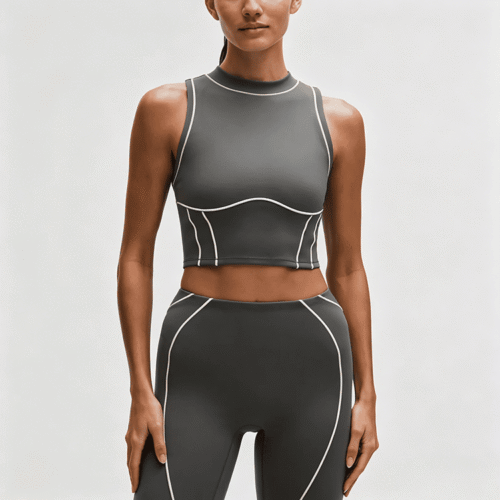
Custom High Neck Performance Crop Tank Top OEM ODM Activewear
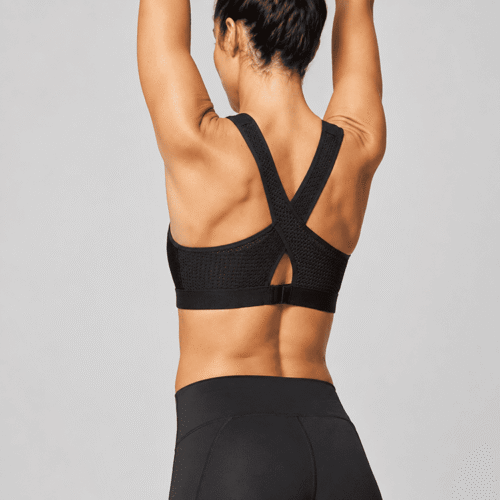
Custom High Support Cross Back Sports Bra OEM ODM Workout Bra
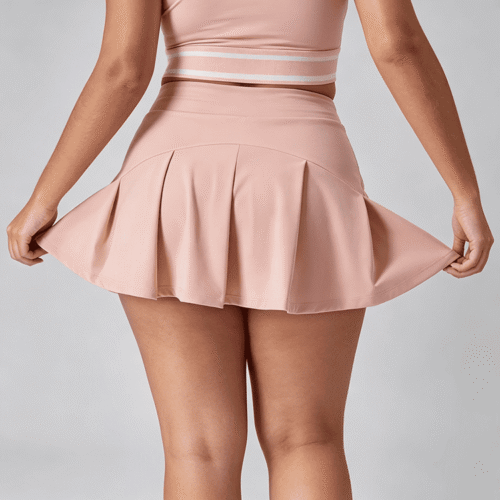
Custom High Waist Pleated Tennis Skort OEM ODM Women’s Tennis Wear
Which China Equestrian Clothing Manufacturers Should Buyers Shortlist?
Buyers researching 10 top equestrian clothing brands for a custom collection can begin with ten China-based supplier candidates: Pair Fashion, SGL Sports, Zest Equestrian, Equifactory, Kala Apparel, OpeEquestrian, Shuyu Activewear, RW Equestrian, VeloSpan and Guangzhou Ouzun Clothing. Their product focus and published commercial terms differ considerably. Shortlist by garment experience, order feasibility and evidence of production capability, then request comparable samples and quotations. Inclusion here is a starting point for verification, not confirmation that every supplier suits every project.
These suppliers form a separate list from the retail brands discussed earlier. No manufacturing relationship with those brands is implied.
China Supplier Comparison at a Glance
A 10 top equestrian clothing brands comparison helps establish market expectations. A manufacturer comparison must go further: it needs to establish who can produce the proposed garment, under which conditions and with what evidence.
| Supplier | Published location | MOQ information | Published timing | First point to verify |
|---|---|---|---|---|
| Pair Fashion | Dongguan, Guangdong | Standard MOQ: 100 pieces; confirm allocation | Samples normally around 7 days; fastest 3 days. Standard bulk timing stated as 20–25 days, subject to order conditions | Style/color minimums and the approved production schedule |
| SGL Sports | Dongguan, Guangdong | FAQ: 200 pieces per design/color, up to five sizes | FAQ: approximately one week for samples and 30 days for bulk | Product-specific terms, which can differ from the FAQ |
| Zest Equestrian | Dongguan, Guangdong | Flexible; product-specific quotation required | Samples: 7–15 days; bulk: 25–45 days | Apparel-specific minimums and material procurement time |
| Equifactory | China; production address requires confirmation | Homepage states 100 pieces | Samples: approximately two weeks; bulk: 5–6 weeks | Contracting entity and production location |
| Kala Apparel | Dongguan, Guangdong | Small-batch service advertised; confirm garment-specific minimum | Confirm in writing | Current minimums, development scope and audit documentation |
| OpeEquestrian | Chashan, Dongguan, Guangdong | Confirm by product | Confirm in writing | Separate apparel and horse-equipment production arrangements |
| Shuyu Activewear | Dongguan, Guangdong | Confirm by product and material | Confirm in writing | Equestrian-specific development and production evidence |
| RW Equestrian | Dongguan, Guangdong | Selected listings: 100 pieces per design/color for base layers; different minimums for pants | Selected listing: samples around 3 weeks; bulk around 6–7 weeks | Terms for the actual style, fabric and color combination |
| VeloSpan | Guangzhou, Guangdong | Selected shirt listing: 100 pieces per color/design | Confirm in writing | Legal identity, production address and current company information |
| Guangzhou Ouzun Clothing | Guangzhou, Guangdong | Confirm for the selected equestrian product | Confirm in writing | Relevant riding-apparel experience within its broader garment business |
Lead time may mean different things for different suppliers. Ask whether the quoted lead time includes sample development, material purchasing, production, inspection or delivery. The information in the table comes from the suppliers and has not been independently audited. Examples for specific products do not apply to all orders. The sources and relevant conditions are explained in the supplier profiles below.
1. Pair Fashion — Functional Apparel Development with Equestrian Production Support
Pair Fashion supports custom riding apparel alongside its broader functional sportswear offering. Its service scope includes turning concepts, reference garments and technical files into samples and production specifications.
- City: Dongguan, Guangdong.
- Established: 2016, according to company information.
- Core products: Riding breeches, riding tights, base layers, competition shirts, jackets and coordinated collections.
- MOQ: Standard starting point of 100 pieces. Confirm whether the minimum applies per style, color or material.
- Lead time: Company information states samples normally take around seven days, with three-day sampling available for suitable projects. Standard bulk timing is stated as 20–25 days; the starting point and applicable conditions must be agreed.
- Certification information: Company materials list ISO 9001 and GRS credentials and BSCI-related audit information. Buyers should request current documents identifying the relevant entity, site and scope.
- Potential fit: Startups needing development assistance, growing private labels and businesses coordinating multiple functional apparel categories.
- Less suitable when: The order requires quantities below the agreed minimum or an unconditional delivery date before materials and approvals are settled.
The practical advantage to assess is coordination between development, sourcing, production and QC. The limitation is that the quickest advertised schedule cannot be assumed for every custom fabric or garment.
Review Pair Fashion’s custom equestrian apparel capabilities against a specific product brief before requesting a quotation. pairfashion.com
2. SGL Sports — Published Order Terms with Product-Level Differences
SGL Sports presents an OEM/ODM range covering equestrian clothing, activewear and other sportswear. Its company profile describes in-house pattern development from designers’ sketches.
- City: Dongguan, Guangdong.
- Established: A precise incorporation year was not established from the reviewed company profile.
- Core products: Breeches, riding leggings, base layers, shirts and riding jackets.
- MOQ: Its FAQ states 200 pieces per design per color, with up to five sizes.
- Lead time: The FAQ gives approximately one week for samples and 30 days for bulk. A riding puffer jacket page instead lists ten-day sampling and 35-day bulk timing.
- Certification information: Request current documents for the intended production site; published inspection statements do not replace certificate verification.
- Potential fit: Buyers whose quantities accommodate its stated style/color minimums.
- Less suitable when: A small order needs many colors or designs without reaching those minimums.
The useful strength is comparatively explicit commercial information. The purchasing constraint is color-level commitment: a modest total order can become much larger once divided across several designs and colors. Use the relevant product quotation, rather than the general FAQ, as the contractual reference.
3. Zest Equestrian — Rider Apparel and Horse Equipment in One Supplier Range
Zest Equestrian presents a broad equestrian offering that includes rider apparel, horse equipment and accessories, supported by OEM/ODM and private label services.
- City: Dongguan, Guangdong.
- Established: Its website describes more than 16 years of experience; obtain the legal registration date separately.
- Core products: Breeches, jodhpurs, show shirts, riding jackets and related equestrian products.
- MOQ: Flexible minimums are advertised, but a numerical apparel minimum requires a product-specific quotation.
- Lead time: Published sample timing is 7–15 days, with 25–45 days for bulk production.
- Certification information: Verify reports against the actual garment and materials; information about protective equipment should not be treated as apparel certification.
- Potential fit: Businesses sourcing rider clothing alongside horse-related products.
- Less suitable when: A buyer requires fixed minimums and a complete delivery commitment before defining the product.
The potential advantage is consolidated sourcing. The issue to investigate is how different product categories are produced and controlled. Ask which processes are internal, which involve partners and who approves the final product.
For readers using 10 top equestrian clothing brands as development references, a broad catalog should lead to more precise questions—not an assumption that one supplier has equal technical depth in every category.
4. Equifactory — Custom Riding Apparel with Published Sampling Guidance
Equifactory presents custom riding clothing and private label services, including design support, fabric selection, branding and packaging.
- Location: China; confirm the contracting entity and physical production address.
- Established: A precise founding year was not established from the reviewed homepage.
- Core products: Breeches, leggings, base layers, show shirts, jackets and horse-related products.
- MOQ: The homepage states a 100-piece minimum strategy.
- Lead time: Its FAQ indicates approximately two weeks for samples and 5–6 weeks for bulk orders. Another section describes samples within 15 working days.
- Certification information: The site mentions support for OEKO-TEX and GRS-related requirements. Request documents covering the selected materials and supply chain.
- Potential fit: Brands and clubs seeking coordinated custom clothing and branding.
- Less suitable when: The buyer cannot accommodate sampling and approval time before bulk production.
The potential strength is its stated development-to-production service. The main qualification is that different timing descriptions need reconciling in the quotation. Confirm whether material procurement and sample revisions are included, and identify the party responsible for production.
5. Kala Apparel — Pattern Development, Grading and Small-Batch Support
Kala Apparel describes a development-oriented service covering patterns, samples, grading, custom materials and private label production.
- City: Dongguan, Guangdong; its website identifies Dongguan Kala Active Co., Ltd.
- Established: The reviewed pages use experience-based statements rather than a clear incorporation date. Confirm the legal founding year.
- Core products: Equestrian base layers, breeches, leggings, jackets and broader apparel.
- MOQ: Small-batch production is advertised; obtain the minimum for each proposed garment.
- Lead time: Confirm sample, revision and bulk schedules in writing.
- Certification information: Its site references BSCI. Request the current audit report, site details and applicable buyer-access arrangements.
- Potential fit: Buyers needing pattern refinement and development assistance.
- Less suitable when: Immediate, fixed-price production is required without development review.
The stated strength is support beyond basic sewing. The current comparison limitation is the absence of firm garment-specific commercial terms in the reviewed profile. That is an information gap to resolve, not proof of weak production.
Ask the quotation to separate pattern work, grading, sample revisions, materials and bulk production.
6. OpeEquestrian — Specialist Equestrian Apparel and Horse-Tack Coverage
OpeEquestrian’s company profile identifies a production operation in Chashan and describes OEM/ODM services for equestrian clothing and horse tack.
- City: Chashan, Dongguan, Guangdong.
- Established: 2015, according to its company profile.
- Core products: Breeches, leggings, polo shirts, base layers, show jackets, hoodies and horse-related products.
- MOQ: Obtain product-specific minimums.
- Lead time: Request separate sample and bulk schedules.
- Certification information: Current, product-relevant documents require confirmation.
- Potential fit: Buyers seeking a supplier focused on equestrian apparel and related categories.
- Less suitable when: A combined order assumes all clothing and horse equipment share identical minimums, timelines and inspection criteria.
Its specialist positioning makes it relevant to an equestrian shortlist. The issue to investigate is how the clothing and horse-tack operations connect. A common sales contact does not establish a common production process.
Request recent examples matching the intended garment, then confirm where pattern development, grip application, sewing and inspection take place.
7. Shuyu Activewear — Broader Apparel Manufacturing with an Equestrian Category
Shuyu’s company profile describes equestrian wear alongside activewear, streetwear, swimwear and loungewear. It also offers design assistance, mockup development and technical-pack preparation.
- City: Dongguan, Guangdong.
- Established: The company traces its origins to an offline garment factory founded in 2012; confirm the current legal entity’s registration date separately.
- Core products: Equestrian apparel and several other garment categories.
- MOQ: Confirm by style, fabric and color.
- Lead time: Obtain a project-specific schedule.
- Certification information: Request current documentation; no specific credential is treated here as independently verified.
- Potential fit: Brands developing riding clothing alongside activewear or casual apparel.
- Less suitable when: The buyer needs proven capability in a highly specific equestrian construction that the submitted samples do not demonstrate.
The potential advantage is broader collection support. The qualification is equally clear: general apparel experience does not prove proficiency in riding-specific fit or grip construction.
Ask to review relevant garments, measurements and construction details before paying for a full series of samples.
8. RW Equestrian — Product Listings That Explain Different Minimums
RW Equestrian’s supplier-operated listings provide useful examples of how minimum quantities differ between garment types.
- City: Dongguan, Guangdong.
- Established: A product listing states that its own factory was established in 2019; verify against company documents.
- Core products: Riding shirts, base layers, breeches and leggings.
- MOQ: Selected listings state 100 pieces per design/color for base layers. A pants listing states 200 pieces per color, allowing two designs using the same fabric and color.
- Lead time: One listing gives approximately three weeks for samples and 6–7 weeks for bulk after deposit payment.
- Certification information: Platform audit indicators should be checked through the underlying report; they are not garment performance certificates.
- Potential fit: Buyers whose style and color plans match the published material-sharing arrangement.
- Less suitable when: Numerous small color runs prevent efficient material allocation.
Its useful feature is product-level detail. The limitation is that those terms cannot automatically be extended to another style. Request the same level of specificity in the current quotation.
A 10 top equestrian clothing brands comparison may reveal a missing color or silhouette in the market. The supplier’s material minimums determine whether producing it is commercially practical.
9. VeloSpan — Relevant Product Listings with Company Information to Resolve
VeloSpan lists breeches, equestrian tops and outerwear, and publishes a Guangzhou contact address. A selected training-shirt page states a 100-piece minimum per color/design.
- City: Guangzhou, Guangdong; confirm whether the listed address is an office or production site.
- Established: Not established from reliable registration information reviewed here.
- Core products: Breeches, riding tops and outerwear.
- MOQ: 100 pieces per color/design on the cited shirt listing; other garments require confirmation.
- Lead time: Obtain written sample and bulk schedules.
- Certification information: Request current, site-specific documents.
- Potential fit: Initial product inquiry where the listed garments match the brief.
- Less suitable when: The buyer requires an immediately qualified supplier without additional identity and site checks.
The product information provides a starting point, but its About page contains placeholder text. That limits the page’s usefulness as evidence of company history and capability.
Resolve the legal entity, production address and relevant product experience before progressing to a production commitment. The website issue alone does not establish how the garments perform.
10. Guangzhou Ouzun Clothing — A Broader Garment Supplier Requiring Category-Specific Checks
Guangzhou Ouzun Clothing’s supplier-operated showroom covers general apparel and includes equestrian clothing listings. It belongs on a preliminary inquiry list only if it can demonstrate the particular riding-apparel capability required.
- City: Xintang, Zengcheng District, Guangzhou, Guangdong.
- Established: An equestrian product listing states 1995; confirm whether this refers to the current entity or a predecessor operation.
- Core products: Broad garment categories, with equestrian products among its listings.
- MOQ: Obtain a quotation for the actual garment.
- Lead time: Confirm sampling and production schedules.
- Certification information: Review underlying audit documents rather than relying on platform labels.
- Potential fit: Buyers capable of conducting detailed technical qualification.
- Less suitable when: A specialist equestrian production record is essential and cannot be demonstrated.
Its broad customization offering may be relevant, but a listing is not evidence of riding-specific development depth. Require appropriate samples and production details before comparing it equally with specialist candidates.
Turn the Supplier List into a Comparable Buying Decision
The retail insights from 10 top equestrian clothing brands become useful procurement inputs only when translated into a controlled specification. Send shortlisted suppliers the same:
- Product brief: Target rider, riding discipline, climate and intended retail positioning.
- Technical requirements: Measurements, construction, fabric targets and grip configuration.
- Order plan: Quantities by style, color and size.
- Sample request: Required submissions, review criteria and revision scope.
- Commercial questions: Price inclusions, MOQ basis, payment terms and timing assumptions.
- Verification request: Contracting entity, production location, relevant reports and subcontracted processes.
Start with the candidates that meet the non-negotiable requirements. Compare quotations and sample evidence next. A low unit price should not compensate for an unresolved production identity, an unsuitable minimum order or a sample that fails the agreed requirements.

How Much Does Equestrian Clothing Cost—and Is a Higher Price Better Value?
Prices across the 10 top equestrian clothing brands are most useful when compared at product level, in the same market and currency. A riding tight, structured breech and competition jacket serve different purposes, so their prices cannot establish a fair brand ranking. For business buyers, value also depends on fit, sell-through, returns and replenishment. When considering custom manufacturing, assess development and delivered-stock costs separately from retail prices: they answer different commercial questions.
What Do Comparable Breeches, Base Layers and Show Jackets Cost?
The following examples show prices displayed on official US storefronts when checked on October 31, 2026. They are product examples, not brand-wide price ranges or wholesale offers. Taxes, delivery, selected variants and subsequent price changes may affect the final purchase.
| Product category | Brand and product | Displayed price, USD | Comparison point |
|---|---|---|---|
| Knee-patch breech | Kerrits Crossover II Knee Patch Riding Breech | $129.00 | Compare fabric, fit, closure and patch construction |
| Knee-patch breech | Ariat Tri Factor Grip Knee Patch Breech | $169.95 | Compare against another breech with a similar intended use |
| Full-seat breech | Kerrits Crossover II Full Seat Riding Breech | $139.00 | Examine grip material and coverage alongside price |
| Full-seat breech | Ariat Tri Factor Grip Full Seat Breech | $179.95 | Check the exact version, size and color |
| Show shirt | Ariat Aptos Show Shirt | $59.95 | Match sleeve, collar and construction before comparing |
| Competition shirt | Aztec Diamond Men’s Short Sleeve Core Competition Shirt | $55.00 | A men’s product; not a direct fit comparison with a women’s shirt |
| Competition jacket | Aztec Diamond Men’s Black Core Competition Jacket | From $217.00 | “From” pricing requires variant-level confirmation |
The prices above come from the brands’ own storefronts. They do not establish equal construction, identical performance or equivalent fit.
In a 10 top equestrian clothing brands comparison, an accurate partial price table is more useful than assigning every brand an unsupported “budget,” “premium” or “luxury” range. Where a reliable regional price is unavailable, obtain a current quotation or product listing before drawing a conclusion.
The two knee-patch breeches above differ by $40.95. That difference is measurable; its value to a particular rider still needs investigation. Check what changes in the garment and whether those changes matter to the customer.
How Should Buyers Compare Regular Prices, Sale Prices and Regional Pricing?
A discounted seasonal color can make one product look substantially cheaper than a comparable current-season garment. That may be an attractive purchase, but it does not necessarily provide a repeatable price for an ongoing retail assortment.
Record the following beside every price:
- Exact product and variant: Model, color, size and adult or junior version.
- Market and currency: Use the relevant regional storefront.
- Price status: Regular, promotional, clearance or member-only.
- Date checked: Prices are a snapshot.
- Additional charges: Delivery and any separately charged taxes or import costs.
- Availability: Whether the required sizes can actually be purchased.
When reviewing 10 top equestrian clothing brands, keep retail price research separate from wholesale buying terms. A public consumer discount does not reveal a retailer’s purchase price, margin, opening-order requirement or replenishment arrangements.
For a store planning an ongoing collection, the more useful question is: can this product be sourced consistently at a cost that supports the intended selling price? A one-time bargain and a sustainable purchasing arrangement are different opportunities.
Which Fabric, Fit, Grip and Finishing Details Help Explain Price Differences?
Higher prices can accompany additional development, different materials, more complex construction or a particular brand position. Price alone does not prove which of those factors applies.
Inspect the details customers will experience:
| Cost-related area | What to investigate | What price alone cannot prove |
|---|---|---|
| Fabric | Composition, weight, stretch recovery, opacity and documented performance | That a more expensive fabric is better for every use |
| Pattern and grading | Seated fit, balance and consistency across sizes | That one well-fitting sample proves the full size range |
| Grip application | Coverage, flexibility, adhesion and wash results | That a larger printed area gives a better riding experience |
| Construction | Seam placement, reinforcement, closures and finishing | That more visible stitching means greater durability |
| Functional claims | Applicable test method and report for the selected material | That a marketing description establishes measured performance |
The 10 top equestrian clothing brands provide useful reference points for understanding how products are presented. For a custom order, turn those observations into requirements that a supplier can quote and demonstrate.
For example, “premium fabric” leaves substantial room for interpretation. A clearer discussion identifies the intended hand feel, weight, stretch behavior, coverage and care requirements. Similarly, “strong silicone grip” should lead to an agreed application sample and evaluation procedure.
Avoid adding expensive features without a customer reason. An elaborate grip pattern or decorative trim can increase development work while contributing little to the buying decision. Spend first on the details that affect fit, comfort and reliable use.
Retail Price vs OEM Quote: Why Can’t They Be Compared Directly?
A retail price purchases a finished branded product through a selling channel. An OEM quotation covers an agreed production scope, which may exclude development, testing, freight or other charges. The gap between those figures is not automatically profit.
For buyers using 10 top equestrian clothing brands to plan a new label, copying a competitor’s selling price into a margin calculation is only a starting assumption. The business must also account for how it will acquire customers, handle returns and sell the planned quantity.
Keep three figures distinct:
- Garment purchase cost: What the supplier charges for the specified product.
- Delivered inventory cost: The cost of bringing accepted stock to the intended location.
- Contribution after selling costs: Sales revenue remaining after the relevant product and variable selling expenses.
A factory quote that looks attractive can become unsuitable once minimum quantities and material commitments are included. Conversely, a higher unit quotation may be workable if it supports a smaller, appropriate order. Compare the complete arrangement before choosing.
How Do Development, Inspection, Freight and Unsold Stock Affect Total Cost?
Consider two hypothetical quotations for the same 200-piece order. These figures illustrate a purchasing calculation; they are not market averages, actual supplier offers or estimates of current tariffs.
| Cost item | Supplier A | Supplier B |
|---|---|---|
| Garments | 200 × $24 = $4,800 | 200 × $27 = $5,400 |
| Development and samples | $450 | $200 |
| Testing and inspection allowance | $350 | $350 |
| Freight and insurance allowance | $800 | $600 |
| Subtotal before import charges and other destination costs | $6,400 | $6,550 |
| Subtotal per ordered garment | $32.00 | $32.75 |
Supplier A’s garment price is $3 lower, but the illustrated subtotal differs by only $0.75 per piece. Neither subtotal is a complete landed cost: applicable duties, taxes, brokerage and destination charges still require confirmation. The exercise shows why exclusions matter.
Inventory adds another layer. If only 160 of the 200 garments sell during the planned period, the remaining 40 still tie up cash. They may sell later, require markdowns or remain in stock. A cheaper purchase is not necessarily the better result if its quantity, color mix or sizing creates unwanted inventory.
The commercial lesson from comparing 10 top equestrian clothing brands is to connect price with a realistic sales plan. Before approving a custom order, establish:
- A target selling price supported by the intended customer and product.
- An itemized supplier quotation with clear inclusions and exclusions.
- A delivered-cost estimate based on the actual destination and shipping arrangement.
- A quantity and size plan that reflects demand rather than only the lowest price break.
- A downside scenario covering slower sales, markdowns and additional development.
The strongest price is one the business can explain, the customer can justify and the purchasing plan can support.

What Type of Riding Apparel Fits Your Customers—and Which Brand Comparisons Are Useful?
Start with the rider’s activity, climate and preferred fit, then compare equivalent garments across the 10 top equestrian clothing brands. Riding tights, structured breeches, competition shirts and outerwear solve different problems. A useful comparison matches intended use, grip configuration, fabric weight, size availability and price. For business buyers, the strongest product choice is one customers can understand and use regularly—not simply the garment with the most technical features or the most recognizable logo.
Riding Breeches vs Riding Tights: Which Construction Fits the Intended Use?
The distinction is less about whether one category is “professional” and more about how the garment is constructed and feels during use. Product names alone do not establish those differences: some pull-on designs combine a tailored appearance with stretch and comfort features.
| Comparison point | What to examine in breeches | What to examine in riding tights |
|---|---|---|
| Waist construction | Waistband shape, closure, belt loops and seated comfort | Elastic stability, waistband height and resistance to rolling |
| Fabric behavior | Structure, stretch, recovery and bulk | Stretch, recovery, opacity and support |
| Fit | Rise, seat balance, knee shaping and lower-leg fit | Tension distribution, seat coverage and movement |
| Practical details | Closure security, pocket access and seam placement | Pocket stability, seam comfort and waistband movement |
| Customer expectation | Whether the garment delivers the desired tailored appearance | Whether flexibility comes without unwanted transparency or movement |
| Purchasing risk | A polished standing fit that becomes restrictive when seated | A comfortable first fitting that loses stability during activity |
For a 10 top equestrian clothing brands comparison, use this table to identify meaningful differences between specific products. It should not become a blanket claim that all breeches are restrictive or all tights are lightweight.
For custom riding apparel development, replace vague instructions such as “make it more supportive” with observable requirements for waistband stability, seated coverage and freedom of movement. Does the waistband stay in position? Does the seat remain covered when the rider bends? Can the knee flex without pulling the waist downward? These questions give the pattern maker something concrete to investigate.
Full-Seat vs Knee-Patch Grip: What Should Buyers Compare?
More grip is not automatically better grip. The useful configuration depends on the rider’s preference, the garment’s intended use and how the grip behaves against the saddle.
Start by examining:
- Coverage: Where does the grip begin and end in riding position?
- Placement: Does the printed area remain correctly positioned across the size range?
- Feel: Does the rider find the contact comfortable and predictable?
- Flexibility: Does the application stretch with the fabric?
- Durability: What happens after washing and repeated movement?
- Consistency: Can production reproduce the approved pattern and application?
A full-seat pattern that looks balanced on a flat garment may sit differently once stretched over the body. Equally, enlarging a knee patch without reviewing placement may add printed area without improving the rider’s experience.
For a manufacturer comparison, request an actual application sample. A photograph can show the pattern, but it cannot demonstrate adhesion, flexibility or wash performance.
Ariat vs LeMieux: How Do Matched Products Compare on Fit, Features and Price?
Both Ariat and LeMieux offer multiple riding clothing categories. Their official ranges include breeches, riding tights or pull-ons, tops and outerwear, so a brand-wide comparison is less useful than selecting two products with similar purposes.
Within this 10 top equestrian clothing brands guide, the comparison should begin with a matched pair: for example, two full-seat schooling bottoms intended for similar conditions. Record the exact product names and compare:
- Fit and sizing: Available measurements, lengths and the chosen rider’s fit.
- Construction: Waistband, seams, closure and lower-leg design.
- Function: Grip coverage, pockets and documented fabric features.
- Ownership: Care instructions, purchasing channel and applicable returns terms.
- Price: Current price in the same market and currency, separating promotions.
Avoid declaring one brand better value because its least expensive tight costs less than the other brand’s more structured breech. The price difference may reflect a different product brief.
For a retailer, the final question is practical: can staff explain why a customer should choose one garment over the other? If the answer relies only on the logo or color, the comparison needs more work.
Pikeur vs Cavalleria Toscana: What Differs Beyond Brand Image?
Pikeur presents men’s and women’s riding collections, while Cavalleria Toscana’s official offering spans training and competition clothing. These ranges provide products to compare; they do not establish that one brand always fits better, lasts longer or offers better value.
For buyers comparing 10 top equestrian clothing brands, a useful test is to temporarily cover the brand names on the comparison sheet. Examine the selected garments’ measurements, materials, construction, care requirements and actual prices. Which differences remain relevant to the intended rider?
For a competition jacket, that could mean checking shoulder movement, sleeve position, closure comfort and the way the garment sits when seated. For breeches, it could mean comparing waist-to-hip balance, rise and grip placement.
An independent brand can use those observations to define an original product. “Develop a jacket with comfortable forward reach and a clean seated fit” is a clearer brief than “make something like this luxury brand.”
Which Collections Address Men’s, Women’s, Young Riders’ and Extended-Size Needs?
Do not confuse a broad size label range with a well-developed fit range. Adding sizes to a chart does not establish that the garment has been assessed across different body proportions.
When researching 10 top equestrian clothing brands, check availability at the individual product level. A brand may offer several customer categories while a selected style has a narrower range.
For a custom collection, investigate:
- Men’s fit: Rise, seat shape, thigh allowance and torso proportions.
- Women’s fit: Waist-to-hip balance, seated coverage and waistband comfort.
- Young riders: Age labels alongside actual body measurements and fit.
- Extended sizes: Proportion changes, waistband behavior, opacity and placement of functional details.
- Different heights: Inseam, knee position, sleeve length and torso length.
Ask which sizes will be sampled before bulk approval. An approved sample in one size does not demonstrate that every graded size fits correctly.
The commercial benefit is a more deliberate assortment: fewer unsupported size promises and clearer guidance for customers choosing between products.
How Do Climate, Riding Discipline and Competition Requirements Change the Shortlist?
A customer riding in humid weather may prioritize a different combination of fabric, coverage and layering than someone training through a cold winter. Likewise, daily schooling and competition can create different appearance and clothing requirements.
Translate the situation into product questions:
| Customer situation | Questions that should shape the shortlist |
|---|---|
| Hot-weather schooling | Is the fabric comfortable for the intended conditions? Is coverage maintained under stretch? |
| Cool-weather training | Can layers be added without restricting movement or creating uncomfortable bulk? |
| Frequent stable-to-saddle use | Are pockets, closures and care requirements practical for the routine? |
| Competition purchasing | Does the selected garment meet the current rules of the relevant organizer and discipline? |
| Team or club clothing | Can the supplier maintain sizing, branding and repeat-order consistency? |
Check the current rules for the relevant organizer and discipline before specifying colors, collars, logos or garment details; for U.S. dressage, start with US Equestrian’s official rules and equipment resources. A product marketed as competition wear is not a universal approval for every event.
The practical outcome of comparing 10 top equestrian clothing brands should be a clear buying brief: who will wear the garment, where they will use it, which requirements are essential and which features are optional. That brief creates a fair basis for comparing retail products—and for asking manufacturers to quote an original collection.
1. Product Development
Regular monthly product development ensures consistent updates to your brand line.
2. Fabric Sourcing
Regular monthly product development ensures consistent updates to your brand line.
3. Sample Making
Regular monthly product development ensures consistent updates to your brand line.
4. Bulk Production
Regular monthly product development ensures consistent updates to your brand line.
5. Packaging & Delivery
Regular monthly product development ensures consistent updates to your brand line.
Why Choose China Manufacturers for Custom Equestrian Apparel—and When Does It Make Sense?
China manufacturing is worth considering when an order benefits from coordinated fabric sourcing, garment development, branding and bulk production. However, research into 10 top equestrian clothing brands should inform the product brief, not predetermine the production country. The right route depends on specifications, quantity, budget, approval capacity and delivery needs. Compare a Chinese supplier’s complete offer with local or nearshore alternatives, including development charges, transport, inventory commitments and the practical cost of managing production.
How Can Coordinated Fabric, Trim and Garment Sourcing Support Development?
A custom riding breech is a combination of interdependent decisions. Fabric stretch affects pattern behavior. Grip application must work with the selected material. The waistband, seams and pocket construction must remain comfortable when the garment is worn in riding position.
A supplier that coordinates those decisions can reduce the number of separate conversations a buyer manages. Several Chinese suppliers reviewed in this guide describe services spanning material sourcing, pattern development, sampling, branding and production. Those published capabilities provide a starting point for qualification; the proposed order still needs its own technical review.
For a brand using 10 top equestrian clothing brands as market references, the useful advantage is access to a coordinated development route. It is not a guarantee that every requested feature can be delivered at the desired price or quantity.
Ask the supplier to explain:
- Material compatibility: Can the proposed fabric support the selected grip, print or embroidery?
- Construction feasibility: Which details need adjustment before sampling?
- Supply responsibility: Who purchases and approves each component?
- Process ownership: Which operations are internal and which use production partners?
- Change control: What happens to cost and timing if a material or specification changes?
One contact can simplify communication. Clear responsibility makes that simplification useful. The quotation and approval records should still identify what is being supplied and who controls the critical processes.
OEM vs ODM vs Private Label: Which Model Fits Your Product and Team?
These terms are used differently across suppliers. Agree on the actual development scope rather than relying on the label alone.
| Route | Typical starting point | Buyer’s main responsibility | Important question |
|---|---|---|---|
| OEM | Buyer-controlled design, technical pack or approved reference | Define and approve specifications | Who resolves missing details and production feasibility issues? |
| ODM | Supplier-developed style or pattern adapted for the buyer | Evaluate the base product and specify changes | Which elements are shared, customizable or exclusive? |
| Private label | A product sold under the buyer’s brand, with varying development scope | Define product positioning and branding requirements | Does the offer cover simple relabeling, product modification or original development? |
The 10 top equestrian clothing brands comparison can help identify a market position, but it cannot tell a new business how much development work it is ready to manage.
A founder with a clear customer and limited technical resources may benefit from evaluating an established pattern before requesting extensive changes. A brand with its own technical team may prefer tighter control over measurements, construction and materials. Neither route is inherently more professional; suitability depends on the project.
For buyers considering private label riding apparel production, the first discussion should define the starting point: an existing style, a modified pattern or a new development. Confirm sample charges, revision scope and ownership of the resulting files before work begins.
China vs Local or Nearshore Manufacturing: How Do Cost, Control and Replenishment Compare?
Compare production arrangements rather than making country-wide assumptions. A nearby supplier may offer easier visits but require imported materials. A distant supplier may coordinate more processes, yet need additional transport time and more structured remote approvals.
| Decision area | Questions for a China supplier | Questions for a local or nearshore supplier |
|---|---|---|
| Product capability | Can it demonstrate the relevant riding garment? | Can it demonstrate the same construction and material requirements? |
| Development | What is included in sampling and revisions? | What technical work must the buyer provide? |
| Materials | Are materials stocked, custom-developed or purchased to order? | Are materials sourced locally or imported? |
| Order commitment | What are the garment and material minimums? | What minimums and small-order charges apply? |
| Management | How are samples, changes and production updates approved remotely? | How accessible are technical staff and production reviews? |
| Replenishment | What must be reserved to support another order? | Does proximity translate into available materials and production capacity? |
| Delivery | What does the shipping quotation include? | Which transport and destination charges remain? |
When studying 10 top equestrian clothing brands, resist inferring production quality from a brand’s home country. The relevant evidence is the garment, its specifications and the controls behind its production.
A slightly higher quotation can be reasonable if the arrangement fits the buyer’s need for frequent adjustments or smaller commitments. A coordinated China route can also be reasonable when its development capability and order structure fit the collection. Establish those differences through quotations and samples.
When Do MOQ, Material Minimums and Shipping Reduce the Advantage?
A garment MOQ is only one constraint. Fabric dyeing, custom elastic, zippers, packaging or a particular decoration may carry separate minimums.
Suppose a buyer plans 100 breeches in four colors. That means 25 garments per color, not necessarily an acceptable 100-piece production order. The supplier may require more pieces per color, or the fabric mill may require a larger material purchase. Ask whether stock colors, fewer colors or a different material can make the plan workable.
Research into 10 top equestrian clothing brands may reveal attractive variety, but a small brand does not need to reproduce that variety at launch. Each additional color or design can add approvals, component requirements and inventory exposure.
Shipping can further change the calculation. Before comparing offers, confirm:
- The named delivery point and agreed trade term.
- The shipment’s estimated packed weight and volume.
- Which charges are included and excluded.
- Whether the production schedule assumes a particular transport method.
- Who handles problems if goods need rework before dispatch.
If a collection only meets its launch date through an expensive transport upgrade, include that scenario before approving production. A low garment quotation does not compensate for a purchasing plan that depends on unresolved materials or approvals.
Who Benefits Most from China Sourcing—and Who May Need Another Route?
China sourcing is a stronger candidate when the buyer has a defined product, can accommodate the relevant minimums and can manage a documented approval process. It becomes harder when the order combines very low quantities, extensive customization and an immovable delivery date.
| Buyer situation | Practical starting point |
|---|---|
| First collection with a modest budget | Evaluate a focused range using suitable existing materials and patterns |
| Growing brand with proven products | Compare repeat-order consistency, material availability and capacity planning |
| Established label with technical standards | Assess specification control, reporting and production-site evidence |
| Club ordering branded teamwear | Check size allocation, decoration minimums and future reorder terms |
| Project requiring frequent in-person adjustments | Compare accessible local or nearshore development options |
| Very small, highly customized urgent order | Reconsider quantity, customization, schedule or production route |
The decision following a 10 top equestrian clothing brands review should be specific: which product opportunity is worth developing, and which supplier arrangement makes it feasible?
Send the same brief to a manageable shortlist. Compare samples, complete costs and approval schedules. Choose China manufacturing when the evidence supports the order—not because it is assumed to be the cheapest or fastest option.

How Do You Verify the Best China Equestrian Clothing Manufacturer for Your Order?
The best manufacturer is the one whose verified capabilities fit your product, quantity and delivery requirements. Researching 10 top equestrian clothing brands can establish useful product references, but supplier selection requires different evidence: a clear business identity, relevant garment experience, workable order terms and an accountable production process. Apply essential requirements first, then compare qualified candidates through technical discussions, samples and a weighted scorecard. A low quotation should not compensate for an unresolved issue that could prevent successful delivery.
Is the Supplier a Factory, Trading Company or Hybrid—and Who Handles Each Process?
The label “factory” does not explain the entire production arrangement. Ask who develops the pattern, purchases materials, applies grip, sews the garment and approves shipment. A business may operate its own sewing facility while using specialist partners for other processes.
What matters is visibility, responsibility and control. An intermediary may coordinate production effectively; a direct manufacturer may still struggle with a process outside its expertise.
Request a simple responsibility map:
| Activity | Information to establish | Evidence to request |
|---|---|---|
| Contracting | Which legal entity accepts the order? | Business registration and matching quotation details |
| Development | Who controls patterns and technical files? | Sample records and a named technical contact |
| Materials | Who selects, purchases and approves them? | Material specifications and approval submissions |
| Grip and decoration | Where are applications completed? | Relevant samples and process information |
| Sewing | Which site will produce the order? | Production address and a relevant site review |
| Inspection | Who decides whether goods meet requirements? | Inspection procedure and example reporting |
| Shipment | Who releases the goods? | Agreed release conditions and shipping documents |
A 10 top equestrian clothing brands comparison does not establish which supplier produced a photographed garment. If a supplier displays recognizable branded products, ask what it is authorized to disclose and demonstrate. A photograph alone is not evidence of a manufacturing relationship.
What Evidence Demonstrates Experience in Your Specific Garment Category?
Request evidence that matches the proposed product closely enough to answer technical questions. A supplier’s successful training shirt does not establish its ability to develop a competition jacket, just as general leggings experience does not prove expertise in riding breeches.
Start with two or three relevant garments and discuss the decisions behind them:
- Pattern: How was seated coverage assessed?
- Fabric: Why was that construction selected?
- Grip: How were placement and application conditions established?
- Seams: Which areas required reinforcement or a different seam arrangement?
- Grading: How were proportions checked beyond the base size?
- Production: Which difficulties appeared, and how were they resolved?
For buyers using 10 top equestrian clothing brands as references, these discussions help separate product familiarity from the ability to reproduce an agreed result.
Look for explanations that connect a problem to evidence. “We improved the fit” is less informative than showing which measurements changed and how the revised sample behaved. A supplier need not disclose another customer’s confidential files; it should still be able to demonstrate relevant skills through authorized examples.
Do MOQ Requirements Apply per Style, Color, Fabric or Total Order?
Ask the supplier to allocate your proposed order before discussing whether its MOQ is “low.”
Consider a plan for 200 garments across two designs and four colors. If quantities are evenly divided, that produces 25 pieces per design/color combination. A supplier advertising a 100-piece MOQ may not accept that arrangement.
Use a quantity breakdown:
| Order variable | Question to resolve |
|---|---|
| Style | Must each design reach a separate minimum? |
| Color | Is there a minimum for each color? |
| Fabric | Can designs share the same material purchase? |
| Size | Are there limits or minimums within the size assortment? |
| Custom components | Do elastic, labels, zippers or packaging have separate minimums? |
| Excess materials | Who pays for and owns unused material? |
A 10 top equestrian clothing brands review may encourage a wide assortment, but the first order needs a practical allocation. Ask the supplier to price alternatives: fewer colors, shared materials or a smaller number of designs.
Get the accepted breakdown in writing. “Mixed sizes allowed” does not necessarily mean mixed designs and colors are accepted under one minimum.
How Should Buyers Check Audit Reports, Certificates and Product Test Reports?
Treat each document as evidence for a particular question. A management-system certificate, social audit and fabric test report are not interchangeable; where a supplier presents an OEKO-TEX certificate or label number, check it through the official OEKO-TEX Label Check and review its relevance to the proposed material or product.
ISO 9001 concerns a quality management system. ISO develops standards but does not issue certification itself. Check the certificate’s issuing body, organization name, covered activities, site and validity rather than relying on an ISO logo.
Likewise, amfori BSCI is not a product certification scheme. Request the relevant social audit information, including the facility and findings, rather than treating “BSCI certified” as evidence that a riding garment meets performance requirements.
For recycled-material claims, Textile Exchange provides company and certificate authentication resources. Establish whether the relevant scope covers the proposed supply arrangement and what transaction documentation will support the order. A general recycled-material claim on a website is not a substitute for order-relevant records.
When assessing performance claims, check:
- Sample identity: Does the report identify the material being proposed?
- Test scope: Which property and method were evaluated?
- Result: Does it meet the requirement agreed for your product?
- Relevance: Has the material or finishing changed since testing?
- Traceability: Can the report be connected to the selected material and order?
The product claims encountered while comparing 10 top equestrian clothing brands should become questions for verification—not features copied into a specification without supporting evidence.
Which Red Flags Should Stop a Supplier from Reaching the Sample Stage?
Some issues should be resolved before spending money on development. Pause when the supplier cannot explain who will contract, where production will occur or what the quotation includes.
Particular concerns include:
- Unexplained identity differences across registration, quotation and payment instructions.
- Unverifiable reports or documents that cover a different company, site or material.
- Refusal to define specifications while promising an exact result.
- A fixed delivery promise that ignores unresolved materials and approvals.
- No clear approval process for substitutions or specification changes.
- Pressure to commit to bulk before the agreed sample evaluation.
- Claims of brand relationships supported only by product photographs.
An inconsistency is a reason to investigate, not automatic proof of misconduct. Give the supplier a clear opportunity to explain it. A satisfactory explanation should be supported by records and reflected in the purchasing documents where relevant.
How Can a Weighted Scorecard Compare Evidence Rather Than Sales Claims?
Apply non-negotiable requirements before scoring. A supplier that cannot meet the necessary construction, quantity or documentation requirements should not regain eligibility through a low price.
For the remaining candidates, use a project-specific framework:
| Evaluation area | Illustrative weight | Evidence supporting the assessment |
|---|---|---|
| Relevant technical capability | 25% | Garment review and technical discussion |
| Sample performance and fit | 25% | Recorded evaluation against agreed requirements |
| Production control and traceability | 20% | Responsibility map, QC records and change controls |
| Commercial suitability | 15% | Comparable quotation and accepted quantity breakdown |
| Scheduling credibility | 10% | Material plan, approval gates and capacity discussion |
| Communication and document control | 5% | Accurate responses and consistent revision records |
| Total | 100% |
These weights are a decision tool, not an industry standard. Adjust them to the order. Record unknowns as pending evidence rather than awarding points for confident answers.
The value of researching 10 top equestrian clothing brands is a clearer understanding of the product you want to offer. The value of supplier qualification is knowing who can deliver it under workable conditions. Use the scorecard to select candidates for a controlled sample or trial order, then update the assessment with what actually happens.
What Should a Custom Sample Prove Before You Approve Bulk Production?
A custom sample should show that the garment meets the agreed requirements for fit, movement, materials, workmanship and appearance. Studying 10 top equestrian clothing brands can help you define these requirements, but approval should be based on recorded checks, not just whether the sample looks like the reference photo. Check the sample for its intended use and record any issues that still need to be resolved. Keep fit approval separate from material, decoration and production approval. One successful sample does not automatically mean that every size or the whole bulk order meets the requirements.
How Should Fit Be Checked in Riding Position?
A standing fitting reveals only part of the garment’s behavior. A waistband may sit neatly during a mirror check but press into the abdomen when seated. A shirt may look smooth with arms relaxed yet pull across the shoulders when the wearer reaches forward.
Start with the intended rider’s body measurements and the sample’s actual garment measurements. Then assess relevant movements in a suitable, controlled setting. A qualified rider’s evaluation can provide useful feedback, but it should complement—not replace—measurement and construction checks.
For riding bottoms, record:
- Waist position: Does the waistband stay where intended during bending and seated movement?
- Seat coverage: Is coverage maintained without excessive pulling?
- Rise and crotch comfort: Where does tension, pressure or unwanted fabric gathering occur?
- Knee position: Do shaping and grip areas align when the leg bends?
- Lower-leg fit: Does fabric gather or create uncomfortable bulk with the intended footwear?
- Pocket behavior: Are openings accessible, and do contents affect comfort?
For tops and jackets, check forward reach, elbow movement, sleeve position, hem movement and closure comfort. Test with the layers the customer is expected to wear.
When using 10 top equestrian clothing brands as references, identify the specific benefit being sought. “A cleaner seated fit” is a useful development objective; “the same fit as Brand X” leaves too much undefined.
What Should Buyers Check for Grip, Seam Comfort, Stretch Recovery and Opacity?
Separate the assessment into individual questions. A garment can pass an appearance review while still requiring changes to its grip application or seam placement.
| Area | Practical sample review | Record before approval |
|---|---|---|
| Grip | Examine placement, flexibility, surface condition and adhesion before and after agreed checks | Approved pattern, dimensions, position and observed result |
| Seam comfort | Assess contact points during relevant movements and intended wear | Problem location, seam construction and proposed revision |
| Stretch recovery | Check for unwanted bagging or distortion after a defined evaluation | Evaluation conditions and acceptable appearance or measurement limits |
| Opacity | Examine stretched areas under consistent lighting and agreed conditions | Color, size, stretch condition and result |
| Closures and trims | Operate zippers, snaps, buttons and adjusters; check contact comfort | Component reference and any functional issue |
| Decoration | Inspect dimensions, placement, color and surface quality | Approved artwork version and placement measurements |
Informal wear checks and laboratory tests serve different purposes. A wear trial can identify discomfort or visible distortion; it does not substantiate every technical performance claim.
A 10 top equestrian clothing brands comparison may reveal attractive grip designs, but appearance does not establish compatibility with the chosen fabric. Assess the actual application on the intended material. If the sample uses a substitute fabric, record that limitation before interpreting the result.
Avoid prescribing a correction too early. A rolling waistband might involve pattern balance, elastic properties, garment tension or their interaction. Ask the manufacturer to explain the suspected cause and proposed change before approving the next revision.
Which Wash and Wear Checks Match the Intended Product Claims?
Agree on the care instructions before assessing washing performance, and use GINETEX’s textile care symbol guidance to clarify the meaning of any washing, drying or ironing symbols included in the proposed care label.Record the washing method, drying method, number of cycles and any conditioning period before remeasurement. Otherwise, two samples can appear different simply because they were handled differently.
A practical review can examine:
- Dimensional change: Compare agreed measurement points before and after washing.
- Appearance: Check distortion, seam puckering and changes in surface condition.
- Grip and decoration: Look for lifting, cracking, peeling or other visible deterioration.
- Components: Recheck closures, elastic and trims.
- Color: Record visible changes under consistent viewing conditions; use appropriate testing where measured performance is required.
For buyers researching 10 top equestrian clothing brands, the important lesson is to connect a claim with evidence. Terms such as “UV protection,” “moisture management” or “abrasion resistant” require an appropriate evaluation method and an agreed result. A fabric composition or soft hand feel alone does not prove those properties.
Set the assessment scope according to intended use and the claims the business plans to make. If the material, finish or construction changes, review whether earlier results still apply. Do not treat an old report for a similar fabric as automatic approval of the new selection.
How Do Fit Samples, Size Sets and Pre-Production Samples Differ?
Sample names vary between suppliers. Define the purpose of each submission in writing, including what is representative and what remains provisional.
| Submission | Main question it should answer | What it should not automatically approve |
|---|---|---|
| Development or prototype sample | Is the proposed design and construction workable? | Final fit, materials or production finish |
| Fit sample | Does the selected size achieve the required balance and movement? | The complete graded size range |
| Size set | Does grading produce acceptable proportions across the submitted sizes? | Sizes or materials not represented |
| Material or decoration submission | Is this fabric, color, grip or branding application acceptable? | Overall garment fit |
| Pre-production sample | Does the agreed production-intent combination match the approved specification? | Unapproved substitutions or later process changes |
What Should a Custom Sample Prove Before You Approve Bulk Production?
A custom sample should show that the garment meets the agreed requirements for fit, movement, materials, workmanship and appearance. Studying 10 top equestrian clothing brands can help you set these requirements, but sample approval should be based on recorded checks, not only on whether it looks like the reference photo. Check the sample according to its intended use and record any problems that still need to be solved. Confirm fit, materials, decoration and production separately. One approved sample does not mean that all sizes or the whole bulk order have also been approved.
How Should Fit Be Checked in Riding Position?
A standing fitting reveals only part of the garment’s behavior. A waistband may sit neatly during a mirror check but press into the abdomen when seated. A shirt may look smooth with arms relaxed yet pull across the shoulders when the wearer reaches forward.
Start with the intended rider’s body measurements and the sample’s actual garment measurements. Then assess relevant movements in a suitable, controlled setting. A qualified rider’s evaluation can provide useful feedback, but it should complement—not replace—measurement and construction checks.
For riding bottoms, record:
- Waist position: Does the waistband stay where intended during bending and seated movement?
- Seat coverage: Is coverage maintained without excessive pulling?
- Rise and crotch comfort: Where does tension, pressure or unwanted fabric gathering occur?
- Knee position: Do shaping and grip areas align when the leg bends?
- Lower-leg fit: Does fabric gather or create uncomfortable bulk with the intended footwear?
- Pocket behavior: Are openings accessible, and do contents affect comfort?
For tops and jackets, check forward reach, elbow movement, sleeve position, hem movement and closure comfort. Test with the layers the customer is expected to wear.
When using 10 top equestrian clothing brands as references, identify the specific benefit being sought. “A cleaner seated fit” is a useful development objective; “the same fit as Brand X” leaves too much undefined.
What Should Buyers Check for Grip, Seam Comfort, Stretch Recovery and Opacity?
Separate the assessment into individual questions. A garment can pass an appearance review while still requiring changes to its grip application or seam placement.
| Area | Practical sample review | Record before approval |
|---|---|---|
| Grip | Examine placement, flexibility, surface condition and adhesion before and after agreed checks | Approved pattern, dimensions, position and observed result |
| Seam comfort | Assess contact points during relevant movements and intended wear | Problem location, seam construction and proposed revision |
| Stretch recovery | Check for unwanted bagging or distortion after a defined evaluation | Evaluation conditions and acceptable appearance or measurement limits |
| Opacity | Examine stretched areas under consistent lighting and agreed conditions | Color, size, stretch condition and result |
| Closures and trims | Operate zippers, snaps, buttons and adjusters; check contact comfort | Component reference and any functional issue |
| Decoration | Inspect dimensions, placement, color and surface quality | Approved artwork version and placement measurements |
Informal wear checks and laboratory tests serve different purposes. A wear trial can identify discomfort or visible distortion; it does not substantiate every technical performance claim.
A 10 top equestrian clothing brands comparison may reveal attractive grip designs, but appearance does not establish compatibility with the chosen fabric. Assess the actual application on the intended material. If the sample uses a substitute fabric, record that limitation before interpreting the result.
Avoid prescribing a correction too early. A rolling waistband might involve pattern balance, elastic properties, garment tension or their interaction. Ask the manufacturer to explain the suspected cause and proposed change before approving the next revision.
Which Wash and Wear Checks Match the Intended Product Claims?
Agree on the care instructions before assessing washing performance. Record the washing method, drying method, number of cycles and any conditioning period before remeasurement. Otherwise, two samples can appear different simply because they were handled differently.
A practical review can examine:
- Dimensional change: Compare agreed measurement points before and after washing.
- Appearance: Check distortion, seam puckering and changes in surface condition.
- Grip and decoration: Look for lifting, cracking, peeling or other visible deterioration.
- Components: Recheck closures, elastic and trims.
- Color: Record visible changes under consistent viewing conditions; use appropriate testing where measured performance is required.
For buyers researching 10 top equestrian clothing brands, the important lesson is to connect a claim with evidence. Terms such as “UV protection,” “moisture management” or “abrasion resistant” require an appropriate evaluation method and an agreed result. A fabric composition or soft hand feel alone does not prove those properties.
Set the assessment scope according to intended use and the claims the business plans to make. If the material, finish or construction changes, review whether earlier results still apply. Do not treat an old report for a similar fabric as automatic approval of the new selection.
How Do Fit Samples, Size Sets and Pre-Production Samples Differ?
Sample names vary between suppliers. Define the purpose of each submission in writing, including what is representative and what remains provisional.
| Submission | Main question it should answer | What it should not automatically approve |
|---|---|---|
| Development or prototype sample | Is the proposed design and construction workable? | Final fit, materials or production finish |
| Fit sample | Does the selected size achieve the required balance and movement? | The complete graded size range |
| Size set | Does grading produce acceptable proportions across the submitted sizes? | Sizes or materials not represented |
| Material or decoration submission | Is this fabric, color, grip or branding application acceptable? | Overall garment fit |
| Pre-production sample | Does the agreed production-intent combination match the approved specification? | Unapproved substitutions or later process changes |
A photography sample may have a separate purpose. Confirm whether it uses production-intent materials and construction before relying on it for technical approval.
Within a 10 top equestrian clothing brands sourcing exercise, this distinction prevents a common mistake: approving an attractive sample for marketing and assuming that production has been technically cleared.
Use explicit decisions such as:
- Approved for fit only; fabric approval pending.
- Revise and resubmit before production.
- Approved subject to the listed changes, with verification required before cutting.
- Approved for production against the identified specification and sample.
If approval is conditional, state who verifies the condition and whether another physical submission is required.
What Written Tolerances and Acceptance Criteria Should Connect Samples to Bulk?
The approved sample should sit alongside a controlled specification. Physical samples help communicate appearance and feel; documents make dimensions, versions and responsibilities easier to reproduce.
The approval package should identify:
- Style and revision: A unique reference, date and current technical-file version.
- Materials: Fabric and component references, approved colors and permitted alternatives.
- Measurements: Defined measuring points, measurement method and agreed tolerances.
- Construction: Seam types, reinforcement and functional details.
- Grip and branding: Artwork versions, dimensions, placement and application requirements.
- Quality requirements: Agreed checks, defect descriptions and acceptance arrangements.
- Packaging: Labels, assortment, folding and packing instructions.
- Change control: Which changes require written buyer approval.
Do not assign one blanket tolerance to every measurement. The significance of a deviation depends on the location, material and function. Agree on requirements that are meaningful for the product and achievable through the intended process.
Sample approval establishes a reference; production inspection checks whether the order follows it. Both are needed to manage sample-to-bulk differences.
How Can Buyers Compare Samples Fairly When Materials or Specifications Differ?
Send shortlisted suppliers the same brief, then require them to identify deviations before making samples. A deviation does not automatically disqualify a supplier: an alternative material or construction may deserve consideration. It does, however, change the comparison.
Record each sample’s:
- Actual fabric and components.
- Pattern and specification version.
- Missing or substituted features.
- Evaluation results and unresolved issues.
- Price implications of reaching the intended specification.
If one supplier submits a close match and another uses a readily available substitute, do not score both as though they answered the same request. Compare confirmed results separately from proposals that still require validation.
The useful outcome of a 10 top equestrian clothing brands review is an informed product brief. Sample development should turn that brief into evidence: what works, what needs changing and what is ready for production. Approve only the decisions the submission has actually resolved, then carry the approved details into the bulk-production records.
Trusted Manufacturing Standards For Global Sportswear Brands
We operate under internationally recognized quality, sustainability, and ethical manufacturing standards. Our certifications help ensure consistent product quality, responsible sourcing, and reliable production for global sportswear brands.
- 20+ Countries Served
- 6000+ Styles Developed
- 50,000 PCS Monthly Capacity
- 3-Day Sample Development
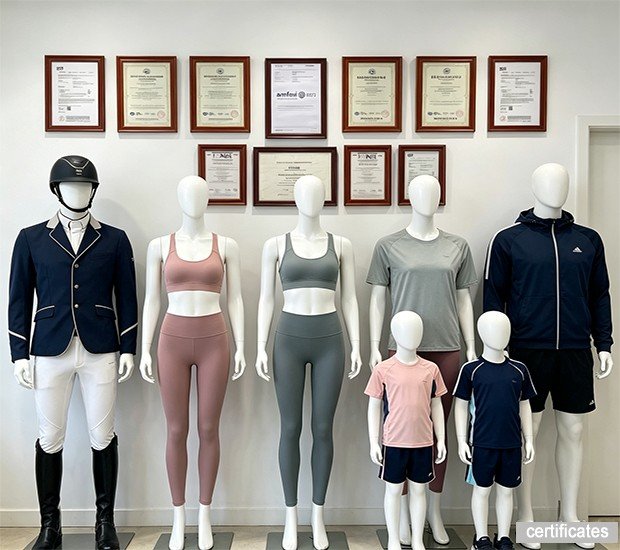
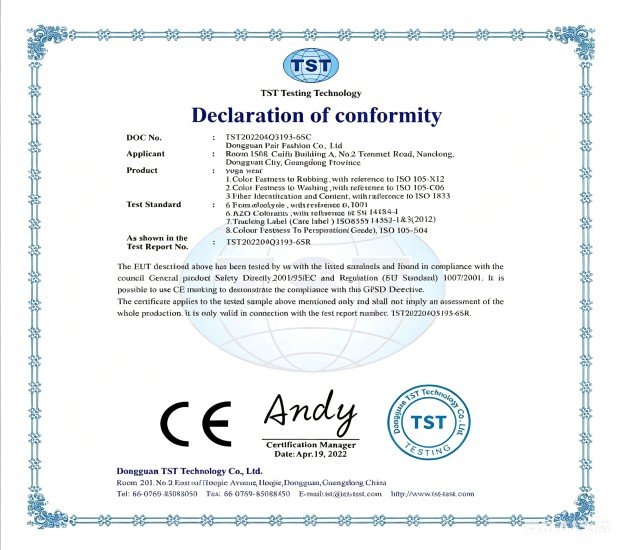
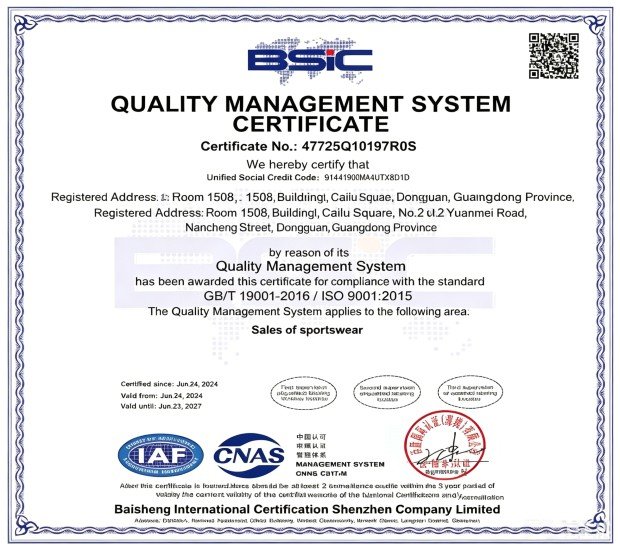
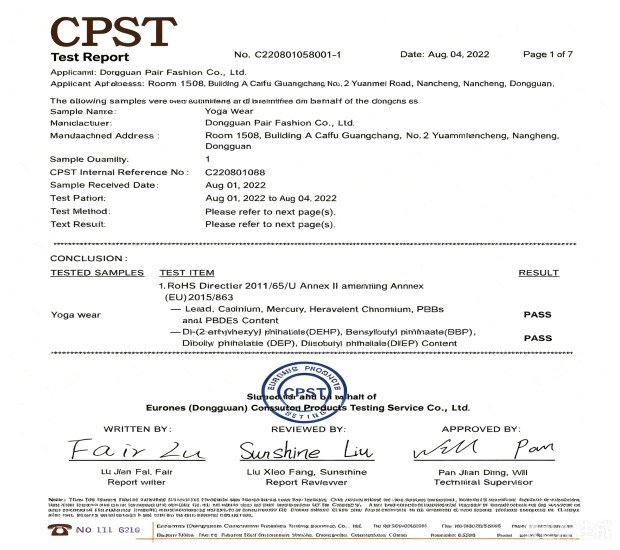
How Long Does the Custom Manufacturing Process Take—and When Should Orders Start?
Custom manufacturing takes the combined time needed for development, material procurement, approvals, production, inspection and delivery. Research into 10 top equestrian clothing brands helps define the product, but it does not establish a reliable launch schedule. Work backward from the date stock must be available for sale, and obtain a supplier-specific plan with clear starting conditions. A quoted production period should never be treated as the complete time from first inquiry to delivered inventory.
What Are the Approval Gates from Product Brief to Shipment?
Build the schedule around decisions that release the next stage of work. A sample arriving is an event; approving its fit is a decision. The distinction matters because unresolved decisions can delay progress even when the supplier has completed its submission.
| Stage | Decision needed | Evidence or record |
|---|---|---|
| Product definition | Is the brief sufficiently clear to develop and quote? | Style description, quantity plan and technical requirements |
| Development | Is the proposed pattern and construction acceptable? | Sample comments and revision records |
| Material selection | Are fabric, colors and components approved? | Identified material and color submissions |
| Size review | Are the submitted sizes acceptable? | Measurements and fit-assessment results |
| Production readiness | Is the production-intent combination approved? | Agreed specification and pre-production approval |
| Bulk production | Are processes following the approved requirements? | Production updates and inspection records |
| Shipment release | Have agreed acceptance conditions been met? | Final inspection outcome and release decision |
| Delivery | Is stock received and ready for its intended channel? | Receiving checks and inventory records |
A 10 top equestrian clothing brands comparison may help a team agree on the product direction. Before scheduling production, translate that direction into approved details. Otherwise, the calendar can appear settled while the garment is still changing.
How Long Should Sampling, Revisions and Custom Materials Take in the Order Plan?
Ask for a breakdown rather than a single “sample time.” Pattern development, material sourcing, decoration trials, sample construction, courier transit and buyer review can each affect the development period.
For example, Zest publishes sample timing of 7–15 days and bulk timing of 25–45 days, subject to order conditions. RW Equestrian’s selected listing gives approximately three weeks for samples and six to seven weeks for bulk after deposit payment. Those figures describe different supplier offers; they are not interchangeable or complete delivery schedules.
Record the assumptions behind the proposal:
- Materials: Are the sample and bulk materials available, reserved or still to be developed?
- Revisions: How many review rounds does the schedule allow?
- Submissions: Are fabric, color, grip and garment approvals separate?
- Transit: Does sample timing include delivery to the buyer?
- Buyer review: Who will assess the sample, and when are they available?
- Resubmission: What happens if an important requirement is not met?
When using 10 top equestrian clothing brands as development references, avoid continuing to add features after sampling begins without reviewing the schedule. A new pocket, grip layout or fabric choice may change more than the sample’s appearance.
Keep a revision log showing the requested change, responsible person, cost effect and timing effect. That makes it easier to distinguish a production delay from an expanded development scope.
When Does the Quoted Bulk Production Lead Time Begin?
The starting point must be explicit. “Thirty days” means little unless both parties agree on what must happen before day one.
A supplier may require several conditions:
- Deposit received.
- Final specifications approved.
- Production materials available and accepted.
- Pre-production sample approved.
- Size and color quantities confirmed.
- Required labels, artwork and packaging released.
- Production capacity allocated.
Ask the supplier to identify which conditions apply and confirm when they have been met. Also specify whether the quotation uses calendar days or working days, and whether its endpoint is production completion, shipment readiness or dispatch.
For buyers studying 10 top equestrian clothing brands, a familiar product appearance can make a new style seem straightforward. It may still require a new pattern, material purchase or grip trial. The schedule should reflect the actual work rather than the garment’s visual simplicity.
If the order changes after the start date, obtain a revised schedule. Do not assume the original completion commitment survives a material substitution, quantity increase or delayed approval.
Which Activities Can Run Together—and Which Require Approval First?
Some tasks can proceed in parallel when their inputs are sufficiently stable. Others depend directly on an earlier decision.
| Activity | Possible parallel work | Dependency to protect |
|---|---|---|
| Fit review | Label artwork or preliminary packaging review | Final pattern changes may affect placement details |
| Color approval | Review of confirmed trims | Bulk material commitments need an agreed approval basis |
| Size-set review | Logistics planning and document preparation | Production quantities and specifications must remain controlled |
| Production | Agreed inspection planning | Inspection must occur at the relevant stage |
| Final inspection | Preparation of shipping documents | Shipment release still depends on the agreed acceptance decision |
The aim is to remove avoidable waiting without creating expensive rework. Buying custom materials before final approval may be a deliberate commercial choice, but the buyer and supplier should document the quantity, cost and responsibility involved.
A 10 top equestrian clothing brands review can generate many attractive options. Once development starts, distinguish optional ideas from changes essential to the product. That keeps the approved brief usable and prevents each sample round from becoming a fresh design project.
How Should Inspection, Shipping and Delivery Buffers Fit the Launch Date?
Define the date that matters commercially. Goods leaving the supplier is different from stock being available to customers.
A useful backward plan begins with the required sale-ready date and accounts for:
- Receiving, counting and any warehouse preparation.
- Destination delivery and applicable clearance processes.
- Main transport and booking requirements.
- Final inspection, corrections and shipment release.
- Production and material readiness.
- Development, revisions and approvals.
Allow time for a credible correction scenario. If final inspection identifies a problem, the team needs a way to assess it, agree on corrective action and verify the result. A schedule that assumes every stage passes immediately offers little flexibility.
Choose transport based on a current quotation and the actual shipment. Confirm the service scope, route assumptions and responsibility for documentation. If faster transport becomes necessary, compare its added cost with the commercial effect of a later launch before committing.
Avoid promising customers an exact availability date solely from an estimated factory completion date.
What Must Be Recorded to Make Repeat Orders More Predictable?
A repeat order may avoid some development work, but it still requires confirmation of materials, quantities, capacity and current specifications. An archived sample does not establish that the same fabric or trim remains available.
Maintain a reorder file containing:
- Approved technical package: Current pattern, measurements, grading and construction.
- Material references: Fabric, color, trims and agreed alternatives.
- Application records: Grip and branding artwork, placement and relevant process information.
- Quality history: Inspection results, reported issues and corrective actions.
- Commercial details: Current pricing, minimums and payment conditions.
- Planning information: Expected quantities, required dates and any material-reservation agreement.
For seasonal products, ask when the supplier needs a forecast and when that forecast must become a confirmed order. Separate a planning estimate from a binding material or production commitment.
The scheduling lesson from researching 10 top equestrian clothing brands is to plan beyond the product launch image. A workable calendar connects approved specifications, available materials, production capacity and delivered inventory. Confirm those dependencies before publishing a launch date, then update the plan whenever an important assumption changes.
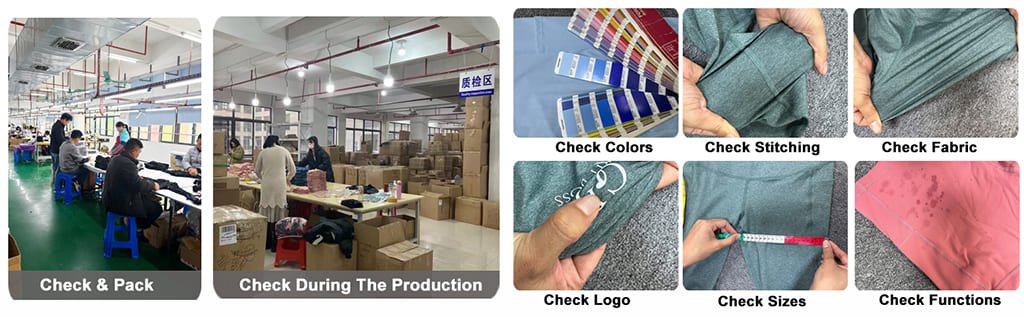
Should You Stock Existing Brands, Launch a Custom Collection or Combine Both?
Choose branded wholesale when an existing collection fits your customers and the purchasing terms work for your business. Choose custom production when you have a clear product opportunity and can manage development, inventory and quality decisions. A review of 10 top equestrian clothing brands may also support a mixed approach: stock selected established products while testing an original range. The decision should follow customer demand, available cash and operational capability—not the assumption that owning a label automatically produces better margins.
Who Should Choose Branded Wholesale, Private Label or a Mixed Purchasing Model?
Each route places different responsibilities on the buyer. Buying an established collection reduces some development work, but access, pricing, territory and sales-channel conditions still need confirmation. Custom manufacturing offers more product control while requiring the buyer to make and approve more decisions.
| Purchasing model | Strongest potential fit | Main responsibility | Key limitation to investigate |
|---|---|---|---|
| Branded wholesale | Retailers whose customers already want the selected products | Assortment, inventory and customer service | Account eligibility, purchasing commitments and channel restrictions |
| Private label or custom production | Businesses with a defined product opportunity and development capacity | Specifications, approvals, quality requirements and sales | Development costs, minimums and unproven demand |
| Mixed model | Retailers testing an original range alongside established products | Managing both purchasing systems and a clear assortment | Divided resources, overlapping products and additional inventory |
The 10 top equestrian clothing brands discussed earlier provide reference points, not automatic wholesale opportunities. Contact the relevant brand or authorized distributor to establish whether an account is available and what terms apply.
A mixed model works best when each product has a reason to exist. For example, an original schooling collection might address a specific fit preference while established competition products serve a different customer need. Avoid adding a private label item merely because it resembles something already on the shelf.
How Can Brand Research Become an Original Product Brief Without Copying Designs?
Begin with the customer problem revealed by the comparison. Perhaps your customers want a different waist-to-hip balance, a more useful pocket or a focused selection of practical colors. Validate that demand before treating it as a development opportunity.
Translate observations into requirements:
| Market observation | Weak instruction | More useful development requirement |
|---|---|---|
| Customers dislike waistband movement | “Copy this waistband” | Define the intended height, fit and movement checks |
| Riders want accessible storage | “Use the same pocket” | Specify intended contents, access position and retention needs |
| Customers find the fabric unsuitable | “Make it more premium” | Define the desired weight, feel, coverage and stretch behavior |
| Existing sizing causes confusion | “Use this brand’s sizes” | Establish body measurements, garment measurements and fit guidance |
| Buyers prefer restrained branding | “Make it look like this label” | Define original artwork, scale and placement |
Researching 10 top equestrian clothing brands should sharpen your understanding of the market. It should not substitute another company’s recognizable identity for your own product decisions.
Use reference garments to explain functional observations, and document what should be different. The manufacturer then has a clearer basis for proposing materials, patterns and construction suitable for the original brief.
What Must a Comparable RFQ Specify Before Manufacturers Quote?
Send the same controlled request for quotation to each shortlisted supplier. If important details are undecided, identify them as open questions and ask for separately priced options.
A useful RFQ includes:
- Product and use: Garment category, target rider, intended activity and season.
- Technical starting point: Available drawings, measurements, technical pack or reference sample.
- Material requirements: Confirmed specifications or clearly described targets.
- Construction and applications: Grip, pockets, closures, seams and decoration.
- Quantity allocation: Pieces by style, color and size.
- Branding and packaging: Labels, artwork, barcodes and packing requirements.
- Development scope: Required samples, size submissions and review stages.
- Quality requirements: Agreed checks, tolerances and reporting expectations.
- Timing: Required delivery date and the assumptions behind it.
- Quotation scope: Currency, delivery basis, payment terms, validity and exclusions.
After reviewing 10 top equestrian clothing brands, buyers often have strong visual preferences but incomplete production details. That is manageable if the gaps are visible. Ask each supplier to distinguish confirmed specifications from proposed assumptions.
Where alternatives are offered, keep them separate. A quotation based on a substitute fabric may be worth considering, but it should not be compared as though it meets the original specification unchanged.
How Should Sample Fees, Revision Charges and Refund Conditions Be Compared?
Compare the likely cost of reaching an approved product, rather than only the first sample fee.
A lower initial fee may cover fewer activities. Another supplier may include pattern development or a defined revision round. Neither arrangement is inherently better; the scope must be clear.
| Cost or condition | What to confirm |
|---|---|
| Pattern development | Is it included, and what files or rights are provided? |
| First sample | Which materials, applications and size are covered? |
| Revisions | What counts as a correction versus a buyer-requested change? |
| Additional sizes | Are size sets or extra fit samples charged separately? |
| Courier delivery | Is shipping included? |
| Testing | Which checks are included, and which require an external fee? |
| Fee credit or refund | What order quantity, value, timing or other conditions apply? |
| Project cancellation | What work, materials and payments remain chargeable? |
For a 10 top equestrian clothing brands sourcing project, a fee credit should support the buying decision—not drive it. Do not place an unsuitable bulk order simply to recover a smaller development expense.
Keep approval decisions separate from refund eligibility. A sample can be technically acceptable while the final order remains commercially unworkable because of quantity, price or timing.
When Does a Trial Order Justify a Long-Term Manufacturing Partnership?
A trial order should test whether the supplier can execute the approved requirements through production and delivery. Assess more than the appearance of the first finished garment.
Review:
- Consistency: Do measurements, materials and applications follow the approved requirements?
- Process control: Were substitutions and changes disclosed before use?
- Communication: Were updates accurate and problems raised early enough to act?
- Inspection: Were findings documented and corrective actions verified?
- Delivery: Did actual performance match the agreed schedule and scope?
- After-sales response: Were reported issues investigated and resolved as agreed?
- Reorder readiness: Are the files, materials and commercial conditions clear for another order?
Record the lessons before increasing volume. A successful trial supports the next decision; it does not eliminate the need to confirm capacity, materials and requirements for a larger or different order.
If problems occurred, distinguish isolated errors from repeated failures of control. A credible corrective action explains the cause, changes the process and provides evidence that the change works.
Which Supplier Should You Choose When Price, Sample Quality and MOQ Point in Different Directions?
Apply essential requirements first, then compare the remaining trade-offs against the actual order plan.
Suppose Supplier A offers a lower unit price but requires a much larger purchase. Supplier B costs more per garment but accepts a quantity closer to expected demand. Supplier C submits the strongest sample but has not resolved the production schedule. There is no automatic winner.
The decision depends on:
- Cash commitment: How much money is tied up before sales?
- Product readiness: What remains unresolved before approval?
- Inventory exposure: Can the proposed assortment reasonably sell?
- Execution evidence: Has the supplier demonstrated reliable control?
- Timing: Does the confirmed plan meet the business requirement?
The practical outcome of comparing 10 top equestrian clothing brands is a purchasing brief you can act on: a defined customer, an appropriate product, a realistic price position and a supplier arrangement supported by evidence.
If an original collection is the right route, discuss your custom riding collection with Pair Fashion. Share the garments you intend to develop, your quantity breakdown, target market and required delivery date, together with any sketches, technical files or reference samples. Those details provide a useful basis for reviewing feasibility, sample scope and quotation assumptions before committing to production.