OEM/ODM Sportswear Manufacturer | 3-Day Sampling | Low MOQ | 50K Monthly Capacity | ISO9001 & BSCI Certified

Top 10 Designer equestrian clothing manufacturer Options in China: Design Capabilities Compared
Compare the top 10 Designer equestrian clothing manufacturer options in China. Explore their design development capabilities, product experience, sample quality, minimum order quantities, and production reliability to find a suitable manufacturing partner for your equestrian clothing brand and sourcing needs.
Top 10 Designer Equestrian Clothing Manufacturer Options in China: Supplier Comparison
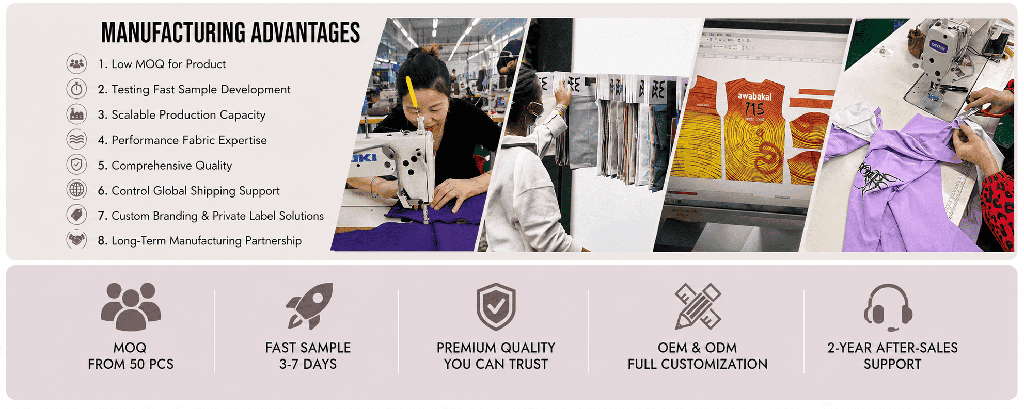
The best designer equestrian clothing manufacturer in China is not necessarily the largest producer or the supplier offering the lowest price. Buyers should compare equestrian product experience, design development evidence, sample accuracy, minimum order quantities, production responsibility, and suitability for their target market. A specialist may be better for technical riding breeches, while a multi-category manufacturer may be more practical for a coordinated collection.
A reliable Designer equestrian clothing manufacturer should be evaluated against the same purchasing requirements as competing suppliers. A supplier that performs well on a simple training shirt may not be equally suitable for a structured competition jacket. Similarly, a company with a low minimum order quantity may still have limited technical development resources.
Before choosing a Designer equestrian clothing manufacturer, buyers should separate publicly stated capabilities from independently verified facts. Company websites, directories, and supplier listings provide useful starting information, but current quotations, sample tests, inspection documents, and production records offer stronger evidence.
Quick Comparison of 10 Chinese Manufacturers
Manufacturer | Product focus | Buyer fit | Priority for verification |
|---|---|---|---|
Dongguan Pair Fashion | Riding breeches, tights, competition wear, jackets | Brands developing multiple apparel categories | Sample consistency and technical development |
Equifactory | Riding apparel and equestrian accessories | Brands seeking coordinated apparel and accessories | Actual production arrangements |
Zest Equestrian | Technical riding apparel and outerwear | Performance-focused riding brands | Material testing and technical specifications |
Dongguan SGL Sports | Breeches, base layers, riding jackets | Private label and growing equestrian brands | Product-specific development experience |
Dongguan Shuyu Activewear | Breeches, tops, show jackets | Multi-category brands and wholesalers | Capacity and order conditions |
Kala Apparel | Custom functional apparel | Brands exploring technical garment development | Equestrian-specific project evidence |
Quanzhou UBI Garments | Riding shirts and outerwear | Boutique brands and seasonal collections | MOQ by garment and material |
Dongguan Tianchen Garment | Equestrian wear and general activewear | Smaller brands testing new styles | Small-order conditions |
Shenzhen MaRainbow Clothing | Polo shirts and riding tops | Clubs, events and teamwear buyers | Technical riding apparel capability |
Xiamen Bella Fitness | Performance activewear | Brands considering crossover sportswear styles | Verified equestrian production experience |
This table is only a list of manufacturers for buyers to consider, not a ranking based on verified production performance. The available information is different for each manufacturer, and buyers should contact each manufacturer directly to confirm any business terms that have not been verified.
1. Dongguan Pair Fashion — Custom Equestrian Design and Collection Development
Location: Dongguan, Guangdong, China
Established: 2016
Typical MOQ: 100 pieces, subject to product and customization requirements
Sampling: Typically 3–7 working days for suitable projects
Bulk lead time: Typically 15–25 working days after sample approval, subject to order conditions
Core products: Riding breeches, riding tights, competition shirts, riding jackets, base layers and coordinated equestrian collections
Certifications and audits: ISO 9001, BSCI and GRS-related claims appear in company materials; buyers should request current certificates and confirm their scope.
Dongguan Pair Fashion is a Designer equestrian clothing manufacturer combining functional sportswear development with custom riding apparel production. Its main advantage for buyers is the ability to consider several garment categories within one sourcing arrangement rather than treating breeches, tops and jackets as unrelated purchases.
The company reports more than 6,000 developed styles and approximately 50,000 pieces of monthly apparel production capacity. A brand comparing Pair Fashion with another Designer equestrian clothing manufacturer should still request category-specific samples, production records and an itemized quotation rather than assuming company-wide experience applies equally to every garment.
Best suited to: Startup and growing equestrian brands, private label retailers, and buyers developing coordinated riding collections.
Potential limitations: Buyers requiring exceptionally large single-style orders or highly specialized structured tailoring should confirm available capacity and relevant technical experience before selection.
Brands considering this supplier can review Pair Fashion’s custom equestrian clothing development services for its specific manufacturing offering.
2. Equifactory — Equestrian Apparel and Accessories Sourcing
Location: China; exact contracting and production locations should be confirmed
Established: Not independently verified
Published MOQ: Approximately 100 pieces for selected products
Lead time: Confirm by garment type and order quantity
Core products: Riding breeches, leggings, jackets, base layers and equestrian accessories
Certifications: Request current facility-specific documentation.
Equifactory is a Designer equestrian clothing manufacturer candidate for buyers interested in both riding apparel and related equestrian products. Its published product range includes garments alongside accessories such as saddle pads and earmuffs.
For a brand comparing a Designer equestrian clothing manufacturer with an apparel-only supplier, the important question is whether broader product availability offers a genuine purchasing advantage. A combined product range can simplify coordination, but buyers should establish which items are manufactured directly, which are sourced through partners and who is responsible for quality.
Best suited to: Equestrian retailers, distributors and brands seeking multiple product categories.
Potential limitations: Buyers developing highly original apparel should verify garment-specific pattern-making resources and sample development responsibility.
3. Zest Equestrian — Technical Riding Apparel and Outerwear
Location: Guangdong, China
Established: Confirm directly
Published MOQ: Approximately 100–200 pieces in one supplier comparison; product-specific confirmation required
Lead time: Request a current production schedule
Core products: Riding breeches, performance tops, softshell jackets and waterproof outerwear
Certifications: Request current material, product and facility documentation.
Zest Equestrian is a Designer equestrian clothing manufacturer candidate worth considering for performance-focused riding collections, particularly where outerwear and technical fabrics are important.
Its published product descriptions emphasize functional materials and riding apparel. However, a Designer equestrian clothing manufacturer offering waterproof or breathable garments should provide test methods and measurable performance results rather than relying on broad claims such as premium or technical. Buyers should also establish whether performance claims apply to fabric alone or to the finished garment.
Best suited to: Riding brands developing performance apparel, seasonal outerwear and technical collections.
Potential limitations: Confirm current material availability, development charges and finished-garment testing capabilities.
4. Dongguan SGL Sports — Functional Riding Apparel Manufacturing
Location: Dongguan, Guangdong, China
Established: Not independently verified
MOQ: Described as flexible in supplier listings; exact quantities require confirmation
Lead time: Confirm for each product
Core products: Riding breeches, base layers and jackets
Certifications: Request relevant current records.
Dongguan SGL Sports is a Designer equestrian clothing manufacturer candidate for brands seeking functional riding apparel with private label options. Published supplier information identifies riding garments for men, women and children.
When comparing SGL Sports with another Designer equestrian clothing manufacturer, buyers should focus on actual equestrian product experience rather than the number of available catalog styles. Requesting comparable samples of riding breeches or jackets can reveal differences in construction, measurements and workmanship that are not obvious from product photographs.
Best suited to: Emerging equestrian labels, private label businesses and buyers developing core riding apparel.
Potential limitations: Development-team structure, exact MOQ, testing arrangements and production responsibility require direct verification.
5. Dongguan Shuyu Activewear — Multi-Category Performance Apparel
Location: Dongguan, Guangdong, China
Established: Confirm directly
Published MOQ: Approximately 100 pieces in a third-party comparison
Lead time: Request current sampling and production terms
Core products: Riding breeches, technical tops, show jackets and activewear
Certifications: Request current applicable documentation.
Dongguan Shuyu Activewear is a Designer equestrian clothing manufacturer candidate for buyers comparing multi-category apparel suppliers. Its published product coverage includes both equestrian garments and general performance clothing.
A brand evaluating this Designer equestrian clothing manufacturer should distinguish between overall sportswear production capacity and demonstrated expertise in individual riding products. For example, the ability to manufacture stretch leggings does not automatically establish the same capability in structured competition jackets. Buyers should request examples from the specific category they intend to purchase.
Best suited to: Wholesalers, growing brands and buyers sourcing several functional apparel categories.
Potential limitations: Published capacity figures and minimum quantities should be confirmed against the actual production site and proposed order.
6. Kala Apparel — Custom Equestrian and Performance Clothing
Location: Dongguan, Guangdong, China
Established: Company information indicates 2015
MOQ: Small-batch support advertised; confirm by product
Lead time: Request current development and production schedules
Core products: Riding tights, breeches, show jackets, base layers and performance apparel
Certifications: The company reports BSCI certification; buyers should verify validity and facility coverage.
Kala Apparel is a Designer equestrian clothing manufacturer candidate with a publicly described focus on equestrian clothing, activewear and related technical garments. Its company materials identify pattern development, sampling and custom branding among its services.
For buyers considering Kala as a Designer equestrian clothing manufacturer, the strongest comparison would involve original design samples, documented revision results and evidence of repeat production. Its broader experience may be useful for brands combining riding clothing with fitness-inspired products, but equestrian-specific technical requirements should still be assessed separately.
Best suited to: Boutique equestrian labels, private label brands and buyers developing functional apparel collections.
Potential limitations: Verify the scope of in-house development, current MOQ and product-specific production experience.
7. Quanzhou UBI Garments — Riding Shirts and Outerwear
Location: Quanzhou, Fujian, China
Established: Not independently verified
Published MOQ: Approximately 80–100 pieces for selected products
Lead time: Request a current written schedule
Core products: Riding shirts, jackets and outerwear
Certifications: Not sufficiently verified.
Quanzhou UBI Garments is a Designer equestrian clothing manufacturer candidate for buyers seeking riding tops and seasonal outerwear. Published supplier comparisons describe flexible order quantities and a range of jacket constructions.
When assessing UBI as a Designer equestrian clothing manufacturer, brands should check whether its outerwear experience matches their intended equestrian use. A lightweight riding jacket, quilted coat and competition jacket require different construction skills. Suppliers should be evaluated against the actual garment specifications, not simply the presence of jackets in their catalogs.
Best suited to: Boutique labels, seasonal apparel buyers and retailers exploring riding-related outerwear.
Potential limitations: Complex competition tailoring, certification coverage and exact lead times require additional verification.
8. Dongguan Tianchen Garment — Small-Batch Activewear and Equestrian Apparel
Location: Dongguan, Guangdong, China
Established: Not independently verified
Published MOQ: Very small trial quantities are advertised in third-party listings; applicability must be confirmed
Sampling: Seven-day sampling is reported in a supplier comparison
Core products: Equestrian apparel, yoga wear and general activewear
Certifications: Request current records.
Dongguan Tianchen Garment is a Designer equestrian clothing manufacturer candidate for buyers exploring smaller initial orders and multiple sportswear categories. Its reported small-order flexibility may appeal to brands testing product concepts.
However, selecting a Designer equestrian clothing manufacturer solely because it advertises a low MOQ can be misleading. Buyers should ask whether the advertised quantity applies to original patterns, custom fabrics and full private label production, or only to existing styles with limited modifications.
Best suited to: New brands, small trial collections and buyers evaluating several activewear concepts.
Potential limitations: Verify whether small-order terms cover fully original designs and whether development capacity supports technically demanding riding garments.
9. Shenzhen MaRainbow Clothing — Riding Tops and Teamwear
Location: Shenzhen, Guangdong, China
Established: Not independently verified
Published MOQ: Approximately 50 pieces for selected products
Lead time: Product-dependent; obtain written confirmation
Core products: Polo shirts, quick-dry tops and riding shirts
Certifications: Not sufficiently verified.
Shenzhen MaRainbow Clothing is a Designer equestrian clothing manufacturer candidate mainly for simpler riding tops, branded shirts and teamwear applications. Published product information emphasizes fabric, color and logo customization.
Buyers comparing MaRainbow with another Designer equestrian clothing manufacturer should recognize the difference between customizing a standard polo shirt and developing an original technical riding collection. Its apparent strength is more relevant to branded tops than to complex breeches or competition jackets unless further samples demonstrate those capabilities.
Best suited to: Riding clubs, event organizers and brands seeking branded training tops.
Potential limitations: Original pattern development and complex equestrian garment experience are not sufficiently established by the available information.
10. Xiamen Bella Fitness — Performance Activewear and Riding Apparel
Location: Xiamen, Fujian, China; company information also identifies production operations in Ningbo
Established: 2007, according to company materials
MOQ: Request a product-specific quotation
Lead time: Confirm current sampling and production availability
Core products: Fitness apparel, tennis wear, golf wear, jackets and riding breeches
Certifications: Request current facility and product documentation.
Xiamen Bella Fitness is a Designer equestrian clothing manufacturer candidate for brands considering a larger performance-apparel supplier. Its published product range includes riding breeches alongside several other sportswear categories.
A buyer evaluating Bella as a Designer equestrian clothing manufacturer should investigate whether the technical resources supporting its broader activewear production are also available for specialized equestrian products. The company reports substantial manufacturing infrastructure, but total production scale should not be treated as proof of superior riding-specific design accuracy.
Best suited to: Established activewear brands, multi-sport labels and buyers with broader apparel sourcing requirements.
Potential limitations: Equestrian-specific development history, minimum quantities and allocation of production capacity should be verified.
Which Manufacturers Are Worth Shortlisting for Different Equestrian Brands?
A startup seeking its first riding collection may prioritize manageable minimum quantities, sample accuracy and responsive communication. A mature brand may care more about repeat-order consistency, documented testing and dependable capacity. A competition-focused label should place greater weight on specialized construction experience.
The strongest Designer equestrian clothing manufacturer shortlist usually contains two or three suppliers that meet the same product requirements but offer different commercial advantages. Buyers should request comparable quotations and samples before making a final selection.
A Designer equestrian clothing manufacturer should remain on the shortlist only when its relevant capabilities can be demonstrated through samples, technical records, production evidence and clear written terms.

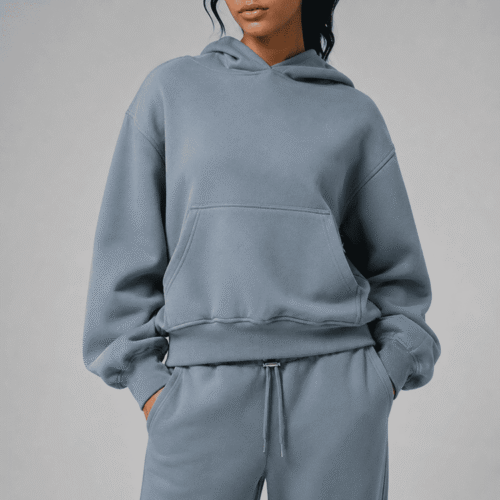
Custom Women’s Oversized Pullover Hoodie Fleece Sweatshirt OEM ODM
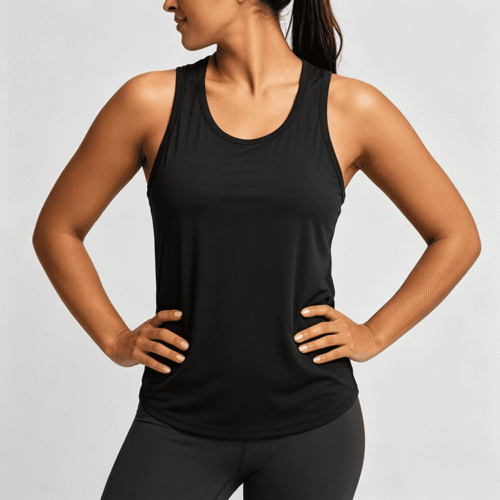
Custom Women’s Performance Tank Top OEM ODM Workout Activewear
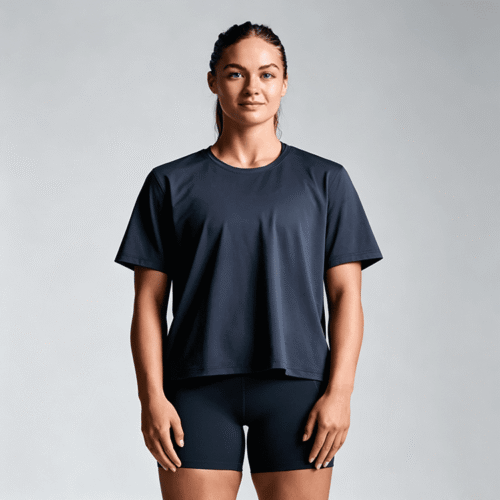
Custom Women’s Performance Training T-Shirt OEM ODM Activewear Tee
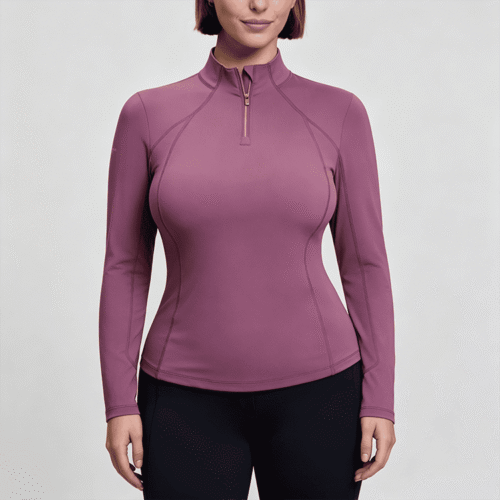
Custom Women’s Quarter Zip Equestrian Base Layer Long Sleeve Riding Shirt OEM ODM
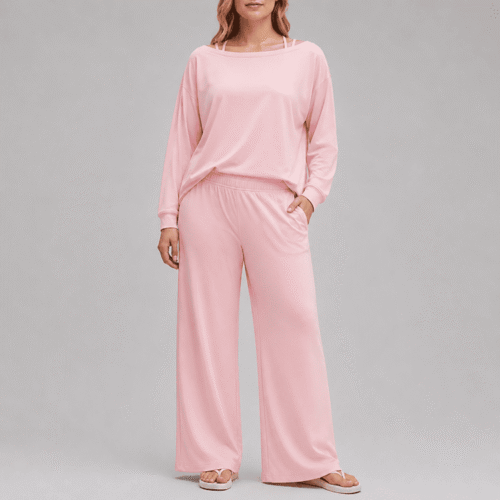
Custom Women’s Relaxed Fit Loungewear Set OEM ODM Wide Leg Lounge Pants
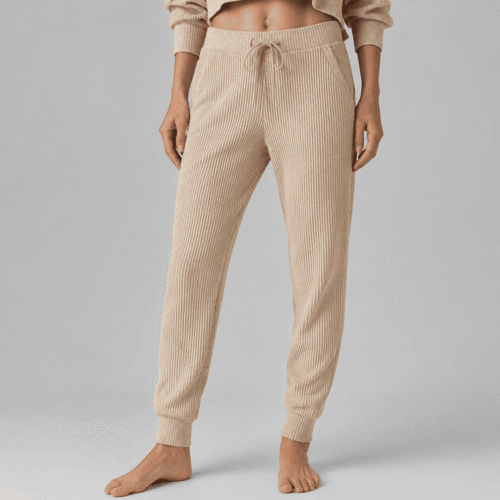
Custom Women’s Ribbed Knit Jogger Pants Cozy Loungewear OEM ODM
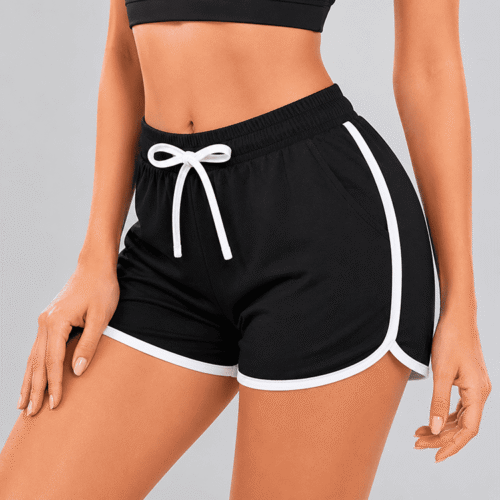
Custom Women’s Running Shorts OEM ODM Contrast Trim Workout Shorts
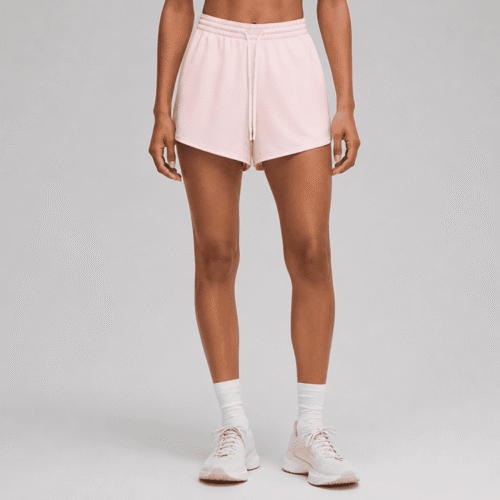
Custom Women’s Running Shorts OEM ODM Lightweight Workout Shorts
Which Chinese Equestrian Clothing Manufacturers Have the Strongest Design Development Capabilities?
The strongest design development capabilities are not always found at the largest manufacturer. A suitable Designer equestrian clothing manufacturer should demonstrate that it can interpret original designs, develop accurate patterns, resolve technical problems, and reproduce approved specifications consistently. Buyers should compare actual development evidence rather than relying on OEM/ODM labels, product photographs, or general claims about manufacturing experience.
Two suppliers may both advertise custom equestrian clothing, but their technical capabilities can be very different. One may specialize in modifying existing riding breeches, while another can develop an original competition collection from detailed specifications.
For brands evaluating a Designer equestrian clothing manufacturer, the important distinction is between what a supplier advertises and what it can demonstrate through completed projects, technical documentation, sample revisions, and production records.
Original Design Development vs Existing Style Modification: How Do Suppliers Compare?
Not every Designer equestrian clothing manufacturer offers the same level of design development. Some suppliers primarily customize existing patterns through fabric changes, colors, logo placement, or minor construction adjustments. Others have the technical resources to develop new garment structures and fit specifications.
Both approaches can be useful, but they serve different purchasing needs.
Development capability | Existing style modification | Original design development |
|---|---|---|
Starting point | Established garment pattern | Original sketch, technical specification or reference |
Pattern development | Limited adjustments | New or substantially revised patterns |
Fit development | Based on existing sizing | Developed against brand-specific requirements |
Technical complexity | Usually lower | Depends on garment structure |
Development cost | Often lower | Usually higher |
Sample revisions | May be limited | Often requires multiple technical reviews |
Best suited to | Standard private label collections | Distinctive designer collections |
A startup selling standard riding leggings may not need advanced original pattern development. Modifying an established style can reduce development costs and shorten the route to market.
However, a brand creating a distinctive competition jacket with specialized shoulder construction, shaped panels, and a specific riding silhouette needs more than basic customization.
A Designer equestrian clothing manufacturer with genuine original development experience should be able to explain how its previous projects differed from standard products.
Buyers should request examples of completed garments alongside the original development requirements, where confidentiality permits.
The key question is not whether a manufacturer offers customization. It is how much technical responsibility the manufacturer can handle.
Which Manufacturers Have Verifiable Pattern-Making and Technical Development Teams?
A Designer equestrian clothing manufacturer may advertise an experienced development team, but buyers should investigate what that team actually does.
Some suppliers maintain in-house pattern makers, sample technicians, fabric specialists, and production engineers. Others coordinate development through external pattern studios or subcontractors.
Outsourcing is not automatically a problem. The concern is whether the supplier can control development quality, communication, revision records, and production consistency.
When assessing a Designer equestrian clothing manufacturer, request evidence covering these five areas:
Pattern-making resources: Who creates and adjusts garment patterns?
Size grading: Who develops and checks the full size range?
Technical documentation: Are measurement specifications and construction details recorded?
Sample revision control: Can the supplier identify what changed between sample versions?
Production transfer: How are approved specifications communicated to the production team?
A useful supplier comparison should distinguish between declared capabilities and demonstrated capabilities.
Manufacturer | Publicly described development focus | Evidence buyers should request |
|---|---|---|
Dongguan Pair Fashion | Multi-category apparel development and pattern support | Equestrian pattern examples, size grading records and approved sample documentation |
Equifactory | Custom equestrian apparel and product sourcing | Identification of the garment development team and production responsibility |
Zest Equestrian | Technical riding apparel | Performance garment development records and sample specifications |
SGL Sports | Functional riding apparel | Riding-specific pattern examples and revision records |
Shuyu Activewear | Performance apparel and equestrian garments | Evidence of in-house development for each proposed product category |
Kala Apparel | Custom apparel development | Original design samples and technical development documentation |
UBI Garments | Riding tops and outerwear | Jacket construction examples and technical sample records |
Tianchen Garment | Small-batch custom apparel | Evidence of original pattern development beyond existing styles |
MaRainbow Clothing | Branded riding tops | Evidence of custom fit development beyond logo and color changes |
Bella Fitness | Multi-category performance apparel | Equestrian-specific development examples and technical team responsibilities |
This table shows the information that buyers need to check with each manufacturer. It does not give any capability scores that have not been verified.
A Designer equestrian clothing manufacturer should not get a higher technical score just because it lists more services on its website. Buyers should check whether the evidence provided by the manufacturer is reliable and relevant to their product requirements.
How Can Buyers Compare Design Accuracy Across Different Suppliers?
The most practical way to compare a Designer equestrian clothing manufacturer with another supplier is to give both the same technical requirements.
Imagine that an equestrian brand wants to develop riding breeches with a high waistband, curved side panels, reinforced seams, and full-seat silicone grip.
One supplier produces an attractive sample but changes the panel proportions. Another follows the design accurately but uses a fabric that does not recover well after stretching.
Neither result should be judged on appearance alone.
A Designer equestrian clothing manufacturer should be evaluated across several measurable criteria.
Evaluation criterion | What buyers should examine | Suggested weight |
|---|---|---|
Design interpretation | Accuracy of silhouette, panel placement and construction | 25% |
Fit accuracy | Measurements and performance in riding positions | 25% |
Material suitability | Stretch, recovery, comfort and grip compatibility | 20% |
Technical communication | Clarity of questions, revisions and documentation | 15% |
Revision accuracy | Ability to correct identified problems | 15% |
Total | 100% |
These weights are an illustrative purchasing framework, not independently verified scores for any manufacturer.
When comparing a Designer equestrian clothing manufacturer, buyers should also record whether the supplier proposed changes without approval.
A manufacturer may recommend a different seam construction because it improves durability. That can demonstrate useful technical judgment. However, changing a garment’s silhouette or functional details without informing the buyer is a different matter.
Good development capability combines technical judgment with respect for the approved design.
A supplier that identifies a potential problem early and offers a documented alternative may be more valuable than one that agrees to every request but repeatedly delivers inaccurate samples.
What Evidence Shows Experience With Complex Equestrian Apparel?
A Designer equestrian clothing manufacturer with general sportswear experience may understand stretch fabrics, flatlock seams, and moisture management. These skills are relevant to equestrian clothing, but they do not automatically establish expertise in riding-specific garment construction.
Riding apparel must perform while the wearer sits, bends, reaches forward, and moves with the horse.
For example, competition jackets require different technical knowledge from riding tights. A manufacturer experienced in leggings may still need additional expertise to develop structured shoulders, shaped waist panels, and jacket hems that remain comfortable in the saddle.
When evaluating a Designer equestrian clothing manufacturer, buyers should request evidence specific to the intended product.
For riding breeches and tights:
Waistband stability in seated riding positions
Stretch recovery after repeated movement
Seam placement around high-friction areas
Silicone grip placement and durability
Consistent sizing across the intended range
For competition jackets:
Shoulder mobility when reaching forward
Sleeve balance and armhole construction
Front closure stability
Jacket length and hem movement in the saddle
Lining, seam finishing and shape retention
For competition shirts:
Collar structure and comfort
Breathable panel placement
Stretch and recovery at shoulders
Closure construction and durability
Compatibility with competition jacket fit
A Designer equestrian clothing manufacturer should be able to demonstrate relevant experience through technical samples, previous development records, testing results, or comparable production examples.
Product photographs are useful for understanding style and finish, but they cannot prove movement performance or long-term durability.
Buyers should also distinguish between a supplier’s experience producing a garment and its experience developing that garment from an original design.
These are related capabilities, but they are not identical.
Which Suppliers Are Better Suited to Original Designer Collections?
Choosing a Designer equestrian clothing manufacturer for an original collection requires more than finding a supplier capable of producing one attractive sample.
A collection may include riding breeches, tights, competition shirts, training tops, and jackets. Each category has different technical requirements, but the garments must also work together visually and commercially.
A brand may need consistent colors across different fabrics, coordinated trims, compatible sizing, and predictable repeat-order quality.
For this reason, a Designer equestrian clothing manufacturer should be assessed against the complete collection plan rather than a single product photograph.
Different supplier types may offer different advantages:
Supplier type | Potential advantage | Main limitation to investigate |
|---|---|---|
Specialist breeches manufacturer | Focused technical knowledge | Limited experience with structured jackets |
Multi-category equestrian apparel manufacturer | Broader collection coordination | Uneven expertise between categories |
General performance apparel manufacturer | Strong stretch-fabric experience | Limited riding-specific construction experience |
Small-batch customization supplier | Lower initial inventory commitment | Limited original development resources |
Large-volume apparel manufacturer | Potential repeat-order capacity | Higher minimum quantities or less development flexibility |
For brands comparing a Designer equestrian clothing manufacturer across multiple categories, the most useful question is whether the supplier can demonstrate relevant technical experience in every garment type included in the order.
A manufacturer does not need to produce every category internally to be suitable. However, the brand should understand which development and production activities are performed directly and which depend on external partners.
A single supplier is not always the best choice for an entire collection.
A brand developing technical riding breeches and highly structured competition jackets may achieve better results with two specialized suppliers. Another brand producing tights, training tops, and lightweight jackets may benefit from one manufacturer coordinating the collection.
A Designer equestrian clothing manufacturer that can demonstrate consistent communication, documented development decisions, and reliable production responsibility may offer greater long-term value than a supplier selected primarily for a low initial quotation.
How Should Buyers Use Development Evidence to Build a Shortlist?
Before selecting a Designer equestrian clothing manufacturer, buyers should compare evidence using the same standards.
A practical shortlist should include suppliers that can provide:
Relevant product development examples
Clear responsibility for pattern making and sampling
Accurate technical documentation
Evidence of successful sample revisions
Product-specific quality testing where applicable
Written development costs and commercial conditions
A clear explanation of how approved specifications are maintained during production
A Designer equestrian clothing manufacturer that cannot provide confidential customer records may still demonstrate capability through anonymized examples, internally developed samples, technical explanations, or a paid development trial.
The objective is not to demand unrestricted access to another brand’s intellectual property. It is to establish whether the supplier has the experience and systems needed for the proposed project.
For buyers interested in developing an original collection with Dongguan Pair Fashion, its original design development and production services provide further information about the company’s manufacturing offering.
The strongest supplier shortlist is built around demonstrated capability, not the number of customization options advertised. A manufacturer that can explain its technical decisions, document revisions, and deliver consistent samples deserves closer consideration than one relying mainly on broad claims of experience.

Which Type of Manufacturer Is Best for Different Designer Equestrian Clothing Collections?
The best manufacturer for a designer equestrian clothing collection depends on the garments being developed, the level of technical specialization required, and the brand’s purchasing priorities. A specialist riding breeches manufacturer may offer stronger product-specific knowledge, while a multi-category apparel producer may be better suited to coordinating riding tights, training tops, and lightweight jackets. Buyers should compare manufacturers by relevant product experience, sample performance, production consistency, and the ability to support their complete collection.
Choosing a Designer equestrian clothing manufacturer is not simply a decision between a large supplier and a small one. It is a decision about which technical capabilities are essential for the products your customers will actually wear.
A brand launching performance riding tights has different requirements from one developing structured competition jackets. Even when two suppliers advertise similar products, their experience with garment construction, fitting requirements, and repeat production may differ considerably.
Specialist Equestrian Manufacturer vs General Activewear Manufacturer: Which Is Better?
A specialist equestrian manufacturer is often the stronger candidate for garments with riding-specific construction requirements. A general activewear manufacturer may be competitive for stretch-based products that share technical features with fitness clothing.
Neither type is automatically better.
A Designer equestrian clothing manufacturer specializing in riding breeches may have practical experience with full-seat grip placement, reinforced seams, and waistband stability during riding. These details can affect how the garment performs in the saddle.
A general sportswear manufacturer may have extensive experience with stretch fabrics, flatlock stitching, moisture management, and body-contouring patterns. These capabilities can be valuable when developing riding tights or training tops.
The difference becomes more important as product complexity increases.
Comparison factor | Specialist equestrian manufacturer | General activewear manufacturer |
|---|---|---|
Riding-specific fit | More likely to have relevant product experience | Requires verification |
Stretch fabric expertise | Depends on product specialization | Often a core capability |
Competition jacket construction | Depends on garment range | May require additional expertise |
Riding grip applications | May have established experience | Requires technical validation |
Multi-sport collections | May have a narrower product focus | Potentially broader product range |
Brand-specific development | Varies by supplier | Varies by supplier |
Repeat production | Must be verified | Must be verified |
A Designer equestrian clothing manufacturer should be selected according to the technical requirements of the proposed garments, not the general category used to describe its business.
For example, a company specializing in competition jackets may be a better fit for a premium showwear collection than a large sportswear supplier producing mostly leggings and T-shirts.
However, an activewear manufacturer with demonstrated equestrian projects may be equally suitable for performance riding tights.
The deciding factor is relevant experience supported by actual samples and production evidence.
Which Suppliers Are Better Candidates for Designer Riding Breeches and Tights?
Riding breeches and riding tights may appear similar in product photographs, but they can require different manufacturing capabilities.
Breeches often involve more structured construction, shaped waistbands, specific seam positioning, and carefully controlled grip applications. Riding tights typically rely more heavily on stretch performance, recovery, comfort, and close-fitting pattern accuracy.
A Designer equestrian clothing manufacturer developing riding breeches should demonstrate experience with garment stability in seated riding positions.
Buyers should evaluate:
Waistband construction: Does the waistband remain stable when the rider bends or sits?
Seat and inner-leg seams: Are seams positioned to reduce friction?
Grip application: Is silicone placement accurate, flexible, and durable?
Fabric recovery: Does the garment retain its shape after repeated stretching?
Size consistency: Are fit proportions maintained across the size range?
Construction durability: Do seams withstand repeated movement and washing?
For riding tights, a Designer equestrian clothing manufacturer should also demonstrate knowledge of stretch recovery, opacity, compression balance, and fabric comfort.
A fabric that performs well in a yoga studio may not automatically be suitable for riding. The garment must also withstand saddle contact, repeated movement, and the intended washing conditions.
The supplier’s experience should match the actual product specification.
A brand developing full-seat silicone grip breeches should request samples demonstrating that application. A supplier offering only standard leggings should not be assumed to have equivalent experience.
Which Manufacturer Type Is More Suitable?
Product requirement | Manufacturer capability to prioritize |
|---|---|
Traditional riding breeches | Structured pattern development and riding-specific construction |
Full-seat grip breeches | Silicone application experience and durability testing |
High-stretch riding tights | Stretch fabric expertise and fit accuracy |
Premium technical tights | Fabric performance, finishing consistency and advanced pattern control |
Inclusive size ranges | Size grading accuracy and fit validation |
Coordinated breeches and tights | Consistent sizing, color control and product development coordination |
A Designer equestrian clothing manufacturer with strong experience in both technical riding garments and functional sportswear may offer advantages when a brand wants to develop multiple performance-focused styles.
However, buyers should confirm those capabilities separately for each garment category.
What Manufacturer Capabilities Matter Most for Show Jackets and Competition Shirts?
Competition apparel introduces different technical challenges from everyday riding tights.
A structured show jacket must maintain its appearance while allowing the rider to move comfortably. Competition shirts need a balance of stretch, breathability, collar stability, and appropriate fit beneath a jacket.
A Designer equestrian clothing manufacturer specializing in stretch leggings may not have the same technical experience as a supplier producing structured riding jackets.
For competition jackets, buyers should prioritize:
Pattern balance: The jacket should maintain its intended silhouette in standing and riding positions.
Shoulder mobility: Riders should be able to reach forward without excessive restriction.
Sleeve construction: Sleeve length and position should remain comfortable during movement.
Front closure stability: Buttons or zippers should function without unwanted pulling.
Lining and finishing: Internal construction should support comfort and shape retention.
Production consistency: Finished jackets should match approved measurements and construction details.
A Designer equestrian clothing manufacturer should be able to explain which jacket constructions it has produced previously and provide relevant examples.
For competition shirts, the priorities are different.
A shirt may look attractive on a mannequin but become uncomfortable when worn beneath a fitted competition jacket. Collar height, shoulder seams, ventilation panels, and fabric thickness can all affect the final result.
Buyers comparing a Designer equestrian clothing manufacturer for competition shirts should request evidence of fit testing under the intended outer garment.
The most suitable supplier is not necessarily the one offering the widest catalog. It is the one demonstrating relevant construction experience for the specific competition garments.
Single-Category Specialist vs Multi-Category Producer: Which Fits Your Collection?
A brand developing only one technical product may benefit from working with a specialist manufacturer. A brand planning a complete equestrian collection may prefer a supplier capable of coordinating several garment categories.
Both arrangements involve trade-offs.
A single-category specialist may provide deeper technical knowledge, established production methods, and more focused problem-solving.
However, sourcing several categories from different specialists can increase coordination requirements.
A Designer equestrian clothing manufacturer producing multiple apparel categories may simplify communication, color coordination, labeling, packaging, and shipment planning.
For example, a brand launching riding tights, training tops, lightweight jackets, and competition shirts may prefer one supplier managing the collection.
That arrangement can reduce the number of separate purchasing relationships, but it does not automatically guarantee lower costs or better quality.
A Designer equestrian clothing manufacturer should demonstrate adequate expertise in every category included in the order.
Sourcing arrangement | Main advantage | Main purchasing risk |
|---|---|---|
One specialist supplier | Focused technical expertise | Limited product range |
Multiple specialist suppliers | Product-specific manufacturing knowledge | More coordination and consistency challenges |
One multi-category manufacturer | Centralized collection management | Uneven expertise across garment categories |
Hybrid supplier strategy | Flexibility to match products with specialists | Requires clear responsibilities and supplier management |
A Designer equestrian clothing manufacturer capable of coordinating several products can be valuable when the brand prioritizes consistent colors, branding, packaging, and delivery schedules.
However, a specialist may still be the better choice for technically demanding products.
When Does a Hybrid Sourcing Strategy Make Sense?
Consider a brand developing six styles:
Two riding tights
Two technical training tops
One lightweight riding jacket
One structured competition jacket
The tights, tops, and lightweight jacket may be suitable for a multi-category performance apparel manufacturer.
The structured competition jacket may require a specialist with stronger tailoring experience.
In this situation, choosing one Designer equestrian clothing manufacturer for every product could create unnecessary technical compromises if that supplier lacks relevant jacket expertise.
A hybrid arrangement may offer better results, provided the brand can manage fabric standards, colors, sizing, quality requirements, and delivery schedules across suppliers.
The important point is to avoid assuming that supplier consolidation is always more efficient.
One supplier can reduce administrative complexity, but several specialized suppliers may reduce technical development risk.
How Should Startups, Boutique Brands and Established Labels Choose Differently?
The right manufacturing arrangement also depends on the brand’s development stage.
A startup usually faces different commercial pressures from an established equestrian label. New brands often have limited purchasing budgets and uncertain initial demand. Established brands may prioritize predictable replenishment, documented quality standards, and consistent sizing across repeat orders.
A Designer equestrian clothing manufacturer suitable for one brand may not be the strongest choice for another.
Startup Equestrian Brands
Startups should prioritize manageable order quantities, clear sample costs, responsive technical communication, and realistic production schedules.
The lowest MOQ is not always the best offer.
A supplier advertising 50 pieces may require the brand to use existing fabrics and patterns. Another supplier requiring 100 pieces may offer more relevant development support or better commercial terms.
When evaluating a Designer equestrian clothing manufacturer, startup buyers should confirm exactly what the MOQ covers.
Important questions include:
Is MOQ calculated per style, color, size, or total order?
Are original patterns included or charged separately?
Can several sizes be combined within one color?
Are custom labels and packaging available at the proposed quantity?
What happens if the first sample requires major changes?
A startup should choose a Designer equestrian clothing manufacturer based on total project feasibility rather than a single advertised minimum quantity.
Boutique and Growing Equestrian Brands
Boutique brands often compete through distinctive designs, product quality, and customer experience.
They may need greater flexibility in fabric selection, fit development, and seasonal collection updates.
A Designer equestrian clothing manufacturer serving this segment should demonstrate reliable sample accuracy and the ability to maintain approved product specifications.
Growing brands should also investigate repeat-order conditions. A supplier may produce an excellent first order but struggle to maintain fabric consistency or measurements in later production.
Buyers should ask whether approved patterns, material references, and technical specifications are retained for future orders.
Established Equestrian Labels
Established brands typically have more formal purchasing and quality requirements.
They may require consistent production capacity, documented inspections, reliable replenishment, and clear responsibility for technical issues.
A Designer equestrian clothing manufacturer working with established brands should be able to support structured communication and evidence-based production management.
Key evaluation areas include:
Repeat-order consistency
Production capacity allocation
Material traceability
Inspection procedures
Defect handling and corrective actions
Delivery reliability
Documentation and intellectual property protection
For an established brand, switching manufacturers can introduce significant risks.
A lower quotation may not justify the change if the new supplier cannot reproduce approved fit standards or maintain consistent quality.
How Can Buyers Match Manufacturer Type to Collection Strategy?
Before contacting a Designer equestrian clothing manufacturer, buyers should define which product requirements are essential and which are flexible.
The following matrix provides a practical starting point.
Brand or collection type | Recommended supplier profile | Main selection priority |
|---|---|---|
Startup riding tights brand | Small-batch performance apparel manufacturer with riding experience | MOQ, fit and sample quality |
Premium breeches label | Specialist technical riding apparel manufacturer | Grip durability, construction and sizing |
Competition showwear brand | Manufacturer with verified structured tailoring experience | Jacket fit and construction accuracy |
Boutique equestrian lifestyle brand | Multi-category manufacturer with relevant development experience | Collection consistency and design flexibility |
Riding club or teamwear buyer | Supplier specializing in branded tops and team apparel | Decoration quality, pricing and delivery |
Established equestrian label | Manufacturer with proven repeat production and quality documentation | Reliability, consistency and risk control |
Multi-category sportswear and riding brand | Performance apparel manufacturer with verified equestrian capabilities | Cross-category coordination |
A Designer equestrian clothing manufacturer should be shortlisted only when its experience matches the most technically demanding products in the proposed order.
Buyers should not give equal importance to every criterion.
For example, a brand producing premium competition jackets should place greater weight on pattern accuracy and tailoring experience than on the availability of low-cost standard leggings.
Similarly, a brand launching simple riding tops may not need the same level of technical specialization as a company developing full-seat grip breeches.
What Should Buyers Confirm Before Choosing a Manufacturer Type?
Once the preferred supplier category is clear, buyers can narrow the shortlist using product-specific evidence.
Before selecting a Designer equestrian clothing manufacturer, request:
Comparable product samples demonstrating the required garment construction.
Relevant technical experience in the exact product categories being sourced.
Clear MOQ terms covering styles, colors, sizes, and materials.
Development responsibility identifying who manages patterns, revisions, and technical approvals.
Production arrangements explaining which activities are handled internally or by external partners.
Repeat-order controls covering approved specifications and material consistency.
Written commercial conditions for development, production, inspection, and delivery.
A Designer equestrian clothing manufacturer that provides clear answers and relevant evidence is generally a stronger candidate than one relying mainly on attractive catalogs or broad customization claims.
The best supplier is the one whose proven capabilities match your product requirements, purchasing volume, and long-term collection strategy. A focused technical specialist may be the right partner for premium breeches or competition jackets, while a capable multi-category manufacturer may offer better coordination for a broader range of riding apparel.
1. Product Development
Regular monthly product development ensures consistent updates to your brand line.
2. Fabric Sourcing
Regular monthly product development ensures consistent updates to your brand line.
3. Sample Making
Regular monthly product development ensures consistent updates to your brand line.
4. Bulk Production
Regular monthly product development ensures consistent updates to your brand line.
5. Packaging & Delivery
Regular monthly product development ensures consistent updates to your brand line.
How Do MOQ, Sample Fees and Total Sourcing Costs Compare Across Chinese Manufacturers?
Comparing Chinese equestrian clothing manufacturers requires more than checking unit prices. Buyers should evaluate minimum order quantities, sample development charges, material costs, revision fees, shipping expenses, and potential inventory risks. A Designer equestrian clothing manufacturer offering a lower unit price may not provide the best overall value if development expenses, order restrictions, or production delays increase the total sourcing cost.
The right Designer equestrian clothing manufacturer should offer commercial terms that match your brand’s purchasing volume, product complexity, and expected sales demand.
What Price Differences Should Buyers Expect Between Manufacturer Types?
Different manufacturers may quote different prices for similar-looking equestrian garments because their development resources, materials, construction methods, and production arrangements vary.
A specialist Designer equestrian clothing manufacturer may charge more for technical breeches requiring precise pattern construction and durable silicone grip applications. A general activewear supplier may offer competitive pricing for simpler riding tights or training tops.
However, the lowest quotation does not necessarily indicate the lowest production cost.
When comparing a Designer equestrian clothing manufacturer, buyers should examine whether the quotation includes:
Fabric and approved trims
Pattern development and size grading
Logo application and custom labels
Garment construction and finishing
Packaging and inspection requirements
Shipping terms and applicable additional charges
A Designer equestrian clothing manufacturer that provides an itemized quotation makes it easier to compare costs fairly.
Buyers should request quotations based on identical specifications before comparing prices.
How Do MOQ Requirements Affect Startup and Established Brand Purchasing Decisions?
MOQ directly affects purchasing flexibility, inventory exposure, and unit costs.
A Designer equestrian clothing manufacturer may calculate MOQ per style, color, fabric, or total order. These differences can significantly change the actual purchasing commitment.
For example, a supplier advertising 100 pieces may require 100 pieces per color, while another may allow several colors within one style.
MOQ arrangement | Purchasing implication |
|---|---|
100 pieces per style | Potentially easier for a small collection |
100 pieces per color | Higher inventory commitment for multiple colors |
100 pieces per fabric | May limit material variety |
Combined MOQ across styles | Greater flexibility if explicitly permitted |
These MOQ arrangements are only examples, and they are not the confirmed MOQ requirements from any specific manufacturer.
For startup brands, choosing a Designer equestrian clothing manufacturer with suitable minimum order quantities can help reduce the financial risk when launching new products.
For established brands, they may prefer a Designer equestrian clothing manufacturer that can offer better prices for larger orders and maintain stable quality for repeat production.
MOQ should always be confirmed in writing, including how sizes, colors, and styles are counted.
Which Development Charges Should Be Compared Beyond Unit Prices?
Sample development costs can vary considerably between suppliers.
A Designer equestrian clothing manufacturer developing an original competition jacket may charge separately for pattern development, sample construction, revisions, and specialized materials.
Another Designer equestrian clothing manufacturer may include certain development services within its quotation.
Buyers should compare the full scope rather than assuming that every supplier includes the same services.
Important charges include:
Initial pattern and sample development
Additional sample revisions
Fabric sourcing or special material minimums
Custom trims, labels, and packaging
Testing and third-party inspection
Sample shipping and bulk freight
Some manufacturers may credit sample fees against a qualifying production order. Others may not.
A Designer equestrian clothing manufacturer should explain any sample-fee credit conditions before the buyer pays.
For brands comparing suppliers, total development cost is more meaningful than the initial sample fee alone.
Low MOQ vs Lower Unit Cost: Which Offers Better Commercial Value?
A lower MOQ can reduce inventory risk, while a higher order quantity may reduce the unit price.
The better option depends on expected demand.
Consider two hypothetical quotations for the same riding tights design:
Cost factor | Supplier A | Supplier B |
|---|---|---|
MOQ | 100 pieces | 300 pieces |
Unit price | $22 | $18 |
Production cost | $2,200 | $5,400 |
Development cost | $300 | $300 |
Initial commitment | $2,500 | $5,700 |
Illustrative figures only; freight, duties, taxes, inspection, and other applicable charges are excluded.
Supplier B offers a lower unit price but requires a substantially larger initial investment.
For a startup testing demand, Supplier A may provide better commercial flexibility.
For an established brand with reliable sales forecasts, Supplier B may offer better unit economics.
A Designer equestrian clothing manufacturer should be evaluated according to the brand’s inventory strategy, not simply its advertised price.
A low-MOQ Designer equestrian clothing manufacturer may be suitable for market testing, while a volume-oriented supplier may be more competitive for established products.
Lower unit cost does not automatically mean lower business risk.
How Can Buyers Compare Three Quotations Without Missing Important Costs?
Buyers should provide every shortlisted supplier with the same RFQ, including garment specifications, quantities, branding requirements, packaging, testing scope, delivery destination, and required arrival date.
A Designer equestrian clothing manufacturer should identify any exclusions or assumptions that affect the quotation.
Use a simple comparison checklist:
Comparison item | Supplier A | Supplier B | Supplier C |
|---|---|---|---|
MOQ calculation | Confirm | Confirm | Confirm |
Unit price and currency | Confirm | Confirm | Confirm |
Development and revision fees | Confirm | Confirm | Confirm |
Material and branding inclusions | Confirm | Confirm | Confirm |
Production lead time | Confirm | Confirm | Confirm |
Shipping terms | Confirm | Confirm | Confirm |
Inspection responsibility | Confirm | Confirm | Confirm |
Total estimated landed cost | Calculate | Calculate | Calculate |
The final comparison should include all applicable expenses needed to receive the garments at the intended destination.
A Designer equestrian clothing manufacturer offering a competitive quotation should also demonstrate acceptable sample quality, clear production responsibilities, and realistic delivery conditions.
Buyers should avoid choosing a Designer equestrian clothing manufacturer solely because its initial quotation is the lowest.
What Is the Best Cost Comparison Strategy for Equestrian Brands?
The most effective approach is to compare suppliers in two stages.
First, eliminate any Designer equestrian clothing manufacturer that cannot meet essential product specifications, quality requirements, or purchasing conditions.
Second, compare the remaining suppliers using total landed cost, inventory exposure, development efficiency, and delivery reliability.
A Designer equestrian clothing manufacturer with slightly higher unit prices may provide better overall value through accurate samples, fewer revisions, and consistent production.
Similarly, a Designer equestrian clothing manufacturer offering lower MOQ may be the more practical choice when demand is uncertain.
The best manufacturing quotation is not simply the cheapest offer. It is the offer that meets your product requirements at an acceptable total cost and purchasing risk.

How Can Buyers Compare Samples From Different Designer Equestrian Clothing Manufacturers?
The most reliable way to compare samples from different Chinese equestrian clothing manufacturers is to give each supplier the same design specifications, materials requirements, measurement standards, and testing criteria. Buyers should evaluate design accuracy, riding-position fit, construction quality, revision performance, and potential bulk production risks. A sample that looks attractive in photographs is not necessarily the best choice if it fails functional tests or cannot be reproduced consistently.
Choosing a Designer equestrian clothing manufacturer based on one attractive sample can be expensive. Two suppliers may deliver garments that look nearly identical, yet one may follow the approved specifications precisely while the other makes unapproved changes to fabric, measurements, or construction.
A dependable Designer equestrian clothing manufacturer should demonstrate technical accuracy, transparent communication, and the ability to correct identified problems. These qualities are often more important than producing the first sample quickly.
How Can the Same Design Brief Reveal Differences Between Two Manufacturers?
When comparing a Designer equestrian clothing manufacturer with another supplier, buyers should provide both companies with identical development requirements.
Without a controlled comparison, the results can be misleading.
For example, one supplier may quote a lower sample price because it uses an existing pattern. Another may charge more because it develops a new pattern to match the brand’s measurements. Comparing these samples without considering their development scope would not provide a fair assessment.
A Designer equestrian clothing manufacturer should be evaluated against a clearly defined reference, not against another supplier’s interpretation of an incomplete brief.
Consider a brand developing high-waisted riding breeches with full-seat silicone grip.
Both suppliers receive the same requirements:
Fabric: Four-way stretch fabric with defined weight, composition, and recovery expectations.
Fit: High-rise waistband, approved measurement chart, and specified wearing ease.
Construction: Defined seam positions, reinforcement requirements, and stitching methods.
Grip: Full-seat silicone application with approved placement and coverage.
Branding: Identical logo dimensions, application technique, and placement.
Testing: Riding-position fit checks, stretch recovery, grip durability, and washing performance.
Commercial terms: The same order quantities, size range, packaging requirements, and delivery destination.
If an exact fabric is unavailable, each supplier should identify the proposed alternative before sampling. The buyer can then approve a common substitute or record the material difference separately.
The objective is to prevent one supplier from gaining an artificial advantage by changing the specifications.
Example: Two Suppliers, One Riding Breeches Design
Evaluation factor | Supplier A | Supplier B |
|---|---|---|
Visual design accuracy | Matches approved appearance | Minor panel placement differences |
Waistband fit | Stable when standing, shifts when seated | Stable in both positions |
Fabric recovery | Meets agreed target | Meets agreed target |
Silicone grip | Accurate placement | Accurate placement |
Technical communication | Responds quickly but provides limited records | Documents technical questions and changes |
Sample revision | Requires another correction | Corrects identified issues |
Initial quotation | Lower | Higher |
Illustrative comparison only; these are not measured results from named manufacturers.
Supplier A may appear more attractive because of its lower quotation. However, Supplier B may offer better overall value if its sample requires fewer corrections and demonstrates more reliable fit performance.
A Designer equestrian clothing manufacturer that delivers an accurate sample with clear technical records may reduce development uncertainty even when its initial price is higher.
The purpose of sample comparison is not to find the cheapest first sample. It is to identify which supplier can meet the approved requirements with the least unresolved risk.
What Sample Quality Differences Matter Most in Supplier Selection?
Not every sample defect has the same commercial importance.
A slightly uneven decorative stitch may be relatively easy to correct. A waistband that repeatedly slides down during riding may indicate a more serious pattern or material problem.
A Designer equestrian clothing manufacturer should be assessed according to the severity of each defect, its likely cause, and whether the issue can be corrected reliably.
Buyers should separate sample findings into three categories.
Defect category | Examples | Recommended purchasing response |
|---|---|---|
Critical | Unsafe hardware, hazardous sharp components, or a serious functional safety failure | Stop approval and require investigation |
Major | Incorrect measurements, unstable seams, poor grip durability, significant fit problems | Require correction and successful retesting |
Minor | Small cosmetic imperfections within agreed tolerances | Record and correct according to acceptance standards |
Defect classification should be agreed in advance and adapted to the product. A cosmetic issue can become major when it affects a premium brand’s agreed appearance standards.
For technical riding apparel, buyers should pay particular attention to the following areas.
1. Fit in actual riding positions
A garment may fit well when the wearer stands but become uncomfortable when seated in the saddle.
A Designer equestrian clothing manufacturer should demonstrate that the sample maintains appropriate comfort and coverage during the movements relevant to its intended use.
2. Seam construction
Seams around the inner leg, seat, waistband, and other high-friction areas deserve close inspection.
Buyers should check whether the stitching stretches with the fabric and whether seam placement creates unnecessary pressure.
3. Fabric performance
Fabric should be assessed for the characteristics specified in the purchasing brief, such as stretch recovery, opacity, pilling resistance, dimensional stability, and colorfastness.
4. Grip application
For silicone grip breeches or tights, placement, flexibility, adhesion, and durability matter more than appearance alone.
5. Measurement consistency
A sample that matches the approved design visually but falls outside agreed measurement tolerances is not ready for approval.
A Designer equestrian clothing manufacturer should provide clear measurement records and explain any deviations.
A technically accurate sample should perform as intended, not merely resemble the approved design.
How Should Buyers Compare Revision Accuracy and Technical Communication?
A supplier’s response to sample feedback often reveals more about its development capability than the first sample itself.
The first sample may contain issues because the design is technically complex, the fabric behaves differently than expected, or the original specification requires clarification.
The important question is how the supplier investigates and corrects those issues.
A Designer equestrian clothing manufacturer should be able to distinguish between a design change, a manufacturing error, and a material-related problem.
These situations require different responses.
For example, suppose a riding jacket feels restrictive when the rider reaches forward.
One supplier may simply increase the chest measurement. Another may investigate the armhole shape, sleeve pitch, shoulder construction, and fabric stretch before proposing a correction.
The second approach demonstrates more structured technical reasoning.
When evaluating a Designer equestrian clothing manufacturer, buyers should review how revisions are communicated and recorded.
A useful revision record should include:
Sample identification: Style number, version, size, and submission date.
Problem description: The exact defect or requested adjustment.
Reference evidence: Photographs, measurements, or fit observations.
Proposed correction: The technical change recommended by the supplier.
Responsibility: Who will complete and verify the adjustment.
Approval status: Whether the change has been accepted or requires further review.
Example: Sample Revision Tracking
Issue | Original finding | Requested correction | Verification method |
|---|---|---|---|
Waistband | Slides down in seated position | Adjust pattern balance and waistband construction | Repeat seated fit test |
Inner-leg seam | Causes friction | Review seam position and finishing | Wear test |
Silicone grip | Peeling after washing | Investigate application compatibility | Agreed wash and adhesion tests |
Jacket shoulder | Restricts forward movement | Review armhole and sleeve construction | Riding-position movement test |
Logo | Incorrect placement | Match approved placement specification | Measurement and visual inspection |
A Designer equestrian clothing manufacturer that provides clear revision records makes it easier for buyers to understand whether problems have been resolved.
However, fast communication should not be confused with technical competence.
A supplier may respond immediately but fail to implement the requested correction. Another may require more time to investigate the cause and deliver a more accurate result.
Buyers should evaluate both responsiveness and the quality of the correction.
The strongest development partner is not necessarily the supplier that agrees with every request. It is the one that identifies problems, explains practical solutions, and delivers verifiable improvements.
Which Sample Problems Indicate Higher Bulk Production Risk?
Some sample problems are isolated workmanship issues. Others suggest weaknesses that could affect an entire production order.
A Designer equestrian clothing manufacturer should be evaluated not only on whether a defect can be corrected, but also on whether the correction can be maintained during bulk production.
Consider a supplier that produces three samples of the same riding tights design.
The first sample has an incorrect waistband measurement. The second corrects the waistband but changes the side panel placement. The third restores the panel placement but uses a different fabric without approval.
Each individual issue may appear manageable. Together, they suggest weak control of technical specifications and sample revisions.
Buyers should pay attention to recurring patterns.
Warning Signs That Require Further Investigation
Repeated measurement deviations: The same dimensions remain outside tolerance after correction.
Unapproved material substitutions: Fabrics or trims change without written agreement.
Inconsistent construction: Similar samples use different stitching or seam methods.
Unclear technical responsibility: The supplier cannot identify who approves pattern or material changes.
Missing revision records: Previously approved details disappear from later samples.
Unexplained sample-to-sample variation: Identical specifications produce noticeably different results.
Unrealistic promises: The supplier guarantees complex corrections without explaining how they will be achieved.
A Designer equestrian clothing manufacturer showing several of these problems may require additional verification before receiving a production order.
The issue is not that a supplier made a mistake. Sample development naturally involves adjustments.
The concern is whether the supplier has a reliable method for preventing the same mistake from recurring.
Sample Quality vs Bulk Production Consistency
A successful sample does not automatically guarantee successful bulk production.
Samples may be produced by experienced technicians using carefully selected materials. Bulk production introduces additional variables, including multiple sewing operators, material batches, cutting accuracy, production speed, and inspection procedures.
A Designer equestrian clothing manufacturer should therefore explain how approved sample specifications are transferred into production.
Buyers should verify:
Whether the approved sample is retained as a production reference.
Whether measurement tolerances are documented.
Whether approved fabrics and trims are clearly identified.
Whether production teams receive the correct technical specifications.
Whether inspections check the same critical characteristics approved during development.
A Designer equestrian clothing manufacturer that cannot explain how it maintains sample-to-bulk consistency may present greater purchasing risk, even if the original sample looks excellent.
When Should Buyers Request Another Sample or Remove a Supplier From the Shortlist?
Not every unsuccessful sample should lead to immediate supplier rejection.
A complex garment may require more than one development round, particularly when the design includes unusual construction, specialized fabrics, or demanding fit requirements.
However, repeated sampling should have a clear purpose.
A Designer equestrian clothing manufacturer should remain under consideration when it demonstrates progress, identifies technical causes, and corrects problems within agreed expectations.
Buyers can use the following decision framework.
Sample outcome | Recommended decision |
|---|---|
Meets approved specifications and testing requirements | Proceed to the next purchasing approval stage |
Minor correctable issues with clear evidence | Request documented correction |
Major fit or construction issue with a credible solution | Authorize another sample if commercially justified |
Repeated failure of the same critical requirement | Suspend approval and reassess supplier suitability |
Unapproved substitutions or misleading technical claims | Investigate and consider removal from the shortlist |
Supplier cannot reproduce previously approved specifications | Do not approve bulk production until resolved |
When comparing a Designer equestrian clothing manufacturer, buyers should also consider the cumulative cost of repeated development.
A supplier with a lower initial sample fee may become more expensive after several unsuccessful revisions.
For example, suppose two manufacturers quote different development charges for the same riding jacket.
Illustrative Sample Development Cost Comparison
Cost item | Supplier A | Supplier B |
|---|---|---|
Initial sample | $120 | $200 |
Additional revisions | $180 | $60 |
Sample shipping | $90 | $60 |
Total development expense | $390 | $320 |
Hypothetical example for comparing cost structures, not actual supplier quotations.
Supplier A initially appears cheaper, but its additional revisions and shipping expenses result in a higher total development cost.
A Designer equestrian clothing manufacturer should therefore be evaluated on development efficiency and accuracy, not only its first sample quotation.
Time also matters.
A delayed sample may affect a brand’s launch schedule, photography arrangements, marketing plans, and seasonal selling opportunities. However, approving an unsuitable sample to recover lost time can create more expensive problems during bulk production.
The correct decision is to approve a supplier when the required evidence is complete, not simply when the deadline becomes urgent.
A Practical Sample Comparison Scorecard for Equestrian Brands
A structured scorecard can make supplier selection more consistent, particularly when several team members are reviewing samples.
The following example uses a 100-point system.
Evaluation area | Maximum points | What to check |
|---|---|---|
Design accuracy | 20 | Silhouette, details, construction and approved appearance |
Riding-position fit | 25 | Comfort, movement, stability and measurement accuracy |
Fabric and material performance | 15 | Stretch recovery, durability and agreed specifications |
Workmanship | 15 | Seams, finishing, grip application and construction |
Revision accuracy | 10 | Successful correction of documented problems |
Technical communication | 10 | Clarity, responsiveness and record keeping |
Sample delivery reliability | 5 | Compliance with agreed development schedule |
Total | 100 |
This is an illustrative purchasing tool. Brands should adjust the weights to match their product requirements and should not use a high overall score to override an unresolved critical defect.
For example, riding breeches may require greater emphasis on seated fit and grip performance. Competition jackets may require more weight on shoulder mobility, construction accuracy, and shape retention.
A Designer equestrian clothing manufacturer should be scored using actual observations, measurements, and test results rather than subjective impressions alone.
If two suppliers achieve similar scores, buyers can compare their commercial conditions, production responsibility, and repeat-order reliability before making a final decision.
What Should Buyers Confirm Before Approving a Supplier?
Before choosing a Designer equestrian clothing manufacturer, buyers should confirm that the sample reflects the product they intend to order.
A final review should answer these questions:
Does the sample match the approved design and measurement specifications?
Have riding-specific fit and movement requirements been checked?
Are fabric, color, trims, and branding applications approved?
Have important defects been corrected and verified?
Are sample versions and approvals clearly documented?
Can the supplier explain how the approved requirements will be maintained during production?
Are remaining development charges and commercial conditions agreed in writing?
A Designer equestrian clothing manufacturer that consistently meets these requirements is a stronger candidate for further purchasing evaluation.
The final choice should not depend on one attractive garment, one low quotation, or one successful conversation.
The best sample comparison identifies which manufacturer can reproduce the intended design accurately, correct technical problems reliably, and maintain approved standards when production quantities increase.
Trusted Manufacturing Standards For Global Sportswear Brands
We operate under internationally recognized quality, sustainability, and ethical manufacturing standards. Our certifications help ensure consistent product quality, responsible sourcing, and reliable production for global sportswear brands.
- 20+ Countries Served
- 6000+ Styles Developed
- 50,000 PCS Monthly Capacity
- 3-Day Sample Development
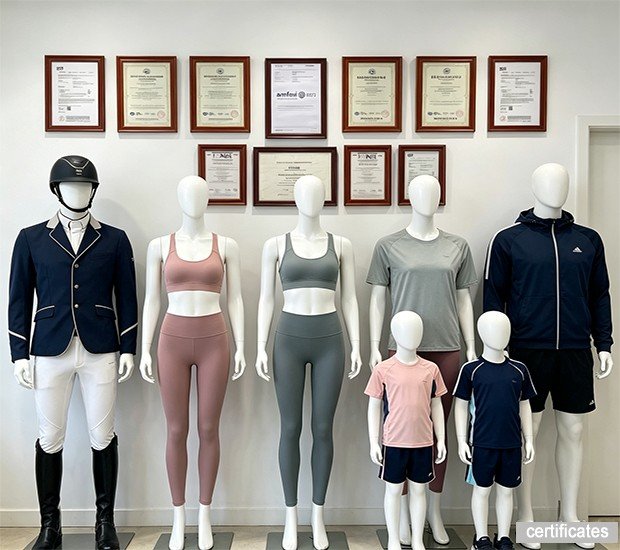
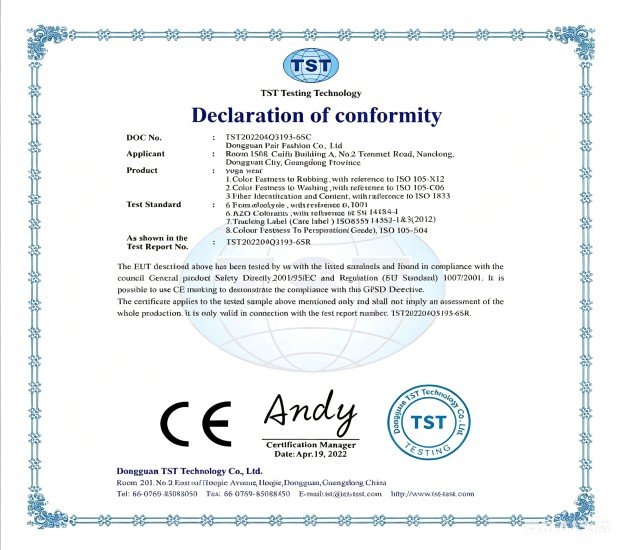
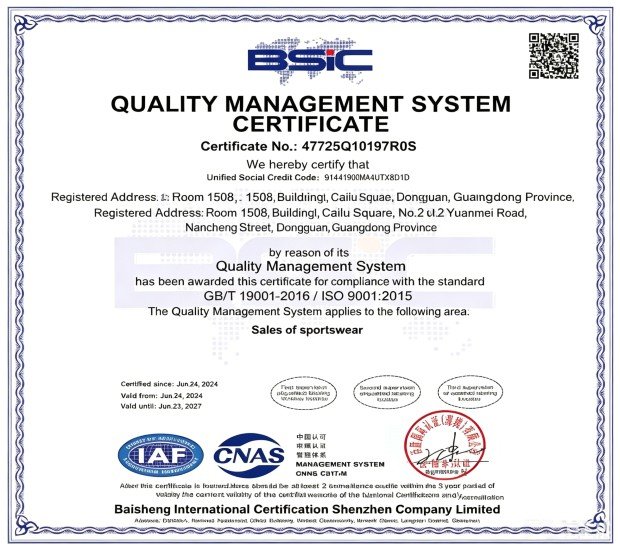
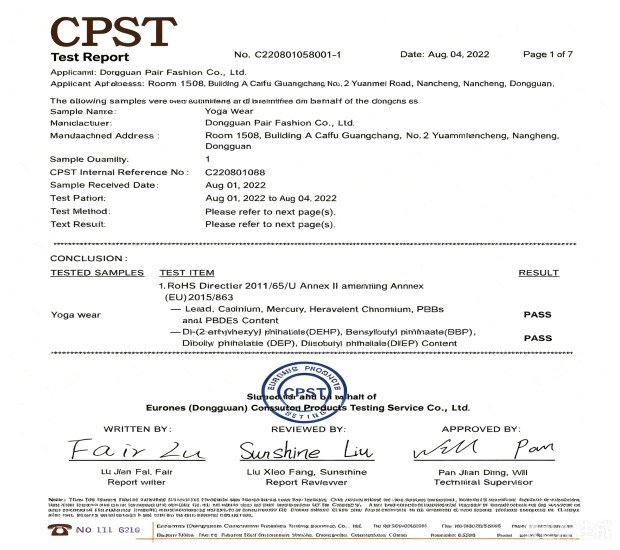
Why Choose Chinese Designer Equestrian Clothing Manufacturers Over Overseas Alternatives?
China is a competitive sourcing destination for designer equestrian apparel because of its established textile supply chains, diverse manufacturing capabilities, and access to specialized materials and garment production services. However, choosing a Designer equestrian clothing manufacturer in China is not automatically better than working with a European or local supplier. Buyers should compare technical experience, total landed cost, communication, lead times, and production reliability before making a decision.
For equestrian brands, the main advantage of sourcing from China is the opportunity to compare manufacturers with different specializations and commercial arrangements.
A suitable Designer equestrian clothing manufacturer should offer more than competitive pricing. It should demonstrate relevant product experience, consistent quality, and the ability to meet the brand’s purchasing requirements.
Why Is China a Competitive Sourcing Location for Designer Equestrian Apparel?
China has an extensive apparel manufacturing ecosystem, including textile suppliers, fabric finishing companies, trim manufacturers, pattern development services, and garment production facilities.
This network can make it easier to source materials and coordinate production for different types of riding apparel.
A Designer equestrian clothing manufacturer located near relevant material suppliers may have access to stretch fabrics, functional finishes, silicone grip applications, zippers, labels, and packaging materials.
For brands developing riding tights, breeches, competition shirts, or lightweight jackets, access to these resources can support product development and purchasing flexibility.
However, not every Designer equestrian clothing manufacturer has the same supplier relationships or technical resources.
Buyers should verify whether the proposed materials are available, whether the manufacturer has relevant production experience, and whether its quoted conditions are realistic.
China’s manufacturing ecosystem is an advantage, but the capabilities of the individual supplier remain the deciding factor.
China vs Europe: How Do Manufacturer Capabilities, Costs and Lead Times Compare?
A Designer equestrian clothing manufacturer in China may offer competitive production costs and broad material sourcing options. European manufacturers may offer advantages in geographic proximity to European buyers, regional sourcing preferences, or specialized craftsmanship.
Neither location guarantees superior quality.
Comparison factor | Chinese manufacturers | European manufacturers |
|---|---|---|
Production costs | Often competitive for suitable order volumes | May involve higher labor costs |
Material sourcing | Broad textile and trim supply networks | Depends on country and supplier |
Technical expertise | Varies by manufacturer and product | Varies by manufacturer and product |
Shipping to Europe | Longer international transport may apply | Potentially shorter regional delivery |
MOQ | Varies significantly | Varies significantly |
Communication | Time-zone and language coordination may be needed | May be easier for regional buyers |
Quality consistency | Depends on production controls | Depends on production controls |
A Designer equestrian clothing manufacturer should be compared using actual quotations and production evidence rather than assumptions about its country.
For example, a Chinese supplier offering a lower garment price may still have a higher total landed cost after international freight, import duties, inspection, and other applicable charges.
Similarly, a European supplier may offer faster replenishment for nearby customers, even if its unit price is higher.
When selecting a Designer equestrian clothing manufacturer, buyers should consider the complete purchasing arrangement rather than the country of origin alone.
Which Chinese Manufacturing Regions Offer Relevant Apparel Supply Chain Resources?
Different Chinese manufacturing regions have established strengths in textile production, garment manufacturing, and related supply chain services.
For buyers searching for a Designer equestrian clothing manufacturer, location can influence material sourcing, production coordination, and supplier access.
Manufacturing region | Relevant sourcing characteristics |
|---|---|
Dongguan, Guangdong | Apparel manufacturing, development services, and access to Pearl River Delta supply chains |
Shenzhen, Guangdong | Garment sourcing, branding services, and international trade connections |
Quanzhou, Fujian | Sportswear, functional apparel, and textile manufacturing |
Xiamen, Fujian | Apparel sourcing, export services, and regional manufacturing connections |
Zhejiang | Textile production, garment manufacturing, and fabric supply networks |
A Designer equestrian clothing manufacturer based in Dongguan may benefit from proximity to regional fabric and trim suppliers.
A supplier in Fujian may have experience with performance sportswear and functional garments.
However, geographic location alone does not prove equestrian specialization.
A Designer equestrian clothing manufacturer should demonstrate actual experience with the specific garments being purchased, regardless of where its office or production facility is located.
Buyers should also confirm whether the company’s registered address, sales office, and manufacturing location are the same.
What Are the Main Advantages and Risks of Overseas Sourcing From China?
Working with a Chinese Designer equestrian clothing manufacturer can provide commercial opportunities, particularly for brands seeking custom products and access to a broad apparel supply chain.
Potential advantages include competitive quotations, material sourcing options, product development resources, and manufacturing capacity.
However, international sourcing also introduces risks that buyers should manage.
Common advantages:
Access to different apparel manufacturing specializations
Opportunities to compare multiple suppliers
Availability of functional fabrics and customization options
Potential cost advantages at suitable order quantities
Support for coordinated apparel collections
Common risks:
Longer shipping distances and freight uncertainty
Misunderstandings about technical specifications
Differences between approved samples and bulk production
Unclear production or subcontracting arrangements
Import compliance and customs requirements
Delays caused by material availability or production scheduling
A reliable Designer equestrian clothing manufacturer should communicate clearly about production responsibilities, delivery assumptions, and quality requirements.
Buyers should request written confirmation of important conditions before paying a deposit.
When evaluating a Designer equestrian clothing manufacturer, brands should also investigate intellectual property protection and how original designs are handled.
International sourcing works best when responsibilities, specifications, and commercial terms are documented before production begins.
When Should Buyers Consider a European or Local Manufacturer Instead?
China is not necessarily the best sourcing location for every equestrian clothing brand.
A European or local supplier may be more suitable when a brand requires very short replenishment cycles, frequent in-person development meetings, regional manufacturing claims, or smaller deliveries close to its customers.
For example, a boutique brand selling limited seasonal collections may place greater value on short transport distances than on the lowest possible unit price.
A Designer equestrian clothing manufacturer in China may be more attractive when the brand has sufficient planning time, clearly defined specifications, and order volumes that justify international sourcing.
Buyers should consider alternative sourcing locations when:
Products require urgent replenishment.
Frequent physical sample reviews are essential.
Local or regional manufacturing is part of the brand’s positioning.
Import costs reduce the expected price advantage.
The proposed supplier cannot meet technical or compliance requirements.
A Designer equestrian clothing manufacturer should earn its place on the shortlist through demonstrated capability and commercial suitability, not simply because it operates in a major manufacturing country.
How Should Brands Make the Final China vs Overseas Sourcing Decision?
The most practical approach is to compare suppliers from different regions using the same purchasing requirements.
A brand should evaluate a Chinese Designer equestrian clothing manufacturer against European or local alternatives using consistent criteria.
Evaluation criterion | What buyers should compare |
|---|---|
Product expertise | Relevant garment samples and technical experience |
Sample quality | Fit, workmanship, materials, and design accuracy |
Total landed cost | Development, production, inspection, freight, and import expenses |
Lead time | Sampling, production, transport, and delivery |
MOQ flexibility | Minimum quantities and inventory commitment |
Quality reliability | Inspection records and repeat-order consistency |
Communication | Technical clarity and responsiveness |
A Designer equestrian clothing manufacturer offering the lowest unit price should not automatically receive the highest overall rating.
Likewise, a local manufacturer should not be preferred solely because it is geographically closer.
For brands planning larger or repeat collections, a Chinese Designer equestrian clothing manufacturer may provide strong commercial value when product quality, development capabilities, and delivery conditions meet the required standards.
For brands prioritizing immediate replenishment or regional production, another sourcing location may be more suitable.
The best sourcing decision is based on verified manufacturer capabilities, total purchasing costs, and the practical requirements of the brand’s collection.

How Can Buyers Verify Chinese Equestrian Clothing Manufacturers Before Shortlisting?
Buyers should verify a Chinese equestrian clothing manufacturer by checking its legal business identity, actual production location, relevant product experience, quality documentation, and commercial reliability. A trustworthy Designer equestrian clothing manufacturer should provide evidence supporting its manufacturing claims rather than relying only on product photographs, company descriptions, or low quotations. Supplier verification helps brands reduce sourcing risks before committing to sample development or bulk production.
When evaluating a Designer equestrian clothing manufacturer, buyers should distinguish between information published on a website and evidence that can be independently checked.
What Company History and Manufacturing Records Should Buyers Check?
A legitimate Designer equestrian clothing manufacturer should be able to provide its registered company name, business license, operating address, and relevant company information.
Buyers should compare these details with quotations, contracts, invoices, and payment instructions.
Important verification documents include:
Business registration and legal company name
Registered address and actual production location
Company establishment date
Relevant manufacturing experience
Export documentation where applicable
Contracting and payment entity information
A Designer equestrian clothing manufacturer with several years of operation may offer valuable experience, but company age alone does not establish technical competence.
A newer supplier with documented equestrian apparel experience may be more suitable than an older business specializing in unrelated products.
The objective is to confirm that the company exists, operates as represented, and has relevant experience with the garments being purchased.
Direct Manufacturer vs Trading Company: How Can Buyers Verify Production Responsibility?
Not every supplier advertising custom equestrian apparel owns or directly operates its production facilities.
Some businesses manufacture garments internally, while others coordinate production through partner facilities.
A Designer equestrian clothing manufacturer should clearly explain its production arrangements.
Trading companies are not automatically unsuitable. Some provide valuable sourcing, technical coordination, and quality management services.
However, buyers must understand who is responsible for each manufacturing activity.
Verification item | Questions to ask |
|---|---|
Production location | Where will the garments actually be produced? |
Pattern development | Who develops and approves the patterns? |
Sample production | Is sampling performed internally or externally? |
Bulk manufacturing | Which facility will manufacture the order? |
Quality inspection | Who checks finished garments? |
Subcontracting | Will any production activities be outsourced? |
A Designer equestrian clothing manufacturer should give the same and clear answers from its sales team, technical team, and production team.
Buyers can ask the manufacturer to show its production site through a live video, provide recent production records, or arrange an independent inspection when it is necessary for the order.
A Designer equestrian clothing manufacturer that refuses to clarify its actual production responsibilities should receive additional scrutiny before approval.
Which Design Development and Product Testing Evidence Should Suppliers Provide?
A Designer equestrian clothing manufacturer should demonstrate relevant experience with the exact product categories included in the purchasing brief.
For riding breeches, buyers may request evidence of waistband construction, grip application, stretch recovery, and riding-position fit.
For competition jackets, relevant evidence may include pattern accuracy, shoulder mobility, seam construction, and shape retention.
A Designer equestrian clothing manufacturer should also explain which product tests are performed internally and which require external laboratories.
Useful evidence includes:
Comparable product samples
Technical specifications and measurement records
Fabric composition and performance test reports
Grip durability or washing test results where relevant
Sample revision records
Inspection procedures for finished garments
A Designer equestrian clothing manufacturer should not be considered technically qualified simply because its website displays similar-looking garments.
Relevant samples and measurable test results provide stronger evidence than promotional descriptions.
How Can Buyers Check Certification Claims and Third-Party Inspection Records?
Certification claims require careful verification.
A Designer equestrian clothing manufacturer may advertise ISO 9001, BSCI, GRS, or other certifications and audit programs. However, these references do not all serve the same purpose.
For example, ISO 9001 quality management standards establish requirements for organizational quality management systems, while amfori BSCI focuses on monitoring social compliance within supply chains.
The Global Recycled Standard (GRS) addresses recycled material verification, chain-of-custody requirements, and additional social, environmental, and chemical criteria, helping buyers understand what relevant certification claims should demonstrate.
Buyers should not treat these as interchangeable product quality certifications.
Document or program | Main verification focus |
|---|---|
ISO 9001 | Quality management certification and applicable scope |
amfori BSCI | Social compliance audit status and facility information |
GRS | Recycled content claims and applicable supply chain certification |
Fabric test report | Tested material, method, results, and report date |
Third-party inspection report | Inspected products, quantity, findings, and acceptance criteria |
A Designer equestrian clothing manufacturer should provide current documentation identifying the relevant legal entity, facility, validity period, and scope.
Buyers should verify certification and audit claims through the relevant issuing organizations or official systems, and consult amfori’s BSCI audit guidance to better understand how social compliance monitoring relates to other assessment programs.
A Designer equestrian clothing manufacturer displaying an expired certificate or a document belonging to an unrelated facility should not receive automatic approval.
Certification supports supplier evaluation, but it does not replace product-specific testing or inspection.
What Intellectual Property and Confidentiality Risks Should Buyers Investigate?
Original equestrian clothing designs can represent significant commercial value.
A Designer equestrian clothing manufacturer working with original patterns, artwork, technical specifications, and branding materials should have clear confidentiality arrangements.
Before sharing sensitive design files, buyers should establish how those materials may be used and who can access them.
Important considerations include:
Ownership of original artwork and supplied technical files
Ownership and permitted use of newly developed patterns
Confidentiality obligations
Restrictions on unauthorized reproduction or resale
Access to designs by subcontractors
Handling of confidential information after cooperation ends
A Designer equestrian clothing manufacturer should be willing to discuss these responsibilities in writing.
A confidentiality agreement can help establish expectations, but its effectiveness depends on the agreement, applicable law, and enforceability.
Buyers should also avoid assuming that paying a sample development fee automatically transfers ownership of every pattern or technical file.
Design ownership and usage rights should be agreed before substantial development expenses are incurred.
Which Warning Signs Suggest a Manufacturer Should Be Removed From Consideration?
Not every concern requires immediate rejection. Some issues result from incomplete documentation or communication difficulties.
However, repeated inconsistencies may indicate higher sourcing risk.
A Designer equestrian clothing manufacturer should be investigated further when it demonstrates any of the following warning signs:
Business registration details do not match contractual documents.
Production location cannot be confirmed.
Certification claims cannot be supported.
The supplier refuses to clarify subcontracting arrangements.
Sample materials differ from approved specifications without explanation.
Quotation terms change repeatedly without documented reasons.
Payment instructions involve an unexplained third-party entity.
The supplier promises unrealistic prices or delivery schedules.
Technical questions receive vague or contradictory answers.
A Designer equestrian clothing manufacturer showing serious unresolved problems should not proceed to bulk production merely because its quotation is attractive.
Buyers should distinguish between correctable documentation gaps and fundamental concerns about business identity, technical capability, or commercial integrity.
What Should Buyers Verify Before Finalizing Their Supplier Shortlist?
A practical verification checklist helps buyers compare suppliers consistently.
Verification category | Required evidence |
|---|---|
Legal identity | Business license and matching contractual details |
Production responsibility | Confirmed manufacturing location and responsibilities |
Product experience | Relevant equestrian apparel samples |
Technical capability | Pattern, measurement, and development evidence |
Quality management | Inspection procedures and applicable records |
Certifications | Valid documents with appropriate scope |
Commercial terms | Written MOQ, pricing, lead time, and payment conditions |
Intellectual property | Clear confidentiality and design ownership arrangements |
A Designer equestrian clothing manufacturer should remain on the shortlist only when essential verification requirements have been satisfied.
For brands comparing several Chinese suppliers, verification should be completed before assigning final supplier scores.
A Designer equestrian clothing manufacturer with strong marketing materials but weak supporting documentation may present greater purchasing risk than a less visible supplier with reliable production evidence.
The strongest Designer equestrian clothing manufacturer candidate is one that can demonstrate relevant technical capabilities, transparent manufacturing responsibilities, and dependable commercial practices.
Supplier verification is not about collecting the largest number of documents. It is about obtaining enough reliable evidence to make a confident purchasing decision.
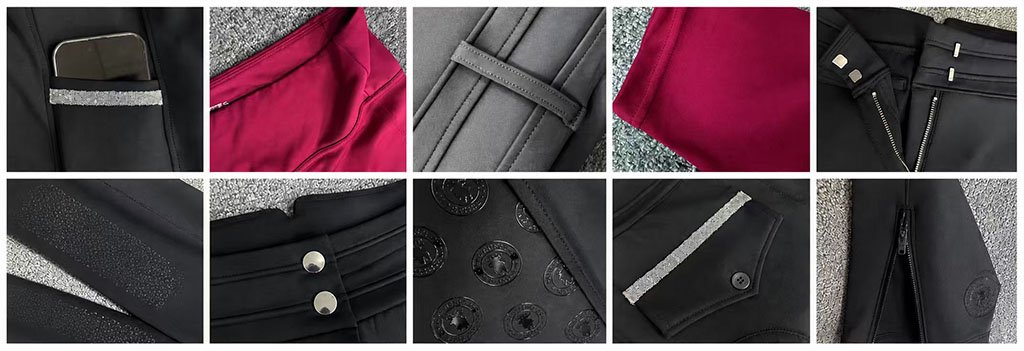
How to Choose the Best Designer Equestrian Clothing Manufacturer in China: Final Supplier Scorecard
The best designer equestrian clothing manufacturer should be selected through a structured comparison of technical capabilities, sample quality, equestrian product experience, pricing, and production reliability. A 100-point supplier scorecard helps buyers compare shortlisted manufacturers using consistent criteria. However, a Designer equestrian clothing manufacturer must first meet essential requirements for product safety, business legitimacy, and manufacturing capability before its overall score is considered.
A suitable Designer equestrian clothing manufacturer should demonstrate relevant experience and provide reliable evidence supporting its claims.
The goal is not to find a supplier with the most attractive catalog. It is to identify a manufacturing partner that can meet your brand’s technical and commercial requirements consistently.
What Should a 100-Point Equestrian Manufacturer Comparison Scorecard Include?
A structured scorecard makes supplier selection more transparent and reduces decisions based solely on price or personal impressions.
When comparing a Designer equestrian clothing manufacturer, buyers should assign scores using actual samples, quotations, technical documents, and verified production information.
Evaluation category | Maximum points |
|---|---|
Design understanding and technical development | 25 |
Sample quality and pattern accuracy | 20 |
Equestrian product specialization | 15 |
Quality control and production consistency | 15 |
Total development cost and MOQ | 10 |
Lead time and communication reliability | 10 |
Documentation and intellectual property protection | 5 |
Total | 100 |
These weights are a suggested purchasing framework rather than independently verified manufacturer ratings.
A Designer equestrian clothing manufacturer with excellent pricing but poor sample accuracy should not automatically outrank a supplier with stronger technical performance.
Similarly, a high overall score should never override an unresolved critical safety issue, an unverifiable legal identity, or a fundamental failure to meet the purchasing brief.
How Should Buyers Weight Design Capability, Sample Quality, MOQ and Reliability?
Different equestrian brands have different priorities.
A startup developing riding tights may prioritize manageable MOQ and accurate samples. An established competition apparel brand may place greater weight on technical construction and repeat-order consistency.
A Designer equestrian clothing manufacturer should therefore be assessed against the specific requirements of the collection.
For example:
Original designer collections: Prioritize technical development and design accuracy.
Premium competition apparel: Prioritize riding-specific construction and sample performance.
Startup collections: Consider MOQ, development costs, and purchasing flexibility.
Established brands: Emphasize repeat production, quality consistency, and delivery reliability.
When evaluating a Designer equestrian clothing manufacturer, buyers should adjust scoring weights before reviewing quotations to avoid favoring a preferred supplier.
A Designer equestrian clothing manufacturer offering a low MOQ may be commercially attractive, but its technical capability must still meet the product requirements.
The strongest supplier is the one that performs well in the categories most important to your brand.
Which Questions Should Buyers Ask Every Shortlisted Manufacturer?
Before selecting a Designer equestrian clothing manufacturer, buyers should send the same questions to every shortlisted supplier.
This helps identify differences in capability, pricing, and production arrangements.
Purchasing question | What the answer should clarify |
|---|---|
Have you produced similar equestrian garments? | Relevant product experience |
Who develops and approves patterns? | Technical development responsibility |
What is your MOQ per style and color? | Actual purchasing commitment |
What development fees apply? | Total sampling and revision costs |
Where will bulk production take place? | Manufacturing responsibility |
How are approved specifications controlled? | Production consistency |
What inspections are available? | Quality verification |
What are the payment and delivery terms? | Commercial risk |
A reliable Designer equestrian clothing manufacturer should provide clear, consistent answers supported by relevant documentation.
Buyers should also ask suppliers to identify any requirements they cannot meet.
A Designer equestrian clothing manufacturer that openly explains its limitations may be a more dependable candidate than one that agrees to every specification without reviewing technical feasibility.
How Can Buyers Compare Two Suppliers With Similar Products but Different Capabilities?
Two manufacturers may offer nearly identical riding breeches, yet their development experience, production controls, and commercial terms can differ significantly.
A Designer equestrian clothing manufacturer should be evaluated using comparable evidence rather than product appearance alone.
Consider the following hypothetical example.
Evaluation factor | Supplier A | Supplier B |
|---|---|---|
Design development | Strong | Moderate |
Sample accuracy | High | Moderate |
Riding apparel experience | Extensive | Limited |
MOQ flexibility | Moderate | High |
Unit pricing | Higher | Lower |
Production documentation | Detailed | Basic |
Best potential fit | Premium original collections | Simpler, cost-sensitive products |
Illustrative comparison only; not actual ratings of named suppliers.
Supplier A may be better suited to a technically demanding competition collection.
Supplier B may be appropriate for simpler riding tops or standard private label products, provided its samples meet the required specifications.
When comparing a Designer equestrian clothing manufacturer, buyers should distinguish between technical suitability and commercial attractiveness.
A lower quotation cannot compensate for an inability to manufacture the required garment correctly.
Likewise, a highly specialized Designer equestrian clothing manufacturer may not offer the best commercial arrangement for a simple product with limited customization.
The final decision should reflect product requirements, purchasing volume, and acceptable sourcing risk.
What Final Checks Should Buyers Complete Before Selecting a Manufacturing Partner?
Before paying a deposit, buyers should confirm that the selected supplier meets all essential requirements.
A Designer equestrian clothing manufacturer should provide written confirmation of the approved specifications, commercial terms, and production responsibilities.
The final review should cover:
Approved samples: Confirm fit, construction, materials, branding, and measurements.
Final quotation: Verify quantities, unit prices, development charges, and additional costs.
MOQ conditions: Confirm requirements for each style, color, and size range.
Production location: Identify the facility responsible for manufacturing.
Quality standards: Agree on inspection methods, tolerances, and defect classifications.
Delivery conditions: Confirm production lead time, shipping terms, and responsibilities.
Payment terms: Verify the contracting entity, payment instructions, and applicable conditions.
Design protection: Confirm ownership and permitted use of confidential designs and technical files.
A Designer equestrian clothing manufacturer that cannot resolve essential questions should not receive production approval simply because its quotation is competitive.
Buyers should also retain written records of the final supplier comparison.
These records help explain why a manufacturer was selected and provide useful references when evaluating future orders.
How Should Buyers Make the Final Supplier Decision?
A practical approach is to shortlist two or three manufacturers after the initial verification stage.
Each Designer equestrian clothing manufacturer should receive the same technical brief and commercial requirements.
After reviewing samples, quotations, and supporting documents, buyers can calculate weighted scores and identify any unresolved risks.
A Designer equestrian clothing manufacturer with the highest score should be selected only if it also passes all essential requirements.
For example, a supplier scoring 90 out of 100 should not be approved if its production location cannot be verified or its sample fails a critical functional requirement.
A Designer equestrian clothing manufacturer scoring slightly lower may offer better overall purchasing value if it provides more reliable documentation, realistic delivery conditions, and stronger repeat-order consistency.
Brands interested in evaluating Dongguan Pair Fashion can review Pair Fashion’s equestrian apparel manufacturing services alongside quotations and samples from other shortlisted suppliers.
The most suitable Designer equestrian clothing manufacturer is the supplier whose verified capabilities, commercial conditions, and production reliability best match the brand’s requirements.
A successful manufacturer selection is based on evidence, comparable specifications, and controlled purchasing risk—not simply the lowest price or highest advertised capability.