OEM/ODM Sportswear Manufacturer | 3-Day Sampling | Low MOQ | 50K Monthly Capacity | ISO9001 & BSCI Certified
Top 10 Equestrian Team Clothing Manufacturer Choices for Custom Teamwear Buyers
Compare the best equestrian clothing brands by riding apparel range, technical performance, fit, price positioning and collection strategy. Learn what buyers can benchmark before developing custom equestrian apparel with experienced manufacturers.
Equestrian Team Clothing Manufacturer: Top 10 Choices for Customization, MOQ and Reorder Support
Finding an Equestrian Team Clothing Manufacturer is not difficult. Finding one whose capabilities, MOQ structure and repeat-order system actually match a team program is much harder.
A supplier may show attractive riding apparel, advertise custom production and offer a competitive price. None of these points alone proves that it is the right sourcing partner. Team orders create a different commercial challenge because quantities are often divided across products and sizes, riders can join or leave, replacement pieces may be required, and successful garments may need to be reproduced months later.
This makes supplier comparison less about finding the factory with the longest product catalog and more about understanding what the supplier can prove, how its order conditions work and whether the first successful order can become a repeatable supply program.
The right Equestrian Team Clothing Manufacturer should be compared through equestrian specialization, customization evidence, MOQ structure, sample execution, order flexibility, bulk quality control and reorder support. Buyers should compare suppliers against the same order requirements and verify important claims with relevant product evidence, samples, factory information and written commercial terms rather than choosing mainly by advertised price, MOQ or factory size.
For a small club, flexibility can be more important than having very large production capacity. For a private label brand, technical product experience and sample accuracy may be more important. For an established team program, stable repeat production and replenishment support can become more important than saving a small cost on the first order.
The objective is therefore not to identify one manufacturer that appears strongest at everything. It is to find the supplier whose strengths match the requirements that matter most to the actual order.
What Should Buyers Compare Before Shortlisting an Equestrian Team Clothing Manufacturer?
Before shortlisting an Equestrian Team Clothing Manufacturer, buyers should compare relevant equestrian experience, customization evidence, MOQ structure, commercial flexibility, sample performance, bulk quality-control evidence and reorder capability. These factors reveal much more about supplier suitability than a low quotation or a large factory because they show whether the manufacturer fits both the first order and the orders likely to follow it.
A common sourcing mistake happens before the first RFQ is even sent: companies with very different business models are placed in the same comparison.
An established equestrian brand may have excellent products but offer no OEM manufacturing. A sourcing company may coordinate capable factories without owning production facilities. A general activewear manufacturer may have strong stretch-fabric experience but limited evidence in riding apparel. A specialized equestrian factory may understand the category well but operate with MOQ or product limitations that do not suit a particular buyer.
The first screening question should therefore be more precise than:
“Do you manufacture equestrian clothing?”
It should be:
“What evidence shows that your manufacturing model fits this particular team order?”
Manufacturer vs Brand vs Trading Company: Who Actually Makes the Products?
The word manufacturer appears frequently in online supplier searches, but it does not always describe the same business model.
Buyers can separate potential suppliers into four practical categories:
| Supplier Type | Typical Role | What Buyers Need to Verify |
|---|---|---|
| Equestrian Brand | Develops and sells products under its own brand | Whether OEM or private label production is available |
| Direct Manufacturer | Develops and produces garments for buyers | Relevant production capability, sampling, QC and factory control |
| Trading or Sourcing Company | Coordinates orders through manufacturing partners | Which factory makes the order and who controls specifications and quality |
| General Sportswear Manufacturer | Produces multiple performance apparel categories | Whether it has relevant equestrian product experience |
None of these models should be accepted or rejected purely by its label.
A capable sourcing company can sometimes manage a complicated project better than a poorly organized direct factory. A general sportswear manufacturer can also be suitable when its technical capabilities closely match the product.
What matters is transparency and relevant evidence.
Buyers should know who develops the pattern, who purchases the fabric, where the garments are sewn, who controls outsourced processes, who performs production inspection and which company is responsible when the delivered product does not match the approved specification.
This separates a genuine supply model from a website that simply displays a broad product catalog.
Which Factors Matter Most for Equestrian Team Orders?
A useful manufacturer shortlist should focus on factors that can materially change cost, quality, delivery or future replenishment.
Seven areas provide a practical starting point:
- Equestrian Specialization: Is there relevant evidence in breeches, riding tights, tops, jackets or competition apparel?
- Customization Evidence: Can the supplier demonstrate real custom execution rather than only logo decoration?
- MOQ Structure: Does the minimum apply to the entire order, each style, each color or individual materials?
- Sample Performance: Does the supplier interpret specifications accurately and correct problems efficiently?
- Order Flexibility: Can the proposed quantity and size structure be handled without creating impractical minimums?
- Bulk Quality Control: What evidence shows that an approved standard can be repeated across production?
- Reorder Support: Can the supplier identify and reproduce the important specifications when another order is required?
The weighting should change according to the buyer.
A small riding club may give greater importance to MOQ structure and order flexibility. A private label brand developing technical riding bottoms may give more weight to equestrian specialization and sample execution. A mature club, retailer or distributor with predictable replenishment may prioritize bulk repeatability and reorder support.
This is why the word best needs context in B2B sourcing.
The manufacturer with the lowest MOQ is not automatically the best manufacturer for a technically demanding product. The supplier with the largest factory is not automatically the best choice for a small multi-size order. The lowest quotation is not necessarily the lowest commercial risk.
Why Is a Team Order Different From a Standard Private Label Order?
Teamwear creates an order structure that can change after the first shipment.
Consider a riding program with 45 riders. The initial purchase may be divided across several garments and a broad size range. A few months later, new riders may join, some garments may need replacement and certain sizes may require additional quantities.
The purchasing problem therefore has two layers:
Can the supplier handle the initial order?
And:
Can the supplier support the order after the team changes?
The second question is frequently underestimated.
A manufacturer may execute one bulk order successfully but still struggle with later replenishment if the original fabric cannot be identified, measurements were not properly recorded, trims have changed, the previous pattern cannot be located or the reorder quantity falls below a new production minimum.
For team programs, repeatability should therefore be treated as a sourcing criterion from the beginning rather than a problem to solve after the first order has shipped.
This does not mean every future reorder can be perfectly identical. Fabrics and trims can be discontinued, dye lots can vary and commercial conditions can change. What matters is whether the supplier has a controlled method for identifying those changes and obtaining buyer approval before substituting important specifications.
What Evidence Makes an Equestrian Team Clothing Manufacturer Worth Shortlisting?
An Equestrian Team Clothing Manufacturer becomes worth deeper evaluation when its claims can be connected to evidence relevant to the buyer’s actual order.
At the first screening stage, buyers should look for:
- Relevant equestrian product evidence
- Clear company and production information
- OEM, ODM or private label capability
- Understandable MOQ conditions
- Sample capability
- Quality-control evidence
- Relevant certification information
- Commercial terms appropriate to the order
- A defined method for repeat production
Public information is useful for reducing a longlist, but it should not be treated as final verification.
For example, “MOQ 100 pieces” is incomplete information until the buyer knows whether the minimum means 100 pieces per total order, per style, per color or per style per color. Some current equestrian manufacturers publicly state their MOQ at the style/color level, illustrating why headline MOQ numbers need context before two suppliers can be compared.
Lead time works the same way.
A supplier advertising 20 days of production may be counting from sample approval and material readiness, while another may quote a longer period beginning from deposit or order confirmation. Without understanding the starting point, comparing “20 days vs 30 days” can create a false conclusion.
Certification claims also require context. Buyers should verify the certificate holder, validity, scope and relevance rather than treating a row of certification logos as proof of every production capability.
Factory scale deserves similar caution. Large capacity can be valuable for volume orders, but factory size does not automatically prove equestrian specialization, sample accuracy, communication quality or reorder repeatability.
A practical sourcing sequence is:
Longlist → Evidence Check → Comparable RFQ → Sample Comparison → Factory Verification → Commercial Review → Final Shortlist
Each stage answers a different question.
The longlist identifies possible suppliers. Evidence screening removes obvious mismatches. A comparable RFQ tests commercial fit. Samples test execution. Factory verification tests whether important claims can be supported. Commercial review identifies MOQ, price, payment, lead-time and reorder risks before the purchase order is placed.
That process gives buyers a much stronger basis for selecting an Equestrian Team Clothing Manufacturer than choosing from a list based mainly on popularity, price or a supplier’s own marketing claims.

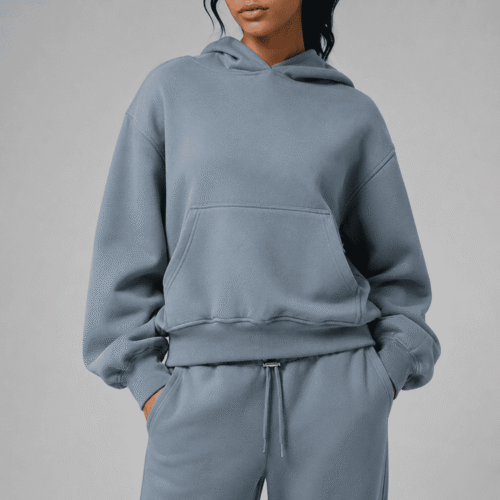
Custom Women’s Oversized Pullover Hoodie Fleece Sweatshirt OEM ODM
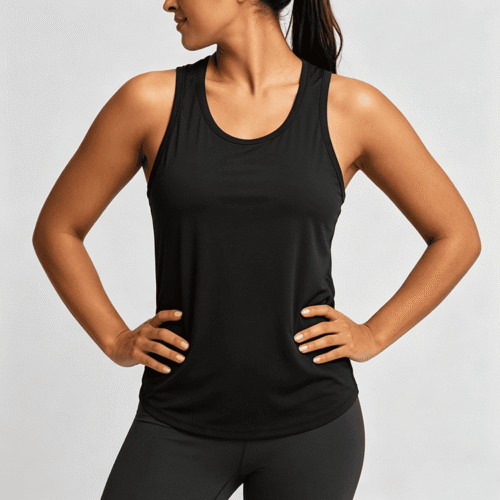
Custom Women’s Performance Tank Top OEM ODM Workout Activewear
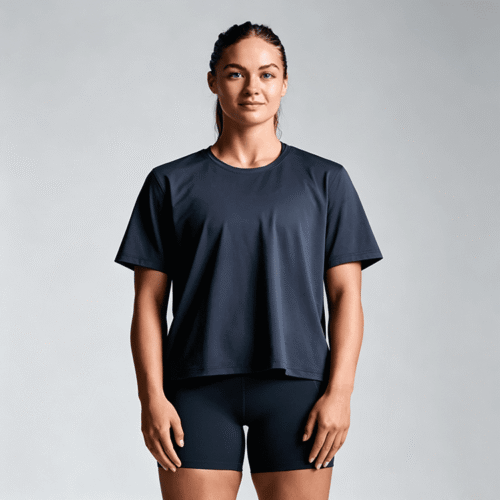
Custom Women’s Performance Training T-Shirt OEM ODM Activewear Tee
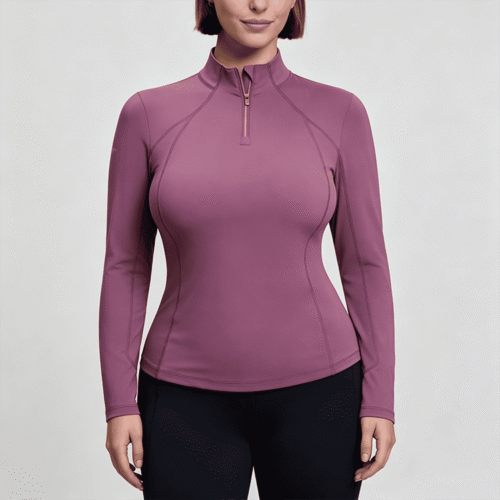
Custom Women’s Quarter Zip Equestrian Base Layer Long Sleeve Riding Shirt OEM ODM
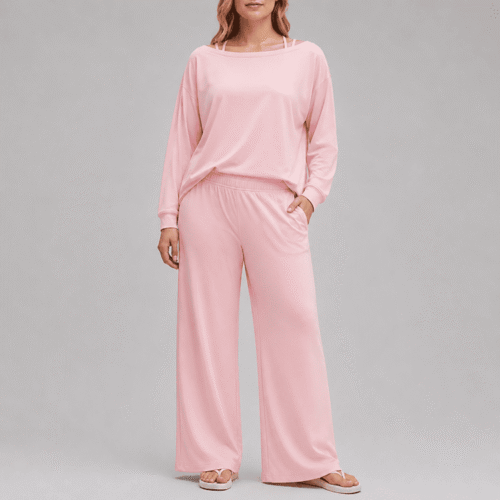
Custom Women’s Relaxed Fit Loungewear Set OEM ODM Wide Leg Lounge Pants
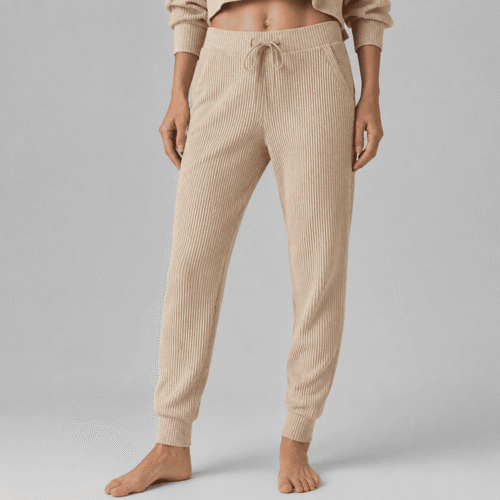
Custom Women’s Ribbed Knit Jogger Pants Cozy Loungewear OEM ODM
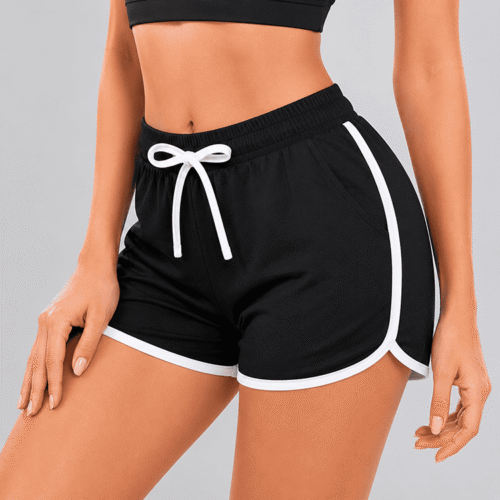
Custom Women’s Running Shorts OEM ODM Contrast Trim Workout Shorts
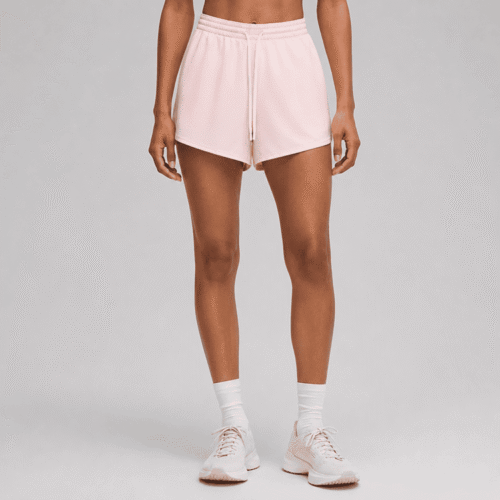
Custom Women’s Running Shorts OEM ODM Lightweight Workout Shorts
Which Are the Top 10 Equestrian Team Clothing Manufacturer Choices in China?
The Top 10 Equestrian Team Clothing Manufacturer choices in China should not be compared only by product range or advertised MOQ. Buyers should examine equestrian specialization, custom capability, sample evidence, production control, order flexibility and reorder support. Some suppliers focus deeply on riding apparel, while others combine equestrian products with broader activewear or teamwear manufacturing, creating different advantages for different buyers.
China has a large sportswear manufacturing base, but finding factories that specifically understand equestrian apparel requires a narrower search.
The companies below represent different sourcing models. Some concentrate heavily on riding breeches, competition wear and equestrian collections. Others have broader sportswear capabilities that may be useful when a buyer needs team apparel across several product categories.
This distinction matters. A specialist may offer stronger category knowledge but narrower commercial flexibility. A broader performance-apparel manufacturer may offer more options across tops, jackets and other team products, but buyers should verify its experience with riding-specific construction.
The table below provides a first comparison. Publicly unavailable information should be confirmed directly during the RFQ stage.
| Manufacturer | Location | Equestrian Focus | Public MOQ | Sample / Lead Time | Best Fit |
|---|---|---|---|---|---|
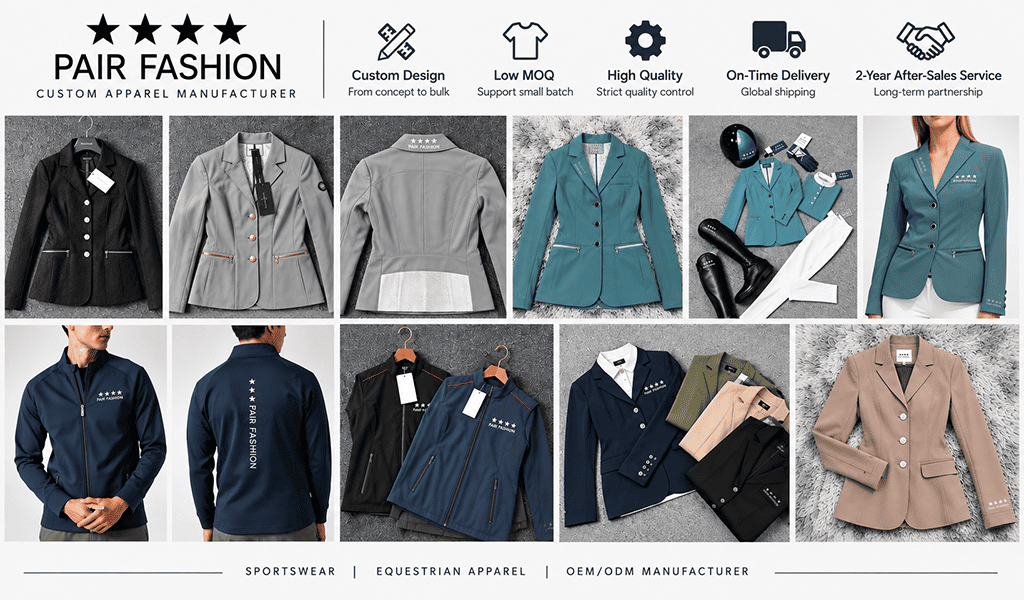
| Pair Fashion | Dongguan, Guangdong | Equestrian + functional sportswear | From 100 pcs | Sample 3–7 days; bulk 15–25 working days | Custom collections, team programs, private label and repeat orders |
| Run Equestrian | Guangzhou, Guangdong | Specialist equestrian apparel | From 100 pcs/style | Sample around 7 days; bulk 15–25 days | Riding brands, clubs and specialized equestrian collections |
| EquestCo | Dongguan, Guangdong | Breeches, show jackets, shirts and teamwear | 50–150 pcs depending on category | Sample 5–15 days; bulk around 25–30 days | Clubs and riding-apparel buyers needing category-specific production |
| Zest Equestrian | Dongguan, Guangdong | Equestrian clothing and equipment | Confirm before RFQ | Confirm before RFQ | Buyers sourcing apparel together with broader equestrian products |
| Shuyu Activewear | Dongguan, Guangdong | Equestrian + activewear | Public listings commonly show 100 pcs on selected products | Confirm by project | Activewear brands expanding into equestrian apparel |
| Berunwear | Wuhan, Hubei | Sportswear + custom equestrian teamwear | Small MOQ advertised; confirm by style | Confirm before RFQ | Teamwear and sportswear buyers needing broad customization |
| Anqi / HorseRidingWear | Dongguan, Guangdong | OEM/ODM equestrian apparel | Confirm before RFQ | Development timing varies by stage | Buyers seeking riding-specific OEM/ODM development |
| Ningbo Yuyang Clothing | Ningbo, Zhejiang | Outdoor and equestrian-related apparel | Product dependent | Confirm before RFQ | Buyers comparing outdoor and riding apparel capability |
| CH Bright Future Clothing | Fujian | Equestrian sets and related products | Selected public listings from 100 pcs | Confirm before RFQ | Buyers sourcing selected equestrian apparel and accessories |
| Kala Apparel | China | Custom apparel + equestrian clothing | Small MOQ advertised; confirm by product | Confirm before RFQ | Private label buyers wanting equestrian products within a broader apparel program |
Public MOQ and lead-time figures can change by fabric, color, style and customization level. They should be treated as screening information rather than final commercial terms.
1. Pair Fashion — Strong for Custom Team Programs and Repeat Production
Location: Dongguan, Guangdong, China
Founded: 2016
Regular MOQ: From 100 pieces
Sampling: Typically 3–7 days
Bulk Production: Typically 15–25 working days
Core Products: Riding tops, breeches, jackets, competition apparel, windproof outerwear and other functional sportswear
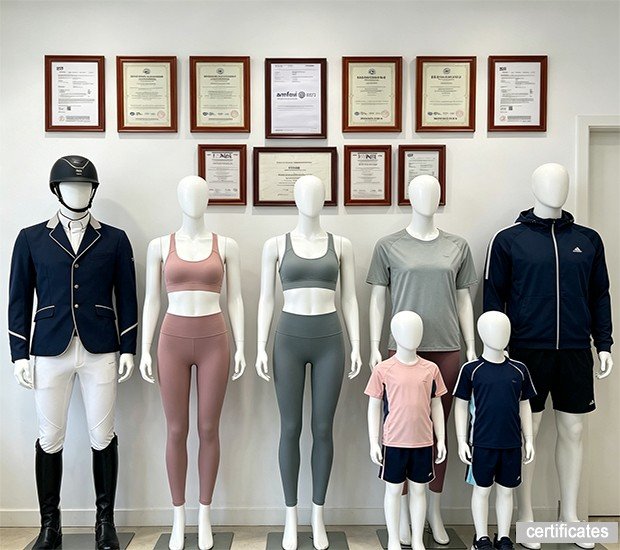
Certifications: ISO9001, BSCI, GRS, CE and ROHS
Manufacturing Structure: 135 employees, 7 production lines, including 3 dedicated equestrian lines
Development Resources: 11-person pattern and sample team
Quality Resources: 13-person QC team
Pair Fashion combines equestrian production with a broader functional sportswear manufacturing base. This can be useful for buyers whose team program extends beyond one specialist product and requires coordinated tops, riding bottoms, jackets or related performance garments.
Its regular MOQ starts from 100 pieces, while the company’s internal production structure includes three lines dedicated to equestrian apparel. Sampling is normally completed within 3–7 days, while standard bulk production is generally 15–25 working days after the required approvals and production conditions are confirmed.
For repeat business, an important capability is product record retention. Patterns, fabric references, trims and workmanship information can be archived to support future production rather than treating every reorder as a completely new project.
Core Strengths
- Dedicated equestrian production capacity within a broader sportswear manufacturing operation
- Women’s, men’s and youth equestrian apparel capability
- Regular MOQ from 100 pieces
- 11-person pattern and sample team
- 13-person QC team
- Support for OEM, ODM and private label projects
- Product records that can support repeat production
- Suitable for buyers developing several coordinated apparel categories
Best Suited For
Pair Fashion is particularly relevant to private label equestrian brands, riding clubs, distributors and growing team programs that need custom products and expect to place future repeat orders.
Potential Limitation
Buyers seeking only a handful of ready-made garments with a simple logo application may not need a full manufacturing program. For very small immediate team orders, a local decorator or stock teamwear supplier may be commercially more practical.
2. Run Equestrian — Strong Specialist Positioning in Riding Apparel
Location: Guangzhou, Guangdong, China
Established: Public website states manufacturing since 2009
MOQ: From 100 pieces per style
Sampling: Around 7 days publicly stated
Bulk Production: Approximately 15–25 days after sample approval
Core Products: Breeches, jodhpurs, riding shirts, competition apparel, jackets and team clothing
Certifications Publicly Listed: ISO 9001, BSCI, CE, GRS, OEKO-TEX Standard 100 and SGS-related verification
Run Equestrian presents itself as a specialist rather than a general sportswear manufacturer. Its public manufacturing information emphasizes riding breeches, jodhpurs, competition clothing and related technical equestrian products.
The company states that it operates its own approximately 10,000-square-meter facility in Guangzhou and publicly advertises a low first-run MOQ beginning at 100 pieces per style. Its published information also lists around seven days for sampling and 15–25 days for bulk production.
That combination makes Run Equestrian worth considering when product specialization carries significant weight in the supplier scorecard.
Core Strengths
- Strong public focus on equestrian apparel
- Broad riding-specific product range
- Public factory and production information
- OEM/ODM capability
- Low first-run MOQ relative to larger bulk programs
- Published sampling and production timeframes
- Technical riding fabric and silicone-grip capability
Best Suited For
Brands, riding clubs and retailers looking for a manufacturer whose public positioning is strongly concentrated on riding apparel and private label equestrian products.
Potential Limitation
Its published starter MOQ is described at the style/color level in some commercial information. Buyers planning many colors or low quantities across multiple SKUs should therefore confirm exactly how the minimum applies to their assortment before comparing it with a supplier quoting MOQ at total-order level.
3. EquestCo — Strong for Breeches, Show Apparel and Club Teamwear
Location: Humen, Dongguan, Guangdong, China
Established: Public website states 2015
MOQ: Breeches 150 pcs/style/color; show jackets and shirts 100 pcs; custom teamwear from 50 pcs
Sampling: Stock samples within about 5 days; custom samples around 10–15 days
Bulk Production: Around 25–30 days, with longer peak-season timing publicly noted
Core Products: Riding breeches, show jackets, shirts and custom teamwear
Quality Information: AQL 2.5 inspection and OEKO-TEX Standard 100 Class II fabrics are publicly stated
EquestCo is another specialist option with relatively detailed public information about its manufacturing operation.
One useful feature for buyers is that the company does not present a single MOQ as if every product has the same commercial requirement. Its published minimums vary by product category, including 150 pieces per style/color for breeches, 100 pieces for show jackets and shirts, and teamwear programs starting lower.
That illustrates an important sourcing principle: MOQ should be understood as a structure, not just a number.
The company also publishes production information covering sewing equipment, sampling resources, daily production output and QC processes. This gives buyers more information to verify before moving into quotation and sampling.
Core Strengths
- Clear focus on equestrian apparel
- Publicly stated product-specific MOQ structure
- Breeches, show jackets, shirts and teamwear capability
- Published sampling information
- AQL-based inspection information
- Pantone color matching and reorder color consistency claims
- Dongguan location close to a large apparel supply chain
Best Suited For
Riding clubs and equestrian brands that want specialized apparel production and are comfortable working with different minimum quantities for different products.
Potential Limitation
A buyer planning a very fragmented breeches order across several colors should examine the 150-piece style/color minimum carefully. A lower headline MOQ for teamwear does not necessarily mean that every custom product can be ordered at the same quantity.
4. Zest Equestrian — Broad Equestrian Manufacturing Across Apparel and Equipment
Location: Dongguan, Guangdong, China
Experience: Public website states 16+ years of experience
MOQ: Confirm by product and customization
Sample Lead Time: Confirm before RFQ
Core Categories: Equestrian clothing, riding breeches, saddle pads, headcollars, bell boots, leg wraps and equestrian bags
Services: OEM/ODM, private label manufacturing, material sourcing, sample development, quality control, packaging and branding
Zest Equestrian differs from apparel-only suppliers because its publicly presented range extends into several horse and rider product categories.
This can matter to buyers developing a broader equestrian assortment. A retailer that wants riding apparel together with saddle pads, bags or related stable products may value the ability to discuss more categories with one supplier group.
For an apparel-only buyer, however, breadth should not automatically be treated as deeper specialization. The relevant question remains whether the supplier can show evidence for the specific garments being sourced.
Core Strengths
- Broad equestrian product coverage
- OEM/ODM and private label services
- Dongguan sourcing location
- Apparel and non-apparel equestrian categories
- Material sourcing, sampling and packaging support
Best Suited For
Equestrian brands, retailers and distributors looking at multiple horse-and-rider categories rather than apparel alone.
Potential Limitation
Publicly visible commercial details such as exact MOQ and project-specific lead times require direct confirmation. Buyers focused on technically demanding garments should also compare garment-specific evidence rather than assuming that a broad equestrian catalog proves equal strength across every category.
5. Shuyu Activewear — Useful for Buyers Crossing From Activewear Into Equestrian Clothing
Location: Dongguan, Guangdong, China
Experience: Public website states 10 years of customized sportswear experience
MOQ: Selected public marketplace listings show 100-piece minimums; confirm for each custom project
Lead Time: Confirm before RFQ
Core Products: Equestrian clothing, activewear, yoga wear, sportswear and athleisure
Services: OEM/ODM, R&D, sample room, fabric sourcing and quality management
Shuyu Activewear represents a different supplier profile from a dedicated equestrian specialist.
Its wider focus includes activewear, yoga wear and athleisure alongside equestrian clothing. This may be useful for a brand whose assortment crosses categories—for example, a lifestyle or performance brand adding riding apparel without building its entire business around equestrian products.
The trade-off is that buyers should verify how deep the company’s experience goes in the exact riding product being developed.
Core Strengths
- Broad performance-apparel manufacturing capability
- Equestrian clothing included in the product range
- OEM and ODM services
- In-house development and sample-related resources presented publicly
- Useful for cross-category activewear programs
Best Suited For
Sportswear or activewear brands adding equestrian-inspired or riding-specific products while continuing to source other performance categories.
Potential Limitation
Buyers developing highly technical breeches or competition garments should request relevant equestrian samples and production evidence rather than evaluating the company only through its broader activewear capability.
6. Berunwear — Broad Custom Sportswear With Equestrian Teamwear Capability
Location: Wuhan, Hubei, China
Experience: Public website states more than 15 years in sportswear
MOQ: Small MOQ is advertised; exact minimum should be confirmed by style
Lead Time: Confirm before RFQ
Core Products: Equestrian clothing, teamwear and multiple sportswear categories
Factory / Quality Information: Public information references BSCI testing, QC inspections and private label services
Berunwear approaches equestrian clothing from a broad custom sportswear background.
Its public equestrian offering emphasizes customization, teamwear, men’s, women’s and children’s sizing, labels and private label services. This can make it relevant to buyers whose purchasing needs resemble a team-uniform program as much as a specialist technical equestrian collection.
Core Strengths
- Broad custom sportswear experience
- Equestrian teamwear offering
- Men’s, women’s and children’s options
- Branding and private label support
- Suitable for multi-sport or teamwear buyers
Best Suited For
Clubs, online sellers and buyers who need custom team apparel across broader sports categories and do not require every product to come from an equestrian-only specialist.
Potential Limitation
For technically demanding riding products, buyers should verify specific experience with fit, grip, saddle-contact areas and riding-specific construction instead of relying on general teamwear expertise.
7. Anqi / HorseRidingWear — Riding-Specific OEM/ODM Development
Location: Dongguan, Guangdong, China
Operating History: Public OEM/ODM information states equestrian manufacturing support since 2012
MOQ: Confirm before RFQ
Sampling: Project dependent
Core Focus: Custom equestrian apparel and riding wear
Services: OEM/ODM development, design briefing, technical specification development, fabric selection and production support
Anqi, presented through HorseRidingWear, positions its service around equestrian OEM/ODM manufacturing rather than general ready-stock wholesale.
Its public information describes development from design consultation through production, with attention to target market, fabric weight, grip placement, branding and other product requirements.
From a supplier-comparison perspective, this makes it relevant to buyers who already have a design direction but still require manufacturing input before production.
Core Strengths
- Riding-specific OEM/ODM positioning
- Dongguan manufacturing location
- Development-oriented service
- Suitable for custom specifications rather than stock-only sourcing
Best Suited For
Brands developing custom riding products from briefs, references or technical specifications.
Potential Limitation
Several important commercial fields, including project-specific MOQ and final production lead time, should be confirmed through an RFQ before the supplier is compared directly with manufacturers publishing those terms online.
8. Ningbo Yuyang Clothing — An Alternative for Outdoor and Equestrian-Related Programs
Location: Ningbo, Zhejiang, China
Company History: Confirm directly
MOQ: Product dependent; public marketplace listings vary
Lead Time: Confirm before RFQ
Core Categories: Outdoor clothing and equestrian-related products
Certifications: Confirm directly for the required order
Ningbo Yuyang appears in public B2B sourcing results for equestrian sets and related products while also operating across outdoor apparel categories.
This broader outdoor background may be relevant when a buyer is developing riding apparel that overlaps with weather protection, outdoor use or general performance clothing.
However, marketplace visibility alone should not be treated as proof of deep equestrian specialization.
Core Strengths
- Outdoor-apparel background
- Public presence in equestrian-related sourcing categories
- Potential fit for performance and outdoor crossover products
Best Suited For
Buyers exploring outdoor-performance and equestrian crossover products and willing to conduct deeper factory verification.
Potential Limitation
Compared with suppliers publishing detailed equestrian manufacturing information, more due diligence is required. Buyers should verify company history, production ownership, equestrian references, MOQ, sample process and certifications before shortlisting.
9. CH Bright Future Clothing — A Marketplace-Visible Equestrian Supply Option
Location: Fujian, China
Company History: Confirm directly
MOQ: Selected public equestrian listings show approximately 100 pieces
Lead Time: Confirm before RFQ
Core Categories: Equestrian sets, horse-related products and selected apparel
Certifications: Confirm for the relevant production facility and order
CH Bright Future Clothing appears in B2B marketplace sourcing results for equestrian sets and related horse products.
It may provide another quotation point for buyers building a wider initial supplier longlist. However, this is also a good example of why marketplace presence and manufacturer verification should be treated as separate stages.
A product listing can establish that a supplier offers an item. It does not by itself establish the depth of pattern development, factory ownership, QC systems or long-term repeat-production capability.
Core Strengths
- Visible in equestrian sourcing categories
- Selected products offered at commercially accessible quantities
- Useful as an additional RFQ comparison point
Best Suited For
Buyers who are still building a broad supplier longlist and are prepared to conduct factory and product-specific due diligence before sampling.
Potential Limitation
Public information is less complete than for several specialist manufacturers in this comparison. Important manufacturing, certification and repeat-order claims should therefore be verified directly rather than assumed from marketplace listings.
10. Kala Apparel — Broader Custom Apparel Manufacturing With an Equestrian Category
Location: China
Experience: Public website states 12 years of experience
MOQ: Small MOQ is advertised; confirm by product
Lead Time: Confirm before RFQ
Core Categories: Custom apparel, equestrian clothing and other fashion/performance categories
Certification: BSCI-certified factory is publicly stated
Services: Fabric sourcing, pattern and sample development, private label branding and bulk production
Kala Apparel combines equestrian clothing with a much broader custom apparel offering.
Its public manufacturing information emphasizes fabric sourcing, pattern and sample development, private label branding and bulk production. This makes it potentially useful for buyers whose brand extends beyond the equestrian category.
The commercial question is whether breadth or specialization matters more for the project.
A multi-category fashion or activewear business may value one manufacturing relationship that can cover several product directions. A technically focused riding brand may instead prefer to give more weight to suppliers that show deeper evidence specifically around equestrian garments.
Core Strengths
- Broad custom apparel capability
- Equestrian clothing category
- Pattern and sample development
- Private label support
- BSCI certification publicly stated
- Potential fit for multi-category brands
Best Suited For
Private label companies that want to source equestrian apparel alongside other custom clothing categories.
Potential Limitation
Buyers should verify the depth of riding-specific production experience for the exact product being sourced, particularly where fit, silicone grip, saddle contact or competition requirements are important.
What Does This Top 10 Comparison Actually Show?
The most important conclusion is not that one company has the lowest MOQ or another has the longest history.
The comparison shows that Chinese equestrian suppliers operate under different manufacturing models.
A buyer looking for specialist breeches production may reasonably create a different shortlist from a riding club ordering coordinated team apparel. A startup testing its first collection may place more value on MOQ flexibility, while an established distributor may accept a higher minimum in exchange for stronger repeatability, production capacity and documented quality control.
This is also why public figures should never be compared without context.
A 50-piece teamwear MOQ is not automatically more flexible than a 100-piece manufacturing MOQ if the first applies only to selected existing products while the second allows deeper product development. Likewise, a seven-day sample is not automatically better than a ten-day sample if several revisions are required before the specification is correct.
When comparing each Equestrian Team Clothing Manufacturer, buyers should therefore move beyond the headline numbers and ask what those numbers actually include.
The next stage is to understand why China remains a common sourcing option for custom equestrian programs—and, equally importantly, when manufacturing in China may not be the most practical choice.
How Should Buyers Compare MOQ, Price and Order Flexibility?
Buyers should compare MOQ, price and order flexibility only after confirming what each quotation actually covers. A 50-piece MOQ may apply to one style and color, while another manufacturer may allow 100 pieces across mixed sizes. The better commercial comparison considers total order commitment, material minimums, customization costs, size and color flexibility, landed cost and the conditions for future reorders—not just the lowest advertised MOQ or unit price.
MOQ is one of the easiest numbers to compare and one of the easiest numbers to misunderstand.
A buyer sees 50 pieces, 100 pieces and 300 pieces and naturally assumes the supplier offering 50 pieces is the most flexible. In practice, those numbers may describe three completely different commercial conditions.
One manufacturer may mean 50 pieces per style per color. Another may accept 100 pieces in one style with mixed sizes and selected colors. A third may advertise a 100-piece garment MOQ but require enough custom-dyed fabric for several hundred garments.
The number on the website is therefore only the beginning of the MOQ discussion.
For an Equestrian Team Clothing Manufacturer, the real commercial question is how the minimum interacts with styles, colors, sizes, fabrics, branding and future replenishment.
What Does MOQ Actually Mean: Per Order, Per Style, Per Color or Per Fabric?
MOQ stands for Minimum Order Quantity, but buyers should immediately ask:
Minimum of what?
Consider four possible quotation structures:
| MOQ Structure | Example | Commercial Meaning |
|---|---|---|
| Per Total Order | 100 pcs total | Several products or colors may be allowed, subject to conditions |
| Per Style | 100 pcs/style | Every garment design must reach its own minimum |
| Per Style/Color | 100 pcs/style/color | Two colors can turn a 100-piece minimum into 200 pieces |
| Material MOQ | 300m/color | Fabric minimum may control the real order size even if garment MOQ is lower |
This distinction can materially change inventory exposure.
Suppose a club wants one riding top in navy and burgundy.
Supplier A quotes:
MOQ: 100 pcs
Supplier B quotes:
MOQ: 150 pcs
At first glance, Supplier A looks easier.
But Supplier A may require 100 pieces per color, creating a 200-piece commitment. Supplier B may allow 150 pieces across the two colors, creating a lower total inventory requirement.
The headline MOQ did not tell the buyer which offer was actually more flexible.
Public equestrian manufacturing terms demonstrate this problem clearly. EquestCo, for example, currently states 150 pieces per style per colour for breeches, 100 pieces for show jackets and riding shirts, and custom teamwear from 50 pieces per style. It also states that colors can be mixed within its 50-piece club teamwear MOQ, while standard categories use per-color minimums.
Other manufacturers use different structures. Run Equestrian publicly states a first-run minimum from 100 pieces per style, while its commercial pages provide additional style/color conditions for certain order packages.
Neither structure is automatically better.
The important point is that buyers should convert every supplier quotation into the same commercial language before comparing it.
Can Different Sizes and Team Products Be Combined Within One Order?
Size mixing is particularly important in equestrian teamwear because rider demand rarely follows a perfectly balanced size ratio.
A 60-piece order might contain:
XS – 5
S – 13
M – 18
L – 14
XL – 7
XXL – 3
If a manufacturer accepts mixed sizes freely within one style and color, the order can reflect actual rider demand.
If the supplier requires a minimum quantity for each size, the same project can become commercially difficult very quickly.
The same question applies to product mixing.
A buyer may need:
- 60 riding tops
- 60 breeches
- 30 jackets
That is 150 garments, but it does not necessarily mean the order satisfies a 100-piece MOQ.
If the MOQ is 100 pieces per style, the jackets are still 70 pieces short.
This is why buyers should never send an inquiry saying only:
“What is your MOQ?”
A better RFQ states the proposed structure:
“We are planning 60 training tops, 60 breeches and 30 lightweight jackets across six adult sizes. Please confirm the MOQ for each style, whether sizes can be mixed freely, the minimum per color, and whether any fabric or trim minimum applies separately.”
That question produces information that can actually be compared.
Why Can Material Minimums Be More Important Than Garment MOQ?
A garment factory and a fabric mill operate under different production economics.
The garment manufacturer may be willing to cut and sew 100 pieces. That does not mean a fabric mill will custom dye the exact quantity of fabric needed for those 100 garments.
This becomes particularly important when the project requires:
- Custom Pantone colors
- Custom fabric weight
- Special finishes
- Proprietary knitted structures
- Custom elastic or jacquard
- Custom silicone patterns
- Specially developed trims
A buyer may therefore receive:
Garment MOQ: 100 pcs
but later discover:
Custom fabric MOQ: 300 meters per color
This is not necessarily a contradiction. It reflects two different points in the supply chain.
Public supplier information illustrates this relationship. Run Equestrian, for example, separately publishes fabric minimums of 500 meters per color for stock-related fabric programs and custom development starting from 300 meters on its fabric sourcing information, while its garment manufacturing pages advertise lower garment-level minimums.
Similarly, EquiClothing explains that custom dyeing can raise the practical minimum because the fabric mill requires an economical dye lot, while stock-supported fabrics can allow smaller garment runs.
For a first collection, using an available performance fabric can therefore reduce risk even when a fully custom fabric sounds more attractive.
The buyer gives up some material exclusivity but may gain:
Lower Initial Commitment
Faster Development
Lower Inventory Exposure
Simpler Reorders
That trade-off can be commercially sensible for a product that has not yet proved demand.
Why Is the Lowest MOQ Not Always the Lowest-Risk Choice?
Low MOQ has real value.
It can help a new brand test demand, reduce initial inventory and avoid putting too much capital into an unproven product.
But lower MOQ is not automatically lower risk.
Consider two hypothetical offers for the same riding top:
| Cost Item | Supplier A | Supplier B |
|---|---|---|
| MOQ | 50 pcs | 100 pcs |
| Unit Price | $31 | $24 |
| Sample & Setup | $420 | $180 |
| Custom Packaging | $90 | Included |
| Estimated Freight | $310 | $420 |
| Initial Commitment | $2,370 | $3,000 |
Supplier A requires less cash overall, so it may be better for a market test.
Now assume the buyer already has proven monthly demand for 80 pieces.
Supplier B’s larger initial commitment may be commercially stronger because the unit economics are better and the stock is likely to sell.
The decision changes again if Supplier A can replenish 30 pieces easily while Supplier B requires another 100-piece minimum.
The relevant question is therefore not:
“Who has the lowest MOQ?”
It is:
“Which MOQ structure creates an acceptable level of inventory, cost and reorder risk for this product?”
This is especially important for team programs because a first order may be followed by small replacement requirements rather than another perfectly balanced bulk order.
How Should Buyers Compare Factory Quotations Fairly?
Two prices are comparable only when the suppliers are quoting substantially the same product and commercial conditions.
If one factory quotes a 280gsm nylon-elastane fabric and another quotes a 220gsm polyester blend, the prices do not represent the same product.
The same problem occurs when one quotation includes:
Custom woven labels + hangtags + individual packaging
while another includes only:
Garment + basic polybag
A useful RFQ should therefore lock the comparison inputs as closely as possible.
Before comparing unit prices, confirm:
- Product specification
- Fabric composition and weight
- Construction requirements
- Quantity
- Color breakdown
- Size breakdown
- Logo method and positions
- Labels and trims
- Packaging
- Testing requirements
- Incoterm
- Destination
- Payment terms
- Sample charges
- Expected production window
This creates a basic sourcing rule:
Align the inputs before comparing the outputs.
Without that alignment, the cheapest quotation can simply be the quotation based on the cheapest interpretation of an incomplete request.
This is particularly important when comparing an Equestrian Team Clothing Manufacturer that actively clarifies technical requirements with a supplier that immediately provides a price from a reference photo.
The faster quotation may look more convenient, but it may contain more assumptions.
What Costs Are Often Missing From the First Quotation?
Unit price attracts attention because it is easy to compare.
Total launch cost is more useful.
Depending on the project, buyers may need to account for:
- Pattern or development charges
- Sample fees
- Sample courier charges
- Logo setup
- Embroidery digitizing
- Silicone mold charges
- Custom-dye minimums
- Fabric testing
- Third-party inspection
- Custom labels and hangtags
- Special packaging
- Freight
- Import duty and taxes
- Bank or payment charges
Not every project will include every cost.
That is exactly why buyers should ask what the quotation does not include.
A $22 FOB quotation and a $26 DDP quotation should not be compared as if the second supplier were simply $4 more expensive. FOB and DDP allocate freight, customs responsibility, duties and delivery obligations differently.
Likewise, a supplier that charges a separate development fee may ultimately offer better value if that fee covers meaningful pattern work and reduces expensive revisions later.
Price structure matters more than the appearance of one number.
How Should Small Clubs and New Brands Structure a First Order?
A first order should be large enough to make manufacturing commercially workable but small enough that a forecasting mistake does not create unnecessary inventory.
For a new riding club program, that may mean prioritizing the garments riders use most frequently instead of launching every possible product at once.
For a new private label brand, the same principle applies to SKUs.
Launching:
2 well-developed styles × 2 colors
can be commercially safer than:
6 styles × 4 colors
even when both collections look attractive on a design board.
Every additional color can create another fabric minimum. Every additional style can create another garment MOQ. Every additional custom trim can introduce another setup cost or replenishment dependency.
The number of SKUs therefore affects far more than design variety.
It changes:
Cash Commitment → Inventory Complexity → Production Risk → Reorder Complexity
A professional Equestrian Team Clothing Manufacturer should be able to explain these commercial consequences clearly rather than encouraging the buyer to maximize the first order.
What Should Buyers Ask Before Accepting an MOQ or Price?
Before comparing final quotations, ask each shortlisted supplier the same questions:
- Is the MOQ per order, style, color or size?
- Can sizes be mixed freely within each style?
- Can colors be mixed within the MOQ?
- Does the selected fabric have a separate minimum?
- Do custom trims or silicone patterns create additional minimums?
- What is included in the unit price?
- Which development and setup charges are separate?
- Which Incoterm is being quoted?
- Does the MOQ change for repeat orders?
- What happens if a future replenishment quantity is below the original MOQ?
The tenth question is particularly important for teamwear.
A supplier that accepts 100 pieces for the first order but refuses any practical replenishment below 100 pieces may still be suitable for a retail brand with predictable sales. It may be less suitable for a club expecting irregular replacement orders.
MOQ should therefore be evaluated together with reorder conditions, not in isolation.
The strongest commercial offer is not necessarily the supplier with the smallest minimum or the lowest price. It is the offer where quantity, cost, customization, inventory exposure and future replenishment fit the way the buyer actually expects to sell or use the product.

Why Do Buyers Consider a China Equestrian Team Clothing Manufacturer?
Buyers consider a China Equestrian Team Clothing Manufacturer when they need more than basic logo decoration—particularly for multi-product private label programs, custom materials, repeat production and scalable quantities. China’s advantage is not simply lower labor cost; its established textile and apparel supply chain can connect fabrics, trims, garment production and specialized processing. However, local sourcing may be more practical for very small or urgent team orders.
China remains an important apparel sourcing base, but “made in China” should not be treated as a reason by itself to choose a supplier.
The more useful question is whether the manufacturing ecosystem matches the project.
Equestrian teamwear can involve stretch fabrics, zippers, silicone grip, elastic, embroidery, heat-transfer branding, labels, packaging and several garment categories. When these inputs come from unrelated supply chains, development and replenishment can become harder to coordinate. A mature apparel manufacturing cluster can reduce some of that fragmentation by giving manufacturers access to multiple upstream and downstream processes.
This supply-chain depth is significant. Industry data presented through the International Textile Manufacturers Federation has highlighted China’s substantial share across fiber, yarn, fabric, dyeing/finishing and garment assembly activities. For buyers, the practical implication is not that every Chinese factory is automatically capable, but that a manufacturer operating within this ecosystem may have access to a broad network of textile and processing resources.
That advantage only becomes useful when the selected manufacturer knows how to manage those resources.
Why Can China Work Well for Multi-SKU Equestrian Team Orders?
A single riding garment can look relatively simple on a product page. A complete team program is different.
Consider a collection containing:
- Riding breeches
- Training tops
- Lightweight jackets
- Competition shirts
- Team warm-up apparel
The breeches may require high-stretch fabric, recovery, abrasion resistance and silicone grip. A training top may prioritize moisture management and lightweight stretch. A jacket can introduce zippers, lining, weather protection and additional trims.
Even when all products use the same club colors and branding direction, they are not necessarily built from the same materials or processes.
This is where supply-chain access becomes commercially relevant.
A manufacturer may need to coordinate fabric mills, dyeing, printing, embroidery, silicone applications, zippers, labels, packaging and other suppliers around one production program. Textile Exchange’s current industry taxonomy similarly describes apparel as a multi-tier supply chain extending across raw materials, processing and finished-product manufacturing rather than one isolated sewing operation.
For a buyer, this means the real question should not be:
“Does China have these suppliers?”
It should be:
“Can this manufacturer coordinate the suppliers required for my particular products?”
Those are very different questions.
A large supply-chain ecosystem creates options. The Equestrian Team Clothing Manufacturer still needs the sourcing knowledge, documentation and quality controls required to turn those options into consistent products.
China Manufacturer vs European Manufacturer vs Local Teamwear Supplier: What Is the Practical Difference?
There is no sourcing country that is automatically suitable for every order.
A China-based manufacturer, a European manufacturer and a local teamwear supplier can each make commercial sense under different conditions.
| Buying Factor | China Manufacturer | European Manufacturer | Local Teamwear Supplier |
|---|---|---|---|
| Full Custom Development | Often available through OEM/ODM suppliers | Available from suitable technical manufacturers | Often limited if based on stock garments |
| Custom Fabric & Trims | Broad options where supply-chain access is strong | Available, but supplier options and cost structures vary | Usually limited for small team orders |
| Small Logo-Only Orders | Often commercially inefficient | Depends on supplier | Often highly practical |
| Multi-SKU Private Label Program | Can be a strong fit | Can be a strong fit | Depends heavily on local manufacturing model |
| Very Urgent Replenishment | International shipping can be a constraint | Shorter regional delivery for European buyers | Usually strongest when stock is locally available |
| Sampling & Product Development | Common among OEM/ODM manufacturers | Available from specialist manufacturers | May be limited when the business focuses on decoration |
| Freight / Import Complexity | Buyer must account for international logistics | Depends on buyer location | Usually simpler domestically |
| Repeat Production | Can work well when specifications and materials are controlled | Can work well with the right supplier | Strong for stock-based replenishment |
| Very Small Quantities | Often difficult for full custom manufacturing | Depends on business model | Frequently more practical |
This comparison is intentionally not based on the assumption that one region is always cheaper or better.
International sourcing conditions can change. Freight, tariffs, exchange rates, energy costs and raw-material prices can all alter the final landed cost. Recent textile-industry reporting has continued to highlight trade uncertainty, uneven demand and pressure across global supply chains, reinforcing why buyers should avoid making long-term sourcing decisions from unit price alone.
The right comparison is therefore:
Total Commercial Fit = Product Capability + Order Conditions + Landed Cost + Lead Time + Supply Risk + Reorder Requirements
A quotation that is $2 lower per garment may not create meaningful savings if the order requires excessive inventory, additional sampling, expensive freight or difficult replenishment.
Conversely, paying a higher unit price locally can be commercially sensible when the quantity is extremely small and delivery is urgent.
When Does Sourcing From China Make Commercial Sense?
China tends to become more relevant when the buyer is building a manufacturing program rather than purchasing decorated stock garments.
Typical situations include:
Private Label Development.
The buyer wants garments made under its own specifications, branding and packaging rather than adding a logo to an existing blank product.
Multiple Product Categories.
The order contains riding bottoms, tops, jackets or other coordinated garments that require different materials but need to sit within the same brand or team program.
Recurring Orders.
The first purchase is expected to become a continuing program rather than a one-time event order.
Custom Materials or Components.
The product requires specific fabrics, colors, grip patterns, trims, labels or packaging that are difficult to achieve through stock teamwear.
Commercially Meaningful Quantities.
The expected order is large enough to absorb development, material, freight and import costs without making the landed unit cost impractical.
Scalable Brand Growth.
The buyer expects quantities or SKU counts to increase and wants a supplier structure capable of supporting that growth.
A useful way to think about the decision is to separate product need from sourcing habit.
A buyer should not choose China simply because previous collections were made there. Equally, a buyer should not reject overseas production simply because a local supplier appears easier to communicate with.
The order requirements should lead the sourcing decision.
For example, a new equestrian brand planning three technically customized products and future seasonal replenishment has a very different requirement from a riding club that needs 12 embroidered polo shirts for an event next Friday.
Both are legitimate orders.
They simply require different supply models.
When Is a Local Supplier More Practical Than a China Factory?
A China-based Equestrian Team Clothing Manufacturer may be unnecessary when the project requires almost no product development.
Suppose a local riding club needs:
- 15 ready-made polo shirts
- Existing standard sizes
- One embroidered club logo
- No custom fabric
- No custom pattern
- No private label packaging
- Delivery within two weeks
Sending this project through a full OEM development and international shipping process can create complexity without creating enough additional product value.
A local teamwear supplier with stock garments and embroidery capability may be the more practical solution.
Local sourcing can also make sense for emergency replacement garments, last-minute events or tiny quantities where international freight and manufacturing minimums dominate the economics.
This distinction is important because low MOQ and low risk are not the same thing.
A manufacturer might technically accept a small custom order, but the buyer may still face sample charges, material minimums, custom-logo setup, freight and import costs. A local supplier may quote a higher garment price but require much less total commitment.
The opposite becomes true as the project becomes more customized.
If the buyer needs proprietary fit, coordinated products, private labeling, specific fabrics and repeat production, purchasing decorated stock garments locally may solve the first requirement but fail to create a scalable product program.
Should Buyers Choose China Mainly for a Lower Price?
Price matters, but treating China simply as a low-cost sourcing destination can lead buyers toward the wrong Equestrian Team Clothing Manufacturer.
The unit price of a garment is only one part of the commercial equation.
A realistic comparison can include:
**Garment Price
- Sample and Development Cost
- Custom Material Minimums
- Branding and Packaging
- Testing
- Freight
- Duties and Taxes
- Inventory Exposure
- Rework or Defect Risk
- Reorder Cost**
This explains why two apparently similar quotations can represent very different commercial commitments.
A manufacturer using an available performance fabric may be able to support a smaller order. Another using a custom-dyed fabric may require the buyer to meet a fabric-mill minimum even when the garment factory itself advertises a low MOQ.
Likewise, one quotation may include custom labels and packaging while another excludes them.
The lower number is not necessarily the lower cost.
What Should Buyers Verify Before Moving a China Manufacturer Into the Shortlist?
Country-level manufacturing capability cannot replace supplier-level verification.
Before moving a Chinese supplier from an initial search into a serious shortlist, buyers should confirm:
- Does the manufacturer show products relevant to the actual project?
- Is production direct, subcontracted or coordinated through another company?
- How is MOQ calculated?
- Which processes are completed in-house and which are outsourced?
- Can the supplier explain sample and bulk-production responsibilities clearly?
- What happens if the selected fabric has a separate minimum?
- How are approved specifications controlled during production?
- Which records are retained for repeat orders?
- How will international freight, duties and delivery terms affect landed cost?
These questions turn “China sourcing” from a geographical decision into a supplier qualification process.
The strongest reason to work with a Chinese manufacturer is therefore not simply that China has a large apparel industry. It is that the right manufacturer can use that surrounding supply chain to support the technical, commercial and repeat-order requirements of the buyer.
The next comparison should then become much more specific: How are MOQ, price and order flexibility actually calculated, and how can buyers compare those terms without being misled by headline numbers?
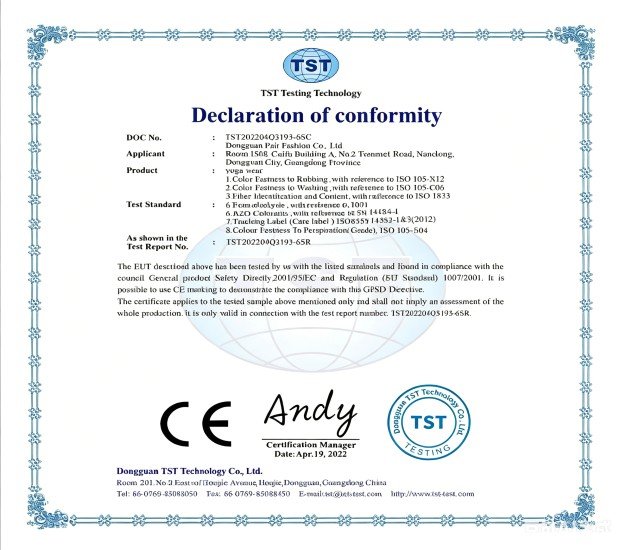
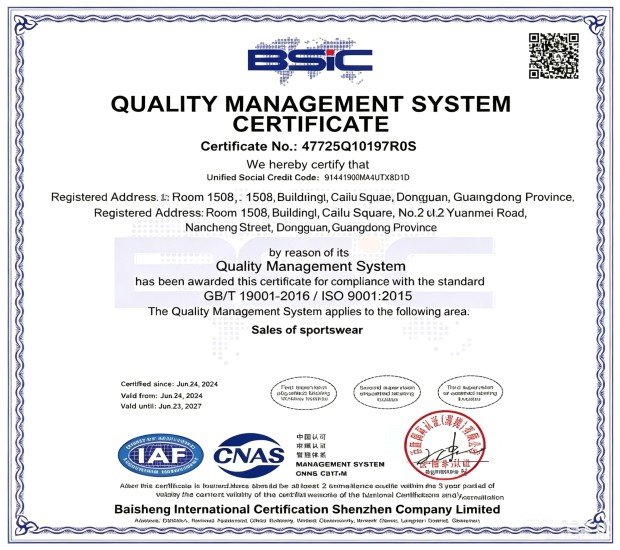
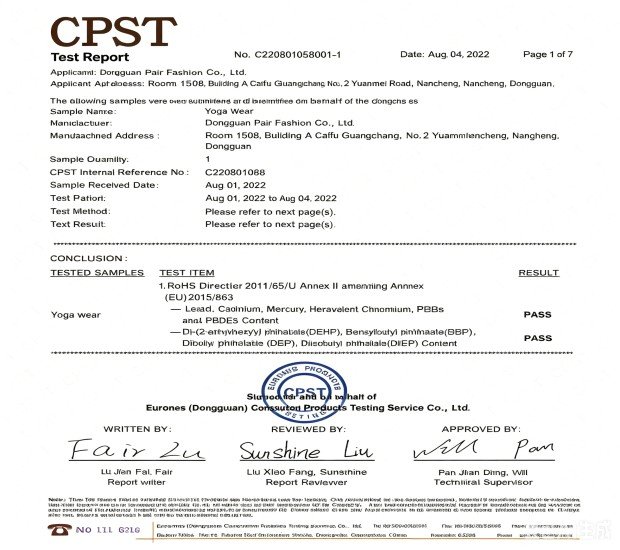
Trusted Manufacturing Standards For Global Sportswear Brands
We operate under internationally recognized quality, sustainability, and ethical manufacturing standards. Our certifications help ensure consistent product quality, responsible sourcing, and reliable production for global sportswear brands.
- 20+ Countries Served
- 6000+ Styles Developed
- 50,000 PCS Monthly Capacity
- 3-Day Sample Development
What Evidence Shows Real Team Customization and Manufacturing Capability?
Real customization capability should be supported by evidence, not by a long list of options on a website. Buyers should look for relevant equestrian samples, pattern and specification control, material records, size-development evidence, riding-specific construction experience, production visibility and documented quality procedures. A manufacturer that can explain its limitations clearly is often easier to evaluate than one that simply says “yes” to every request.
Almost every apparel supplier now uses terms such as OEM, ODM, private label, custom design and full customization.
Those terms are useful, but they do not all describe the same manufacturing capability.
One supplier may call changing a logo and color “OEM.” Another may develop a completely new pattern from a Tech Pack. A third may offer custom fabric, grip, trims and packaging but require much higher minimum quantities when those options are selected.
For buyers comparing an Equestrian Team Clothing Manufacturer, the important question is therefore not whether the word “custom” appears on the website.
The question is:
What evidence shows what the manufacturer can actually customize, control and reproduce?
Custom Logo vs ODM Modification vs Full OEM Development: What Is the Difference?
Customization becomes easier to compare when buyers separate it into levels.
| Customization Level | Typical Scope | Development Complexity | What Buyers Should Verify |
|---|---|---|---|
| Logo / Private Label | Existing garment + logo + labels | Low | Branding quality, MOQ and available stock/base styles |
| Existing Pattern Modification | Existing base pattern with fit, pocket, trim or detail changes | Medium | Pattern capability, revision limits and sample accuracy |
| ODM Development | Supplier proposes or adapts product solutions from buyer direction | Medium–High | Design ownership, specification control and development evidence |
| Full OEM Development | Buyer supplies detailed design/Tech Pack for production | High | Pattern execution, materials, construction, tolerances and QC |
| Custom Material Development | Custom color, weight, finish, structure or functional treatment | High | Material MOQ, testing, approval and repeat-order availability |
This distinction prevents a common sourcing misunderstanding.
A manufacturer can be very good at adding private labels to existing products, but it does not mean the manufacturer has the same strong ability to develop a new technical riding garment based on detailed specifications.
That is not necessarily a weakness.
If a riding club needs an existing team style in club colors with embroidery, paying for full OEM development may add cost without creating meaningful value.
If a private label brand is building proprietary breeches with its own fit, pocket configuration and grip design, the opposite is true. A logo-customization supplier may not provide enough technical control.
Public manufacturer information shows how wide this range can be. Bright Equestrian, for example, distinguishes between an ODM program using existing base patterns and fully custom pattern development, with different MOQ requirements for the two routes. It also publishes separate development requirements for custom silicone molds.
This is why buyers should ask:
“Which parts of this product will be newly developed, and which parts will use your existing materials, patterns or processes?”
The answer makes the word custom much more useful.
What Should Buyers Ask to See Before Believing “Full Custom”?
A website can show beautiful finished garments without revealing how those garments were developed.
For serious supplier comparison, buyers should request evidence closer to the manufacturing process.
Useful evidence can include:
- Relevant physical or recent production samples
- Pattern-development examples
- Measurement specifications
- Tech Pack execution
- Size-set or grading records
- Fabric swatches with traceable references
- Custom trim examples
- Silicone grip samples
- Embroidery or heat-transfer samples
- Approved-sample records
- In-line inspection records
- Final quality reports
- Production-floor evidence relevant to the product
The purpose is not to collect documents for the sake of having more documents.
Each piece of evidence should answer a sourcing question.
A pattern example helps show whether the supplier actually performs pattern work.
A measurement sheet shows whether fit is translated into controlled specifications rather than judged only by appearance.
A fabric reference helps determine whether the same or a comparable material can be identified later.
An inspection record shows whether quality control produces documented results rather than depending only on someone saying, “We check every piece.”
A production sample is particularly useful when it is similar to the buyer’s intended product.
If a supplier is being considered for technical full-seat breeches, evidence of basic sports leggings is better than nothing—but it is not equivalent to evidence of riding breeches.
Is the Supplier Experienced With Equestrian Products or Only General Sportswear?
This distinction deserves more attention than it usually receives.
Activewear and equestrian clothing share several characteristics. Both can use stretch fabrics, flat seams, moisture-management materials and body-contoured patterns.
But similar materials do not make the products identical.
Riding bottoms may introduce:
Saddle Contact
Full-Seat or Knee Grip
Boot Compatibility
Pocket Position
Waistband Stability
Repeated Hip and Knee Flexion
For buyers comparing different riding-bottom categories before selecting a supplier, this guide to what are horseback riding pants called explains the practical differences between breeches, riding tights and jodhpurs for equestrian product programs.
Competition apparel can introduce a different set of requirements around appearance, structure and riding movement.
A general activewear manufacturer may be perfectly capable of learning these requirements. The buyer simply should not assume that general leggings experience automatically proves riding-apparel expertise.
The strongest evidence is relevant product execution.
For example, current specialist manufacturer pages commonly present riding-specific constructions such as full-seat and knee-patch silicone grip, breeches, jodhpurs, show jackets and competition wear rather than relying only on general sportswear claims. Run Equestrian publicly describes its own facility, pattern/sample resources and riding-specific product programs, while other specialist suppliers similarly publish grip and riding-garment construction options.
A buyer can therefore ask a simple question:
“Show us the closest product you have already made to what we are asking you to manufacture.”
The response is often more informative than a long company presentation.
If the closest example is genuinely relevant, the conversation can move deeper.
If the supplier cannot show anything close, that does not automatically disqualify it—but the development risk should be treated differently.
What Riding-Specific Details Can Reveal Technical Experience?
Buyers do not need to become garment technicians before contacting manufacturers.
A few targeted questions can reveal how deeply the supplier understands the category.
For breeches or riding tights, ask how the supplier approaches:
- Knee-patch vs full-seat grip
- Grip placement and coverage
- Silicone adhesion to stretch fabric
- Waistband stability
- Pocket placement around riding movement
- Lower-leg fit under riding boots
- Stretch and recovery
- Seam placement in high-movement or saddle-contact areas
Buyers evaluating technical riding bottoms can also review the capabilities expected from a Horse Leggings Manufacturer, particularly when grip integration, stretch recovery, pocket positioning and riding-specific fit are important to the collection.
For riding jackets or competition tops, useful questions may involve:
- Shoulder mobility
- Sleeve position during riding
- Back length
- Garment shape in a seated riding position
- Zipper and pocket placement
- Weather or seasonal requirements
The objective is not to force every manufacturer to give exactly the same technical answer.
Different products and target markets can justify different solutions.
What matters is whether the supplier can explain why a construction is appropriate, what trade-offs it creates and what needs to be confirmed during development.
A supplier that understands the product usually asks questions back.
Factory Size vs Product Specialization: Which Evidence Matters More?
Factory scale matters when the order requires capacity.
It does not automatically prove specialization.
Imagine two manufacturers.
Factory A has 500 workers and produces large volumes of leggings, T-shirts, hoodies and general activewear. Equestrian clothing represents a very small percentage of its production.
Factory B is substantially smaller but regularly manufactures breeches, competition tops and riding jackets.
Which one is better?
There is not enough information to answer.
For a 30,000-piece basic performance-top program, Factory A’s scale may be highly relevant.
For 300 technically customized breeches, Factory B’s specialization may reduce development risk.
The mistake is turning one factory characteristic into a universal quality score.
Buyers should separate at least four types of evidence:
Capacity Evidence — Can the supplier produce the required volume?
Technical Evidence — Has it produced similar products successfully?
Process Evidence — Can it control specifications from approval into bulk?
Commercial Evidence — Do its MOQ, lead time and payment structure fit the order?
A large factory can score strongly in the first category and poorly in another.
A smaller specialist can show the opposite pattern.
That is why factory tours and videos are useful but should not become the entire due-diligence process.
Rows of sewing machines prove that garments can be sewn.
They do not prove that the specific garment will be made correctly.
How Can Buyers Verify Sample-to-Bulk Control Without Repeating the Entire Production Process?
For a comparison page, buyers do not need a detailed lesson on every sewing operation.
They need to know whether the supplier has a reference standard and whether production is checked against it.
A practical evidence chain looks like this:
Approved Sample → Confirmed Specifications → Pre-Production Reference → In-Line Checks → Final Inspection Records
This approach also reflects the broader principle that quality should be controlled through defined processes rather than judged only from the finished appearance. ISO’s quality management principles emphasize systematic processes, customer focus, evidence-based decision making and continual improvement, giving buyers a useful framework for evaluating whether a supplier’s quality claims are supported by an actual management system.
The terminology can vary by manufacturer.
The principle should not.
The approved product needs to become something measurable and repeatable.
Run Equestrian, for example, publicly describes an approval stage where fit, color and construction are locked before bulk production and then references in-line and final quality controls. HorseRidingWear similarly publishes a PPS-based system followed by staged inspection and documented measurement records.
These examples are useful because they show what buyers can ask other suppliers to demonstrate.
The buyer does not need every factory to use identical terminology.
The buyer needs to understand:
What is approved?
Where is it recorded?
Who checks production against it?
What happens when production does not match it?
Those four questions reveal much more than a generic statement such as “strict QC.”
What Certifications Actually Matter?
Certifications can support supplier due diligence, but they should not replace product evidence.
Different certifications answer different questions.
A quality-management certification may relate to management systems. A social-compliance audit addresses another area.
Social-compliance evidence should also be interpreted within its actual scope. WRAP certification focuses on production-facility compliance with WRAP’s social-compliance principles, so buyers should not treat a valid facility certification as proof that the supplier can automatically execute equestrian fit, technical construction or riding-specific product requirements.
A recycled-material certification has a different purpose again. Fabric safety or chemical testing may apply to a material or supply chain rather than proving the fit or construction quality of the finished riding garment.
Buyers should therefore ask:
- Who is the certificate holder?
- Which facility does it cover?
- Is it currently valid?
- What is its scope?
- Does it apply to the material, factory or finished product?
- Is the certification relevant to this order?
A certificate should support a claim it is designed to support.
Environmental assessments should be treated in the same way. The Higg Facility Environmental Module provides standardized facility-level information across areas such as energy, water, emissions, waste and chemical management, but environmental performance data should remain separate from the buyer’s evaluation of garment fit, construction and bulk-production capability.
It should not be stretched into proof of unrelated capabilities.
For example, an ISO 9001 quality-management certification can be relevant evidence about a quality-management system, but it does not prove that a manufacturer is automatically skilled at equestrian fit.
Likewise, access to an OEKO-TEX certified fabric does not prove that the factory can execute a technically difficult breeches pattern.
This distinction helps buyers use certifications properly instead of simply counting logos.
What Are the Red Flags When a Manufacturer Says “We Can Make Everything”?
Flexibility is valuable.
Unlimited capability is harder to believe.
A supplier deserves closer questioning when several warning signs appear together:
- Every product is accepted immediately without technical review
- A final price is quoted from one reference photo
- The supplier cannot explain whether MOQ is per style or per color
- No relevant equestrian samples can be shown
- The same fabric is recommended for very different product requirements without explanation
- Pattern development is claimed, but no pattern or measurement evidence is available
- Factory ownership or subcontracting responsibility is unclear
- Quality control is described only as “100% inspection” without explaining what is checked
- Certifications are shown without identifiable scope or holder
- The supplier cannot explain how previous specifications are retained for repeat orders
None of these points alone proves that a supplier is unsuitable.
Several together justify deeper verification.
There is another red flag that experienced buyers often notice during communication:
The supplier never challenges an unrealistic requirement.
Suppose a buyer asks for a highly customized product, several custom colors, a very small quantity, a complex new grip pattern and an extremely short delivery time.
A credible manufacturer may explain that one or more requirements need to change.
That is useful information.
The supplier that simply answers “No problem” to every condition may appear easier to work with at the beginning, but the unresolved constraints have not disappeared. They have only been moved further into the order.
What Evidence Should Move a Manufacturer Into the Final Shortlist?
Before an Equestrian Team Clothing Manufacturer reaches the final two or three candidates, buyers should be able to answer five questions with reasonable confidence:
1. Can they make this type of product?
Supported by relevant garment evidence rather than general claims.
2. Can they interpret our requirements accurately?
Supported by technical discussion, specification review and sample performance.
3. Can they control the approved standard in bulk?
Supported by documented production and quality-control procedures.
4. Do their commercial conditions fit our order?
Supported by clear MOQ, pricing, lead-time and payment terms.
5. Can they support the product after the first order?
Supported by records, material traceability and a realistic reorder process.
A manufacturer does not need to be strongest in every category.
It needs to be strong enough in the categories that create the greatest risk for the specific project.
For buyers comparing custom club apparel, competition wear and branded team kits, the next step is therefore not to request more promises. It is to test the strongest candidates through samples under comparable requirements.

How Should Buyers Use Samples to Compare Manufacturers Before Bulk Orders?
Buyers should use samples as a controlled comparison rather than simply asking whether each garment looks good. Give shortlisted manufacturers substantially the same product requirements, then compare fit, measurements, fabric interpretation, construction, branding, communication and revision accuracy. A fast or attractive first sample is useful evidence, but buyers should also evaluate whether the supplier can identify problems, document corrections and reproduce the approved standard in bulk.
A sample has two jobs.
The obvious job is to test the garment.
The less obvious job is to test the manufacturer.
That distinction matters because a supplier can produce an attractive sample while still being difficult to manage in bulk production. Another supplier may need one additional revision but demonstrate better measurement control, clearer communication and more disciplined documentation.
For buyers comparing an Equestrian Team Clothing Manufacturer, the question should therefore go beyond:
“Which sample looks best?”
A more useful question is:
“Which manufacturer gives us the strongest evidence that the approved product can become controlled, repeatable production?”
Should Buyers Sample With More Than One Manufacturer?
For a commercially important new product, sampling with two or three serious candidates can provide much better information than selecting one supplier entirely from quotations and website claims.
This does not mean sending sample requests to ten factories.
That creates unnecessary cost and usually produces too much inconsistent information.
A more disciplined sequence is:
10–15 Initial Candidates
→ 3–5 RFQ Shortlist
→ 2–3 Sample Candidates
→ 1 Final Production Supplier
By the sample stage, obvious commercial mismatches should already have been removed.
The remaining suppliers should have acceptable MOQ conditions, relevant product evidence and a realistic quotation range. Sampling can then answer questions that documents and sales conversations cannot fully resolve.
For example:
Can the factory interpret the intended fit?
Does it follow the measurement specification?
Does the fabric feel and perform close to the agreed direction?
Are pocket and grip positions executed accurately?
Does the logo match the approved size and placement?
When a correction is requested, does the second sample actually reflect it?
These are supplier-selection questions, not simply garment-development questions.
Give Every Manufacturer the Same Input Before Comparing the Output
A fair sample comparison requires reasonably comparable starting information.
Suppose Manufacturer A receives:
- Full Tech Pack
- Exact measurements
- Approved fabric reference
- Pantone color
- Detailed grip artwork
- Logo dimensions
- Construction notes
Manufacturer B receives:
- Three reference photos
- “Please make something similar”
If Manufacturer A produces the better sample, the comparison tells the buyer very little about the relative capability of the two factories.
The inputs were different.
Whenever practical, shortlisted manufacturers should receive the same core brief.
That may include:
Product Type
Reference Images or Tech Pack
Target Measurements
Fabric Direction
Color Requirement
Logo Artwork and Size
Grip Requirement
Pocket Details
Label Requirements
Target Size
Expected Bulk Quantity
Some differences are unavoidable.
One reason for sampling may be to compare alternative fabrics or technical solutions suggested by different manufacturers. Absolute uniformity is therefore neither possible nor always desirable.
The goal is not laboratory-level standardization.
The goal is to prevent major input differences from making the supplier comparison meaningless.
What Should Buyers Compare on an Equestrian Apparel Sample?
A useful sample review can be divided into several categories.
| Sample Area | What to Check | Why It Matters |
|---|---|---|
| Fit | Waist, hip, rise, thigh, knee, calf, shoulder, sleeve or garment length as relevant | Determines whether the pattern works for the intended rider |
| Measurements | Actual garment measurements against agreed specifications | Reveals specification control |
| Fabric | Stretch, recovery, hand feel, weight and suitability | Affects comfort, structure and riding performance |
| Construction | Seams, reinforcement, hems, zippers and finishing | Reveals workmanship and technical execution |
| Riding Details | Grip, pockets, waistband, saddle-contact areas and boot compatibility | Tests equestrian relevance |
| Branding | Logo size, placement, color and application | Protects brand consistency |
| Labels / Trims | Position, quality and correctness | Important for private label execution |
| Communication | Questions, confirmations and issue reporting | Shows how the supplier manages uncertainty |
| Revision Accuracy | Whether requested changes appear correctly in the next sample | Tests development discipline |
This creates a much more useful review than:
Sample A: Good
Sample B: Okay
Sample C: Best
Those descriptions cannot explain why one supplier should receive the bulk order.
A simple scorecard can.
Why Should Riding Samples Be Tested in Movement?
Static fit is not enough for many equestrian products.
A pair of breeches can look excellent while the wearer is standing and still create problems when the rider bends the knee, sits in the saddle or wears tall riding boots.
A riding top may appear correctly fitted in front of a mirror but feel restrictive through the shoulder when the rider reaches forward.
A jacket may have an appropriate standing length but behave differently in a seated riding position.
Sample evaluation should therefore reflect the intended use.
For riding bottoms, buyers can check:
- Waistband stability
- Hip movement
- Knee flexion
- Lower-leg fit
- Boot compatibility
- Pocket accessibility
- Grip position
- Saddle-contact comfort
For riding tops and jackets, review can include:
- Shoulder movement
- Bent-elbow comfort
- Sleeve length in riding position
- Back coverage
- Hem behavior
- Pocket accessibility
This does not require an elaborate testing laboratory for every sample.
It requires evaluating the garment under conditions that reveal problems relevant to its intended use.
Why Is the Fastest Sample Not Automatically the Best Sample?
Sampling speed matters when a launch calendar is tight.
It should not become the only measure of sample performance.
Consider two factories.
Manufacturer A:
First sample in 5 days.
Several measurements are outside the specification.
The wrong zipper is used.
Two requested changes are missed.
Manufacturer B:
First sample in 8 days.
Measurements are close to specification.
The supplier identifies one construction concern before sampling.
The second sample correctly incorporates the agreed corrections.
Which supplier performed better?
The five-day sample is faster.
That does not necessarily make the sampling process stronger.
Buyers should consider:
Speed + Accuracy + Communication + Revision Control
rather than speed alone.
The same principle applies when comparing an Equestrian Team Clothing Manufacturer advertising rapid sampling with one quoting a slightly longer development period.
Fast development creates value when it produces a usable result.
Fast development followed by repeated corrections can make the total approval process longer.
What Does Revision Accuracy Reveal About a Manufacturer?
The second sample can sometimes reveal more about a manufacturer than the first.
A first sample contains interpretation.
The supplier is translating the buyer’s design, measurements, references and comments into a physical garment. Some adjustment is normal, especially for a newly developed style.
The revision stage tests something different:
Can the supplier control change?
Suppose the buyer requests:
- Waist reduced by 1 cm
- Pocket moved 2 cm
- Grip coverage shortened
- Logo reduced from 70 mm to 55 mm
- Sleeve increased by 1.5 cm
The next sample should allow those changes to be checked individually.
If the waistband is corrected but the pocket remains unchanged, the buyer has learned something about revision control.
If the sleeve is corrected but an unrelated measurement changes unexpectedly, that is also useful information.
Repeated problems such as these can indicate weak specification management:
Fix one point → Create another problem → Correct again → Lose a previous correction
This cycle becomes expensive when it reaches bulk production.
A supplier that records revisions clearly and executes them consistently reduces that risk.
Should Buyers Compare the Cheapest Sample or the Best Sample?
Sample fees should be evaluated in context.
A custom sample can include:
Pattern Work
Individual Cutting
Small-Quantity Fabric Sourcing
Logo Setup
Custom Trim Preparation
Sewing
Revision Work
Courier Charges
These costs are disproportionately high because one sample does not benefit from bulk-production efficiency.
A $50 difference in sample fee can therefore be much less important than a supplier’s ability to execute the product accurately.
Suppose:
Supplier A: Sample cost $120
Supplier B: Sample cost $180
If Supplier B demonstrates stronger fit accuracy, documentation and revision control on a product expected to generate $30,000 in annual orders, selecting Supplier A purely to save $60 during development may not be commercially meaningful.
That does not mean higher sample fees prove better quality.
They do not.
The point is that sample price should be compared with sample value, not in isolation.
What Should Be Locked Before Asking for the Final Bulk Quotation?
The quotation made before sampling is often provisional.
That is normal.
Before the final bulk price is accepted, the important product inputs should be sufficiently clear that each side understands what is being priced.
Depending on the product, these can include:
- Approved measurements
- Confirmed pattern
- Fabric
- Fabric weight or specification
- Color
- Grip design and coverage
- Logo method and size
- Zippers and important trims
- Labels
- Packaging
- Quantity
- Size ratio
- Testing requirements
- Delivery terms
This creates a cleaner transition from development into commercial confirmation.
If the sample used one fabric but the final quotation assumes another, the sample and price no longer describe the same product.
If a custom zipper is approved but the quotation includes a standard zipper, the buyer may face an unexpected cost later.
The objective is not to eliminate every possible production variable.
It is to remove important ambiguity before the purchase order.
Why Does a Good Sample Still Not Prove Bulk Quality?
This is one of the most important distinctions in supplier evaluation:
A sample proves that the manufacturer made one acceptable garment.
It does not automatically prove that the manufacturer can make 500 acceptable garments.
Sample production receives concentrated attention. One garment may be cut individually, handled by an experienced sample technician and checked several times before shipment.
Bulk production introduces different variables:
More Operators
More Fabric
Different Material Lots
Repeated Operations
Production Targets
Inspection Sampling
Packing and Shipment Pressure
This is why sample quality and bulk repeatability should be evaluated separately.
A strong sample moves a manufacturer forward in the selection process.
It should not end due diligence.
Before bulk production, buyers should understand how the supplier converts the approved sample and specifications into production references, how changes are controlled and how deviations are identified.
For a first large order, production inspection or third-party inspection may also be commercially reasonable depending on product value, supplier history and buyer risk tolerance.
How Can Buyers Build a Simple Sample Scorecard?
A sample scorecard does not need complicated mathematics.
Its purpose is to stop one attractive characteristic from controlling the entire decision.
A practical structure could be:
| Sample Criterion | Suggested Weight |
|---|---|
| Fit & Measurement Accuracy | 20% |
| Fabric Suitability | 15% |
| Construction Quality | 15% |
| Equestrian-Specific Execution | 15% |
| Branding & Detail Accuracy | 10% |
| Communication Quality | 10% |
| Revision Accuracy | 10% |
| Sampling Speed | 5% |
These weights are examples, not universal rules.
A technical breeches brand may increase Equestrian-Specific Execution and Fit & Measurement Accuracy.
A club ordering relatively simple team tops may increase Communication, Speed or commercial considerations.
The important point is that the weighting should reflect the risks of the actual product.
Do not change the weights after seeing the samples simply because one supplier performed particularly well in one category.
Set the priorities first.
Then compare the suppliers.
What Should Happen After the Sample Comparison?
After reviewing samples, buyers should be able to reduce the shortlist again.
A supplier can move forward when the evidence shows that it can:
Understand the Brief
→ Execute the Product
→ Correct Problems
→ Document the Approved Standard
→ Quote the Final Product Clearly
A supplier may be removed even when its sample looks attractive if the process reveals serious commercial or control problems.
For example:
The sample may be excellent, but the final MOQ becomes four times larger after the fabric is confirmed.
The workmanship may be good, but the supplier repeatedly misses documented revisions.
The price may be competitive, but important trims cannot be identified for future production.
Conversely, a supplier that needed a reasonable second sample may remain the stronger candidate if its corrections are accurate and its bulk-control system is clearer.
The purpose of sampling is therefore not to find a perfect first garment.
It is to reduce uncertainty before the buyer commits to bulk production.
Once the strongest candidate has passed that test, one major question remains for teamwear: Can the same product still be reproduced when replacement riders or repeat orders appear months later?
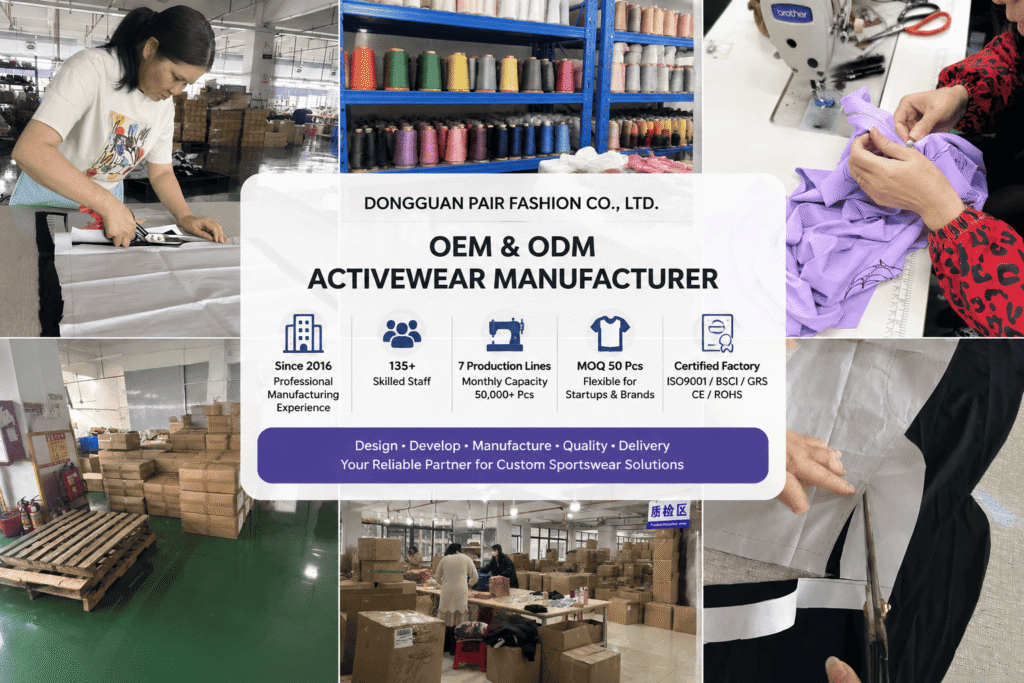
How Do Buyers Compare Reorder Support and Long-Term Supply Reliability?
Buyers should compare reorder support by checking whether a manufacturer can retain and retrieve the information required to reproduce an approved product. Patterns, measurements, fabric references, colors, trims, branding details and workmanship records all matter. For teamwear, buyers should also confirm how replacement riders, new sizes, discontinued materials and below-MOQ replenishment are handled before placing the first bulk order.
The first order gets most of the attention in apparel sourcing.
For equestrian teamwear, the second order can reveal just as much about the supplier.
A club changes over time. New riders join. Existing riders require replacement garments. Sizes change. A successful team jacket may be reordered next season. A private label brand may want the same breeches in another color while keeping the original fit.
This creates one of the most useful questions to ask an Equestrian Team Clothing Manufacturer:
“If we come back in six or twelve months, what information will you use to make this product again?”
A strong answer should involve more than:
“We remember your order.”
Why Does Reorder Support Matter More for Teamwear?
Teamwear demand is rarely perfectly predictable.
Imagine an initial club order covering 80 riders.
Six months later:
- 7 new riders join
- 3 existing riders need replacement breeches
- 2 jackets are damaged
- 4 riders need different sizes
- The club wants 20 additional training tops
- Next season, the same color and logo need to remain consistent
The reorder is not simply a smaller version of the first order.
It may contain a completely different size ratio and much smaller quantities across individual products.
This creates two separate challenges:
Technical Repeatability — Can the manufacturer reproduce the approved product?
Commercial Reorder Flexibility — Is the manufacturer willing and able to produce the required quantity?
A supplier can be strong in one and weak in the other.
For example, a manufacturer may retain excellent technical records but still require another 100 pieces per style for production. Another supplier may accept a smaller replenishment but struggle to reproduce the original fabric or measurements accurately.
Buyers should evaluate both dimensions.
What Records Should a Manufacturer Keep for Repeat Orders?
The ability to make a product again depends on what was controlled the first time.
Useful records can include:
- Approved pattern
- Graded size specifications
- Approved garment measurements
- Fabric supplier and reference
- Fabric composition and weight
- Approved color or Pantone reference
- Trim references
- Zipper specifications
- Grip artwork and placement
- Logo artwork, size and position
- Label specifications
- Packaging requirements
- Construction notes
- Approved sample information
- Previous production comments
- Final quality records
Not every factory will use exactly the same document names.
The important point is whether the key information can be found clearly and matched with the correct product style.
This is especially important for manufacturers who are
“Black riding breeches with silicone grip” is not enough information to identify a product accurately.
A controlled record might instead connect a unique style number with a specific pattern revision, measurement chart, fabric code, Pantone reference, grip artwork, trim list and approved production standard.
That reduces dependence on individual memory.
If the original salesperson, merchandiser or pattern maker leaves the company, the product information should not disappear with that person.
Can a Manufacturer Really Make the Same Product Six or Twelve Months Later?
Sometimes yes.
Sometimes only partially.
Buyers should be careful with promises such as:
“The reorder will be exactly the same.”
Apparel supply chains contain variables that manufacturers do not always control permanently.
Fabric mills discontinue qualities.
A zipper supplier changes a component.
A particular elastic becomes unavailable.
A dye lot produces a small shade variation.
A printing process changes.
A trim vendor increases its MOQ.
The objective of reorder management is therefore not to pretend that change never happens.
It is to identify change before production and control how substitutes are approved.
A useful reorder process should answer:
Is the original material still available?
If yes, can the manufacturer identify the same reference and confirm current commercial conditions?
If no, what replacement is proposed?
How close is the substitute in composition, weight, stretch, recovery, hand feel, appearance or function?
Does the buyer need to approve a swatch, lab dip, trim sample or replacement garment before production?
This is much stronger than discovering after delivery that “the old fabric was unavailable, so we used a similar one.”
Why Is Fabric Traceability Important for Repeat Orders?
Fabric is one of the largest sources of reorder variation.
Two fabrics can both be described as:
75% Nylon / 25% Spandex
and still behave differently.
They may have different:
Weight
Knitting Structure
Stretch
Recovery
Surface Feel
Compression
Color Appearance
Pilling Resistance
Moisture Behavior
This means composition alone is not a sufficient reorder reference.
Where practical, the manufacturer should retain more specific material information such as supplier, article number, weight, color reference and relevant approval records.
The same principle applies when a buyer intentionally changes the fabric.
Suppose the original breeches used Fabric A but the brand wants a slightly lighter version for summer.
The new material should not silently replace the original record.
It should become a controlled revision.
For example:
Style EB-102 / Original → Fabric A
Style EB-102 / Summer Revision → Fabric B
This sounds like a small administrative detail.
Across multiple seasons and hundreds of SKUs, it becomes an important part of product control.
What Happens When the Original Material or Trim Is Discontinued?
Material discontinuation should be treated as a normal supply-chain risk rather than an unexpected emergency.
Before a reorder is confirmed, the manufacturer should check the availability of important inputs.
If an original component is unavailable, buyers can ask for a structured substitution process:
Original Reference
→ Reason It Is Unavailable
→ Proposed Alternative
→ Technical / Visual Difference
→ Price Difference
→ MOQ Difference
→ Buyer Approval
This gives the buyer a decision.
Without that process, substitution becomes a factory decision made on behalf of the brand.
That can create problems even when the replacement material is objectively good.
A new fabric may be softer but have weaker recovery.
A replacement zipper may work correctly but look different.
A new silicone formula may create a different grip feel.
For a team program, even a visual difference can matter when new garments are worn beside pieces from the previous order.
The goal is therefore not always perfect material continuity.
The goal is controlled continuity.
How Should Buyers Handle New Riders and New Sizes?
New riders create a specific replenishment problem.
Suppose the first order contains sizes XS–XL.
Six months later, a new rider requires XXL.
The question is whether XXL already exists within the approved graded size range.
If it does, the manufacturer may be able to use the existing size specification.
If it does not, a new size may require additional grading, pattern work or sample confirmation.
This should not be confused with simply changing the quantity.
Adding a previously approved size and developing a new size are different requests.
The same applies to youth or men’s sizing.
A club may initially order only women’s products and later ask the manufacturer to add men’s or junior riders.
That does not automatically mean the original women’s pattern should simply be enlarged or reduced.
Buyers should ask whether the new size or fit group requires separate pattern development and approval.
This helps protect fit consistency while allowing the team program to expand.
Does the Original MOQ Apply to Reorders?
Not necessarily.
This is one of the most important commercial questions to clarify before the first order.
A manufacturer may accept:
100 pieces for the initial production
but require the same 100-piece minimum for every future reorder.
For a retail brand selling hundreds of units, that may be completely acceptable.
For a club that expects to replace 15–30 garments at irregular intervals, it may become a serious problem.
Buyers should therefore ask the shortlisted Equestrian Team Clothing Manufacturer:
“If our first order meets your normal MOQ, what happens when we need a smaller replenishment later?”
Possible supplier models include:
Same MOQ for Every Order
The original production minimum always applies.
Reduced Reorder MOQ
Existing patterns and available materials allow a smaller repeat quantity.
Stock-Fabric Replenishment
Smaller reorders are possible only while the original fabric remains available.
Consolidated Reorder
Several replacement requirements are collected and produced together at scheduled intervals.
Reorder With Surcharge
A smaller quantity is possible but carries a higher unit price.
None of these structures is automatically wrong.
The buyer needs to know which one applies.
A higher reorder price for 20 pieces may still be commercially reasonable if it avoids purchasing 100 unnecessary garments.
Can Buyers Reserve Fabric for Future Reorders?
In some programs, material planning can reduce future supply risk.
If a brand has predictable repeat demand, it may discuss options such as reserving or purchasing additional fabric for future production.
This can be useful when:
- A fabric is central to several team products
- The color is difficult to reproduce
- The material has a high mill MOQ
- The product has stable repeat demand
- Future replenishment is commercially important
However, fabric reservation also creates questions.
Who owns the material?
Who pays for it?
How long will the manufacturer store it?
What happens to unused fabric?
How is the quantity recorded?
What happens if the fabric degrades or is damaged during storage?
Material reservation should therefore be a documented commercial arrangement, not an informal promise that “we will keep some fabric for you.”
For new products with uncertain demand, reserving large amounts of fabric can simply move inventory risk from finished garments into raw materials.
The decision should match the sales evidence.
What Does Long-Term Supply Reliability Actually Mean?
Reliability is sometimes reduced to one number:
On-Time Delivery Rate
Delivery performance matters, but long-term reliability is broader.
A useful framework includes:
| Reliability Area | Buyer Question |
|---|---|
| Specification Continuity | Can the approved product be identified and reproduced? |
| Material Continuity | Can the same fabric and trims be sourced again? |
| Quality Repeatability | Can future production stay within approved standards? |
| Commercial Continuity | Are MOQ and pricing changes communicated clearly? |
| Capacity Reliability | Can the supplier support expected future volume? |
| Documentation | Are product revisions and approvals recorded? |
| Change Management | Are substitutions approved before production? |
| Communication | Are risks raised before they become shipment problems? |
This broader definition helps buyers avoid a common mistake.
A supplier can ship on time and still be unreliable if every repeat order produces a slightly different garment.
Likewise, a supplier can make an excellent product but become commercially unreliable if lead times, MOQ or material conditions change without warning.
Long-term supply reliability is the ability to manage product, production and commercial change without losing control of the approved standard.
What Questions Reveal Weak Reorder Support?
Buyers do not need to wait six months to discover whether the reorder system is weak.
Ask before the first purchase order:
“How do you identify our approved fabric when we reorder?”
“Which version of the pattern will be used?”
“Do you keep our approved measurements and trim references?”
“What happens if the original fabric is discontinued?”
“Will you send alternatives for approval before substitution?”
“Can we reorder only the sizes we need?”
“Does the original MOQ apply to repeat orders?”
“Can new sizes be added later?”
“How long do you keep production records?”
“If our original merchandiser leaves, can another team member retrieve the complete product information?”
Weak answers are usually vague:
“Don’t worry.”
“We know your style.”
“We can make the same.”
“We will check when you reorder.”
Stronger answers explain the actual record or process used.
The difference is important because the buyer is not evaluating confidence.
The buyer is evaluating repeatability.
How Should Reorder Support Affect the Final Supplier Score?
Reorder support should not receive the same weight for every project.
For a one-time competition event, it may carry relatively little weight.
For an established riding club with new members joining throughout the year, it can become one of the most important supplier-selection criteria.
A practical scoring approach could be:
| Reorder Criterion | Suggested Weight Within Reorder Evaluation |
|---|---|
| Pattern & Specification Records | 20% |
| Fabric & Trim Traceability | 20% |
| Small Replenishment Flexibility | 20% |
| Change / Substitution Control | 15% |
| New Size Support | 10% |
| Quality Repeatability Evidence | 10% |
| Record Accessibility & Communication | 5% |
Again, the numbers are not universal.
The purpose is to prevent the buyer from treating “Yes, we support repeat orders” as sufficient evidence.
For teamwear, a supplier that costs slightly more on the first production may create better long-term economics if it can reduce redevelopment, prevent uncontrolled substitutions and support practical replenishment.
Conversely, a highly organized repeat-order system has limited value if the first-order MOQ or technical capability does not fit the buyer.
All criteria still need to be considered together.
Can They Make It Again?
This is the simplest way to summarize reorder risk.
Not:
“Can they make it?”
But:
“Can they make it again?”
A reliable Equestrian Team Clothing Manufacturer should be able to connect the next production run to the previously approved product through identifiable specifications, materials, trims, workmanship and quality references.
Absolute uniformity is not always possible across different production periods, particularly when raw materials change.
That is why the strongest reorder system is not one that promises that nothing will ever change.
It is one that makes important changes visible, controlled and subject to approval.
For riding clubs, private label brands and distributors, this turns repeat production from an informal expectation into a measurable part of supplier selection.
Once product capability, commercial fit, samples and reorder support have been compared, buyers can bring the evidence together into one final supplier-selection framework rather than allowing one attractive factor to determine the purchase order.
1. Product Development
Regular monthly product development ensures consistent updates to your brand line.
2. Fabric Sourcing
Regular monthly product development ensures consistent updates to your brand line.
3. Sample Making
Regular monthly product development ensures consistent updates to your brand line.
4. Bulk Production
Regular monthly product development ensures consistent updates to your brand line.
5. Packaging & Delivery
Regular monthly product development ensures consistent updates to your brand line.
How Do You Choose the Right Equestrian Team Clothing Manufacturer in China?
Choosing the right Equestrian Team Clothing Manufacturer in China requires more than comparing quotations. Buyers should define the order first, shortlist manufacturers with relevant evidence, send comparable RFQs, test two or three serious candidates through samples, verify critical factory claims and use a weighted scorecard based on the risks of the actual project. Final commercial and production conditions should then be confirmed before the purchase order is placed.
By the final selection stage, buyers should have substantially more information than they had during the initial Google search.
The decision should no longer be based on which manufacturer has the most attractive website, the fastest sales response or the lowest preliminary price.
The buyer should now have evidence.
That evidence may include quotations, relevant product examples, sample results, MOQ conditions, factory information, quality-control documentation, certification records and answers about future replenishment.
The final task is to bring those pieces together without allowing one attractive factor to dominate the decision.
Step 1: Define the Order Before Evaluating the Supplier
A supplier cannot be judged as commercially suitable until the buyer knows what it is being asked to supply.
Before final comparison, define the project as clearly as practical:
- Product categories
- Number of styles
- Quantity per style
- Color breakdown
- Size range
- Target market
- Customization level
- Fabric direction
- Branding requirements
- Packaging
- Target launch date
- Expected reorder pattern
- Target commercial range
This does not mean every technical specification must be finalized before the first conversation.
It means the buyer needs enough information to identify which supplier characteristics matter.
For example, a club ordering 300 relatively simple training tops has a different risk profile from a brand ordering 300 technical full-seat breeches.
The first project may place more weight on commercial flexibility, branding accuracy and delivery.
The second may place more weight on equestrian specialization, pattern execution, grip application and sample accuracy.
The order should determine the evaluation criteria—not the other way around.
Step 2: Reduce the Longlist to Three to Five Serious Manufacturers
The initial search may produce dozens of companies.
Buyers building a broader sourcing longlist can also compare different Horseback Riding Clothing Brands Manufacturers before reducing the market to suppliers whose product specialization, development capability and commercial conditions match the actual order.
There is little value in requesting detailed quotations from all of them.
The first reduction should be relatively objective.
Remove suppliers that cannot demonstrate relevant product capability, cannot meet the commercial scale of the order or cannot explain their manufacturing model clearly enough for further evaluation.
A practical early-stage shortlist can consider:
Relevant Products
Factory / Manufacturing Evidence
Customization Level
Approximate MOQ
Target Price Compatibility
Basic Lead Time
Communication
Certifications Where Relevant
At this stage, buyers should distinguish between a supplier that is bad and a supplier that is simply unsuitable.
A manufacturer requiring 1,000 pieces per color may operate an excellent production facility.
If the buyer can commercially commit to only 200 pieces, that factory is still the wrong fit for the project.
Likewise, a low-MOQ supplier may be attractive to a startup but unsuitable for a mature distributor requiring much larger capacity.
Supplier selection is therefore a matching problem.
Step 3: Send the Same RFQ to the Shortlisted Manufacturers
Once three to five manufacturers remain, quotation inputs should be aligned as closely as possible.
Each supplier should receive substantially the same:
Product Specification
Quantity
Color Breakdown
Size Breakdown
Fabric Requirement
Logo Requirement
Trim Requirement
Packaging Requirement
Testing Requirement
Delivery Destination
Requested Incoterm
Then ask each manufacturer to identify assumptions and exclusions.
A useful quotation should make clear:
Unit Price
MOQ Structure
Sample Cost
Development Charges
Logo / Mold Charges
Fabric Minimums
Packaging Cost
Lead Time
Payment Terms
Incoterm
Quotation Validity
This makes commercial differences visible.
Without comparable inputs, the buyer may accidentally reward the supplier that made the cheapest assumptions rather than the supplier offering the best commercial fit.
Step 4: Select Two or Three Manufacturers for Sampling
Quotation comparison should normally reduce the shortlist again.
For an important custom project, two or three candidates can then be tested through samples.
Use the sample stage to compare more than appearance.
Evaluate:
Fit
Measurements
Fabric Interpretation
Construction
Riding-Specific Details
Branding Accuracy
Communication
Problem Identification
Revision Accuracy
Sampling Time
A supplier does not necessarily fail because the first sample requires revision.
New product development often requires correction.
More useful questions are:
Did the supplier understand the correction?
Was the next version changed accurately?
Did fixing one point create another uncontrolled change?
Were important decisions recorded clearly?
This is where a manufacturer begins to prove whether it can convert buyer requirements into a controlled product rather than simply producing an attractive prototype.
Step 5: Verify the Claims That Matter Most
Not every statement on a supplier website deserves the same level of verification.
Focus due diligence on claims that can materially affect the order.
If the manufacturer says it owns the factory, verify the facility.
If equestrian specialization is important, request relevant recent product evidence.
If a certification is important to the buyer or market, verify the holder, validity and scope.
If the supplier claims strong quality control, ask how approved specifications are checked during production.
If reorder support matters, ask how patterns, measurements, fabrics, trims and revisions are recorded.
Depending on order value and sourcing risk, verification can include:
- Video factory review
- On-site factory visit
- Third-party audit
- Business registration review
- Certification verification
- Relevant production samples
- Quality records
- Third-party pre-shipment inspection
The amount of verification should be proportional to the risk.
A buyer does not need the same due-diligence budget for a small market test and a large annual sourcing program.
Step 6: Use a Weighted Supplier Scorecard
A weighted scorecard can prevent one attractive factor—especially price—from controlling the entire decision.
A practical structure for an equestrian teamwear project is:
| Supplier Evaluation Criterion | Suggested Weight |
|---|---|
| Equestrian Specialization | 15% |
| Team Customization Evidence | 15% |
| Sample Execution | 15% |
| Bulk Quality Control | 15% |
| MOQ & Commercial Fit | 10% |
| Order Flexibility | 10% |
| Reorder Support | 15% |
| Communication & Documentation | 5% |
| Total | 100% |
The percentages should be set according to the project.
A startup testing demand may increase MOQ & Commercial Fit.
A premium breeches brand may increase Equestrian Specialization and Sample Execution.
A mature riding club ordering every season may increase Reorder Support and Bulk Quality Control.
The purpose of the scorecard is not to create mathematical certainty.
A supplier scoring 84 does not automatically become objectively better than one scoring 82.
The scorecard is a decision-control tool.
It forces the sourcing team to state what matters before the final choice is made.
Step 7: Review Weaknesses, Not Only Strengths
Every manufacturer has limitations.
The final decision should therefore include a deliberate review of weaknesses.
Consider three hypothetical suppliers.
| Supplier | Main Strength | Main Limitation |
|---|---|---|
| Supplier A | Excellent technical breeches capability | Higher MOQ |
| Supplier B | Very flexible commercial conditions | Less evidence in technical equestrian garments |
| Supplier C | Strong sample and documentation control | Higher unit price |
The final choice should depend on the actual order requirements.
If the project is a highly technical breeches collection, the higher MOQ from Supplier A may still be acceptable for the buyer.
If the project is a small teamwear market test, Supplier B’s commercial flexibility may matter more.
If the buyer expects long-term repeat orders and places high value on specification control, Supplier C’s higher unit price may be commercially acceptable.
The objective is not to find a supplier with no weaknesses.
It is to understand:
Which weaknesses create unacceptable risk for this order?
That question is much more useful.
Step 8: Compare Total Commercial Commitment Before Making the Final Choice
Before choosing the final Equestrian Team Clothing Manufacturer, compare more than the garment price.
A broader commercial review can include:
**Bulk Garment Cost
- Development
- Samples
- Custom Material Commitment
- Branding Setup
- Packaging
- Testing / Inspection
- Freight
- Duties / Taxes
- Inventory Exposure
- Reorder Conditions**
This can change the apparent result.
A low unit price combined with a high color MOQ may require significantly more inventory.
A higher unit price with a lower total commitment may be commercially safer for an untested collection.
The opposite can be true for a proven product with stable demand.
For that reason, buyers should evaluate both:
Cost Per Garment
and
Total Capital Required to Launch the Order
The second number is often more important to a growing brand.
Step 9: Confirm Critical Details Before the Purchase Order
The final supplier decision should not be followed immediately by an assumption that every discussion has been understood.
Before the PO and production commitment, confirm the important commercial and product conditions in writing.
A practical pre-PO checklist includes:
- Final style numbers
- Order quantities
- Color quantities
- Size breakdown
- Approved specifications
- Approved sample reference
- Fabric and important trim references
- Logo and branding details
- Packaging
- Unit price
- Additional charges
- MOQ conditions
- Payment terms
- Production lead time and its starting point
- Inspection requirements
- Incoterm
- Shipping destination
- Reorder conditions
- Approved substitution procedure
The purpose is not paperwork for its own sake.
Every confirmed item removes one area where the buyer and supplier could otherwise hold different assumptions.
A sentence such as:
“Production lead time: 25 days”
is less useful than:
“Production lead time: approximately 25 working days after deposit, final sample approval and material readiness.”
The second statement identifies when the clock actually starts.
Step 10: Choose the Manufacturer Whose Strengths Match the Order
The right Equestrian Team Clothing Manufacturer is not necessarily the supplier with the lowest price, lowest MOQ, largest facility, fastest sample or longest company history.
Each factor can be valuable.
None should automatically control the decision.
The stronger choice is the manufacturer whose technical capability, commercial conditions, evidence quality, production controls and reorder model fit the requirements that matter most to the buyer.
For buyers who want to move from supplier comparison into a broader custom riding-apparel program, working with an experienced Equestrian Clothing Manufacturer can support coordinated development across riding tops, breeches, jackets and other equestrian apparel categories.
For one project, that may be a highly specialized equestrian manufacturer.
For another, it may be a broader performance-apparel manufacturer with stronger multi-product flexibility.
For a tiny urgent club order, it may not be a Chinese OEM manufacturer at all.
A disciplined sourcing decision therefore follows a simple sequence:
Define the Order
→ Build the Longlist
→ Verify Relevant Evidence
→ Send Comparable RFQs
→ Compare Commercial Conditions
→ Sample the Strongest Candidates
→ Evaluate Reorder Risk
→ Apply the Weighted Scorecard
→ Confirm Critical Terms
→ Place the Purchase Order
This process does not eliminate sourcing risk.
It makes that risk more visible before money, inventory and launch schedules are committed.
For clubs, private label brands and distributors ready to move from manufacturer comparison into actual development, the next step is to provide the selected supplier with a clear product brief, target quantities, sizing requirements, branding direction and expected timeline. A qualified Equestrian Team Clothing Manufacturer can then turn those requirements into a defined development and production program based on the agreed commercial conditions.
- Yoga Pant
- Sports Bras
- Tank Tops
- Gym Shorts
- Men & Kids Sportswear
- Riding Tops
- Breeches
- Competition Wear
- Jackets
- Man & Kids Equestrian
- Joggers
- Sweatshirt & Hoodies
- Sweaters
- Coat & Jacket
- Men & Kids Loungewear
Other OEM Apparel
- Tennis Clothing
- Jumpsuit
- Dress & Skirts
- Plus Size Activewear
- Maternity Activewear
Frequently Asked Questions About Choosing an Equestrian Team Clothing Manufacturer
1. What Should I Look for in an Equestrian Team Clothing Manufacturer?
Buyers should look at the supplier’s equestrian product experience, customization ability, reasonable MOQ conditions, sample accuracy, production control and reorder support. Do not choose a supplier only because the factory is big, the product photos look good or the quotation is the lowest. Buyers should ask for relevant product evidence based on the garments they really want to order
2. What Is a Good MOQ for Custom Equestrian Team Clothing?
A good MOQ is one that makes production commercially workable without forcing the buyer into unnecessary inventory. The number alone is not enough. A 50-piece MOQ per style/color can require more total inventory than 100 pieces that allow greater size or color flexibility. Buyers should confirm whether MOQ applies per order, style, color or fabric and whether custom-dyed materials or special trims create separate minimums. Reorder MOQ should also be discussed before the first purchase order, especially for clubs expecting new riders or replacement garments.
3. How Should I Compare Prices From Different Equestrian Clothing Manufacturers?
Compare prices only after manufacturers are quoting substantially the same specifications, quantities, materials, branding, packaging and delivery terms. One quotation may use an available performance fabric while another includes custom dyeing, specialized trims or additional packaging. Buyers should compare unit price together with sample fees, development charges, material minimums, branding, testing, freight, duties and inventory commitment. The lowest unit price is not necessarily the lowest total cost when the quotations are based on different inputs or commercial conditions.
4. Should I Order Samples From More Than One Manufacturer?
For an important custom program, sampling with two or three serious manufacturers can provide stronger evidence than selecting a supplier from quotations alone. Give each candidate substantially the same product requirements and compare fit, measurements, fabric interpretation, construction, riding-specific details, branding, communication and revision accuracy. Sampling should test both the garment and the manufacturer. A fast first sample is useful, but the supplier should also demonstrate that corrections can be recorded and executed accurately before the product moves into bulk production.
5. How Can I Verify Whether a Manufacturer Really Specializes in Equestrian Apparel?
Ask for evidence of products that are technically relevant to your project rather than relying only on a general sportswear catalog. For riding bottoms, this can include breeches or tights with suitable waistband construction, grip application, pocket positioning and lower-leg fit. For riding tops and jackets, look for evidence related to riding movement and garment structure. Buyers can also verify factory information, sampling resources, quality-control procedures and relevant production records. General activewear experience can be valuable, but it should not automatically be treated as proof of equestrian specialization.
6. Is a China Equestrian Team Clothing Manufacturer Suitable for Small Riding Clubs?
A China Equestrian Team Clothing Manufacturer can suit a small club when the order is large enough to justify custom manufacturing and the club needs more than stock garments with a logo. China becomes more relevant when buyers need custom fit, coordinated products, private labels, specific materials or repeat production. For 10–20 urgent stock shirts with simple embroidery, a local teamwear supplier may be more practical. Buyers should compare total commitment, freight, lead time and future requirements rather than choosing a sourcing country only by unit price.
7. What Should I Confirm Before Placing a Bulk Equestrian Teamwear Order?
Before bulk production, confirm the approved product reference, quantities, colors, size breakdown, fabric, important trims, branding, packaging, final price, payment terms, lead-time starting point and inspection requirements. Buyers should also clarify how substitutions will be handled if an approved material becomes unavailable. Important commercial assumptions should be written clearly rather than left to memory. This reduces the risk that the buyer and manufacturer enter production with different interpretations of the product, delivery schedule or costs.
8. How Can an Equestrian Team Clothing Manufacturer Support Future Reorders?
Reorder support depends on both product records and commercial flexibility. Buyers should ask whether the manufacturer retains approved patterns, measurements, fabric references, colors, trims, grip artwork, branding details and workmanship information. They should also confirm whether future replenishment uses the original MOQ and what happens if a fabric or trim is discontinued. For team programs, the key question is not only whether the supplier can make the product once, but whether it can identify the approved standard and make it again when new riders or replacement orders appear.