OEM/ODM Sportswear Manufacturer | 3-Day Sampling | Low MOQ | 50K Monthly Capacity | ISO9001 & BSCI Certified

Top 10 Maternity Bra Manufacturers for Comparing Specialization, Order Flexibility and Production Reliability
Compare leading Maternity Bra Manufacturers by product specialization, nursing bra experience, MOQ flexibility, technical capability, quality control and production reliability. This guide helps private label buyers evaluate suppliers, reduce sourcing risks and shortlist manufacturing partners for scalable maternity bra programs.
Top 10 Maternity Bra Manufacturers for Comparing Specialization, Order Flexibility and Production Reliability
Buyers comparing Maternity Bra Manufacturers in China should focus first on relevant product specialization, order structure, production model and verifiable manufacturing evidence. A supplier built for flexible custom programs can suit a growing brand differently from a seamless factory designed around several thousand pieces per color, even when both suppliers manufacture nursing bras.
The practical difference between Maternity Bra Manufacturers is rarely visible from a product catalog alone. Factory size, a long product list or an attractive unit price can help with initial screening, but none of these factors independently proves that a supplier fits the actual order.
A maternity activewear brand testing its first nursing sports bra may place greater value on manageable quantities and development support. An established lingerie company ordering several thousand seamless nursing bras may instead prioritize specialized machinery, production efficiency and repeatability. A wholesaler purchasing existing designs may require a different supplier model again.
For this reason, the manufacturers below should not be read as a universal ranking from best to worst. They represent different sourcing profiles that buyers can compare before building a shorter supplier list.
| Manufacturer | Location | Main Manufacturing Direction | Order Direction | Buyer Profile |
|---|---|---|---|---|
| Pair Fashion | Dongguan, Guangdong | Maternity activewear, nursing bras and functional apparel | Flexible custom programs depending on project | Startups and growing private label brands |
| XS Manufacturing | Shantou, Guangdong | Seamless and sewn nursing bras | Higher-volume programs | Established lingerie and nursing brands |
| Cevaniq Bras | Shantou, Guangdong | Nursing, sports, plus-size and lingerie bras | Mid-volume custom programs | Private label bra brands |
| Golden Metro | China | Nursing, pumping and postpartum bras | Project-dependent | Nursing-focused brands |
| Telige | China | Sewn, seamless and bonded bras | Project-dependent | Multi-construction bra collections |
| Jiangxi Edmond Fashion | Jiangxi | Seamless, bonding and lingerie | Larger seamless programs | Established brands |
| Xiamen Pop Gloria | Xiamen, Fujian | Nursing, maternity and women’s underwear | Smaller and mid-volume programs depending on product | Smaller tests and mixed maternity ranges |
| Shantou Junying Clothing | Shantou, Guangdong | Bra-focused OEM and ODM production | Mid-volume programs | Distributors and private label buyers |
| Shantou Aoyu | Shantou, Guangdong | Nursing and seamless bras | Higher-volume programs | Established nursing-bra buyers |
| Shantou Hengchu Knitting | Shantou, Guangdong | Knitted underwear and nursing bras | Mid-volume programs | Wholesalers and e-commerce brands |
1. Pair Fashion — Flexible Manufacturing for Growing Maternity Brands
- Location: Dongguan, Guangdong, China
- Established: 2016
- Core Direction: Maternity activewear, maternity and nursing bras, sports bras and functional apparel
- Business Model: OEM, ODM and private label
- Development Resources: 11-person pattern and sample team
- Quality Resources: 13-person quality-control team
- Production Structure: 7 production lines
- Sample Direction: Approximately 3–7 days depending on the project
- Bulk Direction: Approximately 15–25 working days depending on order conditions
- Better Fit: Startups and growing private label maternity or activewear brands
- Potential Limitation: Less commercially aligned with extremely large commodity programs where maximum seamless output and lowest possible unit cost are the main priorities
Pair Fashion represents the flexible-development end of this comparison. Its manufacturing background combines functional activewear with maternity-related product development, making it particularly relevant when a brand wants to build nursing bras alongside maternity sports bras or expand into a complete maternity activewear collection.
For buyers comparing Maternity Bra Manufacturers, the commercial point is not simply that smaller orders are possible. The more useful question is whether the production model matches the brand’s current level of demand. A growing brand may benefit from avoiding several thousand units before it has reliable sales data, while still needing original development rather than ready-stock wholesale.
Pair Fashion becomes less differentiated when a buyer’s only objective is extremely high-volume commodity seamless production. That type of program may be better matched to a factory whose machinery, minimums and capacity are concentrated specifically around large seamless underwear runs.
2. XS Manufacturing — Specialized Seamless and Sewn Nursing Bra Production
- Location: Gurao, Shantou, Guangdong
- Industry Experience: More than 15 years publicly stated
- Manufacturing Direction: Seamless and conventional sewn nursing bras
- Published Facility: Approximately 10,400 square meters
- Published Capacity: Approximately 400,000 pieces per month
- Published MOQ: Selected nursing programs list approximately 2,000–3,000 pieces per color
- Published Lead Time: Approximately 30–45 days after pre-production approval
- Published Certifications: ISO 9001, BSCI and OEKO-TEX STANDARD 100
- Better Fit: Established brands and higher-volume nursing-bra programs
- Potential Limitation: Commercial minimums can be difficult for early-stage brands
XS Manufacturing illustrates why a technically capable supplier is not automatically commercially suitable for every buyer. Its seamless and sewn manufacturing infrastructure can become valuable when volumes justify specialized production, but published minimums in the thousands per color create a very different inventory commitment from a flexible small custom program.
For established brands with predictable demand, those conditions may be reasonable. For a startup testing three colors, the same production model could create considerably more inventory risk.
3. Cevaniq Bras — Broader Bra and Lingerie Manufacturing Experience
- Location: Gurao, Shantou, Guangdong
- Established: 2008
- Core Products: Nursing bras, sports bras, plus-size bras, bralettes and lingerie
- Published Facility: Approximately 13,700 square meters
- Published Workforce: Approximately 220–260 employees
- Published MOQ Direction: Approximately 300–500 pieces per style for selected standard nursing programs, with different requirements possible for custom materials
- Capabilities: Pattern development, size grading, material sourcing and private label production
- Better Fit: Established private label bra brands seeking broader lingerie capability
- Potential Limitation: Buyers should verify maternity-specific evidence rather than relying only on general bra experience
Cevaniq offers a broader bra manufacturing profile. This can matter when a brand plans to source nursing bras together with sports bras, bralettes or plus-size styles.
The distinction buyers should make is between general bra experience and directly relevant maternity-bra evidence. A factory may understand cup construction and lingerie production very well while still having different levels of experience across nursing, pumping, seamless or maternity sports-bra programs.
4. Golden Metro — Nursing and Pumping-Focused Product Direction
- Core Direction: Nursing bras, maternity bras, pumping bras, hands-free pumping products and postpartum bras
- Services: OEM, ODM, material sourcing, private labeling and packaging
- Development Inputs: Reference samples, sketches and Tech Packs
- MOQ and Lead Time: Should be confirmed against the current project
- Better Fit: Brands focused specifically on nursing, pumping and postpartum categories
- Potential Limitation: Buyers developing broader maternity activewear should verify capability outside intimate apparel
Golden Metro stands out more for category focus than for being a general apparel supplier. A buyer building a nursing or pumping-centered collection may therefore find its product history more relevant than a large catalog containing only a few maternity items.
That specialization still needs verification. Buyers should confirm current samples, order requirements, production arrangements and evidence related to the intended construction before treating category positioning as proof of manufacturing suitability.
5. Telige — Multiple Bra Manufacturing Processes
- Publicly Stated Experience: More than 20 years
- Manufacturing Processes: Sewing, seamless and bonding
- Core Direction: Bra and nursing-bra manufacturing
- Services: OEM, ODM, sampling, revisions and bulk production
- Better Fit: Brands sourcing collections that require different bra constructions
- Potential Limitation: MOQ and production conditions can differ substantially between processes
Telige is relevant because sewing, seamless and bonding represent different manufacturing routes rather than minor style variations.
For sourcing teams, the important question is not simply whether a supplier lists all three. Buyers should establish which process applies to their product, whether it is performed within the supplier’s own production system, what minimum quantity it requires and what evidence is available from similar orders.
This makes technical breadth useful only when it is matched by commercial transparency.
6. Jiangxi Edmond Fashion — Seamless and Bonding for Larger Programs
- Location: Jiangxi, China
- Core Direction: Lingerie, bras, sportswear and shapewear
- Manufacturing Direction: Seamless knitting and bonding
- Published Equipment: More than 100 SANTONI knitting machines
- Published MOQ: Selected maternity nursing styles list around 2,000 pieces
- Services: OEM, ODM and sample service
- Better Fit: Larger seamless maternity or nursing programs
- Potential Limitation: Higher entry quantities can create unnecessary inventory exposure for market tests
Jiangxi Edmond Fashion represents another scale-oriented production model. For a proven seamless maternity-bra program, equipment depth and production efficiency can become meaningful advantages.
For a first launch, however, a buyer should calculate the total commitment across styles, colors and sizes, not simply look at the quoted unit price. A commercially efficient factory at 2,000 pieces can still be an inefficient sourcing choice when the brand realistically needs only a few hundred units.
7. Xiamen Pop Gloria — Smaller and Mid-Volume Maternity Product Options
- Location: Xiamen, Fujian
- Core Products: Women’s underwear, shapewear, homewear and nursing products
- Services: ODM and sample support
- Public Product Direction: Nursing bras and selected maternity sports bras
- Order Structure: Published quantities vary substantially between existing products and selected custom programs
- Better Fit: Buyers exploring smaller tests or mixed maternity ranges
- Potential Limitation: Stock MOQ should not be assumed to equal full custom-development MOQ
This supplier highlights an important sourcing distinction: ready-stock quantity and custom manufacturing quantity are not the same commercial condition.
A supplier may sell an existing bra in very small quantities while requiring a much larger commitment for a new pattern, custom-dyed fabric, exclusive trim or original private label program. Buyers comparing Maternity Bra Manufacturers should separate those two offers before concluding that one factory has a lower custom MOQ than another.
8. Shantou Junying Clothing — Bra-Focused Mid-Volume Manufacturing
- Location: Shantou, Guangdong
- Core Direction: Bras and nursing underwear
- Services: OEM, ODM and sample support
- Published Nursing MOQ: Around 500 pieces for several listed products, with variation by style
- Better Fit: Mid-volume distributors and private label bra buyers
- Potential Limitation: Buyers should verify whether minimums apply per style, color or material
Shantou Junying sits between low-volume development-oriented suppliers and factories designed around several thousand pieces.
That middle ground can work for buyers with some demand visibility but without the scale required for larger seamless programs. Commercial comparison should still use the total order commitment, because 500 pieces per style can become a very different order when multiple colors and sizes are involved.
9. Shantou Aoyu — Higher-Volume Nursing Bra Programs
- Location: Gurao, Shantou, Guangdong
- Core Direction: Nursing bras and underwear
- Published MOQ: Approximately 3,000 pieces on selected nursing programs
- Published Delivery Direction: Approximately 45–60 days
- Services: OEM, ODM, sample support and custom branding
- Better Fit: Buyers with established demand and larger-volume programs
- Potential Limitation: Higher minimums are difficult to justify for early product validation
Aoyu is useful in this comparison precisely because it does not fit every buyer.
A 3,000-piece minimum can make sense when sales are predictable and production efficiency matters. It can be commercially risky when a new brand has not yet established demand. This distinction reinforces a central sourcing principle: production capability and buyer suitability are separate evaluations.
10. Shantou Hengchu Knitting Industry — Mid-Volume Knitted Underwear Supply
- Location: Shantou, Guangdong
- Core Direction: Knitted underwear and intimate apparel
- Services: OEM, ODM and sample support
- Published Nursing MOQ: Approximately 500 pieces for selected listings
- Market Direction: Wholesale, e-commerce and export
- Better Fit: Wholesalers, e-commerce businesses and mid-volume programs
- Potential Limitation: Brands requiring highly original technical development should verify development resources before supplier approval
Hengchu can be relevant to buyers looking for commercially established nursing-underwear products at quantities below some large seamless programs.
For original private label development, however, buyers should distinguish between a supplier’s ability to manufacture an existing product and its ability to support a technically different custom project. Those capabilities may exist in the same factory, but they should be verified separately.
What Should Buyers Take From This Comparison?
The practical difference between these Maternity Bra Manufacturers is not simply location, factory size or advertised MOQ. It is the relationship between relevant manufacturing evidence, commercial conditions and the scale of the buyer’s actual order.
A startup validating one nursing bra, a growing maternity brand building several private label styles and an established retailer replenishing thousands of seamless bras should not automatically use the same supplier-selection criteria.
Before reducing the list to two or three candidates, buyers should therefore compare each factory against the same project brief: product type, expected quantity, color breakdown, target size range, required manufacturing process, customization level, quality requirements and delivery expectations.
The strongest shortlist is not the one containing the largest factories or the lowest quotations. It is the one containing suppliers whose production model and commercial conditions are relevant to the order being placed.

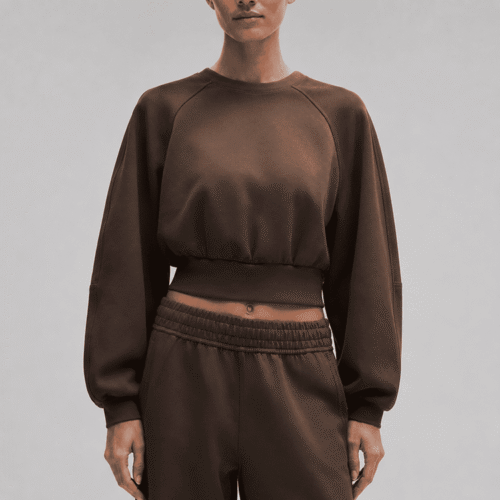
Custom Women’s Cropped Crewneck Sweatshirt Athleisure Pullover OEM ODM
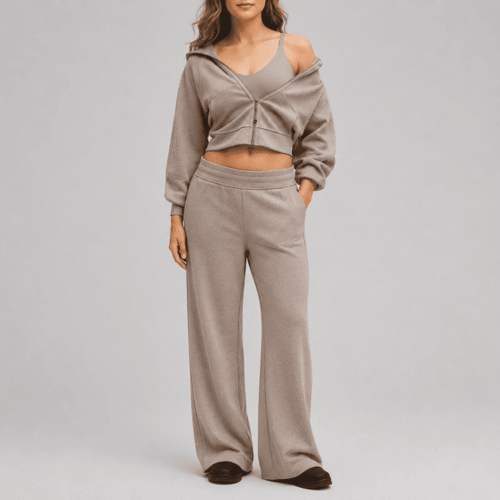
Custom Women’s Cropped Hoodie Loungewear Set OEM ODM Wide Leg Lounge Pants
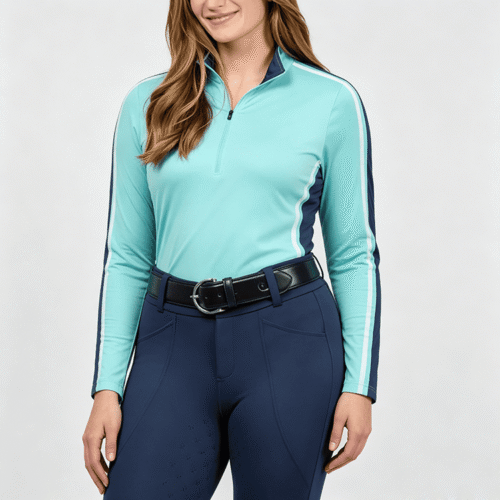
Custom Women’s Equestrian Base Layer Quarter Zip Riding Shirt OEM ODM
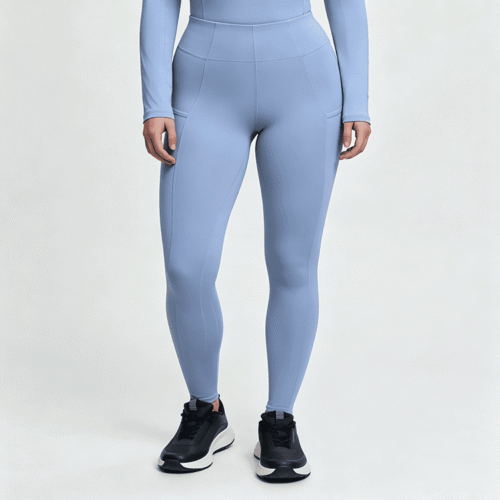
Custom Women’s Equestrian Riding Tights High Waist Performance Leggings OEM ODM
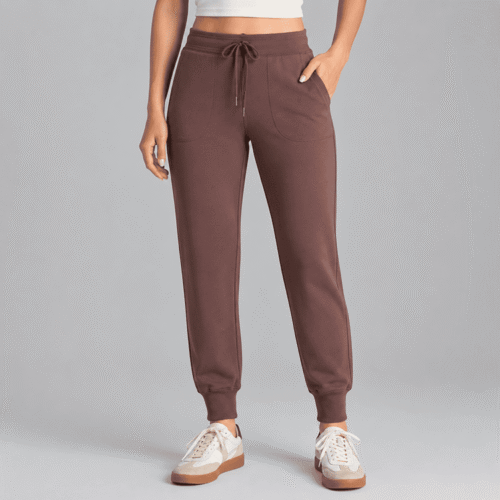
Custom Women’s Fleece Jogger Pants Athleisure Sweatpants OEM ODM
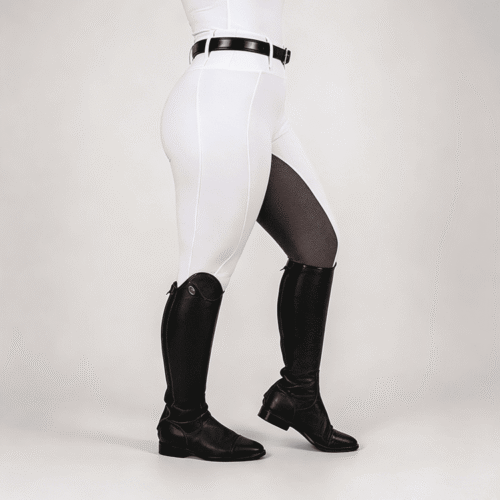
Custom Women’s Full Seat Equestrian Breeches Silicone Grip Riding Pants OEM ODM
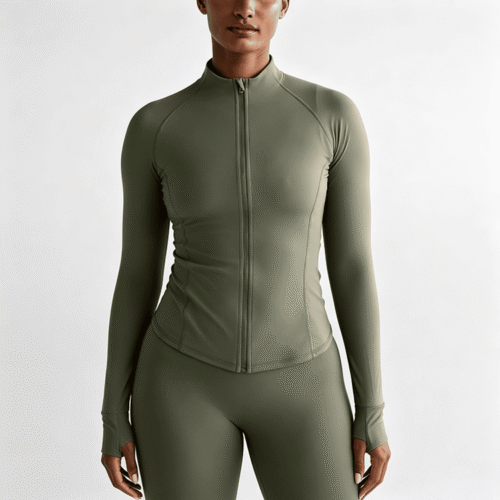
Custom Women’s Full Zip Yoga Jacket Performance Activewear OEM ODM
Custom Women’s Half Zip Fleece Hoodie Athleisure Pullover OEM ODM
Why Do Brands Source Maternity Bras From Chinese Manufacturers?
Brands often include Chinese Maternity Bra Manufacturers in their sourcing shortlist because China combines a large textile and apparel supply base with established lingerie manufacturing clusters, component sourcing and multiple production technologies. The advantage is not automatically the lowest price; it is the ability to compare suppliers with different levels of specialization, order scale and manufacturing infrastructure within one mature sourcing market.
China remains deeply integrated into the global textile and clothing value chain. For maternity-bra buyers, however, national manufacturing scale alone is not a sufficient reason to place an order. The more relevant question is whether that industrial depth creates a practical advantage for the specific product being sourced.
A nursing bra may require stretch fabric, elastic, hook-and-eye closures, padding, nursing clips, labels and packaging in addition to the main sewing or seamless-knitting process. When these materials and components can be sourced through an established manufacturing ecosystem, buyers have more options when comparing specifications, production methods and commercial conditions.
This is particularly visible in lingerie manufacturing areas such as Gurao in Shantou, Guangdong, where multiple bra and underwear manufacturers operate alongside related production resources. For buyers comparing Maternity Bra Manufacturers, that concentration can make China useful not simply as a low-cost source, but as a market where different supplier models can be compared within the same product category.
What Supply-Chain Advantages Does China Offer for Bra Manufacturing?
The strongest sourcing advantage is often supply-chain depth rather than one individual factory capability.
A maternity or nursing bra can involve a surprisingly large number of inputs:
- Main fabrics: nylon-spandex, polyester-spandex, cotton blends, modal or other stretch materials
- Support components: elastics, underband materials and reinforcement structures
- Nursing components: drop-down clips, inner slings and related hardware
- Bra components: hook-and-eye closures, adjustable straps, cups and padding
- Production processes: cut-and-sew, molding, seamless knitting or bonding
- Branding: heat-transfer logos, woven labels, care labels and hangtags
- Packing: individual bags, retail packaging, cartons and barcode requirements
A factory does not necessarily manufacture every component itself. In fact, that is not normally the most useful measure of supplier strength. Buyers should instead determine whether the manufacturer has stable access to the materials and specialist suppliers required for the approved specification.
Gurao provides a useful example. Manufacturers operating there publicly describe the area as a major Chinese lingerie production hub, with suppliers offering nursing bras, sports bras, plus-size bras, seamless products and conventional cut-and-sew lingerie. Some factories also combine traditional sewing with seamless knitting and bonding technologies.
This concentration does not guarantee that every supplier in the area is suitable. It does, however, give sourcing teams a deeper pool of bra-specific manufacturing options than they may find in a general garment-production region.
China vs Other Manufacturing Regions: What Should Buyers Actually Compare?
Choosing between China and another manufacturing region should not begin with a statement such as “China is cheaper” or “local production is faster.” Both can be true in particular projects and misleading in others.
The comparison becomes more useful when buyers keep the product inputs consistent.
| Sourcing Factor | What Buyers Should Compare |
|---|---|
| Product Specialization | Relevant maternity, nursing or bra production evidence |
| MOQ | Quantity per style, color and material—not only the advertised minimum |
| Unit Price | Quotations based on the same specifications and commercial terms |
| Material Access | Availability of required fabrics, elastics, clips, cups and trims |
| Manufacturing Process | Cut-and-sew, seamless, bonding or molding capability required by the product |
| Capacity | Realistic output for the buyer’s expected order and replenishment volume |
| Compliance | Documentation required for the destination market and buyer program |
| Lead Time | Material preparation, production, inspection and shipping—not production days alone |
| Logistics | Freight method, transit time, duties and landed-cost implications |
| Repeatability | Ability to reproduce confirmed specifications on future orders |
China’s strong position in the global textile and clothing industry is also one reason why many buyers continue to consider sourcing from China. According to World Trade Organization analysis, China accounted for more than 40% of the total value added in global textile and clothing exports in 2022, showing its important role in manufacturing and related supporting activities.
However, this large industry scale should only be used as background information. It does not mean that every individual supplier in China is reliable.
A smaller manufacturer with relevant maternity-bra experience may be more suitable than a much larger general apparel factory. Likewise, an excellent Chinese factory can still be commercially unsuitable if its minimum quantities, production process or lead time do not match the buyer’s order.
When Does China Make Commercial Sense for a Maternity Brand?
Chinese Maternity Bra Manufacturers can make particular commercial sense when a brand needs to combine custom manufacturing with access to an established apparel supply chain.
Consider three different buying situations.
A startup testing a new maternity category may need a supplier willing to support a relatively controlled first order. For this buyer, a low headline unit price is less important if achieving it requires purchasing several thousand pieces before demand has been tested.
A growing private label brand may have already validated the product and now need multiple colors, coordinated maternity styles and repeat orders. Its priority begins to move from initial inventory exposure toward consistent sourcing, documentation and replenishment.
An established retailer or distributor may place much larger programs. At that point, production capacity, compliance documentation, delivery planning and bulk consistency can carry more weight than a very low minimum order quantity.
This is one reason buyers should compare several Maternity Bra Manufacturers instead of looking only for a single definition of the “best factory.” The same manufacturing model does not create the same value at every stage of a brand.
A 200-piece launch and a 20,000-piece annual program may use similar products, but they create very different sourcing requirements.
Why Manufacturing Clusters Matter More Than a Long Factory Product List
A supplier website containing hundreds of garment styles can look impressive, but product breadth is not the same as supply-chain relevance.
For maternity bras, buyers may gain more from a manufacturer that operates inside a strong intimate-apparel ecosystem and can demonstrate relevant component and production access.
For example, Shantou-based lingerie manufacturers publicly describe capabilities ranging from cut-and-sew bras and nursing bras to seamless knitting, bonding, cup molding and plus-size production. Some also maintain in-house sampling and technical teams, while others are structured around larger repeat-volume programs.
That creates useful choice, but it also creates a sourcing challenge.
Two factories located only a short distance apart can have very different:
- Minimum quantities
- Equipment
- Customer profiles
- Technical strengths
- Development resources
- Capacity
- Quality systems
- Pricing structures
Location therefore helps buyers identify a sourcing ecosystem, but it should never replace manufacturer-level verification.
When comparing Maternity Bra Manufacturers, the relevant question is not simply, “Is the factory in a famous lingerie area?” It is, “Does this supplier have the evidence, commercial conditions and production system required for this order?”
Is China Always the Best Choice for Maternity Bra Production?
No manufacturing country is automatically the right sourcing choice for every maternity-bra program. China becomes attractive when its supplier depth, manufacturing capability and commercial conditions fit the project, but there are situations where another sourcing model may make more sense.
Local or nearshore manufacturing can be relevant when a brand requires extremely short physical replenishment routes, when country-of-origin positioning is central to the product’s marketing strategy, or when initial quantities are below the practical minimum for overseas custom production.
Another consideration is landed cost. A low factory price does not represent the complete commercial commitment.
Buyers may also need to consider:
Product Cost + Development Charges + Packaging + Testing + Freight + Duties + Inspection + Inventory Exposure
For larger programs, buyers may additionally consider geographic diversification rather than depending on one country. Some established lingerie manufacturers in China now publicly describe multi-country manufacturing networks as part of their supply strategy, illustrating how sourcing decisions can evolve as order scale increases.
The decision should therefore begin with the order rather than the country.
How Should Buyers Decide Whether to Shortlist Chinese Manufacturers?
Before contacting ten factories and collecting ten quotations, buyers can reduce unnecessary comparison by defining a few commercial requirements first:
- Confirm the product category. Is the order an everyday nursing bra, maternity sports bra, seamless program or broader maternity collection?
- Estimate realistic launch volume. Separate what the brand hopes to sell from what it can responsibly purchase now.
- Define the required manufacturing route. A seamless program and a conventional cut-and-sew product may require different supplier infrastructure.
- Set the required customization level. Existing product modification and original private label development should not be treated as the same sourcing project.
Identify market requirements. Compliance, testing, labeling and documentation can differ by destination and customer. For products entering the United States, buyers should also identify which apparel regulations apply to the product, including relevant CPSC clothing textile requirements, before finalizing the testing and compliance plan.
- Calculate commercial exposure. MOQ should be considered together with colors, sizes, materials and total inventory value.
Once these inputs are clear, comparisons between Maternity Bra Manufacturers become more meaningful.
A supplier requiring a larger quantity may be commercially reasonable for a proven product. A supplier offering lower entry quantities may create more value during product validation.
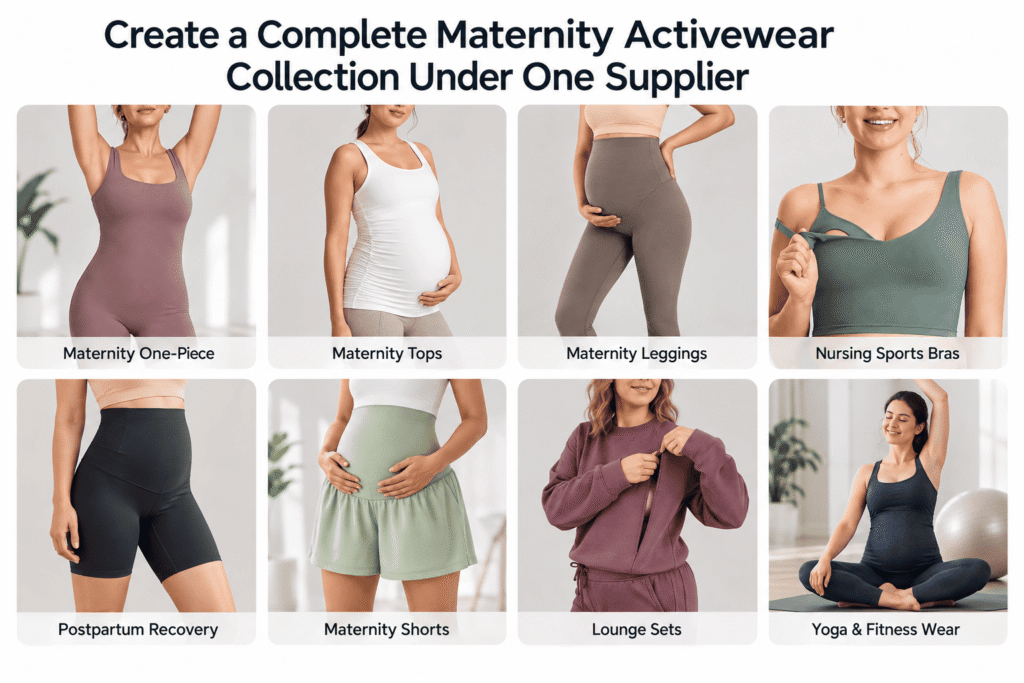
A specialized lingerie manufacturer may be preferable for one construction, while an experienced activewear manufacturer may make more commercial sense when maternity bras are being developed as part of a coordinated collection that also includes leggings, tops, shorts and other performance apparel.
The advantage of sourcing from China is therefore not that every Chinese factory is cheaper, faster or better. It is that buyers can access a broad manufacturing ecosystem and then select suppliers according to product specialization, order scale, commercial fit and verifiable production capability.
For professional sourcing, that distinction matters more than country-of-origin assumptions.
What Can Consumer Nursing Bra Reviews Teach Buyers About Manufacturer Selection?
Consumer nursing-bra reviews can help brands identify which product details deserve closer factory verification. Comfort, support, one-handed nursing access, stretch, adjustability, padding, size range and washability repeatedly influence the wearing experience. Buyers should turn these consumer expectations into manufacturing questions: what specification controls each feature, how is it approved, how is it inspected in bulk, and can the manufacturer reproduce the same result on repeat orders?
A consumer buys a finished bra and asks a simple question:
Does this work for me?
A sourcing team has to ask a more difficult one:
Can the supplier make this work consistently for hundreds or thousands of customers?
That distinction changes how brands should read consumer nursing-bra reviews.
Current consumer reviews frequently highlight soft fabrics, comfortable support, adjustable straps, one-handed nursing access, pumping compatibility, broad sizing, removable padding, moderate stretch, washability and durable clips or snaps. Reviews also reveal where otherwise attractive products can disappoint—for example, inadequate support at larger sizes, inserts that are useful for modesty but not absorption, or constructions that become less suitable as bust size increases.
Fashion-oriented reviews add another dimension. Nursing customers do not necessarily want a product that visually announces itself as medical or purely functional. Lace, color, bralette styling, wireless structures and convertible designs can matter alongside practical nursing access.
For brands comparing Maternity Bra Manufacturers, these observations are valuable—but only when they are translated into factory-verification questions.
Which Consumer Requirements Should Buyers Turn Into Manufacturing Questions?
A consumer requirement and a manufacturing requirement are not the same thing.
“Soft fabric” describes an experience.
“Easy nursing access” describes an experience.
“Good support” describes an experience.
A factory needs those expectations converted into materials, measurements, components, construction requirements and inspection points that can be repeated.
| What the Consumer Wants | What the Buyer Should Verify |
|---|---|
| Soft Against the Skin | What fabric specification and finishing are being approved? |
| Comfortable Support | Which construction and components create the intended support? |
| Easy Nursing Access | Which opening system and hardware are being used, and how are they checked? |
| One-Handed Operation | Can the approved clip or opening be operated consistently without excessive force? |
| Adjustable Fit | What strap, closure and adjustment range is specified? |
| Stretch for Body Changes | What stretch and recovery characteristics are expected from the approved material? |
| Removable Padding | Does the padding stay correctly positioned during normal wear and washing? |
| Larger Size Coverage | How is the size range graded and verified beyond the base size? |
| Pumping Compatibility | Is the construction compatible with the intended pumping use? |
| Washability | What changes after repeated washing in appearance, dimensions and component performance? |
| Reliable Clips and Snaps | What hardware is approved, and how is consistency checked in bulk? |
| Attractive Styling | Can decorative details be added without compromising the required function? |
This is where experienced sourcing teams can extract more value from consumer research.
Instead of telling a factory, “We need a comfortable nursing bra,” the buyer can identify what must be proven before the purchase order becomes large.
Product Claim vs Manufacturing Evidence: What Is the Difference?
Product descriptions are easy to write.
Manufacturing evidence is harder.
A supplier can describe a bra as supportive, comfortable, seamless, premium or nursing-friendly, but those words do not tell the buyer whether the result can be reproduced in bulk.
When comparing Maternity Bra Manufacturers, buyers should move from descriptive claims toward observable evidence.
| Product Claim | More Useful Manufacturing Evidence |
|---|---|
| “Easy Nursing Access” | Approved opening construction and confirmed nursing hardware |
| “Comfortable Support” | Approved fit reference, measurements and relevant construction details |
| “Wide Size Range” | Grading information and evidence from additional sizes |
| “Soft Premium Fabric” | Confirmed fabric specification and approved material reference |
| “Good Stretch” | Material performance reference and recovery expectations |
| “Removable Padding” | Approved pad shape, pocket construction and placement |
| “Durable” | Relevant component, wash or performance evaluation |
| “Consistent Quality” | Production specifications, inspection records and repeat-order controls |
The distinction becomes especially important after sampling.
A buyer may receive one excellent sample because experienced sample-room workers spent additional time adjusting it. Bulk production is different: multiple operators, larger material quantities and production-line efficiency all enter the equation.
Therefore:
A good sample proves that the product can be made once. It does not, by itself, prove that the factory can make it consistently at scale.
That is a much more useful standard when screening suppliers.
What Can One-Handed Nursing Access Tell Buyers About Factory Capability?
One-handed nursing access appears repeatedly in consumer-oriented nursing-bra evaluation because mothers may need to open or close the bra while holding a baby. Mommyhood101, for example, includes one-handed access and durable clips among its preferred nursing-bra features and notes one-handed clip-down access in several tested products.
For a sourcing team, however, the question should not stop at:
Does the sample open with one hand?
The buyer should verify whether the production reference clearly identifies the approved component and construction.
Questions may include:
- Is the nursing clip specification confirmed?
- Is the clip easy to release without opening unintentionally during wear?
- Is its attachment secure?
- Is the same component expected in bulk?
- If the original component becomes unavailable, is substitution allowed?
- Who approves a substitute?
- Is the opening performance checked during inspection?
This is a good example of how consumer experience can expose a manufacturing risk.
A factory can make a visually correct nursing bra while still using inconsistent hardware. The photograph may look identical, but the user experience can change immediately.
For brands comparing Maternity Bra Manufacturers, small components should therefore not be treated as insignificant simply because they represent a small percentage of garment cost.
What Does Consumer Demand for Comfort and Support Really Mean for Buyers?
Comfort and support often appear together in nursing-bra reviews, but they can pull a product in different directions.
A very soft and lightly structured bra may feel excellent for sleeping or home wear but provide insufficient support for some larger bust sizes or more active use. Consumer testing illustrates this clearly: some soft wrap and lounge-style nursing bras are praised for comfort while showing support limitations for larger cup sizes.
That is valuable information for brands.
It suggests that the purchasing brief should define the intended use case before manufacturers are compared.
Consider the difference between:
Sleep Nursing Bra → Everyday Nursing Bra → Pumping Bra → Maternity Sports Bra
These products should not automatically be judged by the same support expectation.
Brands developing maternity sports bras can also compare the construction and performance requirements used in custom sports bra manufacturing, where support level, movement, fabric performance and intended training use create a different development standard from everyday nursing bras.
For sourcing teams, the manufacturer’s role is therefore not merely to say, “Yes, we can make it supportive.”
The more useful evidence is whether the supplier understands the type of product being quoted and can show relevant production references.
This also prevents an unfair supplier comparison.
If Factory A quotes a lightweight lounge-style nursing bra while Factory B quotes a more structured support product, comparing only the unit price tells the buyer very little.
Why Should Size Range Be Verified Instead of Simply Advertised?
A product being available in more sizes looks commercially attractive, but the existence of a size chart does not prove that every size performs equally well.
Consumer reviews repeatedly show that support and coverage can change as bust and body dimensions increase. Some nursing products work well through moderate cup sizes but become less supportive or provide insufficient coverage at the upper end of the range.
For buyers, this creates an important distinction:
Size availability is not the same as size validation.
This becomes even more important when maternity brands move into extended sizing, because plus size activewear manufacturing requires buyers to evaluate proportion, support structures, grading logic and fit across a wider range rather than simply enlarging the original base size.
When a supplier advertises XS–3XL or a wide bra-size range, buyers can ask:
- Which size was originally developed?
- How was the remaining range graded?
- Have additional sizes been physically sampled?
- Are larger cup or body sizes constructed differently where necessary?
- Does strap width remain appropriate?
- Does side coverage remain sufficient?
- Does the underband continue to provide the intended support?
- Are nursing components positioned correctly across the range?
Not every order requires every size to be sampled individually.
But the larger and more technically diverse the range becomes, the weaker the assumption that one approved base-size sample proves everything.
When screening Maternity Bra Manufacturers, buyers should therefore distinguish between a factory that can generate a grading table and one that can demonstrate relevant experience controlling a broad maternity-bra size range.
Removable Padding Looks Simple—Why Can It Become a Repeat Complaint?
Removable padding is common because it gives the wearer flexibility, but consumer feedback also shows that padding can become a weak point.
The insert may shift.
It may fold during washing.
Its shape may show through the outer fabric.
The pocket opening may make reinsertion frustrating.
Or the padding may provide modesty without the absorption a nursing customer expected. Consumer testing has specifically noted differences between removable foam inserts used primarily for shape or modesty and actual nursing pads intended to manage leakage.
For the buyer, this means “removable padding” should not remain a one-line product feature.
Relevant manufacturing details can include:
Pad Shape / Thickness / Density / Pocket Opening / Position / Size Compatibility / Wash Behavior
Again, the objective is not to make every specification unnecessarily complicated.
It is to identify which apparently small details can create repeated customer dissatisfaction if they are not controlled.
How Should Buyers Think About Stretch and Recovery?
Stretch is particularly attractive in maternity and nursing products because the body and bust can change through pregnancy, feeding and postpartum periods.
But more stretch is not automatically better.
A fabric that stretches easily but recovers poorly can gradually lose support. A fabric with strong recovery may feel too restrictive if the product was intended for relaxed sleep or lounge use.
Consumer nursing-bra reviews often praise fabrics that accommodate changing breast volume while retaining enough support for daily wear.
For buyers, this turns a vague fabric description into a supplier-verification question:
What material is actually being approved, and how will the same material performance be maintained in bulk?
This is particularly important when two quotations use similar descriptions such as “nylon/spandex stretch fabric.”
Fiber composition alone does not prove identical:
- Fabric weight
- Knit construction
- Hand feel
- Stretch direction
- Recovery
- Surface finish
- Color performance
Two fabrics can carry similar composition labels and behave very differently in the finished bra.
That is why experienced buyers compare the approved material reference, not merely the fiber-content percentage.
What Can Consumer Reviews Teach Buyers About Washability?
A nursing bra can perform well during a fitting and still disappoint after repeated washing.
Consumers care because maternity and nursing underwear is frequently worn and washed. Reviews discuss machine washing, shape retention, staining, shrinkage and the behavior of removable inserts.
For procurement teams, washing should therefore be considered where the product risk justifies it.
Depending on the product and target market, evaluation may look at:
Dimensional Change / Fabric Appearance / Elastic Recovery / Padding Behavior / Hardware Performance / Label Durability
For brands that require more structured wash-performance verification, recognized textile methods such as AATCC dimensional-change testing can provide a more standardized reference for evaluating how fabrics or finished garments change after home laundering.
The required level of testing will not be identical for every order.
A small initial program and a major retail launch may use different testing protocols. The principle is simply that a visually approved pre-production sample does not answer every question about repeated consumer use.
Function vs Style: Does a Maternity Bra Manufacturer Need Both?
Yes—when the brand’s positioning requires both.
Maternity underwear does not have to look purely functional. Fashion-focused nursing-bra coverage highlights consumer interest in lace, bralettes, attractive colors, wireless silhouettes and convertible designs, while still expecting practical nursing use.
This creates a different manufacturing question.
It is relatively easy to make a functional nursing bra unattractive.
It is also possible to make a visually attractive bra that performs poorly for nursing.
The challenge is keeping the intended function while achieving the brand’s visual direction.
For example, decorative lace can affect stretch and hand feel. Narrower straps may create a more delicate appearance but change support expectations. A low-cut bralette silhouette may look more fashionable while creating different coverage requirements.
For buyers comparing Maternity Bra Manufacturers, the best evidence is therefore not a supplier saying it can make “any design.”
Look at products with a similar balance of function, construction and visual positioning to the intended collection.
A manufacturer experienced only in basic seamless nursing bras may not automatically be the strongest supplier for a structured lace maternity line. Conversely, a fashion-lingerie specialist may need additional verification when the product depends heavily on pumping or nursing functionality.
How Should Brands Use Consumer Reviews Before Requesting Factory Quotations?
Consumer research becomes most valuable when it changes the questions in the sourcing brief.
Instead of copying popular retail products, brands can identify recurring user expectations and failure points.
For example:
Consumer Signal: “The clip is difficult to open.”
Sourcing Question: Which nursing hardware will be used, and how is its operation verified?
Consumer Signal: “The bra became loose.”
Sourcing Question: What material and elastic performance are being approved?
Consumer Signal: “The larger size is not supportive.”
Sourcing Question: What evidence supports the proposed size range?
Consumer Signal: “The padding moves after washing.”
Sourcing Question: How are pad shape, pocket construction and wash behavior controlled?
Consumer Signal: “It works well but looks too clinical.”
Sourcing Question: Can the required nursing function be maintained within the intended brand aesthetic?
This approach allows brands to use consumer information without turning supplier selection into a popularity contest.
The most reviewed retail bra is not automatically produced by the most suitable factory for another brand.
Likewise, the manufacturer offering the lowest quotation is not automatically producing the product experience customers actually value.
When comparing Maternity Bra Manufacturers, consumer reviews are most useful as a source of questions and risk signals. Manufacturer selection should then be based on whether the supplier can provide relevant evidence, define controllable specifications and reproduce the approved product consistently in bulk.
That is the point where consumer insight becomes a practical sourcing advantage.
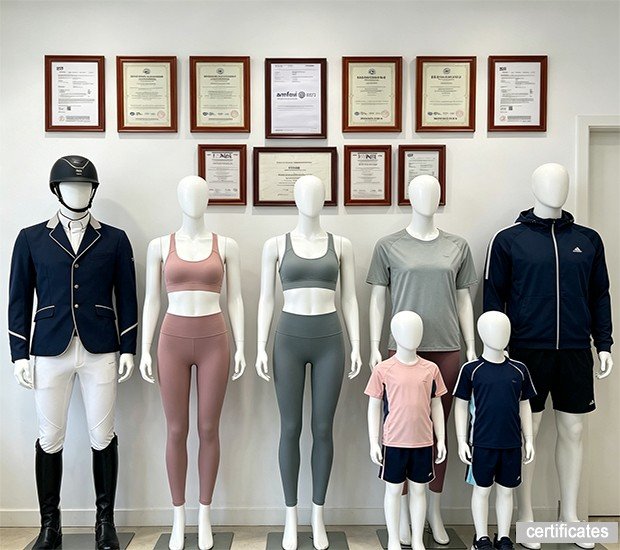
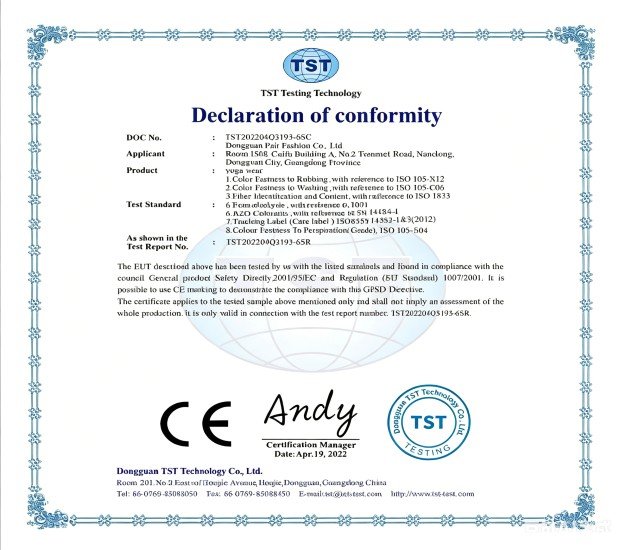
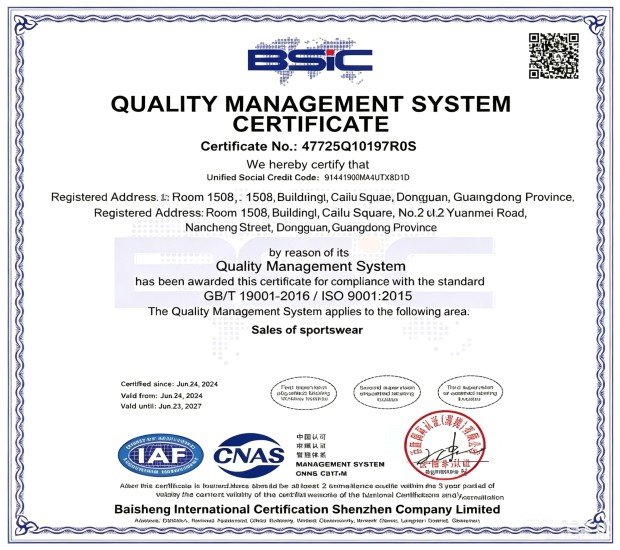
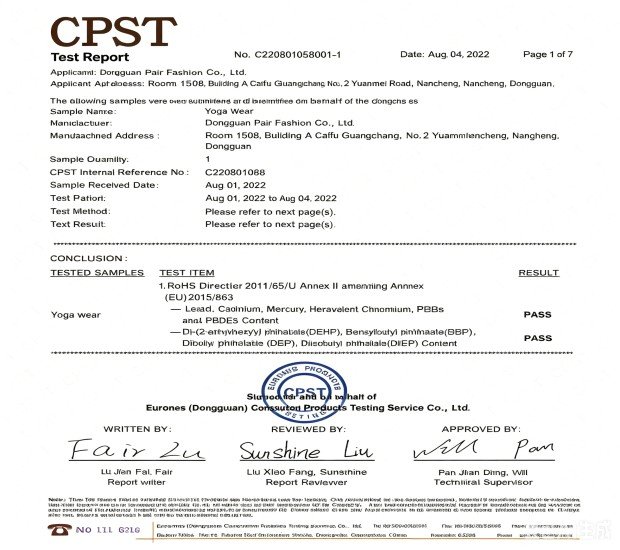
Trusted Manufacturing Standards For Global Sportswear Brands
We operate under internationally recognized quality, sustainability, and ethical manufacturing standards. Our certifications help ensure consistent product quality, responsible sourcing, and reliable production for global sportswear brands.
- 20+ Countries Served
- 6000+ Styles Developed
- 50,000 PCS Monthly Capacity
- 3-Day Sample Development
Manufacturer vs Wholesaler vs Trading Company: Which Supplier Type Fits Your Order?
A manufacturer is usually the better sourcing route when a brand needs original product development, controlled specifications and repeat custom production. A wholesaler is more suitable when the priority is buying existing maternity bras quickly in smaller quantities, while a trading company can simplify multi-factory sourcing and export coordination. The right choice depends on customization depth, order volume, sourcing experience and how much production visibility the buyer requires.
One of the easiest sourcing mistakes is to assume that every company selling maternity bras is a maternity bra manufacturer.
They are not the same.
A supplier may own production lines and make bras directly. Another may purchase finished nursing bras and resell them. A third may coordinate orders across several factories without physically producing the garments itself. There are also integrated businesses that combine manufacturing with an in-house trading or export operation; XS Manufacturing, for example, publicly describes itself as a manufacturing-and-trading integrated enterprise.
None of these business models is automatically better in every situation.
What matters is understanding where the product is made, who controls production, what can actually be customized and what happens when something goes wrong.
What Is a Maternity Bra Manufacturer?
A maternity bra manufacturer physically participates in making the product rather than simply purchasing finished bras for resale.
Depending on the factory, its responsibilities may include pattern development, material sourcing, cutting, sewing, seamless knitting, bonding, molding, assembly, inspection and packing. Some factories perform most major operations internally; others combine internal production with approved specialist subcontractors.
For buyers comparing Maternity Bra Manufacturers, the important distinction is not whether every operation happens under one roof. It is whether the supplier can clearly explain which operations it controls, which are outsourced and how quality is managed across them.
Direct manufacturing becomes particularly important when the product has requirements that cannot be satisfied by selecting an existing style from a catalog.
A brand may need:
- Original patterns or proprietary measurements
- Specific fabrics and elastic performance
- Custom nursing hardware or trim
- A controlled size range
- Exclusive colors
- Custom labels and packaging
- Documented bulk specifications
- Repeat orders based on the same approved requirements
This level of control normally requires a closer relationship with the production source.
However, buying directly from a manufacturer also creates responsibilities for the buyer. Custom manufacturing normally requires clearer product information, sampling decisions, production quantities and quality expectations than purchasing an existing wholesale product.
A factory’s MOQ also reflects production economics. Material minimums, cutting efficiency, machine setup and component purchasing can make very small quantities commercially difficult.
That is why factory direct does not automatically mean low MOQ.
What Is a Maternity Bra Wholesaler?
A wholesaler primarily sells products that already exist.
Instead of asking a factory to create an original nursing bra, the buyer normally chooses from available styles, colors and sizes and purchases finished inventory or products based on established designs.
This model can be attractive when speed and low inventory exposure matter more than product uniqueness.
A small e-commerce seller, for example, may want to test whether nursing bras sell to its existing maternity audience before investing in an original product program. Purchasing 30, 50 or 100 pieces of an existing style can provide useful commercial information without requiring the development commitment associated with custom production.
The trade-off is control.
A wholesaler may offer:
Fast Availability → Lower Initial Quantity → Less Development → Less Product Exclusivity
That can be perfectly reasonable for market testing.
It becomes less suitable when the buyer wants the product itself to become an important part of the brand’s differentiation. Changing a logo or package does not necessarily create a meaningfully different maternity bra if competitors can purchase the same base product.
This distinction is particularly important when comparing wholesale offers with quotations from Maternity Bra Manufacturers. A wholesale supplier offering 20 pieces and a manufacturer quoting 300 pieces may not actually be quoting the same service.
One is selling an existing product.
The other may be preparing materials and production specifically for a custom order.
Comparing those MOQs directly can therefore lead to the wrong conclusion.
What Is a Trading Company?
A trading company sits between the buyer and one or more manufacturers.
Instead of producing every product itself, it can source from factories, coordinate quotations, manage communication, combine different product categories and handle parts of the export process.
This model is sometimes described negatively in sourcing discussions, but that is too simplistic.
A capable trading company can create real value when a buyer needs multiple product categories from different specialist factories.
Imagine a maternity brand sourcing:
- Nursing bras
- Maternity leggings
- Seamless underwear
- Maternity dresses
- Postpartum shapewear
- Retail packaging
The technically strongest factory for nursing bras may not be the strongest factory for dresses. A trading company with a suitable supplier network can coordinate those categories without requiring the buyer to manage several separate factory relationships.
The cost of that convenience is usually less direct production visibility and an additional commercial layer. Buyers should therefore understand who actually manufactures the goods and what happens if a quality, delivery or specification issue appears.
The practical question is not:
“Is a trading company bad?”
It is:
“Does the additional layer create enough value to justify the reduced direct control?”
What About a Manufacturer and Trading Company Combined?
The distinction is not always binary.
Some Chinese suppliers operate their own production facilities while also maintaining a trading division or using partner factories for processes and products outside their internal capability.
This can create a useful hybrid model.
For example, a supplier may manufacture core bra products internally while using qualified partners for specific seamless constructions, specialist accessories or products outside its main category. XS Manufacturing publicly states that it combines its own facility and production lines with an in-house foreign-trade team and a network of partner factories.
For buyers, the label “manufacturer and trading company” is therefore less important than operational transparency.
Ask:
Which part of my order will you manufacture yourself?
Which processes will be subcontracted?
Where will bulk production take place?
Who is responsible for inspection?
Can the production site be audited?
A clear answer can be more useful than a supplier simply repeating, “We are 100% factory.”
Manufacturer vs Wholesaler vs Trading Company: What Is the Real Difference?
| Requirement | Manufacturer | Wholesaler | Trading Company |
|---|---|---|---|
| Original Product Development | Usually strongest | Usually limited | Depends on factory network |
| Existing Ready Products | Sometimes | Usually strong | Usually strong |
| Very Small Initial Purchase | Depends on production | Often easier | Sometimes possible |
| Custom Materials | Usually possible | Limited | Depends on partner factory |
| Original Pattern Development | Possible with capable factory | Usually unavailable | Depends on partner factory |
| Production Visibility | Usually highest | Low | Medium to variable |
| Multiple Product Categories | Limited by factory specialization | Depends on inventory | Often strong |
| Direct Technical Communication | Usually stronger | Limited | Often filtered through trading team |
| Private Label Branding | Strong | Often available at basic level | Usually available |
| Repeat Custom Production | Strong when properly documented | Limited for original products | Depends on factory continuity |
| Best Fit | Brands building differentiated products | Sellers testing existing products | Buyers coordinating multiple suppliers/categories |
The table also explains why supplier type should be identified before price comparison.
A $6 wholesale nursing bra and a $7.50 custom-manufactured nursing bra are not necessarily competing quotations.
The wholesale price may apply to an existing product using predetermined materials and sizing. The factory price may include production against custom requirements. Until the inputs are aligned, the difference between the two prices says very little about manufacturing value.
Which Supplier Type Is Better for Private Label Maternity Bras?
For genuine product differentiation, working with Maternity Bra Manufacturers usually provides greater control over specifications and repeat production than buying existing wholesale stock.
But “private label” itself can describe very different levels of customization.
At the simplest level, a buyer may select an existing bra and add:
Brand Label + Hangtag + Packaging
At a deeper level, the project may involve:
Brand-Specific Fit + Materials + Construction + Colors + Components + Branding + Packaging
Both products may be sold as private label, but the manufacturing work behind them is very different.
This is why buyers should define the desired level of product ownership before requesting quotations.
If the objective is to test a sales channel quickly, an existing product with custom branding may be sufficient.
If the objective is to build a recognizable maternity-bra collection that can be reordered over several seasons, direct manufacturing becomes more valuable because product specifications can be established around the brand’s own requirements.
If the objective is to launch many categories at the same time without building a large sourcing department, a trading company or integrated manufacturing-and-trading supplier may reduce coordination work.
There is no universal answer without knowing what the buyer is trying to achieve.
OEM vs ODM: Does Supplier Type Change the Decision?
OEM and ODM are often mixed together with the terms manufacturer, private label and wholesaler, but they describe different aspects of the sourcing relationship.
In a typical OEM project, the brand brings more of the product direction or specification and the manufacturer turns those requirements into production. OEM can provide stronger differentiation, but it usually demands more development input from the buyer.
In an ODM project, the supplier contributes an existing product base or more of the design and development direction, allowing the buyer to customize from that foundation. This can shorten development when a completely original product is unnecessary.
Current lingerie-manufacturing guidance similarly distinguishes OEM as a more buyer-directed model and ODM as a supplier-led design route, although the exact service scope varies from company to company.
Neither label should be accepted without asking what it actually includes.
Two Maternity Bra Manufacturers can both advertise ODM while offering very different services. One may allow only color, logo and packaging changes. Another may support material changes, pattern adjustments, construction revisions and a much broader development scope.
The service list matters more than the acronym.
How Can Buyers Verify Whether a Supplier Is Really a Manufacturer?
Supplier verification does not need to begin with an expensive international trip.
Before paying a deposit, buyers can request evidence that helps establish how the supplier actually operates:
- Business registration and company identity
- Factory address
- Current production photographs or live video
- Relevant machinery and production areas
- Sample or development department
- Material storage
- Quality-control process
- Examples of relevant production
- Factory audits or current certifications where applicable
- Third-party inspection access
A factory visit or third-party audit can provide stronger verification for larger programs.
But buyers should also pay attention to how the supplier answers technical questions.
A real production relationship normally involves limitations. Machinery has constraints. Materials have minimums. Some constructions take longer. Some changes require different processes.
A supplier that answers every technical question with “no problem” without discussing conditions has not necessarily demonstrated stronger capability.
Sometimes the more credible answer is:
“We can do this, but it changes the MOQ.”
Or:
“This process is handled by our specialist partner, while final assembly and inspection are managed here.”
Transparency is more valuable than an impressive label.
Which Supplier Type Fits Your Current Brand Stage?
A simple way to make the decision is to begin with what the business needs now, not what it may need three years from now.
Choose a wholesaler or existing-product route when:
- You are still validating demand.
- Product exclusivity is not yet essential.
- You need very small quantities.
- Speed matters more than original development.
- You can accept existing construction and sizing.
Compare direct Maternity Bra Manufacturers when:
- Your brand needs differentiated products.
- You want more control over specifications.
- You expect repeat orders.
- Your volume can support production minimums.
- Product consistency matters to long-term brand positioning.
Consider a trading company or integrated supplier when:
- You are sourcing several different categories.
- One factory cannot efficiently produce the whole collection.
- You need more sourcing and export coordination.
- You accept an additional commercial layer in exchange for simpler management.
The sourcing route can also change as the business grows.
A brand may begin with existing products to test customer demand, move into modified ODM products after identifying its strongest category, and eventually work directly with specialized Maternity Bra Manufacturers when sales justify original development and repeat production.
The important point is not to reach direct manufacturing as quickly as possible.
It is to move into a more complex sourcing model when the product and order volume justify the additional control, commitment and responsibility.
How Should Buyers Compare MOQ, Price and Commercial Flexibility?
Buyers should compare MOQ and price only after Maternity Bra Manufacturers are quoting the same product specification, quantity, color breakdown, size range, materials, branding, packaging and delivery terms. A lower MOQ reduces initial inventory exposure, but it can increase unit cost. A lower unit price may require a much larger order. The more useful comparison is the total commercial commitment required to launch and replenish the product.
MOQ looks like one of the easiest numbers on a quotation.
In practice, it is one of the easiest numbers to misunderstand.
One supplier may say 100 pieces, another 500 pieces, and another 1,000 pieces. Those figures appear easy to compare until the buyer discovers that one MOQ applies to an existing product, another applies per style, and the third applies per color.
Material minimums can add another layer.
A factory may technically accept 300 finished bras but still need enough custom-dyed fabric or elastic for a larger material quantity. The buyer then has to decide whether to purchase the additional material, use an available color, carry material forward to the next order or increase garment quantity.
This is why experienced buyers do not ask only:
“What is your MOQ?”
They ask:
“What creates your MOQ for this specific order?”
What Is a Realistic MOQ for Custom Maternity Bras?
There is no single industry MOQ that applies to all custom maternity bras.
Current public supplier information illustrates the range. Cevaniq lists approximately 300–500 pieces per standard nursing-bra style, with custom programs commonly around 500–1,000+ pieces depending on materials and specifications. Golden Metro publicly lists an MOQ of 1,000 pieces for its custom nursing-bra program. Another bra supplier separates ready stock starting at 10 pieces per color from full custom manufacturing starting at 1,000 pieces per SKU.
These numbers are useful because they demonstrate something more important than the numbers themselves:
MOQ depends on what the buyer is actually purchasing.
A practical MOQ can be influenced by:
- Production MOQ — the minimum quantity needed to run the style efficiently
- Fabric MOQ — the minimum quantity required by the fabric mill or supplier
- Color MOQ — the minimum quantity required for each custom color
- Trim MOQ — minimums for elastic, clips, hook-and-eye, labels or other components
- Packaging MOQ — minimum quantities for printed bags, boxes, inserts or hangtags
- Process MOQ — minimums created by seamless knitting, dyeing, molding, bonding or another specialist process
For buyers comparing Maternity Bra Manufacturers, asking for one headline MOQ without understanding these layers can create a false comparison.
Style MOQ vs Color MOQ: Why Does the Difference Matter?
Consider a brand launching one nursing bra in four colors.
Factory A says:
MOQ: 400 pieces per style
Factory B says:
MOQ: 300 pieces per color
At first glance, Factory B appears to have the lower MOQ.
It does not.
If the brand wants four colors, the commercial commitment may become:
| Supplier | MOQ Structure | Colors | Total Minimum |
|---|---|---|---|
| Factory A | 400 pcs/style | 4 | 400 pcs if color mixing is permitted |
| Factory B | 300 pcs/color | 4 | 1,200 pcs |
| Factory C | 1,000 pcs/SKU | 4 separate SKUs | Potentially 4,000 pcs depending on definition |
The exact conditions must be confirmed with each supplier, but the principle is important.
MOQ should be converted into total purchase commitment before suppliers are compared.
The same applies to sizes.
A supplier may allow sizes to be mixed freely within the production quantity. Another may require a minimum ratio or quantity for specific sizes. A broad size range can therefore affect production efficiency even when the headline MOQ remains unchanged.
This matters especially for maternity and nursing products because brands may want to offer meaningful size coverage without holding excessive inventory in every size-color combination.
Why Does Low MOQ Sometimes Mean a Higher Unit Price?
Manufacturing has fixed costs that do not disappear because an order is small.
Before the first sellable bra is completed, a custom order may involve:
Pattern Work → Sampling → Material Preparation → Cutting or Machine Setup → Production Setup → Branding → Inspection → Packing
Some costs are spread across the entire production quantity.
Suppose production setup and related fixed costs total $600.
Across 100 pieces, that represents $6.00 per piece before considering normal garment costs.
Across 1,000 pieces, the same $600 represents only $0.60 per piece.
The example is simplified, but it explains why lower quantity often creates higher unit cost.
Material purchasing works similarly.
A supplier purchasing a small quantity of a specialized elastic or nursing component may receive a less favorable price than one purchasing it in much larger volume. Cutting efficiency and production-line utilization can also improve as quantity increases.
Therefore, a higher small-order unit price is not automatically evidence that a manufacturer is uncompetitive.
The buyer should ask what the higher price is buying.
If paying $1.50 more per piece allows a new brand to launch 200 units instead of committing to 1,000, the additional unit cost may be commercially sensible because it reduces inventory exposure.
Low MOQ vs Low Unit Price: Which One Matters More?
Neither should be evaluated alone.
For a new product, inventory risk may matter more than the lowest possible unit cost.
For an established bestseller, production efficiency may matter more.
Consider two simplified quotations:
| Factory A | Factory B | |
|---|---|---|
| MOQ | 200 pcs | 1,000 pcs |
| Unit Price | $10.50 | $8.70 |
| Initial Product Purchase | $2,100 | $8,700 |
Factory B saves $1.80 per unit.
But the buyer has to commit an additional $6,600 to product inventory.
If the style is already selling 2,000 units per month, Factory B may be commercially attractive.
If it is an untested first product, Factory A may reduce the financial risk even though its unit price is higher.
This is why Maternity Bra Manufacturers should be evaluated against the buyer’s sales stage rather than a universal rule that “lower price is better.”
A sourcing decision should consider both:
Cost per Unit + Cost of Being Wrong
The second number is rarely printed on the quotation.
It can still be the more important one.
Why Can Two Similar Maternity Bras Have Very Different Quotations?
A product photo is not the same as a complete product specification.
Two bras may look almost the same on a supplier’s website, but their production costs can be very different because buyers cannot see all the differences in materials, components and construction only from the outside appearance.
Quotation differences may come from:
- Fabric quality and weight
- Elastic specification
- Nursing hardware
- Padding construction
- Size range
- Sewing complexity
- Seamless versus cut-and-sew production
- Bonding or molding requirements
- Custom dyeing
- Logo method
- Labels and packaging
- Testing requirements
- Inspection standard
- Order quantity
- Delivery terms
This creates a common sourcing problem.
A buyer sends the same reference photograph to five Maternity Bra Manufacturers and receives five different prices.
The lowest quotation looks attractive.
But the factories may have made different assumptions about the product.
One may quote a standard stock fabric.
Another may quote a custom fabric.
One may include branded packaging.
Another may quote bulk-packed garments.
One may include a more expensive nursing clip.
Another may select the cheapest available component.
The quotations are different because the products being quoted are different—even if all five suppliers received the same photograph.
What Should Be Included in a Comparable Maternity Bra Quotation?
Before comparing final prices, buyers should align the main commercial inputs.
At minimum, quotations should clearly identify:
Product Specification
The supplier should understand the intended construction rather than quoting from a photograph alone.
Fabric
Composition alone is not always sufficient. Weight, construction, performance and custom-color requirements can affect cost.
Order Quantity
Specify total quantity and whether it is divided across styles.
Color Breakdown
A 1,000-piece order in one color can have different economics from 1,000 pieces divided across five colors.
Size Range and Ratio
A broad size range may create different production requirements.
Components
Nursing clips, elastic, padding, straps, closures and other relevant trims should be aligned.
Branding
Logo application, main label, care label, hangtag and barcode requirements should be clear.
Packaging
Standard polybags and custom retail boxes do not have the same cost.
Testing or Inspection Requirements
Additional third-party testing or inspection can affect total project cost.
Trade Terms
EXW, FOB, CIF and DDP quotations should not be compared as if they represent the same landed cost.
Once these inputs are reasonably aligned, price differences become more meaningful.
Why Should Buyers Compare Total Launch Cost Instead of Garment Price?
Unit price attracts attention because it is easy to put into a spreadsheet.
But it is only one part of the launch.
A more realistic commercial view can include:
Product Cost + Development Cost + Materials + Branding + Packaging + Testing + Inspection + Freight + Duties + Inventory Exposure
Not every project includes every cost, and some items may already be included in the supplier’s quotation.
The purpose is not to make costing unnecessarily complicated.
It is to avoid saving $0.40 on garment price while creating several thousand dollars of additional inventory or logistics cost elsewhere.
For example, a supplier may quote a very attractive custom box price but require 3,000 boxes when the first garment order contains only 500 pieces.
The box price is low.
The packaging commitment is not.
The same logic applies to custom-dyed fabrics, printed elastics and specialist trims.
How Should Buyers Think About Sample Cost?
Sample price should not be judged using bulk-production economics.
A single development sample can require individual pattern work, material sourcing, cutting, sewing, revision and courier handling. These activities cannot benefit from the efficiency of a 1,000-piece production run.
This is why a sample costing several times the expected bulk unit price is not unusual.
The more useful questions are:
- What does the sample charge include?
- Does it include pattern work?
- Are custom materials included?
- Are revisions charged separately?
- Is the sample fee refundable or credited after bulk ordering?
- Is shipping included?
- What happens when a material must be specially sourced?
For buyers comparing Maternity Bra Manufacturers, sample fees should be evaluated as part of the development structure rather than used as a shortcut for judging bulk-production competitiveness.
A very cheap sample that does not represent the intended bulk materials or construction can create more confusion than value.
How Long Should Buyers Expect Sampling and Bulk Production to Take?
Lead time varies for the same reason MOQ varies: projects are not identical.
Current supplier information shows the range. Cevaniq publicly states approximately 3–5 days for existing-style samples, 7–15 days for custom development and 25–40 days for production after required approvals. Golden Metro publishes 7–20 days for sample development and 60–100 days for bulk production, while another nursing-bra supplier states 30–45 days for custom production.
Those figures should not be treated as an industry promise.
Instead, buyers should separate the timeline into stages:
Development → Material Preparation → Approval → Bulk Production → Inspection → Shipping
A factory quoting “25 days” may mean 25 production days after all materials and approvals are ready.
That is different from 25 days from the buyer’s first inquiry to goods arriving at the warehouse.
When launch timing matters, ask what event starts the lead-time clock.
100 Pieces vs 5,000 Pieces: Should You Use the Same Manufacturer?
Not necessarily.
A factory that is commercially excellent for 100 pieces may not be the most efficient supplier at 5,000 pieces.
The opposite is equally true.
A large manufacturer with automated equipment and strong production efficiency may perform very well at 5,000 pieces while having little commercial interest in a 100-piece order.
For a 100-piece test, priorities may include:
- Manageable inventory exposure
- Flexible quantities
- Reasonable development support
- Ability to test one or two styles
- Simple commercial terms
For a 5,000-piece program, priorities may shift toward:
- Capacity
- Material planning
- Production scheduling
- Bulk consistency
- Quality documentation
- Inspection systems
- Delivery reliability
- Replenishment capability
Brands should therefore expect their supplier requirements to evolve.
The manufacturer that helped launch the first collection may remain an excellent long-term partner—but that should be proven by capability, not assumed from loyalty.
Likewise, changing to a larger factory purely because sales have increased can introduce unnecessary risk if the current supplier is already performing reliably.
How Should Buyers Compare Commercial Flexibility Without Chasing the Lowest MOQ?
Commercial flexibility is broader than MOQ.
A useful supplier may offer flexibility in:
Quantity / Color Breakdown / Material Options / Size Ratio / Packaging / Reorder Planning / Payment Structure
One factory may have a slightly higher MOQ but allow three colors to be combined.
Another may advertise a lower MOQ but require the full quantity in each color.
One may permit available fabric colors for a smaller launch and custom dyeing only at higher volume.
Another may require custom material minimums from the first order.
The most useful question is therefore not:
“Which factory has the lowest MOQ?”
It is:
“Which factory gives my current order the most workable combination of quantity, cost, customization and inventory risk?”
That is a much stronger basis for comparing Maternity Bra Manufacturers.
What Should Buyers Send Before Requesting the Final Price?
The more complete the commercial brief, the more useful the quotation becomes.
Before requesting a final comparison, provide each shortlisted supplier with the same core information:
- Product reference or Tech Pack
- Required quantity
- Number of colors
- Size range and expected size ratio
- Material direction
- Required components
- Customization requirements
- Branding
- Packaging
- Destination country
- Required delivery timing
- Preferred trade term
- Testing or inspection requirements
If some information is not yet confirmed, say so.
A professional quotation can identify assumptions rather than pretending every detail is fixed.
Once the same inputs are sent to shortlisted Maternity Bra Manufacturers, buyers can compare not only the final number but also how clearly each supplier explains what the price includes, what changes it and where additional commercial commitments may appear.
That transparency is often more valuable than the lowest number in the quotation column.
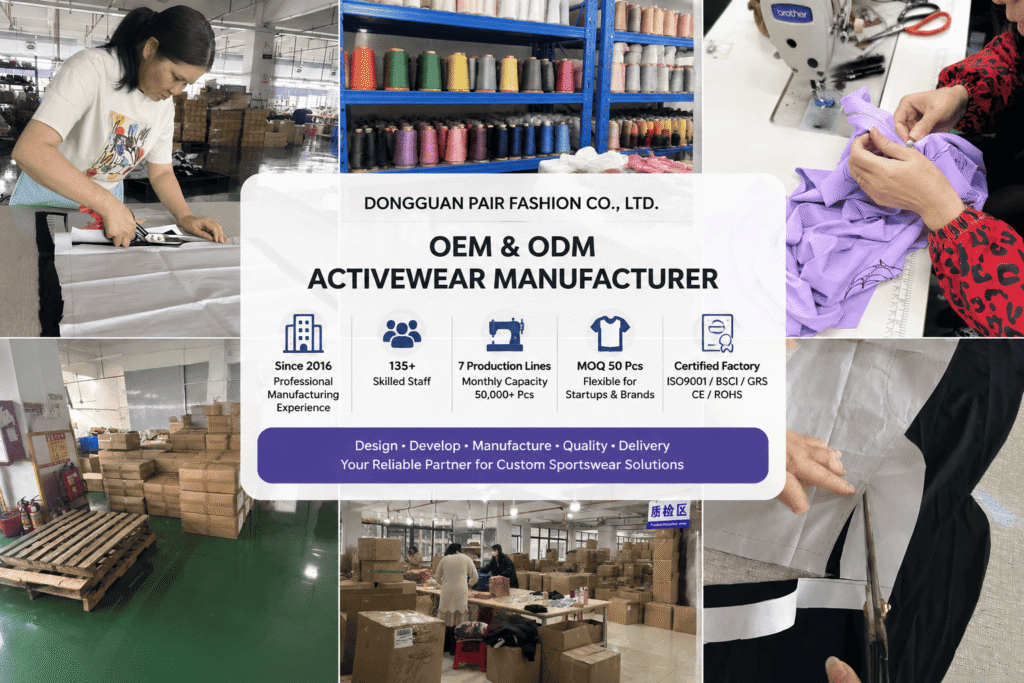
What Evidence Shows That a Maternity Bra Manufacturer Is Actually Specialized?
A specialized maternity bra manufacturer should be able to show relevant product history, comparable samples, bra-specific pattern and size-grading capability, appropriate material and component knowledge, and production controls that match the intended order. Factory size, certificates and a large catalog can support supplier screening, but none of them independently proves that a manufacturer can produce the required maternity bra consistently.
“Professional manufacturer” is one of the most common descriptions on supplier websites.
The words themselves prove very little.
A factory can have 500 employees and still have limited experience with nursing bras. Another can display hundreds of underwear products while outsourcing much of the technically relevant work. A smaller supplier may have fewer products but much deeper experience in the exact construction a buyer needs.
For brands comparing Maternity Bra Manufacturers, specialization should therefore be treated as something that can be demonstrated, not something that should simply be accepted from a company profile.
The most useful evidence usually answers five questions:
- Have they made products relevant to mine?
- Can they explain the technical differences between those products?
- Can they control the required size range?
- Can they source and control the relevant materials and components?
- Can they reproduce the approved requirements in bulk?
If those questions cannot be answered, a large catalog does not solve the problem.
Relevant Product History vs Large Product Catalog: Which Matters More?
Relevant product history usually matters more.
Imagine two suppliers.
Factory A displays 2,000 apparel products covering T-shirts, leggings, swimwear, bras, underwear, jackets and dresses.
Factory B displays 200 products, but a meaningful share of them are bras, nursing bras, sports bras and related intimate apparel.
Factory A has the larger catalog.
Factory B may still be the stronger candidate for a maternity-bra project.
The reason is simple: a bra is not just a smaller top.
Its performance can depend on the relationship between cup volume, band dimensions, straps, elastic, closures, padding, stretch and size grading. Nursing products introduce additional functional components and opening requirements.
Current bra manufacturers that describe their technical capabilities in detail commonly identify pattern development, grading, cup and band construction, elastic recovery and component control as separate parts of the production process.
That is more meaningful than the number of product thumbnails on a website.
When comparing Maternity Bra Manufacturers, buyers can therefore ask:
How many similar maternity or nursing products have you produced recently?
Were they seamless, cut-and-sew, bonded or molded?
What size ranges did they cover?
Did you develop them or simply manufacture an existing specification?
Which parts were produced internally?
Can you show current examples without disclosing another customer’s confidential information?
These questions reveal more than asking, “How many years have you been in business?”
Twenty years of general garment production and five years of specialized bra manufacturing are not automatically equivalent experience.
What Relevant Samples Should Buyers Ask to See?
Buyers should request samples that are technically similar to the intended product rather than accepting whichever bra the supplier finds easiest to send.
If the project is a seamless nursing sports bra, a lace underwire bra proves very little about the required production route.
If the project is a full-bust nursing bra, a small-size lounge bralette does not demonstrate the same grading or support experience.
If the project requires a pumping function, an ordinary clip-down nursing bra may show some relevant experience but does not prove the complete capability.
A useful sample request can therefore be specific:
Please show two or three products with the closest construction, material direction, size range and nursing function to our project.
That request gives the supplier room to protect confidential customer designs while still demonstrating relevant experience.
Buyers can examine:
- Construction type
- Stitching or bonding quality
- Left/right symmetry
- Cup shape
- Padding position
- Elastic attachment
- Strap construction
- Nursing hardware
- Closure quality
- Label application
- General finishing
The objective is not to find a sample identical to the new design.
It is to determine whether the manufacturer has already solved similar production problems.
Golden Metro, for example, publicly separates maternity, nursing, pumping, hands-free pumping and postpartum bra programs and lists dedicated nursing-bra production resources. That is more useful sourcing evidence than a supplier merely adding “maternity bra” to a general product-category list.
Is One Good Sample Enough to Prove Specialization?
No.
One good sample proves that one good sample exists.
It does not automatically prove stable production.
This distinction becomes particularly important when buyers source through online platforms. A supplier may have access to an attractive showroom sample, but the buyer still needs to understand who developed it, where it was produced and whether the same factory will manufacture the bulk order.
A stronger verification sequence is:
Relevant Existing Sample → Supplier Explanation → Custom Sample → Approved Reference → Bulk Evidence
Each stage answers a different question.
An existing sample asks:
“Have you handled something similar?”
A custom sample asks:
“Can you interpret our requirements?”
Bulk evidence asks:
“Can you reproduce those requirements at production scale?”
This is one reason supplier selection should not end when the first sample looks good.
How Can Buyers Verify Size-Grading Capability?
Size grading deserves particular attention because a maternity-bra program may appear successful in the base size while becoming inconsistent at the edges of the range.
Professional bra grading is not simply enlarging every measurement by the same percentage.
Cup volume, band dimensions, side coverage, strap position, elastic behavior and closure configuration interact differently as sizing changes. Bra-manufacturing guidance from specialist suppliers similarly notes that cup, band, wings, straps and support components may require different adjustments rather than simple proportional enlargement.
For buyers comparing Maternity Bra Manufacturers, useful questions include:
- What is the development base size?
- Which size system is being used?
- What is the full requested size range?
- How are cup and band dimensions graded?
- Does strap width or position change?
- Does side or back coverage change?
- Does closure configuration change in larger sizes?
- How is the nursing opening positioned across sizes?
- Which additional sizes have been physically sampled?
- What measurement tolerances are used in production?
Not every program requires an elaborate size-set process.
The required verification should match the risk.
A simple S–XL stretch nursing bralette may need a different grading approach from a structured full-bust program covering a much wider band and cup matrix.
The important point is that the supplier should be able to explain how its grading approach fits the construction being produced.
If the only answer is “we can make XS to 5XL,” the buyer still does not know how those sizes were developed.
Base Size vs Full Size Range: What Should Buyers Verify?
Suppose a brand approves a medium-size sample.
It looks good.
The nursing opening works.
The underband feels appropriate.
The straps sit correctly.
The brand then orders XS–3XL.
The mistake would be assuming that the approved medium automatically proves all six sizes.
As the size changes, buyers may need to consider whether:
Cup Capacity remains appropriate.
Underband Stability changes correctly.
Strap Position remains comfortable.
Side Coverage becomes sufficient for larger sizes.
Nursing Hardware Position remains practical.
Elastic Strength continues to suit the garment.
Padding Shape remains proportionate.
This does not mean every element must change in every size.
It means the decision should be deliberate rather than accidental.
A specialist supplier should be able to explain what remains constant and what changes across the range.
What Material and Trim Evidence Matters?
Maternity-bra specialization also depends on components that may look insignificant on a quotation.
A nursing clip weighs very little.
A strap slider is small.
Elastic may represent only one part of the total garment cost.
But if any of these components performs badly, the customer can notice immediately.
Relevant material evidence may include:
Main Fabric
Is the bulk material linked to the approved reference by an identifiable specification, code or supplier record?
Elastic
Are width, stretch and recovery appropriate for the intended application?
Nursing Hardware
Is the approved clip or opening component clearly identified?
Hook-and-Eye
Are dimensions, rows, color and attachment requirements confirmed?
Padding
Are shape, thickness, density and removable/fixed construction defined?
Straps and Adjusters
Do width, elasticity and hardware suit the intended size range?
Labels
Are fiber content, care information, sizing and brand requirements confirmed?
The purpose is not to create paperwork for its own sake.
It is to reduce uncontrolled substitution.
A supplier may discover that an originally approved component is unavailable during bulk production. The important question is what happens next.
Does the factory substitute whatever is available?
Or does it present the alternative for approval?
That difference tells the buyer a great deal about production control.
How Can Buyers Verify That Materials Will Be the Same in Bulk?
A material swatch is useful.
A supplier promise is useful.
Neither is as strong as a clearly identified approved reference.
For critical materials, buyers should be able to connect the approved product with information that production teams can actually use.
Depending on the project, this may include:
Fabric Code / Composition / Weight / Color Reference / Trim Code / Component Supplier / Approved Swatch
The required level of documentation will vary.
A small private label order may not require the same system as a major retail program. But the underlying principle remains the same:
If the factory cannot identify what was approved, it becomes harder to prove what should be repeated.
Cevaniq’s public nursing-bra production information, for example, identifies fabric condition, cup shape, padding position, nursing opening, strap attachment, underband recovery, measurements and grading among its control points. This illustrates the kind of product-specific detail buyers can look for when evaluating supplier systems.
Certifications vs Product Evidence: Which Proves More?
They prove different things.
A certificate can provide useful evidence about a management system, social-compliance framework, material standard or tested scope.
It does not prove that a factory can make your specific maternity bra correctly.
Likewise, an excellent product sample does not prove that every compliance requirement for the buyer’s market has been satisfied.
Buyers need to keep these questions separate.
| Evidence | What It Can Help Verify | What It Does Not Automatically Prove |
|---|---|---|
| ISO 9001 | Quality-management system | Perfect quality on your specific order |
| BSCI / Social Audit | Social-compliance conditions within its scope | Bra-specific technical capability |
| OEKO-TEX Documentation | Textile/material compliance within certified scope | Correct maternity-bra fit |
| GRS Documentation | Recycled-content chain requirements within applicable scope | Nursing functionality |
| Relevant Product Samples | Similar construction experience | Current certification status |
| Size-Set Evidence | Grading and fit control | Bulk production consistency |
| Inspection Records | Production quality evidence | Product-market demand |
This distinction prevents two opposite mistakes.
The first is choosing a supplier because its website displays many certification logos.
The second is ignoring compliance because the samples look excellent.
Professional sourcing requires both product evidence and the documentation relevant to the order.
Certification scope also matters. Buyers should check whether the certificate belongs to the actual company or production facility, whether it is current, what products or materials it covers, and whether it is relevant to the destination market.
A logo copied onto a supplier webpage is not the same thing as a valid certificate.
Does Factory Size Prove Maternity Bra Capability?
Factory size can tell buyers something about resources and potential capacity.
It does not prove specialization.
A 20,000-square-meter factory mainly producing basic underwear may not be more suitable for a technical maternity bra project than a smaller supplier with strong experience in bra development.
At the same time, having specialization does not mean production capacity is not important.
A small technical team may develop a very good product, but it may face production pressure if a retailer suddenly needs 100,000 pieces within a very short and unre
This means buyers should evaluate two questions separately:
Technical Fit:
Can this supplier make the required product correctly?
Commercial Scale:
Can this supplier make the required quantity reliably?
The strongest supplier is one where those two answers fit the actual order.
For Maternity Bra Manufacturers, relevant capability and appropriate capacity are more useful together than either metric alone.
What Production Evidence Should Buyers Request?
Before approving a supplier, buyers can request evidence appropriate to the commercial size and risk of the order.
Useful examples include:
- Current factory photographs or live video
- Relevant machinery
- Sample room
- Pattern-development resources
- Production lines
- Cutting or seamless-knitting areas
- Bonding or molding equipment when relevant
- Material inspection
- In-line quality control
- Final inspection
- Packing area
- Relevant production records
- Current audit or certification documents
The buyer does not necessarily need every item for every order.
The purpose is to build a coherent picture.
If a supplier claims to specialize in seamless maternity bras, evidence of seamless equipment is relevant.
If it claims strong plus-size capability, grading and relevant product evidence matter.
If it claims to handle very large retail programs, capacity and production-control evidence become more important.
The evidence should follow the claim.
How Can Buyers Separate Marketing Claims From Manufacturing Evidence?
A useful rule is:
Every important supplier claim should lead to a verification question.
If the supplier says:
“We specialize in maternity bras.”
Ask:
“Can you show recent examples with similar construction?”
If it says:
“We support plus sizes.”
Ask:
“What size range have you produced, and how was it graded?”
If it says:
“We use premium materials.”
Ask:
“What material specification are you proposing for this quotation?”
If it says:
“We have strict QC.”
Ask:
“What points are inspected during production, and what final inspection record is available?”
If it says:
“We have large capacity.”
Ask:
“What realistic monthly capacity can be allocated to our product during the requested production period?”
If it says:
“We have certifications.”
Ask:
“Can we review the current certificate and its applicable scope?”
This approach does not assume suppliers are dishonest.
It simply turns broad marketing language into information that a procurement team can evaluate.
What Are the Strongest Signs of a Specialized Maternity Bra Manufacturer?
The strongest evidence usually forms a chain rather than one impressive document.
A buyer should be able to move logically from:
Relevant Products → Technical Explanation → Appropriate Samples → Size Evidence → Material Control → Production Capability → Quality Records
When that chain is clear, supplier claims become easier to trust.
When the chain repeatedly breaks, buyers should investigate further.
A factory with beautiful samples but no clear bulk-production evidence creates one type of risk.
A large factory with strong certificates but little relevant maternity-bra history creates another.
A low-MOQ supplier with flexible commercial terms but weak size-grading capability creates a third.
None of these weaknesses automatically disqualifies the supplier.
The question is whether the weakness matters to the actual order.
For buyers comparing Maternity Bra Manufacturers, specialization is therefore not about finding the company with the longest history, biggest factory, most certificates or largest product catalog.
It is about finding a supplier whose relevant product evidence, technical resources and production system can be connected directly to the requirements of the maternity-bra program being sourced.
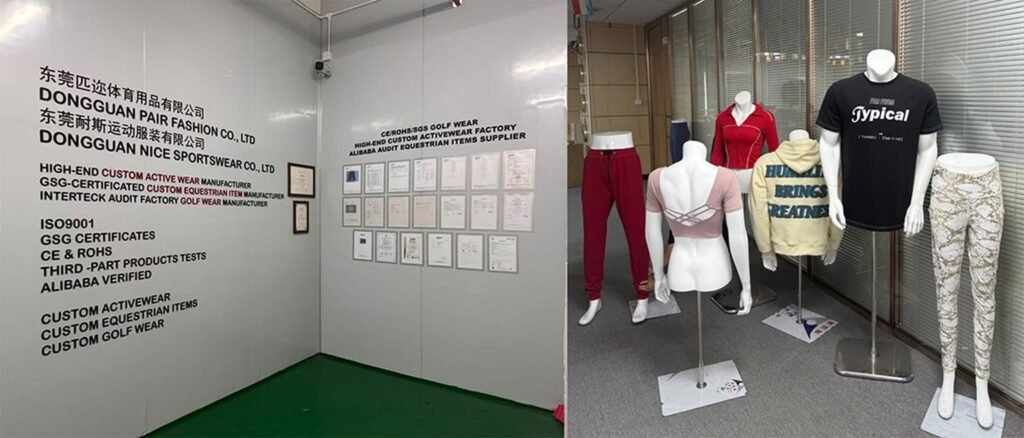
How Can Buyers Verify Production Reliability Before Paying a Deposit?
Buyers should verify production reliability by connecting the approved product to clear specifications, confirmed materials and components, production controls, in-line inspection and final quality records. A good sample shows that a maternity bra can be made once; reliable Maternity Bra Manufacturers should also demonstrate how the approved requirements will be transferred into bulk production and controlled when hundreds or thousands of pieces are being made.
The period between sample approval and deposit payment is one of the most important points in a sourcing project.
Before sampling, many details are still being explored.
After production begins, changing those details becomes increasingly expensive.
This is why buyers should not treat an attractive sample as the end of supplier evaluation.
A sample may have been made carefully by an experienced sample-room technician. Bulk production introduces larger fabric lots, more components, multiple operators, production schedules, efficiency targets and considerably more opportunities for variation.
The question changes from:
“Can this factory make the product?”
to:
“Can this factory make the same approved product repeatedly?”
When comparing Maternity Bra Manufacturers, that second question often separates development capability from production reliability.
What Factory Evidence Should Buyers Request Before Paying a Deposit?
The amount of verification should reflect the value and risk of the order.
A 200-piece first order does not necessarily require the same due diligence as a 50,000-piece retail program. But even smaller buyers can verify more than a supplier’s website.
Useful evidence can include:
- Legal company identity and business information
- Current production address
- Factory photographs or live video
- Relevant machinery and production areas
- Sample and pattern-development resources
- Material receiving and storage areas
- In-line quality-control process
- Final inspection process
- Packing area
- Relevant product examples
- Current audit or certification documents where required
- Third-party inspection access for appropriate orders
No single item proves reliability.
The value comes from consistency between the supplier’s claims and the evidence.
If a supplier claims to manufacture seamless nursing bras internally, the production evidence should support that claim. If it says it can handle a large monthly program, the available production resources and scheduling discussion should make commercial sense.
For higher-value orders, third-party factory audits or inspections can add another independent layer of verification.
Factory Size vs Relevant Production Evidence: Which Matters More?
Factory size is useful information, but it is easy to overvalue.
A large facility can indicate capacity.
It does not tell the buyer how much of that capacity is available for the intended product, whether the relevant production process is performed there, or whether the factory has experience with similar maternity bras.
Imagine two factories:
Factory A: 500 workers, large facility, broad underwear production, limited evidence in the buyer’s intended maternity-bra construction.
Factory B: 180 workers, smaller facility, clear evidence in similar nursing bras, suitable equipment and enough capacity for the buyer’s expected volume.
For a 3,000-piece maternity-bra program, Factory B may have the more relevant production profile even though Factory A is physically larger.
The comparison could change for a 200,000-piece annual retail program.
Capacity becomes more important as order scale increases.
The correct question is therefore not:
“How big is your factory?”
It is:
“Do you have the relevant capability and sufficient available capacity for our program?”
That produces a much more useful comparison between Maternity Bra Manufacturers.
What Should Be Locked Before Bulk Production?
Bulk production becomes easier to control when the important product requirements stop moving.
This does not mean creating unnecessary paperwork for every minor detail.
It means identifying the characteristics that should not be changed without buyer approval.
Depending on the product, the locked production reference may cover:
| Control Area | What Should Be Confirmed |
|---|---|
| Approved Product Reference | Which sample or approved version represents the bulk standard |
| Measurements | Key dimensions and permitted tolerances |
| Main Fabric | Approved quality, composition, weight or identifiable material reference |
| Color | Approved color standard where applicable |
| Elastic | Width, quality, stretch direction and relevant performance |
| Nursing Hardware | Approved clip or opening component |
| Padding | Shape, thickness, position and removable/fixed construction |
| Straps and Adjusters | Width, elastic quality and hardware |
| Closures | Hook-and-eye or other closure specification |
| Branding | Logo method, size, position and appearance |
| Labels | Main label, size label and care-label requirements |
| Packaging | Folding, bagging, hangtags, barcode and carton requirements |
The purpose is straightforward:
Production teams need to know what they are expected to reproduce.
If the approved sample uses one elastic but the bulk specification simply says “elastic,” substitution becomes easier.
If the nursing clip is approved visually but never identified, purchasing teams may replace it when supply becomes difficult.
If the color is described only as “beige,” different interpretations become possible.
The more commercially important the detail, the more clearly it should be controlled.
What Happens When a Material or Component Must Change?
Changes happen in real production.
A fabric can become unavailable.
A nursing clip supplier may miss delivery.
A custom elastic may fail to meet the required minimum.
A dye lot may not match the approved color closely enough.
The existence of a problem is not automatically evidence of a poor manufacturer.
The response to the problem is more informative.
Reliable Maternity Bra Manufacturers should have a clear approval path for important substitutions:
Issue Identified → Alternative Proposed → Difference Explained → Buyer Approval → Production Reference Updated
The dangerous version is:
Issue Identified → Factory Substitutes Material → Buyer Discovers Change After Production
That distinction matters because apparently small substitutions can affect the finished product.
A different elastic can change fit and recovery.
A different nursing clip can change opening feel.
Different padding can change appearance.
A different fabric lot can affect hand feel or color.
Buyers should therefore ask before production:
“If an approved material or component becomes unavailable, what is your substitution approval process?”
The answer reveals more about supplier discipline than another sentence saying “strict quality control.”
In-Line Inspection vs Final Inspection: Why Do Buyers Need Both?
In-line inspection identifies problems while production is still running; final inspection evaluates finished goods after production is completed. They serve different purposes, and one should not automatically replace the other.
Consider a simple example.
The first 200 pieces of a production run are sewn with incorrect strap placement.
If the problem is identified during in-line inspection, production can be stopped, the cause corrected and the affected pieces reviewed.
If the same problem is discovered only after 5,000 pieces are finished, the available solutions become much more expensive.
In-line inspection can focus on issues such as:
- Measurements
- Stitching
- Component placement
- Left/right symmetry
- Elastic attachment
- Nursing hardware
- Padding position
- Branding placement
- Construction workmanship
Final inspection has a different role.
It can evaluate finished products against the agreed requirements and check issues such as:
- Overall appearance
- Workmanship
- Measurements
- Quantity
- Color consistency
- Labels
- Packaging
- Assortment
- Visible defects
For larger or higher-risk orders, buyers may also use independent third-party inspection.
The objective is not to inspect quality into the product at the end.
It is to detect problems early enough that they can still be controlled.
Why Is Final Inspection Alone Not Enough?
Final inspection is important, but it happens late.
By the time cartons are packed, much of the production cost has already been incurred.
Some defects can be repaired.
Others cannot be corrected economically.
Suppose a nursing clip is attached incorrectly.
Repair may be possible.
Suppose the wrong fabric has been used across the entire production run.
Final inspection can identify the problem, but inspection cannot transform the fabric into the approved material.
This is why production reliability depends on prevention + process control + final verification, rather than one inspection event.
A strong quality system asks:
Did we start with the correct inputs?
Are we producing according to the approved requirements?
Does the finished output meet those requirements?
All three questions matter.
How Can Buyers Verify Nursing Clips, Elastic and Other Components in Bulk?
Small components deserve proportionate attention because they can affect the customer’s experience immediately.
For nursing clips, buyers may verify:
Approved Type → Correct Color → Secure Attachment → Intended Opening/Closing Function → Consistency Across Production
For elastic:
Approved Width → Correct Placement → Appropriate Tension → Secure Attachment → Consistent Recovery
For removable padding:
Approved Shape → Correct Position → Matching Pair → Pocket Compatibility → Finished Appearance
Not every component requires laboratory testing.
The level of verification should reflect the product risk, order size and buyer requirements.
The principle is more important:
A component should not disappear from the quality discussion simply because it is inexpensive.
A $0.20 component can create a much more expensive customer complaint.
How Should Buyers Think About Measurement Tolerance?
Bulk garments cannot realistically be manufactured with zero variation.
The useful question is how much variation is acceptable.
Measurements should therefore be considered together with agreed tolerances rather than as mathematically exact numbers.
For example, a buyer may identify certain dimensions as more sensitive to fit or function than others.
Those critical measurements can receive closer control.
The same principle applies to visual characteristics.
Minor differences that do not affect fit, function, appearance or commercial acceptance should not be treated in the same way as a major construction error.
This is where clear quality standards help both sides.
Without agreed tolerances, the buyer may expect absolute uniformity while the factory applies normal garment-production variation.
With excessively loose tolerances, meaningful fit problems can pass inspection.
Professional sourcing requires a workable standard between those extremes.
What Quality Records Should Buyers Expect?
The appropriate documentation depends on the order.
A small brand does not need to demand a multinational retailer’s entire compliance system for a 200-piece test order.
But useful production records can include:
- Material inspection information
- In-line inspection records
- Measurement records
- Final inspection records
- Defect findings
- Corrective-action records where relevant
- Packing records
- Third-party inspection reports when requested
These records become especially valuable during repeat production.
If a problem appears six months later, documented production information can help the buyer and manufacturer determine what changed.
Without records, troubleshooting becomes dependent on memory.
That is one reason Maternity Bra Manufacturers with good documentation can become more valuable as a brand grows.
Sample Approval vs Bulk Repeatability: What Is the Difference?
Sample approval establishes a target.
Bulk repeatability measures whether the factory can keep reaching that target.
The distinction can be summarized simply:
| Sample Approval | Bulk Repeatability |
|---|---|
| One or several pieces | Hundreds or thousands of pieces |
| Often made by experienced sample staff | Made through production-line processes |
| Small material quantity | Bulk material lots |
| Easier to adjust individually | Requires systematic control |
| Proves development result | Proves manufacturing consistency |
| Short-term milestone | Long-term sourcing capability |
A supplier can be excellent at development and weaker at bulk control.
Another can be extremely efficient in bulk but less flexible during development.
The buyer needs both capabilities in the proportion required by the project.
For an original maternity-bra launch, development capability may initially carry more weight.
For a mature product being reordered every quarter, repeatability becomes increasingly important.
How Can Buyers Verify Repeat-Order Reliability?
The second order can reveal more about a manufacturer than the first.
During the first production run, both buyer and supplier may spend extra time solving problems.
The real test is whether those solutions become reusable production knowledge.
Before reordering, buyers can ask:
- Is the approved pattern still available?
- Are the final specifications recorded?
- Is the approved material reference retained?
- Are component references available?
- Are color standards recorded?
- Are previous quality issues documented?
- Are packing requirements retained?
- Can the supplier identify what changed from the previous order?
The objective is not to reproduce every production lot at a microscopic level.
Material batches and production conditions naturally vary.
The objective is to protect the commercially important characteristics that define the approved product.
For growing brands, this matters because repeat orders often become more important than the first order.
A product that sells well but cannot be reproduced reliably creates a new sourcing problem just when the brand needs to scale.
What Are the Red Flags When Comparing Maternity Bra Manufacturers?
Some supplier weaknesses appear before the deposit is paid.
They are easier to address at that stage.
1. Every Request Is Answered With “No Problem”
Manufacturing has constraints.
A credible supplier should sometimes explain trade-offs involving MOQ, material availability, construction, cost or lead time.
2. The MOQ Changes Repeatedly Without a Clear Reason
MOQ can legitimately change when materials, colors or specifications change.
It should not change randomly.
3. The Supplier Cannot Show Relevant Product Evidence
A general apparel catalog does not automatically prove maternity-bra capability.
4. Size Grading Cannot Be Explained
The supplier may advertise a broad size range but cannot explain how it is controlled.
5. Material Specifications Remain Vague
Descriptions such as “premium nylon” or “high-quality elastic” are not sufficient references for important materials.
6. Sample and Bulk Lead Times Are Mixed Together
Development time and production time are different stages.
7. Certifications Cannot Be Verified
Certificate scope, company name, facility and validity should make sense for the claim being made.
8. Important Substitutions Do Not Require Approval
Uncontrolled material or component changes can alter the approved product.
9. The Factory Resists Reasonable Inspection
The level of inspection should be commercially appropriate, but unexplained resistance deserves further investigation.
10. The Quotation Is Much Lower but the Specification Is Unclear
The lowest quotation may simply represent a different product assumption.
One red flag does not always mean a supplier should be rejected.
It means the issue should be resolved before the commercial commitment becomes larger.
What Should Buyers Verify Immediately Before Paying the Deposit?
Before releasing a production deposit, the buyer should be able to answer a short set of questions:
Who is producing the order?
The legal supplier, production location and commercial relationship should be understood.
What exactly is being produced?
The approved product and key specifications should be identifiable.
Which materials and components are approved?
Important inputs should not remain open to uncontrolled substitution.
What quantity and color breakdown has been agreed?
MOQ and final order structure should match the purchase order.
What is the production lead time based on?
The event that starts the production clock should be clear.
How will quality be controlled?
The supplier should be able to explain its relevant in-line and final controls.
What happens if a critical requirement cannot be met?
There should be a communication and approval route before unauthorized changes are made.
What inspection rights does the buyer have?
For appropriate programs, this may include internal reports, third-party inspection or both.
If these answers remain unclear, paying the deposit does not make the uncertainty disappear.
It simply moves the project into a stage where correcting mistakes becomes more expensive.
What Does Reliable Production Actually Look Like?
Reliable manufacturing is not the absence of every production problem.
Real factories encounter material delays, machine issues, operator errors, color variation and component shortages.
The more useful measure is whether the supplier has a system for identifying, communicating and controlling those problems before they become unacceptable finished goods.
For buyers comparing Maternity Bra Manufacturers, the strongest production evidence therefore forms a connected chain:
Approved Reference → Locked Specifications → Confirmed Materials → Controlled Production → In-Line Inspection → Final Inspection → Quality Records → Repeat-Order Reference
When that chain is visible, the buyer is not relying only on promises.
The factory has a practical reference for what should be made, production teams know what should be controlled, inspectors know what should be checked, and future orders have a clearer starting point.
That is what turns one successful sample into a more reliable manufacturing relationship.
1. Product Development
Regular monthly product development ensures consistent updates to your brand line.
2. Fabric Sourcing
Regular monthly product development ensures consistent updates to your brand line.
3. Sample Making
Regular monthly product development ensures consistent updates to your brand line.
4. Bulk Production
Regular monthly product development ensures consistent updates to your brand line.
5. Packaging & Delivery
Regular monthly product development ensures consistent updates to your brand line.
How Should Buyers Build a Final Maternity Bra Manufacturer Shortlist?
Buyers should build a final shortlist by matching Maternity Bra Manufacturers to the actual product, order size, customization level and business stage rather than choosing the supplier with the largest factory, lowest MOQ or lowest quotation. A useful shortlist normally reduces candidates through non-negotiable requirements first, then compares relevant product expertise, technical capability, commercial fit, quality evidence, production reliability and repeat-order potential.
After researching ten or twenty suppliers, many buyers create a new problem:
They have too much information.
One manufacturer has the lowest price.
Another has the strongest samples.
One accepts a smaller order.
Another has much greater capacity.
A third has better certifications but a longer lead time.
Trying to identify the supplier that is “best at everything” rarely solves the problem because different factories are built for different types of business.
A manufacturer optimized for 50,000-piece retail programs may be commercially unsuitable for a startup testing 200 pieces.
A highly flexible small-order supplier may support that startup extremely well but become less efficient when the brand grows to 20,000 pieces per style.
The objective is therefore not to find a universally perfect manufacturer.
It is to identify which supplier strengths matter most for the current order and which supplier weaknesses create unacceptable risk.
Step 1: Define the Order Before Scoring the Manufacturer
Do not begin the final supplier comparison with the factories.
Begin with the order.
A useful sourcing brief should answer questions such as:
Product Type:
Is the project a maternity bra, clip-down nursing bra, pumping bra, maternity sports bra, sleep bra or another construction?
Order Quantity:
Is this a 200-piece market test, a 2,000-piece private-label launch or a 50,000-piece retail program?
Customization Level:
Is the buyer selecting an existing product, modifying an ODM style or developing a more original product specification?
Size Range:
Is the range relatively simple, or does it require extended sizing and more complex grading?
Materials:
Can existing fabrics and colors be used, or are custom materials required?
Branding:
Does the project require only labels, or a complete private-label presentation with packaging and retail information?
Quality Requirements:
What inspections, tests, documentation or market-specific requirements apply?
Timing:
When must the goods actually be ready to ship?
Repeat-Order Expectation:
Is this likely to be a one-time test or a product expected to become a regular replenishment program?
Until these questions are reasonably clear, comparing Maternity Bra Manufacturers is partly guesswork.
The same supplier can be an excellent fit for one version of the order and a poor fit for another.
Step 2: Separate Must-Haves From Preferences
Not every sourcing criterion deserves equal importance.
Suppose a brand needs a specialist nursing bra with an extended size range.
The buyer may define:
Must-Haves
- Relevant maternity or nursing-bra experience
- Required size-grading capability
- Suitable nursing-function experience
- Ability to meet the required quantity
- Required quality or compliance documentation
- Acceptable production timing
Preferences
- Lowest possible sample fee
- Very broad catalog
- Premium packaging support
- Shorter communication response time
- More color options
- Slightly lower unit price
This distinction makes supplier reduction much easier.
If a manufacturer cannot meet a genuine must-have, a low price should not keep it on the shortlist.
Likewise, if a factory cannot accept the required order quantity, there is little value in giving it a high score for capacity, certificates and machinery.
The commercial mismatch already exists.
Step 3: Use Knockout Criteria Before a Weighted Scorecard
A scorecard should not be used to rescue a supplier that fails a critical requirement.
Before scoring, remove candidates that clearly cannot meet the project.
Typical knockout criteria may include:
| Knockout Question | Why It Matters |
|---|---|
| Can the supplier make the required product type? | General underwear experience may not prove the required construction |
| Can it support the required size range? | A broad commercial range needs appropriate grading capability |
| Can it accept the realistic order quantity? | An excellent factory can still be commercially unsuitable |
| Can it meet the required delivery window? | Technical capability has little value if the launch date cannot be supported |
| Can required compliance documents be provided? | Market or retailer requirements may be non-negotiable |
| Can the required materials or processes be sourced? | Product feasibility comes before price comparison |
| Will the supplier allow reasonable quality verification? | Production transparency matters before commercial commitment |
After this first reduction, the remaining suppliers should all be technically possible candidates.
The scorecard then helps determine which possible candidate fits the order more closely.
Step 4: Build a Weighted Maternity Bra Manufacturer Scorecard
A weighted scorecard helps prevent one attractive factor from controlling the entire decision.
A practical example might look like this:
| Evaluation Area | Suggested Weight | What Buyers Should Evaluate |
|---|---|---|
| Relevant Product Specialization | 20% | Similar maternity/nursing products, construction experience and relevant references |
| Technical & Size Capability | 15% | Pattern, grading, size range, component and construction understanding |
| Sample Evidence | 10% | Relevance, workmanship and ability to interpret requirements |
| Quality & Production Control | 15% | Material control, in-line inspection, final inspection and documentation |
| Commercial Fit | 15% | MOQ, color minimums, payment structure and order flexibility |
| Price Structure | 10% | Price after quotation inputs are aligned |
| Capacity & Delivery Reliability | 10% | Realistic capacity allocation and production timing |
| Communication & Transparency | 5% | Clear answers, issue disclosure and approval discipline |
| Total | 100% | — |
These weights are not universal.
A startup may increase Commercial Fit.
A plus-size maternity brand may increase Technical & Size Capability.
A large retailer may increase Quality & Production Control and Capacity & Delivery Reliability.
A highly price-sensitive distributor may increase Price Structure, provided the required product and quality conditions have already been aligned.
The value of the scorecard is not mathematical precision.
It is decision discipline.
Step 5: Do Not Automatically Choose the Highest Total Score
A supplier score of 86 does not automatically make that factory better than one scoring 82.
The difference may come from categories that are not critical to the order.
Imagine:
Supplier A
- Excellent capacity
- Excellent compliance
- Strong price
- MOQ 3,000 pieces per color
Supplier B
- Smaller capacity
- Slightly higher price
- MOQ 300 pieces per style
- Strong relevant samples
- Suitable development support
For a retailer ordering 30,000 pieces, Supplier A may fit the commercial model.
For a startup launching 600 pieces across two colors, Supplier B may fit it better.
The scorecard should therefore support judgment rather than replace it.
For Maternity Bra Manufacturers, the more useful final question is:
“Which supplier performs strongly in the areas that matter most for this order, and are its weaker areas acceptable?”
That produces a better sourcing decision than simply selecting the highest spreadsheet total.
Which Maternity Bra Manufacturer Fits a Startup Brand?
A startup usually needs to protect cash and learn from the market.
Its first priority may therefore be manageable commercial commitment, not maximum production efficiency.
Useful supplier characteristics can include:
- Flexible MOQ
- Existing materials or colors that reduce minimums
- Ability to begin from incomplete product information
- Practical sampling support
- Clear quotation structure
- Reasonable private-label options
- Willingness to support smaller initial programs
- A realistic route toward larger repeat orders
Public supplier models can show why this point is important. Some nursing bra suppliers separate ready-stock orders and full custom production. Buyers can start with a very small quantity when purchasing ready-stock products, while fully customized programs usually require a much higher order quantity.
This model can be a useful way for b
But the buyer should understand what is being tested.
Selling an existing bra with a custom label tests market demand and sales execution more than it tests whether customers will accept a future original product.
For a startup comparing Maternity Bra Manufacturers, the best commercial fit is usually the supplier that allows the brand to learn without taking unnecessary inventory risk while still providing a credible path toward deeper customization if sales justify it.
Which Manufacturer Fits a Growing Private-Label Brand?
A growing brand normally has more information than a startup.
It may already know:
- Which styles sell
- Which sizes move fastest
- Which colors reorder
- Which complaints occur repeatedly
- What price customers accept
- How quickly inventory turns
At this stage, the sourcing objective often changes from “Can we launch?” to “Can we make the product more differentiated and repeat it reliably?”
The manufacturer should therefore be evaluated more heavily on:
Relevant Product Capability
The supplier should understand the required maternity or nursing construction.
Repeatability
Approved measurements, materials, components and branding should be transferable into repeat production.
Size Capability
Growing brands may need to extend their range without creating uncontrolled fit differences.
Material Planning
The supplier should help identify minimums and lead-time risks before replenishment becomes urgent.
Production Reliability
The factory needs enough capacity to support growing order quantities without sacrificing consistency.
Commercial Scalability
MOQ and pricing should remain workable as volumes increase.
Current specialized nursing-bra manufacturers publicly describe MOQ, sampling and production structures ranging from several hundred pieces per style to larger custom programs, reinforcing why growing brands need to evaluate the next order stage rather than only the first order.
Which Manufacturer Fits a Large Retail or Wholesale Program?
Larger programs change the risk profile again.
A $2 sample problem is small.
A repeated construction problem across 50,000 pieces is not.
Large buyers may therefore place greater weight on:
- Capacity evidence
- Production planning
- Quality systems
- In-line inspection
- Final inspection
- Material traceability
- Compliance documentation
- Third-party inspection access
- Delivery reliability
- Corrective-action procedures
- Repeat-order records
- Financial and operational stability
A factory offering a slightly higher unit price may still create lower commercial risk if it has stronger systems for controlling large orders.
Likewise, the supplier with the largest factory is not automatically the correct choice.
Available capacity matters more than theoretical capacity.
If a manufacturer can produce 500,000 pieces per month but most of that capacity is committed to other customers during the buyer’s required production window, the headline capacity number is less useful.
Large buyers should therefore ask:
“How much capacity can realistically be allocated to our order during the required production period?”
How Should Buyers Compare Price in the Final Scorecard?
Price should be scored only after quotation inputs are reasonably aligned.
This principle is worth repeating because price can easily distort a final shortlist.
Supplier A may quote:
$7.80
Supplier B:
$8.40
Supplier C:
$9.10
The natural reaction is to rank Supplier A first.
But suppose:
Supplier A excludes branded packaging.
Supplier B includes it.
Supplier C uses a more expensive approved fabric and includes third-party inspection.
The numbers no longer represent the same commercial package.
Before scoring price, confirm:
Quantity → Colors → Sizes → Fabric → Components → Branding → Packaging → Testing → Inspection → Trade Terms
Only then does the price score become meaningful.
Should Buyers Negotiate With the Cheapest Manufacturer First?
Not necessarily.
Negotiation is more useful after the buyer understands why prices differ.
If one factory is higher because its material specification is unnecessarily expensive, the buyer may be able to select an alternative.
If another is higher because the order quantity creates poor production efficiency, increasing volume may improve the quotation.
If packaging creates a high minimum, standard packaging may reduce the first-order commitment.
If the price difference comes from a genuinely better component that matters to the product, removing it may create false savings.
The strongest negotiation question is often not:
“Can you reduce the price?”
It is:
“What changes would reduce the cost without changing the product requirements that matter to us?”
That gives Maternity Bra Manufacturers an opportunity to propose practical alternatives rather than simply reducing margin or silently lowering specifications.
How Many Suppliers Should Reach the Final Shortlist?
For most sourcing projects, two or three serious candidates are easier to evaluate than ten loosely qualified suppliers.
A practical reduction process can look like:
15–20 Initial Suppliers
↓
Remove obvious category, MOQ or capability mismatches
6–8 Qualified Suppliers
↓
Compare quotations, evidence and relevant samples
3–4 Strong Candidates
↓
Verify critical claims and commercial conditions
2–3 Finalists
↓
Select primary supplier and, where commercially justified, retain a backup option
The exact numbers are not important.
The principle is.
A shortlist should become smaller as evidence becomes stronger.
If the buyer still has twelve “final” suppliers, the evaluation criteria are probably not selective enough.
Should Buyers Keep a Backup Manufacturer?
For some programs, yes.
A backup supplier can reduce dependence on one production source, particularly when order volume becomes large or delivery timing is commercially critical.
But a backup factory is not useful simply because its contact details are stored in a spreadsheet.
A meaningful backup should have enough verified information that it could realistically support the product if required.
That may include:
- Relevant capability already checked
- Commercial conditions understood
- Sample or material feasibility reviewed
- Capacity discussed
- Communication channel established
Dual sourcing also has disadvantages.
Splitting production between two factories can create differences in fit, color, hand feel, workmanship or packaging unless specifications and materials are tightly controlled.
For smaller brands, concentrating volume with one reliable supplier may sometimes be more practical than dividing already-small orders.
The decision should reflect business continuity risk rather than a general rule that two factories are always safer than one.
What Should Buyers Verify Before Issuing the Purchase Order?
Before the final PO, the buyer should be able to confirm the major commercial and production assumptions.
A useful final review includes:
Supplier Identity
Who is legally receiving the order and payment?
Production Location
Where will the goods actually be produced?
Product Reference
Which approved sample or specification represents the order?
Quantity
What is the total quantity and breakdown by style, color and size?
Materials and Components
Which critical inputs have been approved?
Price
What exactly does the quoted unit price include?
Additional Charges
Are development, labels, packaging, testing, inspection or other charges separate?
Payment Terms
What deposit and balance conditions apply?
Production Lead Time
When does the production clock start?
Quality Standard
What inspection requirements and tolerances have been agreed?
Packaging
What retail and export packing requirements apply?
Trade Terms
Is the quotation EXW, FOB, CIF, DDP or another agreed term?
Shipment Timing
What milestone determines readiness for shipment?
Change Approval
What happens if an approved material, component or requirement must change?
This final review is less exciting than comparing product photos.
It is also where many expensive misunderstandings can be prevented.
What Does the Final Supplier Decision Really Come Down To?
After all the research, the final decision becomes simpler.
The buyer is trying to match three things:
Product Fit
Can the manufacturer make the required product?
Commercial Fit
Can the manufacturer support the required quantity, cost structure and business stage?
Operational Fit
Can the manufacturer reproduce the approved product with acceptable quality and delivery reliability?
A supplier can be strong in two areas and still fail in the third.
A technically excellent manufacturer with an impossible MOQ is not commercially suitable.
A low-MOQ supplier with weak relevant capability creates product risk.
A factory with excellent samples but poor bulk control creates operational risk.
This is why the final shortlist of Maternity Bra Manufacturers should not be based on one headline advantage.
Final Maternity Bra Manufacturer Selection Framework
Before choosing from the final two or three suppliers, buyers can make one last comparison:
| Final Question | Supplier A | Supplier B | Supplier C |
|---|---|---|---|
| Relevant maternity/nursing experience? | |||
| Similar product evidence? | |||
| Required size capability? | |||
| Required materials/processes? | |||
| MOQ fits current order? | |||
| Price compared on aligned inputs? | |||
| Lead time fits launch plan? | |||
| Quality system verified? | |||
| Capacity fits expected growth? | |||
| Important certifications verified? | |||
| Communication transparent? | |||
| Repeat-order process credible? | |||
| Main weakness? | |||
| Is that weakness acceptable? |
The last two rows are especially important.
Every manufacturer has limitations.
The purpose of supplier evaluation is not to pretend those limitations do not exist.
It is to identify them before the purchase order and determine whether they matter to the actual business.
The strongest choice among Maternity Bra Manufacturers is therefore not automatically the supplier with the highest score in every category. Buyers should choose the manufacturer whose relevant strengths match the requirements that matter most, whose weaknesses are acceptable for the specific order, and whose commercial and production model can support the brand’s next realistic stage of growth.
- Yoga Pant
- Sports Bras
- Tank Tops
- Gym Shorts
- Men & Kids Sportswear
- Riding Tops
- Breeches
- Competition Wear
- Jackets
- Man & Kids Equestrian
- Joggers
- Sweatshirt & Hoodies
- Sweaters
- Coat & Jacket
- Men & Kids Loungewear
Other OEM Apparel
- Tennis Clothing
- Jumpsuit
- Dress & Skirts
- Plus Size Activewear
- Maternity Activewear