OEM/ODM Sportswear Manufacturer | 3-Day Sampling | Low MOQ | 50K Monthly Capacity | ISO9001 & BSCI Certified

Top 10 Sports Bra Manufacturers in China: Factory Comparison, Supplier Guide & Buying Tips
Compare the top 10 sports bra manufacturers in China with expert insights on factory capabilities, minimum order quantities, lead times, certifications, manufacturing strengths, and sourcing strategies. Learn how to choose the right supplier for your activewear brand and reduce sourcing risks with this complete buyer’s guide.
Top 10 Sports Bra Manufacturers in China: The Complete Supplier Comparison & Buying Guide for Brands
Finding a reliable sports bra manufacturer in China is about far more than securing the lowest quotation. In today’s competitive activewear industry, successful brands build long-term partnerships with manufacturers capable of delivering consistent quality, technical innovation, stable lead times, and professional product development support. A supplier that understands performance fabrics, ergonomic construction, and scalable production can become a strategic asset, while choosing the wrong factory often results in delayed launches, inconsistent quality, costly revisions, and damaged customer trust.
China continues to dominate global sportswear manufacturing thanks to its mature supply chain, specialized production clusters, advanced textile technologies, and experienced workforce. However, not every factory offers the same capabilities. Some excel in seamless knitting, others focus on compression garments, while certain manufacturers specialize in sustainable materials or flexible private label production. Understanding these differences allows buyers to make informed sourcing decisions based on product requirements rather than price alone.
Quick Answer
The best sports bra manufacturers in China combine technical product development, stable quality management, flexible production capacity, certified manufacturing systems, and extensive export experience. Rather than selecting suppliers solely based on pricing, brands should evaluate sampling capabilities, product specialization, communication efficiency, quality control systems, certifications, lead time reliability, and long-term partnership potential. This guide compares ten leading manufacturers and explains how to identify the supplier that best matches your business goals.
Whether you are launching your first activewear collection, expanding an established private label business, or replacing an unreliable supplier, this guide provides a structured framework for comparing manufacturers beyond marketing claims. Instead of simply listing factories, it explains how suppliers differ, how sports bras are manufactured, what factors influence quality and cost, and which manufacturers are best suited to different types of brands.
How Did We Select the Top 10 Sports Bra Manufacturers in China?
Choosing a sports bra manufacturer should never depend on advertising claims or factory size alone. The manufacturers included in this guide were evaluated using practical sourcing criteria that directly influence product quality, manufacturing reliability, communication efficiency, and long-term cooperation. This balanced evaluation helps buyers compare suppliers more objectively while reducing sourcing risks before production begins.
Many apparel factories claim they can manufacture sports bras, yet relatively few specialize in performance activewear. Technical sports bras require expertise in compression engineering, stretch fabric behavior, support construction, pattern accuracy, and durable sewing techniques. Manufacturers with dedicated activewear experience generally deliver better product consistency than factories producing a wide variety of unrelated garments.
To make this comparison useful for international buyers, every manufacturer was reviewed using the same evaluation framework.
Evaluation Criteria
| Evaluation Factor | Why It Matters |
|---|---|
| Industry Experience | Demonstrates manufacturing stability and accumulated technical knowledge. |
| Sports Bra Specialization | Indicates expertise in performance construction rather than general apparel production. |
| Product Development Capability | Determines whether a factory can transform concepts into production-ready products. |
| Sampling Efficiency | Faster development shortens product launch cycles. |
| Quality Control System | Consistent inspection reduces returns and protects brand reputation. |
| Public Certifications | Reflect compliance with internationally recognized manufacturing standards. |
| MOQ Flexibility | Helps brands balance inventory risk and product testing. |
| Communication Efficiency | Reduces misunderstandings throughout product development. |
| Export Experience | Experienced exporters generally understand international compliance requirements and documentation. |
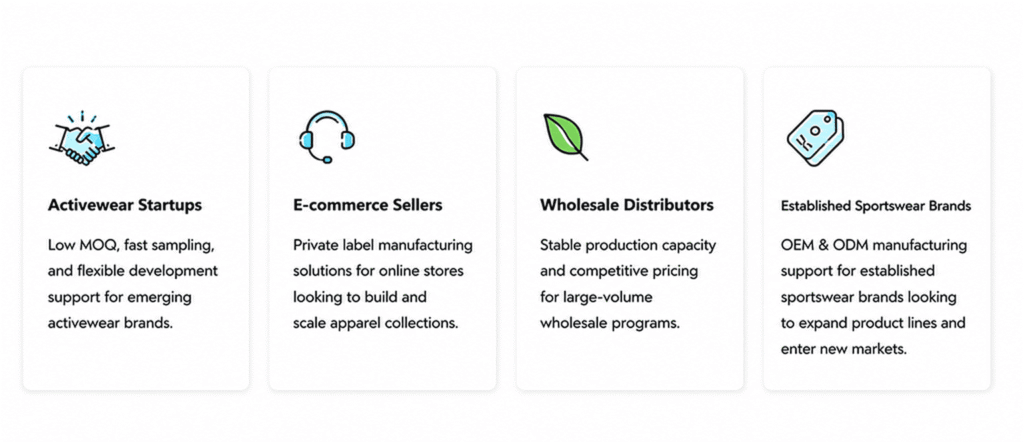
No manufacturer performs equally well in every category. Some suppliers are ideal for startup brands that require low minimum order quantities and extensive development support, while others are better suited for established retailers managing high-volume replenishment programs. Throughout this guide, each company profile highlights both its strengths and its potential limitations, allowing buyers to choose suppliers based on business priorities rather than promotional language alone.
Top 10 Sports Bra Manufacturers in China (2026 Comparison)
China is home to thousands of garment factories, but only a relatively small number consistently combine technical expertise, reliable production systems, international certifications, and long-term cooperation capabilities. The manufacturers listed below represent different strengths, allowing buyers to select partners according to their product positioning, order volume, development requirements, and future growth plans.
Quick Comparison Table
| Manufacturer | Headquarters | Typical MOQ | Typical Lead Time | Best Fit For |
|---|---|---|---|---|
| Pair Fashion | Dongguan | 50 pcs | 15–25 working days | Startup and growing private label brands |
| Aika Sportswear | Dongguan | 100 pcs | 20–30 working days | Premium activewear brands |
| Eation Wear | Xiamen | 100 pcs | 20–35 working days | Seamless sportswear collections |
| Ingor Sportswear | Guangzhou | 100 pcs | 20–30 working days | Sustainable activewear brands |
| Hucai Sportswear | Guangzhou | 100 pcs | 25–35 working days | Fashion-oriented fitness brands |
| SGL Sports | Xiamen | 200 pcs | 25–40 working days | Large retail programs |
| Arabella Clothing | Xiamen | 100 pcs | 25–35 working days | Gym and fitness apparel companies |
| Berunwear | Yiwu | 100 pcs | 20–35 working days | Wholesale buyers |
| Lezhou Garment | Dongguan | 100 pcs | 20–30 working days | Compression sportswear brands |
| Yotex Apparel | Hangzhou | 100 pcs | 20–35 working days | Yoga apparel collections |
1. Pair Fashion
Headquarters: Dongguan, Guangdong
Founded: 2016
Typical MOQ: 50 pieces
Typical Lead Time: 15–25 working days
Main Product Categories
- Sports Bras
- Yoga Leggings
- Activewear
- Tennis Wear
- Equestrian Apparel
- Maternity Activewear
- Plus Size Activewear
- Muslim Sportswear
- Hoodies
- Joggers
- Tracksuits
Public Certifications
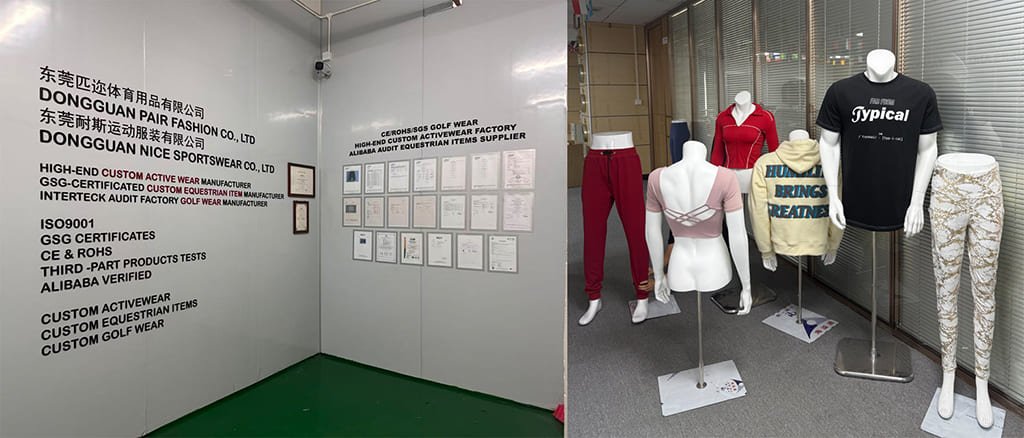
- ISO9001
- BSCI
- GRS
- CE
- ROHS
Best Fit For
- Startup sportswear brands
- Growing DTC brands
- Boutique fitness companies
- Private label businesses
- Buyers seeking flexible production quantities
- Brands developing niche activewear collections
May Not Be the Best Choice For
- Buyers sourcing only low-cost promotional apparel
- Commodity programs requiring extremely high production volumes with minimal product variation
Core Strengths
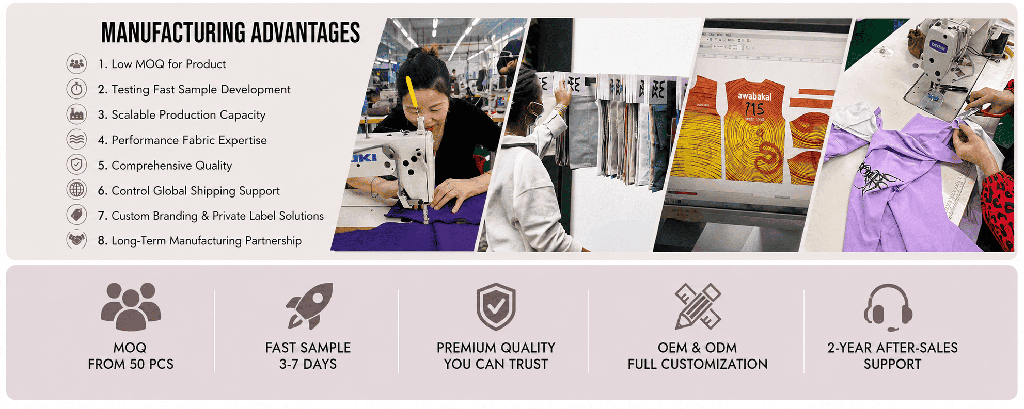
- Flexible minimum order quantity starting from 50 pieces
- Fast sample development for new product launches
- Extensive experience across specialized activewear categories
- Strong product development support from concept to production
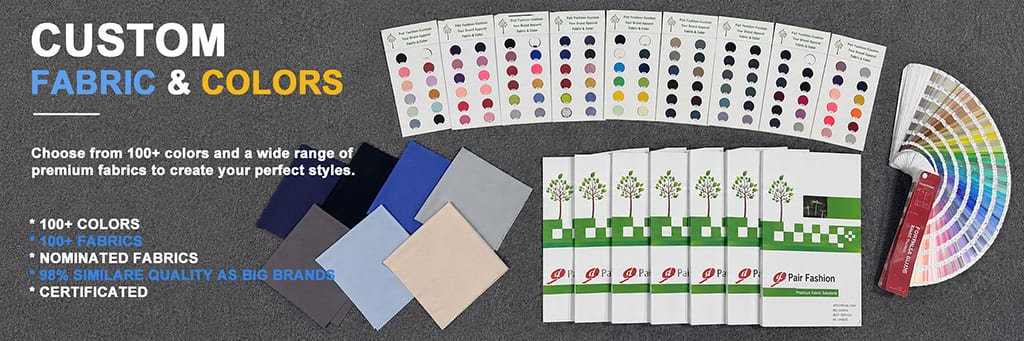
- Broad library of functional performance fabrics
- Comprehensive private label customization
- Stable quality management throughout production
- Experience serving brands in North America, Europe, Australia, and the Middle East
Potential Limitations
Because Pair Fashion focuses on functional sportswear rather than commodity apparel, companies purchasing purely price-driven promotional products may find larger volume-oriented factories more appropriate for their sourcing strategy.
Buyer Insight
Pair Fashion is particularly well suited to brands that value flexibility, collaboration, and long-term product development. Instead of focusing exclusively on high-volume production, the company supports businesses during different growth stages—from validating initial product ideas to scaling successful collections. Its expertise in niche categories, including maternity activewear, equestrian apparel, plus-size sportswear, and modest activewear, also provides opportunities for brands seeking product differentiation in increasingly competitive markets.
For buyers who have already compared different supplier types and need to verify MOQ, sampling feasibility, fabric options, or production timelines, following a structured supplier evaluation process can help determine whether a manufacturer aligns with their product roadmap before formal development begins.
2. Aika Sportswear
Headquarters: Dongguan, Guangdong
Founded: 2008
Typical MOQ: 100 pieces
Typical Lead Time: 20–30 working days
Main Product Categories
- Sports Bras
- Yoga Wear
- Leggings
- Gym Wear
- Running Apparel
- Compression Clothing
- Fitness Sets
Public Certifications
- ISO9001
- BSCI
Best Fit For
- Mid-sized activewear brands
- Established private label companies
- International fitness retailers
- Buyers with recurring seasonal orders
May Not Be the Best Choice For
- Early-stage brands requiring very small production runs
- Companies looking for highly specialized niche activewear categories
Core Strengths
- More than a decade of sportswear manufacturing experience
- Comprehensive activewear product range
- Stable export business across multiple markets
- Consistent production quality
- Mature production management
Potential Limitations
Compared with factories focusing on startup brands, Aika generally operates with higher minimum order quantities. This may increase inventory pressure for businesses testing new products or entering the market for the first time.
Buyer Insight
Aika Sportswear is a practical option for brands that already have validated products and predictable sales volumes. Its manufacturing system is designed around stable repeat production rather than intensive product incubation, making it suitable for businesses that prioritize production consistency over extensive development support.
3. Eation Wear
Headquarters: Xiamen, Fujian
Founded: 1997
Typical MOQ: 100 pieces
Typical Lead Time: 20–35 working days
Main Product Categories
- Seamless Sports Bras
- Yoga Wear
- Compression Apparel
- Fitness Clothing
- Running Apparel
- Activewear Sets
Public Certifications
- BSCI
- OEKO-TEX
Best Fit For
- Seamless activewear brands
- European retailers
- Sustainable apparel collections
- Buyers seeking knitted performance products
May Not Be the Best Choice For
- Brands requiring a wide variety of niche sportswear categories beyond seamless apparel
- Buyers looking for very low MOQs
Core Strengths
- Nearly three decades of manufacturing experience
- Strong seamless knitting technology
- Stable export history
- Mature quality management
- Advanced knitting equipment
Potential Limitations
The company’s product development is primarily centered on seamless apparel. Brands requiring highly structured sports bras with complex support systems may wish to compare additional suppliers before making a final decision.
Buyer Insight
Eation Wear has built a strong reputation in seamless performance apparel. Buyers focusing on comfort, lightweight construction, stretch recovery, and modern knitting technology may find its manufacturing capabilities particularly attractive for premium yoga and fitness collections.
4. Ingor Sportswear
Headquarters: Guangzhou, Guangdong
Founded: 2009
Typical MOQ: 100 pieces
Typical Lead Time: 20–30 working days
Main Product Categories
- Sports Bras
- Yoga Apparel
- Leggings
- Gym Clothing
- Tennis Wear
- Sustainable Activewear
Public Certifications
- BSCI
- GRS
- ISO9001
Best Fit For
- Eco-conscious brands
- Premium yoga brands
- Sustainable fashion companies
- Growing DTC businesses
May Not Be the Best Choice For
- Buyers focused exclusively on entry-level pricing
- Commodity wholesale programs
Core Strengths
- Strong sustainability initiatives
- Wide selection of recycled performance fabrics
- Modern product development capabilities
- Experience serving international activewear brands
- Fashion-oriented design support
Potential Limitations
Sustainable materials often carry higher raw material costs, which may increase production budgets compared with conventional fabric options.
Buyer Insight
As consumer demand for environmentally responsible apparel continues to grow, Ingor Sportswear offers brands an opportunity to develop collections that emphasize recycled materials and responsible manufacturing. Buyers positioning themselves in premium or sustainability-focused market segments may find this manufacturer particularly aligned with their brand values.
5. Hucai Sportswear
Headquarters: Guangzhou, Guangdong
Founded: 1998
Typical MOQ: 100 pieces
Typical Lead Time: 25–35 working days
Main Product Categories
- Sports Bras
- Yoga Wear
- Women’s Activewear
- Fashion Fitness Apparel
- Athleisure
Public Certifications
- BSCI
Best Fit For
- Fashion-oriented activewear brands
- Boutique retailers
- Lifestyle sportswear collections
- Private label fashion companies
May Not Be the Best Choice For
- Buyers seeking highly technical compression products
- Professional sports performance brands
Core Strengths
- Fashion-forward product development
- Strong garment finishing quality
- Broad experience with women’s apparel
- Flexible design capabilities
- Mature export operations
Potential Limitations
While the company performs well in fashion-oriented activewear, buyers requiring advanced technical performance features should carefully review development capabilities during sampling.
Buyer Insight
For many consumers, purchasing decisions are influenced as much by appearance as by athletic performance. Hucai Sportswear’s strength lies in translating current fashion trends into wearable activewear collections, making it a suitable partner for brands balancing functionality with contemporary design.
6. SGL Sports
Headquarters: Xiamen, Fujian
Founded: 2003
Typical MOQ: 200 pieces
Typical Lead Time: 25–40 working days
Main Product Categories
- Sports Bras
- Teamwear
- Running Apparel
- Compression Wear
- Outdoor Sportswear
- Performance Activewear
Public Certifications
- BSCI
- ISO9001
Best Fit For
- Large retail chains
- International distributors
- Established sporting goods companies
- Long-term volume purchasing programs
May Not Be the Best Choice For
- Startup brands
- Small private label businesses
- Companies testing new product concepts with limited budgets
Core Strengths
- Strong manufacturing capacity
- Extensive export experience
- Stable large-scale production management
- Well-developed supply chain
- Efficient production scheduling
Potential Limitations
Higher minimum order quantities and production structures designed around volume manufacturing may reduce flexibility during early product development.
Buyer Insight
SGL Sports is better suited to businesses with established sales channels and predictable purchasing schedules. Buyers managing large replenishment programs often prioritize consistency, production stability, and delivery reliability over development flexibility, making this type of manufacturer an appropriate choice.

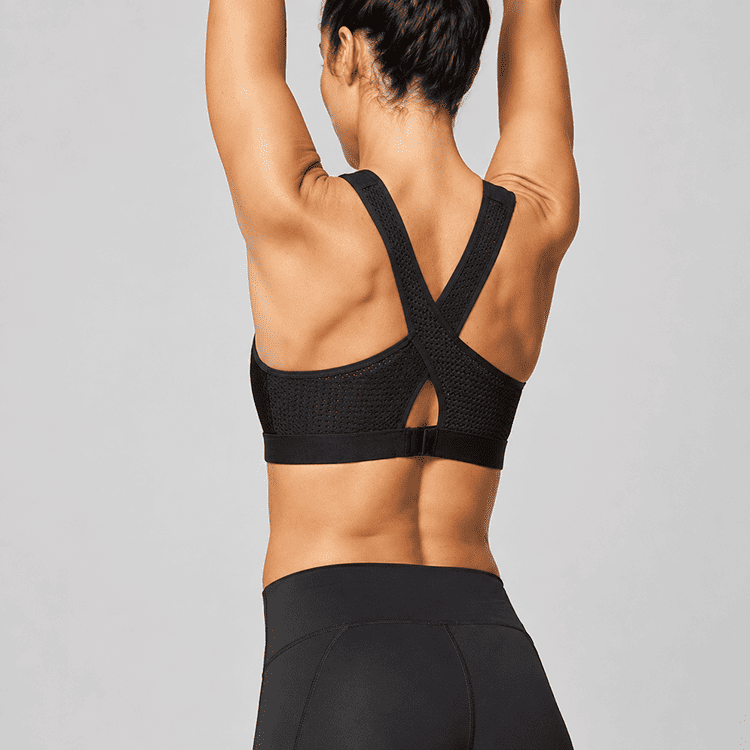
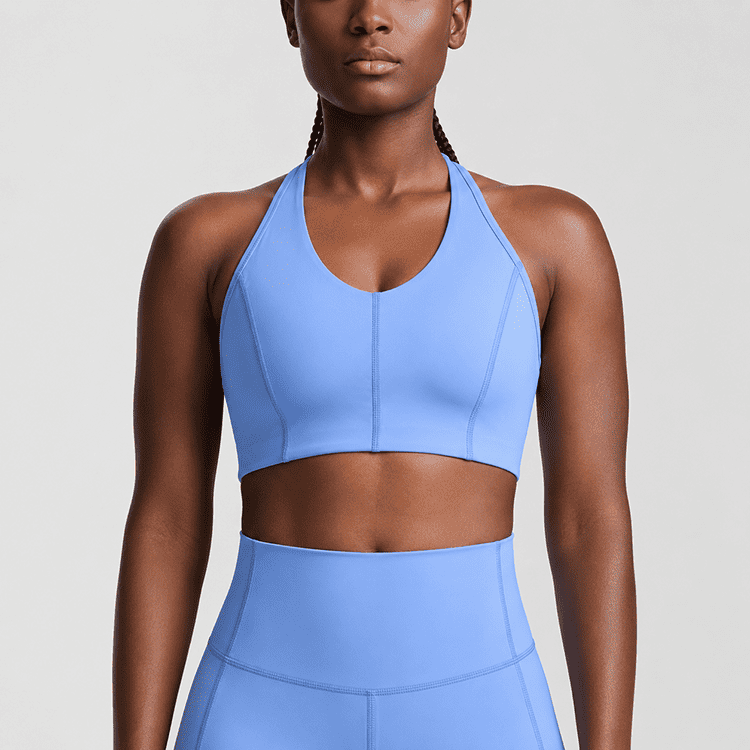
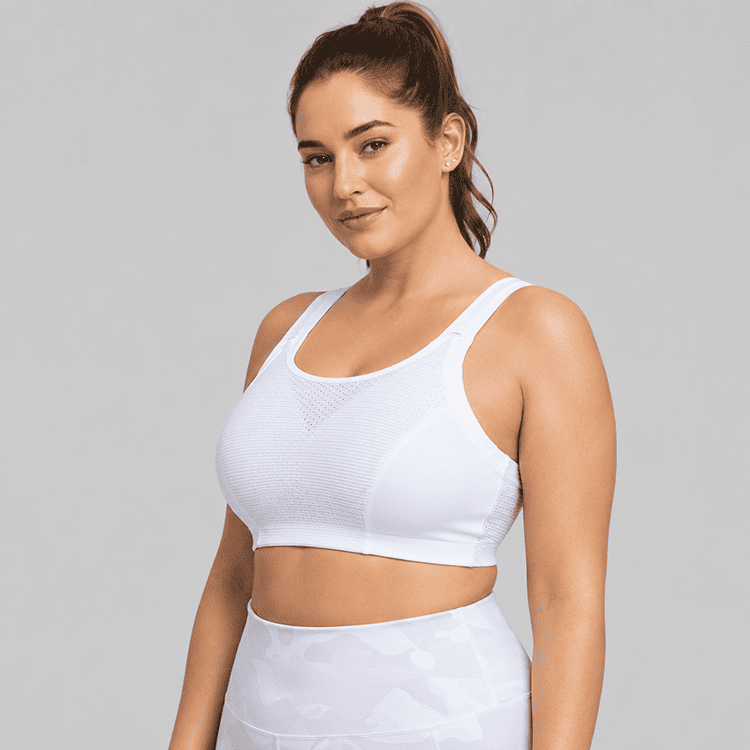
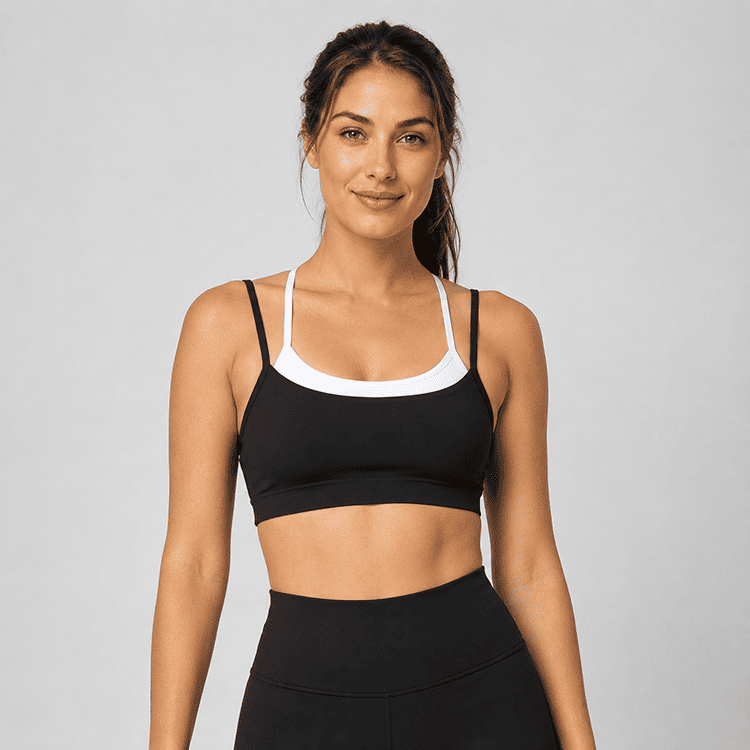
Custom Sports Bra Manufacturer
Custom High Neck Performance Crop Tank Top OEM ODM Activewear
Custom Sculpting Tennis Dress OEM ODM Performance Tennis Apparel
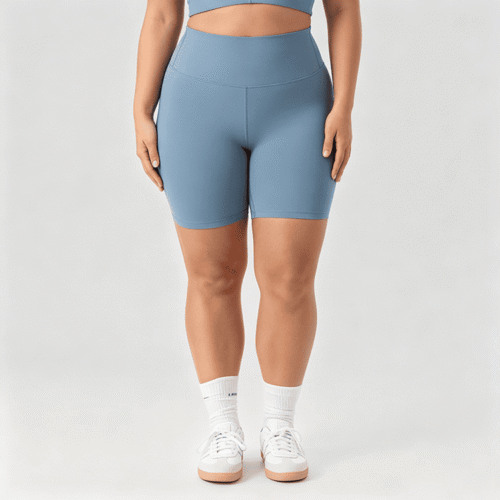
Custom Plus Size High Waist Biker Shorts OEM ODM Activewear
Custom Plus Size High Waist Biker Shorts OEM ODM Yoga Shorts
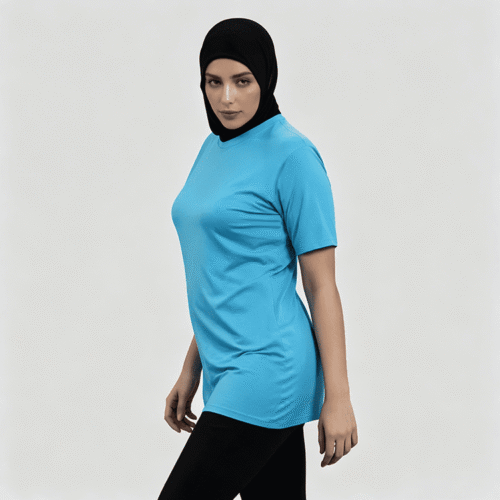
Custom Modest Activewear T-Shirt OEM ODM Muslim Sportswear Top
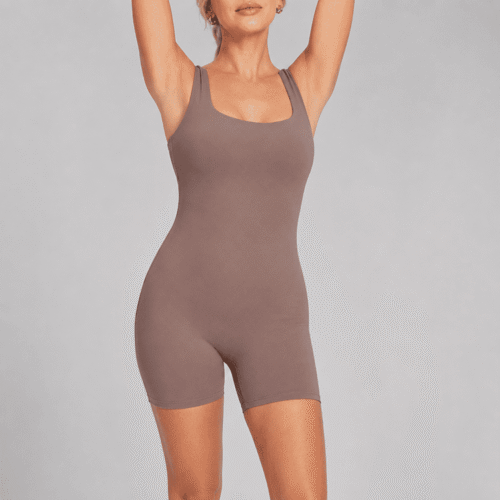
Custom Maternity Activewear Romper OEM ODM Pregnancy Workout Jumpsuit
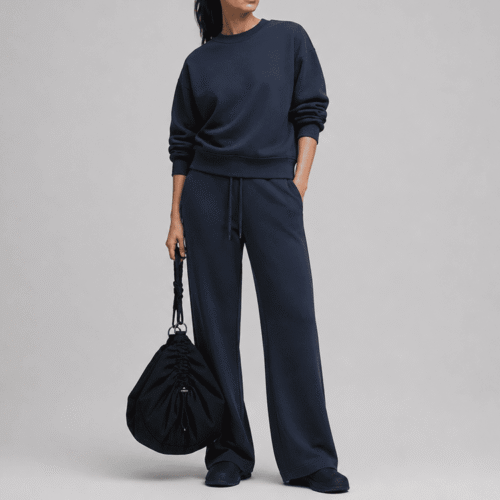
Custom Women’s Crew Neck Loungewear Set OEM ODM Sweatshirt Wide Leg Pants
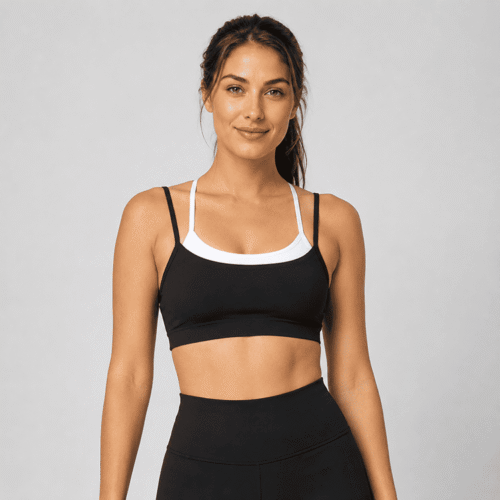
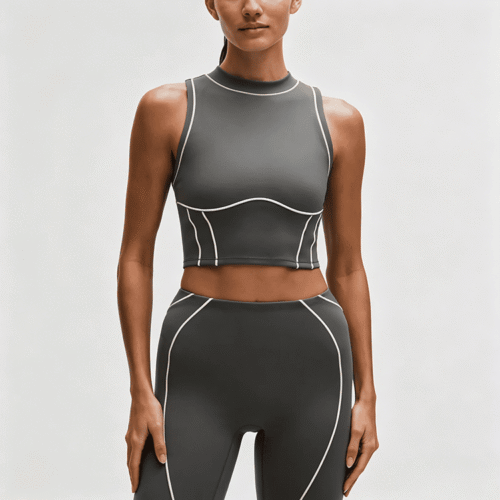
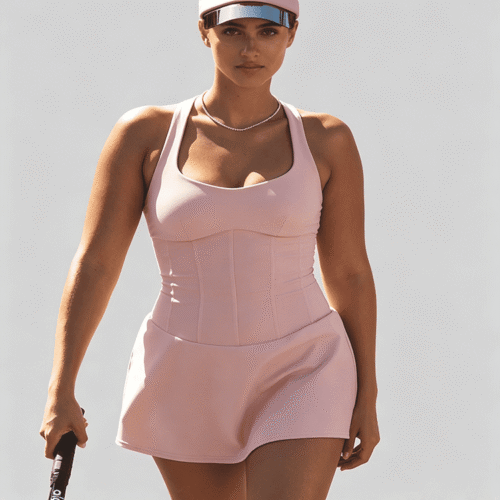
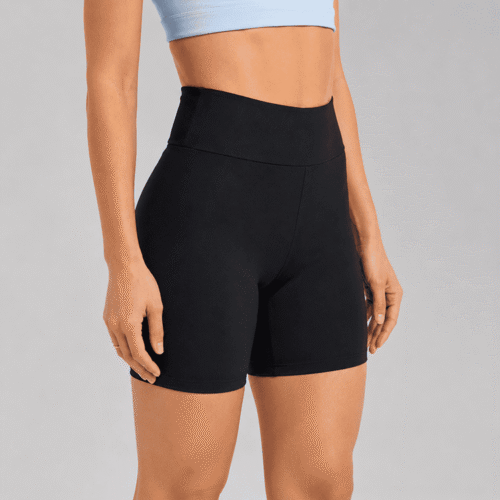
What Can Buyers Learn from Comparing These First Six Manufacturers?
Although all six companies manufacture sports bras, their competitive advantages differ significantly. Selecting a supplier based only on pricing can overlook important factors that influence long-term business success.
Several clear patterns emerge:
- Dongguan manufacturers generally offer stronger product development capabilities and greater flexibility for private label brands.
- Xiamen manufacturers often specialize in seamless technology, knitting expertise, and export-oriented production systems.
- Manufacturers emphasizing sustainability typically invest more heavily in certified recycled materials and environmentally responsible manufacturing processes.
- Companies focused on large-volume production usually provide excellent manufacturing stability but may be less flexible for startups requiring low MOQs or frequent design revisions.
- Factories serving fashion-oriented brands often excel at trend adaptation, while technically specialized manufacturers place greater emphasis on performance engineering and functional construction.
The right supplier is rarely the largest or the least expensive. Instead, it is the manufacturer whose capabilities, production model, and development approach most closely align with your brand’s objectives, target customers, and long-term sourcing strategy. A careful comparison at the beginning of the sourcing process often prevents costly changes after production has already started.
7. Arabella Clothing
Headquarters: Xiamen, Fujian
Founded: 2014
Typical MOQ: 100 pieces
Typical Lead Time: 25–35 working days
Main Product Categories
- Sports Bras
- Yoga Wear
- Gym Apparel
- Running Clothing
- Fitness Sets
- Athleisure
Public Certifications
- BSCI
- ISO9001
Best Fit For
- Growing fitness apparel brands
- Amazon sellers
- Boutique retailers
- Mid-sized private label businesses
May Not Be the Best Choice For
- Luxury activewear brands requiring highly customized technical development
- Buyers seeking extremely low minimum order quantities
Core Strengths
- Balanced product portfolio
- Mature export experience
- Stable production management
- Good communication efficiency
- Reliable order fulfillment
Potential Limitations
The company focuses primarily on conventional activewear categories rather than highly specialized products, making it less suitable for brands pursuing significant technical differentiation.
Buyer Insight
Arabella Clothing provides a practical balance between production capacity and flexibility. Brands with steady annual purchasing plans often appreciate manufacturers that consistently deliver reliable quality without requiring the extensive production scale of larger factories.
8. Berunwear
Headquarters: Yiwu, Zhejiang
Founded: 2010
Typical MOQ: 100 pieces
Typical Lead Time: 20–35 working days
Main Product Categories
- Sports Bras
- Yoga Wear
- Fitness Apparel
- Running Wear
- Athleisure
- Workout Sets
Public Certifications
- ISO9001
Best Fit For
- Online retailers
- Small wholesalers
- Budget-conscious brands
- Emerging private label businesses
May Not Be the Best Choice For
- Premium technical activewear brands
- Companies requiring advanced product engineering
Core Strengths
- Competitive pricing
- Flexible manufacturing
- Broad product selection
- Experience with export orders
- Fast quotation process
Potential Limitations
Although pricing is competitive, buyers developing premium performance products should carefully evaluate sample quality, fabric performance, and construction details before committing to large production orders.
Buyer Insight
Berunwear is particularly suitable for brands entering the market with price-sensitive collections. Businesses should view it as a value-oriented manufacturing option rather than a supplier specializing in highly engineered sports bras.
9. Lezhou Garment
Headquarters: Dongguan, Guangdong
Founded: 2008
Typical MOQ: 100 pieces
Typical Lead Time: 20–30 working days
Main Product Categories
- Compression Sports Bras
- Compression Apparel
- Yoga Wear
- Running Wear
- Performance Activewear
Public Certifications
- ISO9001
- BSCI
Best Fit For
- Performance sports brands
- Running apparel companies
- Functional activewear collections
- Compression garment specialists
May Not Be the Best Choice For
- Fashion-first activewear brands
- Buyers focusing primarily on athleisure collections
Core Strengths
- Compression garment expertise
- Technical fabric experience
- Stable manufacturing quality
- Strong pattern development
- Functional garment construction
Potential Limitations
The company’s strengths are concentrated in technical performance apparel. Brands emphasizing seasonal fashion trends over athletic functionality may find broader product development support elsewhere.
Buyer Insight
Compression sports bras require more than attractive appearance. Accurate pattern grading, recovery performance, seam placement, and pressure distribution significantly influence comfort and athletic performance. Buyers can also refer to the American College of Sports Medicine (ACSM) for evidence-based resources on athletic performance and sports apparel considerations. Manufacturers experienced in compression apparel generally provide stronger technical execution in these areas.
10. Yotex Apparel
Headquarters: Hangzhou, Zhejiang
Founded: 2015
Typical MOQ: 100 pieces
Typical Lead Time: 20–35 working days
Main Product Categories
- Yoga Bras
- Yoga Apparel
- Sports Bras
- Activewear
- Fitness Clothing
- Lounge Activewear
Public Certifications
- BSCI
- ISO9001
Best Fit For
- Yoga brands
- Boutique activewear labels
- Lifestyle fitness companies
- Wellness-focused collections
May Not Be the Best Choice For
- High-volume discount retailers
- Professional competition sports brands requiring advanced technical engineering
Core Strengths
- Strong yoga apparel specialization
- Attractive garment aesthetics
- Comfortable fabric selection
- Flexible product development
- Consistent manufacturing quality
Potential Limitations
Compared with factories specializing in high-impact athletic performance, Yotex places greater emphasis on comfort and lifestyle apparel than on maximum-support sports bras.
Buyer Insight
The global activewear market continues to expand beyond traditional gym clothing. Yoga, wellness, recovery, and everyday athleisure represent some of the fastest-growing segments. Manufacturers specializing in these categories often understand consumer expectations for comfort, softness, and versatility better than factories focused exclusively on competitive sportswear.
Why Do Global Brands Choose Sports Bra Manufacturers in China?
Featured Answer
China remains the world’s leading destination for sports bra manufacturing because it combines mature supply chains, advanced textile technology, experienced production teams, competitive costs, and exceptional manufacturing flexibility. Rather than relying on a single advantage, Chinese manufacturers benefit from an integrated ecosystem that enables faster product development, better quality consistency, and more efficient large-scale production than many competing sourcing regions.
Price is often the first factor buyers consider when evaluating manufacturing locations, but it is rarely the reason experienced brands continue sourcing from China. The country’s competitive advantage lies in the depth of its industrial ecosystem rather than labor costs alone.
A sports bra is one of the most technically demanding garments in activewear. Unlike a standard T-shirt, it combines multiple materials—including performance fabrics, elastic bands, foam cups, mesh panels, support tapes, hook-and-eye closures, silicone grippers, and decorative trims—into a single product that must provide comfort, durability, and support during repeated movement.
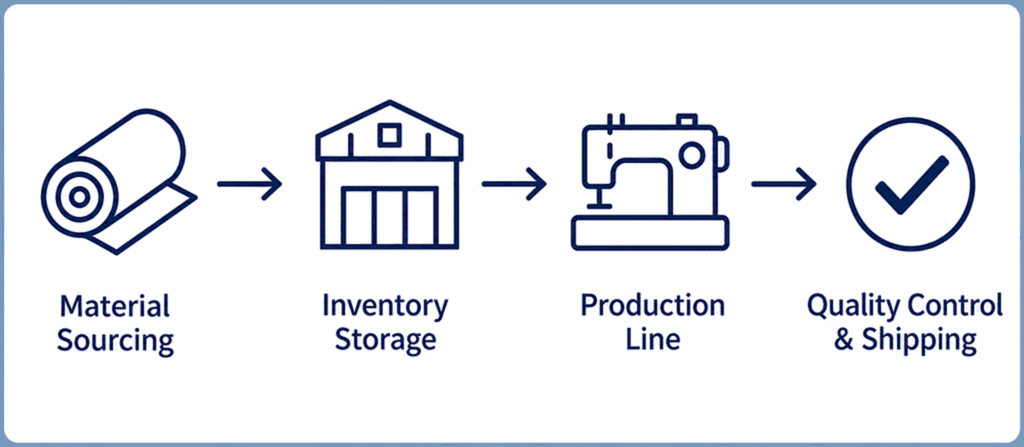
China’s manufacturing clusters allow suppliers to source these materials locally from specialized vendors. Instead of importing components from multiple countries, factories can often obtain performance fabrics, elastics, accessories, printing services, embroidery, labeling, and packaging within the same region. This shortens development cycles and improves coordination across the entire production process.
Key Reasons Brands Continue Choosing China
- Highly integrated textile and apparel supply chains
- Extensive experience manufacturing performance activewear
- Large pool of skilled technicians and pattern makers
- Advanced production equipment
- Reliable access to functional performance fabrics
- Competitive pricing across different quality levels
- Efficient product development and sampling
- Strong export infrastructure serving global markets
Another significant advantage is manufacturing flexibility. Many Chinese factories now support businesses at different stages of growth. Startup brands can validate new concepts with relatively low minimum order quantities, while established companies can scale production without changing suppliers as demand increases.
Quality management has also improved considerably over the past decade. Most export-oriented manufacturers operate structured inspection systems covering incoming materials, in-process production, and final finished garments. International certifications such as ISO 9001, BSCI, and GRS further demonstrate compliance with recognized quality, social responsibility, and sustainability standards.
However, choosing China does not automatically guarantee success. Manufacturing quality still varies substantially between suppliers. The difference between an average factory and an outstanding one often lies in product development expertise, communication efficiency, engineering capability, and long-term consistency rather than production capacity alone.
For this reason, experienced buyers evaluate suppliers based on measurable capabilities instead of assuming that every manufacturer within the same region provides comparable results.
Which Chinese Manufacturing Regions Specialize in Sports Bra Production?
Different manufacturing regions in China have developed distinct strengths over decades of specialization. Understanding these regional differences can significantly improve supplier selection and help buyers identify factories whose capabilities align with their product strategy.
| Region | Primary Strength | Best For |
|---|---|---|
| Dongguan | Premium functional activewear and product development | Private label brands, technical sports bras |
| Guangzhou | Fashion-driven activewear and design support | Boutique and lifestyle collections |
| Xiamen | Seamless knitting and export manufacturing | Seamless sports bras and yoga apparel |
| Yiwu | Cost-effective manufacturing and wholesale production | Budget-conscious buyers and wholesalers |
| Hangzhou | Yoga and lifestyle apparel | Wellness and athleisure brands |
Although regional specialization provides useful guidance, it should never replace individual supplier evaluation. Two factories located in the same city may differ dramatically in technical capability, quality management, communication, and customer support. Successful sourcing decisions depend on evaluating each manufacturer as an individual business rather than relying solely on geographic location.
How Are Sports Bras Manufactured? A Step-by-Step Factory Guide
Featured Answer
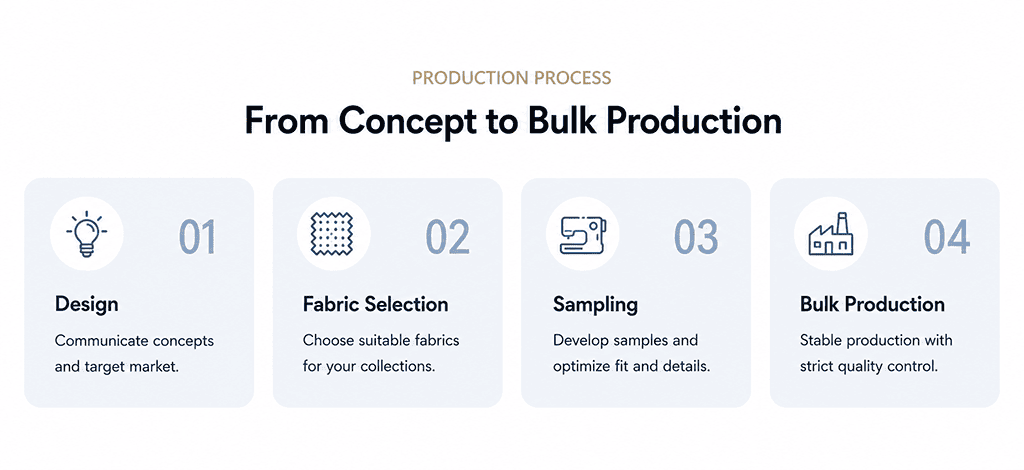
A high-quality sports bra is produced through a structured manufacturing process that combines product engineering, material science, precision pattern making, technical sewing, and rigorous quality control. Unlike ordinary apparel, sports bras require multiple development stages to ensure proper support, comfort, durability, and performance. Understanding each production step helps brands communicate more effectively with manufacturers and identify potential quality risks before mass production begins.
Many buyers assume sports bra production begins when fabric reaches the cutting table. In reality, manufacturing starts much earlier—with product planning and engineering. The development process determines whether the final garment performs as intended long before production operators begin sewing.
Unlike casual garments, sports bras must balance support, elasticity, recovery, breathability, comfort, and aesthetics simultaneously. Every decision—from fabric composition to elastic tension—affects product performance.
The following workflow reflects the production sequence used by most experienced activewear manufacturers.
Step 1 — Product Planning and Market Positioning
Every successful product begins with a clear understanding of its target customer.
Before sketches or samples are created, brands should define several key questions:
- Who is the target customer?
- Which activities will the sports bra support?
- What level of impact protection is required?
- What price range will the final product occupy?
- Which competitors serve the same market segment?
For example:
| Market Position | Typical Customer | Product Focus |
|---|---|---|
| Yoga | Low-impact training | Comfort and flexibility |
| Gym Training | General fitness | Balanced support |
| Running | High-impact exercise | Maximum stability |
| Tennis | Dynamic movement | Breathability and support |
| Lifestyle | Daily wear | Fashion and comfort |
A clearly defined product positioning simplifies every decision made during development, from fabric selection to construction methods.
Step 2 — Technical Design and Tech Pack Development
Once the product concept is finalized, designers translate ideas into technical documentation.
A complete Tech Pack typically includes:
- Technical sketches
- Construction details
- Stitch specifications
- Fabric composition
- Elastic requirements
- Size chart
- Colorways
- Branding placement
- Label specifications
- Packaging requirements
Experienced manufacturers rely heavily on accurate Tech Packs because they reduce misunderstandings and minimize costly revisions later in development.
For brands without internal technical designers, many professional manufacturers can assist in converting reference photos or samples into production-ready technical documents.
Step 3 — Pattern Making and Size Grading
Pattern making is one of the most technically demanding stages of sports bra manufacturing.
Unlike fashion tops, sports bras must distribute pressure evenly across multiple areas of the body while allowing unrestricted movement.
Professional pattern makers carefully engineer:
- Cup shape
- Strap angle
- Armhole depth
- Neckline position
- Underband length
- Side panel curvature
- Compression distribution
After the base pattern is approved, it is graded into multiple sizes while maintaining consistent fit proportions.
Poor grading often causes products to fit well in one size but perform poorly in larger or smaller sizes, creating inconsistent customer experiences.
Step 4 — Fabric Selection and Performance Testing
Fabric is one of the largest contributors to sports bra performance.
Different applications require different material characteristics.
Common Performance Fabrics
| Fabric Type | Advantages | Typical Use |
|---|---|---|
| Nylon-Spandex | Soft, durable, excellent stretch | Premium sports bras |
| Polyester-Spandex | Cost-effective, moisture-wicking | Commercial activewear |
| Recycled Nylon | Sustainable and durable | Eco-conscious brands |
| Rib Knit | Fashion texture with flexibility | Lifestyle collections |
| Seamless Knit | Superior comfort | Yoga and lounge wear |
Manufacturers also evaluate critical fabric properties such as:
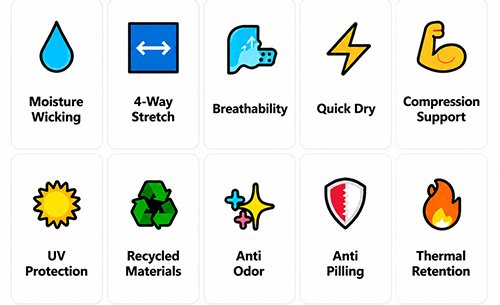
- Four-way stretch
- Recovery rate
- Moisture management
- Breathability
- Abrasion resistance
- Color fastness
- Pilling resistance
- Shrinkage
- UV resistance (when required)
Selecting fabric based only on price often results in products that lose support after repeated washing or fail to meet customer expectations.
Step 5 — Prototype Sample Development
The first physical sample transforms technical drawings into an actual garment.
This prototype allows both the brand and manufacturer to verify:
- Overall appearance
- Construction feasibility
- Fabric compatibility
- Support structure
- Manufacturing complexity
At this stage, multiple adjustments are expected.
Common revisions include:
- Strap positioning
- Cup shaping
- Band tension
- Panel proportions
- Decorative details
- Stitch construction
The objective is not perfection—it is identifying improvement opportunities before investing in more advanced samples.
Step 6 — Fit Sample Evaluation
The fit sample is one of the most important milestones in the entire development process.
Unlike fashion garments, sports bras must perform during movement rather than only while standing still.
Professional fit evaluations typically assess:
- Comfort during wear
- Compression distribution
- Bust support
- Strap stability
- Underband pressure
- Side coverage
- Bounce control
- Range of motion
Fit sessions often include practical movement tests such as:
- Walking
- Running
- Squats
- Jumping
- Arm raises
- Stretching
Minor pattern adjustments at this stage significantly improve the final product’s performance and customer satisfaction.
Step 7 — Pre-Production Sample (PP Sample)
After all development revisions are completed, manufacturers prepare a Pre-Production Sample, commonly referred to as the PP Sample.
This sample serves as the production benchmark.
Everything should match planned bulk production, including:
- Fabric
- Elastic
- Sewing construction
- Labels
- Logos
- Packaging
- Accessories
- Measurements
Professional manufacturers recommend approving the PP Sample before authorizing bulk production.
Skipping this step increases the risk of inconsistencies between approved samples and finished products.
Step 8 — Fabric Cutting and Production Preparation
Once materials arrive at the factory, they undergo inspection before production begins.
Quality teams typically verify:
- Fabric width
- Color consistency
- Fabric defects
- Stretch performance
- Material quantity
Approved fabrics are then spread, relaxed if necessary, and cut using manual or computerized cutting equipment.
Accurate cutting is essential because even small deviations can affect garment symmetry and sizing consistency.
Step 9 — Sewing and Support Structure Assembly
This stage transforms individual components into a finished sports bra.
Compared with ordinary apparel, sports bras involve considerably more assembly operations.
Typical sewing procedures include:
- Cup attachment
- Shoulder strap construction
- Elastic insertion
- Underband assembly
- Mesh panel integration
- Side panel reinforcement
- Flatlock stitching
- Cover stitching
- Bartack reinforcement
High-impact sports bras usually require additional reinforcement at key stress points to improve durability during intensive physical activity.
Production operators must carefully control stitch tension to prevent seam failure while preserving fabric elasticity.
Step 10 — Branding, Decoration, and Finishing
After garment construction is completed, branding elements are added.
Depending on product positioning, manufacturers may apply:
- Heat transfer logos
- Silicone logos
- Screen printing
- Reflective graphics
- Embroidery
- Woven labels
- Care labels
- Hangtags
Additional finishing processes may include:
- Thread trimming
- Steam pressing
- Final measurement verification
- Metal detection (where applicable)
- Folding
- Individual packaging
These finishing details significantly influence perceived product quality and retail presentation.
Step 11 — Quality Inspection
Quality inspection should occur throughout production rather than only at the end.
Most experienced manufacturers implement multiple inspection stages.
Typical Inspection Process
| Inspection Stage | Purpose |
|---|---|
| Incoming Material Inspection | Verify raw material quality |
| In-Process Inspection | Monitor sewing quality during production |
| Final Inspection | Evaluate finished garments before packing |
| Packaging Inspection | Confirm labels, quantities, and packaging accuracy |
Inspectors commonly evaluate:
- Measurements
- Stitch quality
- Fabric defects
- Color consistency
- Logo placement
- Elastic performance
- Appearance
- Packaging accuracy
Factories following internationally recognized inspection systems, such as AQL (Acceptable Quality Limit) standards, generally provide more consistent production outcomes. Buyers can refer to the ANSI/ASQ Z1.4 sampling standard, which forms the basis for widely used AQL inspection practices in manufacturing quality control.
Step 12 — Packaging and International Shipment
Once garments pass final inspection, products are prepared for shipment according to customer requirements.
Packaging options commonly include:
- Individual poly bags
- Recycled packaging
- Retail-ready presentation boxes
- Barcode labeling
- Carton marking
- Palletized shipments
Manufacturers then coordinate transportation through sea freight, air freight, rail, or courier services depending on delivery schedules and destination markets.
Proper export documentation—including commercial invoices, packing lists, certificates of origin, and inspection reports—helps ensure smoother customs clearance and reduces shipping delays.
Why Understanding the Manufacturing Process Matters
Many sourcing problems originate long before bulk production begins. Delays, inconsistent sizing, poor support performance, or unexpected quality issues are often the result of incomplete development rather than factory production alone.
Brands that understand the complete manufacturing workflow are better equipped to:
- Evaluate supplier capabilities more accurately.
- Communicate technical requirements with fewer misunderstandings.
- Identify potential risks before production starts.
- Reduce costly sample revisions.
- Improve product consistency across future collections.
- Build stronger long-term manufacturing partnerships.
Ultimately, successful sports bra manufacturing is not simply about sewing fabric together. It is the result of coordinated product engineering, material selection, technical craftsmanship, and disciplined quality management working together to create garments that perform reliably for the end user.
What Types of Sports Bras Can Chinese Manufacturers Produce?
Featured Answer
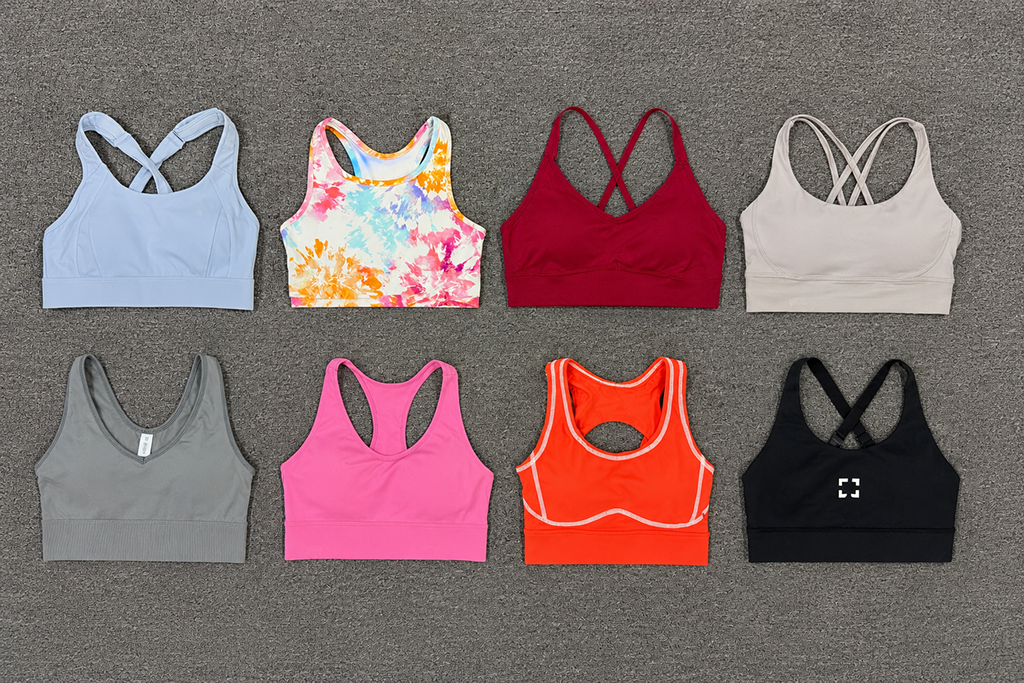
Chinese sports bra manufacturers can produce a wide range of products, from entry-level yoga bras to highly engineered high-impact sports bras for professional athletes. The best manufacturers offer multiple construction methods, performance fabric options, and customization capabilities, allowing brands to develop collections that target different customer groups instead of relying on a single product style.
One of the biggest misconceptions among first-time buyers is that a sports bra is a standardized product. In reality, the market has become highly segmented. Different sports require different levels of support, and different consumers prioritize comfort, compression, style, sustainability, or versatility.
Leading Chinese manufacturers have evolved alongside these changing market demands. Instead of offering only basic sports bras, many factories now develop complete product portfolios covering multiple performance levels, body types, and lifestyle applications.
Understanding these categories helps brands build more balanced collections and choose manufacturers with expertise that matches their target market.
Low-Impact Sports Bras
Low-impact sports bras are designed for activities involving gentle movement and minimal bounce.
Typical applications include:
- Yoga
- Pilates
- Stretching
- Walking
- Daily wear
- Recovery sessions
Key Features
- Lightweight construction
- Soft compression
- Wire-free support
- Comfortable underband
- Breathable fabrics
- Minimal seams
Common Fabrics
- Nylon-Spandex
- Brushed Nylon
- Rib Knit
- Bamboo Blend
- Seamless Knit
These products prioritize comfort over maximum support, making them popular among consumers seeking all-day wear rather than intensive athletic performance.
Medium-Support Sports Bras
Medium-support bras are among the most commercially successful categories because they accommodate a wide variety of fitness activities.
They are commonly used for:
- Gym workouts
- Cycling
- Strength training
- Hiking
- Functional fitness
- Dance classes
Typical Features
- Wider shoulder straps
- Medium compression
- Removable cups
- Moisture-wicking fabrics
- Improved stability
- Better recovery performance
Many private label brands begin with medium-support collections because they appeal to the broadest customer base.
High-Impact Sports Bras
High-impact sports bras represent one of the most technically demanding categories in activewear manufacturing.
These products are developed for:
- Running
- HIIT training
- CrossFit
- Tennis
- Basketball
- Volleyball
- Competitive athletics
Technical Characteristics
- Maximum bounce reduction
- Multi-layer construction
- Reinforced support panels
- High-density elastic bands
- Wide adjustable straps
- Secure closures
- Advanced compression engineering
Manufacturing these products requires considerably greater technical expertise than producing standard yoga bras.
Brands targeting serious athletes should verify that suppliers have previous experience developing high-impact support systems rather than assuming every activewear factory possesses this capability.
Seamless Sports Bras
Seamless technology has become one of the fastest-growing segments in the global activewear industry.
Instead of sewing together multiple fabric panels, seamless garments are produced using specialized circular knitting machines.
Advantages
- Fewer seams
- Improved comfort
- Reduced skin irritation
- Better stretch performance
- Lightweight construction
- Modern aesthetic
Ideal Markets
- Yoga
- Studio fitness
- Lifestyle activewear
- Lounge collections
Not every sportswear factory owns seamless knitting equipment. Buyers specifically sourcing seamless products should confirm whether production is performed in-house or outsourced.
Longline Sports Bras
Longline sports bras extend below the traditional underband, combining the support of a sports bra with the appearance of a cropped athletic top.
They have become increasingly popular among younger consumers because they function both as workout apparel and casual athleisure.
Popular Features
- Extended torso coverage
- Fashion-oriented silhouettes
- Built-in support
- Sculpting fit
- Premium fabric finishes
Many DTC brands include longline bras within matching set collections because they create additional cross-selling opportunities with leggings and shorts.
Nursing Sports Bras
As maternity fitness continues to expand, nursing sports bras have emerged as an important niche category.
Unlike standard sports bras, these garments must balance athletic performance with breastfeeding convenience.
Important Features
- Easy-access nursing clips
- Soft supportive fabrics
- Adjustable sizing
- Gentle compression
- Wide underbands
- Skin-friendly materials
Manufacturers producing maternity activewear often possess specialized pattern-making expertise that differs significantly from standard sportswear development.
Plus Size Sports Bras
Demand for inclusive sizing continues to increase across North America, Europe, and Australia.
Designing larger sizes requires considerably more than simply enlarging existing patterns.
Professional manufacturers adjust:
- Strap width
- Cup proportions
- Side support
- Underband strength
- Fabric recovery
- Compression distribution
Factories experienced in plus-size activewear generally invest more time in fit testing across multiple body types to ensure consistent support and comfort.
Sustainable Sports Bras
Environmental responsibility has become an increasingly important purchasing factor for both brands and consumers.
Many manufacturers now offer sustainable alternatives without significantly compromising product performance.
Common Sustainable Materials
- Recycled Nylon
- Recycled Polyester
- GRS-certified Fabrics
- REPREVE® Fibers
- Bio-based Elastane Blends
- Organic Cotton Blends
In addition to fabrics, brands increasingly request:
- Recycled packaging
- Water-based printing
- Reduced plastic usage
- Environmentally responsible dyeing processes
However, buyers should always request supporting certification rather than relying solely on marketing claims regarding sustainability.
Compression Sports Bras
Compression sports bras are engineered to stabilize breast movement through controlled pressure rather than structural encapsulation.
These products are commonly used in:
- Running
- Functional training
- Team sports
- Military fitness
- Outdoor endurance sports
Developing effective compression garments requires expertise in:
- Fabric recovery
- Elastic modulus
- Pattern engineering
- Pressure distribution
- Flatlock seam construction
Manufacturers specializing in compression apparel often possess stronger technical development capabilities than general activewear factories.
Which Sports Bra Category Offers the Best Business Opportunity?
Rather than attempting to compete across every segment simultaneously, successful brands usually begin by focusing on one or two clearly defined product categories.
The table below illustrates the relative market characteristics of each segment.
| Category | Market Demand | Technical Difficulty | Competition Level | Growth Potential |
|---|---|---|---|---|
| Low-Impact | High | Low | High | Medium |
| Medium-Support | Very High | Medium | High | High |
| High-Impact | High | High | Medium | High |
| Seamless | High | High | Medium | High |
| Longline | High | Medium | Medium | High |
| Nursing | Medium | High | Low | Medium |
| Plus Size | High | High | Low | Very High |
| Sustainable | Very High | Medium | Medium | Very High |
| Compression | Medium | Very High | Low | High |
Brands entering the market for the first time often achieve stronger long-term results by serving a clearly defined customer group rather than attempting to appeal to every consumer. As competition intensifies, specialization has become one of the most effective strategies for building brand differentiation and customer loyalty.
How to Choose the Right Sports Bra Manufacturer in China?
Featured Answer
Choosing the right sports bra manufacturer requires more than comparing quotations. Buyers should evaluate product development capability, manufacturing experience, quality systems, sampling performance, communication efficiency, certifications, and long-term reliability. A supplier that matches your brand’s growth stage and technical requirements will usually deliver greater value than one offering only the lowest unit price.
One of the most common sourcing mistakes is selecting a supplier primarily because of attractive pricing. While cost always matters, it represents only one part of the total sourcing equation.
A slightly lower unit price can quickly become more expensive if repeated sampling, delayed shipments, inconsistent quality, or communication problems disrupt product launches.
Experienced buyers evaluate manufacturers as long-term business partners rather than production vendors.
1. Verify Product Development Capability
Product development is often the biggest difference between average factories and professional sportswear manufacturers.
Ask questions such as:
- Can the factory develop products from reference photos?
- Do they have dedicated pattern makers?
- Can they recommend suitable performance fabrics?
- How many sample revisions are typically required?
- Do they understand different support levels?
Factories with stronger development teams generally reduce overall sourcing risk because they identify technical issues early in the process.
2. Evaluate Sample Quality Before Pricing
The sample tells you far more than the quotation.
During sample evaluation, examine:
- Overall fit
- Fabric recovery
- Stitch consistency
- Cup symmetry
- Strap stability
- Elastic performance
- Branding quality
- Packaging
A well-made sample demonstrates manufacturing discipline that pricing alone cannot reveal.
3. Check Quality Management Systems
Quality problems rarely originate from a single mistake on the sewing line. They usually result from inconsistent management throughout the production process. A professional manufacturer should operate a structured quality control system that monitors every production stage rather than inspecting garments only after they are finished.
Ask potential suppliers how they control quality before placing an order.
Important questions include:
- Do they inspect incoming fabrics before production?
- How often are in-line inspections performed?
- What quality standard do they follow?
- Can they provide inspection reports?
- Are defective products repaired or remade?
- Do they allow third-party inspections?
Factories with transparent quality procedures are generally more confident in their manufacturing standards and easier to work with over the long term.
4. Review Certifications Carefully
Certifications do not automatically guarantee superior products, but they demonstrate that a manufacturer has invested in internationally recognized management systems and compliance requirements.
Depending on your target market, the following certifications may be particularly valuable.
| Certification | Purpose |
|---|---|
| ISO 9001 | Quality management system |
| BSCI | Social responsibility and factory compliance |
| GRS | Recycled material verification |
| OEKO-TEX® Standard 100 | Textile safety testing |
| REACH Compliance | European chemical regulations |
| CE (when applicable) | Compliance for relevant regulated products or components |
Rather than requesting every possible certificate, buyers should prioritize those relevant to their target markets and customer expectations.
5. Consider MOQ Beyond the Number
Many buyers focus exclusively on finding the lowest minimum order quantity.
However, MOQ should always be evaluated together with:
- Product complexity
- Number of colorways
- Size range
- Fabric availability
- Future reorder potential
- Development costs
For example, a factory offering a 50-piece MOQ may provide greater flexibility for launching new collections, while another requiring 300 pieces may offer lower unit costs once demand becomes stable.
The best MOQ is not necessarily the lowest one—it is the one that matches your inventory strategy and cash flow.
6. Evaluate Communication Efficiency
Communication becomes increasingly important as products become more technical.
Professional manufacturers typically:
- Respond within reasonable timeframes.
- Confirm technical details in writing.
- Clarify uncertainties before production.
- Provide regular production updates.
- Explain problems with practical solutions.
Poor communication often causes delays that cannot be solved by production capacity alone.
During sampling, observe whether questions receive clear answers or vague promises. This early experience often reflects future cooperation.
Factory Audit Checklist
Before selecting a supplier, buyers should perform a structured factory evaluation rather than relying solely on brochures or websites.
The following checklist provides a practical starting point.
Manufacturing Capability
✔ Does the factory specialize in activewear?
✔ Have they produced sports bras before?
✔ Can they manufacture different support levels?
✔ Can they handle both low-impact and high-impact constructions?
✔ Do they have dedicated pattern makers?
✔ Can they develop products from a Tech Pack or reference sample?
Fabric Capability
✔ Do they offer multiple performance fabrics?
✔ Can they source recycled materials?
✔ Are third-party fabric test reports available?
✔ Can they recommend suitable fabrics for different sports?
Sampling
✔ What is the typical sample lead time?
✔ How many revisions are included?
✔ Will the same team handle bulk production?
✔ Can the PP Sample match bulk production exactly?
Quality Control
✔ Is there incoming material inspection?
✔ Is in-process inspection documented?
✔ Are final inspections conducted using AQL standards?
✔ Can third-party inspections be arranged?
Export Experience
✔ Which countries does the factory regularly export to?
✔ Are they familiar with retailer compliance requirements?
✔ Can they prepare complete export documentation?
✔ Have they worked with international sportswear brands?
Common Red Flags Buyers Should Never Ignore
Even experienced sourcing professionals occasionally encounter unsuitable suppliers.
The following warning signs deserve careful attention.
Extremely Low Prices
If one quotation is dramatically lower than every other supplier, investigate carefully.
Possible explanations include:
- Lower-grade fabrics
- Reduced fabric weight
- Simplified construction
- Inexperienced operators
- Hidden additional costs
Price alone should never determine supplier selection.
Unclear Sample Process
Professional manufacturers explain their development process clearly.
Be cautious if a supplier cannot answer:
- How samples are developed.
- How revisions are managed.
- Who approves technical changes.
- How production records are maintained.
Inconsistent Communication
Frequent delays, contradictory answers, or incomplete information during the quotation stage often become larger problems during production.
Good communication is one of the strongest indicators of long-term reliability.
No Evidence of Previous Work
Experienced manufacturers should be able to demonstrate relevant production experience.
This may include:
- Previous product examples
- Fabric recommendations
- Construction knowledge
- Technical discussions
- Manufacturing photographs
- Quality documentation
A supplier unwilling to discuss previous manufacturing experience should be evaluated carefully.

Sports Bra Manufacturer vs Activewear Manufacturer vs Trading Company
Featured Answer
Not every supplier involved in sportswear production performs the same role. Some manufacturers specialize exclusively in sports bras, others produce complete activewear collections, while trading companies coordinate production through partner factories. Understanding these differences helps buyers select suppliers whose expertise best matches their product strategy, order size, and long-term business objectives.
Many first-time buyers assume every supplier listed on sourcing platforms owns a factory. In reality, suppliers generally fall into three categories, each with distinct strengths and limitations.
Sports Bra Manufacturer
Sports bra manufacturers focus specifically on developing and producing sports bras and closely related products.
Advantages
- Specialized engineering knowledge
- Better support construction
- Advanced pattern development
- Strong understanding of compression
- More accurate fit optimization
Potential Limitations
- Narrower product range
- May require additional suppliers for complete collections
These manufacturers are ideal for brands whose core business revolves around sports bras or highly technical women’s activewear.
Activewear Manufacturer
Activewear manufacturers produce a broader range of performance apparel, including:
- Sports Bras
- Leggings
- Shorts
- Tank Tops
- Jackets
- Hoodies
- Tennis Wear
- Yoga Wear
Advantages
- One supplier for complete collections
- Consistent branding across categories
- Simplified supply chain management
- Better matching fabrics and color consistency
- Easier seasonal product development
Potential Limitations
Not every activewear manufacturer possesses deep expertise in highly technical sports bra engineering. Buyers developing premium high-impact products should confirm previous experience before proceeding.
For most growing private label brands, partnering with a capable activewear manufacturer often provides greater operational efficiency than coordinating multiple specialized factories.
Trading Company
Trading companies typically coordinate production through partner factories rather than manufacturing products themselves.
Advantages
- Broad supplier network
- Convenient sourcing for multiple product categories
- Simplified communication for buyers with diverse purchasing needs
- Flexible supplier matching
Potential Limitations
- Less direct control over production
- Communication may pass through additional intermediaries
- Product development can be slower
- Factory visibility may be limited
Trading companies can be useful for buyers sourcing many unrelated product categories, but brands seeking long-term product development often benefit from building direct relationships with manufacturers whenever possible.
Which Supplier Is the Best Choice for Different Types of Brands?
There is no universal “best” manufacturer. The most suitable supplier depends on your business model, product positioning, purchasing volume, and future growth plans.
The following comparison may help narrow your options.
| Buyer Type | Recommended Supplier Type | Primary Priority |
|---|---|---|
| Startup Activewear Brand | Flexible Activewear Manufacturer | Low MOQ and product development |
| Growing DTC Brand | Full-Service Activewear Manufacturer | Scalable production and consistent quality |
| Premium Performance Brand | Technical Sports Bra Manufacturer | Engineering capability and innovation |
| Large Retail Chain | High-Capacity Manufacturer | Production stability and supply security |
| Multi-Category Sportswear Brand | Full Activewear Manufacturer | Supply chain integration |
| Price-Driven Wholesale Business | Volume-Oriented Manufacturer | Cost efficiency |
Selecting a supplier whose strengths align with your business objectives often delivers better long-term results than simply choosing the factory with the lowest quotation.
How Much Does It Cost to Manufacture Sports Bras in China?
The manufacturing cost of a sports bra depends on far more than fabric selection. Product complexity, support level, construction techniques, trims, order quantity, packaging, and shipping all influence the final unit cost. Buyers who understand these cost components are better positioned to control budgets without sacrificing product quality.
One of the most common misconceptions in apparel sourcing is that the quoted factory price represents the total cost of manufacturing. In reality, the factory quotation is only one part of the overall sourcing budget.
Successful brands evaluate the Total Landed Cost, which includes development, production, logistics, quality assurance, and import expenses.
Major Cost Components
1. Fabric Cost
Fabric is usually the largest cost component.
Depending on product positioning, buyers may choose:
- Standard Nylon-Spandex
- Premium Nylon-Elastane
- Recycled Nylon
- Seamless Knit
- Rib Fabrics
- Cooling Fabrics
- High Compression Fabrics
Higher-performance materials typically increase cost but also improve product value and customer satisfaction.
2. Elastic and Support Components
Unlike standard apparel, sports bras contain numerous structural materials.
Typical components include:
- Bottom elastic
- Shoulder elastic
- Foam cups
- Hook-and-eye closures
- Adjustable sliders
- Rings
- Silicone grippers
- Mesh panels
Higher-quality trims improve durability but also influence manufacturing costs.
3. Sewing Complexity
Construction complexity varies significantly.
Examples include:
- Flatlock stitching
- Bonded seams
- Multi-panel construction
- Reinforcement stitching
- Double-layer cups
- Encapsulation structures
Products requiring more sewing operations naturally require additional labor.
4. Printing and Branding
Brand customization often includes:
- Heat transfer logos
- Reflective graphics
- Silicone logos
- Screen printing
- Embroidery
- Woven labels
- Care labels
- Hangtags
Each additional branding element contributes to total production cost.
5. Packaging
Packaging requirements differ across markets.
Common options include:
- Standard poly bags
- Recycled bags
- Printed retail boxes
- Custom cartons
- Barcode labels
- Size stickers
Retail-ready packaging generally increases costs but reduces downstream preparation for retailers.
6. Sample Development
Sample development should be viewed as an investment rather than an expense.
Professional sampling helps identify:
- Fit issues
- Construction problems
- Fabric incompatibility
- Production risks
Resolving these issues before bulk production usually saves considerably more than the initial sample cost.
7. International Logistics
Shipping costs vary according to:
- Destination country
- Shipping method
- Order volume
- Carton dimensions
- Delivery schedule
Common transportation methods include:
- Ocean freight
- Air freight
- Rail freight
- Express courier
Choosing the appropriate shipping method should balance cost with inventory planning rather than focusing solely on speed.
Typical Cost Distribution
The percentage contribution of each component varies by product, but the following table illustrates a common distribution for premium private label sports bras.
| Cost Component | Approximate Share |
|---|---|
| Fabric | 35–45% |
| Trims & Accessories | 10–15% |
| Sewing Labor | 20–30% |
| Printing & Branding | 5–10% |
| Packaging | 3–8% |
| Quality Inspection | 2–5% |
| Logistics & Documentation | 5–15% |
These figures are intended as general guidance rather than fixed industry standards.
Hidden Costs Many Buyers Overlook
The lowest quotation does not always produce the lowest total sourcing cost.
Hidden expenses may include:
- Multiple sample revisions
- Production delays
- Air freight caused by missed delivery dates
- Product returns
- Quality claims
- Additional inspections
- Repackaging
- Customs delays
- Inventory shortages
Experienced buyers evaluate suppliers based on overall sourcing efficiency rather than factory price alone.
Practical Ways to Reduce Manufacturing Costs Without Sacrificing Quality
Reducing costs does not necessarily mean choosing cheaper materials.
Many successful brands lower costs by improving development efficiency.
Examples include:
- Finalize specifications before sampling.
- Consolidate colorways.
- Reduce unnecessary trim variations.
- Order matching product collections together.
- Plan production schedules in advance.
- Build long-term supplier relationships.
- Approve PP samples carefully before bulk production.
- Use standardized packaging whenever possible.
These practices often reduce overall costs while maintaining product quality.
Frequently Asked Questions About Sports Bra Manufacturing in China
1. How Do I Choose the Best Sports Bra Manufacturer in China?
The best sports bra manufacturer is not necessarily the largest or the cheapest. Buyers should compare suppliers based on product development capability, manufacturing experience, quality management, communication efficiency, certifications, sampling performance, and long-term production reliability. The right factory should align with your brand’s product positioning and future growth plans rather than simply offering the lowest quotation.
Choosing a supplier should begin with understanding your own business objectives. Startup brands often benefit from manufacturers offering lower MOQs and stronger development support, while established brands may prioritize production capacity and supply chain stability. Before placing an order, request product samples, review previous projects, verify certifications, and evaluate how efficiently the factory communicates throughout the sampling process. A reliable manufacturing partner should function as a long-term extension of your business rather than simply producing garments.
2. What Is the Typical MOQ for Custom Sports Bra Manufacturing?
Most Chinese manufacturers require a minimum order quantity between 50 and 300 pieces per style, although the exact MOQ depends on product complexity, fabric sourcing, customization requirements, and production scheduling. Lower MOQs are generally available for brands testing new products, while larger orders usually achieve better pricing and manufacturing efficiency.
MOQ should not be evaluated in isolation. Buyers should also consider the number of colors, size ranges, fabric availability, and expected sales volume. A supplier offering a flexible MOQ may reduce inventory risk during new product launches, allowing brands to validate customer demand before scaling production. As partnerships develop, manufacturers are often more willing to support customized MOQ arrangements based on long-term cooperation.
3. How Long Does It Take to Manufacture Custom Sports Bras?
The complete production timeline usually ranges from 4 to 10 weeks, including sample development, revisions, material preparation, bulk production, quality inspection, and export packaging. Actual lead times vary according to product complexity, factory workload, and material availability.
Sampling normally requires one to three weeks depending on the number of revisions. After final sample approval, bulk production generally takes between twenty and forty-five working days. Brands launching seasonal collections should begin supplier discussions well in advance to avoid production bottlenecks during peak manufacturing periods.
4. What Certifications Should a Sports Bra Manufacturer Have?
Professional sports bra manufacturers commonly hold certifications such as ISO 9001, BSCI, GRS, and other internationally recognized compliance standards. The most important certifications depend on your target market, sustainability goals, and customer requirements rather than the number of certificates a factory displays.
Certification demonstrates that a manufacturer follows recognized management systems, but it should never replace practical evaluation. Buyers should combine certification reviews with sample inspections, factory audits, quality documentation, and communication assessments. A factory with fewer certifications but stronger technical expertise may still outperform competitors in product development and production consistency.
5. Can Chinese Manufacturers Produce Sustainable Sports Bras?
Yes. Many leading Chinese manufacturers now offer recycled nylon, recycled polyester, GRS-certified fabrics, eco-friendly packaging, and lower-impact production options. Sustainable manufacturing has become increasingly common as international brands place greater emphasis on environmental responsibility.
However, sustainability claims should always be verified with supporting documentation. Buyers should request certification records, material traceability information, and third-party testing reports when sustainability is central to their brand positioning. Selecting environmentally responsible materials can strengthen brand reputation while meeting growing consumer expectations in global activewear markets.
6. Should I Choose a Sports Bra Manufacturer or a Full Activewear Manufacturer?
The answer depends on your product strategy. Brands focusing primarily on sports bras may benefit from specialized manufacturers with advanced support engineering, while businesses developing complete activewear collections often gain greater efficiency by partnering with a full-service activewear manufacturer capable of producing multiple product categories under one supply chain.
Managing leggings, tops, jackets, and sports bras through one experienced manufacturer often simplifies fabric matching, production scheduling, quality management, and logistics. Conversely, brands developing highly technical performance bras may prefer manufacturers with dedicated expertise in compression engineering and sports bra construction.
7. What Information Should I Prepare Before Contacting a Manufacturer?
Preparing complete product information significantly improves quotation accuracy and shortens development time. Buyers should provide as much technical detail as possible, including product sketches, reference photos, target fabrics, sizing, quantities, customization requirements, and delivery expectations before requesting quotations.
Useful information typically includes:
- Product reference images
- Tech Pack (if available)
- Target fabric composition
- Estimated order quantity
- Color options
- Size range
- Logo requirements
- Packaging preferences
- Target market
- Expected delivery schedule
The more complete the information provided, the more accurately a manufacturer can evaluate feasibility, pricing, and production timelines.
8. How Can I Reduce Risks When Sourcing Sports Bras from China?
Reducing sourcing risk begins long before production starts. Buyers should compare multiple manufacturers, evaluate product samples carefully, confirm technical specifications in writing, conduct quality inspections, and maintain transparent communication throughout every stage of development and production.
Long-term success rarely depends on finding the cheapest supplier. Instead, it comes from building relationships with manufacturers that consistently deliver stable quality, predictable lead times, responsive communication, and continuous product improvement. Treating supplier selection as a strategic partnership rather than a single purchasing decision helps brands reduce costly mistakes and create more resilient supply chains over time.