OEM/ODM Sportswear Manufacturer | 3-Day Sampling | Low MOQ | 50K Monthly Capacity | ISO9001 & BSCI Certified

Top 10 Wholesale Plus Size Activewear Manufacturers in China: Supplier Comparison and Sourcing Guide for Brands
We rounded up the top 10 verified wholesale plus size activewear manufacturers in China for global apparel brands. Compare their production capacity, certifications, bulk pricing and MOQ, and master practical tips for seamless plus size activewear bulk sourcing.
Top 10 Wholesale Plus Size Activewear Manufacturers in China: Supplier Comparison and Sourcing Guide for Brands
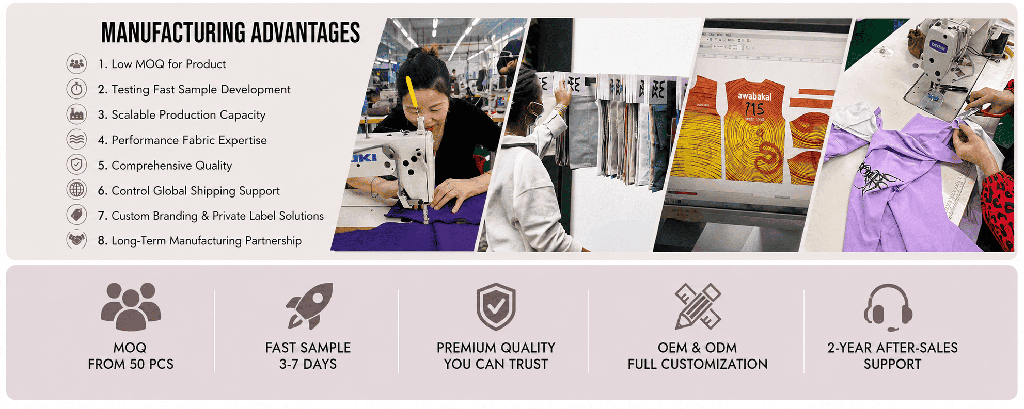
The plus size activewear market is no longer a niche segment. It has become one of the fastest-growing categories in the global sportswear industry as consumers increasingly expect activewear brands to offer inclusive sizing without compromising performance, comfort, or style. However, expanding into plus size apparel is not simply about increasing garment measurements. Brands must find manufacturing partners capable of handling complex size grading, fit development, fabric performance requirements, and scalable production.
According to recent Global activewear market research, demand for performance apparel and inclusive sizing continues to expand across major consumer markets.
It is easy for apparel brands to find factories across China, yet the core struggle is screening reliable manufacturers that support lasting brand growth and stable product quality. A number of suppliers concentrate on low-cost manufacturing, while others offer strengths in product creation, sustainable production standards, private label solutions, and professional plus-size activewear expertise.
The best wholesale plus size activewear manufacturers in China combine technical product development, inclusive sizing experience, reliable production capacity, and flexible customization services. While many factories can produce larger garments, only a smaller group has proven capabilities in developing plus size activewear collections that fit well, perform consistently, and support growing brands. This guide compares ten leading suppliers and explains how buyers can evaluate manufacturers before making sourcing decisions.
Whether you are launching a new activewear brand, expanding into extended sizes, or replacing an existing supplier, understanding the strengths and limitations of different manufacturers can help reduce sourcing risks and improve product success.
Top 10 Wholesale Plus Size Activewear Manufacturers in China Compared
Selecting a manufacturer for plus size activewear goes far beyond simply comparing price quotes. When evaluating suppliers, their capacity to refine size fit development, deliver consistent product quality, maintain smooth communication, and ramp up production volume matters more to your long-term business success than small gaps in pricing. The factories listed below include well-established production facilities, private label experts, and activewear-dedicated manufacturers that cater to global brands.
Brands that already know they need a dedicated plus size activewear manufacturer may also evaluate custom development capabilities alongside supplier comparisons.
Quick Comparison of the Top 10 Manufacturers
| Manufacturer | City | Founded | Main Products | Best For |
|---|---|---|---|---|
| Pair Fashion | Dongguan | 2016 | Plus Size Activewear, Sports Bras, Leggings | Startups & Growing Brands |
| Arabella Clothing | Xiamen | 2014 | Yoga Wear, Fitness Apparel | Private Label Brands |
| Dragon Crown | Guangzhou | 2008 | Sportswear Collections | Large Programs |
| Uga Wear | Guangzhou | 2009 | Seamless Activewear | DTC Brands |
| Ingor Sports | Guangzhou | 2009 | Sustainable Activewear | Premium Brands |
| Hucai Sportswear | Dongguan | 1998 | Fitness Apparel | Large Volume Buyers |
| Berunwear | Xiamen | 2007 | Yoga Apparel | Boutique Brands |
| Aika Sportswear | Dongguan | 2008 | Activewear & Athleisure | Growing Brands |
| Sunsport Apparel | Shenzhen | 2012 | Private Label Activewear | Online Retailers |
| Leeline Sports | Guangzhou | 2015 | Sportswear Production | Importers |
Which Manufacturer Is Best for Startup Brands?
Startup brands often benefit from manufacturers that offer lower minimum order quantities, faster sampling support, and more guidance during product development. Suppliers focused on flexibility can help emerging brands test products, collect customer feedback, and improve designs before committing to larger production runs.
Manufacturers with strong product development teams are often a better fit for startups than factories that focus exclusively on large-volume production. Early-stage brands usually need support with fabric selection, sizing decisions, and product refinement, making collaboration and responsiveness critical factors.
Which Manufacturer Is Best for Established Activewear Brands?
Established brands typically prioritize consistency, scalability, and supply chain stability. These businesses often require larger production capacities, structured quality systems, and the ability to manage multiple product launches throughout the year.
For brands with established sales channels and predictable order volumes, suppliers with mature production infrastructure may provide greater operational efficiency and long-term scalability.
Which Manufacturer Supports Inclusive Sizing up to 6XL?
Extended sizing requires significantly more expertise than standard activewear production. Manufacturers producing sizes up to 5XL or 6XL must understand grading adjustments, fit balance, support engineering, and fabric performance across a wider size range.
Brands planning to build serious plus size collections should prioritize suppliers with demonstrated experience in extended-size development rather than assuming all activewear manufacturers possess the same capabilities.
Detailed Review of the Top 10 Wholesale Plus Size Activewear Manufacturers
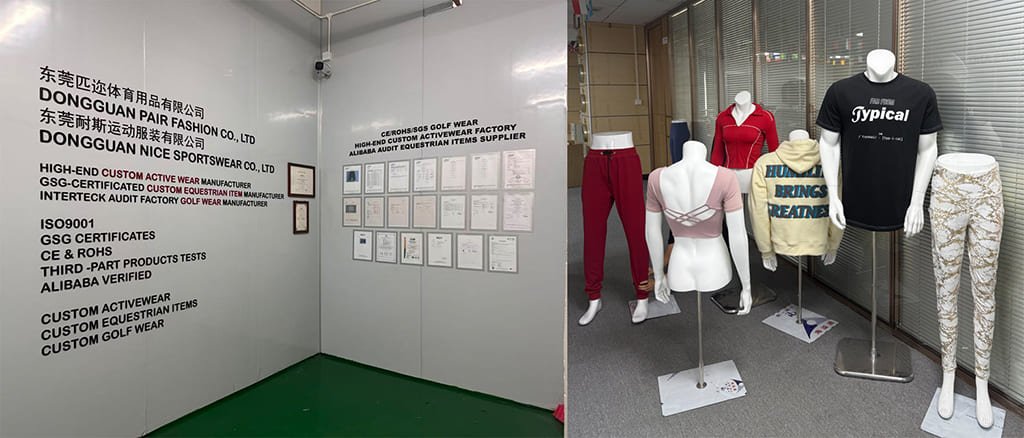
1. Pair Fashion
Overview
Established back in 2016, Pair Fashion is a Chinese activewear factory focused on functional sportswear and size-inclusive clothing lines. It provides custom activewear manufacturing services to global brands covering a wide range of product types.
Location
Dongguan, Guangdong, China
Main Products
- Plus Size Activewear
- Sports Bras
- Yoga Leggings
- Activewear Sets
- Maternity Activewear
- Modest Sportswear
- Tennis Apparel
Certifications
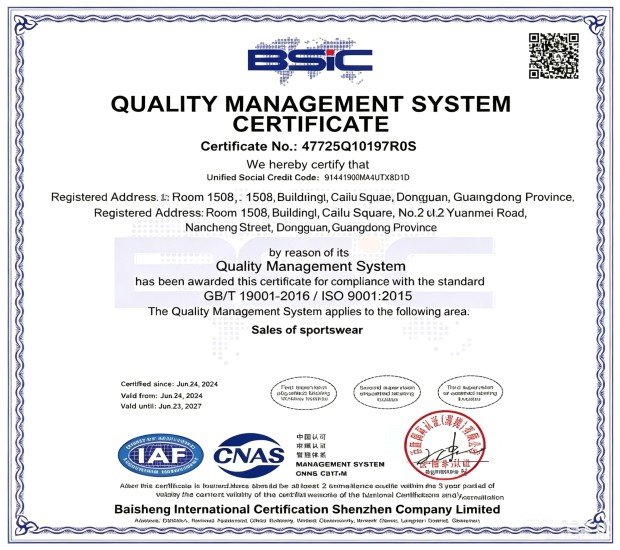
- ISO9001
- BSCI
- GRS
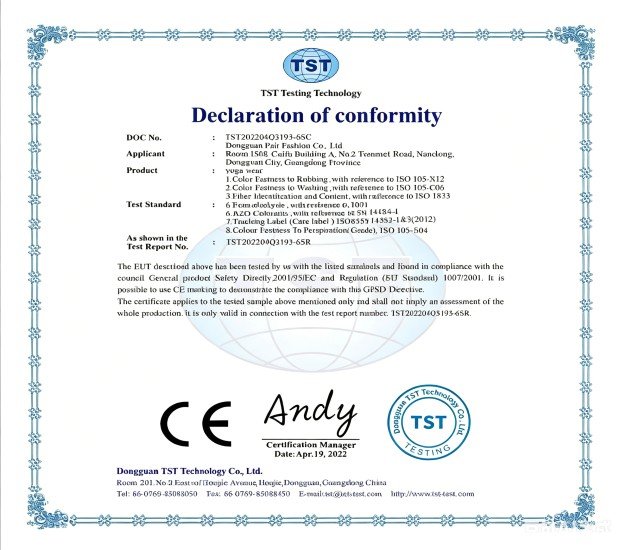
- CE
- ROHS
Best For
- Startup Activewear Brands
- Growing DTC Brands
- Inclusive Activewear Collections
- Private Label Programs
Potential Limitations
Brands requiring extremely large annual production volumes may also evaluate suppliers with larger-scale manufacturing infrastructures.
Key Strengths
- Strong focus on activewear categories
- Experience in extended-size apparel
- Flexible production capabilities
- Broad customization options
- Diverse product portfolio
2. Arabella Clothing
Overview
Arabella Clothing is an activewear manufacturer based in Xiamen with experience serving private label and fitness apparel brands across international markets.
Location
Xiamen, Fujian, China
Main Products
- Yoga Wear
- Fitness Apparel
- Sports Bras
- Leggings
- Training Apparel
Certifications
- BSCI
Best For
Brands seeking fashionable activewear collections with private label opportunities.
Potential Limitations
The company is more widely recognized for general activewear production than for dedicated plus size product development.
Key Strengths
- International export experience
- Activewear-focused manufacturing
- Modern product aesthetics
- Broad product offering
3. Dragon Crown
Overview
Dragon Crown is a Guangzhou-based sportswear manufacturer serving both domestic and international clients. The company has experience producing a wide range of sportswear products and teamwear collections.
Location
Guangzhou, Guangdong, China
Main Products
- Sportswear
- Team Apparel
- Training Wear
- Fitness Collections
Certifications
- ISO9001
Best For
Brands requiring larger production runs and established manufacturing systems.
Potential Limitations
Smaller brands may find the supplier less suitable for highly flexible product development projects.
Key Strengths
- Established manufacturing infrastructure
- Large-scale production capability
- Broad product coverage
- Export experience
4. Uga Wear
Overview
Uga Wear is known for its focus on seamless activewear manufacturing and trend-driven fitness apparel. The company works with brands targeting modern athleisure and performance markets, particularly those seeking seamless product categories.
Location
Guangzhou, Guangdong, China
Main Products
- Seamless Leggings
- Seamless Sports Bras
- Activewear Sets
- Gym Wear
- Athleisure Apparel
Certifications
- BSCI
Best For
Brands building seamless activewear collections and fashion-forward fitness ranges.
Potential Limitations
The company’s core strength lies in seamless production rather than extensive plus size pattern engineering across multiple garment categories.
Key Strengths
- Seamless knitting expertise
- Fashion-focused development
- Activewear specialization
- International export experience
5. Ingor Sports
Overview
Founded in 2009, Ingor Sports has built a reputation for sustainable activewear manufacturing and environmentally conscious production. The company serves brands that prioritize sustainability alongside performance.
Location
Guangzhou, Guangdong, China
Main Products
- Sustainable Activewear
- Recycled Fabric Leggings
- Sports Bras
- Yoga Apparel
- Fitness Collections
Certifications
- BSCI
- GRS
Best For
Premium activewear brands focusing on sustainability and environmentally responsible sourcing.
Potential Limitations
Pricing may be higher than suppliers targeting entry-level and mass-market segments.
Key Strengths
- Sustainable manufacturing focus
- Recycled material expertise
- Strong compliance standards
- Premium activewear positioning
6. Hucai Sportswear
Overview
With manufacturing experience dating back to 1998, Hucai Sportswear serves domestic and international activewear brands seeking stable production capabilities and mature operational systems.
Location
Dongguan, Guangdong, China
Main Products
- Sports Bras
- Fitness Apparel
- Running Wear
- Compression Garments
- Training Apparel
Certifications
- ISO9001
Best For
Brands requiring consistent production quality and larger-volume manufacturing support.
Potential Limitations
Higher order quantities may not align with the needs of emerging brands.
Key Strengths
- Long manufacturing history
- Stable production systems
- Scalable capacity
- Established quality processes
7. Berunwear
Overview
Berunwear supplies activewear and fitness apparel to global brands, offering flexible manufacturing services and a broad range of sportswear categories.
Location
Xiamen, Fujian, China
Main Products
- Yoga Apparel
- Fitness Wear
- Running Clothing
- Athleisure Collections
Certifications
- BSCI
Best For
Boutique fitness brands looking for balanced customization and moderate order volumes.
Potential Limitations
Less specialization in technical plus size activewear development compared with suppliers focused specifically on inclusive apparel.
Key Strengths
- Flexible production options
- Diverse product portfolio
- International market experience
8. Aika Sportswear
Overview
Aika Sportswear manufactures activewear, athleisure apparel, and fitness collections for international brands. The company is particularly active in lifestyle-oriented sportswear categories.
Location
Dongguan, Guangdong, China
Main Products
- Activewear
- Athleisure Wear
- Hoodies
- Joggers
- Fitness Sets
Certifications
- BSCI
Best For
Brands combining activewear and lifestyle apparel within the same collection strategy.
Potential Limitations
Plus size development is not a primary specialization.
Key Strengths
- Broad category coverage
- Flexible customization
- Strong export experience
- Athleisure expertise
9. Sunsport Apparel
Overview
Sunsport Apparel provides private label manufacturing solutions for brands selling through online retail channels, distributors, and fitness-focused businesses.
Location
Shenzhen, Guangdong, China
Main Products
- Private Label Activewear
- Fitness Apparel
- Teamwear
- Sportswear Collections
Certifications
- ISO9001
Best For
Online retailers and brands seeking private label opportunities.
Potential Limitations
Brands requiring extensive product engineering support may need additional development resources.
Key Strengths
- Private label experience
- International logistics familiarity
- Broad sourcing network
10. Leeline Sports
Overview
Leeline Sports works with importers, distributors, and emerging sportswear businesses seeking access to China’s manufacturing ecosystem.
Location
Guangzhou, Guangdong, China
Main Products
- Sportswear
- Fitness Apparel
- Yoga Wear
- Casual Activewear
Certifications
- BSCI
Best For
Importers and sourcing companies entering the activewear market.
Potential Limitations
Less specialized in advanced product development compared with activewear-focused manufacturers.
Key Strengths
- Accessible sourcing support
- Competitive pricing
- Experience serving international buyers
Which Plus Size Activewear Manufacturers Are Best for Different Business Models?
The best manufacturer is not always the largest factory or the supplier offering the lowest price. The ideal choice depends on a brand’s business model, growth stage, target customer, and product strategy. Understanding which manufacturers align with specific business needs can significantly improve sourcing outcomes and reduce costly mistakes.
Many brands make the mistake of searching for the “best manufacturer” without first defining what “best” means for their business. A startup launching its first collection has very different needs from an established retailer managing hundreds of SKUs.
Best Manufacturers for Startup Brands
Startup brands typically benefit from manufacturers that offer:
- Lower MOQ requirements
- Faster sampling
- Product development assistance
- Flexible customization
- Responsive communication
Recommended supplier types:
- Pair Fashion
- Arabella Clothing
- Aika Sportswear
These suppliers are generally better positioned to support product validation and small-batch market testing.
Best Manufacturers for DTC Activewear Brands
Direct-to-consumer brands often prioritize:
- Product differentiation
- Faster development cycles
- Trend responsiveness
- Premium product positioning
Recommended supplier types:
- Pair Fashion
- Ingor Sports
- Uga Wear
These manufacturers offer stronger support for customized product development and collection building. Many growing DTC brands choose suppliers capable of supporting private label plus size activewear collections while maintaining flexibility for future product expansion.
Best Manufacturers for Boutique Retailers
Boutique retailers frequently focus on:
- Unique product assortments
- Moderate order quantities
- Flexible inventory management
Recommended supplier types:
- Berunwear
- Arabella Clothing
- Aika Sportswear
Best Manufacturers for Large Wholesale Programs
Wholesale businesses generally prioritize:
- Production stability
- Consistent quality
- Supply chain scalability
- Capacity management
Recommended supplier types:
- Dragon Crown
- Hucai Sportswear
Best Manufacturers for Sustainable Activewear Brands
Sustainability-focused brands increasingly require:
- Recycled materials
- Compliance documentation
- Environmental certifications
Recommended supplier types:
- Ingor Sports
- Pair Fashion
Manufacturers with GRS-certified material sourcing capabilities are often better positioned to support environmentally conscious product lines.
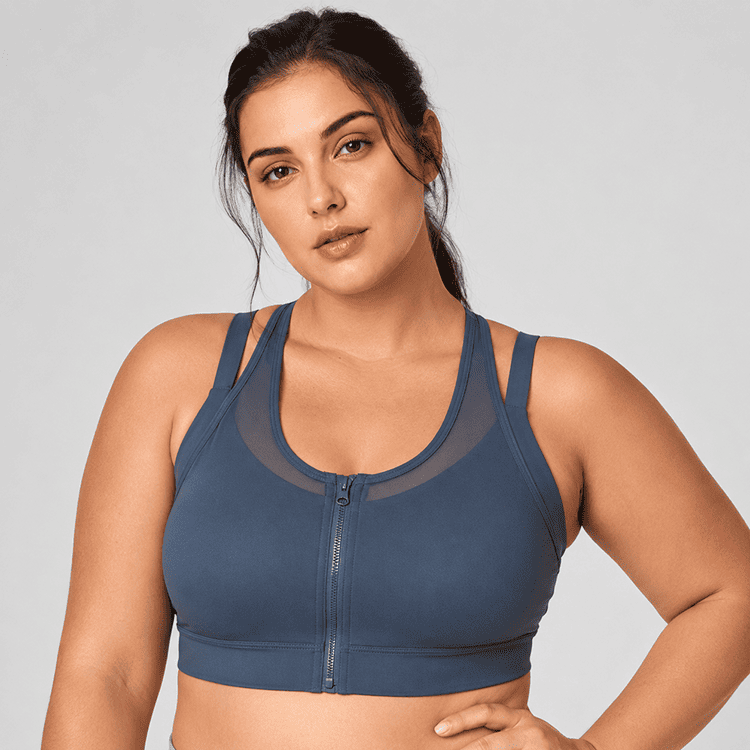
Best Manufacturers for Plus Size Sports Bra Development
Sports bras remain one of the most technically demanding categories in plus size activewear.
Manufacturers selected for this category should demonstrate expertise in:
- Support engineering
- Fit testing
- Pattern development
- Fabric recovery analysis
Recommended supplier types:
- Pair Fashion
- Hucai Sportswear
- Ingor Sports
Because product performance directly impacts customer satisfaction, supplier expertise is especially important in this segment.
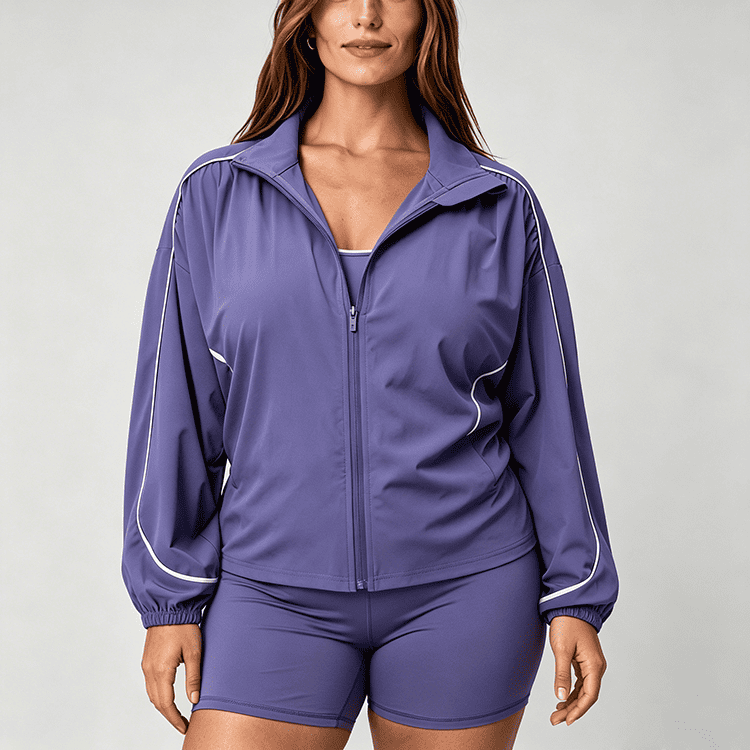
Why Are More Global Brands Sourcing Plus Size Activewear from China?
China remains the dominant manufacturing hub for activewear because it offers something few regions can match: a complete ecosystem. Brands gain access to technical fabric suppliers, specialized garment factories, trim manufacturers, testing resources, logistics providers, and product development expertise within a highly integrated supply chain.
While labor costs have increased over the years, China continues to deliver exceptional value through efficiency, innovation, and manufacturing depth.
Many successful activewear brands discover that sourcing decisions are rarely determined by labor costs alone. Product quality, development speed, supply chain reliability, and fit consistency often have a greater impact on profitability than minor differences in garment pricing. Many premium activewear brands increasingly prefer suppliers certified under the Global Recycled Standard (GRS) when developing environmentally responsible collections.
How China Became a Leading Activewear Manufacturing Hub
China’s activewear industry has evolved through decades of investment in:
- Textile production
- Performance fabric development
- Technical garment construction
- Export infrastructure
- Supply chain integration
Today, manufacturers can source nearly every component required for activewear production domestically, reducing lead times and improving development efficiency.
Why China Dominates Inclusive Activewear Production
Plus size activewear requires more than manufacturing capacity.
It requires:
- Pattern engineering
- Extended-size grading
- Technical fabrics
- Product testing
- Performance garment expertise
China’s mature activewear ecosystem provides access to these resources at scale.
As inclusive sizing becomes increasingly important for global brands, manufacturers with activewear-specific development capabilities are becoming valuable strategic partners.
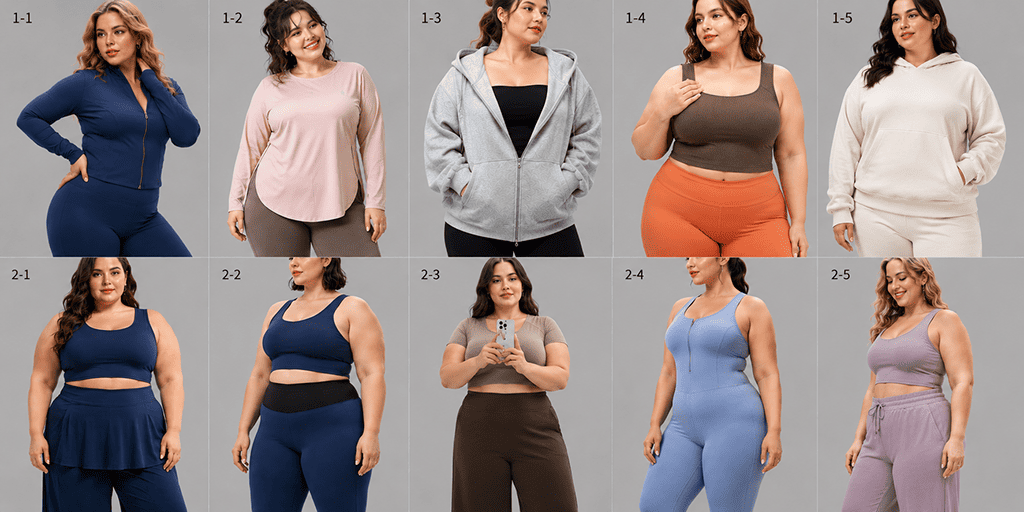
What Makes Plus Size Activewear Manufacturing Different from Standard Activewear?
Many buyers assume that plus size activewear is simply standard activewear produced in larger sizes. In reality, the development process is significantly more complex. Extended-size consumers have different fit requirements, support needs, movement patterns, and comfort expectations. Manufacturers that understand these differences can help brands create products that perform better, generate stronger reviews, and reduce costly return rates.
The brands winning in the plus size market today are not simply adding larger sizes to existing collections. They are developing products specifically engineered for curvier body shapes and real-world performance needs.
Brands investing in custom plus size activewear development often achieve better fit consistency and stronger customer retention than brands relying solely on standard grading methods.
Why Inclusive Sizing Requires Specialized Pattern Development
One of the biggest misconceptions in apparel manufacturing is that pattern grading alone can create an effective plus size garment.
While grading plays an important role, body proportions do not increase evenly across all measurements.
For example:
- Hip circumference often changes differently than waist measurements.
- Bust volume may increase disproportionately compared with shoulder width.
- Arm circumference can require independent adjustments.
- Rise depth often needs separate engineering.
Simply enlarging a standard-size pattern frequently creates garments that feel awkward, restrictive, or unstable during movement.
Experienced manufacturers often develop dedicated plus size pattern blocks rather than relying entirely on traditional grading systems.
This approach improves:
- Fit consistency
- Comfort
- Mobility
- Product performance
- Customer satisfaction
How Size Grading Changes from XS to 6XL
Size grading becomes increasingly complicated as brands expand their size range.
A grading system that works well between XS and XL may perform poorly when extended to 4XL, 5XL, or 6XL.
Challenges include:
| Grading Challenge | Impact on Product |
|---|---|
| Hip-to-waist ratio changes | Fit inconsistency |
| Bust support variation | Reduced performance |
| Fabric stress increases | Durability concerns |
| Compression imbalance | Comfort issues |
| Pattern distortion | Poor appearance |
Manufacturers experienced in extended-size development understand how to adjust grading formulas to maintain consistent fit across the full size range.
This expertise becomes increasingly important for products such as:
- Sports bras
- Leggings
- Compression garments
- Tennis dresses
- Seamless activewear
What Causes Fit Problems in Plus Size Sportswear?
Most fit problems originate from one of four areas:
Pattern Issues
Poorly developed patterns often create:
- Waistband rolling
- Fabric pulling
- Tight armholes
- Excessive fabric bunching
Fabric Selection
Some fabrics perform well in standard sizes but lose recovery and support in larger garments.
Construction Problems
Improper seam placement can cause:
- Chafing
- Reduced mobility
- Uneven compression
Insufficient Testing
Without real-world wear testing, many fit issues remain undetected until products reach customers.
Why Fit Testing Matters More Than Fabric Selection
Many sourcing discussions focus heavily on fabrics.
Fabric matters.
But fit usually matters more.
A premium fabric cannot compensate for poor garment engineering.
Leading plus size activewear brands commonly conduct:
- Wear testing
- Movement testing
- Wash testing
- Recovery testing
- Multi-size fitting sessions
This process helps identify:
- Rolling waistbands
- Transparency concerns
- Strap instability
- Compression problems
- Chafing risks
before mass production begins.
How Better Fit Can Reduce Product Returns
Poor fit is one of the most common reasons consumers return activewear.
Return rates often increase when:
- Sizing is inconsistent
- Support is inadequate
- Compression feels uneven
- Mobility is restricted
Brands that invest in fit development frequently achieve:
- Higher customer satisfaction
- Better online reviews
- Lower return rates
- Increased repeat purchases
In competitive activewear markets, better fit can become a meaningful competitive advantage.
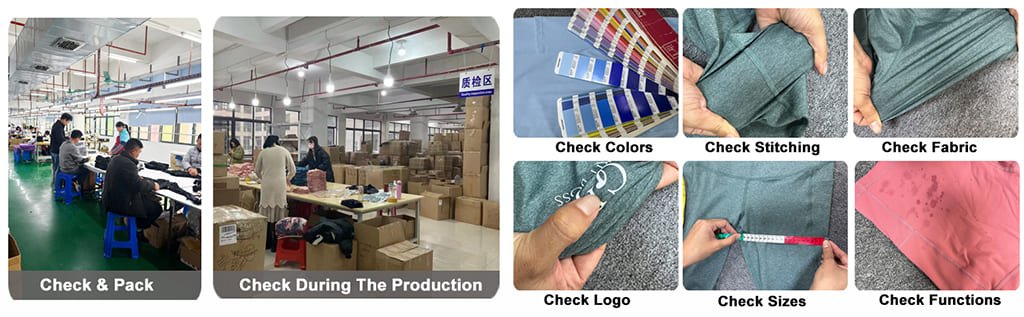
What Questions Should You Ask Every Plus Size Activewear Manufacturer Before Sampling?
The quality of a supplier is often revealed by how they answer technical questions before sampling begins. Experienced manufacturers can explain their development processes, sizing methodologies, and quality systems in detail. Weak suppliers often rely on vague promises and generic sales presentations.
The goal is not simply gathering information.
The goal is identifying which supplier is most capable of supporting long-term brand growth.
Can You Show Previous Plus Size Projects?
One of the simplest and most effective questions is:
“Can you show examples of previous plus size activewear projects?”
Look for evidence of:
- Extended-size collections
- Technical activewear products
- Sports bras
- Leggings
- Product complexity
A supplier with real experience should be able to discuss challenges they encountered and how they solved them.
How Do You Handle Size Grading Above 3XL?
Many factories can produce larger garments.
Fewer factories can explain their grading methodology.
Ask questions such as:
- How do you grade from XL to 6XL?
- Do you use dedicated plus size blocks?
- How do you verify grading accuracy?
The depth of the answer often reveals the supplier’s true expertise.
Do You Conduct Plus Size Fit Testing?
Fit testing remains one of the strongest indicators of product development quality.
Questions to ask:
- Do you perform fit testing?
- How many fitting rounds are typical?
- Which sizes are tested?
- How do you evaluate movement performance?
Manufacturers with structured testing processes generally produce more reliable products.
What Fabrics Do You Recommend for Compression Products?
Compression garments require specialized fabric knowledge.
Strong suppliers should be able to discuss:
- Fabric recovery
- Stretch percentages
- Opacity performance
- Weight recommendations
- Compression characteristics
This conversation often reveals whether the supplier truly understands performance apparel.
How Do You Maintain Size Consistency Across Production Runs?
Consistency becomes increasingly important as brands grow.
Ask suppliers about:
- Pattern management
- Production controls
- Quality inspections
- Measurement verification
Reliable manufacturers typically maintain documented systems for controlling variation.
Can You Support Future Collection Expansion?
Many brands focus exclusively on their first order.
A better question is:
“Can this supplier support our business two years from now?”
Consider:
- Product diversification
- Production scalability
- Development resources
- Category expansion
A strong long-term partner should be capable of supporting future growth, not just current needs.
China vs Vietnam vs Turkey vs India for Plus Size Activewear Manufacturing

Many sourcing teams compare multiple countries before selecting manufacturing partners. While every sourcing destination offers advantages, China continues to provide one of the most balanced combinations of technical expertise, supply chain efficiency, activewear specialization, and scalability.
The ideal sourcing destination depends on a brand’s priorities, but understanding the strengths and limitations of each region helps buyers make more informed decisions.
China
Strengths
- Complete activewear supply chain
- Strong technical fabric ecosystem
- Large manufacturer base
- Product development expertise
- Scalable production capacity
Challenges
- Labor costs are higher than some emerging markets.
Vietnam
Strengths
- Competitive labor costs
- Growing apparel industry
- Strong export infrastructure
Challenges
- More limited fabric sourcing ecosystem
- Greater reliance on imported materials
Turkey
Strengths
- Fast delivery into European markets
- Strong textile heritage
- Flexible production capabilities
Challenges
- Higher production costs
- More limited activewear specialization compared with China
India
Strengths
- Large textile manufacturing industry
- Competitive pricing
- Extensive cotton production
Challenges
- Quality consistency can vary significantly between suppliers
Which Country Is Best for Plus Size Activewear?
There is no universal answer.
However, brands prioritizing:
- Technical activewear
- Inclusive sizing
- Product development
- Performance fabrics
- Long-term scalability
often continue choosing China because of its mature activewear ecosystem and extensive supplier network.

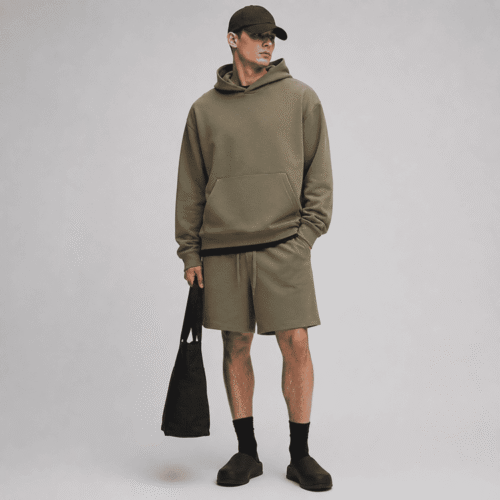
Custom Men’s Hoodie and Shorts Loungewear Set OEM ODM Athleisure Wear
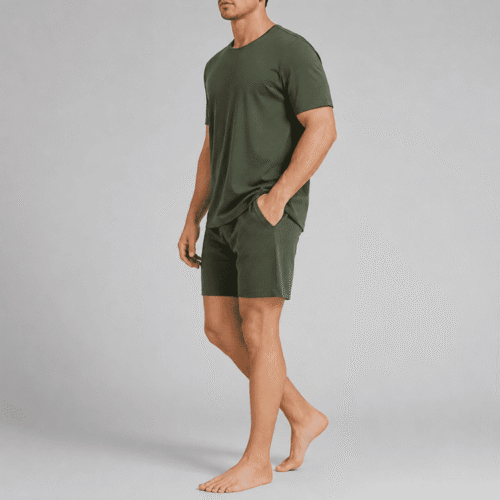
Custom Men’s Lounge T-Shirt and Shorts Set OEM ODM Loungewear
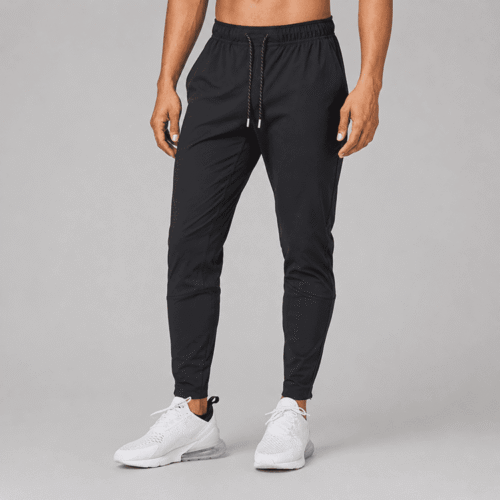
Custom Men’s Performance Training Jogger Pants Activewear OEM ODM
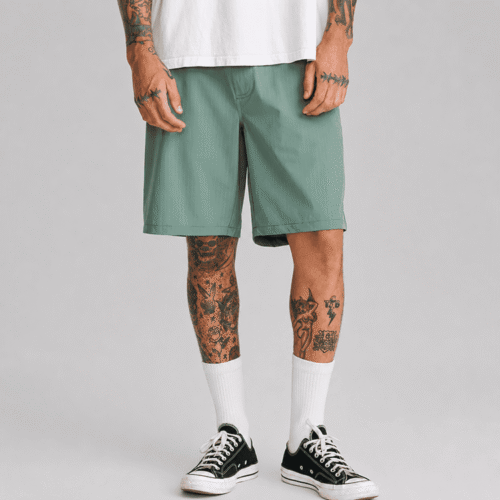
Custom Men’s Performance Training Shorts OEM ODM Activewear
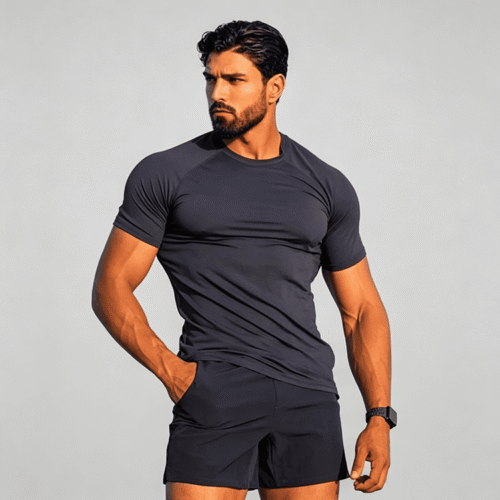
Custom Men’s Performance Training T-Shirt OEM ODM Activewear
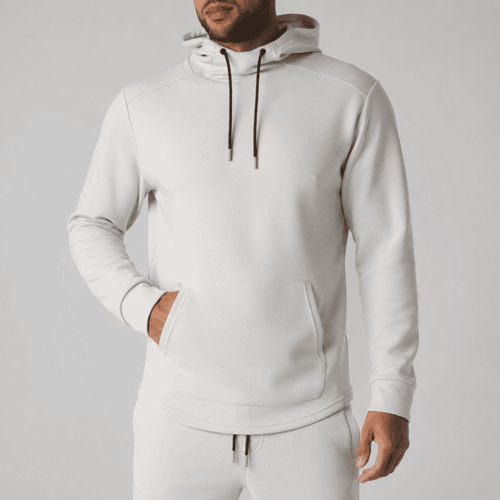
Custom Men’s Pullover Hoodie Fleece Sweatshirt OEM ODM
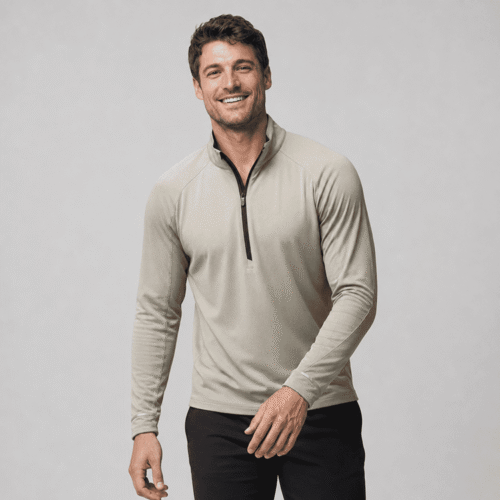
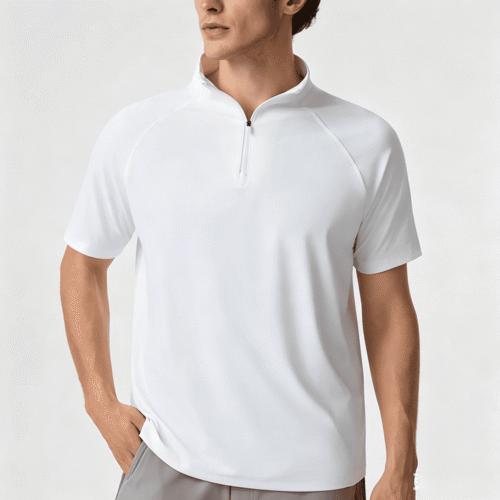
Custom Men’s Quarter Zip Activewear Top Long Sleeve Training Shirt OEM ODM
Custom Men’s Quarter Zip Performance Shirt OEM ODM Activewear
Why Do Some Plus Size Activewear Brands Outgrow Their First Manufacturer?
One of the most overlooked sourcing realities is that the manufacturer that helps launch a brand is not always the manufacturer that supports its long-term growth. As brands expand, their requirements become more sophisticated, exposing limitations that may not have been apparent during early production stages.
Understanding why brands switch suppliers can help buyers select stronger long-term partners from the beginning.
Communication Problems
As order volumes increase, communication quality becomes increasingly important.
Common issues include:
- Slow response times
- Incomplete updates
- Poor problem resolution
- Language barriers
Communication failures often create larger operational problems later.
Limited Product Development Support
Many factories can manufacture products.
Fewer can help improve them.
Growing brands frequently need:
- New fabric recommendations
- Fit improvements
- Trend insights
- Product innovation
Suppliers lacking development resources may eventually limit growth.
Inconsistent Quality
Quality inconsistency remains one of the most common reasons brands change suppliers.
Typical issues include:
- Measurement variation
- Fabric inconsistency
- Construction defects
- Color differences
These problems can damage customer trust and increase operational costs.
Capacity Constraints
A factory suitable for 500 units may struggle with 50,000.
Brands should evaluate future production capacity—not just current needs.
Lack of Plus Size Expertise
As collections expand, technical expertise becomes increasingly valuable.
Manufacturers with deeper knowledge of:
- Pattern engineering
- Size grading
- Fit testing
- Performance apparel
often provide stronger long-term support.
Inability to Support Brand Growth
The best manufacturing relationships evolve alongside the brand.
Suppliers should be capable of supporting:
- New categories
- International expansion
- Larger production runs
- More sophisticated product development
Brands that choose scalable partners early often avoid costly supplier transitions later.
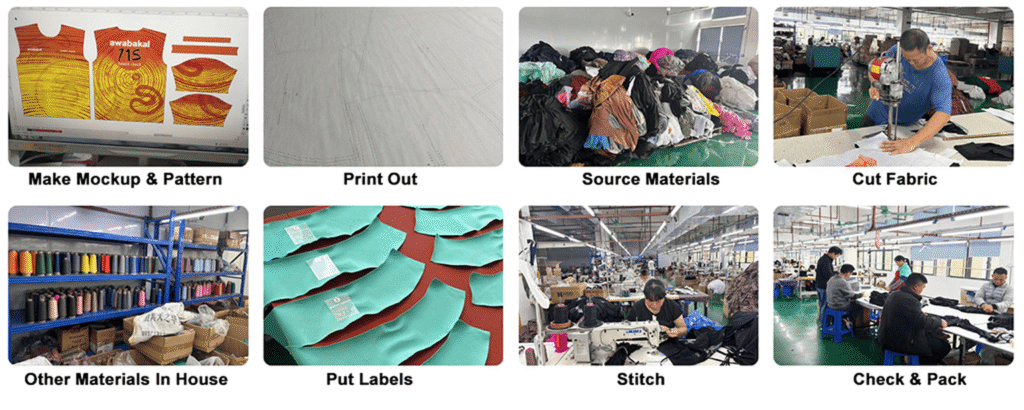
Final Supplier Selection Checklist for Plus Size Activewear Brands
Choosing a plus size activewear manufacturer should not be based solely on factors such as price, location, or minimum order quantity. Effective sourcing decisions require a structured evaluation that considers product expertise, operational stability, scalability, and long-term business compatibility.
Many sourcing problems occur because brands focus on short-term convenience instead of long-term partnership potential. A supplier that appears attractive during the quotation stage may not be able to support future collection growth, category expansion, or increasing order volumes.
The checklist below provides a practical framework for evaluating manufacturers before making a final decision.
Manufacturing Capability Checklist
Before selecting a supplier, verify their ability to support your current and future production requirements.
Questions to Consider
✓ How many years has the factory been producing activewear?
✓ Do they have experience with plus size activewear?
✓ What size ranges have they manufactured previously?
✓ Can they support sizes up to 5XL or 6XL?
✓ What is their monthly production capacity?
✓ Can they handle both small and large orders?
✓ Do they have dedicated activewear production lines?
✓ Are they experienced with technical performance fabrics?
A supplier’s manufacturing capability should align with your long-term business goals, not just your first order.
Product Development Checklist
The most successful activewear brands often work with suppliers that contribute to product improvement rather than simply following instructions.
Questions to Consider
✓ Can the supplier develop products from sketches or reference photos?
✓ Do they provide pattern-making services?
✓ Can they recommend suitable fabrics?
✓ Do they understand plus size fit engineering?
✓ Do they support multiple sample revisions?
✓ Can they suggest improvements to existing products?
✓ Do they have experience developing sports bras and compression garments?
Strong development support can significantly reduce product failures and improve customer satisfaction.
Quality Assurance Checklist
Quality problems often become expensive after products reach consumers.
Brands should understand how manufacturers manage quality before production begins.
Questions to Consider
✓ Do they have incoming material inspections?
✓ Are measurements checked during production?
✓ Is there an in-line quality control process?
✓ Is final inspection conducted before shipment?
✓ Do they maintain quality documentation?
✓ Can they provide testing reports when required?
✓ How do they handle quality claims?
Factories with mature quality systems generally provide more predictable production outcomes.
Communication Checklist
Many sourcing challenges originate from communication problems rather than manufacturing problems.
Evaluate:
✓ Response speed
✓ Technical understanding
✓ Transparency
✓ Project management ability
✓ Problem-solving approach
✓ English communication capability
The best suppliers communicate proactively, not reactively.
Logistics Checklist
Shipping and fulfillment are often overlooked during supplier selection.
Questions to ask:
✓ Which countries do they export to regularly?
✓ Can they support DDP shipping?
✓ Do they coordinate freight services?
✓ Can they provide export documentation?
✓ What experience do they have with customs requirements?
A manufacturer with strong logistics support can simplify international sourcing significantly.
How to Shortlist the Final Three Suppliers
After evaluating multiple suppliers, reduce your list using the following process:
Step 1: Remove Suppliers Without Proven Plus Size Experience
Experience in general activewear does not automatically translate into expertise in plus size activewear.
Step 2: Compare Sample Quality
A physical sample often reveals more than any sales presentation.
Evaluate:
- Fit
- Fabric quality
- Stitching
- Construction
- Comfort
- Branding execution
Step 3: Evaluate Communication Quality
How a supplier communicates during sampling often predicts how they will communicate during production.
Step 4: Assess Scalability
Ask yourself:
Can this supplier support our business three years from now?
Step 5: Select Based on Long-Term Fit
The best supplier is not necessarily the cheapest.
The best supplier is the one most capable of supporting your growth strategy.
FAQ About Wholesale Plus Size Activewear Manufacturers in China
Who Is the Best Wholesale Plus Size Activewear Manufacturer in China?
There is no single manufacturer that is ideal for every brand.
The best choice depends on:
- Product category
- Order volume
- Development requirements
- Sustainability goals
- Growth stage
Brands should compare suppliers based on technical expertise, communication, quality systems, and long-term scalability rather than relying solely on rankings.
What Is the Typical MOQ for Plus Size Activewear Production?
Most Chinese manufacturers require minimum orders ranging from 50 to 300 pieces per style.
Factors influencing MOQ include:
- Product complexity
- Fabric requirements
- Customization level
- Production method
Factories specializing in startup brands often offer greater flexibility.
Can Chinese Manufacturers Produce Sizes Up to 6XL?
Yes.
Many activewear manufacturers can produce garments up to 5XL or 6XL.
However, brands should verify:
- Grading expertise
- Pattern development capability
- Fit-testing procedures
before moving into production.
How Long Does Plus Size Activewear Sample Development Take?
Sample development timelines vary depending on complexity.
Typical timelines include:
| Stage | Typical Time |
|---|---|
| Pattern Development | 2–5 Days |
| Fabric Sourcing | 3–10 Days |
| Sample Construction | 3–7 Days |
| Revision Cycle | 3–10 Days |
Most projects require between one and three weeks for initial sample completion.
How Long Does Bulk Production Usually Take?
Production lead times depend on:
- Order quantity
- Fabric availability
- Seasonal demand
- Product complexity
Most activewear orders require:
- 20–45 days for production
- Additional shipping time depending on destination
Brands should always build buffer time into launch schedules.
What Certifications Should Buyers Look For?
Common certifications include:
ISO9001
Quality management systems.
BSCI
Social compliance and ethical manufacturing.
GRS
Recycled material verification.
OEKO-TEX
Textile safety testing.
WRAP
Responsible manufacturing practices.
The most relevant certification depends on the brand’s target market and positioning.
Is China Still the Best Country for Plus Size Activewear Manufacturing?
For many brands, yes.
China continues to offer:
- Technical expertise
- Integrated supply chains
- Fabric innovation
- Production scalability
- Product development support
While alternative sourcing destinations exist, China remains one of the strongest options for brands requiring both performance activewear and inclusive sizing expertise.
How Can I Verify a Manufacturer Before Placing an Order?
Recommended verification methods include:
- Reviewing certifications
- Requesting samples
- Conducting video audits
- Visiting the factory
- Checking references
- Reviewing previous projects
Verification reduces sourcing risk and improves supplier selection quality.
What Is the Difference Between a Factory and a Trading Company?
A factory directly manufactures products.
A trading company typically coordinates production through one or more factories.
Both models can be effective, but direct manufacturers often provide:
- Greater production visibility
- Faster communication
- More direct quality control
Brands should choose the model that best fits their sourcing strategy.
Should Brands Work with One Manufacturer or Multiple Manufacturers?
There is no universal answer.
Many emerging brands begin with a single manufacturing partner to simplify management and maintain consistency.
As brands grow, they may diversify suppliers to:
- Reduce risk
- Expand product categories
- Increase capacity
- Improve flexibility
The appropriate approach depends on business scale and operational complexity.
Conclusion
The global plus size activewear market is growing rapidly, driven by increasing demand for inclusive sizing, technical performance, and better product experiences. For brands, this growth creates significant opportunities—but only when supported by the right manufacturing partner.
The strongest manufacturers offer more than production capacity. They contribute expertise in pattern development, fit engineering, material selection, quality control, and scalable operations. These capabilities help brands reduce product failures, improve customer satisfaction, and build stronger long-term market positions.
Rather than selecting suppliers based solely on price, successful brands evaluate manufacturers through a broader lens that includes development capability, communication quality, operational reliability, and strategic alignment.
Brands can rely on the comparison framework, judging benchmarks and professional sourcing insights covered here to reach data-driven decisions and secure reliable manufacturing partners for sustainable expansion in the fast-growing, competitive plus size activewear space.