OEM/ODM Sportswear Manufacturer | 3-Day Sampling | Low MOQ | 50K Monthly Capacity | ISO9001 & BSCI Certified

2026 Top 10 Wholesale Activewear Suppliers in China: Supplier Comparison Guide for Global Buyers
Compare the top 10 wholesale activewear suppliers in China in 2026. Explore supplier strengths, product categories, manufacturing capabilities, and key factors global buyers should consider when selecting reliable activewear partners.
2026 Top 10 Wholesale Activewear Suppliers in China: Supplier Comparison Guide for Global Buyers
The activewear industry has changed significantly over the past decade. As fitness, wellness, and athleisure lifestyles continue growing worldwide, more brands are entering the market and looking for reliable manufacturing partners that can provide consistent quality, stable production, and professional product expertise. According to industry research from McKinsey & Company, changing consumer preferences and lifestyle trends continue to reshape the global fashion market.
However, finding wholesale activewear suppliers in China is not difficult. The real challenge is identifying which suppliers have the right capabilities for a brand’s specific needs. Some suppliers specialize in seamless activewear, some focus on large-scale sportswear production, while others provide deeper expertise in functional apparel categories.
For global buyers, supplier selection should not be based only on product images or price comparisons. Factors such as manufacturing experience, product specialization, quality management, production capability, and international market experience often determine whether a supplier can support long-term business growth.
China remains one of the most important activewear sourcing destinations because of its mature apparel ecosystem, advanced textile resources, and wide range of manufacturing capabilities. This makes supplier comparison an essential step before choosing a long-term production partner.
Featured Snippet Summary
The best wholesale activewear suppliers in China are those that match a buyer’s product requirements, quality expectations, and business goals. Global brands typically compare suppliers based on manufacturing experience, product categories, factory capabilities, quality standards, certifications, and market experience. A reliable supplier comparison helps businesses identify manufacturers that provide consistent quality and long-term cooperation potential.
Complete Top 10 Wholesale Activewear Suppliers Comparison
| Supplier | Location | Main Strength | Suitable Buyers |
|---|---|---|---|
| Dongguan Pair Fashion | Dongguan, Guangdong | Functional activewear expertise | Global activewear brands and specialized sportswear businesses |
| Ningbo Sansansports | Ningbo, Zhejiang | Seamless activewear technology | Seamless and fitness-focused brands |
| Guangzhou Kutesmart | Guangzhou, Guangdong | Sportswear manufacturing ecosystem | Sports apparel buyers |
| Suzhou Sportswear Suppliers | Suzhou, Jiangsu | Textile manufacturing resources | Standard sportswear businesses |
| Dongguan Yotex Apparel | Dongguan, Guangdong | Guangdong supply chain advantage | Brands seeking apparel manufacturing resources |
| Fervour Apparel | Guangzhou, Guangdong | Activewear production environment | Fitness and yoga brands |
| UPOWER Clothing | China | Broad sportswear capability | Brands requiring general sports apparel |
| Hongyu Apparel | China | Multi-category apparel production | Businesses with wider clothing needs |
| AEL Apparel | China | Flexible sportswear manufacturing | International activewear buyers |
| Jinjiang Sportswear Suppliers | Fujian | Sports industry cluster | Athletic-focused brands |
Top 10 Wholesale Activewear Suppliers in China: Complete Comparison List
China has thousands of apparel suppliers, but not every manufacturer has the same expertise in activewear production.
A strong activewear supplier should understand the technical requirements behind sportswear products, including fabric performance, garment construction, sizing consistency, and quality control.
The following comparison highlights 10 Chinese activewear suppliers with different strengths, helping global buyers understand which type of supplier may better fit their business requirements.
The evaluation focuses on:
- Company background
- Manufacturing specialization
- Product categories
- Production capability
- Suitable buyer types
- Key considerations
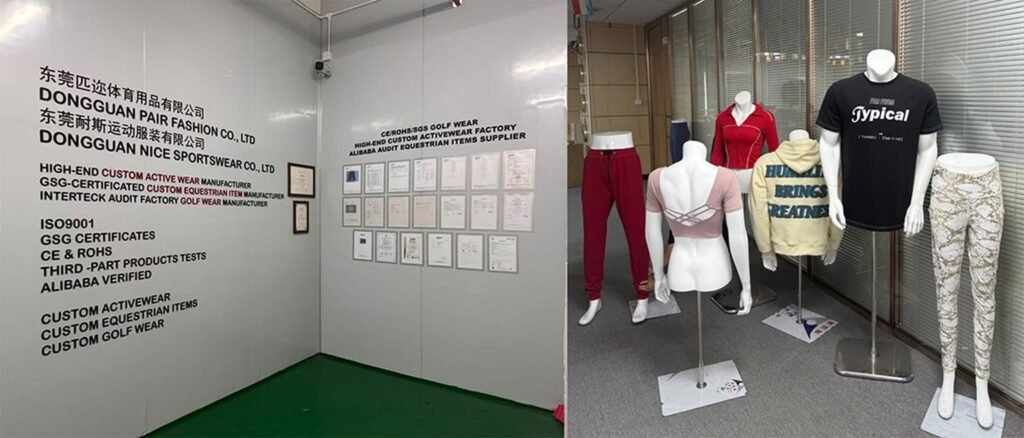
1. Dongguan Pair Fashion Co., Ltd — Functional Activewear Supplier in China
Company Overview
Location: Dongguan, Guangdong, China
Established: 2016
Company Type: Functional activewear supplier and OEM/ODM manufacturer
Dongguan Pair Fashion Co., Ltd is a China-based activewear supplier specializing in functional sportswear categories for international buyers. The company focuses on performance-oriented apparel, including fitness wear, yoga apparel, equestrian clothing, plus size activewear, maternity activewear, and modest sportswear.
Unlike general apparel suppliers that produce multiple unrelated clothing categories, Pair Fashion focuses on activewear products where fabric performance, comfort, fit, and durability are important factors.
With experience developing more than 6,000 styles, the company has built strong knowledge across different activewear categories and works with customers from various international markets.
Location and Manufacturing Background
| Category | Details |
|---|---|
| Location | Dongguan, Guangdong, China |
| Established | 2016 |
| Employees | 135 |
| Production Lines | 7 |
| Monthly Capacity | Around 50,000 pcs |
| Developed Styles | 6,000+ |
–
Main Product Categories
Pair Fashion focuses on:
Fitness & Activewear
- Yoga leggings
- Sports bras
- Tank tops
- Fitness tops
- Performance apparel
Equestrian Apparel
- Riding apparel
- Equestrian tops
- Competition clothing
Inclusive Sportswear
- Plus size activewear
- Maternity activewear
- Muslim sportswear
Manufacturing Strength
Pair Fashion’s main strength is its focus on functional sportswear categories and its understanding of activewear-specific requirements.
Key capabilities include:
- Functional fabric application
- Sportswear construction knowledge
- Category-specific product experience
- Quality control management
- International buyer support
The company maintains quality systems and certifications including:
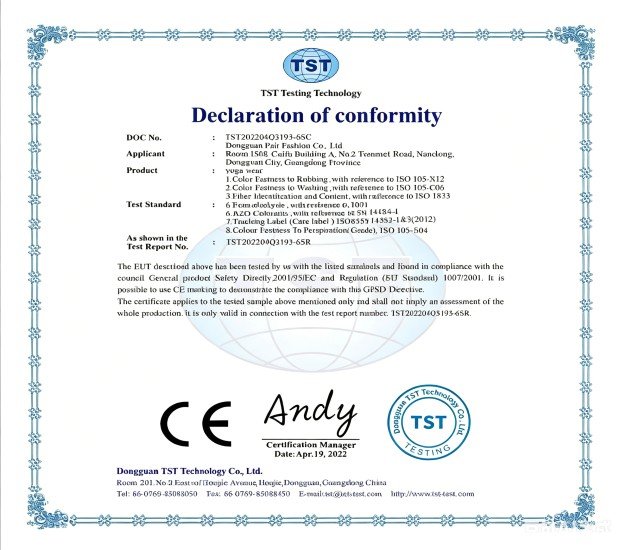
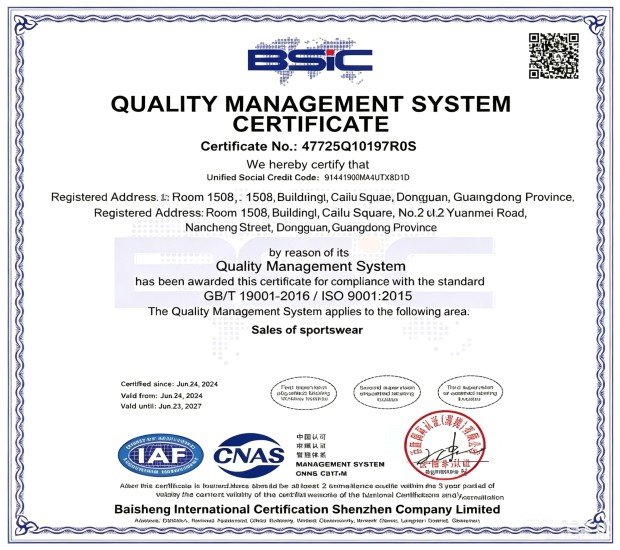
- ISO9001
- BSCI
- GRS
- CE
- ROHS
Best For
Pair Fashion is suitable for:
Activewear Brands Seeking Category Expertise
Brands focusing on:
- Fitness apparel
- Yoga collections
- Functional sportswear
can benefit from a supplier with dedicated activewear experience.
Brands Entering Specialized Categories
Companies developing products in areas such as:
- Equestrian apparel
- Plus size sportswear
- Maternity activewear
may benefit from a supplier familiar with specialized product requirements.
International Buyers Looking for Manufacturing Stability
Brands that value:
- Consistent production capability
- Quality management
- Long-term supplier relationships
may find Pair Fashion suitable for their sourcing strategy.
Key Considerations
Pair Fashion is mainly positioned as a functional activewear supplier rather than a general low-cost apparel source.
Buyers focused only on the lowest possible production price may find other suppliers with different positioning more suitable.
When sourcing wholesale activewear suppliers, brands ought to look beyond pricing and online exposure. International purchasers assess vendors across a range of criteria: industry tenure, product expertise, production capacity, quality control protocols, communication efficiency and familiarity with global markets. Systematic supplier comparison enables labels to find partners aligned with their product targets and long-term commercial objectives.
1. Product Development
Regular monthly product development ensures consistent updates to your brand line.
2. Fabric Sourcing
Regular monthly product development ensures consistent updates to your brand line.
3. Sample Making
Regular monthly product development ensures consistent updates to your brand line.
4. Bulk Production
Regular monthly product development ensures consistent updates to your brand line.
5. Packaging & Delivery
Regular monthly product development ensures consistent updates to your brand line.
Complete OEM & ODM Sportswear Solutions
We provide complete custom sportswear manufacturing services from concept development and fabric sourcing to bulk production and worldwide delivery.
- OEM & ODM Product Development
- Functional Fabric Sourcing & Material Selection
- Pattern Making & Sample Development
- Private Label Branding & Custom Packaging
- Quality-Controlled Bulk Manufacturing
- Global DDP Shipping & Delivery Support
2. Ningbo Sansansports Co., Ltd — Seamless Activewear Specialist in China
Company Overview
Location: Ningbo, Zhejiang, China
Company Type: Seamless activewear supplier
Ningbo Sansansports is a Chinese activewear supplier specializing in seamless sportswear and performance-oriented apparel. The company focuses on products developed with seamless knitting technology, which has become increasingly popular in yoga wear, fitness apparel, and modern athleisure collections.
Compared with traditional cut-and-sew activewear manufacturers, seamless specialists focus more on knitting technology, garment structure, and body-contouring designs. This manufacturing approach allows brands to develop products with fewer seams, improved comfort, and a more streamlined appearance.
For buyers comparing wholesale activewear suppliers in China, seamless expertise can be an important factor when building collections centered around comfort, flexibility, and premium consumer experience.
Location and Manufacturing Background
| Category | Details |
|---|---|
| Location | Ningbo, Zhejiang, China |
| Main Specialty | Seamless activewear |
| Manufacturing Focus | Knitted performance apparel |
| Industry Position | Specialized activewear supplier |
–
Main Product Categories
Ningbo Sansansports mainly focuses on:
- Seamless leggings
- Seamless sports bras
- Seamless tops
- Yoga apparel
- Fitness clothing
- Compression activewear
The supplier’s expertise is particularly relevant for brands looking for:
- Body-contouring designs
- High-stretch garments
- Comfortable training apparel
- Minimal-seam activewear collections
Manufacturing Strength
The company’s primary strength is seamless manufacturing capability.
Seamless activewear requires specialized production knowledge because garment construction is created through knitting technology rather than traditional sewing methods.
Important advantages include:
- Reduced seam structure
- Enhanced wearing comfort
- Improved body fit
- Modern activewear appearance
For brands targeting premium fitness or lifestyle consumers, seamless technology can help create differentiated product collections.
Best For
Brands Focused on Seamless Activewear Collections
Companies building collections around:
- Seamless leggings
- Yoga wear
- Gym apparel
- Body-shaping activewear
may benefit from a specialized supplier.
Fitness and Lifestyle Brands
Brands targeting consumers who value:
- Comfort
- Flexibility
- Modern design
- Performance fabrics
can consider seamless manufacturers as part of their sourcing strategy.
Key Considerations
Seamless suppliers are highly specialized, but their expertise may be more concentrated in knitted activewear categories.
Brands should evaluate whether the supplier’s product focus matches their complete collection requirements, especially if they need:
- Woven activewear
- Outerwear
- Complex multi-category collections
- Non-seamless products
–
3. Guangzhou Kutesmart Sportswear Co., Ltd — Sportswear Manufacturing Supplier
Company Overview
Location: Guangzhou, Guangdong, China
Company Type: Sportswear supplier
Guangzhou Kutesmart Sportswear represents the type of Chinese supplier that benefits from Guangdong’s mature apparel manufacturing ecosystem.
Guangdong is one of China’s most important garment production regions, with extensive resources covering fabrics, accessories, garment processing, printing, embroidery, packaging, and export services.
For global buyers researching wholesale activewear suppliers in China, suppliers located in Guangdong often benefit from strong supply chain connectivity and manufacturing experience.
Location and Manufacturing Background
| Category | Details |
|---|---|
| Location | Guangzhou, Guangdong, China |
| Industry Focus | Sportswear production |
| Regional Advantage | Guangdong apparel supply chain |
–
Main Product Categories
Main product areas include:
- Sports apparel
- Training clothing
- Fitness garments
- Team sportswear
- Athletic apparel
Manufacturing Strength
The company benefits from the manufacturing advantages of the Guangdong region.
Key regional strengths include:
Complete Supporting Supply Chain
Guangdong provides access to:
- Fabric suppliers
- Accessory manufacturers
- Printing facilities
- Embroidery services
- Packaging resources
This creates advantages in production coordination and supplier communication.
Broad Sportswear Manufacturing Experience
Suppliers with broader sportswear experience can support buyers looking for multiple athletic categories rather than only one specialized product type.
Best For
Sports Organizations and Teamwear Buyers
Companies requiring:
- Team apparel
- Athletic uniforms
- Sports clothing
may find this type of supplier suitable.
Brands Looking for Guangdong-Based Suppliers
Businesses that value:
- Strong manufacturing networks
- Regional supplier access
- Export experience
may consider Guangdong suppliers.
Key Considerations
A broad sportswear supplier may not always provide the same depth of expertise as a specialized functional activewear manufacturer.
Brands should evaluate:
- Technical fabric experience
- Activewear category knowledge
- Quality management systems
–
4. Suzhou Sportswear Manufacturing Suppliers — Textile-Based Apparel Producers
Company Overview
Location: Suzhou, Jiangsu, China
Company Type: Sportswear and apparel manufacturer
Suzhou represents another important manufacturing region in China with strong textile and industrial production capabilities.
Suppliers located in Jiangsu benefit from the region’s long history in textile manufacturing and apparel production. For international buyers, regional manufacturing strengths can influence supplier selection depending on product requirements.
Location and Manufacturing Background
| Category | Details |
|---|---|
| Location | Suzhou, Jiangsu, China |
| Industry Focus | Textile and apparel manufacturing |
| Regional Advantage | Industrial textile ecosystem |
–
Main Product Categories
Typical categories include:
- Sports apparel
- Training wear
- Fitness garments
- Athletic clothing
Manufacturing Strength
The main advantage of Jiangsu-based suppliers is their connection with a mature textile manufacturing environment.
Potential strengths include:
Textile Resource Access
The region has experience in:
- Fabric production
- Textile processing
- Industrial apparel manufacturing
Manufacturing Experience
Established textile regions often provide:
- Experienced production workers
- Stable manufacturing infrastructure
- Strong industrial support
Best For
Brands Looking for Textile Manufacturing Experience
Companies that value:
- Fabric resources
- Industrial manufacturing capability
- Established textile networks
may consider suppliers from Jiangsu.
Standard Sportswear Categories
Suppliers in this category may be suitable for brands producing:
- Training apparel
- Basic fitness wear
- Athletic clothing
Key Considerations
Regional manufacturing strength does not always mean every supplier specializes in advanced activewear.
Brands requiring highly technical categories should confirm:
- Functional fabric knowledge
- Product development capability
- Sportswear specialization
<br>
5. Dongguan Yotex Apparel Co., Ltd — Guangdong-Based Apparel Supplier
Company Overview
Location: Dongguan, Guangdong, China
Company Type: Apparel and activewear supplier
Dongguan Yotex Apparel operates within Dongguan’s well-developed apparel manufacturing environment.
Dongguan is widely recognized as one of China’s major garment production centers, supported by a complete network of textile suppliers, garment factories, accessory providers, and export-related services.
For activewear buyers, suppliers located in Dongguan often benefit from efficient access to the broader Guangdong manufacturing ecosystem.
Location and Manufacturing Background
| Category | Details |
|---|---|
| Location | Dongguan, Guangdong, China |
| Industry Focus | Apparel and sportswear production |
| Regional Advantage | Guangdong supply chain |
–
Main Product Categories
Potential product areas include:
- Activewear
- Sports clothing
- Fitness apparel
- Casual athletic wear
Manufacturing Strength
The company benefits from Dongguan’s manufacturing environment.
Key advantages of the region include:
Strong Apparel Supply Chain
Dongguan provides access to:
- Functional fabric suppliers
- Sewing factories
- Printing services
- Packaging suppliers
- Logistics networks
Flexible Manufacturing Environment
Compared with some large-scale production regions, Guangdong suppliers are often recognized for:
- Faster communication
- Flexible production coordination
- Strong export experience
Best For
Brands Seeking Guangdong Manufacturing Resources
Companies looking for suppliers within a mature apparel cluster may benefit from Dongguan-based manufacturers.
Buyers Comparing Multiple Production Options
Dongguan’s supplier ecosystem allows buyers to evaluate different production capabilities within one major manufacturing region.
Key Considerations
Brands looking for highly specialized activewear categories should confirm:
- Functional apparel expertise
- Product development capability
- Quality management approach
before selecting a supplier.
Supplier Comparison Summary (#1-#5)
| Supplier | Location | Main Strength | Best For |
|---|---|---|---|
| Dongguan Pair Fashion | Dongguan, Guangdong | Functional activewear expertise and specialized categories | Global activewear brands and niche sportswear businesses |
| Ningbo Sansansports | Ningbo, Zhejiang | Seamless activewear technology | Seamless-focused collections |
| Guangzhou Kutesmart | Guangzhou, Guangdong | Sportswear manufacturing ecosystem | Sports apparel buyers |
| Suzhou Sportswear Suppliers | Suzhou, Jiangsu | Textile manufacturing resources | Standard sportswear categories |
| Dongguan Yotex Apparel | Dongguan, Guangdong | Guangdong supply chain advantage | Brands seeking apparel manufacturing resources |
6. Fervour Apparel — Activewear Manufacturing Supplier in China
Company Overview
Location: Guangzhou, Guangdong, China
Company Type: Activewear and sportswear supplier
Fervour Apparel is a China-based activewear supplier focusing on sportswear and fitness apparel production. Located in Guangzhou, the company benefits from the mature apparel manufacturing environment of Guangdong, one of China’s most important clothing production regions.
Guangdong has developed a complete apparel ecosystem covering fabric suppliers, garment manufacturers, accessory providers, printing facilities, and logistics networks. This regional advantage allows activewear suppliers to access a wide range of production resources.
For buyers comparing wholesale activewear suppliers in China, Guangdong-based manufacturers are often considered because of their manufacturing experience, supply chain efficiency, and export capabilities.
Location and Manufacturing Background
| Category | Details |
|---|---|
| Location | Guangzhou, Guangdong, China |
| Industry Focus | Activewear and sportswear |
| Manufacturing Environment | Guangdong apparel cluster |
| Supplier Type | Sportswear manufacturer |
Main Product Categories
Fervour Apparel focuses on categories such as:
- Yoga apparel
- Fitness clothing
- Sports leggings
- Activewear sets
- Training apparel
- Lifestyle sportswear
Manufacturing Strength
The company benefits from Guangdong’s established apparel manufacturing infrastructure.
Key regional advantages include:
Access to Complete Supply Chain Resources
Guangdong provides suppliers with access to:
- Functional fabrics
- Elastic materials
- Garment accessories
- Printing and embroidery services
- Packaging resources
This helps manufacturers coordinate different production requirements more efficiently.
Experience With International Sportswear Markets
Many Guangdong-based suppliers have experience working with overseas customers and understand common international requirements related to:
- Product specifications
- Quality expectations
- Communication standards
- Export procedures
Best For
Brands Developing Mainstream Activewear Collections
Fervour Apparel may be suitable for brands focusing on:
- Fitness clothing
- Yoga collections
- General sportswear categories
Buyers Seeking Guangdong-Based Suppliers
Companies that value:
- Strong supplier networks
- Manufacturing flexibility
- Regional production advantages
may consider Guangzhou suppliers.
Key Considerations
Brands looking for highly specialized activewear categories should evaluate supplier expertise carefully.
For example, products involving:
- Advanced compression technology
- Professional sports performance requirements
- Specialized body-fit solutions
may require deeper category experience.
–
7. UPOWER Clothing — Sportswear Supplier for Global Buyers
Company Overview
Location: China
Company Type: Sportswear manufacturer
UPOWER Clothing represents a broader category of Chinese sportswear suppliers that support international buyers with athletic apparel production.
Compared with highly specialized activewear factories, broader sportswear suppliers often focus on a wider range of athletic products and provide manufacturing solutions across multiple categories.
For buyers researching wholesale activewear suppliers, understanding supplier specialization is important because different factories have different strengths.
Location and Manufacturing Background
| Category | Details |
|---|---|
| Location | China |
| Industry Focus | Sportswear production |
| Supplier Type | Sports apparel manufacturer |
–
Main Product Categories
Typical product categories include:
- Gym wear
- Training apparel
- Sports tops
- Fitness clothing
- Athletic garments
Manufacturing Strength
The main advantage of broader sportswear suppliers is product range flexibility.
Potential strengths include:
Multiple Sportswear Categories
Suppliers with broader experience may support buyers looking for:
- Different apparel styles
- Various sports categories
- Larger product ranges
Manufacturing Experience
Experienced sportswear suppliers often understand:
- Apparel construction
- Production management
- International buyer expectations
Best For
Brands Expanding Sportswear Categories
Companies moving from one product category into broader collections may benefit from suppliers with wider production experience.
Buyers Seeking General Sports Apparel Solutions
Businesses focused on:
- Fitness clothing
- Training apparel
- Athletic basics
may consider broader sportswear suppliers.
Key Considerations
A broader sportswear supplier may not always provide the same specialization as a dedicated functional activewear manufacturer.
Brands should confirm:
- Technical fabric experience
- Activewear category knowledge
- Quality management capability
before selecting a supplier.
–
8. Hongyu Apparel — International Apparel Manufacturing Company
Company Overview
Location: China
Company Type: Apparel manufacturing company
Hongyu Apparel is a Chinese apparel manufacturer serving international clothing businesses with production capabilities across multiple apparel categories.
Unlike suppliers focused only on activewear, broader apparel manufacturers may provide advantages in product variety and manufacturing experience across different clothing segments.
For buyers comparing wholesale activewear suppliers, it is important to understand whether a supplier’s core strength matches the specific requirements of activewear products.
Location and Manufacturing Background
| Category | Details |
|---|---|
| Location | China |
| Industry Focus | Apparel manufacturing |
| Manufacturing Type | Multi-category clothing production |
–
Main Product Categories
Product categories may include:
- Casual apparel
- Sportswear
- Fashion clothing
- Lifestyle garments
Manufacturing Strength
Hongyu Apparel represents a category of larger apparel manufacturers with broader production experience.
Potential advantages include:
Multi-Category Production Capability
Companies producing different clothing categories may provide:
- Wider product knowledge
- Broader manufacturing resources
- Experience with international apparel markets
Export Market Experience
International apparel manufacturers often understand:
- Overseas buyer expectations
- Documentation requirements
- Production coordination
Best For
Brands Requiring Multiple Apparel Categories
Companies producing both activewear and lifestyle clothing may consider broader apparel manufacturers.
Buyers Looking for Experienced Apparel Producers
Businesses that value:
- Manufacturing history
- Export experience
- Production infrastructure
may find this type of supplier suitable.
Key Considerations
For brands focused primarily on technical activewear, specialized suppliers may provide deeper expertise in:
- Performance fabrics
- Functional construction
- Sports-specific requirements
A broader apparel manufacturer should be evaluated based on activewear capability rather than overall garment experience alone.
–
9. AEL Apparel — Sportswear and Activewear Supplier
Company Overview
Location: China
Company Type: Sportswear supplier
AEL Apparel is positioned as a sportswear supplier serving international customers looking for activewear and athletic apparel manufacturing options.
The company represents suppliers that combine apparel production experience with sportswear category knowledge.
For buyers, the key consideration is understanding whether a supplier’s manufacturing capabilities align with their product positioning, target customers, and quality expectations.
Location and Manufacturing Background
| Category | Details |
|---|---|
| Location | China |
| Industry Focus | Sportswear and activewear |
| Supplier Type | Apparel manufacturer |
–
Main Product Categories
Product areas include:
- Activewear
- Fitness apparel
- Sports clothing
- Athletic lifestyle garments
Manufacturing Strength
Potential strengths include:
Flexible Sportswear Production
Suppliers in this category can support different sportswear requirements depending on:
- Product type
- Market positioning
- Collection size
International Buyer Experience
Working with global customers often requires understanding:
- Product communication
- Quality expectations
- Export procedures
Best For
Brands Looking for General Activewear Manufacturing
Companies producing:
- Fitness apparel
- Gym wear
- Sports lifestyle products
may consider suppliers with broad sportswear experience.
Buyers Comparing Multiple Supplier Options
Supplier comparison allows brands to evaluate:
- Product expertise
- Factory capability
- Communication efficiency
- Long-term suitability
Key Considerations
Brands requiring highly specialized activewear categories should verify:
- Technical product experience
- Fabric knowledge
- Manufacturing specialization
before cooperation.
–
10. Jinjiang Sportswear Suppliers — Athletic Apparel Manufacturing Cluster
Company Overview
Location: Jinjiang, Fujian, China
Company Type: Sportswear manufacturing suppliers
Jinjiang is one of China’s well-known sportswear manufacturing regions. The city has developed a strong sports industry ecosystem supported by athletic footwear, sports apparel, materials, and related manufacturing resources.
For buyers researching Chinese activewear suppliers, regional manufacturing clusters can provide valuable advantages because suppliers often benefit from shared industry knowledge and supporting resources.
Location and Manufacturing Background
| Category | Details |
|---|---|
| Location | Jinjiang, Fujian, China |
| Industry Focus | Sportswear manufacturing |
| Regional Advantage | Sports industry cluster |
–
Main Product Categories
Typical categories include:
- Sports apparel
- Training wear
- Athletic clothing
- Team sportswear
- Performance garments
Manufacturing Strength
Strong Sports Industry Environment
Jinjiang’s sportswear ecosystem provides advantages in:
- Athletic product experience
- Sports-related supply chains
- Regional manufacturing resources
Industry Knowledge
Suppliers located in established sportswear regions often have experience with:
- Sports product requirements
- Functional clothing production
- Athletic market trends
Best For
Sports-Focused Brands
Companies targeting:
- Athletic apparel
- Team sports
- Training clothing
may benefit from suppliers in sports manufacturing regions.
Buyers Seeking Sportswear Industry Experience
Brands that value:
- Regional expertise
- Sports industry connections
- Manufacturing resources
may consider Jinjiang suppliers.
Key Considerations
Brands developing premium lifestyle activewear or specialized categories should evaluate supplier expertise carefully.
A sportswear manufacturing region does not automatically mean every supplier specializes in:
- Premium women’s activewear
- Technical performance products
- Niche activewear categories
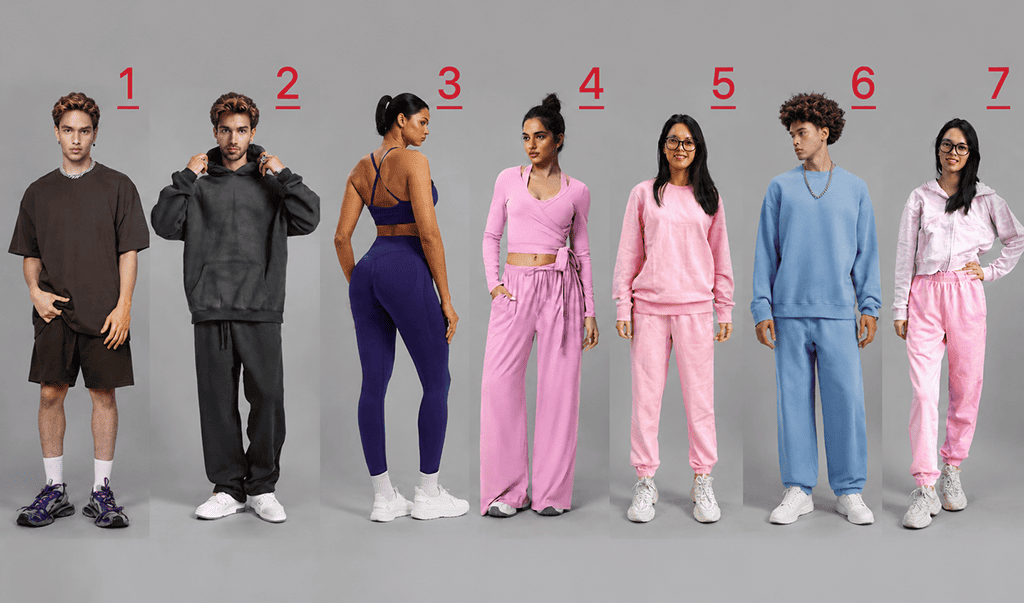
How Were These Wholesale Activewear Suppliers Compared?
Featured Summary
When vetting wholesale activewear suppliers, buyers should look beyond pricing and online exposure. Global purchasers assess vendors against a full set of criteria: industry tenure, product specialization, production capacity, quality control protocols, communication efficiency and familiarity with international markets. Systematic supplier comparison enables brands to source partners aligned with their product objectives and long-term commercial priorities.
Choosing a wholesale activewear supplier in China is an important business decision because the supplier directly influences product consistency, market competitiveness, and future growth potential.
Many buyers initially compare suppliers through:
- Product catalogs
- Factory photos
- Price levels
- Online reputation
However, these factors only provide a limited view of a supplier’s real capability.
Two suppliers may offer similar leggings or sports tops, but their actual manufacturing strengths can be very different. One factory may specialize in seamless activewear, another may focus on large-scale production, while another may have deeper experience in functional sportswear categories.
For this reason, professional buyers usually evaluate suppliers through a broader framework.
The key comparison factors include:
- Manufacturing experience
- Activewear category expertise
- Production capability
- Quality management
- Certifications
- International market experience
- Communication efficiency
1. Industry Experience and Manufacturing Background
Why Does Supplier Experience Matter When Comparing Activewear Manufacturers?
A supplier’s industry experience reflects its ability to understand production challenges, manage quality requirements, and consistently deliver activewear products that meet international market expectations.
Activewear is a specialized apparel category.
Unlike ordinary clothing, activewear products need to balance:
- Comfort
- Stretch performance
- Durability
- Body movement
- Fabric functionality
- Consistent fitting
For example, a pair of leggings must maintain shape after repeated stretching and washing. A sports bra needs appropriate support and comfort. A training shirt needs to provide breathability and freedom of movement.
Suppliers with longer experience in activewear manufacturing are usually more familiar with these technical requirements.
What Should Buyers Check About a Supplier’s Experience?
When evaluating a supplier, buyers should consider:
Product Experience
Questions include:
- How long has the supplier worked with activewear products?
- Which categories does the supplier mainly produce?
- Does the supplier understand the target market?
Market Experience
International buyers often require suppliers that understand:
- Different sizing systems
- Product expectations in different countries
- Quality requirements
- Export standards
A supplier experienced in global markets usually has better awareness of international business expectations.
2. Product Specialization and Category Expertise
Why Is Activewear Specialization Important When Selecting Suppliers?
A supplier’s product specialization determines how deeply it understands specific activewear categories. Manufacturers with relevant expertise are often better positioned to handle technical requirements related to fabrics, construction, and product performance.
The activewear market includes many different categories:
| Category | Key Manufacturing Requirements |
|---|---|
| Yoga Leggings | Stretch recovery, comfort, opacity, softness |
| Sports Bras | Support, elasticity, structure |
| Running Wear | Lightweight materials, breathability |
| Compression Apparel | Pressure control, body support |
| Seamless Activewear | Knitting technology, body mapping |
| Equestrian Apparel | Durability, movement flexibility |
| Plus Size Activewear | Fit adjustment, size grading |
| Maternity Activewear | Comfort and adaptability |
–
A common mistake among buyers is assuming that any apparel factory can produce all types of activewear.
However, different categories require different manufacturing knowledge.
For example:
A factory experienced in basic sports T-shirts may not necessarily understand the construction requirements of high-support sports bras.
A supplier experienced in casual leggings may not automatically understand compression performance.
Why Does Category Expertise Create Competitive Advantages?
Specialized suppliers often provide better understanding of:
- Material selection
- Product structure
- Functional requirements
- Consumer expectations
This can help brands create products that perform better in the market.
3. Manufacturing Capability and Production Strength
What Production Factors Should Buyers Compare Between Activewear Suppliers?
Manufacturing capability refers not only to factory size but also to whether a supplier has the resources, systems, and production stability required to support consistent product output.
Important comparison factors include:
Production Capacity
A supplier should have enough manufacturing capability to support buyer requirements.
However, larger production capacity does not always mean better cooperation.
A very large factory may focus mainly on high-volume production, while a specialized supplier may provide stronger flexibility and category expertise.
The right supplier depends on the buyer’s business model.
Production Organization
Professional suppliers usually have:
- Organized production management
- Experienced workers
- Quality inspection systems
- Production planning processes
These factors influence:
- Product consistency
- Delivery reliability
- Manufacturing efficiency
Supply Chain Access
One major advantage of Chinese activewear suppliers is access to a complete apparel ecosystem.
A strong supply chain includes:
- Fabric suppliers
- Accessories providers
- Printing companies
- Packaging suppliers
- Testing services
This ecosystem allows suppliers to coordinate different production requirements more efficiently.
4. Quality Management and Compliance Standards
Why Should Buyers Evaluate Quality Systems Before Choosing a Supplier?
Quality consistency is one of the most important factors when comparing activewear suppliers because product defects can directly affect customer satisfaction and brand reputation.
A professional supplier should have clear quality management procedures covering:
Material Quality Control
Including:
- Fabric inspection
- Color checking
- Material performance evaluation
Production Quality Control
Including:
- Sewing quality
- Measurement accuracy
- Construction inspection
Final Product Inspection
Including:
- Appearance checking
- Size verification
- Packaging inspection
What Certifications Should Activewear Buyers Consider?
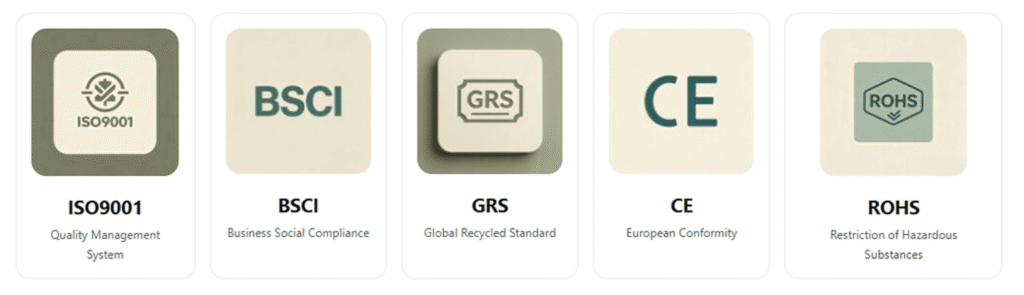
Common certifications and standards include:
| Certification | Purpose |
|---|---|
| ISO9001 | Quality management system |
| BSCI | Social compliance evaluation |
| GRS | Recycled material standard |
| CE | Product safety requirements |
| ROHS | Material safety compliance |
–
Certifications can provide additional confidence, but buyers should also evaluate practical quality management.
A supplier with certifications but weak daily quality control may still create production issues.
The strongest suppliers combine:
- Documented systems
- Experienced quality teams
- Consistent inspection processes
5. International Market Experience
Why Is Global Market Experience Important for Activewear Suppliers?
International experience helps suppliers better understand the expectations of overseas buyers and reduces communication challenges during cooperation.
Global activewear markets have different preferences.
For example:
North American Market
Often focuses on:
- Performance features
- Comfort
- Functional design
- Size inclusivity
European Market
Often emphasizes:
- Sustainability
- Material standards
- Product quality
- Ethical manufacturing
Australian Market
Often values:
- Outdoor functionality
- Lightweight fabrics
- Comfortable active lifestyles
Suppliers with international experience usually have better understanding of:
- Market trends
- Customer expectations
- Compliance requirements
6. Communication Efficiency and Professional Support
Why Does Communication Matter When Comparing Chinese Activewear Suppliers?
Communication quality is often overlooked, but it has a significant impact on manufacturing cooperation.
A supplier may have strong production capability, but poor communication can create unnecessary problems.
Professional suppliers should provide:
- Clear product information
- Accurate responses
- Timely updates
- Effective problem-solving
Good communication helps reduce risks related to:
- Product misunderstanding
- Specification errors
- Production delays
- Quality disputes
For international buyers, communication ability is often an indicator of supplier professionalism.
A supplier that communicates clearly usually has better internal organization and customer management systems.
7. Supplier Reputation and Long-Term Reliability
How Can Buyers Evaluate a Supplier’s Long-Term Reliability?
A reliable supplier should demonstrate consistency rather than only attractive marketing claims.
Buyers can evaluate reliability through:
Company Background
Check:
- Years in business
- Manufacturing focus
- Industry experience
Production Consistency
Consider:
- Whether the supplier can maintain quality across repeated orders
- Whether production standards remain stable
Business Transparency
Reliable suppliers usually provide clear information about:
- Manufacturing capability
- Product categories
- Quality standards
Wholesale Activewear Supplier Evaluation Checklist
Before selecting a Chinese activewear supplier, buyers can compare suppliers using the following checklist:
| Evaluation Factor | Key Question |
|---|---|
| Industry Experience | Does the supplier understand activewear manufacturing? |
| Product Expertise | Does the supplier specialize in the required category? |
| Manufacturing Capability | Can the supplier support expected production needs? |
| Quality System | Does the supplier maintain consistent quality control? |
| Certifications | Are relevant standards available? |
| International Experience | Does the supplier understand overseas markets? |
| Communication | Is cooperation efficient and transparent? |
–
Final Thoughts on Supplier Comparison
The best wholesale activewear supplier is not necessarily the largest factory or the cheapest option.
A suitable supplier should match the buyer’s:
- Product category
- Quality expectations
- Market positioning
- Growth stage
For example:
A startup fitness brand may value flexibility and product expertise.
A global retailer may prioritize manufacturing capacity and compliance systems.
A specialized sportswear company may need deeper technical knowledge.
The purpose of supplier comparison is not simply to identify a single winner, but to find the manufacturing partner whose strengths align with the brand’s long-term goals.
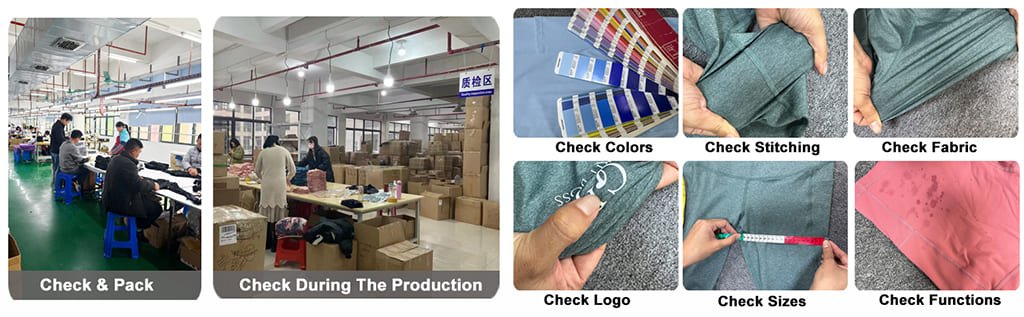
Why Are Global Brands Choosing China for Wholesale Activewear Suppliers?
Featured Summary
Global brands keep turning to China for wholesale activewear suppliers, thanks to the world’s most comprehensive apparel manufacturing ecosystems found here. Abundant textile resources, seasoned manufacturers, sophisticated production infrastructure and mature export networks enable Chinese suppliers to deliver dependable sourcing solutions for diverse activewear businesses.
The global activewear market has become increasingly competitive, and brands are paying more attention to supply chain decisions than ever before.
Selecting an activewear supplier is no longer simply about finding a factory with attractive prices. Modern brands need manufacturing partners that can support:
- Consistent product quality
- Stable supply availability
- Functional fabric requirements
- Different product categories
- International market expectations
China remains one of the world’s most important sourcing destinations for activewear because it combines manufacturing scale with deep industry experience.
While other countries have developed their garment industries, China continues to maintain strong advantages in areas such as:
- Textile development
- Apparel manufacturing expertise
- Production flexibility
- Supplier networks
- Export experience
For activewear brands, these advantages create a more complete sourcing environment.
Why Has China Become a Leading Destination for Activewear Manufacturing?
China’s Advantage Comes From a Complete Manufacturing Ecosystem
One of the biggest reasons global brands choose Chinese activewear suppliers is the depth of the country’s apparel ecosystem.
Activewear production involves much more than sewing garments.
A finished sportswear product may require cooperation between:
- Fabric manufacturers
- Dyeing facilities
- Printing suppliers
- Elastic material producers
- Accessory suppliers
- Packaging companies
- Quality testing providers
In many Chinese manufacturing regions, these supporting industries are located within the same industrial networks.
This creates several advantages:
- Faster supplier coordination
- More material choices
- Better production efficiency
- Easier quality management
How Does China’s Activewear Supply Chain Support Global Brands?
1. Strong Functional Fabric Resources
Activewear performance depends heavily on fabric technology. Growing demand from global consumers has increased interest in recycled polyester, recycled nylon, and certified sustainable materials. Organizations such as Textile Exchange have been promoting responsible material sourcing and sustainability practices across the global textile industry.
Unlike ordinary apparel, sportswear fabrics need to provide specific functions, including:
- Stretch recovery
- Moisture management
- Breathability
- Comfort
- Durability
- Shape retention
China has developed a mature textile industry capable of supplying a wide range of performance materials.
Common Activewear Fabric Options From Chinese Suppliers
| Fabric Type | Common Applications | Main Benefits |
|---|---|---|
| Nylon & Elastane Blends | Yoga leggings, sports bras, compression wear | Soft feel, high stretch, comfortable fit |
| Polyester Performance Fabrics | Training shirts, running apparel | Lightweight, quick drying, durable |
| Recycled Fabrics | Sustainable activewear collections | Environmental positioning |
| Mesh Fabrics | Sports tops and ventilation panels | Breathability and lightweight performance |
–
For international brands, access to diverse fabric options allows greater flexibility when developing different product categories.
A supplier with strong fabric resources can better support products requiring specific performance characteristics.
2. Experienced Activewear Manufacturing Industry
Why Does Manufacturing Experience Matter?
China’s apparel industry has developed over decades, creating a large base of experienced manufacturers, skilled workers, and technical specialists.
This experience is especially valuable for activewear because performance garments require attention to details such as:
- Seam construction
- Fabric behavior
- Pattern accuracy
- Fit consistency
- Product durability
A factory producing activewear must understand not only how to make garments but also how those garments perform in real usage.
For example:
A fitness legging should:
- Stay comfortable during movement
- Maintain elasticity after washing
- Provide appropriate coverage
- Keep its shape over time
A sports top should:
- Provide freedom of movement
- Offer suitable support
- Manage body heat effectively
These details require manufacturing experience beyond basic apparel production.
3. Flexible Production Capability for Different Brand Sizes
How Can Chinese Suppliers Support Different Types of Activewear Brands?
Another reason global brands choose Chinese suppliers is the ability to support different business stages.
The activewear market includes:
- Startup brands
- Ecommerce businesses
- Fitness companies
- Sports organizations
- Large retailers
Each buyer has different sourcing requirements.
Startup Brands
Usually focus on:
- Market testing
- Product variety
- Lower inventory risk
- Finding reliable manufacturing partners
Growing Brands
Usually require:
- Stable quality
- Consistent production
- More product categories
- Reliable supply support
Established Brands
Usually prioritize:
- Manufacturing capacity
- Compliance standards
- Supply chain stability
- Long-term reliability
China’s diverse manufacturing landscape allows brands to choose suppliers based on their specific business stage.
China vs Vietnam vs India vs Bangladesh: Which Country Is Better for Activewear Production?
Different Manufacturing Countries Have Different Strengths
Global brands often compare China with other major apparel manufacturing countries, including Vietnam, India, and Bangladesh.
Each country offers different advantages.
Activewear Manufacturing Comparison
| Factor | China | Vietnam | India | Bangladesh |
|---|---|---|---|---|
| Apparel Supply Chain | Very mature | Developing quickly | Broad textile base | Strong garment export industry |
| Functional Fabric Access | Excellent | Growing | Moderate | More limited |
| Activewear Experience | Strong | Increasing | Developing | More focused on basic apparel |
| Product Variety | Very broad | Expanding | Broad | More limited |
| Supplier Network | Highly developed | Growing | Developing | Export-focused |
| Technical Apparel Capability | Strong | Improving | Moderate | Limited compared with China |
Why Does China Remain Competitive Compared With Other Countries?
1. More Complete Supporting Industries
One of China’s strongest advantages is supply chain completeness.
A buyer working with Chinese suppliers can usually access:
- Multiple fabric choices
- Different manufacturing specialists
- Various accessory suppliers
- Supporting production services
This reduces dependence on multiple countries or disconnected suppliers.
2. Stronger Product Diversity
China’s activewear manufacturing industry covers a wide range of categories:
- Yoga apparel
- Fitness wear
- Running clothing
- Sports bras
- Compression apparel
- Outdoor activewear
- Equestrian apparel
- Inclusive activewear
This variety allows brands to work with suppliers that match their specific product direction.
3. Mature Export Experience
Many Chinese suppliers have worked with international buyers for years.
This experience helps them understand:
- International quality expectations
- Documentation requirements
- Shipping procedures
- Market differences
For global brands, this reduces communication barriers during sourcing.
What Are the Main Activewear Manufacturing Regions in China?
China’s activewear suppliers are distributed across different manufacturing regions, each with its own advantages.
Guangdong: Flexible Apparel Manufacturing Hub
Why Do Many Activewear Suppliers Operate in Guangdong?
Guangdong is one of China’s most important apparel manufacturing regions.
Major cities such as:
- Dongguan
- Guangzhou
- Shenzhen
have developed strong clothing supply chains.
Main Advantages
- Complete apparel ecosystem
- Strong export experience
- Flexible production resources
- Wide supplier network
Guangdong is particularly attractive for brands looking for:
- Activewear suppliers
- Fashion sportswear
- Functional apparel
- International manufacturing partners
Zhejiang: Textile and Fabric Manufacturing Strength
What Makes Zhejiang Important for Activewear Production?
Zhejiang has strong textile manufacturing capabilities and is known for:
- Fabric development
- Knitting technology
- Textile production
This region is especially relevant for suppliers focused on:
- Seamless apparel
- Knitted activewear
- Performance fabrics
Jiangsu: Industrial Textile and Manufacturing Resources
Why Do Brands Consider Jiangsu Suppliers?
Jiangsu has a strong industrial manufacturing background.
The region provides:
- Textile resources
- Manufacturing experience
- Industrial production capability
It can be suitable for brands looking for stable apparel production environments.
Fujian: Sports Industry Manufacturing Cluster
What Makes Fujian Different?
Fujian has developed a strong sports industry ecosystem.
The region is known for:
- Athletic products
- Sportswear companies
- Sports-related supply chains
For sports-focused brands, Fujian suppliers may offer valuable industry experience.
What Should Global Brands Consider Before Choosing Chinese Suppliers?
China Offers Many Opportunities, But Supplier Selection Still Matters
Although China has strong manufacturing advantages, not every supplier is suitable for every brand.
Buyers should still evaluate:
- Product specialization
- Manufacturing capability
- Quality systems
- Communication efficiency
- Market experience
The goal is not simply choosing a Chinese supplier, but finding a supplier whose strengths match the brand’s product strategy.
A premium activewear brand may prioritize:
- Functional materials
- Product expertise
- Quality consistency
A fast-growing ecommerce brand may prioritize:
- Flexible production
- Reliable communication
- Category variety
A large retailer may prioritize:
- Capacity
- Compliance
- Supply stability
Final Thoughts
China continues to be a preferred sourcing destination for wholesale activewear suppliers because of its complete supply chain, manufacturing experience, and ability to support different types of buyers.
The biggest advantage of Chinese suppliers is not only production scale, but the combination of:
- Material resources
- Technical knowledge
- Manufacturing capability
- Industry experience
For global brands researching activewear suppliers, understanding these advantages helps create a more effective supplier selection strategy.
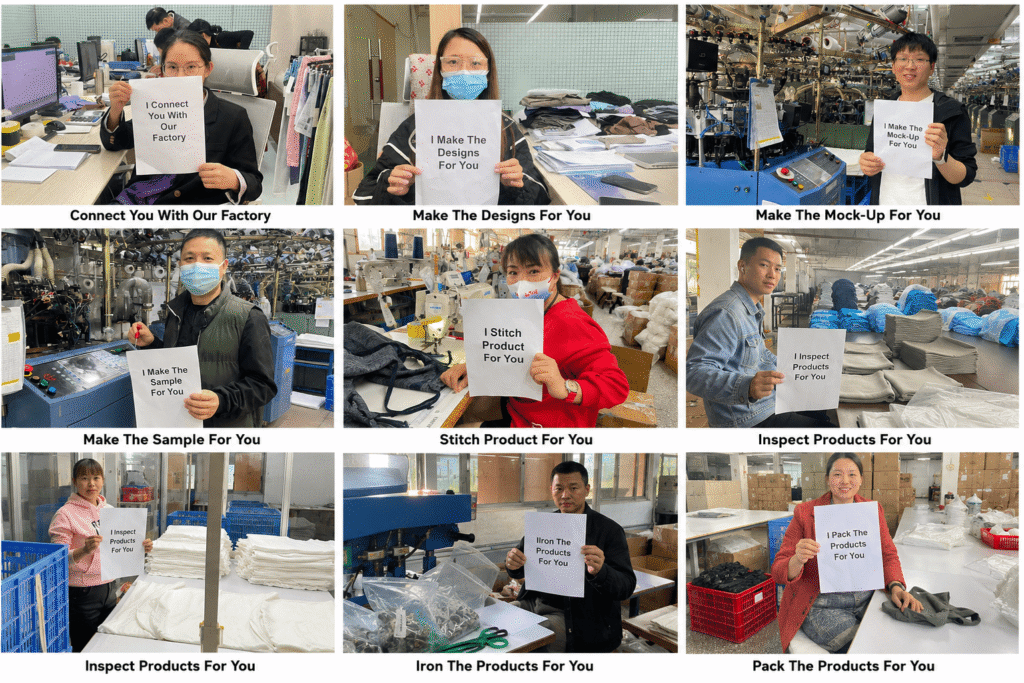
What Types of Wholesale Activewear Suppliers Can Buyers Work With?
Featured Summary
China’s wholesale activewear suppliers fall into four primary categories: activewear manufacturers, OEM/ODM producers, private label vendors and trading firms. Each type boasts distinct advantages, aligned with buyers’ product specifications, business maturity, order volume targets and desired depth of production participation. Recognizing these variances enables brands to select the supplier model best suited to their sourcing strategy.
When researching wholesale activewear suppliers in China, many buyers focus on finding companies that sell the products they need. However, understanding the type of supplier is equally important.
Different supplier models provide different levels of:
- Manufacturing control
- Product expertise
- Communication support
- Production transparency
- Supply chain access
A startup activewear brand, a growing ecommerce company, and a large retail business may all need different supplier structures.
For example:
A new brand may prefer a supplier that can provide more guidance and flexibility.
A growing brand may need a manufacturer with stronger production capability.
A retailer managing multiple categories may prefer a supplier network that provides broader sourcing options.
Understanding supplier types helps buyers make better decisions before starting cooperation.
Type 1: Activewear Factories
What Is an Activewear Factory?
An activewear factory is a company that directly manages garment production and has manufacturing capabilities for sportswear products.
These suppliers typically control key production activities, including:
- Fabric sourcing
- Cutting
- Sewing
- Quality inspection
- Packaging
Compared with sourcing companies, factories provide buyers with more direct visibility into the manufacturing process.
Advantages of Working With Activewear Factories
1. Direct Manufacturing Capability
Working directly with factories allows buyers to better understand:
- Production resources
- Manufacturing experience
- Quality control systems
- Production stability
This can be valuable for brands looking for long-term supplier relationships.
2. Better Understanding of Product Performance
Activewear factories usually have deeper experience with technical apparel requirements, including:
- Stretch fabrics
- Sports-specific construction
- Garment durability
- Fit consistency
This knowledge is important because activewear performance directly affects consumer satisfaction.
3. Stronger Production Transparency
Direct factory cooperation can provide clearer information about:
- Where products are made
- How quality is controlled
- How production is organized
For brands building a long-term supply chain, transparency is often an important consideration.
Best For
Activewear factories are generally suitable for:
- Established brands
- Growing sportswear companies
- Businesses requiring stable manufacturing relationships
- Buyers with clear product requirements
Considerations
Direct factory cooperation may require buyers to have better product understanding because factories usually focus on manufacturing rather than acting as sourcing consultants.
Brands should evaluate whether the factory’s expertise matches their product category.
Type 2: OEM/ODM Activewear Manufacturers
What Is an OEM/ODM Activewear Manufacturer?
OEM and ODM manufacturers are companies that provide manufacturing services based on buyer requirements or their own product development capabilities.
The difference between OEM and ODM is:
| Type | Meaning |
|---|---|
| OEM | Products are manufactured according to buyer specifications |
| ODM | Supplier provides product development and manufacturing capabilities |
–
Advantages of OEM/ODM Manufacturers
1. Strong Product Knowledge
OEM/ODM manufacturers often have experience with:
- Product construction
- Fabric selection
- Market requirements
- Manufacturing feasibility
This can be useful for brands that need more than basic production support.
2. Support for Different Product Categories
Many OEM/ODM suppliers work across categories such as:
- Yoga wear
- Fitness apparel
- Sports tops
- Performance clothing
This allows brands to evaluate suppliers based on category expertise.
3. Better Manufacturing Coordination
Compared with companies that only source products, OEM/ODM manufacturers usually have stronger connections between:
- Product requirements
- Manufacturing capability
- Quality management
Best For
OEM/ODM manufacturers are often suitable for:
- Growing activewear brands
- Companies expanding product categories
- Businesses entering sportswear markets
- Brands seeking experienced manufacturing partners
Considerations
OEM/ODM suppliers may focus more on product quality and manufacturing capability rather than competing only on the lowest price.
Brands should evaluate whether the supplier’s positioning matches their market strategy.
Type 3: Private Label Activewear Suppliers
What Is a Private Label Activewear Supplier?
A private label activewear supplier provides products that businesses can sell under their own brand identity.
This supplier model is common among:
- Ecommerce brands
- Fitness businesses
- Boutique retailers
- Lifestyle companies
Advantages of Private Label Suppliers
1. Faster Market Entry
Private label suppliers can help businesses enter the activewear market more efficiently because they usually have existing product knowledge and manufacturing resources.
2. Suitable for Brand Expansion
Businesses can use private label suppliers when expanding into:
- Fitness apparel
- Athleisure collections
- Sports lifestyle products
3. Lower Internal Manufacturing Requirements
Brands without their own production teams may find private label suppliers easier to manage because the supplier already understands apparel production.
Best For
Private label suppliers are often suitable for:
- New market entrants
- Ecommerce businesses
- Brands testing product opportunities
Considerations
Buyers should carefully evaluate whether a private label supplier has genuine manufacturing capability or mainly operates as a sourcing intermediary.
Important evaluation factors include:
- Factory information
- Production capability
- Quality management
- Product consistency
Type 4: Activewear Trading Companies
What Is an Activewear Trading Company?
A trading company connects buyers with manufacturing resources and manages supplier communication, sourcing coordination, and order arrangements.
Trading companies do not always own factories themselves.
Instead, they may work with multiple manufacturers to provide different product categories.
Advantages of Trading Companies
1. Easier Supplier Management
Trading companies can simplify sourcing by helping buyers coordinate:
- Different factories
- Product categories
- Communication channels
2. Broader Product Access
Because trading companies may cooperate with multiple factories, they can sometimes provide:
- More product choices
- More supplier options
- Broader category coverage
3. Useful for Buyers New to China Sourcing
Companies without sourcing experience may find trading companies easier to work with because they provide additional coordination.
Best For
Trading companies may be suitable for:
- Buyers needing multiple product categories
- Businesses without sourcing teams
- Companies prioritizing convenience
Considerations
The main issue is manufacturing transparency.
Buyers should understand:
- Who produces the products
- Where production happens
- How quality is controlled
Direct factory communication is usually more transparent than relying entirely on intermediaries.
Comparison of Different Wholesale Activewear Supplier Types
| Supplier Type | Main Strength | Best For | Main Consideration |
|---|---|---|---|
| Activewear Factory | Direct production control | Brands seeking manufacturing partnerships | Requires clearer product communication |
| OEM/ODM Manufacturer | Product expertise and manufacturing ability | Growing brands and product-focused companies | Usually focused on quality capability |
| Private Label Supplier | Faster market entry | Ecommerce and emerging brands | Need to verify manufacturing capability |
| Trading Company | Easy sourcing coordination | Buyers needing multiple categories | Less direct factory visibility |
Wholesale Activewear Supplier vs Manufacturer: Which One Fits Your Business?
Featured Summary
Wholesale activewear manufacturers and suppliers are often confused, yet they fulfil distinct roles within product sourcing. Manufacturers deliver direct production services with greater oversight over manufacturing processes, whereas suppliers can provide wider sourcing resources and simpler coordination. The optimal option hinges on a buyer’s business model, product specifications and long-term supply chain objectives.
Many buyers use the terms supplier and manufacturer interchangeably, but understanding the difference can help brands make better sourcing decisions.
A manufacturer is usually directly involved in production.
A supplier may include:
- Manufacturers
- Trading companies
- Sourcing businesses
- Product distributors
The right choice depends on what the buyer needs.
Activewear Supplier vs Manufacturer Comparison
| Factor | Activewear Supplier | Activewear Manufacturer |
|---|---|---|
| Production Ownership | May or may not own factories | Usually manages production directly |
| Factory Visibility | Depends on supplier model | Generally higher |
| Product Knowledge | Varies by company | Usually stronger |
| Production Control | Depends on sourcing structure | More direct |
| Product Flexibility | May provide broader options | Based on factory expertise |
| Communication | Often centralized | Direct manufacturing communication |
–
When Should Brands Choose an Activewear Manufacturer?
1. When Product Quality Is a Priority
Manufacturers usually have stronger control over:
- Materials
- Production processes
- Quality inspections
This can help brands maintain consistency.
2. When Building Long-Term Supply Relationships
Brands planning continuous growth often benefit from working with manufacturers because both sides develop stronger understanding over time.
3. When Products Require Technical Knowledge
Activewear categories often require specific manufacturing knowledge.
Examples:
- Compression garments
- Performance apparel
- Functional sportswear
- Specialized activewear categories
A manufacturer with relevant experience can provide better technical support.
When Should Brands Choose an Activewear Supplier?
1. When They Need Broader Sourcing Options
Suppliers may provide access to multiple production resources.
This can be useful for buyers requiring:
- Different categories
- Various product options
- Flexible sourcing solutions
2. When Simplified Communication Is Important
Some buyers prefer working with a supplier that manages communication between different production resources.
3. When Entering China Sourcing for the First Time
New buyers may find supplier-based sourcing easier because it reduces direct factory management requirements.
Which Option Is Better for Different Brand Stages?
| Brand Stage | Suitable Partner |
|---|---|
| New Activewear Brand | Flexible supplier or experienced manufacturer |
| Growing Ecommerce Brand | Specialized activewear manufacturer |
| Established Retail Brand | Manufacturer with strong production capability |
| Multi-category Buyer | Supplier with broader sourcing network |
–
Final Thoughts
There is no universal answer to whether a supplier or manufacturer is better.
The right choice depends on:
- Product category
- Business stage
- Quality expectations
- Supply chain requirements
For activewear brands, the most important factor is finding a partner whose capabilities match the brand’s long-term goals.
A reliable sourcing relationship should provide not only products but also consistency, transparency, and confidence for future growth.
What Should Buyers Check Before Selecting a Wholesale Activewear Supplier?
Featured Summary
Buyers sourcing wholesale activewear in China should not only focus on pricing. Critical considerations include manufacturing experience, niche product expertise, quality management, production capacity, communication efficiency and supplier trustworthiness. A structured review process helps brands lower sourcing risks and find partners consistent with long-term business targets.
Selecting the right wholesale activewear supplier is one of the most important decisions for brands entering or expanding in the sportswear market.
A supplier affects much more than production cost. The right partner can influence:
- Product quality
- Customer satisfaction
- Brand reputation
- Delivery reliability
- Future growth opportunities
Many buyers make decisions based mainly on:
- Product images
- Price quotations
- Online presence
However, these factors do not always reflect a supplier’s real manufacturing capability.
A professional evaluation process should look deeper into:
- Whether the supplier truly understands activewear
- Whether the factory has stable production capability
- Whether quality standards are consistently maintained
- Whether the supplier can support international business requirements
1. Check Activewear Manufacturing Experience
Why Is Manufacturing Experience Important When Choosing an Activewear Supplier?
A supplier with activewear experience usually has better knowledge of performance fabrics, garment construction, fitting requirements, and production challenges. This experience helps brands avoid common quality problems and select suppliers with stronger category understanding.
Activewear is a technical apparel category.
Compared with ordinary fashion clothing, activewear products need to perform during physical activity.
Important factors include:
- Fabric elasticity
- Recovery after stretching
- Moisture management
- Comfort during movement
- Long-term durability
For example:
A yoga legging needs to maintain shape and comfort after repeated use.
A sports bra needs appropriate support and stable construction.
A training top needs to provide breathability and freedom of movement.
These requirements require manufacturing knowledge beyond basic garment production.
What Should Buyers Ask About Supplier Experience?
When evaluating a supplier’s background, buyers should consider:
Product Experience
Questions include:
- How many years has the supplier produced activewear?
- Which activewear categories does the supplier specialize in?
- Does the supplier understand the target market?
Customer Experience
Suppliers serving international buyers often have experience with:
- Different sizing systems
- Quality expectations
- Export requirements
- Market preferences
This experience can reduce communication problems during cooperation.
2. Evaluate Product Expertise and Category Match
Why Should Buyers Choose Suppliers With Relevant Product Experience?
A supplier’s product expertise determines how well it understands specific activewear categories. The right supplier should have experience matching the technical requirements of the products a brand plans to sell.
Different activewear products require different manufacturing knowledge.
| Product Category | Important Evaluation Factors |
|---|---|
| Yoga Leggings | Stretch recovery, comfort, opacity |
| Sports Bras | Support, elasticity, structure |
| Running Apparel | Lightweight materials, breathability |
| Compression Wear | Fabric pressure and body support |
| Seamless Activewear | Knitting technology and garment structure |
| Equestrian Apparel | Durability and movement flexibility |
| Plus Size Activewear | Fit adjustment and size grading |
| Maternity Activewear | Comfort and adaptability |
–
A common sourcing mistake is assuming that all clothing factories can produce all activewear products.
For example:
A factory experienced in casual leggings may not fully understand compression requirements.
A supplier producing basic sports shirts may not have experience with high-support sports bras.
The closer the supplier’s expertise matches the product category, the better the potential production outcome.
3. Review Factory Capability and Production Stability
What Production Factors Should Buyers Check Before Choosing a Supplier?
A reliable activewear supplier should have sufficient manufacturing resources, organized production systems, and the ability to maintain consistent quality as business requirements change.
Production Capacity
Buyers should evaluate:
- Factory size
- Production lines
- Workforce capability
- Quality control resources
However, the largest factory is not always the best choice.
A very large manufacturer may focus mainly on high-volume orders, while a specialized supplier may provide stronger flexibility and category expertise.
The right supplier depends on the buyer’s business model.
Production Consistency
A supplier’s ability to maintain consistent results across multiple orders is often more important than one successful production run.
Buyers should consider:
- Repeat order quality
- Manufacturing stability
- Quality inspection systems
- Production organization
Growth Capability
The ideal supplier should match both current and future needs.
A brand may begin with smaller product launches but later require:
- Larger production capability
- More product categories
- Stable supply support
A supplier with scalable capability can become a stronger long-term partner.
4. Verify Quality Management Systems
How Can Buyers Evaluate an Activewear Supplier’s Quality Control?
Quality management is one of the most important factors when selecting activewear suppliers because product consistency directly affects customer satisfaction and brand reputation.
A professional supplier should have quality control procedures covering multiple stages.
Material Inspection
Important checks include:
- Fabric quality
- Color consistency
- Material performance
- Specification accuracy
Production Inspection
Important checks include:
- Sewing quality
- Product measurements
- Construction details
- Manufacturing consistency
Final Product Inspection
Before shipment, suppliers should evaluate:
- Product appearance
- Size accuracy
- Packaging quality
- Product completeness
What Certifications Should Buyers Consider?
Common certifications and standards include:
| Certification | Purpose |
|---|---|
| ISO9001 | Quality management system |
| BSCI | Social compliance assessment |
| GRS | Recycled material certification |
| CE | Safety compliance |
| ROHS | Material safety requirements |
–
Certifications can provide additional confidence, but buyers should also understand how quality control works in daily production.
A supplier with strong systems usually combines:
- Documented procedures
- Experienced quality teams
- Regular inspections
- Clear problem-solving methods
5. Evaluate Communication and Business Transparency
Why Is Communication Important When Choosing Chinese Activewear Suppliers?
Communication quality directly affects sourcing efficiency. Even a capable factory can create problems if information is unclear or responses are slow.
Professional suppliers should demonstrate:
- Clear communication
- Accurate information
- Timely responses
- Transparent problem-solving
Poor communication can lead to:
- Incorrect product expectations
- Specification misunderstandings
- Production delays
- Quality disputes
For international buyers, communication is often an indicator of supplier professionalism.
A supplier that communicates clearly usually has better internal management and customer service systems.
6. Confirm International Market Experience
Why Should Buyers Consider a Supplier’s Export Experience?
Suppliers serving international markets usually have better understanding of overseas buyer expectations, compliance requirements, and communication standards.
Different markets may have different requirements.
North America
Common priorities:
- Performance features
- Comfort
- Inclusive sizing
- Functional designs
Europe
Common priorities:
- Sustainability
- Material standards
- Quality requirements
- Responsible manufacturing
Australia and Other Outdoor Markets
Common priorities:
- Comfort
- Functional fabrics
- Active lifestyle products
A supplier with international experience is usually more familiar with:
- Market expectations
- Documentation requirements
- Product standards
7. Compare Supplier Value Instead of Only Price
Why Is the Lowest-Priced Activewear Supplier Not Always the Best Choice?
Price is an important factor, but choosing suppliers only based on the lowest quotation can create additional risks.
A low-cost supplier may result in:
- Lower material quality
- More production defects
- Higher inspection costs
- Customer complaints
Professional buyers usually evaluate total supplier value.
| Evaluation Factor | Importance |
|---|---|
| Product Quality | Very High |
| Manufacturing Stability | Very High |
| Communication | High |
| Delivery Reliability | High |
| Price | Important |
–
A better supplier comparison considers the balance between:
- Cost efficiency
- Product quality
- Manufacturing capability
- Long-term reliability
Wholesale Activewear Supplier Evaluation Checklist
Before selecting a Chinese activewear supplier, buyers should review:
| Evaluation Area | Key Questions |
|---|---|
| Experience | Does the supplier understand activewear production? |
| Product Expertise | Does the supplier specialize in your category? |
| Factory Capability | Can the supplier support your expected volume? |
| Quality System | Are quality procedures clearly established? |
| Certifications | Are relevant standards available? |
| Communication | Is information clear and efficient? |
| Reliability | Can the supplier support long-term cooperation? |
What Are Common Mistakes When Comparing Chinese Activewear Suppliers?
Featured Summary
Many sourcing problems happen because buyers compare suppliers using limited information. Common mistakes include focusing only on price, ignoring product specialization, failing to verify manufacturing capability, and choosing suppliers without considering long-term reliability. A careful comparison process helps brands avoid unnecessary risks.
Mistake 1: Choosing Only Based on Price
Why Is the Cheapest Supplier Not Always the Best Choice?
Low pricing may appear attractive, but it does not always represent better value.
A lower quotation may come with limitations such as:
- Lower-quality materials
- Limited quality control
- Less production experience
For activewear brands, poor quality can create higher costs through:
- Returns
- Negative reviews
- Customer dissatisfaction
The best supplier is usually the one providing the strongest balance between quality and cost.
Mistake 2: Selecting Suppliers Without Checking Manufacturing Capability
Some buyers choose suppliers without verifying:
- Factory background
- Production capability
- Quality systems
This creates risks when production requirements increase.
A supplier should be evaluated based on actual manufacturing ability rather than only online information.
Mistake 3: Ignoring Product Specialization
Not every apparel supplier is an activewear expert.
A supplier producing general clothing may not fully understand:
- Performance fabrics
- Sports construction
- Functional requirements
Brands should choose suppliers with experience relevant to their product category.
Mistake 4: Comparing Only Product Photos
Product images are useful but cannot fully show:
- Manufacturing capability
- Quality consistency
- Production standards
Buyers should evaluate the supplier behind the product, not only the appearance of the product.
Mistake 5: Ignoring Long-Term Supplier Compatibility
The best supplier is not only suitable for one order.
Long-term partnerships require:
- Reliable communication
- Consistent quality
- Manufacturing stability
- Shared growth potential
Final Supplier Selection Checklist
Before choosing a wholesale activewear supplier in China, buyers should confirm:
✅ Relevant activewear experience
✅ Strong category expertise
✅ Stable manufacturing capability
✅ Quality management systems
✅ International market understanding
✅ Professional communication
✅ Long-term reliability
Finding the right wholesale activewear supplier ultimately means striking an optimal balance between a supplier’s capacity and your brand’s demands.
Solid long-term supplier collaborations are established when manufacturing expertise, product specifications and corporate goals converge.
Frequently Asked Questions About Wholesale Activewear Suppliers in China
Featured Summary
When researching wholesale activewear suppliers in China, global buyers often have questions about supplier reliability, factory evaluation, certifications, and sourcing strategies. Understanding these key factors helps brands compare suppliers more effectively and choose partners that match their product requirements, quality expectations, and long-term business objectives.
What Makes a Wholesale Activewear Supplier Reliable?
A reliable wholesale activewear supplier is usually defined by a combination of manufacturing experience, product expertise, quality management, and consistent business performance. The strongest suppliers are not necessarily the largest factories or the lowest-cost options, but those that can consistently deliver products that meet buyer expectations.
Important factors include:
- Activewear manufacturing experience
- Understanding of functional fabrics
- Stable production capability
- Clear quality control systems
- International market experience
- Professional communication
A reliable supplier should also demonstrate transparency regarding its manufacturing capabilities, product categories, and quality standards.
For global brands, supplier reliability becomes especially important because activewear products directly influence customer satisfaction. A supplier that can maintain consistent quality over multiple orders is usually more valuable than one that only offers competitive pricing.
How Do Buyers Compare Activewear Suppliers in China?
Buyers usually compare activewear suppliers in China through several key evaluation factors rather than looking at one single advantage.
A professional supplier comparison process should include:
1. Product Expertise
Does the supplier understand the specific activewear category?
For example:
- Yoga apparel requires stretch and comfort expertise
- Compression wear requires technical fabric knowledge
- Equestrian apparel requires durability and movement flexibility
2. Manufacturing Capability
Buyers should evaluate:
- Factory resources
- Production stability
- Quality management
- Supply chain access
3. Market Experience
Suppliers experienced with international customers often better understand:
- Quality expectations
- Compliance requirements
- Communication standards
4. Long-Term Compatibility
The right supplier should match the buyer’s:
- Product positioning
- Business stage
- Growth expectations
A supplier comparison is not about finding one universal winner, but identifying the supplier whose strengths best fit the brand’s needs.
What Type of Activewear Supplier Is Best for Small Brands?
The best supplier type for small activewear brands depends on their product goals, experience level, and growth plans.
Many small brands benefit from suppliers that offer:
- Flexible manufacturing capability
- Strong product knowledge
- Good communication
- Reasonable production flexibility
A startup brand may not need the largest factory available. Instead, it often needs a supplier that understands early-stage challenges and can provide stable support while the brand develops.
Important evaluation factors include:
- Whether the supplier understands emerging brands
- Whether the supplier has experience with smaller businesses
- Whether the supplier can support future growth
As brands expand, they may move toward suppliers with larger production capability and stronger supply chain resources.
Are Chinese Activewear Suppliers Suitable for Global Markets?
Chinese activewear suppliers are widely used by international brands because of the country’s mature apparel ecosystem, manufacturing experience, and broad product capabilities.
China’s advantages include:
- Extensive textile resources
- Experienced garment manufacturers
- Wide product categories
- Strong export infrastructure
- Established supply chains
Many Chinese suppliers have experience serving customers from markets such as:
- North America
- Europe
- Australia
- Middle East
However, supplier selection remains important. International buyers should evaluate whether a supplier understands their target market requirements, including:
- Product standards
- Sizing expectations
- Material preferences
- Quality requirements
The suitability of a supplier depends on the match between the supplier’s capabilities and the brand’s market strategy.
What Certifications Should Activewear Suppliers Have?
Certifications can help buyers evaluate whether a supplier follows recognized quality, safety, and compliance standards.
Common certifications considered by activewear buyers include:
| Certification | Purpose |
|---|---|
| ISO9001 | Quality management system |
| BSCI | Social compliance assessment |
| GRS | Recycled material certification |
| CE | Product safety requirements |
| ROHS | Material safety compliance |
–
However, certifications should not be the only evaluation factor.
Buyers should also consider:
- Daily quality control procedures
- Production management systems
- Factory experience
- Product consistency
A supplier with certifications and strong manufacturing practices provides greater confidence for international buyers.
How Can Buyers Verify an Activewear Supplier Before Cooperation?
Buyers can verify an activewear supplier by reviewing both company information and manufacturing capability.
Important verification steps include:
Company Background
Check:
- Years in business
- Product specialization
- Main customer markets
Manufacturing Capability
Evaluate:
- Factory resources
- Production systems
- Quality management
Product Experience
Confirm whether the supplier has experience with the required product categories.
For example:
A supplier producing general apparel may not have the same expertise as one specializing in technical activewear.
Communication Quality
Professional communication can reveal a supplier’s internal organization and reliability.
Clear answers, accurate information, and transparent communication are positive indicators.
What Is the Difference Between an Activewear Supplier and Manufacturer?
An activewear manufacturer usually refers to a company directly involved in producing garments, while an activewear supplier may include manufacturers, sourcing companies, or businesses that connect buyers with production resources.
The main differences include:
| Factor | Supplier | Manufacturer |
|---|---|---|
| Production Control | Depends on business model | Usually direct |
| Factory Access | May vary | Generally higher |
| Manufacturing Knowledge | Varies | Usually stronger |
| Product Support | Depends on company | Often production-focused |
| Supply Options | May be broader | Based on factory capability |
–
A manufacturer is often preferred by brands that prioritize:
- Production transparency
- Quality control
- Long-term supply relationships
A supplier may be suitable for buyers who prioritize:
- Broader sourcing options
- Easier coordination
- Multiple product categories
The best choice depends on the buyer’s sourcing strategy.
Why Do Brands Source Activewear From China?
Brands source activewear from China because the country offers a combination of manufacturing experience, supply chain depth, and product diversity.
Key advantages include:
Complete Supply Chain
China provides access to:
- Functional fabrics
- Apparel production
- Accessories
- Packaging
- Supporting industries
Manufacturing Experience
Chinese suppliers have developed extensive experience producing:
- Fitness apparel
- Yoga wear
- Sportswear
- Performance clothing
Product Diversity
Brands can source different categories from Chinese suppliers, including:
- Leggings
- Sports bras
- Training apparel
- Seamless activewear
- Specialized sportswear
Global Market Experience
Many Chinese suppliers understand international buyer expectations and have experience working with overseas markets.
Final Conclusion: How to Choose the Right Wholesale Activewear Supplier in China
The wholesale activewear supplier market in China offers many opportunities, but choosing the right partner requires careful comparison.
The strongest suppliers combine:
- Relevant activewear experience
- Product category expertise
- Stable manufacturing capability
- Quality management systems
- International market understanding
A successful supplier decision is not based only on factory size or price.
Instead, brands should focus on finding a supplier whose strengths match their:
- Product strategy
- Target customers
- Quality expectations
- Long-term growth plans
By comparing suppliers carefully and understanding different manufacturing capabilities, global buyers can build stronger and more reliable activewear supply chains.

Custom High Waist Tennis Skort with Built-In Shorts OEM ODM
Custom High Waist Pleated Tennis Skort OEM ODM Women’s Tennis Wear
Custom Plus Size Tennis Dress OEM ODM Built-In Bra Activewear
Custom Women’s Tennis Skirt Set OEM ODM Performance Tennis Outfit
Custom Women’s Tennis Dress OEM ODM Performance Tennis Apparel
Custom Women’s Tennis Skirt Set OEM ODM Performance Tennis Outfit
Custom Pleated Tennis Dress OEM ODM Women’s Performance Tennis Wear
Custom Men’s Quarter Zip Performance Shirt OEM ODM Activewear
Custom Girls Activewear T-Shirt OEM ODM Kids Performance Tee
Custom Twist Front Yoga Crop Top OEM ODM Women’s Activewear